The Tamara Coorg has been announced the winner in the “Rural Accommodation Category” at the recent Skål International Sustainable Tourism award 2020. The prestigious award function was part of the 19th Edition, with 23 countries competing where winners were chosen from 9 different categories at the virtual General Assembly of Skål Clubs Delegates held through Zoom.
The Skål International Sustainable Tourism Awards are geared towards enhancing the visibility and grant recognition to entities from the Travel and Tourism industry. The selection has been made based on the pillars of sustainability of the Responsible Tourism Institute and the winner offered a one-year free Biosphere Certification in one of their available categories.
Shruti Shibulal, CEO and Director, Tamara Leisure Experiences Pvt. Ltd, said “At Tamara Leisure Experiences, our core ethos has always been based on a foundation of workplace ethics and sustainable business practices. To that end, every Tamara property is designed, built and operated with a conscious emphasis on environment and community. This award is an encouraging recognition of our effort and strengthen even more our commitment to responsible hospitality.”
Tamara is deeply committed to responsible tourism, respecting and supporting local culture and practices and intruding on the surrounding natural environment as little as possible. To this end, all Tamara properties are constructed with care and respect for the environment, aiming to create the experience of a Sustainable Good Life for every guest
The Tamara Coorg is a luxury experience nestled in the heart of the hills, where you can rediscover the joy of being in nature; where your quest for serenity ends. The Tamara Coorg spans 180 acres where you will experience nature and luxury at its best as you wake up to the breath-taking view and the calming silence of the hills, disturbed only by the chirping birds and the rustle of leaves. The unique nature-based experiences at The Tamara Coorg includes Forest Therapy, Trekking, Plantation Tours, Blossom to Brew, Bird Watching amongst others.
The exquisite cottages at The Tamara Coorg are designed to provide guests with a rustic, luxurious space to unwind, and enjoy an unmatched view of the hills in the distance, while suspended in nature. Relaxation gets even better at the award-winning spa and wellness centre, The Elevation Spa. It offers signature spa treatments, while the fitness centre includes a steam & sauna, a state-of-the-art fitness center, and a Yoga Temple.
source: http://www.voyagerworld.in / Voyager World / Home> Hospitality / by VW Bureau / October 28th, 2020
Commonly known as black vinegar, ‘kachampuli’ is indigenous to the district and is prepared by locals.
Madikeri :
Udiyanda Subbaiah, a 90-year-old resident of K Nidugane in Madikeri, is always busy during the rainy season. While most of the residents stay indoors due to the wet and chilly weather, Subbaiah (aka thaatha) goes out early in the morning and begins his search for the Malabar tamarind fruit – scientifically called Garcinia gummi-gutta.
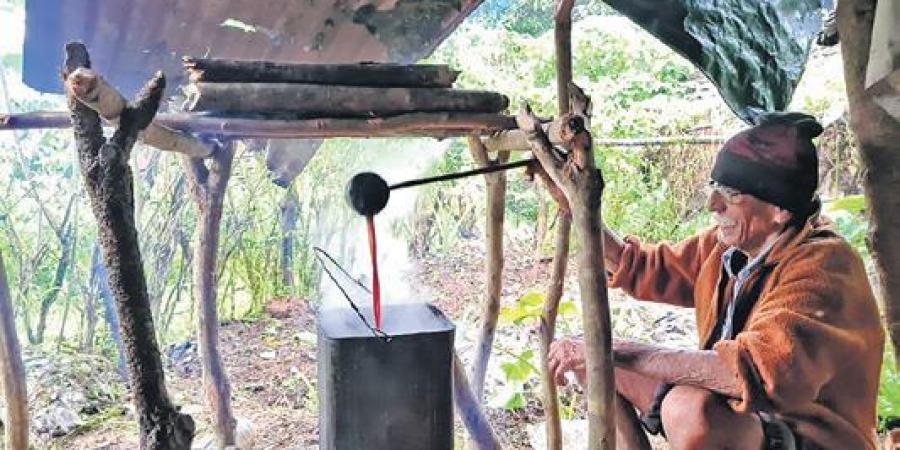
With his feet buried in slush, Subbaiah walks miles to collect the ripened fruits. He rushes back home with a basketful and sits down to remove loads of bloodsucking leeches that have crept all over him. He later sets up a make-shift tent and begins the tedious job of brewing vinegar from the fruit – popularly known as Kodagu’s ‘kachampuli’.
Kodagu district is known for its exclusive traditional culinary and the ‘pandi’ (pork) curry tops the table. And adding the special tang to these traditional non-vegetarian dishes is ‘kachampuli’ or ‘pulineer’ (puli in Kodava language means sour). Commonly known as black vinegar, ‘kachampuli’ is indigenous to the district and is prepared by the locals during the rainy season.
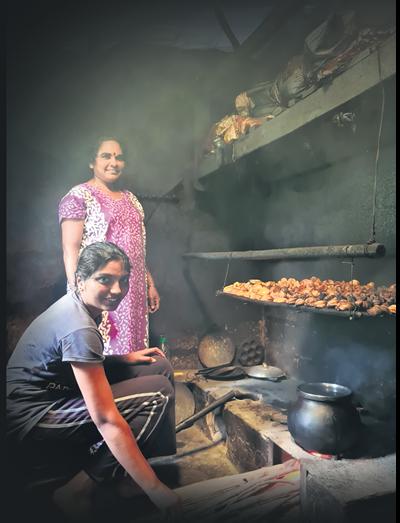
“The ‘kachampuli’ fruits start to ripen following the first rain in the monsoon season. Every day, we collect the ripened fruits that are mostly fallen on the ground. We take the fruits home and separate the seeds. Next, we put the fruits on a handmade wooden grill, which is fixed atop wood fire. The fruits have to be dried at high temperature continuously for nearly two days. The dried fruits are then put in boiling water (measured in proper proportion) and kept in a container for over a day.
The pulp gets separated from the fruit in the boiling water and the water is strained, which is then heated constantly on wood fire for nearly two days…the water must be heated until it gets thick and starts foaming. It might take more than two days sometimes,” explains K A Vedavathi, a resident of Galibeedu, about this sour extract. She has been brewing ‘kachampuli’ for nearly 25 years now.
While there are various methods of making ‘kachampuli’, Subbaiah follows the simplest one. “Until the extracted vinegar is thick and filled with flavour, the method used to brew it will not make much of a difference,” he opines. Subbaiah collects the ripe fruits, squeezes the pulp and brings the liquid to perfect blend by constantly heating it – sometimes for two days straight.
Kodengada Sumithra Nanaiah of Kiruguru village has been brewing ‘kachampuli’ in the most authentic way for 25 years now. “A funnel-like structure is raised using wooden logs and this structure is called ‘bhalley’ in Kodava language. Banana leaves are used to cover the funnel and the ‘bhalley’ is filled with the ripened fruits. The structure is covered to prevent rainwater entering it and a container is placed under the filter. Once the fruits start to ferment, the juice drops down into the container. The liquid collected is then heated on wood fire and the thickened extract is ‘kachampuli’ or ‘pulineer’,” explains Anju Thimmaiah, daughter-in-law of Sumithra.
The popularity of this black vinegar is reaching worldwide even as Michelin Star Chef Gordon Ramsay was introduced to its authentic taste during his recent visit to Kodagu. ‘Kachampuli’ is usually bought from the locals who prepare it without adulteration. The numerous spices shops that have opened across the district have become good marketers for the product and the vinegar is reaching all across the country. “We sell the thickened vinegar at Rs 700 to Rs 800 per 750 ml bottle. The same is sold at a higher price in retail shops, but the product at retail shops is prone to adulteration and is usually watery,” explains Ramyashree, daughter of Vedavathi.
The Ponnampet Forestry College has now started an initiative to rejuvenate the Garcinia gummi-gutta trees. They have started a nursery where grafts of the plant are sold to farmers. The college administration is also promoting the traditional art of brewing ‘kachampuli’ as the Garcinia gummi-gutta fruits are collected in large numbers from the farmers and the students of the college are involved in brewing the traditional vinegar.
PULI POINTS
‘Kachampuli’ is locally brewed by many residents and this earns the local families an annual income
This vinegar has a shelf-life of nearly three years
Malabar tamarind trees are not cultivated but are found naturally across the terrains of the district
Mother-daughter duo Vedavathi and Ramyashree at work. Nonagenarian Subbaiah brewing Kachampuli. Inset: Garcinia gummi-gutta fruit | Express
VARIOUS USES
Nothing goes waste while preparing ‘pulineer’. There is great demand for the dried pulp in neighbouring Kerala. It is sold between Rs 75 and Rs 100 per kg
source: http://www.newindianexpress.com / The New Indian Express / Home> States> Karnataka / by Prajna G R / Express News Service / October 25th, 2020
The furore over Tanishq’s new commercial has advertising professionals wondering about their creative freedom and safety in the field.
Illustration: tapas ranjan
Bengaluru :
A Muslim mother-in-law, a baby shower, an expectant Hindu daughter-in-law. These were the simple elements in jewellery brand Tanishq’s commercial for their latest jewellery line, aptly named Ekatvam. But what was meant to be a heartwarming display of oneness landed in troubled waters when enraged netizens promptly proclaimed the video a promotion of ‘Love Jihad’.
Many in the advertising fraternity, however, are still trying to figure out what was so controversial about the ad. Joyeeta Patpatia, the director of the Tanishq video ad, has known all along that advertisements have been conversation starters, but she never anticipated that the new campaign would blow up to this extent. Mumbai-based Patpatia, who has directed commercial videos for brands like HP, Britannia, Ikea, etc in her 15-year career so far, tells CE that this is her first experience with such an issue. “The story is about two women, where in the backdrop is the religion. But that the religion part will be blown up is something I had never expected,” says Patpatia, who has even been getting threats over the ad.
This kind of hate (one of the brand’s stores in Gujarat also received threats over the ad) has only left advertising professionals stressed about the safety of their field. For instance, Nilma Dileepan, founder of city-based Yellow Umbrella Production, who has been making ad films for 10 years, says, “I am scared because if I make a video on interfaith marriage or same sex relationships, people might come to my house to pelt stones at it.
Thoughts like this take away your creative freedom as an individual,” adds Dileepan. Though she has not encountered any controversy about her work, Dileepan has been trolled after her wedding. With a Malayali and Kodagu lineage, Dileepan wore a traditional saree from Kerala in a Kodagu fashion. This, in addition to, incorporating some Kannadiga traditions since she was marrying a Kannadiga. “My friends told me that my wedding video was trending in Kodagu. People thought I was destroying their culture,” says Dileepan.
While one might think that making a commercial video is a fun job, Vidyaa B Reddy says it’s about finding a balance. “Although we follow the brief by the clients, it is important to take care of people’s opinions so that it does not upset different communities,” says Reddy, founder of Kettle Studios. Patpatia, however, talks about how the ad has also received a huge amount of love. “Many have even come up with different caricatures of characters,” she says.
heart to heart The controversy has sparked debates about whether the video would get the same reaction had the religions of the mother-in-law and daughter-in-law been swapped. Ex-model and transformation coach Tamanna Pasha, who was brought up by a Hindu mother and Muslim father, questions the same. “Aside from irritating those who are against interfaith marriage, the video also challanges the perception that the mother-in-law has to be evil.
The video was heart-warming but a segment of people, especially those with non-secular beliefs, have a lot of time to troll,” says Pasha, who is married to event manager Rafiushan Pasha. She adds, “I feel blessed to celebrate Diwali with my mother and Eid with my in-laws. Now people are more accepting. But the way my parents handled it during their time was incredible.”
source: http://www.newindianexpress.com / The New Indian Express / Home> Cities> Bengaluru / by Monika Monalisa / Express News Service / October 15th, 2020
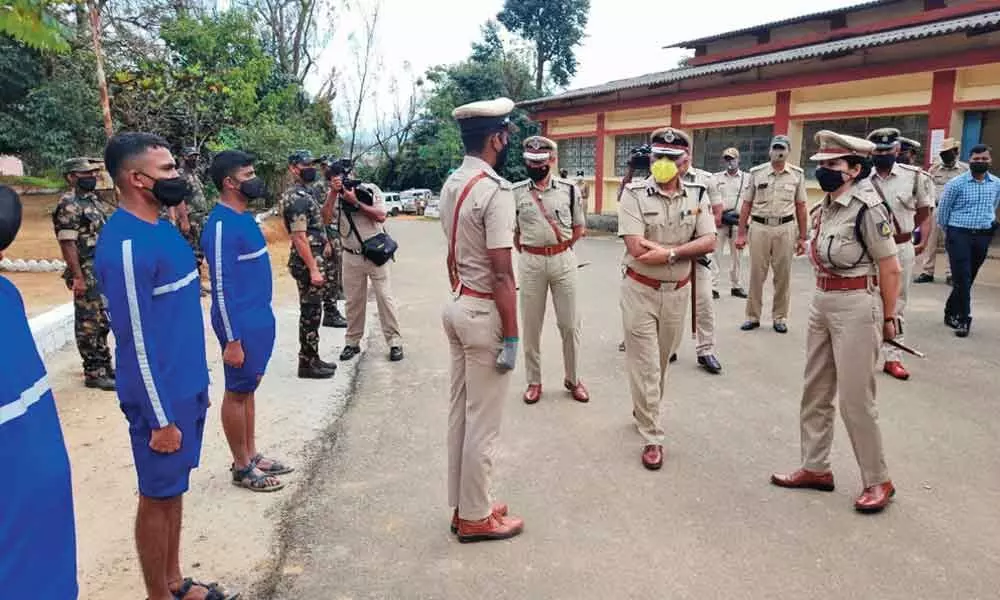
DGP Praveen Sood visited Kodagu on Sunday, as part of his tour to all the districts to boost the morale of police in Covid-19 pandemic situation, at a time when 150 police personnel in Kodagu alone are tested positive for coronavirus and 31 cases are active.
DGP Praveen Sood and IGP Southern Range Vipul Kumar during their visit to Kodagu on Sunday
Kodagu:
DGP Praveen Sood visited Kodagu on Sunday, as part of his tour to all the districts to boost the morale of police in Covid-19 pandemic situation, at a time when 150 police personnel in Kodagu alone are tested positive for coronavirus and 31 cases are active.
According to Praveen Sood, as many as 8,000 police personnel in the State are tested positive for Covid-19 so far and, 1,500 cases are active, and 72 police personnel lost their lives.
According to IGP Southern Range Vipul Kumar who accompanied Praveen Sood, in southern range alone including Mysuru, Kodagu, Chamarajnagar, Mandya and Hassan, as many as 794 police personnel are tested positive for Covid-19 and 181 cases are active and seven police personnel lost their lives.
Praveen Sood also held a district level review meeting of Police Department on Sunday in Kodgu. He said the Covid-19 cases in Kodagu are comparatively less. (Kodagu has registered 3115 Covid-19 positive cases, 574 cases are active and there are 48 deaths so far). Damages are lesser during floods and landslides during heavy southwest monsoons this year (from 5 August to 10 August), compared to past two years. He lauded the efforts of police in handling Covid-19 pandemic situation and also on their role in handling natural disaster situation in Kodagu.
He also said they are taking all measures to root out drug menace completely in the State. When contacted, Kodagu SP Kshama Mishra said Kodagu police have registered 22 cases related to growing, selling and circulation of marijuana and other drugs in Kodagu district this year.
On allegations of parties involving drugs at homestays and resorts in Kodagu, she said that no such cases are found this year.
source: http://www.thehansindia.com / The Hans India / Home> News> States> Karnataka / by Hans News Service / October 05th, 2020
For the first time Kodagu coffee growers, who formed a farmer producer company, Biota Coorg FPC, have exported their crop directly to a roaster in Europe.
IB Bopanna, one of the founding directors of Biota Coorg
After suffering 50-70 per cent crop loss due to excessive rainfall and landslides over the last three years, small, mid-sized and large coffee growers in Kodagu district of Karnataka, who pooled in their coffees under Biota Coorg, are set to receive a 15-20 per cent premium, on an average.
Incorporated in January, Biota Coorg made its first direct export shipment of bulk branded coffees to a large roaster in Europe last week. A container consisting of 320 bags (60 kgs/per bag) of Robusta Cherry AB sourced from 75 of its members was shipped from Mangaluru port on September 30. The company plans to ship 10 more containers to different roasters across Europe, of which two containers are scheduled to be shipped in October and the rest by December. In addition, since its inception, Biota Coorg has directly sold Arabica coffees to local roasters and local cafes at a premium. The 10 founding directors of Biota Coorg, collectively have over 100 years of domain expertise in coffee growing and allied areas including exports of agri commodities, global marketing of coffees, agro-forestry, plantation management, organisation development and coffee quality enhancement through cupping.
Unique flavour
Grown under the shade of multiple species of endemic rainforest trees at an elevation of 3,000– 4,000 feet above sea level, Coorg coffees have distinct fruity notes because of the wild figs, citrus fruits that grow in the rainforests and caramel notes from the leaf litter-enriched soil. Because of the higher elevation, Robusta coffees from Kodagu take a longer time to mature and ripen, thereby resulting in a softer cup.
“The objective of incorporating Biota is to market and put Coorg Coffee on the world map by elevating its quality based on the region’s ecology and biodiversity,” IB Bopanna, one of the founding directors of Biota Coorg and former Senior Global Director- Coffee, The Coca-Cola Company, Atlanta, USA, told BusinessLine.
“Earlier growers were selling their coffee in bulk with little differentiation to local traders, at prevailing market prices. We are a cohort of 75 members (in our first year of operation) who have committed to superior on-farm harvesting and post harvesting standards that will command a premium in the international and domestic markets. We are committed to uphold the legacy of the region’s biodiversity by adhering to an audited standard in addition to RFA (Rainforest Alliance) certification, which we have applied for. All the coffee we procure is 100 per cent traceable. Every grower’s coffee is segregated, processed at the Tata Coffee facility in Kodagu, cupped and prepared specially to fit the requirement of high quality roasts, blends and brands.”
Community initiative
MB Ganapathy, former Chairman of KPA, said: “There are many large coffee growers who export their coffees in their individual capacities however, the majority who are small growers are dependent on the local traders to sell their coffee. Biota Coorg is a great community initiative that will benefit small coffee growers who can join hands and realise better prices for their produce by following quality practices set by Biota that will adhere to international standards of roasters.”
Bose Mandanna, a large grower and Biota member, said: “The advantage for international roasters is that they are ensured of a consistent supply of quality coffees from Biota. We have received a standard of good agricultural practices from Biota which we strictly follow including the use of chemicals and labour. We harvest the coffee at the right time, pulp it on the same day, wash it clean and dry it to the correct moisture levels, after which it is inspected by a Biota representative, who then further processes it in the curing works.”
source: http://www.thehindubusinessline.com / Business Line / Home> AgriBusiness / by Sangeetha Chengappa / Bengaluru / October 05th, 2020
The Coffee Board of India has released geographical indication (GI) tag for five coffee varieties grown in the country. Of this, three are from Karnataka and one each from Kerala and Andhra Pradesh. The GI tag will help all the five coffee brands get maximum market and price for their premium produce across the world. These varieties are Coorg, Bababudangiri, Chikmagalur, Araku Valley and Wayanad coffees.
The Board had obtained GI registration for unique regional coffees grown in these regions during March 2019. Previously, GI registration was obtained for two specialty coffees such as Monsooned Malabar Arabica and Monsooned Malabar Robusta in 2008.
The region-specific GI tags will increase the credibility and visibility of Indian coffees in the international market which will further boost export earnings, the Coffee Board said in a statement.
Further to the registration, the GI tagged coffees are promoted in various national and international forums, it said.
The board has also invited coffee growers to register their coffees with the board so that they can brand their product before selling in the domestic and international markets.
The Coffee Board has also collaborated with Indian Missions in key destinations such as Berlin, Helsinki, Tallinn, Burssels, Shanghai, Moscow and Sao Paulo for an effective overseas promotion of Indian coffee.
As part of its efforts to promote the consumption of coffee in the domestic market, the Board is taking up a year-long, nationwide programme with the help of a special grant of $90,000 from International Coffee Organisation (ICO) for building capacity of nearly 200 entrepreneurs in coffee business, a Coffee Board official said.
This is expected to help in bridging the gap in coffee value chain in the domestic market, especially in non-southern regions of the country. Apart from the capacity building programmes for budding entrepreneurs, the Board proposes to conduct awareness programmes for promotion of coffee consumption in India, the Board said in a statement.
source: http://www.deccanherald.com / Deccan Herald / Home> Business> Business News / by Mahesh Kulkarni / DHNS, Bengaluru / October 01st, 2020
These artisanal coffee brands are creating exciting new ways of drinking your morning java
The world has been in the throes of the third wave of coffee for a while now. Artisanal sourcing, roasting, and blending of coffee is par for the course. Terms like flavour profiles, cultivars, and tasting notes are no longer restricted to the realm of wines. So what next?
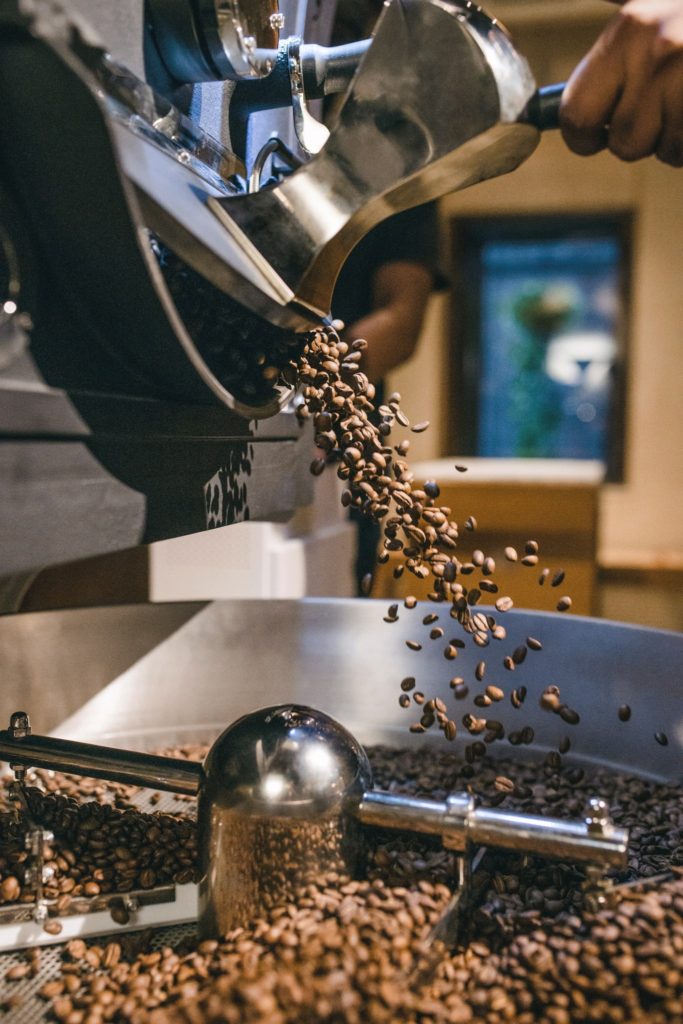
The fourth wave is all about people—the producers and the roasters—and their experiments to create a complex coffee with layers of flavours. “We can alter the flavour or unlock new flavours by intervening at various stages in the life span of the coffee bean. This can be at the plant-level or when the coffee cherry is ready to be pulped (the process of loosening the pulp from the bean) or at the drying stage, and of course, at the roasting stage”, says Ashish D’abreo, co-founder of Bengaluru-based Maverick & Farmer Coffee Roasters.
On the occasion of International Coffee Day, we look at what’s new in the artisanal coffee space in India.
The art of fermentation
Fermentation has been a mega food trend over the past couple of years and obviously, coffee growers are experimenting with it too. While it occurs naturally, the trick lies in controlling the process and fermenting the coffee just so. “Fermentation brings out the juiciness and complexity of flavours in a coffee. We carry out anaerobic fermentation, where the coffee cherries are placed in a tank of water and we monitor the pH level and sugar content. Under-fermented coffee is just a waste of resources, while over-fermentation produces an unappetising aroma of rotting fruit, so the process has to be quite precise,” explains Rahul Reddy, founder of the Mumbai-based Subko Specialty Coffee Roasters, which offers a 30-hour fermented single-origin (Ratnagiri Estate, Karnataka) coffee with notes of maple syrup, candied pecans and apricot.
Maverick & Farmer took things to another level at their Ajjikuttira Estates in Coorg, where third-generation coffee farmer (and co-founder) Tej Thammaiah fermented the coffee beans with orange juice to create ‘Orange You Curious?’ coffee. “Yeast, bacteria, and sugars are naturally present in both the coffee pulp and orange juice, which we ferment together for 24-36 hours,” explains Thammaiah. The beans are then shade-dried for about three weeks to produce a unique coffee with refreshing citrusy notes. “The point was to unlock flavours that are normally not found in coffee. We tried this with several other ingredients; some experiments failed but some were successful; for example, we have a micro-lot of lactic acid bacteria fermented coffee called ‘Milk and Honey’ launching in October,” he adds.
No smoke without fire
At the start of the drying stage, when the pulp has been stripped off, the tender green bean is porous and ready to imbibe any flavours or influences that it is exposed to. “A smoky note is a desirable flavour in coffee, but until now most of it came from really dark roasting coffee. While it’s enjoyable, you also get a lot of burnt flavour and the natural, delicate sweetness of coffee is completely lost. Our challenge was to bring in the smokiness without dark-roasting,” explains D’abreo. This resulted in “Ol’ Smoky” where the coffee beans are smoked with leaves and wood from fruit trees in a closed room for 13-14 hours. The source of the fire is not in the same room; rather the smoke is let in through a hole. “This introduces a nice smokiness to the coffee while leaving the natural sweetness and notes of Arabica intact. Ol’ Smoky is possibly the world’s first cold-smoked coffee and we are happy that we have been able to create something innovative”, adds D’abreo.
As the coffee beans dry further, roasters are experimenting with introducing new flavours—a favourite method is to ‘age’ the beans in whisky barrels to imbibe flavours such as oak, caramel, and vanilla. Mumbai-based Dope Coffee Roasters offers Double-Barrel Blend, a limited edition coffee from Harley Estate (Karnataka) that is aged in Amrut whisky barrels, producing a complex cuppa with a smooth, sweet finish. “Once the coffee is processed at the farm, we age it in the barrel for about a month. Since coffee green beans are so sensitive, they take on the malty, smoky aromas from the barrel. Unlike most artisanal coffee, this is 100 per cent Robusta, which we believe is India’s specialty and we are happy to see customers accepting it. We will shortly launch this as a cold brew as well,” says Rizwan Amlani, CEO and co-founder of Dope Coffee Roasters. Subko offers an interesting variant of this by cask-ageing cascara (skin of the coffee cherry) for 10 days, which is then cold-brewed for 16 hours and served with tonic water and jaggery.
Considering India’s status as prime coffee-growing country, there’s plenty of room for experiments at every stage of the coffee life cycle. “We have lived through the third wave and it’s time to take things forward. Our customers want to experiment; they are no longer fixated on one brand or blend and are excited to try new flavours. So our challenge is to see what else we can do to develop new tasting notes in coffee”, says D’abreo. The fourth wave is here to stay and Indian artisanal coffee brands are at the forefront of innovation. That’s sweet news for the coffee connoisseur.
source: http://www.vogue.in / Vogue / Home> Culture & Living / by Prachi Joshi / October 01st, 2020
Dr. Chaitra Narayan, an entrepreneur, has been appointed as the Syndicate Member of University of Mysore.
As per the notification issued from the Office of the Governor, the term of office shall be for a period of three years with effect from Sept. 22, 2020.
Dr. Chaitra, Founder of Codagu Agritech and Shivam Distillations, holds a Ph.D and MSc in Microbiology from the University of Mysore.
She was selected by Rashtrapathi Bhavan, New Delhi, for the Festival of Innovation and Entrepreneurship in 2018 to present her ideas before President Ram Nath Kovind. She also presented the Biocapsule technology, which is a ‘Make in India’ initiative before Prime Minister Narendra Modi.
Currently working for the farmers of Kodagu, Hunsur and Periyapatna regions since 2016 towards alternative farming which involves cultivation of medicinal and aromatic plants, it has successfully led to an increase in revenue generation of farmers along with an assured buy-back market.
Codagu Agritech is a Biocapsule Manufacturing Company which helps farmers go for safe and sustainable farming while Shivam Distillations focuses on providing farmers of Hunsur and Periyapatna regions to cultivate aromatic crops as an alternative to tobacco cultivation.
An aromatic plant processing and distillation unit has been set up in the region to provide the farmers with the market at their doorstep.
source: http://www.starofmysore.com / Star of Mysore / Home> News / September 29th, 2020
With the Government opening up the tourism sector following phased COVID-19 induced lockdown relaxations, Cauvery Nisargadhama, a prominent tourist destination near Kushalnagar in Kodagu, is witnessing a spurt in the number of tourists in recent days.
Yesterday, being a Sunday, the tourist spot recorded as many as 600 visitors and this number is significantly more when compared to last week.
Overall, the district recorded more number of visitors, thus bringing some hope for those dependent on the tourism industry. However, at the same time, tourists are disappointed that other most visited tourist spots such as Dubare Elephant Camp and the Golden Temple at Bylakuppe have not re-opened for tourists despite lockdown relaxations.
source: http://www.starofmysore.com / Star of Mysore / Home> News / September 28th, 2020
Public criticism forces ZP to seek government’s help to deal with the situation resulting from bad roads
The members of Kodagu Zilla Panchayat have met Minister for Rural Development and Panchayat Raj K.S. Eshwarappa and urged him to release a sum of ₹20 crore for urgent repair of roads that have become unmotorable following heavy rains over the last three years.
Kodagu had witnessed widespread floods and landslides three years in a row, resulting in extensive damage to the road infrastructure and causing hardships to the local people. The bad roads have led to resentment against the elected representatives, especially the members of the Zilla Panchayat whom the public are blaming for the apathy.
The public have been resorting to novel protests across the district demanding immediate repair and asphalting of damaged roads. There have been instances of public planting saplings on the potholed roads to vent their ire.
A delegation from the Kodagu ZP led by president Harish met Mr. Eshwarappa in Bengaluru on Tuesday and apprised him of the condition of roads besides the urgency for releasing funds for their repair and asphalting.
In a letter to Mr. Eshwarappa, Mr. Harish said tourists had been sharing messages and photos on the poor condition of roads in Kodagu on various social media platforms.
He sought an immediate grant of ₹20 crore for improving the condition of roads.
source: http://wwww.thehindu.com / The Hindu / Home> News> States> Karnataka / by Special Correspondent / Mysuru – September 24th, 2020
WELCOME. If you like what you see "SUBSCRIBE via EMAIL" to receive FREE regular UPDATES.
Read More »