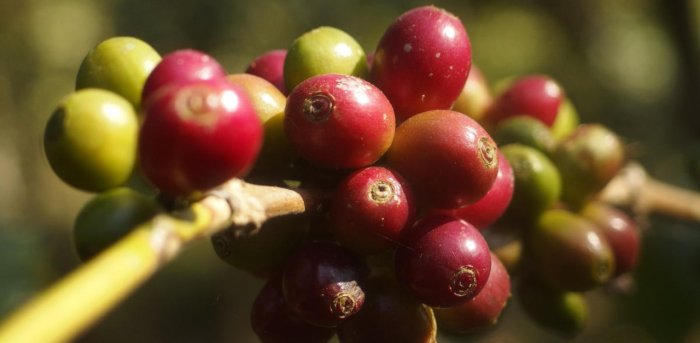
Tata Coffee is in preliminary talks to acquire 12,000 hectares of coffee plantations belonging to Cafe Coffee Day founder V G Siddhartha for Rs 1,200-1,500 crore, Business Standard reported.
Coffee Day’s operations, including personal assets and coffee plantations, is currently being handled by Siddhartha’s wife, Malavika Hedge, after he died by suicide last year in August amid allegations that he faced pressure from lenders, a private equity firm and harassed by tax officials.
This development comes on the heels of Tata Consumer Products (TCP) approving an exploration of acquisition of Cafe Coffee Day’s vending machine business. CCD is looking for a valuation of about Rs 2,000 crore for the same, a Bloomberg report said.
Siddhartha is believed to have availed loans worth Rs 2,000 from banks like HSBC, Rabo Bank, Lakshmi Vilas Bank, RBL and IndusInd Bank. Some of the lenders have already initiated recovery proceedings against the plantation assests last November.
“Discussions between Tata Coffee and Hedge started in February but were put on hold because of Covid,” a source told the publication. “Talks have resumed, though the deal may be in preliminary stages,” he added.
A family representative, however, told that the information is speculative and is to be treated as baseless rumours. The representative further stated that none of the lenders have invoked recovery procedings on plantation assets.
Apart from the coffeee plantations, Siddhartha also owned silver oak and timber plantations priced at about Rs 2,000 crore. His personal assets included The Serai Resorts, a luxury hospitality resorts.
Tata group has completed the restructuring of the consumer business and TCP’s joint venture with Starbucks progressing well. Deliberations to acquire the plantations are largely with the view of scaling up Tata Coffee’s land base. TCP holds 57.48 per cent stake in Tata Coffee.
source: http://www.deccanherald.com / Deccan Herald / Home> Business> Business News / by DH Web Desk / September 25th, 2020
Its distinct taste can be traced to the geographical speciality of its plantation in Coorg
Image Credit: Supplied / gulfnews.com
You experience the flavour of Levista, right from the beans to the coffee you drink. The beaming spirit of SLN Group is like a perfect cup of coffee — fulfilling, hearty, crisp, wholesome and so gratifying since 1956.
Levista’s distinct taste can be traced to the geographical speciality of its plantation, which is rooted in Coorg, the coffee capital of India. It is born from the rich expertise of a company that supplies coffee to leading Indian and global coffee companies, and is among the top ten coffee exporters of India. Millions of coffee drinkers wake up to Levista every morning. It is the coffee for coffee lovers, and across the world, people have placed their trust in the timeless flavour of its legacy.
Wafting across the world
Levista has definitive plans in place to spread its aroma across 10 countries, and has undertaken brand building associations with leading entities.
It also has Café Levista, located strategically across cities for discerning coffee lovers, to enjoy a wholesome experience with friends and loved ones. By 2025, 500 such outlets will be operational in India and overseas to deliver its rich taste and heritage. Levista pours the best quality brew made from handpicked beans, with offerings across instant, filter, and artisanal range of coffees.
An association befitting Kings
Recently, Levista has proudly associated with the Chennai Super Kings (CSK) as their official licensed coffee partner.
It’s a distinctive milestone for two big brands to come together during the Indian Premier League, as the action shifts to the UAE this season.
To make it truly memorable, there will be CSK combo packs which will be retailed as a limited edition, along with the team’s memorabilia.
It will indeed be an unbeatable mix for coffee and cricket fans, when the world is watching. The quality and flavour of Levista resonates with the vivacity and passion of CSK.
source: http://www.gulfnews.com / Gulf News / Home> Lifestyle> GN Focus Report / September 13th, 2020
With this move, Entri expects to accelerate its user adoption across India and especially in the Hindi belt.
This is Entri’s first major campaign across India and marks the on-boarding of a local language ed-tech player on the Dream 11 IPL 2020.
Local language learning app for jobs – Entri, has signed up former Indian and current Rajasthan Royals cricketer Robin Uthappa as its brand ambassador. It has also partnered with Hotstar to run ad campaigns in 5 different languages throughout the upcoming IPL 2020 season.
With this move, Entri expects to accelerate its user adoption across India and especially in the Hindi belt.
This is Entri’s first major campaign across India and marks the on-boarding of a local language ed-tech player on the Dream 11 IPL 2020.
“Robin was an easy choice because he was an early backer of Entri and also the fact that he could speak 4 different languages that Entri had courses in, helped make the decision. The user demography we are targeting are cricket crazy and we believe campaigns with Robin on Hotstar during the upcoming Dream 11 IPL season would help Entri grow faster across India,” Mohammed Hisamuddin, Founder & CEO – Entri.
The startup claims that it has doubled its revenue to $2.5 million ARR this quarter compared to the previous quarter. With Robin campaigns on Hotstar during the Dream 11 IPL, Entri aims to double the revenue again to reach the target of $5 million ARR by the end of this year.
The startup claims it has 3 million users out of which 90,000 are paid users and is now adding 10,000 users every day.Entri is a learning app for jobs in India that provides different types of learning content (mock/adaptive tests, flashcards, video lessons) in local languages for job aspirants, that prepares them to get a government or private job.
source: http://www.cnbctv18.com / CNBCTV18 / Home> StartUp> Business / by Palak Agarwal / September 16th, 2020
Karnataka State Industrial & Infrastructure Development Corporation Limited also plans to develop a helipad
Kushalnagar:
The Karnataka State Industrial & Infrastructure Development Corporation Limited (KSIIDC), the nodal agency for the development of airstrips across Karnataka, has listed the proposed airstrip at Kushalnagar as a priority one.
In its website, the KSIIDC has listed the 950-metre Kushalnagar airstrip as located adjacent to Sainik School with land availability of 49.5 acres. There is a proposal to develop the area as an airstrip and a helipad. An airstrip would have basic minimum facilities like the airstrip, terminal with security post, fencing and security by local Police.
The Government Order to develop Kushalnagar airstrip along with other airstrips at Chikkamagalur, Karwar, Raichur, Gadag, Bagalkot, Davanagere and Udupi was issued way back in 2018 after the Narendra Modi Government announced Regional Connectivity Scheme (RCS) or the Ude Desh ka Aam Nagarik (UDAN) Scheme. Among them, airstrips at Chikkamagalur, Karwar and Kushalnagar are being taken up on priority.
Last December, the Union Civil Aviation Ministry had selected Kushalnagar airstrip under the fourth round of RCS-UDAN Scheme. The airstrip was listed under unserved airport category — any airport at which there have been no scheduled commercial flights. But there were no bidders last time as the Kushalnagar airstrip was in nascent stage. Now that the land has been identified, the Government is looking forward to private companies to develop the airstrip under Public-Private-Partnership (PPP) model.
Agri Minister unhappy
The land for the airstrip has been identified behind the Kodagu Sainik School at Koodige. Over 49.5 acres land owned by Agricultural Department at Doddathoor village till the border of Basavanathoor village has been identified for the airstrip and in June last year, a team of officials from the Airports Authority of India (AAI) had visited the site and accepted the land proposal.
But Karnataka Agriculture Minister B.C. Patil has not taken the land issue lightly as 49.5 acres is being taken from his Department. At a recent meeting of Agriculture Department in Madikeri, the issue was brought to his notice by some officials and the Minister categorically stated that the Department land would not be handed over to the airstrip.
Justifying his move, Patil told the officers that the Department had 475 acres of flat land in Kushalnagar. A part of the land was later given to Sainik School which occupied over 66 acres. Likewise, over 15 Departments including Koodige Sports School, Dairy and Poultry Farms of Animal Husbandry Department and Horticulture Department have got lands.
“If we go on giving lands to all, our Department would suffer as we too need land for our agriculture research and extension activities,” Patil reasoned, refusing to hand over the land to the airstrip.
Ideal place for airstrip: MLA
Patil’s statement notwithstanding, Madikeri MLA Appachu Ranjan, who first proposed an airport to Kodagu when he was the Minister for Youth Services and Sports in 2012, told Star of Mysore that the land has been finalised and there is no question of changing it at this juncture.
“A 50-acre flat land is not available anywhere in Kodagu that is a hilly terrain. This land is ideal and we will get it for sure. As there is a Sainik School next to the airstrip, there is a proposal to establish an Aviation Training Academy where this Academy can train flight aspirants from Kodagu, Mysuru and surrounding regions. This is an ideal place for the airstrip, helipad and the Aviation Training Academy,” he explained.
source: http://www.starofmysore.com / Star of Mysore / Home> News / September 12th, 2020
Kodagu MP Pratap Simha this morning inspected the ongoing works of Mysuru-Bengaluru 10-lane Highway along with a team of officials. The 140-odd-km Highway is being upgraded to a 10-lane Highway and as an Economic Corridor. The 10 lanes includetwo service roads on either sides of the eight-lane main carriageway.
The NHAI has taken up the core works at an estimated cost of Rs. 7,400 crore. The project is under the Bharatmala Pariyojana Phase I approved by the Government of India. The MP told reporters that three new bridges will be built across River Cauvery. The road will have several bypass stretches and the main towns will not be touched.
One 7-kilometre bypass road will be constructed at Siddalingapura after Naguvinahalli between Paschimavahini and Naguvinahalli. This bypass road will not touch Srirangapatna and a new 300-metre long and 60-metre wide bridge will be constructed on River Cauvery at Ganjam and the bypass road will connect the existing Highway after K. Shettihalli.
The MP also inspected the 93-km six-lane Mysuru-Madikeri Economic Corridor Expressway Project along the Mysuru-Madikeri NH-275. The 115 km-long Expressway is being built to connect Mysuru and Madikeri. Once completed, the Expressway will not touch Mysuru and will link the Mysuru-Bengaluru Highway that is being expanded to 10-lane Highway. The NHAI has completed the boundary marking (stone fixing) exercise so far.
source: http://www.starofmysore.com / Star of Mysore / Home> News / September 11th, 2020
For Pandanda Shyla Naresh, a teacher in Kodagu, the past five months have been a learning period. Jackfruit, banana and bamboo plants in her farm offer ample opportunity for experiential learning. Lessons in value-addition have helped her utilise produce in the best way possible.
What started as an experiment in March after the uncertainty of the Covid-19 pandemic has now become a steady source of income. “All the three products I prepare – tender jackfruit, banana stem and bamboo shoot steeped in brine (salt solution) – are in good demand. I have sold 400 bottles of tender jackfruit and 300 bottles of banana stem in brine so far,” says Shyla. Ajjikuttira Pallavi Girish, who works as a non-teaching staff in a private college, has also taken up this activity.
These processed foods, prepared without artificial ingredients, are used in a variety of dishes, from pickles to cutlets and curries.
Fancy Ganapathy, who leads an initiative called ‘Kodagu’s Nature’s Best Food Cluster’, a subsidiary of Madikeri and Virajpet taluk Savayava Krishi Sahakari Niyamitha, supported the duo by providing technology and marketing; the forum that Fancy leads strives to encourage women entrepreneurs to make products using locally available fruits, spices and other produce. The women are supported at all stages – whether it is ideation, marketing or assistance in using technology to process the food.
During the lockdown, Fancy’s team saw more people joining the group, the members increased from 110 to 160; their product range also expanded, with the new members bringing in fresh ideas and new recipes. In all, the team boasts over 70 products, ranging from a variety of pickles and jams to oils and vegetables in brine. As many as 50 families took up an alternative livelihood with support from this forum.
With their main customers, the homestays in Kodagu closed during Covid-19, the team chose to go the route of online marketing. “We placed our products on online platforms and the sales have increased significantly as homemade products are trending. Now we are confident of marketing any number of products,” says Fancy. Natural ingredients, localised production (homemade) and a focus on quality have kept them in good stead.
Other women entrepreneurs have come up with unique product ideas as well. Take the case of Archana Muttanna from Kadanga village near Virajpet. She holds a doctorate in biotechnology and has been standardising various traditional products, particularly different types of fruit vinegar that are integral to Kodagu’s cuisine. Kachampuli vinegar or the concentrated juice of Garcinia gummi-gutta, which is sought after for its health benefits, is one of the main products she has been producing for the past one year.
With her production unit shut during the lockdown, Archana spent the free time researching various other products. On a friend’s suggestion, she made jams of the passion fruit, which is available in abundance locally; she then gave the fruit spread a unique twist by adding millets to the recipe.
Eco-crafts
Another woman entrepreneur who benefited from online marketing is Kusuma Hegde, in Uttara Kannada district.
She designs craft and utility items and ornaments from areca sheath, banana fibre, bamboo, and vegetable seeds. What started as a passion 15 years ago has become a source of subsidiary income for her family and provided employment to fellow villagers, mainly women.
Her objective was to transform agriculture waste and locally available raw material into works of art. In her journey from an art enthusiast to a crafts entrepreneur, she has created innovative designs like the areca cap, banana fibre folders and vegetable seed ornaments. Latest addition to her work are the unique rudrakshi pendants made using the rudrakshi fruit grown in their farm. She has expanded the scope of the handicraft production unit by setting up a laser engraving machine that helps her carve and etch designs.
Kusuma has also motivated and trained other rural women to take up value addition by forming Sahyadri eco-friendly solutions. Some college students have also spent their holidays at the workshop, learning on the job and using the money earned to pay their college fee.
However, Kusuma says she was inconvenienced when it came to marketing her products at various forums. “I mostly used to sell the product through homestays, tourist places and some outlets in Bengaluru and Mysuru,” Kusuma says. All her marketing avenues closed when the lockdown began and she had to stop production for a while.
Gradually, she noticed homemade food products being sold on online platforms and decided to try her luck. “I joined some social media platforms and started sharing my work and products and the response was amazing,” she says.
More than the seamless marketing, she prefers these platforms for the sheer joy of knowing the customers and getting their feedback. “Direct marketing has many benefits, especially when you create customised products,” she says.
In these uncertain times, these women from rural areas, from teachers to doctorate holders, have found ways to cope with the difficulties and support each other.
source: http://www.deccanherald.com / Deccan Herald / Home> Spectrum> Spectrum Statescan / by Anitha Pailoor / Bengaluru – September 11th, 2020
Maverick & Farmer, founded by three passionate coffee entrepreneurs, caters to coffee lovers who want new flavours in their brew. Co-founder Ashish D’abreo speaks to YSWeekender about the evolution of artisanal coffee and the company’s unique blends
Whether you love your coffee cold, blitzed to perfection with ice cubes, or brewed hot and delicious in your percolator, it is the drink that gives you that happy buzz and takes you through the day. But with time, people wanted more from their coffee. Some wanted it freshly roasted, a few liked it strong and black, while others wanted nutty, sweet, and tropical flavours in their brews.
Coffee can be served in a variety of flavours and textures (Pic credit: Shutterstock)
Over the years, coffees have been created and developed to suit every palate, right from house blends to different degrees of roasting to a gamut of innovations and textures .
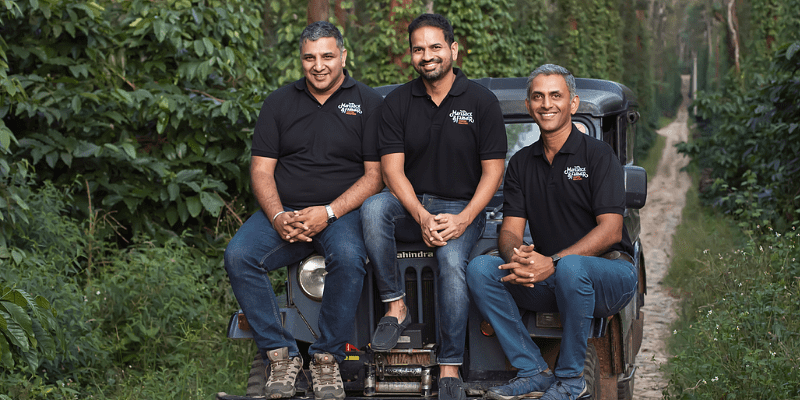
Maverick & Farmer Coffee Roasters started operations in 2018, founded by three passionate coffee entrepreneurs — Sreeram G, Tej Thammaiah, and Ashish D’abreo.
Coffee entrepreneurs (left to right) Sreeram G, Ashish D’abreo and Tej Thammaiah who founded Maverick & Farmer
Tej Thammaiah is a third-generation coffee farmer who looks after the Ajjikutira family estates in Pollibetta, Coorg. Ashish D’abreo is the head roaster and barista, while Sreeram G leads sales. The co-founders are on a constant endeavour to create innovative variants of coffee that imbibe different plantations and natural fermentation methods.
In an interaction with YSWeekender, Ashish D’abreo, Co-founder, Maverick & Farmer, tells us about the company’s latest flavours and the USP of the brand.
YSWeekender (YSW): Can you tell us about your latest coffees and what makes them special?
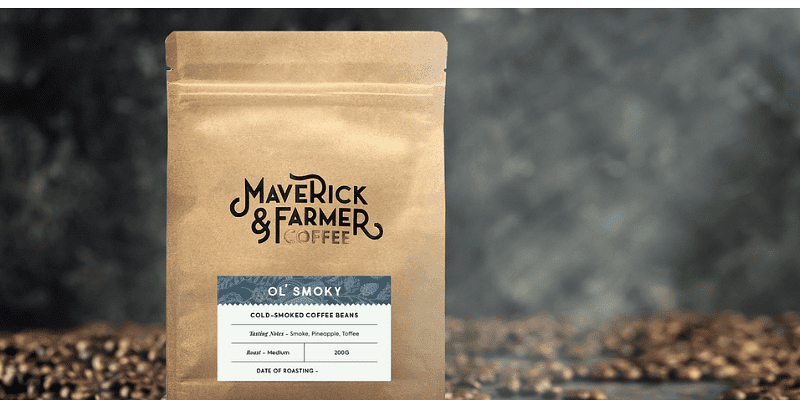
Ol’ Smoky coffee was launched recently
Ashish D’abreo (AD): In keeping with the pursuit of creating unconventional coffee, we have six coffee blends that are set to launch in a staggered manner over the next 12 weeks. These are a result of a lot of experimentation on the farm and in our roastery.
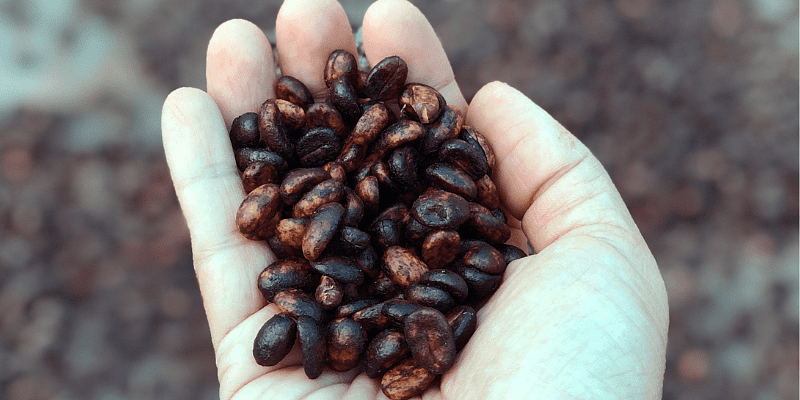
The first two that were launched last week are called ‘Ol’ Smoky’ and ‘Orange you curious?.’ Those who love a mellow, sweet-smoky lining to their favourite drink, our Ol’ Smoky creation is for them as it is prepared from freshly pulped top-grade Arabica green beans that are cold-smoked for 13-14 hours in a smokehouse.
Orange You Curious? is created by fermenting freshly pulped coffee beans with orange juice. Both the coffees are available on our website: www.maverickandfarmer.com
YSW: How was the idea of Maverick and Farmer conceived, and what is unique about your brand?
Maverick & Farmer coffee roasters are here to take Indian coffee past the third wave of coffee (which predominantly deals with origin, terroir, roasting, etc.) and introduce a whole new world of coffees that unlock so much more than what the species, terroir, or roasting can offer.
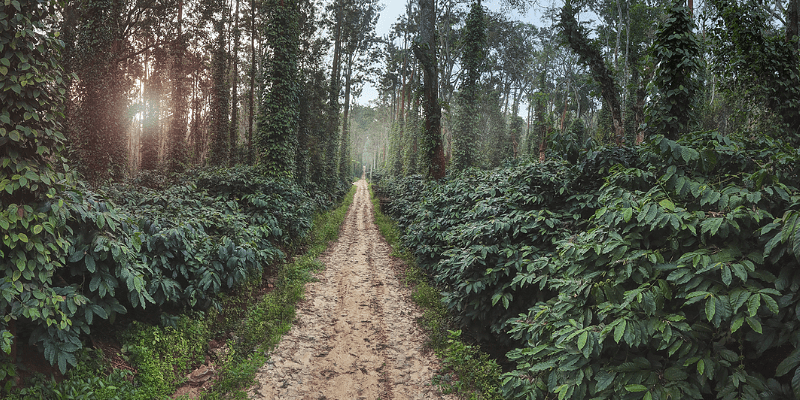
A coffee estate
There are two sides to our coffee brand — the farmer, with its in-depth understanding of coffee growing heritage, rules, experience, and rich knowledge — and the Maverick, the rule-breaker, boundary pusher, and experimenter. This is what makes us unique, and reflects in our coffee offerings.
Our coffee primarily comes from our farms in Coorg, but we also work with other farmers from different growing regions when we require coffees that bring a different uniqueness to our offering.
YSW: What is artisanal coffee?
AD: The term ‘artisanal coffee’ implies that the producer is growing, processing, roasting, etc., coffee from a traceable source, in a manner that highlights the unique flavours and tasting notes.
YSW: How do you come up with new flavours, and how are they tested out?
The flavour of the coffee depends on the quality of the coffee beans
AD: Most of the work happens during non-harvesting months — from March to October — and most work happens on paper. We’re constantly brainstorming on ideas, lines of thought, and wish lists. During the harvest season, we can actually put all of this into practice. We spend a lot of time together on the farm, executing our ideas, drying, roasting, tasting, and journaling.
YSW: Which countries offer the best kinds of coffee?
AD: I would say India because we have some very unique characteristics of our coffee. Apart from India, I would say, (and this is a personal opinion) — Kenya for the flavours, the importance given to R&D, and meticulous quality control; Guatemala for its bright, sweet notes; and Ethiopia for being the birthplace of coffee, as well as its floral and fruity coffees.
YSW: Can you give us some tips on how to make a good cup of coffee?
Freshly roasted coffee makes the best brew
AD: Brew coffee that’s freshly roasted. Stale coffee or dead coffee is unidimensional and gets the whole brewing process off on the wrong foot. Choose a grind size that’s perfect for your brewing equipment. Follow instructions only for the first time, and after that, adapt recipes and brewing techniques to what you think works best for you.
YSW: What are your plans for Maverick & Farmer in the days ahead?
AD: We don’t have much time until the next harvest. There’s still a lot of work left to be done, directions, and processes to be finalised. We have quite a few new products and café launches in the pipeline in the future.
(Images credit: Pavan Srinivas)
source: http://www.yourstory.com / Your Story / Home> Your Story> YS Weekender> Food and Beverages / by Asha Chowdary / September 11th, 2020
Dubare Elephant Camp to open from Sept. 15 with restrictions
Kushalnagar:
Many tourist destinations in Kodagu were thrown open on Sept. 1 after months of COVID-induced closure but the public response remained tepid. The District Administration is preparing to open all tourist spots from Sept. 15 and stakeholders are expecting a surge in the number of visitors.
Although most of the tourist spots in the lush green and hilly district of Kodagu, which were shut down due to the outbreak of COVID-19 pandemic in March, reopened on Sept. 1 after the State Government announced new relaxations a day earlier, some of the tourist spots coming under the control of Forest Department have remained closed.
These tourist spots included Dubare Elephant Camp, Mallalli Falls in Somwarpet taluk, Irupu Falls in Virajpet taluk, trekking and expedition spots including Thadiyandamol and the famed Mandalpatti have not reopened as a precautionary and safety measure. These spots are most likely to open on Sept. 15.
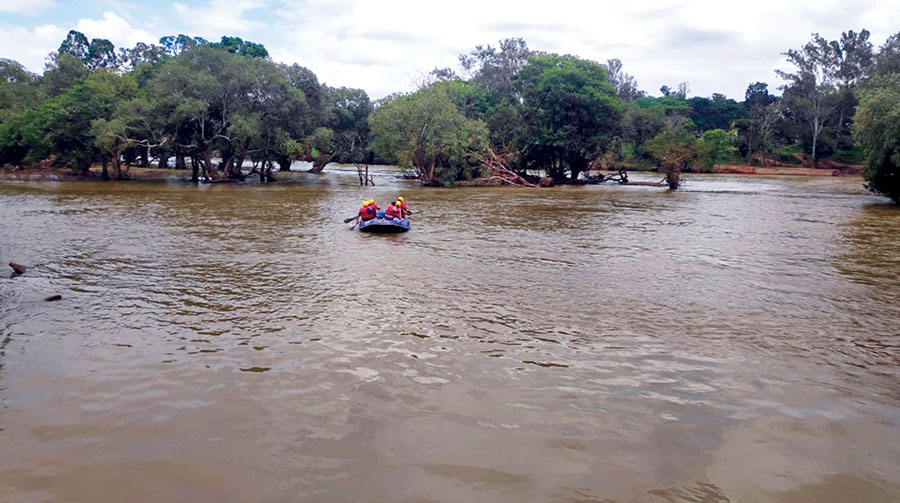
Rafting at Dubare will not be permitted as of now.
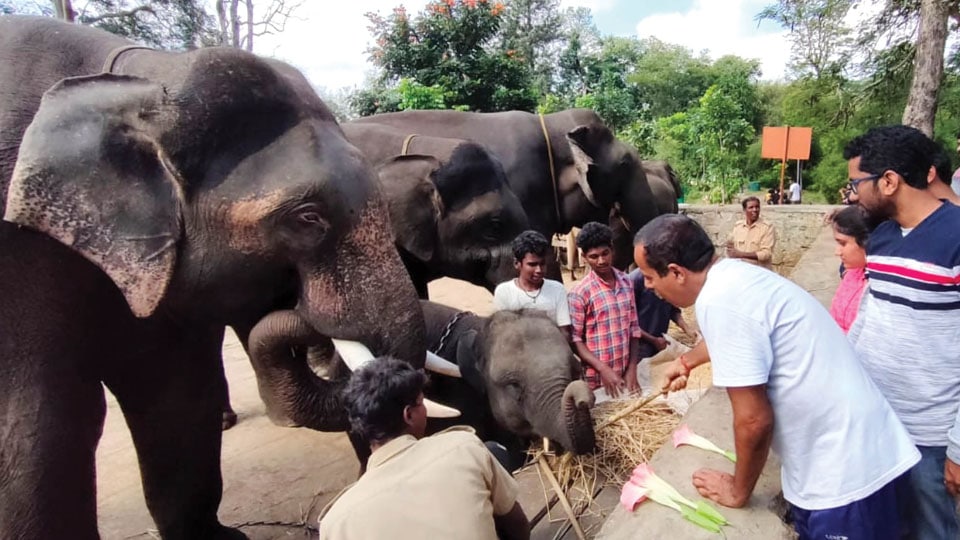
Among the places that are popular is Dubare Elephant Camp where tourists can see and experience tamed elephants in close quarters and take a look at the life of an elephant and its mahout and kavadi in a day. Also, the place is famous for White Water River Rafting. The Forest Department, however, is now constructing barricades in the wake of COVID pandemic to separate elephant enclosures from the tourists.
Earlier at Dubare, one could touch and feed the elephants and this was a popular activity for almost all the tourists, especially children. But henceforth, this activity will not be allowed and there will be a six-foot distance between elephants and tourists.
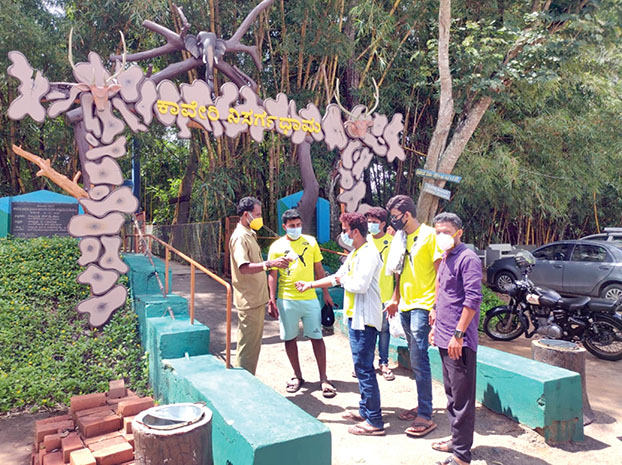
Rafting at Dubare has not been permitted along with boating activities at Cauvery Nisargadhama in Kushalnagar as at present, the water currents are strong and it is dangerous to raft or pedal a boat. These activities are likely to be open from November, said Forest Department officials. At present, barricading works are being undertaken at Dubare.
Visitors being thermal-screened before they enter Cauvery Nisargadhama at Kushalnagar
The tourist spots which opened on Sept. 1 included Abbe Falls, Raja’s Seat, Chikklihole Dam, Kanive Aqueduct and Cauvery Nisargadhama.
Nisargadhama, a beautiful 64-acre island near Kushalnagar on the Mysuru-Madikeri Highway, has been renovated and beautified by the Forest Department. The nature park, surrounded by River Cauvery, is an ideal weekend getaway for those who yearn to be amidst nature, far from the madding crowd.
However, visitors are not allowed to touch any animal at the Deer Park which has been completely fenced as a COVID-19 safety measure.
Nisargadhama recorded a footfall of 150 visitors on the first day of reopening on Sept.1 with all COVID-19 safety measures such as thermal screening, wearing of facemask and use of hand sanitisers. Besides, all sit outs and other seating spots are sanitised every day in accordance with the protocol.
Kushalnagar Range Deputy Range Forest Officer Vilas told Star of Mysore that they were expecting an increase in the number of tourists in the coming days. This apart, the tourist destination is likely to witness a good number of visitors on weekends and the Forest Department, which manages the tourist spot, is mulling on allowing visitors in batches if the crowd gets bigger. However, pedal boating is disallowed for now and the Department may allow its resumption only in November after getting permission from the Government, he added.
Raghavendra, Assistant Director of Tourism, Kodagu, said that all tourist spots, including the ones controlled by the Forest and Tourism Departments, will re-open from Sept. 15.
The Department has put all COVID-19 precautions in place at all tourist spots and centres, he said.
However, there will be no rafting for now at Dubare Elephant Camp and the visitors have to maintain a safe distance from the pachyderms, he added.
Golden Temple at Bylakuppeto remain closed till Oct. 26
The famous Namdroling Monastery — commonly called the Golden Temple — located inside Tibetan Camp at Bylakuppe on Mysuru-Madikeri Highway will remain shut for visitors till Oct. 26.
The Temple, a popular tourist spot close to the border of Mysuru-Kodagu district near Kushalnagar, was closed for visitors following the nationwide COVID-19-induced lockdown in March.
The temple will remain closed till Oct. 26 as a precautionary measure and no outsiders will be allowed entry into the Temple, according to Lobon, General Secretary of Namdroling Monastery, who manages the Buddhist Temple.
source: http://www.starofmysore.com / Star of Mysore / Home> Coronavirus Update, News / September 07th, 2020
Multi-millionaires, owning large coffee estates, in Karnataka are sneaking into protected forests and hunting wild animals
__________
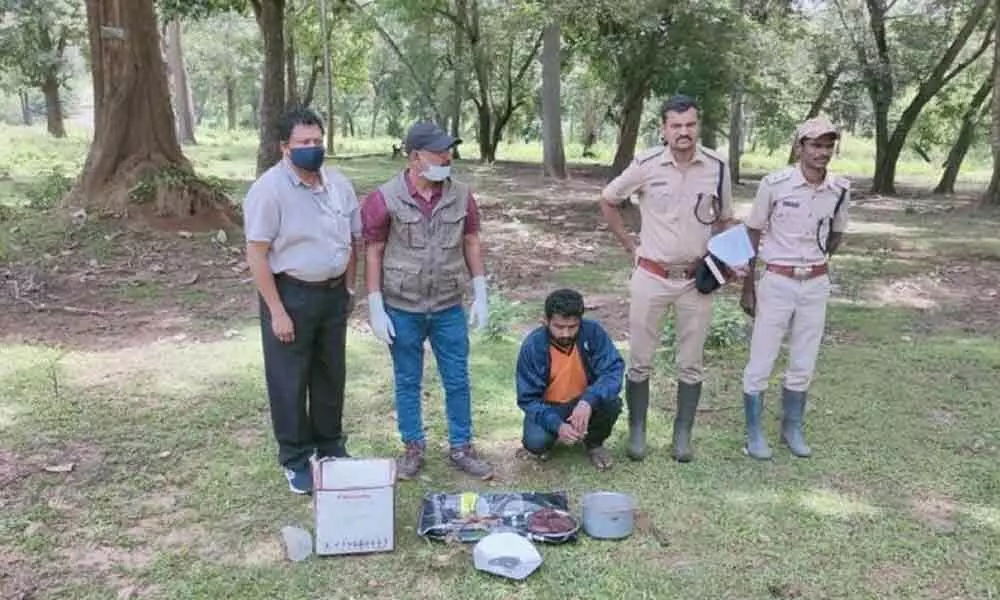
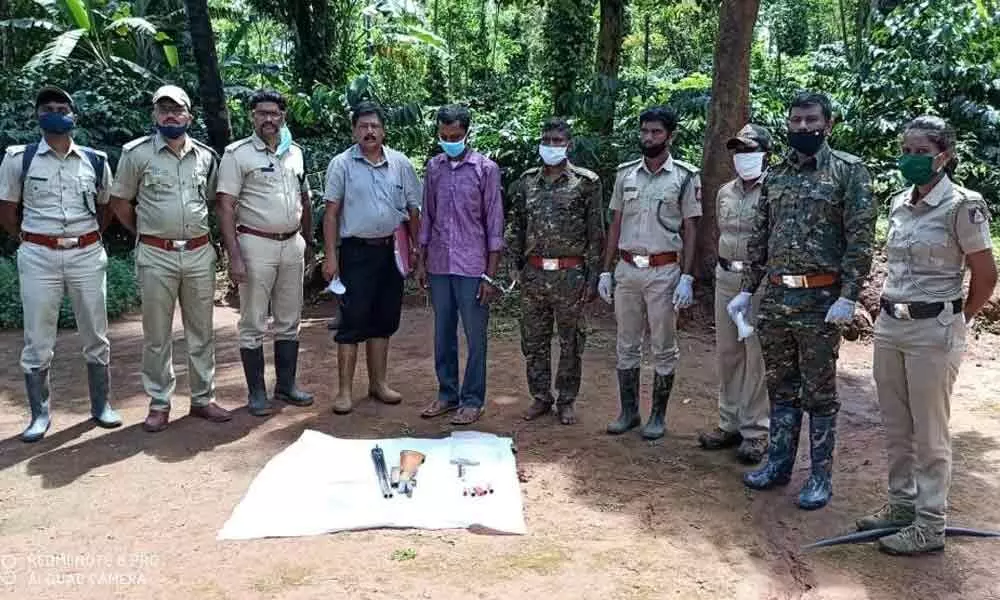
Multi-millionaires, owning large coffee estates, in Karnataka are sneaking into protected forests and hunting wild animals. According to sources, several poachers and hunters who have been arrested in the last three years are wealthy coffee estate owners, college students from affluent families and timber business owners. Some of them even belong to the Rifle Association of Karnataka.
On Saturday, the forest department officials in Kodagu district of Karnataka have arrested a gang of five hunters, three of whom own large coffee estates in the state. The arrested include Santosh, Sashi, Sharanu, Ranjit and Raju. The hunters and poachers used a licensed double barrel to shoot at a ‘big cat’ in Nagarhole Tiger Reserve.
The accused entered the protected wildlife area to kill a deer for its meat. When they spotted a ‘big cat’ lying in a pool of water, they fired gun shots at it. Forest officials believe that the tiger was lying in the water unmoved when the accused went near it. The officials believe that the tiger could have died due to health reasons.
The forest officials seized tiger claws and canines from the arrested. Three of the arrested, including Santosh, Sashi and Ranjit are from wealthy families who own coffee estates. According to sources, the coffee estate owners are poaching and hunting the wild animals with the help of locals. Among the five arrested, Raju was a casual labourer.
The accused used sharp knives, used in meat shops, to cut the tiger’s canines as they are strong, a forest official told The Hans India. The accused did not deskin the tiger but decamped with the big cat’s nails and canines. The forest officials recovered 13 claws and two canines, an official of the Indian Forest Service (IFoS) said.
The accused, who live in areas abutting the national park in Kodagu, shared the tiger nails between them after chopping off its paws. Cases have been registered against the arrested under the Wildlife Protection Act on charges of hunting, collection of animal parts, illegally entering a national park and using firearms.
This is not a lone incident of poaching during the lockdown. Earlier, a real estate tycoon was arrested for poaching in a wildlife sanctuary. Around 14 poachers killed two Sambar deer around Bhadra Tiger Reserve in Karnataka. The forest officials revealed that some wealthy families think it is adventurous to hunt wild animals. Officials also told The Hans India that wild animals are being hunted for exotic meat. Wild animals, including boar, sambar deer and bison are being poached for their meat. Hotels serve the meat for elite clientele, the officials said.
source: http://www.thehansindia.com / The Hans India / Home> News> State> Karnataka / by Srikanth Godavarthi / Hans News Service / September 05th, 2020
WELCOME. If you like what you see "SUBSCRIBE via EMAIL" to receive FREE regular UPDATES.
Read More »