Category Archives: Business & Economy

Most Tourist Places Reopen In Kodagu But Wanderlust Yet To Kick In

Dubare Elephant Camp to open from Sept. 15 with restrictions

Kushalnagar:

Many tourist destinations in Kodagu were thrown open on Sept. 1 after months of COVID-induced closure but the public response remained tepid. The District Administration is preparing to open all tourist spots from Sept. 15 and stakeholders are expecting a surge in the number of visitors.

Although most of the tourist spots in the lush green and hilly district of Kodagu, which were shut down due to the outbreak of COVID-19 pandemic in March, reopened on Sept. 1 after the State Government announced new relaxations a day earlier, some of the tourist spots coming under the control of Forest Department have remained closed.

These tourist spots included Dubare Elephant Camp, Mallalli Falls in Somwarpet taluk, Irupu Falls in Virajpet taluk, trekking and expedition spots including Thadiyandamol and the famed Mandalpatti have not reopened as a precautionary and safety measure. These spots are most likely to open on Sept. 15.
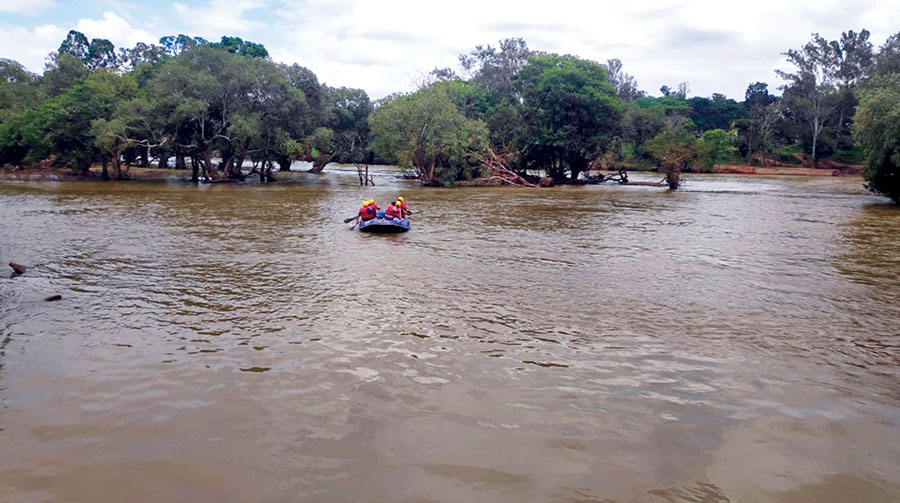
Rafting at Dubare will not be permitted as of now.

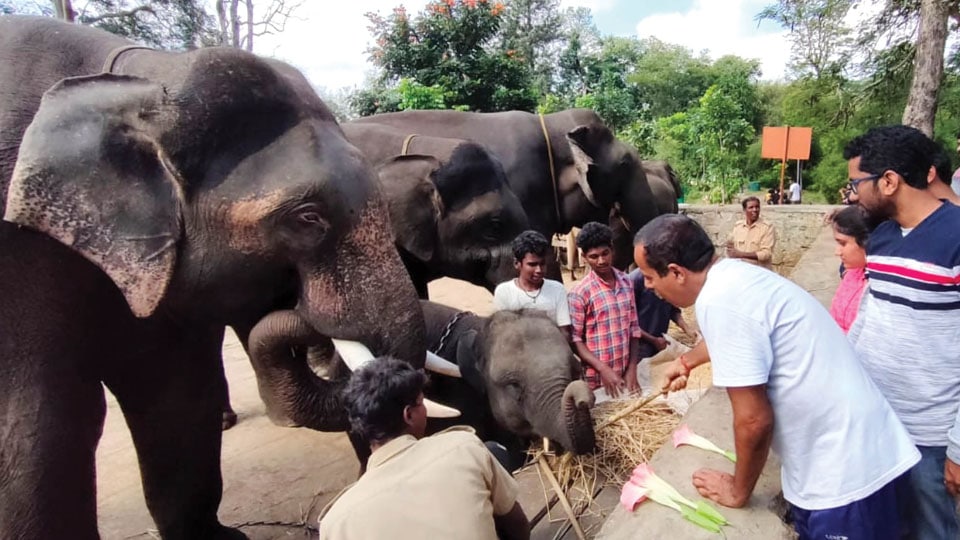
Among the places that are popular is Dubare Elephant Camp where tourists can see and experience tamed elephants in close quarters and take a look at the life of an elephant and its mahout and kavadi in a day. Also, the place is famous for White Water River Rafting. The Forest Department, however, is now constructing barricades in the wake of COVID pandemic to separate elephant enclosures from the tourists.

Earlier at Dubare, one could touch and feed the elephants and this was a popular activity for almost all the tourists, especially children. But henceforth, this activity will not be allowed and there will be a six-foot distance between elephants and tourists. 

Rafting at Dubare has not been permitted along with boating activities at Cauvery Nisargadhama in Kushalnagar as at present, the water currents are strong and it is dangerous to raft or pedal a boat. These activities are likely to be open from November, said Forest Department officials. At present, barricading works are being undertaken at Dubare. 
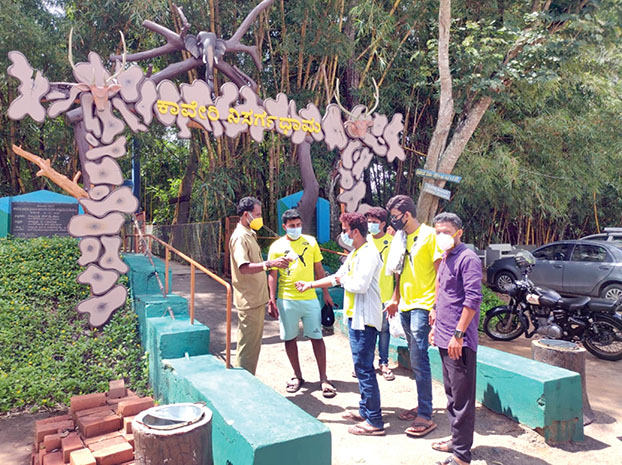
Visitors being thermal-screened before they enter Cauvery Nisargadhama at Kushalnagar

The tourist spots which opened on Sept. 1 included Abbe Falls, Raja’s Seat, Chikklihole Dam, Kanive Aqueduct and Cauvery Nisargadhama. 

Nisargadhama, a beautiful 64-acre island near Kushalnagar on the Mysuru-Madikeri Highway, has been renovated and beautified by the Forest Department. The nature park, surrounded by River Cauvery, is an ideal weekend getaway for those who yearn to be amidst nature, far from the madding crowd.

However, visitors are not allowed to touch any animal at the Deer Park which has been completely fenced as a COVID-19 safety measure.

Nisargadhama recorded a footfall of 150 visitors on the first day of reopening on Sept.1 with all COVID-19 safety measures such as thermal screening, wearing of facemask and use of hand sanitisers. Besides, all sit outs and other seating spots are sanitised every day in accordance with the protocol.

Kushalnagar Range Deputy Range Forest Officer Vilas told Star of Mysore that they were expecting an increase in the number of tourists in the coming days. This apart, the tourist destination is likely to witness a good number of visitors on weekends and the Forest Department, which manages the tourist spot, is mulling on allowing visitors in batches if the crowd gets bigger. However, pedal boating is disallowed for now and the Department may allow its resumption only in November after getting permission from the Government, he added.

Raghavendra, Assistant Director of Tourism, Kodagu, said that all tourist spots, including the ones controlled by the Forest and Tourism Departments, will re-open from Sept. 15.

The Department has put all COVID-19 precautions in place at all tourist spots and centres, he said. 

However, there will be no rafting for now at Dubare Elephant Camp and the visitors have to maintain a safe distance from the pachyderms, he added.

Golden Temple at Bylakuppe to remain closed till Oct. 26

The famous Namdroling Monastery — commonly called the Golden Temple — located inside Tibetan Camp at Bylakuppe on Mysuru-Madikeri Highway will remain shut for visitors till Oct. 26.
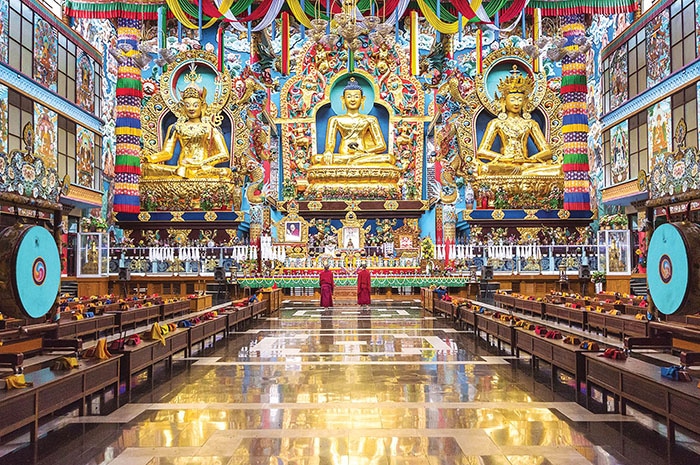
The Temple, a popular tourist spot close to the border of Mysuru-Kodagu district near Kushalnagar, was closed for visitors following the nationwide COVID-19-induced lockdown in March.

The temple will remain closed till Oct. 26 as a precautionary measure and no outsiders will be allowed entry into the Temple, according to Lobon, General Secretary of Namdroling Monastery, who manages the Buddhist Temple.

source: http://www.starofmysore.com / Star of Mysore / Home> Coronavirus Update, News / September 07th, 2020
Obituary – Maneyapanda C. Belliappa

Mysuru :

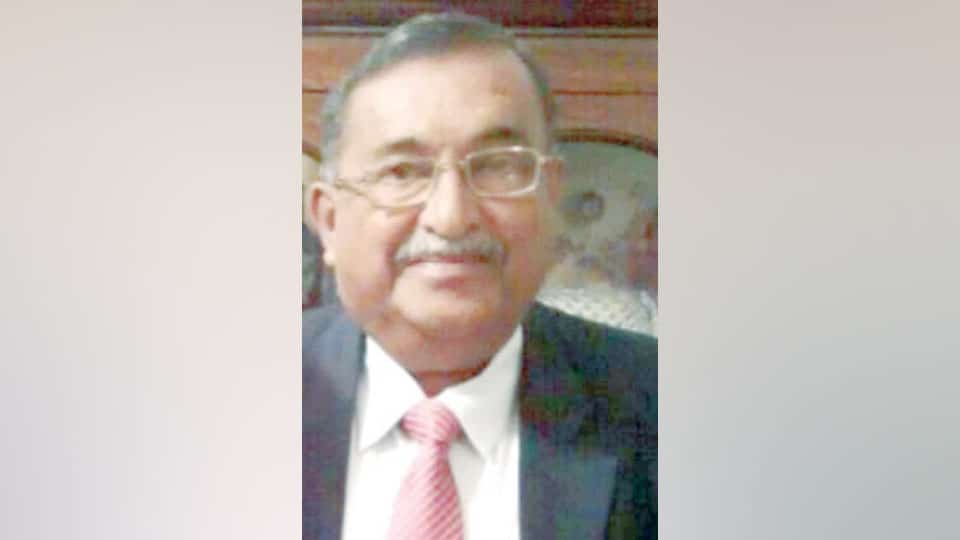
Maneyapanda C. Belliappa (Bollu), a coffee planter and a resident of Balaji in Gonikoppal, passed away last evening at a private hospital in city.

He was 78. He leaves behind his wife Revathy (Kollera), daughters, sons-in-law, grandchildren, sister, brother and a host of relatives and friends.

Last rites were performed at Muktidhama in Vijayanagar here this morning.

source: http://www.starofmysore.com / Star of Mysore / Home> Obituary / September 05th, 2020

Wealthy coffee estate owners hunting wildlife in Kodagu

Wealthy coffee state owners hunting wildlife in Kodagu

___________

HIGHLIGHTS

Multi-millionaires, owning large coffee estates, in Karnataka are sneaking into protected forests and hunting wild animals

__________

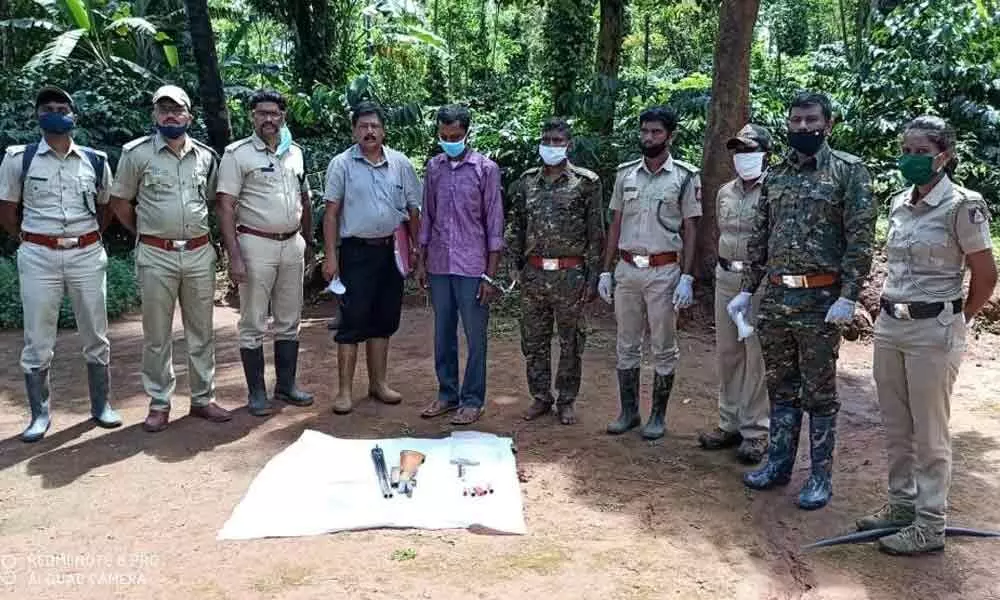
Multi-millionaires, owning large coffee estates, in Karnataka are sneaking into protected forests and hunting wild animals. According to sources, several poachers and hunters who have been arrested in the last three years are wealthy coffee estate owners, college students from affluent families and timber business owners. Some of them even belong to the Rifle Association of Karnataka.

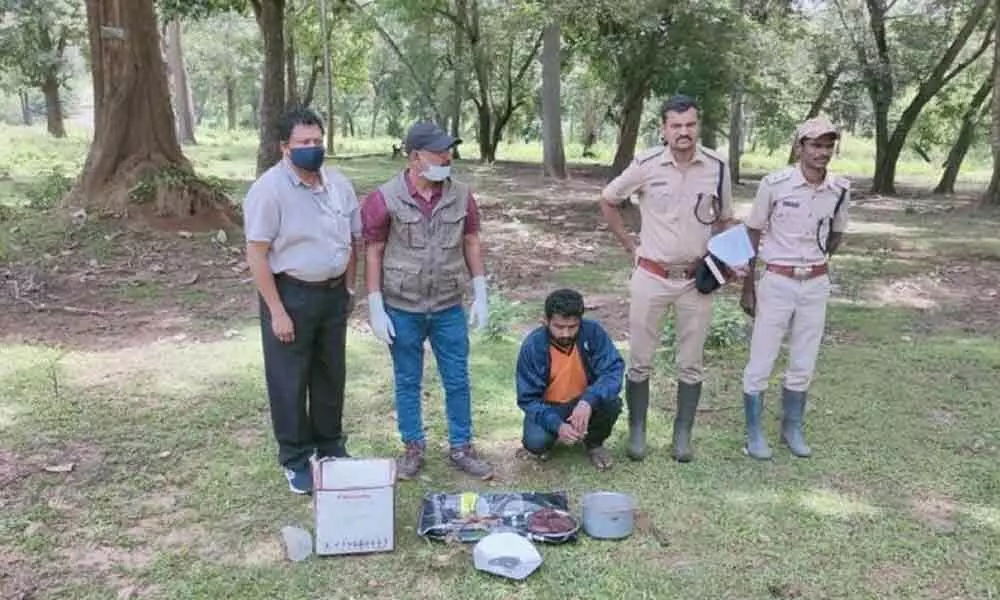
On Saturday, the forest department officials in Kodagu district of Karnataka have arrested a gang of five hunters, three of whom own large coffee estates in the state. The arrested include Santosh, Sashi, Sharanu, Ranjit and Raju. The hunters and poachers used a licensed double barrel to shoot at a ‘big cat’ in Nagarhole Tiger Reserve.

The accused entered the protected wildlife area to kill a deer for its meat. When they spotted a ‘big cat’ lying in a pool of water, they fired gun shots at it. Forest officials believe that the tiger was lying in the water unmoved when the accused went near it. The officials believe that the tiger could have died due to health reasons.

The forest officials seized tiger claws and canines from the arrested. Three of the arrested, including Santosh, Sashi and Ranjit are from wealthy families who own coffee estates. According to sources, the coffee estate owners are poaching and hunting the wild animals with the help of locals. Among the five arrested, Raju was a casual labourer.

The accused used sharp knives, used in meat shops, to cut the tiger’s canines as they are strong, a forest official told The Hans India. The accused did not deskin the tiger but decamped with the big cat’s nails and canines. The forest officials recovered 13 claws and two canines, an official of the Indian Forest Service (IFoS) said.

The accused, who live in areas abutting the national park in Kodagu, shared the tiger nails between them after chopping off its paws. Cases have been registered against the arrested under the Wildlife Protection Act on charges of hunting, collection of animal parts, illegally entering a national park and using firearms.

This is not a lone incident of poaching during the lockdown. Earlier, a real estate tycoon was arrested for poaching in a wildlife sanctuary. Around 14 poachers killed two Sambar deer around Bhadra Tiger Reserve in Karnataka. The forest officials revealed that some wealthy families think it is adventurous to hunt wild animals. Officials also told The Hans India that wild animals are being hunted for exotic meat. Wild animals, including boar, sambar deer and bison are being poached for their meat. Hotels serve the meat for elite clientele, the officials said.

source: http://www.thehansindia.com / The Hans India / Home> News> State> Karnataka / by Srikanth Godavarthi / Hans News Service / September 05th, 2020

In uncharted territory

Tasked with curating the India episode of ‘Gordon Ramsay: Uncharted’, Anurag Mallick & Priya Ganapathy  wondered what food adventures could they dish out to a

Gordon Ramsay is no stranger to India. In his 2010 series Gordon’s Great Escape, he learnt Lucknowi biryani, Rajasthani khud gosht, Bastar’s chapda chutney to blood sausages in Nagaland. In South India, he tried sattvik fare and cooked on a houseboat in Kumarakom. For Uncharted, Gordon would undertake a culinary adventure in remote parts of the world learning food secrets from emerging chefs and locals, ending in a Big Cook with his take on the region’s cuisine.

The Season 2 of the series would take him to Tasmania, South Africa, Louisiana, Guyana, West Sumatra, Norway and one wondered how India would match up. We drove via Coorg to Kannur in mid-October last year on a weeklong recce. The Mapilas, Kerala’s second-largest community, are known for their unique cuisine. But Uncharted went beyond the food to the source with emphasis on foraging.

Though kakka irachi (fried clams) is a kallu shaap (toddy shop) favourite, Valiyaparamba backwaters where women dove in shallow riverbeds for the elambakka (clams) was too far north. Kannur’s legendary thattukadas (food stalls) serve typical Malabari snacks like pazham pori (banana fritters) and ari kaduka — green mussels stuffed with rice dough. At Ezhara Beach, local fishermen rued the late monsoon’s effect on the sea’s salinity and the reduced spawning of the kallumakai (green mussels).They ventured on a two-hour boat ride to rocks mid-sea for a sizeable catch, holding their breaths for 4-5 minutes in each dive. Too dangerous and time-consuming!

Coorg Pandi curry

Our friends Nasir and Rosie acquainted us with some local fishermen. The best kallumakai came from Thottada and none knew these waters better than 70-year-old Moiuddin or Moidu ka. His group used the caravela or dragnet technique — two men waded in to spread out a wide net that the crew dragged in an arc to dredge the catch ashore. Moidu ran an eatery in Bengaluru before he settled for a quiet life by the sea. “Those were wild days when he was “Yeshwantpur ka Don,” his vivacious wife Shakila teased the mellowed Moidu, clearly showing who was boss now! He humoured her by baring his battle-scarred body — reminders of drunken brawls at his eatery. We told them about a crazy British chef who would learn the ropes from him —perhaps Shakila could teach him a fish curry? On the itinerary was a kachhkada serving fruit pickled in brine and chilli. Just the spice test Gordon needed (though he never made it to the kachh, a fiery red tamarind chutney used as a topping.)

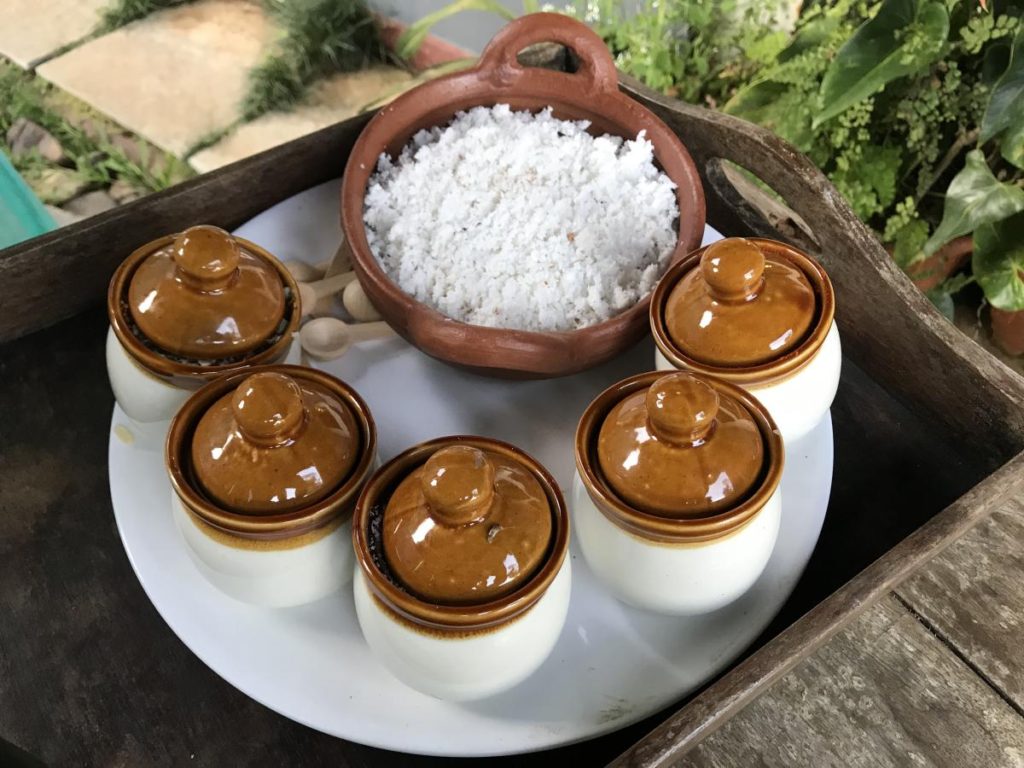
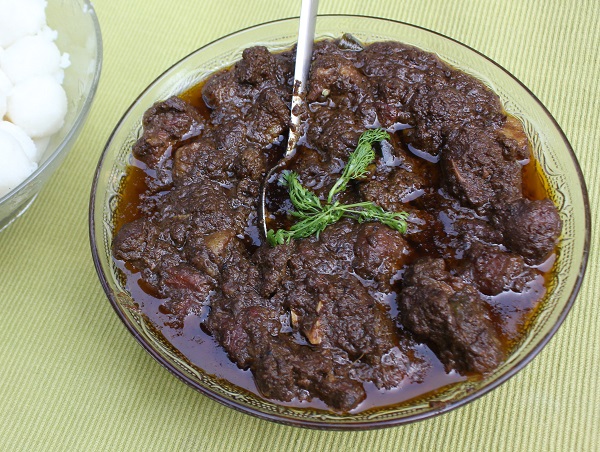
In Coorg, we were early to harvest honey with the Jenu Kurubas. Monsoon-centric activities like hunting for bemble (bamboo shoot), kumme (mushrooms), kembu (colocasia) and termay (fiddlehead fern) or collecting ripe Garcinia fruits to make kachampuli, Coorg’s signature black vinegar, was out. Seasonality dictated our choices and we couldn’t ask Gordon to come back in the rains! Coorg’s legendary pandi (pork) curry was on the menu but didn’t really have a foraging or adventure angle. Besides coffee, bitter limes would be in season, so we opted for chutta kaipuli pajji — the smoky flavoured chutney made with roasted bitter lime and Kodagu’s delicious kumbla (pumpkin) curry.

Vonekk Yerchi or smoked pork

On the pre-shoot scout in mid-November, the production team unanimously chose Coorg as the Big Cook locale. The network zeroed in on Chef Sri Bala from Chennai, an authority on ancient Chola cuisine and Kerala local Harish. The India shoot was sandwiched between Indonesia and Guyana. 

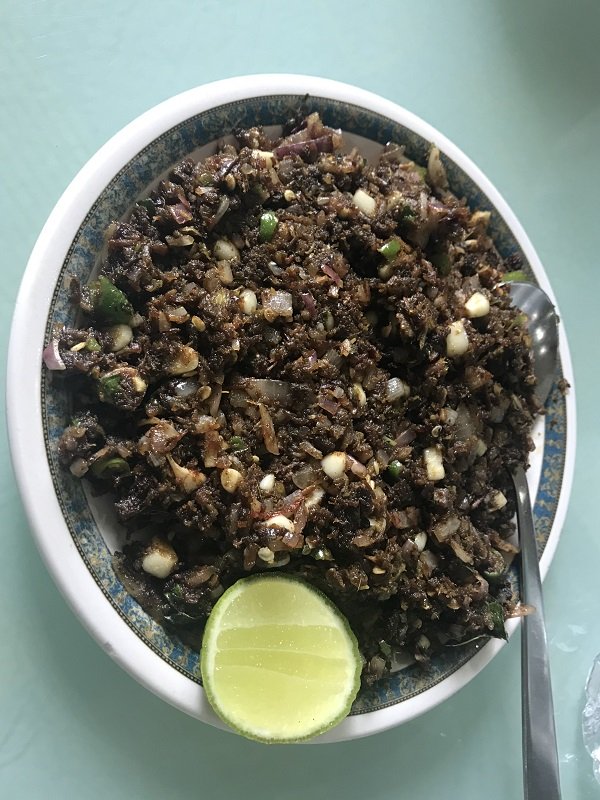
Come coffee picking season, estate workers are beset by ant nests. Enter chigli (Weaver Ant) chutney, a dish not native to the Kodavas but consumed by the Gowda community from neighbouring Malnad. He dubbed his attempt to catch the ant nest ‘the funniest TikTok dance ever’. Pavithra from Mudigere helped us make the chutney in a grindstone. Eventually, chigli chutney was the ace up Gordon’s sleeve though he didn’t bargain for the ants in his pants! At the Big Cook, the graceful Kodava ladies fearlessly critiqued his pandi curry. “Less kachampuli, more spice… ’cos we are all spicy ladies,” they chimed in. Ramsay promised to return with his mum. The latest in the grapevine is that he plans to open a restaurant in Kerala! Wouldn’t that be a coup?

source: http://www.deccanherald.com / Deccan Herald / Home> Living> Living-Front Page / by Anurag Mallick & Priya Ganapathy / September 01st, 2020

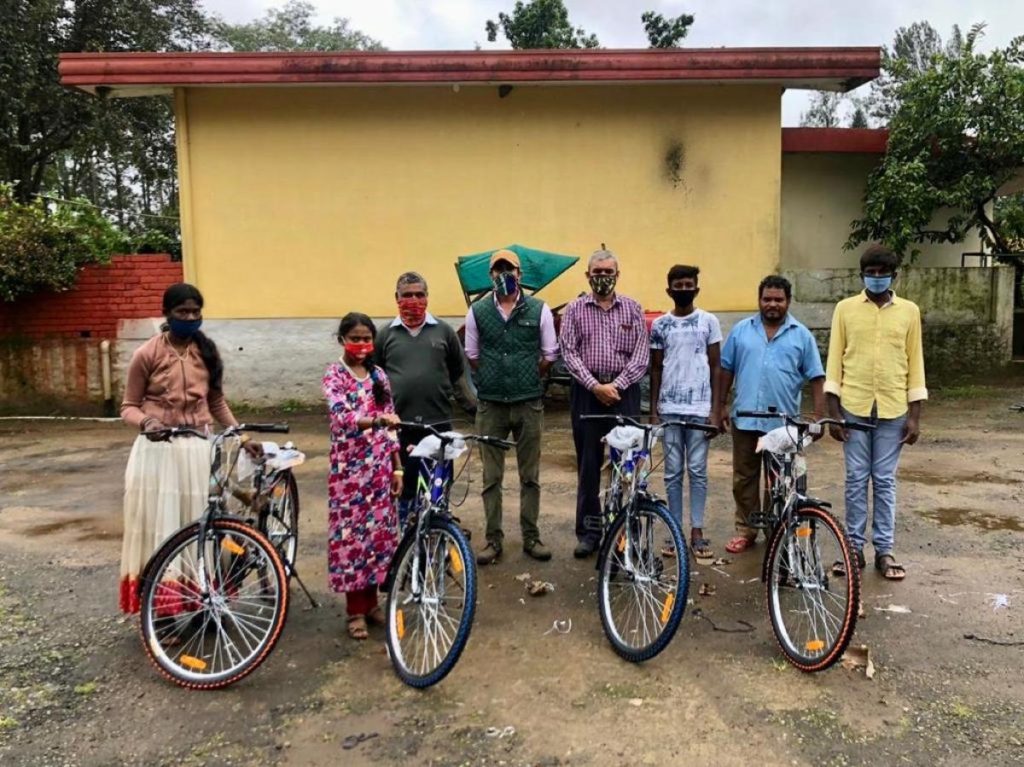
Father-son duo donate bicycles in Suntikoppa

Noble Initiative

Planters and father-son duo Vinod Sivappa and Vishal Sivappa donated bicycles to the needy workers and students. DH Photo

Extending a helping hand to the needy students and agricultural labourers, a father-son duo from Suntikoppa have donated new bicycles to labourers and students to help them commute easily.

Planters and father-son duo Vinod Sivappa and Vishal Sivappa donated bicycles to the needy workers and students. DH Photo Extending a helping hand to the needy students and agricultural labourers to reach from one place to another. The livelihood of the labourers, who are dependent on plantation work, was affected due to the lack transportation facility.

Realising this Vishal Sivappa and his father Vinod Sivappa, planters from Suntikoppa, distributed bicycles to the needy workers and students.

Vishal said that his parents and grandparents were involved in social service. During the current situation, people are in need of assistance as their livelihood is affected.

“I see many students walking 5 km to 10 km to their schools and workers in various estates walk several kilometers on a daily basis. Donating bicycles would definitely help them reach their destination much faster. This is very small contribution and I am really happy to help them,” he added.

Vishal’s father Vinod is also engaged in farmer welfare programmes over the past few years. Vinod said that he felt proud to extend his support to his son’s initiatives directed towards the welfare of the needy labourers.

source: http://www.deccanherald.com / Deccan Herald / Home> State / by DHNS / August 12th, 2020

Power Supply In Kodagu: Electricity Department Deploys More Men

Mysore/Mysuru:

Electricity infrastructure in several part of Kodagu has broken down completely and Chamundeshwari Electricity Supply Corporation (CESC) is standing in solidarity with the beleaguered district as it recovers from the ravages of heavy rains, floods and landslips. 

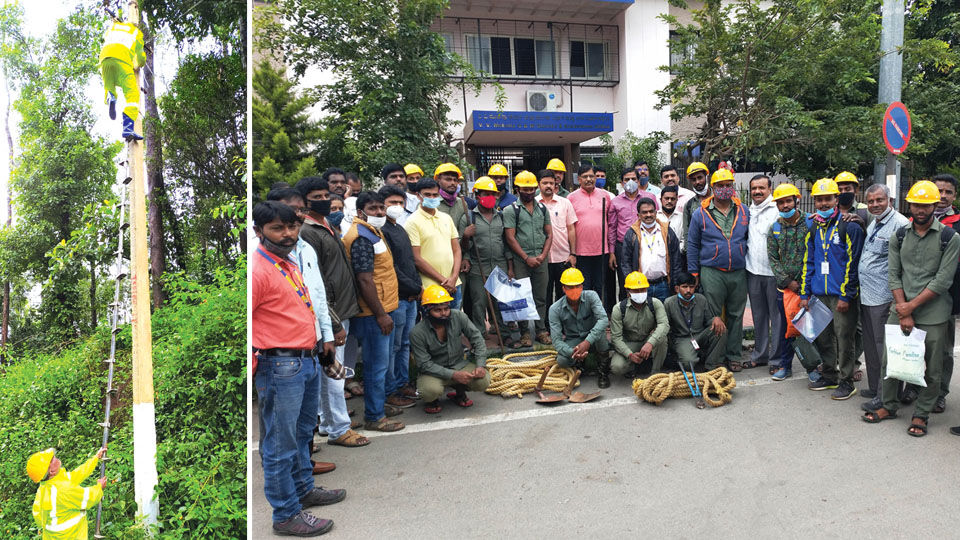
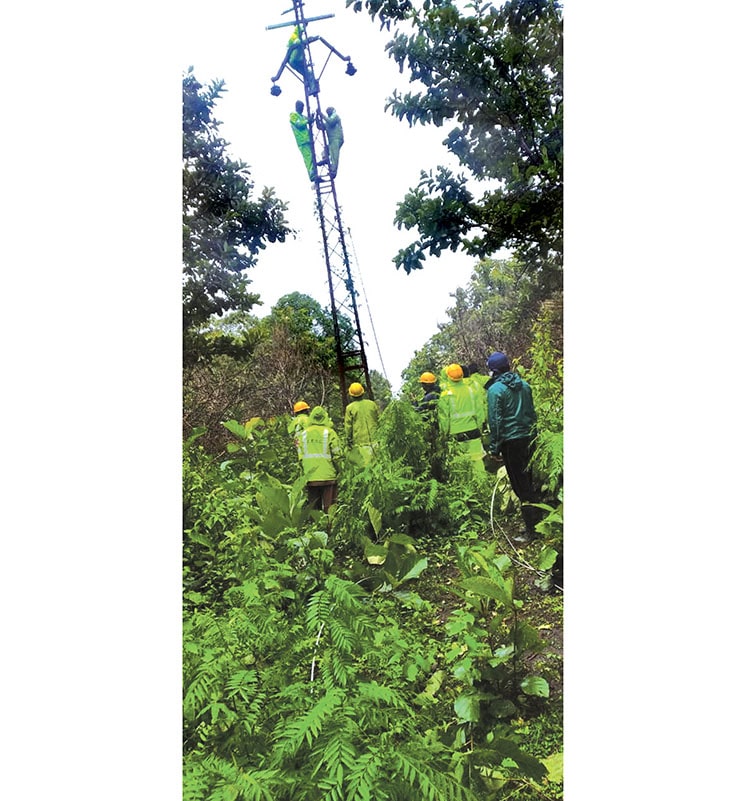
Gusty winds have brought down many electricity poles, resulting in the snapping of electricity cables. CESC, entrusted with the responsibility of power distribution in the Old Mysore Region, is extending a helping hand to Kodagu in these testing times. The Corporation has specially deputed over 75 of its personnel, both skilled and unskilled to Kodagu to help restore power.

The personnel have been drawn from Hassan, Mandya and Mysuru. The team led by Executive Engineer Yogesh and Assistant Executive Engineer R. Rudresh have left to Kodagu on Monday and have been actively involved in restoring the snapped power lines, transformers and fallen electric poles. 

As per the statistics released by the Kodagu District Administration, as many as 1,674 electricity poles, 60 transformers and many kilometres-long electricity wires have been damaged. Over 335 electric poles have fallen in Madikeri Taluk and already 176 poles have been replaced with new ones. 271 poles that have fallen in Virajpet Taluk has been replaced so far with 139 new poles and of the 202 poles that have collapsed in Kushalnagar, 90 poles have so far been replaced. 

In Somwarpet Taluk, 366 poles have crashed due to wind and tree fall and till now, 191 new poles have been erected. In Gonikoppa region, 440 poles have fallen and till now, 266 poles have been replaced. Among the 1,674 poles that have fallen in the district, 864 have been replaced and the remaining 810 poles will be replaced in three or four days, CESC officials said. 

As over 60 transformers have been damaged in Kodagu at various places, power supply to over 220 villages and towns have been disrupted. These transformers have been repaired and restored by erecting new poles. Till now, power supply to 182 villages has been restored. 

First, the CESC personnel took up the restoration work in the areas where the floods have receded. They eventually worked on other locations. In the areas where earth movers can negotiate the roads, power supply has been restored fast after replacing the damaged poles. There are several inaccessible areas where linemen have to travel by foot and dig the ground to replace fallen poles. This manual work is taking time, officials added. 

CESC has provided its personnel in Kodagu with various protective equipment like face masks, sanitisers, rain coats, boots, helmets, ropes and digging and levelling tools. Also, one truck has been sent to carry poles from one place to another. The team that left Mysuru on Monday  (Aug. 10) will perform duties till 10 days after which another team will proceed to the flood-ravaged district, officers added. 

Accommodation facilities have been provided to CESC personnel at schools where there are good toilets and drinking water facilities. Food for them is being provided by villagers in remote areas. Also, each lineman has been given Rs. 5,000 cash for his food needs, officers said.

source: http://www.starofmysore.com / Star of Mysore / Home> News / August 13th, 2020

Karnataka govt to float EOI for heliports at Coorg, two other cities

Karnataka hopes to float an Expression of Interest (EOI) for heliports at three sites including Coorg and Chikmangalur within the next 45 days, said Kapil Mohan, Principal Secretary, Infrastructure, Karnataka on Friday.

“For tourism (purposes) we are going to make helipads in Coorg and Chikmangalur. (We) will float Expression of Interest which will factor in what facilities will be available under the Regional Connectivity Scheme. Some State support will also be given in terms of statutory clearances, land leases and other basic facilities which are required,” the official said while participating in a Webinar on ‘Helicopters — enhancing regional connectivity and opportunities during the health crisis’, jointly organised by the Ministry of Civil Aviation (MCA) and Federation of Indian Chambers of Commerce and Industry (FICCI).

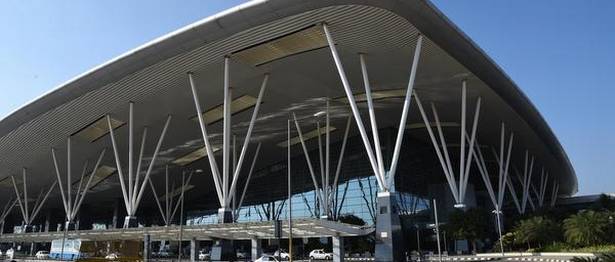
The official also announced that the helicopter service from Bengaluru airport is being expanded to two more points in the city. The service, is “at pause” right now. The service was earlier being provided between Bengaluru International Airport and TCS’ global headquarters.

“We have identified two more spots and we will refloat the Expression of Interest. All the support required in terms of statutory clearances and other issues will be taken care of by the State government in collaboration with the selected operator. These include landing rights and issues concerning local bodies,” Mohan said.

Sajeev Razdan, Chairman and Managing Director, Pawan Hans Helicopters Limited, said that the State-owned helicopter operator will soon be launching scheduled services in Manipur and Assam sectors also. PHHL is the only helicopter operator in the country which has been granted an Air Operator status for Scheduled Operations.

He said that the State-owned helicopter operator recently carried a solar panel from Leh to a remote region of Ladakh to ensure that light is available in that village.

source: http://www.thehindubusinessline.com / Business Line / Home> News / by The Hindu Bureau, New Delhi / New Delhi, August 07th, 2020

Now, farmers can conduct survey of crops using app

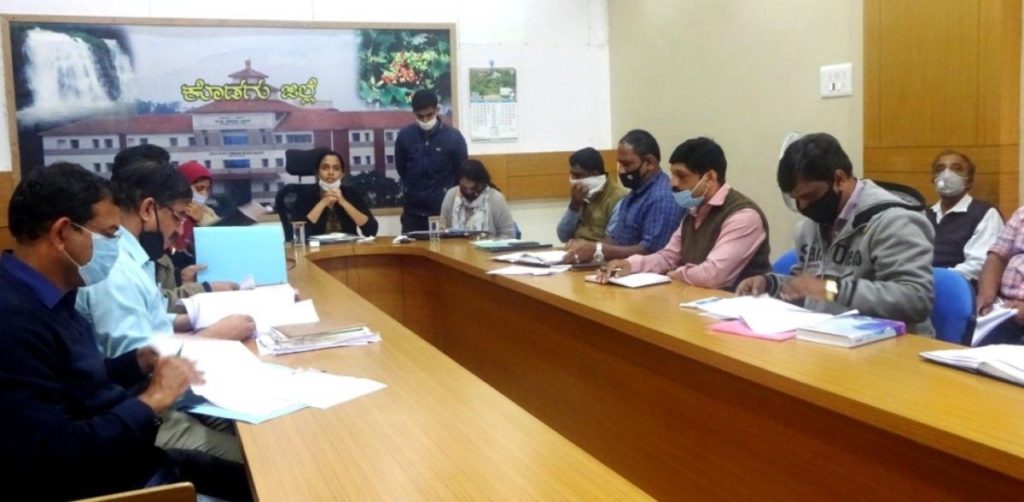
Deputy Commissioner Annies Kanmani Joy chairs a meeting in Madikeri on Friday.

Now, farmers can directly enter the details of the crops they have cultivated in their RTCs (record of rights, tenancy and crops) with a few clicks on the app on crop survey.

The last date for entering the details on the crop survey is August 24. The ‘Farmers Crop Survey App 2020-21’ has been developed by e-governance department of Karnataka, said Deputy Commissioner Annies Kanmani Joy.

Chairing a meeting on implementation of the crop survey, she said the farmers should mention survey number, hissa number of the land owned by them and upload details on agriculture crops, horticulture crops and other forest crops cultivated by them.

The DC said farmers had to take photographs of the crops cultivated on the land and fill in the details. Depending on crop details and extent of area cultivated that are documented in the pahani, government will announce support price and compensation during the natural calamities. The crop survey will benefit in documenting the details of the crops cultivated in pahani, Annies said

If farmers are unable to conduct survey of crops on their own, then they can seek the assistance of private individuals to document the details after August 24, she added.

The details uploaded by the farmers will be verified by the officials. The farmers can visit Raitha Samparka Kendra, revenue inspectors, village accountants and assistant agriculture and horticulture officials, for any query.

Agriculture Minister B C Patil, in a video conference with Deputy Commissioner, said that the crop survey should be implemented like a ‘Utsava’. For the first time in the country, the crop survey is carried out by the farmers themselves using an app.

In the past, objections were raised when the crops that the farmer claimed to have grown was different from the one recorded on the RTC. As the farmers themselves take up the survey, the mistakes in the RTC can be avoided, Annies said. 

The ‘Farmers Crop Survey App 2020-21’ can be downloaded from Play Store. A farmer should register his name and mobile number using an OTP. The farmers should select district, taluk, hobli, village and add survey number of the land and then furnish details of the crops cultivated.

MLA M P Appachu Ranjan visited the rain-affected Makkandooru and other areas on Friday. He inspected the affected farmland, houses and public roads in Makkandooru, Kadagadalu, Hodduru Gram Panchayat jurisdiction along with officials.

source: http://www.deccanherald.com / Deccan Herald / Home> State> Karnataka Districts / by DHNS, Madikeri / August 14th, 2020

Boundary Survey For Mysuru-Madikeri Expressway Begins

MadikeriMysureKF21aug2020

Mysore/Mysuru:

The National Highway Authority of India (NHAI) has begun boundary marking exercise and land acquisition survey for the four/ six-lane Mysuru-Madikeri Economic Corridor Expressway Project along the Mysuru-Madikeri NH-275.

The 115 km-long Expressway costing Rs.6,000 crore is a fully Centrally-funded Project including land acquisition. The new Highway is being built to connect Mysuru and Madikeri.

Once completed, the Expressway will not touch Mysuru and will link the Mysuru-Bengaluru Highway that is being expanded to 10-lane Highway.

The Expressway will connect Madikeri with Bengaluru bypassing Suntikoppa, Kushalnagar, Bylakuppe, Koppa, Kampalapura, Periyapatna, Kallbeta, Gonikoppal Deviation Road, Hunsur and Mysuru.

The Expressway will touch the Mysuru-Bengaluru Highway at Paschimavahini near Srirangapatna.

The first stage of the survey has been completed till Basavanahalli on the Srirangapatna-Bylakuppe-Madikeri Road. Now, the NHAI and Revenue Department officers have been marking boundaries and planting stone benchmarks near Teppadagandi in Kodagu district till the Highway stretch of Basavanahalli.

According to NHAI officials, a new bridge will be built across River Cauvery near Teppadagandi Hanging Bridge. The road will have four/ six lanes as per the specifications mentioned in the NHAI website. A giant circle will come up at Teppadagandi and will cross the Konanur-Thalassery State Highway to link Aanekaadu via Basavanahalli.

Officials said that after the boundaries are marked, the initial works will begin. Notices will be issued to the land owners and their objections will be recorded. The compensation has been fixed and the process of identifying the land owners who are eligible for compensation was on. This survey process is being conducted along with the Revenue Department.

Speaking to Star of Mysore, Special Land Acquisition Officer Devaraj said that the first phase of the joint survey work of 42 kilometres of the Expressway has been completed. “We are taking along the Revenue officials as they will have extensive knowledge of the land and its owners as per revenue records. We are aiming to complete the entire survey — including bridges and bypass roads — by the end of December and submit the report to the Government. Once the compensation is disbursed, the road construction works will take one-and-a-half to two years to complete,” he said.

The Expressway has a design length of 93 kilometres and bypasses have been proposed having an aggregate length of 84 kilometres at Kushalnagar, Periyapatna, and combined bypass for Hunsur, Bilikere and Mysuru. It will have a road median and the alignment for the new corridor has already been done. It will considerably reduce the journey time between Madikeri and Bengaluru and also connects several cities in North Kerala.

The existing four-lane road between Mysuru and Madikeri (NH-275) has reached a saturation point and there is an urgent need to build a separate road. Travelling on the existing Highway is a nightmarish experience especially during weekends and holidays when thousands of vehicles move between Mysuru and Madikeri. Once completed, the Expressway will reduce the journey time between Madikeri and Bengaluru to five hours from existing seven hours.

source: http://www.starofmysore.com / Star of Mysore / Home> News / August 19th, 2020

Fair trade diaries: Arshiya Bose of Black Baza Coffee walks us through the basics of her coffee farming movement

Have you explored Black Baza Coffee's lineup, yet?
Have you explored Black Baza Coffee’s lineup, yet?

Very few coffee lovers actually research how ethical their go-to fair trade coffee brand really is, but Black Baza Coffee ‘s biodiversity-friendly, fair-trade coffee production is going the whole mile when it comes to ethically responsible community-building. The Bengaluru-based label is committed to the idea of ‘creating a local, participatory and meaningful movement for coffee.’ During her PhD in coffee and sustainability, Arshiya Bose, the founder of the label explored some functional biodiversity-friendly coffee farming practises which helped her get a better perspective on responsible production.

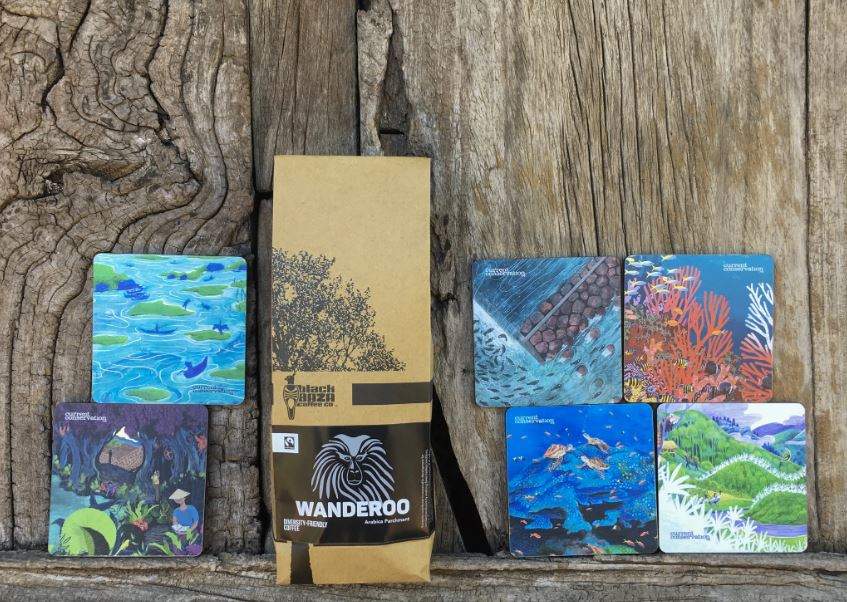
The rich and balanced Wanderoo

“Through my research I met several smallholder coffee producers, and the brand is committed to the idea of helping them grow. Black Baza Coffee is not just about eco-friendly practises but we focus on biodiversity conservation. We take a look at how various wildlife and plants make use of the coffee farms and how they can be conserved on these farms, which also includes changing the way we farm. So we go beyond organic, from looking and understanding habitats to sticking to our all-natural agenda,” Arshiya tells us. Not to mention Black Baza’s line-up is amazingly diverse, featuring coffees with layered flavour profiles, be it fermented Robusta with spicy flavour notes or washed Arabica with a balanced acidity.

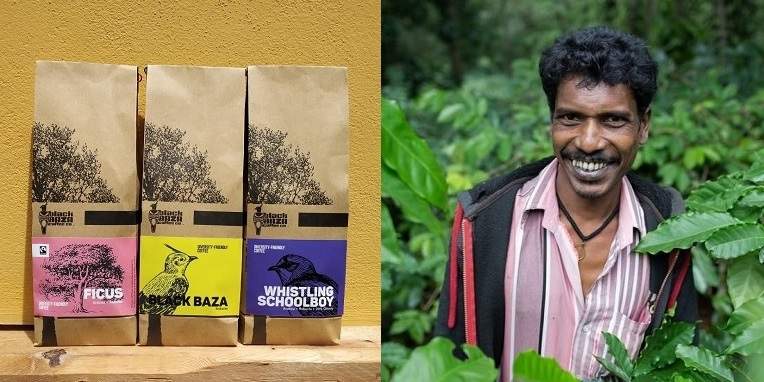
"Our Ficus coffee is named after this tree, our focus for conservation efforts in our farms," the label writes on its Instagram page
“Our Ficus coffee is named after this tree, our focus for conservation efforts in our farms,” the label writes on its Instagram page

In fact, you can even follow Black Baza’s Instagram page for their excellent fieldwork stories. We caught up with Arshiya to explore her vision further.

Black Baza Coffee has a focus on nurturing smallholders producers…

Yes, we do not work with coffee estates so we typically look at those coffee growing communities which are marginalised and vulnerable, particularly at a time like this and we work closely with them. We work with those who need our input and support the most and we are actually one of the few certified fair trade coffee brands in the country. We work with around 650 producers, we help set up coffee collectives and cooperatives. We source our coffee from The Biligirirangana Hills in Karnataka, Nilgiris, Coorg etc.

Tell us about your clientele. Do most of them share the label’s philosophy?

Yes, we have a really loyal base of customers who actively want to support communities which have suffered from the shutdown and the pandemic in general. We already had a steady base, but it has definitely grown since the pandemic started.

BlackBaza04kf20AUG2020

How has the label’s objective evolved in the four years since you started?

We are not a typical coffee brand, we function like a social enterprise, and we have definitely grown. We started out with four producers and we now work with 650, we have been able to reach so many communities who needed our support. We have also been able to source so many distinct varieties of coffees with varied flavour profiles, that’s been really interesting.

Tell us about how you’ve named each variant, like the ‘Otter,’ or the ‘Ficus’?

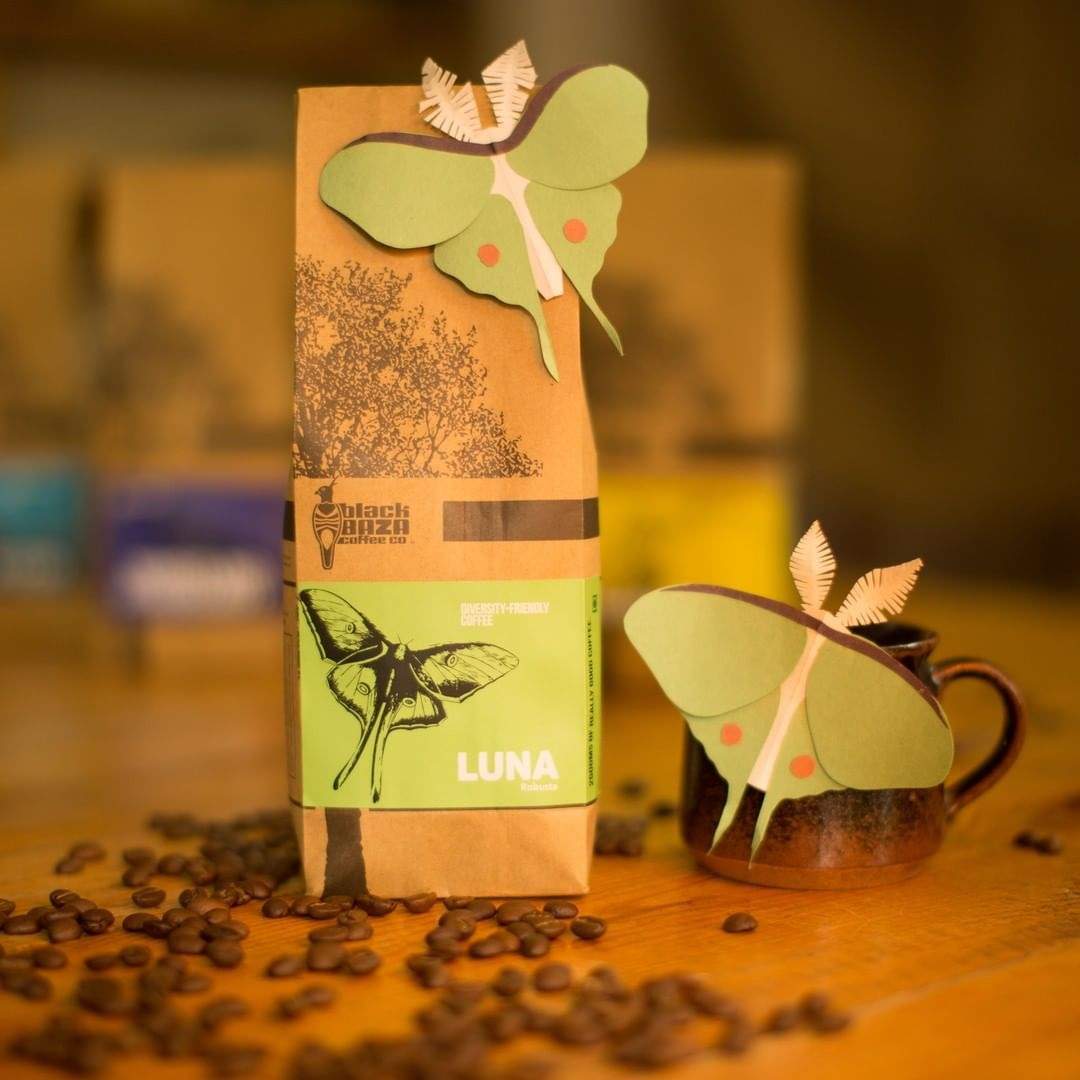
These coffees have been named depending on where they are grown, and represent the idea of conserving particular species of fauna which inhabit the region. The Luna coffee, for instance, is named after this interesting species of moth found in Indo-western ghats, we actively make observations of the luna moth on coffee farms, which tells us about their habitat or the vegetation around them. The names are also symbols of what we’re trying to achieve, it speaks to people about the kind of biodiversity which exists in our forests and why conserving them is so crucial.

source: http://www.indulgexpress.com / The New Indian Express – Indulge Express / by U. Roy / August 14th, 2020