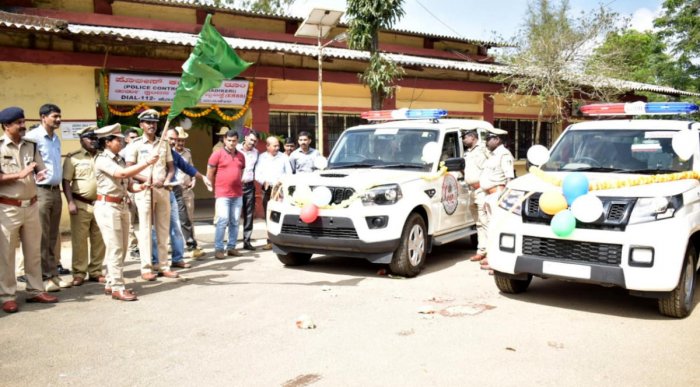
Kodagu Deputy Commissioner (DC) Annies Kanmani Joy, who chaired the White Water River Rafting review meeting at her office on Nov.1, has decided to issue licences to 60 raft operators in the district next season.
The meeting also decided to continue those who were issued licences this year based on the recommendations of a Technical Committee.
Though river rafting is popular among tourists visiting Kodagu, the District Administration had temporarily banned it in early 2018 due to allegations of irregularities and the death of a tourist.
Razi Ahmed, a 21-year-old tourist from Hyderabad, died after he was assaulted with a wooden oar by some rafting crew at Dubare Rafting Camp coming under Nanjarayapatna Gram Panchayat near Kushalnagar.
The ban was imposed in the wake of several complaints from tourists and villagers that adventure activity organisers have no expertise in river rafting and some of them are organising such events just to make money. The ban was imposed as mandatory safety measures were not followed by organisers and lives were at stake. The ban, however, was subsequently revoked.
The DC directed the officials of Public Works Department (PWD), Fire and Emergency Services, Tourism and other Departments to conduct surprise spot inspections and assess the number of rafters operating at various rafting in the district.
A few members of the River Rafting Committee raised objections over the delay in issue of Fitness Certificates for boats following which the DC said that the certificates will be issued within a day from next year.
Tourism Department representatives were instructed to issue an advisory on the terms and conditions necessary to operate rafting including fixing of prices. The DC warned the guides of initiating legal action if they are found levying higher rates.
She instructed the Assistant Director of Tourism Department to issue press release and give publicity about the information pertaining to necessary guidelines. The DC also instructed the officials to put up a board containing the prescribed rates for rafting at Dubare and Barapole for the benefit of tourists.
Superintendent of Police Dr. Suman D. Pennekar instructed the officials to implement the rules that are in force at Barapole at Dubare too. Assistant Commissioner T. Javaregowda, PWD Executive Engineer Ibrahim, District Fire Officer P. Chandan, Tourism Department Assistant Director Raghavendra, River Rafting Committee Members Ritesh, Vishwa, Manjunath and others were present.
source: http://www.starofmysore.com / Star of Mysore / Home> News / November 04th, 2019
Surendra Varma, a scientist at Indian Institution of Science, said he was happy to see the turnout during the festive season.
Bengaluru :
Heavy rain and Deepavali celebrations didn’t stop corporate communication professional, Danielle S, to attend an event organised by Friends of Elephants, an informal group dedicated to promote wildlife diversity. “I have attended previous events of this group. I was out of town and came back soon to attend it. These are good knowledge-sharing platforms,” she said, adding that she and her friends believe in celebrating festivals in meaningful ways like this.
Friends of Elephants conducts panel discussions and art and cultural activities on every fourth Sunday. Titled Elephants, Tigers and Lions (conservation and conflict), their last event on October 27 included movie screenings like Shanti Samsara by Ricky Kej, talks by Manoj Kumar, chief conservator of forests, Kodagu Circle, and Ravi Chellam, wildlife expert, and panel discussion with speakers and villagers from Bandipur. The forest officers shared their experiences of tackling wild animal attacks in estates and their translocation, while villagers shared how difficult their day-to-day life is because of animal attacks.
Surendra Varma, a scientist at Indian Institution of Science, said he was happy to see the turnout during the festive season. “We had organised one event during an IPL match in the city. There was no drop in the number of participants,” he added.Prabha Ramakrishnan, a resident of Indiranagar, said she always tries to attend the events. “We are a small group of women who are interested in nature and wildlife. We go for trekking, visit wildlife sanctuaries and attend events. Why should one miss such events in the name of festival?,” she asked.
source: http://www.newindianexpress.com / The New Indian Express / Home> Cities> Bengaluru / by Lesly Joseph / Express News Service / October 29th, 2019
– Swamy said that it was about a year ago that he had the discussion
with BJP leaders to set up a development council for the ethnic
group in Karnataka
– The ethnic race can be found at Kodagu, a a rich coffee- and
pepper-growing district of the southern state
_________________________________
Bengaluru:
Senior Bharatiya Janata Party (BJP) leader Subramanian Swamy on Tuesday wrote to the Karnataka government requesting it to grant an autonomous development council for the Kodavas, a small race native to Kodagu, a rich coffee- and pepper-growing district in the southern part of the state.
Swamy said that it was about a year ago that he had the discussion to set up a development council for the ethnic group in Karnataka with BJP leaders like Amit Shah, Rajnath Singh and the late Anant Kumar.
“Shri Anant Kumar then said that if the council is not being separated from Karnataka, he would welcome the Codava Development Council with certain financial autonomy,” Swamy said in his letter. Using the colonial spelling, Coorg and Codava, to refer to the ethnic group, Swamy’s request reflects the sentiments of a section of Kodava’s, who have long since demanded a special status and a separate state.
The district that measures over 4,100 square kilometers and known for its coffee and spices growing regions spread across hilly terrains, has a population of over 5.54 lakhs and according to the 2011 census. The people of this race have excelled in the armed forces and in the field of sports, especially hockey among other areas.
“I think it will be good if you now take up this matter with the centre and see that this idea of Development Council as asked for by the Codavas is implemented at the earliest,” Swamy said.
Though there have been earlier proposals to include Kodava’s into the list of Scheduled Tribes and other categories of special status, this has not yet been implemented. Swamy mentioned the contribution of Kodavas in the Indian armed forces. The first Commander-in-Chief of the Indian army was Field Marshal K.M. Cariappa and was conferred the rank of Field Marshal on 28 April 1986. General K.S. Thimayya was awarded the Padma Bhushan in 1954 and took over as Chief of the Indian Army on 07 May 1957. There have been several people from this district who have joined the army. Swamy goes on to say that the race has been exploited by politicians with black money purchasing their coffee estates.
Currently, the Kalyana-Karnataka (formerly known as Hyderabad-Karnataka) region has been accorded special status to help overcome the regional disparity as these parts are home to some of the most backward regions in the country.
source: http://www.livemint.com / LiveMint / Home> Explore / by Sharan Poovanna / October 29th, 2019
Indian and European bees are the most sought after while stingless bees are slowly catching our attention for its medicinal properties.
(Photo | Meghana Sastry, EPS)
Your favourite mango will definitely become dearer if not extinct, if we don’t act now. Pollinators, which include bees, need a major protection boost.
There are 2,00,000 pollinators of which honeybees are the most sought after, why?
There’s a popular saying ‘as busy as a bee’. That term comes from the fact that honey bees are the only species who identify a flower and make multiple visits to the same flower until they get all the nectar and pollen out of it. They are the best pollinators and work in the most methodical fashion. From identifying to communicating and dividing work. Their social structure is fascinating and one that we can learn a lot from. There are 20,000 types of bee species of which the ones mentioned below are the most popular types in India. Indian and European bees are the most sought after while stingless bees are slowly catching our attention for its medicinal properties.
Common Name Scientific Name Natural Nesting Site Honey Yield
(KG)
____________________________________________________________
Indian Bees Apis Cerena Cavity, Termite Mounds, Tree Hollow etc. 8-10
European Bees Apis Mellifera Cavity 25-30
Rock Bees Apis Dorsata Tree Branches, Buildings etc 30-35
Dwarf Bees Apis Florea Twig in a bush <1
Himalayan Rock Bees Apis Laboriosa Underside of rock cliffs 40-45
Indian Stingless Bees/Dammer Bees Tetragonula Iridipennis Cavities, Hollows in tree trunks and walls <500 grams
_______________________________________________________
There’s been a lot of buzz about bees going extinct and people have been trying to find a way around it.
Here is a story from beekeepers who have found it very lucrative to harvest them.
There are multiple beekeepers like Apoorva - the bee man of India and organisations like the University of Agricultural Sciences in GKVK, Bangalore who conduct workshops and help people understand the importance of bees, train them on beekeeping and provide them with bee boxes.
Apoorva visits his bee farm in Bidadi regularly to check the health of the bees. He is a mechanical engineer but a beekeeper by profession. He found his passion for bees even before he graduated and took it up soon after. He’s been working on bees for over 10 years and works closely with farmers across the country. He travels, meets farmers, trains them, gives them bee boxes, follows up with them on the progress and reviews the health of the bees regularly. He also helps them sell their produce. While Apoorva works with a lot of people across the country, this is a story close to home where he’s been working with flood victims in Coorg.
He is involved in multiple activities such as honey production, bee breeding, manufacturing beekeeping equipment, selling honey and beehive by-products, mainly wax. His company’s annual turnover is over 2 crores. He has both Indian and Italian bees.
He initially collected bees from hives and then started breeding them in his apiary during the natural division season of bees. He also buys colonies from farmers when they multiply. This bee farm is near a cornfield which is rich in pollen. It is important to understand your demography he says. Having bee flora next to an apiary is very beneficial to harvest more honey and keep bees in good health. He harvests Indian bees in forests and hilly regions and also promotes only Indian bees to farmers as it’s easier since most of them cannot handle migratory beekeeping.
European bees which in India are Italian bees requires 4-7 migrations in a year for which, he travels around 1,200 kms pollinating thousands of acres in North Karnataka mainly Sunflowers, Til, Niger, Coconuts, Arecanuts, Banana, Avacado, Litchi and more. Honey yielding fields for Italian bees are Sunflowers, Eucalyptus, Til and Niger. He has more than 200 colonies now and will split them to make about 800 during the breeding season. A farmer keeps anywhere between 4-25 boxes. He needs about 3 boxes per acre and has to distance each colony by at least 10 feet.
Bee Harvesting has helped Coorg flood victims make a livelihood
Vijay Panduranga talks about the effects of the flood and the rehabilitation work in Coorg.
After the floods in 2018 that hit Coorg, a lot of farmers lost their land in turn livelihood and haven’t received much relief from the government. There were rescue operations but then not much is being done on the rehabilitation front.
With paltry compensation from the govt. Coorg flood victims are finding solace in the new beekeeping venture. Nectar flow is an initiative/program started by a few local people, spearheaded by Retd. Brigadier Devaiah to help provide a steady income to people interested in beekeeping. People have seen returns in the 1st few months. They say that the money that comes in lets them breathe. While beekeeping in an age-old tradition in Coorg, the methods are ancient. Devaiah was on the lookout for someone with a scientific approach to help them and that’s when he found Apoorva and sought help. Apoorva readily agreed and continues to work closely with the farmers. He has helped the farmers understand the species better, eventually getting them better yields. At Coorg, each farmer makes a minimum of 5 kgs of honey per year and each box sells at Rs. 600/- per kg. They also make money by selling colonies at Rs. 1,500/- per colony. Farmers produce about 2-3 kgs of beeswax per year which is approximately Rs. 350/ kg
Farmers from the North East, Chhattisgarh, Coorg and other parts of India find it difficult to sell the honey and wax that they produce. Apoorva helps them by buying the whole lot from them, filters them further if there’s moisture and sells them as and when he gets enquires. Honey is labeled as per the flowering season such as litchi, cardamom, clover, mustard, chilli, etc., the honey tastes different too.
The by-products such as beeswax, royal jelly and bees venom are other sources of income and, used in pharmaceuticals and beauty products.
The below-mentioned statistics are only an example of how bee pollination increases the yield anywhere between15% – 80%. These are scientifically proven numbers in ideal conditions (these are underestimated values).
Estimated global economic value of pollination is 217 billion USD in 2005
_______________________________________________
Crop Increase in yield per acre (%) Increase in yield per acre Income generation by pollination per acre
_______________________________________________
Coffee 15% 5 Bags 15,000/-
Aracanut 25% 2 Quintals 64,000/-
Coconut 20% 3,000 nuts 36,000/-
Banana 20% 5 Quintals 10,000/-
Watermelon 80% 4 Tonnes 20,000/-
___________________________________________
Farmers tell us their personal stories of how beekeeping has helped increase their yield with pollination in crops such as coffee, fruits and spices. They also make a good livelihood but extracting honey and wax. What they make is pure and unadulterated making the quality far more superior than the ones available off the shelves at supermarkets.
This is what a bee box looks like. This is one bee colony. They come on top to feed. There are multiple wooden frames inside quoted with wax, which help them construct combs.
Every bee box has an opening at the bottom which allows the bees to move in and out of it, to go out and collect nectar and pollen. Some farmers who have these bee boxes are also given out on rent for pollination to seed producers or other farmers who are in need of pollination.
Naganna (Saachi) Kalappa lives 3 kms away from the main Madhapur town in Somwarpet Taluk. He has been harvesting bees for 18-20 years. Bees were available in abundance then as the ecology was healthy and rich, and filled with plants that the bees needed to survive. However, the species has seen a massive decline in numbers as the human population has been increasing and trees are being cut down for personal benefits such as planting silver oak trees as it yields timber and in a short span of time. Since the decline in numbers, they now need to procure boxes and up their skills and knowledge. After adopting this scientific method, he has benefited as his crops are multiplying. He is making enough money to take care of the needs of his family. He also says I request people to stop destroying forests and help in sustaining them and grow trees that are required for agriculture instead of timber to improve the ecology.
Thammaiah CB (Dolly) lives 7 kilometers away from the main Madhapur town in Somwarpet taluk in the Coorg district. This part of Coorg witnessed the worst of nature’s fury in 2018. While he has been harvesting Indian Apis Cerena Bees in boxes he also harvests stingless bees in pots. The quantity of honey is way lesser than what is produced by other bees however, the quality is far more superior as it has a lot of medicinal properties and is sold at a much higher rate.
Thammaiah’s mother tends to her garden every day. She says it isn’t enough if you just harvest bees and have a coffee estate, it is very important to understand what kind of flowers and fruits attract them and cultivate them in your garden. This helps in increasing pollination and nectar production.
Fruit especially those with seeds are good pollinators.
Plants that one should cultivate to yield better results
Nectar: Plants such as Avocado, Litchi, Hibiscus etc.
Pollination: Plants such as Sunflower, Sesame, Mustard, Coriander, Niger, Coconut and more (bees are attracted to vibrant colours such as yellow and blue)
She also makes beeswax at home which is another income generator. She says that it is not a very laborious process and demonstrates. You first break the comb into a utensil with enough water and let it boil.
You let it boil until it reaches the required consistency.
You then squeeze out all the excess water and use the residue to make wax cakes.
This is the final product.
Apoorva pays regular visits to all the farmers across the country and conducts a health check.
It is very important to taste it as well. Every house he goes to gives him honey to taste. He jokes and says I am glad I don’t have diabetes. If I did, for the amount of honey I consume, I would be in a lot of trouble.
Bose Mandanna is the fourth generation coffee grower. He moved back to Coorg 53 years ago after completing a bachelor’s degree in Agricultural Economics. He talks of how he has seen farming change in the years to come. Back in the day farming was done in a very environmentally friendly way. Over a period of time, when they found pests taking over the plantation, they used some chemicals to deal with the pest issue. However, they soon realised that they were not only harming humans but also the bees and other pollinators in the environment. These chemicals known as weed killers have cancer-causing properties. On realising this, they decided to go back to organic farming. However, a lot of farmers have been affected by this chemical especially in Punjab as they are one of the largest agriculturists, and the Punjab mail is popularly called the cancer express as a lot of them are coming to Bombay for treatment. Also to note the groundwater gets affected by these chemicals. People are saying that there are bee-friendly pesticides available. He jokes and says “there are all chemicals and they cannot be friendly, they might not kill you but make you unconscious”. Please avoid chemicals and use bio controlled agents.
White Stem Borer Problem: These pests are known to attack the coffee plants and wreak havock hence they wrap the plants with white cloths to avoid this menace. There is a mild chemical in it but it only
touches the trunk of the plant and does not reach the coffee flower thereby not harming humans or bees.
May 20th is International Bees Day. UAS in GKVK conducted a 2 day class for people interested in beekeeping. Urban beekeeping is also becoming popular as people from the cities have started showing
interest.
The staff showed them how to identify and dig out for a beehive as they can build hives anywhere. This has to be done with caution so as to not break the hive.
You then mildly sedate the bees with some smoke by burning dry cotton cloth and get the comb out
Once you get the comb out, you tie them tightly to a frame but not so tight that they break.
Students learn to tie the comb to the frame.
While they learn to make honey, a student observes the comb.
Santosh from the faculty shows the class how to peel the comb before you can put it into a vessel to churn honey. The peeling has to be very fine.
These are the machines in which you put the combs in to extract honey. These machines are also made by Apoorva and sold to the farmers. There is a particular way the combs have to be kept and then manually churned.
A small community of farmers can only do so much, the government needs to step up and help take this initiative forward, make this bigger and reach more people.
source: http://www.newindianexpress.com / The New Indian Express / Home> Specials / by Meghana Sastry / Express News Service / October 28th, 2019
Deputy Commissioner Annies Kanmani Joy has directed the assistant director of land records to shift the government offices from the Old Fort to the new building of Zilla Panchayat, before October 31, as per the court orders.
The Madikeri Fort, also known as Old Fort.
The orders by the deputy commissioner have come in the wake of the High Court direction towards taking up renovation work of the historic establishment. The work will be carried out by the Archaeological Survey of India (ASI).
Annies Kanmani Joy said that the district administration had promised the Department of Archaeology of handing over the old building by October end.
As there are government offices inside the Old Fort, the department could not carry out the restoration work of the building. Also, there were demands to shift the government offices to the newly built Zilla Panchayat building.
As per the directions issued by the High Court, officials from the ASI visited the fort premises and inspected the condition of the Old Fort building.
The team of officials also furnished a report to the court, on the probable steps towards the repair of the building. Following the same, the officials from various government departments had agreed to vacate their offices.
While the repair work was going on in January, the roof of the palace in the Fort premises had suddenly collapsed.
The walls of the palace are discoloured and the soldiers’ quarters have totally collapsed.
The leaking roof of the main building was covered with plastic sheets as a temporary measure.
Glorious history
Mudduraja, a ruler of Haleri dynasty, had built the fort in the 17th century.
Tipu Sultan rebuilt the fort using stones later.
The fort was acquired by Dodda Veera Rajendra in 1790 and later came under the rule of British in 1834.
source: http://www.deccanherald.com / Deccan Herald / Home> State> Mangaluru / by Adithya K A / DH News Service, Madikeri / October 23rd, 2019
Donors from various organisations and companies have donated a combined total of Rs 188.04 crore for the Chief Minister’s Natural Disaster Relief Fund. The donations were received following a public appeal by Chief Minister B S Yediyurappa to contribute generously towards flood relief.
According to data, the donations came between August 13 and October 22, with officials expecting more funds in the coming days. The donations were by a total of 4,105 donors, with the highest number of donations on October 14. Highest in terms of donations received was on August 20, when a total of Rs 39.15 crore was contributed to the fund.
While the total amount available in the Natural Disaster Relief Fund was Rs 316.09 crore, Rs 97.17 crore of the said amount was the pending amount collected after the 2018 floods in Kodagu. “A total of 186 crore was collected from donors for Kodagu flood relief,” P A Gopal, joint secretary, Chief Minister’s Relief Fund, said. As on October 23, the amount of funds available was Rs 217 crore.
Donations were also received online for flood relief. Also, Rs 32.53 crore – one day salary of government employees – was handed over from the district treasuries for the relief, according to data.
source: http://www.deccanherald.com / Deccan Herald / Home> State> Food Relief / by Akram Mohammed / DH News Service, Bengaluru / October 24th, 2019
The new building of Kodagu Zilla Panchayat in Madikeri.
Rural Development and Panchayat Raj Minister K S Eshwarappa and Housing and Kodagu In-charge Minister V Somanna inaugurated the new building of Kodagu Zilla Panchayat at K Badaga village, near Madikeri, on Friday.
The groundbreaking for the new building, constructed at a total cost of Rs 30 cr, was done in 2016.
Speaking on the occasion, Eshwarappa said that a grant of Rs 30 crore would be given to each Assembly constituency under Pradhan Mantri Grameen Sadak Yojana.
“Also, grants will be released for solving drinking water problem,” he added.
The minister meanwhile assured of providing Rs 20 lakh each to 28 gram panchayats towards solid waste management unit.
“Task Forces will be formed for ZP members and every task force will be granted a fund of Rs one crore”, he said.
“Floods have ravaged the state. The Central government has provided Rs 1,200 crore for relief measures and the state has already released Rs 1,500 crore. Another Rs 1,500 crore will be released soon. It has been decided in the Cabinet meeting to utilise Central government grants for compensating the loss of crops,” Eshwarappa said.
He also assured of providing integrated funds towards the rejuvenation of lakes in Kodagu.
Lauding the job done by top officials of the district — Deputy Commissioner Annies Kanmani Joy, Zilla Panchayat Chief Executive Officer K Lakshmipriya and Superintendent of Police Dr Suman D Pennekar, the minister said the district was peaceful as women adored all the key posts in Kodagu.
He also mentioned that he has four daughters and a son.
District In-charge Minister V Somanna said there had been loss of life, both human and animals, in the district due to floods.
Agriculturists in the district have incurred a huge loss. A package of Rs 532 crore has been announced to Kodagu out of which Rs 100 crore has been released. The problems of flood victims will be duly addressed, he added. Somanna meanwhile added that Chief Minister B S Yediyurappa was supposed to be take part in the programmes of handing over houses to flood victims and the inauguration of new building of the ZP. But the chief minister could not attend due to unfavourable weather conditions.
MLA K G Bopaiah urged the state government to provide 350 acres of ‘C’ and ‘D’ (categories) land to those who have lost their agricultural land in Mudigere, owing to landslides.
MLA Appacchu Ranjan urged the government to release Rs 1 crore for the restoration of historic Old Fort in Madikeri.
MLC Veena Acchaiah said the government should construct houses for flood victims of 2019 at a cost of Rs 9.85 lakh each, instead of Rs 5 lakh.
For the last two years, Bengaluru-based start-up Beforest has not only been investing in land, but also turning it into a green cover, reviving and restoring the ecosystem
Chennai :
I didn’t want to just buy a piece of land and then sit on it for 20 years. I joined Beforest because that way I can ensure a clean sustainable second home for my children,” said Rajvel Manoharan, member of the Coorg collective of Beforest. Many city dwellers like Rajvel want to live in a home nestled in the flowery arms of nature but the truth is that only a few are willing to take the effort to maintain it. Sameer Shisodia and Sunit Reddy nipped the problem in the bud by introducing Beforest in 2017, an initiative to create sustainable living within a self-sufficient ecosystem.
“The people gave us the idea to start something like this,” said Sameer. Most city folks are looking to invest in a home away from the city. Some want to live amid nature while others may just want holiday homes. “We are looking for people who are not only ready to invest in the land but are also ready to buy into the idea of rejuvenating it first. The idea is to revive a self-sustaining forest ecosystem and then create pockets for agriculture in between” he said. The two-year-old initiative is currently working with three functioning collectives, two in Karnataka and one in Telangana, while two more are in the pipeline.
Testing waters, Sameer initiated the first project called Tamarind Valley, in Bengaluru with a group of 15 people in 2017. They invested in a piece of land and collectively came up with a plan on how to restore the ecosystem. “Most of the farms we work on advocate forests or a good ecosystem,” said Praveen Ram, general manager, Farm Ops. “There is a lot of land that does not list under forest cover in government records but has thriving forests growing there. We pick land where traces of a healthy ecosystem remain, and improve them,” he explained.
At the Tamarind Valley initiative, maximum effort is being put into reviving the ecosystem. “Because the land was dry and barren, we borrowed functioning ecosystems from neighbouring farms and introduced them to the land. We don’t know what crops we will grow because our priority is to first set up a self-sustaining forest ecosystem over 75 per cent of the land, before thinking about the harvest,” said Sunit Reddy, co-founder.
Success project
Every project they take-up requires a different renewal plan because of the diverse local ecosystems. While their projects in Tamarind Valley and Hyderabad involve rejuvenating the ecosystem, their project in Poomalee, Coorg is a whole new story. “With a rainforest cover and coffee plantation that pans across the 130-acre farm, we are still learning about what resources we can gather and use sustainably,” said Sunit.
The 30 to 40 members part of the Coorg collective actively participate in maintaining the ecology at their farm. Many members meet regularly on the fifth of every month while the rest share inputs on their WhatsApp group. “The streams and hills in the forest are already producing a lot that we didn’t know about. We recently made tamarind jam which was distributed among the members and the ground team stationed there,” added Sameer.Praveen said, “The biggest challenge we face is the illegal extraction of resources from forest ecosystems. It makes the land dry and loose fertility.”
What’s new
“Hyderabad is our latest project. Due to the water scarcity, we are able to retain very little of what the land has to offer. We started from scratch by first setting up a mono-culture, once that grows, we will convert it into a natural food farming ecosystem by introducing it to the land,” said Sameer.
Ground team
They hired a ground team to carry out the day-to-day steps to care for the land. “We generally hire locals and provide them with accommodation,” he said. The ground team is in charge of implementing all revival plans designed by the members — collective and the founders.
“We consider our ground force as stakeholders in our project too. Most are accustomed to living in the forest and share homegrown ideas of improving the lands’ ecosystem,” he said.Beforest is looking forward to beginning work in the Krishnagiri district. “We have received a lot of requests to set up there,” said Sunit. They are also working on converting a mono-culture into a natural forest ecosystem at Alphonso By The Lake, another project set up in Bengaluru.
Cost with vision
“According to the current model, we charge an initial payment of `45 lakh for a 2- to 3-acre property with a house on it,” said Sunit. Both founders insist that the members renovate the houses on their land,“This ensures minimal intervention in the ecosystem,” said Sameer. At a time when everyone is looking for speed in their lives, many may stop to smell the flowers but even fewer make sure that the flowers are still there.
In a nutshell
Beforest was started in Bengaluru in 2017 with a 15-member team
The two-year-old team is currently working on three collectives
They charge an initial payment of `45 lakh for 2-to 3-acre property
They started with an investment in a piece of land and came up with a plan on how to restore the ecosystem.
source: http://www.newindianexpress.com / The New Indian Express / Home> Cities> Chennai / by Naaz Ghani / Express News Service / October 26th, 2019
The winners of the 2019 Nobel Prize in Economics in the screen grab — Abhijit Banerjee, Esther Duflo and Michael Kremer (AP file)
– Michael Kremer, a Harvard University professor, was the co-Founder of ‘Precision Agriculture Development’ or PAD
– It advised the Coffee Board to pilot a missed-call enabled service to help coffee farmers in Karnataka
___________________________________
Bengaluru:
India’s Coffee Board, a state-run body that promotes coffee production and drinking, shares a slice of history with Michael Kremer, who won the Nobel Prize in Economics along with Esther Duflo and Abhijit Banerjee.
Kremer, a Harvard University professor, was the co-Founder of ‘Precision Agriculture Development’ or PAD, which advised the Coffee Board to pilot a missed-call enabled service to help coffee farmers in Karnataka. The IVR call service can give precise advise to the grower from scientists at Central Coffee Research Institute.
“Under his guidance and leadership, Team PAD have been working with Coffee Board of India and the coffee ecosystem for more than one year now. Thanks to the stellar efforts of Michael, Shawn, Madhur, Niriksha and Team Coffee Board, we have been able to have a positive impact on the lives of 15000 coffee farmers using a simple missed call service, free of cost to coffee farmers,” said Srivatsa Krishna, Chief Executive Officer of Coffee Board, in a statement to the media.
The service, Coffee Krishi Taranga, gives registered growers a weekly advisory on critical farm operations and daily market statistics through an automated push call when a farmer places a missed call on the helpline (080-37685000) run by the Board. It has helped growers improve productivity, profitability and environmental outlook, and will be expanded to cover 50000 growers shortly, according to the Coffee Board.
The PAD’s journey in India begun as an academic experiment in Gujarat with cotton farmers in 2011, when Narendra Modi, then chief minister of Gujarat, encouraged testing a similar service in his state called Krishi Tarang, said Srivatsa. “On behalf of the entire Indian coffee ecosystem, the finest shade-grown, hand-picked rainforest Coffees in the world, we congratulate Dr.Kremer and thank Team PAD for their contributions,” said Srivatsa Krishna.
source: http://www.livemint.com /Live Mint / Home> Explore / by Nidheesh M.K. / October 15th, 2019
Women today are seen in every sector. Professions that were conventionally considered to be ‘men’s jobs’ are now crowded with women. The women of today do not face as much struggle or prejudice in pursuing the career of their dreams as they did two or three decades before. This has been possible because of a few women who have confronted the unjust ways of the patriarchal world and made name for themselves.
One of these powerful ladies was C.B. Muthamma. Muthamma was the first IFS officer of India. She joined foreign services in the first qualifying batch of the service, right after the independence in the year 1949. This was at a time when a woman in diplomacy was a rarity in itself.
For the longest time, women were not considered fit for holding a diplomatic position across the globe. In fact, in 1933 it was stated in a debate in British House of Commons that “The special virtues of women are ill-adapted to the diplomatic life,” the virtues referred being ‘sympathy’ and ‘intuition’. These virtues were considered fatal as a balanced attitude was required in order to preserve diplomatic relations.
A British author Helen McCarthy has remarked in her book, ‘Women of the world’ that, “Even in the 21st century, a woman wielding serious powers in the global arena is an oddity. A phenomenon to be explained rather than taken for granted. Not only is her performance subject to closer scrutiny than her male peers, but it often comes to stand as a test of the ability of all women and to reflect for good or ill, the wisdom of allowing a woman to do a man’s job.”
There was a criterion up until the 1970s that only unmarried women can apply for the IFS services, and they will need to quit their positions whenever they choose to get married. Women were also not promoted to senior positions in the services.
C. B. Muthamma believed that this was clear discrimination. Which is why, when she was not considered for a well-deserved promotion, she filed a petition in the Supreme Court of India against the government of India, seeking justice for herself and all the women who would want to pursue their career in international relations. In a very famous case known as ‘Union of India vs. C. B. Muthamma’, the government changed its policy of not promoting the women before the apex court could give out its judgement for the case. The petition filed by Muthamma was then dismissed with her promotion to Grade 1 of the IFS, with the words by the judges that “We hereby dismiss the petition, but not the problem.”
The landmark case pushed the government to change its rules regarding these discriminating laws. And women now represent 18.5% of the total foreign officers of the country. However, it was this case that set off the trigger for many women to pursue careers in diplomacy while simultaneously leading a normal family life.
C.B. Muthamma has served as an inspiration to all the female diplomats, not only in India but across the world. India lost an exceptional officer of its foreign services when she bid adieu to the world on October 14, 2009.
source: http://www.thecsrjournal.in / The CSR Journal / Home> Header News / by Hency Thacker / October 15th, 2019
WELCOME. If you like what you see "SUBSCRIBE via EMAIL" to receive FREE regular UPDATES.
Read More »