Coffee pubs may be next zingy avatar of buzzing cafes as the country’s young discover the cool quotient of the rich brew.

Forget decaf, now’s the time to get high on coffee. For investors, traders and connoisseurs alike, it’s time to wake up and smell the coffee. It is not yet a mass consumption beverage in India — remember, we are mostly tea-guzzlers — and coffee is being served to those who have arrived.
The world over, coffee rules the beverages market. No wonder it is the second largest traded commodity after crude oil. Although coffee is believed to have arrived in India long before the British got us addicted to tea, it is only in the last couple of decades that cafes and the instant variety have evangelised it beyond the south of this country. Ironically, down south, where coffee has long ruled the roost, tea is also emerging as the morning cuppa. For a highly prized commodity, coffee has had its ups and downs in the global commodities market. And, at US $500 per kilogram, going through (civet) excreta was actually a high — civet coffee is made out of coffee beans eaten and excreted by civets.
A coffee story can’t be narrated without invoking India’s staple beverage, tea, multiple times. We have been a tea land from British times and coffee, by and large, remained a privilege and pride of south India for hundreds of years. The cafe culture that began to kick in some 10 years ago has, to an extent, disrupted the traditional and regional divide between tea and coffee at least in the metros and small towns.
Coffee is said to have been introduced to India by a Muslim saint, Baba Budan, who smuggled seven coffee beans from Yemen and took them to Mysore. Later he cultivated coffee out of these beans on Chandragiri Hills, also called Baba Budan Giri now. India’s total area under coffee cultivation is almost 400,000 hectares, with Karnataka alone accounting for over 70 per cent of the production while the rest comes from Kerala and Tamil Nadu.
The country’s organised coffee retailing was started by Bangalore-based cafe chain Cafe Coffee Day in 1996. By the time Uncle Sam’s much celebrated cafe chain Starbucks forayed into the country in 2012, coffee culture had already set in. Barista Coffee Co Ltd, Costa Coffee and others too came in. All these cafes have ushered in the experiential proposition to coffee drinking, with an attractive, relaxed and cosy ambience accompanied by an assortment of food items.
Waiting in the wings
Italy’s Elli and Lavazza, global brands that are already active in the Indian coffee market with roasting and blending, and many other foreign cafe brands are waiting in the wings to land in the cafe business in this country. Cafe Coffee Day’s 1,722 outlets and around 600 coffee kiosks serve over a billion cups of coffee in six countries while Starbucks has 120 stores across seven cities in India and the chain serves close to 250,000 customers every week with brews of French press, pour over, siphon, chemex and white eagle. Barista has around 50 stores around the country and the brand currently focuses on opening up more cafes through franchisee route.
All the players are aggressively trying to expand their chains across the country. India’s coffee retail industry is projected to experience its fastest growth so far between 2018 and 2025, said a recent Grand View Research. Coffee chains market was valued at $128.6 million in 2016 and its growing at a CAGR of 20 per cent. “After all who on earth can ignore over a billion lips? We always had coffee stalls and coffee houses operated out of staid and dull environs. Only coffee fanatics frequented these places. Once the cafe era set in and vibrant cafes with great ambience came up, India’s cafe scene started buzzing. Coffee no doubt remains a more frequently used conversation starter than tea,” said Himu Gowda, a young coffee grower and coffee enthusiast of Rajarajeshwari Estate, Chikmagaluru.
How did the cafe culture of the West and Europe start sweeping across India? There are millions of Indian professionals working in these geographies around the globe in the last few decades. In addition to that, India’s knowledge economy created a large army of techies and other professionals who often travelled to the West and Europe on work. Again, close to 30 million Indians travel overseas — UN World Tourism Organization predicts this figure to cross 50 million by 2020 — on leisure and they are exposed to cafe culture in various countries. So for many Indians, names like Cafe Central (Vienna), San’t Eustachio il Caffe (Rome), La Cafeotheque (Paris), Winkel (Amsterdam), Toma Cafe (Madrid), Kaffeine (London), Caffe Vita (Seattle), Reslau (Auckland), Double Tall (Japan) and several other famous cafes in Melbourne, Reykjavik (Iceland), Singapore, Istanbul in Turkey, Vancouver in Canada, Portland (US), Wellington (New Zealand), Havana in Cuba are familiar.
The key drivers of India’s cafe revolution are: increasing disposable income, influence of western culture, sudden spurt in outbound travel, rapid urbanisation, boom in tech jobs, exposure to foreign cafe brands and acceptance of coffee as a premium beverage. Today, coffee as a bean beverage has been able to capture either a mindshare or a market share from a large portion of Indian population. As a result, cafes have emerged as ideal venues for daily conversations, socialising, work interactions, entertainment and the actual unwinding of the mind with a cup of quality brew. Also, the number of coffee enthusiasts, evangelists and hardcore coffee fans are on the rise in the country, with coffee emerging as a versatile beverage.
Sudheer Gopinath, 35, a techie who worked in the US and many European countries at client sites over a decade said, “Cafes are a big thing in the US and Europe. They transport you to a different world. They may be buzzing with music and chit chats…still you’ll find your quiet corner. India didn’t have such quality cafes until 10 years ago, but today our cafes are almost on par with cafes across the world.”
Arunachalam, a 65-year-old migrant labourer from Tamil Nadu and a self-confessed coffee addict has not had tea in 40 years. “I pass by cafes to capture the aromas emanating out of them. I simply love it. I can never afford a coffee there. Even if I decide to spend Rs 100 per coffee, I may not be allowed inside these five star cafes as I don’t have decent shoes and pants and I speak no English. I love my home made kattan kappi (black coffee) and two meter coffee from the roadside stall which costs only Rs 10,’’ he said and laughed loudly, revealing a set of tobacco-stained teeth.
High growth
According to a report on coffee retailing by Grand View Research, the Indian coffee retail chain business witnessed tremendous growth in recent times as outlets are gaining popularity as hangout zones. The increased acceptance of coffee, attributed to the emergence of premium cafes like Cafe Coffee Day, Tata Starbucks, Boutonniere Hospitality operated Barista, Bedfordshire-based Costa Coffee, promoted by Devyani International in India and others fuelled the market growth.
The coffee retail shops in India are popular hangouts for those between group 16 and 45-years-old, the report said, adding: “The youth of the country has developed greater inclination towards coffee which previously favoured tea. Reading, working, or just casual discussion in the coffee shops is a usual sight. The complementary services provided by the coffee shops such as free WiFi, music, and others have succeeded to retain customer footfall in the shops.”
Techies and social media enthusiasts Pratik Choudhari and Arvind Jain recently launched an app-based startup venture. “Most of our ideation talks, preparation of business plans, pre and post launch debates and discussions happened in cafes. Even now we work out a cafe, we don’t have an office,” they said.
Global exposure and rapid urbanisation along with increasing disposable incomes have created the ground for modern coffee retail outlets offering premium coffee and variants costing more. Moreover, lifestyle preference influenced by the western world has created opportunities for the key players to witness tremendous growth and success. Foreign investment in India’s coffee retail sector has increased in recent years.
For US cafe chain Starbucks, India is one of the most exciting markets in the world with a diverse and dynamic culture. The discerning Indian consumer is well-travelled and well-informed, and appreciates quality experience. Interestingly, India has seen the fastest rollout of stores in the first five years of operation in Starbucks’ history in any new market.
Veetika Deoras, head, marketing, category and loyalty, Tata Starbucks (a joint venture of Tata Global Beverages and Starbucks) said that in India, coffee consumption is on the rise and coffee is slowly becoming a tool for self-expression. This perfectly ties in with the mission of Starbucks where it inspires and nurtures the human spirit — one person, one cup and one neighbourhood at a time.
“Starbucks believes in building a ‘third place experience’ and our stores are neighbourhood gathering places for meeting friends and family. Our customers enjoy quality service, an inviting atmosphere and an exceptional beverage. We are passionate about delivering the highest quality coffee house experience to customers and believe that every moment is a moment of connection and recognition.”
“Coffee as a beverage is loved by traditional coffee drinkers and the younger audience. Coffee today is a part of one’s routine, it has social connotations, and affection towards coffee goes beyond age or gender. Constant innovation is a testament to the growing appetite for a deeper exploration of coffee among Indians. We are humbled by the way customers have embraced Starbucks and have begun to make it a part of their daily ritual,’’ she adds.
At Starbucks, innovation is the core. It is always innovating customer experience whether it be with beverage, store design, community impact. Meeting this need for innovation is Nitro Cold Brew, a naturally sweet nitrogen-infused coffee, which takes 48 hours of making. Its heightened coffee craft, which allows customers to enjoy small-batch, slow-steeped coffee which is brewed using an interplay of coffee, water, temperature and time. Starbucks Coffee Company has a 47-year history of sourcing, roasting and serving high-quality Arabica coffee.
Coffee is no new romance for its local partner Tata Coffee. The seeds of Tata Coffee’s estates were sown more than 150 years ago by resilient planters who brought coffee to the hills of Coorg in the then state of Mysore in South India. The land, the weather and the people came together to create what are today some of the finest coffees in the world. “Today, we produce some of the best Arabicas and Robustas in the country, in Washed and Natural offerings. Our coffees are shade grown in our own Rainforest Alliance, UTZ and SA 8000 certified estates, among lush forests in a thriving ecosystem, teeming with biodiversity. We handpick the coffees and delicately process them to bring about the intrinsic romance in every cup. Every step of the cultivation, harvest and processing is handled with an utmost emphasis on sustainability,” said an official at Tata Coffee.
The ‘best coffee’
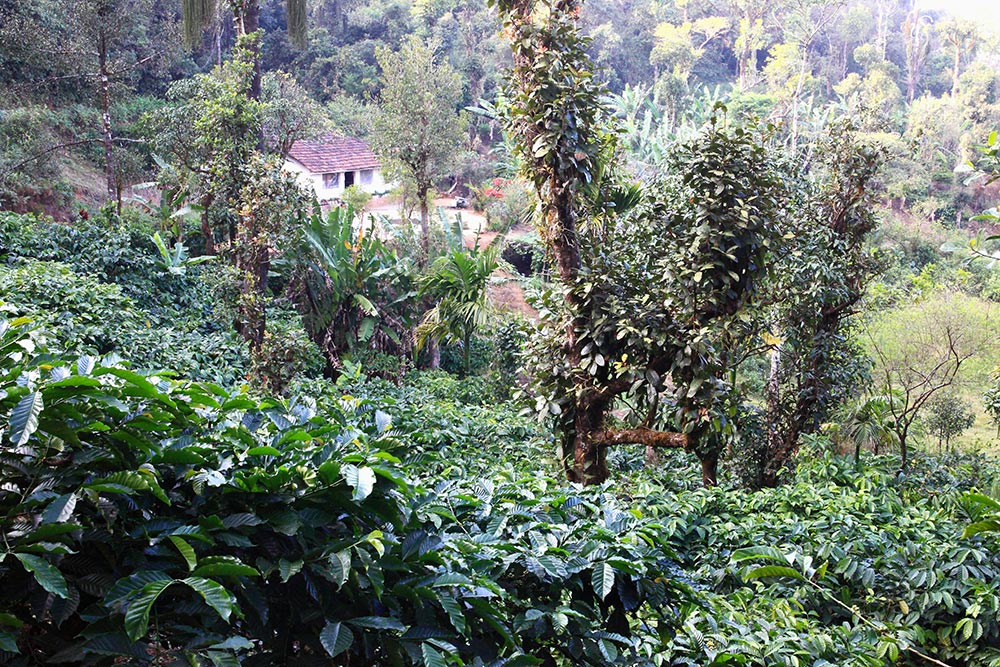
India is the only country in the world that grows coffee under the shade of dense rain forests today. The country grows the best quality coffee, including several specialty varieties. It has been exporting all its surplus coffee for decades, which is almost 85 per cent of its total produce.
Anil Kumar Bhandari, president, India Coffee Trust, said, “Despite this exclusivity, Indian coffees are not able to command a premium in the global markets because we have not yet built a brand for it. So the need of the hour is to build a sophisticated campaign for our coffee for the domestic and international market. It is also extremely critical that we develop a strong domestic market so that our coffees can be insulated from global market vagaries and price volatilities. Our cafes are doing a good job in creating a passion for the bean based beverage in the country.”
The irony is that coffees from Central American countries, South American countries, Kenya and Ethiopia are getting a premium in the global markets although none of these countries grow superior quality coffee like India does. During fiscal 2017-18, India exported coffees worth around Rs 6,000 crore, that’s the basic price the India produce fetched at the New York Futures Exchange. “We have the potential to double the value, with the same quantity of exports, if we are able to position our coffee under specialty and premium varieties and not as bulk commodity sold at the basic price,” said Bhandari. “The Ministry of Commerce should set up a special focus group for coffee, involving all stake holders in the industry, to create a profile, brand and a sophisticated communication for Indian coffee at home and outside. The government also has to sanction a fund to build a brand. All these are required to enhance the profile of Indian coffee in the global markets and also increase its domestic consumption,” he added.
Domestic consumption
To improve domestic consumption, the largest producer of coffee in the world, Brazil, has done something very smart. It introduced coffee in a school mid-day meal scheme about 10 years ago. It was like catching them young, and when this generation grew up, instead of visiting pubs and taking to drugs, they frequented cafes. This gave a big push to domestic coffee consumption.
Rohith Rajagopal, owner of Kerehuchloo Estate, Mudigere, Chikmagalur, said, “India can take this path, we in fact have the world’s best coffee to serve in schools for free. We should also make coffee more affordable and easily accessible. The industry players and the Coffee Board should take the initiative to make coffee decoction or liquid sachets available in the market.”
Chitralekha Rohith, a coffee enthusiast and also a coffee planter at Mudigere, Chikmagalur said, “We have a lot of people and friends visiting our gardens round the year. After seeing the green environment where coffee is grown and how it is cultivated, most of them return home with a newfound respect for this southern Indian beverage.”
Coffee Board chairman Boje Gowda said India consumes less than a third of its coffee production. The rest of the coffee is exported mostly to Europe and Russia. “In our country, per capita coffee consumption is too low, we are nowhere in comparison to major coffee consuming geographies. The consumption here is mostly restricted to coffee producing states. This has to change and coffee should become a pan India beverage.”
“The practice of making chicory mixed coffee should be legally banned. Nobody is saying chicory is bad, in fact it has health benefits, though not as much as coffee. But let chicory be sold as chicory and coffee as coffee. Using chicory to adulterate coffee and calling the final product coffee is an unethical practice,” said Rajagopal.
Specialty coffee & single estate brands
India has several specialty coffees and estate brands while many more are in the making. Some estates are spending a lot of money in developing and marketing these brands globally. The cuppers, graders and tasters and others are trying to tell a story, about the origin of a particular coffee, though Indian green coffee on its own is capable of fetching premium prices in the global markets.
Tata Coffee’s Nullore estate microlot became the first Indian microlot to be selected by Starbucks Reserve, Seattle. The feat was repeated by its Yemmigoondi estate microlot this year. Tata Coffee also produces other specialty varieties like monsooned coffees and single-estate coffees. Also Tata Coffee is the first Indian organisation to be part of the Sustainable Coffee Challenge, a global sustainability initiative anchored by Starbucks and Conservation International.
Keeping in mind the global trend of ethically grown specialty coffees, the company developed a microlot programme — which is less than 0.1 per cent of its total green bean production — using the absolute best of its production. With highly selective picking and innovative processing methods, these coffees have graced some of the most discerning specialty coffee roasters across the world, say officials at Tata Coffee.
Dr Sunalini Menon, Asia’s first woman professional in the field of coffee cupping (tasting), a coffee quality control expert and founder of Bangalore-based Coffeelab, said, India grows the best coffee in the world and therefore it is placed at a great vantage position in terms of specialty coffees that can fetch great premiums in the international markets, but it comes with a responsibility. Specialty coffee is exclusive, exotic and unique as its origin is traced back to the bean it came from, the coffee plant it belongs to and to the estate it was grown on. The cultivar and terroir of a bean or coffee plant is well explained in black and white. All information related to seed and soil conditions, cultivation, fertilisation, harvesting, post harvesting processes, storage, packaging and shipping methods are made available to the consumer in detail.
India’s Monsooned Malabar (both Arabica and Robusta), Mysore Nuggets extra bold (Arabica) and Robusta Kappi Royle are India’s specialty varieties, developed by the Coffee Board. Tata Coffee, Allana Sons, Cafe Coffee Day and many others have coffee units on coastal areas of Karnataka and Kerala where sea wind, moisture, rain and special humidity conditions are available to cure specialty coffee Monsooned Malabar that offers a mild, mellow, soft and silky brew. KD Thimmaiah, general manager, Coffee Division, Aspinwall & Co, Mangalore, India currently exports over 5,000 tonnes (4000 Arabica and over 1000 tonnes of Robusta) of Monsooned Malabar, of which his company has a share of around 60 per cent.
The specialty coffee segment in the country has been growing at 5 per cent annually and it fetches up to 20 per cent premium in the global markets compared to standard coffee. Some of India’s estate coffee brands that are making waves in the domestic and international markets include Veer Athikan, Temple Mountain, Papakuchi, Jal, Taste of Freedom, Harley Estate Classic, Butter Cup Bold, Balanoor Bean, Monsooned Mellows, Monsooned Mystique, Riverine Coffee, Estate Craft and Halli Berri.
Growers’ woes
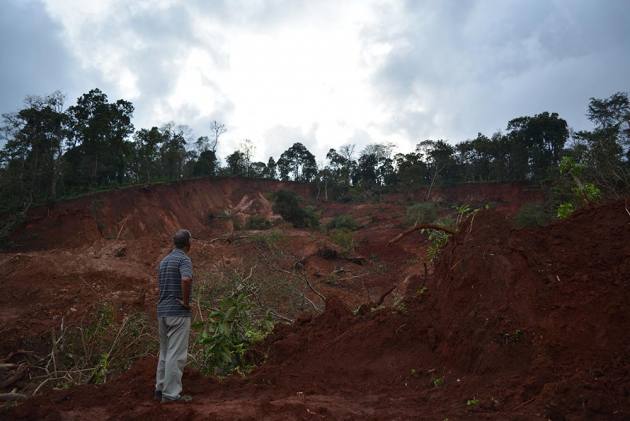
Coffee is a colourful industry. It comes with flavours and biodiversity. The green bean is the master and plays a critical role in the global markets. But all these come for a huge price paid exclusively by the growers. “Sudden uptick in growing cost, labour shortage, constant fall in prices, erratic rainfall and climate change, pests, increase in fertiliser prices are some of the key issues that are plaguing coffee estates,” said Coffee Board chairman, Gowda.
Nanda Belliappa, Vice president Karnataka Growers’ Federation, Committee member at Coorg Planters’ Association and also former member of Coffee Board, said, “Global warming, erratic rains, depredation by pests, apathy by central government and Coffee Board have in the last 25 years sent coffee cultivation and income into a tailspin that we growers will take a long time to recover from.”
Outbreak of pests and diseases due to global warming and weather-related issues have made Arabica coffee virtually impossible to cultivate and so farmers are converting their fields into Robusta which is hardier and not susceptible to pests and diseases. Coupled with the vagaries of nature, labour wages have gone up, input cost are up, cost of manure and fertilisers are also up and overall cost of cultivation per acre has gone up multiple times, Belliappa added. There are about two lakh coffee growers in the country and the coffee industry supports over 10 lakh people directly and indirectly by the coffee industry.
Price situation
Over production and bumper crops are always a price spoiler. The International Coffee Report said that during 2018/19, Brazil coffee crop is expected to be 53.2 million 60 kilo bags, 14.9 per cent more than last year. Colombia reported a coffee production of over 15 million bags, sharply up against the projection of over 13 million. Colombia is planning to increase its annual coffee harvest to 17 million 60 kg bags in 2030. Again, Honduras is expected to have a bumper crop of Arabica coffee. Excess coffee production from leading coffee growing countries like Brazil, Colombia, Vietnam and Indonesia has caused an oversupply with the prices of the commodity falling by about 30 per cent in the global markets.
India’s coffee exports reached an all-time high of 3.95 lakh tonnes in 2017-18 as compared to 3.53 lakh tonnes a year ago. The country’s coffee shipments have risen 12 per cent in volumes during the first half of calendar 2018 over last year on good demand from traditional buyers such as Italy and Germany. In value terms, the exports were up by over 7 per cent, both in rupee and dollar terms.
source:http://www.mydigitalfc.com