Category Archives: Business & Economy

Mini hydel project in Kodagu gets green signal

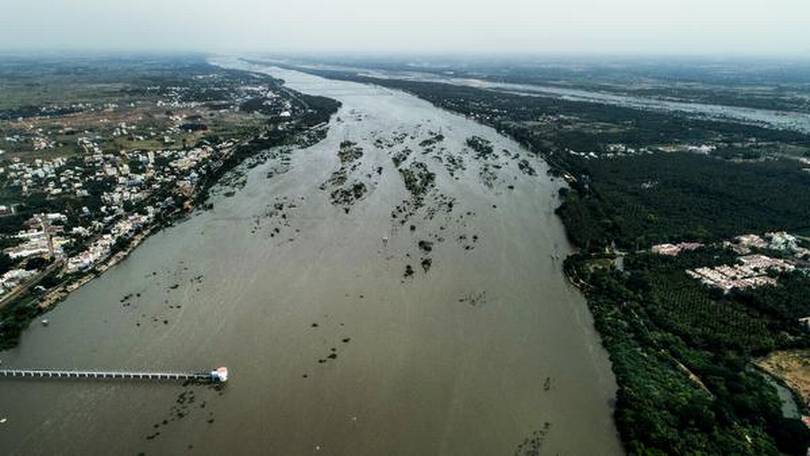
A mini hydel project across River Kumaradhara which was constructed and commissioned in 2014 in pristine forest lands of Kodagu district has now got the green signal.

Bengaluru :

A mini hydel project across River Kumaradhara which was constructed and commissioned in 2014 in pristine forest lands of Kodagu district has now got the green signal. The Regional Empowered Committee (REC), south zone, Ministry of Environment and Forests, has cleared the project but questioned the state government’s decision to allot forest land for non-forestry purposes and further directed them to furnish a report.

The Kodagu Hydel Projects Pvt Ltd was sanctioned in pristine semi-evergreen and evergreen forest land in the Pushpagiri hill ranges of Kumaralli village, Madikeri division for implementing the 3 MW capacity Beedalli Mini Hydel Project. After the project took off in 2014, the DCF, Madikeri division issued notices to the company to submit the proposal for diversion of forest land under Forest (Conservation) Act, (FCA),1980 and to stop work till the necessary approval is obtained. Further, the CCF, Kodagu division reported that though the company was granted two acres, it was occupying more than 2.35 acres excluding the road, building and transmission lines.

Meanwhile, the company filed a writ petition in the Karnataka High Court and the court noted that the then DC, Kodagu district in 2007, had granted two acres of land in Survey No. 1/9 of Kumaralli village in Somwarpet taluk for establishing this hydel project. So, on the directions of the HC, the company submitted a proposal under FCA, 1980. Further, the state government was directed to process the application and send it to the central government as the company had already spent `13 crore on the project.

Joint Inspection Report

The report submitted by the joint inspection team clearly says the state government had violated all rules while allotting the land. Further, as per the DSS analysis done, the proposed area is inviolate as it violates hydrological rules. The area proposed for diversion comes under 250 metre buffer area of river Kumaradhara, a major water body in Kodagu.

Added to this, the findings of DCF (Central) states that the proposed forest area falls under Eco-Class 1 (dense forest). The area where the power house is built and official buildings are constructed had thick riverine vegetation and now some remnants are left in the field. Many known and rare species are found here.

source: http://www.newindianexpress.com / The New Indian Express / Home> States> Karnataka / by Meera Bhardwaj, Express News Service / May 12th, 2018

India’s maiden honour – Bhandari to chair ICO consultative board for a year

India, for the first time, will chair the board of International Coffee Organization (ICO) for a term of one year with Anil Kumar Bhandari, president of India Coffee Trust (ICT), getting elected as the chairman of Private Sector Consultative Board (PSCB) of ICO.

PSCB is an international coffee organisation body comprising 16 leading industry representatives from producing and consuming countries. The board’s main mission and objective is to increase the world coffee market in value and volume and also support various initiatives in the field of coffee and health.

Bhandari is the first representative from India to occupy the important position and his election is significant in the backdrop of World Coffee Conference (WCC) scheduled in Bengaluru, in April 2020.

Speaking about his election, Bhandari said, “My election as chairman, Private Sector Consultative Board of International Coffee Organization is an honour for India and India Coffee Trust. This is the first time that India has chaired the PSCB. I see this as the confidence reposed in India and ICT, going into the World Coffee Conference in 2020, which would be hosted by India and will be held for the first time in Asia. It also indicates the interest that the global coffee sector has in the Indian coffee industry and the Indian coffee market.”

The 121st Session of International Coffee Council (ICC) under ICO was held in Mexico City from April 9 to 13, 2018. ICO is an intergovernmental body of coffee buying & producing nations, having more than 72 member countries and India is one of the founding member.

It is the main intergovernmental organisation for coffee, bringing together exporting and importing governments to tackle the challenges facing the global sector through international cooperation. Its objective is to strengthen and promote its sustainable expansion in a market-based environment for the betterment of all participants in the coffee sector.

source: http://www.fnbnews.com / FnBnews.com / Home> TopNews / by FnB News Bureau, Bengaluru / April 30th, 2018

Karnataka: Solar fencing of Thithimathi forest begins

The tentacle solar fencing project, aimed at reducing man-elephant conflict in Kodagu district, kick started in Kushalnagar-Thithimathi forest range.

Madikeri :

The tentacle solar fencing project, aimed at reducing man-elephant conflict in Kodagu district, kick started in Kushalnagar-Thithimathi forest range. The 67.91 lakh project will have improved fencing hanging from 20 ft above and promises to keep the check the conflict.

Green tall posts were planted beside the roads bordering Maldare and Chikka Reshme forest area and steel wires were hung from these posts as opposed to the earlier fences that ran across the polls vertically. Solar power generation systems too were connected and had a tagline ‘save wildlife, save forest’ imprinted on them.

Forest officials confirmed that the fencing would be carried out across 24 km of the stretch. One km fencing with two posts will cost `2.80 lakh and the tender for this project was grabbed by Mysuru bidder Ambarish Gowda.

While the old solar fences in the range were blamed for their under-maintenance, the new project promises to overcome this issue as the bidder has signed the contract agreeing upon to maintain the installed solar fences for a span of three years.

source: http://www.newindianexpress.com / The New Indian Express / Home> States> Karnataka / by Express News Service / April 20th, 2018

The International Association for Science and Information on Coffee is Coming to Portland

IntlAssociationKF26apr2018

A nonprofit organization that organizes a biennial conference on the science and technology of coffee throughout the coffee value chain, the Association for Science and Information on Coffee (ASIC) is hosting its conference in the United States this year for the first time since 1991.

The 27th conference of the ASIC will be held Sept. 16-20 in Portland, Oregon, at the Oregon Convention Center in collaboration with the Specialty Coffee Association. The conference — which most recently gathered more than 400 scientists from 53 countries in Kunming, China, in 2016 — was last held in the U.S. in San Francisco.

“SCA is proud to host the ASIC conference this year in Portland, Oregon. ASIC is the world’s foremost coffee science institution, and this conference is the key place for sharing new scientific breakthroughs on coffee,” Peter Giuliano, chief research officer for the SCA, told Daily Coffee News. “Coffee science is a key part of SCA’s research mission, and we’re proud to have developed a deep collaboration with ASIC, and to share this learning opportunity with our members.”

Chahan Yeretzian is the Scientific Secretary on the ASIC board and leads the Research Advisory Council on the Board of Directors of the SCA. Photo by Yong-Gu Bae.

Chahan Yeretzian, who currently serves on the board of both SCA and ASIC, told Daily Coffee News that the two organizations have a shared goal to build bridges connecting industry and academia, along with a belief that facilitating constructive dialogue will lead to continued success and ensure the readiness of the coffee industry to recognize and address future challenges.

“The Specialty Coffee Association represents thousands of coffee professionals, from producers to baristas, all over the world, so it made sense for both of these global organizations, and leaders in their respective fields, join forces in organizing the upcoming ASIC conference,” said Yeretzian. “Portland, a booming coffee city known for its bridges, seemed to be a natural choice for a location to host the conference in the U.S.”

The conference features presentations with cutting-edge information and advanced coffee science, as well as exhibits and social events. ASIC is accepting abstract submissions through June 3 for papers to be presented on specific program topics, such as chemistry, agronomy and pest management, genomics, sustainability, physiology, coffee and health, and sensory science.

“Future success for the coffee industry will rest on solid science, technology, and innovation in breeding, post-harvest technologies, roasting, grinding, packaging, extraction, consumer understanding, health, climate change, and genomics,” said Yeretzian. “Research is moving into the spotlight, as industry leaders are becoming aware that their future depends on mastering the technologies and chemistry of coffee. We are also increasingly interested in better understanding the needs and challenges of the industry, in order to orient the efforts and resources — and connect those in the industry who will champion the implementation — of scientific insight into successful and profitable applications.”

Registration for ASIC Portland is now open, with early bird pricing available through Aug. 1, 2018.
___________________________________________________

Lily Kubota
Lily Kubota is the digital content manager of Daily Coffee News by Roast Magazine. She is based in Southern California.

___________________________________________________

source: http://www.dailycoffeenews.com / Daily Coffee News by Roast Magazine / by Lily Kubota / April 24th, 2016

India exports record 3.95 lakh tonnes of coffee in FY18

A file photo showing group of female plantation workers walking on the road in the Kuppamundi Coffee Estate in Kolagapara near Sultan Battery, a location in the Wayanad dsitrict of Kerala. (Photo: iStock)

Coffee exports from India, Asia’s third-largest producer and exporter, reached an all-time high at 3.95 lakh tonnes in the 2017-18 fiscal on strong demand for instant coffee, according to state-run Coffee Board.

Coffee exports from India, Asia’s third-largest producer and exporter, reached an all-time high at 3.95 lakh tonnes in the 2017-18 fiscal on strong demand for instant coffee, according to state-run Coffee Board.

The country had exported 3.55 lakh tonnes of coffee in the previous year.

“The coffee exports were at all-time high in FY 2017-18 because of increased shipments of value-added products, especially instant coffee,” a senior board official told PTI.

There was an increase in instant coffee output because of improved production capacity with setting of up new units.

The country largely exports Robusta variety of coffee, the volumes of which also showed a jump in the 2017-18 fiscal in view of strong demand and record domestic production.

The top three export destinations are Italy, Germany and the Russian Federation.

The board has pegged coffee output at a record 3.50 lakh tonnes for the 2017-18 crop year ending September 2018 as against 3.12 lakh tonnes in the previous year.

source: http://www.thestatesman.com / The Statesman / Home> Business / by PTI, New Delhi / April 19th, 2018

National Barista Champioship in Bengaluru from April 18 to 20

Bengaluru :

United Coffee Association of India (UCAI) and Coffee Board of India are to organise ‘The National Barista Champioship 2018’ in Bengaluru at Orion East Mall, Bengaluru.

The champioship spread over three days – April 18 – 20 is likely to see participants from various parts of the country competing.

For the Barista Champioship, United Coffee Association of India (UCAI)—a representative stakeholder in the Indian Coffee industry comprising of green coffee traders, manufactures of roast and ground coffees, along with coffee machinery manufacturers and dealers of equipment, cafes, coffee labs and coffee professionals—have to come together.

According to R Srikanth Rao, Vice President, United Coffee Association of India, “The competition has three rounds of elimination. Each barista would be preparing and presenting four cups each of espressos, milk beverage and signature drink which will be evaluated and judged by certified jury to identify the best in the various categories of beverages.”

The preliminary round will be on April 18 and 19 and the semifinals and finals would be on April 20. The head Judge for the competition would be Joe Hsu, who is international representative from World Coffee Events. The winner of National Barista Competition would represent India at the World Barista Championship to be held at Amsterdam, during June 2018.

source: http://www.thehindubusinessline.com / Business Line / Home> News / by Anil Urs / Bengaluru – April 13th, 2018

Coffee cargo handling up from New Mangalore port

CoffeeBeansKF11apr2018
Mangaluru :

Proactive measures initiated by the New Mangalore Port Trust (NMPT) in the recent years have helped attract more coffee cargo from other ports in the recent years.

Suresh P Shirwadkar, Chairman in-charge of the NMPT, told BusinessLine that the port handled 2.41 lakh tonnes (lt) of coffee cargo during 2017-18 as against 2.36 lt in 2016-17. The port shipped out 1.94 lt in 2015-16 and 1.59 lt in 2014-15.

A senior port official said that more than 90 per cent of coffee cargo are being exported from the NMPT now. Had there been no lull in the international market, the coffee exports from NMPT would have gone up by another 10,000 tonnes, he said.

Stating that a majority of coffee is located in the hinterland areas such as Kodagu, Chikmagaluru and Hassan districts of Karnataka, he said all of them are within 180 km distance from NMPT. The cargo can reach Mangaluru within in four-and-a-half hours from the hinterland. There is no inter-State transfer of the cargo. All these factors have helped exporters to save time and money, he said.

Exporters now have the option of three ports for transhipment of cargo. If the transhipment is delayed for Colombo, the cargo can be taken to Mundra port. With this, transit time comes down.

Ramesh Rajah, Coffee Exporters Association, says New Mangalore port has emerged as preferred choice for exporters due to improved infrastructure including a quick customs clearance and increase in number of sailings. As rising fuel prices add to the exporters’ costs, proximity to Mangalore has worked out to their advantage.

To a query on the reduction in the cost when compared to Kochi, the NMPT official said the cost is less by around IRs. 6,000 a container compared to the neighbouring ports.

source: http://www.thehindubusinessline.com / Business Line / Home / by AJ Vinayak / Mangaluru – April 04th, 2018

Patience helps Nagarathar kin to enter TN coffee market

With coffee running in the blood lines of the family the Mother Mirra Group has owned coffee plantations for four generations.

Sundar Subramaniam, executive director of Mother Mirra Group of companies releasing their company product in Coimbatore. (Photo: DC)

Coimbatore:

His family is introduced as the ‘first Asians’ to own a plantation in Asia. Ironically, it took several years and four generations of entrepreneurs of the ‘Mother Mirra Group of Companies’ to foray into retail coffee market.

Speaking to DC, Mr. Sundar Subramaniam executive director of group said, “way back in the 1930s, my great grandfather Mr. PPR. Subramanian Chettiar owned and managed estates in Malaysia at a time when only British and Scots owned coffee plantations. Since then on, my family is in the business of supplying coffee powder and roasted beans from our estates in Coorg to different parts of India. Entering into the domestic filter coffee market is a dream come true for my father Mr. S. Subramanian, who is a third generation entrepreneur of our family.”

With Mirras Coffee the company has entered the domestic filter coffee market. Two options of coffee powder were launched in Coimbatore recently. Mirras Premium blend is a combination of 85 per cent coffee and 15 per cent chicory while the Mirras Gold variant is a combination of 53 per cent coffee and 47 per cent chicory.

Available in 200 grams sachets, for a cost that is affordable, the traditional filter coffee tastes just like home-made coffee, sticking to the tag line of the product ‘idhu namma veetu kaapi’.

The product is available across big and small stores and supermarkets across the city. The firm has a strong dealership network in Tamil Nadu and Puducherry. “We have partnered with 350 dealers across both the regions. In a year’s time we are hopeful of capturing 3.50 per cent to 4 per cent of the filter coffee market,” Mr. Sundar Subramaniam said.

The company already has a strong market hold in the wholesale filter coffee market segment with regular consignments of their coffee powder delivered across India. Karnataka and Tamil Nadu is where the company does thriving business. The coffee is customized for their wholesale clients.

With coffee running in the blood lines of the family the Mother Mirra Group has owned coffee plantations for four generations.

It is home where three generations of employees have worked and it has to its credit more than seven decades of experience of growing and producing coffee powder. At the product launch in the textile city, one-year-old master Shiv Ram Alagappan, the founders’ grandson, gracefully received the first packet of coffee.

source: http://www.deccanchronicle.com / Deccan Chronicle / Home> Nation> In Other News / by Lakshmi L Lund, Deccan Chronicle / April 08th, 2018

How a young retail designer woke up and smelled the coffee

He is offering unique artisanal coffee blends, hitherto meant only for exports, for lovers of the brew in India. This is Bharat Singhal’s #PassionToPaycheck story.

‘If somebody offers you an amazing opportunity but you are not sure you can do it, say yes – then learn how to do it later!’

Bharat01KF30mar2018

The irrepressible Richard Branson’s philosophy has helped Bharat Singhal coast through his entrepreneurial journey as he made the switch from being a retail designer to starting his own speciality coffee brand, – Bili hu.

That initial, heady aroma

Coming from a business family, Bharat says being an entrepreneur was a natural inclination. “But at school, I was considered a quiet boy who was creative. Being constantly told that I could be a good designer, I decided to enrol in a design school and make a career of it.”

It was in 2011, while completing a hypothetical project on retail strategy and design solution for the Coffee Board of India to promote Indian-grown coffees, that he was struck by the variety and richness of premium coffee grown in India. “I learnt that most of the premium coffee is exported and no effort was made to introduce it in the domestic market.” Intrigued, he began to deep dive into a sector he knew little about. The research further intensified his interest in coffee, so much that soon after his graduation he enrolled in a short course offered by the Coffee Board of India. The course gave a hands-on training on the journey of coffee from a bean to a cup, including processes such as roasting, brewing and tasting.

However, Bharat went back to a career as an environmental designer, working on designing retail stores, pubs, POS (point of sale) displays, exhibitions, events and even end-to-end branding strategies for brands.

He says, “Retail design is a mix of business strategy and interior design. Though it’s an emerging profession, there are limitations in providing a platform to innovate, most often because of the restrictive mindset of customers and budgets. Even today, interiors are still more about décor than design. I couldn’t find avenues to innovate, put my ideas into action, and somewhere work satisfaction began to deteriorate. ”

Pursuing his passion

Designing a number of pubs and breweries in the NCR region, he continued to expand his interest in coffee, visiting coffee estates in Chikmagalur in Karnataka to increase his understanding of the subject. The on-ground experience and market analysis proved that he had a new business idea where he could put his designing abilities to innovate. But his family was cautious. His entrepreneur dad wasn’t really keen on his switching careers, while his mom believed in his instincts but advised him to go ahead only if he was sure.
Bharat02KF30mar2018

But Bharat now was more or less sure where his passion lay. He took a trip to Bengaluru to create new blends. Not only did everyone back home in Delhi enjoy the cuppa, but a friend even bought a batch.

“Next thing I knew, I had quit and was planning how to roll out Bili hu full-time,” he says.

The legendary white bloom as identity
Bili hu, as its website rightly describes, was thus “born out of a passion for good coffees and their unavailability in the domestic market”. Bili Hu translates as white flower in Kannada, indicative of the gorgeous coffee bloom. Bharat says he chose the kannada name because in India, coffee was first grown in Karnataka and is still the heartland of good coffee beans. “Also, a good name can be a superb conversation starter, and something like this would start conversations of coffee coming from a plant with white flowers and red cherries.”

Bili hu offers coffee lovers in India an alternative to widely-available commercialised coffee blends. From an exclusive coffee blend from the Biligiri rangana hills in Karnataka, which imparts a toffee and sweet lemon aftertaste, to a single estate coffee from Chikmagalur’s Manjarabad that has a sweet and fruity aftertaste with a hint of chocolate, each variety is unique and speaks volumes about the estates they originate from. “The coffee blends that we offer have been created in close collaboration with some of the best curers, roasters and coffee estate owners across India.”

Exotic names
The brand’s most popular blend is the Mysore Nugget, available for both commercial and retail consumption. But Bharat’s favourite is the deliciously named Monsooned Malabar. “It’s a truly Indian coffee with a post-harvest process unique to India. It is a coffee that I really like to talk about everywhere I go.”

Bharat03KF30mar2018

Warming to his pet subject, he says, “Monsooned Malabar, when roasted, contains some of the most unique notes ever tasted in coffees. Hence, it doesn’t come as a surprise that it’s also one of the most popular coffees to be exported to Europe. At Bili Hu, we roast these coffees to a very light colour to bring out the right nuances that we wish to highlight – earthy, grassy, wet wood aroma, with a mellow taste on the palate. It’s best had black and when brewed in a pour over, results in a beautiful golden brew. The Monsooned Malabar is a seasonal coffee, meaning it would taste different when procured in July than, say, February. “But we wish to honour its limited stocks and changing taste profile over the year, instead of opting to altering the blend and roast profiling, to keep the coffee’s taste consistent through the year. This way we ensure that our customers get to taste the beauty of coffee that changes though the year.”

And, to ensure he continues to make the artisanal blends that are hitting the right notes, he partners with popular large estate houses as well as unbranded smaller estates. He says, “The speciality coffee blends are typically not traceable to one estate, they mostly come because of curing. Unless an estate is processing them in-house in a certain specialised manner.”

Fine-tuning his entrepreneurial skills
Reflecting on his journey as an entrepreneur, Bharat says, “I evolved at every step of my business. I learnt a lot on the job. Even though we are a business family, I didn’t have anyone in the F&B sector, nor did I know someone who could guide me along. So, it was a lot of self-learning.” The 27-year-old candidly admits to a number of mistakes, from sending out wrong orders to improper packaging, even ending up replacing orders for free. “Today, I am much more equipped. The deliveries are seamless. I have figured out areas where I can cut down unnecessary cost. I have my growth roadmap charted.”

Today, Bili Hu caters to customers both in B2B and B2C spaces, but it is the B2B space that is of greater interest to Bharat. “I’m keen on collaborating with fine dining or speciality restaurants and leading hotel chains to offer unique coffee experiences. Since I create my own blends, I can offer two different and unique blends for two restaurants in the same vicinity. The idea is to remain exclusive and make customers hunt for that cup of coffee they had at a particular restaurant.”

Far more than a cuppa
Bharat’s coffees are not limited to being used as beverages; his blends can even be used for desserts by bakers, chocolatiers as well as chefs in upscale restaurants. And, with a number of young entrepreneurs owning and managing new and popular hotel chains and gourmet restaurants, he feels it becomes possible for smaller players like Bili Hu to collaborate and drive mutual growth. “It helps that I belong to the same generation as them, but the real reason why it becomes easier to do business is because they understand how artisanal brands function in comparison to commercial brands.”

Bharat04KF30mar2018

Today, Bili hu has been able to make headway across India, from loyal coffee lovers in Bengaluru to a city like Kolkata that runs on chai. “From homes to restaurants to being served at residences of ambassadors, we have been able to reach out to a massive coffee-loving audience in India.”

Bili hu doesn’t have big expansion plans on its cards yet. The reason is simple, as Bharat explains, “We’re still establishing ourselves. We are negotiating shelf space, trying to find a mention on the menu at gourmet restaurants, and getting coffee lovers to fall in love with our blends. Once we build a stronger sustainable network, we plan to grow strength to strength and become a brand to reckon with. We are much more than just a cup of coffee.”

source: http://www.yourstory.com / YourStory.com / Home> Signature Startups> Brand Spotlight / by Sindhu MV / March 27th, 2018

Rains in Karnataka seen good for next coffee crop

The blossom showers and the subsequent backing showers are crucial for a good crop.   -  NS The blossom showers and the subsequent backing showers are crucial for a good crop. – NS

Bengaluru :

For the beleaguered growers of robusta coffees in Karnataka, the largest producer of the bean, the ongoing spell of rains has raised the hopes for next crop year starting October 2018.

The low pressure and depression off the West Coast has brought rains to several parts of the key coffee growing regions of Kodagu, Chikmagaluru and Hassan among other districts in Karnataka, which accounts for over 70 per cent of the coffee produced in the country.

Crucial showers

The pre-monsoon showers are crucial for blossoming of the coffee floral buds. The blossom showers and the subsequent backing showers are crucial for a good crop. Traditionally, the robusta and arabica areas should receive pre-monsoon showers by March 15 and April 15, respectively, for a good blossom, growers said.

“For the growers who had taken up irrigation through sprinklers for robustas from late February and where coffee has blossomed, the current spell of rains are acting as backing showers,” said HT Pramod, Chairman, Karnataka Planters’ Association. The rains will be of some help for the growers, who have harvested a poor robusta crop this year.

“The current spell of rains are good for the coffee sector as a whole. However, the rainfall has not been uniform and several robusta areas in Kodagu have not received the rains. The forecast is that it would rain for the next two days and we are hoping for some good showers,” said N Bose Mandanna, a grower in Suntikoppa.

Coffee growers have suffered from a poor crop and bearish price trend this year. Robusta growers have seen their crop shrink by up to 40 per cent in several areas on account of erratic rainfall last year.

source: http://www.thehindubusinessline.com / Business Line / Home> News> Specials / by The Hindu Bureau / Bengaluru – March 16th, 2018