Category Archives: Business & Economy

Coffee Board pegs output for 2017-18 at record 3.5 lakh tonnes

CoffeeCropsKF06oct2017

Rise in bearing area of the bean attributed to the bumper crop

Bengaluru :

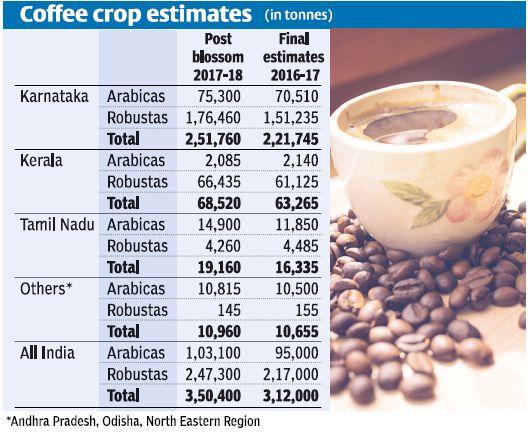
India is heading for yet another record coffee crop in the year 2017-18 starting October 1 on increase in the bearing area under the bean crop. State-run Coffee Board, which released the post-blossom or the initial estimates on Tuesday, has placed the 2017-18 crop at 3.5 lakh tonnes (lt) — an increase of 12.31 per cent over 2016-17’s final output of 3.12 lt.

Rise in acreage
The crop size of arabicas, the mild and premium bean variety, is seen rising by around 8.53 per cent in 2017-18 over the previous year, while the production of robustas is seen growing by around 14 per cent.

The projected growth in 2017-18 post blossom output is mainly on account on increase in bearing area of about 13,500 hectares in the traditional growing States of Karnataka, Kerala and Tamil Nadu. Though the Coffee Board had assessed the 2017-18 post-blossom crop size during May 2017, the estimates were released on Tuesday.

Crop losses, if any, after May 2017, will be taken into account at the time of post-monsoon estimation, the Board said in a statement.

India is the fifth largest producer of coffee and Karnataka accounts for about two-thirds of the coffee produced in the country.

State-wise crop size

The post-blossom estimate for Karnataka is placed at 251,760 tonnes comprising 75,300 tonnes of arabica and 176,460 tonnes of robusta. The post-blossom forecast represents a 13.5 per cent increase over last year. All the three main growing regions of Kodagu, Chikamagalur and Hassan districts are seen registering an increase in output over last year.

In Kerala, mainly a robusta producer, the post-blossom estimates for the year 2017-18 are placed at 68,520 tonnes, an increase of 8.31 per cent over the previous year’s final estimate of 63,265 tonnes. In Tamil Nadu, the post blossom forecast for 2017-18 is placed at 19,160 tonnes, up 17.29 per cent over last year’s 16,335 tonnes.

In the non-traditional areas of Andhra Pradesh and Odisha as well as in North Eastern Region, the post-blossom forecast is placed at 10,960 tonnes as against previous final estimate of 10,655 tonnes. The higher forecast has come mainly from Andhra Pradesh due to increase in bearing area.

The Board also said that the 2016-17 crop size had shrunk by around 10.34 per cent over the previous year to 3.12 lt mainly on account of poor rains last year.

In 2015-16, India had produced a record crop of 3.48 lakh tonnes.

(This article was published on October 3, 2017)

source: http://www.thehindubusinessline.com / Business Line / Home> Economy> AgriBusiness / The Hindu Bureau / October 03rd, 2017

Subsistence coffee farmers in India unite to transform lives

Speciality coffee products, support and shared value are key to success

Ten years ago, the residents of Kabada Boddaput — in southeastern India’s remote Araku valley — were impoverished subsistence farmers, living in mud huts and getting by on the millet, yams, pumpkin and greens they grew on their one- to five-acre plots.

Cash was scarce and emergencies meant borrowing from friends and family — debts that might take years to repay. “It was a very terrible situation,” recalls Sanyasi Gullela, a farmer. “There were not enough clothes and no money for cattle.”

But life has changed dramatically for Kabada Boddaput’s tribal farmers — along with around 13,000 others in the Araku valley — since they began cultivating coffee, encouraged by the Naandi Foundation, a Hyderabad-based philanthropic organisation.

Last year, Mr Gullela earned Rs105,000 ($1,640) from coffee, which he grows on 1.3 of his three acres of land, and additional funds from the pepper vines coiling around the surrounding shade trees. In recent years, these earnings have financed four cattle for ploughing and an auto-rickshaw for his son. His neighbour has purchased a second-hand tractor.

Daily life has improved, with the newfound cash used to buy more nutritious food, such as lentils, and new clothes. Some locals have upgraded their mud homes with cement and tiles. “Nowadays, I have a lot of choices,” says G. Tirupati Rao, who grows coffee on two of his 3.5 acres. “What we want we can easily buy from the market. Earlier, we had to compromise.”

While around the world coffee has developed a reputation for bringing few tangible benefits to those toiling to grow it, the view in the Araku valley is different. The crop — grown bio-dynamically without costly fertilisers or agrochemicals — has become an unlikely stepping stone to socio-economic progress for some of India’s most neglected and marginalised peoples. “Coffee has given dignity to farmers,” says Chiranjeevi Naidu, a board member for the Small and Marginal Tribal Farmers Mutually-Aided Co-operative Society, set up in 2006 to process the coffee grown through the Naandi project.

The Araku valley has a history of coffee production dating back to the colonial era, when British planters grew thousands of acres. After independence, India’s government-run Coffee Board took over the plantations, employing local people. And the board gave coffee seeds to farmers, although few flourished in the absence of other support.

But many Araku farmers were eager to keep trying. “They said: ‘Anything that was valuable in India, the British took control of, so coffee must be valuable’,” says Manoj Kumar, Naandi’s chief executive officer.

Naandi’s corporate donors were less enthusiastic, he recalls. “I’ve never heard of anyone coming out of poverty through coffee,” one told him. But Mr Kumar — who had rather stumbled into the coffee business when he was asked in 2004 to develop “livelihood projects” to help Araku farmers — was undeterred. Naandi promised technical support with cultivation and offered to market the farmers’ produce overseas.

Since then, Naandi’s agricultural experts have taught Araku’s novice growers to produce top-quality organic coffee, some of which is being sold as “speciality” coffee to select roasters and traders from Japan, Korea, and Europe. These high-end buyers — who taste and rate each lot before purchasing — are willing to pay up to Rs700 per kg for the best of the beans. The bio-dynamic agriculture practised by the Araku farmers is labour intensive but requires no costly cash inputs. Farmers enrich the soil through mulching, using leaves, fallen fruits and other freely available organic matter. They use inexpensive, herbal soil additives to enhance soil fertility and fight pests.

They have learnt the discipline of harvesting beans only when they are bright red and fully ripe. For these efforts, co-op members last year received a guaranteed price of Rs375 per kg of top quality, fully-ripened beans.

From that, the co-op — where the beans are processed within 12 hours of being harvested — deducts Rs90 per kg for transport and processing, with Rs280 per kg profit left for the farmer.

This compares with Rs90-Rs110 per kg that Indian farmers typically receive for bulk coffee to be sold on the New York Commodity Exchange.

“If you want to do sustainable coffee at scale, it has to be speciality coffee,” says Mr Kumar. “When they buy, they pay more than anyone else will pay.”

Problems remain, especially in finding enough buyers willing to pay a premium for all the high-quality coffee the Araku farmers can produce. Last year, co-op members grew 100 tonnes of coffee, but Naandi is working with another 7,000 farmers whose saplings will mature soon, and other villages are pleading to join the initiative.

Mr Kumar believes Araku’s coffee output could easily rise to 500 tonnes or more. But the total world market for speciality coffee was just 10m tonnes in 2011 — although it is said to be growing fast — and speciality coffee buyers tend to buy in small lots from diverse regions around the world. “I don’t have enough high-quality buyers,” Mr Kumar admits.

To expand the market for its own speciality coffee, Naandi recently raised $5m from its Indian philanthropists for Araku Originals — its dedicated, for-profit, coffee marketing arm — to market its wares in Europe.

Araku Originals has opened a flagship store in Paris and is also selling its coffee though 34 other gourmet food shops and other upmarket retail outlets across France. The coffee that does not make the grade as speciality coffee is sold as organic, fair trade coffee elsewhere in Europe. “We are a benevolent link to the international market,” Mr Kumar says. “It can’t just be procured and dumped.”

Despite the challenges, Mr Kumar is convinced that coffee can be made a sustainable cash crop for farmers — but only if those involved across the industry are willing to share the profits more generously.

“You need a very clear-cut, shared-value business model with the farmer,” he adds. “Otherwise, it won’t work.”

source: http://www.ft.com / Financial Times / Home> Agricultural Production / by Amy Kazmin / September 24th, 2017
Monsoon-chasers rush to Kodagu

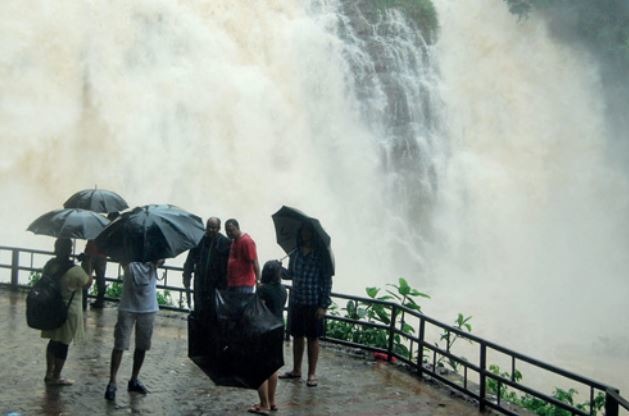
Tourists at Abbey Falls near T Shettigeri, with rain catching up by monsoon end, all falls in the State are putting up their best show

Madikeri :

City dwellers might hate rain with its attendant problems but when they flock to Kodagu, the rain is an added attraction. Tourist inflow has gone up in the rainy months which were once considered off-season.As many as 91,619 visitors came to Kodagu in July, a jump over the figures for 2016.

Between January and July this year, 6.9 lakh people visited Kodagu, of whom 91,619 people visited in July. This is a jump of 21% over last year, when just 75,492 tourists came. In 2015, only 74,798 tourists visited in the month of July. But even these are conservative numbers, say officials, since it only accounts for guests at registered homestays. The number could be almost double if the other homestays, not on paper, are factored in as well.

What helped probably was that the rain wasn’t as heavy as expected. The district as a whole received 51cm of rain in the month against a normal of 90cm, allowing tourists to enjoy the showers while finding time to move around as well. The tourist count estimate for this August had crossed 50,000 by the middle of the month.

While most tourists visit the staples in Kodagu -Talacauvery, Cauvery Nisargadhama in Kushalnagar, the Nalaknad palace in Kakkabe and Raja’s Seat – some also make their way to Irupu falls near Shrimangala, Mallalli falls off Somwarpet, Abbey falls near Madikeri, the golden temple at Kushalnagar, Dubare elephant camp, Ha rangi and Mandalapatti near Madikeri.

Shobha Shetty , a retired bank employee from Mangaluru, says she had a magical experience visiting Talacauvery in the morning hours. “The mist-covered slopes, the moving fog and the gathering dark in daylight made me forget everything else. This can happen only during monsoon,” she says. Around 45,616 tourists visited Talacauvery between January and May this year.

Shashi Monnappa, who runs Mythili homestay at Madikeri, said many tourists preferred to visit during monsoon and opted to go to waterfalls, for river rafting and on safari in Nagarahole.

Boosting the tourist inflow, homestays drop rates during the rainy off-season. Coravanda Madan Somanna, who runs a homestay in BB estate at Kadagadal near Madikeri, said the discounts ranged between 25% and 30% on the room tariff.

Kushalnagar assistant conservator of forests Chinnappa said an average of 3 lakh tourists visit the Dubare elephant camp every year.And around two lakh tourists visit Irupu falls in south Kodagu every year, says Kodagu DFO Jaya.

Given the surge, the tourism department has taken up some development projects. It is building a Kodava heritage centre at Madikeri at a cost of Rs 2.6 crore, a pathway for tourists at Mallalli falls at Rs 1.4 crore and providing a chain barricade at Abbey falls for Rs 86 lakh.

The district administration has sent proposals for another 12 projects which include road development in Mandalapatti, Talacauvery and Dubare; building a hanging bridge to Irupu falls and setting up a garden at the Nalaknadu palace. It has also proposed building a concrete road from Nanjarayapatna to Dubare to reach the elephant camp. These proposed projects will need nearly Rs 17 crore from the government.

source: http://www.timesofindia.indiatimes.com / News> City News> Bangalore News / TNN / September 25th, 2017

Karnataka is now biggest pepper producer in the country

For the second year running, Karnataka has been named the country's largest pepper producer, accounting for 45% of the spice produced in India
For the second year running, Karnataka has been named the country’s largest pepper producer, accounting for 45% of the spice produced in India

Karnataka has overtaken Kerala and become the country’s leading pepper producer, accounting for 45% of the total production.The Centre’s Spices Board data puts Karnataka ahead of Kerala for the second year running. While Karnataka produced 33,000 metric tonnes of pepper in 2014-15, against Kerala’s 28,000MT, the margin widened in 2015-16 as Karnataka’s yield remained 33,000MT and Kerala’s fell to 26,000MT.

Kerala’s decline, to a great extent, has been because of its black pepper vines falling to quick wilt, a disease that causes sudden wilting, drying and death of the vines. In Wayanad district in Kerala, farmers lost almost 90% of their vines to the disease. The Spices Board has taken up extensive research to contain the pest. The sudden scourge, however, has turned the focus on pepper production in south Karnataka districts.

Pepper is grown in several parts of Karnataka, mainly in Chikkamagaluru, Shivamogga, Madikeri and Kodagu.

Alternative to areca, rubber

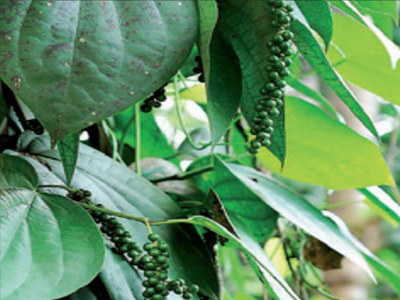
The state’s plantation growers have adopted the spice as an economically profitable alternative to areca (palm), coffee, rubber and coconut. The spice crop is grown in the middle of coffee plants, said Bose Mandanna, former vice-president of Coffee Board and a leading planter in Suntikoppa in Kodagu. At least 40 pepper vines are planted in an acre of robusta coffee plantation. This goes up to 80 vines if it is an arabica plantation, because these are grown at lower heights and produce less coffee per hectare.The harvest is done during February-March.

“Kodagu accounts for 25% of the pepper production in the country,” Mandanna said. An acre fetches 100kg to 150kg of pepper but with intensive cultivation, some growers get up to 500kg.

There is some difference in the production data of the government’s Spices Board and the National Commodity & Derivatives Exchange (NCDEX), but both sources indicate that Karnataka is beginning to unseat Kerala from the No.1 spot. NCDEX data shows Karnataka having a big lead over Kerala in 2014-15, marginally losing out to Kerala the following year, but regaining the lead in 2016-17.

NCDEX says India accounts for 17% of the world’s production of pepper, and is the second largest producer after Vietnam. The exchange relaunched its pepper contract on the platform in July, after about five years. In just three days, it saw a total volume of 807 tonnes of pepper, valued at Rs 38 crore, being traded.

Sarat Mulukutla, chief (commercial segment) of NCDEX, said considering the rise in pepper production in Karnataka, the exchange is launching a third delivery centre in Hassan. The other two are in Kochi and Kozhikode in Kerala.

Attractive price

Anish Madappa of T Shettigeri in south Kodagu said pepper production had grown in Karnataka for a decade due to the good price it fetches. Ten years ago, a kilo of pepper fetched Rs 260, now it is about Rs 680. Coffee planters have started growing pepper on poles with the help of biomass, leading to a jump in production. Drip and sprinkler irrigation have helped minimise water loss and increased the yield per acre. “Once a high rising (pepper) creeper is planted, it will provide yields for 35 to 50 years with little or no investment,” said Kannagi Sheshadri, a farmer cultivating plantation crops in Theerthhahalli taluk. “The plants need to be carefully treated to achieve maximum yield. I reaped 12 tonnes last year and hope to double it this year,” said Joney Mathew, a farmer with crops in Shivamogga and Chikkamagaluru districts.

“Pepper produced in Kodagu is of the best quality,” said Madappa. “This is because we normally use only Bordeaux spray, which contains lime and copper sulphate.” The spray helps protect the pepper vines from fungal problems and resists quick wilt disease.

source: http://www.timesofindia.indiatimes.com / The Times of India / News> City News> Bangalore News / by Shalina Pillai & G. Rajendra & CV Raghavendra Rao / TNN / September 26th, 2017

With output rising, India is now a hub for instant coffee

Coffee Board to finalise estimates after consulting stakeholders
GenericCoffeeKF21sept2017

Coonoor :

India is becoming a manufacturing hub for instant coffee after Brazil and Peru, said Y Raghuramulu, Director of Research, Coffee Board.

In his presentation on coffee at the 124th UPASI annual conference here, he said the country is doing extremely well on the export front

The total volume of export between April and August this year stood at 1.78-lakh tonnes, up from 1.63-lakh tonnes in the corresponding period the previous year.

The country has moved from bulk exports to value-added coffee exports, he said. “We are consistently importing more for re-export. Imports are mainly for value-addition and re-exports by EOUs with duty free under FTP.”

Import volumes during 2015-16 stood at 65,618 tonnes and the re-export volume at 67,283 tonnes. This surged to 78,042 tonnes and 79,254 tonnes the following year. Value-wise, the imports were estimated at ₹927 crore (₹802 crore) in 2016-17 and re-export at ₹ 1,346 crore against ₹1,147 crore in the previous year.

Green coffee exports account for 70 per cent of the total export volume, with specialty green coffee exports inching its way from 3.20 per cent between April and August last year to 3.80 per cent during the corresponding months of this year. Value-added coffee exports have stagnated at around 25 per cent.

Reverting to production, Raghuramulu said: “USDA has forecast India’s production at 3.3-lakh tonnes, but the Coffee Board is yet to release the estimate for 2017-18. The board is in consultation with various associations for finalising the estimates. We do not want to release as in earlier years and come out with a revision.”

The board has undertaken a couple of fresh initiatives, such as the revamping of India Coffee House, brand ambassadors to promote Indian coffee and organising outreach programmes.

“We are looking to franchise at least 10,000 vending machines in the medium-term. Our initiatives will indirectly benefit small coffee growers. We have also initiated discussions with small growers to form producer organisations to help them achieve better returns.”

source: http://www.thehindubusinessline.com / Business Line / Home> AgriBusiness / by L N Revathy / September 13th, 2017

Eight O’Clock Coffee aims for younger drinkers with new infused blends

EightOClockCoffeeKF20sept2017

Dive Brief:

Eight O’Clock Coffee has expanded its line of infused Arabica coffees with three new products designed to appeal to younger and more adventurous java fans, according to a news release.

Joining its already established Relax Decaf and Alert Hi-Caffeine coffee blends is an offering blended with acai berries, another with turmeric and cinnamon, and a third featuring a fruit and herbal concoction rich in vitamin B6.

Established in 1859 as the house blend for the Great Atlantic & Pacific Tea Company, Eight O’Clock Coffee is now a subsidiary of India-based Tata Global Beverages, which also owns Tetley tea in the U.K. and Good Earth Tea in the U.S.

Dive Insight:

Eight O’Clock Coffee is far from the first coffee brand to offer infused and functional blends. There have long been various flavor-infused coffees in the marketplace, and now there are wine-infused and THC-infused coffees for that extra buzz. VitaCup produces a line of vitamin-infused coffees sold in pods for one-time use with specialized machines.

Tata Global Beverages has applied several marketing tools to reinvigorate its Eight O’Clock Coffee brand since acquiring it from Gryphon Investors in 2006. The former A&P grocery chain in-store coffee brand was sold to the private equity firm in 2003.

Tata pulled out all the stops last year with a marketing campaign promoting whole bean coffee to consumers, and in 2012 joined with Green Mountain to launch Eight O’Clock K-cups for Keurig coffee machines. That move is credited with helping Eight O’Clock Coffee take a 7% share of the single-serve market within two years.

The popularity of packaged coffee has been growing recently, primarily due to double-digit growth in the single-serve format. Ready-to-drink varieties are also becoming a popular choice and pose a challenge to the Eight O’ Clock brand as consumers increasingly prize convenience. It’s unclear if the health and flavor benefits of turmeric and cinnamon, or the trendy flavor of acai will win millennials over to taking the time to brew coffee.

Tata clearly plans to continue efforts to better position Eight O’Clock Coffee within the very competitive packaged coffee marketplace, and these infused products are one more example. Whether they will resonate with younger coffee drinkers — who are typically more receptive to trendy formulations and packaging — is something Tata along with other companies will closely follow in the months ahead.

source: http://www.fooddive.com / FoodDive / Home / by Cathy Siegner / September 19th, 2017

World’s costliest coffee made with cat-poop is now available in India. Here’s where you can get a hot cuppa

Take your love for cats to the next level by consuming their faeces. Yes, coffee made out of cat poop is now available in India.

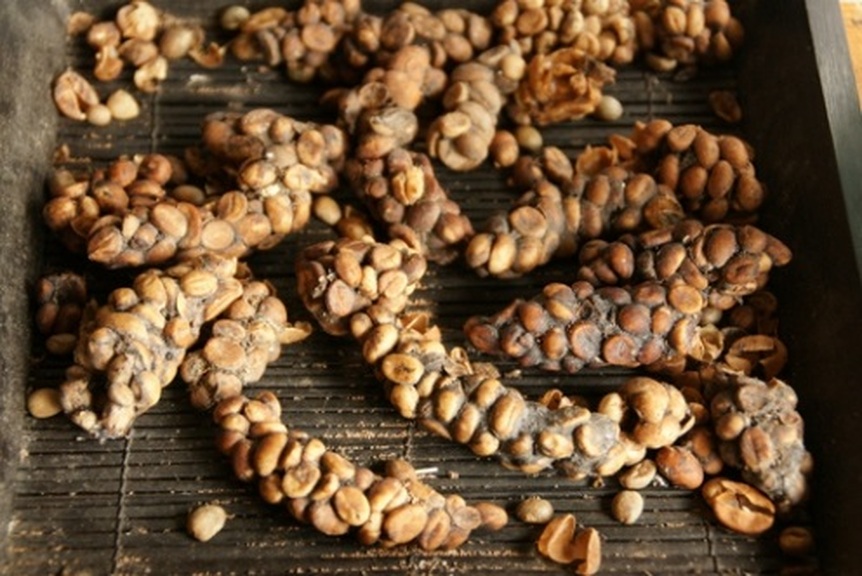
What happens when you take your love for cats to the next level? You consume their faeces. Yes, you read that right. Civet coffee is the most expensive coffee in the world and is made from the excreta of civet cats. India has recently delved into the production of this purr-fect coffee and we’re pretty excited. The production will start at a very small scale at Coorg in Karnataka. Being the third largest producer of coffee, we gotta try out everything that’s out there, right. If you’re wondering what this coffee looks like, here you go:

CivetKF18sept2017

Here’s the icky part: The coffee is made by getting the civet cat to ingest coffee beans. Then the cat’s poop is collected and processed. Why would someone do that, you ask? And WHY is this cat-poop thingy the most expensive coffee on the planet? Well, this coffee is considered more nutritious than other varieties of coffee and there are a lot of certifications involved too. The cat eats the flesh off of the coffee berries and not the actual bean plus the enzymes in the cat’s stomach enhance the bean flavour and that’s why this coffee is such a big hit all over the world!

A startup called Coorg Consolidated Commodities is producing this cat poop coffee and they’ve also decided to open up a café to serve this coffee locally! This coffee is presently being sold locally under the name ‘Ainmane’ and is available only at the Club Mahindra Resort at Madikeri for Rs 8,000 per kg.

source: http://www.inuth.com / inUth.com / Home> Lifestyle> Food / by Fukres / September 14th, 2017

‘The journey of Evolve Back will be the same mystical trip down the roads of history and culture’

The House of Ramapuram, promoters of The Orange County Resorts, as part of taking their eco-friendly and community based resorts concept beyond the borders of Karnataka in India and also beyond India, has taken a new brand name, Evolve Back. Notwithstanding the renaming, the promoters assert that they will continue to uphold the time tested ethos and philosophy embedded in the ‘spirit of the land’. Jose Ramapuram, Director-Marketing, Evolve Back Luxury Resorts in an interaction with P Krishna Kumar elucidate the reasons behind the renaming, future expansion, investment challenges in the eco-resort space, etc.

OrangeCounty01KF15sept2017

Q What made you rebrand Orange County, a well-established resort brand, as Evolve Back Luxury Resorts? What is the significance of this rebranding in the future journey of the company?
We, The House of Ramapuram, are planters by tradition, diversified into the hospitality business in 1994 by setting up a small resort in their 100-year-old, 300-acre ChikkanaHalli Estate in Coorg. What came naturally to us was to share our way of life and warm hospitality with our primarily urban guests. As we are prepared to expand the locational footprint of our resorts to other parts of India, Africa and Asia, we felt we need a universal name that was inspired by our ‘Spirit of the land’ philosophy.

The Orange County name was chosen for our first resort at Coorg, in memory of the captivating fragrance and flavour of this wonderful fruit which was, not long ago, part of the spirit of Coorg.

OrangeCounty02KF15sept2017

Being crafted specifically for our resort in Coorg, it was not conveying the ‘Spirit of the land’ character of our new resorts – Kuruba Tribal Village themed resort at Kabini and the Vijayanagara Palace themed resort at Hampi.

Moreover, we found that in the global tourism markets, the brand name ‘Orange County’ had a very strong association with a county in California, USA.

Today, as we prepare to expand the locational footprint further in India, and to Africa and Asia, we realised the need to rename the brand to reflect our ‘Spirit of the land’ spirit but with a universal appeal. That’s how we arrived at a more appropriate name ‘Evolve Back’.

Q The core of Orange County has been your commitment to sustainable and responsible luxury. What significant changes the rebranding would bring to that core or what additional aspect you would stress upon in Evolve Back?
‘Evolve Back’ is the new brand name given to the same ‘Spirit of the land’ experience which we strive to immerse all of our guests in. It is inspired by the past when the air, land and all of nature was pure, hospitality was from the heart, life was simple, nice and peaceful, culture was of the land and food was from the goodness of nature. Evolve Back is the signature style of delivering all these with the best in comforts and luxuries.

In short, nothing has changed besides, just the name. The journey with Evolve Back will be the same mystical trip down the roads of history and culture. Despite the name change, the ownership, management, and operations or the company are still under the ownership of Orange County Resorts & Hotels Ltd.

OrangeCounty03KF15sept2017

Q Since the rebranding coincides with the launch of your new property in Hampi, how would the brand ethos be reflecting in that property? How your latest resort in Hampi is different from the other two resorts?
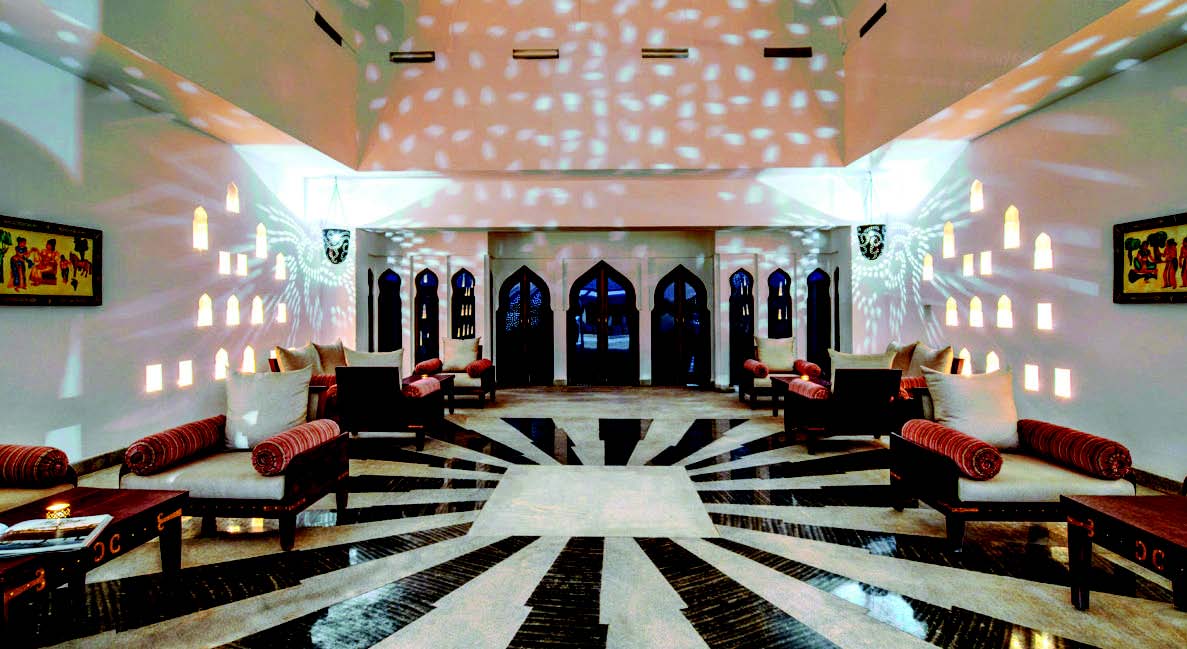
Evolve Back Kamalapura Palace in Hampi is inspired by the grandeur and magnificence of the 14th Century Vijayanagara Empire and is located 4 kilometres from the historic ruins of Hampi. Kamalapura Palace complements its surrounding by adding to its beauty and splendour, while enthralling its guests with its luxurious offerings.

The Evolve Back property in all its resplendence is a glorious tribute to the hey days of the Vijayanagara empire. The entire project has been designed after spending many months with the locals and in studying the history of the region. Special care has been taken to weave in the cultural and traditional aspects of Hampi into the architecture, the theme, the interiors and other aspects of Evolve Back Kamalapura Palace. Visitors to the property will get to soak in a slice of history though the myriad elements that make a play for one’s senses during their stay.

Q You have recently announced your plans to go scouting for properties outside Karnataka in India as well as to overseas destinations in Asia and Africa. Could you share your future investment plans and timelines for these developments?
Evolve Back is looking to expand over the next three years, during which we expect to open four new properties across India and abroad. The investment for the expansion is estimated to be around INR 112 crore. This entire investment amount is planned to be raised with a mix of internal accruals and debt.

We are looking to tap the new-found interest among people for experiential travel, especially at untapped destinations. We usually avoid overcrowded destinations, and scout for those un-spoilt markets where we sense the potential to grow — not just for us, but also for the destination.

We will be developing a resort at Kumta in North Karnataka district over an area of 30 acres with an investment of INR 50 crore. This resort is planned to be themed on a local fishing village. We are also looking at a palace-themed resort at the medieval town of Mandu in Madhya Pradesh. This property is expected to see an investment of INR 35 crore.

In the interim, a property each in African and an Asian country are being planned.

OrangeCounty04KF15sept2017

Q What are the challenges investors in eco-resorts face in India considering it requires comparatively large land area at ecologically sensitive and fragile locations?
The biggest challenge we face is in acquiring land in these locations. Land in many parts of India is largely fragmented and furthermore we will need to acquire the land from multiple individuals. The next challenge is in getting the required clearances for the project from multiple departments and signatories. Environmental laws are typically very rigid and hence take a lot of time and effort to comply with all the requirements.

In addition to this, because of the vast distances between locations, basic services such as electricity and water are typically hard to come by. In fact, most of the basic infrastructure that we take for granted, is missing or inadequate and needs to be developed from scratch. All this is not only extremely time consuming causing unnecessary delays but also ends up escalating costs as a result.

krishna.kumar@saffronsynergies.in

source: http://www.hospitalitybizindia.com / Hospitality Biz India.com / Home> Interview / Friday – September 15th, 2017

Life in the bike lane

ChooseMyBicycleCF15sept2017

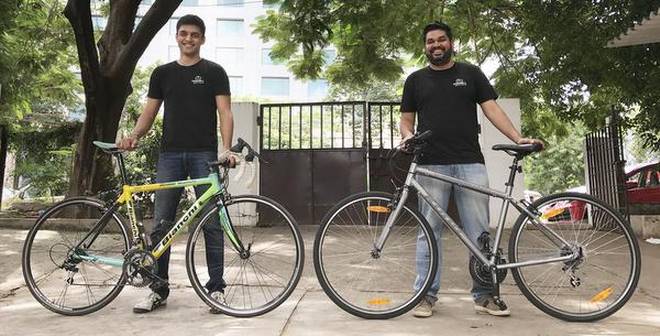
ChooseMyBicycle, a venture by Abbishek Bharadwaj and Rohit Kuttappa along with two others, offers fully fitted bicycles to clients

It is not uncommon to find cyclists whiz past you in traffic on their way to work or for that matter groups of them take over the roads in the wee hours of the morning on the weekends. Catching on fast amongst the fitness and environmentally conscious, cycling is finding more and more takers in the city. And if you seem to be swaying towards the practice as well and are looking to buy a fully fitted bike to meet your needs, help is at hand with ChooseMyBicycle, the latest startup in the city to address the issue.

The online marketplace provides users with fully assembled bicycles, a feature often not found in other portals, according to Abbishek Bharadwaj, co-founder and head sales at ChooseMyBicycle.

Launched in 2012 as a club by RL Ravichandran, Rohit Kuttappa, Akshay Pillay and Bharadwaj to promote cycling in Chennai, ChooseMyBicycle gradually grew to become a platform for reviews. “People wanted accurate information while buying bikes and so we evolved into an information portal,” says Rohit Kuttappa, co-founder and CEO of the company, “One could compare prices and models on our portal back then. There was no commerce involved. I’d say the business evolved based on consumer needs. So by December 2016 we launched the e-commerce aspect of ChooseMyBicycle and became an online portal that not only provides information and reviews, but also is a marketplace for bicycles that are delivered to the users in a fully assembled state.”

The idea to deliver fully assembled bikes, says Bharadwaj, “stemmed from the fact that while many online portals deliver bikes, they are not fitted. It is then up to people to find a good technician to put the bike together; and that is often challenging. To address this, we take the bicycle from the manufacturer, assemble it completely, pack it in a specially created packaging carton and ship it to the customer. We’ve also tied up with Fix My Cycle to provide after sales services, for ease of access.” Fix My Cycle is an online service that sends qualified bike technicians to the client’s home for bike servicing and repairs.

While the company formally launched in December 2016, they made their first sale in March 2017. Since then, they’ve managed over 600 sales across the country. “We’ve shipped as far as Srinagar, Tinsukia and Kutch,” says Bharadwaj.

“While we stock everything from tricycles for toddlers to performance bikes for adults, we find that the average selling price on our website is between ₹12,500 to ₹15,000. These are for entry level performance bikes. Annually, this sector grows at a rate of 22% to 25% in terms of market scenario,” says Kuttappa.

The company which has so far been bootstrapped and has banked on angel funding is now looking to raise funding to expand the business. “In the next six to 12 months we’re looking to set up ‘experience stores’. These will be spaces where people can’t actually buy a bike, but can try different models and get a feel of it before making a purchase online. And as a brand, we plan to ensure speedy delivery of bikes within a period of three to four days. We’ve already identified logistic hubs for these. And along with Fix My Cycle, we plan to expand services to 48 cities over the next year,” says Kuttappa.

source: http://www.thehindu.com / The Hindu / Home> Society / by Ranjani Ranjendra / September 14th, 2017

Thanks to rains, arabica coffee set for an early harvest

Indian coffee exporters are eagerly waiting for the harvest of the arabica crop which is likely to set in early because of intense rains over the last few weeks in the arabica growing regions of Karnataka, the largest producer in the country.

Early harvest of arabica could be good for exports as the shipments of this variety have been down this year compared with robusta, which accounts for 70 per cent of the Indian coffee production.

“Usually, the arabica harvest starts by the end of November and goes into full swing in December. This time, it could be a bit early because of rains,” said Anil Bhandari, a major coffee grower. As per Coffee Board data for the period from January 1 to September 12, 2017, shipments are up by over 5 per cent compared with same period last year at 2,80,447 tonnes.

The increase has come from export of robusta cherry and parchment varieties.”We expected shipments to be sluggish in the second half of 2017. But improved availability of robusta has changed the calculations. We are getting a good supply of robusta from Kerala.The trend may continue for a few more weeks,” said Ramesh Rajah, president of Coffee Exporters Association of India.

But growers are not very optimistic about the crop, particularly robusta, for the next year.Prolonged dry weather early in the year has hit the robusta crop.”We expect around 3 lakh tonnes totally ­ 90,000 tonnes of arabica and 2,10,000 tonnes of robusta. With prices of black pepper also down, we have been robbed off our extra income,” said MM Chengappa, chairman of Karnataka Planters’ Association.Indian coffee production in 201617 stood at 3,16,700 tonnes.

source: http://www.economictimes.indiatimes.com / The Economic Times / ET Home> Markets> Commodities> News / by P.K.Krishnakumar, ET Bureau / September 14th, 2017