Category Archives: Agriculture

Invigorating the spirits: In search of India’s lost coffee culture

Traders from the Middle East introduced the beverage to the Mughal empire but the British made tea the subcontinent’s preferred drink.
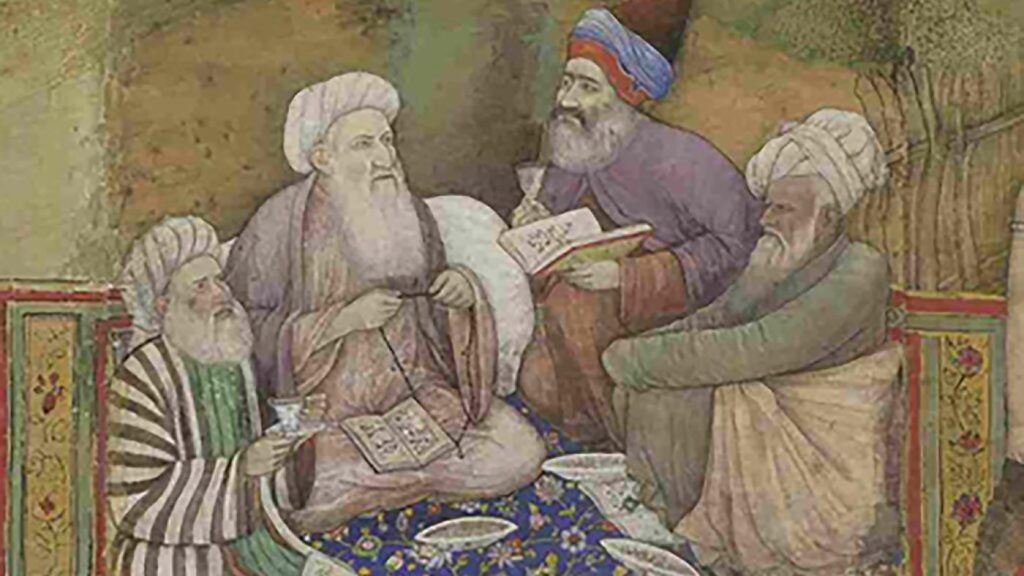
Mughal men drink an unidentified beverage in a 17th century painting later recreated as a drawing by Rembrandt (Public domain)

The sun sets behind regal yet dilapidated Mughal  mansions and the magnificent dome of the Jama Masjid as the call for the evening prayer fills the auburn sky in Old Delhi.

Chandni Chowk’s bustling streets reverberate with the sound of honking cycle rickshaws navigating the serpentine lanes.

The sunset marks the beginning of business hours in the neighbourhood, which emerged during Mughal emperor Shah Jahan’s rule; a pocket within the once spectacular walled city of Shahjahanabad, founded in 1648.

Immersed in the soundscape, one’s senses are drawn to the aroma of food being prepared, complemented by the unmistakable scent of masala chai – the Indian version of spiced tea.

Tea stalls, resembling busy beehives, draw Delhiites patiently waiting for their daily dose of evening tea –  some having travelled from the far ends of the city to satisfy their craving.

Tea is without a doubt a national obsession in India. However, the incredible popularity of the drink in the subcontinent is less than two centuries old and only came about as a result of British rule in the region.

It may come as a surprise, but before the arrival of the British, it was coffee that Indians preferred.

Sufis and merchants

Coffee was brought over from the Horn of Africa to Yemen at some point in the 15th century and later spread north into the Near East and then to Europe by the 16th century.

The beverage also spread eastwards, and India’s Mughal elite was quick to adopt it as their beverage of choice.

While the Mughal Emperor Jahangir had a penchant for wine – preferring the Shiraz variety – both Hindu and Muslim nobility in his court freely indulged in coffee.

Edward Terry, a chaplain with the English embassy at Jahangir’s court, mentions that members of the court were captivated by the then-novel qualities of coffee, believing it could “invigorate the spirits, aid digestion, and purify the blood”.

The coffee bean was brought to the subcontinent by Arab and Turkic traders who had strong trade ties with the Mughal Empire.

They not only brought coffee, but also other items, including silk, tobacco, cotton, spices, gemstones, and more from the Middle East, Central Asia, Persia, and Turkey.
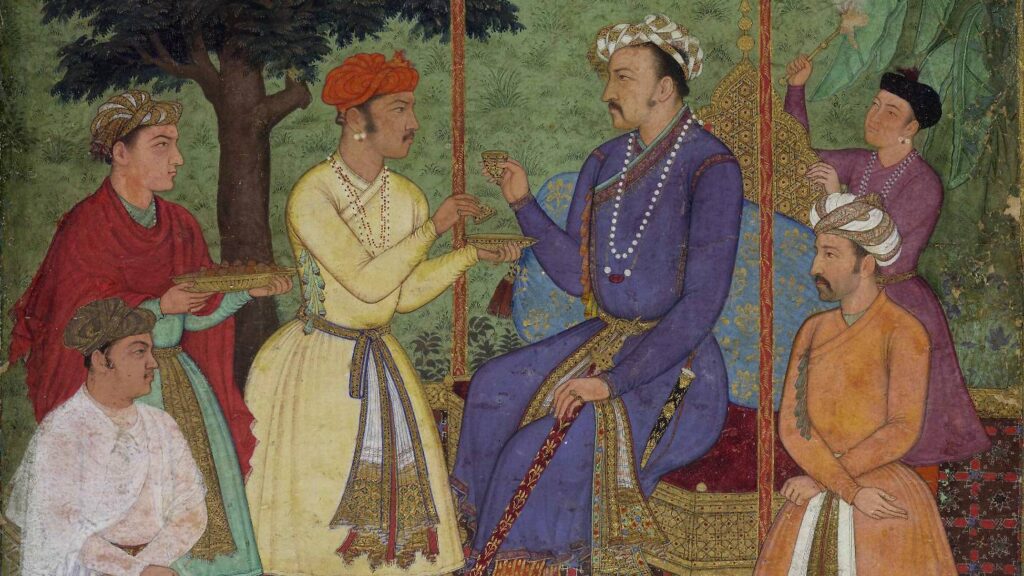
By the time Shah Jahan ascended to the Mughal throne, interest in coffee had grown exponentially across Indian society (Public domain)

Such goods would reach the farthest corners of India, including the easternmost region of Bengal. By the time Jahangir’s son, Shah Jahan, ascended to the throne (1628-1658), interest in coffee had spread across society.

Coffee was considered a healthy drink, an indicator of social mobility, and an integral part of Delhi’s elite social life.

Like Terry, another contemporary European visitor, the German adventurer Johan Albrecht de Mandelslo, wrote about his travels in the east through Persia and Indian cities, such as Surat, Ahmedabad, Agra, and Lahore in a memoir titled The Voyages and Travels of J Albert de Mandelslo.

A painting titled ‘The Ottoman Sultan and His Haseki’ by an unnamed artist (Wikimedia)

In 1638, Mandelslo describes kahwa (coffee) being drunk to counter the heat and keep oneself cool.

In his work Travels in The Mogul Empire (1656-1668), Francois Bernier, a French physician, also refers to the large amount of coffee imported from Turkey.

Besides its use in social settings and supposed effects to ward off heat, the drink also had a religious purpose for the subcontinent’s ascetics.

Like their brethren in the Middle East and Central Asia, India’s Sufis consumed coffee before their night-long reverential rituals known as dhikr (the remembrance of God).

Legend has it that a revered Sufi saint named Baba Budhan carried back seven coffee beans in the folds of his robe on his way back from Mecca in 1670, planting the seeds for Indian-origin coffee cultivation in a place called Chikmagalur.

While this story may or may not be true, today the Baba Budhangiri hill and mountain range in the Indian state of Karnataka bears his name and remains a significant centre for coffee production, as well as housing a shrine dedicated to the Sufi saint.

In another variation of the legend, shared by the government’s Indian Coffee Board, the Sufi saint travels to Mocha in Yemen and manages to smuggle out the beans discreetly despite strict laws on their export.

Culture of consumption

From the 16th century onwards, India became host to a cafe culture influenced by the one emerging in the Islamic empires to the west, particularly cities such as Damascus, Aleppo, Cairo, and Istanbul.

The nascent coffee culture found expression in Shahjahanabad’s own “qahwakhanas”, or coffee houses.

In her essay Spilling the Beans: The Islamic History of Coffee, food historian Neha Vermani describes the coffee served at the Arab Serai, which was “famous for preparing sticky sweet coffee”.
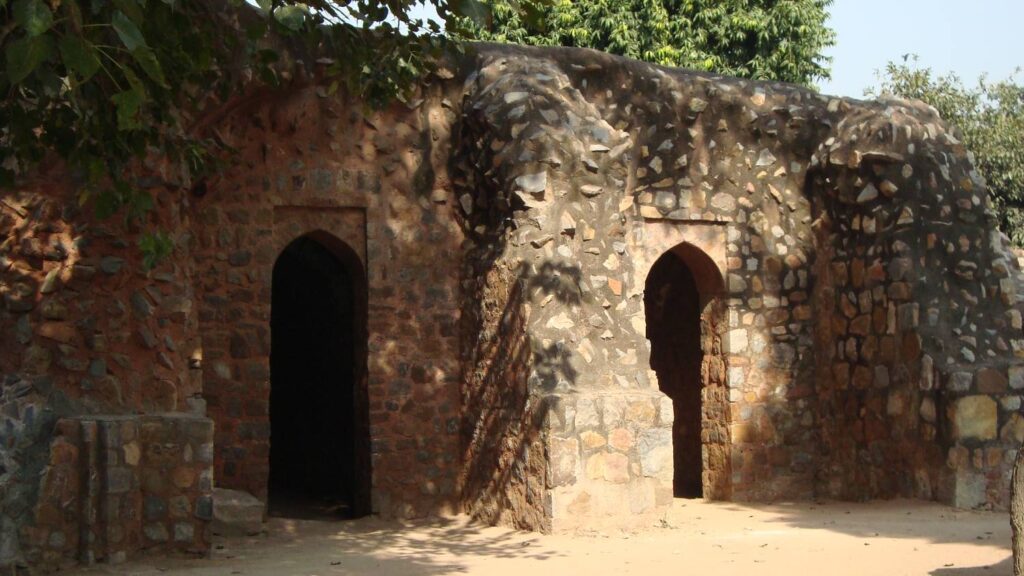
The Arab Serai became known for its sticky sweet coffee (Wikimedia)

The Serai, which was commissioned in 1560 by Hamida Banu, the wife of Mughal Emperor Humayun, still stands today as part of a Unesco heritage site ; the wider complex of Humayun’s tomb.

Historians say it was used as an inn by Arab religious scholars who accompanied the royal on her pilgrimage to Mecca and that it was also used to house craftsmen from the Middle East who were working for the Mughals.

Historian Stephen Blake in his 1991 work Shahjhanabad: The Sovereign City in Mughal India 1639-1739 describes coffee houses as places where poets, storytellers, orators, and those “invigorated by their spirits” congregated.

Blake described how vibrant these coffee houses were, their milieu of poetry recitals, storytelling and debates, long hours of playing board games, and how these activities impacted the cultural life of the walled city.

Coffee houses of Shahjhanabad, like those of Isfahan and Istanbul, accelerated the rise of a culture of consumption and a thriving food culture, with residents frequenting snack sellers offering savouries, naanwais baking bread, and halwais specialising in confectionery.

This is a legacy that continues to be felt in Old Delhi’s Shahjahanabad area to this day.

While Blake’s descriptions paint a picture, there are no extant visual depictions of the interiors of these establishments, and unlike their Ottoman or Safavid counterparts, there are no miniatures or Orientalist artworks depicting what they would have looked like.

Rembrandt depicted Mughal men drinking something very closely resembling coffee but the Dutch artist does not identify the contents of their cup, and never visited India. But his images were inspired by Mughal paintings brought over to the Netherlands by Dutch traders.

The man who swore by his Turkish coffee

Provincial courts sought to replicate the ambience of Shahjahanabad and embraced the cafe culture on offer there. Among them, none cherished coffee more than Alivardi Khan, the Nawab Nazim of Bengal.

Khan was of Arab and Turkman descent and ruled Bengal from 1740-1756. Known as a diligent ruler, coffee and food were the two biggest pleasures of his life.

Seir Mutaqherin or the Review of Modern Times, written by one of the prominent historians of the time, Syed Gholam Hussein Khan, offers a fascinating description of Alivardi Khan’s routine.
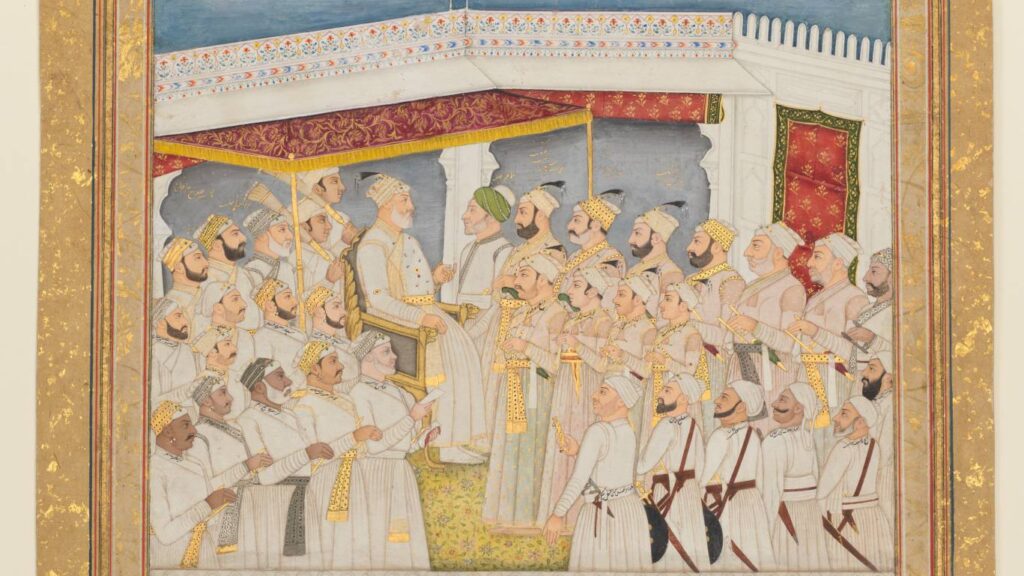
Alivardi Khan, seen here on his throne, liked the finer things in life, including coffee (Metropolitan Museum of Art/Public domain)

He writes: “He always rose two hours before daylight; and after having gone through evacuations and ablutions, he performed some devotions of supererogation and at daybreak, he said his prayers of divine precepts, and then drank coffee with choice friends.

After that he amused himself with a full hour of conversation, hearing verses, reading poetry or listening to some pleasing story.”

This morning routine was followed by a bespoke Persian dish prepared by the nawab’s personal chef.

Khan’s portrayal presents Nawab as a man of fine taste, who valued the luxuries of courtly life as much as effective governance.

A connoisseur of exquisite food, witty conversations, and premium Turkish coffee, Khan went to great lengths to acquire the best coffee beans, importing them from the Ottoman Empire and bringing them all the way to Murshidabad, his capital.
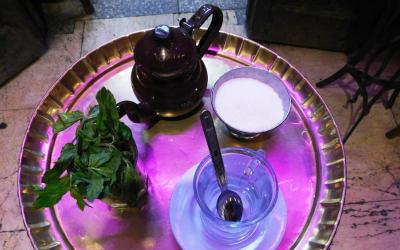
The coffeehouse ‘is a social space created and shaped by the people themselves’ (MEE)

He believed in nothing but the best for his court. Not only were his coffee beans imported, but his kitchen staff also hailed from places renowned for their culinary excellence, such as Persia, Turkey, and Central Asia.

The royal household employed a diverse range of professionals, including storytellers, painters, coffee makers, ice makers, and hakims (physicians).
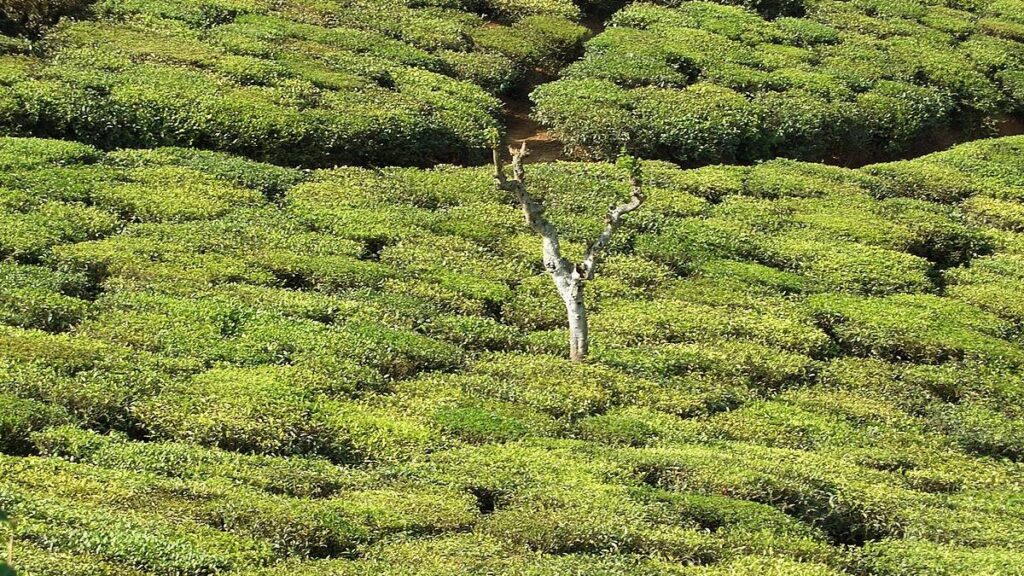
Tea has been grown in India since the 19th century (Wikipedia)

Khan personally handpicked his baristas (qahwachi-bashi), who brought along their specialised coffee-making equipment.

The descriptions paint a vivid picture of courtly culture, a world of opulence, artistry, and a profound affinity with caffeine.

It is puzzling, therefore, to pinpoint exactly when Mughal coffee culture vanished from pre-colonial Bengal, but it likely lasted until at least 1757.

Siraj ud-Daulah, Khan’s grandson and successor, could not live up to his grandfather’s legacy, and faced with threats from the British, the courtly culture swiftly dissipated, along with Bengal’s fortunes.

When Bengal lost the decisive Battle of Plassey in 1757, the East India Company took control of the region, and slowly coffee vanished from public consumption and consciousness.

Tea farming takes over

The rise of the East India Company, which was the primary agent of British control in India, marked the end of the subcontinent’s dominant coffee culture.

Britain’s penchant for tea began in the late 17th century and China was its main supplier.

Lizzy Collingham writes in her book Curry: A Tale of Cooks and Conquerors that between 1811 and 1819 “70,426,244 pounds” out of a total of “72,168,541” pounds of imports from China were associated with the tea trade.

She remarks that Britain, therefore, had an “interest in finding an alternative source for tea”.

With its fertile soils and appropriate weather conditions, India was the perfect spot.

In February of 1834, then Governor General William Bentick appointed a committee to look into India’s potential as a place to set up the East India Company’s own tea production unit.

In the native Indian population, they found not only workers who would cultivate and harvest the leaves but also consumers of the beverage.

As coffee production became overshadowed by tea farming, Indian tastes also shifted to the latter.

Further consolidating the decline of Indian cafe culture was the British ban on Indians visiting coffee houses, which were barred to all but Europeans.

Nevertheless, reports of the death of coffee in India were premature.

Regardless of British influence on local culture, the subcontinent was not immune to global trends.

The Indian historian and author, AR Venkatachalapthy, writes in his 2006 book In Those Days There was No Coffee: Writings in Cultural History that there was no escaping the physical effects or symbolism of coffee in late 19th century British India.

“Drinking coffee, it appears, was no simple quotidian affair. Much like history, the nation-state, or even the novel, coffee too was the sign of the modern,” he writes.

Enthusiasm for coffee grew at the turn of the 20th century, and the same book quotes adverts for coffee in south India in the 1890s: “Coffee is the elixir that drives away weariness. Coffee gives vigour and energy.”

This energy and vigour were first reflected in the east, in the colonial city of Calcutta (present-day Kolkata) where the first Indian-run coffee shop, named Indian Coffee House, opened in 1876.
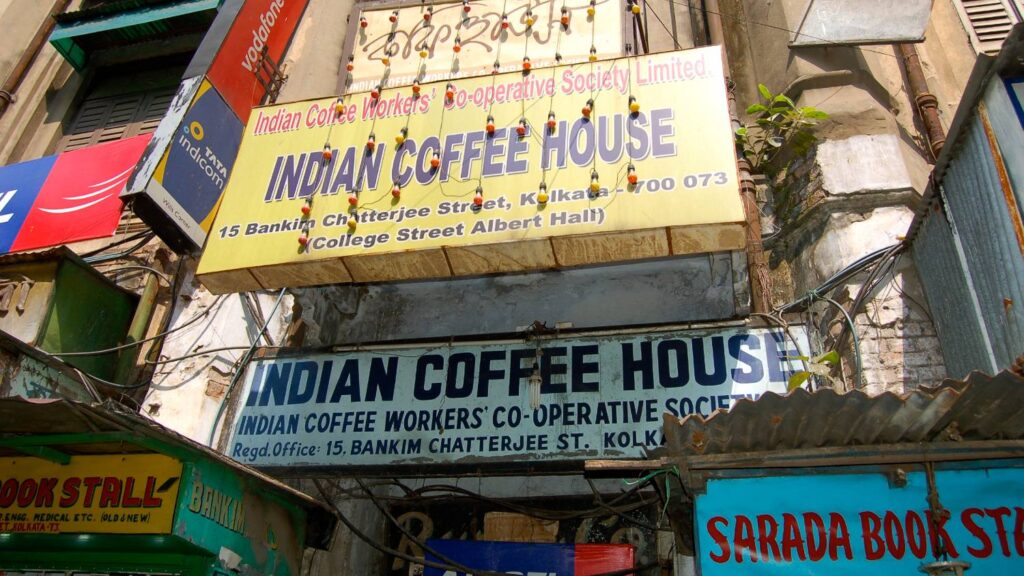
The Indian Coffee House is run by Indian worker’s cooperatives and is open to all (Wikipedia)

Turning into a chain in the 1890s, by the first half of the new century the name Indian Coffee House would be adopted by a growing network of 400 coffee houses run by Indian workers’ cooperatives, with only Indian-origin coffee.

These were the people’s coffee houses where any Indian could walk in without being discriminated against on the basis of their race.

Today, the ambience of the Indian Coffee House reminds one of the inclusivity of coffee shops in historic Shahjhanabad.

The chain is one of many Indians can visit, with others including the Bengaluru-based Coffee Day Global, which now has more than 500 outlets in the country despite only opening its first in 1996.

Six years later Starbucks entered India’s voluminous urban market and the rules of the brew changed forever in the subcontinent.

source: http://www.middleeasteye.com / Middle East Eye / Home> Discover> Food & Drink / by Nilosree Biswas, New Delhi / June 05th, 2023
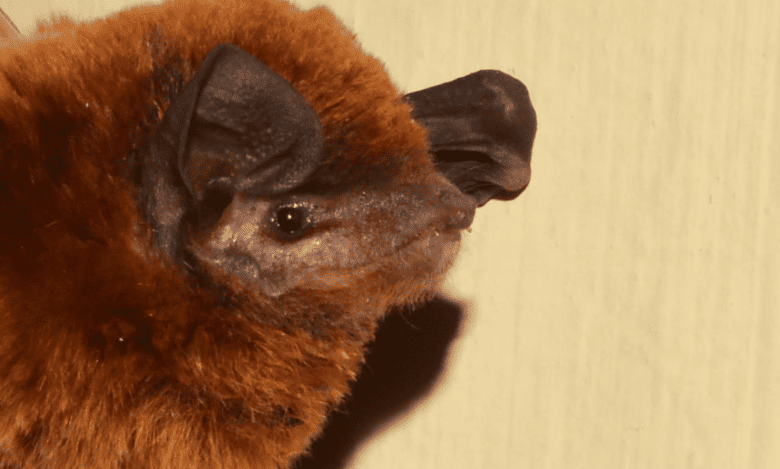
Hyderabad: OU scientist discovers new species of Bat in Coorg

According to the researchers, with the discovery of the new species, the number of bent-winged bats in India has increased from 4 to 5.

OU scientist discovers new species of Bat (Photo: Twitter)

Hyderabad: 

Eminent zoology scientist from Osmania University Dr Bhargavi Srinivasulu, along with her son, Aditya Srinivasulu, has discovered a new species of bat from Karnataka’s Coorg.

The mother-son duo have named their discovery, ‘Miniopetrus srinii Srini’s Bent-winged Bat’, discovered in a cave in Makuta of Kodagu district (Coorg).

The research papers were submitted on Saturday and the expert committee cleared the papers and conferred the rare honour.

“We collected the specimens of bats from a large subterranean cave in the dense jungles of Western Ghats in Makuta, we doubted that this could be a cryptic species of bat, which we had tentatively identified as the Small Bent-winged Bat,” said Dr Bhargavi.

Found in southern Europe, Africa, Madagascar, Asia, Australia, New Caledonia and Vanuatu, Bent-winged Bats are small-sized bats that live in large colonies of a few hundred individuals in caves.

According to the researchers, with the discovery of the new species, the number of bent-winged bats in India has increased from 4 to 5.

The specimens of bats were collected from a large subterranean cave in the dense jungles of the Western Ghats in Makuta. The Small Bent-winged Bat is reported from the Nicobar Islands, peninsular India, Nepal and Northeast India.

Talking about the multiple works they undertook in discovering the new bats, Dr Bhargavi said, “Our research on Andaman bats has revealed that the fauna on the islands are genetically different from those on mainland India. We conducted morphological, cranial, echolocation and genetic studies to determine the relationship between the Makuta specimens and others.”

A peer-reviewed scientific mega journal for animal taxonomists named Zootaxa has published the description of the new species that were named in honour of Prof C Srinivasulu, a bat biologist working at the varsity.

source: http://www.siasat.com / The Siasat Daily / Home> News> Hyderabad / by News Desk / May 29th, 2023

In the Cauvery’s birthplace, drinking water is just one of many worries for the Kodavas

In the Cauverys birthplace drinking water is just one of many worries for the Kodavas

The passions that have been running high over the Cauvery have eclipsed that the river’s birthplace is in Kodagu district, where it is an integral part of the lives of the Kodavas, but not in terms of drinking water.

Journalist and author PT Bopanna has eloquently spoken about what the Cauvery means to the Kodavas, one of the communities of people who live within Kodagu district. The identity of the Kodavas is deeply linked with the river, which rises in Talacauvery. Ironically, Madikeri city, the district headquarters, frequently faces a drinking water problem.

“The Rs 230-crore Harangi project has been conceived for the benefit of politically powerful Mysore and Hassan districts. Though the Harangi Dam (in picture) is in Kodagu and the major catchment area of the Cauvery is also in Kodagu, the irrigation potential from the project for Kodagu is a measly 607 hectares, out of the 54,591 hectares of total irrigation potential,” Bopanna says on his website Coorgnews.in.

He pointed out that 1,909 acres of land in 13 villages had been submerged by the construction of the Harangi dam in Somwarpet taluk.

“See, we don’t benefit from the Cauvery at all. Every year the river floods and the roads get blocked. We are always inconvenienced by the Cauvery. We just want our basic water needs met, and it’s a small place,” Bopanna says.

Although people are worried about drinking water supply from the Cauvery, Bopanna says that in Kodagu, people are worried more about a larger problem.

“I’m worried about deforestation,” Bopanna says. Falling in the Malenadu region, Kodagu district houses 4,102 sq km of the Western Ghats, making it look as if a green carpet is spread across the land. It is one of the least populated districts in the state.

Referring to the 400kv power line from Yelwal in Mysuru to Kozhikode in Kerala, a distance of 55m, Bopanna said: “This government-sponsored deforestation needs to stop.”

According to some estimates, 55,000 trees will be cut in thick forest areas to set up the line. Activists have alleged that a few thousand trees have been cut in violation of the law.

“When trees were being cut for that power line, not a single politician made any noise. They weren’t bothered. This clearly reveals their short-sightedness and their lack of understanding about the effects of deforestation. Rainfall has become erratic in the region,” Bopanna says.

He advocates a complete ban on tree felling and the conversion of agricultural land for commercial purposes. “But Kogadu’s politicians depend on the timber lobby and sand mining. They have not allowed a discussion on the Kasturirangan report.”

Now he’s worried. Drought-like conditions that occurred only once in five years in the past, are now almost an annual feature. “We need to save the Western Ghats to save the Cauvery (for all of us). That’s the core issue.”

source: http://www.thenewsminute.com / The News Minute / Home> News> Cauvery Dispute / by Aneesha Sheth / September 22nd, 2016

Karnataka forest dept spent crores on afforestation in Kodagu district since 2015, shows RTI

The RTI further revealed that the Bhadravathi forest division in Shivamogga did not spend a single rupee on afforestation since 2015.

kodagu forests
The RTI further revealed that the Bhadravathi forest division in Shivamogga did not spend a single rupee on afforestation since 2015. (Representational)

From 2015 to 2022, the Karnataka Forest Department spent Rs 1.98 crore and Rs 49,95,067 on afforestation in Kushalnagar and Bhagamandala forest ranges, respectively. The two forest ranges are located in Kodagu district. The figures were shared by the department in response to an RTI filed by The Indian Express.

The RTI further revealed that the Bhadravathi forest division in Shivamogga did not spend a single rupee on afforestation since 2015.

The amount spent on afforestation includes maintenance of the forests. However, some of the officials within the forest department opined that the forest department should concentrate on afforestation in the drier parts of Karnataka rather than spending crores in the Western Ghats.

“The Western Ghats has many naturally regenerated seedlings. The department should have pumped funds in greening the dry regions of Karnataka like Vijayapura, Raichur, Gadag and Koppal. These regions have less than 5 per cent green cover. Even in the Dakshina Kannada region, a huge amount is spent on afforestation,” a senior Indian Forest Service (IFS) officer of the Karnataka Forest Department said on condition of anonymity. Notably, a response from Dakshin Kannada forest region is still awaited.

Every year, Kodagu faces floods and huge loss of property and human lives.

Amount spent on afforestation in Bhagamandala range

2015-2016: Rs 15,82,293

2016-2017: Rs 3,10,974

2017-2018: Rs 3,66,500

2018-2019: Rs 14,33,305

2019-2020: Rs 4,03,750

2020-2021: Rs 3,02,865

2021-2022: Rs 3,35,720

2022-2023: Rs 2,59,660

Amount spent on afforestation in Kushalnagar range

2015-2016: Rs 11.17 lakh

2016-2017: Rs 12.90 lakh

2017-2018: Rs 24.66 lakh

2018-2019: no data

2019-2020: Rs 27.90 lakh

2020-2021: Rs 66 lakh

2021-2022: Rs 14.47 lakh

2022-2023: Rs 44 lakh

source: http://www.indianexpress.com / The Indian Express / Home> News> Cities> Bangalore / by Aksheev Thakur / Bengaluru – April 30th, 2023

Harangi to get Karnataka’s first biodiversity park

Madikeri:

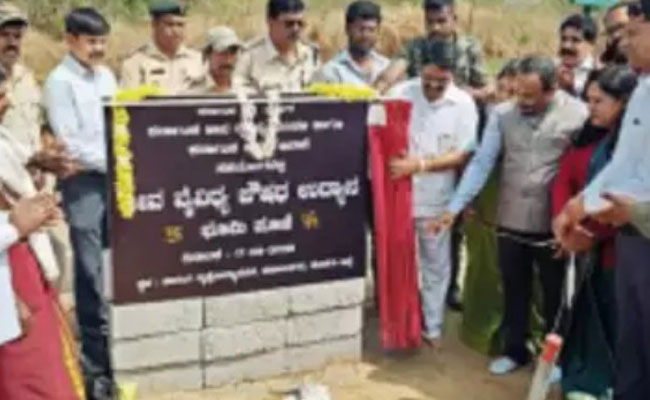
The work to develop the first biodiversity park of the state was launched in Harangi, by laying the foundation stone on Friday.

Legislator Appachu Ranjan, who conducted the ‘bhoomipooja’ for the biodiversity park work, said, “India is the biggest exporter of medicinal herbs. The new park will help us.”

He said that a medicinal herbal park will also be opened in Bhagamandala soon.

“Medicinal plants are needed to cure diseases. Also, the environment will be healthy if there is enough greenery,” he pointed out.

Karnataka Biodiversity Board chairperson Napanda Ravi Kalappa, who presided over the ceremony in Harangi, said that a master plan of building a model medicinal garden in the district was readied by the Board. The park is also being launch to conserve the richness of the flora of Kodagu, he added.

“The Karnataka Biodiversity Board intends to establish similar parks in every panchayat of Kodagu. The Coorg Mandarin used to be an exclusive plant to Kodagu, but is virtually not to be found anywhere now. Research is now being conducted to promote this species,” Kalappa said.

source: http://www.english.varthabharati.in / Vartha Bharati / Home> Karnataka / March 18th, 2023

Kodagu farmers suffer as Animal Husbandry department has over 75 per cent staff crunch

The over 75% vacant posts in the department have seriously affected the functioning of the department and farmers involved in animal husbandry are unable to treat their cattle.

Cattle Smuggling
Image used for representational purposes only(Photo | Express)

Madikeri :

Primarily an agriculture district, Kodagu farmers are also actively involved in animal husbandry and dairy farming.

However, the farmers of rural areas are unable to avail of proper healthcare facilities for their domesticated animals as the Department of Animal Husbandry and Veterinary Services in the district faces a staff crunch of over 75 per cent.

Dairy farming is one of the main occupations alongside agriculture across several parts of Kodagu – especially in Somwarpet and Kushalnagar taluks. Farmers across Kudige, Kudumangaluru, Seegehosuru, Huduguru, Madapura and surrounding villages are extensively involved in dairy farming and animal husbandry.

“Farmers spend lakhs of money to buy hybrid cattle. However, we are unable to avail proper health care for the cattle as the veterinary hospitals and the veterinary primary clinics across the villages are not posted with doctors,” explained Nagraj Shetty, a farmer in Kudige limits.

The district’s animal husbandry and veterinary services are sanctioned with a total of 306 posts. However, only 76 posts are filled to date. While the department is sanctioned with 50 posts for veterinary doctors, only 18 posts have been filled and this includes the posts of Deputy Director and other authoritative officials. Out of the sanctioned 78 posts for veterinary inspectors, only 29 have been filled.

And only two posts of veterinary helpers out of the sanctioned 43 posts have been filled in the department. The over 75% vacant posts in the department have seriously affected the functioning of the department and farmers involved in animal husbandry are unable to treat their cattle. The farmers cannot avail of private services as the district lacks private veterinary hospitals.

“Several postings were made by the state, but the same was cancelled due to a stay order. Fresh postings have not been made to the department and we are still looking forward to the new postings,” shared Dr Suresh Bhat, the Deputy Director of the department.

He added that the posted doctors are visiting the hospitals once a week and are managing the functioning of the hospitals. While the district has a total of 72 veterinary hospitals including the primary veterinary clinics, they are rendered useless without permanent postings. 

source: http://www.newindianexpress.com / The New Indian Express / Home> States> Karnataka / by Prajna GR / Express News Service / February 22nd, 2023

Saving the koilemeen of Kodagu

Conservationists hope to connect people and the dwindling fish species, to save streams, rivers and otters.

Volunteers conduct survey of the stream to look for signs of Koilemeen and Small Clawed Otters

Madikeri :

Food has a way of bringing people together. Raising awareness using a local delicacy to protect streams and the ecosystem of Kodagu is the unique ‘Koilemeen Project’ — an initiative by conservationist Gopakumar Menon. To understand the motto of the project, it is important to first understand that koilemeen is the Kodava name for freshwater fish, commonly known as Spiny Loach, with the scientific name ‘Lepidocephalichthys thermalis’.

A local variety found in streams and water-filled fields of Kodagu, the koilemeen used to be a popular delicacy in Kodava households during the monsoon. However, the numbers have dwindled over the years due to various reasons, and this is where the ‘Koilemeen Project’ comes into the picture.

The objective is to involve the local community in the conservation of streams and rivers, by connecting the people to their once-popular koilemeen dish, Gopakumar explains. “In the past two decades, there has been a precipitous drop in the availability of Koilemeen. We spoke to several coffee planters and a fish trader in Virajpet, who shared his worry due to the non-availability of koilemeen,” he said.

He explained that the use of chemicals in agriculture and horticulture has severely affected the koilemeen population, which also indicates that stream and river waters are being polluted by chemicals. “Increased use of weedicides, pesticides and other fertilisers have affected the koilemeen, and indicates that our water is polluted. The project addresses the loopholes and tries to bring awareness in the community,” he added. Illegal sand mining across the streams of Kodagu has also affected the koilemeen population.

These tiny fish breed on sand, and with sand illegally mined for commercial purpose, it has affected their numbers. “The fish spawn across paddy fields (during monsoon) and other shallow streams, and swim upstream post the monsoon. However, the use of chemicals, sand mining and deposits of plastic waste across the streams has affected the fish. The project is trying to sensitise locals and get them involved. For the community, koilemeen is an easy logo to enable the conservation process,” he shared.

The group is active across social media platforms, and wants youngsters from the district to get involved in the conservation project. The project team meets small groups of planters and raises awareness on the need to stop the extensive use of chemicals. “We tell planters and farmers about the correct method to use chemicals. We are creating awareness on the hazardous use of weedicide and urging them to use fewer chemicals, while ensuring there is at least a 20-ft gap from the chemical-sprayed area and water source,” he explained.

While the project’s main objective is to protect the streams of Kodagu, the focus is not just the tiny koilemeen fish. The bigger picture includes small clawed otters – a Schedule 1 species under the Wildlife Protection Act, whose habitat is found by freshwater streams of Kodagu.

Small beings in the ecosystem, like small clawed otters, have the same protection right as elephants or tigers, but are less talked about though their existence touches the level of endangerment. Since koilemeen are occasionally hunted, it is being used as a mascot to protect the small clawed otters in their natural habitat of freshwater streams and rivers.

The team — geared in gumboots and equipped with GPS — heads out to survey streams to find signs of small clawed otters. “The signs or presence of otters indicate good health of the ecosystem. We look for droppings or spraint of otters and are collecting data on their habitat,” explained Yashas S, a master’s student, a volunteer for the project. He stresses the need to conserve the riparian habitat to protect small clawed otters.    

The project aims to collect research material on the otters, and find ways to protect them from being poached. “The diet of an otter includes crustaceans and koilemeen. Our aim is to protect the prey which will help conserve the predator. Protecting the prey also means protecting the streams,” explained Gopakumar.

Alongside the community conservation initiative, the project is conducting a baseline analysis on the otter habitat, which will help take an intelligent step towards their conservation.  

Purpose of the project

To involve the community in conservation of fresh water streams, rivers of Kodagu.
Enable conservation by connecting community to their once-favourite delicacy. Protect koilemeen, the prey, in freshwater streams.


Urge planters to opt for organic farming, stop use of harmful weedicides
Protect, conserve vand conduct analysis on small clawed otters, the predator.

source: http://www.newindianexpress.com / The New Indian Express / Home> Good News / by Prajna GR, Express News Service / Februry 26th, 2023

‘Check dam constructed due to vested interests’: Kodagu villagers oppose project across Chikliholey

The villagers stated that they were not taken into confidence before sanctioning the project and said that these dams will severely affect the farmers and villagers living downstream of the Chiklihole.

The check dam project across Chikliholey Stream in Kodagu by the Minor Irrigation Department is under construction. (Photo | Special Arrangement)

Madikeri :

The check dam project across Chikliholey Stream in Kodagu by the Minor Irrigation Department has met with strong opposition from the villagers.

The department has now assured to call off the project as villagers alleged that the check dams are being constructed to help a private estate owner. The project is estimated to cost around Rs four crores. 

The villagers of Horuru, Modur, Abhiyala, Attur and Nallur of Kedakal grama panchayat have strongly opposed the new check dam project upcoming across the Chikliholey stream.

The Minor Irrigation Department has taken up the task of building two check dams – within a span of 100 meters distance – across the Chikliholey stream near D Block of Kedakal Grama Panchayat.

However, the villagers stated that they were not taken into confidence before sanctioning the project and said that these dams will severely affect the farmers and villagers living downstream of the Chikliholey.

They claimed that the check dams also pose a risk of flash floods and landslides during monsoon.  

As sources confirmed, a 128-acre private estate was recently bought by a person from outside the district at the D Block of the panchayat limits.

The villagers allege that due to vested interests, the minor irrigation department has sanctioned the construction of two check dams across the Chikliholey stream, which according to the villagers will only help the D block estate owner.

“The check dams are of no use to the farmers of the village. The planters who have plantations downstream of the Chikliholey will be severely affected by the check dam project as this will stop the free flow of the water stream. The entire Chikliholey dam will be of no use if these check dams are constructed as this will stop water flow from December to May – when people need water the most,” explained Sanju Ponappa MM, vice president of Kedakal Grama Panchayat.

The villagers on Monday called for an emergency meeting that witnessed participation from over 30 villagers alongside the Kedakal Grama Panchayat members. The stir against the construction of the check dams invited the attention of Minor Irrigation Department officials who visited the spot. Following the strong opposition from the villagers, the department has now handed over a letter to the Grama Panchayat assuring them to immediately stop the project.

The construction of the two check dams has been called off following opposition from villagers.

source: http://www.newindianexpress.com / The New Indian Express / Home> States> Karnataka / by Express News Service / February 20th, 2023

In coffee estates, wasp to fight mealybug pests in Kodagu district

The parasitoid can be released across estates during the summer months, which is the breeding time of the mealybugs.

coffee

Madikeri :

Coffee plantations are prone to several diseases and the attack from mealybug pests is among the major reasons for crop loss across estates. However, the Coffee Research Sub Station (CRSS) in Chettalli of Kodagu district has come up with a unique and organic way to fight this pest. Leptomastix Dactylopii, a parasitoid, has been developed at the station that will be effective in culling the mealybugs in the most ecofriendly way. “Mealybugs are major pests affecting coffee and they cause considerable crop loss,” explained Dr Manjunath Reddy, Entomologist at CRSS.

Ovalshaped, soft-bodied insects, the mealybugs are a threat to the pepper vines and other fruit trees in the estates too. The bugs breed during summer and cause immense damage to the crops during monsoon. “The bugs are covered with white mealy wax, making it tough to eradicate them.

Leptomastix Dactylopii (left); File photo of a
mealybug-infested coffee plant

They suck a large amount of sap from leaves and stems with the help of piercing mouthparts, depriving plants of essential nutrients,” he explained. There has been an increased buildup of the mealybugs in the estates and the wild in recent times and Dr Manjunath analysed that this might be due to the abiotic changes in climate and environment. While there are a few chemical sprays to fight the mealybugs, they have been proven ineffective as these bugs infest the estates during the monsoon. However, the CRSS has come up with the most organic way to fight these bugs.

The substation has reared Leptomastix Dactylopii, a parasitoid that attacks and hunts mealybugs. “Female parasitoids lay eggs on the third instar (a lifecycle stage) and young adult mealybugs. A single parasitoid emerges from one mealybug. The parasitoid larvae eat the mealybug from the inside out. After 20-30 days, a young adult parasitoid emerges through a hole on the top-end of the dead mealybug,” he detailed.

A female parasitoid lays 300- 400 eggs,which develop into adult parasitoids in 20-30 days. These adult parasitoids have a lifespan of 2-3 weeks. The Leptomastix Dactylopii can be left in coffee estates that suffer from mealybug infestation and 1,000 Leptomastix Dactylopii are required to be released per acre of estate.

The parasitoid can be released across estates during the summer months, which is the breeding time of the mealybugs. The parasitoids are available at the entomology department at the CRSS in Chettalli and they are priced at Rs 250 per 1,000 parasitoids. This method is seen as the most economical and organic way to fight the mealybugs that infest both Robusta and Arabica varieties of coffee plants.

source: http://www.newindianexpress.com / The New Indian Express / Home> Cities> Bengaluru / by Prajna GR / Express News Service / January 25th, 2023

Flower show at Raja Seat

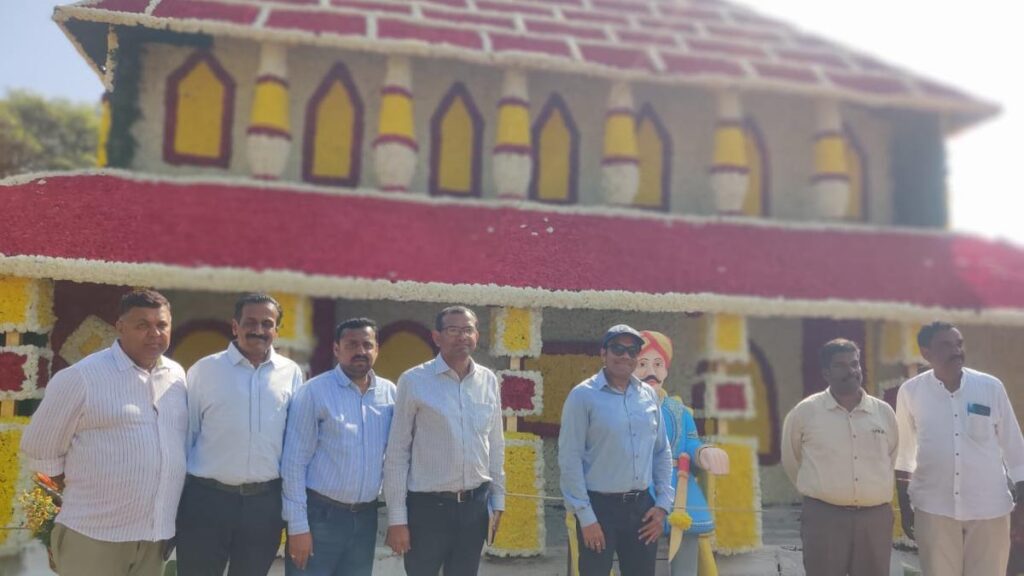
Tourist footfall at Raja Seat in Madikeri has risen with the top tourist destination and one of the most visited sites in Kodagu hosting a flower show since Friday.

The flower show concludes on February 6.

Nearly 20 species of flowers and about 12,000 plants are part of the show with special floral decorations.

The highlights of the show include varieties of exhibits created in flowers, bonsai plants and others.

The Principal Secretary, Horticulture, Rajendra Kumar Kataria, visited the flower show with Deputy Commissioner B.C. Satish on Saturday.

source: http://www.thehindu.com / The Hindu / Home> India> Karnataka / by The Hindu Bureau / February 04th, 2023