Category Archives: Agriculture

‘Wrong weather forecast’ puts coffee crop in Karnataka at risk

Expecting monsoon on June 1, farmers chopped off branches of shade trees exposing tender berries to summer-like sunlight

An ‘unfortunately’ incorrect weather forecast by India Meteorological Department (IMD) has put coffee farmers in Karnataka in jeopardy.

On the basis of the Met department’s prediction of an early monsoon, coffee growers in Karnataka prepared for rains on June 1. However, the coffee estates in Kodagu, Chikkamagaluru, Hassan districts are yet to see any sign of rain as on June 17.

Expecting monsoon in the first week of June 1, towards the end of May, most coffee farmers carried out shade regulation through chopping the branches of secondary shade trees on their plantations to ensure maximum sunlight on the plants during the monsoon. In the absence of rain, coffee plants are being exposed to excessive heat and summer-like sunlight.

Shade lopping (called dadap lopping, with dadaps being fast growing trees of the genus Erythrina) is undertaken just before or at the onset of monsoon as retaining thick shade during monsoon could lead to disruption of free flow of oxygen in the orchard, which may lead to berry dropping, wet foot condition and rotting of stalk.

Mandanna of Subramhanya Estate at Suntikoppa in Kodagu district says, “The entire coffee belt was set for the monsoon on June 1. But unfortunately, Met department’s weather prediction has gone haywire. A delayed monsoon has brought additional concerns to the coffee-growing community.”

According to him, coffee plantations should have ideally received 5 to 6 inches of rain in June, but, as of now, they have not received any rain so far.

“More than half of June has passed and monsoon is yet to set in. Rains are very critical for the development of berries, and also to keep white stem borer away from coffee plants,” said Mr. Mandanna, who is a member of the Coffee Board.

Shirish Vijayendra, a planter from Mudigere and former chairman of Karnataka Planters’ Association, said, “A delayed monsoon would adversely affect the coffee crop this year. Not only coffee, it has also impacted pepper flowering and corn formation, and also paddy cultivation in most parts of Karnataka. Most days are very sunny, as if we are still in summer. It is not a good sign for most crops, including coffee.”

Anil Kumar Bhandari, President of India Coffee Trust (ICT) and a large planter from Suntikoppa, said, “The delayed monsoon has added to our problems. If the rains are going to be further delayed by another 4 to 6 days, there will be a significant impact on production due to poor crop formation.’’

Coffee growers say they purchased manure in bulk to fertilise and nourish their plantations, but the task can be carried out only if the soil has enough moisture to dissolve and absorb the fertiliser.

“We are yet to apply fertilisers in our plantations, owing to the lack of moisture on the ground,” lamented Sindhu Jagdish, a small farmer from Ponnampet in Kodagu district.

source: http://www.thehindu.com / The Hindu / Home> News> National> Karnataka / by Mini Tejaswi / Bengaluru – June 17th, 2022
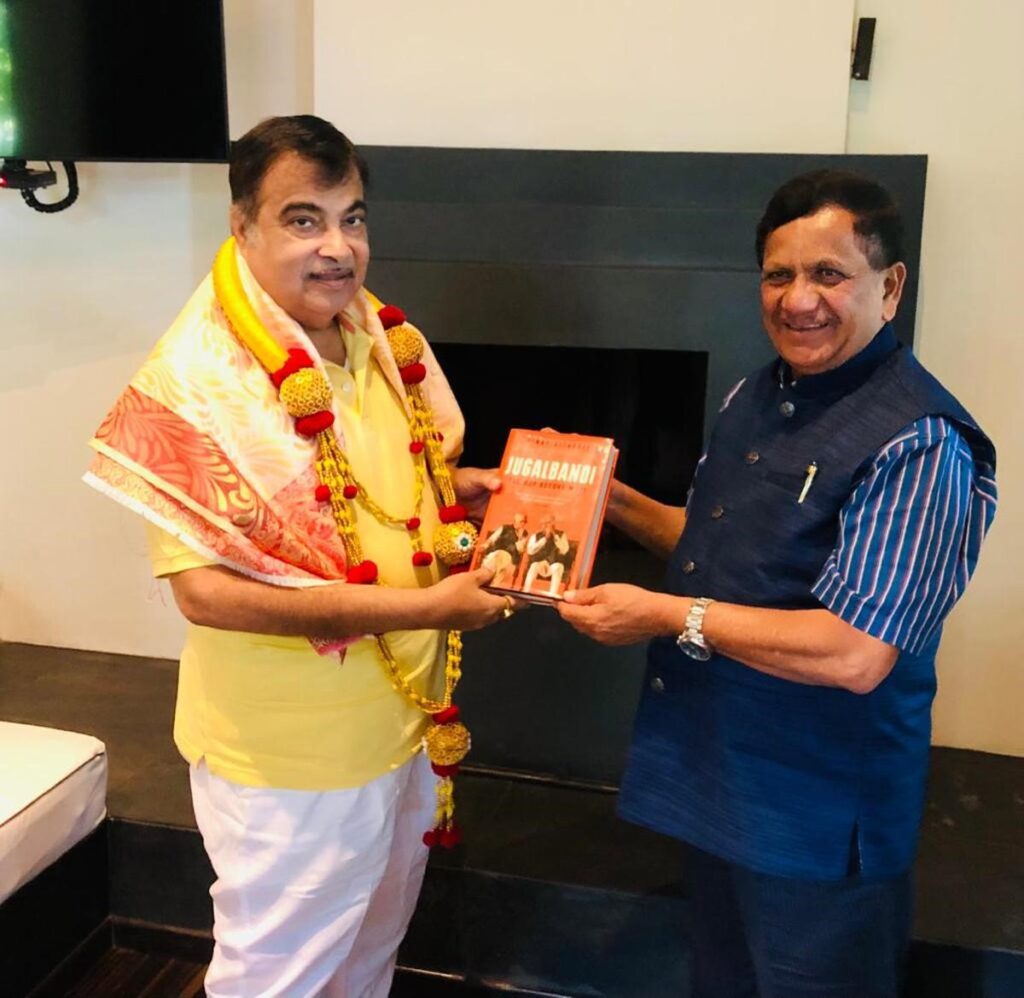
Bopaiah meets Gadkari, seeks highway expansion in Kodagu

Former Speaker K.G. Bopaiah felicitating Union Minister for Road Transport and Highways Nitin Gadkari in Madikeri on Monday. | Photo Credit: SPECIAL ARRANGEMENT

Union Minister tells MLA to adopt ‘Nagpur model’ to improve yield of Kodagu oranges whose production is on the wane        

Union Minister for Road Transport and Highways Nitin Gadkari has promised to look into the demand for highway improvement and expansion in Kodagu if a proposal in this regard came to his office from the State government.

Mr. Gadkari gave this assurance when former Speaker and MLA K.G. Bopaiah met him in Madikeri. Mr. Gadkari is on a private visit to Kodagu with his family members and was staying in a resort in Madikeri.

Mr. Bopaiah shared details on the highways and the steps to be taken for tourism development in the district. “The works will be considered on priority if the Centre gets the proposal on the list of works to be taken up for highway development,” the Minister told the MLA, at the meeting.

Mr. Gadkari spoke about Kodagu’s tourism potential and employment it brings to locals.

Mr. Bopaiah felicitated Mr. Gadkari and presented him with a book besides honey, spices and coffee for which Kodagu is famous. Mr. Gadkari complimented the purity and freshness of the honey.

Expressing concern over the drop in the yield of Kodagu oranges, the Union Minister told the MLA to take steps in this regard, creating an environment for rejuvenating the yield on the model developed in Nagpur which is also known for oranges, besides taking steps for improving the variety.

source: http://www.thehindu.com / The Hindu / Home> News> National / by Special Correspondent / Mysuru – June 13th, 2022

Forests of the gods

A few thick forests have been left untouched for ages. Though close to human habitation, these forests have withstood the test of time for religious and ecological reasons. Here, the air is cool and sunlight streams in through miniscule gaps in the gaps in the canopy.

Karnataka, Maharashtra and Kerala have thousands of such sacred spaces. 

These woods that range from a few acres to a few hundred have many names.

They are called kaan in Malnad (Karnataka’s Western Ghats), devakaad in Kodagu, and devarakaadu in other parts of Karnataka. In Kerala, they are called kaavu where theyyam (ritual dances) is performed. 

These groves are rich in biodiversity and are known for the ecological services they offer. 

Like these regions, many countries and civilisations across the world have maintained ancient groves. The lore associated with these forests are many. In India, it is said that ancient sages would meditate in forests known as tapovan (woods of penance).

The scrub forests of the Thar desert have been protected by the Bishnois, followers of Guru Jambha. In fact, they are known for putting their lives on the line while protesting the cutting down of trees in these groves.

Glimpses from sacred groves in Uttara Kannada / DH photo

Devakaads of Kodagu

In Kodagu, there are dedicated forests beside every village settlement to Aiyappa, the god of forests and hunting. Kodavas held the belief that the spirits of their deceased ancestors would be led on hunts in these sacred forests by Botekara Aiyappa (Aiyappa, the hunter). No living Kodava would venture out to hunt animals or even cut down the trees in these devakaads.

There are also a few devakaads that are dedicated to other gods and goddesses. One of them is the Mahalaxmi devakaad in Ammathi-Vontiangadi in Kodagu. Located behind the bus stop, the site displays a board issued by the Government of Karnataka, declaring the grove as a devara kadu (forest of the gods).

According to  Cheppudira G Kushalappa, Dean of the Ponnampet Forestry College and Kodira A Kushalappa, a retired IFS officer, there were 1,214 devakaads of a total size of 2,550 hectares in 1996 in Kodagu.

Apart from their religious and cultural significance, sacred groves help conserve our forest wealth, says Kodira Kushalappa. “Forests cool temperatures and bring rainfall. They help in retaining the topsoil and help sustain streams, which water neighbouring farms. Forests also serve as home to birds which feed on insects that are found in the fields,” he adds. 

According to a 2002 study, there were 215 tree, 86 bird, 163 mushroom and an uncounted number of butterfly species found in the sacred groves and coffee plantations of Kodagu. Forty-nine out of 163 species of mushrooms were unique to these groves. 

Another paper noted that there were 25 medicinal tree species (rare, endangered and threatened) found in the devakaads. A 2003 research study noted that the larger sacred groves had higher diversity than in natural reserved forests. There was a high level of endemic and globally threatened species present in these forests. 

Butterfly species such as the Travancore evening brown (Parantirrhoea marshalli) or the Malabar banded swallowtail (Papilio liomedon Moore) are restricted to low elevation evergreen forests in the southern Western Ghats that are excluded from protected area network. Tree species like the Actinodaphne lawsonii, Hopea ponga, Madhuca neriifolia, and Syzygium zeylanicum, which are on IUCN threat list, are found in the sacred groves.  

The swampy areas in kaans have been found to have the large-sized, threatened tree species Syzygium travancoricum, which grow close to water bodies and is classified in the IUCN Red List as “critically endangered”. 

These sacred groves help in watershed protection, protect against fire, maintain a favourable microclimate and protect against soil erosion.  

Kaans of Malnad

There are many rules for the Malnad kaans. The trees cannot be cut in the groves but adjoining villagers could cultivate wild pepper.

Francis Buchanan, a British officer, who travelled through Malnad in 1801 wrote that permission to cut a tree in a kaan was to be sought from a village headman, who also served as the priest of the village temple. Otherwise, the tree feller would face the wrath of the forest deity.

The main difference between a kaan and a devakaad is that no cultivation was allowed in the devakaads, while the cultivation of wild pepper and sago palm was allowed in the kaans.

The crop grown in the kaans initially came under forest produce. Later cultivation by clearing by fire was permitted. Even industries were allowed to venture into the kaans, leading to widespread destruction in central western Karnataka.

Now, various individuals have been fighting cases in courts to preserve the sacred groves.

Temple committees and villagers aid the forest department in conserving these sacred groves. Mookonda Arun Ganapathy, the secretary of the Bhadra Kaali temple in Bilugunda village, Kodagu explains that researchers and students often come to the nearby Aiyappa devakaad.

Arun states, “There are encroachments happening in these sacred groves despite government efforts. Many of the well-preserved ones are by the road side. The villagers take measures to protect them. Regular rituals in the forest temples help protect these sacred groves. Trees should not be cut inside these holy forests. Sacred groves are essential for preserving the environment and our culture.” 

source: http://www.deccanherald.com / Deccan Herald / Home> Spectrum> Spectrum Top Stories / by Mookonda Kushalappa / May 26th, 2022

Take action to clear encroachments of forest areas, says Ravi Kushalappa

Ravi Kushalappa, chairman of Karnataka State Western Ghats Task Force, has suggested the State Government follow the court’s direction with regard to encroachment of forest areas in Shivamogga district.

In a meeting with officers at the Deputy Commissioner’s office in Shivamogga on Monday, Mr. Kushalappa said that the task force was committed to clearing encroachments of the forest areas and illegal activities within the forest limits. The court orders with regard to clearing encroachments should be acted upon.

Regarding the plantation activities, the chairman said the village-forest committees had to be active in protecting and conserving forests. The Forest Department had to spread awareness among the public in this regard. The Forest Department had to take up plantation activities with the active participation of rural people. The tribal communities, who had been residing in the forest areas, should be provided with basic amenities, he said.

Additional DC Dr. Nagendra Honnallli, Shivamogga DCF Shankar and others were present in the meeting.

source: http://www.thehindu.com / The Hindu / Home> News> National> Karnataka / by Special Correspondent / Hassan – May 16th, 2022

CFTRI serves a ‘healthy’ drink from coffee leaf

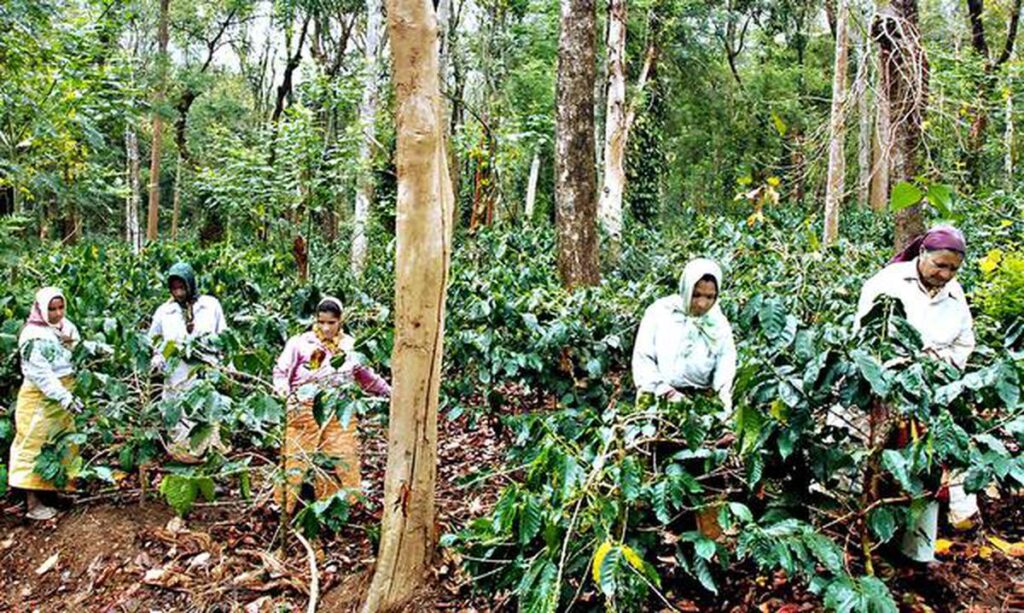
A file photo of workers in a coffee estate near Rayarakoppalu in Hassan district, Karnataka.

CSIR-CFTRI, Mysuru has developed the drink from coffee leaf and claims the brew can be an alternative to green tea or herbal tea

How about a coffee leaf brew? Sounds interesting. Coffee leaves can be used to prepare a health drink which can be an alternative to green tea.

CSIR-CFTRI, Mysuru has developed the drink from coffee leaf which it claims can be used as an alternative to green tea or herbal tea. “It is an ideal health drink to consume at any time of the day. The brew can be prepared with water which can be filtered and consumed,” the institute said.

Phytochemicals like phenolics, alkaloids, flavonoids, and anthocyanins in coffee leaves contribute to its health benefits. The coffee leaf brew mix that the institute has developed can be produced from the leaves that are pruned at the time of maintenance of the plants. They can be a good source of raw material for the drink, the scientists at the CFTRI said here on Wednesday.

Selection of coffee leaf is key as the quality of the brew mix depends on the raw material, according to the Technology Transfer Department.

CFTRI said the plant for producing coffee leaf brew mix can be set up at a cost of ₹70 lakh and the total project cost would be around ₹1.40 crore. A Kushalnagar-based coffee powder manufacturing unit has taken the licence of the product for mass production.

source: http://www.thehindu.com / The Hindu / Home> News> National> Karnataka / by Special Correspondent / Mysuru – May 11th, 2022

Kodagu farmer wins award for conservation of native pepper crop

While ‘Adi Pepper’ was locally known as forest pepper and was used only for domestic purposes by the locals, it has now attained a brand value of Rs 3500 per kilo.

Left, N Poonacha receiving the award at the ceremony in New Delhi. Right, Snapshot of the  indigenous 'Adi Pepper' spikes.
Left, N Poonacha receiving the award at the ceremony in New Delhi. Right, Snapshot of the indigenous ‘Adi Pepper’ spikes.

Madikeri :

A progressive farmer, Napanda Poonacha of Kodagu district looks forward to being known as a pro-nature farmer. He is extensively working towards identifying commercial crops that have little or no ill impact on biodiversity and he was recently awarded the Plant Genome Saviour Farmer Reward (2019-20) for his contribution towards the conservation of indigenous crops of ‘Adi Pepper’.

The award has been conferred by the Union Agriculture Ministry’s Protection of Plant Varieties and Farmers’ Rights Authority and Poonacha received the award from union agriculture minister Narendra Singh Tomar at a ceremony in New Delhi on November 11.

“This award has been granted to farmers who recognize, conserve and promote crops that are useful to biodiversity. Similarly, I won the award for my research, conservation and promotion of ‘Adi Pepper’ – an indigenous variety of pepper that is extensively found growing across natural habitat of Garvale village limits in Kodagu,” explained Poonacha.

He is the proprietor of Adi Pepper Demo Farm and Research Center in Garvale and is extensively involved in identifying native crops in the district that have great potential of becoming a commercial crop without causing damage to the ecosystem.

“Adi Pepper crops are extensively found in the natural habitat across the Garvale area. At the research center, we took the initiative of getting this species of pepper registered under PPFRI and this quality pepper was recognized as farmer’s variety pepper in 2015. This is the only species of pepper that has undergone biochemical analysis and is considered the best among the seven species of pepper that are grown across Kodagu,” he detailed.

While this variety of pepper was locally known as forest pepper and was used only for domestic purposes by the locals, it has now attained a brand value of Rs 3500 per kilo – earning over six times more returns than the other species of black pepper marketed in the district.

“Adi pepper is a native crop and has no harmful impact on biodiversity. This is high-quality pepper and its processing is different from the other species. The ripening of the pepper seeds takes place in November and it is harvested during the same month. However, the pepper seeds are handpicked, treated with hot water and then dried and processed. This ensures top quality of the pepper, earning high returns,” he explained.

source: http://www.newindianexpress.com / The New Indian Express / Home> States> Karnataka / by Pragna GR, Express News Service / November 18th, 2021

Mysuru’s Guinness Record Holder For Tallest Cactus Kashi Kuttappa Passes Away

Mysore/Mysuru:

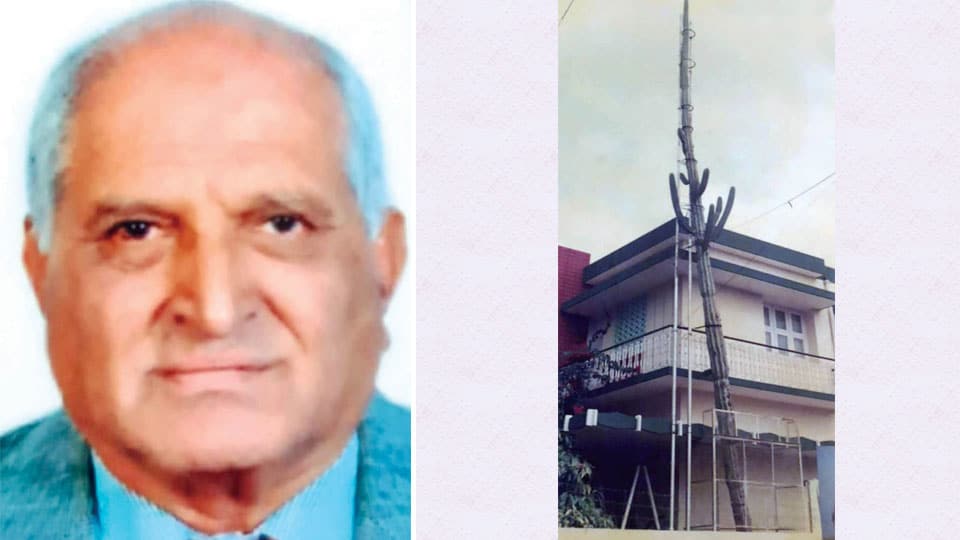
Accapanda Kashi Kuttappa (76), former Assistant Director in the Agriculture Department and a Guinness Record holder for tallest home-grown cactus, passed away at his residence in Siddarthanagar this morning.

He leaves behind his wife Jyothi, daughters Smitha and Neetha, sons-in-law and a host of relatives and friends. Last rites were performed at the foot of Chamundi Hill this noon, according to family sources.

The cactus Kashi Kuttappa

and his family members had grown reached a record height of 45.8 feet and had fetched him the Guinness Record. Kashi himself had said that it took him and his family 22 years to grow the cactus that towered above his home. It is of Cactus-Cereus Grandflora that belongs to the family of ‘cactaceae’. This cactus is widely grown in the tropics of dry tracts and suits the desert climate.

Several tourists and nature lovers used to frequent Kashi’s house at Siddarthanagar to see the wonder plant. In fact, the road to Kashi’s house was arbitrarily named ‘Cactus Road’ and he was famous as ‘Cactus Kashi’.

The plant was grown and nourished since 1978 when it was 2.5 ft. tall. The Guinness Book of Records authorities accepted the cactus as the tallest and issued a certificate for the first time on Jan. 20, 1993 when the cactus was 35 feet 1 inch. The Guinness Records authorities awarded the longest cactus certificate for the second time in 1998, when the cactus had grown to the height of 44 feet and 9 inches.

source: http://www.starofmysore.com / Star of Mysore / Home> News / June 27th, 2021

Coffee Board warns of pesticide residue in coffee

Kattappana:

Pesticides residues were found in a huge amount in the coffee powder exported to European countries. Following this, the Coffee Board has directed the farmers to control the use of pesticides on crops.

The European countries have informed that the pesticides are detected in the coffee powder and advised not to export similar products again. In this context, the Coffee Board has warned the farmers that the European countries and other importers will ban the import of Indian coffee if a similar quantity of chemical components were detected again in the products.

The pesticide Chlorpyrifos has been detected in an excess amount in the coffee powder exported from the country. Instead of Chlorpyrifos, another pesticide Phenthoate 50 EC can be used by mixing 400 millilitres of it in 200 litres of water with 200 millilitres of glue.

The Coffee Board had recommended the use of “Chlorpyrifos 20 EC at the dosage of 600 ml in 200 litres of water along with 200 ml of any wetting agent may be used just prior to the flight periods or during the early part of the flight period,” as a “last resort.”

source: http://www.english.mathrubhumi.com / Mathrubhumi.com / Home> English> Features> Agriculture / April 15th, 2022

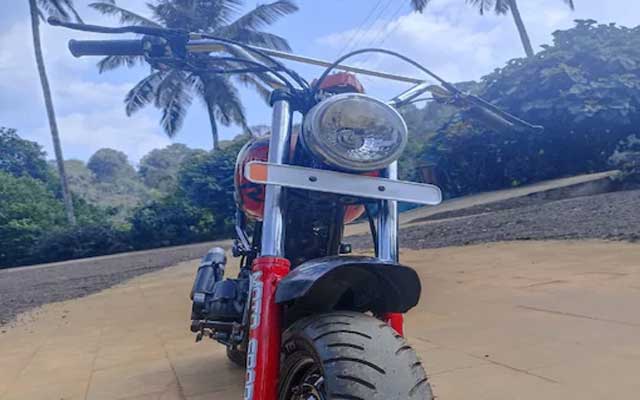
Madikeri: Behold, this imported looking bike is by our Desi Frankenstein

Madikeri :

It is quite natural for small children to develop an affinity towards their toys or toy vehicles. Unlike other children of his age, this boy never thought of buying toy vehicles from shops. He created his own toy vehicles and had fun. At that young age itself, he would wish if he could manufacture his own vehicles. 

By the time he finished school and entered college, his desire to manufacture vehicles grew by leaps and bounds.His ITI education supported his aspirations. He has made several vehicles and sold them. His vehicles have a uniqueness or fingerprint of his own.

The prodigious boy is Akash, a resident of Biligeri village near Madikeri. After completing MMV in the ITI, he started to work for some vehicle manufacturers. As the urge to manufacture his own vehicles catapulted into a passion, he left his job and returned home. 

Initially he began with bikes and also cars which could be pedaled. He then fixed engines to them and succeeded in making indigenuous vehicles. In the past few years, he has forayed into manufacture of bikes, agricultural machinery, various equipment and also other vehicles.

Another unique skill he has is custom making the vehicles as per the client’s desire by procuring spare parts of different makes and assembling them at home. He has also sold bikes without gears and scooters with gear. So he could rightfully be called the Frankenstien of automobiles. 

Akash has now made a unique bike that also grabs eyeballs. .So far he was making fuel driven vehicles. Now he has manufactured vehicles which run on a battery. The bikes and small cars made by him ideally suit the requirements of resorts and homestays in Kodagu district. Therefore, owners of some resorts have purchased their custom made vehicles from him.

He has immense interest in making agricultural machinery. Machines which dry cardamoms and pepper, those which separate chilli from their stalks etc. He has also made four trolleys that can carry different weights, and sold them. Some organizations which have noticed his achievements, have come forward to help him. They are thinking of providing him with a showroom so that this rural talent gets recognition in the outside world.

source: http://www.daijiworld.com / Daijiworld.com / Home> Karnataka / by Daijiworld Media Network – Madikeri (SP) / February 23rd, 2022

Honeycomb comes home all the way from Kodagu

NGO Swastha Centre is training people with disabilities in beekeeping, giving them a source of income & sense of independence.

The establishment of the beekeeping society will ensure sustainable and inclusive living, says Arathy Somaiah, director, Swastha Institution | EXPRESS

Madikeri : 

In the misty hill country of Kodagu, the bee offers hope. Apiculture has been one of the main economic activities of the region, known for its coffee, pepper and tourism, while Coorg honey is said to be rich in medicinal properties.

Tapping into the ancient activity of bee-rearing, the Swastha Centre for Special Education and Rehabilitation in Kodagu is striving to establish a sustainable society for persons with disabilities, especially in the rural areas of the district. Started in the year 2003, Swastha Institution is managed by The Coorg Foundation Trust.

While educating students with special abilities has been the focus of the institution, it is also involved in providing vocational training to enable the rehabilitation of children. In a country where a day is observed each year to promote the wellness and rights of persons with disabilities, it can be challenging to create an inclusive environment for them, and keep it going too.

The community-based rehabilitation initiative of the institution is empowering many persons with disabilities (PwD) in the rural parts of Kodagu. What is unique is that the institution has introduced beekeeping and is training them in the vocation, said to be the first-of-its-kind initiative in the country.

“Receiving support from the Horticulture department, the institution first trained 25 students in beekeeping in 2017,” explained Arathy Somaiah, director of the institution. Though the students were trained in the vocation, opportunities to earn from it were bleak. Hence, the institution looked to establish an agrarian system to create opportunities for self-employment, which also promotes economic growth.

“The institution sought help from NABARD, and the 25 students were further trained for three years. Beehive boxes were handed over to them, and the first bee harvest was sold last year. The students earned incentives and have now set up beehive boxes in their homes,” said Arathy. To ensure that the students don’t face any challenges in beekeeping at home, the institution extended training to their parents too. Persons with disabilities were identified across Karike, Bhagamandala, Sampaje and Madenadu villages, trained in beekeeping and given beehive boxes.

“There is a government scheme where beehive boxes are provided at subsidised rates if residents provide RTC documents of the land. Through this scheme, beehive boxes were given to them, and they were trained by the horticulture department,” explained Arathy. The harvest from the community rearing in the district was collected by the institution; it was processed, purified and bottled at the Research and Development sector of Tata Coffee.

“The honey extracted and processed is free of adulteration, and marketed under the Swastha label. The profits are paid to the bee rearers. A trained staffer from the institution visits the rural areas once a month to help them handle the work of beekeeping, and helps them in the cleaning process. Once the harvest is ready, they help them extract and collect the honey. They have the option to market the harvest through Swastha or any other means,” she shared.

While the beekeeping initiative is running successfully, the institution is looking at providing them with holistic training. It aims to identify persons with disabilities in all the taluks, and establish a ‘Beekeeping Society of Persons with Disabilities’ soon in the district. The institution also plans to train them to plant bee-friendly trees and shrubs in rural areas. Kodagu has a large number of massive bee-nesting trees.

“The establishment of the beekeeping society will ensure sustainable and inclusive living. It will help generate self-employment, rural employment and economic growth,” concluded Arathy.

source: http://www.newindianexpress.com / The New Indian Express / Home> Good News / by Pragna GR, Express News Service / April 10th, 2022