Category Archives: Agriculture

Native shade trees in coffee plantations vital for diversity, abundance of birds, says study

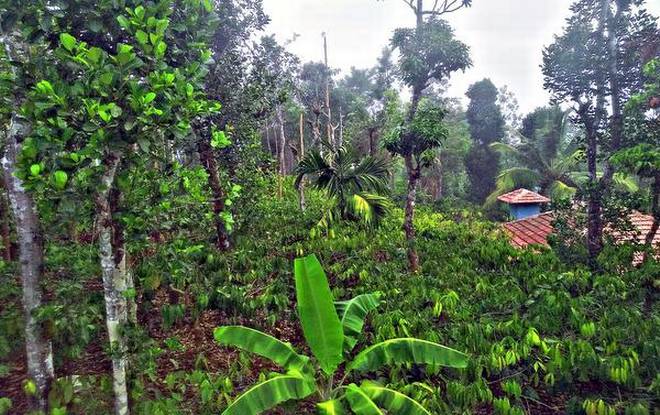
The joint study found bird species richness to be higher in shade coffee plantations that had 78 species than in open coffee plantations that had 55 species

‘Alteration of canopy, woody plant composition can influence pattern of functional composition of resident birds’

Verdant coffee and tea plantations are more than an ideal backdrop for photos; they support a thriving avian population. In a study that underscores the need to understand the patterns and drivers of bird species composition and diversity outside Protected Area (PA) networks to develop landscape-level conservation strategies, researchers found that they varied in differently-managed plantations.

The findings were the result of collaborative work by Kannur University, Kerala, Salim Ali Centre for Ornithology and Natural History, Coimbatore, Ashoka Trust for Research in Ecology and the Environment (ATREE), Bengaluru, and Ferns Nature Conservation Society, Wayanad. It was published in July 2021.

Focussing on the coffee plantations in the Western Ghats, which are an important agro-ecosystem and help maintain a significant portion of regional avian diversity, the researchers compared the composition and functional diversity of resident birds between shade and open coffee plantations.

They counted 3,846 birds of 87 species, and found species richness to be higher in shade (78 species) than in open coffee plantations (55 species). “Interestingly, 32 species were unique to shade and nine were unique to open coffee plantations, with 46 species found in both types of plantation. Species richness and abundance were higher in shade coffee,” the study says, adding that the results reveal that different farm management practices can affect functional bird richness and its abundance in coffee plantations. They have made a case for retaining shade-trees of native varieties in coffee plantations to support high functional diversity, richness, and abundance of birds in the coffee plantation of the Western Ghats.

The study, ‘Resident birds show different patterns in species composition and functional diversity in differently managed coffee plantations in the Western Ghats, India’, was published by the Ornithological Science journal in July 2021.

Speaking to The Hindu, Santhanakrishnan Babu, one of the authors, said the study was conducted between May and August, 2016, in the northern part of Wayanad district. “Wayanad is a major coffee producer, producing 90% of the Kerala’s coffee. Our study aimed to understand how resident birds respond to differently-managed coffee plantations – shade and open,” he said.

The Kerala government recently passed an order to chop all resident trees on private land except sandalwood. This will lead to extensive chopping of resident trees from the coffee plantations which will affect biodiversity, he added.

Another author Athira S. Variar and Mr. Babu said retaining shade trees of native varieties in coffee plantations is important for supporting high functional diversity, richness, and abundance of birds. “Shade plantations support several habitat specialists and range-restricted birds, and alteration of the canopy and woody plant composition can influence the pattern of the functional composition of resident birds. Since our study covered only one season, year-round study in these plantations may shed more light on the composition of resident, breeding and migratory bird species,” they said.

Conservation strategies

They have called for landscape-level conservation strategies. Author Anoop N.R. pointed out that the Forest Department has little authority over the plantations located outside forest areas, and trees in these plantations are increasingly being replaced with exotic trees such as Grevillea robusta. “To promote the protection of large native trees in coffee plantations, we recommend initiating programmes to provide financial incentives to private landowners. Education programmes will also help to improve community support for retaining texisting indigenous tree varieties and promote planting more of the same,” he recommended, adding that a framework needs to be developed with regard to which species can be planted and which must be maintained, or removed, from the plantations.

source: http://www.thehindu.com / The Hindu / Home> News> States> Karnataka / by K C Deepika / Bengaluru, October 04th, 2021
International Coffee Day observed at Raja Seat

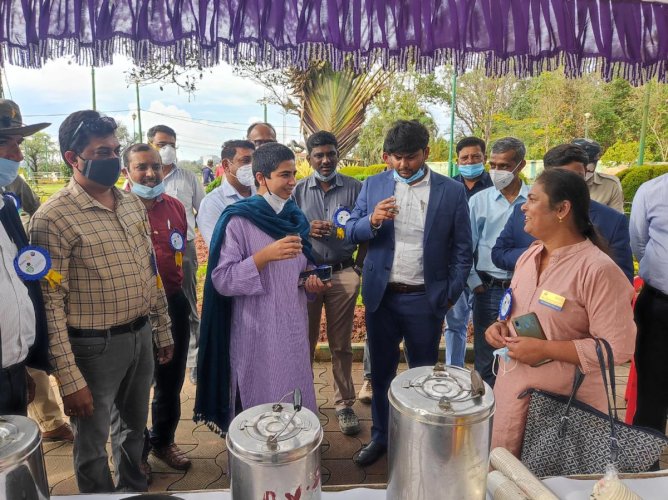
Deputy Commissioner Charulata Somal sips coffee at Raja Seat on Friday, on the occasion of International Coffee Day

Deputy Commissioner Charulata Somal said that the International Coffee Day celebrated in Kodagu, highlights the hard work of coffee growers, which is behind the taste of coffee.

She was speaking during the International Coffee Day programme observed by Rotary Misty Hills, at Raja Seat, on Friday.

The deputy commissioner added, “I got to know about every detail of coffee cultivation after I was posted to Kodagu. The dedication and effort by coffee growers in producing the best quality of coffee is commendable.”

Rotary Misty Hills president Anitha Poovaiah said that more than 1,500 visitors at Raja Seat were served coffee on account of International Coffee Day.

Rotary Deputy Governor H T Anil said that the quantity of coffee powder used by a person in India is 4 to 5 kg per year whereas, in a foreign country, a person uses 15 kg of coffee powder annually.

Therefore, there is a need to increase the usage of coffee in India, he added.

Misty Hills project director Devanira Tilak also spoke on the occasion.

Madikeri CMC commissioner Ramdas, horticulture department deputy director Sridhar, senior assistant director Pramod, Coffee Board deputy director Shivakumar Swamy and others were present.

‘Coffee export’

Kodagu Mahila Coffee Jagruthi Sangha distributed free coffee at various places in Madikeri on account of International Coffee Day. 

The Coffee Day observed at Tadka House on Raja Seat Road was inaugurated by Kodava Samaja president K S Devaiah.

When the coffee industry was in distress women had started a unit to instil confidence in coffee growers in the district. The sangha has been promoting coffee consumption, said K S Devaiah.

Women have been actively engaged in managing coffee plantations and the industry. Kodagu’s coffee is known for its taste, he said. 

Kodagu Coffee Growers’ Cooperative Society president M B Devaiah said the society is the largest coffee cooperative in Asia.

It is now mulling about exporting coffee and requires financial assistance from the government for exports, he added. 

Advocate Pasura Preetham said the International Coffee Day is being observed since 2015. 

Dr Mohan Appaji said that the consumption of coffee by those above 40 years is good for health. 

Kodagu Mahila Coffee Jagruthi Sangha president Chitra Subbaiah, general secretary Anitha Nanda and others were present. 

source: http://www.deccanherald.com / Deccan Herald / Home> State> Mangaluru / by DHNS, Madikeri / October 01st, 2021

Drones spraying chemicals a hit among farmers at paddy fields, arecanut estates in Kodagu

“Usually it takes seven to eight days to complete chemical spraying across a 10 acre estate. However, the job was completed in four hours using the drone,” said an arecanut estate owner.

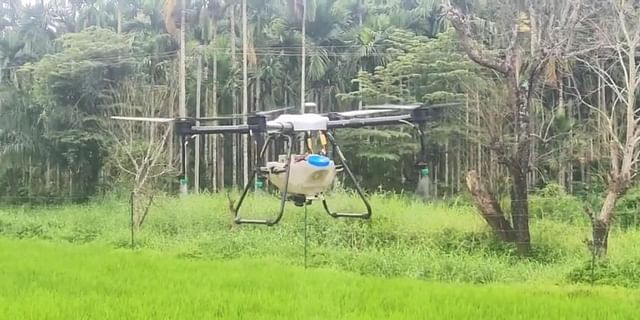
Drone facility used in a paddy field in the district (Photo | Special arrangement)

Madikeri :

Agriculture has taken a hit in several ways amid the pandemic and labour shortage and lack of maintenance are among the top struggles faced by farmers. However, this is now being addressed technologically with drones taking over jobs at many estates in Kodagu.

Vikram Appaiah, a arecanut estate owner in Karadigodu village, first heard of drones helping in agriculture activities in a social media group. He opted for the technology and the first drone experiment was done across his estate in May.

“I hired the drone to enable maintenance work at the estate. Fungicide spray was mounted on the drone and all the arecanut trees were uniformly sprayed with the chemical,” recalled Vikram. He added, “Usually it takes seven to eight days to complete chemical spraying across a 10 acre estate. However, the job was completed in four hours using the drone.” Following the success story, Vikram hired the drone for the second round of chemical spraying in September.

The drones are outsourced from the local agro company Omega in Gonikoppal. “Prior bookings have to be made and the drones help in systemic spray of chemicals or organic sprays. Many farmers are approaching us to opt for the facility as it is time-saving and convenient,” said Naj Chengappa, the proprietor of Omega.

He explained that Rs 2200 is charged for spraying chemicals with drones across one acre of arecanut estate and Rs 950 across one acre of paddy field.

He, however, confirmed that this facility cannot be used across coffee estates due to the uneven terrain alongside increased shade trees in the estates.

source: http://www.newindianexpress.com / The New Indian Express / Home> States> Karnataka / by Prajna GR, Express News Service / September 22nd, 2021

Kailpodh Festival of Kodavas: A Unique Festival of Weapons

Festival season is approaching and so are the moments of colorful traditions and culture. Some of them are celebrated within communities and some of them nationally and globally. Community festivals are significant to the respective community and connect them with their families and social structure of living.

Festival of weapons

Situated at 3000 feet above sea-level, Coorg is beautiful and is known as the Scotland of India and is home to the Kodagu Community, where this festival of weapons is celebrated. Coorg is home to various agricultural crops  like coffee, pepper, oranges, avocado and cardamom. The delicacies include dishes cooked with pork, mutton, rice, wild mushroom, bamboo shoot and smoked meat.

About the Kodagu Community:

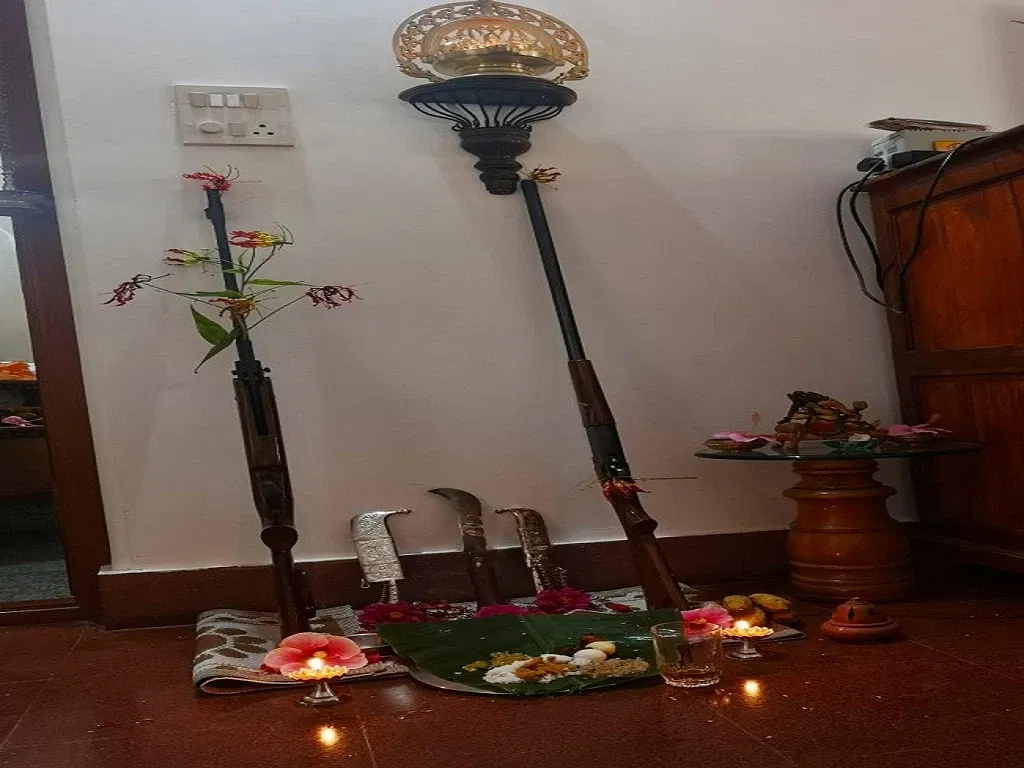
The Kodagu community has got its own rituals and very interesting traditions still kept alive. One such Festival they still celebrate within their community is Kailpodh, which is celebrated in the month of September. ‘Kail means armory and Podh means festivals, so Kailpodh means “Festivals of Weapons”.   This Unique traditional festival is celebrated within the Kodagu community where arms and weapons like guns, knives, swords, bows, and arrows are cleaned and prayer lamps are lit. The hanging prayer lamps are called Thookbolcha in Kodava and flowers called Thokk Poo (Gloriosa Superba flowers) are placed on the nozzles of guns.

The Kodavas have always maintained an intimate relationship with their weapons. Its been said that during weddings they use a large Kodava Knife to cut banana Stalk with one single cut. During the death and birth, they fire a single shot into the air to share the news with the neighbours. Largely there were forest land where they lived and hunting used to be their favourite past time. At present even if hunting is not done, these weapons are passed down from generation to generation.

This is a time which marks the end to the sowing season and then they have to remain watchful and protect the crop. The weapons used to protect the crop hence are taken and decorated on this day and pooja is offered. The river deity Kaveramma, and Mahaguru Igguthappa and the supreme ancestor Guru Karana, are invoked during this day.

The festivities:

Kodava cuisine includes well-prepared, tasty food such as steamed dough balls called kadambuttu, and rice cakes, string hoppers meat dishes such as Pork curry, Chicken curry and Mutton Curry as well as desserts like Rice kheer. They also wear traditional costumes and play various games like folkdances ,shotput, rifle shooting , traditional dances.

source: http://www.krishijagran.com / Krishi Jagran / Home> Others / by Dr Lakshmi Unnithan / September 07th, 2021

Women in Karnataka’s Virajpet form self-help groups, buy field and cultivate paddy

Question of livelihoods: Women self-help groups purchased an unused paddy field and have now become full-time farmers

Madikeri :

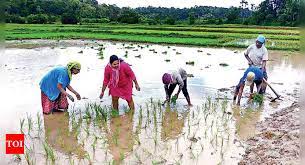
Following the Covid crisis, several women have taken to cultivating paddy in the district, giving a new lease of life to uncultivated land.


Women — mainly from Virajpet taluk — under the banner Sanjeevini Okkuta, are growing paddy on land that had remained uncultivated for years. Fifteen women self-help groups joined the Okkuta, which purchased an unused paddy field.

Okkuta president Indira and assistant secretary Nisha have helped members with initial capital for the work.

Villagers say owners of the field had stopped cultivating the crop as paddy cultivation requires a huge workforce to plough, sow and transplant plants. This demands high wages.

National Rural Livelihood Mission district programme manager, who indentified himself only as Kumar, was pleased with the latest move by women of Sanjeevini Okkuta.

source: http://www.timesofindia.indiatimes.com / The Times of India / Home> News> City News> Mysuru News / by TNN / August 06th, 2021

Neelakurinji blooms beckon tourists, chopper rides on offer

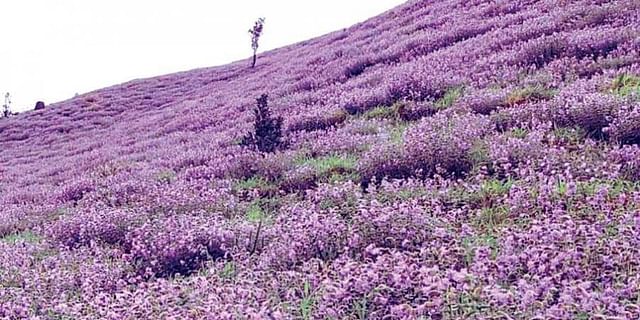
The mass blooming of the Neelakurinji flower (Strobilanthes kunthiana) in Kodagu district is giving the much-needed boost to the state’s tourism sector.

Neelakurunji flowers bloom at a hillock in Kodagu district | forest department

Bengaluru:

The mass blooming of Neelakurngi in Coorg has made it a rallying point for wildlife enthusiasts, botanists, photographers and tourists.

The blooming at the hillocks of Mandalpatti and Kote Betta in Kodagu, tourism has also taken up the north. Since the blooming has happened for the first time in a such a massive scale and is after 12 years, more so after tourism activities have opened up after the pandemic, every one are heading to India’s Scotland to see them. 

The new entrant in the list to draw tourists is heli- tourism. As the state government and the tourism department are trying the revive the long pending heli- tourism, a firm in Bengaluru has undertaken a heli- ride to Kodagu and surrounding areas, giving an areal view of the blooming Neelakurunji flowers on the hillocks. 

Govind Nair, Director, Thumby Aviation Private Limited said already one trip from Yelahanka air base to Coorg was done earlier this week. Now it is being offered as a part of the Nowhere trip to Coorg, a package tour, where a detour to Mandalapatti will be done. 

Tourism packages and inineraries are being revamped on the go, depending upon the blooming and withering of the flowers. But since it is a once in 12 years sighting, many resorts are offering a visit to the region as a part of the package, to draw more crowds. 

Trekking and flying has now taken the front seat to draw tourists. Even as the recent guidelines of the ministry of aviation states that drones are prohibited over national  parks, wildlife sanctuaries and other eco- sensitive places, conservationists and foresters object to helicopters flyover over the region. They point not just is the area a fragile Western Ghats region, little is know the species in Kodagu and so all precaution should be exercised to safeguard them. 

Botanists point that utmost care should be taken in the area as the flowering in this part of Western Ghats has not been recorded and documented. Karnataka as around 45 species of Kurunjis and in different altitudes different species have been recorded. Each species blooms at different intervals like once in six years, nine years, 11 or 12 years. So administration must ensure that tourism and footfall is limited to the region, so that they are well protected. 

source: http://www.newindianexpress.com / The New Indian Express / Home> Cities> Bengaluru / by Bosky Khanna, Express News Service / August 27th, 2021

Kerala workers shuttling daily by foot to Kodagu estates

Estate owners urged to discourage it over COVID-19 fears.

Amidst the growing fears of an impending third wave of pandemic, it has now come to light that workers from Kerala bordering Kutta village in Kodagu were being employed in coffee estates and are shuttling daily by foot for work.

The State government has made it mandatory for those coming into the State from Kerala to carry an RT-PCR negative report not older than 72 hours irrespective of whether the travellers were vaccinated – either first or both doses of vaccine.

When former Speaker and Virajpet MLA K.G. Bopaiah visited the checkpost at Kutta on Tuesday to oversee the COVID-19 surveillance at the border over a spike in cases in the neighbouring State, he came to know about workers belonging to a Kerala village bordering Kodagu coming daily to Kutta by foot to work in the estates.

Mr. Bopaiah advised the coffee estate owners to provide accommodation to the workers after complying with the guidelines in case they have emergency works in their plantations and would like to employ workers from Kerala.

As per the district administration’s order, persons from Kerala travelling daily to Kodagu must carry out COVID-19 test once in 15 days and always carry the RT-PCR negative report with them. It is not clear whether the employers were cross-checking the details while engaging them in their estates.

“The task force set up in each gram panchayat must look into all various aspects for controlling COVID-19 in the border villages. It must work on preventing daily commuting of workers from Kerala to the border estates. This can help prevent the COVID-19 spread,” he opined.

The staff roped in from various departments for work at the checkposts in Karike, Kutta, Makutta and Sampaje in Kodagu have been categorically told to ensure that no vehicle enters the State without the travellers producing valid RT-PCR negative report not older than 72 hours.

The district officials have been told to continue with the guidelines issued based on the test positivity rate which is currently below 5 per cent. If the TPR crosses 5 per cent, stricter measures were needed.

About 40-50 vehicles from Kerala cross the border at Kutta daily.

source: http:// www.thehindu.com / The Hindu / Home> News> States> Karnataka / by Special Correspondent / Mysuru – August 03rd, 2021

`Karnataka to play a critical role in increasing domestic consumption of coffee’

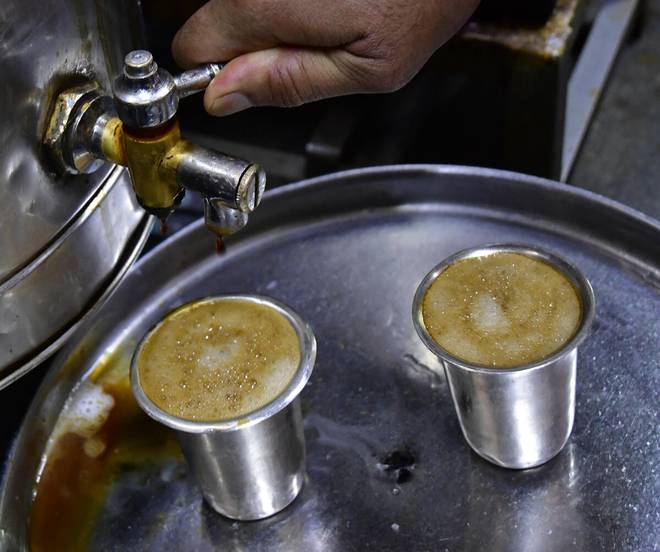
A file photo of a server collecting coffee from a container in a restaurant.   | Photo Credit: K. Murali Kumar

‘Nations should jointly combat issues in coffee sector’

Coffee growing countries, India, Brazil, and South Africa, should collaborate to combat common challenges they face such as global price volatility, high cost of production, and labour shortage, suggested International Coffee Organisation (ICO).

At the opening session of the two-day IBSA Coffee Festival on Wednesday, ICO executive director Jose Sette said India, Brazil, and South Africa had several opportunities to work together to address common issues they face in the coffee growing, processing, and marketing fronts.

India produced over 3,20,000 tonnes of green coffee in the last harvest season that ended in March 2021. Karnataka alone accounts for over 70% of the country’s total coffee production, with Kodagu, Chikkamagaluru, and Hassan districts being the State’s coffee heartlands.

Coffee Board chairman M.S. Boje Gowda said, “It is great that we are joining hands with the international coffee community to improve the coffee scene of India and this exercise means a lot for coffee farmers across the country, and especially for an army of them in Karnataka.”

Suresh K. Reddy, Ambassador of India in Brazil, said coffee production had increased 34% in that country in the last two decades although the area under production had only reduced. Indian coffee community had to adopt cost-effective growing techniques and yield enhancing practices from Brazil, he recommended.

“We are also looking forward to collaborating with Brazil in enhancing domestic consumption of coffee in India,” said Mr. Reddy. India’s per capita coffee consumption is around 200 grams while it is 6 kg in Brazil.

Mr. Reddy further said time had come for the commodity apex body, Coffee Board, to position itself as a holistic organisation for the overall development, promotion, and growth of Indian coffee.

Jaideep Sarkar, High Commissioner of India in South Africa, said under the free trade agreements of WTO regime, it was tough for individual governments to promote their own coffees beyond a point and therefore working together was the best option for the global coffee growing community.

Andre Aranha Correa do Lago, Ambassador of Brazil in New Delhi, said, India was beginning to see a lot of speciality coffee coming via exports and this would open up newer opportunities for coffee entrepreneurs in India to process, value add, and re-export.

“We want to be part of the growing India coffee story and IBSA is an ideal platform for a unique partnership between these coffee producing countries,” Mr. Lago added.

source: http://www.thehindu.com / The Hindu / Home> News> States> Karnataka / by Mini Tejaswi / Bengaluru – August 05th, 2021

Kodagu District Minister Offers Bagina At Harangi Dam

Madikeri:

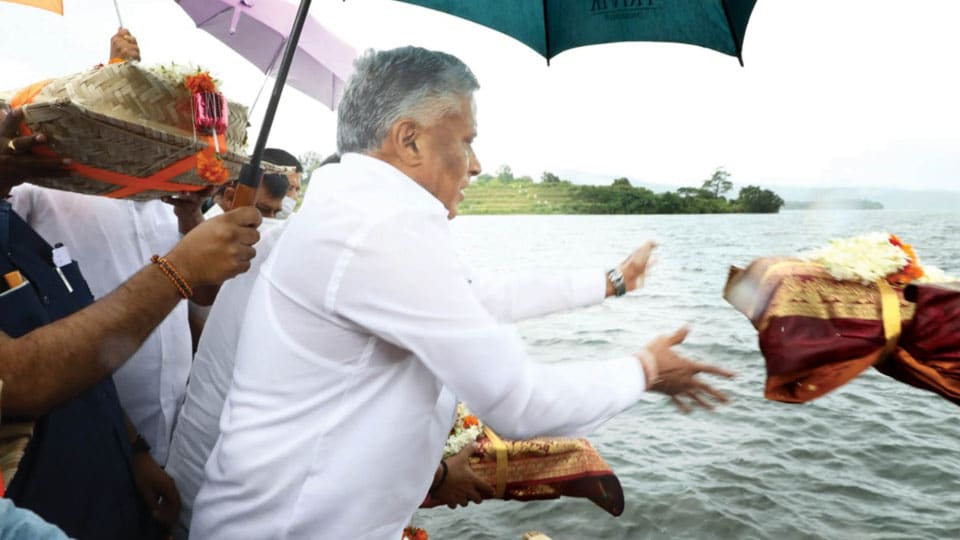
With the Harangi Dam in Kodagu district full to the brim, thanks to copious rainfall in the past few days, Kodagu District Minister V. Somanna yesterday offered bagina at the Dam, in keeping with the tradition.

During the offering of the Bagina, Somanna performed puja to four crest gates of the Dam and also pressed the crest gate button to release 8,000 cusecs of water from the Dam.

Later speaking to press persons, Somanna said that Harangi Dam was the first major Dam in the State to have filled up this monsoon. Noting that the Dam feeds water to 1.65 lakh hectares of Kodagu, K.R. Nagar taluk in Mysuru and five taluks of Hassan district, he said that water will be released for standing Kharif crops and through all canals of the Dam.

Maintaining that the B.S. Yediyurappa Government is doing what all it can for expanding the irrigation network in the State, Somanna contended that there was no drought in the State for two years. However, rain has played havoc in some parts of the State, he said and added that scattered rains across the State has helped farming.

Clarifying that the Government has released money for de-silting of Harangi Dam, he said that tenders have been invited for the purpose. Noting that there were no successful bidders two times, he said that the Government was ready to hand over the works if a competent contractor comes forward for the third time.

Asserting that Kodagu DC has informed him that the district has so far suffered an estimated loss of Rs. 95 lakh due to heavy rains, Somanna said that measures will be taken for providing relief to the family of a person who was recently washed away in floods.

Mysuru-Kodagu MP Pratap Simha, in his address, said that though he was an elected MP for seven years, he could not offer bagina to Harangi Dam for one reason or the other. But he was happy now that he got a chance. Arguing that the State has been receiving good rainfall after B.S. Yediyurappa came to power, he said that nature too seems to be impressed by the works of the Chief Minister. 

Referring to the damages caused to Madikeri-Mangaluru National Highway, Simha said that it has come to his notice and he will do all he can to repair the damaged sections of the road. Also, it has been planned to construct earth retaining wall at landslides prone 22 points of the Highway, for which he would render all help, he added.

Harangi Dam officials said that the Dam has a water storage capacity of 8.5 TMC and the maximum water level of the dam is 2859 ft. At present, the water level is retained at 2858 ft. as a precautionary measure and whatever additional water that the Dam gets (inflow) will be discharged through canals.

Earlier, the Minister and a host of other dignitaries offered puja to the idol of  Goddess Cauvery  at the lower level of the Dam.

MLAs Appachu Ranjan,  A.T. Ramasway and H.P. Manjunath, DC Charulatha Somal, MLC Sunil Subramani, BJP District President Robin Devaiah and a host of other officials and people representatives were present.

source: http://www.starofmysore.com / Star of Mysore /Home> News / July 17th, 2021

Elite KSISF Takes Over Harangi Dam Security

No more unrestricted entry; move to curb illegal activities 

Mysore/Mysuru:

Amidst thick of a controversy over the safety and security of the KRS Dam in Mandya in the wake of rampant illegal mining, the State Government has upgraded the security of Harangi Dam in Kodagu district that is the only upstream reservoir that supplies water to KRS.

Till now, the Harangi Reservoir security was manned by lathi-wielding Kodagu District Reserve Police and Civil Police. 

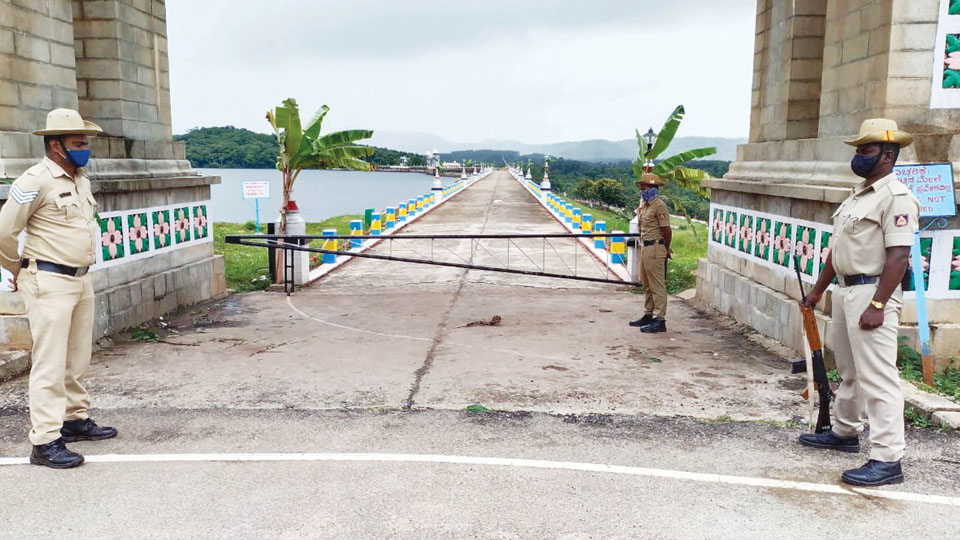
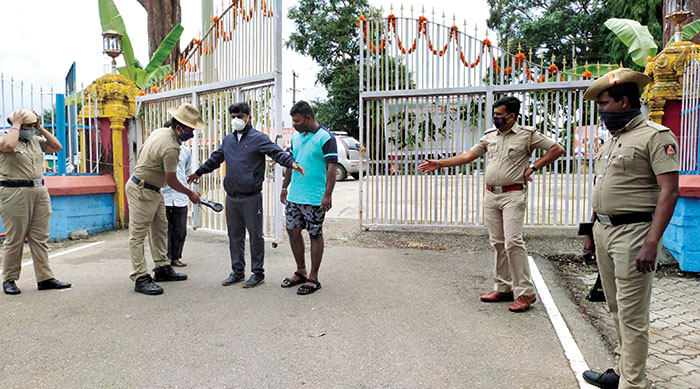
Now the security apparatus has been handed over to gun-toting professionals from the elite Karnataka State Industrial Security Force (KSISF). Over 23 men are guarding the Dam 24×7 and unrestricted entry has been banned. All visitors will be frisked henceforth and only those who have valid permission from the KSISF will be allowed inside. 

The KSISF also manages the security of the KRS Dam. The Harangi Dam is in the upper Cauvery sub-basin reservoir near Hudgur village in Somwarpet taluk. Water from the reservoir irrigates 1.65 lakh hectares of farmland in Kodagu, Hassan and Mysuru districts. The maximum height of the reservoir is 2,859 feet and it has the capacity to store 8.5 tmcft of water.

The KSISF personnel are guarding the Dam main gate, four sluice gates and power house. Vigil will be kept till the end of the right canal. As per the new security protocol, vehicle parking has been arranged at the entrance of the Dam and visitors have to obtain permission from the Irrigation Department to enter the reservoir premises. Also, permission from the KSISF is required for private vehicles.

Earlier, private vehicles could enter into the Dam premises easily and entry was unrestricted if the visitors had the backing of politicians and elected representatives. The place was also a haven for illegal activities where liquor parties were held at the Dam guest house and also at a few places in the vicinity and backwaters.

Now all those who enter inside the Dam are screened and the registration number of the vehicles and information of tourists are documented. 

Speaking to Star of Mysore, Inspector K.S. Chandrashekar said that as Harangi is a sensitive zone, the KSISF has been entrusted with the security.

He said that the Dam security and the safety of visitors were paramount and security will also be provided to the sound-and-light show in the evenings. 

The KSISF was set up in 2012 and it started its service by providing security cover to Vidhana Soudha, Vikasa Soudha and KRS Dam when Siddharamaiah was the CM. The KSISF personnel are trained in access control, gadgets management, communications, people management, fitness and have an eagle eye for disaster management.

source: http://www.starofmysore.com / Star of Mysore / Home> News / July 18th, 2021