Category Archives: Agriculture

India’s coffee-growing tradition thrives with new gourmet producers

Family tragedy prompted Kambihalli Estate’s revival in Karnataka
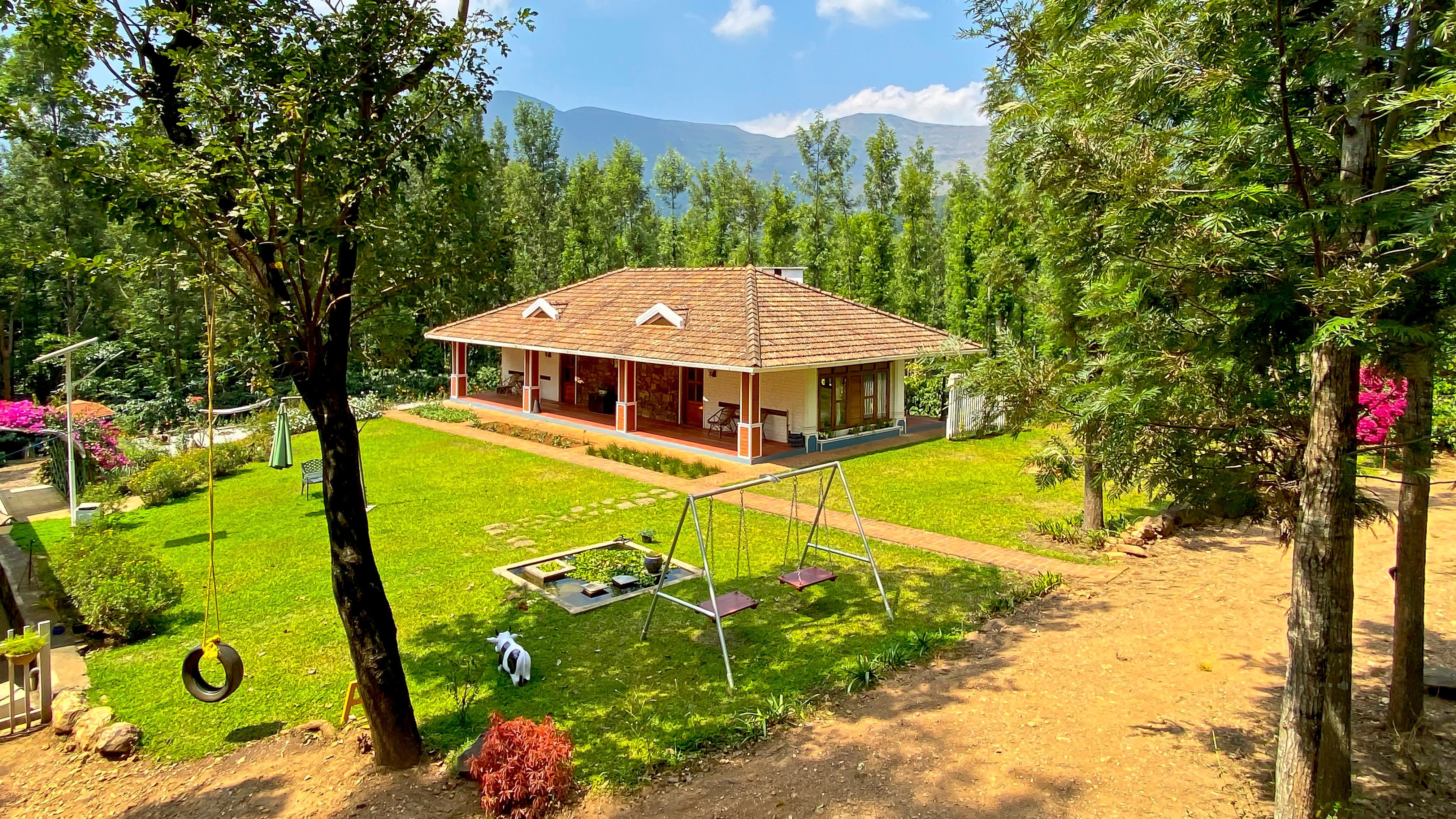
In addition to growing coffee, the women of Kambihalli Estate also run Halli Berri cottages, a luxe homestay. (Christabel Lobo)

When Nalima Kariappa took over the day-to-day management of her family’s 200-acre coffee estate in Chikmagalur, in the southwestern Indian state of Karnataka, after her husband’s death in 2007, she never imagined just how far the family business would come.

“Frankly, I wanted to close and go after my husband was diagnosed with cancer. At the point that he was preparing the estate’s affairs, we had decided that we would sell and go settle in Mysore or Coorg,” says Nalima. “But toward the end, I think he got emotional and sentimental and said no.”

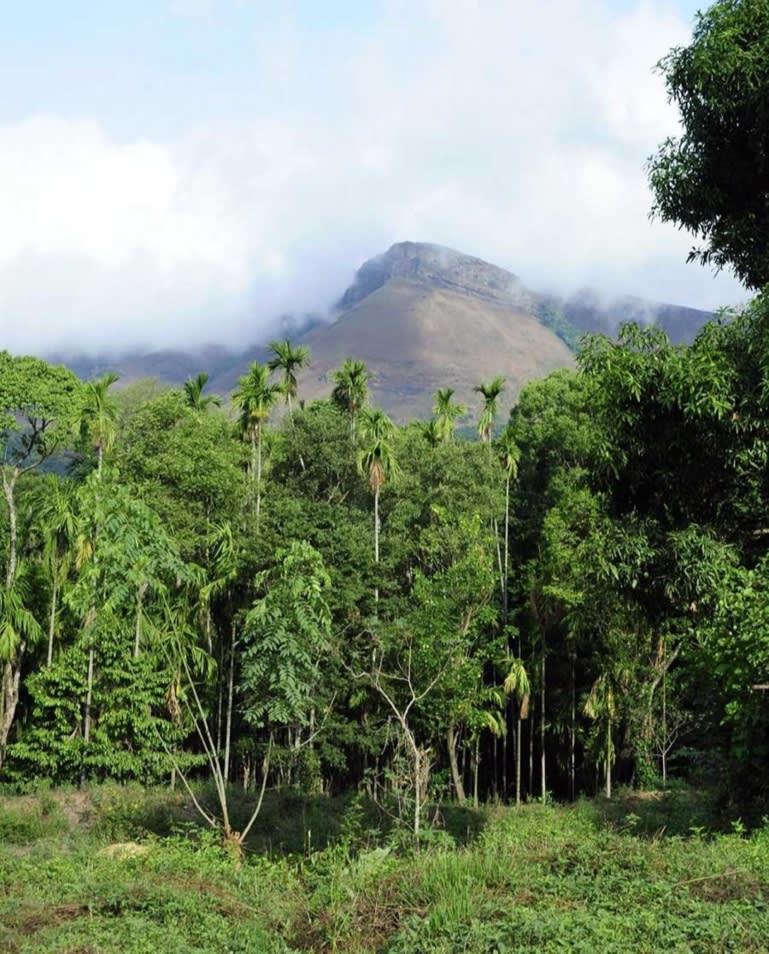
Nestled in the foothills of the Baba Budangiri mountain range, the Chikmagalur district is a densely forested region in which coffee plants flourish. Legend has it that Baba Budan, a revered Sufi ascetic, smuggled seven unroasted seeds of the coffee plant from Mocha in Yemen on his journey back to India in 1670. Until then, coffee cultivation was exclusive to the Middle East and the sale of seeds was strictly forbidden; only roasted or ground beans could be exported.

Baba Budan’s first coffee farm started a practice in India that thrives in estates like Nalima’s Kambihalli centuries later. Today, the state of Karnataka is the largest producer of coffee in the country, with Chikmagalur the second most productive district in India, growing an estimated 78,000 tons of coffee in 2018-19.

While most of India’s coffee estates are now owned by large corporations, a few still belong to families like the Kariappas, who are hoping to keep the tradition alive.
KambihalliEstate02aKF27mar2020

KambihalliEstate02bKF27mar2020

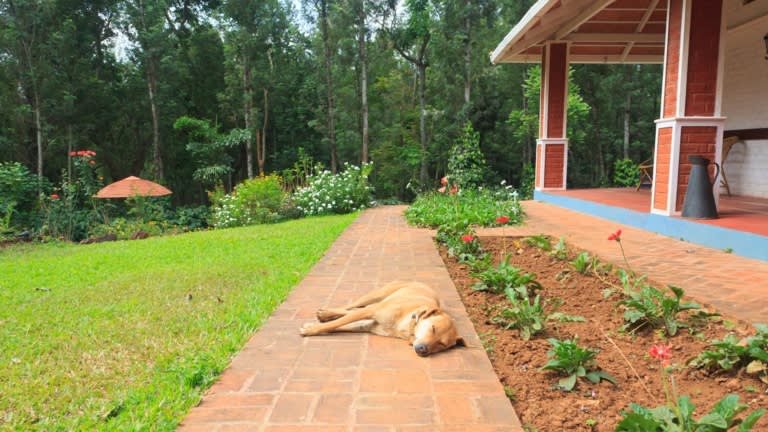
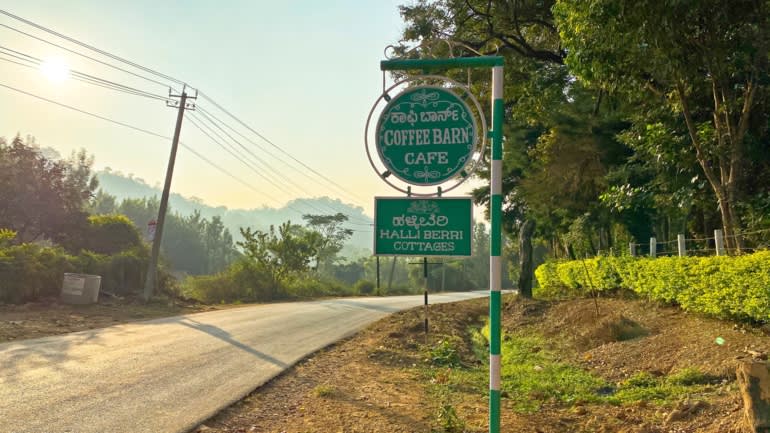
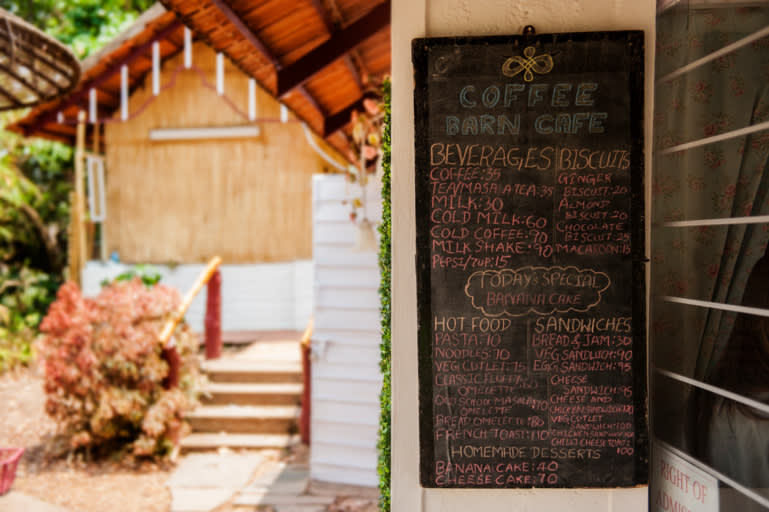
Top: Nestled in the foothills of the Baba Budangiri mountain range, the lush estate also grows Areca palms, cinnamon and cardamom plants. Middle: A sign for Coffee Barn Cafe, a casual spot along the main road run by the Kariappa women. Bottom: Lucky, one of the estate's two guard dogs, takes a mid-afternoon nap. (Top photo courtesy of Halli Berri; middle and bottom photos Christabel Lobo)
Top: Nestled in the foothills of the Baba Budangiri mountain range, the lush estate also grows Areca palms, cinnamon and cardamom plants. Middle: A sign for Coffee Barn Cafe, a casual spot along the main road run by the Kariappa women. Bottom: Lucky, one of the estate’s two guard dogs, takes a mid-afternoon nap. (Top photo courtesy of Halli Berri; middle and bottom photos Christabel Lobo)

In 1948, after cashing out of his inheritance, the grandfather of CP Kariappa, Nalima’s husband, moved from his hill station hometown of Kodagu, formerly known as Coorg, and headed north to Chikmagalur, where he purchased 40-50 acres of lush, fecund land to open the Kambihalli Estate.

Named after the iron-rich soil that the area is known for — kambi is iron in the local Kannada language, halli means village — the estate grew over the years to its current size of almost 180 acres.

As a result of her husband’s untimely death, Nalima and her three daughters — Maanavi, Anusha and Tejini — found their way along an uncharted path. In 2008, they opened the Coffee Barn Cafe, a casual spot along the main road for travelers. It was around the same time that they had their coffee beans certified by the Rainforest Alliance, an international nonprofit focused on ensuring that farmers meet adequate international standards of environmental, social and economic sustainability.
KambihalliEstate03aKF27mar2020

KambihalliEstate03bKF27mar2020

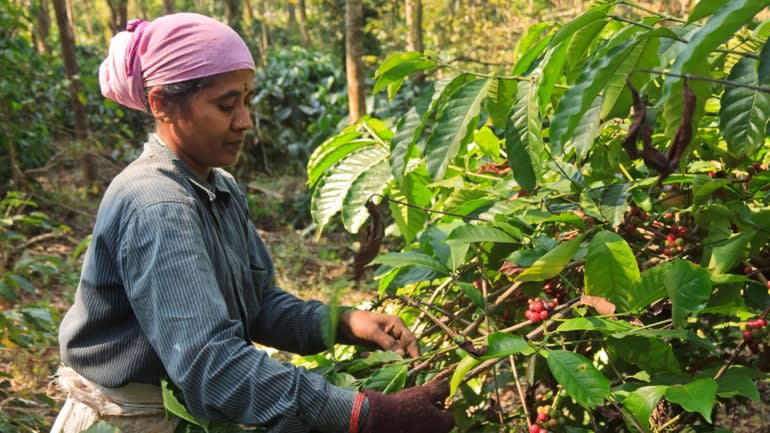
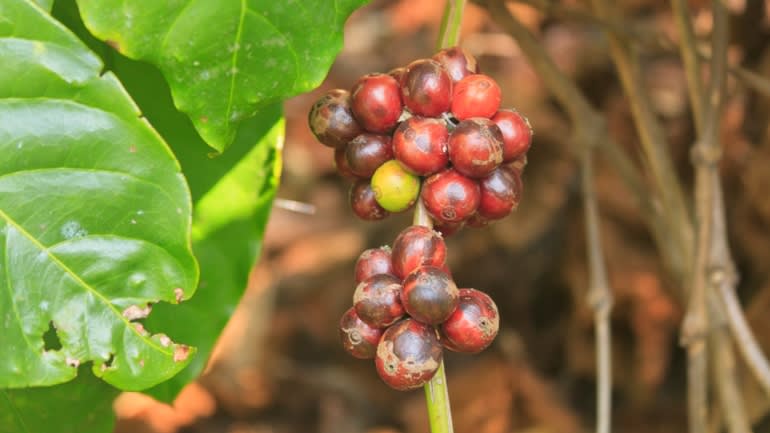
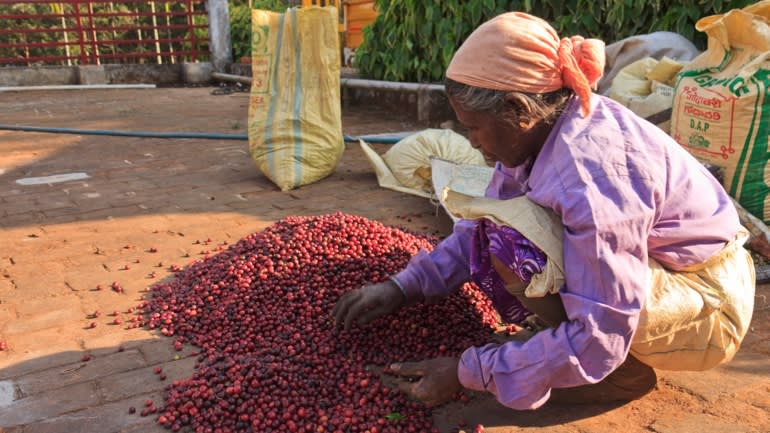
Top: A permanent worker deftly picks cherries. Kambihalli has a permanent workforce of approximately five people that work year-round. Middle: Ripened robusta cherries ready to be picked during harvest. Bottom: Fresh-brewed cups of coffee are not the only thing on Coffee Barn Cafe’s menu. Customer favorites include their homemade cheesecake and cookies. (Top and middle photos Christabel Lobo; bottom photo courtesy of Halli Berri)

In 1948, after cashing out of his inheritance, the grandfather of CP Kariappa, Nalima’s husband, moved from his hill station hometown of Kodagu, formerly known as Coorg, and headed north to Chikmagalur, where he purchased 40-50 acres of lush, fecund land to open the Kambihalli Estate.

Named after the iron-rich soil that the area is known for — kambi is iron in the local Kannada language, halli means village — the estate grew over the years to its current size of almost 180 acres.

As a result of her husband’s untimely death, Nalima and her three daughters — Maanavi, Anusha and Tejini — found their way along an uncharted path. In 2008, they opened the Coffee Barn Cafe, a casual spot along the main road for travelers. It was around the same time that they had their coffee beans certified by the Rainforest Alliance, an international nonprofit focused on ensuring that farmers meet adequate international standards of environmental, social and economic sustainability.
KambihalliEstate04aKF27mar2020

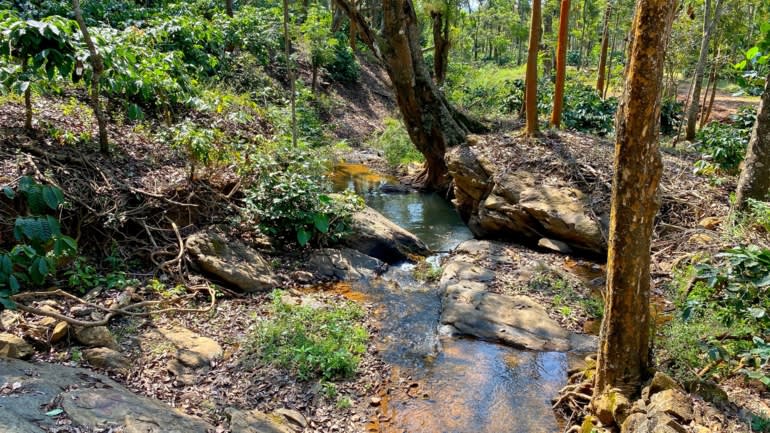
Top: The 200-acre estate offers well-marked trails, many that run along the river, for visitors to explore. Bottom: Manual sorting for underripe or overripe cherries is always carried out before the day’s harvest can be weighed and processed. (Christabel Lobo)

India is one of several countries where coffee plants grow under the shade of a verdant rainforest canopy. These trees not only prevent soil erosion but provide an additional source of income for coffee farmers — intercropping with pepper vines, areca palms, cardamom, cinnamon and orange trees is common practice.

The canopy promotes a thriving and diverse ecosystem for wild animals and birds to inhabit. Sambar deer, leopards, peacocks, wild boar, giant flying squirrels and 32 species of migratory birds call the Kambihalli Estate home.

During harvest season, typically December to March, the estate is abuzz with activity from dawn till dusk. Contract workers begin hand-picking ripened berries, commonly known as coffee cherries, averaging approximately 1,000 kg per day. This cumbersome process begins after green, unripe cherries from arabica coffee plants have turned a bright or dark red color, signaling peak ripeness.
KambihalliEstate05aKF27mar2020

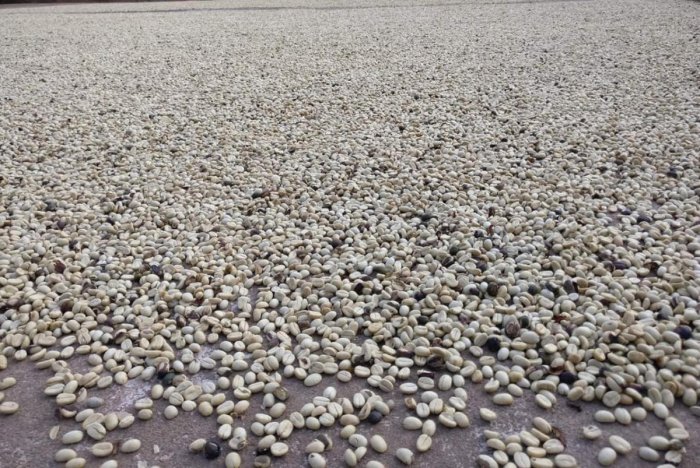
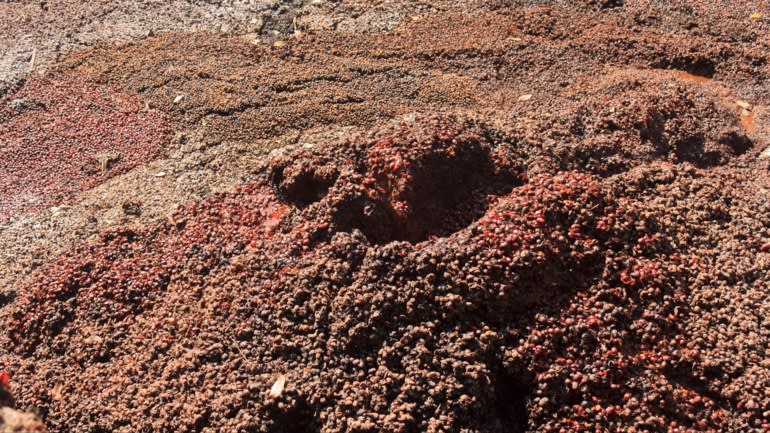
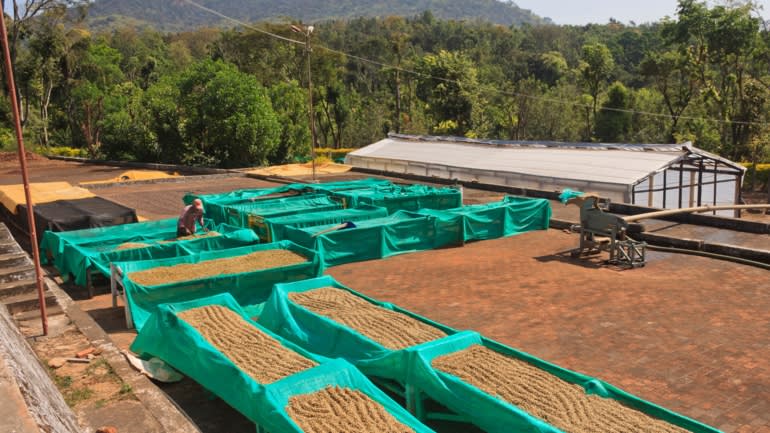
Top: The skin and pulp collected during processing ends up in a huge pile that is eventually converted into manure used to fertilize the soil for next year’s harvest. Bottom: Separated coffee beans are left to dry out in the sun for several days before they can be de-hulled and sent off-site to be roasted and packaged. (Christabel Lobo)

Once picked, the ripe cherries are immediately processed to ensure quality and freshness. Unripe or overripe ones are separated by hand before the day’s harvest can be weighed. Kambihalli makes use of the wet-process method, separating the beans from the skin. This results in a cleaner coffee that is fruitier in flavor, and overall is a less labor- and resource-intensive process.

The skin and pulp collected during the process are eventually converted into manure and used to fertilize the soil for another year of growth. The separated coffee beans, now referred to as washed, are then left to dry in the sun for several days. Finally, they go through hulling, where the dried husks are removed before being sent off-site, where they are graded, roasted, powdered and packaged.

Kambihalli sells its robusta beans in the wholesale market, while its arabica beans are marketed as Halli Berri, which plays on the term “coffee berry.” (It is not meant to have any connection with the actor Halle Berry.) Served throughout the estate and sold at their on-site cafe, a freshly brewed cup of Halli Berri’s single origin ground coffee has a slightly acidic flavor profile with notes of cinnamon, citrus and nuts — all thanks to the iron-rich soil and intercropped plants.
KambihalliEstate06aKF27mar2020

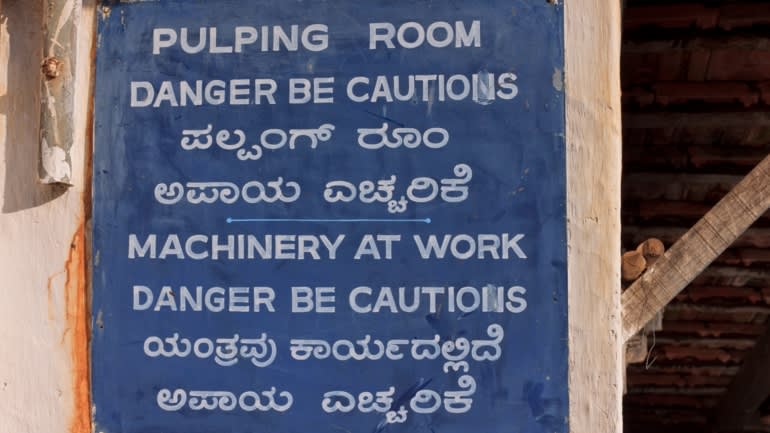
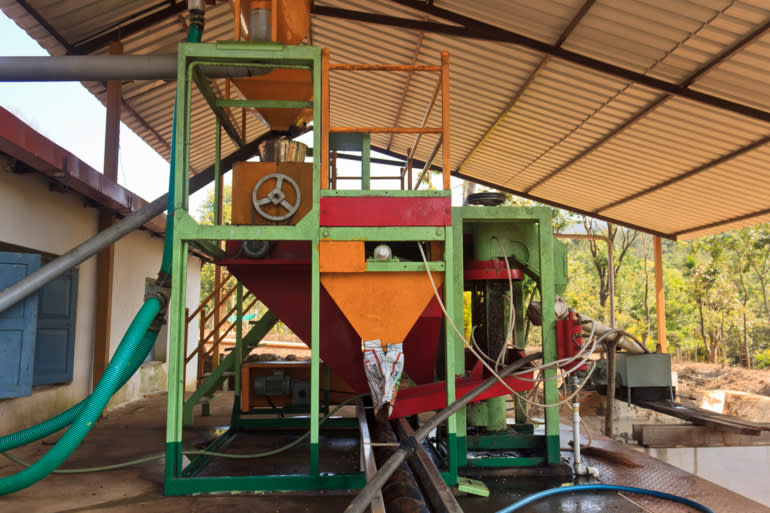
Top: Kambihalli uses a wet-process method to separate the beans from the skin. The day’s harvest, after being weighed, passes through the pulping room where the bean is separated from the skin and pulp. Bottom: The machine used to separate the coffee bean from its skin and pulp. (Christabel Lobo)

It has not been easy, of course. Infestation by white stem borers, pests notorious for attacking the stems of arabica plants, early on in Nalima’s tenure led to a drastic decrease in annual coffee production, which she says is just now starting to recover.

“From 10 loads — each load is 10 tons — we’ve gone down very drastically to producing just three loads,” she says, attributing it to her lack of experience in coffee farming. “We lost a lot of acreage to the infestation. As a result, we had to cut everything down and start planting robusta instead.”

Today, Kambihalli grows an equal amount of robusta and arabica coffee plants; arabica ripens faster and tastes better but robusta is more resilient to insect attacks. According to the Rainforest Alliance, diversification is the key to helping farmers protect themselves from market volatility and the increasing effects of climate change.

KambihalliEstate07aKF27mar2020

KambihalliEstate07bKF27mar2020

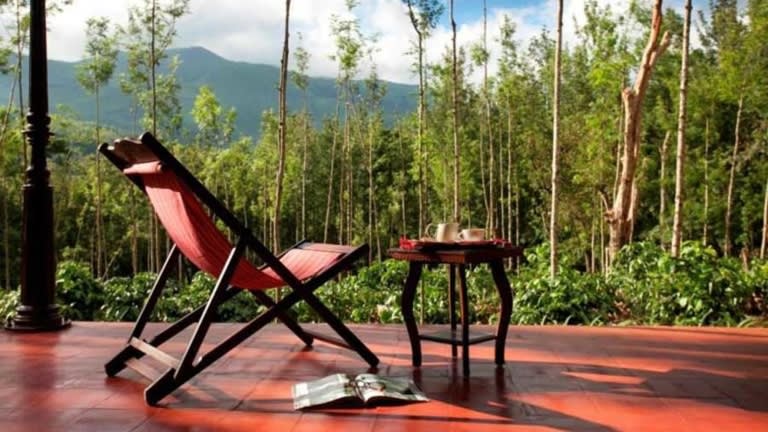
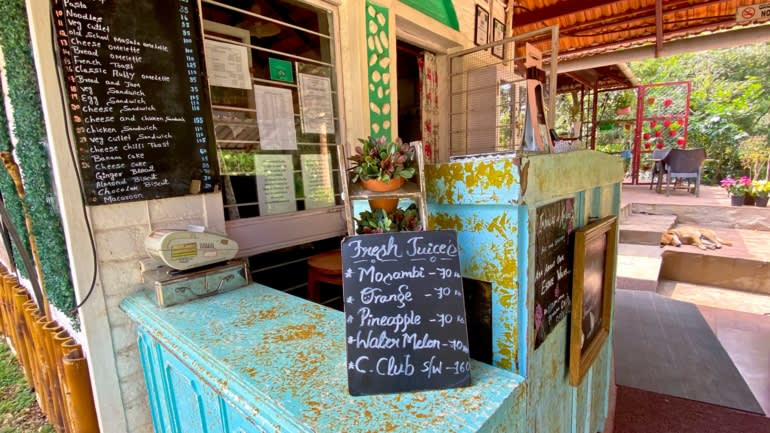
Top: Fruit from the local farmers market is used to make the selection of seasonal fresh juices on offer at Coffee Barn Cafe. Middle: The colonial-style cottages at Halli Berri are bright, TV-free spaces with distinct handmade Athangudi-tiled floors. Bottom: A cozy private veranda overlooks the verdant rainforest canopy with the Baba Budangiri mountain range in view in the distance. (Top photo Christabel Lobo; middle and bottom photos courtesy of Halli Berri)

Charan Kumar of the Indian Coffee Board says that while most of the coffee made in the Chikmagalur region is exported, the board is pleased Kambihalli chooses to sell its arabica within the country. However, “As India currently stands fifth in terms of worldwide coffee production, many [producers] still choose to sell directly to the wholesale market for a guaranteed source of income.”

Halli Berri is also the name of the luxe homestay which the Kariappa women run on-site. “Whenever relatives came, or guests came, we would put them up there, and they would love it,” says Nalima of the colonial-style cottages with rustic details and antique furnishings initially built for her daughter Anusha. “People started asking to book rooms, and I said, ‘Why don’t we just start doing that?'”

In 2010 they converted part of the property into a getaway for up to 18 guests, which is not just TV- and WiFi-free but emphasizes sustainability: Solar lights are used on the garden pathways at night, while the bathrooms utilize recycled water and are stocked with homemade soaps, shampoos and shower gels.

A series of trails through the expansive property offers visitors a chance to be mindful — the only guaranteed sounds are of the birds playfully chirping, frogs croaking, brooks babbling and the wind rushing through the treetops.

“I never even thought that we would make it this far,” Nalima says with a sigh as she reflects on Kambihalli’s success. “I’ll admit I was a little bit weary. But thanks to the support of our family and through word-of-mouth, we’ve made it work.”

As harvest season comes to a close, Nalima’s plans for the year include a focus on bean specialty and taste. “If we put a little more effort into the use of organic fertilizers, we found that we’re getting a better taste that our customers thoroughly appreciate. So even if I am a little brand, my coffee can be far superior, which I think is the way forward for us.”

source: http://www.asia.nikkei.com / Nikkon Asia Review / Home> Life / by Christobal Lobo, Contributing Writer / March 25th, 2020
Crops Grown In 86,000 Hectares Washed Away In Kodagu Floods

FloodsKF19mar2020

Madikeri:

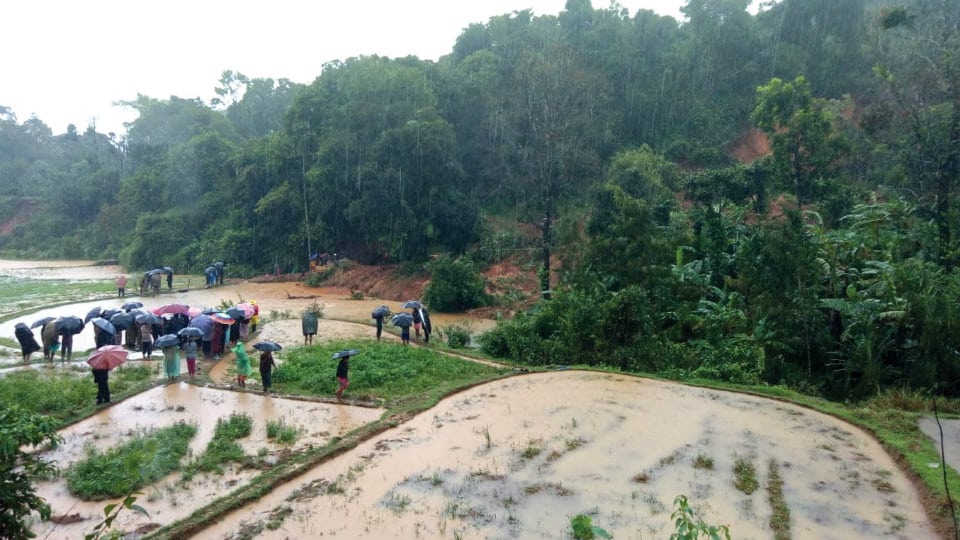
The Kodagu district which was devastated by last year’s floods, lost crops grown in over 86,000 hectares due to the floods.

Replying to a question by Madikeri MLA Appachhu Ranjan in the Legislative assembly recently, Agriculture Minister B.C. Patil said that agriculture crops grown in 2,460 hectares, horticulture crops grown in 10,331 hectares and coffee grown in 73,774 hectares across Kodagu district were washed away in last year’s floods, that caused havoc in the entire district.

Maintaining that crop loss compensation has been directly credited to the bank accounts of the affected farmers through a software specially developed for the purpose, Patil said that compensation has been paid in accordance with the guidelines for crop relief.

Pointing out that farmers have been paid Rs.10,000 per hectare in addition to the input subsidy, over and above the guidance value notified by the Union Government under SDRF/NDRF guidelines, Patil said that the additional cost has been borne by the State.

Pointing out that farmers have been paid input subsidy of Rs.16,800 for rain-fed crops and Rs. 23,500 for irrigated crops, Patil said the total amount paid to farmers as input subsidy stands at Rs.10,093.38 lakh and a total of 38,900 farmers in Kodagu have been benefited.

Replying to another question, the Minister clarified that the Agriculture Department itself was not directly purchasing agricultural equipment from dealers and agencies, but was only providing subsidy to the equipment purchased by farmers as a measure to encourage farm mechanisation.

source: http://www.starofmysore.com / Star of Mysore / Home> News / March 18th, 2020

Two Day Kisan Mela Conducted at KVK, Gonikoppal, Kodagu ( Athur Farm )

KisanMelaKF18mar2020

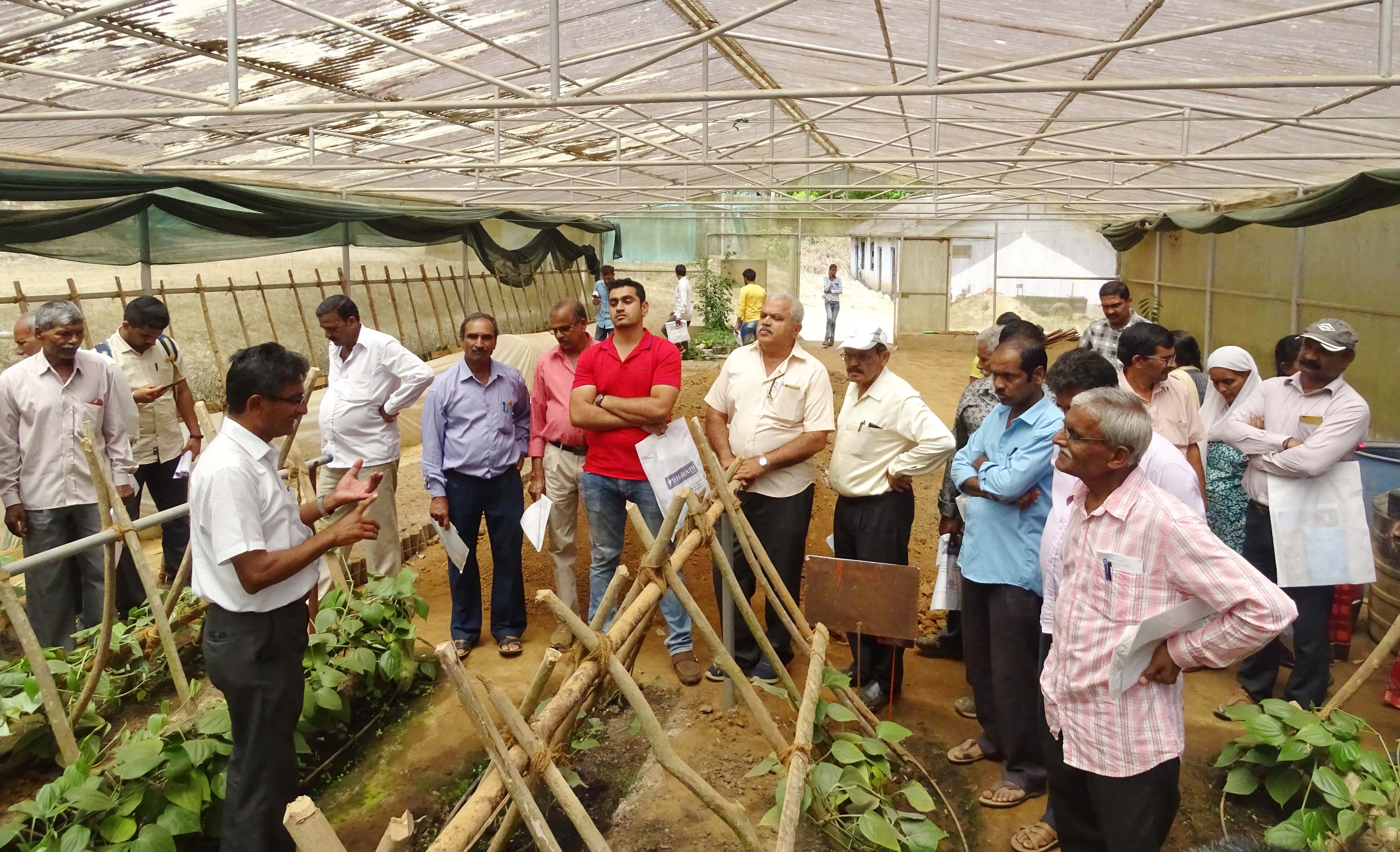
A two day district kisan mela and Krishi Abhiyana programme was held at Athur farm of KVK Gonikoppal from 11th to 12 March, 2020. An array of farmers friendly technologies were on display in the Krishi Mela organized in collaboration with the Agricultural Technology Management Agency (ATMA). Dr. Shankara Hebbar, Principal Scientist, IIHR Bangalore gave a brief introduction about vegetable cultivation and polyhouses. Later Joint Director of Agriculture, Kodagu Dr. K Raju said that the programme was to create awareness among district farmers about latest agricultural technologies and schemes. Dr. Saju George, Head, KVK spoke on the different demonstrations units in the KVK Demonstration farm.

The programme was inaugurated by Shri. B A Harish, President, Zilla Panchayath, Kodagu.The Chief Guest Smt. Sarojamma, Zilla Panchayath Member , inaugurated the Exhibition stalls. Dr. C. G. Kushalappa, Dean, College of Forestry, Ponnampet also addressed the inaugural session. Dr. M R Dinesh, Director, IIHR, Bangalore, in his presidential address highlighted different farmer friendly technologies of horticultural crops, machineries, bio-fertilizers, bio-pesticides, micro nutrient formulation, incubation facilities for entrepreneurship available through ICAR-IIHR, which can be extended to the Kodagu district farmers through the KVK Gonikoppal. He said that there is lot of potential in the district for the adoption of horticultural technologies and thereby increasing increasing farmers income.

During the inaugural session , Shri M.M Aiyyappa, a farmer from Virapet was felicitated for brining the AMC technology to Kodagu through KVK. Shri Kishor Nachappa the farm journalist was felicitated for his role in promoting farm technologies through farm journalism. Smt Suja, was felicitated for her success in mushroom cultivation after undergoing training at KVK through ASCI sponsored skill development training programme. The Agriculture department felicitated the Kodagu district farmers for their achievements.

In the technical session, Dr. Shivaprasad, Deputy Director, gave a talk on the importance of soil testing and INM practices in coffee. Mr. Devaiah, K. A. Subject Matter Specialist spoke on the trellies method of black pepper multiplication. Sri. Thimmiah, S. C. Krishi Pandit, spoke on his experiences of mechanization in paddy for better realization of yield.In the second day technical session, Dr. S. J. Ankegowda, Principal Scientist & Head, Regional Station, IISR, Appangala gave a talk on holistic management of black pepper in the coffee based farming system. Dr. A. S. Shanthesh, Chief Veterinary Officer, Department of Animal Sciences and Veterinary Sciences, Virajpet taluk spoke on the importance of livestock for milk, meat and manure in the mixed farming system. Dr. S.C. Suresh, Subject Matter Specialist (Livestock) spoke on scientific piggery farming. Smt. Veena Sudheer, awardee farmer shared her experience of integrated farming system. Mr. K P Subbaiah, President, Puthari Farmers Producers Organization spoke on recent developments in marketing of coffee and initiatives of Puthari FPO.

In the Valedictory session, Mr. Srinivas, P. V., DDM, NABARD, Kodagu spoke on the different NABARD schemes for farmers, rural institutions. Mr. Vijay Angadi, Programme Officer, All India Radio, Madikeri spoke on the relevancy of this type programme and he opined that in coming programmes a separate session can be conducted on organic farming. Farmers were also taken to different demonstration plots in KVK Viz. vegetable demonstration plot where different varieties (Chilli- Arka Meghana & Kyathi, Brinjal -Arka Keshav, Pole bean- Arka Sukomal, yard long bean- Arka Mangala, cowpea- Arka Suman, Dolichos- Arka Adarsh were raised in one acre with raised bed, polyethene mulch with fertigation, different livestock units –piggery, Goatary, Diary, Poultry, Fodder crops, Propagation unit of Black pepper, arecanut, coffee, Solar irrigation unit, farm machineries unit etc. during the occasion.

More than 20 exhibition stalls were arranged for the benefit of the farmers on the occasion involving the government, private and FPOs. More than 750 farmers witnessed the event in two days and interacted with the scientists, specialists and officials. Overall the participating farmers appreciated the efforts and felt that such melas give the farmers the technological guidance for increasing the farmers income in a sustainable manner.

source: http://www.iihr.res.in / ICAR – Indian Institute of Horticultural Research / Home / March 2020

Arabica parchment coffee hits record price of Rs 10k per bag

Coffee beans spread for drying. DH Photo

Coffee growers are happy as the market rate of Arabica parchment has reached a record rate of Rs 10,000 for a bag of 50kg. The rate has been the highest in the last eight years.

As on Wednesday, a 50kg bag of Arabica Parchment coffee was sold between Rs 10,400 to Rs 10,500, which according to the vendors, is the highest rate for Arabica parchment.

The cost of Robusta Parchment has increased to Rs 7,000 per bag. The last time when Arabica coffee reached the highest rate was in 2014. It was Rs 9,600 to Rs 9,800 per bag then. Later, the price moved downward and had touched Rs 6,000.

Arabica cherry costs Rs 4,000 per bag while the rate of Robusta cherry is Rs 3,200 to Rs 3,400 per bag.

Growers in Kodagu, Chikkamagaluru and Hassan have expressed their happiness on the improved market rate of coffee, despite problems of shortage of labourers and feasibility issue in the maintenance of the plantation.

The vendors said that the rates of Arabica parchment might increase further. Expecting the same, the growers who have stored coffee in ABC and other curing centres have decided to sell coffee after it hits an all-time high.

The increase in the rate of coffee was due to a significant decrease in production in Brazil and Columbia. There was a plunge in the production of coffee in Chikkamagaluru, Kodagu and Hassan districts as well, owing to floods. This has created an increase in demand.

Even though the market rates have increased, the quantity of coffee production is significantly less compared to previous years. The growers who grew 50 bags of coffee in the past have ended up producing only 10 bags of coffee.

“The coffee plants have been damaged due to the water-logging of the plantation. It might take another four years to restore the coffee plantations to its original condition,” said coffee grower Nanaiah.

Coffee vendor Abdul said that around 60% of coffee growers have sold their coffee. Those who had stored coffee have reaped benefits.

source: http://www.deccanherald.com / Deccan Herald / Home> States> Mangaluru / by Adithya K A / Madikeri – March 04th, 2020

Visitors throng Raja Seat for flower fest on weekend

People dancing to the tune of the traditional ‘Kodava Valaga’, during the fruit and flower show at Raja Seat. DH Photo

Hundreds of visitors thronged the Raja Seat in Madikeri on Saturday and Sunday, for the fruit and flower show.

The four-day-long fruit and flower show organised by the district administration and the department of horticulture, began on Friday.

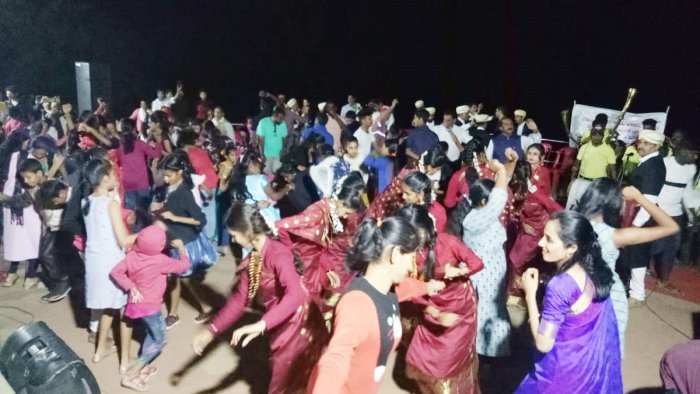
On Sunday, the localities and tourists who gathered in the venue, danced to the tunes of traditional ‘Kodava Valaga’ during the cultural programmes organised by Karnataka Kodava Sahitya Academy. ‘Arebhashe Kolata’ and ‘Sobhane Pada’ enthralled the audience.

Selfie zones set up at various parts of Raja Seat, were the centre of attraction among youth during the flower fest. Photo frames were designed with flowers for the purpose.

Open street

The police department restricted the movement of vehicles from M M Circle till Kundurumotte junction, from 6 pm to 10 pm on the evenings of the fruit and flower show. Raja Seat was made completely free from vehicular movements and the stalls featuring various snacks were opened on the road, reminding the ‘Open Street Festival’ organised during the Pravasi Utsav held in Kodagu last year. Traditional Kodava snacks were also sold in the stalls.

Students were provided with a chance to watch the fruit and flower show free of cost. A lot of students witnessed the show on Saturday and Sunday. Most of them were accompanied by their teachers.

The people also visited the stalls set by the departments of agriculture, horticulture, animal husbandry, fisheries and various other departments.

‘Mamateya Marukatte’

Various items such as children’s toys, unused clothes, stationery items, and electronic items in the working condition, were featured at ‘Mamateya Marukatte’ stall set up by Green City Forum and Madikeri City Municipal Council. The items were collected at Kaveri Kalakshetra.

The amount collected from the sale of these items were provided to the civic workers and stree shakti groups. Most of the items have been sold, said Satya, a member of Green City Forum.

source: http://www.deccanherald.com / Deccan Herald / Home> State> Mangaluru / by DHNS, Madikeri / February 10th, 2020

Floral paradise recreated at Raja Seat; enthrals crowds

The annual fruit and flower show which began at Raja Seat in Madikeri on Friday has been attracting tourists and nature lovers in large numbers.

The traditional 'Ainmane' house made out of flowers, is the main attraction in the fruit and flower show in Raja Seat, Madikeri.
The traditional ‘Ainmane’ house made out of flowers, is the main attraction in the fruit and flower show in Raja Seat, Madikeri.

Artifacts featuring Virat Kohli, Wing Commander Abhinandan, Kuvempu, Atal Bihari Vajpayee, Narendra Modi, B S Yediyurappa, A P J Abdul Kalam, Mahatma Gandhi, Siddaganga seer, Dr B R Ambedkar, Field Marshal K M Cariappa, General Thimmaiah and Pejavara seer— all carved out of watermelons, mesmerise visitors, at the entrance of Raja Seat.

6,000 flower pots

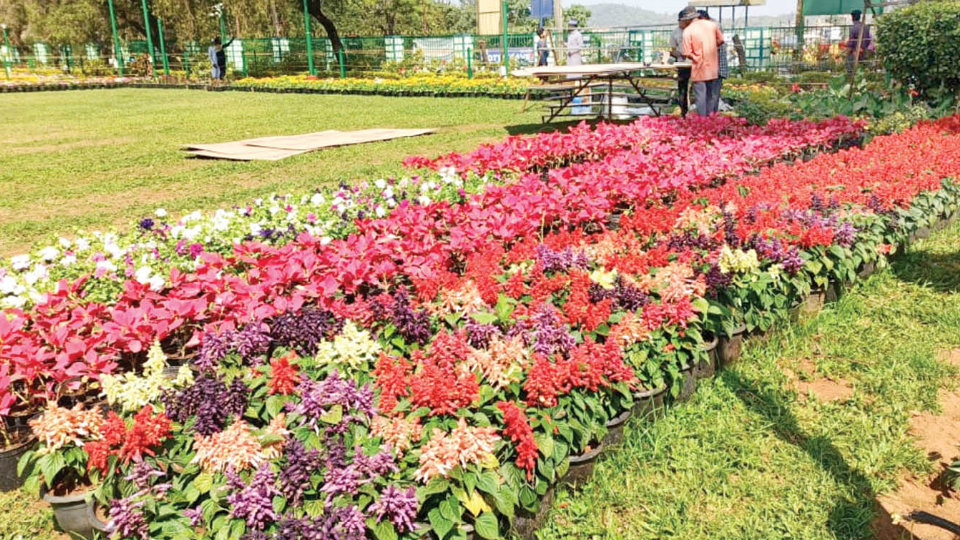
A total of 6,000 flower pots have been arranged in the park. Flowers exhibiting a wide spectrum of colours and species, arranged in artistic patterns, have been providing a visual treat.

Raja Seat, which had lost its sheen owing to lack of flower-bearing plants, is now wearing a refreshed look.

The main attraction, however, is the traditional ‘Ainmane’ (house), designed with lakhs of flowers. A lot of visitors were seen taking selfies in front of the Ainmane.

Rocket

The heart made out of roses, rocket launching station of ISRO, coffee pot and the cup, Mickey Mouse, Swami Vivekananda and other artefacts made out of flowers are making the people spellbound.

Cultural programmes will be held in the evenings, as a part of the fruit and the flower show. Food festival is being held in Gandhi Maidan. People have been relishing their taste buds with sugarcane juice from Mandya and other delicacies. Stalls have been put up by the Horticulture Department and private nurseries, featuring the sale of various flower-bearing plants.

MLA’s praise

Speaking after inaugurating the fruit and flower show, Madikeri MLA Appachu Ranjan called upon the people to come to Raja Seat in large numbers to see the show.

The show is being organised by the Department of Horticulture at a cost of Rs 20 lakh. Cultural programmes are being organised by the Department of Kannada and Culture and Karnataka Kodava Sahitya Academy, he said.

Deputy Commissioner Annies Kanmani Joy said it has been a tradition to organise fruit and flower show in the month of January or February every year. The show will be on till Monday.MLC Veena Acchaiah, MLC Sunil Subramani, Kodagu Zilla Panchayat President B A Harish, Vice President Lokeshwari Gopal, Hopcoms President Biddatanda Ramesh Changappa and Horticulture department Deputy Director Chandrashekhar were present.

source: http://www.deccanherald.com / Deccan Herald / Home> State> Mangaluru / by DHNS, Madikeri / February 07th, 2020

Flower show to be ‘plastic-free’

Kodagu Deputy Commissioner Annies Kanmani Joy inspect

The event at Raja Seat in Madikeri will be held from February 7 to 10

This year’s flower show in the sprawling garden of Raja Seat in Madikeri from February 7 to 10 will be plastic-free. The organisers have banned visitors from carrying plastic inside the show, which is expected to attract a lot of locals and tourists.

The organisers have urged the visitors not to carry plastic carry bags and bottles.

Kodagu Deputy Commissioner Annies Kanmani Joy on Wednesday inspected the arrangements for the show and later held a meeting with officials of the Departments of Horticulture and Tourism.

The Departments of Kannada and Culture, Kodava Sahitya Academy and other academies and cultural institutions will be presenting cultural shows on each day.

While the show is free for schoolchildren if they come wearing their uniform or with a letter issued by the heads of their schools, the entry fee for others would be ₹10, said Deputy Director of Horticulture Chandrashekar.

He requested the Police department to make arrangements for the parking of visitors’ vehicles and barricades at the venue.

Police Inspector K.B. Belliappa said temporary parking can be arranged at the old private bus-stand in view of the show from 5 p.m. to 9 p.m. and private buses can operate from the APMC premises until the flower show gets over.

Ms Joy told the officials to ensure convenience to the public and communicate information well in advance in case of changes in the arrangements.

Tourism officials urged the Deputy Commissioner to allow food stalls at the venue for the convenience of visitors.

The appeal was considered and those willing to set up food stalls will be getting space at the venue for free, a release said. Interested persons can call Tourism Department Assistant Director on 94480 04466 or 08272-228580 for information on establishing stalls and other details.

source: http://www.thehindu.com / The Hindu / Home> News> States> Karnataka / by Special Correspondent / Mysuru – February 05th, 2020

Flower Show At Raja’s Seat From Feb. 7

Kodava lifestyle, traditions to bloom

FlowershowKF31jan2020

Madikeri:

The Kodagu District Administration and the Department of Horticulture will conduct a Flower Show at Raja’s Seat in Madikeri from Feb. 7 to 10 in order to attract tourists, an official statement said. A special feature of the Flower Show will be the depiction of the lifestyle and traditions of Kodavas through floral replicas of “Kodagu Ainmane” or ancestral home.

According to the statement, this is to promote and create awareness of the lifestyle, culture and traditions of Kodavas to the present generation. Nearly 25 species of flowers and about 10,000 plants will be part of the show with floral decorations depicting the cultural facets of Kodagu.

Horticulture Department officials said the topiaries (practice of training perennial plants by clipping the foliage and twigs of trees, shrubs to develop and maintain clearly defined shapes, whether geometric or fanciful) will be brought for the festival.

In a bid to attract the children, floral statues depicting well-known personalities, will be created and serve as a selfie point for the visitors.

There will be cultural programmes in the evening on all the days of the Flower Show besides floral rangoli competition for women. Stalls will be put up for sale of handicraft items, the statement added.

As part of the Flower Show, thousands of flower pots are being arranged at Raja’s Seat. Flower pots and a large variety of flowers including African marigold, Celosia, Lady Lace, Gladiolus, Gerbera, Anthurium, Bird of Paradise, Carnations, Lilium, Tuberose, Orchids, Stasis, Chrysanthemum, and Limonium will attract visitors. Exclusive selfie spots will be created for tourists to click selfies and share on social media. Works are underway at Raja’s Seat.

source: http://www.starofmysore.com / Star of Mysore / Home> News / January 31st, 2020

IBM brings weather forecasting model for governments, industries, farmers

IBM has launched a global high-resolution atmospheric forecasting system, IBM GRAF, saying more accurate weather forecasting can help governments and companies greatly improve their operations. IBM said GRAF can help bridge the gap between Indian …

New Delhi :

As many as 94% of top Indian business leaders believe climate change and adverse weather conditions have had a negative impact on business operations while around 72% believe they disrupt local economy, a study by IBM and The Weather Company shows.

The report released on Thursday also said a significant number of Indian citizens said they were not confident about the local weather forecasts.

IBM has launched a global high-resolution atmospheric forecasting system, IBM GRAF, saying more accurate weather forecasting can help governments and companies greatly improve their operations.

“We work with 168 different governments today around the world, and we are in touch with Indian government as well,” said Cameron Clayton, general manager at IBM Watson Media and Weather. “We want to work on providing accurate forecasts as it has a massive impact on the GDP.”

IBM said GRAF can help bridge the gap between Indian forecasting system and global models.

The 15-day weather forecasts released in India start from 80% accuracy and by the end of the 13th day the accuracy percentage falls to 50%, Cameron said. IBM GRAF claims to keep the accuracy levels consistent throughout the 15-day.

“In the tests we ran, our model is around 30% more accurate (than Indian system) and we have so far designed to issue 12 million pieces of forecast information through IBM GRAF, which will improve the forecast quality massively in India,” Cameron said. “While we have collaborated with various governments across the country, we believe that the only way to get there is through public-private partnership.”

IBM is keen to present its forecasting models to India through a publicprivate partnership agreement.

IBM said its weather forecasting models have helped farmers in Kenya receive crop insurance in less than three days.

The company has received some interests from private insurers in India, too.

“Insurance companies are slowly consuming our data, mostly historic and advisory, to make better decisions,” said Himanshu Goyal, India sales and alliances lead at IBM. Two insurance companies in the country are using its models, he said without naming them.

Several businesses in sectors ranging from aviation to agriculture, have welcomed IBM GRAF.

Tata Coffee is leveraging IBM weather prediction products to receive accurate forecasts, soil moisture and soil temperature information for better results.

“In the aviation industry, our models have helped bring down turbulence by 50%, and the same capability is being brought to India,” Cameron said.

source: http://www.economictimes.indiatimes.com / The Econonmic Times / Home> Business News> News> Economic News> Agriculture / by Bhavya Dilipkumar, ET Bureau / December 13th, 2019

A Father Figure Of Forest’s Flora And Fauna

KodavaForesterKF22dec2019

Title : An Autobiography of a Kodava Forester
Author : Dr. Kodira Achappa Kushalapa, IFS (Retd.)
Pages : 228
Price : Rs. 200
Year : 2019
Publisher : Dr. K.A. Kushalapa, Mysuru.

In the film of 90 minutes duration, titled “Beautiful people: Some call them animals,” a comic allegory produced in 1974, focussing on various animals that live in arid desert environment of Africa by Jamie Uys, humorously draws parallels between animal and human behaviour. Dr. K.A. Kushalapa can vouch for the message in the film that the denizens of the forest are indeed beautiful people in a wide sense of the term, having shouldered the arduous duties of conserving India’s forests, steadily shrinking as a percentage of the total geographical area of the country. His empathy for the denizens and concern for enduring the flora have not witnessed even an iota of diminishing to this day despite retiring from an illustrious service for long years as a professional forester. Circle for Mysuru’s intelligentsia and senior citizens who have known him can testify to the vast knowledge of the author about A to Z of forest and its importance of vital role in sustaining the balance between human beings and other species on earth.

The narrative divided into 16 chapters, each with a caption indicative of specific aspects of the author’s early life and landmark events relating to his professional career culminating in his elevation to the highest post in the Department of Forest in the State Government.

Writing about Dr. Kushal-apa, in his foreword, Man-depanda K. Appayya, former Principal Chief Conservator of Forests, Government of Karnataka, has expressed his admiration of the author’s noble qualities of head and heart, that earned him respect, recognition and rewards by his achievements both academic and professional.

The events of the author’s childhood and in later stages presented in all humility and graphic details trigger in the minds of readers what a person can achieve by being stoic and steadfast along with the support of family members, as revealed by the author himself in his preface. The trials and tribulations that he has encountered at different periods of life but overcome with courage and hope sound poignant. His life’s saga belies the myth of Kodavas as a community of only planters and warriors, by emerging as a star among them in the world of academics also. The 128 published papers listed in the book’s Chapter 14, 10 abstracts of technical papers and 10 titles of social articles listed in Chapter 15 give the readers an insight into Dr. Kushalapa’s deep interest in enlightening the lay people dispelling their utter lack of knowledge about forests.

Dr. Kushalapa has thought-fully included 69 photographs, many in colour, with images of his family members as well as people who were his colleagues, showing him as an impeccable handsome person. If his dream of generating in Kodava youth the desire to spread out into various areas of challenge by pursuing professions outside the ambit of restricted areas for which Kodavas are known, is fulfilled, the author’s autobiography gets full worth of the work of writing and publishing. The proceeds of the sale of the publication is meant to be utilised for philanthropic cause. —BRS

source: http://www.starofmysore.com / Star of Mysore / Home> Feature Articles / December 22nd, 2019