Category Archives: Agriculture

Experts say forest officials must develop safety instincts

A day after a Bandipur ranger was attacked by a tiger, wildlife experts have asked foresters working in tiger reserves and national parks to exercise caution.

TigerKF05jul2019

Hubballi :

A day after a Bandipur ranger was attacked by a tiger, wildlife experts have asked foresters working in tiger reserves and national parks to exercise caution. They suggest that field-level officers develop the instinct to sense danger when in the wild, so that animal-human conflicts can be checked.

Four cases of animals attacking forest officials have been reported from various reserves of Karnataka in the last one year, and two people have died in different incidents. While IFS officer Manikantan heading Nagarhole Tiger Reserve was trampled to death by an elephant, a temporary forest watcher from Cauvery Wildlife Sanctuary met with the same fate.

After a tiger attacked Range Forest Officer Raghavendra in Bandipur, experts are asking why the officer ventured into the tiger area, that too unarmed. “The officer should have been aware of surprises the wild can throw up. Before being deputed at Bandipur, Raghavendra had worked in BRT Tiger Reserve. It was wrong of him to venture out to check the presence of a tiger without precautions. Field officers must be made aware of negative aspects of forest protection and use this knowledge to avoid dangerous situations,” a wildlife expert told TNIE.

K M Chinnappa, a senior wildlife conservationist, revealed that from his observation, most wild attacks occur when animals are chased. “The unfortunate death of a forester near river Cauvery happened when a team was driving away elephants. When foresters are transferred to different forests, they must be trained to cope with the different conditions they are likely to encounter, for some could be very dangerous,” he said.

“We have been asking the government to appoint local guards, who would know the terrain and dangers involved,” he added.

A retired forester admitted that there is no specific training given to field officers to deal with surprise wild attacks. “Sloth bears and elephants (tuskers) are most unpredictable in the wild. It is important that a forest team is made aware of possible dangers to expect, and be in a position to take precautionary measures,” he said.

source: http://www.newindianexpress.com / The New Indian Express / Home> Cities> Bengaluru / by Amit S. Upadhaye / Express News Service / July 03rd, 2019
Coffee Board takes tech route to help growers boost yield

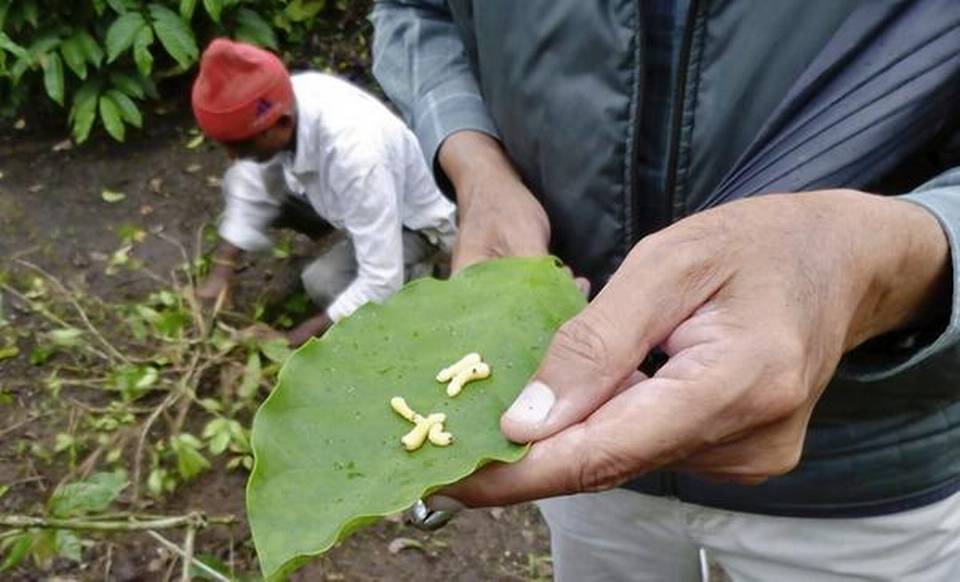
App-solutely smart: In the case of white stem borer, growers and the Board have validated 90% accuracy.   | Photo Credit: Reuters
App-solutely smart: In the case of white stem borer, growers and the Board have validated 90% accuracy. | Photo Credit: Reuters

Apps fed with data help forecast weather, predict leaf rust

For the 3.5 lakh coffee growers in India, 98% of whom are small-scale, challenges affecting production include labour shortage, climate change and pest attacks.

One way to manage these is by adopting technology, which the Coffee Board is trying to bring about for the growers.

Last year, Eka Software Solutions took up a pilot project for the Coffee Board of India on machine-learning based applications. According to Shuchi Nijhawan, vice president – agri business for Eka Software, the Board and the company took up three areas to try machine learning based apps. One was addressing the white stem borer problem, another was weather forecasting, and the third, predicting leaf rust.

Machine-learning

“Based on the data, photos provided, we created a machine learning algorithm to forecast each of these issues (for a grower). We worked with 20 liaison officers of the Board and they coordinated with the growers.

“The success of the app depends on the data fed in. In the case of white stem borer, the growers and the Board have validated 90% accuracy,” she says. Eka’s digital platform for agriculture aggregates data from different sources and applies the algorithm to provide insight to the coffee growers.

Srivatsa Krishna, chairman of the Coffee Board, adds that though there is no exact data, it is learnt that in the last 10 to 15 years white stem borer would have brought down Arabica production by 25-30%. “The growers do need solutions for such issues.”

“Despite the Coffee Act having been around for more than seven decades, farmers have zero technology. The only way to increase productivity is by bringing in technology,” he says. Even before smartphones became popular, coffee growers had checked prices on the London and New York exchanges almost on a daily basis.

Hence, adopting technology should not be difficult for them. The Board has plans to scale up the analytics technology for adoption by more farmers.

Currently, 90% of the estates depend on labourers for most of the work and there is not much technology adoption among coffee growers in cultivation or to increase production.

“If someone is ready to do it [technology] for us, we will adopt it. It will help increase yield,” says Sundar Subramanium, executive director of Mother Mirra Coffee Plantations. Ms. Nijhawan says the company is exploring partnerships for other crops too. “Indian farmers want such technology services. There are several agriculture institutes and cooperatives in the country that have a lot of data. I see a huge potential for these technologies.”

source: http://www.thehindu.com / The Hindu / Home> Business> Industry> Green Shoots / by M Soundariya Preetha / June 02nd, 2019

Hundreds submit pleas at Parihara Adalat

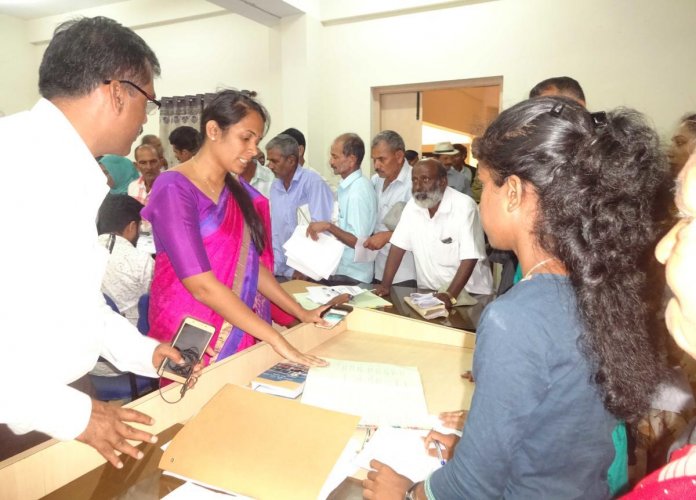
Kodagu Deputy Commissioner Annies Kanmani Joy checks the applications received during the Parihara Adalat in Madikeri on Monday.

Hundreds of people affected by the natural calamity in Kodagu last year took part in the Parihara Adalat and submitted their pleas to the district administration on Monday.

The Parihara Adalat was organised by the district administration to respond to the grievances of natural calamity victims.

The adalat will be held for three days on the second floor of the assistant commissioner’s office auditorium in the district administration complex in Madikeri.

On Monday, hundreds of people enrolled their names.

Deputy Commissioner Annies Kanmani Joy said that the district administration has dispensed 90% compensation to those who have lost their livestock, crops and homes. If anyone is left out, they will be provided with the compensation through the adalat.

The details of compensation have been put up on the website http://parihara.karnataka.gov.in

If the compensation amount has not reached the beneficiaries, such people may furnish their grievances to the district administration during the adalat to be held till May 29.

Many fields and plantations were filled with silt as a result of the natural calamity. A large number of crops were also damaged. Owners of the fields can also claim compensation during the Parihara Adalat.

The compensation amount provided by the government will be credited to the bank accounts of the beneficiaries. The owners of the houses which were completely damaged were added in the first list and the names of those whose houses are found in vulnerable areas were added in the second list, the DC said and added that the rent allowance for the victims who lost their houses, from November 2018 has been directly credited to the bank accounts of the victims.

Assistant Commissioner T Jawaregowda and Tahsildar Natesh were present.

source: http://www.deccanherald.com / Deccan Herald / Home> State> Mangaluru / by Adithya K A / DH News Service, Madikeri / May 27th, 2019

Project Radio Collar Launched To Track Elephants In Kodagu

ProjectCollarKF19may2019

Siddapura:

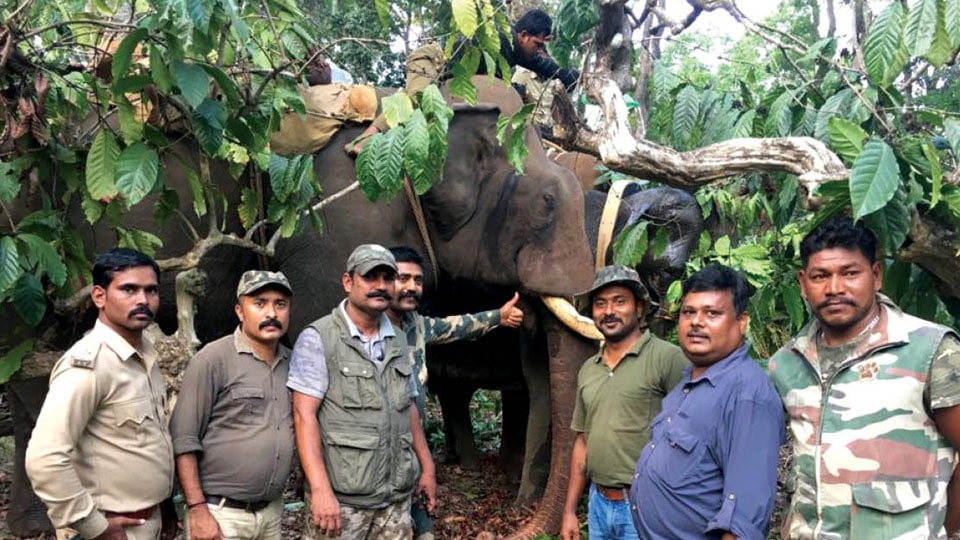
Concerned at the increasing instances of elephant-human conflict, the Forest Department, for the first time in Kodagu, has put radio collars on elephants to study their migration patterns.

The Department has decided to put radio collars on selected elephants so that their migration patterns can be studied. An analysis of their movements will help in avoiding human-elephant conflict that results in deaths of humans and damage to crops, said Department officials.

Accordingly, over six elephants that usually enter coffee estates and fields have been radio-collared in places including Virajpet, Madikeri, Kushalnagar, Maldare, Ammathi & Pollibetta. These areas have witnessed increased elephant attacks in the recent past.

The collars were fitted on the wild pachyderms with the help of tamed elephants including Bhima, Abhimanyu and Krishna. Last time, over four collars were fitted on the elephants and the Department staff was able to successfully track the elephant movements and prevented them from entering the human habitats.

Department officials said that radio collars could further strengthen the elephant corridor management strategy. It could also become an early warning system for villagers in order to avoid conflict with elephants as the collars could provide real-time information. Radio-collaring of animals is a tried and tested method of studying free-ranging wild animals that has been in practice for several decades. It is primarily used for tracking the movement and activity patterns of the tagged animal, with the signals being sent to a handheld device or to a computer via a satellite.

It is often the only method that is available for studying the movement and activity patterns of a secretive species like the tiger or a wide-ranging species like the elephant. Information obtained from the use of radio telemetry is of high scientific and conservation value. The GPS-enabled radio collars will provide updates in real-time about the location of a herd and help track them within the State as well as during migration. A tool embedded in the collar will send signals 24X7.

“Once we receive signals on the presence of the elephant herd near human habitation, the ground-level Rapid Response Team of the Dept. will be alerted on their mobile phones so that they can rush to the place and launch an operation to drive elephants back into the woods,” said District Forest Officer Maria Kristhu Raj.

The kumkis (tamed elephants) will infiltrate the herd and scatter the elephants. When the female leader is isolated, the experts perched on the nearest kumki will shoot her with a dart loaded with a tranquillising drug called xylazine. The dosage will be decided according to the size and strength of the matriarch. “After being hit, the elephant will walk like it is intoxicated for 10 minutes and then it will fall asleep. So, our men have a window of about 40 minutes to put the radio collar on the elephant,” he explained.

“In the 40 minutes the animal was under sedation, the team fixed the radio collar and activated it. Soon, veterinarians injected a drug to revive it. The entire operation was over in 50 minutes and the animal started heading back into the forests,” the DFO added.

source: http://www.starofmysore.com / Star of Mysore / Home> News / May 14th, 2019

‘Yashaswi spices’ now on wheels

A model of the mobile shop for 'Yashaswi' products.
A model of the mobile shop for ‘Yashaswi’ products.

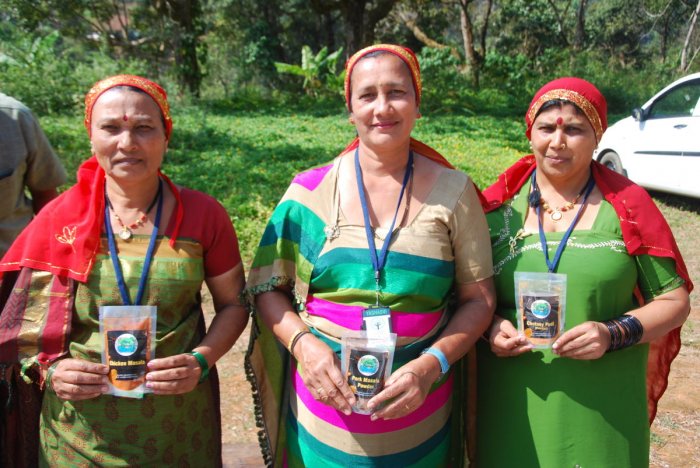
The ‘Yashaswi’ enterprise initiated under ‘Project Coorg’ programme of Bharatiya Vidya Bhavan has been quite successful, and from Sunday, the Yashaswi brand spices will be marketed on wheels.

The scheme was started to provide support to women victims from Kaluru village in Kodagu, who were affected by flash-floods and landslides.

Project Coorg Head Balaji Kashyap said that a well-equipped van has been sponsored by the Kodava Koota based in North America, exclusively for the sale of spices. The mobile spices shop will move across Kodagu district.

The spices prepared and packed by the victims are being marketed at the stalls in Raja Seat premises and the Child Welfare Committee in Madikeri, as well. Apart from spices, there are coffee and honey under the same brand name.

source: http://www.deccanherald.com / Deccan Herald / Home> State> Mangaluru / by Adithya K A / DH News Service / Madikeri – May 12th, 2019

Govt revokes temporary ban on land conversion in Kodagu

The state government on Thursday revoked the temporary ban on conversion of land in the flood-hit Kodagu district.

The ban had come into effect after last year’s devastating floods washed away large chunks of land in the coffee district.

The Revenue Department on Thursday ordered tahsildars and assistant commissioners to allow conversion of land up to 15 to 20 cents for building houses by the locals after obtaining a ground report.

“Several people have been submitting applications seeking the conversion of land to build houses for a living. But since the floods, the government had ordered temporary ban on conversion of lands for non-agricultural purposes. But keeping in mind the public request, the government has directed to allow conversion of land up to 15 to 20 cents for building houses by the locals.”

The state government while revoking the temporary ban has also laid down certain conditions to prevent damages to the properties in future due to any natural calamity.

As per the conditions, no permission shall be given for construction of buildings in non-stable areas so identified by the Geological Survey of India (GSI) in its report; the buildings shall be at least 10 meters away from the rivers and rivulets and conversion shall not be allowed along the valleys and on those lands which had witnessed landslide in 2018.

source: http://www.deccanherald.com / Deccan Herald / Home> State / by Niranjan Kaggere, Bengaluru / May 09th, 2019

‘Kaluru Stores’ 2nd outlet to open on April 14

Women Kaluru, who had been affected by the natural calamity in Kodagu, have turned entrepreneurs by releasing ‘Yashaswi’ spices, initiated by ‘Project Coorg’.

The second outlet of ‘Kaluru Stores’, exhibiting and selling articles made by the women affected by the natural calamity in the district, will be inaugurated in town on Sunday, April 14.

The store has been conceptualised by ‘Project Coorg’.

Post-floods, ‘Project Coorg’ identified women from Kaluru, who had been affected by the natural calamity, and trained them to prepare spices at the Bharatiya Vidya Bhavan, Kodagu centre. The spices graded and packaged were sold in the market under the brand name ‘Yashaswi’.

The first outlet of ‘Kaluru Stores’ was opened near Raja Seat with assistance of Kodagu district administration.

The second outlet is ready to be opened in front of Shishu Kalyana organisation near the government bus shelter in Madikeri.

‘Project Coorg’ head Balaji Kashyap said that the opening of the second outlet of Kaluru products had boosted the confidence of the women entrepreneurs. The women underwent training for 180 days in preparation of the spices, he added.

The second outlet will be inaugurated by the Dakshina Kannada Kannadigara Sangha president Ramachandra Upadhyaya at 11 am on April 14.

Bharatiya Vidya Bhavana Kodagu Kendra president K S Devaiah, legislators K G Bopaiah and Appacchu Ranjan, MLCs Sunil Subramani, and Veena Acchaiah, Kodagu Shishukalyana Samsthe president K Mohan Monnappa and writer Nagesh Kaluru will take part in the inauguration of the outlet, sources said.

source: http://www.deccanherald.com / Deccan Herald / Home> State> Mangaluru / by Ashwani Kumar NKR / DH News Service, Madikeri / April 12th, 2019

Coffee trade goes live on blockchain platform

The initiative was announced by Suresh Prabhu, Union minister for commerce and industry, in Delhi in September, 2018. Mint

– The project was announced by Suresh Prabhu, minister for commerce
and industry, in Delhi last September

– The blockchain platform will allow a coffee producer to directly
transact with multiple buyers.

The Coffee Board on Thursday launched the pilot of the country’s first blockchain-based marketplace app for trading in Indian coffee, aimed at getting growers better returns by removing myriad middlemen.

Known as the Coffee Blockchain initiative, the pilot was activated simultaneously by Jose Dauster Sette, executive director of the International Coffee Organisation from Nairobi and Anup Wadhawan, India’s commerce secretary from New Delhi.

The project was announced by Suresh Prabhu, minister for commerce and industry, in Delhi last September. So, why did it take six months for the project to go live?

“There were more than 20 stakeholders from three different countries. We had to get all of them on board, and then test the platform. We believe this is perhaps only the third attempt at a coffee blockchain after France and Ethiopia,” said Srivatsa Krishna, chief executive officer and secretary of the Coffee Board, a government organisation tasked with promoting Indian coffee.

The blockchain platform will allow a coffee producer to directly transact with multiple buyers.

In India, coffee is cultivated in about 454,000 hectares by 366,000 coffee farmers — 98% of them small farmers — whose returns are meagre. Krishna said the aim of using blockchain is to “premium-ise” coffee, add “bean-to-cup traceability” and cut the role of middlemen.

The blockchain-based solution was developed in coordination with Eka Software Solutions. Manav Garg, the company’s CEO and founder, said the idea of using blockchain is to “record the first smart contract on a blockchain with the 20-odd stakeholders, and establish trust in the marketplace”.

“With this activation, we are confident that the Coffee Board of India will help the Indian coffee trade make more inroads into the premium market internationally and make India one of the top three coffee producers in the world,” Garg added.

Krishna said the Coffee Board is also “testing” blockchain-based solutions from a couple of other vendors but added that “the one from Eka Software was the most suitable at this moment”.

Blockchain is no longer a technology that is just about powering cryptocurrencies like bitcoin and ether. A distributed digital ledger technology (DLT), it is also being used by manufacturing companies to improve their supply chains; by healthcare and electricity companies; and by the financial sector to make transactions more transparent.

source: http://www.livemint.com / Live Mint / Home> Explore / by Leslie D’Monte / March 29th, 2019

Five coffee varieties get GI tag

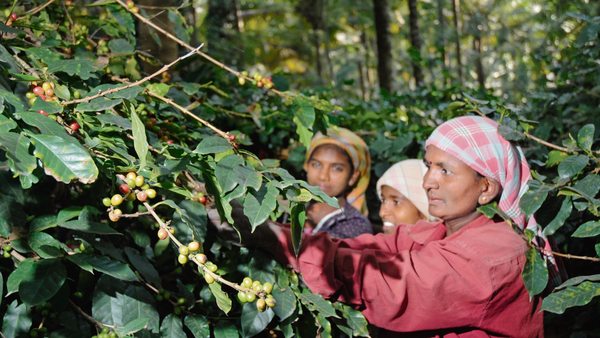
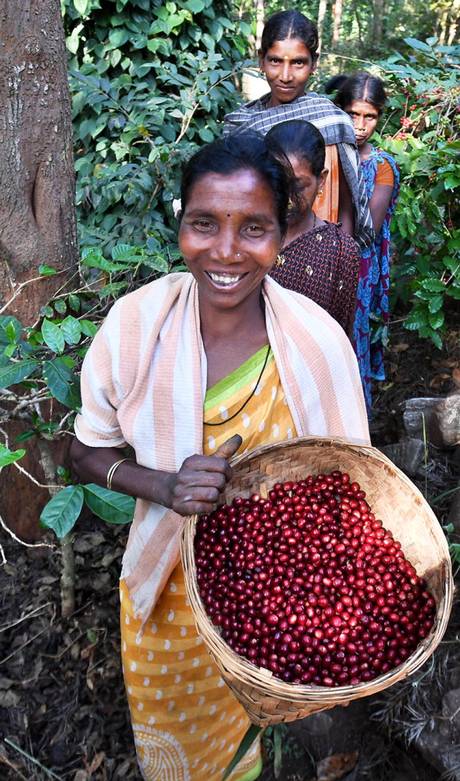
Global praise: Tribal women harvesting organic coffee on a plantation near Girliguda in Araku, Visakhapatnam.The Araku Valley coffee which is processed and marketed with the help of the tribal farmers cooperative society recently won the gold medal for the best coffee pod in the Prix Epicures OR 2018 Award in Paris.   | Photo Credit: K.R. Deepak
Global praise: Tribal women harvesting organic coffee on a plantation near Girliguda in Araku, Visakhapatnam.The Araku Valley coffee which is processed and marketed with the help of the tribal farmers cooperative society recently won the gold medal for the best coffee pod in the Prix Epicures OR 2018 Award in Paris. | Photo Credit: K.R. Deepak

The government on Friday said it has awarded Geographical Indication (GI) tag to five varieties of Indian coffee including Coorg Arabica.

The move is expected to help the growers get maximum price for their premium produce.

The Department for Promotion of Industry and Internal Trade, under the Ministry of Commerce and Industry, has recently awarded this tag to — Coorg Arabica coffee from Karnataka, Wayanad Robusta coffee from Kerala, Chikmaglur Arabica from Karnataka, Araku Valley Arabica from Andhra Pradesh, and Bababudangiris Arabica coffee from Karnataka.

The Araku coffee is produced by the tribals, who follow an organic approach in which they emphasise management practices involving substantial use of organic manures, green manuring and organic pest management practices, the ministry said in a statement.

Similarly, it said, Bababudangiris Arabica coffee is selectively hand-picked and processed by natural fermentation.

In India, coffee is cultivated in about 4.54 lakh hectare by 3.66 lakh coffee farmers of which 98 per cent are small farmers.

Coffee cultivation is mainly done in the southern states of India including Karnataka, which accounts for 54 per cent of the total production. It is followed by Kerala (19 per cent), Tamil Nadu (eight per cent).

It is also grown in non-traditional areas such as Andhra Pradesh and Odisha (17.2 per cent) and North East states (1.8 per cent).

India is the only country in the world where the entire coffee cultivation is grown under shade, hand-picked and sun dried, it said adding the country produces some of the best coffee in the world, grown by tribal farmers in the Western and Eastern Ghats, which are the two major bio-diversity hotspots in the world. Indian coffee is highly valued in the world market and sold as premium coffee in Europe.

“The recognition and protection that comes with GI certification will allow the coffee producers of India to invest in maintaining the specific qualities of the coffee grown in that particular region. It will also enhance the visibility of Indian coffee in the world and allow growers to get maximum price for their premium coffee,” it added.

A Geographical Indication (GI) is primarily an agricultural, natural or a manufactured product (handicrafts and industrial goods) originating from a definite geographical territory.

Typically, such a name conveys an assurance of quality and distinctiveness, which is essentially attributable to the place of its origin.

Darjeeling Tea, Tirupathi Laddu, Kangra Paintings, Nagpur Orange and Kashmir Pashmina are among the registered GIs in India.

Experts said that award of GI tag gives protection to the producer of those genuine products, which commands premium pricing in the markets both domestic and international.

“Once the GI protection is granted, no other producer can misuse the name to market similar products. It also provides comfort to customers about the authenticity of that product,” National Intellectual Property Organisation (NIPO) President T.C. James said.

Such products also get premium pricing in the markets, he added.

source: http://www.thehindu.com / The Hindu / Home> Business> Industry / by PTI / New Delhi – March 29th, 2019

Smell the coffee and spirituality at Coorg

Jaggery coffee may not be your cup of tea but expect the brown brew to be presented as a welcome drink at a resort in the middle of a large coffee plantation, such as the Cottabetta bungalow in Pollibetta, Coorg, south Karnataka. Nearly 130 years old, this plantation resort was once the residence of British planters. Owned by the Tatas now, it consists of a Kerala-style house with the bedrooms around the inner courtyard, offering the old-world charm and comfort.

On the hillsides, a dense forest of short and stunted trees bearing this exotic berry, in the shadow of the taller trees on which pepper creepers climb high, abounds. The soil here is good for a host of other spices, too. That’s what the traders from the west came looking for, and then settled down to rule our country.

A tour of this particular plantation gives an insight into the process of producing coffee. According to a tour guide, Udhav, a coffee plant starts yielding berries after seven years, and then goes on doing it for over 75 years. Initially the berries are red, but turn brown once they go through several stages of drying, pulping, roasting and grinding before landing on our tables as the brew with a heady aroma. Robusta is the variety that grows here. It’s the favourite of the elephants, too. Most plantations are surrounded by an electric fence to protect them from pachyderms (animals like elephants, hippopotamus and rhinoceros) but, says Udhav, “sometimes they find out how to switch it off. Generally, it is the matriarch of the herd who knows how”!

DevaKF10mar2019

Monastery

In another direction from Madikeri, about five kilometres off the Bangalore road, lies a Buddhist monastery, Namdroling. This seminary imparts education in the Nyingmapa tradition of Buddhism. Over 3,000 students from the primary to postgraduate level, from the Himalayan regions and abroad, “chant and study, work and practice” here. His Holiness Penor Rinpoche set up this monastery in 1963.

He “attained Mahaparinirvana” in 2009. The Dalai Lama consecrated it and christened it as Namdroling, though its full name is Thegchog Namdrol Shedrub Dargyeling (Land of increasing practice and teaching of the utmost yana that achieves spontaneous liberation). The centre is also known as the Golden Temple because of the three 40-feet high, gilded statues of the Buddhist icons. The entire complex has been elaborately decorated with the Tibetan-style paintings, murals and religious figures. Bylakuppe, a small town where this is located, is a far cry from Tibet in terms of climate and culture but it houses the second largest Tibetan settlement after Dharamsala.

Around 40km from Madikeri is Talakaveri, on the Brahmagiri hill, the source of the Kaveri river. A tank marks the source of the river, and a nearby temple is a popular place for pilgrimage. Not too far from Madikeri lies the Dubare elephant camp. It is located on the banks of Kaveri. Apart from watching big animals, one can do some still-river rafting close by. The best time to visit Coorg is soon after the rains when water cascades down the falls and mist rises up to shroud the mountains. Perhaps, that’s why it’s also known as the Scotland of India.

source: http://www.tribuneindia.com / The Tribune / Home> Spectrum> Travel / by Lalit Mohan / March 10th, 2019