It was only the next morning that I saw the damage that the floods had inflicted on the family.
It was dark and still drizzling when Thenira Kishore Ganesh pulled into his parents’ house in Mekeri in Kodagu. It was a modest but spacious building in the traditional style within a large compound, with an outhouse, a well and flowering plants of various kinds. When Kishore told his parents that I would be staying in the house for the night, they immediately showed me where to freshen up and asked me how hungry I was.
I had been on the road since the crack of dawn having set out from Bengaluru to cover the impact of the floods and landslides that had hit Kodagu a few days earlier. Heavy rains had lashed the district through July and the first half of August making planters worry about their coffee and pepper crops. But the consistent heavy rain took a far bigger toll when on August 16, it brought entire hillsides and villages down in a series of landslides.
Since the condition of the roads and public transport services was uncertain, I had hitched a ride from Bengaluru with Kishore and his brother-in-law Darshan Thimmaiah. They were travelling back home to check on their families and help with relief work. I met Darshan just the previous day at the relief collection centre in Bengaluru. He works at the Ministry of Human Resources Development while Kishore works with the computer manufacturing company Lenovo in Bengaluru. His parents look after the family’s agricultural lands in Mekeri.
The 250-kilometer drive from Bengaluru to Kodagu took longer than it usually did. The Kushalnagar-Madikeri road bore signs of damage from the landslides. There was heavy traffic as relief from across the state poured into the district. We stopped in Suntikoppa where Kishore and Darshan made their own enquiries of the people displaced and living in shelters, while I gathered information for the reports I had set out to write. We stopped again at a petrol bunk in Madikeri where we met two ambulance drivers who had run out of fuel and cash. Kishore and Darshan paid for the two vehicles to be fuelled up.
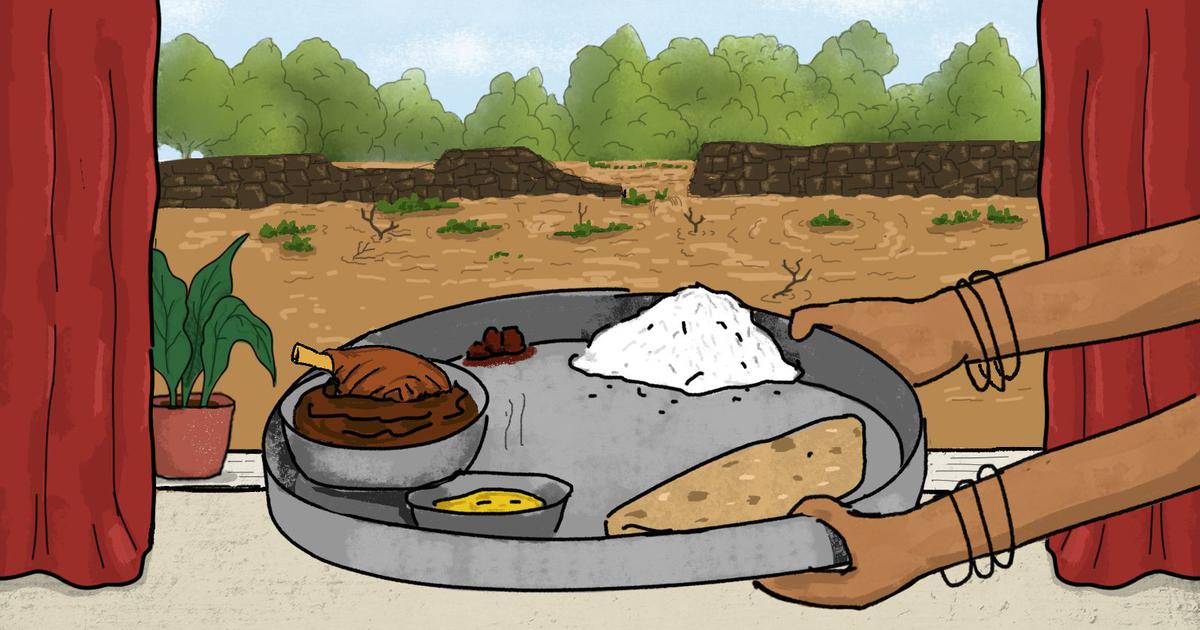
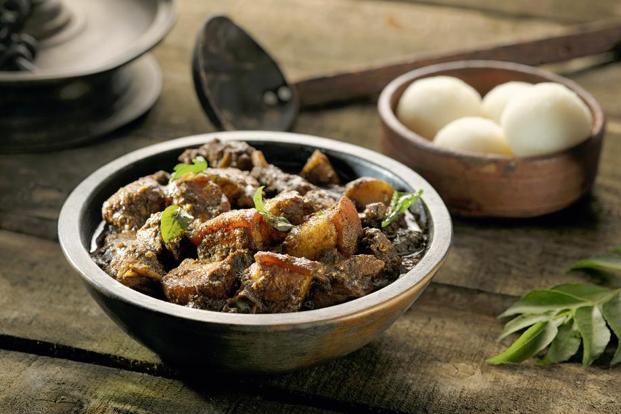
While Kishore and Darshan dropped off their bags at the family house in Mekeri, Kishore’s mother offered me – an unexpected and ravenous guest – lunch. I happily wolfed down the otti (rice chapati), mutton curry, dal, rice and pickle.
That afternoon, Kishore and Darshan drove me to a relief centre 20 km away. It was already beginning to get dark when we left and they advised me not to try to get to my hotel in Madikeri since it was still raining, the roads were bad and landslides were still being reported across the area.
With no other place to stay, I went back to Kishore’s parents house. And so, having already shared their lunch, the family shared their dinner with me and readjusted their sleeping arrangements to make room for me.
Journalists often rely on the kindness of strangers and, reporting from the location of a natural disaster, I found myself profoundly thankful for the hospitality of Kishore’s elderly parents that evening.
It was only the next morning that I saw the damage that the floods had inflicted on the family.
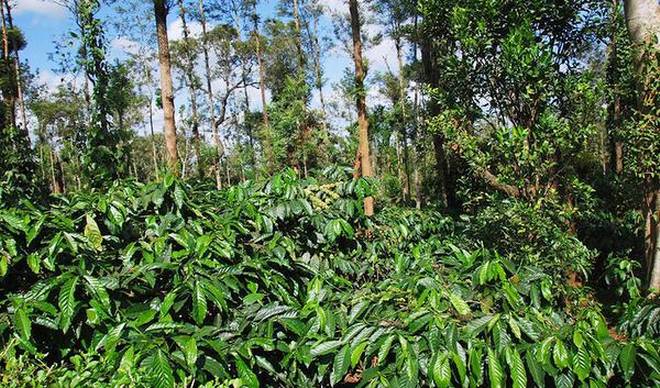
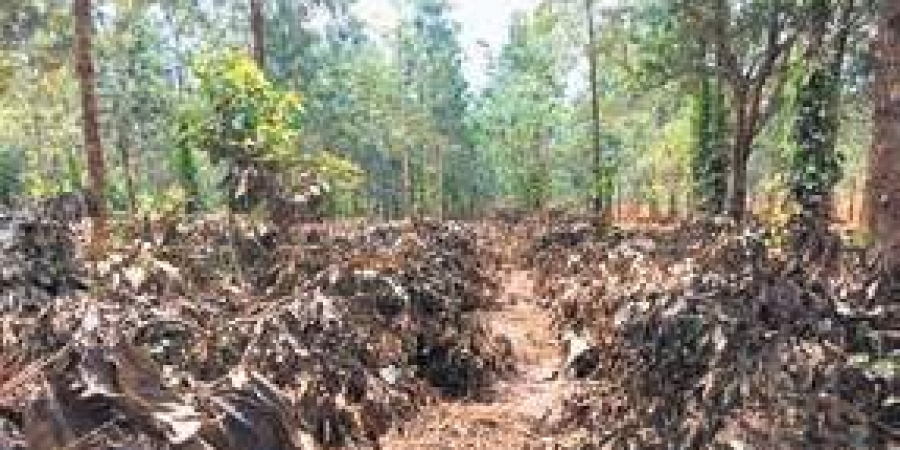
Across the narrow road in front of their house, Kishore’s family has five acres of land on which they grow paddy. Kishore’s father, who manages the fields for his relatives living outside Kodagu, had supervised sowing in early July. Now, in mid-August, the rice saplings were lying on their sides, flattened by the water that had come rushing down from the hills in the previous day. A 200-metre long field that belongs to Kishore’s uncle had a large chasm in the middle. A stream that used to run around the field and into an irrigation canal now ran through that chasm, the water muddy with silt washed down from fields upstream.
“We don’t know what kind of losses we will have from this,” said Kishore. He estimated that his family will need to spend at least Rs 1 lakh just to restore the field by filling it in with mud.
And yet, when I offered to split the fuel bill with the brothers-in-law who drove me around for a day and a half, they only asked that I donate that amount to flood relief.
source: http://www.scroll.in / Scroll.in / Home> BackStory 2018 / by Nayantara Narayanan / December 25th, 2018
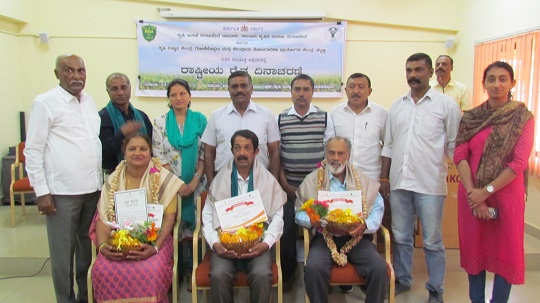
Kisan Diwas Was Celebrated on 23rd December,2018 at KVK Gonikoppal, Kodagu campus Jointly by the Department of Agriculture, CHES, Chettalli and ICAR-KVK, Gonikoppal. About 100 farmers, Staff from Department of Agriculture, KVK and CHES Chettalli participated in the function. The programme was inaugurated by Shri Raghu Nanaiah, President, Taluka Krishika Samaja President. Other guests on the stage were Shri Chotu Kaverappa, President Zilla Krishika Samaja President, Shric S.C. Thimmaiah progressive farmer, Smt Ashwini Nanda and Shri M.P. Somaiah, President Puthari Farmers Producer Co. Ltd. The programme started with lighting of the lamp, followed by Felicitation of Progressive farmers for their integrated farming and Cleanliness in farming and minimum use of external inputs. Shri S.C. Thimmaiah of Nallur village, Ponnampet, Virajpet and Smt. Ashiwini Nanda were felicitated for their achievements in farming. Puthari Farmers organisation was felicitated in recognition of their services to the farming community.
The award winning farmers addressed the farmers and talked in detail about their farming practices and how through integrated farming system they are reducing the cost of cultivation and achieving higher productivity. The programme started with the playing of Farmers Song. In the beginning Smt. Reena, ADA, Agriculture Department welcomed the dignitaries and the farmers. The whole programme was coordinated by Shri Veerendra Kumar and Shri B. Prabhakar, SMS of this KVK.
source: http://www.iihr.res.in / ICAR – Indian Institute of Horticultural Research / Home / December 25th, 2018
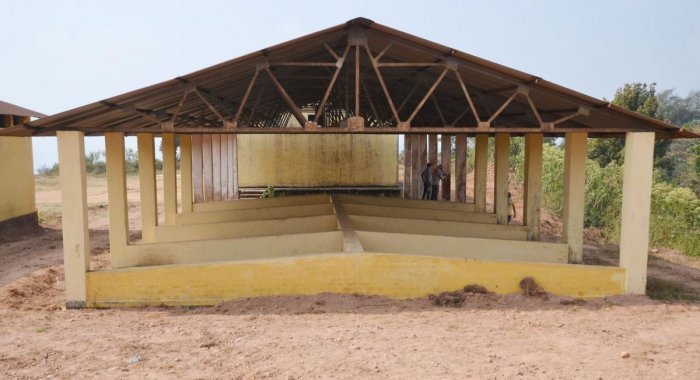
The yard identified for organising ‘Raitha Santhe’ on the premises of the APMC in Madikeri
The APMC in Madikeri will reintroduce ‘Raitha Santhe’, the farmers’ shandy, from December 21.
The weekly shandy was stopped following landslides and incessant rain in Kodagu.
After a long gap, the APMC has decided to relaunch the unique market wherein a platform will be provided to farmers to sell their produce directly to buyers (customers).
The programme, which was initiated on January 12 this year had received a poor response. The APMC has now relaunched the shandy by incorporating some changes with an objective to make it friendly for both the farmers and the buyers.
“From December 21, ‘Raitha Santhe’ will be held on the premises of the APMC near KSRTC depot on every Friday and Wednesday,” said APMC Madikeri Chairman S Ambi Cariappa.
It has been decided to hold the farmers’ shandy on two days in a week. Earlier, the market was meant only for the farmers of Madikeri taluk. This time, the facility will be extended to farmers from various parts of Kodagu district as well as from the state.
Basic amenities such as a new building and parking space will be provided at the venue of the ‘Raitha Santhe’.
APMC member Beppurana Medappa said that the ‘Raitha Santhe’ intends to encourage customers to purchase products directly from farmers at reasonable prices.
Apart from vegetables and fruits, value-added products by farmers will also be featured during the sale. Farmers have also been extended tax exemption to carry out the business, he added.
Apart from vegetables and fruits, value-added products by farmers will also be featured during the sale. Farmers have also been extended tax exemption to carry out the business, he added.
Another member Kangira Sathish said that earlier, the customers had complained of a limited variety of vegetables at the ‘Raitha Santhe’. Hence, provisions have been made this time to sell a wide range of vegetables, along with groceries.
source: http://www.deccanherald.com / Deccan Herald / Home> State> Districts / by Adithtya K A / DH News Service / Madikeri – December 16th, 2018
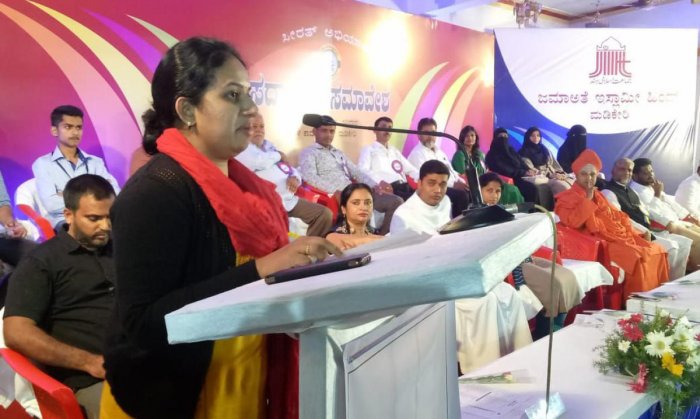
Deputy Commissioner P I Sreevidya speaks at Sadbhavana Convention organised by Jamaat-e-Islami Hind, Madikeri unit, on Saturday.
The volunteers, who took part in the rescue operations during the massive landslides and floods that ravaged Kodagu, are role models for the entire country, said Deputy Commissioner P I Sreevidya.
Speaking at the Sadbhavana Convention, organised by Jamaat-e-Islami Hind Madikeri unit on Saturday, she said volunteers not only took up rescue operations but also lent a helping hand to the district administration.
“As many as 600 victims have been provided shelter at the relief centres by the district administration. The government has been providing facilities to the victims. Members of various organisations are also extending financial assistance and providing relief materials to the victims,” added the deputy commissioner.
Kalancheri Mutt seer Shanthamallikarjuna Swami said that such conventions were essential to foster communal harmony in the society.
As many as 15 volunteers, who were part of the rescue operations, were felicitated on the occasion.
source: http://www.deccanherald.com / Deccan Herald / Home> States> Districts / by Adithya K A / DH News Service,Madikeri / November 25th, 2018
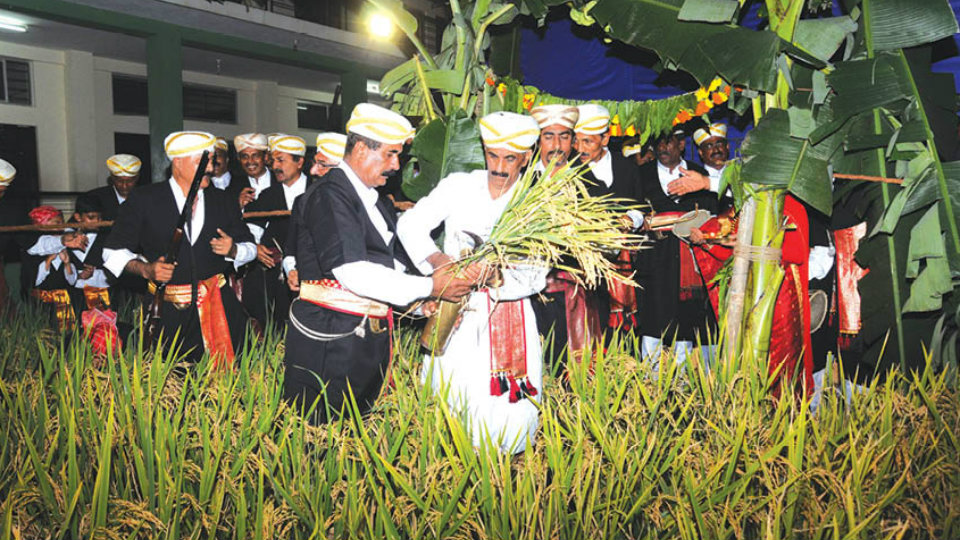
Kodava Samaja, Mysuru, will be celebrating Huthri, the harvest festival of Kodagu, tomorrow (Nov.23) at Sree Cauvery College Grounds in Kuvempunagar from 5.30 pm onwards.
On the occasion, traditional Kodava dances will be presented. ‘Nere kattuva’ ritual will be held at 7.30 pm; reaping new paddy crop (Kadiru) at 8.30 pm; distribution of thambutt prasada at 9.30 pm.
As in the previous years, Puthari Eedu was held from Nov.18 daily at 6 pm at the Samaja premises in Vijayanagar where traditional Kodava dances are practiced. The Eedu programme, sponsored by various Kodava Sanghas, will be held this evening also.
While Ketolira Ravi Belliappa trains the young and old male dancers in Bolkaat, Kolaat, Kathiyaat and Pareyakali, Kullachanda Vinutha Kesari imparts training to girls in Ummathaat.
Thanks to Kodava Samaja, Mysuru, for strengthening the community bonding and preserving the Kodava culture and tradition by holding such events and encouraging the youngsters.
The main event in traditional Kodava attires will be held during Huthri celebrations tomorrow evening at Cauvery Institutions premises.
Gowda Samaja
Huthri festival will also be celebrated under the auspices of Kodagu Gowda Samaja, Mysuru, at its premises in Vijayanagar 2nd Stage here tomorrow from 7 pm onwards. ‘Nere kattuva’ ritual will be held at 7.45 pm; reaping of new paddy crop (Kadiru) at 8.45 pm. There will be distribution of Kadiru also, according to a press release from Samaja Hon. Secretary K.S. Ganapathy.
source: http://www.starofmysore.com / Star of Mysore / Home> News / November 22nd, 2018
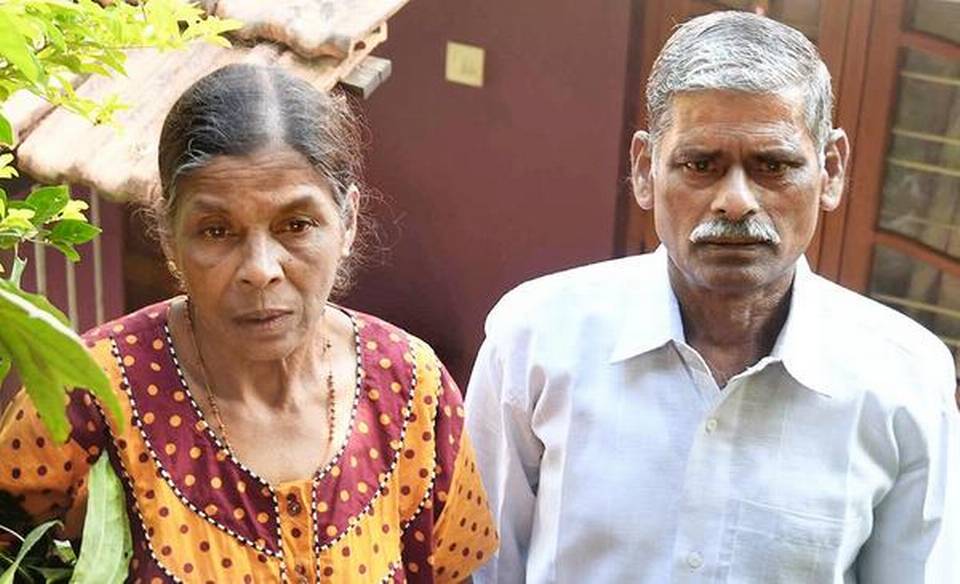
Apolimanthera and Dominic, in front of their house at Hattihole, Kodagu.
The landscape bears the wounds of the devastating deluge; families, worried about the future, are wary of returning home.
A river, brown with muddy water, flows its usual course on a sunny afternoon, deceptive of the ravage it had caused two months ago when heavy rains and floods devastated Kodagu. On one side of the river’s bank sit two houses – both with different stories of the same tragedy.
One bears large cracks on the walls. Dominic, 63, and his wife Apolimanthera, 59, had to flee from their home in Hattihole, Kodagu district, for a week, after the water level rose on August 17, inundating their home that is below road level. “The water was up to our waist on the road, and we were asked to rush out. We stayed at the relief centre set up in the church for around a week and returned to the devastation after the levels receded,” Mr. Dominic said.
Pointing to a large tree that was swept away by the force of water, which now stands as testimony to the extent of the disaster in the middle of the river, visible from their backyard, he lamented that the river water was now unfit to be used for anything.
Next door, within the same compound is the house of Francis Montheiro, 47, now locked up. A social worker, Mr. Montheiro, known as Appu, was an active volunteer during the floods too. Mr. Dominic last saw him on the morning of August 17, after which he went missing. His body was found in the river nine days later.
Mr. Montheiro’s wife Flaviya Jyothi, 44, a nurse at a private hospital in Madikeri, and two children have shifted to the capital. “My husband used to pick up and drop me halfway. But now, with my shift timings, I decided to shift to Madikeri to make travel easier,” she said. Their sons are in Class 10. Mr. Monteiro was engaged in small businesses dealing with pepper and coffee and drove a taxi.
The house they have left behind, Ms. Jyothi said, is the only asset the family has. “We received ₹5 lakh in compensation. But how do you make up for the loss of a person? Appu is now only a name in our memories,” she added.
Francis D’Souza runs a small hotel on the main road that leads to Hattihole. Having lost his house in the flood, he now lives in a house on rent. “Not just our house, when we left for the relief centre, someone stole what was left in the house and the hotel – jewellery, homemade wine, and bottles of honey (which he sells) and sacks of pepper,” he said.
Three months after the floods, signs of devastation are still everywhere. In Thantipala, the van of a local resident lies almost fully buried in sand left behind by flood water. Mounds of flood residue comprising mud and broken trees line up either side of the road paved out.
In Udaygiri, the remains of the sole house that survived a massive landslip hinges on the edge, as locals continue to stream in, standing cautiously on the other side and trying to remember the road that once led straight to that house. Raghavendra Shetty, a school teacher, said one person had died here, and at least five houses had turned into rubble.
Normalcy is still a far cry for these families.
Says Ms. Apolimanthera, with large coffee estates being wiped out, work as an estate worker was hard to come by. “I used to earn around ₹1,800 a week. Now I am lucky if I find enough work to pay me ₹300 a day. In our 50 years here, we have never been faced with anything like this,” she said.
Apart from dealing with coming to terms with the present, many are worried about the future.
Charan Panthale drives down to his field in Devasthur, where his house stands half destroyed. A large tree trunk, brought in by the gush of water that crashed into his house, still stands. Sacks of husk lie outside the house on a bed of mud that was the land it was harvested in.
“We have lost one and a half acres. There is nothing we can do about it at present. It will take a long time,” he said. The family is temporarily living with relatives.
840 beneficiaries in the first phase
The Kodagu district administration has identified 840 beneficiaries who will be given houses in the first phase. The government will approve one of the five model houses being built by different agencies and companies.
Sreevidya P.I., Deputy Commissioner, Kodagu, told The Hindu that the report had been submitted to the government and awaited approval. The beneficiaries were chosen based on applications and cross verification with agencies such as the gram panchayats.
“There are five houses and three have been completed. The Chief Minister has also seen these. New technology has been tried out in these. We will see which of these is suitable for the hilly terrain and landslips and accordingly, one model will be selected,” she said.
The DC also said that some people had expressed willingness to build houses on their own, for which the government would provide some compensation, and they too could utilise the technology implemented in the model houses. The unit cost is yet to be decided, she said.
As for crop losses, a hectare-wise compensation based on the type of plantation – coffee, paddy, pepper, etc –would be initiated , Ms. Sreevidya said, adding that NDRF guidelines were followed for the surveys, and with Union government funds involved, they would have to wait for government approval.
(This is the first of a two-part series.)
source: http://www.thehindu.com / The Hindu / Home> News> States> Karnataka / by K.C. Deepika / November 17th, 2018
Foraging has long been a way of life for wild-food loving Coorg
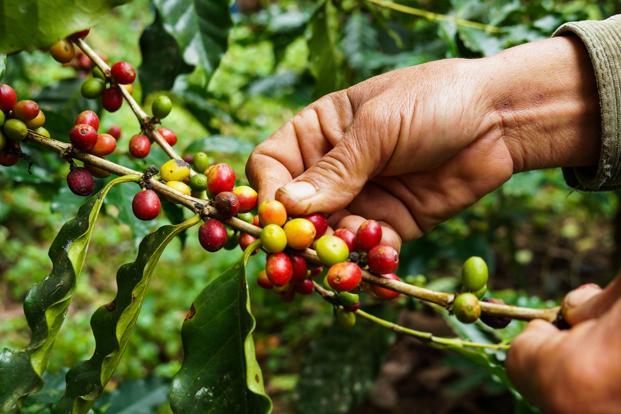
Coffee-picking at an estate in Coorg. Photo: iStock
René Redzepi, the foraging genius who stormed the culinary world with his New Nordic cuisine, would have a lot to smile about in Coorg. Here foraged ingredients don’t just put in an occasional appearance but are the main attraction, making Coorg an interesting region for true-blue wild-food pioneers. The eastern declivities of the Western Ghats that make up Coorg are extensively clothed in forests. Shade-grown coffee plantations offer the ideal habitat for rare flora and fauna to thrive as do sacred groves or devakads, designated as protected forests under the Indian Forest Act.
Against this backdrop is a staggering bounty of indigenous greens, weeds, flowers, fruits, berries, nuts, mushrooms and shoots, many of which play a starring role in the local cuisine.
Gazetteer Of Coorg, first published in 1870, devotes reams to Coorg’s jungle bounty: wild pepper, wild ginger, wild cloves, bitter local oranges known as kaipuli, rose apples, jungle mangoes, bastard sago—esteemed for its toddy—hog plums, several kinds of bamboo shoots, and an alphabetical list of over 60 ferns.
Locals keep their eyes open to what’s growing around them, constantly sizing up culinary possibilities. Freshly plucked cape gooseberries go into jams, a tangle of greens are added to stir-fries, and fronds of tender bracken ferns get pickled and ground into chutneys.
Kaveri Ponnapa, author of The Vanishing Kodavas, says in one of her earlier articles on Coorg: “Most women of my mother-in- law’s generation who lived on coffee plantations never set out on a stroll without the equivalent of the Russian avoska, the ‘maybe’ or ‘perhaps’ mesh bag—you never knew what surprise the season would throw your way.”
Several ingredients are unique to these parts. Like kachampuli, the dark vinegar made from the concentrated juice of the garcinia gummi-gutta fruit (called panapuli locally), which adds a sour kick to pork and fish dishes. And the famous Coorg honey, made from wild roses and forest blooms, which locals drizzle on akki ottis or rice rotis, and eat with ghee for breakfast.
Naveen Alvares, executive chef at Evolve Back Chikkana Halli estate, attributes this love of indigenous ingredients to Coorg’s unique geography and culture. “Kodavas, who make up most of the population, are ancestor worshippers and eat what is available off the land. Most have a plantation background or a sacred forest, so the connect with the land is very strong,” he says.
Walking through the resort’s lush plantations, among the oldest in Coorg, I see the coffee-forest symbiosis in full bloom. Coffee bushes sit beneath a canopy of silver oak trees that support festoons of black pepper. Ginger and turmeric, planted for intercropping, dot the forest floor. Jackfruits hang from trees. You can hear red-whiskered bulbuls chirruping.
Several exotic edibles are to be seen, many of them unconventional in the Indian context. As I stop to admire the bizarre artistry of a passionflower, Alvares smiles, “This is what makes Coorg special. It’s wildness.”
Dinner is a knockout pandi curry. The dark colour and complexity of this most iconic of Coorg pork dishes derives from dark roasted spices and kachampuli, a souring agent Alvares clearly loves.
I drive down from Siddapur to Madikeri the next day. The hour-long journey is jawdroppingly scenic. Acre after acre of coffee plantation presents itself, occasionally punctuated by the whoosh of a waterfall or the brilliant blue of a kingfisher.
A treasure trove of mushroom diversity, the Western Ghats are home to 750 species. Edible fungi known as kummu grow wild on Coorg’s hills and are highly prized for their exotic flavour. Vancouver-based blogger Shalini Nanda Nagappa mentions several varieties in her blog, A Cookery Year In Coorg—“feathery, delicate nucchi kummu and kokkalé kummu, succulent aal kummu, the giant nethalé kummu,..and the decidedly meaty pandi kummu.”
Only locals who carry with them an intimate knowledge of when, where and how to harvest the edible varieties can procure them, Nagappa points out. As a result, these treasures rarely make it to local markets and remain confined to the kitchens of plantation owners and local villagers.
‘Pandi curry’ at the Evovle Back resort.
The pleasures of kummu elude me during this visit, but I do feast on other Kodagu treats at Coorg Cuisine, a popular local restaurant in Madikeri. My lunch companion is M.B. Kumar, a Madikeri-based Kodava agriculturist and plantation owner. The wild mango curry, made with small jungle mangoes or kaad maange and black jaggery, is by turns sweet, sour and peppery. It’s unlike anything I’ve ever tasted. Chewing on a mango kernel, it is love at first bite.
The smoked pork, known as chillkana pandi, packs a meaty savouriness, while the freshness of the forest pervades a bowl of lightly fermented and sauteed baimbale or bamboo shoots. There’s pandi curry, of course, intensely flavoured and addictive as always. And akki ottis and kadumbuttus (rice balls) to mop it all up with.
To put pork’s near sacred place in Coorg’s cuisine in context, Kumar narrates a colourful legend. When Parvati expressed a desire to see Arjuna’s back (the great warrior never showed his back—a sign of weakness—during war), Shiva disguised himself as a hunter and shot a wild boar that Arjuna’s arrow had pierced. An altercation followed. As Arjuna fell over his opponent, his back was revealed, granting Parvati’s wish. A shower of flowers fell from the heavens and the pork was distributed as prasad to the hunting party.
The yarn illustrates the extent to which Coorg’s geographical seclusion has shaped its unique cuisine. “While we Coorgs (Kodavas) treat pork as prasad and offer it to our ancestors during rituals, it would be considered blasphemous to go anywhere near pork in neighbouring Mysuru,” Kumar laughs.
As we eat, Kumar draws my attention to the age-old tradition of foraging for monsoon greens, known as thoppus in Coorg’s interiors. The repertoire of seasonal weeds is dazzling. Thatte thoppu has a slightly bitter taste but tastes delicious with akki ottis and a little ghee; kakke thoppu with its purplish-black fruit is effective in deworming; therme thoppu or bracken ferns taste good simply sautéed with onions and pair divinely with eggs.
During mid-monsoon, on the 18th day of a period known as kakkada, Kodavas pick the leaves of a wild plant called madd thoppu and extract its juice to make a payasam.
The bustling Friday market in Madikeri is chock-full of these supergreens and more. Kembe (colocasia leaves) and kaipuli are up for grabs as are spices and meat. Walking around, it becomes abundantly clear that Kodavas are not just master harvesters, they’re also skilled at altering foodstuffs for preservation by yeast and bacteria. A huge assortment of jams and pickles made from the spoils of the land lines the local stores. Everything is home-made and unbranded.
On my last morning in Coorg, I drop in at Coorg’s Progressive Beekeepers Co-op Society store and pick up a bottle of wild honey to take back home. As I make my way to Bengaluru to catch my flight, the resinous, sour-sweet taste of kaad maange lingers on my tongue.
Wild foods, which grow in their natural habitat without fertilizers or pesticides, don’t deplete the earth’s resources. And they taste incredible. What if we, like Kodavas, thought of the forest as our pantry? Let’s tap into our vast underutilized permacultures and support the foragers who gather these ingredients. Let’s showcase our native treasures at the finest restaurants through dishes that startle with their newness and intensity.
Let’s go wild.
source: http://www.livemint.com / Live Mint / Home> Leisure / by Sona Bahadur / October 21st, 2018
A coffee plantation in Kodagu, in the shade of silver oak trees. | Photo Credit: MAIL
Using silver oaks is detrimental for robusta
The exotic silver oak may be coffee growers’ preferred shade tree now, but research shows that it affects carbon sequestration and tree diversity in Kodagu’s agroforest systems.
Kodagu’s coffee farms were created when farmers cleared forest undergrowth and started growing coffee under the shade of giant evergreen trees. This ‘native shade’ coffee is still prevalent in the district, but evergreen trees are quickly losing out to the fast-growing silver oak. Farmers do not need permission from forest officials to lop or cut silver oak; this also contributes to its popularity. However, old forest trees make up a huge portion of carbon stocks here, and carbon stocks matter because the higher the carbon contained in vegetation, the more it helps with mitigating climate change.
Carbon stocks
To find out if carbon stocks change when silver oak takes over, a team including scientist Manjunatha Munishamappa from Bengaluru’s Environmental Management and Policy Research Institute studied a total of 49 native and exotic agroforestry systems – where either robusta (which needs more sunlight) or arabica coffee varieties are grown – near 18 forest patches that fall under both moderate and high rainfall zones. In each plot (all spread across 22 locations along the Cauvery river in Kodagu), the researchers quantified shade tree species diversity and the amount of organic carbon sequestered in the trees by measuring wood, root, litter and soil biomass. Across all plots, the researchers identified a total of 86 native tree species; and the total carbon stocks rose with increasing tree diversity.
Native trees in coffee estates and forests displayed high and comparable carbon stocks (approximately 193 and 222 megagrams (Mg) of carbon (C) per hectare respectively) as well as tree diversity (around 45 tree species). However, the introduction of silver oak negatively impacted both carbon stock and diversity. Predictably, robusta coffee estates with silver oaks had significantly lower tree diversity (nine species) and lower carbon stocks (up to an average of 65 MgC per hectare) than all other land-use systems in both precipitation zones.
Current trends
Hence, the current trend of replacing native shade trees in coffee estates with silver oaks is detrimental for carbon storage and tree diversity, especially in robusta farms. Current policies do play a role in this change, because the exotics can be cut for timber without prior permission.
“We have submitted two reports to the Karnataka government on these findings, we hope some policy changes will be incorporated,” he said.
source: http://www.thehindu.com / The Hindu / Home> Science / by Aathira Perinchery/ October 20th, 2018
While estates in Somwarpet taluk have suffered an overall 30% crop loss, Madikeri taluk has witnessed over 33% crop loss.
File photo of a damaged coffee estate in Kodagu. (Photo | EPS)
Madikeri :
The Coffee Board has completed its survey in estates in Somwarpet and Madikeri taluks to assess the damage in the recent floods.
While estates in Somwarpet taluk have suffered an overall 30% crop loss, Madikeri taluk has witnessed over 33% crop loss. The officials confirmed that serious damages to coffee plantation have been recorded at Shantalli, Suntikoppa and Madapura areas, while Kodlipet and Shanivarsanthe have recorded minimum crop damage in Somwarpet taluk.
“We have received over 10,000 applications (all from Somwarpet taluk growers) requesting compensation. A few growers have submitted five to six applications, which include compensation requests for crop loss of orange, pepper, cardamom along with coffee,” said Coffee Board Senior liaison officer H R Muralidhar.
www.newindianexpress.com / The New Indian Express / Home> States / by Express News Service / October 09th, 2018
WELCOME. If you like what you see "SUBSCRIBE via EMAIL" to receive FREE regular UPDATES.
Read More »