Category Archives: Agriculture

CNC observes Huthari in traditional fervour

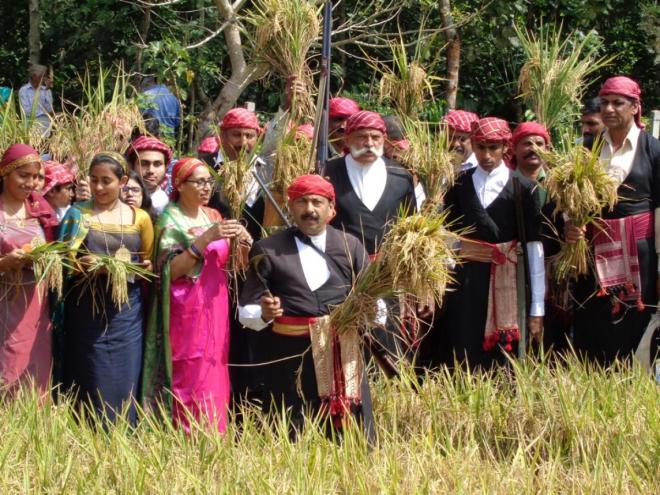
CNC President N U Nachappa and CNC members observed Huthari festival by cutting paddy sheaves in the filed of Uthappa at Chikkabettageri near Kushalnagar on Sunday.

The Codava National Council (CNC) led by its president N U Nachappa celebrated Huthari, the harvest festival of Kodagu, at a paddy field of Nandineravanda Uthappa, in Chikkabettageri village near Kushalnagar in Kodagu on Sunday.

By cutting paddy sheaves in the paddy field of Uthappa, the members celebrated the festival in a traditional manner.

The members offered prayers to the gods and began the Huthari celebrations with ‘Nere Kattuvo’ ritual. The leaves of mango, jackfruit, “Arali”, “Kumbali” and cashew nut trees were used in the ritual.

After the ritual, the participants walked in a procession to paddy fields accompanied by the ‘Dudikottpat’ (Dudi is a small drum of Kodavas).

After firing thrice in the air, the paddy sheaves were cut and brought home in a procession.

The CNC members performed traditional Kolata, Pareya Kali and Chowkata on the occasion. People relished Payasa, “Thambittu,” “Kadubu”, “Pandikari” and other delicacies on the occasion.

Speaking on the occasion, the CNC President urged the government to include Kodava language in the 8th Schedule of the Constitution.

He said that the government should accord tribal status to Kodavas.

The central government should declare a holiday for Huthari festival.

The CNC is continuing its struggle for an autonomous Kodava land and Kodava land should be declared a union territory. The culture and tradition of Kodavas should be included in the Intangible Cultural Heritage of Unesco, he said.

source: http://www.deccanherald.com / Deccan Herald / Home> District / by DH News Service, Kushalnagar / December 03rd, 2017

Dalit worker in Kodagu freed from bonded labour

His employer had let loose dogs on him

A Dalit worker in Kodagu, whose employer let loose dogs on him for quitting work, has been liberated from bonded labour.

Harish, 30, who had quit working in the Paruvangada Kishen’s coffee beans godown at Balale village in Kodagu’s Virajpet taluk, was allegedly bundled into a jeep by Kishen and his associate Madhu on August 30 and tied up in a shed where three dogs were reportedly let loose on him.

Mr. Harish had suffered injuries on his head, shoulder and hand. The accused later took Harish in their vehicle and left him near Balale hospital before the public admitted him to the hospital.

Following a complaint by R. Siddaraju, State coordinator, Human Rights Forum for Dalit Liberation, the Assistant Commissioner and Sub-Divisional Magistrate of Madikeri Sub-Division conducted a probe.

The inquiry had revealed that Harish had been forced to work in Kishen’s godown against his wishes. Kishen had forced Harish to work saying he owed him interest on borrowed money, the enquiry said.

‘Deprived freedom to move around’

By abducting him and assaulting him, the accused had deprived Harish of his freedom to move around, the Sub-Divisional Magistrate said, while issuing a Certificate for Release from Bonded Labour on November 14, 2017.

During inquiry, Harish said he had been working in the godown for ₹200 a day and was paid his wages weekly. Though Harish had taken a loan of ₹10,000 to go to Sabarimala, the dues had been cleared on return. However, long working hours (7 a.m. to 2 a.m.) and other problems made him quit and join another coffee estate as an employee, which angered the accused.

Meanwhile, Harish lodged a complaint with the Kodagu police after recovering from his injuries.

In September, the Kodagu police arrested the accused, who were later remanded in judicial custody. Presently, the accused are out on bail.

The Certificate for Release of Bonded Labour entitles Harish to immediate compensation of ₹20,000 from the government, and financial assistance of ₹80,000 upon conviction of the accused.

Meanwhile, the International Justice Mission (IJM), in a statement, said bonded labourers often face extreme violence and exploitation. IJM’s William Christopher said the victim was traumatised and still feared for his life.

source: http://www.thehindu.com / The Hindu / Home> News> Cities> Bengaluru / by Special Correspondent / Mysuru – November 21st, 2017

Forestry College wins overall championship

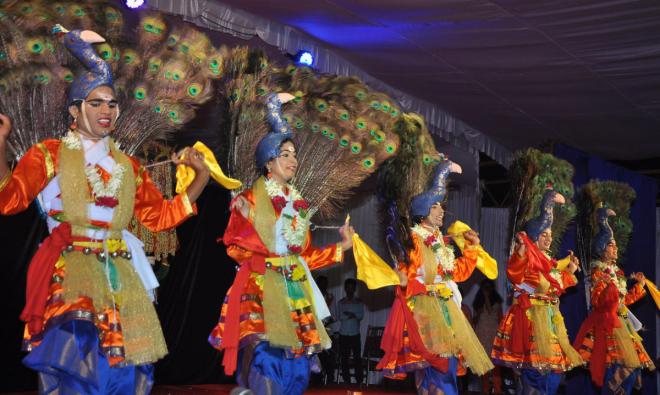
Students performed a peacock dance at Yuvajanotsava held at Forestry College, Ponnampet on Friday.

Forestry College, Ponnampet won the overall championship in the cultural programmes held as part of the two-day Yuvajanotsava at Forestry College in Ponnampet on Friday.

Students of Forestry College had won 106 points while students of Mudigere Horticulture College won the second place with 96 points. In the diploma category, the students of Brahamavar College won the overall championship while Kathalegere Diploma College won the second place.

Yuvajanotsava, under the title of Yuvaspandana, was organised by the University of Agricultural and Horticultural Sciences, Shivamogga.

Students of Ponnampet Forestry College and Mudigere Horticultural College presented a peacock dance, Pooja Kunitha, Nandikolu, Veeragasem Bhoothakunitha and others. Mudigere College students entertained the audience with Dollu Kunitha and Pooja Kunitha while students of the University of Agricultural and Horticultural Sciences, Shivamogga presented Lambani dance.

Rangayana Director Bhagirathi Bai said that youth have immense talent. Rangayana will organise College Natakotsava next month.

source: http://www.deccanherald.com / Deccan Herald / Home> District / DHNS, Madikeri / November 11th, 2017

Coffee industry seeks review of GST

CoffeeBeansKF07nov2017

The high GST rate, besides bringing down instant coffee consumption, would also have a significant impact on the coffee farmers of South India

New Delhi / Bengaluru :

The coffee industry has sought a review of the GST rates on instant coffee and the curing process, while stating that such high rates would hurt consumption and, eventually, growers’ realisations.

Coffee growers are under pressure as the volatile trend in global prices, which directly influence local prices, has already kept their realisations in check.

The GST on instant coffee has been fixed at 28 per cent, while the curing or dry processing of the beans attracts a levy of 18 per cent.

Parity sought with tea

Making a case for reduction in GST on instant coffee, The India Coffee Trust, represented by various stakeholders from the sector, has appealed to the Prime Minister’s Office to bring it down to 18 per cent, on par with the instant tea.

Anil Kumar Bhandari, President, ICT, in a letter to the PMO, said the high GST rate, besides bringing down instant coffee consumption in the country, would also have a significant impact on the coffee farmers of Karnataka and South India, since instant coffee manufactures will source less raw coffee from them.

According to the ICT, of the 3.46 lakh tonnes of raw coffee produced in the country, about 2.78 lakh tonnes is exported, while the rest is consumed domestically.

Of the 0.78 lakh tonnes consumed domestically, about 50,000 tonnes is used in the form of roast and ground, while the remaining 28,000 is consumed as instant coffee.

South India accounts for the bulk of the coffee consumption, though off-take has picked up in the northern States in recent years.

The Trust said instant coffee is largely consumed by poor consumers and the cost per cup is lower when compared to the roast and ground.

It also said that higher tax would impede the development of the coffee habit in North and East India.

Seeking a cure

Meanwhile, the All India Coffee Curers Association has demanded the withdrawal of 18 per cent GST levied on coffee curing.

Curing involves dry processing and grading of green coffee beans.

As curing is an investment-intensive process, the majority of coffee growers normally outsource the dry processing of the green beans to curing works, where they are processed, graded and sorted.

“Any levy on curing would eventually hit farm-gate prices, thereby reducing growers’ realisations. The government should withdraw the levy,” said AN Devaraj, President of the All India Coffee Curers Association.

Farm-gate price worries

Coffee growers are concerned about how the impact of the GST levy on curing will influence farm-gate prices, even as the early harvesting of the arabica variety has begun in parts of Kodagu and Chikmagalur, the main growing regions.

“The GST on curing may impact farm-gate prices. With the season yet to start in full swing, it is too early to quantify the impact,” said HT Pramod, Chairman of the Karnataka Planters’ Association.

Arabica prices are hovering between ₹7,000 and ₹7,200 per 50-kg bag for the parchment, while arabica cherry prices are in the ₹3,700-4,000 per bag range, lower than last year.

“We are waiting for clarity on this issue. No sale of coffee from the new crop has taken place as growers are not in a hurry to sell as prices are low,” said N Bose Mandanna, a grower in Kodagu.

source: http://www.thehindubusinessline.com / Business Line / Home> Economy> AgriBusiness / by KR Srivats & Vishwanath Kulkarni / October 30th, 2017
More the forest trees, the better the coffee

Plantations with native trees produce more coffee which is also of better quality

Forest trees are good, not just for the environment but for your coffee too: having more forest trees in coffee plantations maintains tree diversity and also increases coffee production and quality, shows a study. This could be vital information as native trees are being replaced with exotics in coffee-growing landscapes to increase coffee production.

India, the world’s sixth largest coffee-producer, grows ‘shade’ coffee, under the canopies of naturally occurring native trees such as jackfruit, Black dammar (dhup) and Magnolia (champa) which are legally-protected. However, some planters now replace dead native trees with exotics like Silver oaks which are not protected and can be felled for timber. Silver oaks also serve well as pepper stands, and cultivating pepper on them supplements planters’ incomes. This ‘intensification’ – reducing and replacing native shade tree cover – contributes to forest loss in the tropics, where coffee is cultivated.

Scientists at ETH Zurich (Switzerland) and the College of Forestry (Kodagu) examined whether this intensification affects native tree biodiversity and coffee productivity in Karnataka’s Kodagu district, which produces more than one-third of India’s coffee. They studied tree species diversity in 25 coffee plantations varying in native shade tree cover, with some having only non-native Silver oaks as canopies.

The benefits

Their results, published in the journal Agriculture, Ecosystems and Environment, show that 95 native tree species offer shade for coffee in Kodagu; and intensification decreases this tree diversity. Some plantations, which still retained native trees, even had red-listed tree species (designated as threatened by the IUCN), and some of them in high numbers. The team found that such plantations produced more coffee, which was also of better quality . Silver oak-dominated plantations showed more single-seeded fruits and attacks by the Coffee berry borer, a major pest.

“This is likely due to reduced predators such as ants, birds, or parasitoids, in Silver oak-dominated plantations,” says lead author Maike Nesper (ETH Zurich). Protecting native trees could be crucial, she adds.

“Some regions are re-diversifying tree canopy cover in coffee agroforests, as consumers are increasingly interested in biodiversity conservation and ready to pay premium prices…but to gain the same level of native diversity by reforestation is nearly impossible, and it is crucial to diversity in the first place.”

source: http://www.thehindu.com / The Hindu / Home> Sci-Tech> Environment / by Aathira Perinchery / September 30th, 2017

Karnataka is now biggest pepper producer in the country

For the second year running, Karnataka has been named the country's largest pepper producer, accounting for 45% of the spice produced in India
For the second year running, Karnataka has been named the country’s largest pepper producer, accounting for 45% of the spice produced in India

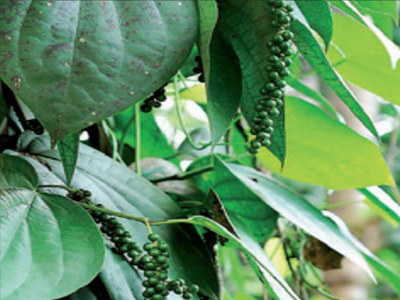
Karnataka has overtaken Kerala and become the country’s leading pepper producer, accounting for 45% of the total production.The Centre’s Spices Board data puts Karnataka ahead of Kerala for the second year running. While Karnataka produced 33,000 metric tonnes of pepper in 2014-15, against Kerala’s 28,000MT, the margin widened in 2015-16 as Karnataka’s yield remained 33,000MT and Kerala’s fell to 26,000MT.

Kerala’s decline, to a great extent, has been because of its black pepper vines falling to quick wilt, a disease that causes sudden wilting, drying and death of the vines. In Wayanad district in Kerala, farmers lost almost 90% of their vines to the disease. The Spices Board has taken up extensive research to contain the pest. The sudden scourge, however, has turned the focus on pepper production in south Karnataka districts.

Pepper is grown in several parts of Karnataka, mainly in Chikkamagaluru, Shivamogga, Madikeri and Kodagu.

Alternative to areca, rubber

The state’s plantation growers have adopted the spice as an economically profitable alternative to areca (palm), coffee, rubber and coconut. The spice crop is grown in the middle of coffee plants, said Bose Mandanna, former vice-president of Coffee Board and a leading planter in Suntikoppa in Kodagu. At least 40 pepper vines are planted in an acre of robusta coffee plantation. This goes up to 80 vines if it is an arabica plantation, because these are grown at lower heights and produce less coffee per hectare.The harvest is done during February-March.

“Kodagu accounts for 25% of the pepper production in the country,” Mandanna said. An acre fetches 100kg to 150kg of pepper but with intensive cultivation, some growers get up to 500kg.

There is some difference in the production data of the government’s Spices Board and the National Commodity & Derivatives Exchange (NCDEX), but both sources indicate that Karnataka is beginning to unseat Kerala from the No.1 spot. NCDEX data shows Karnataka having a big lead over Kerala in 2014-15, marginally losing out to Kerala the following year, but regaining the lead in 2016-17.

NCDEX says India accounts for 17% of the world’s production of pepper, and is the second largest producer after Vietnam. The exchange relaunched its pepper contract on the platform in July, after about five years. In just three days, it saw a total volume of 807 tonnes of pepper, valued at Rs 38 crore, being traded.

Sarat Mulukutla, chief (commercial segment) of NCDEX, said considering the rise in pepper production in Karnataka, the exchange is launching a third delivery centre in Hassan. The other two are in Kochi and Kozhikode in Kerala.

Attractive price

Anish Madappa of T Shettigeri in south Kodagu said pepper production had grown in Karnataka for a decade due to the good price it fetches. Ten years ago, a kilo of pepper fetched Rs 260, now it is about Rs 680. Coffee planters have started growing pepper on poles with the help of biomass, leading to a jump in production. Drip and sprinkler irrigation have helped minimise water loss and increased the yield per acre. “Once a high rising (pepper) creeper is planted, it will provide yields for 35 to 50 years with little or no investment,” said Kannagi Sheshadri, a farmer cultivating plantation crops in Theerthhahalli taluk. “The plants need to be carefully treated to achieve maximum yield. I reaped 12 tonnes last year and hope to double it this year,” said Joney Mathew, a farmer with crops in Shivamogga and Chikkamagaluru districts.

“Pepper produced in Kodagu is of the best quality,” said Madappa. “This is because we normally use only Bordeaux spray, which contains lime and copper sulphate.” The spray helps protect the pepper vines from fungal problems and resists quick wilt disease.

source: http://www.timesofindia.indiatimes.com / The Times of India / News> City News> Bangalore News / by Shalina Pillai & G. Rajendra & CV Raghavendra Rao / TNN / September 26th, 2017

World’s costliest coffee made with cat-poop is now available in India. Here’s where you can get a hot cuppa

Take your love for cats to the next level by consuming their faeces. Yes, coffee made out of cat poop is now available in India.

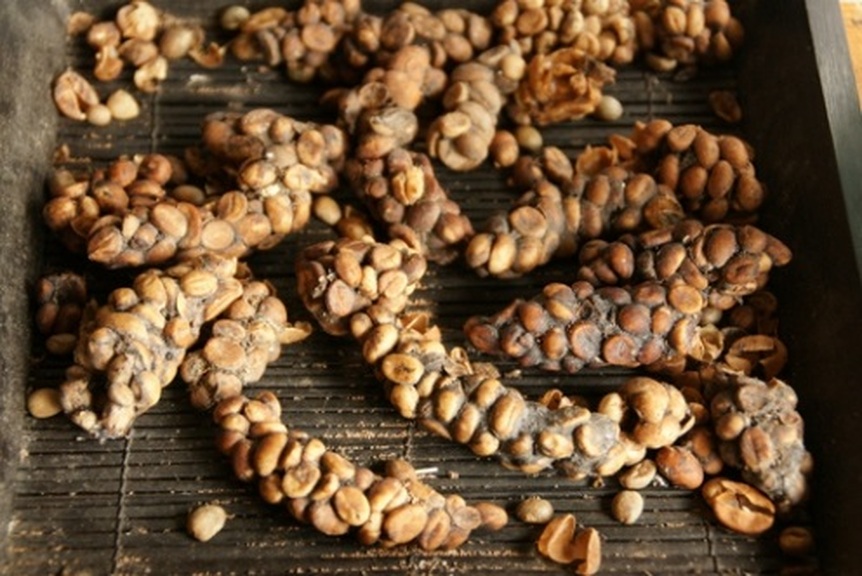
What happens when you take your love for cats to the next level? You consume their faeces. Yes, you read that right. Civet coffee is the most expensive coffee in the world and is made from the excreta of civet cats. India has recently delved into the production of this purr-fect coffee and we’re pretty excited. The production will start at a very small scale at Coorg in Karnataka. Being the third largest producer of coffee, we gotta try out everything that’s out there, right. If you’re wondering what this coffee looks like, here you go:

CivetKF18sept2017

Here’s the icky part: The coffee is made by getting the civet cat to ingest coffee beans. Then the cat’s poop is collected and processed. Why would someone do that, you ask? And WHY is this cat-poop thingy the most expensive coffee on the planet? Well, this coffee is considered more nutritious than other varieties of coffee and there are a lot of certifications involved too. The cat eats the flesh off of the coffee berries and not the actual bean plus the enzymes in the cat’s stomach enhance the bean flavour and that’s why this coffee is such a big hit all over the world!

A startup called Coorg Consolidated Commodities is producing this cat poop coffee and they’ve also decided to open up a café to serve this coffee locally! This coffee is presently being sold locally under the name ‘Ainmane’ and is available only at the Club Mahindra Resort at Madikeri for Rs 8,000 per kg.

source: http://www.inuth.com / inUth.com / Home> Lifestyle> Food / by Fukres / September 14th, 2017

Bengalureans plant groves to save Ghats

GrovesKF07sept2017

Bengaluru :

The Western Ghats has been plundered over the years, resulting also in progressively hotter summers in Bengaluru. While afforestation efforts to save the Ghats have been on for years, a team of passionate and dedicated Bengalureans is trying a different approach to save the many tree species. They are planting acres-wide groves in private and public lands that fall in the range, for now focussing on Coorg and Wayanad.

Meera, Rajesh, Sheshadri Ramaswamy, Uma, Anil Panolil Chirikandoth and Dhandapany collectively form Forest First Samithi (FFS) – a society that aims to engage and empower local communities in ecological conservation by educating them about endangered and endemic plant species. What started off as a team of four has today grown into a family with ten permanent members and over 30 volunteers.”FFS is trying to conserve endangered tree species by creating an eco-system where birds, small mammals and insects can also thrive,” says Meera, one of the founders of FFS, adding that the organization was started in 2008, and that most of their early years were spent on learning.

FFS’ vision for degraded lands in Kodagu started this May, and they have already spoken to local organizations and communities to get them on board. “Since we started work in Kodagu, we have already managed to add 35 species of endangered plants into the groves we worked on, and plan to touch 100 species,” she says, adding that the lands they are focusing on are public spaces ranging between 5 acres and 30 acres.

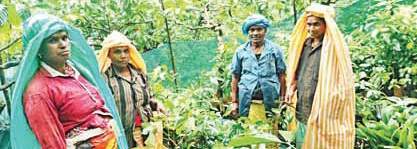
Workers in Wayanad grove  Pics courtesy: Meera Rajesh

How it all started

FFS started work in the biological hotspot that is Wayanad, where a lot of native tree species have been chopped to give way to silver oak, coffee and teak plantations. Meera says that unless one ventures deep into the forest, it is unlikely you’ll come across any traditional species. “During the summer months, we noticed how trees in Wayanad were being chopped at an alarming rate for timber. That’s when we decided to do something about it. We got involved in a lot of discussions with research organizations and experts on how to go about it, and also spoke to locals to get them involved,” she says.

Years of hard work and research resulted in the complete transformation of a private farm land in Wayanad, where a section of it was partitioned to create what is called a ‘farm grove’. This grove comprises endemic, endangered tree species, while the rest of the land can be used for economic purposes. By getting farmers and land owners involved in understanding how these endangered species will actually better their crops in terms of soil quality, water retention and pollination, FFS has managed to conserve 100 species of trees in Wayanad.

source: http://www.newindianexpress.com / The New Indian Express / Home> Cities> Bengaluru / by M Shriya Sharma / Express News Service / September 06th, 2017

Farmers’ collective sets up black pepper gene bank

The gene bank features 42 native varieties of black pepper

Kozhikode :

In a bid to arrest the declining fortunes of black pepper in its historical home turf, a farmers’ collective in Wayanad has set up a gene bank featuring 42 native varieties, including rare accessions, of the spice indigenous to Kerala. The Wayanad Social Service Society (WSSS) hopes to protect and popularize the native pepper varieties many of which have better disease resistance and drought tolerance but had been abandoned by farmers following the advent of high yielding hybrid varieties.

Apart from protecting the diversity of black pepper in the state, the field gene bank of pepper, spread around three acres at Mananthavady, would also make available planting material of native varieties to farmers.

The native pepper varieties which have been collected from Wayanad, Nilgiris, Coorg and other Malabar districts include the once widely cultivated Kalluvalli, Jeerakamundi, Neelamundi, Cherumaniyan, Karimunda, Ibe rian, among others. Farmers say that these varieties are drought tolerant when compared to hybrid varieties.

“Kerala had earned its global monopoly in pepper trade from ancient times onwards. Though the yield of native varieties was less, they were resistant to drought, pests and disease at tacks. The intensive and unscientific high input farming of hybrid varieties using chemical fertilizers and pesticides, have contributed to decimation of pepper cultivation in many regions of Malabar,” said director of WSSS Father John Choorappuzhayil.

He said that native pepper varieties for the gene bank were collected from remote tribal colonies apart from a few wild varieties of pepper from the forests.

“We are still in the process of identifying and adding more native varieties to the gene bank. We hope to collect around 60 native pepper varieties soon,” he added.

Dr N Anil Kumar, the director of the biodiversity programme of M S Swaminathan Research Foundation, said that native pepper varieties could vanish forever if left unprotected especi ally in the wake of increasing challenges posed by climatic variations in the region.

“The diversity of black pepper, which had its origins in the state, has immense genetic value. Also it is a historical and cultural treasure given its role in establishing the spice trade and pepper routes in medieval times originating from Kerala. Even the government should think of exploring the tourism potential offered by the on-farm assemblage of native pepper varieties,” he added.

Anil Kumar said that farmers who took up the cultivation of native pepper varieties should be provided incentives by the government.

“Also it would be prudent for farmers to set apart at least 10% of their land for cultivation of native varieties as is mandatory in some European countries,” he added.

source: http://www.timesofindia.indiatimes.com / The Times of India / News> City News> Kozhikode News / by K R Rajeev / TNN / May 30th, 2017

Augmenting Black Pepper Production – A Success Story From Kodagu

Published by ICAR-Indian Institute of Spices Research Kozhikode

An 11 minute documentary film on success of black pepper farmers in Kodagu district of Karnataka who has been successfully adopted the high production technologies developed by the Cardamom Research Centre of Indian Institute of Spices Research, Calicut in Kerala. The documentary is produced under the NAIP Sub Project, Mobilizing Mass Media Support for Sharing Agro-Information.

Category
People & Blogs
License
Standard YouTube License
Music
“Beckoning Hills” by Ronu Majumdar (iTunes)

source: http://www.youtube.com / by ICAR – Indian Institute of Spice Research / May 31st, 2011