Category Archives: Agriculture

Coffee growers pitch for renewed thrust on research to boost yields

Karnataka planters’ body favours separate body on the lines of Upasi Tea Research Foundation
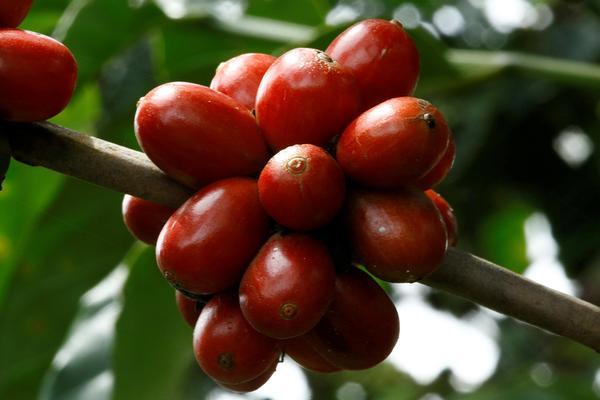
coffeekf16oct2016

Bengaluru :

Concerned over low and stagnating productivity levels, and dwindling area under the Arabicas, coffee growers in Karnataka — the largest producing State — are seeking a renewed thrust in research activity to boost yields.

Seeking to play an active role in such research, the Karnataka Planters Association (KPA), the apex body of coffee growers, has mooted a proposal to set up a separate body in the state on the lines of UPASI Tea Research Foundation.

“We want to have a separate research body for coffee in Karnataka like the UPASI TRF. We have approached the State government for funding such an initiative,” said Baba PS Bedi, Chairman, KPA. Karnataka accounts for 70 per cent of the 3.48 lakh tonnes of coffee produced in the country.

Speaking ahead of KPA’s annual conference, Bedi said the State-run Central Coffee Research Institute (CCRI) has not been able to meet the growers’ requirement of clonal planting material nor had come up with new high yielding or disease resistant varieties in the recent past. “In the current year, the CCRI distributed only 10,000 Robusta Clones in Chikmagalur and Hassan districts, which amounts to 20 acres of plant material and is grossly inadequate … It is quite apparent that CCRI does not have the means at its disposal to propagate large number of clones/tissue culture plant material. Therefore, it is imperative that this research is outsourced as productivity levels are low, costs of production cannot be met and Arabica plantations are dwindling in number,” Bedi said.

KPA and UPASI have already made a proposal to the Karnataka government on setting up a facility for clonal propagation and tissue culture planting material at the latter’s research station in Koppa, Chikmagalur. Global majors such as Nestle, that have a major interest in coffee, would also be involved in the research efforts, Bedi added.

Backing KPA’s proposal on a separate research facility, Upasi President D Vinod Shivappa said a renewed thrust on research efforts was required to make coffee production sustainable.

Further, Bedi also said that KPA was concerned about dwindling Arabica plantations due to the high incidence of white stem borer, leaf rust and low productivity.

He said CCRI should consider import of Arabica varieties that are resistant to white stem borer, leaf rust and genetically proven to be high-yielders under the multi collaborative research project co-ordinated by the World Coffee Research organisation.

Exempt from GST
On the proposed GST regime, Bedi said if coffee is made taxable under GST, the input tax paid by the grower or agriculturist on inputs used or consumed by the agriculturist in growing this product should be allowed to be set-off.

The entire process of coffee growing up to the stage of its curing should be considered as an ‘intermediary stage’ of coffee production and exempted from the provisions of GST, the KPA chairman said.

‘Coffee’ seeds cannot be consumed till they are roasted and ground. Therefore, taxable event under GST should commence from the stage of its value addition that is when coffee is roasted and ground. “If a grower or agriculturist is not allowed to avail input tax credit, then there should be an exemption from GST on all inputs including fertilisers and chemicals used by an ‘agriculturist’,” Bedi added.

source: http://www.thehindubusinessline.com / Business Line / Home> Economy> Agri Business / The Hindu Bureau / Bengaluru – October 13th, 2016
International Coffee Day celebrated in Kodagu

Madikeri :

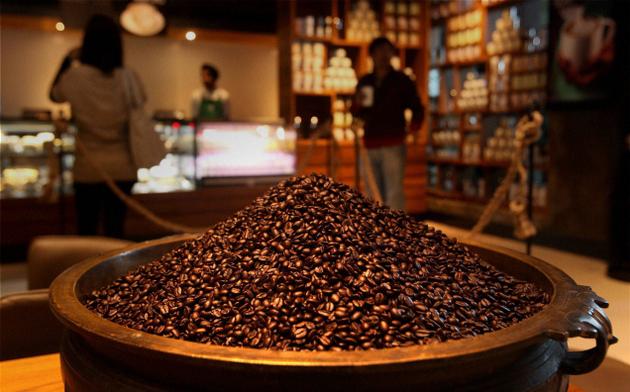
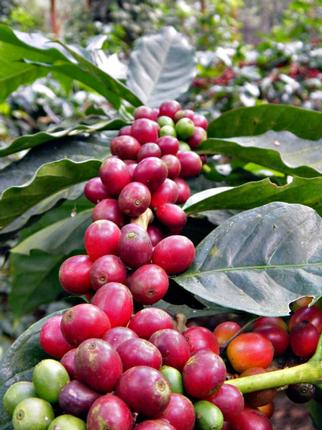
International Coffee Day was celebrated in Kodagu by giving piping hot coffee to tourists at Dubare elephant camp.

Representatives of 77 nations are members of the International Coffee Association and the Coffee Day is celebrated worldwide to promote coffee sales on par with prouction.

Woman folk took the lead in coffee awareness programme. Kodagu deputy commissioner R V D’souza inaugurated the coffee show. He said Kodagu produces the best quality coffee while stressing the need for better marketing.

Madikeri DFO Edukondalu opined that such awareness campaigns will help increase coffee consumption.

Senior scientist from Appangala Research Station Dr. Ankegowda said coffee is a healthy drink and many researches have proved it.

Convener of the women team of coffee awareness campaign Chitra Subbaiah announced that more and more awareness campaigns will be conducted in coming days. She appealed to the tourism department to provide Kodagu coffee to tourists who visit the district.

Several coffee products were exhibited during the coffee festival. In Madikeri also several organizations served coffee to tourists at Raja Seat.

source: http://www.timesofindia.indiatimes.com / The Times of India / News Home> City News> Mysore / TNN / October 03rd, 2016

Cream of the cuppa: From Coorg to Seattle

Single-origin Indian coffee will be available for the first time in Starbucks, Seattle, as a limited edition Photo: PTI

Americans, who thrive on Starbucks, will get a taste of a single-origin coffee from India’s Coorg region for the first time. BHUMIKA K. gives you a peek into what the cup holds

A small lot of speciality coffee from Karnataka’s famed Coorg region is getting ready to make its limited edition and exclusive debut later this year at the Starbucks Reserve Roastery and Tasting Room in Seattle, America, considered a shrine almost in the world of high-end coffee.

It is for the first time that the leading American coffee company will offer a single-origin coffee from India in the U.S.

While the formal deal has been inked between Starbucks and Tata Coffee Ltd recently, here is looking deeper into what that cuppa might hold, right from where it was grown. For starters, it is said to be intensely fragrant and aromatic, “with notes of caramel, citrus, toasted nuts, and milk chocolate”.

Grown in two-tier shade, the Nullore Estate coffee is a microlot / Photo: Special arrangement

The coffee comes, not surprisingly, from the largest Arabica plantation (394 hectares) in Coorg district, from the Nullore estate owned by Tata Coffee Limited, close to Madikeri. These Arabicas are grown under a two-tier shade system (under local and fruit bearing trees). The shade is carefully managed, which helps the coffee bean mature slowly, absorbing the natural “organoleptic” characteristics within – which gives it the final smell and taste. Coorg is considered to have the perfect agro-climate and soil suitable for coffee cultivation.

Coorg is known for its coffee and Nullore Estate, that belongs to Tata Coffee, is one of the largest Arabica plantations in the district Photo: AFP

“When we cupped the Tata Nullore Estates coffee we noticed this coffee was different from other Indian coffees. The flavour of this rare coffee exemplified the types of unusual coffees we want to deliver under our Starbucks Reserve Programme,” says Andrew Linnemann, Vice President, global coffee quality and engagement at Starbucks Coffee Company. The Starbucks Reserve Programme is an ongoing series of the rarest and most exotic coffees — unique, small-lot coffees that the company creates, roasting them in Seattle. “Each coffee is one-of-a-kind — sourced from small coffee-growing regions in Latin America, Africa and Asia, Pacific Islands. All Starbucks Reserve coffees are roasted with care, at our Starbucks Reserve Roastery and Tasting Room in Seattle, to bring out their peak flavour expression,” adds Linnemann.

“Nullore Estate coffee was a microlot,” points out Sanjiv Sarin, Managing Director and CEO, Tata Coffee Ltd. Microlots are generally considered the “cream of the crop” from an estate, and of course come with a unique taste and a story behind it; they are usually sold in small quantities, mostly only a few kilos. Therefore, they are pricier. “We have been working on premium differentiated coffees for some months now and set up a process to identify potential blocks in our estates whose coffees will qualify. Nullore passed our assessment. A small batch of carefully-cultivated coffee was isolated from the regular farm produce, handpicked and sun dried. Producing quality microlots is a meticulous and tedious process,” reiterates Sarin.

It is technology driven too, including using light-sensitive spectrometers to ensure that the coffee beans mature slowly but uniformly. The shade also means that there is natural mulching from the leaves that fall onto the ground, which in turn helps avoid the use of strong fertilizers and pesticides. Sustainable cultivation practices and an endeavour to maintain the ecological balance were also the focus. The Nullore Estate coffee will be available at the Seattle tasting room later this year, and only for a limited period. The pricing has not yet been decided.

The first Indian coffee to be available through Starbucks was introduced in 2013, to celebrate the Tata-Starbucks first anniversary in the India market. Starbucks created a special India-sourced coffee, called ‘India Estates Blend’, as a tribute to its customers, partners, coffee producers, and roasters. But it was sourced, roasted, packaged, and sold in India. Explaining the difference between a blend and single-origin coffee, Sarin describes how a coffee blend is a combination of coffees from different origins that, when put together, create an experience or flavour profile that does not exist by itself.

“A single-origin coffee comes from one, geographic place (country, region, town, community, estate, mill or farm). This gets to a coffee’s very specific provenance. They represent a ‘taste of place’.”

source: http://www.thehindu.com / The Hindu / Home> Features> Metroplus / Bhumika K / Bengaluru – July 25th, 2016

Govt may withdraw Coffee Act, come out with new Bill

New Delhi :

The government is considering withdrawal of the Coffee Act, 1942, as it “no longer serves the purpose”, Commerce and Industry Minister Nirmala Sitharaman said in the Lok Sabha on Monday.

The Minister was replying to a supplementary during Question Hour on the role of the Coffee Board, especially with regard to small growers, and why it was headless for the past two years.

“Over the years, the role of the Coffee Board has changed and many provisions of the existing Act have become redundant, especially after abolition of the Coffee Pooling System in 1996,” she said, adding that it had been proposed to repeal the Act which was enacted more than 70 years back and enact a new Coffee Bill, 2016.

The suggestions received on the Bill were “regarding the control of the coffee industry, definition of coffee and coffee estate, cognisance of offence under the Act, etc, which are being examined,” she added.

Output decline

In reply to a question from Prathap Simha from Coorg, the Minister said domestic coffee production was likely to fall by 8 per cent in the current fiscal, due mainly to lack of timely rains.

“It has been estimated that there is a likelihood of a decline in coffee production in 2016-17 by 8 per cent compared with 2015-16 due to lack of timely rains and high temperature during the crucial flowering stage,” Sitharaman said.

On another supplementary on whether the government would mandate international coffee chains in India to buy Indian coffee, Sitharaman said the country was home to 2 per cent of the world’s coffee growing area, but produced 4 per cent of global production and had a share of 5 per cent of world coffee exports, worth over Rs. 5,000 crore a year. So, even though international coffee chains have set up shop in India, they do buy coffee locally, she said.

The main buyers of Indian coffee are Italy, Russian Federation, Germany, Belgium and Turkey, which account for over 50 per cent of coffee exports from India, she added.

Duncan tea gardens

On another supplementary by Trinamool’s Saugata Roy who wanted to know how many closed tea gardens’ belonging to the Duncan group in West Bengal had been taken over by the Centre “as promised four months ago”, Sitharaman said the government had moved to take over some tea gardens, but there was litigation by the Duncan group. The Minister said the process to identify new agencies to take over the management of these tea gardens was on, in consultation with the state government.

source: http://www.thehindubusinessline.com / Business Line / Home> Economy> AgriBusiness / The Hindu Bureau / New Delhi – July 25th, 2016

High temperatures may cut coffee production by 8 p.c.

CoffeeKF24jul2016

India’s coffee production is expected to drop by 8.05 per cent during 2016-17 compared to a record production of 3.48 lakh tonnes in 2015-16 owing to high temperature during summer months.

For the year 2016-17, the Coffee Board placed the post-blossom crop forecast at 3.20 lakh tonnes, comprising one lakh tonnes of Arabica and 2.20 lakh tonnes of Robusta, an overall decline of 28,000 tonnes (-8.05%) over the previous year.

The drop is mainly in Karnataka (22,175 tonnes) followed by Kerala (6,730 tonnes). The causes could be the delayed blossom and showers coupled with high temperatures especially in major coffee growing areas of Karnataka and Kerala.

In most of the coffee areas of Karnataka, estates with irrigation facilities have irrigated their Robusta plantations for one round of blossom during February-March and with one round of backing irrigation. However, due to absence of subsequent natural showers, even the irrigated estates have suffered some setback due to prevailing high temperatures, according to Coffee Board officials.

Scattered, uneven blossom

Coffee growing regions of Karnataka received the first spell of summer showers only in April and these showers were scanty and isolated. These showers did not cause any blossom in Arabica estates but resulted in scattered, uneven blossom in un-irrigated Robusta fields, which constitute about 40 per cent of the Robusta area in Karnataka.

Officials said this resulted in pinking and scorching of buds in Robusta. The growers were unable to take up supplementary irrigations to top up the scanty showers due to drying up of water resources.

The post-blossom estimate of Arabica for 2016-17 has shown a decrease of -3.38% (3,500 tonnes) over the corresponding figure of 2015-16, while the Robusta estimate has shown a decrease of -10.02 per cent (24,500 tonnes) over the last year’s figure (2015-16).

source: http://www.thehindu.com / The Hindu / Home> National> Karnataka / Nagesh Prabhu / Bengaluru – July 19th, 2016

Brewing coffee from jackfruit seeds

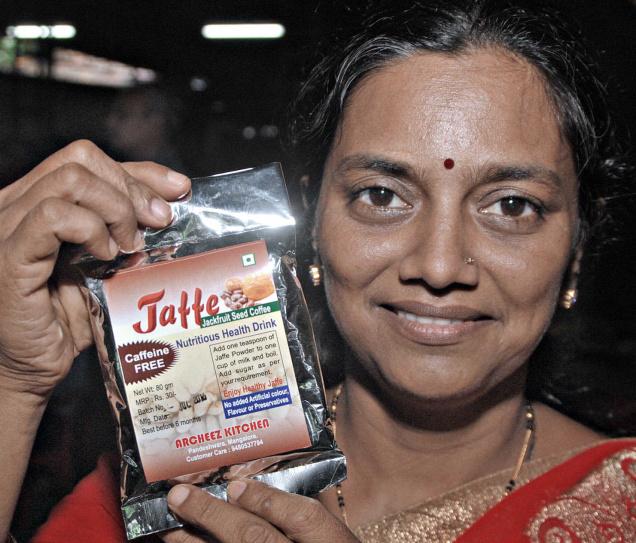
Healthy:Maithraye Shenoy displaying the ‘Jaffe powder’ made of jackfruit seeds.— Photo: H.S. Manjunath

Can powdered jackfruit seed taste like light coffee without adding any other ingredient to it?

If you cannot believe it, you ought to taste the “health drink” made by Shivanna from Sakharayapatna, of Parivarthana, a non-government organisation, in Chikkamagaluru district.

“My product is very near to coffee; it can become a substitute for coffee,” said Shivanna, who was at the jackfruit mela here on Sunday. He told The Hindu that the processed seed powder was the result of his one-year research and it was free from any stimulant like caffeine.

He said that three cups of the “health drink” could be prepared from one spoon of his new product. Shivanna has sent the sample to the Central Food Technological Research Institute, Mysuru, for analysis of carbohydrate, fibre, fat and calorie contents. “You can drink this product like you drink coffee by making its decoction,” he said.

‘Jaffe powder’

Maithraye Shenoy, a homemaker from Pandeshwara in Mangaluru, has also made a “health drink” from jackfruit seed. She has named it “jaffe powder”, which can be mixed with milk. “It was the result of a two-month research. I roast the jackfruit seed before making the product,” she said.

Meanwhile, Artocarpus Foods Pvt. Ltd., at Taliparamb, near Kannur, is already marketing jack seed powder. It can be used to make chapattis, dosas, cakes, and bread. It also makes a product from the seed as masala for chicken curry, said Shree Padre, executive editor, Adike Pathrike, a farm monthly and a crusader for jackfruit and its value-added products.

source: http://www.thehindu.com / The Hindu / Home> News> Cities> Mangaluru / Raviprasad Kamila / Mangaluru – July 04th, 2016

It’s raining oranges in Kodagu

Madikeri :

The tiny district of Kodagu was well known for its mandarin oranges in the 1970s-80s and was the largest producer of the juicy fruit in the state.

It lost its glory after 1990s as plants across the district died after contracting diseases.

However, after the year 2000, the district is on its way to gain its past glory as mandarin production in the area is swelling every year, thanks to the efforts of horticulture department and national horticulture mission.

Oranges are grown in coffee estates as a sub-crop.

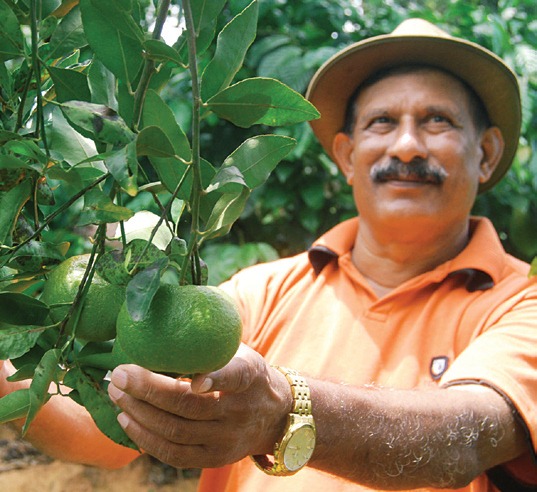
Ponnachettira Suresh displays his Mandarin oranges in Madikeri on Monday

Hundreds of coffee growers availed the facilities provided by the department and started growing mandarins.
Progressive farmer Ponnachettira Suresh, a native of Ibnivalavadi near Madikeri succeeded in growing mandarin and harvested the fruit twice a year.

This inspired many growers. Suresh says that Coorg orange is known in the market for its sweetness and is always in demand.

Suresh says, “As Nagpur oranges come to the market only in October, Coorg variety is in good demand as we get two crops in a year. At present, orange is being sold at Rs 60-70 per kg but will reduce to Rs 25-30 in October.”

Mandarin was grown in 1,320 hectares in 2013-14, which has now swelled to 1,550 hectares as the horticulture department supplied 80,000 orange plants last year.

State Horticulture Department Additional Director Paramashiva told Express on Monday that the department is providing a subsidy of Rs 16,000 per acre to growers for new plantations.

source: http://www.newindianexpress.com / The New Indian Express / Home> States> Karnataka / by Coovercolly Indresh / June 21st, 2016

Farming gains momentum in Kodagu as monsoon sets in

Intermittent rains and cloudy weather conditions over the last few days in Kodagu district have set the tone for the onset of monsoon, and agricultural activities have gained momentum.

The district received an average of 11.97 mm of rainfall on Monday as against 5.03 mm during the corresponding period last year.

Madikeri taluk received 22.95 mm of rainfall, while the taluk received 405.88 mm from January to May this year. Reports indicate that the rainfall has been uniform and widespread across the district. Virajpet taluk received 11.03 mm of rain on Monday, while Somwarpet received 1.93 mm. Hobli-wise rainfall statistics indicate that Madikeri kasaba received 17 mm, Napoklu 20.8 mm, Sampaji 13.4 mm, and Bhagamandala 40.6 mm of rainfall on Monday.

B.B. Pushpavathi, Municipal Commissioner, has appealed to people living in low-lying areas to shift to safer locations as there were forecasts of heavy rainfall across the district.

The inflow into Harangi reservoir was recorded at 258 cusecs as against an inflow of 119 cusecs the same day last year.

The Kodagu district information and publicity department said the conditions were right for the onset of monsoon in Kodagu and has buoyed the spirits of farmers and the agricultural community in general. Meanwhile, nearly 31,000 hectares of farmland will be brought under paddy cultivation this year. A release appealed to farmers to take precautionary measures against outbreak of various crop diseases by treating the seeds and saplings.

Maize is the second most important crop in the district and about 4,000 hectares was expected to be brought under cultivation. Fisheries will receive fresh impetus during the season and the authorities plan to distribute nearly 48 lakh fishlings during 2016-17 under pisciculture programmes.

source: http://www.thehindu.com / The Hindu / National> Karnataka / by Special Correspondent / Mysuru – June 14th, 2016

Environment organisations to organise ‘padayatra’ seeking funds for Cauvery River development

Allocation of money for Cauvery River development on the lines of the funds for purification of Ganges River has been sought by environment organisations.—PHOTO: M. GOVARTHAN

Olirum Erodu Foundation has teamed up with Annai Cauvery River Protection Trust to carry out remediation of environmental pollution in the Cauvery River.

The two organisations have resolved to organise a ‘padayatra’ from Talacauvery on the Brahmagiri hill in Kodagu district, Karnataka, to Poompuhar in Tamil Nadu, on July 10 to create public awareness on the need for Central and State governments to earmark funds for Cauvery River Rejuvenation Project.

They have taken the expertise of Mumbai-based Tata Institute of Social Sciences (TISS) to implement their action plan.

Pamphlets being distributed by the Trust lists a set of responsibilities of the governments that include a special drive for raising lakhs of trees in Brahmagiri range in Kodagu district for more rain at Talacauvery.

Stringent measures to prevent mixing of sewage and industrial pollutants into river water, strengthening of embankments and construction of check dams across the river to prevent draining of water accruing from monsoon rains into the sea; and formation of a separate ministry for safeguarding and developing Cauvery River.

Participants at the consultative meeting chaired by the vice-chairman of Olirum Erodu Foundation (OEF) D. Venkateswaran constituted Swami Ramananda, OEF chairman M. Chinnasamy; and secretary S. Ganesan, emphasised on allocation of money for Cauvery River development on the lines of the funds for purification of Ganges River.

A. Sridhar, Regional Project Officer (South India) with National Water Mission & Tata Institute of Social Sciences – Water Project, the special invitee for the meeting, joined other speakers in calling for nationalisation of rivers and linking of the rivers in the Southern States to begin with.

Suggestions for environmental remediation were also offered by historian Kaniyan Balan, coordinator of Erodai K. Sudakar, Secretary of Tamizhaga Vivasayigal Sangam Subbu, and organising secretary Logusamy.

source: http://www.thehindu.com / The Hindu / Home> National> Tamil Nadu / by Special Correspondent / Erode – June 13th, 2016

Human Rights Commission bats for Green Patch, to save 3 tree species

In an unusual act, the State Human Rights Commission (SHRC) has stepped in to save three tree species, especially in Coorg. It has asked the state government to withdraw its notification that included the three species, Hebbevu (Melia dubia), Belanji (Acrocarpous fraxnifolious) and mango, in the list of 23 trees exempted from the forest act which forbids tree felling.

The commission decided to act as the March 2015 notification was being misused to fell these trees rampantly in Coorg by the timber mafia. The commission, besides directing the authorities to check cases where the notification has been allegedly misused, sought a report by the state government. SHRC passed the order on May 21 after hearing a complaint filed by local activist K A Ravi Chengappa.

It’s an unusual action for the SHRC which deals with human rights violations, to take up the cause of maintaining green cover.

But this has been done considering it as one of key aspects supporting human existence. Chengappa is fighting an uphill battle to retain the greenery in Coorg. He has filed petitions with the High Court, Supreme Court and SHRC.

He had earlier filed complaints with the forest department and the Lokayukta too.
Chengappa said, “The order was being blatantly misused by those in illegal timber trade. Some forest officials were also handin- glove with them.” He said, “Only tree species grown by farmers in Coorg – like lemon, coffee and sapota (sapodilla) were exempted earlier (2002 and 2004). Now though including new species requires legislation, three species were included by the state government last year. Because of this exemption, Belanji which is a fine soft wood and which has grown naturally, is being felled rampantly. Wild mango, which is spread across forests and yields high value wood, is being rampantly cut and transported from forests. Even those in private lands are cut and transported. These species are spread across Coorg, Chikkamaga lur and Mangaluru which are part of Western Ghats. The government notification has proved detrimental and over 30-40 lakh trees face the threat of being cut.”

CG Hungund, SHRC member who has taken up the case, said, “The state government notification has many loopholes.

Prior to such orders, there should have been a mechanism of self-declaration by the land owners in place. This could have given figures on the number of trees. But now, there is no such thing. The trees are cut and transported haphazardly from the reserve forests. There is no proper mechanism to monitor the cutting and accountability is absent. Hence the government has been asked to withdraw the order as it may prove dangerous to state forests.”

Hungund has asked the chief secretary and principal chief conservator of forests to reconsider the notification and submit an action taken report within six weeks. Though the petitioner was successful in making government withdraw mango from notification, the other trees are being felled, SHRC brass said.

source: http://www.bangaloremirror.com / Bangalore Mirror / Home> Bangalore> Others / by Chetan R, Bangalore Mirror Bureau / May 28th, 2016