Category Archives: Agriculture

Govt plans to buy plantations to restore elephant corridors

Bengaluru:

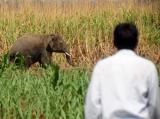
In the wake of increasing human-elephant conflict in Hassan, Kodagu and Chikkamagaluru districts, the state forest department has decided to acquire coffee and tea plantations to curb such conflicts and ensure a safe passage for jumbos.

The department mooted this proposal after some coffee and tea planters volunteered to give up their land as they’re unable to cope with many problems including acute labour shortage, weak prices and rising maintenance cost of their estates.

But planters are not ready to give up their plantations cheaply. “The offers have started to come, with one from Sakleshpura for about 2,300 acres that would cost approximately Rs 300 crore,” principal chief conservator of forests (PCCF) Vinay Luthra said.

With a recent amendment to the Forest Development Tax (FDT), funds needed to buy these estates would not be an issue, said Luthra. The department can rake in up to Rs 600 crore per annum through FDI and utilise it for purchase of properties.

Wildife experts welcomed the idea but expressed caution, citing that the purchase of properties should be done scientifically.

“While it is a good start, the purchase of properties must be taken up after a peer review and an expert panel on elephant habitats giving its approval that such parcels of land are a good investment,” said wildlife expert Pradeep Bhargava.

Bhargava said forest minister Ramanath Rai and the department had held a consultative meeting in Mysuru in December 2015. He said the starting point should be the linking of Bandipur, Nagarahole, Brahmagiri, Satyamanagala, BRT Hills and Mudumalai.

Forest authorities have been holding talks with corporates to seek their assistance through their Corporate Social Responsibility funds to restoreg elephant corridors and other wildlife conservation projects.

Luthra, however, said the department doesn’t plan to buy all 2,300 acres in Sakleshpur. The purchase will be based on a study done by wildlife scientist Raman Sukumar. The study has identified 88 traditional elephant corridors in India.

“We’ll restore only those areas where there is a possibility of restoring the traditional corridors. Our biggest concerns are in and around the Bhadra Reserve, Hassan and Kodagu and the department will buy properties in these region on top priority,” he added.

Luthra said the primary reason for people selling their properties is the difficulty in maintaining coffee estates and tea gardens. “Most people in Kodagu, Chikkamagalur, Hassan and other parts of the coffee- and tea-growing belts are old-timers. With their children living abroad and labour becoming increasingly difficult to procure, they have come forward with offers to the forest department for selling their land. It’s a good way for us to resolve this man-animal conflict,” said the PCCF.

The forest department also took measures recently to ensure that new constructions don’t come up in the elephant corridors or affect elephant movement in the forest area. The department has also interlocked forest ranges across the Western Ghats to ensure the smooth passage of elephants.

Expertspeak

* The purchase of land must be strategic and it needs to be taken up on a project mode. Dedicated forest persons should be involved in the process and land should be procured after taking into account the valuation of the location and not any other factor.
Pradeep Bhargava | wildlife expert

* This is a start. The proposal may not solve the problems immediately, but it will help in the long term to end the human-animal conflict in the state.
Vinay Luthra | PCCF

source: http://www.timesofindia.indiatimes.com / The Times of India / News Home> City> Bangalore / Sandeep Moudgal, TNN / February 23rd, 2016

Is 100% FDI in coffee a boon or a bane?

Coffee growers in Kodagu, Chikkamagaluru and Hassan districts are, however, apprehensive.Many want to know the measures taken to protect small and marginal farmers, who constitute 90% of growers in Karnataka.

Bengaluru :

When coffee growers in Karnataka were going through a rough patch due to labour shortage, elephant menace and unprecedented fall in prices, the Centre in November last year allowed 100 % FDI in five plantation crops: Coffee, rubber, cardamom, palm oil and olive oil. The decision, meant to rejuvenate the sector, is expected to have a huge impact on Karnataka, which accounts for 70% of India’s coffee production.

As of now, 100% FDI is allowed only in tea plantation. “Relaxed FDI norms will help coffee and cardamom growers since it is expected to bring in big overseas investors and retail giants besides enhanced technology utilization, automation, research, management and production of value-added products. Permitting foreign investment will also boost India’s coffee exports offering better prices for growers here, ” says Coffee Board chairperson Leena Nair.

Coffee growers in Kodagu, Chikkamagaluru and Hassan districts are, however, apprehensive. Many want to know the measures taken to protect small and marginal farmers, who constitute 90% of growers in Karnataka. Some coffee growers’ associations are holding talks to oppose the move as they fear small growers would be forced to sell their estates to foreign investors. Their entry may prove detrimental for small coffee planters, who may not be able to match the wages and technology of foreign players.

“The Centre should have held consultations and allayed fears before allowing FDI. But they have done in it in a hush-hush manner and kept us in the dark, making us believe that there is a hidden agenda,” says NK Pradeep, a Coffee Board member from Chikkamagaluru. Former Coffee Board vice-chairman Sannuvanda Kaverappa says a parliamentary committee that visited Chikkamagaluru last year to interact with coffee growers left in a huff. Nair allays all fears of growers saying: “The small-grower segment need not worry as enough safeguards have been provided and the Centre and the state government can always reject any FDI proposal in their segment.”

A Coffee Board executive says FDI will benefit coffee growers. The measure is expected to make the coffee industry vibrant like the tea sector, which opened gates for foreign investments in 2002. “Rather than starting a new venture, foreign investors may partner with existing plantations or trading companies. FDI will help boost developmental activities such as replanting, rejuvenation and R&D that need huge funding. It may also help in upgradation, modernization and automation of coffee-processing, curing, marketing,” he adds.

source: http//:www.retail.economictimes.indiatimes.com / ETRetail.com / Home> Industry / February 12th, 2016

Bean there, drone that… Coffee planters for an eye-in-the-sky to assess crop health

CoffeeKF06feb2016

Coffee plantation owners keen to use drones to assess crop health

Mumbai:

Enabled by unmanned aerial vehicles (UAVs), drones are leading agricultural data collection and facilitating precision analysis in agriculture globally, helping to improve crop yield.

Though the use of drones by civilians is as yet restricted in India, speakers at a recent coffee seminar urged the government to allow these hi-tech machines to help detect the health of the crop.

Apart from their military use, millions of farmers across the country could use drones and the new emerging technology to boost production and efficiency in their farms.

“We are on the cusp of a new era of farming, where precision agriculture practices can offer a new approach to crop management. We now have a technique that wrings out waste and uses data to maximise crop yields and profits. UAV technology is reshaping farming,” said Jaisimha Rao, coffee plantation owner and entrepreneur.

Game changer

Passionate about technology and agriculture, Rao noticed the lack of data-driven decision making while working on his family’s coffee plantation. He decided to combine the versatility of UAVs and computers, and ensure algorithms to analyse crops. Aiming to bridge the gap, Rao, who holds a Bachelors degree in Electrical and Computer Engineering from the Carnegie Mellon University, founded TartanSense. The company uses UAVs to capture and analyse aerial imagery.

Blanket restrictions

“Flying drones and gathering data is a game changer for agriculture, and especially for large plantations like coffee. How we can use this technology in India is the moot point, since the Directorate General of Civil Aviation (DGCA) has restricted the use of drones,” he said.

Pointing out that the “blanket restriction by the DGCA to operate drones would kill the enthusiasm of start-ups” such as his, Rao said his drones had worked in Indonesia, Japan as well as in the US, with drones costing upwards of $100,000.

Speaking about the new technology, Sanjiv Sarin, Managing Director and CEO, Tata Coffee, who was moderating the talk, said, “We are entering the future of the coffee industry. The Coffee Board can work for government clearances to use drones in agriculture.”

Though coffee is shade-grown among silver oak trees, Rao said, “drones will soon be able to look at a tree and avoid it. Over the next 6-12 months, we are going to have an UAV that can fly under the canopy, measure each and every coffee bush and get data for the planter. Canopy penetration will be the true essence of precision farming.”

Big data

Agricultural drones are UAVs used for precision agriculture, which is a modern method of farming globally that uses big data, aerial imagery and other means to optimise efficiency.

The drone collects the crop’s image and makes a colour coded map based on its health, which is then assessed by the UAV firm.

Drones are helping assess the exact nature and area of crop damage during natural calamities, and are helping save huge amounts.

Stating that a lot of people are fascinated by drones, Rao said the real value add “is not the hardware, which is about how to fly them and get the data, but to analyse it and benefit the farmer.”

Detailing the functioning of the UAV, Rao said, “Our drone flies for about 20 minutes, and then the battery is dead. It can survey about 150 acres. We send the images up to the cloud, and can then stitch the data into a nice map. Once you get the image and sensor data in a map, one can get an actionable report and help the farmer. This is where the real skill lies.”

source: http://www.thehindubusinessline.com / Business Line / Home> Economy> Agri Business / by Amrita Nair-Ghasalla / Mumbai – February 05th, 2016

Flavour of Kodagu coffee at international contest

‘The Romance of Indian Coffee’ is the Indian entry to the Gourmand International (Book) Award this time

The jacket of the book ‘The Romance of Indian Coffee’ written by journalist P.T. Bopanna.

The Indian entry to the Gourmand International (Book) Award this time is on what until recently was a south Indian addiction: coffee.

With the coffee culture proliferating across India, thanks to chains like Starbucks, Barista and Café Coffee Day, the routine act of consuming the black decoction stirred in milk, as most people do, and with or without sugar – which again is a personal choice – has acquired an uber-cool image among the Gen Y.

Bengaluru-based journalist P.T. Bopanna has brought alive this unique trait in his book The Romance of Indian Coffee , now shortlisted for the Gourmand International Award, where it will vie for the top honours among coffee books from Brazil, France, China, Thailand, and the U.S., to name a few.

Hailing from Kodagu, which is the home of coffee in India, it was natural for Mr. Bopanna to feel inspired to write on the brew which has a universal appeal.

“My earlier works were Kodagu-centric, but I found a wider canvas in coffee which is also related to Kodagu,” said Mr. Bopanna.

“The book traces the history of coffee in India with interesting titbits about the brew and how its cultivation in the shade lends it a unique flavour, unlike coffee grown in the open in most other countries,” explained Mr. Bopanna, who believes that making coffee is an art. Notwithstanding the proliferation of coffee bars, the best filter coffee, he said, was still prepared in the bylanes of Chennai and elsewhere in Tamil Nadu.

The contribution of Ivor Bull, a British planter, who introduced intercropping and is a legend among the locals, has been highlighted in the book as also recipes for making coffee liqueur.

But ironically, he notes that Kodavas, who market home-grown coffee to the rest of the world and have spanned a coffee culture in India, have taken after the British and prefer tea!

There are entries from as many as 64 countries for the Gourmand awards, started in 1995 as a celebration of global cookbook and wine book publishing. The final results will be announced on May 28 at Yantai, China.

source: http://www.thehindu.com / The Hindu / Home> National> Karnataka / by R. Krishna Kumar / Mysuru – January 31st, 2016

Enhancing Coffee Productivity and Small Farm Profitability

by Dr Amrit Patel

Favourable climatic factors along with a fairly dry spell of 70 to 90 days make Kerala an ideal place to grow coffee. About 76,000 holdings of average size of 1.1 hectare symbolise Kerala a small-holder coffee state but provides livelihood to one lakh families.

Since 1976, Kerala Forest Development Corporation has been managing all coffee estates. In 1990-91, Kerala had 84,016 hectare with coffee production of 21,884 tonne accounting for 31.06% and 12.89% share respectively in India. After two decades, during 2011-12, the area declined significantly to 20.53%, whereas the production substantially increased 21.65% of that in India.

Thus, yield which was very low at 260.47 kg/ha in 1990-91 as compared to 627.42 kg/ha of national average increased substantially to 809.52 kg/ha as compared to national average of 763.73 kg/ha in 2011-12. However, productivity of the coffee in terms of bearing area in Kerala (705 kg/ha) is lower than the national average [826 kg/ha].

Kerala accounts for 20.70% of total coffee area in India. Robusta variety having average lifespan of 60-80 years and requiring least pesticides covers 95% of planted area. For 2014-15, final estimates of total production of coffee in Kerala indicate 67,700 tonne [Arabica 2055 tonne and Robusta 65,465 tonne]. Robusta and Arabica account for 96.70% and 3.30% coffee production respectively in Kerala as against 70.03% and 29.97% respectively in India. Robusta fetches lower prices in domestic and international markets and its brewing value is comparatively lower than Arabica. Though irrigation can increase yield of Robusta by 60% to 70% small coffee growers do not provide irrigation due to high costs of sprinkler/drip irrigation system.

Planters prefer multi-cropping pattern [coffee, tea and spices] to optimally utilise resources and insulate plantation from vagaries of nature and market. A special feature of coffee plantation in Kerala is that coffee plants are grown under the shade of tall shady trees. Conducive climate, hills, greenery, flora and fauna enhance Malabar region’s attraction for tourists. Monsooned coffee is a special delicacy of the region. A less known fact about Malabar coffee is that it was discovered by accident. Wayanad region covers more than 33% of district’s coffee area and coffee is grown as a single crop as also with pepper. About 90% holdings in Wayanad region are below two hectare and are mainly owner-operated with least engagement of casual wage labour.

Marketing
With the economic liberalisation in 1991, the role of the Coffee Board has been diluted and the coffee pooling system was abrogated. In 1993, the Internal Sales Quota entitled coffee growers to sell 30% of their produce in the country. Subsequently, the amended Free Sales Quota in 1994 permitted growers to sell between 70% and 100% of their coffee either domestically or internationally. And finally, amendment in 1996 allowed them the freedom to sell their produce wherever they wished. This led to the emergence of intermediaries in the trade and in absence of regulated and development authority to coordinate and provide directions for coffee marketing, the middlemen collect coffee directly from farmers at reduced price and sell to wholesalers/exporters at high price. To tide over financial difficulties, farmers are often tempted to sell coffee in advance of the harvesting season which fetches low prices.

After the withdrawal of the Coffee Board, the vacuum created has been to some extent replaced by private sector initiatives like Indian Coffee Trade Association which began auctioning on a periodic basis. There are also efforts towards online trading which is being conducted through portal commodityindia.com. However, fact is that less than 10% of coffee is sold through auctions as most small growers prefer to sell unprocessed crop directly to exporters or roasters through agents.

With the rising coffee consumers in Kerala the demand for domestic consumption is expected to rise. In this context, when international coffee chains are already planning their aggressive strategic entry in Kerala, domestic coffee chains are also expanding their businesses to capitalise the market opportunities. The latest entrants include Hilite Group of Kozhikode, Beans and Flavours, a small coffee blender from Idukki district, and Tonico. The Hilite Group is reportedly planning to establish a chain of 100 coffee shops. The domestic coffee chains have the potential to succeed and produce some global brands on account of factors like ambience, product quality and services.

However, in the coffee value chain farmers capture not more than 20% of the end value. Other intermediaries and traders (local and international) and roasters gain substantially. It is estimated that roasters alone retain about 30% of the value. Brands also play an important role in the value chain. Since it is a buyers’ market, buyers collectively put in serious efforts to reduce the value for the primary producers. Mechanisms like certification are aimed at allowing fair margins at the producer level but in reality they become counterproductive.

Government’s Support
Government has initiated measures to help farmers raise coffee productivity, quality and small farms’ viability that include, among others, [i] restructuring bank loans and providing interest relief to coffee growers (a subsidy of 5% to small growers and 3% to large growers on working capital) [ii] rainfall insurance as a risk management support for coffee growers in collaboration with Agricultural Insurance Corporation [iii] in June 2010, the coffee debt relief package was implemented for the debt ridden small coffee growers with a total financial implication of Rs 241.33 crore [iv] Since April, 2003, Government of India has set up a Price Stabilization Fund aimed at providing financial relief to the growers when the prices of the commodities covered fall below a specified level [v] Investment in coffee gardens are subsidised ranging from 20% to 40% depending on the size of the holdings [vi] Coffee Board facilitates support for establishment of processing units, formation of growers’ collectives, among others.

Need for Focussed Attention

Action Research:
here is immediate need to mount Action Research Project to study comprehensively and understand following facts and suggest changes in policy and programme in consultation and dialogue with farmers.

[A] The reasons for coffee growers’ inability to [i] replant Arabica coffee being superior in many respects to Robusta [ii] irrigate Robusta coffee to increase yield by 60% to 70% when subsidy and bank credit is available to augment water resources [iii] upgrade quality of coffee when the Coffee Board provides support for establishing processing units, formation of growers’ collectives, etc. [iv] adopt scientific plant protection measures to control stem borer infestation [v] access services of technical staff for adopting scientific practices evolved by the regional research station to increase productivity, quality and profitability of coffee.

[B] Slow growth and development of coffee economy and impact on coffee growers’ financial status despite significant support is extended by the government and the Coffee Board in various forms.

[C] Farmers not benefitting despite the fact that the prices progressively increasing during 2004-05 to 2011-12 [i] in the international markets from 69.72 US cent/lb to 202.16 for coffee and for future trading in New York at 90.38 to 244.26 for Arabica and 34.09 to 97.25 for Robusta and [ii] in auction markets in India from Rs 72.16/kg to Rs 240.61 for Arabica and Rs 34.94 to Rs 113.99.

Enabling Measures:
Following enabling measures are necessary for enhancing coffee productivity, quality, and financial viability of small farms
.Product diversification, mechanisation of specific farm operations, professional management and technical inputs, post-harvest processing, supplementary income earning opportunities to enable small growers to remain in production chain with cost- competitiveness.
.Enhancing domestic consumption to help in price stability.
.Labour and social security reforms to enhance productivity and cost-competitiveness
.To crystallise in unambiguous terms the role of the government, International Coffee Organisation, Coffee Board, trade exchanges and traders to ensure reasonable returns to small growers and their effective participation in the markets.
.Vertical integration of small producers on lines of Amul Dairy and Gujarat Milk Marketing Federation in Gujarat to enhance value for the primary producers.
.Optimum utilisation of services currently offered by the Coffee Board viz. research, extension, development, quality ‘upgradation,’ economic & market intelligence, internal & external promotion of coffee marketing and labour welfare to create visible impact on coffee farmers’ economy.
.Efficient use of subsidy schemes for replantation, water augmentation, quality ‘upgradation’ and farm mechanisation should motivate/encourage growers to replant coffee with Arabica variety, provide irrigation to Robusta coffee, reduce labour-cost and improve productivity and quality of coffee.
.Creating awareness among farmers and facilitating them to access information through media and ICT about the online trading platforms and futures markets that should help them to take informed decision for their benefits.

(The author is former deputy general manager, Bank of Baroda, Gujarat. He can be contacted at dramritpatel@yahoo.com)

source: http://www.fnbnews.com / Food & Beverage News / Home> Top News / by Dr. Amrit Patel / January 16th, 2016
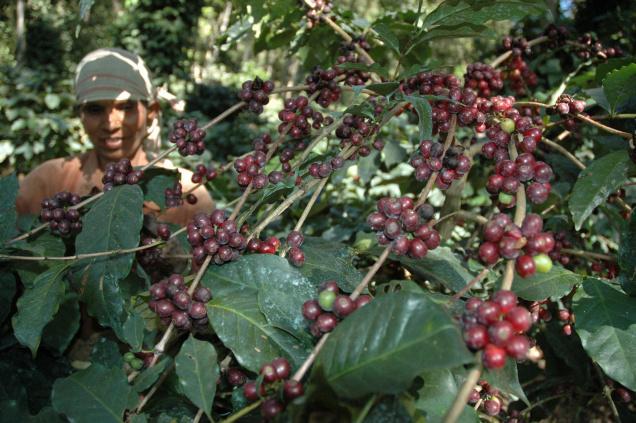

New disease-resistant paddy and castor seeds to be released soon

The new KPR-1 paddy and HCH-6 seeds have been developed by scientists at UAHS, Shivammoga

Yield in the case of traditional varieties said to be declining by the year owing to disease

Farm trial of new varieties have been completed

They are just awaiting official approval for release

Their yield has also been found to be higher than traditional varieties

Scientists at the University of Agricultural and Horticultural Sciences (UAHS), Shivamogga, have developed disease-resistant varieties of paddy and castor seeds.

The new paddy variety is called as KPR (Karnataka Ponnampet Rice)-1. The yield of paddy has come down drastically in recent times in Malnad and central Karnataka regions owing to blast disease, which is caused by a fungus called Magnaporthe grisea.

The infection affects the plant’s growth and slows down the process of grain maturity.

The KPR-1 has been developed by the scientists at Agricultural and Horticultural Research Station of the university in Ponnampet. As part of the initial evaluation trial, a total of 1,450 paddy varieties were cultivated in plots prone to the blast disease. However, some IET-21214 plant variety is said to have shown stiff resistance to blast disease. The parentage of KPR-1 variety is from IET-21214 variety and it has been developed under breeding method.

The Tunga variety of paddy, which is also known for its resistance to blast disease, is most popular among the farmers in Malnad and central Karnataka region.

The yield of Tunga variety is found to be around 45 to 50 quintals an acre and it is 55 to 65 quintals an acre in the case of KPR-1 variety. T.H. Gowda, Director of Extension of UAHS, Shivamogga, told The Hindu that the field trial of KPR-1 was conducted on the plots owned by farmers in Virajpet, Ponnampet and Mudigere. The average yield in the case of KPR-1 is said to be about 20 per cent more than the Tunga and other blast-disease resistant varieties. The KPR-1 variety has shown resistance to brown hopper disease also, he said.

The castor seed oil, considered as one of the major industrial oil seeds variety, is widely cultivated in dry regions of Chitradurga, Davangere and Tumakuru districts. However, the yield of castor seed has been waning owing to fusarium wilt and white fly infection.

Scientists at zonal agricultural and horticultural research station of the university at Hiriyur have developed a disease-resistant and high-yield variety of castor seed named HCH (Hybrid Castor Hiriyur)-6, which is a fusion of DPC-9 and TMV-6 varieties. If cultivated as a solo crop, the yield of HCH-6 variety is said to be around 18 quintals a hectare of land, while it was around 13-14 quintals a ha in other existing varieties.

As part of the farm trial, Lakshmanappa, a farmer from Holalkere in Chitradurga district, who had cultivated HCH-6 variety of castor in his land, said that the yield had increased by around 22 per cent and the plants were free from wilt infection.P. Narayanaswamy, Director of Research, UAHS, Shivamogga, said that KPR-1 paddy and HCH-6 castor seeds would be released after getting approval from the State-level Variety Release Committee and the Central Sub-committee on Crop Standards, Notification and Release of Varieties. The seeds of both the varieties would be released by June, 2016, he said.

source: http://www.thehindu.com / The Hindu / Home> National> Karnataka / by Veerandra P.M. / Shivamogga – December 26th, 2015

Mysuru Kodava Samaja and Kodagu Gowda Samaja Celebrate Huthari Festival

Members of Kodava Samaja, Mysuru, seen carrying the new paddy crop during Huthri festival celebrations at Sree Cauvery Educational Institutions premises in Kuvempunagar last evening. Picture right shows a section of community members.
Members of Kodava Samaja, Mysuru, seen carrying the new paddy crop during Huthri festival celebrations at Sree Cauvery Educational
Institutions premises in Kuvempunagar last evening. Picture right shows a section of community members.

Mysuru :

Huthri, the harvest festival of Kodagu, was celebrated with traditional fervour and gaiety in city yesterday by Mysuru Kodava Samaja and Kodagu Gowda Samaja respectively.

The Kodavas, who had gathered in large numbers at Sree Cauvery Educational Institutions premises in Kuvempunagar here, worshipped Goddess Lakshmi and welcomed her in the form of grains by reaping the new paddy crop. They sang the harvest (putthari) song and danced merrily.

Dressed in traditional costumes, the Kodava men and women, young and old, performed their dances like Kolaat, Bolkaat, Kathiyaat, Kappeyaat, Pareyakali and Ummathaat.

They worshipped Lord Igguthappa and Goddess Cauvery before reaping the new paddy crop amidst chanting of ‘Poli Polio Deva,’ firing three times in the air and bursting of crackers to celebrate the occasion. The festival is observed either in the month of November or December on full moon day of Rohini Nakshatra.

The Samaja had made arrangements to distribute the new paddy and thambittu prasadam to all those present.

Kodava Samaja President Moovera K. Kuttappa welcomed and spoke about the significance of the festival. Ponjanda Lovely Appaiah compered. Samaja Vice-President Ballyamanda M. Nanaiah, Hon. Secretary Mandira P. Kalaiah, Joint Secretary Chottekalapanda Prema Uthaiah and other office-bearers of the Samaja were present. The office-bearers of various other Kodava Associations in city too took active part in making the celebrations a grand success.

Meanwhile, the members of Kodagu Gowda Samaja too celebrated Huthri in a similar manner at the Samaja premises in Vijayanagar here.

source: http://www.starofmysore.com / Star of Mysore / Home> General News / Friday – November 27th, 2015

Forest dept may acquire land in Kodagu to reduce man-elephant conflict

ForestKF13oct2015

To reduce man-elephant conflict, especially in Kodagu, the Forest Department is keen to acquire land from people and has joined hands with Wildlife Trust of India (WTI) in this regard.

The department wants to acquire about two kilometre of land belonging to the Huvinkadu and Faith coffee estates, which is part of the Kutta-Tiranahalli corridor, which in turn is part of the Nagarahole-Brahmagiri elephant corridor link. “Elephants use this stretch and we want to acquire it to reduce man-animal conflict,” Manoj Kumar, Chief Conservator of Forests, Kodagu, told reporters here on Friday on the sidelines of a workshop on ‘Dealing with leopards and elephants in human-use landscape’ here organised by Wildlife Conservation Society-India Programme (WCSIP).

“Landowners are demanding Rs 20 lakh for an acre. Hence, we have approached the WTI to map the area, ascertain land width and find out if that is necessary because there is another route through Wayanad which is also frequented by elephants,” he said.

To further reduce man-elephant conflict, the Forest Department will soon hold meetings with officials in forest departments of Kerala and Tamil Nadu on how to strengthen the Nilgiri Biosphere Reserve. The 6,000-sq km biosphere reserve presently houses 6,000-odd elephants. The last meeting in this regard was held in December 2014.

“We will hold meetings with the deputy and assistant conservators of forests of the two states to assess ground reality and undertake research. There is a need to know how many elephants can the biosphere hold and for how long. It’s crucial since this is the only habitat left for elephants. That will also help strengthen corridors,” Kumar added.

Prithviraj Fernando, Trustee and Scientist at the Centre for Conservation and Research, Sri Lanka, stressed the importance of ensuring safe habitats for elephants. “Case studies in India, Malaysia and Sri Lanka have shown that elephant relocation has not been very successful. Relocation is temporary and shifts the problem from one area to another,” he said while speaking on human-elephant interaction.

Fernando, who has been working on elephant conservation in Sri Lanka for many years now, said there was a huge population of jumbos in the island nation, and 70 people and 250 elephants died in conflict every year.

Vidya Athreya, Senior Research Fellow at WCSIP, spoke on human-leopard interaction and Ranjeet Jadhav, a journalist at Mid-Day, Mumbai, spoke on ‘Reporting human-leopard interactions in Maharashtra: A case study’.

source: http://www.deccanherald.com / Deccan Herald / Home> City / DHNS, Bengaluru – October 10th, 2015

‘Pashu Bhagya’ implemented in Kodagu

Pashu Bhagya, the state government’s scheme aimed at providing subsidy for farmers for daiy farming and to set up cattle, sheep, poultry and piggery units has been implemented in Kodagu district.

The scheme will benefit small and marginal farmers in leading a self-sufficient life. Small and marginal farmers are entitled to a subsidy of 25 per cent on an investment of Rs 1.20 lakh per unit availed from banks. Farmers belonging to the Scheduled Caste and Scheduled Tribe communities will be entitled 50 per cent subsidy.

Department of Animal Husbandry Deputy Director, Dr C Nagaraj said, a pair of cow will be provided under the scheme to each beneficiary and the unit cost is fixed at Rs 1.20 lakh. Under piggery unit, four pigs can be reared and the unit cost is Rs 94,000. For sheep rearing, 11 can be reared under the scheme. For poultry unit, 500 fowls can be rearerd and the unit cost is Rs 85,000.

The target under dairy farming in Kodagu district is 78 beneficiaries. This includes 42 general, seven SCs and three STs. The target of beneficiaries for sheep rearing is 88. Fifty one beneficiaries will be given subsidy for taking up piggery.

The target for poultry unit is 20 beneficiaries in the districts, he added.

source: http://www.deccanherald.com / Deccan Herald / Home> District / Madikeri – DHNS, October 08th, 2015

Farmer on Padayatra to Bengaluru to ensure Kodagu remains green

Manju Chinnappa and team began walking from Talacauvery to Bengaluru to stress need to save the district’s ecosystem.

ManjuChinnappaKF04oct2015

This farmer has been walking for 11 days to take his fight against environment degradation in Kodagu district. Manju Chinnappa, 37, started his padayatra from Talacauvery on September 18. Chinnappa, a native of Hudikeri, started the movement after severe drought that affected Virajpete this year. A Bcom graduate, Chinnappa says, “Even from my early days, I wanted to work towards the preservation of the culture and tradition of my motherland. Over the years, the district has seen several atrocities on land, deforestation and cultural aggression. The main aim of this walkathon is to bring to the attention of the social and economic problems that Kodagu district faces today. I hope it motivates people to preserve the culture and sanctity of the native people.”

Chinnappa has managed to cover close to 25 kms everyday and en route he is celebrated by the people of that particular village who walk with him for a few kilometres to express their support. On Monday, he reached Mysuru. He also gives awareness talks on how to keep the heritage of the district alive.

A founder of the United Kodava Organisation that was formed in 2011 to focus on preserving the environment and heritage of the place, he says, “We know merely submitting a resolution to the state government might not bring much change. We wanted to make a noise through this padayatra to get the attention of as many people as possible. We hope to reach Bengaluru by October 4 and we want to submit a memorandum to the chief minister regarding our demands.” His plan is to cover a distance of 414 km considering he has taken a route inside Kodagu within the villages to spread his message. After reaching Bengaluru, the final leg will start at 9 am from Jnanabharathi campus (Bangalore University) where the local Kodava population will join him in the walk up to 20 kms that will culminate at the Kodava Samaja in Vasantha Nagar. The local Kodavas will come in their traditional dress to show their support to Chinnappa.
Chinnappa says, “In the name of tourism, several trees are being removed which has harmed the people living in that region. Our main resolution is to put pressure on authorities to stop the conversion of wetland not only in Kodagu but across the state. Many infrastructure plans by the state government have destroyed the ecology of the district completely and we want to draw everybody’s attention to this.”

The Kodava community in the city is all set to welcome Chinnappa. They have also started a Facebook page to update the information of padayatra from time to time.

Children are also taking part

Route plan

Talakaveri-Igguthappa Temple-Madikeri-Bayarambada-Virajpet-Gonnikoppa-Anechowkur-Hunsur bypass- Mysuru-Srirangapatna-Mandya-Chennapatna-Bidadi-Jnanabharathi-Kodava Samaj, Bengaluru

source: http://www.bangaloremirror.com / Bangalore Mirror / Home> Bangalore> Others / by Vandana Kamath, Bangalore Mirror Bureau / September 30th, 2015