Category Archives: Agriculture

‘Coorg’s Burma bamboo shoot is non-poisonous, good to eat’

Though bitter in taste if eaten raw, Dendrocalamus brandisii in Coorg has been since slowly making it to the local menu

Till recently, it was like any other species of bamboo that dotted the vegetation. The locals have for long a fair penchant for the edible varieties of bamboo shoots but no liking for the abundantly available Burma bamboo. Nobody dared to give the bamboo shoot a try for fear of it being poisonous.

The turning point, however, came when a team of scientists from Institute of Wood Science and Technology (IWST) in Bangaluru visited Coorg to propagate the vegetarian properties of Dendrocalamus brandisii. Based on their over a decade long research on the Burma bamboo species, for the first time it was disclosed that bamboo shoot eschewed by the people of Coorg and adjoining areas for over a century in fact is considered among one of the top 10 edible bamboo species in the world.

Unlike the Chinese species, although bitter in taste if eaten raw, Dendrocalamus brandisii in Coorg has been since slowly making it to the local menu list.

“It is surprising that in Coorg, where this species was first introduced nearly a century back in 1913, the shoots have not been commercially exploited even though shoots of other species like B. bambos and D. strictus found in natural forests in Coorg have been utilised in some form or other. Pickles made from B. bambos are traditionally an important delicacy in Kogadu cuisine,” says senior scientist Dr Syam Viswanath (in pic), spearheading the research at IWST.
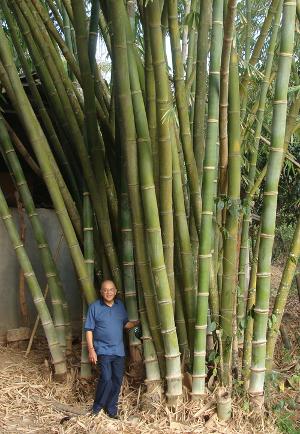
BambooKF11feb2015

Much of the ignorance about the high level of edible properties of Burma bamboo has to do with the fact that its value as an edible material has never been recognised in Coorg. The common perception has been that the shoots of the bamboo species are poisonous. Further, absence of any information about the nutritional benefits, processing and consumption of the bamboo shoot have been the main reason for underutilisation of D. brandisii or Burma bamboo.

In China, D. brandisii bamboo shoots species is cultivated in Hangzhou province. The emerging shoots are harvested and after removal of the sheath, it is sliced into thin pieces and consumed raw like salad. In case of D. brandisii in Coorg, the shoots are bitter due to higher content of cyanogenic glucosides and need to be processed before they are ready for consumption.

Sowmya C , Ph.D scholar working on edible bamboo shoots in Tree Improvement and Genetics Division at IWST has found out that the nutritional composition of some of the common bamboo species exploited for edible shoots like B. balcooa, B. nutans, B. polymorpha, Melocanna baccifera found in North-eastern states is on-par with D. brandisii grown in Coorg.

The protein and carbohydrates contents in 100 gm of fresh bamboo shoot are about 2.31gm and 4.90 gm, respectively. Consumption of 100 gm of fresh shoots will supply adequate amount of protein essential for the body. The D. brandisii shoots are also rich in dietary fibre, 4.03 gm/100gm, higher than other commonly available vegetables. Dietary fibres are proven to have beneficial effects on lipid profile. It also helps in management of hypertension and obesity.

Culinary experiments with the Burma bamboo shoots have revealed that simple cooking techniques like pressure cooking and steaming can remove the bitterness in the bamboo shoots in comparatively lesser time than traditional methods like 48-72 hours of soaking in water.

Besides, the newly found edible properties of Burma bamboo by people of Coorg, the culms ofthe bamboo species have long been used in construction works, making of furniture, farm implements, baskets, handicrafts and for making ‘chandraki’ in sericulture industry. The bamboo has also the potential of making incense sticks by the agarbatti industry.

Due to its good physical and mechanical properties and thorn less character, it can be introduced in suitable agro-climatic zones like Coorg for raising compact plantations, in landscaping and in homesteads. Moreover the vegetative propagation of this species using rhizomatous side branches from culms is a simple cost effective multiplication technique according to Dr T.S. Rathore, Head, Tree Improvement and Genetics Division, IWST, Bangalore. IWST has also developed techniques for macro and micro propagation of this species for large scale commercial exploitation.

Director IWST Dr Ramakanth says, “Dendrocalamus brandisii is among the 19 commercially viable bamboo species identified by the National Mission on Bamboo Application (NMBA). This is based on assessment of inherent characteristics of the bamboo found suitable for end users.”

The very fact that it is fast growing, makes Burma bamboo ideal for exploitation in farm forestry and agro forestry in humid tropics. Its good physical and mechanical properties makes it a much sought after species by locals for farm construction, making ladders, fencing, small furniture, basket making and sericulture industry.

“Though National Bamboo Mission (NBM) and NMBA have rightly prioritized Dendrocalamus brandisii, it is essential to ack-nowledge the commercial potential of this underexploited species and aspects of value addition to effectively utilize and popularise this natural bio-resource in other suitable agroclimatic zones of India,” underlines Dr Sunder Naik, retired Indian Forest Service officer and President of Bamboo Society of India.

source: http://www.bangaloremirror.com / Bangalore Mirror / Home> Others> Sci-Tech / by Agencies / February 11th, 2015
Himachal apples grow well in warm south

Mangaluru :

Can a temperate fruit like the apple be tamed to grow in the tropics?

That it’s a distinct possibility has been shown by Mandi-based senior fruit scientist Chiranjit Parmar, with help from a few farmers in the state. Though experimentation is still at the trial stage without reaching commercial production, it has opened up new possibilities to challenge the dominance of Jammu & Kashmir and Himachal Pradesh over this fruit.

But what’s interesting is that Himachal apple saplings planted here are in a confused state! While apple trees bear fruit in five or six years in Kashmir and Himachal Pradesh, they’ve started flowering and bearing fruit within two years of planting, in Bengaluru and Somwarpet in North Kodagu.

In Dakshina Kannada, retired banker Krishna Shetty is still waiting to savour the fruits of his labour. “They’ve started flowering. I should be able to harvest apples next year,” he says. The prolonged monsoon and pest attack here have stopped them from yielding the desired results, he adds. Shetty planted 50 saplings at his farm in Hirebandady, near Uppinangady.

He said the plant can be grown in regions where the temperature ranges between 10 degree Celsius and 30 degree Celsius. “In Indonesia, growers prune leaves and get about 60 tonnes of apples per hectare. In our country, pruning is not done and the yield is limited to 6 tonnes per hectare. After three years, the yield is still limited. I need further guidance from scientists,” he said.

Calistha D’Silva from Abburkatte, Somwarpet, who planted seven trees three years ago, says one of them bore fruit within the second year, and without much care. “If I’d taken care, they may have yielded better results,” he said. “The fruits were small, but tasty. Parmar, who visited my farm, said the trees have achieved tremendous growth, which would take six years in Himachal.” This year, he’s planting eight trees in his garden.

Nagananda K from Mahalakshmi Layout, Bengaluru, has three apple trees in his terrace garden. “I’ve planted a few on my farm at Basavanahalli, Ramanagaram. The trees here have shown better results with good care, whereas at my farm, it isn’t so encouraging, probably due to lack of care,” said Nagananda. His trees also bore fruit within two years.

What started this experimentation was Parmar’s visit to Batu, Indonesia, situated almost at the Equator. This area has now acquired the reputation of an apple-producing region. After getting inputs from farmers there about this “horticultural wonder”, Parmar started thinking of the possibilities of repeating this in some parts of South India — where there is no winter season.

Shetty says the absence of winter helps growers here get two crops a year, unlike in Kashmir and Himachal Pradesh, since there’s no dormancy due to winter.

During his visit to the United Kingdom in 2010, Shetty saw apple trees in house yards. “I started thinking, why not at my home, but couldn’t get much ahead. Then I saw an article on Parmar in Adike Patrike. That started the whole process,” said Shetty.

Shetty gets his supply of plants from Himachal Pradesh, and a consignment of 2,500 saplings of five varieties reached him on Monday. “Earlier, there were takers for about 500 saplings, and the numbers are growing. Unfortunately, those who take saplings don’t give me feedback,” he said.

As of now, in Karnataka, apples are being grown on a trial basis in Dakshina Kannada, Kodagu, Tumkur, Bengaluru, Tarikere, Vijayapura and Chamarajanagar.

“The experiment has been a success. We’ve sought inputs from the University of Agricultural Sciences, horticulture department, to find out which variety is suitable for commercial cropping. But there’s been no response,” adds Shetty.

With Kodagu, a major coffee growing district, welcoming the entry of apple cultivation, success has been partial in some villages in Somwarpet taluk. Horticulture department senior assistant director Sudheendra Rao told TOI that officially, Kodagu is not an apple zone, but some growers cultivate them out of interest.

TP Sandesh, agricultural standing committee chairman of Kodagu Zilla Panchayat, got a few planted in his farm at Madapur village. As did Shashikala Raj of Masagodu village in Somwarpet. They claim the plants are flowering but the blossoms are falling without yielding fruit. Other small farmers, like Kushalappa of Kamballi village and Puttaraju of Sulimalthe, say the yield is poor.

“If the department takes interest, apples could become a good support crop in Kodagu,” the farmers say.

source: http://www.timesofindia.indiatimes.com / The Times of India / Home> City> Mangaluru / by Stanley Pinto, TNN / February 04th, 2015

Kashmiri apples flourish in the warmth of Karnataka

Mangaluru / Madikeri :

Can a temperate fruit like the apple be tamed to grow in the tropics?

That it’s a distinct possibility has been shown by Mandi-based senior fruit scientist Chiranjit Parmar, with help from a few farmers in the state. Though experimentation is still at the trial stage without reaching commercial production, it has opened up new possibilities to challenge the dominance of Jammu & Kashmir and Himachal Pradesh over this fruit.

But what’s interesting is that Himachal apple saplings planted here are in a confused state! While apple trees bear fruit in five or six years in Kashmir and Himachal Pradesh, they’ve started flowering and bearing fruit within two years of planting, in Bengaluru and Somwarpet in North Kodagu.

In Dakshina Kannada, retired banker Krishna Shetty is still waiting to savour the fruits of his labour. “They’ve started flowering. I should be able to harvest apples next year,” he says. The prolonged monsoon and pest attack here have stopped them from yielding the desired results, he adds. Shetty planted 50 saplings at his farm in Hirebandady, near Uppinangady.

He said the plant can be grown in regions where the temperature ranges between 10 degree Celsius and 30 degree Celsius. “In Indonesia, growers prune leaves and get about 60 tonnes of apples per hectare. In our country, pruning is not done and the yield is limited to 6 tonnes per hectare. After three years, the yield is still limited. I need further guidance from scientists,” he said.

Calistha D’Silva from Abburkatte, Somwarpet, who planted seven trees three years ago, says one of them bore fruit within the second year, and without much care. “If I’d taken care, they may have yielded better results,” he said. “The fruits were small, but tasty. Parmar, who visited my farm, said the trees have achieved tremendous growth, which would take six years in Himachal.” This year, he’s planting eight trees in his garden.

Nagananda K from Mahalakshmi Layout, Bengaluru, has three apple trees in his terrace garden. “I’ve planted a few on my farm at Basavanahalli, Ramanagaram. The trees here have shown better results with good care, whereas at my farm, it isn’t so encouraging, probably due to lack of care,” said Nagananda. His trees also bore fruit within two years.

What started this experimentation was Parmar’s visit to Batu, Indonesia, situated almost at the Equator. This area has now acquired the reputation of an apple-producing region. After getting inputs from farmers there about this “horticultural wonder”, Parmar started thinking of the possibilities of repeating this in some parts of South India — where there is no winter season.

Shetty says the absence of winter helps growers here get two crops a year, unlike in Kashmir and Himachal Pradesh, since there’s no dormancy due to winter.

During his visit to the United Kingdom in 2010, Shetty saw apple trees in house yards. “I started thinking, why not at my home, but couldn’t get much ahead. Then I saw an article on Parmar in Adike Patrike. That started the whole process,” said Shetty.

Shetty gets his supply of plants from Himachal Pradesh, and a consignment of 2,500 saplings of five varieties reached him on Monday. “Earlier, there were takers for about 500 saplings, and the numbers are growing. Unfortunately, those who take saplings don’t give me feedback,” he said.

As of now, in Karnataka, apples are being grown on a trial basis in Dakshina Kannada, Kodagu, Tumkur, Bengaluru, Tarikere, Vijayapura and Chamarajanagar.

“The experiment has been a success. We’ve sought inputs from the University of Agricultural Sciences, horticulture department, to find out which variety is suitable for commercial cropping. But there’s been no response,” adds Shetty.

With Kodagu, a major coffee growing district, welcoming the entry of apple cultivation, success has been partial in some villages in Somwarpet taluk. Horticulture department senior assistant director Sudheendra Rao told TOI that officially, Kodagu is not an apple zone, but some growers cultivate them out of interest.

TP Sandesh, agricultural standing committee chairman of Kodagu Zilla Panchayat, got a few planted in his farm at Madapur village. As did Shashikala Raj of Masagodu village in Somwarpet. They claim the plants are flowering but the blossoms are falling without yielding fruit. Other small farmers, like Kushalappa of Kamballi village and Puttaraju of Sulimalthe, say the yield is poor.

“If the department takes interest, apples could become a good support crop in Kodagu,” the farmers say.

source: http://www.timesofindia.indiatimes.com / The Times of India / Home> City> Bengaluru / by Stanley Pinto, TNN / February 04th, 2015

A flying beetle in India threatens to push up latte prices

(Reuters) – It’s 10 o’clock in the morning and a dozen workers are uprooting coffee plants, piling them in the corner of a field at M.G. Bopanna’s plantation in southern India where they lie ready to be burned.

The plants are bursting with green cherries but inside their hard bark lurk destructive white stem borer beetles. The bushes have to be destroyed to prevent the tiny winged creature from threatening Bopanna’s entire crop of arabica coffee.

The beetle, which bores through plants’ bark and feeds on their stems, is thriving this year due to unusually warm weather and scant rains in arabica growing areas in India, the world’s sixth biggest coffee producer.

If the hot spell continues and the pest continues to spread, India’s coffee crop could fall to its lowest in 17 years when the harvest starts in October, pushing up global prices that are already rallying due to drought in top exporter Brazil.

The damage caused by the beetles is so severe that Bopanna has hired an excavator to uproot affected bushes on his 63 acre plantation at the hill station in the tropical forest of the Western Ghats, west of high-tech hub Bangalore.

“Every time we think we have uprooted all the infected plants, then after a few weeks we find more,” says Bopanna, 69, who has tended the plantation bought by his father for nearly four decades.

“Earlier whenever there was an outbreak, we used to uproot five to 10 plants per acre. This year I have uprooted more than 200 plants per acre,” he said.

There is no effective pesticide to control white stem borers, so the state-run Coffee Board advises farmers to uproot and burn infested plants to limit their spread.

“You may take all precautions, but if your neighbour is lethargic then white stem borers will fly from your neighbour’s plantation,” said N. Bose Mandanna, a grower from Madikeri who has removed all affected plants from his 34 acre plantation, five kilometres west of Bopanna’s field.

SCANT RAIN

In most years heavy rainfalls and low temperatures restrict the spread of the white stem borer. But this year southern Karnataka state’s Kodagu and Chikmagalur districts, which account for two-third of India’s total coffee production, have received half the usual rainfall since the start of monsoon season on June 1.

The state run weather department said earlier this month that rainfall in July and August is expected to remain below average.

“The pest infestation will rise quickly if rainfall remains subdued in the next few weeks,” says Mandanna, a fourth-generation arabica coffee planter.

India’s arabica coffee production could drop as much as 20 percent in the 2014/15 season to 60,000-70,000 tonnes, said a spokesman at Ruchi Soya, a coffee exporter.

That would pull down India’s total coffee output, three quarters of which is exported, to 260,000 tonnes, the lowest level since 1997/98, estimates Ruchi Soya.

Italy, Germany and Belgium are the main buyers of Indian coffee and usually pay a premium for it over global prices. Starbucks, J.M. Smucker Co and Kraft Foods Group are leading buyers of arabica.

ARABICA TO ROBUSTA

Bopanna and other farmers are replacing affected plants with new seedlings, cultivating instead a robusta variety that is cheaper than arabica but resistant to white-stem borer.

“I would love to have an entire coffee plantation with arabica, but I have to consider earnings as well. How I would pay workers if the pest damages my entire arabica crop?” asks Bopanna, who is planning to convert 16 acres to robusta this year.

Arabica coffee is typically roasted and ground for brewing and can range widely in quality, with some reaching the highest levels. Robusta, on the other hand, is more bitter and either processed into instant coffee or added to a roasted blend to reduce the cost.

India, which started coffee cultivation in 1670 with seven smuggled beans, produced mainly arabica until a few decades ago. Now arabica accounts for just one third of India’s total output compared to 82 percent in 1950.

That share will fall further unless the Coffee Board develops new arabica varieties that can withstand white stem borer, says Marvin Rodrigues, former chairman of the Karnataka Planters’ Association.

“Farmers can’t absorb shocks of white stem borer,” said Rodrigues said.

“It is not hurting just one year’s income; it is squeezing four year’s earnings.”

Coffee seedlings start flowering and produce cherries only after four to five years, meaning the impact of this year’s pest infestation will persist in India’s arabica production for at least that long.

Besides, arabica is also a labour-intensive crop at a time when wages are rising quickly due to labour shortages yet yields around half the cherries of robusta.

“Though robusta prices are lower than arabica, it is economical to have robusta. You can recover at least input cost even during bad year,” said Sundaram Ramasamy, executive director at Amrutha Coffee.

For Bopanna though, this year’s crop will be costly.

“Hopes of a bumper crop flourished with widespread flowering in March, but white stem borer ruined those expectations,” he said.

“I was expecting a crop of 15 tonnes, now harvesting 10 tonnes seems difficult.” (Reporting by Rajendra Jadhav; Editing by Rachel Armstrong)

source: http://www.reuters.com / Reuters – edition U.S. / Home / Madikeri , India / by Rajendra Jadhav / June 23rd, 2014

‘KPR 1, 2 variety of paddy is suitable to Kodagu’

Ponnampet Agricultural Research Station has been conducting research on varieties of paddy developed by Directorate of Rice Research, Hyderabad, This year, it has conducted test on 184 varieties of paddy.

The station has been conducting research on paddy that are suitable for cultivating using water from canals, Malnad, Plateau region.

The Directorate of Rice Research conducts study on paddy which are suitable for various climate and recommends for its cultivation. The Ponnampet Research Station through its research have found that KPR 1 and KPR 2 variety of paddy are suitable to hilly region and rain-fed farming in Kodagu.

Speaking to Deccan Herald, senior subject expert B Manjunath said that scientists were recommending Thunga variety for Kodagu. As as alternative to Tunga, KPR 1 and KPR 2 varieties have been developed. These two varieties have resistance to ‘paddy blast’ or ‘benki roga.’ The varieties will be released during next June. KPR 1 variety grows 110 to 115 centimetre long. Farmers can harvest within 145 days of harvest. The yield per hectare is 55 to 60 quintal.

On the other hand, KPR2 is a small paddy variety. The rice is known for its aroma. The paddy grows 90 cm long. There is good demand for this fragrance paddy. Progressive farmers like Suju Karumbaiah, S C Thimmaiah, K M Poovaiah, K M Dali Changalla have cultivated this variety in Kodagu. “The centre has been guiding the farmers on new paddy varieties and its cultivation. The centre also guides farmers in dairy farming, pisciculture, piggery, and pepper cultivation by taking up extension activities,” said Manjunath.

source: http://www.deccanherald.com / Deccan Herald / Home> District / DHNS – Gonikoppa – December 19th, 2014

Forest department says no to inter-state road

Kodagu Zone Chief Conservator of Forest Jagmohan Sharma has submitted a report to the State government that permission should not be given to proposed Ezhimal-Bengaluru inter-state road which would pass through Talacauvery Wildlife Sanctuary.

The proposed project (Ezhimal- Vellur- Padiyottuchal- Cherupuzha-Pulingome-Talacauvery) would pass through Mundrotu- Talacauvery- Bhagamandala, which is a part of the wildlife sanctuary known for biological diversity.

The officer, in his letter to the government on September 2, has said that the region is part of the Western Ghats, with evergreen forests and grasslands. The road construction, allowing public intervention would adversely affect the wildlife, and the government should reject the proposal of the Kerala government, the letter states.

Madikeri Division Deputy Conservator of Forest Shivashankar also opined the same. The road from Mundrotu to Talacauvery comes under Padinaalku Naadu reserve forest, where there is a rough stretch with a width of 7 to 10 feet.

To convert it as an inter-state road, it should be widened. In many places, new roads will have to be constructed between the mountains. It would impact the wildlife. Also, theft of trees would increase, the DCF has mentioned.

There is an alternative road to the proposed road already between Bhagamandala- Karike- Mundrotu. However, the only problem was that commuters would have to travel 39 km more than the proposed plan. Just to cut the distance, it was not fair to construct an inter-state road, which would cause danger to the ecology, he has opined.

Speaking to Deccan Herald, Shivashankar said that the report was submitted by DCF Hanumanthappa to the government before his transfer from the district.
DH News Service

source: http://www.deccanherald.com / Deccan Herald / Home> District / by Shrikanta Kallammanavar / Madikeri – DHNS, December 08th, 2014

Huthri festival celebrated in city

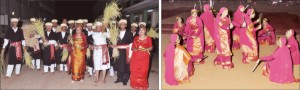
Kodava Samaja, Vijayanagar 1st Stage, Mysuru, celebrated Huthri festival in the premises of Sree Cauvery Educational Institutions in Kuvempunagar last evening. Picture right shows Kodavathis performing traditional dance on the occasion.

Mysuru :

The traditional festival of Huthri of Kodagu was celebrated in city yesterday. Kodavas in various extensions of city had organised functions to worship goddess Lakshmi and welcome her in the form of grains. They sang the harvest song and danced merrily.

Cauvery school: Huthri was celebrated by Kodava Samaja at Cauvery School premises in Kuvempunagar here. Dressed in traditional costumes Kodavas participated in cultural programmes like Kolata, Baluthkat Kathiyat, Ummathat and Pariyakkali.

They worshipped Igguthappa, Cauvery Mathe and Chamundeshwari. Rounds were fired from guns and crackers were burst to celebrate the occasion.

Kodava Samaja President Mechanda Karumbaiah Vice-President Moovera K.Kuttappa, Honorary Secretary Kekada M. Belliappa, Joint Secretary Thambanda Neena Devaiah, Treasurer Kuppanda Subbaiah and others participated.

Vijayanagar: Huthri was also celebrated by members of Kodagu Gowda Samaja in Vijayanagar here. President K.K. Kushalappa, Vice-President Chettamada Janardan, Secretary K. Ganapathy, Joint Secretary K.Bharat Kumar, Treasurer K.Ravi Bheemaiah and others were present.

source: http://www.starofmysore.com / Star of Mysore / Home> General News / December 07th, 2014

BJP gives conditional nod for Bethri project

Madikeri City Municipal Corporation, which has a majority of Congress members, gave its nod for the Bethri project which intends to provide Cauvery water to Madikeri. The BJP members of the CMC have agreed for the implementation of the project on certain conditions.

CMC Commissioner Pushpavathi tabled the Detailed Project Report of the project prepared by Karnataka Urban Water Supply and Drainage Board (KUWSDB), for approval at the CMC general meeting on Tuesday.

Speaking on the project, she said that the project will be implemented to draw water from River Cauvery, flowing at a place called Bethri. Apart from Madikeri, eight villages will also be supplied water. The total project cost is Rs155 crore, she said.
The project cost includes 60 per cent state government grant (Rs 93.39), 30 per cent of Economic Organisation loan (Rs 46.69 crore) and 10 percent of local body share ( Rs 15.56 crore). The local body share comprises of contribution from Madikeri CMC and eight Gram Panchayats, she said.

CMC Member T S Prakash from BJP said that Kundamestri project is being implemented to provide water for Madikeri during summer. Hence, there is no requirement to draw water at Bethri, the expenditure of which is to the tune of hundreds of crore rupees.
He meanwhile added that the CMC should avail permission from Cauvery Water Board, before proceeding further.

K S Ramesh from BJP said that the CMC has provided lots of funds for Kundamestri project. If the approval is granted for Rs 155 crore project, the CMC will not be left with enough funds for the maintenance of the project. Already, several development works have been pending due to shortage of funds.

Another BJP member P D Ponnappa said that though the BJP is not against the project, it is dogmatic about the successful execution of the same. The water projects should be able to provide water round the clock. The complete cost of the project should be borne by the government, without burdening local bodies, he urged.

After a prolonged discussion, CMC President Julekabi confirmed the approval for the project by CMC.

Illegal bar

During a discussion, SDPI Member Amin Mohisin alleged that a bar has been illegally opened in the land belonging to CMC near private bus stand. In spite of Deputy Commissioner’s directions to initiate action, the CMC Commissioner has not acted upon so far, he alleged. CMC Commissioner Pushpavathi said that the records of the land are being verified and stern action will be taken against bar owners, if found illegal, she said.

A refund trail

BJP Member T C Prakash alleged that Rs 15 lakh payment towards the new CMC building was not paid to the contractor, as the building construction was not carried out properly. But the bill was paid after the CMC Commissioner took over, he said.
Commissioner Pushpavathi replied that she was not informed earlier and after learning about the situation, she has served a notice to the contractor, asking him to refund the amount to the CMC.

DH News Service

source: http://www.deccanherald.com / Deccan Herald / Home> District / DHNS – Madikeri, November 25th, 2014

Coffee Board blends co-op subsidies into coffee kettle

In an effort to enhance the production of robusta and arabica coffees, the Coffee Board has proposed higher allocation for replanting and expansion, Coffee Board Chairman Jawaid Akhtar said on Thursday.

Under the 12th Plan subsidy rates have been proposed at 40 per cent for up to 2 hectares, 30 per cent for 2-10 hectares and 25 per cent for holdings of above 10 hectares.

Inaugurating the United Planters Association of Southern India (UPASI) and Karnataka Planters Association (KPA) coffee conference on Thursday, Akhtar said, “Coffee Board has proposed to increase the unit cost by 75 per cent to Rs 1,75,000 per hectare.”
For the first time, the Board has included corporates and co-operatives to avail of the subsidy.

Besides, the Board has also introduced subsidy for eco-certification at 50 per cent of the certification cost at a ceiling of Rs 50,000 per beneficiary. It has also enhanced subsidy for quality upgradation to Rs 2.50 lakh for up to 20 hectares.

UPASI President Vijayan Rajes said the coffee committee of UPASI will submit a proposal to the Coffee Board to forward it to the Centre to release funds for producing two new robusta clones and one robusta seedling. This will be in collaboration with Incaper, Brazil’s premium research organisation for conillon robusta.

“We are planning to have a new proposal to get India-specific arabica plants with know-how from Brazil,” Rajes added. “This will help us have 10 million clones supplied to coffee growers in the first four years; and, from the fifth year, the share of Indian robusta will be increased by 50 per cent,” Rajes said.

B M Mahesh Kumar, a coffee planter from Hosathota Estate, Ballupet, spoke on ‘Achieving High Productivity of Black Pepper through Water, Shade and Nutrition Management’. He said, “Disease control can be effected by following judicious Good Agricultural Practices (GAP) and Integrated Pest Management (IPM).”

“Many people are taking up mono pepper cultivation at the cost of arabica coffee which is not a good sign,” Kumar said, adding that farmers should adopt innovative methods to multiply pepper vines for higher production.

Indian Vanilla Enterprise Pvt Ltd and Indian Vanilla Initiative Pvt Ltd, Pollachi, Chairman R Mahendran speaking on ‘Cocoa Cultivation, Processing and Management’, said that the opportunity of cultivating cocoa as another inter-crop for coconut, arecanut and oil palm in select regions of Karnataka holds promise.

Ease of cultivation and management make cocoa an attractive income generator, Mahendran added.

UPASI-TRF (Tea Research Foundation) Valparai, Quality Assurance Assistant Director N Palani stressed the importance of maintaining organic matter in the soil for preserving the physical, chemical and biological properties of soil.

Palani added that since the top soil is rich in humus, it has to be safeguarded from erosion for which soild and water conservation measures, depending on the slope of the terrain, must be taken.

source: http://www.deccanherald.com / Deccan Herald / Home> Business / DHNS – Bengaluru, November 14th, 2014

‘Coffee plantation in Kodagu can not be considered as deemed forest’

Kodagu Circle Chief Conservator of Forest Jagmohan Varma has clarified that coffee plantation in Kodagu can not be considered as deemed forest. This is based on the government’s order that plantation in private property should not be considered as deemed forest.

Speaking to Deccan Herald, the officer said that the process of identifying deemed forest is under progress in the district, in the backdrop of the Supreme Court and State government’s order.

It is a common notion that a land with features of forest is deemed forest. But, as per the government order dated May 15, 2014, private plantation with any number of forest will not be considered as deemed forest. Therefore, there is no reason for coffee, cardamom, pepper and rubber planters to worry about, he assured.

Private forest

Explaining the word ‘private forest’ as defined in the government order, the Chief Conservator of Forest said that private forest is the land comprising of more than 50 trees per hectare land and each tree with a width of more than 30 cm. “The forest department along with revenue department is collecting details about private forests in the district. A district-level meeting chaired by Deputy Commissioner Anurag Tewari too has been convened. Village level inspection will be carried out soon,” he said.

Further, Jagmohan Varma said that the State government’s order describes a wide range of forests that exist in Kodagu, including Forest-Paisari which is considered as forest land.

According to Coorg Land and Revenue Regulation 1899, Section 143, Sub Section (1) (F), Forest-Paisari land has been notified as forest in 1901. Therefore, the recent order too considers Forest-Paisari as forest land.

The land that is mentioned as forest in government documents, will be considered as deemed forest. The government has given the instruction to all district administration to submit a detailed report on deemed forest in every district, within May 15.

What is deemed forest?

Deemed forest is the private and paisari land with forest like features. The Supreme Court while hearing Godavarman Thirumalapad case in 1995, had directed all the States to collect information about deemed forest. Following the order, the State government polled information about forest land and deemed forest.

However, the survey was not concrete, as the deemed forest list also comprised of paisari and empty (khulla) land and details like survey number and map too was not appropriate.

Therefore, re-survey has been taken up to prepare a comprehensive report on deemed forest in the State.
DH News Service

source: http://www.deccanherald.com / Deccan Herald / Home> District / by Shrikanth Kallammanavar / Madikeri – DHNS, November 06th, 2014