Category Archives: Agriculture

‘Will Protect Plantations in Kodagu’

Revenue Minister V Srinivasa Prasad said he would visit Kodagu district to assess the misuse of sections 79(a) and (b) of the Karnataka Land Reforms Act.

The sale of plantation land to non-agriculturists to set up resorts and cottages would also be looked into, he said.

Replying to a calling attention motion from Janata Dal(S) floor leader M C Nanaiah in the Legislative Council on Thursday, the Minister said the government was committed to the protection of plantation land in Kodagu.

Nanaiah said plantations where coffee, cardamom and rubber are grown had been exempted from the purview of the Act.

“Revenue officials, deeming these plantations to be non-agricultural land, have been allowing its sale. According to the rules, such lands cannot be sold to non-agriculturists. The buyers plant saplings of coffee, banana and cardamom to show that they are using the land for agriculture and construct resorts,” Nanaiah said.

6,000 Acres Sold

The floor leader said the going price of an acre of plantation land was `40 lakh. Already, over 6,000 acres has been sold to non-agriculturists in Kodagu district and 3,000 applications to register properties were pending before the Revenue Department, Nanaiah alleged.

“The Kodavas are becoming aliens in their own homeland. Forest cover is being eroded due to mushrooming of resorts. There is danger in store if plantation land in catchment areas of the Cauvery is sold to non-agriculturists,” Nanaiah warned.Promise of ActionResponding to Nanaiah’s statements, the Minister declared that those revenue officials who were allegedly hand-in-glove with land sharks and fixing land deals would be dealt with an iron hand.

source: http://www.newindianexpress.com / The New Indian Express / Home> States> Karnataka / by Express News Service – Bangalore / February 21st, 2014
FARMER’S NOTEBOOK : A package of practices for profitable coffee, black pepper cultivation

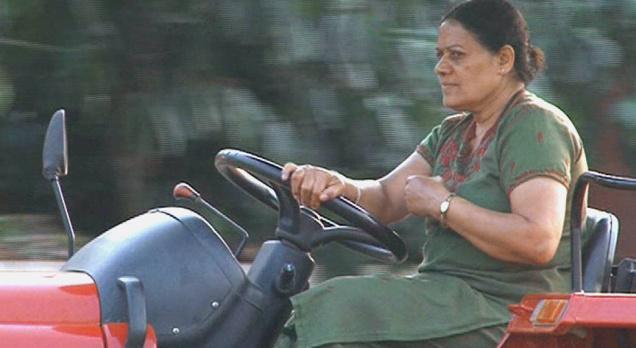
EMPOWERED: Attending one of the seminars organised by IISR’s Cardamom Research Centre (CRC) at Appangala in Kodagu on spices cultivation was a turning point in Mrs. Prema Ganesh’s life./ Special Arrangement / The Hindu

Agriculture is no more a male dominated sector, as many women have shown that they are second to none in this field. “Women can be successful agriculturists, if they are supported with timely technological interventions by scientists and encouragement from family”, says Dr. M. Anandaraj, Director of the Indian Institute of Spices Research (IISR), Kozhikode.
Mrs. Prema Ganesh from Maragodu village, Kodagu District, Karnataka is a role model for other women in this field.

Several problems

When she ventured to take over her coffee and black pepper plantation in 10 hectares a decade ago, several problems started surfacing, especially the low productivity of crops, making agriculture a non profitable enterprise.Keen to overcome them, she happened to attend one of the seminars organised by IISR’s Cardamom Research Centre (CRC) at Appangala in Kodagu on spices cultivation.“It was a turning point in my life,” recollects Ms Ganesh.

The scientists at CRC assured full technological support to her ventures. A team from CRC visited her plantation and identified some major production constraints such as high plant density per unit area, prevalence of diseases and pests, problems like spike shedding in black pepper etc.They provided a complete package of practices to be followed including thinning of excess plant growth to maintain optimum spacing among them, adoption of basin management techniques like application of organic manures, micronutrient application, earthing up and mulching for various crops.“In the case of black pepper, special recommendations like basin irrigation at the rate of 40-50 litres of water at 4-5 times per vine at an interval of 5-7 days during May-June in case of delayed monsoon, regulation of shade by pruning the support trees to provide minimum 50-60 per cent exposure to sunlight were suggested,” says Dr. S J Ankegowda, Head, CRC, AppangalaFor diseases and pests, spraying of two rounds of Bordeaux during June and August/September and one round of drenching with 0.2 per cent Copper Oxy Chloride (COC), and need based application of insecticides were also recommended.Trees like balangi, palawan and silver oak were planted at a spacing of 15×15 feet (random) to provide adequate shade to the crops.In addition she readied several rainwater harvesting pits of 10 feet length, 1.5 feet width and 1.5 feet depth between the coffee plants.These pits also serve as compost pits where all the farm wastes are dumped for two years to decompose after which they are removed and applied as organic manure to coffee and pepper, substantially reducing the cost on purchase of farm yard manure.

Composed husks

Ms. Ganesh makes use of composed coffee cherry husk, a by-product of coffee pulping, after mixing with cow dung as an additional source of organic manure.Annually she spends Rs. 35,000 per acre as operational cost and gets about Rs. 25 lakhs a year as net income from both black pepper and coffee. Reducing manual labour was an important initiative by her.“First thing they did was to lay motorable roads inside the plantation. This has reduced the strain in carrying the harvested produce in bags by labourers.Before the roads were laid, a labourer would take about 30 minutes to carry the bag to the main road for loading it on the lorries.“The physical strain was quite heavy. But now this has considerably reduced since the vehicles can come into the plantation,” says Dr. Ankegowda.

Underground irrigation

Another initiative was the underground pipe-lining for irrigation. Today the entire plantation has well connected irrigation line ready for irrigation all through the year.For more details readers can contact Mrs. Prema Ganesh, Prema Estate, Maragodu Village, Madikeri, Kodagu district- 571 201, Ph: 08272-241555, or Dr. S. J. Ankegowda, Head, IISR Cardamom Research Centre, Appangala, Madikeri-571201, Karnataka, mobile: 09663069241 and phone: 08272-245451.

source: http://www.thehindu.com / The Hindu / Home> News> S & T> Science / Farmers Notebook> Karnataka / by M.J.Prabu / February 26th, 2014

Karnataka plans eco-sensitive zones in forests

The State government has drawn up plans to create 32 in the forests, especially in Kodagu, Shimoga, Udupi, Dakshina Kannada, Chikmagalur and Mysore districts, for protecting both the people residing within the forests and wild animals.

After the Cabinet Sub Committee on Forest discussed these issues, Law and Parliamentary Affairs Minister T.B. Jayachandra, who chaired the meeting, said that this would be tabled before the State Cabinet and then sent to the Union government for approval.

Mr. Jayachandra said that the Union government had, in its guidelines to the States, suggested that there should be a 10-km zone near each human habitat where big construction activity, power lines of more than 11 kVA, big resorts and industries could not be allowed to come up.

However, small constructions such as homestays could be allowed.

He said that the zones could be just one, two or three kilometres away from the habitats.

Asked whether these guidelines were binding on the State government, he said that there was no law to regulate such activities in the State.

He said that the State forest officers would discuss the issue with the Union government and convince it of the workable alternatives, based on specific reasons.

Wherever it was difficult to implement the guidelines, the State government would strive to get relief to the people, he said.

Objection

The committee also discussed the situation arising out of a case filed by the Goa Foundation before the Green Bench of the Supreme Court at Chennai.

The committee decided to file an objection within 10 days to the demand of the Goa Foundation that the Kasturirangan Committee report, which was notified by the Union government, be implemented.

Mr. Jayachandra said that the notification had adversely impacted development activities worth Rs. 25,000 crore in the Western Ghats. Works of the Indian Institute of Science, the DRDO and a unit for the manufacture of unmanned aerial vehicles in Challakere of Chitradurga district had been stopped due to public protests.

source: http://www.thehindu.com / The Hindu / Home> News> National> Karnataka / by T. S. Ranganna / Bangalore – February 03rd, 2014

Kodagu should be eco-sensitive zone: Wildlife society

Bangalore :

Kodagu district qualifies to be an eco-sensitive zone with its picturesque landscapes, coffee plantations, and more importantly as it is the principal catchment of Cauvery river, said members of Coorg Wildlife Society here on Thurdsay. The catchment area provides almost 50% of the total water flow into the river.

“It’s in national interest that the district gets the tag,” the members said. Its environment and ecology are under serious threat due to development projects for Kerala, urbanization and invasive tourism.

Tourism is flourishing in Kodagu but the need of the hour is a set of strong regulations, officials pointed out. “Tourist resorts are mushrooming here without proper clearances. They occupy pristine landscapes and consume massive amounts of water. There should be a cap on further licences for resorts until there is a proper evaluation on the carrying capacity for tourism in the district,” said Col C P Muthanna, president, Coorg Wildlife Society.

Land conversion and urbanization are other major threats to Kodagu. Plantations and agricultural lands are increasingly being converted for commercial purposes, affecting the landscape. “Kodagu is one lung space which is increasingly being clouded,” said Suresh Heblikar of Eco Watch, Centre for Environment and Sustainable Development. “Do not overexploit Kodagu in the name of development,” said Heblikar, urging the government to take care of all aspects while thinking of economic development of the region.

Main demands

* A stretch of 55 km through Kodagu has been earmarked for Mysore-Kozhikode power line. At least 2000 trees have been felled along the 5-km stretch of reserve forests. There is another 50-km stretch, of which 30km is coffee plantations, which has to be cleared for this power line. That calls for cutting of 50,000 more trees. This area, close to Nagarahole National Park, could now more instances of man-animal (elephant) conflict. Significantly, this area of South Kodagu is also the catchment of Lakshmantheerta river which is the primary water source for Mysore and an important tributary of the Cauvery. Ongoing work for this power line needs to be suspended with immediate effect.

* There are plans to connect Mattanur airport to Mysore and Bangalore through Kodagu with a four-lane highway, which again will involve massive tree-felling operations.

*A rail link between Kushalnagar and Kerala is being planned through Kodagu, for which funds have been sanctioned. The line may be extended once work is over on the announced stretch, which will destroy the landscape and affect indigenous communities of Kodagu.

* MoUs signed during the Global Investors Meet in 2012 needs to be reviewed and permission granted only to the projects which will benefit Kodagu without damaging its ecology.

source: http://www.articles.timesofindia.indiatimes.com / The Times of India / Home> City> Bangalore> Power Line / TNN / January 17th, 2014

Lit Buffs Throng Honey Stalls, But Shun Booze

Writers and literature lovers visiting this hilly town are clamouring for honey, and staying away from its liquor stores and bars.

Bee-rearing is popular in and around Madikeri, and stalls selling honey are doing brisk business during the 80th all-India Kannada Sahitya Sammelana. The three-day gala ends on Thursday.

About 20 shops in the vicinity of the literary carnival trade in honey. On a normal day, they sell 30 to 50 kilos. Over the past two days, sales have doubled.

Ashok, Secretary of the Coorg Progressive Beekeepers Co-operative Society, said, “Each shop has asked for 500 boxes. Each box holds 12 one-kg bottles.”

Despite the demand, vendors have not hiked their prices. “A kilo of pure honey in a sealed bottle costs `220. The price is `180 otherwise,” Ashok said.

Honey production peaks between March and June. “This is actually off season. We are struggling to meet the demand,” he said.

There are 1,100 bee-keepers in and around Madikeri, and 6,000 in Kodagu district.

Chandappa, head master of a government school in Bijapur district and a conference delegate, said, “We don’t get honey in our districts. That’s why we are taking home some.”

The visiting writers and literature buffs aren’t giving good business to liquor shops, though.

Thimmappa of National Wines on the Madikeri main road feels the guests are not the drinking type.

“On normal days, we sell seven to eight boxes of whiskey, with each box containing 12 bottles. Since Monday, the number has come down to four or five,” he said.

Traffic diversions for the literary carnival have also had a negative impact on the liquor business, he said.

Madappa, another liquor shop owner, said visitors from North Karnataka don’t drink.

“A small number come for wine and ask about the percentage of alcohol in it,” he said.

The weather is not helping the liquor business either. “It has become warm over the past week, and that is one of the reasons our customers have just one or two pegs of whiskey,” said Madappa.

The temperature in Madikeri on Wednesday afternoon (4pm) was 26 degree Celsius, not warm at all by the standards of northern Karnataka districts, where temperatures touch 40 degrees. Madikeri has about 30 liquor stores and bars.

Pure for sure?

Rajashree, owner of a honey shop in Madikeri, offered tips on how to test the purity of honey. “Take a cup of water and put a drop of honey in it. If the honey is pure, it goes to the bottom, but if it is adulterated, it spreads,” she said. The second trick is to use paper. “Dip a piece of paper in the bottle. If the honey is pure, the paper will not get wet,” she said.

source: http://www.newindianexpress.com / The New Indian Express / Home> States> Karnataka / by Rashmi Belur and Ashwini M. Sripad – Madikeri / January 09th, 2014

Farmers to get 50 per cent subsidy for solar fencing

The government will provide 50 per cent subsidy to farmers to put up solar fences on their farms, said Minister for Forests B. Ramanath Rai on Thursday, as an obstacle against entry of wild animals and to reduce man-animal conflict

During his visit to the Karnataka Pradesh Congress Committee (KPCC) office here, the Minister told presspersons that the department had put up elephant-proof trenches and installed solar-powered fences around some stretches of the reserve forests and national parks. “This is part of the Karnataka Sustainable Forest Management and Bio-diversity Conservation Programme. However, if farmers want to get solar fences installed by private companies, we will grant them 50 per cent subsidy,” he said.

The Minister said his department was not against development. However, only such projects that will directly benefit people will be permitted. People who submit applications for land in deemed and reserve forests should keep in mind the various rules governing forests in the State.

The Minister said the process of resolving the confusion over the C and D categories of land (degraded forest land) had commenced. “According to the law, there is no provision to regularise encroachments on forest land after April 27, 1978. However, we have received over one lakh applications seeking regularisation of land. A Cabinet subcommittee has been formed to study the issue and take a decision,” he said.

Posts to be filled

He said 700 posts in the department would be filled shortly. “The department is also encouraging farmers to grow sandalwood. We are giving away saplings at Re. 1 and Rs. 2 each to farmers. These farmers will also get an incentive of Rs. 10, Rs. 15 and Rs. 20 for each sapling annually, in the first, second and third year respectively, to ensure its growth,” the Minister said.

source: http://www.thehindu.com / The Hindu / Home> News> National> Karnataka / by Special Correspondent / Bangalore – January 03rd, 2014

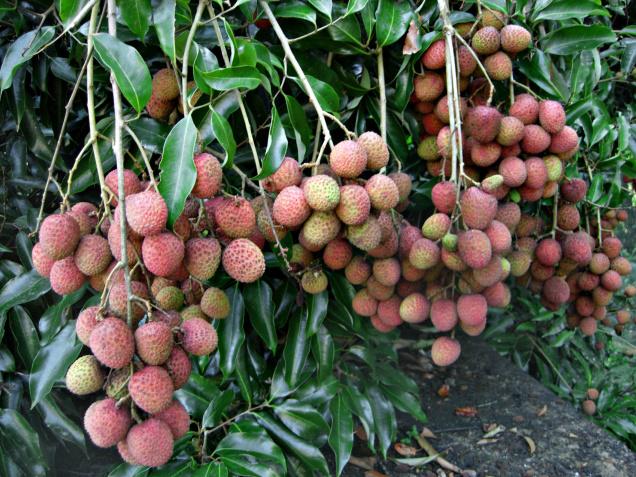
‘Good potential for litchi cultivation in Kodagu’

Litchi grown in Kodagu during the off-season can be marketed across the country, says an expert.

Growers in Kodagu, faced with pest attacks on coffee and diseases in cardamom, orange, and banana crops, had something to look forward to during the Litchi Field Day organised by the Central Horticultural Experiment Station (CHES) at Chettalli in the district recently.

About 50 progressive growers attended the event. A field visit to litchi orchards of the CHES in Chettalli gave the growers exposure to cultivation methods. CHES scientists apprised the growers about the soil requirements, fruiting, flowering pattern, and yield of litchi.

P.C. Tripathi, head of the CHES, made a presentation on the prospects of litchi cultivation in Kodagu. He said litchi matures in the off-season, during November-December period, in Kodagu, unlike in traditional cultivation areas in north India where it matures during May and June. As this was the off-season, the fruits were in demand in the market. He told The Hindu that litchi grown in Kodagu during the off-season could be marketed across the country.

The current price of litchi is around Rs. 150 a kg. Litchi cultivation had picked up in Kodagu in the last four years, he said. A grower had planted 900 plants in Chettalli area, he said.

Income from litchi cultivation could augment the annual income of growers who were left to fend for themselves due to the volatility of coffee and pepper prices, Dr. Tripathi said. A small litchi tree could yield between 30 to 50 kg of fruits while bigger ones could yield more than 2 quintals, he said. India is ranked second in the world in litchi production, after China. In India, litchi is grown on nearly 75,000 hectares with a yield of 4.83 lakh tonnes. Bihar, West Bengal, Uttar Pradesh, Jharkhand and Uttarakhand are the major litchi growing States in the country. At the programme, growers raised queries on profitability and feasibility of litchi cultivation.

Planters including N. Bose Mandanna, Col. Kumar (retd.), B.D. Manjunath, Vijay Devaiah and Shambhu Chengappa participated in the programme. Scientists of the CHES, Indian Institute of Spices Research, Appangala, near Madikeri; Coffee Board, Chettalli; and Krishi Vijnana Kendra, Gonicoppa, as well as government officials were present.

source: http://www.thehindu.com / The Hindu / Home> News> National> Karnataka / by K. Jeevan Chinnappa / Madikeri – December 26th, 2013

‘Huthari’, harvest festival observed across Kodagu

Celebration began at Igguthappa temple

‘Huthari’ festival was observed with grandeur and traditional fervour in Kodagu district on Sunday.

The Huthari celebrations began at the Igguthappa temple and ‘prasadam’ was distributed. Sheaves of paddy were taken from the temple to mark the beginning of the festival in the district.

Later, people in the district visited paddy fields in a procession in their traditional attire and harvested the crop after offering prayer. Before harvesting, they shouted slogans ‘Poli Polio deva’ and fired three times in the air and burst crackers.

Kolata

Members of Pandeera family, Kodava Samaja and Sri Omkareshwara temple organised ‘Huthari’ kolata as a part of Huthari festival at Old Fort premises in Madikeri on Monday.
Bettageri Pandeera family members presented Kolata and ‘Bolakat,’ on the occasion.

Speaking on the occasion, Pandeera family member Monnappa said that kolata has been performed from the time immemorial. There is a need to continue the tradition. Huthari festival brings all the family member together for celebrations. New year

Lt General (retd) B C Nanda said that Huthari festival is new year for the Kodavas.

Festivals play a vital role in conserving the culture and traditions of the region. Kodava Samaja president Moovera Subbaiah, Vice President Mandepanda Rathan Kuttaiah and others were present.

source: http://www.deccanherald.com / Deccan Herald / Home> District / Napoklu-Madikeri, DHNS , December 16th, 2013

‘Kodagu climate suitable for growing vegetables’

Scientist from Indian Horticulture Research Institute Dr A T Sadashiva has said that the climate in Kodagu is conducive for growing vegetables.

Speaking at a session held at agriculture technology week organised by Krishi Vigyan Kendra, Gonikpppa on Wednesday, he said that after the harvest of paddy, about 35,000 hectare of land will be left as it is. Vegetables can be cultivated in the paddy field after the harvest.

He further said that Indian Horticulture Research Institute has brought out sachets of improvised seeds of different varieties of vegetables.

Steps will be taken to make these seeds available at all places, he said and added that these vegetables could be grown in kitchen garden and also on earthen pots, he said.
Senior scientist T S Aghora said that 96 varieties have been developed in 23 vegetables. Best varieties are available in tomato, chilly, cucumber, pumpkin and beans.

A beans variety called ‘Arka Sharat’ is considered as the best variety. Vegetables like cabbage, red chilly and red carrots which are grown in Ooty can also be grown in Kodagu.

District Horticulture department Deputy Director S N Sudhindra said that the department will bear 50 per cent of the expenditure of the farmers for growing vegetables. A subsidy of Rs 13,000 per acre is available under Krishi Vikas Yojana, he said.

He further said that a subsidy of Rs 1,500 per bee hive wil be provided for the apiculturists.

A honey park will be developed at Bhagamandala to encourage apiculture.
Scientists Dr S S Hebbar, Dr Shrinivas Rao, Progressive farmer C P Sathish from Somwarpet, Gonikoppa Krishi Vigyan Kendra Director Dr P C Tripathi and others were present.

An exhibition on food products and agriculture equipment was held on the occasion.

source: http://www.deccanherald.com / Deccan Herald / Home> District / Gonikoppa – DHNS, December 11th, 2013

Andhra, Odisha too take up coffee cultivation

With the traditional coffee growing area in the country almost reaching its saturation point, new and non-traditional areas are coming up.

Currently, the three southern states Karnataka, Kerala and Tamil Nadu dominate coffee production. However, Andhra Pradesh and Odisha are also joining the group.

According to the Coffee Board of India, the three southern states account for about 92 per cent of the total coffee growing areas in the country.

While Karnataka leads the pack in terms of coffee growing with an area of about 53 per cent, Kerala accounts for 28 per cent followed by Tamil Nadu with 11 per cent. Now the governments in Andhra Pradesh and Odisha are showing keen interest to popularaise the coffee production.

“In both the states, coffee plantation is expected to come up in an additional area of over 10,000 hectares by the end of the 12th plan period,” a senior officer from Coffee Board told Express. People living in hilly areas like Munumuluru, Chintapalli (E), Chintapally (W) and Arakuvalley in Andhra Pradesh and Koraput in Odisha have taken to coffee plantation.

At present, the number of coffee producers in Andhra Pradesh stand at about 115,877 and about 45,715 in the neighbouring. According to the Coffee Board officials, the total post blossom estimate of coffee production for 2013-14 was pegged at about 3.47 lakh metric tonnes.

Both the states are expected to contribute about 6,230 metric tonnes. At present, the total planted area accounts for about 58,131 hectares in AP and about 3,835 hectares in Odisha. Vijayan Rajesh of United Planters Association of South India, however, said the attempt to popularaise coffee growing in AP and Odisha, was only of ‘social interest rather than any commercial interest.’

source: http://www.newindianexpress.com / The New Indian Express / Home> States> Karnataka / by M Venkatesh – ENS – Bangalore / October 17th, 2013