Category Archives: Agriculture

ICRISAT launches new portal to share agricultural information

Hyderabad :

City-based International Crops Research Institute for the Semi-Arid Tropics (ICRISAT) has launched today EXPLOREit@ICRISAT (exploreit.icrisat.org), which makes large volumes of agricultural scientific knowledge and information easily accessible to the public.

“We are doubly excited — not only have we given easier access to all of ICRISAT’s 40 years of scientific research through EXPLOREit, but we have achieved this through the MultiProfiler concept, a revolutionary way of making information accessible,” ICRISAT Director General William D Dar said.

We found that typical websites are too restrictive in giving access to information, and do not present the information in ways that are easy for people to view the detail of the content.

ICRISAT’s new MultiProfiler concept provides information through multiple navigations and creates easy to view profiles on the subject areas,” explained Joanna Kane-Potaka, ICRISAT Director of Strategic Marketing and Communication.

“Sharing publicly-funded agricultural information in the most accessible way is critically important to achieve our agricultural development goals of reducing rural poverty, increasing food security, improving human health and nutrition, and ensuring more sustainable management of natural resources,” Dar said.

EXPLOREit is now to become the main source of ICRISAT’s scientific information with profiles of all topics, systems, crops, locations and resources where it works.

“It sets a new standard for sharing of information, and therefore promotes collaboration. To achieve this, ICRISAT has made a momentous leap in its use of technology with EXPLOREit-a dynamic site that feeds information from databases using tags and harvests information from other websites,” an ICRISAT release said.

source: http://www.thehindubusinessline.com / Business Line / Home> Industry> Agri-Biz / by PTI / September 26th, 2013

Business Line scribe wins award for reporting on agriculture

Hyderabad :

K.V. Kurmanath, Senior Assistant Editor, Business Line, has been conferred the ‘Rythu Nestam’ Award – 2013 for excellence in agricultural reporting.

Kurmanath has specialised in agricultural reporting and been writing for over two decades including the last 10 years in Business Line.

The awards have been instituted by agricultural monthly/daily, Rythu Nestam, on the occasion of its ninth anniversary. The categories of awards included farmers, agricultural scientists and journalists.

K. Rosaiah, Governor of Tamil Nadu, gave away the awards to the winners at a function here on Thursday.

source: http://www.thehindubusinessline.com / Business Line / Home> Industry> Agri-Biz / by the Hindu Bureau / September 26th, 2013

Growers find novel ways to keep away wild elephants

Wild elephant menace in the coffee plantations in various parts of Kodagu has been increasing every passing day. The reason for the increase in the elephants entry into coffee plantations is the jackfruits and bananas grown in the coffee plantations, which draw attention of the elephants in search of food. In order to save their coffee plantations from elephants, coffee growers have begun to destroy banana and jackfruit yields in their plantations
ElephantKF07sept2013
Wild elephant menace is rampant in Aiguru, Kandanakolli, Kodlipet in Somwarpet taluk and Srimangala, Ammathi, Ponnampet in Virajpet taluk. Forests in these areas mostly comprise of teak wood which is why elephants are falling short of food. In addition, the water pits dug to supply water to coffee plants too are inviting elephants to enter coffee plantations to drink water. Repeated requests of the villagers to the forest department to chase elephants back to the forest have gone futile. It can be recalled that a two wheeler rider was killed by a wild elephant near Aiguru a fortnight ago.

Disappointed over the lukewarm response from the forest department and the failure of solar fencing, now the coffee growers have found their own ways to keep away the elephants by destroying fruit bearing plants like banana and jackfruit in their estates. One can view jackfruits piled up on the roadside near Aiguru on the way from Madikeri to Somwarpet. Growers hope the elephants to hog these jackfruits instead of entering into their plantations.

In fact, some of the growers have also made attempts to cut jackfruit trees, but could not as they do not posses the trees rights. In many estates, the coffee growers have cut the banana plants.

Speaking to Deccan Herald, coffee plantation labour Murugesh said that with the broken solar fences, the coffee growers have no other option but to cut jackfruit and banana plantations.

source: http://www.deccanherald.com / Deccan Herald / Home> District / by Srikanth Kallammanavar / Madikeri, DHNS / June 20th, 2013

Rain brings festive atmosphere to Coorg

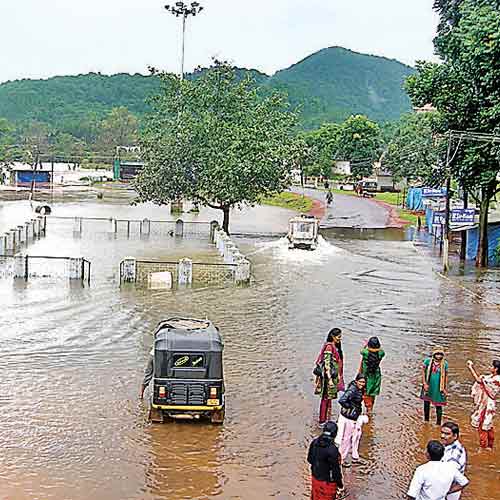
Kodagu is inundated after recent downpours. - DNA
Kodagu is inundated after recent downpours. – DNA

The copious amount of rain that areas near Bhagamandala in Kodagu received in the recent past has pronounced good news for the people of Bangalore and Mysore. The rainwater has started filling up the Krishnaraja Sagar reservoir in Srirangapatna taluk in Mandya district, which is the main source of water for Bangalore and Mysore.

As a result of the heavy rain on the hills of Madikeri, the Bhagamandala-Talacauvery area, which resembled a drought stricken place a few days back, filled people with joy, despite the road from Bhagamandala-Napoklu being inundated, throwing life out of gear.

People did not mind their children missing classes and ignored the absence of the workers in their fields and plantations, and chose to just sit back and enjoy the rain. Men settled down with their bottle of rum while ladies were in a holiday mood and many of them cooked their signature dish ‘Pandi Curry’(pork chops) and ‘Pundi’ (rice dumplings) for their family.

“This is the time to be happy. Kodagu is looked upon by the people in the Cauvery basin as the provider of life. We were sad when there was less water in Cauvery. But, for the past few weeks, the elders were worried about the drought like situation in Bhagamandala and the entire river course of Cauvery and the dry situation at the KRS,” said Prasad Nanjappa, a resident of Madikeri town.

Confirming copious inflow of water into the reservoir, executive engineer of the KRS facility told dna that the inflow improved tremendously to reach 4,300 cusecs per day, which subsequently increased the water level from 65 feet in the past week to 80.16 feet.

“With the rains in Kodagu district intensifying, we expect more water to flow into the KRS reservoir in the next few days,” he added.

Meanwhile, the Kodagu district administration has declared holidays for schools and colleges for the next two days.

source:http://www.dnaindia.com / DNA / Home> Bangalore> Report / by M Raghuram / Place:Mysore, Agency:DNA / Wednesday – June 26th, 2013

The rain quotient

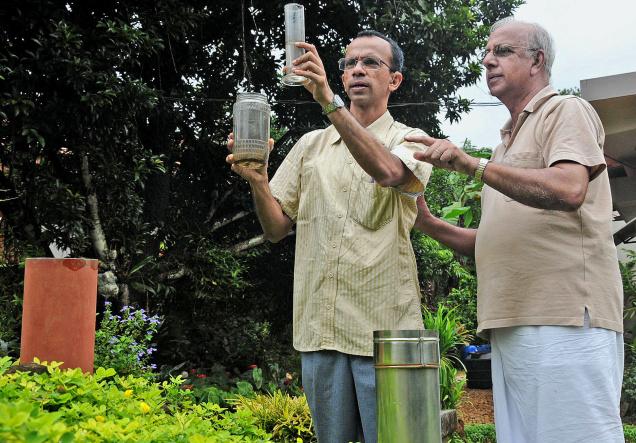
Rain Man: Abraham Tharakan with his son, Bobby /  Photo: K.K. Mustafah / The Hindu
Rain Man: Abraham Tharakan with his son, Bobby / Photo: K.K. Mustafah / The Hindu

Abraham Tharakan’s family has been recording rainfall since the late 1950s. He talks about his family’s unique engagement and its relevance in these times. Shilpa Nair Anand learns about the family’s unique engagement and its relevance in these times.

Rain is on everyone’s mind this year, every millimetre and inch of rain is a conversation piece. But a family in Muvattupuzha is ‘into’ rainfall and has been recording it for close to 50 years.

There is a story to how Abraham Tharakan’s family got interested in rains, specifically in measuring rainfall. His grandfather, his namesake, a native of Thaikattussery, moved from the traditional coconut and paddy cultivation into plantation agriculture. He bought land in Kothamangalam in the late 1920s or early 30s for this purpose.

“My father, also Abraham Tharakan, had the green thumb. He started cardamom, coffee and rubber plantations. And then in the 1950s he heard about coffee plantations in Coorg,” Abraham Tharakan reminisces. A huge photograph of his late father dominates the drawing room in the house in Muvattupuzha. A smaller oil painting of his grandfather rests on a corner table.

Abraham Tharakan’s family has been recording rainfall since the late 1950s. It started out as a planter’s necessity in Coorg, which it still is, Tharakan says. He shows records of the rains in Muvattapuzha from 1988. If you are wondering how much rainfall Muvattupuzha received in July 1989, all you need to do is refer to his meticulously well-kept records. It rained 150 days in 2002 as compared to the 124 days in 2001; in 2010 Muvattupuzha got 4. 25 inches of rain in one-and-a-half hours and the same year it got 7.75 inches over a 24 hour period. “I had records of rain in Kothamangalam from the 1970s too. Some of those were lost when we shifted here.”


Dedicated notebooks

The ‘records’ are maintained in notebooks dedicated to recording rainfall. Some of the books are informal notebooks. But the records since 2000 are in a specific notebook, which he bought from Coorg. “When Kodavas buy property, one of the first records they ask for, even before the land deed, is the rain chart. Their conversations start with ‘how much did you get?’”

The record-keeping started with his father, during his days in Coorg. He remembers seeing his first rain gauge as a 10-year-old. “There was hardly any irrigation there and planters solely depended on rain. Coffee is a one time crop and untimely rain can damage the crop. The idea behind monitoring weather conditions was to help agricultural operations,” he says. When his father returned to Thaikattusserry (Alappuzha) he installed a rain gauge there. Father and son would exchange notes on the rainfall received, something which he does today with his sons, Ebbey and Bobby. The coastal belt gets less rainfall as compared to the high ranges, he says. “If Muvattupuzha gets an average of 110 inches of rain then Kochi would get an average of 90 inches of rainfall,” says this engineer-turned planter.

As we chat, his son informs him that Kothamangalam has already recorded 13 inches of rainfall till July 8. When Tharakan talks about the rain it becomes clear how little we know about it. “There is a difference between getting four inches of rain and three-and-a-half inches.” An agriculturist needs to know the pattern of rainfall received. He shows the rainfall patterns of 2010 and 2011, during the monsoon, and the chart for 2012. The charts show a clear deficit of rainfall during the June-July period.

“If someone had been monitoring rainfall then the power shortage could have been anticipated and corrective measures could have been taken before it was too late.” He is not only talking from a planter’s point of view.

He is against the attitude of taking rain for granted, “you cannot sit back thinking it will rain because it rained the year before. There is all this talk about the water table and rain water harvesting…but how much do we know about rain?”

He even records the number of days it rains each year. Ebbey and Bobby measure the rainfall and make the records.

“My sons go on the Net for accurate weather forecasts. If it rains more in November rubber tapping is affected. This way we know what the weather is going to be; so we can be prepared. The Indian Meteorological Department is very accurate and so are the satellite pictures in The Hindu. The various websites are extremely helpful. Information is more detailed; it is very different from what it was in my time.”

He has not missed a single day of recording rainfall. Outings are planned in such a way that they don’t hamper the recording, his wife says. There is always somebody around to monitor rainfall.


Another cause

Abraham Tharakan is a member of the All Kerala Parents’ Association of the Deaf. The cause of the deaf is close to his heart as both his sons are hearing impaired. He counsels parents of similar children. He moved to Kerala from Mysore in 1976. He was at the All India Institute of the Hearing Impaired aiding them in their treatment. Both his sons look after the estates; they are perfect examples of assimilation. Ebbey and Bobby even have driving licenses.

How it works

The rain gauge is a cylindrical metal pipe with a funnel inside with a container placed under it to collect rainwater which is then measured.

The gauge is not high-tech. The rainwater once collected in the gauge is then measured using a cylindrical measuring glass used specifically to record rain.

The previous day’s rain is measured every morning at 7 a.m.

Of the rain gauges he uses, one is ‘made in Coorg’. He has installed two in his garden, but he finds the ‘Coorg’ one more reliable.

He bought one from Kochi but he is not sure about its accuracy because there is a variation in the sizes, which, he believes, might hamper accuracy.

source: http://www.thehindu.com / The Hindu / Home> Features> MetroPlus / by Shilpa Nair Anand / Kochi – July 14th, 2013

Coffee Board ups output forecast to 3.47 lakh tonnes

CoffeeBlossomKF03aug2013
‘Crop to drop by 20% due to weather-related problems’, says KPA
Bangalore :

Despite rampant white stem borer (WSB) menace and long days of dry period after blossom, coffee production is set to increase by 28,800 tonnes (9.05 per cent) over the final estimate of previous year 2012-13 (3,18,200 tonnes).

The Coffee Board, which released the post-blossom crop forecast, said for the year 2013-14, coffee production is estimated at 3,47,000 tonnes.

Of the total estimate, the arabica and robusta break up is 1,11,000 tonnes and 2,36,000 tonnes respectively. Arabica production has shown an increase of 12,400 tonnes (12.88 per cent) over the final estimate of 2012-13, while robusta increased by 16,400 tonnes (7.47 per cent).

By the states, the production gain has mainly come from Karnataka to the tune of 18,890 tonnes (8.21 per cent) and non-traditional areas (NTA) with 1,780 tonnes (28.57 per cent) while Kerala has shown an increase of 6,350 tonnes (9.89 per cent) and Tamil Nadu by 1,755 tonnes (10.10 per cent) compared to the previous 2012-13 season’s final estimate.

“Due to the drought like conditions (April-May), the crop setting in arabica and robusta has been severely effected. Also there were many incidences of WSB in arabica plantations.

The Karnataka Planters’ Assocation (KPA) estimates that there will be a drop of 20 per cent due to this weather-related problems, said Nishant R. Gurjer, Chairman, KPA.

In Karnataka, all the three districts recorded increase in production over the previous year with an almost equal share of arabica and robusta. Kodagu district recorded the highest increase of 14,420 tonnes (12.02 per cent) which is mainly accrued from robusta (11,620 tonnes or 11.77 per cent) and arabica gained by 2,800 tonnes (13.15 per cent).

Hassan district recorded an increase of 3,535 tonnes (10.84 per cent) which has come from both arabica (2,635 tonnes or 14.02 per cent) and robusta (900 tonnes or 6.52 per cent).

While Chikmagalur showed an increase of 935 tonnes from Arabica, the robusta production showed a decline of 2,940 tonnes (-7.30 per cent) over the previous year final estimate.

“Due to prolonged and unprecedented drought of over 50 days, there has been a spurt in the WSB pest that has devastated the arabica plants. We have also been unable to carry out the regular operations like spraying and manuring on time due to lack of rains in May. As for robusta, due to severe constraints of power and water resources, we were unable to cover our entire area for blossom and backing irrigation. We feel the blossom estimate may have to be revised further downward in view of prevailing conditions,” said Sahadev Balakrishna, Partner, Netraconda Estates, Chikmagalur.

“The arabica production regained in 2013-14 season in Karnataka mainly because of the biennial bearing nature of arabica as last year’s final estimate was low,” said the coffee board official.

The blossom showers are reported to be normal in all most all the coffee growing zones, while there was a delay in backing showers in certain pockets were reported. “In general good crop condition and better husbandry practices have helped to invigorate production in Karnataka. The crop forecast for Karnataka is placed at 86,735 tonnes of arabica and 1,62,380 tonnes of robusta totalling 2,49,115 tonnes,” the official explained.

Kerala coffee zones also have received adequate and timely blossom and backing showers. There was no adverse effect on crop was reported.

Accounting this, the post-blossom estimates for the 2013-14 is placed at 70,550 tonnes, which is an increase of 9.89 per cent (6,350 tonnes) over the previous 2012-13 final estimate of 64,200 tonnes.

Tamil Nadu post-blossom forecast is placed at 19,125 tonnes which also showed an increase of 1,755 tonnes (10.10 per cent) mainly in Pulneys and Shevroys region against the previous year final estimate of 17,370 tonnes.

In non-traditional areas of Andhra Pradesh and Orissa and north eastern region, the post-blossom forecast is placed at 8,210 tonnes against previous final estimate of 6,405 tonnes.

The higher forecast has come mainly from Andhra Pradesh and Orissa due to increase in bearing area.

2012-13 production was 3,18,200 tonnes

The final coffee production 2012-13 estimate is 318,200 tonnes, an increase of 2,700 tonnes (0.86 per cent) over the post monsoon estimate of 315,500 tonnes and an increase of 4,200 tonnes (1.34 per cent) over the previous year’s 2011-12 final estimate of 314,000 tonnes.

The Coffee Board, which released the final crop estimate for 2012-13, said of the total final estimate, the share of Arabica is 98,600 tonnes and that of Robusta is 219,600 tonnes.

The production of Arabica has shown a marginal decline of 1625 MT (-1.62 per cent) while Robusta increased by 4,235 tonnes (2.01 per cent) over the post-monsoon estimate made before crop harvesting in 2012. The loss in Arabica production and the production gain in Robusta has mainly come from Karnataka.

The final crop estimate for Karnataka is placed at 230,225 tonnes with a break up of 77,425 tonnes of Arabica and 1,52,800 tonnes of Robusta. The final production in Karnataka has shown a marginal increase of 3,020 tonnes (1.33 per cent).

The Arabica production has marginally declined in Chikmagalur (-1.32 per cent), Kodagu (-1.87 per cent) and Hassan of (-1.96 per cent) districts, while Robusta production shown an increase in Chikmagalur (8.33 per cent), Kodagu (1.15 per cent) and in Hassan (0.55 per cent) districts.

In Kerala, the final estimate of 2012-13 is placed at 64,200 tonnes with an increase of 375 tonnes (0.59 per cent) from the post monsoon estimate of 63,825 tonnes.

Tamil Nadu final production of 2012-13 is placed at 17,370 tonnes which is a marginal decline of 380 tonnes over the post monsoon estimate of 17,750 tonnes.

In the Non-Traditional Areas and North Eastern Region, the final estimate of 2012-13 is placed at 6,405 tonnes against post monsoon estimate of 6,720 tonnes which showed a marginal decline of 215 tonnes in Andhra Pradesh.

source: http://www.thehindubusinessline.com / Business Line / Home> Industry> Agri-Biz / by Anil Urs anil.u@thehindu.co.in / Bangalore – July 22nd, 2013
Forest officials drive back elephants into Kodagu forests

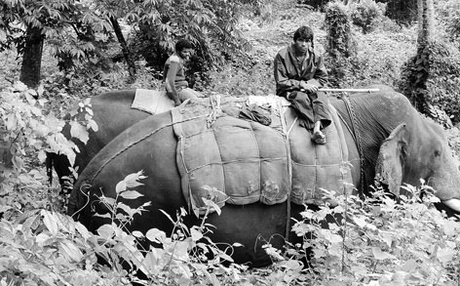
The two-day operation to drive wild elephants back into forests by the forest department in South Kodagu in progress | Express photos

The two-day initiative of the Forest Department to drive wild elephants back into the forests came to an end on Saturday.

On Friday, the operation commenced in the presence of chief conservator of forests, Kodagu circle, Brijesh Kumar Dixith, Deputy Conservator of Forests (DCF), Virajpet division, Malathi Priya, Deputy Conservator of Forests, Nagarahole wildlife division, Gokul, assistant conservator of forests and range forest officials and staff from all the forest department divisions of Kodagu district.

14 Jumbos Driven Back to Forests

The teams were able to chase away 14 elephants from Devarapura and Nokya Gram Panchayat limits, ACF Belliappa told Express.

On Saturday, the teams were unable to spot even one elephant.

He said the teams will continue to ensure the elephants do not return.

“The operation will be continued next week in Pollibetta areas. Movement of vehicles and people will be restricted through publicity arrangements,” he said.

Belliappa added that most elephants entered South Kodagu either from Mauvkal or Nagarahole forests.

Need for Public Help

The operation involved tamed elephants, special task force staff, wildlife staff from Nagarahole, Virajpet division forest officers and staff along with watchers. General public and police also extended required assistance to the department.

Chief conservator of forests, Kodagu circle, Dixith told reporters here on Saturday that as per the elephant census taken last year, as many as 6,000 elephants were located in the state. In Kodagu region, covering Gonikoppa, Thithimathi and Maldaare areas, as many as 100 wild elephants are troubling people, he said.

“Another 32 elephants are permanent residents of BBTC coffee estates in Siddapura. These should be captured and shifted,” he said. However, before their capture, a few technical and legal aspects need to be addressed, he said.

In Bramhagiri wildlife sanctuary, 30 elephants on the Kodagu-Kerala border have been identified that need to be captured and sent back into forest cover, he said. All these issues have been brought to the notice of Forest Minister Ramanath Rai, Dixith added.

source: http://www.newindianexpress.com / The New Indian Express / Home> States> Karnataka / by Express News Service – Madikeri / July 29th, 2013

Coffee Board’s forecast for 2013-14 surprises planters

Board has projected an all-time high crop of 347,000 tonnes in current year

At 3,47,000 tonnes, the Coffee Board’s post-blossom crop forecast for 2013-14 has come as a surprise for planters and exporters in Karnataka. The board has projected a nine per cent rise in production, compared with the final estimate of 3,18,200 tonnes for 2012-13. Karnataka accounts for 70 per cent of India’s coffee output.

The board has pegged robusta production at 2,36,000 tonnes and arabica production at 1,11,000 tonnes—7.5 per cent and 12.9 per cent higher than the final estimates for 2012-13, respectively. In 2012-13, 98,600 tonnes of arabica and 2,19,600 tonnes of robusta were harvested.

According to the Karnataka Planters’ Association (KPA), the board’s estimates were too high, considering the growing regions were in the grip of a prolonged drought and high temperatures during the pre-blossom period of February-April. KPA has pegged production at 2,90,000 tonnes.

“There are three main factors affecting production this year. We have seen prolonged dryness, owing to very high temperatures in March and April and the occurrence of white stem borer in arabica plantations. Third, this is an ‘off-year’ for robusta. We cannot have two consecutive years of high production. As a result of the drought, bean development was low this year in major growing regions in the Chikmagalur, Hassan and Kodagu districts,” said Nishant R Gurjer, chairman, KPA.

In fact, robusta production would be 25 per cent lower this year, especially in Karnataka, he added.

Exporters, however, neither agree with the board, nor with planters. “If the Coffee Board’s estimates come true, it will be an all-time high production in India. But it is unlikely to happen, considering various factors. Robusta has seen good rains in April and this year’s crop would certainly be better than last year’s. I think a little over 3,30,000 tonnes looks reasonable,” said Ramesh Rajah, president, Coffee Exporters’ Association of India.

Gurjer said the incessant rains in most growing regions in the last three weeks would have an adverse impact on production. Many planters have already reported fruit dropping and rotting. “There are stray incidents of ‘kole roga’ (a rotting disease) in many areas due to heavy rains,” he said. This year, production could be 2,90,000-3,00,000 tonnes, he added.

The United States Department of Agriculture has projected India’s coffee production at 3,12,000 tonnes.

A Coffee Board official said sampling had been carried out in April-June and the post-blossom estimates were in accordance with the sampling. Realistic production figures would only be released when post-monsoon estimates were prepared in October, he said, adding, “We will take into account all factors, including the impact of heavy rains, when we prepare the post-monsoon estimates.”

source: http://www.business-standard.com / Business Standard / Home> Markets> Commodities> Food & Edible Oils / by Mahesh Kulkarni / Bangalore – July 25th, 2013

Paddy transplantation begins in Kodagu

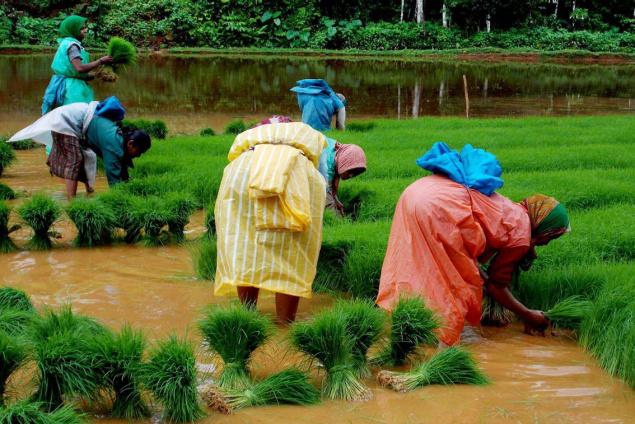
Women readying paddy seedlings at a nursery in Napoklu in Kodagu for transplantation./ The Hindu

Paddy transplantation has begun in the right earnest in Kodagu district, thanks to the copious rainfall which has far exceeded last year’s figures in the corresponding period.

Many farmers are steadfastly continuing the avocation against odds such as expensive labour, high input costs and irrational prices.

Transplantation has started in Napoklu and surrounding areas. Paddy seedlings are ready for plucking in the district and the works are expected to gather momentum in a couple of days, says Deputy Director of Agriculture, Kodagu, Ramakrishna. The target for paddy cultivation was 35,000 hectares of which 1,360 hectares had been covered till date, he told The Hindu.

Farmers in remote villages still depend on agriculture in Kodagu though it is not financially viable for most of them. However, the sheen associated with paddy transplantation where a large group of men and women sang to chorus to mask the tiredness of work cannot be seen any longer.

One would compete with the leader to match his speed of transplantation even if it rained hard. A big column in the middle of the paddy field would be left vacant to facilitate the ‘Nati Vota’, wetland sprint, in which youth would take part with great glee. It used to be the custom in the past. Not many indulge in ‘Nati Vota’ these days. The vacant column used to be covered up with seedlings after the sprint.

According to Monnanda Somaiah, a farmer from Napoklu, expensive labour costs, apart from the shortage of workers, had made many farmers give up agriculture in villages. Many of them had sold off cattle and some had converted fields into housing sites.

Farm mechanisation was a process yet to catch up in the district, though a few progressive farmers had discovered its utilities. Elephant attacks would result in destruction of paddy crops in the district in the recent years.

Fertilizer had replaced cow dung and other leafy manures that were organic, says Subbaiah, another farmer from the same region.

Paddy transplantation would pick up in Virajpet taluk, which had the largest areas in terms of coverage, in a few days as seedlings were ready for plucking, Mr. Ramakrishna said.

Not so long ago, the extent of paddy fields was considered a sign of high social status. Coorg mandarin (orange) cultivation had become popular enhancing one’s social status later onwards.

Coffee holding now symbolises the social status in Kodagu. Paddy crop is seen as goddess Lakshmi as the ‘Puttari’ of ‘Hutri’, the harvest festival for the people of Kodagu, is directly connected with it.

Cutting the paddy sheaves and taking home by chanting ‘Poli poli deva…’ meant appeasing goddess Lakshmi to give them a bountiful crop and abundance. Decrease in the paddy cultivation has robbed the harvest festival of its glory, says, Mr. Somaiah.

Kodagu received 1,602.1 mm of rainfall from January this year till 8 a.m. on July 18. It is more than last year’s figure of 732.89 mm.

Madikeri taluk received 2,372.24 mm, the highest among three taluks, in the same period this year. It was 1,049.2 mm last year. Virajpet taluk received 1,146.61 mm (622.19 mm) while Somwarpet taluk received 1,287.4 mm (527.27 mm).

source: http://www.thehindu.com / The Hindu / Home> News> National> Karnataka / by K. Jeevan Chinnappa / Mysore – July 21st, 2013

Benefits elude forest dwellers in Kodagu

Change in demands by beneficiaries reason for delay, claims dist admn.

The government’s scheme of providing free food items, to people who dwell in forests for the six monsoon months has not been kicked off this year, due to the confusion created by beneficiaries.

The scheme which should have started in the month of June has been delayed, as the beneficiaries are changing their demands every year, complain district administration.
The families that dwell in forests get 15 kg rice/ragi, 2 kg tur dal, 2 kg jaggery, 1 litre cooking oil, 1 kg horse gram and 30 eggs every month. However, the beneficiaries who cannot make up their minds in choosing between ragi or rice, has posed a big problem for the administration.

There are 7,500 families who are benefited from the scheme. Each family is given 15 kg rice or ragi, then there is a need of 1,125 tonnes of food grain every month.

The district administration also faces difficulties in arranging for such huge amount of food grain every month.

Confusion

In 2011,all beneficiaries opted for rice. In 2012, the beneficiaries said that they prefer ragi over rice, and hence ragi was distributed.

The district administration thought that the people would prefer ragi this year and started making preparations for availing the food grain in the month of February. However, this year some families said that they do not want ragi, they want rice instead.Deputy Commissioner Dr N V Prasad, asked the Anganawadi workers to conduct a survey among the families, and ask for their preferred food grain. Majority of the families, opted for rice. Meantime, the town panchayat and assembly electio ns were announced and the tender process for ordering food grains was postponed.

The natives

The natives of Kodagu such as Jenu Kuruba, Yarava, Soligaru, Kudiyara among other communities dwell in forests.

Due to the heavy rains, that lash the district, the forest dwellers feel difficult to work and purchase food items. Due to lack of nutrition, many reportedly die too. Women and children are affected due to lack of nutrition. Many suffer from anaemia.The social welfare department has introduced the nutritious food scheme, in 2011 to help the native people.Integrated Tribal Development Programme Officers took the responsibility of identifying the beneficiaries.

The DC and Taluk Executive Officers are chairing committees with regard to the implementation of the scheme.

“It is not an easy task to arrange for a huge amount of food grain, especially when people change their choices every year. The demands of the natives has been sent to the government, and steps will be taken once the government sends directions,” said DC Dr N V Prasad.

source: http://www.deccanherald.com / Deccan Herald / Home> District / by Srikanth Kallammanavara / Madikeri, DHNS – July 04th, 2013