Category Archives: Agriculture

Madikeri: Helium Balloon Launched to Keep Tabs on Weather Pattern in Coffeeland

Madikeri:
The Kodagu Technology Users’ Association, in collaboration with the Indian Space Research Organization (ISRO) launched a ‘Sonda’ weather balloon into the open sky on Thursday, April 19 to monitor weather.

The balloon was released by IAS officer and Coffee Board chairman Jawaid Akhtar at Garagandur near Madapur in northern Kodagu. He said the coffee planters in Kodagu so far faced hardships because of changes in weather. With a view to avoid them, and with ISRO collaboration, this unit had been set up. Feedback received from this unit would be useful for the coffee-growers to keep track of the vagaries of weather and plan their agricultural activities, he said.

Akhtar further said that subsidies for coffee-growers had been announced under the 12th five-year plan and assured that the Coffee Board was committed to protecting the interest of the coffee planters.

Kodagu Technology Users’ Association (KTUA) secretary M B Bopanna said that weather information centres had been set up in 21 points in the district. Another 10 were being planned to be opened soon. Launching of each balloon would cost Rs 4,000, he said. Besides reporting the weather conditions at different points in the district, the balloon unit would record the rainfall, direction of the wind, temperature and humidity, water resources and the like.

The unit will rise to an altitude of 32 kms and will, every three minutes, transmit the information to the ISRO centre in Ahmedabad, said Bopanna.

KTUA president Kitty Devaiah, vice president Bose Mandanna and joint secretary Subbaiah provided a variety of information about the weather balloon. ISRO adviser Dr Das, another former IAS officer hailing from Kodagu Rathi Vinay Jha and others were present.

The 21 points of weather monitoring: D Chennamma PU College – Madapur, Coovercolly Estate – Belur, Kaukudi Estate, Durgadevi Estate – Hattihole, Lakshmi Estate – Kanchanakolli, Talacauvery, Ishwar temple – Napoklu, Kattimadu Estate – Margodu, Nakoor Estate – Sunticoppa, Coffee Research Centre – Chettalli, Elk Hill Estate – Siddapur, panchayat office – Maldare, Tata Coffee Estate – Pollibetta, Chennangolli Estate – Devarapura, Nittoor Estate – Nittoor, Sukalia Estate – Kutta, Forest College – Ponnampet, Government Primary School – V Badaga, Dental College – VIrajpet, Ram Prasad Estate – Palangala and Coffee Growers’ Association – Madikeri.

The balloon launching could have taken place a few days earlier, but the requisite permission was yet to be received from the Mangalore airport.

Vice president of KTUA Bose Mandanna, also a former vice president of the Coffee Board said,“It is mandatory for us to get permission from nearby airports to flow the balloon. We have got permission from the district administration and Airports Authority of India.”

Speaking to our Mangalore bureau, Mangalore airport director M R Vasudeva confirmed that the permission had since been given.

Bose Mandanna futher said that based on the data planters could decide if they could wait for the rain or could use the sprinklers. Irrigating an acre of land is estimated to require a lakh litre of water. Almost as a rule, all coffee-growing areas in the state have been facing power shortage, planters have to use diesel to use sprinklers.

source: http://www.mangalorean.com / by Team Mangalorean, Madikeri / by Ashwinin Appaiah with Vartha Pics / April 21st, 2012

Gene treatment may render fertilisers obsolete

Kodagu-origin US scientist works on path-breaking agriculture technology

Crops may soon overcome the need for fertilisers and pesticides. The research for this may be a long-drawn-out process, but will provide path-breaking results.

Dr B W Joe Poovaiah, the Kodagu-based agriculture scientist in Washington State University, is undertaking gene treatment research to eliminate the necessity of fertilisers and pesticides of crops. The research is in the advanced stages and field trials are pending.

He gave details of his research to reporters during a visit to the district. Poovaiah belongs to the Bachittira family of Kiggalu village in the district and settled in the US 40 years ago. His research – Calcium/calmodulin: The grand conductor of signal orchestration in plants – has attracted the attention of the international scientific community. He is working on calcium/calmodulin-mediated signaling to achieve the objectives.

The scientist says that while the CCamK gene – which is responsible for calcium/calmodulin-dependent protein phosphorylation – governs nitrogen fixation in crops, the DWF1 and AtSR1 genes are responsible for growth of plants and their resistance to the effects of pests on them respectively. Poovaiah’s team tasted its first success in identifying these genes. The later stage was the treatment of the genes (cloning) so as to suit their needs.

According to him, monocotyledons (for example, rice and wheat), cannot absorb nitrogen – a key nutrient – from the atmosphere, thus necessitating the use of fertilisers. However, the plants of legumes (dicotyledons – peas, beans) do not face this problem. The CCamK gene in these plants help them absorb nitrogen directly from the atmosphere.

This gene is being created in the lab and introduced into the rice and wheat plants to “teach” them to absorb nitrogen directly from the atmosphere (self-fertilising), thereby eliminating the need for fertilisers. Plants release salicylic acid into the atmosphere, whenever they are affected by diseases, as a means of fighting the diseases (defend themselves against pathogen attack).

The amount of acid release varies from plant to plant. Treating the AtSR1 gene can help increase the amount of acid release, thus increasing their immunity. A success in this task will end the dependence on pesticides for plants.

Similarly, controlling the DWF1 gene – responsible for the very tall growth in some plants – can make them grow less taller (altered growth habits) and give higher yield.

The results of the research document novel regulatory mechanisms where calcium acts as a ‘master switch’ in controlling various physiological processes in plants. The gene treatment will start yielding results in five to 10 years, he said.

His researches have been documented in science magazine Nature and the website of Washington State University.

source: http://www.DeccanHerald.com / Home> State / Madikeri, DHNS / April 10th, 2012

Novel way for coffee planters to check the weather


Many of us look online or rely on the weather reports to find out what the climate and temperature is going to be like.

However, the coffee plants in the Kodagu region of Karnataka have apparently come up with a rather different way of doing things.

According to reports, they have decided to use an unusual means of working out what is happening: by using a balloon.

How does this weather prediction method work?

Apparently, the balloon is filled with helium gas and is equipped with instruments which are able to study the weather systems.

For instance, it is said that the equipment would be able to determine whether rain was likely within a period of around 4 days.

Of course, this information is vitally important to the coffee farmers.

The information will help them work out whether to incur the costs of using sprinklers to irrigate the coffee crops, for example.

The information which is collected by the equipment in the weather balloon would be used alongside information which is collected from the other automatic weather stations (there are about 25 of them) in Kodagu.

Further calculations will then be made by the Madhapur station and sent on to the Indian Space Research Organisation’s research section.

Why go to all this trouble?

Apparently, this way of monitoring the changing weather patterns is an attempt to get predictions which are as accurate as they can be.

The coffee planters have contributed towards the cost of the operation and the Indian Space Research Organisation has agreed to help out too.

source: http://www.WorldCoffeeNews.com / by Clive / Thursday, April 05th, 2012

Forestry students training at zoo

Mysore Zoo is organising training for the final year B.Sc. (Forestry) students of Ponnampet Forest College from April 8 to May 14.

It is proposed to create awareness and opportunity to learn about Zoo management and their activities.

The programme is designed to understand the importance of conservation education, captive breeding research, rescue and rehabilitation.

B U Chengappa, retd principal chief conservator of Forests will inaugurate the training programme on April 8 at 11 am at Mysore Zoo.

M Nanjundaswamy, Chairman, Zoo Authority of Karnataka will preside over the function. R S Suresh, member secretary, Zoo Authority of Karnataka will participate in the inauguration as chief guest, according to a press release from the zoo.

Animal adoption

Mysore zoo has announced that the following persons have adopted the noted animals under “Adoption of Animals” scheme by paying the adoption fee.

Dhananjay Patnakar from Koramangala, Bangalore has adopted the cheetah paying Rs 50,000 for a year from March 24, 2012, to March 23, 2013, while Vaanathi Paulvannan from Coimbatore has adopted a Russel Viper for a year, paying Rs 2,000 .

Sonam Sultana and Prajwal B R from Rayanakere and Hootagalli in the city have adopted a Love Bird and Red Avadavit, respectively paying Rs 1000 each for a year, according to a press release from the zoo.

source: http://www.DeccanHerald.com / Home> District / DHNS / Mysore, April 03rd, 2012

Spending time with the tribals

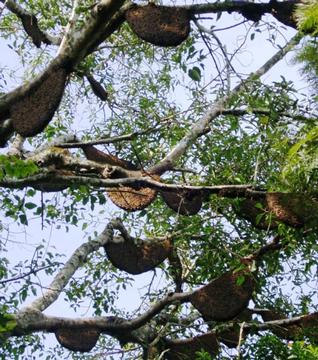
Honey hives: In the forest
It was a day to remember when school kids danced with the Soliga tribals recently at the town hall.
A recent event in Mangalore brought school students closer to Soliga culture. Many of them joined the Soligas as they danced as part of a programme held in the city’s town hall recently.

The students were from Stds. VI and VII. There were 40 students from Government Higher Primary School, Parappade, and 70 students from Government Higher Primary School, Mullakadu.

Song and dance
Enjoying ethnic beats: With the Soliga tribe
The dance was part of a week-long celebration of dances organised by the Information Departments of all the 30 districts of the state.

Most of the students said that they were seeing the dances and songs of the Soligas for the first time.

The Soligas explained to the students about life in the forest. The students asked them several questions about their food, their way of worship and how they lived in the forest.

Telling time

Raghuvir, Std. VII, Government Higher Primary School, Parappade, said, “I liked the way they described how they collect honey and how they tell the time by looking at the blooming of a flower. They should be allowed to live in their forests.”

Nirmala, Std. VII, said, “Women in the tribe have freedom.” Hithesh, Std. VII was thrilled how they could detect a snake hidden in the foliage.

Dhanaraj, Std. VII admired the way they dressed, their views on animals, their ornaments made from what is available and the variety of their dances

Mamatha, honorary teacher, Government Higher Primary School, Parappade, was impressed by their marriage custom, where a girl can choose her life partner and the expense of the marriage came to only Rs.12.50.

The word Soliga means “people of the bamboo”, because they believed they originated from the bamboo. They live close to nature. This is seen in their local tribal laws. They harvest fruits and berries only from trees that has lots of flowers. They leave the overripe ones for the birds.

They cultivate land only for five to seven years. Then the land is left untouched for 50 to 75 years, so that the forest takes over again.

source: http://www.TheHindu.com / Life & Style> Kids / by Renuka Phadnis / April 02nd, 2012

Nutrition food card to Jenukurubas

Madikeri, Feb 4, 2012, DHNS:
The state government has started a programme to distribute nutritious food for Jenukuruba and Koraga community members in the state.

Jenukuruba community members are found in Kodagu, Mysore and Chamarajanagar districts and find it difficult to carry out their living during monsoon. Hence, they are given nutritious food for six months in a year.

Every family is given 15 kg ragi, 2 kg tur dal, one kg horse gram, 2 kg jaggery, one litre oil and 30 eggs. There are 3,105 Jenukuruba families in the district. The nutritious food is given to 2,064 families in Virajpet and 1,041 families in Somwarpet. A sum of Rs 28 lakh is spent on Jenukuruba families in the district. The TDP officer Ganti said all the families are given a nutrition food card.

source: http://www.DeccanHerald.com / Home> Districts / DHNS / February 04th, 2012

The Bandipur-Brazil corridor

In Bandipur: dung sold at Rs 3,000 a lorry load.In Brazil: a ravaged coffee crop. Asks NITIN SETHI : what’s the relation?

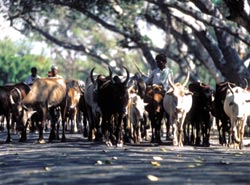
Hangala was selling cow dung Auctioning
— (Credit: Photographs: M D Madhusudan

It’s hard to tell who was the first in the village to really strike upon the business idea. But very soon everyone in Hangala was part of it. The sleepy and dry village at the periphery of Bandipur National Park, Karnataka, had in a mere two year’s time, transformed itself into the nerve centre of a booming trade.

Hangala was selling cow dung. Auctioning it, quite literally, and making millions. The buyers came from other parts of Karnataka — from Tamil Nadu and Kerala, as well. Those were years of boom, the 1990s. It isn’t too bad, even today; though you are quite likely to get this wistful remark from the village’s residents today: “The high point of the trade lasted for about five years and we all made good”.

Hangala was not the only one to prosper from dung trade; the other 74 villages on the periphery of the park also thrived on it. And unknown to them, the trade was fuelled by happenings in Brazil.

Hangala, or any other village for that matter, never came to know how. They didn’t care to, or needed to, say villagers, they just wanted to make the best of it. For, the region was in dire straits then. Rains had failed Karnataka repeatedly. 60 per cent borewells had gone dry in Hangala and the village’s rainfall-dependent agriculture was on the verge of collapse.

The villagers, like most others in the region, grew low- yielding crops of millets and pulses. The average annual family income was as low as Rs 17,000. The money to be ploughed in to agriculture on the other hand was huge; labour, manure, fertilisers and seeds had to be bought before the monsoons. “Cash strapped, we perpetually ran to the local moneylenders,” says Kalappa. Interest rates ranged from 60-340 per cent annually. Even if drought spared them one year, there would always be the crop-depredating wild pigs and elephants to deal with. As an alternative some farmers opted for cash crops, cotton and castor. The crops were to some extent resistant to depradations by wild animals and brought them instant cash. But only so much.

Everyone in the region was looking for better opportunities. And, when coffee prices around the world shot up in the early 1990s, the villagers found a way out of their difficulties. These were the years when the flurry of activity at coffee markets across the world matched the fury with which the frost struck and destroyed Brazilian coffee.
High on coffee After crude oil and metals, coffee is the hottest selling commodity in the international market. The annual global exports exceed US$12 billion. About 60 countries trade in it, and Brazil, the largest grower contributes approximately 30 per cent of the global production.

Brazil’s annual coffee production is, however, prone to recurrent bouts of frosts and droughts. In fact, frosts have severely damaged Brazil’s coffee crop 31 times in the last 172 years. The frequency of the attacks have increased during the last few decades. And, in the mid-1960s and the mid-1990s Brazil suffered the worst, losing 50 per cent of its exports.

Each time the golden rule of the free market came into effect: when supply of goods reduces, prices shoot up. In fact, prices rose quite dramatically as coffee was (and continues to be) the centre of a international speculative trade, which keeps its prices volatile. The beneficiaries of this sudden rise were bound to be coffee farmers in minor producer countries, such as India (which produces 3-4 per cent of the coffee grown globally), with their produce steady in times of global slump.

But Indian growers were in no position to benefit in the 1960s. For, the farmers had to compulsorily sell their produce to the state-run Coffee Board at a fixed price. However, things were different in the 1990s: the Coffee Board had lost its control over the coffee growers. Now, the latter minted money.

And how?
The value of India’s average annual coffee export rose by 158 per cent between 1989-93 and 1994-98, although the corresponding increase in export volume was only 36 per cent. Profits soared by as much as 834 per cent, much of it shared between coffee farmers of three contiguous districts: Kodagu in Karnataka, Nilgiris in Tamil Nadu, and Wayanad in Kerala. For, about 45 per cent of India’s 3,467 square kilometres expanse of coffee-growing areas falls within these districts, which together produce 57.2 per cent of India’s coffee. While the going was good, farmers increased the land under coffee plantations. There was a problem though: manure. Indian coffee growers prefer organic manure, which gives their produce a distinct taste and value. The ever-increasing plantations now needed larger volumes of it. The obvious source: cattle. But coffee growers were loath to let cattle graze on fertile and valuable lands that could alternatively be brought under coffee, yielding even more profits.

Dung had to be managed from outside the plantation area.

Bright idea
If coffee growers couldn’t keep cattle on their highly priced land, couldn’t someone else? It is difficult to say who thought of it first; the fact remains that the entire region cottoned on fast. Coffee growers prospected and hit upon the well-connected villages around Bandipur. A good choice: livestock was abundant, agriculture was nominal, and land was not intensely used, and therefore very cheap. Here was a source for manure, loads of it.

What must have clinched the ‘deal’ was that most villages on the northern boundary of the national park had free access to the park forests. So fodder was not a problem. The pact struck, an inter-state trade in cow dung took off.

Villages such as Hangala began auctioning their dung for as high as Rs 3,000 a lorry load. Brazil’s ill luck and the vagaries of international commodity trade had brought the region unexpected riches. Hangala alone produced 39 tonnes of dung daily at the peak. Of this, it sold 16-24 tonnes — an average of 4 truckloads every day. Here was a business with no recurring costs; the fodder was ‘stolen’ from forests. “And the cattle were bought dirt cheap from Ooty. We didn’t need high milk-yield varieties, just ones which could amble through the adjoining forests and defecate” says Kalappa, a resident of Hangala.

Simple rules governing dung collection came into effect: all dung that fell in the cattle shed belonged to the cattle-owner; that deposited while cattle grazed in the forests was gathered by dung collectors (including women who found a formal occupation, finally). Dung collectors sprung up. So did agents, lorry managers, suppliers, brokers — a supply chain.

The village council in Hangala decided it should also get a share of the trade proceeds and began auctioning off streets and public places for dung collection. Exclusive collection rights were auctioned off at nine public locations — including the cattle pound and eight streets cattle used to reach grazing grounds. “We thought auctioning would bring money to the village for its development,” says H S Nanjappa, zilla panchayat member. After all, the annual trade from this village alone was worth about Rs 65 lakh.

The fact that much of the village manure was going out did not impact farming: the money earned helped purchase government-subsidised fertilisers.

Over time, villagers bought more cattle; the bovine population increased in all the villages participating in the trade; in some, by as much as 30 to 40 per cent over just five years. And in a few villages the growth rate of livestock shot up as high as 13-17 times greater than the national average livestock growth rate for the same time period.
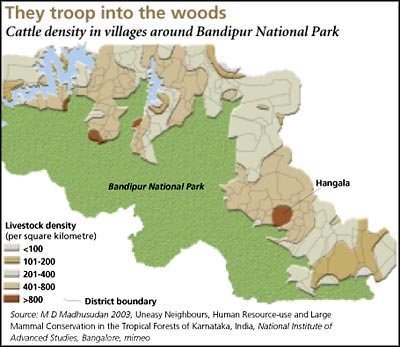
All this cattle grazed in the forest, with people following, avidly
collecting. The only alternative for grazing, common pasture lands, had anyway long disappeared. Additionally, most villages were now cropping marigold, turmeric, cotton and sunflower, which produce no consumable waste. “And even where ragi (finger millet) is grown, it’s a hybrid that produces very little hay,” says A Obireddy, principal scientist, National Dairy Research Institute, Bangalore. The forest was the cheapest, and at times the only, source of fodder for the thousands of cattle.

And today
Brazilian coffee is doing extremely well. Indian coffee growers face their worst crisis ever in 30 years. But the dung trade has acquired a steam of its own. “We now sell dung to Kerala for ginger, chilly, tea and many other crops. It’s not as voluminous as before, but prices have risen by almost Rs 1,000 in the last two years,” says M C Subbappa of Mangala village, which depends entirely upon dung trade (only about 10 of its 200-odd families own land). “What other options do we have?” he asks, as his 20-odd cattle rush home, tended by a labourer he pays Rs 5,500 annually. “I have had a daughter married off with this money. My son can work in the fields elsewhere because my future is secure.” “Our dependence on moneylenders has reduced considerably,” says Nagamma, a local tribal leader.

In Hangala too, the trade is flourishing. In the day, the village wears a desolate look: most men are out with their cattle. “Some are also trying for a few hybrid cows, for milk. The grass this side of the forest has been over-grazed. I tell them not to sell all their manure but what’s to stop them? Its not illegal,” says Nanjappa. Villagers recollect a local politician trying to stop the dung trade, even as his own henchmen made money off the trade.

It’s not illegal to sell cattle for meat either and there is a huge demand from across the border in Kerala. “Well, some do sell their cattle for a good price,” reluctantly accepts Kalappa. The village has more than 6000 cattle and nearly 5000 sheep and goats; there is enough meat to sell. A single cow can fetch up to Rs 8,000 for meat in Kerala. “Sometimes people who want to supposedly protect the cows from slaughter impound our cows at the Kerala border. But I guess they have to also fit into the business, right?” smirks Mallikarjun of Mangala village. He then goes right back to what he thinks is best for him: tending his cattle.

Inputs from E Vijaylakshmi
source: http://www.downtoearth.org.in/ Home> Features/ Issue October 31st, 2004

Govt move attracts more paddy growers

Madikeri:

The support price for paddy this year has attracted more farmers to sell their paddy production directly to the government agencies. Hence, this has increased the government’s paddy sock in Kodagu district.The state government has fixed the price per quintal of paddy at Rs 1,110 for ‘A’ grade variety, the government will add Rs 250 subsidy for this and the farmer will get Rs 1,360 per quintal.

The medium quality paddy will get price of Rs 1,080 plus Rs 250 and the aggregate amount of Rs 1,330. Farmers are selling their paddy production directly to agricultural produce marketing committees (APMC) in Madikeri, Gonikoppal and Kushalnagar. “The purchase started last month. So, for 882 quintals in Madikeri,1,192 quintals in Gonikoppal and 113 quintals in Kushalnagar, and in total 2187 quintals of paddy, is sold in APMC,” explained Jayadevaraje Urs, executive, District Food And Civil Supply Corporation Ltd.
Private buyers could not compete with the price, they cannot provide any subsidy and farmers are rushing towards APMC centres as the facility is scheduled till March-end. Later, there is no guarantee whether the same price will be continued by the government. The subsidy will be given to farmers on the basis of 18 to 20 quintals of production per acre and up to the maximum limit of 100 quintals only. The quality test is a compulsory process and moisture test will be done before the paddy is purchased from farmers.”The farmers should bring paddy in gunny bags and each bag should contain only 50 kg. They should also bring certification from the respective village accountants that the paddy is grown during 2011-12.

They should produce record of rights of property. The APMC will give acknowledgement for receiving the paddy and the cheque will be sent to the bank account of sellers within a week,” said Bellu Somaiah, president, APMC, Madikeri.Thalur Kishore Kumar, a farmer from Bettageri, expressed happiness over the government’s new support price. He said that he sold 25 quintals of paddy at Rs 1,300. “When I asked private dealers, they were willing to offer him only Rs 750 per quintal. The government’s new policy has provided the farmer an opportunity to make profit and has encouraged the cultivation of more paddy during next season,” he added.

source: http://www.articles.timesofindia.indiatimes.com / City> Mysore/ TNN / January 14th, 2012

Upasi annual meet delayed, but sees many youngsters taking part

COONOOR: Oct 23rd
Ministers give it a miss at the last minute

The Annual Plantation Conference hosted by the apex association in the South – The United Planters Association of Southern India (Upasi) appears to be losing its sheen in recent years.

Union Ministers, who have confirmed participation, have in the last 4-5 years given the event a go at the last minute leaving Upasi to find either a local Member of Parliament or the Chairperson of one of the commodity boards stand-in to inaugurate the conference.

This year, the association postponed the event by more than a month to October 23 and 24, hoping to get the Union Commerce Minister, Mr Anand Sharma, participate in this annual conference.

People in the know of developments say that for the first time in the history of Upasi has the conference been postponed by over a month. (It has for the last four-five decades been conducting the event by mid-September as a ritual).

When this did not materialise, the association sought time from the Union Minister for Rural Development, Mr Jairam Ramesh, and the Minister for Labour and Employment, Mr Mallikarjun Kharge. Though Mr Jairam Ramesh had confirmed his programme, it is learnt that he could not make it at the last minute.

The postponement of the conference, it now appears has not brought about the desired effect.

The association even departed from its usual format of arranging the commodity outlook session a day-ahead of the annual conference.

Over dependence on the elected representatives and ministers, missing schedule-deadline in the conduct of the annual meet seems to have taken its toll on the attendance at this year’s meet with more than half the members giving it a miss.

YOUNG MINDS

A visible, yet welcome change was the presence of plantation owners’ children taking part in all the deliberations this year, eagerly listening to the older generation.

Mr M.D. Balakrishna, former Upasi President (1988-89) and a coffee planter from Chikmagalur, said, “Earlier, the meets were orderly, for the corporate brought their professional work culture in managing the events and organising them. The annual meets used to be held much early, before the crop year commenced. Now only few corporates are in the sector; many have withdrawn. With their absence, the onus is on the plantation owners and few service providers to managing the meets annually.”

Plantation owners have two issues on hand – manage the trade body and manage their estate besides coping with the changing national and global policies. This has delayed the younger generations to actively involve on both platforms.

Many plantation owners’ children do work in different industries such as banking, managing cafes or at different value chain of commodity processing before going back to managing their estates. This has also delayed them to take a plunge in serving the trade bodies.

Talking about the diverse talent younger generation is bringing to the trade bodies, Mr Marvin Rodrigues, Vice-Chairman, Karnataka Planters’ Association (KPA) and a planter from Hassan, said, “youngsters are coming back to the plantation sector after having worked at industries. For me, managing labour shortages on the estate has taught me good HR skills.”

Mr Bose Mandana, former Vice-Chairman of the Coffee Board and a coffee planter from Kodagu, said: “We have come long way to reach a stage in managing our trade bodies ourselves. When total export controls were in place, we had limited or no role to play in marketing the produce. Now, we are free to manage, but problems are plenty.”

source: http://www.thehindubusinessline.com / L.N. Revathy > Anil Urs / October 23rd

India witnesses rise in coffee exports

The Coffee Board of India has revealed that the country’s coffee exports in the 2010-11 coffee year have increased by about 34% to 3.58 lakh tons, compared to 2.68 lakh tons in 2009-10 coffee year.

The board has attributed the jump in coffee exports to the rise in global demand. According to the data from the board, Coffee exports in value terms increased to $1.048bn from $577.98m on higher realizations.

The coffee shipments of the country rose by 30% to 2.92 lakh tons, compared to 2.24 lakh tons in the corresponding period last year in the first nine months of the current calender year, reported Press Trust of India.

The exports from the country in the April-September period of the current fiscal also rose by 25% to 1.92 lakh tons from 1.53 lakh tons in the year-ago period.

India, which largely exports coffee to Italy, Germany, Russia, Belgium and Spain, accounts for 4.5% of the global coffee output, but exports 70% to 80% of this.

source: http://www.markets.drinks-business-review.com / by DBR staff writer/ October 04thy, 2011