Category Archives: Green Initiatives / Environment

‘Check dam constructed due to vested interests’: Kodagu villagers oppose project across Chikliholey

The villagers stated that they were not taken into confidence before sanctioning the project and said that these dams will severely affect the farmers and villagers living downstream of the Chiklihole.

The check dam project across Chikliholey Stream in Kodagu by the Minor Irrigation Department is under construction. (Photo | Special Arrangement)

Madikeri :

The check dam project across Chikliholey Stream in Kodagu by the Minor Irrigation Department has met with strong opposition from the villagers.

The department has now assured to call off the project as villagers alleged that the check dams are being constructed to help a private estate owner. The project is estimated to cost around Rs four crores. 

The villagers of Horuru, Modur, Abhiyala, Attur and Nallur of Kedakal grama panchayat have strongly opposed the new check dam project upcoming across the Chikliholey stream.

The Minor Irrigation Department has taken up the task of building two check dams – within a span of 100 meters distance – across the Chikliholey stream near D Block of Kedakal Grama Panchayat.

However, the villagers stated that they were not taken into confidence before sanctioning the project and said that these dams will severely affect the farmers and villagers living downstream of the Chikliholey.

They claimed that the check dams also pose a risk of flash floods and landslides during monsoon.  

As sources confirmed, a 128-acre private estate was recently bought by a person from outside the district at the D Block of the panchayat limits.

The villagers allege that due to vested interests, the minor irrigation department has sanctioned the construction of two check dams across the Chikliholey stream, which according to the villagers will only help the D block estate owner.

“The check dams are of no use to the farmers of the village. The planters who have plantations downstream of the Chikliholey will be severely affected by the check dam project as this will stop the free flow of the water stream. The entire Chikliholey dam will be of no use if these check dams are constructed as this will stop water flow from December to May – when people need water the most,” explained Sanju Ponappa MM, vice president of Kedakal Grama Panchayat.

The villagers on Monday called for an emergency meeting that witnessed participation from over 30 villagers alongside the Kedakal Grama Panchayat members. The stir against the construction of the check dams invited the attention of Minor Irrigation Department officials who visited the spot. Following the strong opposition from the villagers, the department has now handed over a letter to the Grama Panchayat assuring them to immediately stop the project.

The construction of the two check dams has been called off following opposition from villagers.

source: http://www.newindianexpress.com / The New Indian Express / Home> States> Karnataka / by Express News Service / February 20th, 2023

Kodagu forests filling up with waste from Kerala

Two more cases have been booked against violators who were trying to shift garbage from Kerala.

Heaps of solid wastes

Madikeri :

The forest and wildlife in Kodagu are facing serious threat due to illegal dumping of truckloads of waste arriving from Kerala. The forest fringes on NH-275 are also under threat from littering caused due to lack of public awareness and proper facilities for tourists.

The Makutta Reserve Forest and the Bramhagiri Wildlife Forest, which line the Karnataka-Kerala border, are gradually turning into an open dumping yard for waste.

Foresters during a cleanliness drive in Kodagu | Express

It was only after some alert residents from the district, including members of the Kodagu Seva Kendra, flagged the issue that the authorities started collecting waste from the forest fringes and burning it. The forest department has also increased checks at the Makutta check-post. Recently, a truck driver and a cleaner, who were allegedly transporting 15 sacks of plastic waste from Kerala, to dump in the Makutta forest area were nabbed by the foresters and booked under the Wildlife Protection Act. Two more cases have been booked against violators who were trying to shift garbage from Kerala.

“Foresters will conduct daily patrolling across the reserve forest area to prevent travellers from littering,” said Dechamma, Range Forest Officer (RFO) of Makutta forest.

Residents unhappy with burning of plastic waste

However, residents are unhappy with the foresters for their unscientific management of waste. They have voiced concern over burning of plastic waste inside the forest limits which can be hazardous to health. Further, hundreds of tourists take the Makutta route to reach Kannur International Airport and it has become difficult for the foresters to prevent littering, despite several awareness signboards being put up on the fringes.

Dechamma said that tree branches are being placed along the roadside to curb parking in the area. Meanwhile, the forest fringes lining the NH-275 on Kushalnagar-Madikeri Road are facing threat for which lack of public awareness is being cited as a reason. Foresters say they conduct cleanliness drives across the forest fringes once a month and collect truckloads of garbage.

source: http://www.newindianexpress.com / The New Indian Express / Home> States> Karnataka / by Express News Service / February 19th, 2023

In coffee estates, wasp to fight mealybug pests in Kodagu district

The parasitoid can be released across estates during the summer months, which is the breeding time of the mealybugs.

coffee

Madikeri :

Coffee plantations are prone to several diseases and the attack from mealybug pests is among the major reasons for crop loss across estates. However, the Coffee Research Sub Station (CRSS) in Chettalli of Kodagu district has come up with a unique and organic way to fight this pest. Leptomastix Dactylopii, a parasitoid, has been developed at the station that will be effective in culling the mealybugs in the most ecofriendly way. “Mealybugs are major pests affecting coffee and they cause considerable crop loss,” explained Dr Manjunath Reddy, Entomologist at CRSS.

Ovalshaped, soft-bodied insects, the mealybugs are a threat to the pepper vines and other fruit trees in the estates too. The bugs breed during summer and cause immense damage to the crops during monsoon. “The bugs are covered with white mealy wax, making it tough to eradicate them.

Leptomastix Dactylopii (left); File photo of a
mealybug-infested coffee plant

They suck a large amount of sap from leaves and stems with the help of piercing mouthparts, depriving plants of essential nutrients,” he explained. There has been an increased buildup of the mealybugs in the estates and the wild in recent times and Dr Manjunath analysed that this might be due to the abiotic changes in climate and environment. While there are a few chemical sprays to fight the mealybugs, they have been proven ineffective as these bugs infest the estates during the monsoon. However, the CRSS has come up with the most organic way to fight these bugs.

The substation has reared Leptomastix Dactylopii, a parasitoid that attacks and hunts mealybugs. “Female parasitoids lay eggs on the third instar (a lifecycle stage) and young adult mealybugs. A single parasitoid emerges from one mealybug. The parasitoid larvae eat the mealybug from the inside out. After 20-30 days, a young adult parasitoid emerges through a hole on the top-end of the dead mealybug,” he detailed.

A female parasitoid lays 300- 400 eggs,which develop into adult parasitoids in 20-30 days. These adult parasitoids have a lifespan of 2-3 weeks. The Leptomastix Dactylopii can be left in coffee estates that suffer from mealybug infestation and 1,000 Leptomastix Dactylopii are required to be released per acre of estate.

The parasitoid can be released across estates during the summer months, which is the breeding time of the mealybugs. The parasitoids are available at the entomology department at the CRSS in Chettalli and they are priced at Rs 250 per 1,000 parasitoids. This method is seen as the most economical and organic way to fight the mealybugs that infest both Robusta and Arabica varieties of coffee plants.

source: http://www.newindianexpress.com / The New Indian Express / Home> Cities> Bengaluru / by Prajna GR / Express News Service / January 25th, 2023

Flower show at Raja Seat

Tourist footfall at Raja Seat in Madikeri has risen with the top tourist destination and one of the most visited sites in Kodagu hosting a flower show since Friday.

The flower show concludes on February 6.

Nearly 20 species of flowers and about 12,000 plants are part of the show with special floral decorations.

The highlights of the show include varieties of exhibits created in flowers, bonsai plants and others.

The Principal Secretary, Horticulture, Rajendra Kumar Kataria, visited the flower show with Deputy Commissioner B.C. Satish on Saturday.

source: http://www.thehindu.com / The Hindu / Home> India> Karnataka / by The Hindu Bureau / February 04th, 2023

Kodagu forest department tests Elephant Signal Boards to address wildlife conflict

The boards function as an early warning system for commuters and are automated with infrared signals. The infrared beams have been placed at an optimum height to detect the presence of elephants.

Madikeri :

The Kodagu division forest department is trying new techniques to address the increasing man-elephant conflict in the district. In a first-of-its-kind initiative, elephant signal boards have been erected in a few conflict zones erected by A Rocha India – a conservation research organization, with support from the Kodagu division forest department.

Boards with elephant signage have been placed at five conflict zones across Meenukolli and Anekadu forest limits. These sign boards are functional and signal commuters about the movement or presence of wild elephants.

“The elephant signal boards were first tested in Bannerghatta and over 50 detections of elephant movement have been recorded so far. Still, in its R&D stage, we have now extended this facility in Kodagu on request from the forest department,” shared Avinash Krishnan, CEO of A Rocha India.

An organization that is largely finding resolutions to the human-animal conflict in Bannerghatta and Hosuru areas, A Rocha India has erected five elephant signal boards in the district after availing details on the traditional elephant routes from the ground forest staff and the local community.

“The boards have been erected at strategic locations where elephants have been identified to move frequently – especially in coffee estates and other small patches of land,” he explained.

The Elephant Signal Boards alert commuters on elephant movement. (Photo | Special Arrangement)

The boards function as an early warning system for commuters and are automated with infrared signals. The infrared beams have been placed at an optimum height to detect the presence of elephants.

When the infrared detects the movement of wild elephants, the signal boards light up and warn the commuters to slow down or pause. The signal boards have been tested to make them foolproof.

Further, once the movement of the elephant is detected, the signals are pushed to the SMS server system and the local DRFOs can track and monitor the movement of the wild elephants. The solar-powered beams and signal boards can also be connected with Direct Current in case of the absence of sunlight. The units have been custom-made and are proven to be weatherproof.

“We are conducting a commuter survey across Bannerghatta to see if people are noticing and benefitting from the signal boards. The monitoring process is still ongoing and the data will be shared with the forest department to conceptualize the mitigation plans,” he added.

While the project has been implemented on a small scale in the district, A Rocha India looks forward to scaling it up following its successful implementation. The initiative is being tested in the district on request from the Kodagu division forest department CCF BN Murthy.

source: http://www.newindianexpress.com / The New Indian Express / Home> States> Karnataka / by Prajna GR, Express News Service / January 31st, 2023

Madikeri’s Raja Seat blooms vibrantly, gears up for Flower Show

The event is being hosted by the Kodagu district administration alongside support from the Zilla Panchayat and the horticulture department.

Raja Seat gearing up for the annual Flower Show event to take place from February 3 to February 6
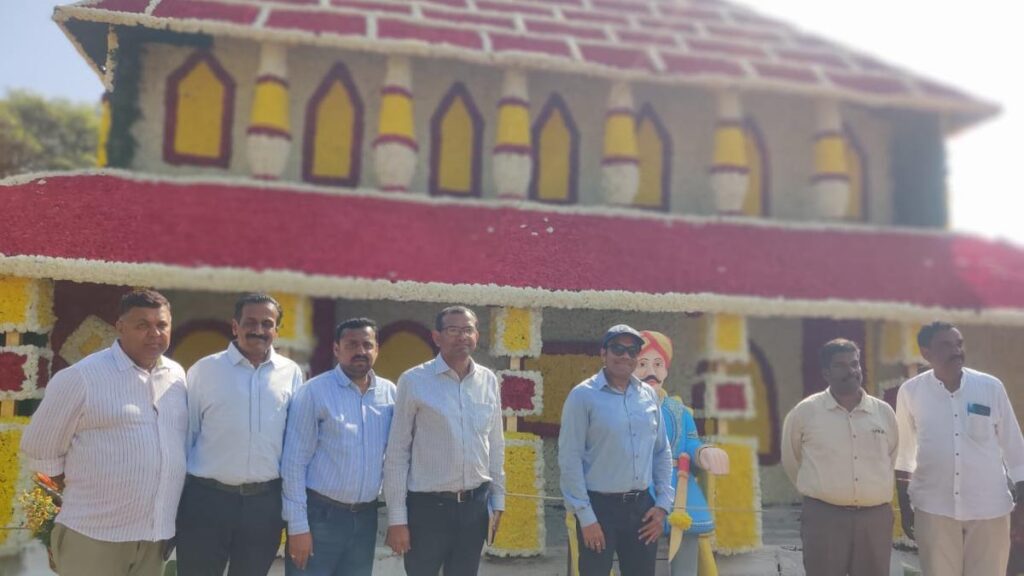
Raja Seat gearing up for the annual Flower Show event to take place from February 3 to February 6. (Photo | EPS)

The historic mortar at the Raja Seat in Madikeri is blossoming in vibrant colours and happily stepping into the spring season. While greenery covered most parts of the park, it is now filled with brightly coloured, blossomed plants. The iconic tourist destination is now decking up for the annual Flower Show event, which will be held from February 3 to February 6.   

The event is being hosted by the Kodagu district administration alongside support from the Zilla Panchayat and the horticulture department. The flower show will be inaugurated at 4 pm on February 3 with an entry fee of Rs 20.

“Raja Seat is getting ready to host the flower show, with almost 10,000 to 12,000 flowering plants already being set out at the venue,” confirmed Dr BC Sateesha, the Kodagu Deputy Commissioner and District Magistrate. Around 15 to 20 varieties of flowering plants including petunia, canna, salbia, chrysanthemum, marigold, zinnia, calendula, phlox and daliya have been seeded in the park’s garden and are already blossoming in vibrant colours.

Furthermore, the venue will have historical structures of Kodagu decorated in flowers, including the iconic Nalknad Palace. The event will also create awareness of voting where the ballot unit, VV Pat, control unit, etc. will be recreated using flowers. From cardboard cutouts of superheroes to well-known leaders, everything will be decorated with flowers along with bonsai and anthurium that will deck up the entire venue. 

The event will also provide a platform for the farmers to exhibit their unique products, which will be judged for the competition. A total of 60 shops will be established at the Gandhi Maidan (a few meters away from Raja Seat)consisting of various outlets from various government departments and private partners.

Alongside the flower show, a Wine Utsav will also be hosted which will exhibit both homemade as well as wines from the Wine Board that will be available for tasting activity. The event is seen as a boost to the tourism sector as Rs 15 lakh to Rs 20 lakh has been funded. 

source: http://www.newindianexpress.com / The New Indian Express / Home> States> Karnataka / by Express News Service / January 27th, 2023

Madikeri: New invention – Face mask behind head to avoid tiger attack

Madikeri : 

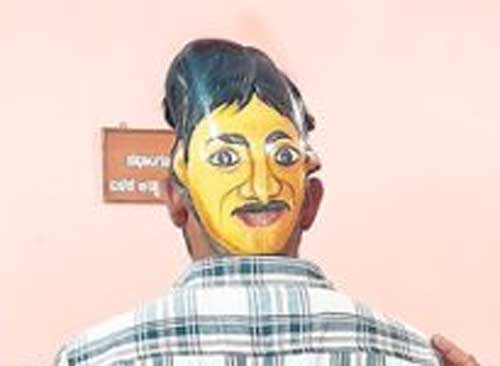
“Tigers never attack human beings from front. They attack from behind. In order to prevent attack of tigers, people of Sundarbans in West Bengal are using human faced mask on the back of their head and it is found to be successful. This might be useful in Kodagu district also,” said Col C P Muttanna, honorary secretary of environment and health foundation.

Muttanna further said, “Many people have died due to tiger attacks in Sundarbans, area were Brahmaputra river joins Bay of Bengal. Now the incidents have reduced due to people wearing human face mask on the back of their heads.

“In the south part of Kodagu, tiger attacks have increased and five people have already died. So a proposal is sent to the government to provide human face mask made of rubber.

“When one studies the tiger attack cases of the district, it becomes apparent that the tiger attacks people who go for open defecation in the morning. Though it is said that Kodagu district is open-defecation free, there are many areas where people still go to fields to defecate as there are no toilets. The government must provide toilets to households where there is no toilet,” he said.

Col Muttanna also asked people to leave the half eaten carcass of cattle as it is as the tiger will come again to eat the same and it will be easier for forest department to cage it.

source: http://www.daijiworld.com / DaijiWorld.com / Home> Top Stories / by Daijiworld Media Network – Madikeri (MS) / January 12th, 2023

Talacauvery is South India’s top ‘star party’ destination

The source of Cauvery is also among the most ideal locations to gaze at the sky.

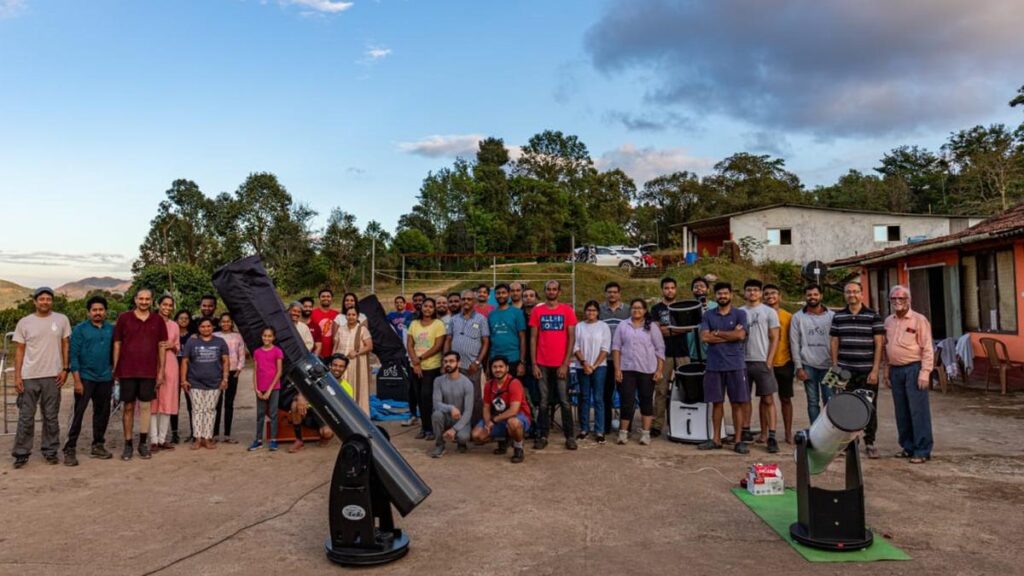
A “star party” organised by the Bangalore Astronomical Society recently at Talacauvery in Kodagu district of Karnataka. Photo: Special Arrangement

Talacauvery in Kodagu district, which is the source of Cauvery river, has emerged as South India’s Hanle, as astronomers have been hosting “star parties” there for some time now. Hanle, located in Ladakh, and known for its pristine skies and minimal light pollution, is also India’s first Dark Sky Reserve.

A Dark Sky Reserve is a designation given to a place that has policies in place to ensure that a tract of land or region has minimal artificial light interference.

In south India, most dark sky locations are in the Western Ghats or some hill ranges nearby, and according to astronomers, Talacauvery is the most ideal location to gaze at the sky and have a star party.

Voluntary work

The Bangalore Astronomical Society (BAS), a group of volunteers working for the promotion of astronomy as a hobby as well as a science, is now hosting star parties at Talacauvery. IT professionals Sudhash Natarajan, Vishwanath S.K. and Keerthi Kiran have been volunteering to conduct the star parties for BAS.

“We at BAS usually arrange star parties on New Moon weekends (Friday-Saturday-Sunday) format as it is the ideal time to observe the celestial objects which we are looking for. We inform people who are interested in joining us for the star party eight to days in advance. Members of the sky party after arriving at the dark sky location set up their equipment like telescopes, binacolours etc and the observation goes on until 4.45 am,” said Sudhash Natarajan.

Mr. Natarajan said that the group which attends the star parties are of all walks of life and that they are a mix of experienced astronomers as well as students and newbies to astronomy. He added that star parties have also been conducted in Koratagere, Hoshalli, Kavalur, and Yercaud in the past.

Less light pollution

“However, Talacauvery is possibly the best dark night location in south India due to less light pollution. In astronomy, there is something called the Bortle scale which measures the night sky’s brightness of a location on a nine level numerical scale. The lesser the numerical scale it qualifies for a better dark sky location. For example, Hanle skies would qualify as Bortle one skies, Talacauvery as Bortle two, and Bengaluru as Bortle nine,” he added.

The star parties are usually conducted in the winter months between December to March as the skies are clearer during these months which is very important for stargazing.

Mr. Natarajan said a star party was conducted between December 23 and 27, 2022, and the next one would be between January 20 and 24.

source: http://www.thehindu.com / The Hindu / Home> News> India> Karnataka / by Hemanth C S / January 04th, 2023

Karnataka Shifts 13 Elephants In Batches To Madhya Pradesh

Mahouts, Kavadis unhappy as they are emotionally attached to pachyderms

Siddapur (Kodagu):

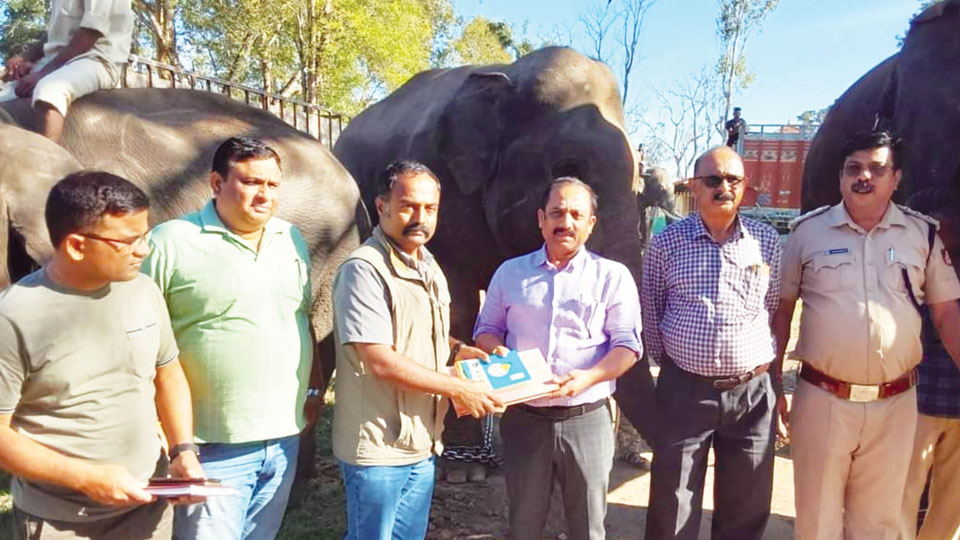
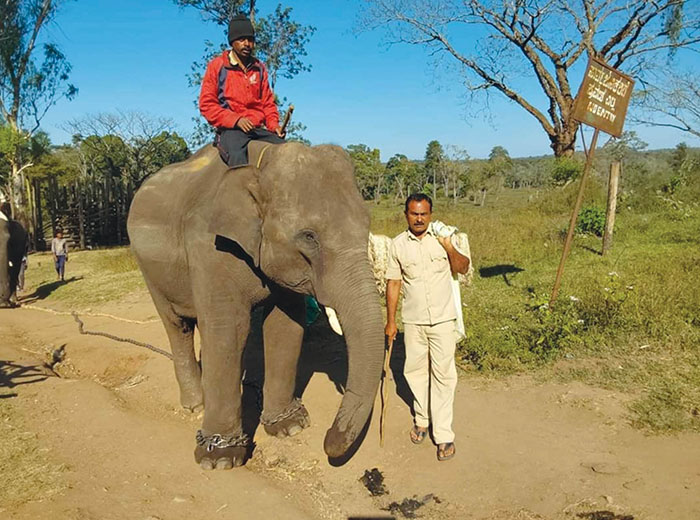
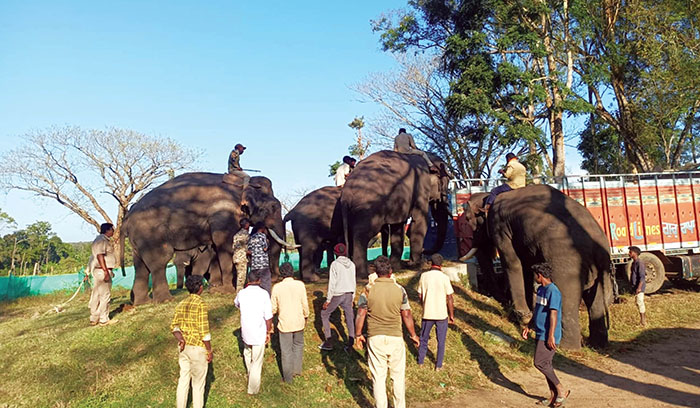
The Karnataka Forest Department has begun the transfer of 13 elephants in batches from various elephant camps in the State to Madhya Pradesh. The purpose is to assist the Forest Department of that State in reducing the human-animal conflict and also ease the pressure on the identified elephant camps of Karnataka.

The camps that are giving the elephants are in Mysuru, Kodagu and Shivamogga. Following a letter from the Principal Chief Conservator of Forests (Wildlife) and Chief Wildlife Warden, Madhya Pradesh, seeking transfer of camp elephants from Karnataka to Madhya Pradesh, the Karnataka Forest Department initiated the process to shift the identified elephants. 

A team of Forest Department from Madhya Pradesh visited the elephant camps at Ramapura in Bandipur Tiger Reserve in Gundlupet taluk, Dubare Elephant Camp at Siddapura in Kodagu and Sakrebyle Elephant Camp in Shivamogga where they identified the 14 elephants (12 male and 2 female). Though 14 elephants were identified for transfer, one male elephant died, reducing the number to 13 — 11 male and two female.

Subsequently, they submitted a detailed report to the Madhya Pradesh Government for consideration of their transfer from Karnataka. Following up on the matter, the Karnataka Government sought the opinion of field officers who approved the transfer and later, the Union Ministry of Environment, Forest and Climate Change permitted the shifting.

The name of the selected elephants are: Krishna (21 yrs), Gaja (7 yrs), both male elephants, Marsiha (7 yrs) and Pooja (9 yrs), both female elephants — all four lodged in Ramapura camp of Bandipur Tiger Reserve; General Thimayya (8 yrs), Field Marshal (General) Cariappa (8 yrs), Valli (40 yrs), Lava (21 yrs) and Maruthi (20 yrs), all five male elephants from Dubare camp; Ravi (25 yrs), Shiva (6 yrs), Manikanta (35 yrs) and Bengaluru Ganesha (36 yrs), all four male elephants of Sakrebyle camp.

As per the agreement and the orders, yesterday, the five elephants were shifted from the Dubare Elephant Camp in trucks and the Madhya Pradesh Forest Department took possession of the elephants. They will subsequently reach Bhopal. The shipment includes Mahouts and Kavadis who will stay in Madhya Pradesh for some time till the elephants are acclimatised with new surroundings and new handlers.

The Ramapura camp gave four elephants instead of five as the male pachyderm Ganesha (17 yrs) that was identified to be shifted died due to illness. The remaining four elephants have already been sent to Madhya Pradesh.

Now with the shifting, the Ramapura Elephant Camp has been left with 14 elephants, Dubare Camp with 27 and Sakrebyle Camp has 15 elephants.

Kodagu Chief Conservator of Forests B. Niranjan Murthy said that there are elephant camps at Dubare, Harangi, Mathigodu, Bheemanakatte and Balle in Kodagu with a total of 70 tamed elephants and two of them from Mathigodu camp have been sent for capture and taming of wild elephants and other departmental purposes.

Mahouts, Kavadis unhappy

Even as the process of shifting began, the Mahouts and Kavadis have opposed it as they are emotionally attached to the elephants. This apart, they are scared of losing their livelihood as they will be left with no job after the elephants are shifted.

Pointing out that they are not permanent staff, Dobi, State Vice-President of Mahouts and Kavadis Association, said that it is the Mahouts who have captured and tamed these elephants in deep forests and their livelihood is now under threat.

Urging the Government to regularise their service and also to hike their wages, he wanted the Government to address the issues concerning daily wage Mahouts and Kavadis, who are serving the Forest Department for years without any job security.

source: http://www.staromysore.com / Star of Mysore / Home> News / December 23rd, 2022