Formal inauguration done; tourists to be allowed only in January 2023
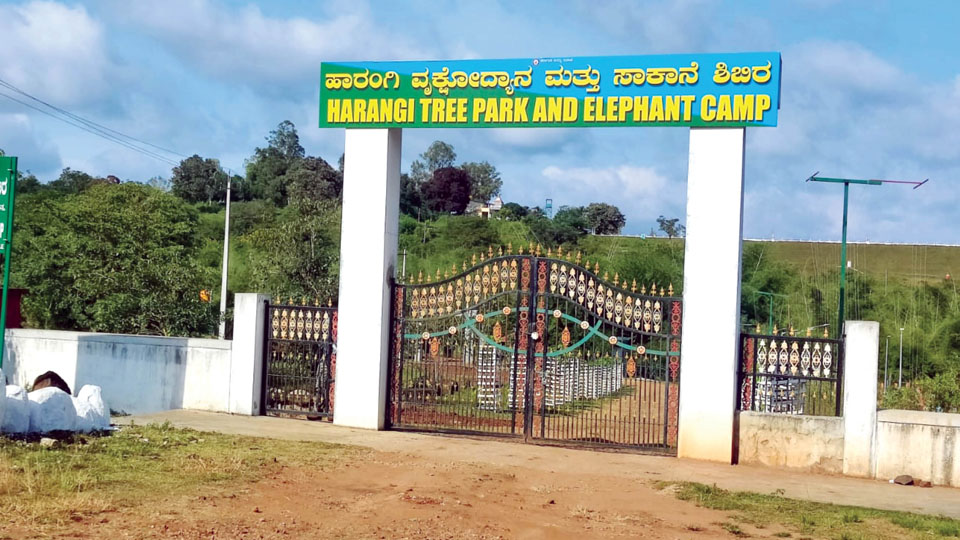
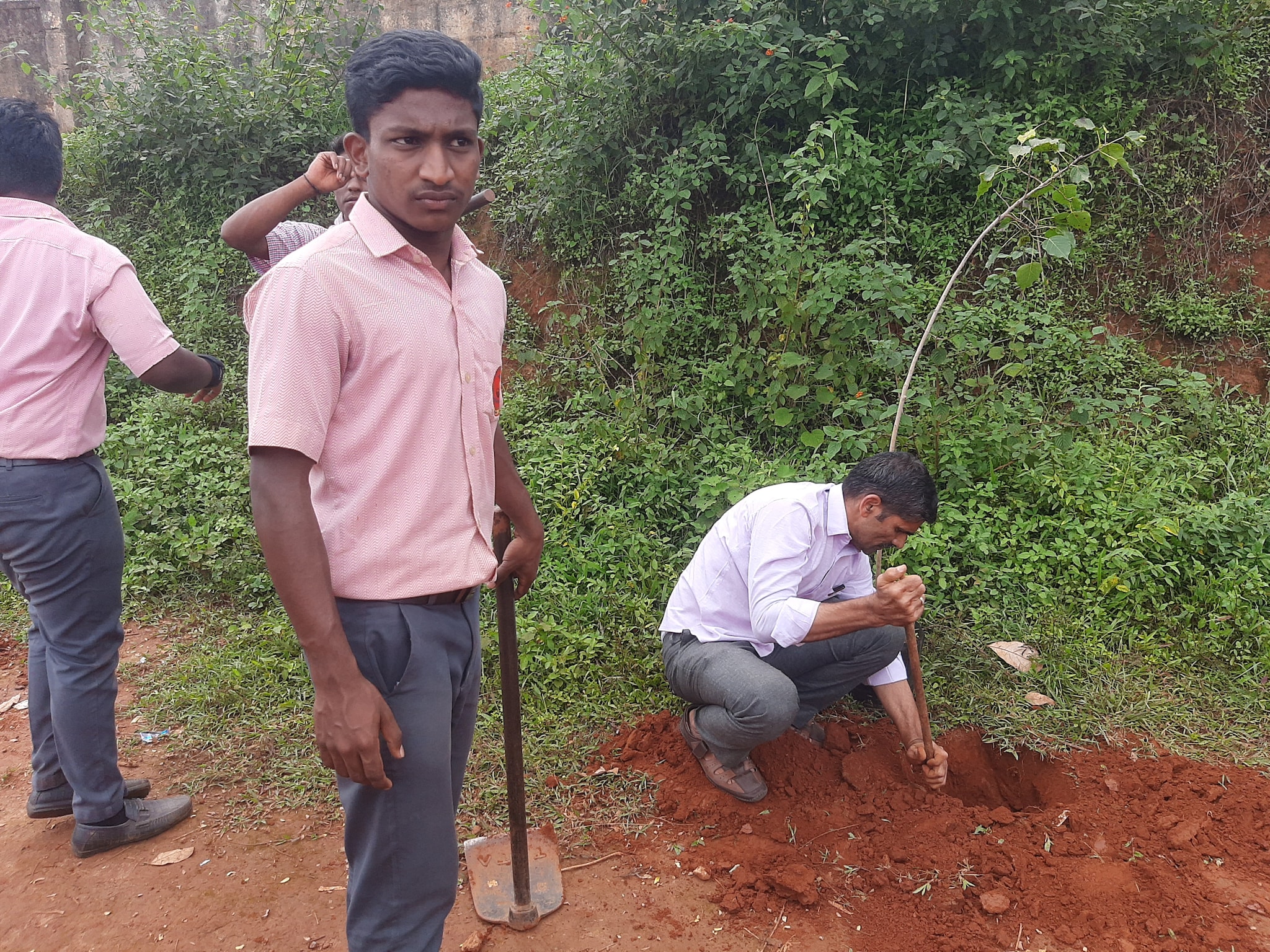
The third Elephant Camp in Kodagu at Harangi, which is the ninth elephant camp in Karnataka was inaugurated last Saturday. Along with the Harangi Elephant Camp, a Tree Park was also inaugurated.
The State Government had released Rs. 80 lakh for the project that will ease the burden of the existing elephant camps. Already, Kodagu has two elephant camps, one at Dubare and another at Mathigodu near Anechowkur Gate that borders Mysuru. There are eight elephant camps in Karnataka including the two in Kodagu and the Harangi Camp will be the ninth in the State.
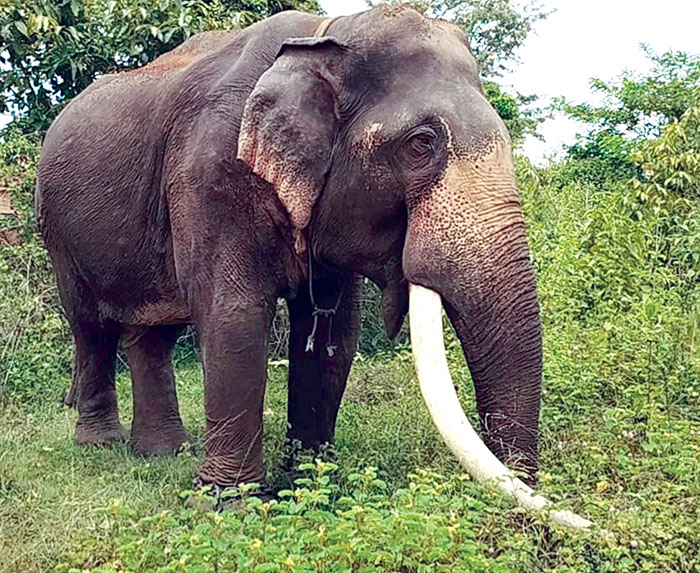
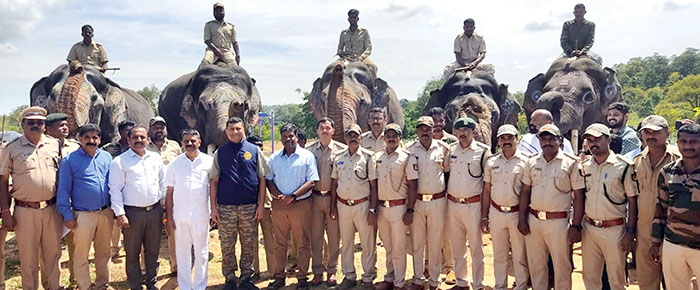
Madikeri MLA M.P. Appachu Ranjan inaugurated the two new tourist attractions. From the Dubare Elephant Camp, six elephants have been shifted to Harangi Elephant Camp. They are Rama (68), Ekadanta (52), Maruti (21), Subramani (35), Vikrama (58) and Vijaya (48).
The eight jumbo camps house more than 100 tamed elephants that are used to rescue wild animals and for logging purposes at Government timber depots. These elephants have been shifted to Harangi in the first phase and more elephants will be moved gradually and this move will ease the pressure on Dubare Camp that has over 31 elephants (the highest in Karnataka).
As per an order by the Karnataka High Court, elephant camps cannot be congested and not more than 15 elephants can be housed in one camp. At present, six elephants have found a new home and more will be moved as and when the funds are released.
Hundreds of tourists who had come to Kodagu on account of Dasara holidays came to the newly-inaugurated Camp and were mesmerised by the beauty of the place located in the backwaters of Harangi Reservoir.
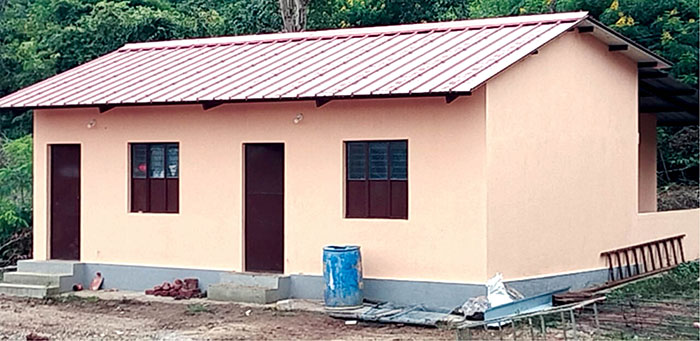
The Tree Park and the Elephant Camp have been set up in a 40-acre land and of that, 10 acres have been reserved for the elephant camp. Staff quarters have been constructed for Mahouts, Kavadis and their families along with a kitchen and a store room. Facilities of boating in the backwaters have been made and basic facilities like drinking water and toilets have been provided for the tourists.
As a precaution, the electrical wiring has been done underground to prevent any accidents either to the elephants or the lush green forests. Final touches are being given to the underground electrification project and works are on to provide drainage facilities. Though the formal inauguration of the Harangi Elephant Camp has been done, tourists will be allowed only from January 2023, said Forest Department officials.
The land on which the Elephant Camp and the Tree Park have been established is located at Athur Reserve Forest. The place, located near the Harangi Dam backwaters, is ideal to set up the elephant camp. The Athur Range Forest extends up to 2,000 acres and it is an ideal elephant habitat with plenty of water and green swathes.
The funds for the camp have been released from Compensatory Afforestation Fund Management and Planning Authority (CAMPA). Apart from setting up a new elephant camp, there are plans to initiate other related development programmes including developing the camp as a tourist centre and at the same time provide shelter to the elephants.
source: http://www.starofmysore.com / Star of Mysore / Home> Feature Articles /October 10th, 2022
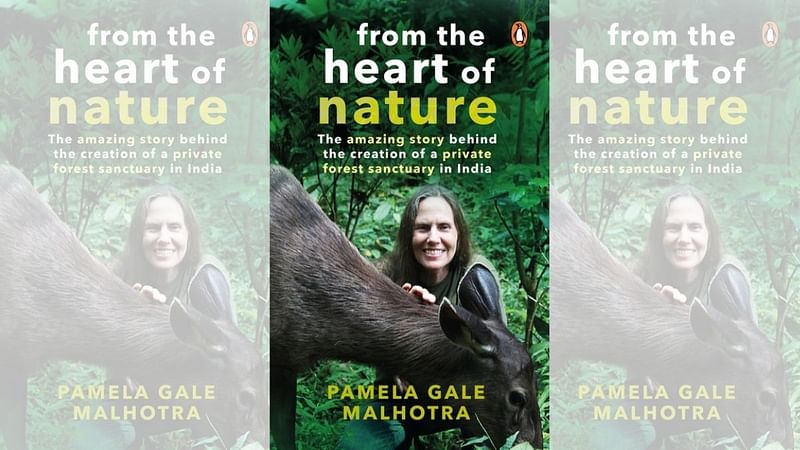
Published by Penguin India, ‘From the Heart of Nature’ by Pamela Gale Malhotra will be released on 25 January on ThePrint’s ‘SoftCover’.
New Delhi:
A new book written by a woman of Native American descent tells the “deeply fascinating and inspiring personal” story behind the setting up of a private wildlife sanctuary in Karnataka.
Published by Penguin India, ‘From the Heart of Nature’ by Pamela Gale Malhotra will be released on 25 January on Softcover, ThePrint’s online venue to launch non-fiction books.
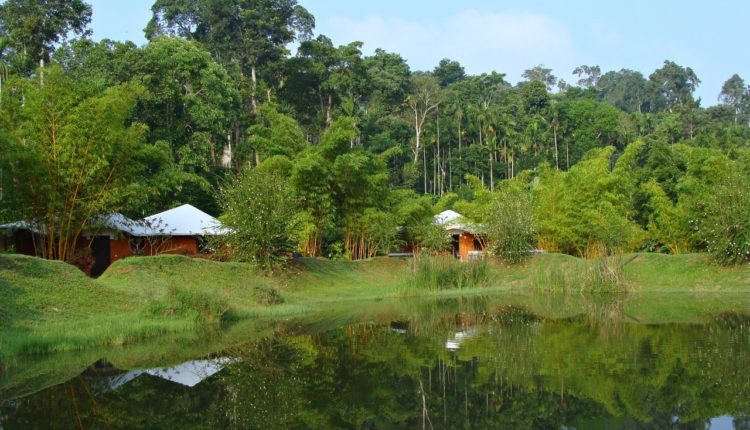
Introducing the book as a narrative of the “struggles” and “obstacles”, “sorrows and joys”, and “wonders and awe-inspiring experiences” that she and her late husband, Anil, faced in the establishment and operations of the Save Animals Initiative (SAI) sanctuary in Kodagu, Karnataka, Malhotra writes that the sanctuary is dedicated to Mother Nature.
She describes the sanctuary as the brainchild of Native American culture and Indian culture coming together to preserve an environment “ravaged” and “decimated” by “illegal logging and poaching”.
The couple first purchased 55 acres of barren land for the sanctuary in 1991. Today, it’s a “treasure trove” of “indigenous trees and plants” as well as a refuge for various animal species under threat of endangerment and extinction, thanks to the restoration and conservation efforts involved, Penguin said in a statement.
As part of the story, Malhotra also details the mindset behind her efforts to establish the sanctuary, maintaining “physical and spiritual” connections with animals and trees, and how the preservation of nature is essential to save humanity.
Born in New Jersey of Native American heritage, Pamela Gale Malhotra, a graduate of Colorado State University, developed her “love affair” with the natural world by spending the majority of her childhood in the forests around her family estate.
Prior to their move to Karnataka and fulfilling a “childhood dream”, the couple had set up and operated a wildlife sanctuary on Hawaii’s Big Island. For her work with the SAI sanctuary, Malhotra has been a recipient of numerous awards, such as the Nari Shakti Puraskar in 2017.
source: http://www.theprint.in / The Print / Home> SoftCover / by ThePrint Team / January 21st, 2022
Satara, Jul 6 (PTI) Three nature conservationists from Satara in Maharashtra claimed to have “rediscovered” a “nearly extinct” damselfly species ‘Lestes patricia’ after almost 100 years.
A colony of this sub-species, christened ‘Lestes patricia taamrpatti’, was discovered by Dr Shriram Bhakare, Sunil Bhoite and Pratima Pawar-Bhoite from Umrodi Dam area, situated at the foothills of the northern Western Ghats in the district.
According to the researchers, a single male specimen of Lestes patricia, endemic to the Western Ghats, was first discovered in 1922 from Kodagu (Coorg) district in Karnataka and the only specimen currently available is at Natural History Museum, London.
“The discovered colony of new species closely match the specimen of the single known male of Lestes patricia fromthe London-based museum. However, there are stable differences between the newly found species and description of Lestes patricia,” said Bhoite.
“While comparing the body structure and features of the newly found species with an existing specimen of Lestes patricia from the London-based museum, stable differences were found. That is why the sub-species from the damselfly family has been named Lestes patricia taamrpatti,” he added.
Dr Bhakare, an ophthalmologist from Satara, said the reason behind adding the word ‘taamrpatti’ was because thepecies has a coppery red-brown uniform band bordered by black.
“The likelihood the newly discovered population is, in fact, a distinct species cannot be ruled out, but cannot be confirmed until further, fresh specimens of Lestes Patricia are made available from the locality in Kodagu.
“Since the stable features observed in the newly discovered population preclude it from being indisputably placed under Lestes patricia, yet given the lack of comparative material, it is not possible to place it as a new species with certainty,” he added.
So the newly discovered population from Maharashtra is tentatively placed as a subspecies of Lestes patricia, Bhakare informed.
He said a research paper on discovery of the nearly extinct species was published in Bionotes Journal recently.
The researchers said 10 specimens, comprising six males and four females, have been collected for examination. Of the 10, two male and two female specimens have been deposited with Bombay Natural History Society (BNHS), while the rest will be kept at other depositories in the country for further research.
PTI COR SPKBNM BNM
source: http://www.theweek.in / The Week / Home> Wire Updates> National / by PTI / July 06th, 2020
Meghalaya’s Shillong and Karnataka’s Coorg are similar, says Ratan Bhattacharjee
Coorg
One of the most popular poems by Wordsworth is ‘The Solitary Reaper’ about a highland girl reaping the harvest in a pasture in Scotland with a song on her lips. This is a familiar sight for a visitor to Shillong or Coorg.
Shillong is the 330th most populous city in India with 143,229 people according to the 2011 census. It is said that the rolling hills around the town reminded the British of Scotland. So did Coorg down south in Karnataka. They found the mist-laden pastures of Shillong and Coorg to be the closest to the paradise they knew back home and began referring to these two hill stations as the Scotland of the East.
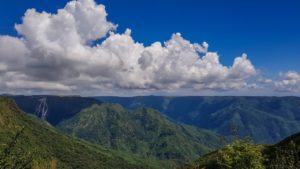
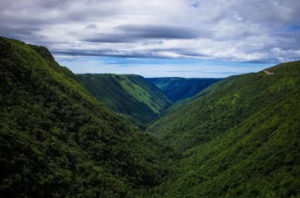
There are indeed many similarities between Shillong, Meghalaya’s capital, and Scotland. Shillong’s landscape is beautified with rolling, cloud-kissed hills bestowed with lush greenery. It is often difficult to tell Scotland from Shillong from photographs without any captions. One has to take a backseat in a car on the roads to Cherrapunji, Mawlynnong and the curvaceous Shillong Bypass and let the hair flutter in the breeze and draw in the hypnotic sub-Himalayan panorama. The glittering waterfalls along the roads and the lakes in and around Shillong – boating on Umiam or Ward’s Lake is otherworldly – have a stunning resemblance to those in Scotland. Then there are several places untouched by mass tourism where you can pitch a tent and connect with nature. Shillong and Scotland also have culture connect – the Scottish are as colourful as the Khasis and are proud of their heritage.
Located along the Western Ghats, Coorg is a coffee-producing hilly area well-known for its jaw-dropping scenery and opulence. This misty landscape nurtures a rich culture and a unique clan – the Kodavas who are specialised in martial arts and are widely known for their hospitality. Heavenly Coorg is ideal for lazing around or going on a challenging trek or indulging in an adventure at Abbey Falls or relishing the spicy curries and the heart-melting handmade truffles.
Shillong
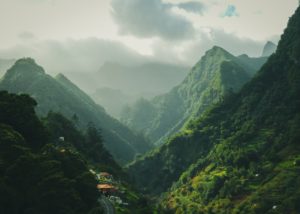
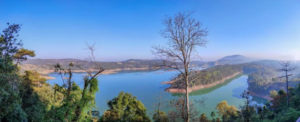
Coorg is also called Scotland of India because of its hills – Karkala, Savandurga and Nodda – lording over the coffee plantations. They are lush green mountains of foggy rolling hills with miles of walking trails. The climate is as cool as in Shillong, albeit a shade warmer than in Scotland. Madikeri or Mercara, the headquarters of Coorg is a beautiful hill town. The Chiklihole Reservoir is a wonderful place far from the madding crowd. The Dubare Elephant Camp will please wildlife enthusiasts as much as the Harangi Dam or Honnamana Kere Lake. Kotebetta is the third highest peak in Coorg. Mallalli Falls is one of the best places reminding at every moment of the beauty of the Scottish Highlands or Elephanta and Seven Sisters Falls in Meghalaya.
Coorg is the coffee cup of India and there is no doubt that the people there have Celtic roots, as their traditions and rituals reflect. They celebrate many festivals such as Makar Sankranti, Ugadi and Easter. The locals celebrate Christmas by lighting candles in their homes. The traditional dress of the Coorgis is similar to the Scottish kilt. Their attires have interesting patterns and designs. The cuisine of Coorg, like Shillong’s, has something in common with Scottish dishes made from pork and beef.
Coorg is also home to some magnificent forts and palaces that date back to the medieval era. These structures are a testament to its rich history and culture. One of the most popular forts in Coorg is the Madikeri Fort. Mudduraja, the prominent Haleri king built this fort in the 17th century. It is made from granite and features several turrets and bastions. The British army rebuilt this imposing structure in the late 1800s, and it now serves as a hotel and museum. Other notable colonial bungalows include the Raj Bhavan (Governor’s House) and the Deva Raya Paana (Toddy Tapper’s House). The British built them between the 18th and 19th centuries.
Like Shillong, Coorg is known for its “perfect weather” in spite of the incessant rains. The temperature is mild and comfortable, and the weather is usually sunny with a few scattered showers. This makes Coorg a popular tourist destination like Shillong, especially during the summer months. Coorg and Shillong are also connected to Scotland through the celebration of music in its many forms. All are great hosts of music festivals.
That’s astounding nature, as many would say. Just like Shillong and Coorg that find so many points of commonality, other places in India find resemblances with foreign destinations too. Some of them to find appropriate mentions would be Andaman and Nicobar Islands and Phi Phi Islands, Thailand, Gulmarg, Jammu and Kashmir and Switzerland, Gurudongmar Lake, Sikkim and Jökulsárlón Lake, Iceland, Thar Desert, Rajasthan and Sahara Desert, Africa and Chitrakote Falls, Chhattisgarh and Niagara Falls. There are many more, as travel enthusiasts would enlist them. However, it resounds that scenic beauty in India is infinite beginning with Shillong, itself.
Just like the Scottish hold immense pride in their culture, land and its people, similarly, the Khasis of Shillong, and the Kodava’s of Coorg hold their culture and indigenous identities in high regard, worshipping their ancestors and preserving their folklores.
Julia London once said about Scotland: “There are few places in my life that I’ve found more ruggedly beautiful than the highlands of Scotland. The place is magical – it’s so far north, so remote that sometimes it feels like you’ve left this world and gone to another.” This holds true for Shillong and Coorg too.
(Ratan Bhattacharjee is a contributor at The Shillong Times)
source: http://www.theshillongtimes.com / The Shillong Times / Home> Sunday Pullout / by Ratan Bhattacharjee / September 25th, 2022
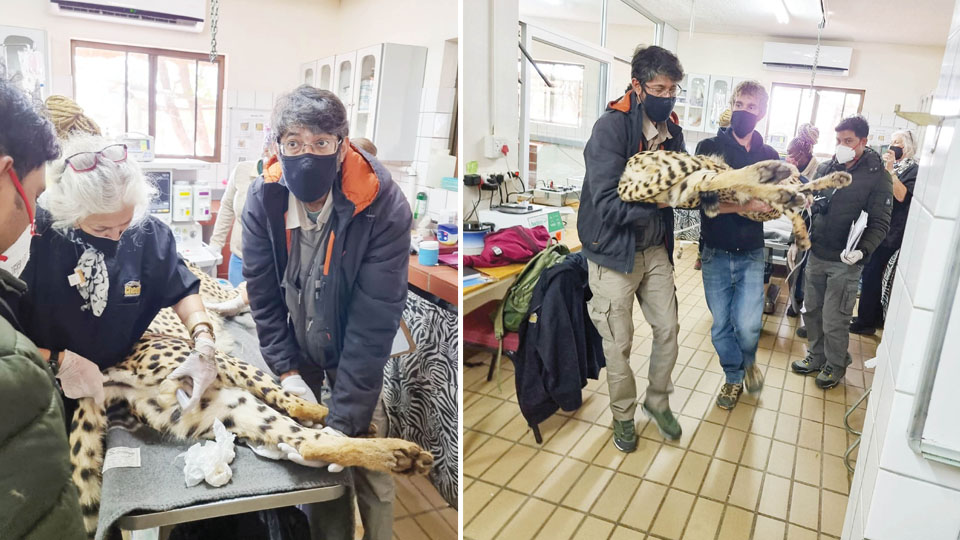
A wildlife Biologist and Ecologist from Kodagu is in the team that brought eight Cheetahs (Acinonyx jubatus) from Namibia to Madhya Pradesh’s Kuno National Park which were released by Prime Minister Narendra Modi on Sept. 17.
C.M. Bipin of Kodagu is in the core management team of Dr. Yadvendradev Vikramsinh Jhala, Lead Scientist for Project Cheetah and Dean of Wildlife Institute of India.
Bipin conducted extensive fieldwork and ground study before the extinct felines were reintroduced in India. Project Cheetah is the world’s first inter-continental large wild carnivore translocation project.
C.M. Bipin has been working on Project Cheetah since 2011 as a Project Associate at the Wildlife Institute of India, Dehradun, autonomous wildlife research and natural resource service institution under the Ministry of Environment Forest and Climate Change (MoEF&CC), Government of India. Bipin’s name figures prominently among the survey team for the project.
Hailing from Kanoor village near Ponnampet in South Kodagu, Chottekmada Bipin is an Industrial Engineering Management graduate who pursued his passion for wildlife and nature. He finished his schooling at St. Anne’s School, Virajpet and college at Sathya Sai Loka Seva Trust, Alike. His parents Monnappa and Tara Monnappa, retired teachers, are settled in Kanoor.
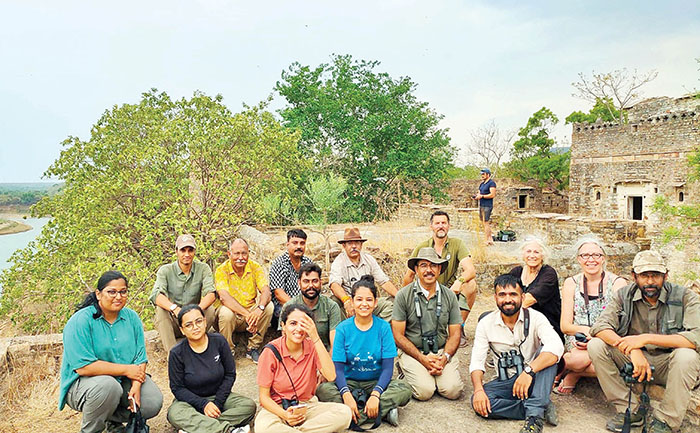
Bipin (extreme right) seen with Project Cheetah team members in Namibia where they underwent training.
Engineer to Ecologist
Speaking to Star of Mysore from the Kuno National Park where he is monitoring the Cheetahs, Bipin said that though he worked for an electronics company in Bengaluru soon after his engineering at the RV College, nature and wildlife was his passion.
“I was feeling suffocated, so I left and joined a conservation and ecology team at the Centre for Wildlife Studies, Bangalore, in 2004 working on monitoring tigers and prey populations in Karnataka. During this period, I felt the need of educating, better-equipping and training myself in wildlife science and nature conservation and I completed my M.Sc. in Wildlife Biology,” he said.
Bipin later joined National Centre for Biological Sciences in Bengaluru in 2008 for his Master’s and subsequently joined the Wildlife Institute of India, Dehradun in 2011 and has been involved in Project Cheetah.
“As part of the project, the landscape of five States — Rajasthan, Gujarat, Chhattisgarh, Uttar Pradesh and Madhya Pradesh — were studied. 10 places were identified as suitable for Cheetah reintroduction and among them, five were shortlisted with the Kuno National Park in Madhya Pradesh, Shahgarh landscape and Mukundara Hills Tiger Reserve in Rajasthan and Nauradehi Wildlife Sanctuary in Madhya Pradesh being identified as priority ones,” Bipin revealed.
Court case
When the project work was on, in May 2012, the Supreme Court stalled the plan to reintroduce Cheetahs into Kuno sanctuary fearing they may come into conflict with a project to reintroduce lions into the same sanctuary.
But in 2020, the SC lifted its stay, clearing the project after an affidavit filed by the National Tiger Conservation Authority (NTCA) to take the plunge — under the guidance from an expert committee headed by Dr. M.K. Ranjitsinh, the architect of Wildlife Protection Act — and go ahead with plans to bring the African cat to India.
“During the period of stay, I started work on the population recovery and habitat improvement of the critically endangered Great Indian Bustard, the grassland and open forests habitat of which the Cheetahs roamed in our country once and I re-joined the Cheetah Project after the Court clearance,” he said.
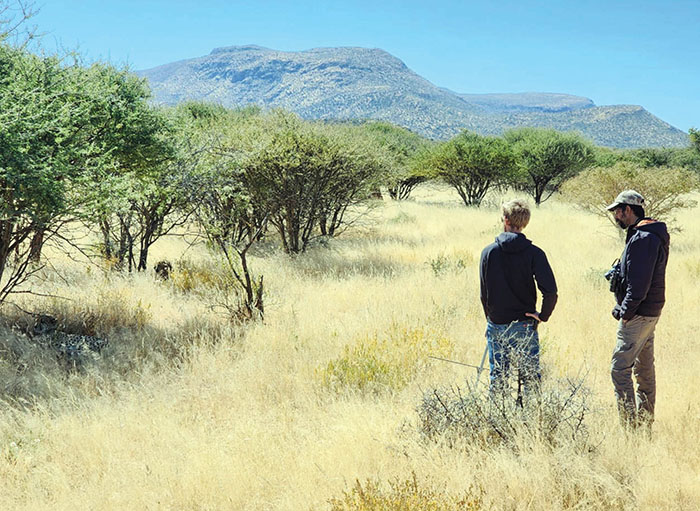
Picture shows the landscape of Namibia that is ideal for the Cheetah habitat being studied by Bipin and a colleague. Kuno National Park in Madhya Pradesh where the Cheetahs have been reintroduced has a similar landscape.
Training in Namibia
Bipin was sent to Namibia and South Africa with the team during June 2022 for a training in handling the Cheetah, habitat management, research, methods of conservation at different levels and how to avoid conflict with villagers living on the forest fringes.
“I gave technical inputs after ground studies along with my team and additionally wore many hats as and when needed including providing assistance required in administrative, financial, legal and policy matters. As the days for the release drew close, though rainy season in India is a difficult period to release Cheetahs in India due to inaccessibility to many forest areas and logistical constraints, it would have been wise to wait for the monsoon to end,” he explained.
September was the ideal month and the occasion was PM Modi’s birthday. The officers of Madhya Pradesh Forest Department, NTCA and MoEF&CC at various levels very efficiently coordinated and performed their roles meticulously in making the project a reality, Bipin added.
Adequate prey base
“The Kuno National Park, situated on the northern side of Vindhyachal mountains, can handle 35 Cheetahs and has an inviolate area of 748 sq.km. where the Cheetahs have a suitable area of up to 6,800 sq.km surrounding them. We had identified four more areas apart from Kuno National Park and the project Cheetah entails bringing 50 big cats from Africa in the next five years and in the long run establishing a viable cheetah metapopulation in the country,” he said.
The Kuno National Park has a good prey base for Cheetahs, comprising the four-horned antelope, chinkara, nilgai, wild pig, spotted deer and sambhar.
Cheetahs will help restore open forest and grassland ecosystems in India and its dwindling wildlife. This will help conserve biodiversity, consolidate and enhance the ecosystem, mitigate climate change and boost the local economy with various livelihood opportunities.
“Extensive hunting of Cheetahs and habitat loss led to their extinction. The ‘African Cheetah Introduction Project in India’ was first mooted in 2009 by Wildlife Trust of India and we have come a long way in finally bringing the fastest animal on earth to India,” Bipin added.
Elated over her son being in the core Project Cheetah team, Bipin’s mother Tara Monnappa told Star of Mysore that the family is proud of Bipin’s achievements. “I don’t have any words to express and he has been passionate about nature since childhood. I am glad he could pursue his passion with full vigour,” she said.
In fact, Bipin’s wife Amritha too is a sociologist and conservationist and works for The Nature Conservancy, a global environmental organisation, working in areas in Assam. Her specialisation is communities living in villages on the fringes of forests and their interactions with wildlife and nature.
Bipin’s elder brother C.M. Bishan is an Orthopaedician in Gonikoppa, Kodagu and an avid wildlife photographer.
source: http://www.starofmysore.com / Star of Mysore / Home> News> Top Stories / September 22nd, 2022
Kodagu, a tiny district of state with unique culture is yet to get railway connectivity. Thanks to elected representatives and government.
Madikeri:
Kodagu, a tiny district of state with unique culture is yet to get railway connectivity. Thanks to elected representatives and government. Kodagu situated amid western ghats is only district in south India deprived of railway connectivity. The cry for railway connectivity have decades of history.
It was K H Muniyappa, the then state minister for railways in the year 2011 budget announced railway connectivity to Kodagu. In the year 2012 the railway department launched the first stage of the preliminary survey works on the route at Mysuru -Kushalnagar line of 87.5 kilometres. The department completed preliminary engineering-cum-traffic survey between Mysore-Kushalnagar in four months and the project cost was estimated at Rs 651.4 crores. But even after a decade the work was not taken up. After the survey higher railway officers opined that it is economically not viable owing to less passenger traffic in the route. Amid this environmentalists objected to the project saying forest would be destroyed , thousands of trees would cut to install railway track
It was in the year 2014 Lok Sabha elections the Mysore Kodagu MP Pratap Simha in a TV debate announced that he would bring train to district before 2019 and would not contest 2019 polls if work is not done. But Pratap Simha failed to keep up his promise and even got elected in 2019 election again by promising that union government sanctioned the project. Till today the project is lying on paper and no progress was seen. The construction wing of South Western Railway (SWR) awarded tender for final location survey (FLS) in the year 2020 to Hyderabad-based company called Mata Constructions and Builders Limited to conduct the survey but the company abandoned the work and left. Again the work was awarded to Hyderabad-based Aerial Construction (P) limited but this bidder also left without conducting survey.
In July last, the SWR construction division awarded the tender for FLS to Bangalore-based Sipra infrastructure development Private limited for Rs 1.65 crores. The period for completion of work is six months , but the company is yet to begin work through drone cameras.
Speaking to this reporter on Friday SWR Mysore division senior engineer said that the company officials would start the work within a week as rains hindered the work. After completion of FLS we could know the exact amount of the project , number of bridges and number of railway stations to be constructed and other infrastructure works.
He said now as per railway estimation the project cost went up to 1852.5 crores and exact amount could be known only after FLS. He said in this final survey we could identify the exact land to be required for project with survey numbers.
He said though it is called railway link to Kushalnagar it does not enter Kushalnagar, a border town of Kodagu. The railway line comes up to Koppa village in Periyapatna taluk , just two km from Kushalnagar.
According to proposal the railway project would come up with union and state government investments at 50 per cent each. The state government should provide land for the project at its cost. After the FLS the railway authorities would submit the Railway board. After approval of the board the union government would allocate funds in budget for implementation of project. In the year 2018 itself the vernacular dailies published Mysuru-Kushalnagara new railway line under the caption what Karnataka gets in railway budget , but the project is still on cards. The industrialists, people opines that this is much needed project for overall development of district. The tiny district Kodagu accounts more than 30 per cent share in annual coffee production of the country with production of 1.2 lakh tones of the total 3.6 lakh tones. Nearly 70 per cent coffee is being exported . The railway connectivity would save lakhs of rupees expensive road transport to ports. The railway line would reduce traffic drastically in Madikeri –Bangalore national highway as more than 300 buses were plying in this route at present.
When contacted Kushalnagar based SLN coffee curing and exporters (P) Limited managing partner S L Sathappan said that most of the coffee produced in Kodagu is being exported through Cochin, Mangalore and Chennai ports in trucks. If railway comes to Kushalnagar we could ship directly through containers as majority of coffee curing works are situated here. He said more than 50 per cent of transport cost can be saved which finally beneficial to growers.
Speaking to this paper Kodagu tourism department officer H B Raghavendra said that day by day the number of tourists visiting Kodagu is swelling. Approximately 20 lakh tourists visiting the district which is also called as Kashmir of South. Of this at least 10-25 per cent coming from other states . The railway connectivity helpful to attract tourists from faraway places.
An ex- serviceman B P Kuttappa from Somwarpet told this paper that the district has at least 10 thousand personnel working in defence forces in various locations of the country. Railway connectivity would help them much and even shifted aged patients to Mysore , Bangalore hospitals for treatment and save taxi fares.
When contacted MP Pratap Simha said that the project was delayed after railway officers submitted a report that it is economically not viable and for obtaining environment clearances. Again two companies abandoned work of FLS caused delay. But now everything is cleared and work of FLS would resume soon. He said the union government even included the project in pink book and allocated Rs 1,000 crores in 2022-23 union budget itself. He said he is getting in touch with railway officers and closely watching the development and reiterated that district would get railway connectivity. But people of district feels that lack of will power of elected representatives and politicians have caused delay of the project.
source: http://www.thehansindia.com / The Hans India / Home> News> State> Karnataka / by Coovercolly Indresh / Hans News Service / August 27th, 2022
It is said that we can achieve anything if we have determination and nothing can hinder our growth. You don’t have to go somewhere, you don’t have to study a degree to achieve such an achievement. No need for money. Even so, the women of Makkandur village of Kodagu district have shown that success story can be done! Not only that. The CEO of Kodagu Zilla Panchayat has also made a fuss. This is the story of rural women who never dreamed of promotion (Kodagu Success Story) who suddenly became famous!
Holy Women Shakti Sangh
Yes, the women who were home, doing their house work, garden work had formed the Holy Women Shakti Sangh a few years ago. Leelavati, who was a member of the same association, was selected as the agricultural sakhi of Makkandur Sanjeevini Union.
In-workshop training
Under the Mahatma Gandhi National Employment Guarantee Scheme, a training workshop was given to the selected G.P. Sanjeevini Unions in Watekadu Ilakha Planta Kshetra Social Forest Zone of Hoddur G.P. in collaboration with Horticulture and Forestry Department. Makkandur Sanjeevini Union’s Krishi Sakhi Leelavati also participated in the workshop. Practically got information about making nursery.
Nursery Planning
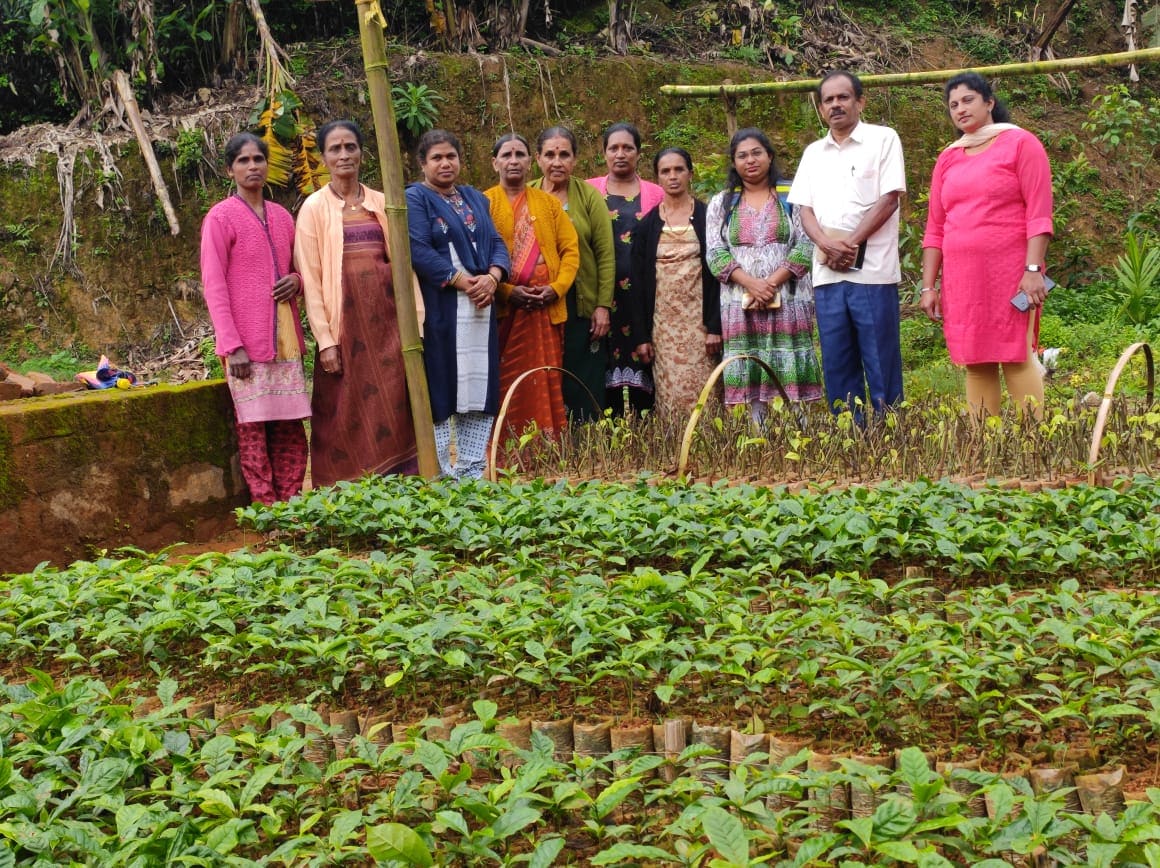
Later, a group of nature producers was formed by Makkandur Gram Panchayat. A total of 12 members, including 8 members from Pavitra Stri Shakti Sangha and 4 members from other Sangha, proceeded to the nursery work.
Appreciation for women’s achievements
Thus the central government’s NRML scheme to promote women’s empowerment and economic empowerment is progressing successfully in Kodagu. G.P.M.CEO Bhamwar Singh Meena, who personally visited the place, expressed his appreciation for the women’s achievements. He promised to provide all kinds of cooperation and stood in support of the development of the first nursery in the district.
Lilavati of Pavitra Streeshakti Sangh contact number: 9483242533
Variety Plant Nursery Nut, 3 types of coffee, kachampuli, lemon, butter fruit and black pepper plants have been planted in the nursery. There are already about 15 thousand plants and in the near future there is a plan to make a nursery for cardamom and various fruit plants.
A good plant
In addition, Leelavati’s half acre land was taken on lease through a group of producers and a nursery was made in that place. Plant nutrition is done by mixing good quality soil, sand, organic manure, sowing seeds of good variety, planting vines, providing water, spraying medicine.
70 thousand spent so far
In the beginning, the women paid for the facilities of the nursery at their own expense, and recently an installment of money has come. 70 thousand has been spent so far including salary.
Everyone has cooperated in this work of women and they are eager to develop the nursery further. Soon Makkandur Gram Panchayat is ready to sell plants at a discount price. The women in the group will also be paid by the government.
The road to self-reliance
All the members are actively involved in the work activities and contribute to the achievement of the association. The Sanjeevini Union was started in order to show the path of self-reliance to the women of the village, and the women of Makkandur village have benefited from it.
Necessary loan facility is also available from the association. Rural women have shown that if you put your mind to it, you can achieve anything. This is the first nursery in Kodagu district and recognized at the state level as well. Apart from benefiting from the central government scheme, she is also a role model for other women.
Report: Stanley. D. give
source: http://www.irishivideo.com / I V News / Home> Latest News & Updates>Technology / by Stanley D / August 25th, 2022
Debris, including logs, has blocked free flow of rainwater
The houses of five families consisting of 21 people in Koynadu near Sampaje in Kodagu were flooded after heavy rains on Monday night. The flood waters entered the houses after debris consisting mainly of wooden logs that swept away in flash floods blocked Kindi bridge in Koynadu, flooding nearby houses.
Virajpet MLA and former Speaker K.G. Bopaiah, Deputy Commissioner B.C. Satish, tahsildar and others visited Koynadu and gave directions for shifting the affected families to the relief camp. The MLA and the DC also told the Forest Department officers to immediately clear the debris that has blocked free flow of rainwater.
On the occasion, five flood-affected families of Koynadu, two families of Sampaje and two families of Chembu were given relief cheques of ₹10,000 each by the district administration.
The affected families have taken shelter in the relief camp.
The relief camp at Sri Ganapathi Temple’s Kala Mandira at Koynadu that was closed recently was reopened to accommodate the flood affected families. “Basic facilities for the families have been arranged,” the authorities said in a press release here.
Meanwhile, teams of NDRF and the Forest Department conducted a joint operation of clearing wooden logs that have blocked free flow of water at Kindi bridge.
source: http://www.thehindu.com / The Hindu / Home> News> India> Karnataka / buy Special Correspondent / August 02nd, 2022
In today’s situation where there are many people who think that I can get rich by acquiring property and money, this goldsmith has some love for the environment. Therefore, there is a great desire to earn money by trading gold and silver and to preserve the environment for the next generation. Trader Rajendra Singh has been continuously planting and nurturing plants for the past many years without any publicity. Rajendra Singh is originally from Rajasthan, residing in Siddapur, Virajapete taluk of Kodagu district. He settled in Kodagu 20 years ago.
Rajendrasingh, who was concerned about the environment from a young age, has a great love and concern for the environment. The reason for that is that Rajendra Singh, who was born and brought up in the desert of Rajasthan, felt that if there were no trees, he would face such difficulties.
Planting and nurturing work
Thus, even after coming to Kodagu, his concern for the environment did not diminish. They are constantly doing the work of planting and nurturing plants in school college premises, bank police station and government office premises.
Planting
What does Rajendra Singh say?
Especially in 2014, thousands of trees were cut down while the high tension line was being laid in Kodagu to Kerala. As a result, there was a lot of ups and downs in Kodagu without rain as before. Such a situation was created that if it came, it would pour down immediately, otherwise it would not rain at all. Rajendra Singh says that he was very bored by this and started planting a lot of plants.
Rajendra Singh who planted 1.80 lakh saplings
So far, approximately 1.80 lakh saplings have been planted and nurtured in school and college premises of various taluks of Kodagu, government offices, schools and colleges of Priyapatnam, Mysore taluk and Hunsur taluk. Besides, they are planting plants on roadsides and in forest areas.
Students are aware of the environment
They are watering the plants they have planted themselves during summer. Realizing that the work of planting and growing plants is not possible on his own due to the environmental degradation, Rajendrasingh is making students aware of the need to plant and grow plants before going to schools and colleges.
Planting
A businessman is also very concerned about the environment
Besides, they are working to encourage students to plant and grow plants by conducting various competitions and giving prizes. On the whole, the locals are appreciating his concern to save the environment even though he is a gold and silver trader.
Rainfall has decreased in Kodagu region since last one week. Two weeks ago there were scattered landslides along with rain in Kodagu environment.
source: http://www.irshivideos.com / IV News / Home> Latest News & Updates / August 01st, 2022
Call to help preserve memories of a vanishing people
While modernisation has opened many opportunities for the well-qualified, it has also distanced the young from their heritage and culture. This is even more accentuated amongst Kodavas living outside Kodagu. There is a need to establish a platform where young Kodavas could learn and keep in touch with the community’s heritage, cultural practices, folklore, music, dance, festivals and history, says Mrs. Codanda Rathi Vinay Jha, IAS (Retd.) and Chair, India Foundation for the Arts (IFA), who has initiated establishing a Virtual Museum of Kodava Heritage & Culture named ‘Sandooka,’ a treasure trove of information. —Ed
Kodavas are a micro-minority community in India, who live in Kodagu (Coorg) in Karnataka State. It is estimated that there are about 1,50,000 ethnic Kodavas within and outside Kodagu.
Kodavas, by virtue of living quite isolated in a densely wooded hilly terrain on the Western Ghats of India since time immemorial, have developed their own unique culture, physical attributes, cuisine, language, attire, religious rituals and practices.
Over the centuries, Kodavas adapted themselves to the harsh weather conditions, dangers from wild animals and the inhospitable terrain of Kodagu and transformed the land to an idyllic haven it is today. With the passage of time, they toiled literally with bare hands to cultivate paddy in the valleys.
With the forests providing bountiful supply of wild game, they became expert hunters initially with bows and arrows, and later with firearms which enabled them to emerge as a warrior race. They transformed the fertile land and were able to grow enough paddy that they could export to neighbouring areas.
The interactions with immediate neighbours in present day Kerala, Mysuru and Mangaluru, influenced the Kodava language, places of worship, construction of their dwellings and some of the religious practices as well. However, Kodavas still retain their fundamental philosophy of ancestor and nature worship. They come under the broad umbrella of Hinduism.
Kodagu was ruled by Kodava Nayakas or Palegars who were basically warlords. The Haleri dynasty established their rule in Kodagu after cleverly replacing the hopelessly divided Nayakas during the early part of the 17th century. The Haleri Rajas ruled for over two centuries until the British takeover of the administration in 1834 after deposing the last Raja. During the rule of the Haleri Rajas and later the British, Kodavas remained the prominent community very much involved in the administration.
During the British rule, education was introduced and this brought about quantum changes in the lifestyle of the Kodavas. Kodavas found several employment opportunities. Introduction and scientific cultivation of coffee and spices vastly improved the economy of the region. Kodava culture and ethos found expression in the writings by the British, European and Kodava authors.
By the time India got her independence, many Kodavas held important and high-level offices in sectors such as the Defence Forces, Administration, Revenue Department, Forest Department, Police, in the field of Education, Engineering and Medicine.
Kodavas have several distinctive elements in their social, cultural and religious practices. One of them is the deferential status given to women. There is no dowry system in the community. Centuries ago, widow remarriage was permitted. This enlightened attitude is now reflected in well-educated Kodava women shining in a variety of fields.
After India’s independence many Kodavas ventured out of Kodagu seeking better opportunities in education, employment, business and sports. Kodavas are now spread all over the globe. The last three decades has seen a large number of Kodavas migrating outside the country. There is now a sizable number of Kodava diaspora in the US, Canada, UK and Australia. In many cases, there are a couple of generation of Kodavas born and brought up outside Kodagu and outside India as well.
While modernisation has opened many opportunities for the well-qualified, it has also distanced the young from their heritage and culture. This is even more accentuated amongst Kodavas living outside Kodagu. There is a need to establish a platform where young Kodavas could learn and keep in touch with the community’s heritage, cultural practices, folklore, music, dance, festivals and history.
It is with this aim in mind that Mrs. Codanda Rathi Vinay Jha, IAS (Retd.), as Chair, India Foundation for the Arts (IFA), initiated establishing a Virtual Museum of Kodava Heritage & Culture (VMKHC). This project is evocatively named — Sandooka — a treasure trove of information. IFA has successfully supported several path-breaking projects in the field of art and culture.
Sandooka will be a living museum that will be interactive and open to receiving relevant new materials from the public. People, especially the future generations of Kodavas, will have an easily accessible platform to gather details of their heritage. Weblinks will also be given to some of the websites dealing with Kodava culture. It is hoped that this treasure trove of information will be of immense help to those who wish to carry out further research on Kodavas. VMKHC will cover the following aspects of Kodagu and Kodavas:
1. Customs and Rituals
2. Cuisine
3. Architecture
4. Clothes and Jewellery
5. Art & Craft
6. Landscape
7. Literature and Folklore
8. Community Histories
9. Festivals
The project is generously funded with a Corporate Social Responsibility (CSR) grant from Recaero India Pvt. Ltd., which is a pioneer in the field of aerospace engineering and is headed by Vinay Jha, IAS (Retd). A highly professional team has been forged to deal with every aspect of the project. The team comprises:
Lina Vincent – Project Head; Upasana Nattoji Roy – Designer (Switch Studio); Saurav Roy – Designer (Switch Studio) and Mookanda Nitin Kushalappa – Researcher.
IFA office-bearers are: Arundhati Ghosh (Executive Director) and Darshana Davé (Project Co-ordinator); Advisory Group: Rathi Vinay Jha, C.P. Belliappa and Hemanth Sathyanarayana.
Sandooka invites submission of Kodava artefacts, rare photographs, antiques including jewellery (photos) and anecdotes of yore. All accepted materials will be given due recognition and credits. Sharing your valuable knowledge and collections will enrich the contents of Sandooka.
For details of submission of materials, please visit: www.sandookamuseum.org
source: http://www.starofmysore.com / Star of Mysore / Home> Feature Articles / by C.P. Belliappa / August 01st, 2022
WELCOME. If you like what you see "SUBSCRIBE via EMAIL" to receive FREE regular UPDATES.
Read More »