DC calls upon various organisations to help make the festival a success.
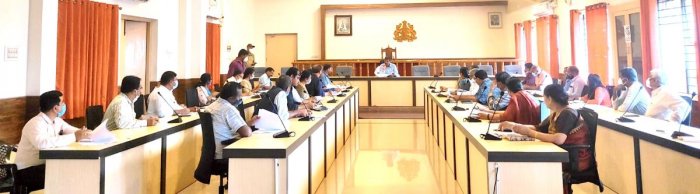
Deputy Commissioner Dr B C Sateesha chairs a preparatory meeting on Nadi Utsava at his office in Madikeri on Monday. DH Photo
Nadi Utsava will be held as a part of the 75th anniversary of Indian Independence in the district, said Deputy Commissioner Dr B C Sateesha.
The festival is directed towards spreading awareness on the protection of rivers, river banks and cleanliness, he said.
He was speaking during a preparatory meeting held at his office in Madikeri on Monday.
The deputy commissioner called upon various organisations to join hands with the district administration in making the Utsava successful.
Kaveri Neeravari Nigama Ltd engineer Nagesh said that the Nadi Utsava will be held on December 17 and 18.
The inaugural function will be held in Talakaveri on December 17 afternoon and the programme will be held in Kushalnagar on December 18.
A motorbike rally will be held from Talakaveri to Bhagamandala to create awareness about cleanliness. Later, a programme directed towards creating awareness on the protection of rivers will be held at Triveni Sangama.
Also, a cleanliness camp and Deepotsava are planned as a part of Nadi Utsava, he added.
Nagesh further said that a formal stage function will be held on December 18. The Nadi Utsava Jagruthi rally will be taken out from the Kaveri statue to the Ayyappa Swamy Temple.
Kaveri Nadi Jagruthi Vedike president Chandramohan said that the organisations in 23 Gram Panchayat limits and a Town Panchayat limit in Bhagamandala to Shirangala should take part in the Nadi Utsava. Information should be provided to the organisation by the administration.
Leader Monti Ganesh requested the organisers to ensure precautionary measures against Covid-19.
Kannada Sahitya Parishat district president M P Keshava Kamath called upon the youth to take part in the Utsava in large numbers.
Kodagu Gowda Samaja Federation president Surthale Somanna said that importance should be given to the cleanliness campaign in the Gram Panchayats in the Kaveri river basin.
All people should come together for the good cause of protecting the Kaveri river, he added.
During the meeting, it was decided to form sub-committees of Nadi Utsava.
Karnataka Kodava Sahitya Academy chairperson Ammatanda Parvathi Appaiah, Karnataka Arebhashe Cultural and Literary Academy chairman Lakshminarayana Kajegadde, leaders M B Devaiah and Talakaveri-Bhagamandala temple executive officer Krishnappa were present, among others.
source: http://www.deccanherald.com / Deccan Herald / Home> State> Mangaluru / by DHNS, Madikeri / December 06th, 2021
84 school buildings, 39 anganwadi centers partially damaged in torrential rain
Even as Kodagu received 458.5 mm rain in the last one week, the forecast for the next 24 hours indicated an orange alert and the district authorities are keeping a close watch on the rain situation. The local authorities cleared roadblocks caused by fallen trees and electric poles following heavy rains with gusty winds in several parts of the district.
Based on the previous experiences of handling the flood situation in Kodagu, the administration has identified 44 villages as “vulnerable” to floods and another 43 villages prone to landslides. All five taluks are rain-affected with about 580 persons so far affected by the rain fury.
The district administration has told the local administrations in the taluks to extend all possible assistance to the rain-affected and persuade the people in “unsafe” zones to shift to the relief camps for safety reasons.
Meanwhile, compensation has been paid to 76 families whose houses were damaged in the rain. Out of 180 houses damaged in the rain till date, 4 were fully damaged, 33 severely damaged and 143 partially damaged.
Out of 1,378 damaged electric poles, a total of 1,175 have been replaced by the CESC personnel besides replacing 132 transformers.
As many as 39 anganwadi centres were partially damaged besides 84 school buildings across Kodagu.
With regard to the damage to road infrastructure, 437-km long roads, maintained by the Panchayat Raj Engineering Department, have been damaged in the rain and landslides and the cost of repairing them has been estimated at ₹70.62 crore. The PWD-maintained roads of 9.47 km length that were damaged in the rain would require about ₹24.60 crore for the repair.
Kodagu recorded 1,116.3 mm rain in a span of 45 days – from June 1 till date. The district received 65.8 mm rain in the last 24 hours.
So far, 49 bridges under PRED (Panchayat Raj Engineering Department), 8 bridges under PWD, 123 culverts under PRED have been damaged due to incessant rain and 437-km long roads maintained by the PRED were damaged due to torrential downpour and landslides in parts of Kodagu since the onset of the monsoon.
As many as 122 families displaced by the rains have taken shelter in five relief camps. The district administration has identified a few more locations for converting them into relief camps for accommodating the displaced if the situation demanded based on the rain conditions.
Madikeri, Napoklu, Somwarpet, Kodlipet, Kushalnagar, Shanivarasanthe, Shanthalli, Suntikoppa, Virajpet, Ammatti, Hudikeri and Sriramangala have been recording heavy rains. As many as 23 houses were partially damaged in the rain havoc since Thursday besides 103 electric poles.
source: http://www.thehindu.com / The Hindu / Home> News> India> Karnataka / by Special Correspondent / July 15th, 2022
Changes in landscape and climate are fuelling human-animal conflict in the region. There are no easy solutions in sight.
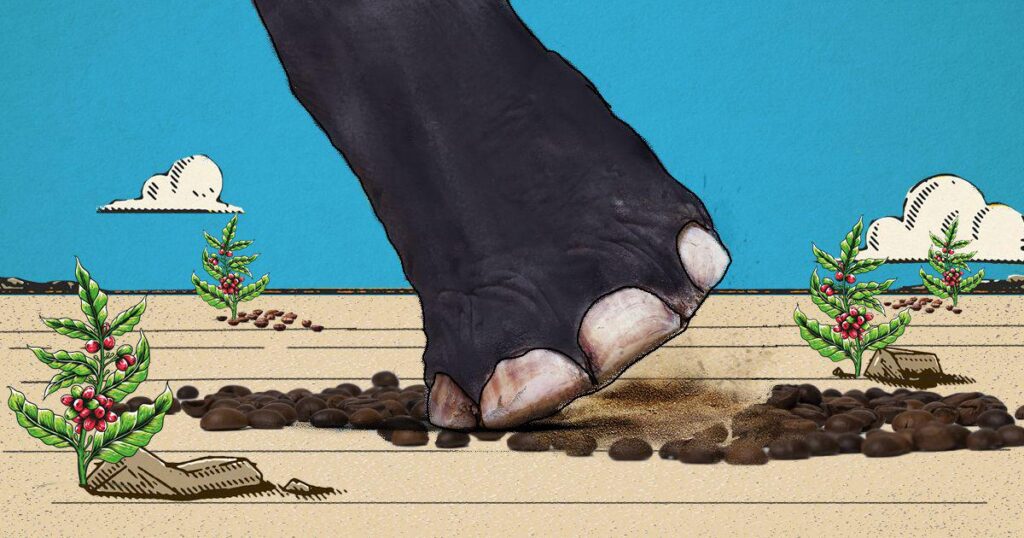
Design | Rubin D’Souza
On a warm April morning, a Mahindra Bolero sped through roads lined with coffee plantations in Kodagu’s Virajpet block.
Inside the vehicle were three forest watchers, staffers of the Karnataka Forest Department whose job it is to patrol and monitor the forest. The three formed a “rapid response team”, or RRT, of the department, responsible for tracking and monitoring elephant movement and, if needed, chasing the animals away from fields and inhabited areas, so that they don’t present a danger to humans.
Also in the vehicle were two researchers from the Wildlife Institute of India, or WII, a government institution headquartered in Dehradun.
One of the forest watchers was armed with an airgun. A researcher seated in the passenger’s seat, meanwhile, held an antenna out with his right hand, while with his left he held close to his ear a monitor that was beeping faintly.
The team was tracking an elephant herd that had entered a coffee estate. As they drew closer, the beeping grew louder. Once they found the animals, they would keep a close watch on them until they left the estate – if the animals grew aggressive, the team would frighten them away by exploding crackers or firing the gun into the air.
The regular presence of elephants in the region’s coffee plantations suggests that the animals have increasingly moved away from the surrounding forests, their natural habitat. Residents of the area say this has occurred over the last fifteen years.
Research backs this conclusion. The WII team, for instance, has found that some of the animals they track in this region have barely ventured into forested areas in the past three years, largely remaining inside coffee estates.
In Karnataka, elephants are often spotted outside protected areas – increasingly, in coffee estates. Photo: Dibyangshu Sarkar / AFP
Sanath Muliya, a project scientist with the WII team till June, noted that this shows conclusively that coffee plantations are now being used increasingly as permanent refuge sites, rather that just as temporary migration routes, by certain elephants outside protected areas.
Instances of elephants raiding paddy fields have also gone up over the last two decades, but Muliya explained that although the animals see the fields as a source of food, they see a coffee estate as a suitable habitat to live in.
“Coffee estates have abundant water sources for irrigation, edible tree species and have green cover throughout the year, even in dry season,” he said. “Water bodies found in such estates are perennial as compared to seasonal water bodies in adjacent protected areas. And neighbouring agricultural landscapes also provide dense, highly palatable and accessible resources such as paddy, grass, edible trees.”
Astonishingly, the rise in the number of elephants straying into coffee estates has been accompanied by a change in the animals’ behaviour.
In the late 1970s, elephant ecologist and conservation biologist Raman Sukumar conducted the first statistical study done in Karnataka to understand elephant ecology, which was also the first such study in the world to look at conflict between humans and animals.
Sukumar discovered that it was only the male elephants that raided crops. Further, they only did so when they were in musth – a state of sexual arousal that male elephants go through periodically, during which they seek mates. Sukumar deduced an evolutionary principle at play in this behaviour. To sustain the state of musth and increase the possibility of mating, the elephants required higher nutritional intake. In the 1970s, the elephants of south Karnataka, where Sukumar did his study, could obtain this nutrition by raiding crops. It was these nutrition-hungry males that were at the centre of human-elephant conflict, he discovered.
But four decades later, this pattern has shifted, at least in Kodagu. Males, females and sub-adults are all known to raid crops.
“Elephants are intelligent, social animals,” said Muliya. “This crop raiding behaviour must have started with a few individuals and then got passed on. And it makes sense too – the amount of energy an elephant has to spend inside the forest to consume the same amount of calories that it can get inside a coffee estate is huge.”
This presents a problem, since the animals can pose a threat to humans in these coffee plantations. The rapid response team is one kind of a solution, which tackles situations when elephants are found in human inhabited areas. But devising a longer term solution requires a more intricate understanding of the problem, one that begins with tracing the formation of the district’s landscape itself.
This story is part of Common Ground, our in-depth and investigative reporting project. Sign up here to get a fresh story in your inbox every Wednesday.
Kodagu district is bordered by the Western Ghats on one side and the Mysore plateau on the other – on the side of the plateau is the Nagarhole Tiger Reserve, the protected area with the highest density of elephants in the country.
The district is renowned for its coffee and has the highest area under coffee cultivation of all districts in the country. Every third cup of Indian coffee comes from Kodagu.
Coffee, which was brought from Iran to India by the Sufi spiritual leader Baba Budan in 1600s, came to Kodagu in the 1700s, according to the British missionary and educationist G Richter, who wrote about the subject in the Gazetteer of Coorg, published in 1870. The region’s wet climate and undulating topography were ideal for the growth of the crop, and many landowners took to it enthusiastically.
In much of India, land was owned and controlled by kings in pre-colonial times. But in Kodagu, large tracts had been given over by kings to those who rendered military service to them, under a system of land ownership and inheritance known as “jamma”. These lands, which were relatively lightly taxed, could not be sold, but the owners could use them as they pleased and could bequeath the land to heirs.
These landowners used the flatlands of their holdings to cultivate paddy, and largely left the hilly portions as forests, which would yield manure, in the form of fallen leaves and other plant matter, for the fields.
When coffee came to the region, many of these landholders were quick to recognise the opportunity it presented. They converted the hilly tracts in their possession to coffee plantations – the jamma system ensured that they did not have to seek permission from any authority or justify their decisions.
Later, British colonisers tweaked the jamma system to allow owners to sell land. This made it possible for more coffee planters to invest in land in Kodagu and set up coffee plantations.
Those who held these land titles continued to do so after Independence. In 1961, Karnataka passed the Karnataka Land Reform Act, under which an individual’s landholdings were limited to a maximum of 40 acres under the category with the highest entitlement. But, like other land reform laws across the country, it exempted coffee plantations, allowing owners to continue to cultivate large estates and prosper.
These advantages were only further boosted in 1995. Until then, according to regulations, coffee growers had to sell their produce to the government’s coffee board, which acted as a middleman and sold it on to the market; that year, the Central government changed regulations to allow growers to sell directly into the open market, which ensured that they could retain greater profits.
Coffee prices boomed. “When we used to sell to the board, we would get around Rs 2,000-Rs 3,000 per bag of 50 kg of coffee,” said Rajah Madaiaah CM, a coffee estate owner who has a 30-acre coffee plantation. “After that, the prices shot up to as much as Rs 6,000 for the same amount. I turned the fallow land on my property to coffee.”
The area under coffee cultivation across the country shot up. According to data from the Coffee Board of India, around 15,900 hectares of land were under coffee cultivation between 1985 and 1995, which increased to around 67,900 hectares between 1995 and 2005.
Kodagu has also seen a growth in the area under coffee cultivation in recent decades. According to the Coffee Board of India, Kodagu had 1,012 square kilometres under coffee cultivation in 2006; by 2020, the area under coffee cultivation had expanded to 1,075 square kilometres. This was the highest of any coffee growing district in the country, and almost a quarter of the geographical area of Kodagu.
Data suggests that this growth came at the cost of forests. A study in 2019 found that, between 1973 and 2018, the percentage of the district’s land area that was under evergreen forest came down from 40.47% to 27.14%. “Around 66,892 ha” – approximately 668 square kilometres – “of pristine forest cover has been lost due to large scale land cover changes with coffee plantations expansions,” the study noted.
But the conflict between humans and elephants in Kodagu predates this process of coffee plantations edging out forests.
G Richter wrote in the Gazetteer of Coorg about an incident in 1822, in which people complained to the Maharaja of Kodagu about the destruction of crops and houses by elephants. The king, in Richter’s words, “resolved upon a wholesale destruction of the beasts and within 38 days he killed with his own hand 233 elephants and his soldiers caught 181 alive!”
The Kodagu of the 21st century is, of course, a very different place. The human population of the district, which stood at around 60,000 in the 1840s, had increased to around 6,00,000 in 2011, vastly increasing the pressure on the land. Meanwhile, the elephant, once a beast of burden, is now listed in Schedule I of the Wildlife Protection Act of 1972, which comprises animals with the highest degree of protection.
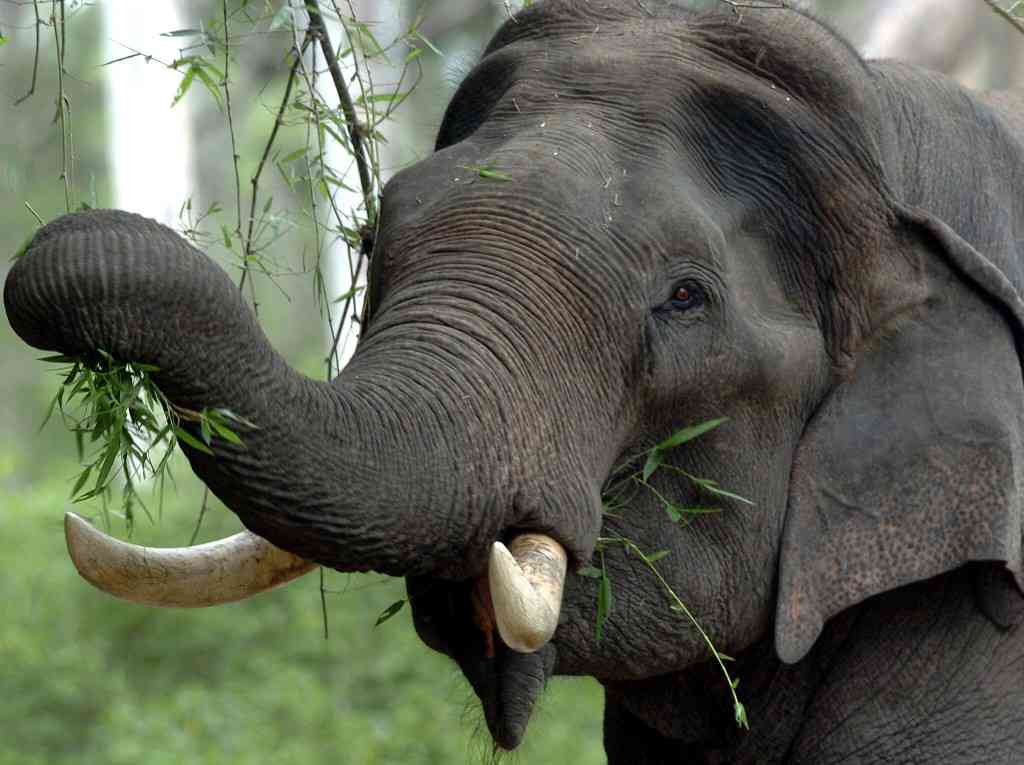
Today, walking around Kodagu and finding piles of elephant dung is not unusual. Neither is spotting an elephant munching away on grass in a coffee estate. As terrifying as it might sound, for people living in this area, coming face to face with a tusker is not uncommon. In fact, after a national estimate of elephant population by the government in 2017, Kodagu’s then chief conservator of forests, Manoj Kumar, stated that of the 300 elephants in the district, as many as 60% were in coffee estates.
“Some 10-15 years ago, there were fewer elephants raiding the crops,” said Rajah Madaiaah CM. “Even these raids had a seasonality. One or two elephants would come, mostly during the summer seasons and raid my paddy crops. Now they have become a regular feature, and at a time, anywhere between four to six elephants come. They cause a lot of damage.”
Estate owners aren’t the only ones who are suffering. The fringe villages of these forested areas are called “elephant villages” locally, and almost every resident I spoke to said that the elephants’ presence outside the forested area had increased over the last two decades.
“When I was a child, we used to go to the forest to look at elephants,” said Hari Prasad, a resident of Chennangi village, situated next to the Nagarhole Tiger Reserve. “Now I see them regularly in the village, raiding crops and destroying property! Sometimes, when there is a medical emergency, we have to wait because an elephant herd is on the road.”
He added that residents of the village even struggle to find marriage partners because people are wary of living in such close proximity to elephants. He himself managed to get married because his wife also came from another elephant village. “She knew the problem and understood the situation,” he said, smiling.
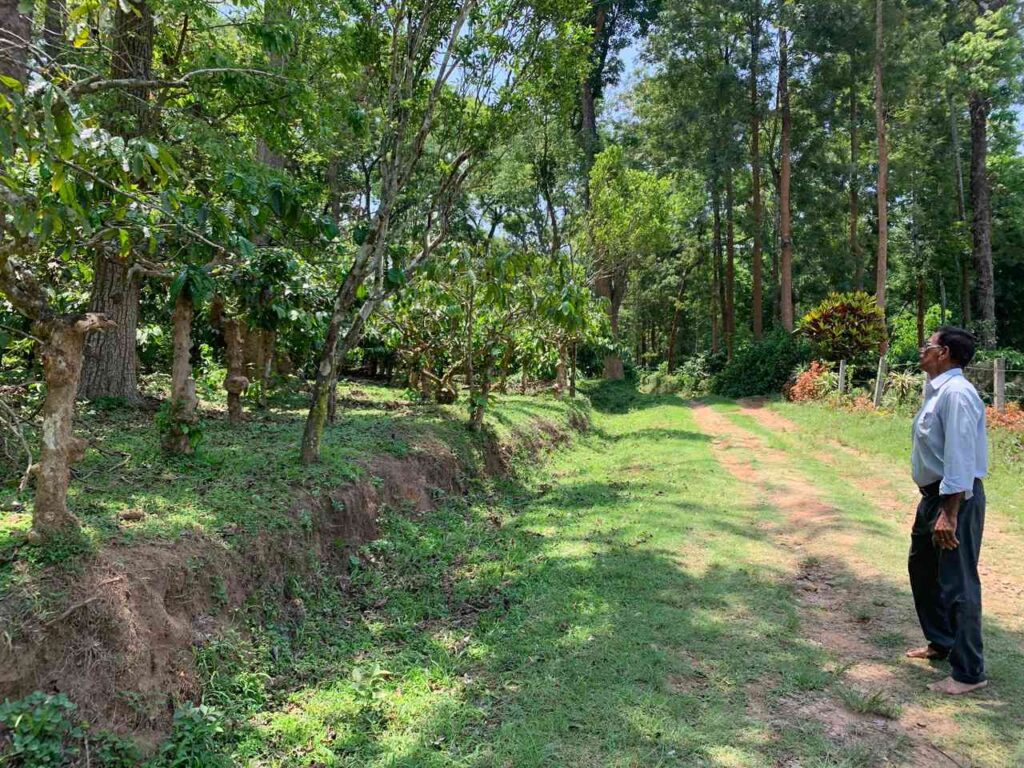
As elephants began to regularly raid the paddy crops on his land, Rajah Madaiaah CM converted his entire farm into a coffee estate. Photo: Ishan Kukreti
The region pays a high price as a result of this problem. In Karnataka, Kodagu district saw the highest number of human deaths resulting from conflict between humans and elephants – 22 between 2019 and 2021. It also reported the highest number of incidents of elephants raiding crops – 9,000 out of a total of 35,000 such cases across Karnataka in the same period. During the two years, the Karnataka Forest Department spent Rs 6 crore in Kodagu as compensation for elephant raids. This was around a fifth of the total Rs 28 crore paid as the statewide compensation in this period – an amount calculated per acre of a specific crop lost due to the raids.
Residents of the district have adapted in response to these challenges. Rajah, for instance, switched from paddy, which he used to grow on 18 of the 30 acres of his farm, to coffee, because while elephants typically destroy an entire crop when they raid a paddy field, in coffee estates, they usually just feed on grass, along with fallen coffee berries.
“Cultivating paddy not only gave lower income than coffee, but it also meant that elephants came regularly, destroying the crop and posing a threat to our and our workers’ lives,” Rajah said. “So, I decided to convert it all to coffee.”
In 2014, the state government began to take measures to mitigate the conflict between humans and elephants in the area, such as creating the rapid response teams. The forest department also radio-collared some elephants – a process that involves placing a collar around the neck of an animal, typically when it is tranquilised.
WII researchers came on board in 2019 to add more radio-collars and improve tracking. Apart from the animals collared earlier, the researchers placed radio collars on an additional 28 elephants. Along with helping the rapid response teams, the researchers are also tracking elephant movement patterns using this data.
In Virajpet block, while I was travelling with one of the rapid response teams, tracking the movement of a herd of elephants, the Bolero made a turn on the road and the beeping intensified.
“It must be somewhere in this patch,” said Thammaiah CK, one of the WII scientists working on the project. Born and brought up in Kodagu, Thammaiah did his PhD in human-elephant conflict management from Kuvempu University in Shimoga and joined the WII project in 2019. “We have tracked their exact location and now will monitor them from a distance,” he said. We were only around three kilometres from the nearest range – an administrative division in forest governance – of the Nagarhole Tiger Reserve.
When the beeping on the monitor carried by the other WII researcher, Chethan CM, was loud enough, the team disembarked from the vehicle and walked through the thicket of shrubs and coffee, dotted with acacia and jackfruit trees. The beeps suggested that a radio-collared elephant was nearby – but it wasn’t visible.
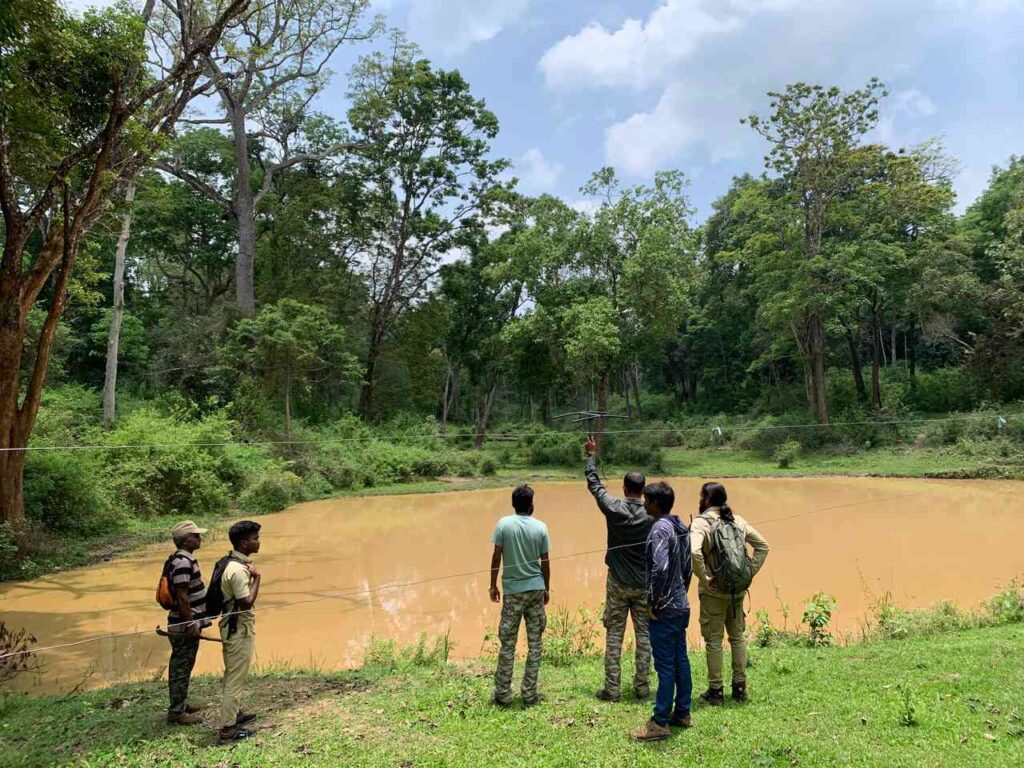
Thammiah and his team used a radio telemetry antenna to find the location of a radio-collared elephant. Photo: Ishan Kukreti
One of the forest watchers climbed a jackfruit tree, while the others, including me, kept a lookout from the ground.
“Elephants can’t see properly,” Chethan whispered. “If they see us, we’ll be just a blur, and if they get agitated, they can charge without giving a warning. You don’t want to be in a situation like that.”
Once he reached the top of the tree, the forest watcher whistled in our direction and pointed ahead of him, deeper into the estate. Three elephants came into view from behind the foliage: one radio-collared female, whose transmitter was causing the beeps in the antenna, another female, and a frolicking sub-adult, as elephants between five and 15 years of age are called. Separating us from them was just a thicket of coffee plants and trees. The elephants were feeding on the grasses in the coffee estate.
After we had observed the elephants for around 15 minutes, one of the females realised that the herd wasn’t alone. She looked directly in our direction – my black T-shirt against a backdrop of various shades of green wasn’t a particularly effective camouflage. One of the forest guards cocked his airgun. But the elephants ran in the direction of the forest. “One can never be sure which way the elephants will go when we have these encounters,” Thammaiah said. “That’s why the air gun, we fire rounds in the air to make them go the other way.”
This is a standard routine for the rapid response team and the WII researchers. They get complaints from coffee estate owners and villages about elephant herds, and set out to deal with them. “In case the elephants aren’t causing damage, we just watch them, like we did today. Otherwise we burst crackers to chase them to the forest,” Thammaiah explained as we walked back to the Bolero, parked around a kilometre away.
It isn’t only the attraction of coffee estates that is behind the elephants’ move out of forests.
In my conversations with the people in the elephant villages, another problem linked to elephants came up repeatedly: the decline of bamboo, a primary source of elephants’ nutrition. This, too, they said, has led elephants to increasingly enter human inhabited areas.
Historical records show that local communities believed that bamboo could be a harbinger of bad fortune.
G Richter, writing in the Gazetteer of Coorg, noted that the Coorgs had a saying, “Once in 60 years the bamboos will decay, once in 70 years a famine may hold sway” – that is, a famine would follow after a mass decay of bamboos.
While writing, Richter had noticed that, starting in 1860, bamboo in the region had been flowering simultaneously and then dying – a process known as gregarious flowering that is seen in the plant. Richter had seen this begin in the north of Kodagu district and reach the southwestern parts of Kodagu, the Virajpet division, by the late 1860s.
This was followed by the Great Famine of the 1870s, which destroyed agriculture in much of the Deccan. This famine affected 58,500,000 people and killed 5.6 million, according to the Imperial Gazetteer of 1907.
In the late 1990s, the bamboo in the district flowered again, one region at a time, and then died. There was no famine this time – but locals were faced with a new menace in the form of elephants.
“With the bamboo gone, the elephants are searching for food outside the forest,” said Hari Prasad, who works as a forest watcher in a rapid response team. “Some bamboo has regenerated near our anti-poaching camp building in Channangi. We are worried that elephants might come here to feed on it and it can be dangerous for us. So, we have installed a vertical electric fence around the camp.”
Bamboo is a grass and a part of elephants’ diet. Photo: Dibyangshu Sarkar / AFP
The loss of bamboo should not be a long-term problem: the plants typically regenerate between ten and fifteen years after flowering. Once they regenerate, elephants in Kodagu should technically have less of a reason to leave forested areas.
But experts believe this process might be hindered by an array of factors all linked to one broader problem: climate change.
Thammiah, for instance, suggested that the bamboo regeneration in the forest might be impeded by the spread of the invasive plant, lantana camara. Although there are no public documents recording the spread of lantana in these forest areas, a study has found that around 44% of India’s forest area is infested with lantana. Studies have also found that lantana can curb the growth of grasses – such as bamboo – which are food sources for herbivores like elephants.
“Studies have shown that feeding rates of elephants decline in lantana-affected patches,” Muliya said. “We don’t have any data on the lantana cover in the Kodagu-Nagarahole area though.”
The spread of lantana is aided by climate change, where under shifting patterns of rainfall and temperature, invasive species like lantana can outcompete other floral species.
Indeed, Kodagu has seen dramatic changes in rainfall and temperature patterns over the last 40 years. A study published in 2020 looked at temperature data between 1971 and 2007, and rainfall patterns between 1971 and 2011 across the 27 districts of Karnataka. Based on this data, the study computed the magnitude of change across both these parameters. It found that of all the districts in Karnataka, Kodagu witnessed the highest decline in the amount of rainfall, calculated both for the monsoon season and annually. The study also found that there had been significant changes in both minimum and maximum temperatures during the period between 1971 and 2007. Not only had the average annual temperatures in Kodagu increased, so had winter, pre-monsoon, monsoon and post-monsoon temperatures .
Residents have also directly observed these changes. “A peculiar feature of the monsoon here is that once it starts raining, springs emerge from various places,” Thammaiah said. “This is because the water table is quite high and the rainwater percolates and makes it breach the surface. But over the years we are seeing less and less of this phenomenon.”
The district has also seen a rise in fires, which are linked to an increase in temperature and a drop in rainfall. According to the data on forest fires available with the Forest Survey of India, there were 12 fire incidents in the Kodagu forest circle in 2003-’04, which went up to 50 in 2021-’22.
Each of these factors has slowed down the regeneration of bamboo in the forest, and so indirectly led to an increase in the number of elephants outside forests. “Climate change should have definitely added to the existing negative interactions with elephants in the landscape,” said Muliya. “Both scientific and anecdotal observations show that the water and food availability have always been among the major drivers of annual elephant migration.”
Uma Shankar, a forest officer posted in the district, noted that the department was trying a variety of methods, apart from radio collaring and monitoring, to prevent elephants from entering coffee plantations and reduce conflicts with humans.
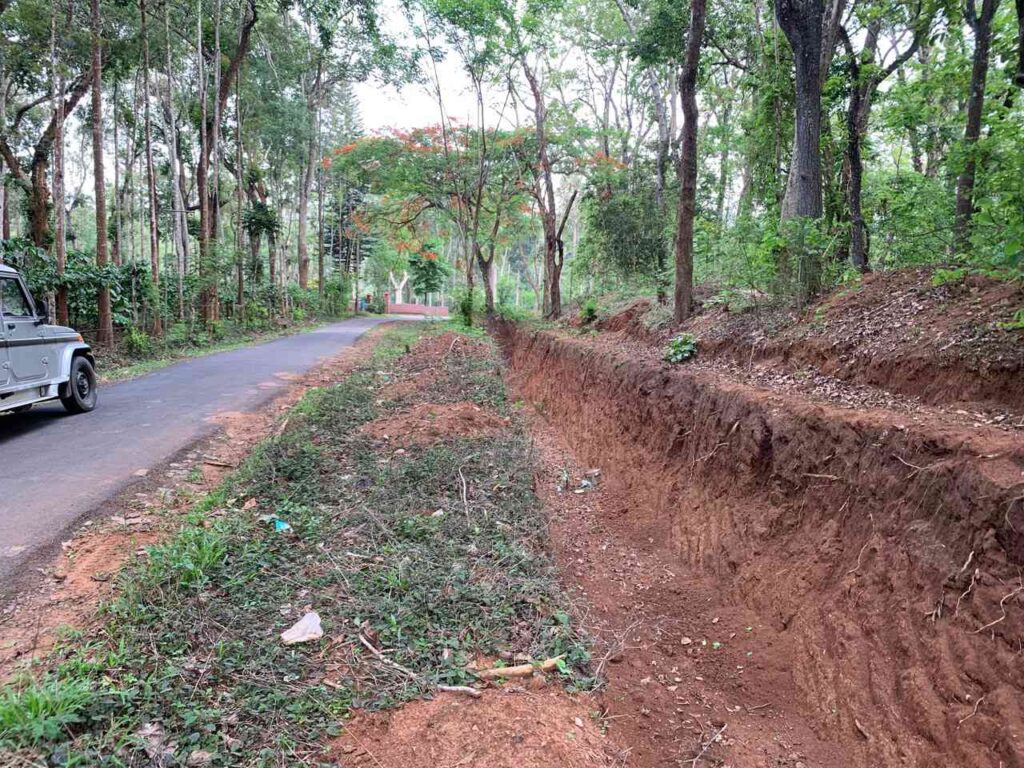
For instance, from 2007 onwards, they had installed solar fences around some estates – these are powered by solar energy and deliver strong shocks to deter elephants from entering these areas, without causing them any long-term injury. They also dug trenches as long as 20 kilometres around some estates, which were two metres wide and deep at first, and later increased to a width and depth of three metres.
“But still conflict is increasing. What we are doing is only temporary control, a permanent solution has to be found,” he said.
The forest department has been increasing the depth and width of trenches, which act as barriers to elephant movement, keeping the animals out of coffee estates and residential areas. Photo: Ishan Kukreti
As one attempt at a longer-term solution, the Wildlife Institute of India started the Animal Birth Control project, which administers a drug to female elephants that results in a form of non-surgical sterilisation. The drug is an immunocontraceptive – that is, it uses the immune system to prevent pregnancy by generating antibodies that prevent the sperm from fertilising the egg.
The project was started under the supervision of Qamar Qureshi in 2018, but hit an unexpected hurdle in 2019. That year, the Calcutta High Court, in a different case regarding elephant birth control in West Bengal, ordered a stay on the use of the procedure on elephants across the country.
“There is a lot of human-elephant conflict in West Bengal, and in a case related to the death of elephants due to railway lines, the forest department there told the high court that they were planning to opt for birth control measures to reduce this,” Muliya said. “Maybe they were not able to properly tell the court about how this process happens.”
He noted that the strategy already had some measure of governmental approval: a 2010 report by the environment ministry’s Project Elephant, which is responsible for the conservation and management of elephant populations, mentioned reproductive control as a measure to reduce conflict. Despite this, he added, “the court ordered a stay”.
ince then the case has moved to the Supreme Court, and the environment ministry, based on inputs from the WII, has filed an affidavit in support of the Kodagu project.
“With this project, we aim to use this method in specific places, like Kodagu, where the conflict is out of control,” Muliya said, adding that birth control will not immediately reduce the conflict, since the elephants which have been sterilised will go on to live their full life.
The project is now in its third year, after it was given a year-long extension from the environment ministry in light of the time lost through the pandemic. “We are currently conducting studies to understand the elephant demography and the level of conflict more thoroughly,” Muliya said. “I hope this project can be turned into a long-term 10-year project, because that is when we will see the results.”
Correction:An earlier version of this article misstated the name of the head of the Wildlife Institute of India’s project team.
A tribute to Lt. Gen. B.C. Nanda, who recaptured Siachen, the world’s highest Army Post, from Pakistan
By Santhosh Thammaiah, Columnist and Journalist
You might be aware of the latest development. The Prime Minister’s Office has called for an emergency meeting. Senior Intelligence officers will be present and you are requested to be present with your staff with a detailed report.”
When such a fax arrived at the Delhi Army HQ from Prime Minister Rajiv Gandhi’s Office in 1987, the Army Chief was startled. Well-known as the Honest General, Gen. Krishna Swamy Sundarji knew about the situation but did not have enough time to prepare as the Chief of the Northern Command was supposed to arrive from Udhampur. It was important to sit with him and prepare for the meeting at PM’s Office in New Delhi. Which meant the Army Chief and the Chief of the Northern Command wouldn’t have time to sleep.
The next day when the Chief of the Northern Command arrived for the meeting at 10 am at the PM’s Office, the Army Chief, his deputies, Intelligence Officers, Prime Minister and the Defence Minister were all seated. After a few minutes of silence, the Prime Minister began his conversation with a mention of 1949 Karachi Treaty with Pakistan and put forth the agenda for the meeting.
The Army Chief and the Chief of the Northern Command looked at each other with an appreciation on the PM’s ability to present the situation so eloquently and thoroughly. The way he presented with historical references, the Army heads knew it was time to pull out their weapons from the barracks.
The Siachen Glacier located in the Eastern Karakoram Range of the Himalayas.
Strategic meeting
The PM had said, “We have conducted ourselves as per the 1949 Karachi Agreement and as per the agreement we have withdrawn our forces from the borders. We respected the agreement and we have even withdrawn from ‘NJ Point 9842’. But now I feel that might have been our first mistake. Because Pakistan is now planning to handover that territory to China and they are eyeing Siachen Glacier. What is disturbing is that our key post Saltoro Ridge has been occupied by Pakistan a week back. You know Chief, Pakistan has named it “Quaid Post” after Mohammad Ali Jinnah and have set up their army post.”
“Yes, Mr. Prime Minister, I understand. The strategy for the future will be explained by our Chief of the Northern Command, Lieutenant General B.C. Nanda (Biddanda),” said Army Chief Krishna Swamy Sundarji. Lt.Gen. Nanda spread a large map on the table and started presenting. “If we closely examine the new post setup by Pakistanis, it clearly indicates that they are trying to challenge us. They have violated the peace agreement and occupied our territory. Also they have named it after Jinnah. It is very difficult to recapture this post which is located at 21,153ft above the main sea level. But it is possible. We have to recapture it at any cost. Mr. Prime Minister, any country would always have an eye on a place like Siachen Glacier. They will fight even to protect even an inch of that land. The one who controls Siachen can control a key part of Asia.”
Even though the Prime Minister was in agreement, the Defence Minister seemed to feel that the nation might misconstrue and point fingers at the Congress government. He showed a sense of irritation at those suggestions, just the way Baldev Singh felt in 1947, Krishna Menon in 1962. “Lt.Gen. B.C. Nanda, you seem to be doubtful of capturing it and even if you capture do you have a plan to protect it,” questioned the then Defence Minister.
Two Army officials stood up and said, “Yes we have an answer.” They closed the historical agreement which caused such embarrassment and the meeting came to an end. The Army was all set to leave immediately to Siachen. Army General Krishna Swamy Sundarji completely trusted Lt. Gen. Nanda.
War time
With his direct involvement in the 1962 war, Nanda had the experience of the harsh climate in Siachen Glacier. He had the freedom to pick his team. But Siachen is unlike other war zones and he knew no such battle in the world had ensued in the past. Because at such an high altitude of about 21,000 ft above the main sea level, with a freezing temperature of minus 40 degree centigrade and cold winds blowing at 45 kmph, it was a much worse enemy than the Pakistan army.
The second tallest glacier in the world had a glacier and its tributaries which few knew of its existence and approximately 75-km long. But it was impossible for a sepoy to know where it was located and which direction it flows.
Hostile weather
Interestingly, the helicopters had to survive first to ensure that human beings survived in such weather conditions. It was important to ensure that the fuel didn’t freeze. Every half hour the guns had to be heated on fire from a kerosene stove or boiled with hot water to prevent it from jamming. The human body becomes weak due to low oxygen.
More than recapturing Siachen, safety of the soldiers in such harsh weather conditions was more bothersome. But it was inevitable and Army Chief General Sundarji stationed himself at Udhampur. Just a few days back he did have a long discussion with Lt. Gen M.L. Babbar.
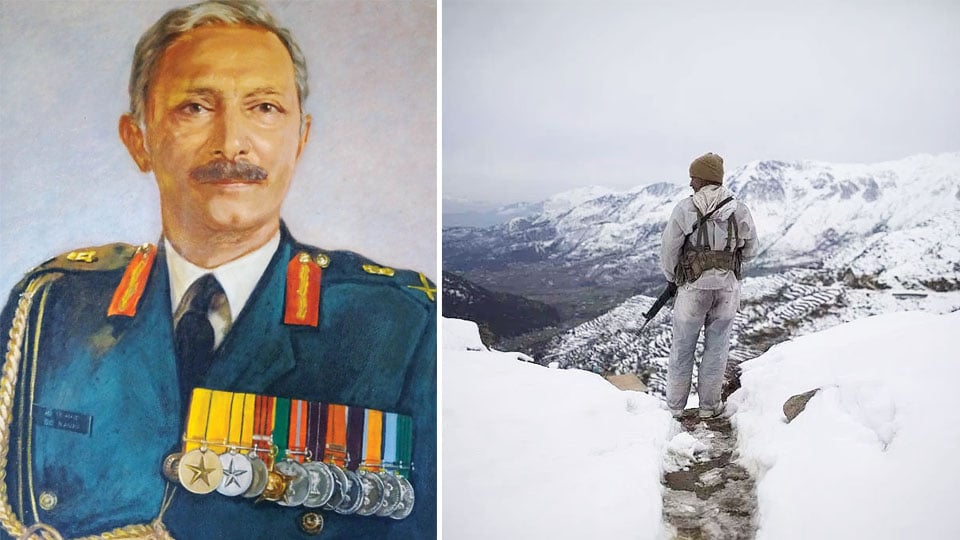
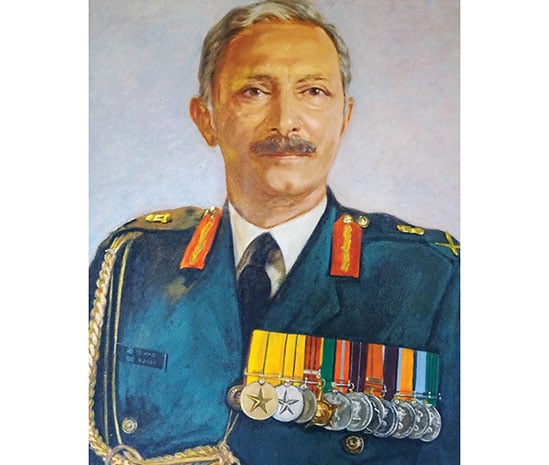
An oil painting of Lt. Gen. Biddanda C. Nanda, PVSM; AVSM.
Team Command
Finally he asked Lt. Gen. B.C. Nanda, “Where is your Best 20?” 20 Army personnel walked in hearing the bell from Lt. Gen. B.C. Nanda’s chamber. It was decided that Col. A.P. Rai would command the team consisting of Second Lt. Rajeev Pandey, Nayak Subedar Hemraj, N.S. Bana Singh and others. On June 23, the team of 20 left to Siachen in a Helicopter and their aim was Saltoro Ridge.
Death at icy mountains
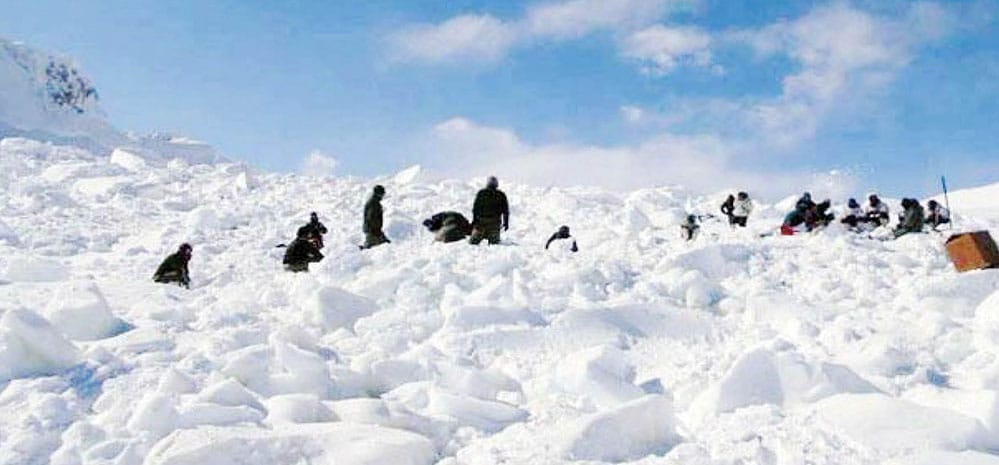
At 20:30 hrs, a few soldiers of Jammu Kashmir Light Infantry left for Saltoro Ridge. It was pitch dark with freezing temperatures and the Pakistan army’s “Quaid Post” was only a few meters away. They had to take a circuitous route along the icy mountains at a height of 21,153ft. They had to walk one behind the other and had to cut through ice.
By the time one passes through a short opening, ice would fill up again. Naib Subedar Bana Singh was the tenth man and he had to undergo the agony of seeing nine of the men who were ahead of him dying. Because as they got closer “Quaid Post” they died of breathing problems. A few were killed by enemy firing.
Second Lieutenant Rajeev Pandey and N.S.Hemraj were now dead. After noticing their half-burnt body, he immediately called the command to send additional reinforcements. The next day Indian Air Force helicopter flew with 2 officers, 3 JCOs and 57 soldiers towards Sonam Post near Siachen. Thus began ‘Operation Rajiv.’ The second team took almost eight hours to cross just 150 meters. They lost two soldiers during the move.
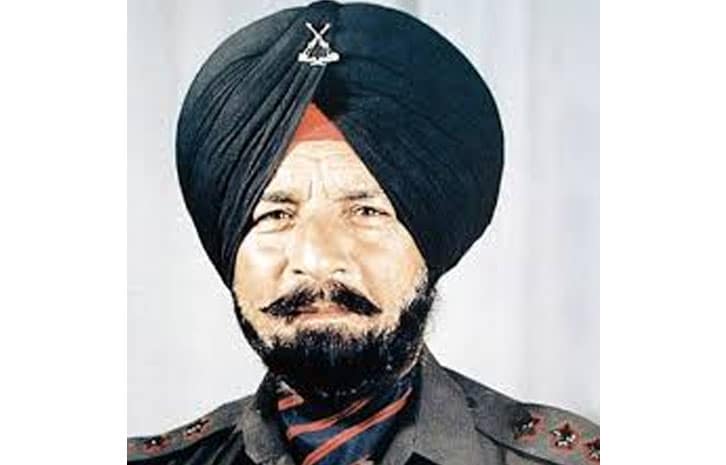
Subedar Bana Singh
First grenade hurled
On the 26th of June, the first thing Subedar Bana Singh and his team saw at sunrise was men in white uniforms — Pakistani soldiers. There was nothing the Indian Army had to wait for. Bana Singh threw the first grenade at the Pakistani bunker and it was blown into pieces. Even before the Pakistani army could realise what was happening, the Indian soldiers started firing towards them. There were a few casualties on the Indian side after heavily numbered Pakistani soldiers started firing.
Cleansing of Siachen
Col. Rai had fallen with eight bullets. Subedar Bana Singh and his companions realised that rules of the game had changed, there were no more orders. They started killing Pak soldiers indiscriminately and a few of the Pak soldiers started running away. Col. Rai asked Subedar Bana Singh to get at least a few alive. He replied that they anyway were not his cousins to save them. In a few minutes, Siachen was cleansed.
Bana Singh Post
Subedar Bana Singh applied bandage on Col. Rai’s arm. By then, four helicopters landed at Siachen. Army Chief Sundarji and Lt. Gen. B. C. Nanda arrived. By the sight of it, they realised the intensity of the fight in the steep ice walls. Army General asked Subedar Bana Singh, where was “Quaid Post” located. The damage was such. Lt. Gen. Nanda replied, “Sir, that is now Bana Singh Post” and hugged Bana Singh. Even today ‘Bana Singh Post’ exists in Siachen. Bana Singh is Siachen and Siachen is Bana Singh, the brave fight at the highest glacier in the world stays as a symbol of bravery.
Decisive battle
This is how Lt. Gen Nanda groomed fine soldiers like Subedar Bana Singh. On that eventful day, B.C. Nanda may not have been there on the battlefield but he decided the fate of that battle. Nanda, who often suggested all through his career that every valour of the brave soldiers should be awarded, sent a recommendation to the Government for one Paramveer Chakra, one Mahaveer Chakra, seven Vir Chakras and one Sena Medal.
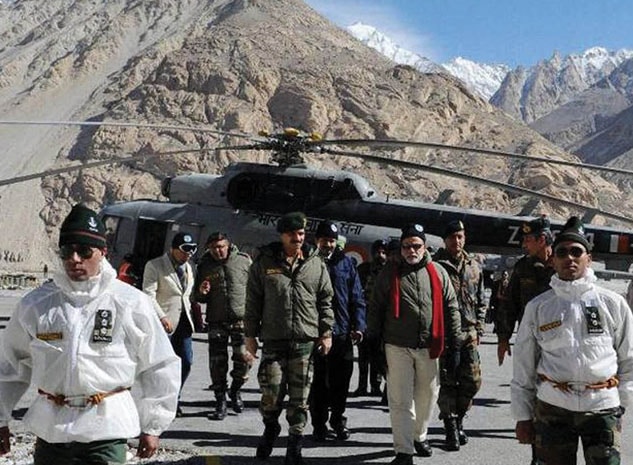
Prime Minister Modi during his surprise visit to Siachen in 2016 to celebrate Diwali with the soldiers.
Military honours
After the recapture he was entrusted with the task of modernising the base at Siachen. He increased the troop size at Siachen and ensured higher pay for troops stationed at Siachen and also brought a policy that troops can only be posted there for short-term. And today Siachen is not just world’s highest Army post, but also the well-equipped post. Siachen for Lt.Gen. Nanda was not just another Himalayan Army post, but he shaped it like a new-born baby.
For his contribution to India’s military might, Lt. Gen. Nanda was honoured with Param Vishisht Seva Medal (PVSM) and Ati Vishisht Seva Medal (AVSM).
During his tenure as the Chief of the Northern Command, he visited Siachen every month along with his wife to mingle with soldiers, share food with them and trying to distract their loneliness — because he always knew India will remain safe only if Siachen is safe. Wonder what his thoughts were when he left for his heavenly abode on Dec.12, 2018 at the age of 87. But he must have been proud that now the Prime Minister of India can freely visit Siachen.
He was called ‘Fake Environmentalist’ by greedy mafias in Kodagu
All through his life, Lt. Gen. Biddanda C. Nanda looked upto his maternal uncle Field Marshal Kodandera M. Cariappa as his role model and after his retirement he decided to settle down in Kodagu like his uncle. After his retirement and until the death of K.M. Cariappa, ‘Roshanara’, the residence of Cariappa in Madikeri had become Lt.Gen. Nanda’s centre of learning.
He learnt the importance of preserving nature and environment of Kodagu from Cariappa. By then Kodagu had begun its journey towards mindless development and destruction. Cariappa’s death was a big relief for many who were into looting the natural resources of Kodagu. Now their last obstacle was forever gone. The dance of demons towards destruction in the name of development had by then begun.
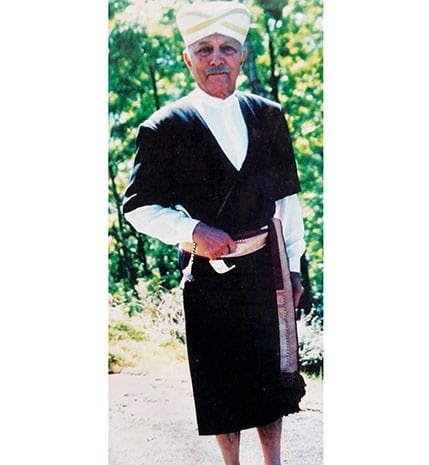
Lt. Gen. B.C. Nanda in traditional Kodava attire.
Cariappa-Thimmaiah Forum
Lt. Gen. Nanda brought together like-minded citizens and started to energise Coorg Wildlife Society. He started environment awareness programmes across the district and personally donated one acre of his land to Coorg Wildlife Society. He tried to make others realise the importance of Cariappa-Thimmaiah Forum for the overall development of Kodagu.
Hundreds of retired Army personnel from the district joined the movement under Cariappa-Thimmaiah Forum. He invited many Army officers to the district and ensured to sort the problems of the ex-servicemen from the district. B.C. Nanda had a plan to protect the environment of Coorg through discipline and dedication of the ex-servicemen of Coorg. But sadly, the district did not take notice of Nanda’s concern. He was now getting older. He stood by the protestors when thousands of trees were being axed for the high tension powerline project to Kerala through Kodagu. He demanded that the truth of environmental reports should be placed before the people.
Unfortunately everything stopped working as per his plan. Political interests and mafia started labelling him as ‘Fake Environmentalist.’ The man who planned to recapture Siachen for India couldn’t ensure his home district is protected from the powerful mafia within. With such meticulous planning he could chase the heavily armed Pakistanis at the border, but he could not stop the people who were looting his home district Kodagu. His cries “The district has reached its threshold, don’t mess with the Western Ghats,” went unheard.
About the author: Manippanda Santhosh Thammaiah hails from Nadikeri in Ponnampet, South Kodagu. At present, he is working with ‘Aseema,’ a nationalistic monthly magazine, as an Executive Editor. His weekly column ‘Haadu Hoguva Haalegalu’ is being published in ‘Hosa Diganta’ on every Wednesday.—Ed
source: http://www.starofmysore.com / Star of Mysore / Home> Feature Articles / by Santosh Thammaiah / December 26th, 2018
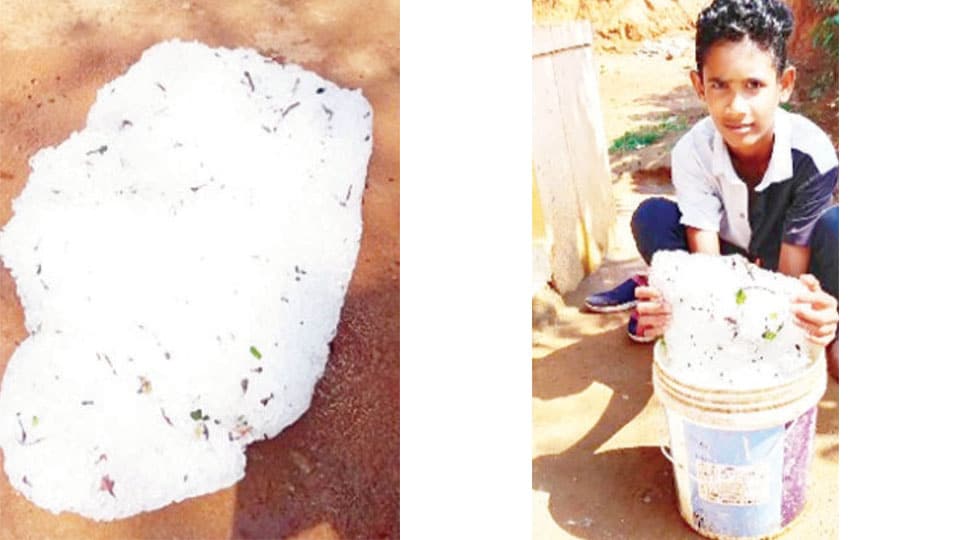
Heavy rains with hailstones accompanied with thunder lashed Somwarpet and surrounding places destroying pepper and coffee plants on Tuesday night.
A large hailstone weighing about 25 kg has baffled the residents of Kundalli village and the large hailstone had not melted when it was found the next day morning. The large hailstone was found near a tree by Manjula and Drutan, when they were going to the agricultural field on Wednesday morning
The hailstones have also destroyed many trees inside coffee estates and a huge tree fell across the National Highway near Honvalli village disrupting traffic. The villagers chopped down the fallen tree and made way for smooth flow of traffic.
The tiled roof of a house belonging to one Muddu at Kibetta village has been damaged and the walls have developed cracks.
source: http://www.starofmysore.com / Star of Mysore / Home> News / April 28th, 2022
‘Kaadinolagondu Jeeva,’ a book based on first-hand experiences of the famed Forest Ranger K.M. Chinnappa (now retired) will be released in city on July 2 by Tejaswini Ananth Kumar, President and driving force behind Adamya Chethana Trust, Bengaluru, and the wife of late H.N. Ananth Kumar, Union Minister.
The event will be held at Hotel Roost on Hunsur Road at 10.30 am and it is organised by Wildlife First and Bharathi Prakashana, Mysuru. The book is written by T.S. Gopal, retired Principal of Srimangala Junior College and has been published by Poornachandra Tejaswi Prakashana in the year 2000.
When the book was published it was an instant hit and was published in three volumes. Later in 2010, Navakarnataka Publication published a comprehensive collection of all the three volumes. The 400-page book has 14 pages of colourful photos and has many stories and experiences of Chinnappa.
About K.M. Chinnappa
Born in 1941 at Kumatoor village in South Kodagu to an Armed Forces family, Kotrangada M. Chinnappa is the quintessential wildlife protector. A true son of the soil, his father was a soldier who took to farming after retirement. Chinnappa joined the Karnataka Forest Department as a Forester in 1967 and has been a frontline warrior all his life.
For much of his career he served as a Ranger in Nagarahole where he was best known for his uncompromising ways and his almost fanatical adherence to law.
When Chinnappa joined as the Ranger at Nagarahole, the region was infested with numerous criminal activities such as timber smuggling, marijuana plantation, poaching, cattle grazing, setting up of unauthorised breweries at the sanctuary although the area was set up for protecting wildlife.
However, Chinnappa pledged to bring a dramatic change in the way the forest functioned. He ensured that the number of tigers and deer, which were dangerously low, increased, all the encroachers were chased from the forest and the wild animal natural habitats were restored. When he joined Nagarahole, the forest area was only 250 sqkm and now it has expanded to 653 sqkm.
During his struggle for wildlife conservation, Chinnappa became an enemy of many people. He was always on the threshold of getting killed. In the year 1970, he barely escaped from death when a gang armed with sticks attempted to attack him during his visit to a temple.
Chinnappa was made to surrender his licensed revolver because many people who did not support him addressed him as a criminal and threat. Chinnappa was falsely accused of a murder which forced him to spend 12 days in a prison before he was found guilt-free.
In 1992, an angry mob burned his newly constructed home few days after the work was completed in Kumatoor. He fought the long battle and faced many difficulties and unexpectedly resigned from his post in 1993. He won the CM’s Gold Medal in 1985. Now, Chinnappa is the President of Wildlife First, continuing his crusade against timber mafia and green destructors. He is also into agriculture, his passion.
source: http://www.starofmysore.com / Star of Mysore /Home> News / June 20th, 2019
Expecting monsoon on June 1, farmers chopped off branches of shade trees exposing tender berries to summer-like sunlight
An ‘unfortunately’ incorrect weather forecast by India Meteorological Department (IMD) has put coffee farmers in Karnataka in jeopardy.
On the basis of the Met department’s prediction of an early monsoon, coffee growers in Karnataka prepared for rains on June 1. However, the coffee estates in Kodagu, Chikkamagaluru, Hassan districts are yet to see any sign of rain as on June 17.
Expecting monsoon in the first week of June 1, towards the end of May, most coffee farmers carried out shade regulation through chopping the branches of secondary shade trees on their plantations to ensure maximum sunlight on the plants during the monsoon. In the absence of rain, coffee plants are being exposed to excessive heat and summer-like sunlight.
Shade lopping (called dadap lopping, with dadaps being fast growing trees of the genus Erythrina) is undertaken just before or at the onset of monsoon as retaining thick shade during monsoon could lead to disruption of free flow of oxygen in the orchard, which may lead to berry dropping, wet foot condition and rotting of stalk.
Mandanna of Subramhanya Estate at Suntikoppa in Kodagu district says, “The entire coffee belt was set for the monsoon on June 1. But unfortunately, Met department’s weather prediction has gone haywire. A delayed monsoon has brought additional concerns to the coffee-growing community.”
According to him, coffee plantations should have ideally received 5 to 6 inches of rain in June, but, as of now, they have not received any rain so far.
“More than half of June has passed and monsoon is yet to set in. Rains are very critical for the development of berries, and also to keep white stem borer away from coffee plants,” said Mr. Mandanna, who is a member of the Coffee Board.
Shirish Vijayendra, a planter from Mudigere and former chairman of Karnataka Planters’ Association, said, “A delayed monsoon would adversely affect the coffee crop this year. Not only coffee, it has also impacted pepper flowering and corn formation, and also paddy cultivation in most parts of Karnataka. Most days are very sunny, as if we are still in summer. It is not a good sign for most crops, including coffee.”
Anil Kumar Bhandari, President of India Coffee Trust (ICT) and a large planter from Suntikoppa, said, “The delayed monsoon has added to our problems. If the rains are going to be further delayed by another 4 to 6 days, there will be a significant impact on production due to poor crop formation.’’
Coffee growers say they purchased manure in bulk to fertilise and nourish their plantations, but the task can be carried out only if the soil has enough moisture to dissolve and absorb the fertiliser.
“We are yet to apply fertilisers in our plantations, owing to the lack of moisture on the ground,” lamented Sindhu Jagdish, a small farmer from Ponnampet in Kodagu district.
source: http://www.thehindu.com / The Hindu / Home> News> National> Karnataka / by Mini Tejaswi / Bengaluru – June 17th, 2022
In its 42 years, Coorg Wildlife Society has taken up conservation of the mahseer, ecology awareness, plantation and cleanliness drives.
Participants during a nature awareness trek organised by the Coorg Wildlife Society
Madikeri :
Triangular green and yellow stickers with the silhouette of a sambar deer are instantly recognisable on a majority of vehicles in Kodagu. The stickers of Coorg Wildlife Society — a pioneer NGO that has taken oath to protect the Western Ghats in the district — are a badge of pride which not only connect residents instantly, but also give out a strong message of environment conservation.
Established in 1980, Coorg Wildlife Society (CWS) is primarily engaged in wildlife programmes across Kodagu, and has a dedicated team that aims at increasing awareness about wildlife and protected habitats.
“CWS started with an aim to educate children and the local population about wildlife, flora and fauna. Gradually, the society got involved in conservation of environment,” explained KA Chengappa, president of CWS. Member Navin Bopaiah shared that CWS has a long history of campaigning for the environment, which has ensured that government policies and laws help safeguard wildlife and promote wildlife-friendly land management.
CWS’mahseer fish conservation progamme
Among the many projects undertaken by the organisation, the conservation of mahseer fish ranks first in its table of achievements. Nearly 35 years ago, CWS leased a 35-km stretch of river Cauvery near Siddapura to start a conservation programme for the endangered mahseer species. Today, the organisation has been successful in curbing mahseer poaching, and establishing a large-scale breeding programme to revive the fish variety.
“All commercial activities along the 35-km stretch of river have been stopped due to the efforts of CWS. We have made many blocks across the stretch and appointed guards to stop illegal fishing of mahseer. With successful breeding programmes, the fish variety has restocked in river Cauvery,” explained Chengappa. He added that CWS has now taken special interest in repopulating the Cauvery with the orange-finned mahseer variety.
“Orange-finned mahseer are native to the Cauvery and are critically endangered. Apart from illegal fishing, excessive preying of these fish by other fish varieties affected its population. We are starting conservation of the orange-finned variety in a holding tank, and have got immense support from the fisheries department,” he explained.
CWS is also in talks with the forest department to extend the conservation of mahseer in the Cauvery at Bheemeshwari, in Mandya district. “We have written several letters to the authorities to stop construction of the Mekedatu dam, that will seriously affect the species in Cauvery Wildlife Sanctuary,” Chengappa confirmed.
Apart from mahseer conservation, the society is actively involved in plantation drives, cleanliness projects, birding programmes and organising eco treks across Kodagu. CWS, with support from the forest department, will soon initiate a plantation drive of Napier Grass across Dubare and Mathigodu riverside areas, where elephant populations are found in herds. The organisation hosted a bamboo re-plantation drive to replenish the forests. It also hosts treks across reserve forests and hills of Kodagu with support from the forest department. “These are awareness treks, and participants learn the importance of forests and its inhabitants. Cleanliness drives are also hosted along the way,” he explained.
Meanwhile, a massive clean-up drive was hosted by the CWS team on Thithimathi forest fringes and saw participation from students from Bengaluru and Mysuru too. Two truckloads of trash were cleared during the Environment Day event. The annual birding initiative by the organisation attracts professional and amateur birders, who record the variety of bird species found in the district. During this year’s bird festival, the team spotted the critically endangered Indian Vulture soaring high up in the sky, across the Brahmagiri Range.
The team opines that awareness among the people towards environment protection is the need of the hour. “Alongside awareness, forests must be maintained scientifically. The population of tigers and elephants is increasing, but forest cover is shrinking. If this continues, we will have to face a grave future filled with human-wildlife conflict,” concluded Chengappa.
source: http://www.newindianexpress.com / The New Indian Express / Home> Good News / by Prajna GR, Express News Service / June 12th, 2022
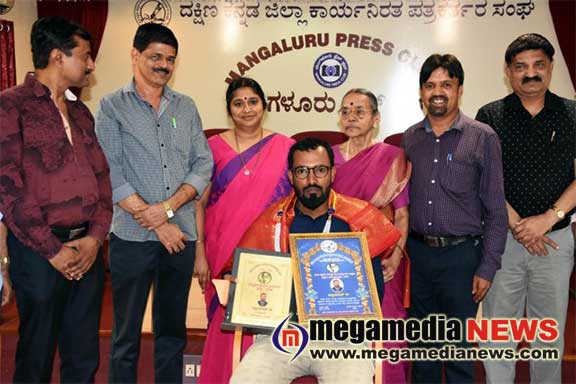
Pa Gopalakrishna Memorial Award 2018 for ‘Best Rural Reporting’ was presented to Journalist Imtiaz Shah Tumbe at Patrika Bhavan.
His article on Kodagu natural calamity, published in Vartha Bharati, was selected for the award.
Shah, a sub-editor in Vartha Bharati, said he had stepped into the field of journalism without any proper background. He said his parent organisation had honed his skills and provided him with an opportunity. “I feel privileged to receive the award.”
Dakshina Kannada District Information and Public Relations Senior Assistant Director K Rohini presented the award to Shah.
Speaking on the occasion, Rohini said the family members of veteran journalist late Pa Gopalakrishna, who had instituted the award, had set an example for others.
DK District Working Journalists’ Association Srinivas Indaje presided over the programme. Secretary Ibrahim Adkasthala, Mangaluru Press Club President Annu Mangaluru, Patrika Bhavan Trust President K Ananda Shetty, Pa Go’s spouse Savitri and senior journalist Manohar Prasad were present.
source: http://www.megamedianews.com / MegaMedia News / Home / March 02nd, 2019
WELCOME. If you like what you see "SUBSCRIBE via EMAIL" to receive FREE regular UPDATES.
Read More »