Category Archives: Green Initiatives / Environment

Precious Stones Plundered From Pattighat In Kodagu

Forest Dept. complicit, says MLA; seeks high-level investigation

Madikeri: 

Rampant illegal mining of precious stones has been reported from Pattighat Reserve Forests (Nishane Motte) near Bhagamandala of the Western Ghats under the very nose of the Forest Department and those who are duty-bound to protect it have now been accused of openly allowing plunderers to loot the forest wealth.

These smugglers are unearthing gemstones from the forests with the help of locals and selling them at a premium to luxury hotels, jewellery shops, spas and massage parlours. These virgin forests are an integral part of Kodagu and the Western Ghats and except for wild animals and Forest Department staff, no one — not even cattle — is allowed inside.

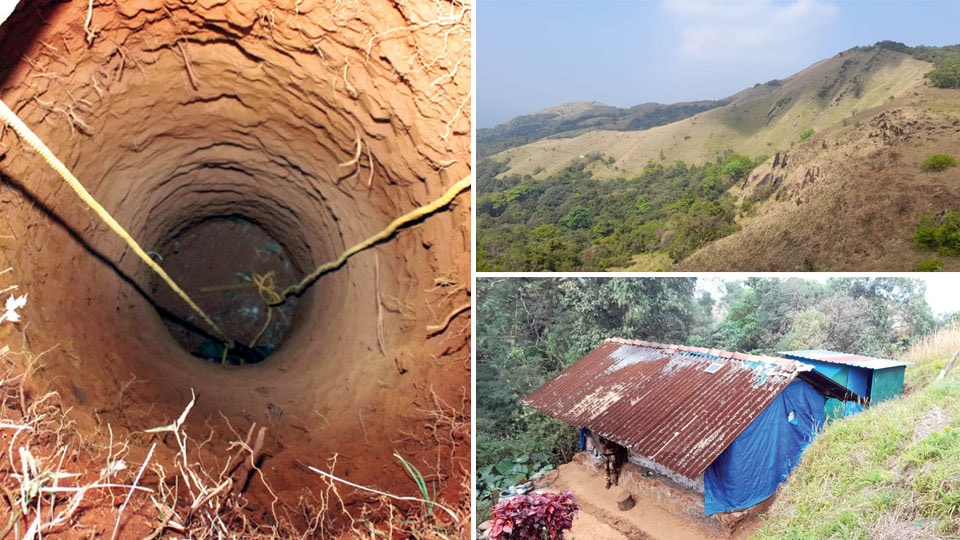
In such a forest, covered with fully grown trees, deep pits are dug and mud is lifted out and loads and loads of mud are sieved for precious stones, especially red ones, resembling rubies. Ironically, the Forest Department camp and the tents where they stay guarding the jungles are located metres away from the places that have been dug up and still, this has not come to the notice of the Department.

The Pattighat Reserve Forests begin at the very end of Thannimaani village that can be reached from the entrance gate of Bhagamandala via Karike Road. One has to trek around a six-kilometre area that is full of ravines and steep gorges to reach there. The Reserve Forest is spread across 2,200-hectare land and joins the Subramanya-  Kadamakal Forests.

While Subramanya Range Forest comes under Dakshina Kannada, Koojimalai, Suttathmalai Pushpagiri Wildlife Sanctuary and Pattighat (Nishane Motte) comes under the jurisdiction of Kodagu district. Public entry has been banned here and unfortunately, this ban is a blessing in disguise for smugglers to carry out the illegal stone mining.
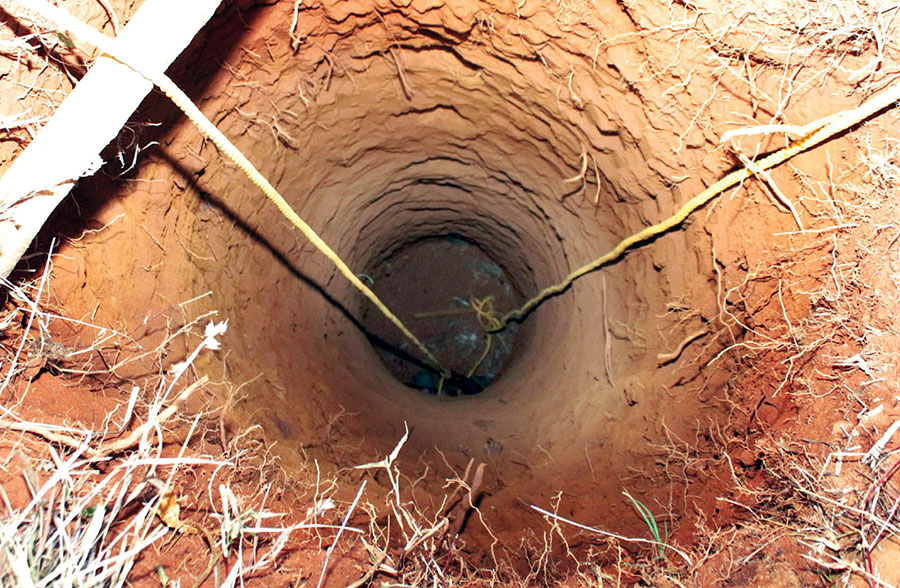
The 30-ft pit dug up to extract precious stones.

Well-concealed operation

When the first report of this rampant precious stone mining was reported by some local villagers of Bhagamandala a week back, teams from the Forest Department were sent to inspect the area. But strangely, the inspecting teams did not find any pits dug up deep inside the forest. They only found mounds of mud from where the pits were dug and the same was reported by the teams to their higher officers.

Even as the Department justified that there are no pits, local villagers said that a little bit of effort would have unearthed the entire racket as the pits were cleverly covered with hay stack, small wooden blocks and mud.

The pits were finally spotted on Jan. 6 by the Forest Squad personnel who were accompanied by Assistant Conservator of Forests Mohiseen and Chairman of Karnataka State Western Ghats Task Force, Shantheyanda Ravi Kushalappa.
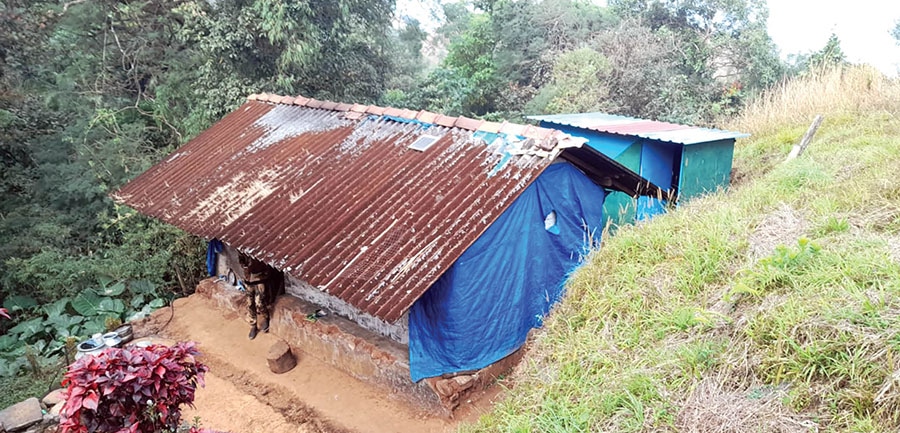
The Forest Department base camp at Pattighat.

Mining network spread out

According to people in the know of things, this mining activity has been going on in many reserve forests around Kodagu especially in the Bhagamandala region for the last 20 years. Before the Pattighat was declared as a Reserve Forest, the illegal mining was concentrated on one or two locations from where the stones were extracted. However, after the Reserve Forest restrictions came into place, mining spread out to many locations.

For instance, one deep pit that was used to excavate soil was closed in 2020 with cement. Recently, another 4-ft wide and 30-ft deep pit has been dug nearby and from there, another ‘L’ shaped pit has been dug up connecting this deep pit, shocking the Forest Squad.
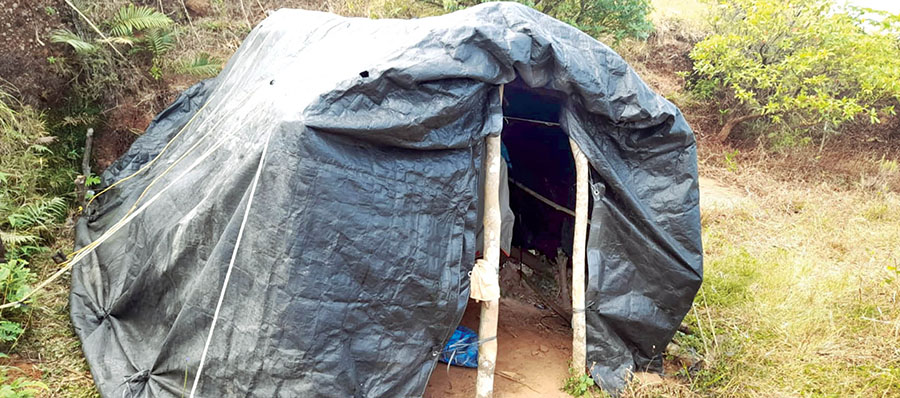
The tent set up by forest watchers 10 metres from the pit.

Organised gangs camp in woods

So organised the gangs are that many earth-digging implements, pulleys and ropes to pull out mud, sieves, cooking vessels, fireplaces and iron rods and pipes have been recovered indicating that the smugglers camp inside the area, set up fireplaces and even prepare food. How can this be possible without the Forest Department knowing, ask local villagers. The stones earlier used to fetch a price of Rs. 500 to Rs. 700 per kg, now costs over Rs. 30,000 to Rs. 50,000 per kg, making it a lucrative deal for smugglers. The illegal trade was first reported in the 1990s at Subramanya Forest Range and Pushpagiri Ranges. Gradually, the trade spread to Madikeri and Bhagamandala ranges.

Once the stones are extracted, they are polished and marketed to massage parlours, five-star hotels and spas. Once polished, the texture and appearance of the stones change and they look similar to precious gemstones.

Jewellery shops too purchase these precious stones and they are sold with actual precious stones. The stones, in different colours, are used in ‘hot stone massage’, ‘aromatherapy’ and the quality is decided on the stones texture after polishing.
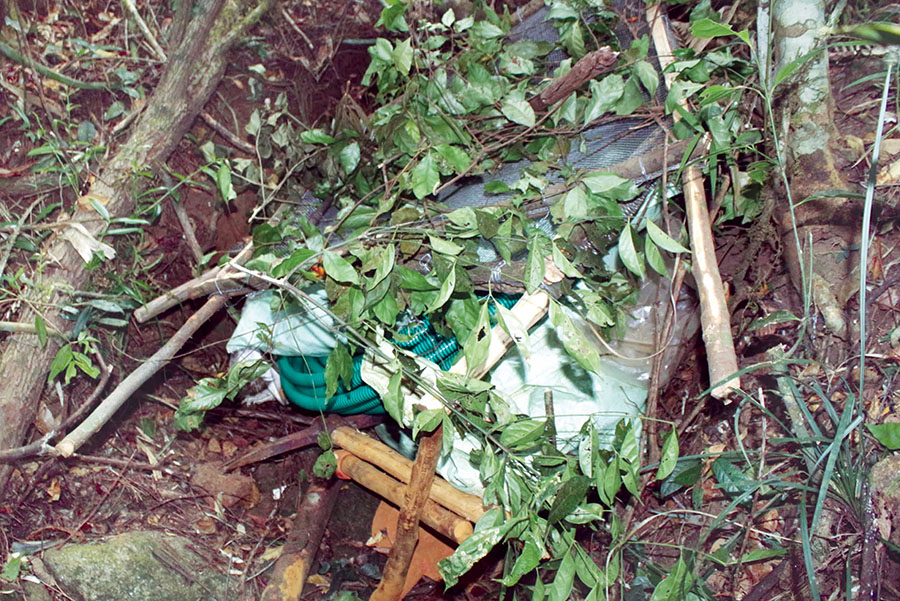
Excavation materials camouflaged to prevent detection.

Regular affair since 2007

Illegal mining at Pattighat Reserve has been rampant since 2007 and the name of an influential person from Madikeri circling around the racket. All the investigation that has been conducted so far is just an eye-wash and only lower-rung Forest Department staff has been the targets. All the senior officers who have been in-charge of Pattighat Reserve Forests since 2007 must be investigated for the truth to come out. It is clear that the Forest Department is complicit. I will press for a detailed investigation and impress upon the Government to conduct a high-level probe. — K.G. Bopaiah, MLA Virajpet

1 guard, 2 watchers missing

Our inspection clearly establishes the involvement of Forest Department staff and without their knowledge, no one can enter the core area of the Reserve Forests. This is a classic case of the fence eating the crop. Villagers here say that some unscrupulous Forest Department officers take bribes up to Rs. 5 lakh to Rs. 10 lakh to allow mining once inside the forests. One forest guard and two watchers are missing from duty and they must be arrested. 

Shantheyanda Ravi Kushalappa, Chairman of Karnataka State Western Ghats Task Force

source: http://www.starofmysore.com / Star of Mysore / Home> News> Top Stories / January 08th, 2022

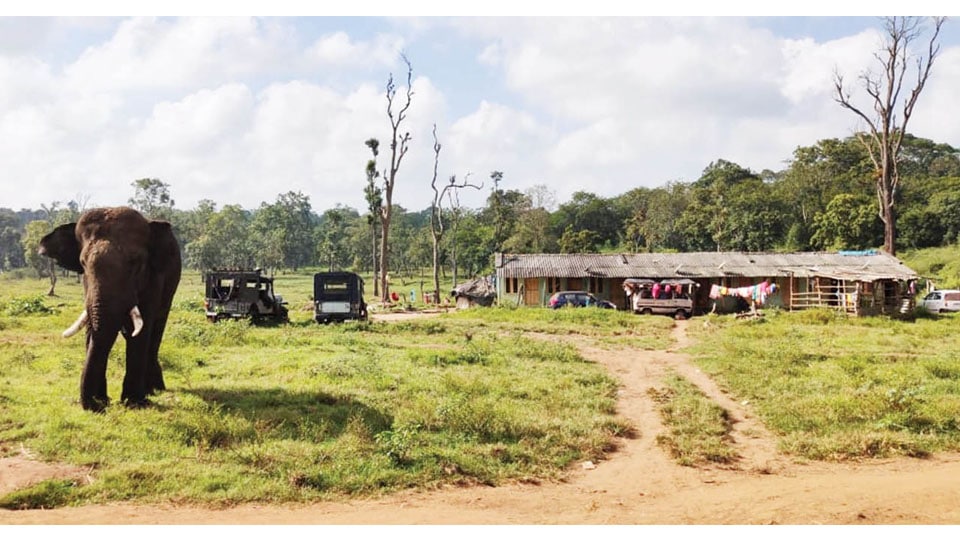
HC junks PIL against construction of jungle resort in Kodagu, slaps Rs 50K fine on petitioners

The petition was filed by PS Mohan and others from Kodagu district on the ground that permission was not obtained from the central government under the provisions of the Forest Conservation Act.

Bengaluru :

The Karnataka High Court on Tuesday slapped a cost of Rs 50,000 on a group of petitioners for wasting the precious time of the court by filing a public interest litigation challenging the construction of the Jungle Lodges and Resorts (JL&R) by the Karnataka State Tourism Development Corporation (KSTDC) at Dubare forest in Kodagu district.

“We are of the view that the writ petition is filed without any material to support the contention raised in the petition and it appears that it has been filed with ulterior motives in order to pressurise the respondents — the state authorities. The conduct of the petitioners as such is deprecated for the purpose of wasting the precious time of the court by imposing cost of Rs 50,000 which has to be paid to the Karnataka State Legal Services Authority,” said a division bench of Chief Justice Ritu Raj Awasthi and Justice Suraj Govindaraj.

The petition was filed by PS Mohan and others from Kodagu district on the ground that permission was not obtained from the central government under the provisions of the Forest Conservation Act for construction of JL&R.

In counter, the government advocate contended that no permission of the central government is required for construction of the jungle lodge by the KSTDC in the reserve forest area coming under the state government.

The counsel of JL&R raised preliminary objections regarding the maintainability of the petition. It was alleged this petition was filed on some personal interest and that JL&R has installed river rafting activities in Dubare area which adversely affected the petitioners. But no public interest is involved in the petition and it has been filed with ulterior motives, the counsel of JL&R argued.

After hearing the parties, the court noted that the JL&R which was constructed in Dubare is a body created by the KSTDC which itself is totally controlled by the state government and no private interest is involved in the activities of the JL&R.

source: http://www.newindianexpess.com / The New Indian Express / Home> States> Karnataka / by Yathiraju, Express News Service / January 04th, 2022

Rs. 50 Lakh Released For New Elephant Camp At Harangi

Madikeri:

The State Government has released Rs. 50 lakh to set up a new elephant camp at Harangi in Kodagu District. Already, Kodagu has two elephant camps, one at Dubare and another at Mathigodu near Anechowkur Gate that borders Mysuru.

The aim of the new camp is to decongest the existing eight camps across Karnataka where the pachyderm population has increased over the years. The State Government in February this year had ordered the setting up of a new elephant camp at Harangi.

Replying to a question raised by Madikeri MLA M.P. Appachu Ranjan in the on-going Legislature session at Belagavi regarding the Harangi Elephant Camp and a Tree Park, also at Harangi, Forest Minister Umesh Katti said that from 2017 till 2021-22 Rs.1.38 crore has been released by the Government and works are on to create the Tree Park.

This apart, Rs. 50 lakh has been released for Harangi elephant camp under funds from Compensatory Afforestation Fund Management and Planning Authority (CAMPA). Apart from setting up a new elephant camp, there are plans to initiate other related development programmes including developing the camp as a tourist centre and at the same time provide shelter to the elephants, he added.

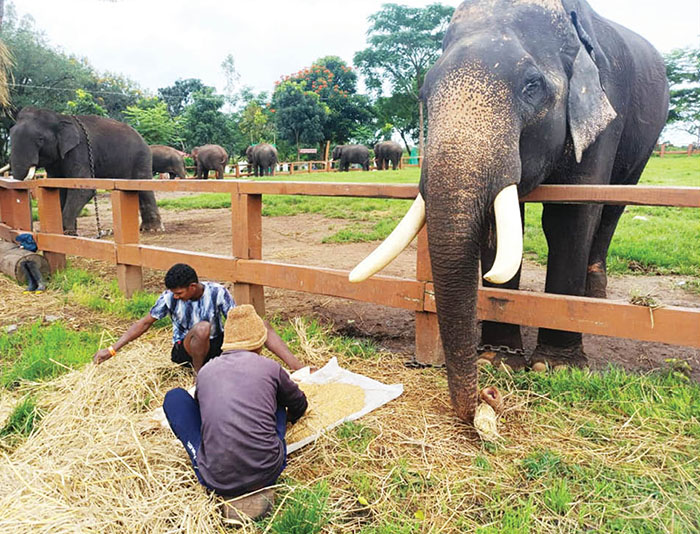
File photos of Dubare Elephant Camp near Kushalnagar in Kodagu district.

The Forest Department will establish the elephant camp in a 40-acre land at Athur Reserve Forest beside Harangi Reservoir in Kushalnagar Taluk. The place, located near the Harangi Dam backwaters, is ideal to set up the elephant camp.

The Government has also plans to closely develop Cauvery Nisargadhama in Kushalnagar and together with the new elephant camp in the region, the initiatives will boost eco-tourism activities, the Minister told the Assembly.

Currently, Karnataka has eight jumbo camps housing about more than 100 tamed elephants that are used to rescue wild animals and for logging purposes at Government timber depots.

The new elephant camp is expected to reduce the burden on the nearby Dubare Elephant Camp, which currently has over 32 elephants, the highest in the State.

source: http://www.starofmysore.com / Star of Mysore / Home> News> Top Stories / December 20th, 2021

Authorities moot ‘Greater’ Raja Seat in Madikeri

The Kodagu district administration on Friday conducted a meeting to develop Raja Seat, which is a popular tourist attraction in Madikeri.

Deputy Commissioner B.C.Satish instructed the officials to prepare a blueprint to develop the existing place into a ‘Greater’ Raja Seat.

He directed the Horticulture Department to take up the repair of the musical fountain which is defunct, on a priority basis. Similar instructions were issued to restore the functioning of the toy train.

The Coorg Village which has already been inaugurted, should start functioning immediately, said the Deputy Commissioner while the offiicals suggested the installation of a high mast lamp in the vicinity.

It was also decided to organise a Coffee Mela to coincide with Christmas when the town and the district is visited by hordes of tourists, apart from conducting cultural programmes during holidays.

Incidentally, the previous round of development works carried out by the authorities had come under flak from conservationists on the grounds that the place was being concretised and its beauty being eroded.

source: http://www.thehindu.com / The Hindu / Home> News> States / by Special Correspondent / Mysuru – November 26th, 2021

Expedite crop survey, Kodagu DC directs officials

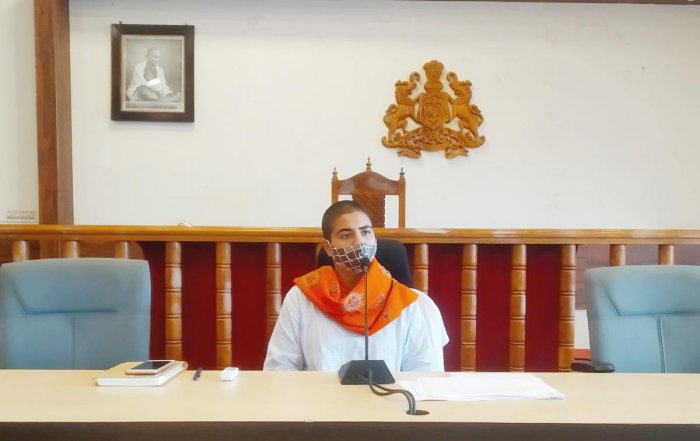
Deputy Commissioner Charulata Somal at a review meeting in Madikeri on Wednesday.

Observing that the crop survey is being hit by an inordinate delay in the district, Deputy Commissioner Charulata Somal instructed the officials concerned to speed up the process.

Reviewing the progress of the crops survey, during a meeting held at her office on Wednesday, she said that crops in 2.62 lakh survey numbers should have been completed in the district by now.

However, crops in only 1,762 survey numbers have been covered, she said and requested the cooperative banks, coffee board and other organisations related to agriculture and horticulture to cooperate with the department in carrying out the survey.

Cooperative Societies deputy registrar B K Salim said that there are 73 primary agricultural cooperative societies in the district and they will join hands in the crop survey.

Agriculture department technical officer Narayana Reddy said that the farmers can carry out the crop survey themselves, by downloading the crop survey application on their mobile phones.

Charulata Somal also asked the officials to ensure the supply of fertilisers in the district in adequate quantity.

Agriculture department deputy director Shabana M Sheikh said that 32,082 metric tonnes of fertiliser have been supplied to the district.

Coffee Board deputy director Shivakumaraswamy, District Lead Bank manager R K Balachandra, horticulture department deputy director H Shashidhar were present.

source: http://www.deccanherald.com / Deccan Herald / Home> State> Mangaluru / by DHNS, Madikeri / August 26th, 2021

Huthari festival observed with traditional fervour

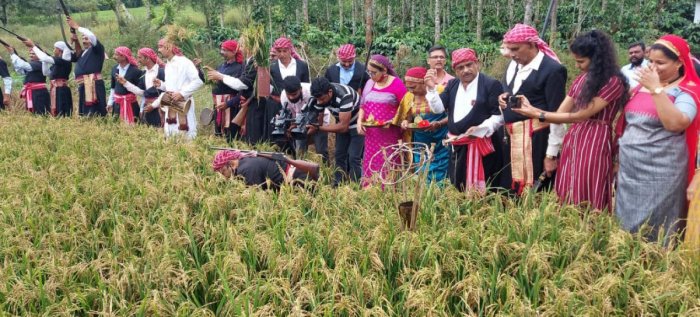
The paddy sheaves were cut by the CNC members during Huthari celebrations at the paddy field belonging to Nandineravanda Uthappa, in Chikkabettageri.

The Codava National Council (CNC), led by its president N U Nachappa, celebrated Huthari or Puthari — the harvest festival of Kodagu, at a paddy field of Nandineravanda Uthappa, in Chikkabettageri village, near Kushalnagar, on Friday.

Wearing traditional Kodava attire, the members participated in the celebrations by cutting paddy sheaves. Later, they offered prayers for the prevalence of peace and to eradicate Covid-19 from the world. 

The members offered prayers to the gods and initiated the process of Huthari celebrations by ‘Nere Kattuva’ ritual using the leaves of Arali, mango, jackfruit, Kumbali and cashew nut trees. 

After the rituals, the members took out a procession to the paddy field, accompanied by the ‘Dudikottpat’. After firing thrice in the air, Nachappa offered puja rituals and cut paddy sheaves.

Later, the paddy sheaves were brought back to the house and puja rituals were conducted.

CNC members presented ‘Kolata’, ‘Pareyakali’ and other cultural programmes.

Later, they also danced to the traditional beats and relished rice payasa, ‘Thambittu,’ ‘Kadubu,’ ‘pandi curry,’ ‘chicken curry’ and others. 

Speaking on the occasion, Nachappa urged the government to declare a national holiday for the Puthari festival. 

The Kodavas should be considered as a separate race to save the Kodava tribal culture for the future generation. Kodava language should be included in the Eighth Schedule of the Constitution, he said. 

“Kodava culture has all the qualifications to be included in the Intangible Cultural Heritage List of Unesco. By showcasing our rituals, we can assert our rights,” he added.

source: http://www.deccanherald.com / Deccan Herald / Home> State> Mangaluru / by DHNS, Kushalnagar / November 19th, 2021

Puthari Festival Venue Changed: Celebrations To Be Held At Kodava Samaja In Vijayanagar

The Management of Kodava Samaja, Mysuru, has decided to celebrate Puthari Namme (harvest festival) on Nov.20 in the premises of Kodava Samaja in Vijayanagar I Stage. Earlier it had been decided to celebrate the festival in the premises of Sree Cauvery Educational Institutions in Kuvempunagar.

Now due to incessant rains since a week and also keeping in mind the forecast of rains for 4 more days, the Samaja has decided to change the venue.  The celebrations will commence at 5 pm at the Samaja premises. All traditional Kodava dances will be performed on the occasion by both the men’s and women’s teams.

Arrangements have been made to distribute Kadh (new paddy crop) on that day.   All the members are requested to note the change of venue and cooperate in the celebrations, according to a press release from Malachira M. Ponnappa, Honorary Secretary, Kodava Samaja.

source: http://www.starofmysore.com / Star of Mysore / Home> In Briefs /November 19th, 2021

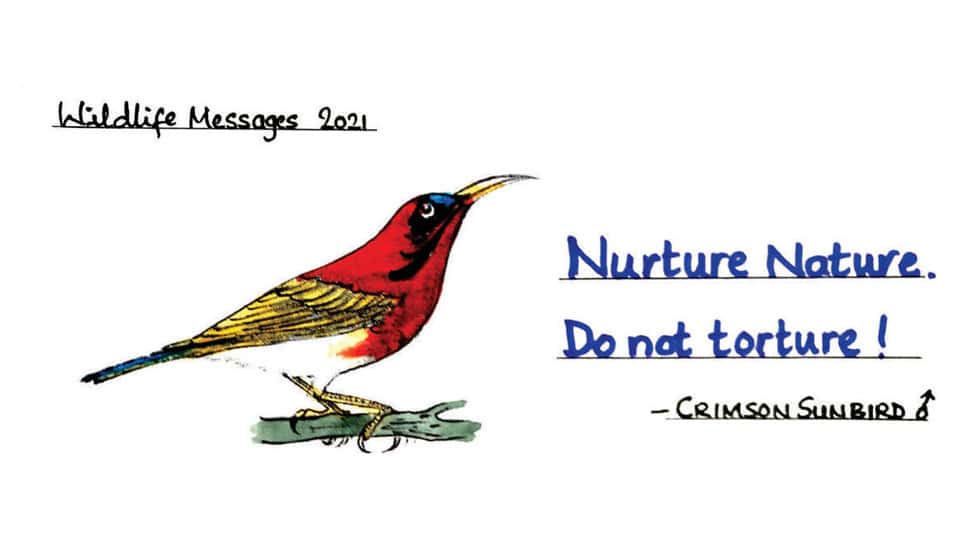
Avid Birder’s Wildlife Message Cards-2021

Mysore/Mysuru: 

Dr. S.V. Narasimhan

Dr. S.V. Narasimhan, a family physician based at Virajpet in Kodagu, is an avid birder, nature lover, adept at computers, Karnatak music and astronomy.

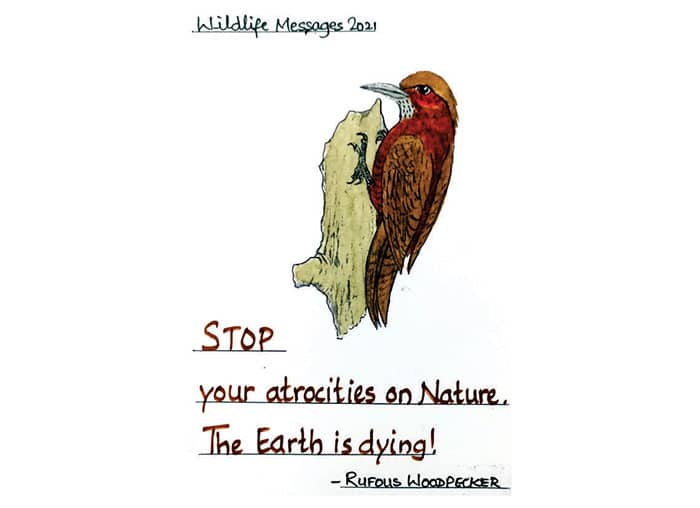
Author of Feathered Jewels of Coorg, a field-guide to 310 species of birds found in Coorg, Dr. Narasimhan is the pioneer in spreading wildlife conservation messages through his unique hand-painted Wildlife Message Cards that are sent free to individuals throughout the world to mark Wildlife Week (Oct. 2 to 8).

Total number of hand-painted cards made by him this year is 2,630; in 37 years, 75,285 cards.

Total recipients this year including Star of Mysore – 1,284; in 37 years — 13,387 persons.

The Special Wildlife Messenger this year is Rufous Woodpecker (Micropternus brachyurus) which is a medium sized, brown coloured bird, with short beak and a short strong tail. Male birds have a red patch under the eyes. They feed on insects, ants and flower nectar. Their call is a sharp nasal, three-note, Knk-Knk-Knk. The most surprising fact is that they make their nest within the carton nests of Crematogaster ants and the young also feed on the eggs and larvae of the ants!

source: http://www.starofmysore.com / Star of Mysore / Home> News / October 11th, 2021

Native shade trees in coffee plantations vital for diversity, abundance of birds, says study

The joint study found bird species richness to be higher in shade coffee plantations that had 78 species than in open coffee plantations that had 55 species

‘Alteration of canopy, woody plant composition can influence pattern of functional composition of resident birds’

Verdant coffee and tea plantations are more than an ideal backdrop for photos; they support a thriving avian population. In a study that underscores the need to understand the patterns and drivers of bird species composition and diversity outside Protected Area (PA) networks to develop landscape-level conservation strategies, researchers found that they varied in differently-managed plantations.

The findings were the result of collaborative work by Kannur University, Kerala, Salim Ali Centre for Ornithology and Natural History, Coimbatore, Ashoka Trust for Research in Ecology and the Environment (ATREE), Bengaluru, and Ferns Nature Conservation Society, Wayanad. It was published in July 2021.

Focussing on the coffee plantations in the Western Ghats, which are an important agro-ecosystem and help maintain a significant portion of regional avian diversity, the researchers compared the composition and functional diversity of resident birds between shade and open coffee plantations.

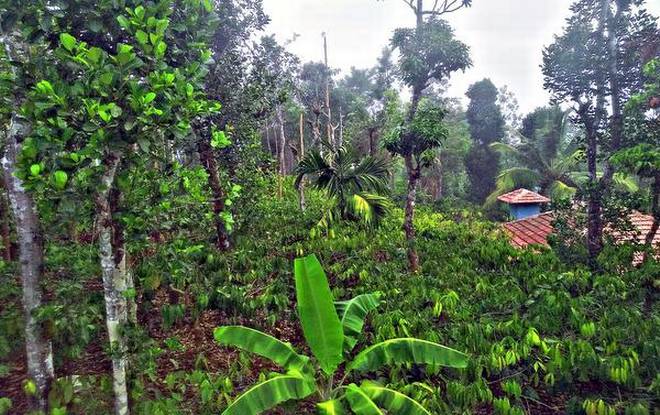
They counted 3,846 birds of 87 species, and found species richness to be higher in shade (78 species) than in open coffee plantations (55 species). “Interestingly, 32 species were unique to shade and nine were unique to open coffee plantations, with 46 species found in both types of plantation. Species richness and abundance were higher in shade coffee,” the study says, adding that the results reveal that different farm management practices can affect functional bird richness and its abundance in coffee plantations. They have made a case for retaining shade-trees of native varieties in coffee plantations to support high functional diversity, richness, and abundance of birds in the coffee plantation of the Western Ghats.

The study, ‘Resident birds show different patterns in species composition and functional diversity in differently managed coffee plantations in the Western Ghats, India’, was published by the Ornithological Science journal in July 2021.

Speaking to The Hindu, Santhanakrishnan Babu, one of the authors, said the study was conducted between May and August, 2016, in the northern part of Wayanad district. “Wayanad is a major coffee producer, producing 90% of the Kerala’s coffee. Our study aimed to understand how resident birds respond to differently-managed coffee plantations – shade and open,” he said.

The Kerala government recently passed an order to chop all resident trees on private land except sandalwood. This will lead to extensive chopping of resident trees from the coffee plantations which will affect biodiversity, he added.

Another author Athira S. Variar and Mr. Babu said retaining shade trees of native varieties in coffee plantations is important for supporting high functional diversity, richness, and abundance of birds. “Shade plantations support several habitat specialists and range-restricted birds, and alteration of the canopy and woody plant composition can influence the pattern of the functional composition of resident birds. Since our study covered only one season, year-round study in these plantations may shed more light on the composition of resident, breeding and migratory bird species,” they said.

Conservation strategies

They have called for landscape-level conservation strategies. Author Anoop N.R. pointed out that the Forest Department has little authority over the plantations located outside forest areas, and trees in these plantations are increasingly being replaced with exotic trees such as Grevillea robusta. “To promote the protection of large native trees in coffee plantations, we recommend initiating programmes to provide financial incentives to private landowners. Education programmes will also help to improve community support for retaining texisting indigenous tree varieties and promote planting more of the same,” he recommended, adding that a framework needs to be developed with regard to which species can be planted and which must be maintained, or removed, from the plantations.

source: http://www.thehindu.com / The Hindu / Home> News> States> Karnataka / by K C Deepika / Bengaluru, October 04th, 2021

Sustainable ecotourism mooted for Kodagu

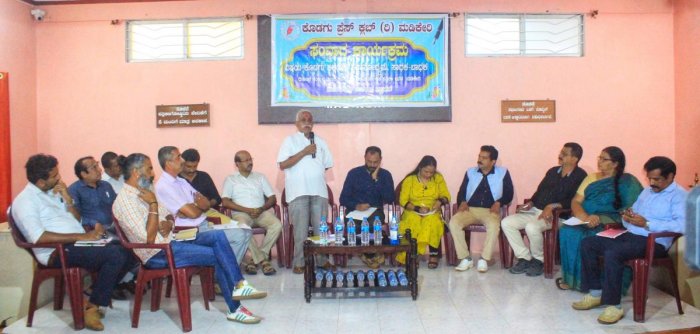
Chamber of Commerce president M B Devaiah speaks during a discussion on the pros and cons of tourism in the district, held at Kodagu Press Club, Madikeri, on Tuesday.

Various stakeholders in the tourism sector gave their suggestions towards developing sustainable and eco-friendly tourism in Kodagu, during a discussion on the pros and cons of tourism in the district, held at Kodagu Press Club, Madikeri, on Tuesday.

Chamber of Commerce president M B Devaiah said that it is the foremost duty of the people of Kodagu to preserve the environment of the district. Businesses can be carried out while maintaining ethics. Money is not everything.

“Nature-friendly industries should be set up in the district to provide jobs for people,” he added.

Pravasodyama Avalambitara Okkoota president K K Manjunath Kumar said that tourism contributes immensely to the development of a country.

Tourism in Kodagu has been generating good revenue, he said and pointed out that the countries which are backward in tourism are backward in development as well.

Resort and Hotel Owners’ Association president Nagendra Prasad said that there has been a significant rise in investment in the tourism sector in the district after the market for coffee fell. There are 1.50 lakh people in the district who are depending on tourism activities for their livelihood.

Kodagu Press Club president Ajjamada Ramesh Kuttappa in his introductory remarks, said, “Every citizen of the nation has a right to carry out legal work in any part of the country to make a living. No restrictions can be imposed on him or her in carrying out a job. A forum has been formed to discuss the problems of people working in the tourism sector and to find possible solutions.

Hotel, Lodges and Restaurants’ Association advisor Chidvilas said that coffee growers switched to homestay and hotel industry after they suffered losses in the coffee industry. He also advised imposing a total ban on plastic at tourist destinations in the district.

Kodagu Samrakshana Vedike convener Chammatira Pravin Uttappa said that there is a need to curb illegal activities which are carried out in the name of tourism.

“Insulting the traditional Kodava attire in some resorts should stop immediately. Tourism activities should stop during the Cauvery fair,” he added.

District Working Journalists’ Association president Savitha Rai, writer Bharadwaj K Anandateertha, Kodagu Hitarakshana Samiti president Rajiv Bopaiah, Travel Association president Cheyyanda Satya Ganapathy, Kodagu Tourism Association president Madetira Timmaiah and others were present.

source: http://www.deccanherald.com / Deccan Herald / Home> State> Mangaluru / b y DHNS, Madikeri / October 05th, 2021