Category Archives: Green Initiatives / Environment

Jackfruits Dumped On Roadsides In Kodagu To Feed Wild Elephants

Coffee growers find novel ways to protect their estates from herd raids

Kushalnagar:

Jackfruit is elephants’ favourite fruit and they can smell the ripe ones from miles away. Elephants are dead clever and determined. If the fruit is too high for them to reach they’ll shake the tree with their trunk until the fruit falls to the ground. And if there is an electric fence, they will break it down with a dry tree trunk and enter any plantation. 

It is jackfruit season in Kodagu now and wild elephants raiding coffee estates in search of jackfruits is commonplace. They camp for days inside estates putting the lives of estate owners and also labourers in jeopardy as no one can venture into the estates till the herd or even a lone tusker leaves the property. 

Wary of elephant raids, farmers and coffee growers have adopted newer ways and means to save their lives and property. They are plucking jackfruits from the trees and dumping them on the elephant path. 

In fact, the Forest Department has to intervene in such elephant raids. But with no help forthcoming from the Department officers, who don’t even pay compensation to the loss of coffee plants, estate owners have taken this initiative and it has proved a success too. The elephants entering estates has minimised, if not totally prevented. 

Wild elephant menace is rampant in Aiguru, Kandanakolli, Kodlipet, Shirangala Nakoor, Abyathmangala, Chettalli and Seventh Hoskote in the North of the district and Srimangala, Ammathi, Thithimathi, Ponnampet, Kutta and Balele in Virajpet and Ponnampet taluks. 

Forests in these areas mostly comprise teak wood which is why elephants are falling short of food and in jackfruit season, they raid the estates. Repeated requests of the villagers to the Forest Department to chase elephants back to the forest have fallen on deaf ears. 

Path identified and dumped

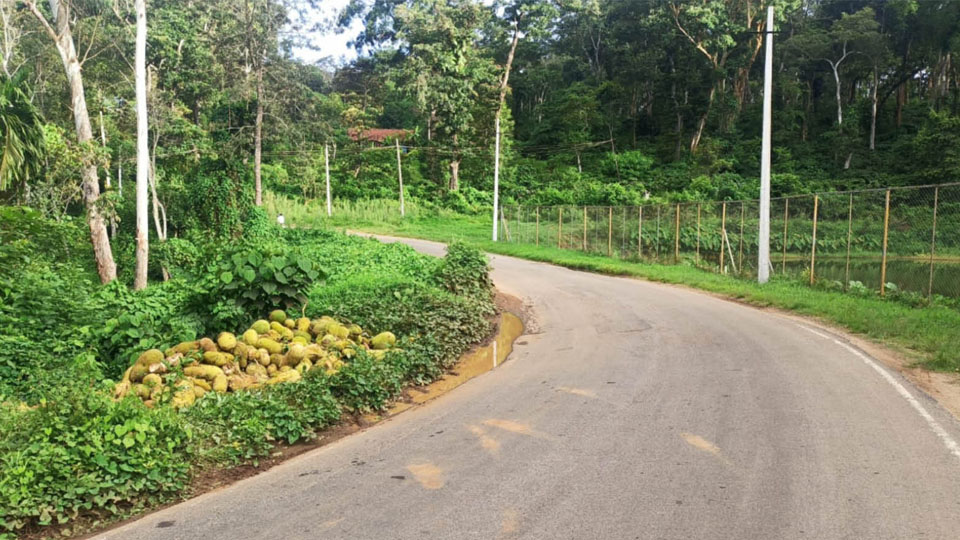
Now in this season, jackfruits are found piled up on the roadsides and growers hope the elephants hog these jackfruits instead of entering into their plantations. But the planters cannot cut the jackfruit trees inside their own estates as they do not have tree rights and have to seek permission from the Department — a tedious job, especially during COVID times.

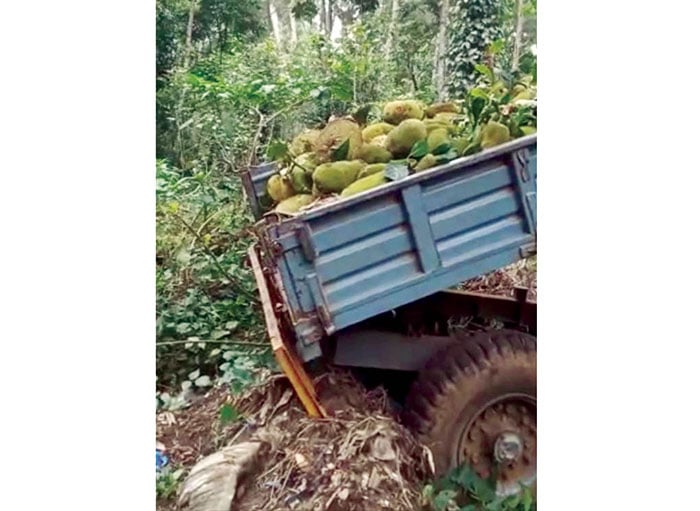
“We identify the path usually taken by elephants roaming around and dump tractor-loads of jackfruits on the way and also near lakes that are frequented by elephants. It is a big loss if a herd of 20 to 25 elephants enter an estate. We are not worried about them eating jackfruits but in the process, they destroy many coffee plants,” says Arun Kumar, an estate owner at Abyathmangala. 

On an average, over 1,000 kgs of jackfruits are dumped on the roadsides in the vicinity of every major estate. “We spend extra money and pay the labourers who make time to cut jackfruits amidst the tree-topping work,” he added. 

Villagers oppose move

However, the trend has been opposed by some villagers in Abyathmangala-Kushalnagar Range who fear for their safety. They claimed that some of the estate owners’ move is endangering their lives. Anil a, villager said that despite many pleas, the estate owners dump jackfruits by the side of the road and they can’t even go on the road fearing wild tuskers. 

However, Ajith Kumar, an estate owner on the Siddapura Road said that he had asked his estate workers to dump the fruits by the side of a lake that is frequented by elephant herds. “By mistake they have dumped on a roadside near the village and next time we will dump fruits on elephant path. Last year, we faced severe losses as many coffee tree branches were broken as herds entered my estate. This is the only visible solution,” he said.

source: http://www.starofmysore.com / Star of Mysore / Home> News / June 05th, 2021

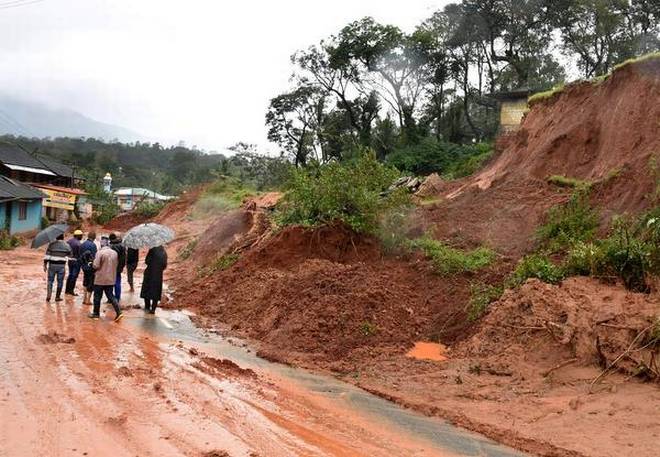
GSI finds 85 places in Kodagu prone to floods, landslips

Geographical Survey of India (GSI) has identified 85 places in Kodagu district, including areas in Madikeri and Virajpet towns, as vulnerable to floods and landslips.

Deputy Commissioner Charulatha Somal said necessary precautions are in place at those places following the GSI’s report. The officials had also prepared reports on places susceptible to rain emergencies based on previous years’ calamities.

The DC, while responding to Minister for Revenue R. Ashok on monsoon preparedness, gave details of the flood-prone areas and steps taken for the safety of people.

Mr. Ashok directed the DC to take steps to relocate those living in susceptible areas to safer places in view of monsoon. “Just issuing notices to the people to relocate will not serve the purpose. The administration has to persuade them to shift,” said the Minister, at a video conference on Monday with the DCs of some districts, including Kodagu, on Monsoon preparations.

Referring to last year’s landslip that took place at Talacauvery which claimed the lives of people, including the temple priest, the Minister said such instances should not recur. The people living in vulnerable areas must be shifted to relief/rescue centres which can be set up in schools or community halls, he suggested.

Ms. Somal urged the Minister to increase availability of kerosene to Kodagu since its demand goes up during monsoon. The Minister said he would speak to the Minister for Food and Civil Supplies.

source: http://www.thehindu.com / The Hindu / Home> States> Karnataka / by Special Correspondent / Mysuru – June 09th, 2021

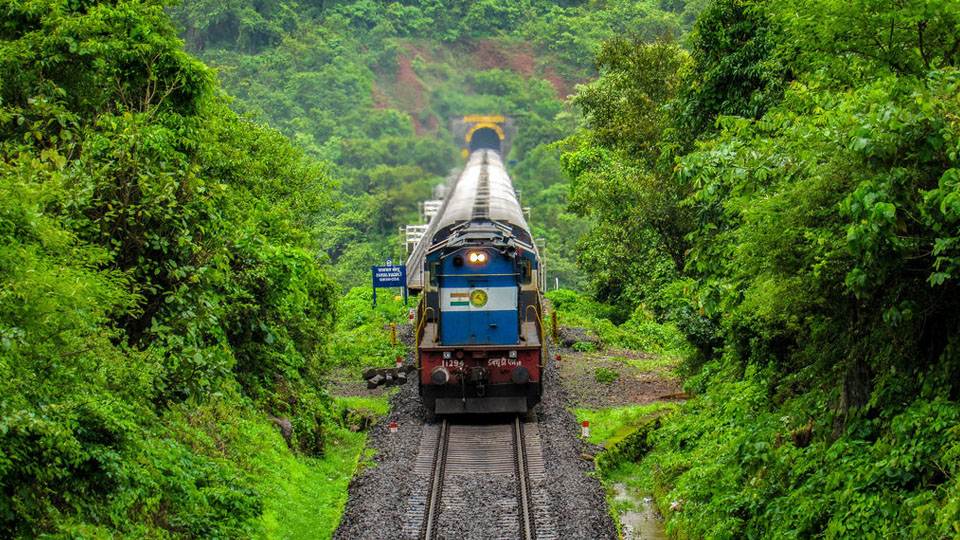
Forest Department Red Flags Thalassery-Mysuru Rail Line

State Government applies brakes on project citing irreparable damage to the ecology

Mysore/Mysuru:

Following an adverse report by the Karnataka Forest Department that pristine forests of Western Ghats (in South Kodagu and Mysuru) will be destroyed if the proposed Thalassery-Mysuru project is implemented, the State Government has stalled the project and has conveyed the same to the Centre, reports said. 

The ambitious project, costing more than Rs. 5,000 crore, has been identified by Kerala State Government and it has entrusted it to Kerala Rail Development Corporation Limited (KRDCL). The survey work for the projects was entrusted to Delhi Metro Rail Corporation (DMRC) for preparing the Detailed Project Report (DPR). The KRDCL has submitted the Pre-Feasibility Report by proposing the alignment via Kutta (Kodagu district in Karnataka) to the Railway Board. 

The survey was, however, not permitted in Karnataka due to stiff opposition by the Forest Department officials who reasoned that the project will spell doom for rich biodiversity of South Kodagu as the Railway line will pass through the lush green areas of Nagarahole National Park and Tiger Reserve, Kutta, Kanoor, Balele, Thithimathi before entering Mysuru. 

The proposed Railway line passes through nearly 84-km of thick forests covering 49-km in Kerala and 35 km in Karnataka that are rich repositories of biological diversity having large chunks of tropical evergreen forest, the Forest Department said. 

Following the opposition, the Kerala Government proposed an alternative route that has Thalassery in Kerala and Kadakola in Karnataka near Mysuru as starting and ending points and the route is via Sultan Batheri from Thalassery to Kadakola that does not cut through forests. Instead, the line will pass through H.D. Kote, Antharasanthe border, and reach Bavali village from where the line proceeds towards Kerala. 

This alternative line, however, envisages a 22-kilometre tunnel at Antharasanthe Range of Nagarahole Tiger Reserve (Kabini area), Bavali and surrounding forests to avoid the rail line cutting through the forests. The proposed alignment passes through the tunnel between corridor of Nagarahole and Bandipur from Pulpally Taluk of Kerala to H.D. Kote Taluk of Karnataka. 

Even this route has been shot down by the Forest Department and officials have said that tunnels are bound to affect water recharge underneath the forests thereby causing severe ecological damage to the habitat system.

Sources said that the Forest Department has also stalled the Nilambur-Nanjangud Railway line for which the DMRC has prepared a DPR. Department officials did not accept the project since the lines were passing through Bandipur and Nagarahole Tiger Reserves. 

Though this Nilambur-Nanjangud line had been included in the Pink Book of Railways and Rs. 8 crore set apart for the DPR, the Kerala Government kept the project in abeyance following strong objection from the Karnataka Forest Department, sources said.

source: http://www.starofmysore.com / Star of Mysore / Home> News / May 08th, 2021

Coffee, critters and climate change

With temperatures rising and pests proliferating, Indian coffee growers are fighting challenges beyond their control.

Unpredictable rise in temperatures followed by an uncertain monsoon cycle has gradually started taking a toll on coffee yields. (Chevanon Photography, Pexels)

Coffee is the first thing I see, smell and taste in the day. But as caffeine-junkies like you or me ride the wave of premium specialty brews, we need to pay attention to growers across major regions in India, such as Karnataka, Kerala and Tamil Nadu, who are battling a host of challenges due to a changing climate.

As spring transitions to summer, the pattern of unpredictable rise in temperatures followed by an uncertain monsoon cycle has gradually started taking a toll on yields and impacting the livelihood of coffee farmers.

Bengaluru based Tej Thammaiah, a co-founder of Maverick & Farmer Coffee Roasters and third-generation coffee farmer, says his team of growers on the 150-acre estate have meticulously documented the cultivation process to pinpoint the impact of increasing temperatures over the last decade. The mild, aromatic Arabica plant with its nuanced flavours, second only to Robusta in production volume in India, is highly susceptible to even the slightest change in climate. As temperatures increase, it hastens fruit ripening, leading to a loss in the overall quality of beans.

To fight this temperature change at estates such as Pollibetta in Coorg, his growers strive to find plots at higher, cooler elevations. But in this new environment, the finicky coffee fruit typically takes longer to mature. Moreover, changing plot locations is not a sustainable solution since coffee fruits in India are grown primarily in “shady” conditions, under a canopy of trees. And deforestation and logging is taking a toll everywhere.

It gets worse: When plants aren’t grown in ideal conditions, it leaves them more vulnerable to pests and diseases. Sunalini Menon, president of a coffee grading and training institute called Coffeelab in Bengaluru, mentions that a beetle known as white stem borer has been particularly harmful, spreading through India and Sri Lanka. It prefers plants exposed to sunlight and after burrowing in hard wood and roots as a larva, it hatches and feeds off the plant, destroying the woody tissue, leading to stems wilting and leaves yellowing. The beetle seems to have a particular liking for Arabica.

Not all hope is lost, though. Menon says India was one of the first countries to battle another infamous dweller, a fungus known as leaf rust, at the Mysore Coffee Experimental Station established by the British in 1925 at Chikmagalur, Karnataka. Known as the Central Coffee Research Institute, this research centre now run by the Coffee Board of India is researching and guiding growers on pest control, as well as initiatives such as diversifying shade patterns with local balsa and cedar trees and introducing new varietals of Arabica and Robust suited for tropical growth.

But she does believe it’s important to let go of the hesitancy to uproot plants. Farmers, perhaps for cultural reasons, have typically been hesitant to replant their land though research suggests that shorter plant life-cycles increase quantity, improve bean quality and even give growers some reprieve from emerging pests and diseases.

Ultimately, however, no practice can replace the tedious, time-consuming process of screening crops regularly. A task which falls squarely on growers.

Some shift to growing other crops. Those who stick it out, especially in smaller estates, need more support–in the form of agritourism, research on new techniques, investment in weather stations or, simply, from consumers.

If that doesn’t happen, we may in time find it increasingly difficult to get that morning fix.

For those new to coffee: Thammaiah suggests Selection 795 or Cauvery to taste domestic Arabicas (while we still can).

Nightcap is a column on beverages by Varud Gupta, author of Bhagwaan Ke Pakwaan and Chhotu. @varudgupta

source: http://www.lifestyle.livemint.com / Live Mint / Home> Mint Lounge> Food / by Varun Gupta / April 26th, 2021

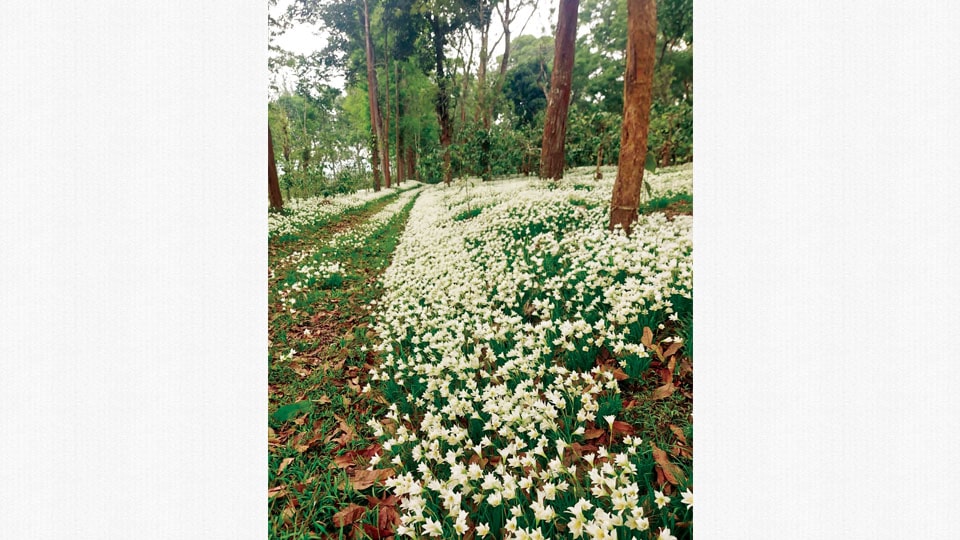
Landscape Filled With Magic…

It’s raining in Kodagu and so are ‘Rain Lilies’ (Zephyranthes candida) in some coffee estates.

This photo is from an estate on Siddapura-Mysuru Road where Lilies with their inconspicuous grassy leaves have bloomed silently amidst the plantations forming a sight to behold.

These rain lilies bloom repeatedly following rains, while some bloom primarily in spring, others flower in summer.

source: http://www.starofmysore.com / Star of Mysore / Home > Photo News / April 23rd, 2021

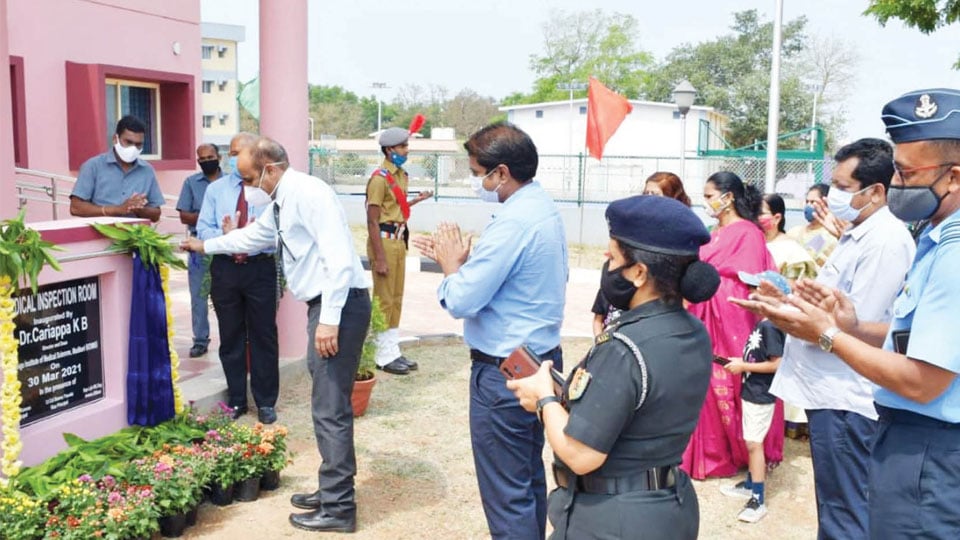
Mother Teresa Medical Centre, RO Plant Inaugurated At Sainik School In Kodagu

Mysore/Mysuru:

Dr. K.B. Cariappa, Director and Dean, Kodagu Institute of Medical Sciences, Madikeri, inaugurated Mother Teresa Medical Centre, school’s medical inspection room at Sainik School in Kodagu on Mar.30 in the presence of Dr. K. Mohan, District Health Officer, Kodagu and Dr. Rupesh, Resident Medical Officer.

Speaking on the occasion, the chief guest lauded the Sainik School set up and encouraged the cadets to imbibe leadership qualities to join Indian armed forces and strive to transform this vision into reality. 

He also recalled the legendary military leaders like Field Marshal K.M. Cariappa and Gen. K.S. Thimayya and their military achievements. 

The school medical inspection room with the presence of nursing assistants caters in ensuring health of the cadets. Detailed medical history charts are maintained for individual cadets and an accurate periodical record of height, weight and chest measurements is also maintained. 

CBSE’s latest initiative mandates Health and Physical Education (HPE) subject to all cadets. The school medical inspection room is a repository of cadets’ medical history and a learning centre too. It helps cadets to learn and maintain hygiene, educate the importance of nutritious food and significance of physical exercises. 

Dr. K. Mohan, District Health Officer (DHO), Kodagu, inaugurated Reverse Osmosis (RO) Plant at the school campus.  

Col. G. Kannan, Principal, Priya Kannan, the first lady of the school, Lt. Col. Seema Tripathi, Vice-Principal, Sqn. Ldr. R.K. Dey, Administrative Officer, Sangeeta Dey, Dr. H. Mahesh, School Medical Officer and S. Suryanarayana, Senior Master, staff and cadets were present on the occasion. All safety measures including wearing mask and social distancing were followed during the event. 

Cdt. M.G. Apoorv was the master of ceremony. Cdt. R.  Shashank and Cdt Harsharaj spoke on Mother Teresa’s contribution to humanity and Reverse Osmosis (RO) respectively.

source: http://www.starofmysore.com / Star of Mysore / Home> News / April 11th, 2021

Kodagu girl wins the UN H2021 Water Summit storytelling competition

During the lockdown situation, when the world took the virtual path, Yashmi was introduced to the UN Ocean Decade Summit and she took part in the virtual programs conducted by the initiative.

Manavattira Yashmi Dechamma

Madikeri :

“The earth is already in a bad state and it will be inherited by us tomorrow. We want to breathe the same pristine air that our grandparents breathed,” shared Manavattira Yashmi Dechamma, a ninth-grade student who has been selected for the UN Ocean Decade Summit to be hosted in Hawaii soon.

Yashmi earned this opportunity after her video documentary on the theme ‘Water is sacred’ won the H2021 Water Summit storytelling contest in the 13-17 age group category.

A native of Nelaji village in Kodagu, Yashmi is currently pursuing her studies in Acharya Vidya Kula in Mysuru.

During the lockdown situation, when the world took the virtual path, Yashmi was introduced to the UN Ocean Decade Summit and she took part in the virtual programs conducted by the initiative.

“While I was aware of climate change, I learnt from speakers all across the globe about what climate change did to the earth. I knew that the earth was in danger. But I obtained clarity on the growing problem after attending the virtual summit,” shared Yashmi.

She was then introduced to the H2021 Water Summit where she attended virtual sessions for four consecutive weekends and it is here she learnt about the storytelling competition.

“Each session was based on a particular theme. The theme ‘Water is sacred’ was close to me as I am from the Kodava community and we worship River Cauvery,” she shared. Yashmi visited Kodagu and shot some beautiful captures of River Cauvery.

With a Kodava song playing in the background of the video, she has highlighted the sorry state of the river today – which has become a victim of pollution.

The video then moves to highlighting the efforts from the youngsters in reviving the river and the documentary ends with a strong message ‘Let us heal her (River Cauvery) and not fix her’.

“I have heard my mother explain the beauty of Kodagu that existed during her childhood times. The district witnessed heavy rainfall then too. However, it is only now that the incessant rainfall is causing destruction and damage. The summits I attended helped amplify my voice and I shot the video with the support from my cousin Bhuvana Nanaiah and her father Nanaiah,” explained Yashmi.  

Daughter of Manavattira Kushalappa and Nalini, Yashmi looks forward to strengthening the Youth Advisory Council in the country and has written to the concerned about her vision for a better future.

source: http://www.newindianexpress.com / The New Indian Express / Home> Good News / by Prajna GR / Express News Service / March 31st, 2021

‘End Man-Animal Strife In Kodagu Through Policies’

Former President of Coorg Wildlife Society writes to CM and suggests sustainable ways and means

Mysore/Mysuru:

In the wake of increasing man-animal conflict and tiger attacks in Kodagu where at least three human lives have been lost within a span of 15 to 20 days, former President of Coorg Wildlife Society Col. (Retd.) Cheppudira P. Muthanna has written to Chief Minister B.S. Yediyurappa drawing his attention towards how the people are being victimised by mindless destruction of wild habitats in the name of big projects and how wild animals are entering human areas in search of food. 

Keeping in mind the increasing human killing by wild animals including tigers and elephants, Muthanna has suggested the appointment of an Officer on Special Duty in the rank of Deputy Conservator of Forests exclusively for Kodagu. This officer must be based in Thithimathi with adequate staff and resources and he must be able to be a link between the Government and the people to solve pressing problems of the district, he stated. 

Sharp-shooters

Secondly, tigers that kill human beings must be hunted down at the earliest to prevent further deaths and the existing regulations should be modified accordingly. “Kodagu has a number of excellent shooters and ten such shooters should be identified and provided with sophisticated telescopic rifles and ammunition. Whenever there is a dangerous situation arising due to tigers or leopards outside the forest habitat, they should be given permission to assist the Forest Department,” Muthanna said and added that local shooters will be more familiar with the terrain and conditions and would be able to defuse a dangerous situation without loss of time and it would save human lives.

According to Muthanna, a major reason for the tiger menace is due to vast areas of the forests covered by invasive species like Lantana Camara and Senna Spectabilis. “Deer and other prey congregate in small patches of forests that are free from weeds and are fit for grazing. This leads to a number of tigers also congregating in the same restricted area and causes the tigers to fight one another. In most such cases one of the tigers will be wounded and forced out of the forest. Therefore sufficient funds are required for eradication of invasive species,” he has suggested. 

Some of the other measures suggested to the CM are, opening up of wildlife corridors from Nagarahole to Brahmagiri area in Kutta region of South Kodagu, establishing an Ecological Territorial Army Unit for Kodagu. “These units comprise mainly of able-bodied ex-servicemen who can join as volunteers and the unit can be utilised for forest land restoration, forest fire mitigation and eradication of invasive species,” he said. 

Destruction and fragmentation of forest habitat is a primary cause of human-animal conflict and there is a need for a policy decision to prevent further destruction of forests due to so-called development projects such as dams, highways, railways, powerlines etc., he added. 

Tourism has done tremendous damage to Kodagu. There should be no further investment in Kodagu for tourism. Tourism in Kodagu should be regulated and not promoted, he wrote. All the proposed project investments in Kodagu must be diverted to improve the economic condition of the people in the district through sustainable living and also to prevent human-animal conflict, he opined. 

“There is a need to protect Kodagu as the principal catchment of River Cauvery and the proposals for multi-lane National Highways, railway lines and airport for Kodagu must be scrapped as none of these projects will benefit Kodagu or its people in any way and will only serve to further destroy the environment and landscape of Kodagu,” he urged the CM. 

Tiger menace: Overnight protests continue

Overnight protests in parts of South Kodagu demanding the capture or shooting of elusive tiger still continues. The protests began five to six days back and residents of Bellur, Thavalageri, Shettigeri and Srimangala are participating in the dharna. They light campfires daily to keep themselves warm. Tents have been pitched by the side of the road for protection from rain. Protesters are upset as despite the Government shoot-at-sight orders and the intervention of MLAs K.G. Bopaiah and M.P. Appachu Ranjan and MLC Veena Achaiah, who came to Bellur recently, the Forest Department has failed to net the tiger. 

source: http://www.starofmysore.com / Star of Mysore / Home> News / March 13th, 2021

A bid to stop jumbo march

The Forest Department has installed railway barricades to stop entry of elephants in Alur range.  

Across 4.5 km in Alur range, these will restrict elephant movement

The Forest Department has put up railway barricades for about 4.5 km in Alur range of Hassan district to avoid the movement of elephants. The 2.1 m tall barricades, made of used railway tracks, have been installed between Nagavara Elephant Camp and Bharatur in Alur taluk. This is the area wherein elephants from Kattepura forest in Kodagu district move towards Alur range crossing the backwater of Hemavati Reservoir located at Gorur.

People of Hassan have been dealing with the elephant menace for decades. As many as 70 lost their lives in the conflict in the district since 1991. Similarly, 63 elephants have died so far. Besides solar fencing and elephant-proof trenches (EPT), the department has taken up the installation of railway barricades as a solution to avoid conflicts.

K.N. Basavaraj, Deputy Conservator of Forests, on Friday, took a team of journalists to Nagavara Elephant Camp to show them the barricades. “We keep learning how to avoid conflicts. Now, the installation of railway barricades is considered to be the effective system to minimise the conflicts,” he said. Chandrashekhar, a contractor from Mysuru, has bagged the contract to put up barricades for 4.5 kms at a cost of ₹4.65 crore. He procured 750 tonnes of the used tracks from the Ministry of Railways at an open auction. “The barricades are 2.1 m above ground level. They have been erected with the support of concrete 1.5 m below the ground. Two horizontal barricades are such that neither a cub nor adult elephant could cross them. We have learnt from the past experiences where elephants died while attempting to cross the barricades,” the officer said.

The purpose is to avoid the entry of elephants from Kodagu to Hassan. In 2014, the department captured 24 elephants and relocated them, resulting in a decrease in man-animal conflict for a brief period. “However, the number of elephants increased gradually, as many crossed the Hemavati backwaters. Now, we are plugging the hole so that elephants’ entry from Kodagu is restricted,” the officer said.

The department plans to extend the barricade for 40 km covering the boundary points. In Kodagu, the elephants that raid coffee estates could be driven back to forest areas easily, while in Hassan it was not possible. The herds keep moving from one estate to another damaging the crop, the officer said.

Opposition from farmers

Farmers of Nagavara and surrounding villages in Alur taluk have opposed the railway barricades alleging that these would force the elephants to camp in their estates for a long period.

Rangaswamy, a resident of Nagavara, said, “No doubt the barricades restrict elephants coming from Kodagu. What about those elephants already in the boundaries? Now, they cannot go back to Kodagu because of the barricades and continue to remain in the estates located close to the barricades.”

Mr. Basavaraj, DCF, reacting to the allegations, said the barricades had been put up just now. The officers would analyse the elephants’ movement and take appropriate action whenever necessary. “We have plans to extend the barricades for 40 km. As of now, we have a system to open the barricades at key points to let the elephants go back to their places,” he said.

He further clarified, “The path that we are blocking is not considered to be the natural path of the elephants. Only in the recent years, they have begun to tread this path.”

source: http://www.thehindu.com / The Hindu / Home> News> States> Karnataka / by Sathish G.T. / Hassan – March 27th, 2021

Foundation To Be Formed To End Human-Animal Conflict

Madikeri:

With human-animal conflict increasing day-by-day in forest rich Kodagu district, Minister for Forest Aravind Limbavali said that a  Kodagu-specific Foundation will be formed to mitigate human-animal conflict.

Replying to a question by BJP MLC Sunil Subramani in the Legislative Council recently, Limbavali said it has come to the notice of the Government that attacks on human beings by wild animals such as tigers and elephants are on the rise in Kodagu district. The Forest Department has taken many measures to prevent wild animals from straying into human habitats, he said and added that 47 water ponds have been formed to ensure that wild animals get water within the forests.

Stating that desilting of 66 water bodies is going on in the district, the Minister said that 34.35 km solar fencing and 161.60 km barbed wire fencing has been installed along the forest borders and 91.55 km elephant trench has been dug up. Besides, 33.37 km of suspended solar fencing  and  railway track barricades have been erected using 24.62 tonnes of old railway tracks. To erect more railway track fencing, the Department has purchased 496.17 tonnes of old railway track, he explained.

Limbavali further said that 52 rapid action teams have been formed and 71 teams to drive stray elephants have been constituted. These teams will also keep a watch on poaching, he said and added that the Government will take all measures possible to end human-animal conflicts, which has become a bane in the region.

He said that an adult female in a herd will be identified for radio collaring, to help track the movements of other elephants. Nine elephants have been radio-collared so far and the staff are keeping a track of their movements round the clock, he added.

source: http://www.starofmysore.com / Star of Mysore / Home> News / March 22nd, 2021