Category Archives: Green Initiatives / Environment

From kattan kaapi to Chameli Americano, Manoj Kumar’s inspirational Araku journey

Kumar worked with adivasis in Andhra’s Araku Valley for decades, grew coffee of the highest quality and took it to Paris in 2017. On March 19, Araku Coffee opened its first café in India in Bengaluru. Kumar wants to replicate the Araku model for other crops as well, he tells us how

Cafe L'Orange
Cafe L’Orange

In the late 1990s, the late Kallam Anji Reddy, founder-chairman of pharmaceutical company Dr Reddy’s Laboratories, appointed developmental economist Manoj Kumar as the head of his NGO, the Naandi Foundation. Kumar’s brief was to foster sustainable livelihoods in rural India.

One of the many projects Kumar embarked on in the early 2000s was to get adivasi farmers in Andhra Pradesh’s Araku Valley to grow specialty coffee, which, simply put, is organic and sustainably grown coffee of the highest quality. To many people, it appeared to a quixotic endeavour. Araku was not a traditional coffee-growing region. Kumar, who grew up in Kerala drinking kattan kaapi, the traditional home-brewed black coffee, had no real knowledge about coffee; and the Araku Valley had been riddled with Naxal insurgency for decades. Kumar worked with, and lived among, the tribals for over a decade and through biodynamic farming and the formation of an adivasi cooperative, one of the world’s largest fair-trade and organic certified cooperatives, he achieved the seemingly impossible.

In 2017, Kumar opened the first Araku Cafe and store in Paris and about a year later, Araku Coffee bagged top honours for the best coffee pod at the prestigious Prix Epicures OR awards in Paris. On March 19, Araku opened its first cafe in India. The 6000 sq ft, two-level flagship cafe in Indira Nagar in Bengaluru features, among others, an in-house roastery, the country’s first Specialty Coffee Association-certified Coffee Academy, a book store, and food that is sustainably procured.

In an interview to Moneycontrol, Kumar talks about the growing interest in specialty coffee in India, its transformative potential, and about replicating the Araku model in other parts of the country. Edited excerpts:

How do you see Araku’s flagship cafe take the specialty coffee story forward in India?

By and large, the production of specialty coffee in India has so far been almost nil, barring a few micro estates. We have been a notable exception. Our success has made coffee growers realise that it is possible to get much higher value and definitely profits if they can elevate their coffee to the level of a specialty coffee. I’m hoping that this desire to excel will be infectious to the community of coffee growers in India. They could learn to look at coffee as being more than just an average-to-poor-quality mass-produced commodity, which is neither financially rewarding nor sustainable. We are blessed to have the climate and topography to grow coffee. Europe and most of the coffee-drinking nations don’t grow coffee. I see our cafe in Bangalore as a place where people can interact and learn more about the power of specialty coffee. And we would want to take it beyond producers to policy makers and to everyone through a consumer movement to inculcate a certain pride in the opportunity we have to make coffee a profitable Indian-origin commodity and revive India’s agriculture to an extent. Araku is not a traditional coffee-growing region, and yet we have grown world-class coffee there. So, you can imagine the potential of places such as Chikmagalur and Coorg…

Tamagoyaki Toastie is on the menu of Araku’s café in Bengaluru.

Have you met people from the coffee-growing community who want to get into specialty coffee?

Absolutely. When we started the Araku journey, we had only between 10 percent to 20 percent of farmers whose coffee could be rated as specialty coffee. Today, I have 80 percent of my farmers all growing specialty coffee. I have requests from many small estate and large estate owners, and even people who are into wine now want to know if we can help them with the same regenerative agricultural practices that made our coffee world-class.

Araku Coffee co-founder Manoj Kumar

You’ve been to specialty coffee hotspots across the world. How have your experiences shaped the flagship store?

Scandinavia inspired me a lot. The quality of service there was based predominantly on knowledge. Every brewer, roaster, and barista I met had a completely different level of knowledge and that knowledge was shared with the customer. A relatable example would be going to an Apple store for the first time and discovering that every staffer has an in-depth knowledge about the products. So, one of the things I took away from there was that our team had to be knowledgeable about what they were selling, even if it meant setting up a coffee school at the cafe. Our team is not just selling a random service, they are selling coffeeology. And our prices are extremely competitive. Somebody even mentioned that a lot of the coffee we serve is, more or less, the same price as the coffee you get at Starbucks.

The Naandi Foundation has been at work replicating or adapting the Araku model in other parts of India. How has that worked out?

The Naandi Foundation is now massively expanding its agricultural footprint. We are now in a large way expanding into Wardha and the Vidarbha region, replicating the Araku model with other crops. We started off with pomegranate and that is very much on track but we are also exploring or expanding into other portfolios. Turmeric in that region is world-class, and it has a Geographical Indication tag. Then, we looked at red gram and other pulses. The idea is to have a bouquet of produce for the farmer to get it to be profitable and to identify one or two which become unique to that region. I think the winners here will be turmeric, pulses, and organic cotton. We are also looking closely at working in Meghalaya and Kerala and the Konkan belt.

You first went to the Araku Valley in 2001. Looking back, which was the turning point of your journey?

I’d think earning the trust and respect of the tribals was the turning point. I had started with just 1,000 farmers, and I would tell them that one day their land would produce a coffee that would be world-class. And they would always tell me that they wouldn’t let me down. That kind of love and trust from their end really made all the difference.

MURALI K MENON works on content strategy at HaymarketSAC.

source: http://www.moneycontrol.com / MoneyControl / Home> News> Trends> Features / by Murali K Menon / March 20th, 2021

This Karnataka couple adopts unique methods to protect non-migratory birds

Using social media as their tool and selfie culture as a weapon, this couple is urging the residents across the state to keep aside a bowl of water for the birds during this summer season.

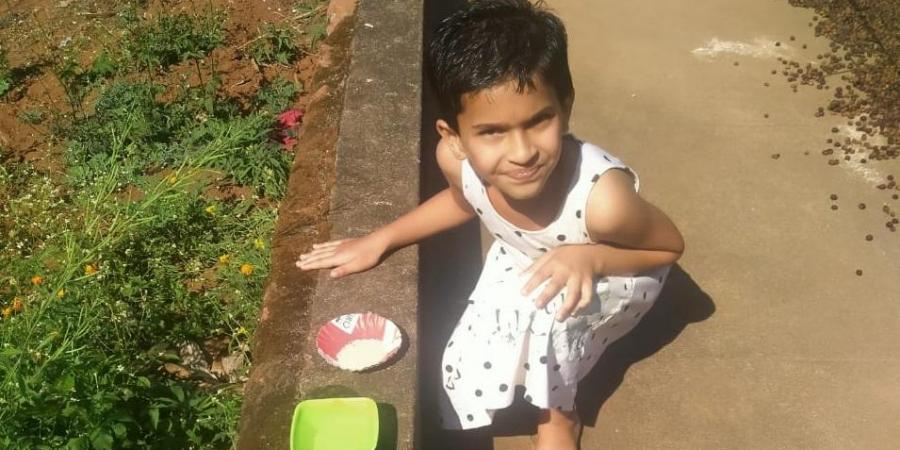
‘Hakkigondu Gutuku’ (a drop to the birds) campaign is receiving an optimistic reaction from many residents across the state including children. (Photo | EPS)

Madikeri (Karnataka):

A couple in Kodagu has started a unique campaign to protect the non-migratory birds during the peak summer season. 

Using social media as their tool and selfie culture as a weapon, this couple is urging the residents across the state to keep aside a bowl of water for the birds during this summer season.

‘Hakkigondu Gutuku’ (a drop to the birds) campaign has started from March 10 by Gautham Kiraganduru and his wife Sumana, which is receiving an optimistic reaction from many residents across the state including children. Known for their social works, the couple established ‘Namma Pratishtana’ firm in the district and is promoting various eco-friendly activities.

“Birds are an important part of the ecosystem and they ensure balance in the environment. There is a need to promote and preserve the bird species. Hence, to protect the birds during the summer season, we have started this initiative where we have requested the participants to set up a DIY arrangement to feed birds. The residents have to keep some water and grains for the birds and then click a selfie alongside this setup. We will pick the three best pictures and honour the winners with prizes,” explained Gautham.

The initiative that is making noise across social media has gained attention from not just the residents of Kodagu, but also from the residents across the state including Davanagere, Uttara Kannada, Dharawad, Bellary, Hassan, and Shivamogga among others. “We have received numerous selfie photographs of people setting up the bird feeders. Also, international kickboxer Girish R Gowda has extended support to this initiative,” added Gautham. He explained that numerous trekkers are also participating in this initiative and are setting up feeders across several spots.

Last year, this couple had gained attention after they signed up for body donation during their wedding ceremony. Instead of distributing wedding invitation cards that have low shelf-life, they printed Kannada books with works of unrecognized writers and shared them as wedding invitations. They had also grown over 1,000 different saplings and distributed the same as wedding gifts to the guests. 

source: http://www.newindianexpress.com / The New Indian Express / Home> Good News / by Prajna GR / Express News March / March 18th, 2021

In a first, Kodagu launches project to reduce human-elephant conflict by using honey bees

The project has been launched for the first time in the country on an experimental basis by the Khadi and Village Industries Commission with support from the management of Ponnampet Forestry College.

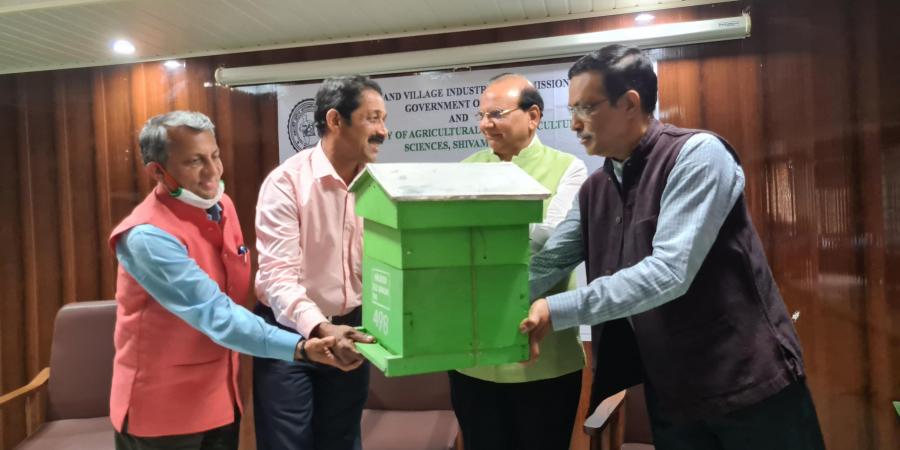
Beekeeping equipment distributed to a farmer during the event (Photo | Special arrangement)

Madikeri :

A research project to reduce human-elephant conflict with the help of honey bees was inaugurated at Ponnampet Forestry College in Kodagu on Monday. The project has been launched for the first time in the country on an experimental basis by the Khadi and Village Industries Commission (KVIC) with support from the college management.

RE-HAB — Reducing Elephant Human Attack by using Bees — aims at controlling wild elephant movement into villages by roping in honey bees. The success of the initiative will be monitored regularly to launch it across the country. A total of three elephant conflict places have been chosen in Kodagu district including two at Nagarahole Sanctuary and one at Thora village in Virajpet where a total of ten beehive boxes have been placed across the forest fringe. The boxes have been placed approximately at eight feet distance and tied using a fence rope. This set-up will act as an elephant conflict mitigation measure.

The project was launched by KVIC Chairman Vinay Kumar Saxena at Ponnampet Forestry College. “In 2017, the Sweet Revolution was launched in the nation to promote apiculture. Beekeeping has many benefits and a farmer can earn from the bee wax, royal jelly and bee venom apart from the honey extraction. Further, beekeeping enables cross pollination and increases the income of a farmer by 30%,” he said.

Saxena explained that states with high elephant populations are spending crores on solving the human-elephant conflict and added, “Many of the mitigation methods to control the conflict are unscientific. The research project of RE-HAB will be monitored regularly and, if successful, will be implemented across the country.”

He said that the RE-HAB project will create a sustainable employment opportunity in beekeeping while also fighting the elephant conflict ecologically. Dr Kushalappa, the dean of the Forestry College, reckoned that the project will enable integrated farming while controlling the elephant menace.

Alongside launching the project, a total of 50 beneficiaries were given bee colonies and beekeeping equipment by KVIC to promote apiculture in the district. Dr Sudarshan of KVIC said, “We are finding a physical solution to an ecological problem. Nature must work with nature and the RE-HAB will work at a low cost.”

source: http://www.newindianexpress.com / The New Indian Express / Home> States> Karnataka / by Prajna GR / Express News Service / March 15th, 2021

Fourth wave in a coffee cup

Fermentation techniques that involve anything from fruits to alcohol are giving the brew a new high.

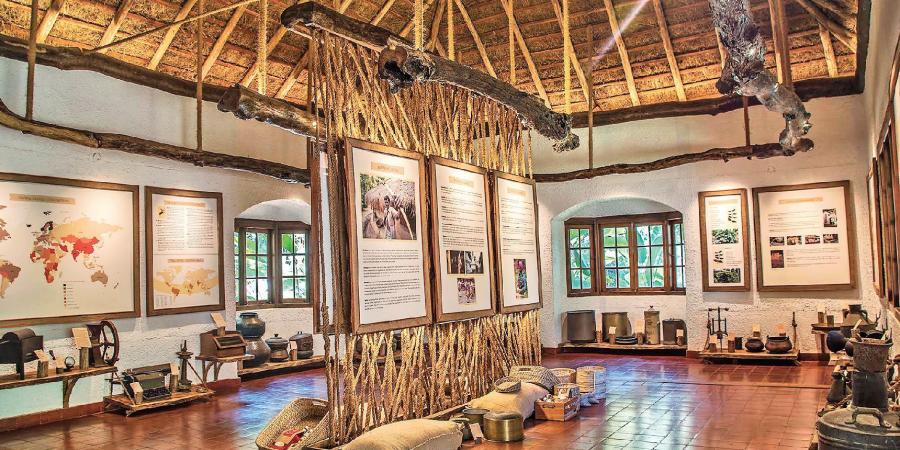
If you want to educate yourself on all things coffee, a visit to Sidapur Coffee and Culture Museum at Evolve Back in Coorg, will take you on a journey of discoveries.

From whisky barrel-aged coffee to fruit-fermented beans and innovative experiments in farming, fermentation and drying the fourth wave of coffee is set to spring a surprise. The brew is going artisanal. There is an increased focus on how it is grown, nurtured, processed as well as how it is being roasted. Sunalini Menon, Asia’s first woman professional coffee taster, and President, Coffeelab Ltd, Bengaluru, says: “Artisanal coffees are unique in taste and are always available in micro quantities.”

Such coffees are identified with sustainable practices in cultivation and prepared with care, precision and high-quality roasting.” Something like this is happening at Baarbara Estate, currently managed by the fourth generation of coffee growers from Chikmagalur, Karnataka.

Through their brand The Caffeine Baar, they are seeking to serve many coffee explorations to enthusiasts. Poojya Prasad, the co-founder, says, “We have worked on a unique fermentation process involving pineapple, which has given good results. To start with, pulped coffee beans are mixed with pineapple for a select number of hours.

The natural juices and the skin of pineapple, ferment the coffee beans. This process is monitored in a controlled environment. Once it’s complete, the mixture is dried on raised beds over several days. The coffee is monitored at each interval, resulting in batches with varying depths and notes of flavours.”
Roasters are having a field day. Take for instance, Maverick and Farmer Coffee Roasters, who have introduced new coffees that unlock more than what species, terroir or roasting can offer.

By intervening in the growing, processing, drying, blending and roasting stages of coffee (without any artificial additions), the endeavour is to explore different kind of tasting notes Indian coffee can offer. “We work on micro-lot coffees,” says Ashish D’ábreo, the founder-partner at Maverick and Farmer Coffee Roasters. Last year, they began work with fermentation and used ingredients such as fruit, yeasts, and cultured bacteria for the fermentation process. Abdul Sahid Khan, the training manager at Lavazza Training Center, India, adds, “Being passionately connected between coffee products and a need for eco-consciousness, have coffee roasters sourcing whole beans in small batches through direct and fair trade.

Many of the coffee roasters and importers today partner with handpicked farmers, and even reinvest into the farmer family’s land/business.” Research is at the cornerstone of these innovations. Located in Sakleshpur in Karnataka, Harley Estate, an extension of Harley Plantation Research Institute (HPRI), Asia’s first private research facility dedicated to coffee, is a lab where coffee-related experimentation goes on round the year. The purpose is to improve plantation management techniques and develop unique processing methods.

“We have, over the last couple of years, created over 50 processing methods, each bringing out different aspects of the coffee. We also conduct educative sessions for those who are in the coffee business,” says Chandini D Purnesh, Director, Classic Coffees. Coffee also has a health angle that is often overlooked. 


Green coffee, for instance, is different from regular coffee and is the natural unroasted form of Arabica Coffee grains, said to have three times more antioxidants and lesser caffeine compared to black coffee. 

“It boosts metabolism and provides support and strength to achieve health and fitness goals, that serve you in the long-term,” says Amit Tyagi, Founder and CEO, Neuherbs India. So the next time you sip on a cup of coffee, don’t forget that the long journey of the bean to cup has had several turns and twists to create that perfect flavour you love.

Sidapur Coffee and Culture Museum 
“If you want to educate yourself on all things coffee, a visit to Sidapur Coffee and Culture Museum at Evolve Back in Chikkana Halli Estate, Coorg, will take you on a journey of fascinating discoveries. The museum has different sections that talk of the story of the founding Ramapuram family, the history of coffee in Coorg, how coffee is cultivated globally and how to brew the perfect cup of coffee. This also features the culture of Coorg and its close association with coffee cultivation. Our hugely popular programme, Coffeeology, is a daily live session on the art and science of gourmet coffee, where visitors can observe and experience the making of an assortment of coffee preparations from around the world.”
Jose T Ramapuram, Executive Director, Evolve Back

source: http://www.newindianexpress.com / The New Indian Express / Home> Lifestyle> Food / by Bindu Gopal Rao / Express News Service / March 07th, 2021

In Kodagu, this independent researcher is working with local tribes and children to protect this precious habitat

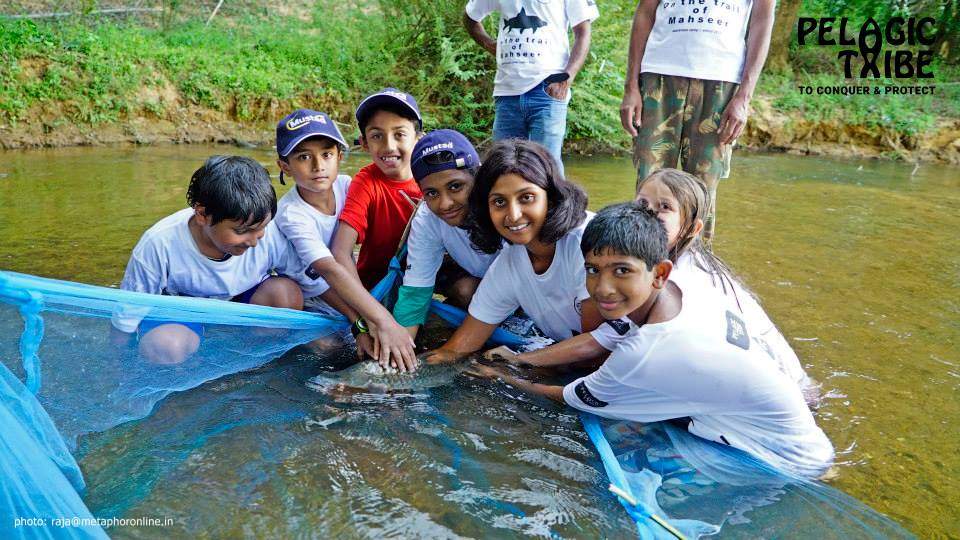
Neethi Mahesh has dedicated a lot of years to researching the riparian habitats of the Kodagu district. She is currently working with a tribe of honey collectors and students for better results .

Just like we hardly think of women when it comes to research in niche fields, one rarely thinks of fish when it comes to conservation. Neethi Mahesh is changing both mindsets. “Yes, the Government of India does have a Department of Fisheries, but its concern is with commercial fishing, rearing, catching and so on. When it comes to freshwater fish, quite a bit of work has been done in the past, but we have barely scratched the surface when it comes to taxonomy,” says Neethi. And the fish that has caught her academic interests is the migratory fish mahseer that dwells in riparian habitats, the area of interface between river and land, of Kodagu.


Environmental Studies and Ecology are subjects to which she was introduced early on and growing up in a space surrounded by greenery drove her to choose this field of research  


The 37-year-old’s journey started at Agumbe Rainforest Research Station where she was volunteering for the King Cobra Telemetry Project (a project to understand the ecology of cobra) in 2013. It was then that she heard about mahseer, their dependence on freshwater and how they migrate in the monsoons. While the river Seethanadi in Agumbe was not an ideal option to carry out research, she shifted to Kodagu and currently works at Dubare Reserved Forest. “Why mahseer is important is because it is a strong indicator of the river ecology itself. And it is in the riparian habitat that they spend most of their time,” asserts the researcher who was assisted in funding for her research by the WWF India and The Rufford Foundation in 2015 and The Conservation Hero Grant by The Habitats Trust in 2019.  

River outreach with students | (Pic: Neethi Mahesh)

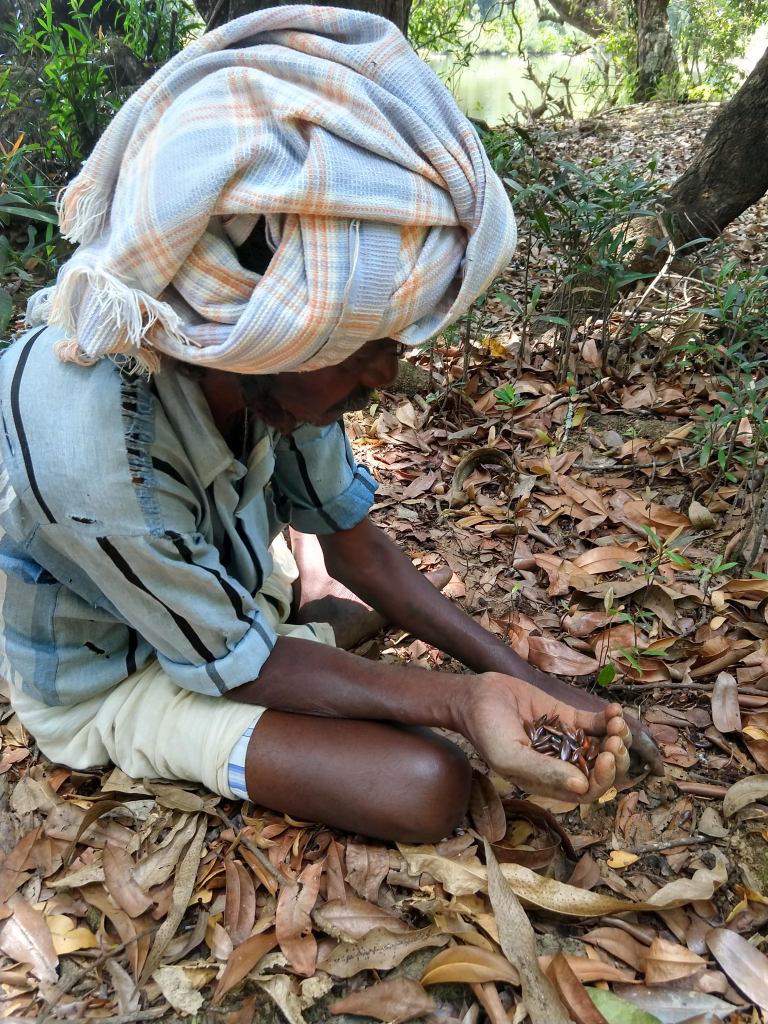
River bank modification, land-use change, dam proposal and more — there is a lot that threatens riparian habitats, which are majorly responsible for diverting flood water downstream. Invariably, the native species are threatened too. Hence, she has also been working with the native Jenu Kuruba tribe, who are traditional honey collectors, to preserve the local species. To this end, they started a seed bank and a nursery along with executing plantations of local species, all with the support of the Karnataka Forest Department. “The tribals were shifting to planting commercial species because it gets them the money, but a lot of time was spent on making them understand that their indigenous knowledge and skills are valuable. And unless it’s not documented, we will never know about it,” says the independent researcher who hails from Bengaluru. They have identified 12 species, as of now, that are important and have so far collected six to seven species. “One of the species that we are working for is a kind of river jamun (plum) that grows during the monsoon and drops into the river where, via observation, we can confirm that mahseer and other omnivore and herbivore fishes feed on it,” she explains.


It was in the year 2015 during which she mapped out the river stretch of Kaveri and did her basic groundwork for her research


What we love best about what Neethi is trying to do involves government school children as well. “There has been environmental generational amnesia and the new landscape is normal to them. We are trying to get them out in the open, teach them how to test the water in the river, how fertilisers affect it and so on,” she explains. But what she is most excited about currently is her soon-to-be-launched portal Our River, Our Life. “It’s a river-monitoring page. One can upload their quality report of their location online. It could also serve as a flood-watch. And then there is also her Voices from the River blog, where people can share their river stories,” she informs. It surely sounds resourceful.

Collecting seeds | (Pic: Neethi Mahesh)

Her area of research
Spatial ecology is the study of the spatial area occupied by a species. The species’ relationship with the habitat, other species and so on are studied in detail. It is also the study of the species’ own microhabitat and what affects it. Some of the courses that can help you understand more about this are:
– Graduate Certificate in Spatial Ecology from Michigan State University, US
– Computational Methods in Ecology and Evolution (MRes) from Imperial College, London

source: http://www.edexlive.com / EdEx-TNIE / Home> Happennings> Fish / by Seema Rajpal, Edex Live / March 06th, 2021

Tadiyandamol Hill beckons trekkers

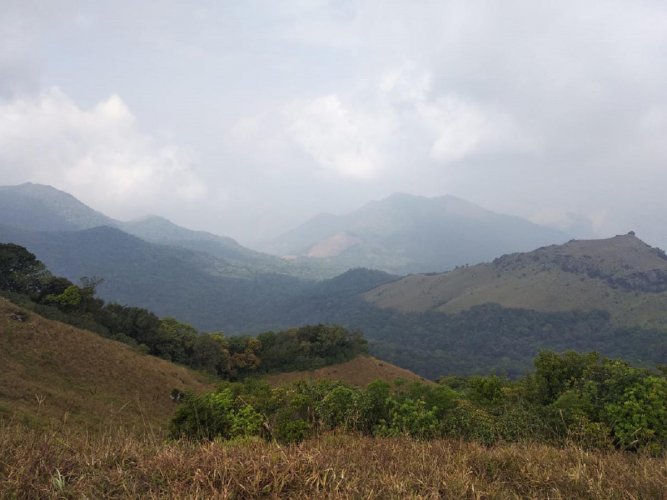
A view from the top of Tadiyandamol Hill in Kodagu.

Tadiyandamol, the highest cliff of Kodagu, is known for nature’s bounty and attracts trekkers. Tadiyandamol roughly translates to ‘tall, broad hill’ in the local dialect.

It is the highest peak in the Kodagu district and the third highest in Karnataka after Mullayyanagiri and Kudremukh.

To embark on the trekking adventure, trekkers have to trail through lush green plantations and here and there water bodies cross the path. The path does not make one feel tired as one looks at the beauty of the surroundings. 

Owing to the Covid-19 pandemic, the trekking activities were suspended for a few months.

Trekking activities resumed

When the trekking activities resuming, people from all age groups have started their trekking adventure.

The number of people during the weekends and holidays is on the rise. 

Trekkers from not only Karnataka but also from outside the state and country visit Tadiyandamol.

With verdant valleys in all directions, the views all around from the top mesmerise the trekkers. 

The trekkers enjoy a whiff of cool breeze at the top with the clouds playing hide and seek. Trekkers visit the spot even during winter and summer. 

Distance and height

Tadiyandamol cliff is 48 km away from Madikeri. The height of the cliff is 1,717 metres and one has to cover 10 km to reach the cliff via Nalkunadu palace in Yavakapadi.

One can enjoy the beauty of nature while traversing the trekking trial via Kabbinakadu.

After reaching Kakkabbe via Napoklu, one must locate Yavakapadi village. Jeeps are also available for rent from Kakkabbe. After driving for six to seven kilometres, the rest of the way can be covered on foot.

Panoramic view

The panoramic view of Tadiyandamol during monsoon is totally different. One come across several waterfalls cascading down the hillock en route.

Several researchers also visit the cliff to study biodiversity.

To check the pollution, the forest department has laid down a few restrictions on the trekkers.

The trekkers have to pay Rs 100 and ensure that they do not dump plastic and other waste en route.

“Tadiyandamol is a paradise for the trekkers,” said Prof Pattabi of Mangalore University, who had trekked along with a team recently. 

source: http://www.deccanherald.com / Deccan Herald / Home> State> Mangaluru / by DHNS, Napoklu / February 27th, 2021

Drill tests floods, landslip preparedness in Kodagu

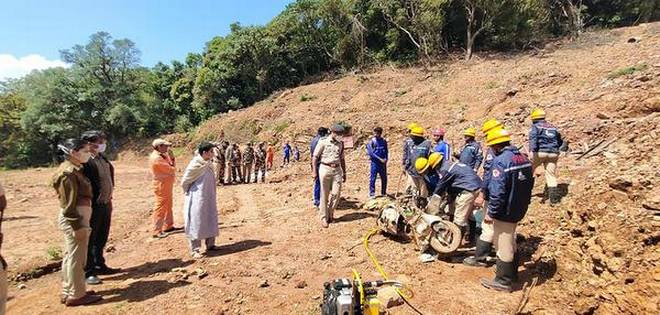
Deputy Commissioner Charulatha Somal watching the drill at Talacauvery in Kodagu on Tuesday.  

A drill was staged at Gajagiri hills in Talacauvery in Kodagu on Tuesday to demonstrate the steps taken for rescue during landslips and floods. The demonstration displayed the preparedness of the forces in case of emergencies.

An effort of the Kodagu district administration and the State Disaster Response Force (SDRF), the drill was conducted in the presence of Deputy Commissioner Charulatha Somal, Superintendent of Police Kshama Mishra and other senior officers.

The personnel of the NDRF, the Fire Department, Home Guards, the police and other agencies aiding rescue operations jointly carried out the exercise on how rescue efforts have to be carried by the teams amidst the calamities. Various types of rescue operations were demonstrated mocking a situation of landslips at the hills. The demonstration was carried out at the same site where a major landslip had occurred at Talacauvery last year.

Ms. Somal said the district administration was preparing itself for handling emergencies in the wake of three successive floods and landslips since 2018. The rescue teams were staging the drills at vulnerable sites, demonstrating the preparedness.

Ms. Mishra said the police would extend all support to the NDRF, SDRF and other rescue teams and coordinate with them on handling emergencies.

Importantly, the district administration has prepared the District Disaster Management Plan for bringing into effect preventive and mitigation measures whenever necessary, and chalked out an action plan for the reconstruction and rebuilding of Kodagu.

The ‘template’ of handling disasters and lessons learnt from the experience came in handy for also handling the pandemic in the district, with the district administration working and coordinating with the police, and other key departments during floods for reaching out rescue and relief to the affected.

The coordination that was displayed in handling the crisis last year was notable with the elected representatives, elected bodies and the officials working together as teams to manage the disasters. The administration, in 2019, had estimated ₹1,700-crore for rebuilding Kodagu after the calamities. The loss suffered by the coffee industry was over ₹53-crore while the black pepper industry’s losses had been pegged at ₹83 crore.

Minister in-charge of Kodagu district V. Somanna had said last year that a loss of ₹415 crore had been estimated based on the damage caused to roads, bridges, and other infrastructure facilities across Kodagu during floods and landslides in 2020. As many as 91 villages bore the brunt of floods and nearly 28 villages witnessed landslides.

source: http://www.thehindu.com / The Hindu / Home> News> States> Karnataka / by Special Correspondent / Mysuru – February 24th, 2021

Hail Rolls Out White Carpet

  • Joy for some; sorrow for others
  • Major coffee crop damage, says GSI Scientist

Madikeri/Somwarpet:

Parts of North Kodagu were swathed in a white carpet yesterday with ice left behind after a hailstorm.

Heavy rains and hailstorms lashed villages of Nidtha, Ankanahalli, Mullooru, Dundalli, Doddalli and Gudugalale near Shanivarsanthe of Somwarpet taluk in Kodagu district yesterday, taking residents by surprise. In Chamarajanagar too it rained hail last evening, throwing traffic out of gear. 

In Kodagu, due to rain of hail, villages resembled snowing Kashmir plains. Children and women cheered the hail storm and they rushed outside homes to fistfuls of hailstones. Photos and videos of the hail went viral, inviting reactions of awe and delight in social media. 

While the hail rain looked attractive with white carpet spread and with visuals of people holding the hailstones in their hands, it worried the farmers and coffee growers of Kodagu as this is the season of coffee blossoms and if it rained hail, it would damage the flowers resulting in low-yield next year. The growers are already tormented by unseasonal rains and, lack of support from the Government and less pricing for coffee.  

Heaps of hailstones were found on the roads, coffee estates, roof of the houses and coconut plantations. The Ankanahalli Government School and a veterinary clinic were covered with hailstones. Along with hailstones and rains, the gusty winds also damaged the standing crops including coffee, paddy, green chilli, mango and arecanut in the district as there is high moisture content. This also will dent the product quality. 

As the weatherman has predicted rains for two or three more days, coffee growers have said that due to rain, ripe coffee berries have fallen onto the ground and the drying process has been affected as it rained in the second and third week of January — a crucial month for drying. The rains also resulted in early flowering before the annual harvest, they said. 

Ice formation in static clouds

Giving a scientific perspective to the hailstorm, former Deputy Director General of Geological Survey of India (GSI) told Star of Mysore this morning that though the hailstorm looks beautiful with white ice cubes all over, it is bound to cause major damage to standing crops. 

“There was a dip in the temperature in January this year and the average temperature ranged between 12 to 13 degrees Celsius. And there was no cloud movement for more than 15 to 20 days after the cold spell. This caused ice to form in the static clouds and now due to rise in temperature and Rathasapthami, the ice has melted and it has resulted in the rain of hail. While in Kodagu small white ice cubes fell onto the ground, in Telangana and Andhra Pradesh large cubes even weighing about 500 grams fell from above,” he explained. 

The Kodagu District Administration must send a team to the affected villages and assess the damage that will be severe. Farmers and growers are entitled for Government compensation, he added. 

The Karnataka State Natural Disaster Monitoring Centre (KSNDMC) has predicted scattered to widespread light to moderate rains with isolated heavy rains likely over South interior Karnataka and Malnad districts and isolated to scattered very light to light rains likely over Coastal and North interior Karnataka districts for three more days.

The rains are a result of a weather system — a trough in Arabian Sea from Kerala to Gujarat coast. The weather system which was over Vidarbha as a cyclonic circulation has now shifted towards Madhya Maharashtra and adjoining areas. A trough is also extending from this cyclonic circulation to Kerala. These two weather systems — resulting low level moisture feed from Bay of Bengal in the form of South-easterly winds and humid winds from Arabian Sea at a height of three kilometres — are causing rains and hailstorms, says weatherman.

source: http://www.starofmysore.com / Star of Mysore / Home> News / February 21st, 2021

Study spots 84 odonate species in WWS

A four-month dragonfly survey that concluded at the Wayanad Wildlife Sanctuary (WWS) recently spotted 84 species of odonates (order of insects comprising dragonflies and damselflies) belonging to 59 genera under 11 families.

The survey was jointly conducted by the Forest Department and Ferns Nature Conservation Society (FNCS). Of the 84 species, 49 were dragonflies and 35 damselflies. Muneer Tholpetty, secretary, FNCS, told The Hindu.

A previous survey by the Malabar Natural History Society (MNHS) in the sanctuary in 2016 had identified 75 species of odonates belonging to 50 genera under 11 families.

“Since odonates are amphibiotic insects, the study focused on waterbodies in the sanctuary. Ponds were the richest in terms of species, but streams had the most number of endemic species,” Mr. Muneer, who coordinated the survey, said.

The four-month-long study was held from August to November 2020 when waterbodies in the sanctuary were full after the southwest monsoon.

“This is the time when large number of adult odonates can be seen flying around, jostling, mating, and laying eggs in water. They live as aquatic nymphs for a few months and later emerge out as aerial predators we commonly see,” he said. The team covered 33 ponds, 28 streams, and 12 swamps of the 344.44-sq.km sanctuary spread over four forest ranges.

“The spotting of Coorg False Spreadwing [Indolestes pulcherrimus] in the sanctuary is a first for the State. The rare damselfly was earlier thought to be restricted to the Coorg region of Karnataka,” Mr. Muneer said.

“Restless Demon (Indothemis limbata) and Azure Dartlet (Amphiallagma parvum) were the other rare odonates we were able to record,” Vivek Chandran of the Society for Odonate Studies, who extended technical assistance for the study, said. Odonates are good bio indicators and help the scientific community assess the health of freshwater ecosystems, he added.

“The Forest Department has plans to extend the study on odonates across all seasons to document their diversity in the sanctuary and give training sessions to field staff and students on odonates,” WWS warden S. Narendra Babu said.

source: http://www.thehindu.com / The Hindu / Home> News> States> Kerala / by E.M. Manoj / Kalpeta – February 22nd, 2021

Villages in Kodagu swathed in white after sudden hailstorm

A woman crosses the road through the pouring rain, in Bengaluru on Friday. Many parts of the city received unseasonal showers | AshishKrishna H P

Meanwhile, the India Meteorological Department (IMD) officials in Bengaluru were surprised on learning about hailstorms in Kodagu and Chikkamagaluru during this time of the year.

Madikeri : 

It was a surreal experience for many in parts of Kodagu district on Friday.

A sudden, heavy hailstorm, lasting over half an hour, left several villages across Shanivarsanthe wearing a snow-capped look.

While youngsters in the villages frolicked with chunks of ice, the farmers were worried about crop losses.Villages including Nidtha, Mulluru, Gudugalale, Ankanahalli and Dundalli in Shanivarsanthe hobli were swathed in about 1.5 inches of white.

Many students of Mulluru Government Primary School had their first experience with a hailstorm. “Hail stones had collected on a tarpaulin we had put up outside the classrooms for conducting classes. All the students brought buckets and collected ice chunks. It was a unique experience for them,” explained Satish, a teacher at the school.

“I have not witnessed such a hailstorm in the last 45 years of stay at Shanivarsanthe,” said M P Mohanraj, an agriculturalist. He grows pepper, coffee, orange and lemon and expressed concern that this was not good news. “Such rains are always disastrous for farmers and growers. Following the coffee picking season, the coffee plants have to dry till March. On March 31, the farmer’s much sought-after rain – the ‘rathi’ rain – enables blossoming of the crops. This hailstorm will damage the crops and will affect the next year’s crop,” he felt. 

Meanwhile, the India Meteorological Department (IMD) officials in Bengaluru were surprised on learning about hailstorms in Kodagu and Chikkamagaluru during this time of the year. The IMD-Bengaluru, Director in-charge, Geeta Agnihotri, told TNIE that thunder and lightning, coupled with light rainfall, was the forecast following the formation of the easterly system. 

“There was no forecast of a hailstorm. It has come as a shock. The conditions were also not favourable for it to occur as there was no rise in temperature and sufficient moisture in the air,” she explained. She added that they have been getting inputs from across districts about hailstones and damage that have occurred.  The IMD has forecast rainfall and thunder showers for the next three days.

As per the IMD, Bengaluru received 5.7 mm rainfall and HAL airport recorded 5.8 mm rainfall till 8.30 pm on Friday. Most parts of Karnataka received rainfall because of a trough over north Kerala to south Gujarat coast. The rainfall and dip in temperature is also because of easterly winds, explained an official.


Heavy rains lashed Chitradurga district on Thursday and Friday, inundating low-lying areas. Several parts of Chikkamagaluru district also received moderate rainfall on Friday. A 20-year-old youth died after he was struck by lightning at Nidgal village in Khanapur talluk on Wednesday evening.

source: http://www.newindianexpress.com / The New Indian Express / Home> States> Karnataka / by Express News Service / February 20th, 2021