Category Archives: Green Initiatives / Environment

Uplift of small farmers drives this Bengaluru coffee startup

Ex-banker Soomanna Mandepanda and his wife, Puja Soomanna set up their startup Humblebean in 2017 to ensure better prices and reach for small coffee farmers and improve every part of the value chain.

For former banker Soomanna Mandepanda, the motivation for setting up Humblebean was not just to sell the best coffees, but more importantly, uplift the small and medium Indian farmers who grow them. 

In the process, he is trying to bring about changes at almost each stage of the business — from cultivation and supply chain to research and education. 

Founded in 2017 by Soomanna and his wife and former Yahoo executive Puja Soomanna, Bengaluru-based Humblebean works on an omnichannel model: It ties up with small coffee farmers in south India, roasts and grounds supply, provides the beans to roasters, exports its products, operates brew bars, and has an online presence. 

A responsible way to grow coffee 

The coffee drinking experience has been gaining traction in India, with the market for the brew expected to record a compound annual growth rate of 7.2 percent during 2021-25, according to a January 2021 Statista report. 

Startups including Sleepy Owl, The Flying Squirrel, and Coffeeza, as well as shops such as Third Wave Coffee Roasters are making their presence felt in the market. 

India is the world’s sixth-largest producer of coffee and fifth in terms of exports; in fact, 70 percent of its production is exported, says a January 2021 report by the India Brand Equity Foundation. Yet, Soomanna says, “a lot of small and medium farmers and farms aren’t getting the kind of business and reach they should” .

Soomanna would know: he spent most of his childhood on the coffee estates of Coorg and was a small farmer before moving to the world of finance and banking for 13 years. One way to correct the imbalance, he says, is by “making great biodiverse coffee that farms in India are already poised to do”.  

According to him, 80-90 percent of coffee farms in India are held by small and medium farmers, whose secondary income comes from crops such as jackfruit, avocado, pepper, and orange that are part of the same farms. 

Cultivating other crops alongside coffee “ensures automatic carbon sequestration, top soil replenishment, and lesser need to feed chemicals unlike commercial crops grown in other countries”, says Soomanna. “The mining of the minerals is automatic and you become carbon neutral.” 

Puja Soomanna

Advocating farmer-friendly norms 

Increasingly popular among young consumers are organic, speciality, and Rainforest Alliance coffees that respectively employ natural methods of cultivation dispensing with harmful chemicals, are of the highest grade being derived from a single origin or single estate and protect the environment as well as worker rights. 

However, in India these certified varieties are grown largely on rich estates; most small and medium farmers cannot afford the costly certifications and grades.   

Coffee cultivation and the business are still quite unorganised in India, the certifications cost a lot of money, and need constant follow-ups, says Soomanna.  “The norms are difficult to adhere to for most small farmers. It is a replication of an American model.”

___________________

He says most large corporations in India export to Europe. “The small companies in Hassan, Chikmagalur, etc. certify about 150 estates and add the tags. But the farmer doesn’t get the price because the better prices are still being fetched with the local trader. The local traders are important, but the real traceability is lost.” 

As farmers don’t get better prices, there is little driving them to improve their produce, he says. “Speciality coffee is something few farmers can afford to grow.” 

Hence, the need to bring in farmer-friendly rules, he says.

The Humblebean coffee

Promoting social value investing

Given the largely unorganised state of affairs, Humblebean focused on getting farmers on board. The team collected random samples, tasted them, and guided farmers on growing the beans in a better way. 

By 2018, the team had got 50-60 farmers on board and given them assessment reports free of cost. Until then, the startup was in its pre-revenue stages, bootstrapped with funds from family and friends. 

The team then focused on getting roasters to directly buy from farmers. For this, it adopted the idea of social value investing, in which everyone who is part of the value chain comes together to solve a problem and there is money in it for all. 

__________________

“Once we got the farmers on board, we decided to tie up with brands and introduce them to the new portfolios of coffees,” says Soomanna. “We incubated close to four different brands in India from scratch to start a unique brand with a different blend. The idea was to bring in multiple partnerships and inclusiveness in the farming community on one platform.” 

Most of the speciality coffee firms have restricted names and types of beans grown on particular estates. “The idea is to bring in more brands that can access different estates, work with them, and encourage the farmers,” says Soomanna. 

Humblebean also fulfils the complete roast and ground process for such brands and even gives them a credit facility, he says. 

Quality comes with education 

Towards the end of 2018 and early 2019, the Humblebean team found that coffees served at most star hotels weren’t up to the mark. 

One of the reasons for this, Soomanna says, is that coffee as education is lacking in hotel management schools: one has to go to Italy to learn more about its nuances. The Coffee Board of India mostly takes care of the functionality, he says. 

_________________

“We met a few management schools and after some discussions it was decided that the colleges would look at it as part of the curriculum,” says Soomanna. 

Brewing innovative Indian blends

Even as Humblebean works to improve every part of the value chain, it is trying to offer consumers a very Indian coffee drinking experience.

To that end, the startup opened its first Brew Bar in the food experience section of a workspace on Bengaluru’s Residency Road in 2019. Humblebean was one of the early members of that workspace set up by a Singapore-based company. 

Puja, who conceptualised Brew Bar, spent time innovating the blends with the use of Indian robustas.  

“We don’t serve a single cup of speciality coffee; we wanted to make sure through the brewing methods can small and medium farmers come into mainstream brewing?” says Soomanna. 

______________

He says these Indian blends “aren’t being used by a single new-age speciality coffee company” as they are considered “harsh and used as a filler across the world. But they are unique and you need great expertise and experience to make a robusta out of them”. 

Following research and development, the startup has also come up with its own set of products. Together with B2B partners, it has launched these products online and will soon sell them at other marketplaces. The range is priced at Rs 220-350 for 250 gm for limited editions and depending on the roast. 

“Indian coffees can have a global impact,” says Soomanna. “The idea is to be farmer-friendly and also not cause too much environmental damage. We want to bring an amazing cup of coffee from the farms the way it should be drunk.”

Edited by Lena Saha

source: http://www.yourstory.com / YourStory / Home> Start Up / by Sindhu Kashyap / February 07th, 2021

Mand: The open-air temples of Kodagu

The three main Kodava festivals are Kailpodh, Kaveri Sankramana and Puthari. Traditionally, the Kodavas are paddy farmers and soldiers by profession who worship River Kaveri, the lifeline of Kodagu.

During Kaveri Sankramana (when the river goddess is worshipped), people gather at Talakaveri temple to witness, worship and collect the water which springs up from the fountain at an auspicious time that day.

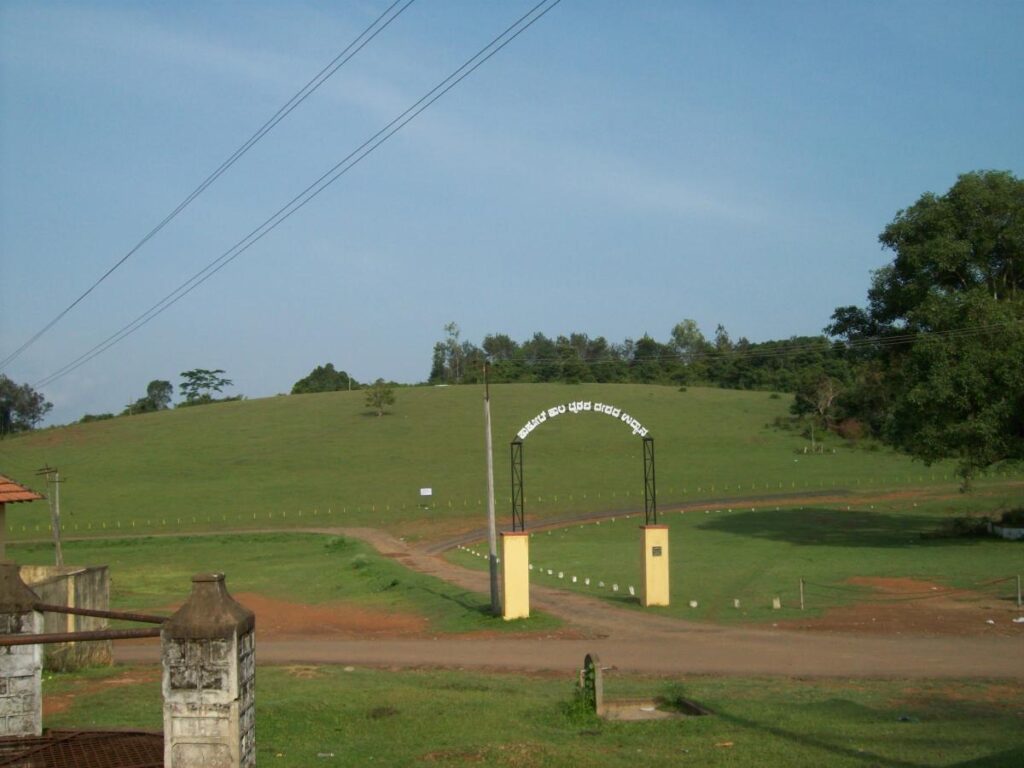
During Kailpodh (when weapons are worshipped) and Puthari (when the gods are thanked for the rice harvest), villagers gather in their local mands. The mand is a religious place, considered an open-air temple, of the Kodavas. This is a village green which usually has a sap-exuding tree, often a pipal tree.

A Village green. Photos by Mookonda Kushalappa

During Puthari, the names of Aiyappa, Mahadeva and Bhagwathy are invoked at the mands. In Kodagu, Aiyappa is the god of the forests. 

A group of villages form a cluster called naad in Kodava language. For eight evenings before Puthari, the village men practise the puthari kolaata (dancing in a circle with sticks in hand) in the moonlight in the mands.

A day after Puthari they gather again at the village mand and perform the village kolaata. A couple of days later, men from a number of villages gather at the naad mand and perform the naad kolaata. For a few evenings, the men continue to do the kolaata.

During Puthari, boys and men engage in mock combat duels. They hold a pathure kolu (a stick made of rattan) and a pare (rattan shield) and fence with each other. The village gods Igguthappa and Baithurappa are invoked before a contest. The combatants must strike below the waist. The game is accompanied by drum beats. Then, after a few days, the village gathers at the village green for the oor-orme (village gathering) and the Puthari festival comes to an end. On the day of Kailpodh, people bring their farmhouse guns and odikattis (broad swords) to the village mand in the afternoon. They aim at coconut shells and shoot them. Later, they cut three banana stalks each, in single strokes. They also compete throwing heavy stones.

Annual festival

Every Kodagu temple has an annual festival. Before the festival, for some days, the people of the village or the naad have to follow certain rules. On a particular day, the village thakka or the village elder assembles all the male members of the village, irrespective of caste or community, at the village green.

Then the rules are announced by the temple thakka (elder). Accordingly, no tree or plant can be cut, no animal can be hurt, no egg can be broken, no coconut can be cut, no liquor can be brewed or drunk, nobody should quarrel or argue, and nobody eats non-vegetarian food within the village or the naad for certain days.

Every family is to send men to clean, maintain and renovate the temple, village green, roads and other community properties. A day before the temple festival the villagers gather again. Anybody who violates the rules must step forward and pay a monetary fine at that time. All these activities and rituals make the Kodava culture social in nature.

source: http://www.deccanherald.com / Deccan Herald / Home> Spectrum> Spectrum Statescan / by Mookonda Kushalappa / February 06th, 2021

Mushrooming interest

Women in Kodagu are increasingly learning cultivation and becoming self-reliant

Madikeri :

Don’t underestimate the mushrooms. They are having their moment. This is a story about homemakers in Kodagu district. And it is also a story about mushrooms. “I grew up wanting to do something unique,” says Ambika Achaiah, 35, a budding entrepreneur from Cheyyandane village. While Ambika dreamt of starting a unique venture, she was married off after completion of her degree and nearly 10 years passed in managing home and hearth.

Nevertheless, her ambition to achieve something different was reignited when she stumbled upon a radio broadcast about free training for mushroom cultivation in 2019. “I was excited when I learnt of it. I travelled nearly 60 km to Krishi Vignyana Kendra in Gonikoppal to avail the training under the National Skill Development Corporation programme,” recalls Ambika. While she thought that it would last a day, she was shocked to learn that it was a 25-day course. Encouraged by KVK scientist Dr Somashekar, Ambika completed it and received a certification in oyster mushroom cultivation.

Ambika is currently working at the mushroom cultivation lab in KVK and experimenting on different varieties of mushroom cultivation. “I started off with spawn cultivation. But now I am versatile in mushroom tissue culture and the entire process of mushroom cultivation. I have applied for a loan and I will soon set up my own unit at my house,” she says.

While she is involved in developing the popular oyster mushroom variety, she is also experimenting on cultivating the seasonal milky mushroom. Apart from the cultivation process, she trains other like-minded homemakers. “Various women cooperative societies and other self-help groups invite me for motivational talk. I encourage women to take up the profitable mushroom business and I have also provided training for a few women in mushroom cultivation,” Ambika says.

Rashmi Bharadwaj, 40, is also a homemaker. She indulged in gardening – especially in orchid cultivation – as a hobby and sometimes even earned some pocket money. However, it has been nearly two years since Rashmi stepped into the field of mushroom cultivation and today she runs her own unit.
“I run a mushroom cultivation unit on contract basis with KVK in Gonikoppal. It would take nearly Rs 15 lakh to establish a unit. However, it was easier for me to work on contract as I did not have to worry about initial investment. And all the equipment is readily available,” says Rashmi.

After being a homemaker for several years, she started working for a minimum remuneration at a mushroom spawn cultivation unit. But after eight months into this job, she started cultivating oyster mushrooms from scratch and she now sells 100 to 120 harvested oyster mushroom bags per day. “I work from 9 am to 5 pm every day. Apart from the ready-to-cook oyster mushroom bags, I also manufacture Ready To Fruit Bags, which sell like hot cakes among mushroom farmers,” she explains. Ready to Fruit bags (RTF) are mushroom seeded and grown straw bags of oyster mushrooms.

The clients who buy them have to cut out a few holes in these RTF bags and keep them in a well-lit area (not under direct sunlight) and sprinkle water regularly. Oyster mushrooms bloom from these packets, without the risk of any contamination and effortlessly within five to seven days. Another shining example is Lakshmi, 55, who worked as a domestic help and switched many jobs in between even as she worked as a hospital help at daily wages for 25 years until recently. “I worked at a hospital as a cleaning staffer for many years. But I wanted to become self-reliant,” she recalls.

Lakshmi stumbled upon the mushroom cultivation training programme and she found her path to independence. She is cultivating mushrooms on a small scale and has set up her own unit in a single bedroom. “Contamination-free is the key to mushroom cultivation and the business gets profitable only when the set-up is unpolluted. I collect paddy straws from a known people, bake and dry the straw, purchase mushroom growing bags and start spawn cultivation by keeping the bags under the cot – where the temperature is less and visibility is low,” says Lakshmi.

Though she is self-reliant, she says, “I am unable to manufacture mushrooms on a large scale as I lack the required funds to purchase improved facilities. However, I am happy with my small scale set-up, which is better than working for someone.”

Oyster Mushrooms
After White Button, oyster mushrooms are mostly cultivated and consumed across India.  These have many health benefits as they are rich in proteins, vitamins, minerals and fibres, and low in calories. They are believed to help increase immunity.

Women Turn Entrepreneurs
The mushrooms, bought by customers across Kodagu, are not just making for a tasty treat but are enabling entrepreneurship skills among many women. The cultivated mushrooms are sold throughout the year at local markets, and even  home delivery is available on request. 

source: http://www.newindianexpress.com / The New Indian Express / Home> States>Karnataka / by Prajna G R / Express News Service / January 17th, 2021

Money Honey

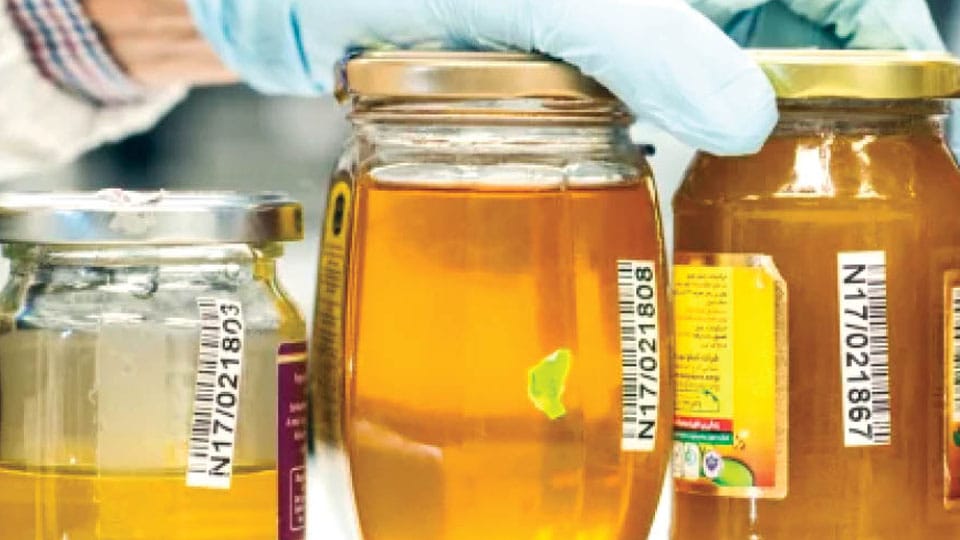
Last week, we got some bitter news about something sweet. The Centre for Science and Environment (CSE) reported that when they subjected 13 prominent brands selling honey to a sophisticated test in Germany for adulteration, except three, all other brands failed.

The only three brands that passed were Saffola, Markfed Sohna and Nature’s Nectar.  

As fear of refined sugar has increased, so also adulteration of other sources of sweetness. Best example is jaggery. 

As jaggery gained popularity as an alternate to sugar, its adulteration started. Mandya jaggery was very popular until jaggery makers from Uttar Pradesh came calling and started adding chemicals to rapidly increase production capacity and visual appeal.

In a report submitted to the Government by the Co-operation Department,  it found chemicals like “calcium hydroxide, sodium hydrosulphite (hydrose), sodium formaldehyde sulfoxylate (safolite), ortho-phosphoric acid, seashells, baking soda, oil (castor/coconut) and orange-red powder (artificial food colouring) in jaggery blocks”!  We educated urbanites find it hard to even pronounce the names of these chemicals which makes us wonder if farmers are making jaggery or chemical engineers? 

This is a serious issue because India accounts for over 70%  of world’s jaggery production and such practices will ruin our reputation and income. Already Mandya jaggery brand has taken a hit as the use of chemicals has significantly reduced its shelf-life which has forced many wholesalers to sell their product in distress.

We in India don’t seem to take food adulteration seriously. Be it the Government, the producer or the consumer. It is common knowledge that  fruit-sellers use calcium carbide because it reacts with the moisture emanated by the respiration of the fruit. And when it does, a gas called acetylene emanates which helps in ripening the fruit. This gas is carcinogenic! Yet, rarely do you see the Government personnel raiding these “ripening sheds.”

Vegetables are not spared either. Bittergourd and lady’s finger are dipped in copper sulphate water to make them look greener. Brinjals are coated with old oil to give them a shine; carrots are dipped in red dye-water and watermelons injected with gulal to make them red from inside. Rarely do you see officials confronting, let alone arresting these colouring artists.

Most of us turn a blind eye to this saying that we cook hot meals and all “these things die”… not really.

But the fallout of this food adulteration should be the rebirth of kitchen gardens and organic farms. It’s time to move on from show gardens to kitchen gardens. 

Every year during Dasara the Government has a competition for the “Most beautiful home garden.” May be the same publicity must be given to “Best kitchen garden.”

P.S.: Speaking of organic food, once a husband went to a store to shop for his wife who was very health-conscious and wanted organic, pesticide-free vegetables. The husband walked upto the section where he saw vegetables stacked and asked the sales man if  the vegetables were organic. The sales boy didn’t understand. The irritated husband picked up some vegetables and said, “Listen, my wife is health-crazy. So I need to know have these vegetables been sprayed with any harmful pesticides?” 

The petrified sales man replied, “No, Sir. You’ll have to do that yourself!”

Ramakrishna Ashram Swamijiand Coorg Honey

Speaking of bees and honey, once upon a time Coorg was the top producer of  honey. 

In the early 1940s, there used to be a Government-appointed “Bee Man” whose job was to go from house to house, from estate to estate,  teaching planters about the importance of bees to the environment and also teach them how to maintain a Bee Box and extract honey.

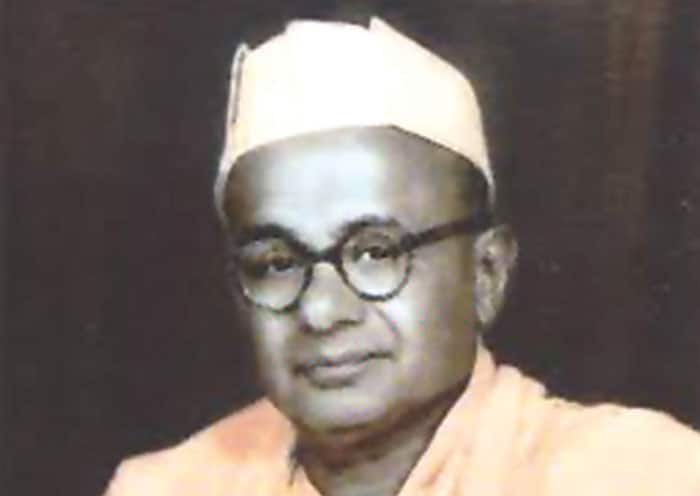
In fact, Scientific Bee farming in Kodagu was initiated by Sri Shambhavananda Swamiji, the man who founded the Sri Ramakrishna Vidyashala in Mysuru.  In 1928, when Swami Shambhavananda became the first President of Sri Ramakrishna Saradashrama in Ponnampet, Kodagu, he initiated a project for Bee-keeping. Since he was born in Kodagu as Chengappa into the Thelapanda family, he knew that Kodagu was very suitable for bee-keeping and could contribute to the local economy.

Sri Shambhavananda Swamiji

Soon he prepared the first apiary and in 1936  set up the ‘Coorg Honey and Wax Producers Co-operative Society Ltd.’  This became the first honey producers co-operative in India. 

Shambhavananda Swamiji even developed a new method of bee-keeping now known as ‘Coorg Standard Hive.’ No wonder Coorg came to produce almost 50% of all honey produced in Karnataka.

Now, if any one has space around their homes or in their farms there are many workshops that teach bee-keeping. In fact, there is an Apiculture Training Centre at Bhagamandala, Kodagu, where one can take a few weeks training in bee-keeping.

It may be recalled that the Government in 2014, to increase production and marketing of Coorg Honey, ordered the setting up of a “Honey Park” at Bhagamandala, Kodagu. The park was to be managed by the Food Processing Division of the Agriculture

Department. Later, Rs. 60 lakh was also released for the project. An old building was refurbished and not much else has been heard. Now, six years on neither is there a Park nor is there any Honey. Guess, like most Government projects it was all about the  “Money Honey”?

e-mail: vikram@starofmysore.com

source: http://www.starofmysore.com / Star of Mysore / Home> Columns in Black & White / by Vikram Muthanna / December 19th, 2020

Give Top Priority To Cultivate Coffee Naturally In Kodagu

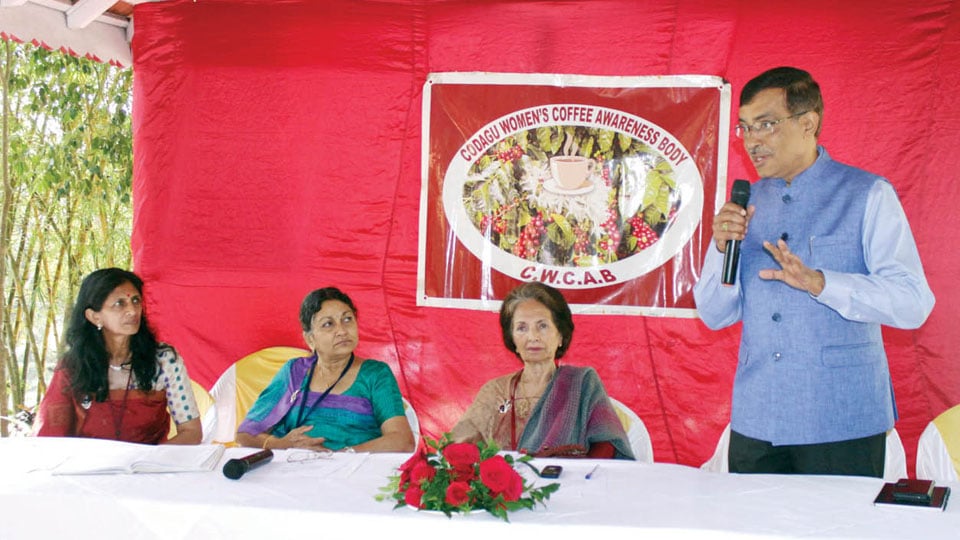
Ponnampet Forestry College Dean calls upon growers to maintain quality from estate to cuppa; 18th AGM of Kodagu Mahila Coffee Jagruthi Sangha held

Madikeri:

Coffee growers should give priority for cultivating tasty coffee naturally, said Ponnampet Forestry College Dean Dr. Cheppudira G. Kushalappa. 

He was speaking at the 18th Annual General Body meeting of Kodagu Mahila Coffee Jagruthi Sangha held at a private hotel in Madikeri recently. Though Vietnam and Brazil produces large quantity of coffee, they are unable to get back the amount invested in coffee cultivation. They use highest quality of fertilisers to cultivate the crop and most of the finances are drained out here. 

The growers of Kodagu must concentrate on cultivating coffee naturally by reducing the use of fertilisers. There are 360 species of trees inside the coffee estates in Kodagu. As a result, the ground gets good manure. This is the reason why Kodagu coffee is famous across the world. 

“The undeniable natural beauty and abundance in Kodagu — from rainfall to fertile soil and diverse water sources — has made the region a highly sought-after location to cultivate coffee. Coffee flourishes in a unique blend of climatic conditions that includes humidity, heat and rainfall. Kodagu is ideal for these conditions and the slopes of the Western Ghats ensure orthographic rainfall that measure between 60 to 80 inches,” he said. 

The abundant species of    shaded trees work together in a two-tier system to protect coffee plants. These trees also prevent soil erosion and provide mulch to act as fertiliser. “The soil of Kodagu is rich with nitrogenous material and has a good sub-surface drainage,” he said and called upon growers to maintain quality from the estate to the cuppa. 

Coffee Board quality expert Vikram Kuttaiah said that the prices of coffee have not increased drastically for the last 25 years. The maintenance of Arabica coffee was Rs. 25,000 per acre 25 years ago and now it has reached Rs. 80,000 per acre. The maintenance of Robusta variety has increased from   Rs. 10,000 to Rs. 60,000. 

 “The maintenance costs have increased manifold but the prices of coffee has remained stagnant. There is a huge disparity between production costs and end profits. There is a situation where the grower has to be satisfied with meagre income,”   he explained. 

Kodagu Mahila Coffee Jagruthi Sangha President Pandikuthira Chitra Subbaiah said that the Sangha has been creating awareness about Coorg Coffee since the last 18 years. Sangha Director Kumari Kunjappa has been provided permission by Kodagu District Administration to open an outlet at Coorg Village that is coming up near Raja’s Seat in Madikeri, she said.

source: http://www.starofmysore.com / Star of Mysore / Home> News / December 14th, 2020

Puthari: Kodagu’s harvest festival

People harvesting new crop. DH File Photo

Harvesting new crops is always a much-awaited occasion, with many festivals revolving around this event. One such harvest festival celebrated by Kodavas is Puthari (which translates to new rice), and it marks the first harvest of the paddy crop.

Puthari is celebrated in the Kodava month of Birchiyar, which falls in November and December. This year Puthari is on November 30.

“In the past, rice cultivation was what brought prosperity to Kodagu. There are beautiful images in our folk narratives of caravans of oxen, loaded with rice, setting off from ancestral homes to neighbouring regions indicating a thriving rice trade. Puthari celebrates the new crop of rice that promises a year of abundance; it’s a time of thanksgiving, and is the most important festival of the year,” says Kaveri Ponnapa, the author of The Vanishing Kodavas.

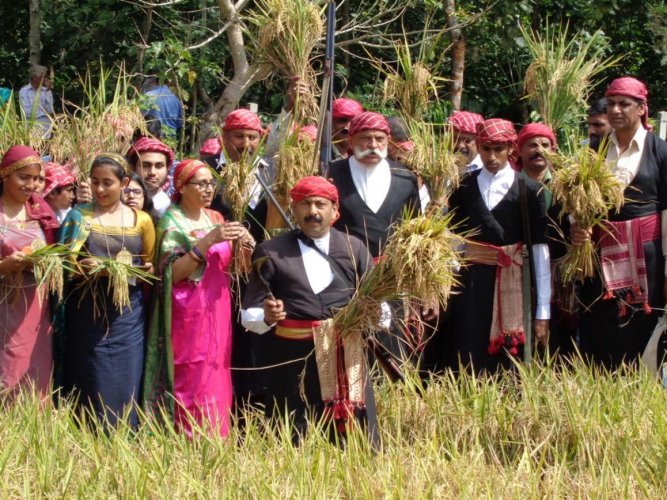
On a predetermined day, at a fixed time after dusk, the Nere Kattuvo ceremony is first held, wherein leaves of certain trees are tied together and later placed at different corners of the house. Men in traditional kupya chele and women wearing Kodava saree then go to the paddy field, led by a woman holding a taliyakki bolcha (lamp) under the light of the full moon. 

Here the Khadh Edpo ceremony is held. The eldest man of the family called the patedara cuts an odd number of paddy sheaves (khadh) and they return carrying the harvested crop in a kuthi (a sacred bamboo container) while uttering Poli Poli deva — praying for a bountiful year.

The paddy sheaves are placed in front of the nellaki bolcha (sacred lamp) at the ainmane (ancestral home) and people pray for a good harvest. Then two special types of desserts — thambutt (made from roasted rice flour and mashed banana) and rice payasa — are prepared.

The day ends with children bursting firecrackers and a wholesome meal.

Traditionally, Puthari would be followed by week-long celebrations. On the days following Puthari, a few people would go door-to-door visiting every house in the hamlet and sing songs eulogising the family members of that house, beating a dudi (traditional hourglass drum). This formed part of the mane paado (singing at houses) ceremony. Children of the hamlet would tag along with these singers in merriment.

On the last day of the celebrations, people would visit the mandh, the sacred grounds of the village, and men would perform kol aat, a traditional stick dance.

Men performing Kol aat as part of Puthari celebrations. DH File Photo

Building solidarity 

“Rice cultivation is a community-oriented activity — one had to rely on neighbours to help with transplanting and harvesting. So, you find that many of the customs — the dances, feasts, the bringing in of new household implements and so on — are all directed at building solidarity. It’s also a time when we reconnect with our own clans; the dudi patkaras (traditional singers) walk from one ancestral home to another, singing the histories of clans, re-establishing our links with our heritage, and the land,” says Kaveri.

While many Kodavas have moved outside of Kodagu for their careers, Puthari is still celebrated in the same spirit of togetherness. Kodava families in a region get together, and celebrate this festival upholding the traditions.

“Since we stay in Bengaluru, every year on Puthari, we make it a point to go to Bangalore Kodava Samaja, which we regard as our ainmane in the city. There we symbolically harvest some paddy crop and bring back home the paddy sheaves to the tunes of Poli Poli deva,” says Mundanda Sudha Poovaiah, an advocate practicing in Bengaluru.

source: http://www.deccanherald.com / Deccan Herald / Home> Spectrum> Spectrum Statescan / by Dhanyata M Poovaiah , Bengaluru / November 18th, 2020

Revenue department takes over 15.12 acres of gomala land

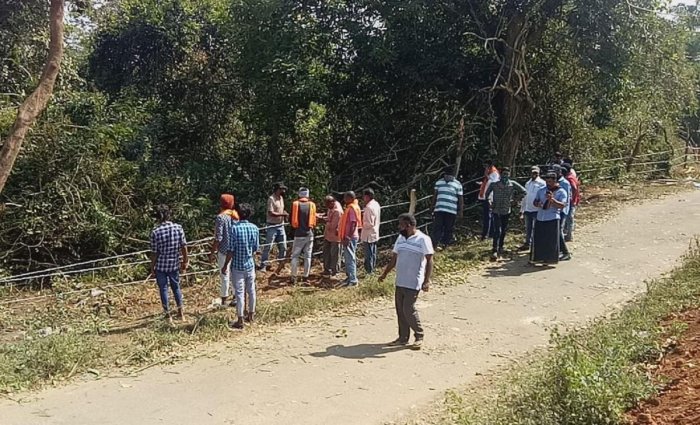
Revenue department workers take over the gomala land at Arji village in Virajpet taluk and secure it by erecting fences. Credit: DH.

Revenue department workers took over 15.12 acres of gomala land identified through the survey at Arji village in Virajpet taluk on Tuesday and secured the land by erecting fences.

Thirty days ago, the taluk Gomala Samrakshana Horata Samiti had staged a protest and urged the local administration to preserve the gomala land in Arji.

Tahsildar Nandish, after holding a discussion with the committee, had ordered for a survey of the land. Accordingly, the survey department identified the 15.12 acres of land and handed over the map to the tahsildar.

The tahsildar, with the cooperation of the villagers of Arji, took over the land and installed fences.

The official meanwhile assured that all gomala land will be cleared of encroachments and the same will be protected.

Twenty-three acres of gomala land has been encroached upon. Notices will be served to 51 people to clear the encroachments within the next 30 days, he said.

Also, a five-acre land was reserved for the construction of KSRTC bus depot. Currently, the land is vacant. If the said land is taken over by the revenue department, 28 more acres of land will be recovered.

Including the land recovered on Tuesday, a total of 43.12 acres of land will be added to the gomala, he added.

Virajpet Taluk Panchayat president Smitha Prakash, Zilla Panchayat member Acchapanda Mahesh Ganapathy, Taluk Panchayat member B M Ganesh, district BJP unit former president Suja Kushalappa, Gomala Samrakshana Samiti convener M M Ravindra, members Purushottam, Ramaiah and others were present.

source: http://www.deccanherald.com / Deccan Herald / Home> State> Mangaluru / by DHNS, Virajpet / November 25th, 2020

Channayanakote reveals the best way to be a clear village | Mysuru News

Madikeri:

Channayanakote village is turning into a mannequin village in cleanliness in Kodagu.

Panchayat president, panchayat growth officer, ladies organisations have succeeded in creating consciousness amongst individuals to maintain their environment spick and span.


PDO Rajan and panchayat president Geetha have set up a scientific waste administration unit within the village.

They bought a car beneath Swachh Village challenge to make sure trash reaches the dumping centre. Initially, the residents had been stunned to see the PDO himself attain their doorways within the car throughout morning hours to organize them to domesticate a routine behavior of cleanliness.


“Our village should look beautiful and attractive. We have even cleared the garbage around the village, and we are developing a garden for the villagers,” disclosed president Geetha.
Indira, an activist, appreciated the work by the panchayat crew. “Approaching people door to door by the PDO and creating awareness for cleanliness is a welcome step.

Woman organisations will also join hands with the panchayat in their endeavour,” she introduced.

source: http://www.thegreatrindia.com / The Greater India / Home> States / by TGI News / November 13th, 2020

Paddy cultivation brings laurels to progressive agriculturist

Gonikoppa:

If carried out with hard work and passion, farming will not only bring satisfaction but will also support the livelihood, opined Podamada Mohan, a progressive agriculturist from Balele Devanuru village.

Mohan has been cultivating paddy on only two hectares of land. However, he has been able to harvest an average of 62 quintals of paddy per hectare, annually. This is made possible owing to the innovative methods of irrigation, pest control and so on.

For his commitment towards agriculture, he has been awarded the taluk-level progressive farmer award in Virajpet, for the year 2015-16.

Mohan has been cultivating Atira and Tunga varieties of paddy. Now, both the varieties are almost ready for harvest. He has maintained cleanliness in the paddy farm by removing the shrubs.

Manure

He said that a mixture of DAP, Urea and Potash are provided to the crops in the quantity of 20 kg per acre, at the time of transplantation. This will help in the faster growth of paddy sheaths.

The process of providing fertiliser is repeated twice, with a gap of one month. The high-lying area of the paddy farm, which is known as ‘Nippuni’ is provided with 100% manure while the low lying ‘Kippani’ area is provided with 20% of manure.

The paddy farm has not been affected by any disease. Mohan has made sure to spray insecticide 15 days before the transplantation.

This will control the disease at the initial level, he said.

No takers

Mohan lamented that 45 quintals of unsold rice from last year, is remaining at his house. Even though the rate is Rs 1,125 per quintal, there are no takers.

No suitable market price is available at the APMC as well. The low price is discouraging for many farmers, said Mohan.

source: http://www.deccanherald.com / Deccan Herald / Home> State> Mangaluru / by DHNS, Gonikoppa / November 10th, 2020

Bopaiah tells Forest dept. to safeguard farmers

Chairman of Government Land Protection Committee for maintaining the status quo until the joint survey on lands was done

Former Speaker and Government Land Protection Committee Chairman K.G. Bopaiah on Saturday told the Kodagu forest authorities not to cause any inconvenience to farmers of the district until the joint survey of lands categorised in ‘C’ and ‘D’ class was done.

Speaking at the taluk KDP meeting in Madikeri, the MLA said he had received complaints that small farmers cultivating coffee in “Paisari” lands since many decades are now facing hurdles in pursuing their profession. “Such complaints should not persist. We should imagine the plight of such farmers in Bhagamandala, Sampaje, Kalooru, Birunani, and other places which had been hit by successive floods.”

During the meeting, Veena Achaiah, MLC, said many paddy fields in Makkandur, K Nidugani and Madhe gram panchayat limits had been affected in the 2018 floods and added that sand, mud and uprooted trees had collected in the lands. A special package should be announced for these places and in the interest of farmers but no effort has been made in this connection yet.

On the occasion, Mr Bopaiah told the Kodagu ZP engineers to take up works on priority and complete the bridge construction work in Korangala and Chirangala. Bridges in these two villages had collapsed in heavy rains in August this year.

source: http://www.thehindu.com / The Hindu / Home> News> States> Karnataka / by Special Correspondent / Mysuru – November 07th, 2020