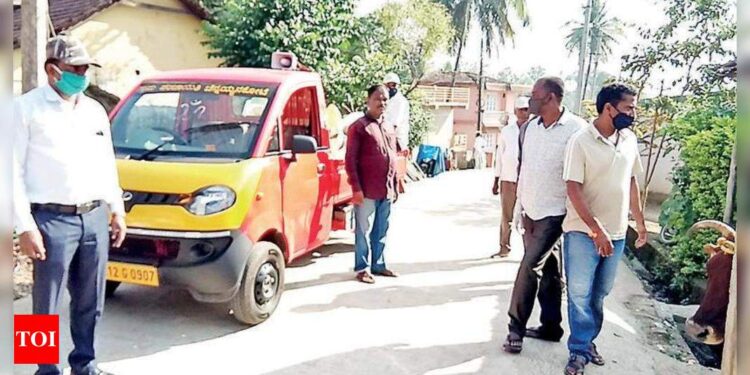
Channayanakote village is turning into a mannequin village in cleanliness in Kodagu.
Panchayat president, panchayat growth officer, ladies organisations have succeeded in creating consciousness amongst individuals to maintain their environment spick and span.
PDO Rajan and panchayat president Geetha have set up a scientific waste administration unit within the village.
They bought a car beneath Swachh Village challenge to make sure trash reaches the dumping centre. Initially, the residents had been stunned to see the PDO himself attain their doorways within the car throughout morning hours to organize them to domesticate a routine behavior of cleanliness.
“Our village should look beautiful and attractive. We have even cleared the garbage around the village, and we are developing a garden for the villagers,” disclosed president Geetha. Indira, an activist, appreciated the work by the panchayat crew. “Approaching people door to door by the PDO and creating awareness for cleanliness is a welcome step.
Woman organisations will also join hands with the panchayat in their endeavour,” she introduced.
source: http://www.thegreatrindia.com / The Greater India / Home> States / by TGI News / November 13th, 2020
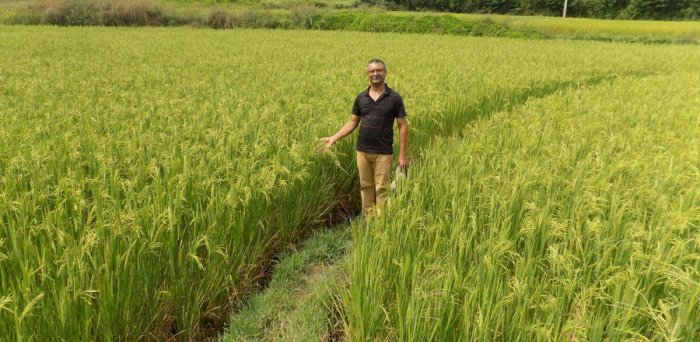
If carried out with hard work and passion, farming will not only bring satisfaction but will also support the livelihood, opined Podamada Mohan, a progressive agriculturist from Balele Devanuru village.
Mohan has been cultivating paddy on only two hectares of land. However, he has been able to harvest an average of 62 quintals of paddy per hectare, annually. This is made possible owing to the innovative methods of irrigation, pest control and so on.
For his commitment towards agriculture, he has been awarded the taluk-level progressive farmer award in Virajpet, for the year 2015-16.
Mohan has been cultivating Atira and Tunga varieties of paddy. Now, both the varieties are almost ready for harvest. He has maintained cleanliness in the paddy farm by removing the shrubs.
Manure
He said that a mixture of DAP, Urea and Potash are provided to the crops in the quantity of 20 kg per acre, at the time of transplantation. This will help in the faster growth of paddy sheaths.
The process of providing fertiliser is repeated twice, with a gap of one month. The high-lying area of the paddy farm, which is known as ‘Nippuni’ is provided with 100% manure while the low lying ‘Kippani’ area is provided with 20% of manure.
The paddy farm has not been affected by any disease. Mohan has made sure to spray insecticide 15 days before the transplantation.
This will control the disease at the initial level, he said.
No takers
Mohan lamented that 45 quintals of unsold rice from last year, is remaining at his house. Even though the rate is Rs 1,125 per quintal, there are no takers.
No suitable market price is available at the APMC as well. The low price is discouraging for many farmers, said Mohan.
source: http://www.deccanherald.com / Deccan Herald / Home> State> Mangaluru / by DHNS, Gonikoppa / November 10th, 2020
Chairman of Government Land Protection Committee for maintaining the status quo until the joint survey on lands was done
Former Speaker and Government Land Protection Committee Chairman K.G. Bopaiah on Saturday told the Kodagu forest authorities not to cause any inconvenience to farmers of the district until the joint survey of lands categorised in ‘C’ and ‘D’ class was done.
Speaking at the taluk KDP meeting in Madikeri, the MLA said he had received complaints that small farmers cultivating coffee in “Paisari” lands since many decades are now facing hurdles in pursuing their profession. “Such complaints should not persist. We should imagine the plight of such farmers in Bhagamandala, Sampaje, Kalooru, Birunani, and other places which had been hit by successive floods.”
During the meeting, Veena Achaiah, MLC, said many paddy fields in Makkandur, K Nidugani and Madhe gram panchayat limits had been affected in the 2018 floods and added that sand, mud and uprooted trees had collected in the lands. A special package should be announced for these places and in the interest of farmers but no effort has been made in this connection yet.
On the occasion, Mr Bopaiah told the Kodagu ZP engineers to take up works on priority and complete the bridge construction work in Korangala and Chirangala. Bridges in these two villages had collapsed in heavy rains in August this year.
source: http://www.thehindu.com / The Hindu / Home> News> States> Karnataka / by Special Correspondent / Mysuru – November 07th, 2020
Alert ex-GP President in Kodagu makes Mysuru youths return to Madikeri to pick up their trash
Thanks the tourists for responding positively
Madikeri:
A vigilant Kodava has made the entire Kodagu District proud by making a group of tourists from Mysuru, who had thrown garbage on roadside, to come back and pick it up. His appeal through social media not only got a tremendous response from people but also sent a message loud and clear that ‘You cannot take everyone, everyplace and everything for granted.’
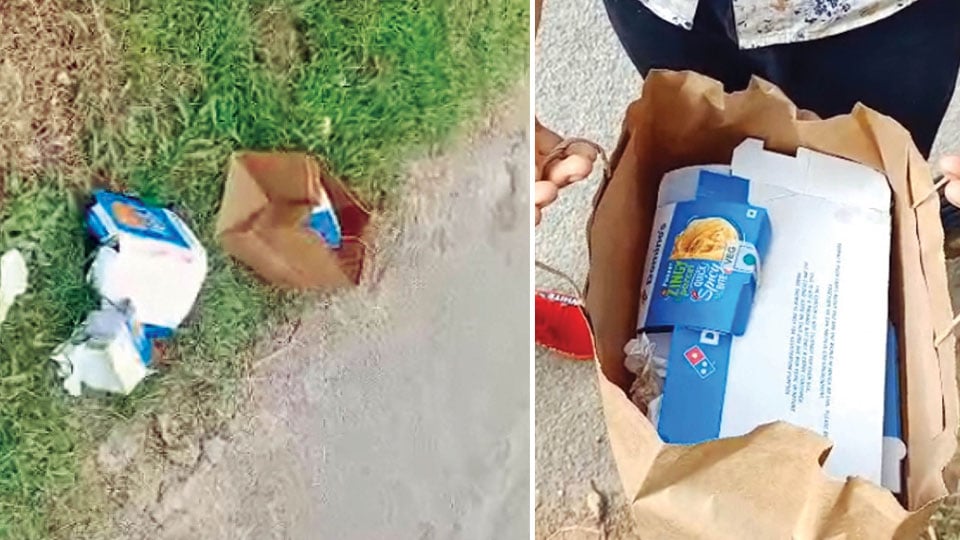
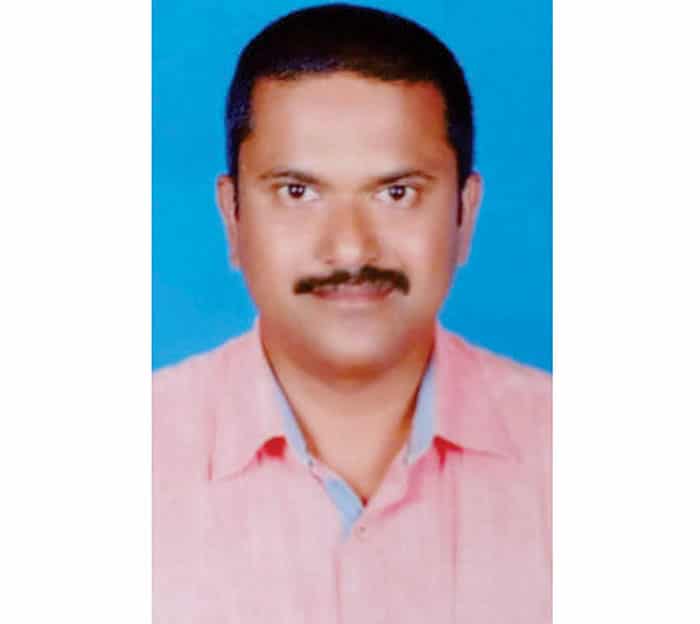
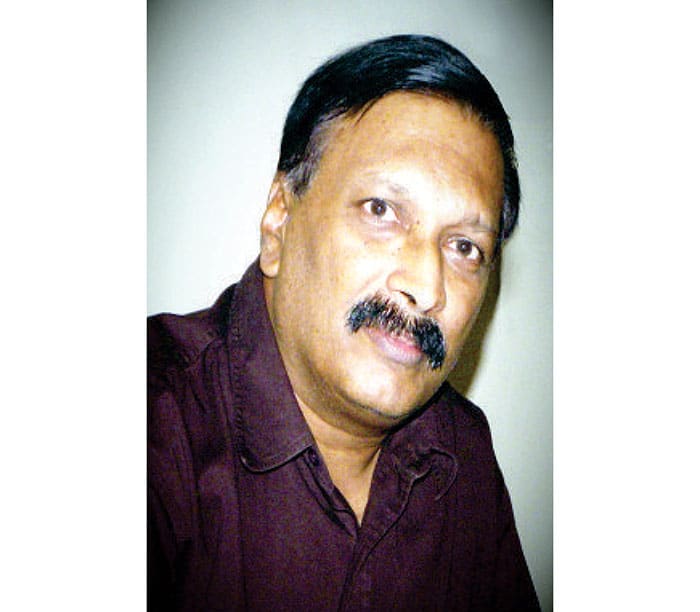
The ‘hero’ of this incident is Madetira Thimmaiah, a former President of Kadagadaalu Gram Panchayat in Madikeri taluk. On Friday, Thimmaiah while travelling in his four-wheeler saw the empty Pizza packets and the paper bag thrown on roadside near Kodagu Vidyalaya junction. He stopped his vehicle, checked the bag and found the bill which had the mobile number of the customer.
Without wasting time, he video-recorded the strewn garbage on his mobile phone and put it on the social media platform. When he called the mobile number mentioned in the bill, he was told that it was Chirag of Mysuru who along with his friends came to Madikeri.
Thimmaiah, ex-GP President
Chirag reportedly told Thimmaiah that he had bought the pizza from a Pizza Shop in Madikeri, and had disposed the trash on roadside. When Thimmaiah asked Chirag to come and pick up the garbage, the latter told him that he was almost near Mysuru and it would take another three hours for him to come back.
However, the former GP President did not budge and said he would wait for three hours failing which a Police complaint will be lodged.
Meanwhile, Thimmaiah appealed to the citizens of Kodagu to call up that mobile phone number to ask him to come back and collect the garbage, which received overwhelming response.
After three hours, Chirag and his friends, not only came back but also tendered an apology for their ‘negligence.’ However, the embarrassed youths appealed Thimmaiah not to film their faces to which the former obliged. The youths collected the empty packets and promised to dispose the same at their house bins.
Later, Thimmaiah put another video on social media of Chirag holding the empty packets in the paper bag and carrying with him. Thanking the people of Kodagu for supporting his campaign to keep the hilly district green and clean, Thimmaiah also appealed one and all to join hands in the Swachh Bharat Abhiyan.
source: http://www.starofmysore.com / Star of Mysore / Home> News / October 31st, 2020
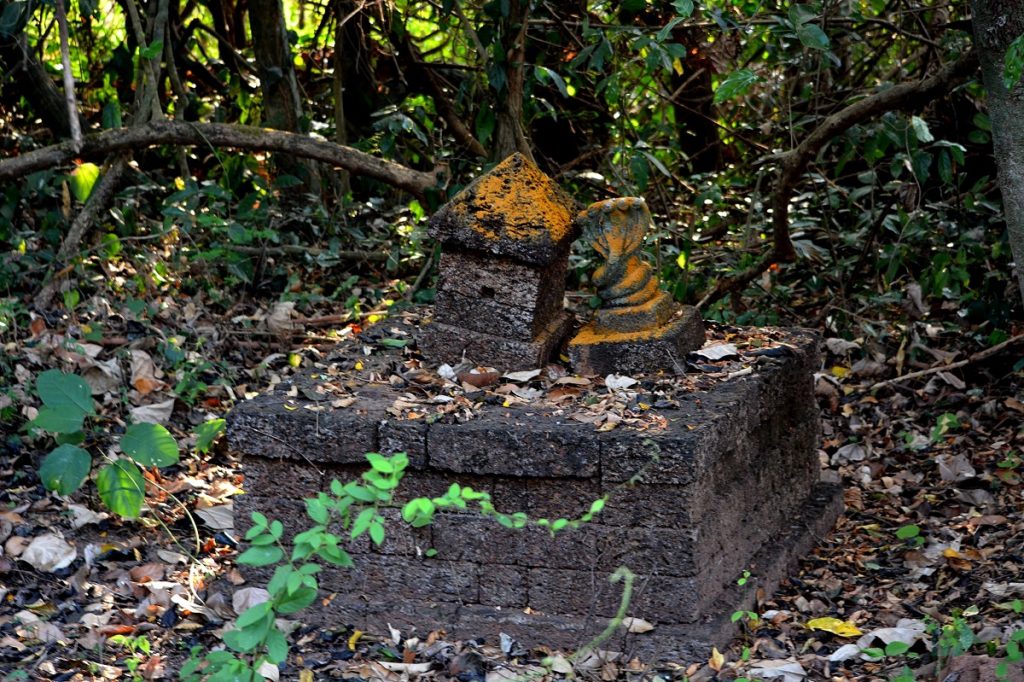
A sarpakaavu, or traditional sacred space for snakes, in Kerala. Photo: Manoj Karingamadathil/Wikimedia Commons CC BY SA 3.0
Underlying cultural and religious beliefs in serpent deities has played a role in protecting iconic animals such as snakes and other species dwelling inside the Western Ghats’ sacred groves. But these beliefs are eroding among youth and economic pressures are eating into the groves, threatening their very existence. Experts call for greater state government protection to preserve the groves’ legacy for the benefit of posterity.
For millennia, local communities in India have maintained sacred groves where they managed natural resources and many of these are tied to their cultural and religious beliefs. In the Western Ghats, such groves are relatively undisturbed patches of evergreen forests that sometimes have a pond, stream, or well that ensures perennial water supply. Often located outside of protected areas, sacred groves are rich in biodiversity, housing many threatened and endemic species of plants and animals. In many cases, these fragments are the only relict forests that remain outside the protected area system.
The mountain chain of the Western Ghats along the western coast of India is older than the Himalayan mountains; in 2012, 39 sites in the region were inscribed on the World Heritage Sites list by the United Nations Educational, Scientific and Cultural Organisation (UNESCO). While India boasts the highest number of sacred forests globally, with estimates suggesting at least 100,000, the Western Ghats is endowed with a large concentration. Although many are undocumented, Kodagu district in the southern state of Karnataka alone was estimated to have 1,200 sacred groves.
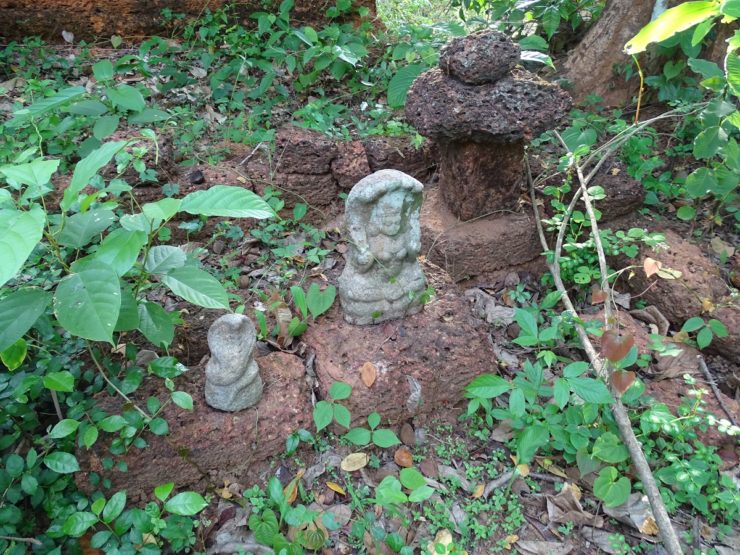
Many of these verdant groves are associated with gods and are named after deities. The worshipping of serpent gods known as nāga plays a central role in many groves in Kerala known as sarpakaavu in Malayalam (snake garden or grove), and often house idols of serpent deities.
Worshipping involves unique rituals that are performed in sarpakaavu and temples with serpent deities. One common ritual involves pouring a preparation of water, milk, rice powder, and turmeric on the deities and devotees call this offering as ‘Noorum palum’, said Dileepkumar R., director of Indriyam Biologics Pvt. Ltd., Jayakumari Kunjamma, senior research fellow at the University of Kerala who has also authored a book on snake worship in Kerala, and Divya S. chief scientific officer of Indriyam Biologics Pvt. Ltd.
Sacred groves: a refuge for snakes
In a study published last year, researchers surveyed visitors of 30 sacred groves in Kannur and Kasaragod districts in the state of Kerala and Kodagu (Coorg) in Karnataka. They found that visitors were less likely to harm snakes inside the groves than outside. And, a large proportion of visitors who did not harm snakes even outside of the groves worshipped snake deities.
Felix Yuan, the lead author of the study and doctoral student at the University of Hong Kong had expected a “fair number of people would not harm snakes inside the groves” given the role of snake deities in the region, but he was surprised by the results. An overwhelming 96% of the visitors surveyed showed pacifist attitudes towards snakes encountered inside the groves, whereas only 60% had the same reaction outside of the groves. The reverence towards snake deities and pacifism towards snakes pervaded all the sacred groves regardless of whether they had idols of snake deities present or not.
“The broader implications of this study lie in the intricacies of the relationships between sacred natural sites and local communities,” explained Yuan, “where the reverence for a specific plant or animal can potentially result in its protection despite the ongoing degradation of other ‘natural’ qualities of these sites.”
Visitors tend to live in harmony with snakes inside the groves (sarpakaavu). Dileepkumar, who frequently visited sarpakaavu in Kerala since childhood, said that if people spotted snakes, they would not touch the creatures, leaving them to slither around the groves freely.
V.C. Balakrishnan, who has also grown up in Kerala, had on some occasions, encountered snakes in the sarpakaavu. “I will just wait for them to pass by,” he said.
Serpent god worship and the role of taboos
At the heart of the conservation of snakes in the groves lie taboos, which are essentially an interplay of devotion and fear, according to U. Prashanth Ballullaya, co-author of the study and a doctoral student at the Central University of Kerala. Local communities believe that their ancestors created the sarpakaavus to provide shelter to snakes, he said, adding that snakes, especially cobras, were considered divine.
Fear also plays a prominent role. Harming snakes is a sin, Ballulaya gleaned from the surveys. If anyone harms snakes inside the groves, they will be cursed and more snakes will emerge, said some visitors. One of the repercussions of killing snakes according to traditional beliefs is that the family could be deprived of progeny and hence there is a cultural practice of worshipping the habitats of snakes among communities in the Western Ghats, explained T.V. Ramachandra, professor at the Indian Institute of Science (IISc), Bengaluru. “Later, gradual transitions to worshiping idols with snake inscriptions happened and eventually, temples with concrete structures replaced these,” he said.
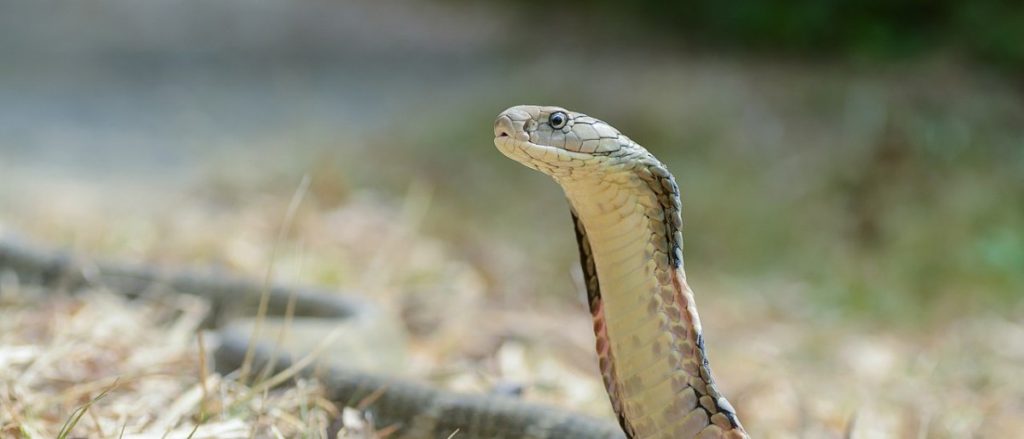
A king cobra. Credit: Rushenb/Wikimedia Commons, CC BY-SA 4.0
Shonil Bhagwat, professor at the Open University, United Kingdom, said “a ‘healthy’ fear of wild animals is good because that discourages people from going to parts of sacred groves, naturally creating ‘no go’ areas.” He believes that “these so-called ‘fences of fear’ can help protect biodiversity within sacred groves by simply keeping people out of the groves, or at least some parts of the groves.”
Communities in the rural highlands of the Western Ghats in Kodagu and adjoining urban lowlands in Kasaragod were surveyed and the results were published in 2019. Researchers found that both urban and rural communities did not abuse the groves by cutting trees, dumping waste, hunting small animals, taking soil and foliage, and damaging termite mounds. And those with nāga deities, who are not only highly revered but also feared, were rarely abused.
The protection of snakes was extended to other taxa as well. Palatty Allesh Sinu, assistant professor at the Central University of Kerala and co-author of the community perception study was surprised to learn that “even taking a leaf from the sacred groves is considered a taboo or abuse of the land.” Believers told him that “the organic matter is food for insects, which is food for frogs and snakes!” Because of this snake-centric food chain, Sinu and his team were forbidden from collecting insects from the groves.
Rural communities had stronger cultural and religious beliefs than their urban counterparts, who valued groves also for their environmental benefits. Although the reasons for this are difficult to answer, said Sinu, one farmer told him “our agriculture, economy and lives are bound to these forests around us … When there was no access to a temple, these forests and local deities living inside the forest were the resort for us. When the upper castes have direct access to Gods, the backward caste people did not have.”
Erosion of beliefs
Community-preserved sacred groves in the Western Ghats are facing mounting pressures over the past decades. Many are shrinking in size or have disappeared altogether. At the time of its formation in 1956, Kerala boasted more than 10,000 sacred groves, but in 2015, only around 1200 remained, according to a report prepared by the Kerala State Assembly Committee on Forest, Environment, and Tourism. A global Nature study published in May reported that reptilian phylogenetic diversity in the Western Ghats is under very high levels of human disturbance.
“Earlier thesarpakaavu was a symbol of divinity and sanctity and it was with only utmost reverence that one was allowed to enter its premises,” said Dileepkumar, Kunjamma and Divya. “People were afraid to touch the trees let alone cut them. But the scenario has almost completely changed with the term ‘sarpakaavu’ being reduced to a mere social terminology. The infuriating demand for more land to accommodate the growing population coupled with the placid attitude of today’s generation has diminished the values of biodiversity and conservation,” they rued, adding that most people view the groves as wastelands, which could be used for construction.
Researchers have observed that youths are losing interest in sacred grove traditions. The loss of oral traditions that narrated stories behind the groves has been cited as one factor. Bhagwat believes that awareness of sacred groves and nature conservation should start early. “If children are introduced to the creepy crawlies that live in sacred groves and maintain a healthy forest ecosystem, they will learn to like this real, everyday nature that is found in landscapes where people farm, live and work,” he said.
V.C. Balakrishnan, who is the secretary of the NGO Society for Environmental Education in Kerala (SEEK), also stresses the role of educating youth to ensure the protection of the groves. SEEK, he explains, holds many camps on the importance of the sacred groves and biodiversity.
On 25 September, Dileepkumar R. joined forces with a group of snake experts and developers and launched a mobile app called SnakeHub, which is dedicated to education and conservation. Currently, the app is a social responsibility initiative of Indriyam Biologics Pvt. Ltd., a Department of Scientific and Industrial Research recognised medical startup working on snakebite management and mitigation, but the group plan to register a society and keep it as an independently functioning body under the organisation. With 114 snake species, Kerala is the top three states in India in terms of species number (after Tamil Nadu, which has the highest, followed by West Bengal) and more than half of these are endemic to the Western Ghats, said Vivek Sharma, head of SnakeHub App.
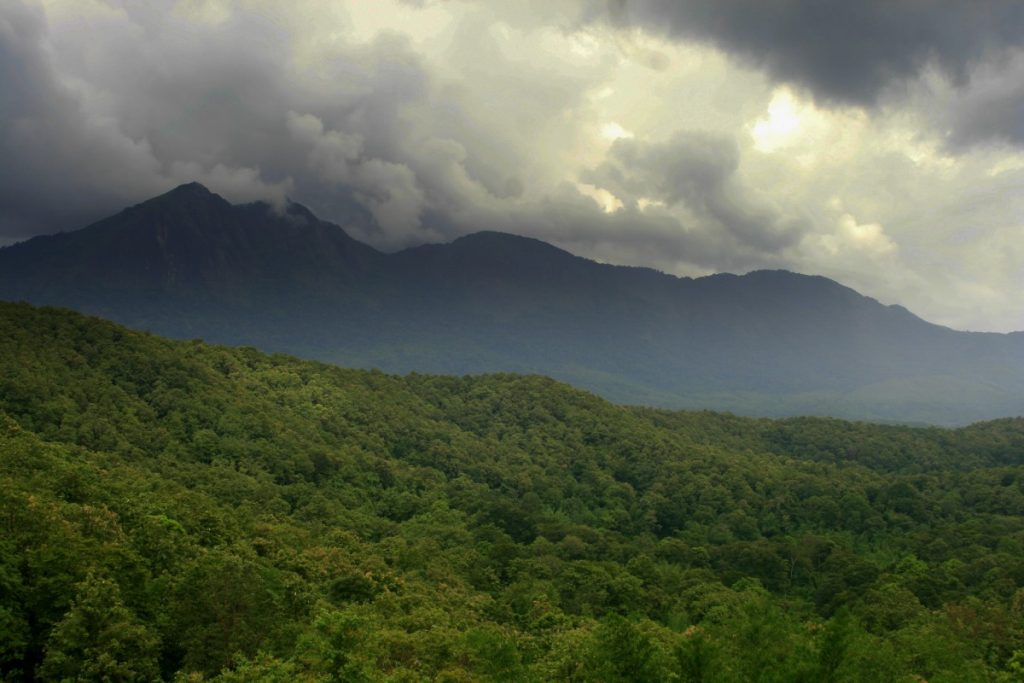
A part of the Western Ghats. dotcompals/Flickr, CC BY 2.0
In both English and Malayalam, the app is the first on snakes in the state of Kerala. Apart from providing biological and ecological information on all of the species, the app also covers snakebites including a list of hospitals equipped to treat bites. “Snakebite is an important objective in our work and based on requirements, we will add facilities to provide snakebite-related solutions and education materials,” said Sharma.
Their goal is to expand the scope of the app to the rest of India in other regional languages to cater to rural communities. India accounts for almost half of the total number of annual deaths from snake bites worldwide. Earlier this year, a study estimated that over the last 20 years, 1.2 million people died from snake bites nationwide. Most of the deaths occurred in rural areas and farmers were most at risk especially during the monsoon season.
“Sanskritisation” and commercialisation
Over the years, there has been a trend towards “Sankritisation” of the groves, which involves the conversion of animistic deities in the sacred groves to mainstream Hindu gods and goddesses, explained Bhagwat. This phenomenon, he said, paves the way for cement structures such as temples and other buildings to be constructed in the groves, which compromises the conservation value of the groves because natural features such as trees disappear. “The only way to solve this problem is to make the custodians of sacred groves aware that trees are important to protect biodiversity within the groves,” Bhagwat said.
“The sacred groves are losing their sanctity and some of the groves are becoming temples for commercial purposes,” said Balakrishnan, explaining that the owner can earn an income through money offered to the deities.
es are taking over in urban areas and even creeping into the hinterlands. According to Sinu, some sacred groves are under the direct control of the state while others are privately owned. “Sadly, both want to generate money out of it,” he lamented. “Selling the land is a way,” he said. “So, they first relocate the deities including snake god through a ceremonial ritual and free the land.” Many owners are in the process of relocating deities, noted Sinu, adding that the ceremony is a costly affair amounting to about Rs 4 lakh (Rs 400,000).
Ramachandra of IISc echoes these concerns. Cemented buildings have become commercial spots, he said, revealing that many sacred groves that are under the revenue department have undergone large-scale conversion to other land uses such as villas and resorts in Kodagu. He attributes these conversions to a lack of knowledge among the bureaucracy of the ecological and hydrological significance of the groves, which has sustained the livelihood of communities in the region for centuries.
Dileepkumar, Kunjamma and Divya believe that people fail to realise that their exploitation of the groves could pave the way for their own doom. “With the sacred groves being deconstructed, the snakes that were taking refuge in the grove vegetation enter into human colonies leading to a conflict between snakes and humans thereby posing a threat to both snakes and humans alike,” they warned.
A sarpakaavu in Kerala. Photo: Manoj K/Wikimedia Commons CC BY SA 3.0
How to protect the sacred groves?
Apart from cultural beliefs, the coexistence of snakes and humans hinges on the preservation of the ancient sacred groves of the Western Ghats.
Experts believe that state governments must play a greater role in protecting the sacred groves of the Western Ghats. Earlier this year, the Kerala state government launched a program “Pachathuruthu” to cultivate ‘green islands’ in degraded land in a bid to preserve biodiversity. For the initiative, “they are planting trees that can give shade, shelter, and food for birds and other animals,” Sinu said. “We have over 1500 sacred groves in Kerala along the west coast. Why not declare them as natural sanctuaries?”
Ramachandra proposes that the Karnataka and Kerala Forest Department should assign heritage status to all the sacred groves of the Western Ghats under section 37(1) of the Biological Diversity Act 2002. Such a move, he argues, will ensure the conservation of these ecologically fragile regions.
Conservation of the groves should be initiated at both the community and government level, according to Dileepkumar, Kunjamma and Divya. “Snake groves are an inherent part of Kerala culture and conserving them must be our obligation. For implementing the conservation strategies initiated by the government, a special task force must be employed to ensure the protection and maintaining the status quo of the snake groves.”
Balakrishnan said that the forest department had funded building fences around the sacred groves a few years ago. “These sacred groves are to be protected surely because they are rich in biodiversity and they are the wealth of our future generations.”
This article was first published on Mongabay India .
source: http://www.science.thewire.in / The Wire, Science / Home> Science> Environment / October 29th, 2020
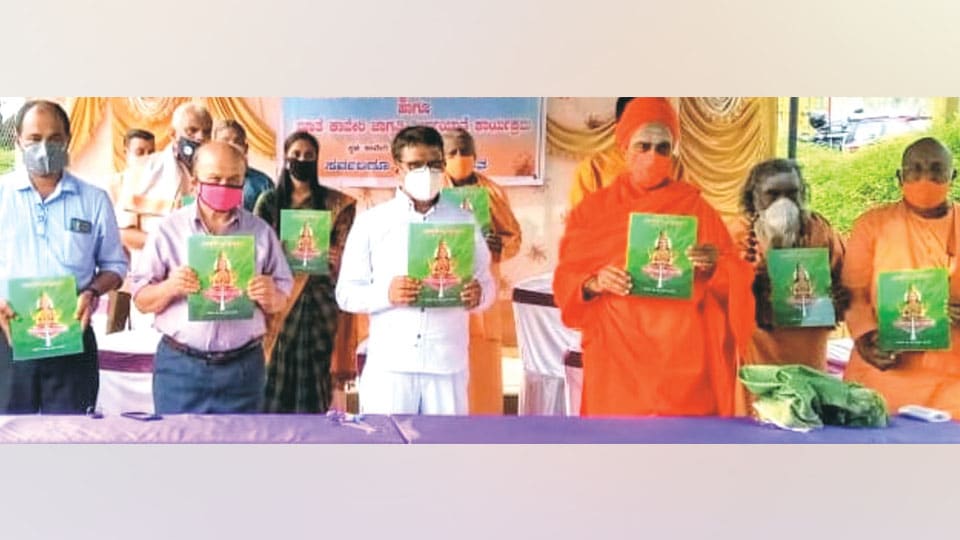
With heavy downpour, landslides and floods ravaging Kodagu district for the past couple of years, Madikeri MLA M.P. Appachu Ranjan said that the Centre will be appealed for constructing flood walls along River Cauvery for preventing floods.
He was speaking after releasing ‘Namami Cauvery’ volume at a programme jointly organised by Cauvery River Swachhata Andolana and Cauvery Maha Arathi Balaga at Kushalnagar recently.
Asserting that all efforts will be made for stopping Cauvery floods in the future, Appachu Ranjan said that Swachhata Andolana activities have resulted in 60 percent cleansing of River Cauvery so far, which is a noteworthy achievement.
Senior Journalist J. Rajendra said that lack of hygienity was haunting the entire world.
Stressing on the need for everyone to practice cleanliness, he warned against fighting for pride in respect of Talacauvery.
Highlighting that it is important for maintaining the sanctity of River Cauvery, which is the lifeline for crores of people in the Southern States, he wanted the Government to constitute a District-level Committee for Talacauvery, Bhagamandala.
Cautioning against political meddling in the forming of Temple Committees, Rajendra bemoaned the apathetic attitude of officials in responding to the plight of the people in the wake of natural disasters.
Earlier, Kirikodli Mutt Seer Sri Sadashiva Swamiji, who spoke after inaugurating the programme, said that rivers are getting polluted because of lack of a hygienic and scientific sense among the people.
Observing that it is important for everyone to have an understanding on the ways of preserving nature, he said that it is vital that wastes are not dumped to the rivers and such unsensible acts will only destroy their sanctity and serenity.
Senior Priest Krishnamurthy Bhat, Pourakarmikas Ganesh and Purushottam, ‘Namami Cauvery’ Editorial Board Members H.T. Anil, B.C. Dinesh, Vinod and B.M. Latish were felicitated on the occasion.
M.N. Chandramohan delivered the keynote address. Zilla Panchayat (ZP) Member Manjula, Kushalnagar Development Authority Chairman M.M. Charan, Members V.D. Pundarikaksha and Vaishak, Town Panchayat Members Jayavardhan and Amrutraj, Kushalnagar BJP President V.N. Umashankar and others were present.
source: http://www.starofmysore.com / Star of Mysore / Home> News / October 28th, 2020
Dr. S.V. Narasimhan, a family physician based at Virajpet in Kodagu district, is an avid birder, nature lover, adept at computers, Karnatak music and astronomy.
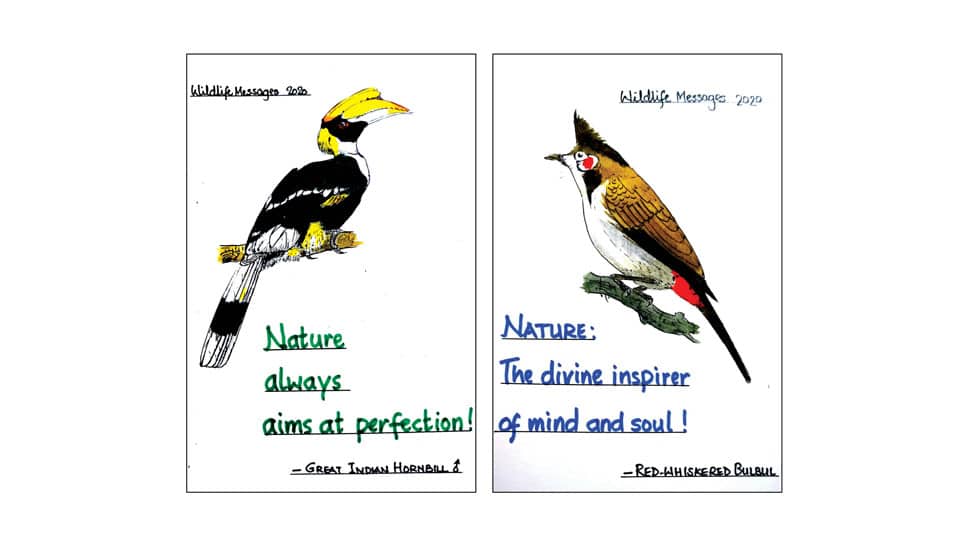
Author of Feathered Jewels of Coorg, a field-guide to 310 species of birds found in Coorg, Dr. Narasimhan is the pioneer in spreading wildlife conservation messages through his unique hand-painted Wildlife Message Cards that are sent free to individuals throughout the world to mark the Wildlife Week.
Total number of hand-painted cards made by him this year is 1,930; in 36 years, 72,655 cards. Total recipients this year including Star of Mysore – 1,010; in 36 years – 13,004 persons.
The Special Wildlife Messenger of this year is Red-whiskered Bulbul (Pycnonotus jocosus) — This is the most common garden bird of India. It has a black chest that is turned forwards and has bright red patches on the cheeks and vent. Melodiously vocal, it feeds on fruits, nectar and small insects.
Bulbuls are mostly monogamous. They build an open cup-shaped nest made of rootlets and leaves lined with soft fibre. They live for about 10-11 years.
source: http://www.starofmysore.com / Star of Mysore / Home> News / October 20th, 2020
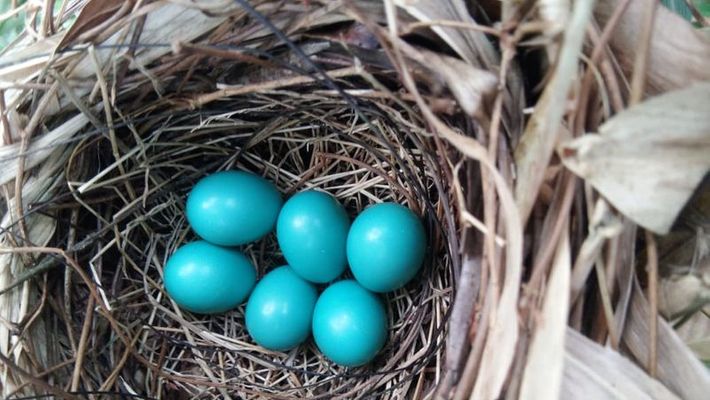
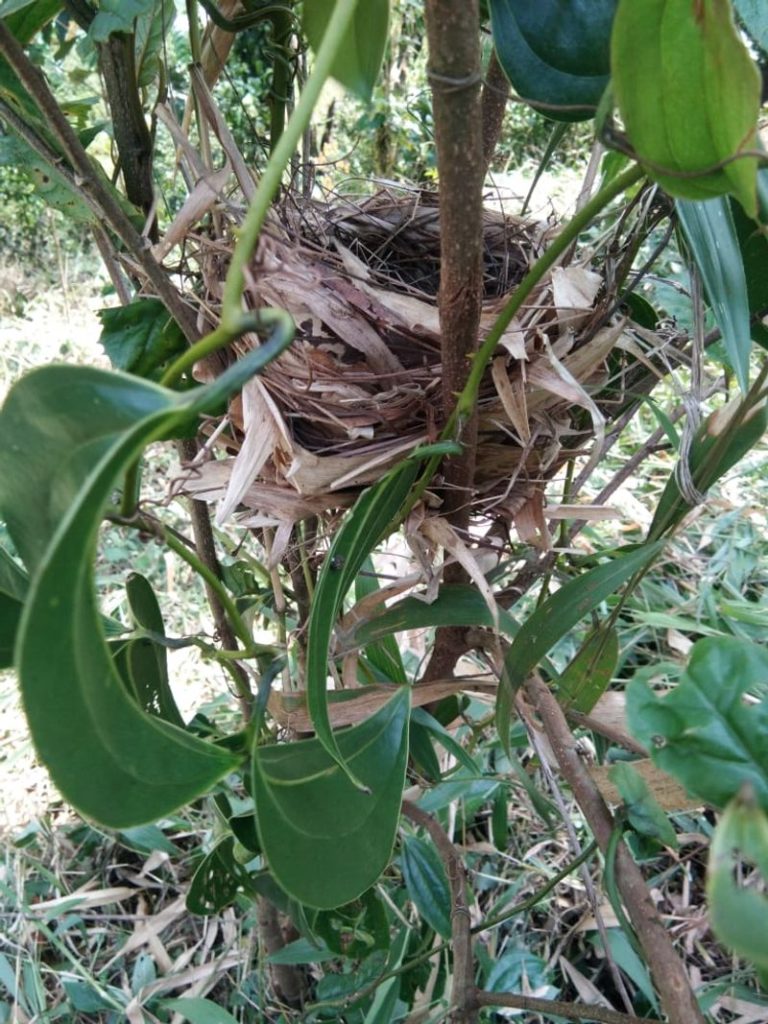
Six blue eggs of the rare Indian Robin bird were found at a coffee estate in Kodagu recently.
The 6 eggs were found nesting securely in a nest made of hay on a plant amidst the coffee estate.
The eggs were found by the farm workers of the estate owned by a woman named Pushpa in Bettathur village in Kodagu.
While the mother was found nowhere around the nest the eggs nested safe and secure from the current harsh climate.
According to reports Robins usually lay four eggs and then stop. However, Pushpa and her staff found six bright blue eggs in this nest.
It is the female bird’s job to maintain the proper incubation temperature, keeping the eggs warm during cold weather and shaded during hot weather.
The blue colour in robin eggs is due to biliverdin, a pigment deposited on the eggshell when the female lays the eggs.
There is some evidence that higher biliverdin levels indicate a healthier female and brighter blue eggs. Eggs laid by a healthier female seemed to encourage males to take more interest in their young ones.
source: http://www.newsable.asianetnews.com / Asia Net Newsable / Home> English News> India / by Team Newsable / Bengaluru – October 15th, 2020
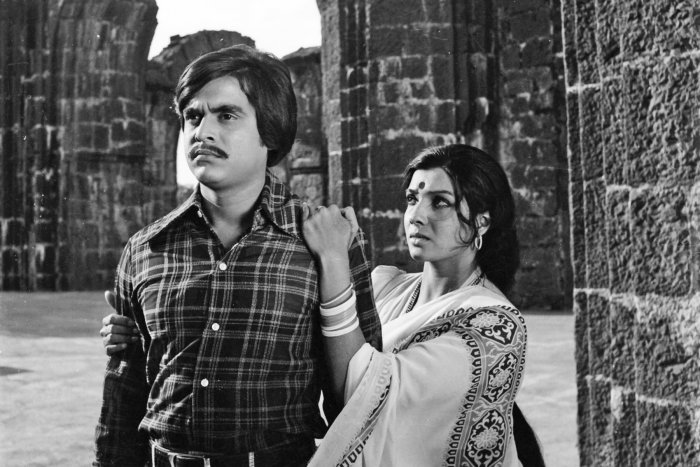
Puttanna Kanagal cast Jagadish as the lead in ‘Phalitamsha’ even though he had no prior experience in acting.
After the first few days of shoot of Phalitamsha, he wanted to give up
Filmmaker Jai Jagadish had no background in films or interest in it during his childhood. He belonged to a family, where his father, a farmer, insisted on Jagadish becoming a double graduate.
Puttanna Kanagal cast Jagadish as the lead in ‘Phalitamsha’ even though he had no prior experience in acting. Filmmaker Jai Jagadish had no background in films or interest…
Childhood and films
Hailing from Somwarpet taluk, Kodagu, he belonged to a family of coffee, pepper, cardamom and paddy growers. “My family consisted of five daughters and two sons. My father was a farmer.”
The filmmaker studied at the government school nearby. “I was a naughty child and uncontrollable, so I was sent to study in Sri Ramakrishna Vidyashala, Mysuru.” Jagadish’s father insisted on him becoming a double graduate. He did his BA from St. Philomena’s College, Mysuru.
Jagadish never acted in a drama, and never thought of acting in films. “Cinema was not my cup of coffee. My friend, Manjappa, a college leader from Maharaja’s College asked me if I would act in a Puttanna Kanagal’s film, if he got me the role. I was amused by the idea and I challenged him to find me a role,” he says.
Jagadish had read in film magazines that no actor had been finalised for ‘Phalitamsha’. In a couple of days, he got a call for the role, against four heroines. “I said I wasn’t going to act in it. My friends tried to convince me. I told them that I had other intentions and want to start my own business,” he says.
Even so, he went to Bengaluru, to meet Puttanna Kanagal. “I was asked if I knew anything about acting and I immediately responded that I didn’t. My looks and physique came in my favour, I was offered the role. I was shocked.”
Jagadish was told to leave to Badami and join the shoot immediately, but he insisted on informing his family. “I made a lightning call to my father. I knew he wouldn’t agree, and as expected after I called and explained, expletives followed. In the corner of mind, I knew I shouldn’t let go off the opportunity so I went for it,” he says.
After a few days of shoot, he wanted to give up. “I had only one lungi and a toothbrush on me and I decided to flee from the sets. Kitty, Kanagal’s wife’s brother, saw me from a distance and asked me what I was doing, he told me to rethink and give best shot at acting,” Jagadish says.
Jagadish’s first film released in a grand manner but didn’t do well. “In ‘Phalitamsha’, some shots were taken at the flying training school, Jakkur. The principal of the school, Patil, was impressed by me and I spoke about my interest in flying. A year later, I met him on M G Road and he told me to meet him at the school next day,” he says.
Jagadish was asked to do some medical checkups and joined the school. He studied for almost two-and-a-half years, while he waited for acting roles. “S Siddalingaiah called me and asked me to play the role of Vishnuvardhan’s brother’s role in ‘Biligiriya Banadalli’,” he says.
The role with dark shades, created a new turn in his career. “Directors were looking for a young villain, which led me to many other films.”
He was soon seen in films like ‘Bandana’, ‘Paduvarahalli Pandavaru’, ‘Daranimandala’ and ‘Parajitha’
He has worked with different actors like Vishnuvardhan, Srinath, Rajkumar (in Guri), Puneeth Rajkumar. Ravi Chandran. “I’ve worked with maximum films with Vishuvardhan, he was my favourite hero and a good friend. I’ve acted with films in Ambareesh to…
Planter now
Jai Jagadish has an estate in Kodagu, and he calls himself a planter and farmer now. “This is my work now. I have decided to stay away from filmmaking as I won’t be able to withstand the losses now,” he says.
Demonetisation soaked the spirit of filmmaking off him. “Most people decided to not invest into films. After ‘Yaana’ that was directed by my wife and starred daughters Vainidhi, Vaibhavi and Vaisiri, didn’t do as expected in the box office, I decided to stay awayfrom production,” he adds.
source: http://www.deccanherald.com / Deccan Herald / Home> Entertainment> Entertainment News / by Tini Sara Anien / DHNS / October 04th, 2020
Dr. Chaitra Narayan, an entrepreneur, has been appointed as the Syndicate Member of University of Mysore.
As per the notification issued from the Office of the Governor, the term of office shall be for a period of three years with effect from Sept. 22, 2020.
Dr. Chaitra, Founder of Codagu Agritech and Shivam Distillations, holds a Ph.D and MSc in Microbiology from the University of Mysore.
She was selected by Rashtrapathi Bhavan, New Delhi, for the Festival of Innovation and Entrepreneurship in 2018 to present her ideas before President Ram Nath Kovind. She also presented the Biocapsule technology, which is a ‘Make in India’ initiative before Prime Minister Narendra Modi.
Currently working for the farmers of Kodagu, Hunsur and Periyapatna regions since 2016 towards alternative farming which involves cultivation of medicinal and aromatic plants, it has successfully led to an increase in revenue generation of farmers along with an assured buy-back market.
Codagu Agritech is a Biocapsule Manufacturing Company which helps farmers go for safe and sustainable farming while Shivam Distillations focuses on providing farmers of Hunsur and Periyapatna regions to cultivate aromatic crops as an alternative to tobacco cultivation.
An aromatic plant processing and distillation unit has been set up in the region to provide the farmers with the market at their doorstep.
source: http://www.starofmysore.com / Star of Mysore / Home> News / September 29th, 2020
WELCOME. If you like what you see "SUBSCRIBE via EMAIL" to receive FREE regular UPDATES.
Read More »