– Rare ‘Ring of Fire’ visible in South Kodagu
– Over 2,000 hand-picked students to witness celestial event from 8 am to 11 am
– Organisers aim for India Book of Records
Mysuru:
Kaimaani, a remote village in Kutta, South Kodagu, is all set to witness the rare Annular Solar Eclipse on Dec. 26 — the third and final solar eclipse of the year 2019. The Mysore Science Foundation (MSF) is organising a sky-gazing event at Kutta where nearly 2,000 children and general public will witness the spectacular event.
In the Annular Solar Eclipse, Moon does not completely obscure the Sun as the Moon is farther away from us than normal, making it appear smaller. As a result, the Sun is not totally eclipsed, leaving a ‘Ring of Fire’ around the edges.
The Mysore Science Foundation has tied up with Aseemit Edutech Private Limited, a Pune-based organisation (Mitee as its sub-group) for the event. Aseemit Edutech Private Limited is involved in secondary and senior secondary education.
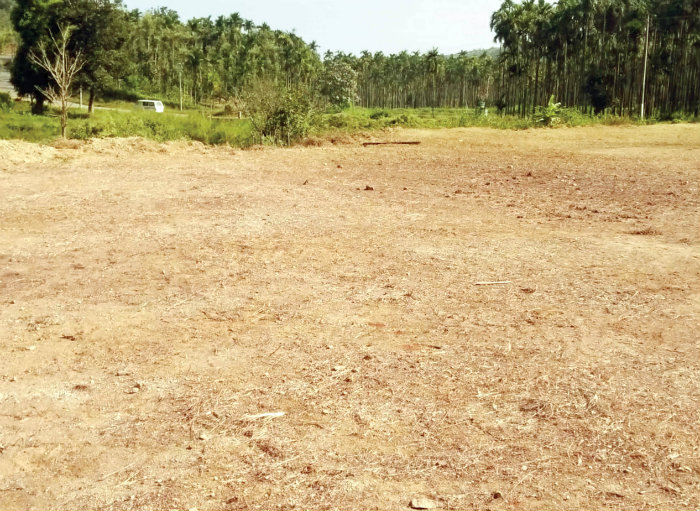
The spot in Kutta where the sky-gazing event will be witnessed on Dec.26.
Kutta falls on Solar Path
Speaking to Star of Mysore, G.B. Santosh Kumar of Mysore Science Foundation, said that Kutta falls on the Solar Path and as such, the visibility is clear. The visibility of Annular Solar Eclipse in Mysuru is only 75 percent.
“Mangala in Gundlupet, Coimbatore in Tamil Nadu, Udupi in Dakshina Kannada and Kutta in South Kodagu fall on the Solar Path where there is a clear visibility.
“We did not get permission from the Forest Department for the event as Mangala falls under the limits of Bandipur Tiger Reserve. And 2,000-strong crowd going to Coimbatore and Udupi was a distant possibility. As such, we have zeroed in on Kutta where the event can be viewed from 8 am to 11 am,” Santhosh said.
Kaimaani coffee yard
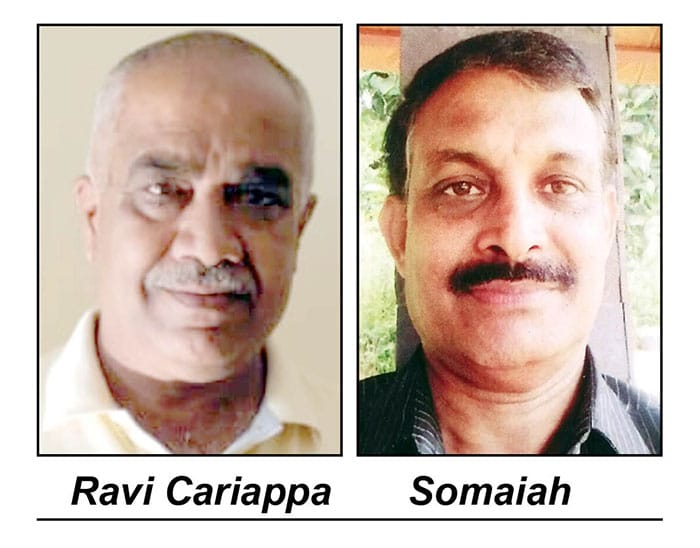
At Kutta, the event will be organised at the newly-developed coffee drying yard of Kolera Ravi Cariappa in Kaimaani village. “The place is by the side of the road and the land is in a higher altitude and there is an arecanut plantation below. This is a perfect location for witnessing the once-in-a-lifetime event,” said Kotrangada Somaiah, a teacher at Manchalli Government School, who played a key role in identifying the location for the organisers.
“People from Mitee Pune contacted me two months back and requested me to find out an ideal place in Kutta to view the event. First we considered the Government Higher Primary School Cinkona in Kutta for the event but had to cancel it as the approach road was not good. The Kaimaani coffee yard is a perfect location as it is by the side of the road. There are facilities including toilets and I have requested the local residents to allow children to use their toilets,” said Somaiah.
India Book of Records
The event organisers have already registered in the India Book of Records for the largest gathering of children in one place to view Annular Solar Eclipse. “On Dec.17, the Mysore Science Foundation will organise another programme called “Video Viewing” where students will be seeing eclipse-related videos to prepare them for the main event. For the actual event on Dec.26, we are expecting students from Maharashtra, Tamil Nadu and Kerala,” Santhosh added.
On that day, occurrence of eclipses, types of eclipse, science behind eclipse, myths and misconceptions, eclipse watching and safety shall be explained in addition to demonstration on pressure variation and temperature variation.
Food & accommodation
For outstation students coming from Maharashtra, Kerala and Tamil Nadu, choultries have been booked in Virajpet for their food and accommodation. “Along with them, students from Mysuru, Bengaluru and Kodagu too are participating in the event,” Santhosh said.
Student selection
On the student selection process, the Mysore Science Foundation had communicated to schools to send 10 children who are interested in astronomy and a teacher. Registrations were on first-come-first-serve basis and we have kept last-minute registrations open as we are aiming for India Book of Records, he added.
source: http://www.starofmysore.com / Star of Mysore / Home> News / December 07th, 2019
10,000 rare Mahseer fingerlings released to Harangi River at Koodige
Kushalnagar:
There are many possibilities of utilising Harangi Reservoir in Kodagu and its backwaters. One among them is fishing and fisheries development. Realising this potential, an exclusive fishing cultivation pond will be set up at Kushalnagar with Rs. 2 crore assistance from National Bank for Agriculture and Rural Development (NABARD).
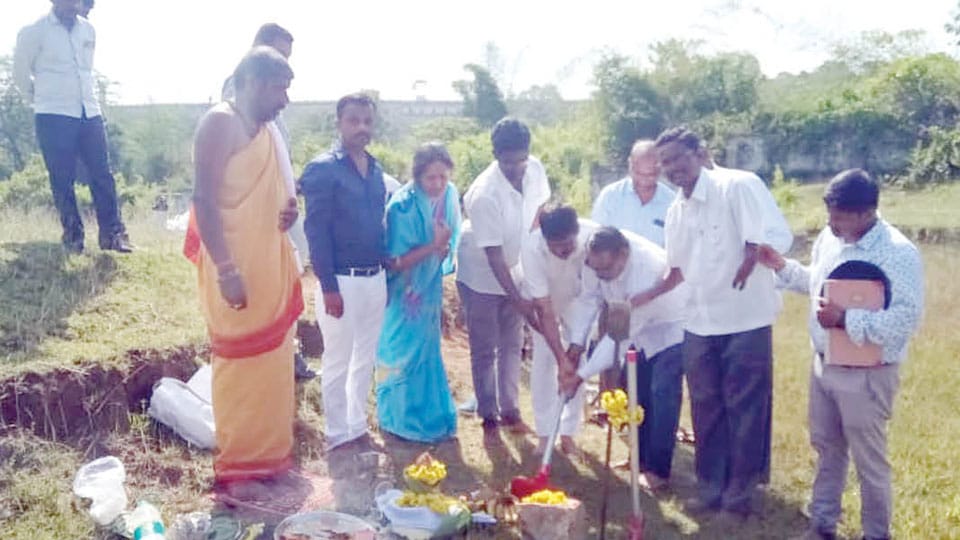
The Bhoomi Puja for the 2-acre pond was performed recently in Kushalnagar by Madikeri MLA M.P. Appachu Ranjan. Speaking on the occasion, the MLA said Harangi was one of the major reservoirs built across River Cauvery. “Due to the reservoir, there are great possibilities of pisciculture in a large scale due to abundant availability of water backed by groundwater support. Rare fish varieties like the Mahseer can be cultivated and six such ponds will be constructed in the land owned by the Fisheries Department,” he said.
Traditional fishing is being held from many years in the backwaters of Harangi, which spreads over 1,886 hectares in area. Lakhs of fingerlings are released into the reservoir every year. “As part of the project, fish cultivation enclosure has been set up in the backwaters of Harangi Reservoir and the sample of fish is being collected to study the growth of fingerlings, said Sachin, Assistant Director, Harangi Fish Rearing Centre.
He added that the Centre was set up by the Government 25 years back to support farmers who are willing to rear fish in the cultivation ponds. Varieties of fish, including Mahseer, Katla and Rohu, are reared in the Centre. Along with these, fingerlings procured from Kabini and Bhadra reservoirs are being provided to farmers at subsidised costs, he said.
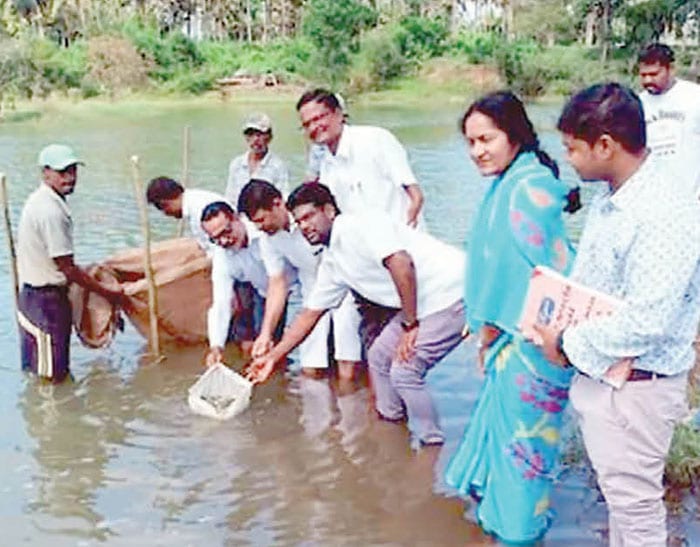
On the occasion, over 10,000 Mahseer fingerlings were released to 5.6 km Harangi River stretch from the Dam to Koodige Bridge. “Through this, we intend to cultivate the Mahseer fish that is on the verge of extinction. Fishing has been banned on this particular stretch to save the Mahseer variety,” he added.
source: http://www.starofmysore.com / Star of Mysore / Home> News / November 25th, 2019
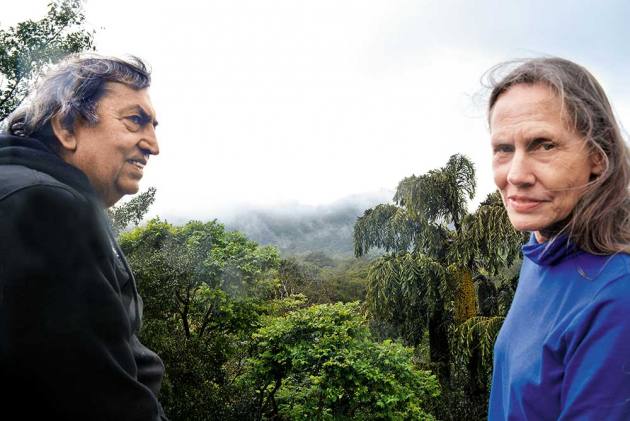
Foresters Anil and Pamela Malhotra have found peace among the coffee plantations of Coorg. Embracing nature has been their passion.
PHOTOGRAPH BY AJAY SUKUMARAN
Around four in the evening, after a late lunch, Pamela Gale Malhotra is standing at a bay window of her living room looking out at a picture-perfect landscape—a gushing stream in a rain-soaked forest with the abutting Brahmagiri hills framing the backdrop. It was about 25 years ago that she first stumbled onto this view. At the time, she was out scouting for a site for their home and had been hurrying up a hill trying to escape the rain and leeches when it struck her speechless.
The place is now more wooded than it was in 1995 when Pamela, 67, and husband Anil Malhotra, 78, built their home in south Coorg—in a coffee estate that had been listed. How they got here is quite a story, told amidst a primordial symphony—the burble of the stream and the call of the crickets.
Their first port of call in India was in the Himalayas in Uttarkashi along the Assi Ganga, where they stayed for nearly a decade before deciding to move south. After scouting through a few states, they finally found what they were looking for at the Brahmagiri foothills in Theralu—a remote plantation where they could raise a forest, as bizarre as it sounded to the folks around back then.
It might still sound like a nutty proposition, until you drive past the gates of the Save Animals Initiative (SAI) Sanctuary. Suddenly, you are in a thicket with a narrow driveway that meanders some distance to a garage and beyond that the dark peach walls of the Malhotra home. Around you is a 300-acre native rainforest through which the elephant and tiger freely saunter.
___________________________________________
“When you are away from Nature you aren’t thinking clearly…This is our passion.”
___________________________________________
Every morning, in more hospitable weather, Pamela and Anil set forth into this grove—their walks take an hour-and-a-half usually unless she’s checking on the dozen or so camera traps dotting the landscape, replacing batteries, swapping memory cards or switching locations. Over the years, Pamela has collected a mountain of data—otter, porcupine, leopard, sambhar, all kinds of species on video. Since it’s a wilderness—whatever remained of the coffee plants became humus for the trees—the couple merely follow the paths the elephants have cleared.
“We’ve set up this private model,” Anil tells Outlook. “We want other Indians who can afford it, we need even those who can’t, to join together to build this.”
The hills get covered up and the rain comes down. It’s been bucketing down all through the south-west monsoon this year, casting a gloomy outlook for coffee growers in Coorg. “When we came here, it was normal to have 350 inches of rain a year. Even if it was buckets of it, we had this,” says Pamela, pointing to the woods. “This is what the forest canopy is for. It’s like using an umbrella with pores in it, it’s going to break it up and slow it down.” But over the decades, Coorg’s forest cover has been dwindling. “The coffee plant is useless when it comes to retaining moisture…they have extremely small, shallow roots. We’ve warned people again and again, “don’t cut down your big native trees.””
The Malhotras put together their 300-acre sanctuary piece by piece, starting 1991, first by purchasing a 55-acre coffee estate. “Patches were cleared for coffee. So what we did was to fill up the patches with native trees,” says Anil. They planted jackfruit, Nandi, Rosewood, Matti and hundreds of fruit trees. “And, of course, the native trees come out way on top in absorbing carbon,” adds Pamela, pointing to sequestration studies which show that SAI Sanctuary acts as a carbon sink, helping the neighbourhood as well as providing a haven for the wildlife moving between the Brahmagiri reserve forests and Nagarahole national park, an hour away by road.
Down by the stream, a snake slithers away as we approach the water. Most days, the couple crosses over onto two rocks on a small island to meditate. “We were sitting on these rocks once and a matriarch elephant came up,” says Anil. It didn’t sound pleased, he recalls. “We kept sitting and mentally saying we have come in peace. They may not speak English but they know vibrations. She started eating the bamboo and then 8-10 members of the family came. They surrounded us for 45 minutes. It was such a beautiful experience.” Frequently, local people and the forest department bring them injured animals—dogs, cats, parakeets—which find a ready home.
Anil says it is possible for others to do what they did—buy land and restore forests—even if it’s difficult. “It can be done. People tell us “we haven’t made the money you made in America”. We bought at the right time. I can’t afford it today.”
Pamela and Anil met in the US in the early 1970s at her hometown, Red Bank, New Jersey, where he ran an Indian restaurant. She worked at an all-night cafe at Asbury Park, where a young Bruce Springsteen (then playing in a band called Steel Mill) would drop in to play sometimes during breaks from the music club upstairs.
“But Anil and I were on complete opposite sides of the political spectrum then,” she laughs. “I’ve always described it as fire and petrol…explosive encounters.” Mostly over the Nixon presidency and the anti-war movement. Soon after, she went back to college to study political science—the breaking-out of her conservative mindset of ‘materialistic Americana’ happened then. He sold up and followed her to Colorado, where they stayed for a few years, she working as a sales rep in a pharma company and he with a mortgage firm. The commissions he got were reinvested in real estate in Colorado and then in a forested patch in Hawaii, which they fell in love with on their honeymoon. The couple moved to India in 1986 to visit Anil’s ailing father and eventually settled in Uttarkashi where they wanted to recreate their wooded Hawaii home. The land ceiling regulations prompted the decision to look at plantation land in the south.
“I could have continued the real estate and all that in America, but what is the point of life then. I can’t take it after me,” says Anil. “I’d rather drink pure water and breathe fresh air than breathe carbon dioxide and be ill half the time and give all my money to doctors and hospitals.” Adds Pamela: “Being in Nature helps us physically. Kids today are being hot-wired by not having time out in Nature to play.”
Pamela, who received the Nari Shakti awards for her efforts in afforestation in 2016, has given numerous presentations across the country—including a recent one at the Apple facility in Cupertino while on her first visit to the US in 20 years—to raise awareness. She’s currently working on an autobiography titled From the Heart of Nature, slated for publication next year. “When you are away from Nature you aren’t thinking clearly,” says Anil. “Grow fruit trees, grow organic food…the demand far outstrips supply. We have planted thousands of native fruit trees now. Last year, we distributed thousands of saplings at schools and colleges telling them this is the future.”
The Malhotras, like successful permaculturalists, are mostly self-sufficient for most of the year. They rely on roof-top solar panels, installed in 1997—a year after the house was built. The patch next to the house is an organic food garden where most of their vegetables and salads come from. Pamela prefers cooking on biogas.
“Everything comes out of our pockets, except approximately two per cent in the form of donations if we are lucky,” says Pamela. Eco-tourism—they have four rooms for guests—helps meet expenses. “This is our passion, our life. So we have to keep things going. But there are things we’d love to do, like Payment for Ecosystem Services. We’d like to sponsor more organic farming,” says Pamela. “I cannot tell you how frustrating it has been trying to raise money for any of these programmes.”
The rain lets up for a bit, but the clouds hang low. Pamela and Anil climb up a wet, metal ladder to the rooftop for a sweeping view of their sanctuary. Pamela recalls a dream she once woke up with, years earlier. “I had seen a house on a small hill, overlooking a pond with the river flowing past in the middle of a wooded valley with white-capped mountains all the way around and a lot of wildlife. This was that view…those mountains are white-capped from the mist.” This was before they bought this place in Coorg. “I thought we’d find that in the Himalayas. But it wasn’t in the Himalayas, it was here. So, you never know.”
By Ajay Sukumaran in Coorg
source: http://www.outlookindia.com / Outlook / Home> Magazine> National> Cover Stories / by Ajay Sukumaran / November 21st, 2019
Surendra Varma, a scientist at Indian Institution of Science, said he was happy to see the turnout during the festive season.
Bengaluru :
Heavy rain and Deepavali celebrations didn’t stop corporate communication professional, Danielle S, to attend an event organised by Friends of Elephants, an informal group dedicated to promote wildlife diversity. “I have attended previous events of this group. I was out of town and came back soon to attend it. These are good knowledge-sharing platforms,” she said, adding that she and her friends believe in celebrating festivals in meaningful ways like this.
Friends of Elephants conducts panel discussions and art and cultural activities on every fourth Sunday. Titled Elephants, Tigers and Lions (conservation and conflict), their last event on October 27 included movie screenings like Shanti Samsara by Ricky Kej, talks by Manoj Kumar, chief conservator of forests, Kodagu Circle, and Ravi Chellam, wildlife expert, and panel discussion with speakers and villagers from Bandipur. The forest officers shared their experiences of tackling wild animal attacks in estates and their translocation, while villagers shared how difficult their day-to-day life is because of animal attacks.
Surendra Varma, a scientist at Indian Institution of Science, said he was happy to see the turnout during the festive season. “We had organised one event during an IPL match in the city. There was no drop in the number of participants,” he added.Prabha Ramakrishnan, a resident of Indiranagar, said she always tries to attend the events. “We are a small group of women who are interested in nature and wildlife. We go for trekking, visit wildlife sanctuaries and attend events. Why should one miss such events in the name of festival?,” she asked.
source: http://www.newindianexpress.com / The New Indian Express / Home> Cities> Bengaluru / by Lesly Joseph / Express News Service / October 29th, 2019
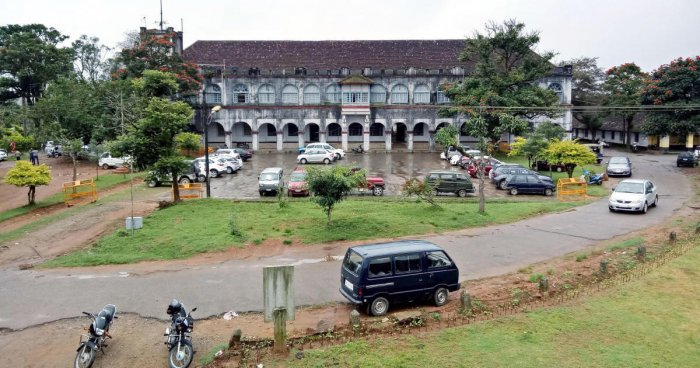
Deputy Commissioner Annies Kanmani Joy has directed the assistant director of land records to shift the government offices from the Old Fort to the new building of Zilla Panchayat, before October 31, as per the court orders.
The Madikeri Fort, also known as Old Fort.
The orders by the deputy commissioner have come in the wake of the High Court direction towards taking up renovation work of the historic establishment. The work will be carried out by the Archaeological Survey of India (ASI).
Annies Kanmani Joy said that the district administration had promised the Department of Archaeology of handing over the old building by October end.
As there are government offices inside the Old Fort, the department could not carry out the restoration work of the building. Also, there were demands to shift the government offices to the newly built Zilla Panchayat building.
As per the directions issued by the High Court, officials from the ASI visited the fort premises and inspected the condition of the Old Fort building.
The team of officials also furnished a report to the court, on the probable steps towards the repair of the building. Following the same, the officials from various government departments had agreed to vacate their offices.
While the repair work was going on in January, the roof of the palace in the Fort premises had suddenly collapsed.
The walls of the palace are discoloured and the soldiers’ quarters have totally collapsed.
The leaking roof of the main building was covered with plastic sheets as a temporary measure.
Glorious history
Mudduraja, a ruler of Haleri dynasty, had built the fort in the 17th century.
Tipu Sultan rebuilt the fort using stones later.
The fort was acquired by Dodda Veera Rajendra in 1790 and later came under the rule of British in 1834.
source: http://www.deccanherald.com / Deccan Herald / Home> State> Mangaluru / by Adithya K A / DH News Service, Madikeri / October 23rd, 2019
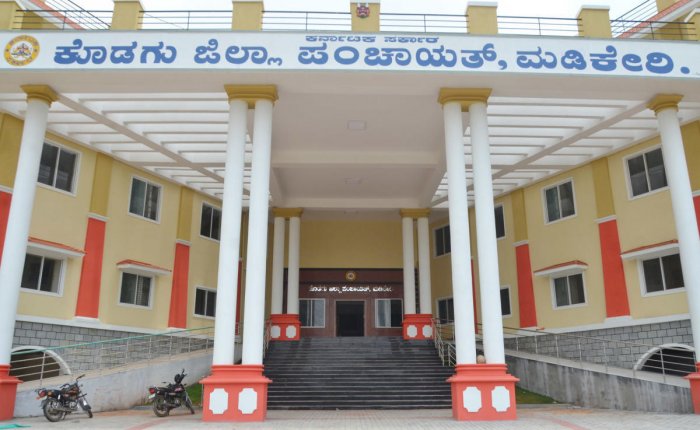
The new building of Kodagu Zilla Panchayat in Madikeri.
Rural Development and Panchayat Raj Minister K S Eshwarappa and Housing and Kodagu In-charge Minister V Somanna inaugurated the new building of Kodagu Zilla Panchayat at K Badaga village, near Madikeri, on Friday.
The groundbreaking for the new building, constructed at a total cost of Rs 30 cr, was done in 2016.
Speaking on the occasion, Eshwarappa said that a grant of Rs 30 crore would be given to each Assembly constituency under Pradhan Mantri Grameen Sadak Yojana.
“Also, grants will be released for solving drinking water problem,” he added.
The minister meanwhile assured of providing Rs 20 lakh each to 28 gram panchayats towards solid waste management unit.
“Task Forces will be formed for ZP members and every task force will be granted a fund of Rs one crore”, he said.
“Floods have ravaged the state. The Central government has provided Rs 1,200 crore for relief measures and the state has already released Rs 1,500 crore. Another Rs 1,500 crore will be released soon. It has been decided in the Cabinet meeting to utilise Central government grants for compensating the loss of crops,” Eshwarappa said.
He also assured of providing integrated funds towards the rejuvenation of lakes in Kodagu.
Lauding the job done by top officials of the district — Deputy Commissioner Annies Kanmani Joy, Zilla Panchayat Chief Executive Officer K Lakshmipriya and Superintendent of Police Dr Suman D Pennekar, the minister said the district was peaceful as women adored all the key posts in Kodagu.
He also mentioned that he has four daughters and a son.
District In-charge Minister V Somanna said there had been loss of life, both human and animals, in the district due to floods.
Agriculturists in the district have incurred a huge loss. A package of Rs 532 crore has been announced to Kodagu out of which Rs 100 crore has been released. The problems of flood victims will be duly addressed, he added. Somanna meanwhile added that Chief Minister B S Yediyurappa was supposed to be take part in the programmes of handing over houses to flood victims and the inauguration of new building of the ZP. But the chief minister could not attend due to unfavourable weather conditions.
MLA K G Bopaiah urged the state government to provide 350 acres of ‘C’ and ‘D’ (categories) land to those who have lost their agricultural land in Mudigere, owing to landslides.
MLA Appacchu Ranjan urged the government to release Rs 1 crore for the restoration of historic Old Fort in Madikeri.
MLC Veena Acchaiah said the government should construct houses for flood victims of 2019 at a cost of Rs 9.85 lakh each, instead of Rs 5 lakh.
Instead of wood pulp, Bluecat Paper uses cotton, linen rags, coffee husk, banana fibre, mulberry, corn husk and flax fibre among other things
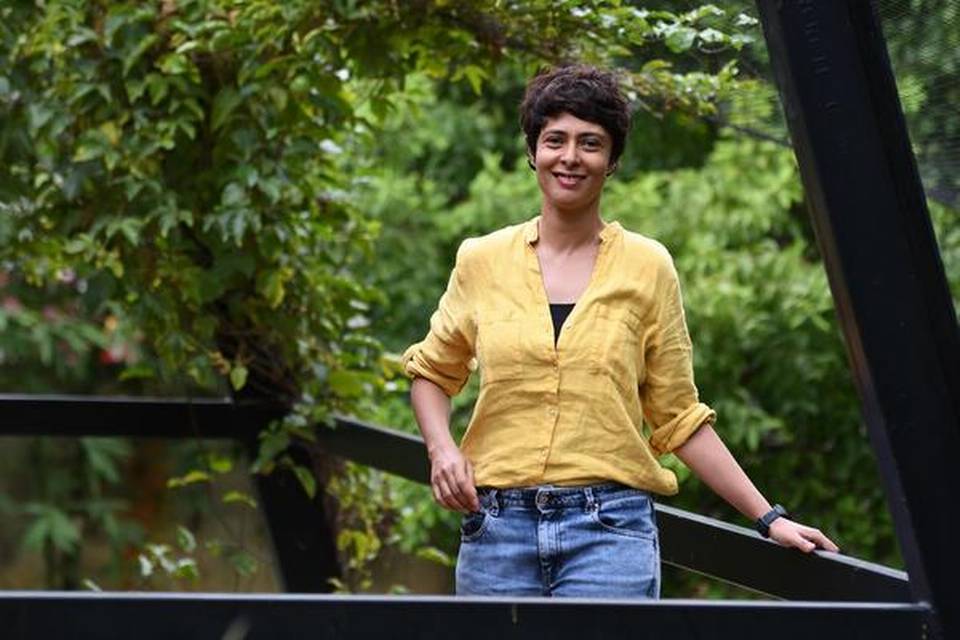
Kavya Madappa’s cabin at Bluecat Paper, a company that makes upcycled paper, overlooks a small verdant garden with a passion fruit vine and other plants. A black native dog sleeps on a thick sheet that is spread on a plush couch. It is not her pet. “He just likes to hang out here,” says Kavya from her desk. The office, located in Peenya, is airy, green and relaxing — it is unsurprising that Kavya also owns a spa resort in Coorg.
“I grew up in Coorg. Having a large backyard with lots of trees is something I took for granted,” she says. When she moved to Bengaluru, it took a while to adjust to the city’s traffic and bustle. Most conspicuous — and disturbing — to her, however, was the rapid felling of trees. She realised this when she happened to witness the large-scale production of paper at a mill.
Paper is mostly produced from wood pulp, which requires sawing of timber and removal of bark. Environmental activist Mandy Haggith, in her book Paper Trails: From Trees to Trash – The True Cost of Paper, writes: “The paper industry consumes 42% of all the wood felled industrially every year and its share of the world’s cleared forest is an area of about three million hectares annually.”
According to worldatlas.com, in the past four decades, the use of paper has risen by 400%. Roughly 26% of solid waste dumped in dumping sites is discarded paper and paperboard. A report by the Food and Agriculture Organisation of the United Nations says that by 2050, more than half of the world’s total demand for wood and wood products is likely to consist of paper and paper products.
Bluecat Paper products | Photo Credit: Sudhakara Jain
These numbers suggest that Kavya’s concern for trees at the paper mill wasn’t misplaced. She sought and found a way to make paper without wood pulp. For two years, she studied about paper, met papermakers and experimented with different methods. A 15-day hand papermaking course at the Kumarappa National Handmade Paper Institute in Jaipur equipped her to set up Bluecat Paper in 2018.
Instead of wood pulp, Bluecat Paper uses cotton, linen rags, coffee husk, banana fibre, mulberry, corn husk and flax fibre among other things to make paper. These raw materials, according to Kavya, are abundant. Even the quality of her “tree-free paper”, she assures, is as good as the ones made from wood pulp. But handmade papers are expensive as their production is labour- and time-intensive.
“Most machines are developed for rolls of paper, whereas handmade paper is made into sheets,” explains Kavya. She, however, hopes that “tree-free paper” becomes mainstream. “I had to scale it up because most of the hand papermakers I knew were making paper in their backyard or in small units. At Bluecat, we can make 5,000 to 6,000 sheets of paper a day,” she says. But this number is a trifle compared to the lakhs of sheets manufactured at a paper mill every day.
“Paper isn’t a big deal,” says Kavya, “It is use and throw. You don’t even think you are wasting paper because it is cheap… But it comes at a price for planet Earth.”
Kavya steps out of her cabin to pluck a raw passion fruit. “A tree needs to grow at least 20 years before it can be cut for paper. But by this time, it has its own little ecosystem.But one fine day, you come and cut 50,000 trees at one go and say, ‘It is okay’… Come on, it’s ridiculous!”
(Bluecat’s products are available on bluecatpaper.com and leading e-commerce sites)
source: http://www.thehindu.com / The Hindu / Home> News> Cities> Bengaluru / by Praveen Sudevan / September 26th, 2019
This is in response to the letter by Geologist Mrinmoy Chakraborty (SOM dated Aug.11, 2019) defending the views of the Geological Survey of India (GSI) published in SOM dated Apr.25. I write this to bring to light a few facts that go to show that Chakraborty has hastened to defend the warnings given by GSI a bit too early and to furnish some clarifications regarding the extreme events that wreaked havoc in Kodagu this August and perceptions arising out of them.
The series of landslides that devastated Kodagu in 2018 occurred mostly during the period 15th, 16th and 17th August. Some intriguing data on rainfall pertaining to this period tells the story. This data is from the rain gauge at Kudigana, a place near the border of the catchment of Harangi, which witnessed the worst kind of disasters in 2018.
Record rainfall
Till 6th August, the station had recorded about 5,500 mm of rain, and then on rainfall on the successive days read (in mm): 81, 250, 269, 90, 115, 121, 262, 295, 320, 461 (16th), 394, 197, 164, 95, the total for the fortnight amounting to 3,114 mm (Mysuru’s annual rainfall is 780 mm). Probably the 5-day extreme rainfall recorded then at Kudigana (1,686 mm) is the highest ever recorded in the rain gauging history of Kodagu (which extends for over 120 years now), the earlier highest being 1,462 mm in 1964 pertaining to the station of Bhagamandala.
On the other hand, the records at Kudigana for this year read thus: Total rainfall up to 1st August – 2,041 mm; then on – 30, 0, 16, 136, 183, 254, 312, 276, 298, 158, 90, 46, 35, 100 (15th), during the next 14 days – this is the period when the floods ravaged the district. The extremes here are just about 75% of last year’s and the total for season up to 20th Aug. is not even half of last year’s (nearly 4,090 and 8,614 mm respectively).
Once in 10-12 years
The highest one-day rainfall recorded this year has been reported from Bhagamandala, places around which contribute to flow in Cauvery and stands at 400 mm. The seven-day extreme for this year here has been 1,142 mm. Strangely, these values have return periods of 12 years and 10 years respectively.
This means, the type of flood-causing rain that fell this year occurs, according to data available, nearly once in 10-12 years. Even the flood magnitudes in the four rivers of the basin that were reported this year have return periods of 15 – 20 years.
On the other hand, the rainfall of 2018 that caused havoc in areas around Madikeri and in the catchment of Harangi shows a return period of over 50 years! This is the reason why even though Kodagu experienced severe floods this August, only just a couple of incidents of severe landslides have occurred.
Technical data
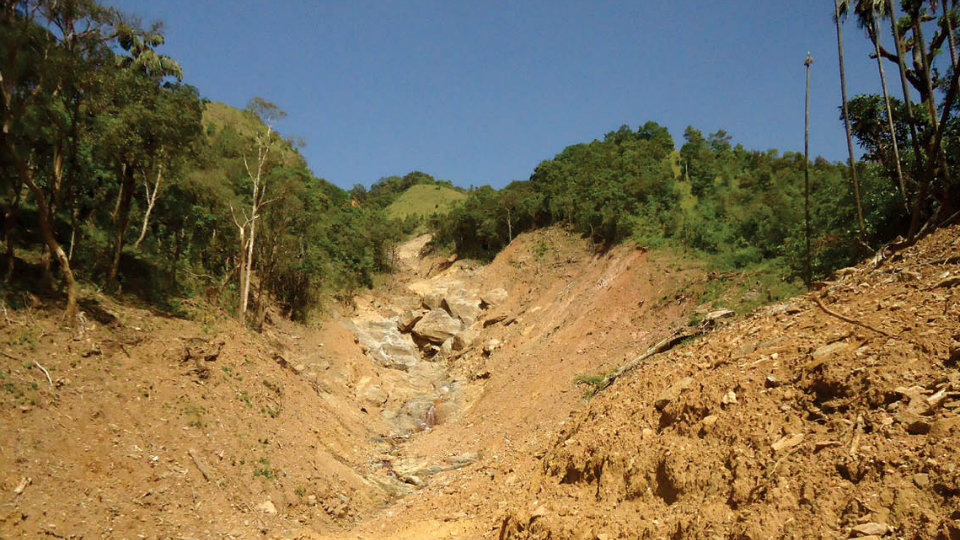
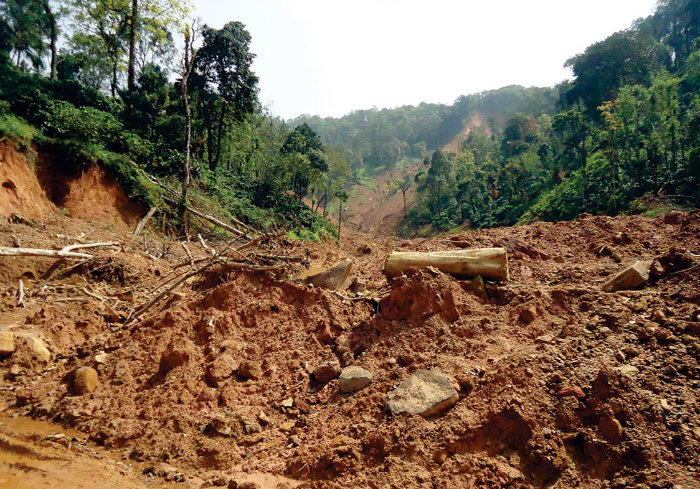
Very often, blockage of roads due to mud falls from tall and nearly vertical cuttings (Plate 1), many times triggered by uprooting of trees and washing away of the valley side road formations, are also termed as landslides, while the landslides of 2018 were removal of unimaginably large portions of hills, mostly in the valleys.
A large number of the over 150 landslides that occurred then got initiated far away from the highways and inhabitations (Plate 2), in total contrast to the common belief that tampering with nature and cutting land indiscreetly is the root-cause of landslides.
Many of these slides carried tens of thousands of cubic meters (like 200 m x 100 m x 2 m) of earth submerging hundreds of hectares of land downstream in mud (Plate 3 and 4). However, even earth falls of volume of a few hundred cubic meters (20 m x 10 m x 2 m) block roads and cause damage to houses — only one landslide of the former nature has been reported this year. It is not strange that extremes not quantified by measurements are blown out of proportion, painted colourfully and projected as catastrophes in this era of rampant use of mass and social media.
Predictions fail
Dr. H.S.M. Prakash, Director General of GSI, is reported to have explained (SOM, 25th April) thus: “There are indications of excessive downpour happening in five phases just like last year …”; “likewise, three to four more similar downpours are likely to be experienced… The rainfall in August is likely to result in floods”. Yes, one spell of rainfall has resulted in floods. But what about the rest? It is a common experience that any astrologer, once approached, would point out a number of cases in which his predictions have gone perfectly right, hiding others! The fact is that rainfall in Kodagu this year has been very poor except for that one spell — even after that week of deluge, the total seasonal rainfall for the year remains 25-40% lower than the normal (except in small pockets of Virajpet), while the last year it was about 25-50% higher than the normal.
Strong low pressure
It is claimed by Chakraborty (SOM, 11th Aug.) that the predictions for this year have been those based on “evidences”. Dr. Prakash had explained: “There is a possibility of heavy rain being caused due to volcanic eruptions in Hawaii and Mauritius. And, as if an indication, it has already started raining in Kodagu (in April)”.
It is utterly sad that an agency with a legacy of 200 years has fished out evidences for the floods in August, in the excessive rainfall of April! It is well established that the pre-monsoon rains of April and May are a phenomenon occurring due to local convections, while the monsoon rains in Kodagu are due to the global circulation, aided by strong low pressures in North/ Central India and the local orography (high rising mountains) of the Sahyadris.
It is now popularly known that the excessive rainfall of the ten days of August this year has been due to a strong low pressure that developed in the Odisha coast, and experts from GSI claim it to be due to excessive heat of magma in Mauritius!!
Better to err on safer side
Being half correct about events not known of is one hundred perfect in Statistics — probably the messengers, the people at the helm of affairs, believe that it is better to err on the safer side than on the other. Sweeping and arbitrary long-range predictions are not only unwarranted, but are also dangerous.
Rather, there shall be healthy introspection and debate on why even extreme events of smaller magnitude have been resulting in excessive damages in recent days. Further, very little of the Hydrology of this region has been understood, much remains to be done. It is hoped that the agencies concerned take a more pragmatic and purposeful look at the recent events and use them to learn about the region.
– Yadupathi Putty, Mysuru, 3.9.2019
You can also mail us your views, opinions, and stories to voice@starofmysore.com
source: http://www.starofmysore.com / Star of Mysore / Home> Voice of the Reader / September 16th, 2019
India’s first environment school — World Environment School — is all set to be opened in Coorg, Karnataka. It will also be the first school in entire South Asia to take a leading role in promoting and delivering environmental education with sustainability at its core. Spread over a hundred acres across the beautiful hills of Coorg, the school’s focus will be to build strong environmental and moral values among its students.
Mobius Foundation, a non-profit organization working towards environmental sustainability, in partnership with the UK-based Whitgift School announced the launch of this initiative at International Conference on Sustainable Education.
“WESc will be operational from 2021 for Grade 6 to 12 students from India and around the world. The school will cater to the parents who want the next generation to be actively involved in the protection and sustainability of the environment apart from a world-class education,” said Pradip Burman, Chairman, Mobius Foundation.
WESc will offer an international curriculum with affiliation from Cambridge Assessments and International Baccalaureate.
“The need for environmental education is growing rapidly as the degradation of the environment is taking place at a fast pace and we have taken a lead role in this direction by launching India’s first environment school,” said Chris Ramsay, Head Master, Whitgift.
source: http://www.dailypioneer.com / The Pioneer / Home> India / by PNS, New Delhi / September 12th, 2019
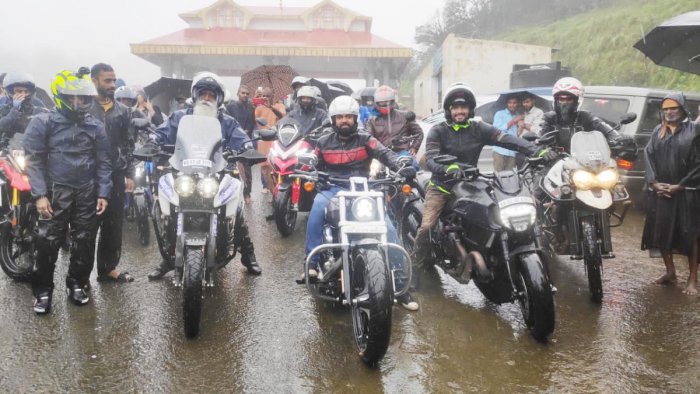
Isha Foundation Chief Sadhguru Jaggi Vasudev at the launch of ‘Cauvery Calling’ campaign, at Talacauvery in Kodagu, on Tuesday. Actors Rakshith Shetty and Diganth took part in the rally.
Cauvery Calling, a campaign conceptualised by Isha Foundation was launched in Talacauvery, the birthplace of River Cauvery, on Tuesday.
Isha Foundation Chief Sadhguru Jaggi Vasudev rode a motorbike himself to arrive in Madikeri on Sunday. Film actors Rakshith Shetty, Diganth and Shashi followed him.
A puja was offered at the ‘Theerthakundike’ in Talacauvery, earlier to the launch event.
Sadhguru Jaggi Vasudev said that through the campaign, there is an aim to plant 242 crore saplings on the banks of River Cauvery.
Trees help to increase the capacity of soil to retain water. Isha Foundation will work towards getting the necessary assistance from the government, he said.
He pointed out that the River Cauvery has become thinner by 39% in the last 70 years.
“The groundwater level in the river catchment area has been depleting drastically. Due to excessive deforestation in the catchment areas of the river, water is not flowing further and the river is getting dry even before reaching the sea. As a result, a drought-like situation has been arising during the months of April-May itself. This has created repercussions in terms of droughts in Karnataka and Tamil Nadu. Around 47,000 farmers living on the banks of River Cauvery have ended their lives in the last 10 years. It is noteworthy that the places of massive landslides have been due to excessive human interference. It is the need of the hour to wake up to the warning sign,” said Sadhguru Jaggi Vasudev.
Udupi-Chikmagalur MP Shobha Karandlaje said that the Central and the state governments will support the ‘Cauvery Calling’ campaign.
This month, the state government will sign a memorandum of understanding with Isha Foundation in this regard, she said.
MLA K G Bopaiah strongly felt the need to conduct a scientific study so as to know the reason behind massive landslides in Kodagu. He also demanded action against those who have encroached the government lands.
Air Marshal (retd) K C Nanda Cariappa and sportsperson Ashwini Nachappa were present during the programme held at Crystal Hall in Madikeri.
PM tweets
Replying to a tweet by Sadhguru Jaggi Vasudev, Prime Minister Narendra Modi tweeted at 4.13 pm on Tuesday, conveying his wishes to ‘Cauvery Calling’ campaign.
“Happy to know about your effort. It will surely add to the endeavour of harnessing Jal Shakti and preventing unnecessary wastage of water,” said the prime minister.
He also wished Sadhguru on his birthday saying, “Also wishing you a Happy Birthday! Praying for your long life and best health!”
15-day bike rally
The motorbike rally organised as a part of ‘Cauvery Calling’ campaign will pass through Hunsur, Mysuru, Mandya and Bengaluru. Public functions will be held in these places. The rally will reach Bengaluru on September 8.
The bike rally will traverse a distance of 1,500-km in Karnataka and Tamil Nadu and will culminate in Chennai on September 17.
source: http://www.deccanherald.com / Deccan Herald / Home> State> Mangaluru / by DH News Service, Madikeri / September 03rd, 2019
WELCOME. If you like what you see "SUBSCRIBE via EMAIL" to receive FREE regular UPDATES.
Read More »