Category Archives: Green Initiatives / Environment

Govt revokes temporary ban on land conversion in Kodagu

The state government on Thursday revoked the temporary ban on conversion of land in the flood-hit Kodagu district.

The ban had come into effect after last year’s devastating floods washed away large chunks of land in the coffee district.

The Revenue Department on Thursday ordered tahsildars and assistant commissioners to allow conversion of land up to 15 to 20 cents for building houses by the locals after obtaining a ground report.

“Several people have been submitting applications seeking the conversion of land to build houses for a living. But since the floods, the government had ordered temporary ban on conversion of lands for non-agricultural purposes. But keeping in mind the public request, the government has directed to allow conversion of land up to 15 to 20 cents for building houses by the locals.”

The state government while revoking the temporary ban has also laid down certain conditions to prevent damages to the properties in future due to any natural calamity.

As per the conditions, no permission shall be given for construction of buildings in non-stable areas so identified by the Geological Survey of India (GSI) in its report; the buildings shall be at least 10 meters away from the rivers and rivulets and conversion shall not be allowed along the valleys and on those lands which had witnessed landslide in 2018.

source: http://www.deccanherald.com / Deccan Herald / Home> State / by Niranjan Kaggere, Bengaluru / May 09th, 2019

Kodagu: Emergency response mechanism strengthened

The Kodagu district administration has taken various measures to cope with any exigencies arising out of natural disasters and has constituted committees to deal with the same.

It has also urged the public not to panic over speculations of fresh outbreak of any natural calamity.

A release said senior officials of the district administration and the district in-charge minister had reviewed the existing system to cope with emergencies some time ago and strengthened the response mechanism in case of a natural calamity.

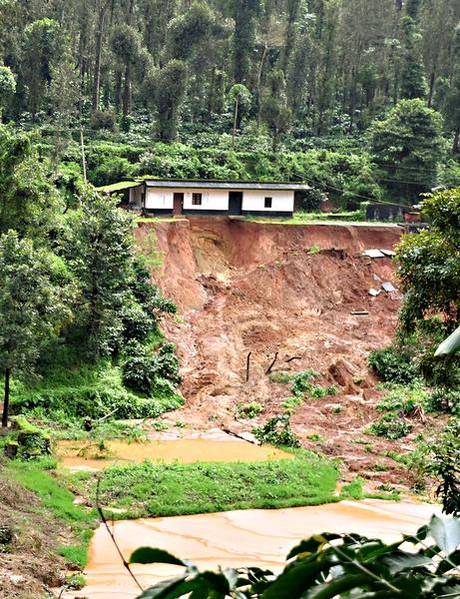
A file photograph of a landslide caused near Makkandoor in Kodagu district during the floods last year.

Consequent to last year’s disaster caused by incessant rains and landslips, the authorities have identified areas which are prone to such events and an Emergency Relief Response and Recovery Committee has been constituted.

In addition, there is an Early Warning and Evacuation Committee, Search and Rescue Committee, First Aid, Mass Casualty Management Committee, Shelter Management Committee etc.

This in addition to constitution of a specific groups to ensure nutrition in shelters, relief management, animal protection and carcass management, psychological first aid, damage assessment, reconstruction and rehabilitation among others. Such committees have been established at the taluk and gram panchayat levels as well, the release stated.

In addition, steps have been taken to put in place a Disaster Management Plan in consultation with the Geological Survey of India, Administrative Training Institute, District Training Institute, and other organisations.

The authorities said an awareness programme and a simulated exercise on response in case of any emergency, has been held in rural areas. In addition, a team of National Disaster Resonse Force (NDRF) has been allocated to the district and will be deployed by the end of May.

Besides, the final report of the GSI survey to identify sensitive and hypersensitive areas is expected in due course and all measures will be taken to minimise the impact of any calamity.

The district administration has also taken steps to ensure that there is no dearth of medical assistance in case of any emergency and hence the public has been asked to eschew fears over the issue.

source: http://www.thehindu.com / The Hindu / Home> News> States> Karnataka / by Special Correspondent / Mysuru – April 28th, 2019

Abode of clouds

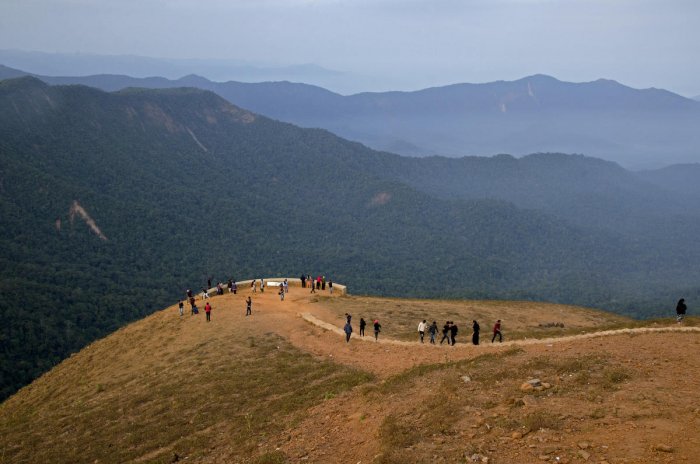
A lesser-known destination of Madikeri is Mandalpatti where sky-high hills are covered with magical mist. Sunrises and sunsets here are phenomenal, writes B V Prakash.

Mandalpatti
Mandalpatti

Often described as ‘Switzerland of India’, Coorg is a district known for its hilly terrain, dense forests, waterfalls and unique temples. There are at least half a dozen tourist spots like Bylakuppe Tibetan Monastery, Dubare Elephant Camp, Cauvery Nisargadhama, Abbey Falls and so on. But in recent times, a new charming destination is gaining popularity and is being listed as an important sight not to be missed. Mandalpatti Viewpoint, not far from Madikeri, is a thriving tourist attraction. Virtually little known for long, Mandalpatti shot to fame after the popular Kannada movie Gaalipata was filmed here. The place is also known as Mugilupete or ‘abode of clouds’, as it was named in the movie. Now, this spot has indeed become a star attraction for visitors.

Up, up & away

During our last visit to the town, we had earmarked an extra day to make it to Mandalpatti. Perched atop a range of rolling hills and deep valleys, Mandalpatti, at 4,050 ft, is the ultimate viewpoint offering a 360-degree view of the spectacular landscape. The highlight of the place is the blissful mood it gets into, particularly at sunrise and sunset. As such arriving in Madikeri by the night, we at once called up Harish, the jeep service provider, and fixed the programme for the next day. As per his suggestion, we would leave at 5 in the morning to be able to reach the spot, some 30 km away, in time. It was still dark and cold when the jeep arrived, we were on the way soon.

As had been informed beforehand, the road to Mandalpatti is anything but a ragged trail battered to the core. After the recent deluge, the huge landslides have left their scar and the driving is all the more backbreaking. Only jeeps and 4WDs can venture up this terrain. There are two approaches to Mandalpatti which lies to the north of Madikeri. We skipped the road via Abbey Falls having been to the place many a time. Also, the water would hardly be copious at this time of the year.

The other road passing through Makkanduru and Hattihole is slightly longer but better. Nevertheless, the journey shook us off from the sleepy mood. Reaching the parking lot, we quickly moved up the short trail to the hilltop duly paying the prescribed entry fees at the check-post. Hordes of people had already gathered and were scrambling up. At the summit, we were simply blown off our feet by the stupendous views that opened up all around. The popularity of the spot goes by the ethereal beauty the surroundings have with a sea of rolling hills and the white fluffy layers of mist like waves.

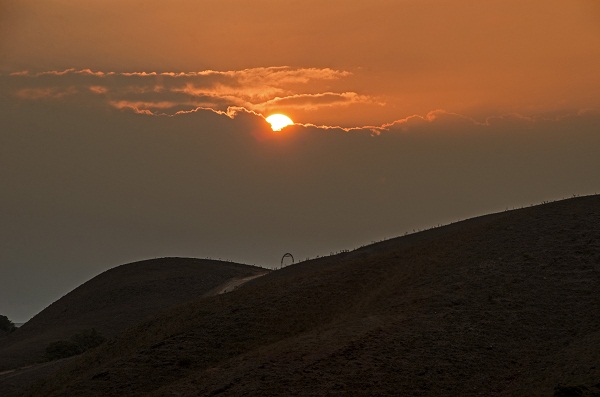
Sunrise at Mandalpatti.

Stunning beauty

The deep ravines that run down from the edge of the plateau are packed with seemingly impenetrable dense forests. In each direction, towering peaks soar with prominent ones like Kumara Parvatha or Pushpagiri, Kote Betta, Nishani Betta, etc. As the sun rose over the horizon, it was as if a huge light was lit over the whole valley. With the clouds painted with golden lines, it was truly an awesome sight. After a delightful experience of viewing breathtaking vistas and scrambling all over the place for a couple of hours, we made it back to Madikeri.

Nishani Motte

With half a day more at our convenience, we chose to climb the Nishani Motte Peak that loomed large in the northwest. Also called Nishani Betta, the 4,100-ft-high hill can be approached from different starting points each with its own difficulty level. The easiest route being from the town Gaalibeedu, 12 km away from Madikeri. We headed there in an auto. The driver was friendly and tried his best to leave us as near the foothills as he could, thereby reducing a third of the trekking distance which is 7 km to the peak. The initial path is a motorable road through coffee estates and a few houses. Soon, it was just the two of us with the trampling of the dry leaves being the only sound to be heard. At the top is a wide plateau with deep valleys to the east and west. As the sun went behind the distant hills, we retraced our steps.

Having visited a heavenly viewpoint and trekked up a beautiful peak, the experience was, for sure, pleasant and rejuvenating.

source: http://www.deccanherald.com / Deccan Herald / Home> Supplements> Travel / by B V Prakash / April 06th, 2019

$10,000 Donated To Kodagu Relief Fund

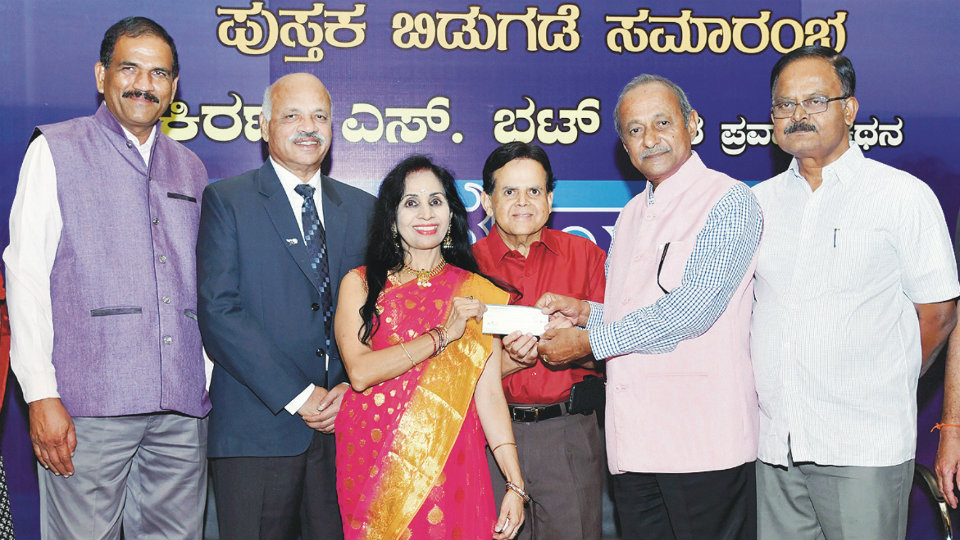
Dr. Subramanya Bhat and his wife Dr. Annapoorna Bhat of Atlanta, USA, donated $ 10,000 (about Rs. 7 lakh) to Kodagu Relief Fund recently.

BhatKF28mar2019

Picture shows the couple handing over the cheque to Rtn. PGD G.K. Balakrishnan of Rotary West at a function held at Radisson Blu in city.

source: http://www.starofmysore.com / Star of Mysore / Home> Photo New / March 2019

Bangalore Kodava Samaja Distributes Cheques To Kodagu Flood Victims

KodavaSamajaKF27mar2019

Bengaluru:

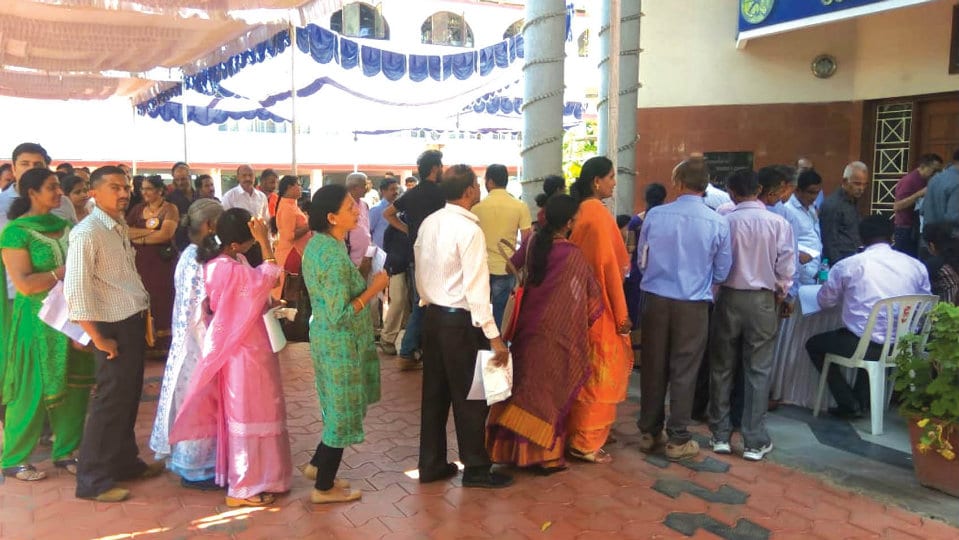
In a noble gesture, Kodava Samaja Bangalore had organised an event yesterday where relief cheques were disbursed to victims of floods and landslides whose lives were torn apart in the natural disaster that ravaged some parts of Kodagu last year. In all, cheques worth Rs. 2.65 crore were distributed to 355 flood victims.

Speaking to Star of Mysore over the phone, President of Bangalore Kodava Samaja Mukkatira T. Nanaiah said that the Kodava Samaja had constituted Kodava Samaja Flood Relief Fund and they had identified the victims through a committee and screened them for relief fund assistance.

“We had also invited applications from the victims and we had constituted an independent survey team to visit each victim’s house to assess the damage. The list of beneficiaries was prepared after a thorough assessment and survey and all the communities – Kodavas and non-Kodavas were included in the list,” he said.

Relief cheques were distributed to victims and the money was decided depending on the extent of damage. “We have distributed cheques from Rs. 30,000 and in excess of Rs. 2 lakh depending on the damage they have sustained,” Nanaiah said.

Kodava Samaja sources said that more than 500 people including non applicants had attended the event. “We have collected all applications and will look into the possibility of distributing compensation to them,” sources said.

The cheque disbursement ceremony was led by Maj. Gen. (Retd) Kodandera Arjun Muthanna, President of Kodava Samaja Flood Relief Fund and was presided over by Kodava Samaja President Mukkatira T. Nanaiah. Kodira Kavya Pratap Somanna rendered a prayer, Kodava Samaja Secretary Chiriyapanda Suresh Nanjappa welcomed and Samaja Vice President Mallengada Meera Jalajakumar proposed a vote of thanks.

source: http://www.starofmysore.com / Star of Mysore / Home> News / March 2019

Tribals, NGOs seek environmentally sound agenda for Mysuru

Tribals of Hunsur have released what they call a ‘people’s agenda’ and have asked party leaders to respond to the same as protection of forests is fundamental to their existence.

A section of people in Kodagu district is taking the lead to set such an agenda

Will the opposition to ecologically destructive projects in Kodagu, coupled with issues related to Forest Rights Act (FRA), 2006, come to the fore in the elections in Mysuru Parliamentary constituency?

The environment has never been an issue in elections where caste and party affiliations play a major role. But a section of people in Kodagu district – in Mysuru Parliamentary constituency – are taking the lead in setting an agenda on environmental issues. There is a general consensus among the informed that the natural disaster that hit the district last August was due to environmental destruction that has taken place for decades under the pretext of development.

“Hence we will ask the candidates to spell out their views on the future course of development for Kodagu and speak to candidates not to push for such rail and road projects,” said Col. C.P. Muthanna of Coorg Wildlife Society.

That there is a groundswell of support for protecting the environment is evident in the strong opposition to the railway project linking Mysuru to Madikeri and extending it toThalassery in Kerala, a proposal which triggered massive rallies in Mysuru city too. But whether it will affect voting patterns remains to be seen. Mr. Muthanna said the rail link to Kushalnagar could be extended to Madikeri and the project envisages a 1.5 km underground tunnel through the Dubare forests which will accentuate conflict situations. “Environment has to figure in the elections and the imperatives of protecting the catchment of the Cauvery where large tracts of plantations that harbour forests are being converted to sites, have to stop,” said Mr. Muthanna.

Though political parties are yet to finalise their constituency-specific manifestos, tribals of Hunsur have already released what they termed a ‘people’s agenda’ and have asked the leaders to respond as protection of forests and environment is fundamental to their existence.

S. Sreekanth, of Development through Education (DEED) and convener of Karnataka Vikasa Vahini, said the candidates should spell out their stance on rejuvenating the Cauvery, Harangi, Hemavati, Kabini and their tributaries and the imperatives of conserving the environment.

The tribals have released an 8-point agenda that calls for taking up water conservation measures on a massive scale besides rejuvenating waterbodies in the command areas of these river systems. “Protection and conservation of Western Ghats is intrinsically linked with the conservation of rivers flowing through Kodagu and this has a direct bearing on the local culture which is rooted in nature,” he said.

Political parties have also been asked to make their stance clear on the implementation of the FRA and rehabilitation of 3,418 tribal families in the region who were evicted or displaced from Nagarahole.

source: http://www.thehindu.com / The Hindu / Home> News> States> Karnataka / by R. Krishna Kumar / Mysuru – March 23rd, 2019

Basic facilities a mirage for Devarapura residents

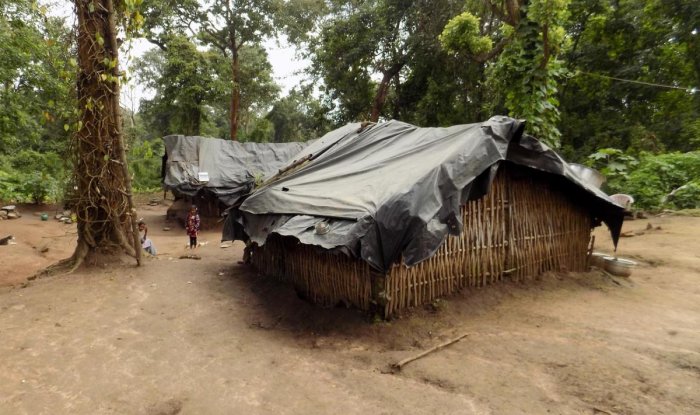
Huts in the Devarapura tribal hamlet in Gonikoppa.

People belonging to the tribal community in Gonikoppa have been deprived of basic facilities since generations.

The people who were dwelling inside the forest are now compelled to come out of the forests and live in tribal hamlets. However, the living standards of people here are still abysmal.

Devarapura tribal hamlet is one such place where 160 families comprising 120 families of Jenukuruba community and 40 families of Yarava communities are living. Out of these, 40 families were provided with Janata houses with 12×20 feet measurement, by the government in 1988, owing to efforts by the then Zilla Parishat president Jammada Karumbaiah and Devarapura Gram Panchayat president Cheppudira Arun Machaiah.

All these houses are in the dilapidated condition today. The financial situation of the residents is not good enough to repair these houses. Rest of the families live in huts. The people depend upon daily wage work for their livelihood.

As the land is identified as ‘Devarakadu’ in revenue documents, the people have no title deeds. They have been deprived of basic facilities such as electricity, roads, drinking water and toilets. The solar lamps provided to the residents by ITDP have not been working.

Jenukurubara Subramani said that the tribals here have been facing harassment by local landowners. The government is not responding to the woes of the tribals.

Due to water scarcity, the women have to fetch water from a stream situated inside the forest, several kilometres away from the hamlet. Every year, at least two women become victims of wild elephant menace when they go to the forest to fetch water. There is no security for our lives, said Subramani.

Elderly, pregnant and ailing persons face a hard time visiting hospitals as the roads are not fit for the movement of vehicles.

Many residents in the tribal hamlet have been suffering from anaemia. The requests made by the tribal residents to the authorities concerned have fallen on deaf ears, complained residents.

source: http://www.deccanherald.com / Deccan Herald / Home> State> Mangaluru / by DH News Service, Gonikoppa / February 18th, 2019

Coop society donates Rs 8.52 lakh to flood victims

Sullia Venkatramana Credit Cooperative Society office-bearers distribute compensation to the natural calamity at a customers' meet in Madikeri on Tuesday.
Sullia Venkatramana Credit Cooperative Society office-bearers distribute compensation to the natural calamity at a customers’ meet in Madikeri on Tuesday.

Sullia Venkatramana Credit Cooperative Society distributed a compensation of Rs 8.52 lakh to the victims of natural calamity in the district.

The financial assistance was given at a customers’ convention organised under the leadership of the society president K C Narayana Gowda in Madikeri on Tuesday.

Kodagu Gowda Samaja President Periyana Jayanand said, “The society has posted profit and the profit has been distributed among the victims. The compensation should be utilised properly.”

Kodagu Gowda Vidya Sangha President Hosuru Ramesh Joyappa said the government should take up rehabilitation work before the monsoon. The money given by the donors should be utilised for the educational requirements of the children, he added.

Society Director P C Jayaram said, “The members from Kodagu region have been responsible for the growth of the bank in the last four years. The membership of the bank should be increased in the future.”

source: http://www.deccanherald.com / Deccan Herald / Home> State> Mangaluru / by Adithya K A / DH News Service, Madikeri / February 19th, 2019

Talakaveri, where a river is born

Talakaveri in Coorg district is where the mighty River Kaveri takes birth. Chitra Ramaswamy traces its journey, all the while enjoying some scenic spots along the way…

Talakaveri
Talakaveri

The sky blushes a monochrome in blue tending to grey-black, with clouds that promise rain. Driving through the winding roads of Kodagu flanked by lush coffee estates and fields of spices, we bring our vehicle to a halt at Talakaveri, the birthplace of the sacred River Kaveri. We are as much awestruck by our surrounds as by the legends associated with the waterbody.

A river’s journey

Kaveri, the sacred, easterly-flowing river of peninsular India, commonly referred to as Dakshina Ganga, was born here in the Brahmagiri ranges of the Western Ghats, at an elevation of 1,341 m. However, Kaveri is not visible as a river at Brahmagiri. Rather, she originated as a gurgling spring that to date feeds a tank built on the hillside by the Kodavas of Kodugu. We witness devotees fill pots and bottles with the holy water from the tank, while others take a dip in it. Kaveri miraculously bubbles up every year at an auspicious moment in rebirth, on Tula Sankaramana day, which falls between October and November. Pilgrims in hundreds of thousands flock here to cleanse themselves during this time.

A temple to Goddess Kaveri, that is also dedicated to Shiva as Agasthyeswara, and Ganesha, overlooks the tank and attracts devotees in droves throughout the year. Talakaveri’s importance as a place of veneration gained greater importance since it is believed that Sage Agasthya was blessed here by Brahma, Vishnu and Ganesha as he sat meditating under the ashwaththa tree. Legend also has it that the saptarishis or the seven great sages who are extolled by the Vedas performed their yajna or ritual sacrifices at Brahmagiri Peak.

After offering prayers at the tank shrines, we ascend a flight of steps leading up to the summit of the mist-kissed Brahmagiri Hill, which offers stunning glimpses of the valley below. It is from here that the shimmering body of blue gleefully begins her downward journey, only to disappear underground. However, Kaveri resurfaces in a steep tumble at Bhagamandala, located at the foothills of Talakaveri where she swells with pride as she unites with River Kannike, and Sujyoti, a mythical river. The trio of rivers forms the much venerated ‘Triveni Sangam’. A dip at this confluence is believed to purge one from all evil and negative influences. Believers proceed to Talakaveri after taking a dip at the sangam and performing rituals for their ancestors.

The entrance to Bhagamandala Temple

Our next halt then is Bhagamandala or Bhagandeshwara Kshetra which derives its name from the Bhagandeshwara Temple dedicated to Lord Shiva. Though the temple complex was built by the Cholas around the 11th century, it displays Kerala-style temple architecture with copper roofs that curve up at each corner, into rearing and hooded cobras. Shrines to Vishnu, Ganesha and Subramanya with rimmed brass doors dot the courtyard. Painted sculptures of the pantheon of Hindu deities, flora, fauna and men in battle adorn the ceilings.

An inscription in its premises refers to Bhagamandala as having been captured by Tipu Sultan in the 1780s. He renamed it as Afesalabad, and as a tribute to himself for the feat he had accomplished, Tipu placed the ‘Salam Kallu’, a stone on the way to Talakaveri. The stone bears testimony to the brutal bloodbaths that he caused. However, in 1790, in a fiercely fought battle, Dodda Veera Rajendra, the most famous of the Haleri rulers of Coorg, regained the territory. Further, he donated the stupika stupika and golden pinnacle of the temple’s cone-shaped shikhara.

Our Bhagamandala trip takes us to Karnataka’s only museum that exhibits objects related to bee-keeping. Bhagamandala is also home to Madhuvana, a bee-rearing and honey marketing centre.

Stuff of legends

A host of legends, most of which have their origins in the Puranas, are associated with Kaveri that has inspired several civilisations that have flourished on its banks. She is inextricably linked with Sage Agasthya, King Kavera and Lopamudra, a trio of puranic icons. The most popular tale associated with the river is that Lord Brahma sent his daughter Vishnumaya to earth as Lopamudra. He had twin objectives in doing so. One, to assist Lord Vishnu as the damsel Mohini, in his ploy to vanquish a demon. Secondly, to allow his daughter to fulfil her keen desire to serve humanity on earth. Brahma gave Lopamudra in adoption to King Kavera who meditated upon him to beget progeny.Pleased with the king’s worship, Brahma gave Lopamudra in adoption to him. As the king’s daughter, she was rechristened Kaveri, and she grew up to be a gorgeous maiden.

Sage Agasthya, who was meditating on Brahmagiri Hill, was entranced by the young Kaveri’s enchanting looks. He sought her hand in marriage. Kaveri accepted him, upon the condition that she would leave him for good if he left her alone for long, at any point in time. As fate would have it, Agasthya once became engrossed in a philosophical discussion and forgot his deal with Kaveri. She immediately left him, transfigured herself into a river, and began to flow in order to fulfil her own desire to serve mankind.

According to another popular myth, Sage Agasthya, by his yogic powers, turned Kaveri to water which he filled in his kamandalu or water pot, and kept it in his ashram. But on one occasion, when he entrusted the pot to his disciples and returned late from a debate, Kaveri used her divine powers to jump out of the kamandalu and emerge as a river to serve humanity. A variant of this version claims Lord Ganesha as having taken the form of a crow and toppling the water from the kamandalu.

Nalaknad Palace
Nalaknad Palace

Having feasted our senses on the picturesque Talakaveri and Bhagamandala, we then explored the neighbourhood within a radius of 70 km. Igguthappa Temple, 26 km away, is one of them. After paying our obeisance to Igguthappa, the chief preceptor of the Kodavas, their god of rain and crops, we delight in the verdure surrounding Chelavara Falls, a natural waterfall formed by a tributary of the Kaveri, and Nalaknad Palace which is located at the foot of Tadiandamol, Kodagu’s highest peak. The edifice was built in 1792 by Dodda Veera Rajendra to celebrate his victory against Tipu. It is adorned with exquisite wall murals in various states of preservation. The twin-storeyed palace with a simple exterior has intricate wooden carvings, low conical roof, crested dome and pillared facade.

About 70 km from Bhagamandala, we visit the serene and breathtaking Nisargadhama, a 64-acre island surrounded by River Kaveri. A scenic spot accessed by a hanging bridge across the river, it is ensconced by foliaceous teak and sandalwood trees and bamboo groves. Uma Maheshwara Kshetra and Harangi Dam are our final halting spots on this explorative sojourn of Kodava land. Our hearts and minds fill with a sense of pride at belonging to the land of this holy river. In her 800-km-long long thrilling odyssey, Kaveri traipses amid varying landscapes of Karnataka, Kerala and Tamil Nadu, bounding over boulders, crisscrossing through clusters of expansive palm and paddy fields. She displays several shades of her whimsical nature on this jaunt — a young bride, serene and shy at once, a capricious and tempestuous prankster the next. The mirthful lass creates little and large waterways en route, joins forces with lesser streams, until she takes a final bow and loses herself in the fathomless depths of the Bay of Bengal.

source: http://www.deccanherald.com / Deccan Herald / Home> Supplements> Travel / by Chitra Ramasamy / February 09th, 2019

Muslim organization donates Rs 50 lakh to Kodagu flood victims

Madikeri:

The Jamiat Ulema-e, a Muslim organization, on Thursday distributed Rs 50 lakh among nearly 350 . The funds were distributed at function organized by the organization at Kaveri Kalakshetra in .

“Humanism is above religion and each one should cultivate humanity,” said Maulana Mufthi Ifthkar, president, Karnataka Jamiat Ulema-e.

Hajarath Maulana Mufthi Shamsuddin, secretary of the organization, said, “We have come forward to help the people in need and no religion will come in the way of this godly act.”

Download The Times of India for Latest

source: http://www.milbankmonitor.com / MilBankMonitor.com / Home> World News / by Milbank News Writer / February 06th, 2019