Category Archives: Green Initiatives / Environment

Youngsters clean River Cauvery at Srirangapatna

Around fifty youths mostly professionals at various sectors volunteered themselves to clean up the Cavuery River at Srirangapatna taluk on Sunday

Mysuru:

Around 50 youngsters, mostly professionals in various sectors, volunteered to clean the Cauvery at Srirangapatna on Sunday.

Uniting under the banner, ‘Yuva Brigade’, the youngsters assembled bear the Sri Ranganathaswamy temple, and cleared the river of plastic and cloth dumped in the waterbody.

Members from the Mysuru-based NGO Swachanda also participated in the programme.

“We arrived at the banks of the river around 6am, and started to fish plastic and cloths from the Cauvery. This went on till 11am. We cleared around two truckloads of garments dumped by devotees in the river. The waste removed from the river was transported to the designated dumpyard,” Swachanda member BK Purushotham told TOI.

Members of the ‘Yuva Brigade’ led by social activist Chakravarthi Sulibele, have initiated a campaign to clean the Cauvery starting from Talacauvery to Srirangapatna. The campaign started on April 12.

The campaign is called ‘Jeeva Nadige Jeeva Thmbi (Infuse life into the river that is our lifeline)’. On Thursday, cleaning started at Siddapura, while the river was cleaned at Kushalnagar on Friday, Ramanathapura on Saturday, before the activists proceeded to Srirangapatna on Sunday.

source: http://www.deccanherald.com / Deccan Herald / Home> City News> Mysore News / Times News Network / April 16th, 2018

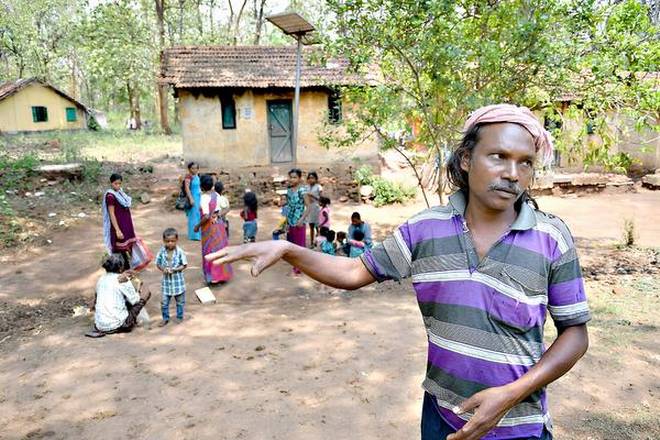
A symbiotic bond with tribal communities

For 38-year-old S Thanaraj, a visit to study the impact on the lifestyle of Paliyar tribal community due to globalisation in 2006 was a life changing moment. He was impressed by how tribal communities embrace nature and live in forests complementing each other.

A native of Radhapuram in Tirunelveli, he shifted to Madurai to pursue law. Being a dalit, Thanaraj has witnessed caste discrimination at a very young age. He always stood against it and had the tendency of helping others since childhood. This came true after his formal education, when he turned an activist. The law graduate has worked in various areas like youth empowerment, environment and total prohibition by joining hands with various organisations including CESCI, Ekta Parishad and People’s Education for Action and Liberation.

Thanaraj became an Adivasi activist after he extensively worked with the Paliyars, educating them about the Forest Act which ensures their right over forest land. The Scheduled Tribes and Other Traditional Forest Dwellers Act passed in 2006 promises tribal rights over agriculture land which traditional belonged to them, accessing forest produces and right to protect and manage the forest, which had been denied for long.

“I went to educate them, but ended up learning so many things from them. Their life is an exemplary one in conserving forest, which needs to be learnt by all. I have taken these lessons to over 1.5 lakh school and college students so far,” Thanaraj said.

For instance, Adivasis do not kill pregnant animals for meat. When they collect roots, they plant more and they never cut living trees, they only use dead trees. They treat woman equally and encourage widow remarriage. There is no dowry system either, said Thanaraj.
While he worked for Paliyars till 2008, he expanded his horizon and started working for various communities like Kadar in Valparai and Anaimalai, Malasar in Amaravathi, Udumalaipettai and Anaimalai, Muduvan in the interior forests of Theni and Valparai forests and Mahamalasar from Anaimalai and Topslip.

Thanaraj’s has a strategy in empowering the Adivasi community. To create leaders among them, unite them to retrieve their rights over forest and defend themselves from exploitation, he along with the organisations he works for help Adivasis in various areas in the state by getting them housing facility and agricultural land. Only recently, Kadar tribe from 24 villages in and around Valparai in Coimbatore received 10 acres of land after several stages of protest.
Thanaraj has taken part in various national-wide protests carried out to ensure the rights of Adivasis. He has also organised many state-level protests demanding total prohibition. He has also extensively worked in the Tsunami rescue and rehabilitation throughout the TN coast. He also played active role in the protests against Sterlite and Koodankulam nuclear plant.

Thanaraj was lucky to get married to a like-minded person like K M Leelavathi, a daughter of a tribal leader from Coorg, in 2010. An MSW graduate, she too joined him in the work towards helping deprived communities. Recently, he joined the Centre for Justice and People and continues his work towards Adivasi empowerment.

source: http://www.timesofindia.indiatimes.com / The Times of India / Home> City News> Madurai News / TNN / April 11th, 2018

Homemade Coffee Scrub For Glowing Skin And Healthy Hair

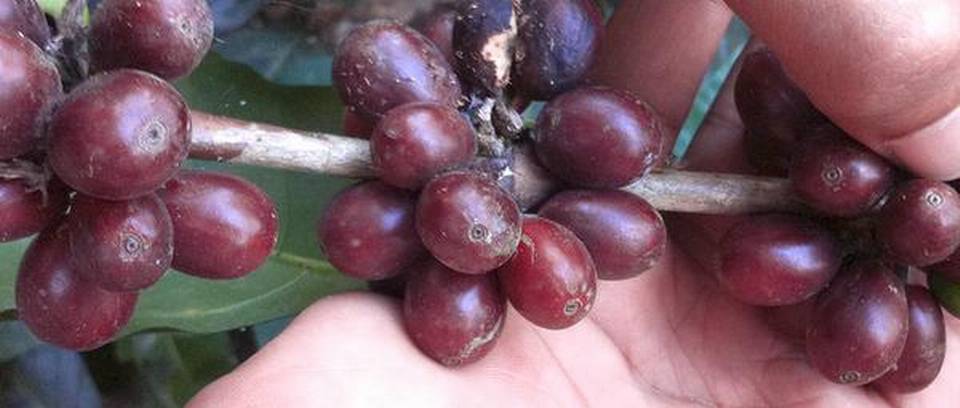
Coffee is an ultimate go-to beverage for all the caffeine lovers. It’s caffeine content is enough to give your lazy mornings an energetic start. Apart from giving a morning jolt, its antioxidant properties can help in keeping the skin nourished and healthy, provided it is consumed in moderation. Coffee also increases the blood flow in the body, which in turn enhances the collagen production. Your favourite kitchen ingredient can do wonders for your skin and hair as well. There are several scrubs available in the market that claim of making the skin brighter and healthier, however most of them are quite expensive and full of chemical substances. It’s always better to use organic components on your skin which can give you better results than the chemical-based ones. Here in this article, we shall explain how these bite-sized coffee beans can provide with skin and hair benefits. All you need is coffee grounds, brown sugar,honey and olive oil.Coffee Scrub For Skin

1. Mix half cup of coffee beans, 1 cup brown sugar and two third cup of olive oil in a bowl. You may add 1 teaspoon of virgin honey as well. Stir well.
2. Take the coffee scrub and apply it all over your face and neck.

3. While applying the coffee scrub, make sure that skin is moist as coffee is corrosive in nature. It’s always better to apply it on moist skin to prevent skin irritation.

4. Once it is done, wet your hands a little bit and start rubbing gently in a circular motion for about 7-8 minutes. Rinse it off with the help of lukewarm water.

CoffeeBeansScrub02KF04apr2018

Note: If you don’t have olive oil, you can even make this scrub with the help of coconut oil, almond oil, nut oil or any other essential oil as per your preference.

This scrub will help in shedding the dead skin. Since coffee is a great antioxidant, it will protect the skin from acne breakouts too. Apart from skin, you can even use this coffee scrub for your hair. The acids present in the coffee beans can enhance the texture of the hair to a significant extent.

Coffee Hair Mask For Hair

To make a coffee hair mask, you will require coffee beans and water. Mix both the ingredients well until a thick paste is formed. With the help of your fingers, apply it all over your head and wash it off with water once it is done.

So, what are you waiting for? Bring this secret kitchen ingredient to your rescue right away!

Disclaimer:

The opinions expressed within this article are the personal opinions of the author. NDTV is not responsible for the accuracy, completeness, suitability, or validity of any information on this article. All information is provided on an as-is basis. The information, facts or opinions appearing in the article do not reflect the views of NDTV and NDTV does not assume any responsibility or liability for the same.

source: http://www.food.ndtv.com / NDTV Food / by Natasha Chopra / February 19th, 2018

AoL launches ambitious Cauvery rejuvenation project

File image of river Cauvery.

Bengaluru :

After a string of implementations of rejuvenation projects for over 35 rivers and tributaries in Maharashtra, Karnataka and Tamil Nadu, The Art of Living (AoL), in association with the Rural Development and Panchayati Raj (RDPR), has launched the Cauvery Rejuvenation Project in Kodagu. Phase one of this project is expected to benefit 1.5 lakh people in 10 gram panchayats.

The first phase will see the construction of 751 water recharge structures across the district. The AoL works with a team of hydrogeologists and experts in Indian Space Research Organisation (ISRO), Indian Institute of Science (IISc), geotechnical groups and information technology groups who have prepared a comprehensive watershed management program.

They provide infrastructure and mobilise people of the area through capacity building measures such as meditation programs, skill development and leadership trainings to work for the implementation of the project. With a majority of the districts in Karnataka and Tamil Nadu depending on Cauvery water for irrigation, and Bengaluru getting most of its water supply from this river, project directors are hopeful that this solution would help make more water available in both the states.

AoL founder Sri Sri Ravi Shankar advised the locals to safeguard the catchment area of the river by planting locally suitable trees, cleaning even the smallest of streams and avoiding construction of big structures in the area. He was joined by the MP of Mysore and Coorg, Pratap Simha and KG Bopiah, MLA of Virajpet.

source: http://www.newindianexpress.com / The New Indian Express / Home> States> Karnataka / by Express News Service / March 28th, 2018

Madhavan Pillai, Shobana Chandrasekhar and Anita Nanjappa turned a discarded toilet complex into Art Gallery in Ooty

ToiletArtKF25mar2018

In Ooty, a trio converts a discarded toilet into an art gallery and, with that, reminds the public and the govt to take care of forgotten public spaces

The best business pitch. The best love poem. The best travel plan… Some of our best ideas are born in the loo. Now Madhavan Pillai, Shobana Chandrashekar, and Anita Nanjappa, can admit to that as well. The trio have upcycled a discarded toilet complex in Ooty into an intimate art gallery, giving the hill station its first such space and a lesson in optimum resource management.

Gallery OneTwo opened over the weekend with a painting exhibition. With that, it has joined the growing list of old and forgotten toilets, warehouses, shipping containers, and train stations that have been converted into bustling galleries, bars, pubs, boutiques, museums and even holiday homes.

Staying on the loo beat alone, examples are aplenty, especially in Europe. Formerly a Victorian-style lavatory, Attendant in London is now an award-winning breakfast and espresso bar. The Edwardian Cloakroom in Bristol has become an art space. In the UK, Leak sells gifts, and The Theatre of Small Convenience hosts actors and audiences. Pillai, an art curator and a pinhole photographer from Tamil Nadu, however, isn’t aware of any such toilet transformation in India.

A business unfinished

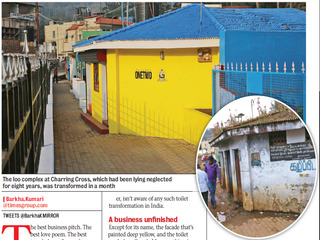
Except for its name, the facade that’s painted deep yellow, and the toilet symbol on Google Maps, nothing in this Ooty gallery hints at its smelly past. Pillai, who moved here in 2016 from Goa, says, “This loo was set up by the municipality in 1992. But eight years ago, they introduced bio-toilets instead and closed it down.”

That this 700 sqft was lying unused right in the middle of Charring Cross, an important junction in Ooty, didn’t seem right to Pillai. “Last November, I was participating in a clean-up drive organised by Shobana and Anita. They are entrepreneurs, who hold clean-up drives in Ooty quite actively. On our way back, we got talking about this toilet. It was overflowing with drainage water, and smelling so horrible that I could not go inside. But I had a hunch that if we were to transform it into something appealing, it will work because of its location,” says Pillai, who led the artistic side of the project.

The local administration liked the plan too, sent its engineers to break down the commodes, washbasins and dividers, and “even bore 80 per cent of the budget (of `5 lakh)”. In a month, the toilet was gone, and the gallery was in.

Unexpected compliments are pouring in. “Now shopkeepers in the area have started beautifying their spaces with colourful paint and flower pots,” says the 42-year-old Pillai, rather proudly. Plus, “An old sanitation worker told me she used to work at this toilet complex. Though it used to be smelly and filthy, it is where she earned her money. So she was happy to see it up again.”

ToiletArt02KF25mar2018

Reclaim and repeat

Pillai steers the chat back to the heart of the matter – reclaiming the underutilised resources and saving the planet. Pillai, who’s travelled across India to document the ills of mining, begins, “I don’t get this obsession of building new spaces. Look at everyone in the cities. They want to buy newly-built homes instead of moving into what already exists. Do they even know that all this come at the cost of the environment and exploitation. We mine sand and gravel from rivers and beaches, cut down trees, extract iron ores and what not. We destroy homes and backyards of people living in villages in India and poor countries to build our own shiny homes. It’s selfish.”

So if the world needs to rethink its centralised model of development and consumerist attitude more than ever, it is now, he adds quickly. “Upcycling and DIYing can do us good, so does the effective utilisation of big malls and suburban train stations like that in Chennai”. Take a look at Christiania in Denmark, he says. It used to be a military base of 84 acres until the 1970s. Now, artists and hippies have turned it into a community hub (though it remains controversial).

Art debate

But when defunct spaces can host the homeless, a school or a business, why usurp it for art? That too with the taxpayers’ money. Pillai was questioned about this, but he didn’t budge. “God is everywhere, so why build so many temples? For artists too, art is everywhere, even in garbage but, let’s face it, art does need a proper space,” he explains.

Turns out, Pillai had another agenda. “Nothing happens in Ooty pretty much after 5pm. I needed a space to bring people together for conversations and keep myself busy.”

Next month, he is getting art lovers over for an exhibition, which he calls ‘My Philosophy of Toilet’. “For many, toilet’s a place where ideas and innovations happen, it is the place where reforms and revolutions started…,” he signs off.

source: http://www.bangaloremirror.indiatimes.com / Bangalore Mirror / Home> Opinion> Sunday Read / by Barkha Kumari, Bangalore Mirror Bureau / March 25th, 2018

Cauvery: A time to pause

The role played by Kodagu, which has nourished and nurtured the Cauvery over time, needs to be recognised.

The Supreme Court of India has determined the manner in which the waters of the Cauvery river are to be shared among the beneficiary States. In its recent judgment on the long-pending issue, the court virtually pulled the proverbial rabbit out of the hat. The decision has received with muted acceptance, understandably, by all concerned, and some token opposition.

The Cauvery dispute has been a long-standing issue among the States, each one trying to tweak the 1924 Agreement forged during the British administration. Much water has flowed down the river since, and each State was trying to secure the best deal for itself.

A noteworthy aspect is that the matter has engaged some of the brightest minds, be it engineering, law, administration or politics, and the fortunes of many rose and fell at each turn of events. The din has for the present subsided. The bigger and immediate challenge now is to save the river to ensure lasting harmony and sustained development of the beneficiary States of Karnataka, Kerala, Puducherry and Tamil Nadu.

Amid all the arguments, the role played by Kodagu district in Karnataka, which has nourished, nurtured and nursed the river over time, has hardly been recognised or acknowledged.

Kodagu is part of the lower Western Ghats and at its highest point, is around 5,000 feet above sea level. Originally administered directly by the British from Madras, it became a Part ‘C’ State at the time of Independence, with its own legislature and Ministers. Subsequently, after the Reorganisation of States it became the smallest district, with a wealth of natural resources. It is in the Brahmagiri hills of Kodagu that the Cauvery rises and disappears, till it is seen again outside the boundaries of the district. The scenic beauty of the Brahmagiri range is a feast for any nature-lover. A mind-boggling phenomenon can be seen between October 14 to 17 every year unfailingly, when the Cauvery, which is nowhere to be seen, suddenly gushes forth from a spring and then swells into the river that bestows its bounty on millions of people along the way, till it reaches the Bay of Bengal in Thanjavur district of Tamil Nadu.

Kodagu has the largest acreage under coffee in the country, with one of the Tata companies owning approximately 40,000 acres. Trees of vintage growth, bamboo, pepper vines, spices, fruits and other agricultural produce make Kodagu a nature’s paradise. Kodagu hosts many species of wildlife, including the tiger, making it an attractive tourist destination.

Kodavas, the numerically small Hindu ethnic community, are different from neighbouring communities in their costume, language, and social practices. Suffice it to say that they have distinguished themselves in many fields and contributed to India significantly. This, however, is not about the Kodavas.

Journey to Tamil Nadu

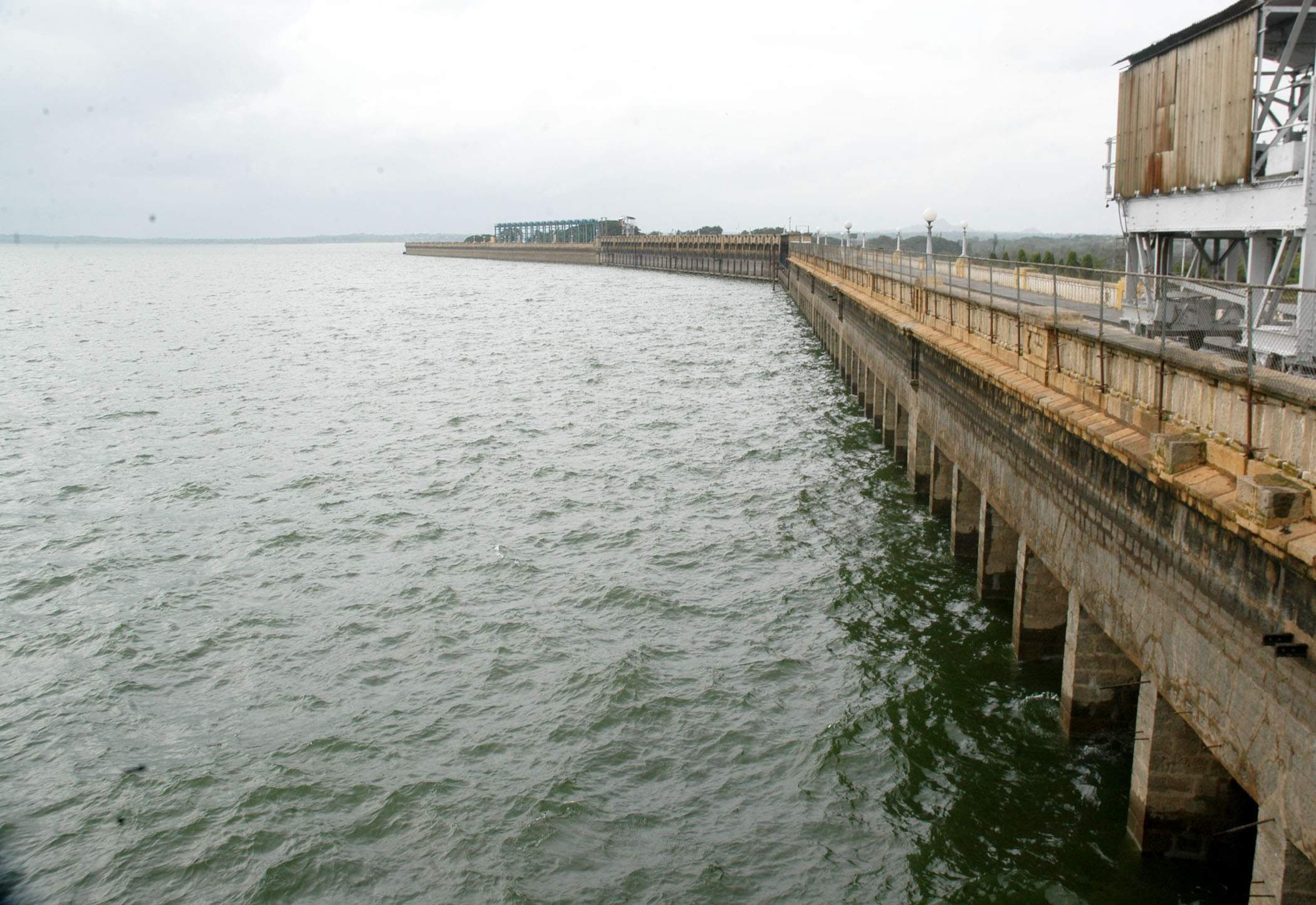
Abundant green cover in Kodagu is of vital importance as this will ensure that the district receives sufficient rainfall to bring the river to life and flow in all its glory up to Tamil Nadu. Unlike Himalayan rivers, which are snow-fed, the Cauvery depends primarily on the Southwest monsoon. The river is impounded at the Krishnaraja Sagar dam, outside Mysore, conceived and constructed during the British period by the legendary engineer Sir M. Visvesvaraya. From here water is released, reaching Tamil Nadu, where it is stored in the Mettur Dam (Stanley Reservoir). Further release of water is dependent on the agricultural requirements of farmers downstream.

It would be facile to assume that the court decision has solved all problems and that the States concerned will live happily ever after. In a year when there is copious rainfall in Kodagu and the Cauvery is in spate, Karnataka releases water freely, making a virtue out of necessity. There is then no need for any water- sharing formula. It is only in years when rainfall in Kodagu and the catchment of the Cauvery is below par that the problem arises. This results in constant wrangling, and heated arguments between the States over the quantity of water released, the timing of the release and the manner of release, often resulting in violence. Matters get worse if the ‘deficit’ year happens to be an election year. This is the real issue and to date no satisfactory acceptable formula for sharing the distress has evolved, nor is a sound mechanism in place, for delivery in such situations.

It would be relevant to examine data for the decade 2007-2008 to 2017-2018 relating to release of water. Flows received from Karnataka were measured at the Mettur Reservoir up to 2012-13, and from 2013-14, at the Biligundlu gauging site maintained by the Central Water Commission. Against an annual 205 tmc ft (thousand million cubic feet) at Mettur, only 69.727 tmc ft was realised in 2012-13. At Biligundlu, against an annual figure of 192 tmc ft, the receipt in 2015-16 was 15.385 tmc ft. In 2016-17 the figure was 69.316 tmc ft and in 2017-18 it was 113.084 tmc ft. The statement shows that in the preceding decade there was deficit in four years. This is a matter of concern.

Reason for ‘deficit’

The main reason for deficit is reduced rainfall in the catchment area of the Cauvery in Kodagu district, mainly on account of loss of ‘green cover’. One needs to understand the reason for this loss. It is stated that construction of high tension power lines across Kodagu required felling of large number of mature trees, which reduced the ‘green cover’ substantially along the alignment. Perhaps that was the price to be paid for providing sustained power supply to areas beyond Kodagu. But who paid the price? The farmers in Karnataka and Tamil Nadu were the ones directly affected, along with all those areas that depend on assured water supply, such as Bengaluru which supports major industrial activity and large populations. In recognition of this need, the Supreme Court has specifically earmarked a certain quantity of water for Bengaluru.

Disturbing news

A matter of serious concern is news that certain infrastructure projects have been lined up for implementation in Kodagu. Two railway lines are planned: the Mysore-Kushalnagar-Madikeri (Makkandur) line and the Thalasssery-Kodagu-Mysore line. Four National Highways are planned. These are the Mysore-Kodlipet-Sunticoppa-Madikeri- Gonikoppal- Kutta-Mananthawadi; the Bangalore-Bantwal highway via Kushalnagar and Madikeri; Pannathur-Bhagamandala-Madikeri, and Mattanur-Gonikoppal- Thithimathi-Hunsur. This will connect the new Mattanur airport to Mysore and Bangalore at a cost of Rs. 1,000 crore. Additionally, existing roads are to be upgraded into four-lane highways.

These projects will undoubtedly result in the felling of a large number of trees, constant influx of persons transiting Kodagu without any concern or commitment for the local environment, increasing issues of waste disposal and management. Many other unacceptable activities will disturb the ethos of Kodagu and its natural environment.

The question to be asked is whether Kodagu, which is the major watershed and catchment for the Cauvery, requires these projects that are likely to cause more harm to the beneficiary States, while bringing only marginal and doubtful benefits. The ryots in the Thanjavur delta of Tamil Nadu that covers vast acreage, the farmers of Mandya in Karnataka, the drinking water supply needs of burgeoning cities such as Bengaluru and Chennai and many areas in the other States will be affected by any reduction in the flows of the Cauvery. There is no indication that the long-term impacts of these actions have been considered. No consultation with local communities appears to have been done. The impression at the ground level is that a very short-sighted view has been taken, and these projects have been mooted at the instance of local politicians as part of vote bank politics, in some cases backed by lobbies eager to monetise the natural wealth that will need to be extracted before implementation.

The way forward

It is clear that India needs to walk the ‘development path’. The right way is ‘sustainable development’, which does not appear to be the case in respect of the above-mentioned projects. The waters of the Cauvery have nourished downstream civilisations for centuries. It is the life blood of the States that now comprise the region. The time has come to save the river, bring back its glory as a provider and nourisher of humans, enabling them to live in peace, harmony, and rise to their full potential in every sphere of endeavour. There is no case for inter-State political one-upmanship or victory or loss for any group. The goal and cause are one…. save the Cauvery for the good of all, for all time to come, by taking a long-term view. Everyone needs to be on the same page.

The following steps need to be taken immediately.

1. Suspend all infrastructure projects, proposed or under implementation, for six months or a year. This short postponement will give time to study the issues necessary for saving the Cauvery.

2. Set up a competent neutral body to assess the real need for connectivity through Kodagu with contiguous areas and examine alternative options.

3. Identify the best option that will cause least damage to the environment and catchment of the Cauvery.

4. Having completed the above three tasks, arrange for a ‘carrying capacity study’ to be done by a credible professional body.

5. On the basis of the findings of this study, the implementation of projects should be supervised by an empowered body to be named the ‘Kodagu Sustainable Infrastructure Projects Board’, with the Deputy Commissioner of the district as Chairman, and the representatives of different agencies and local non-officials as members, to ensure timely implementation in accordance with project specifications.

6. Quarterly meetings of Chief Secretaries of the four States to be convened by the board to update them on the progress and the status of safeguards for the Cauvery.

The need of the hour is statesmanship, avoiding political short-sightedness. It should not become a case of winning the battle of sharing the Cauvery waters and losing the war of saving the river for posterity.

The author, who retired from the Indian Administrative Service, has written this as a concerned citizen. Email: sonnabel@gmail.com

source: http://www.thehindu.com / The Hindu / Home> Opinion> Open Page / by P.M. Belliappa / March 18th, 2018
Rains in Karnataka seen good for next coffee crop

The blossom showers and the subsequent backing showers are crucial for a good crop.   -  NS The blossom showers and the subsequent backing showers are crucial for a good crop. – NS

Bengaluru :

For the beleaguered growers of robusta coffees in Karnataka, the largest producer of the bean, the ongoing spell of rains has raised the hopes for next crop year starting October 2018.

The low pressure and depression off the West Coast has brought rains to several parts of the key coffee growing regions of Kodagu, Chikmagaluru and Hassan among other districts in Karnataka, which accounts for over 70 per cent of the coffee produced in the country.

Crucial showers

The pre-monsoon showers are crucial for blossoming of the coffee floral buds. The blossom showers and the subsequent backing showers are crucial for a good crop. Traditionally, the robusta and arabica areas should receive pre-monsoon showers by March 15 and April 15, respectively, for a good blossom, growers said.

“For the growers who had taken up irrigation through sprinklers for robustas from late February and where coffee has blossomed, the current spell of rains are acting as backing showers,” said HT Pramod, Chairman, Karnataka Planters’ Association. The rains will be of some help for the growers, who have harvested a poor robusta crop this year.

“The current spell of rains are good for the coffee sector as a whole. However, the rainfall has not been uniform and several robusta areas in Kodagu have not received the rains. The forecast is that it would rain for the next two days and we are hoping for some good showers,” said N Bose Mandanna, a grower in Suntikoppa.

Coffee growers have suffered from a poor crop and bearish price trend this year. Robusta growers have seen their crop shrink by up to 40 per cent in several areas on account of erratic rainfall last year.

source: http://www.thehindubusinessline.com / Business Line / Home> News> Specials / by The Hindu Bureau / Bengaluru – March 16th, 2018

A welcome retreat

RetreatKF14mar2018

The recent withdrawal of the amendment bill to the Karnataka Preservation of Trees Act, 1976 (KPT Act) by the government, which would have allowed indiscriminate cutting down of some 50 tree species, came about under pressure from green NGOs but is perfectly welcome. Farmers prefer growing hebbevu, eucalyptus, Casuarina, silver oak, Acacia auriculiformis, shivane, teak, sandal, etc.

The first four of the above species are already on the exemption list. The current proposal of the Forest department for inclusion in the exemption list includes Acacia auriculiformis, Kakke, Gulmohar, Peltoform, Raintree, Christmas tree, orange tree, Purple Bauhinia, mulberry, curry leaf, drumstick, Simaruba glauca, African tulip, tabebuia, Tecoma, Indian cork tree (Mellingtonia), etc.

Granting exemption on Gulmohar, Peltoform, Raintree, Purple Bauhinia, Tabebuia, Tecoma would lead to destruction of trees from urban areas. Thankfully, withdrawal of the exemption proposal does not hurt farmers as these are not their preferred species.

Acacia auriculiformis was the main species of forest plantations for more than three decades. Now, the planting is banned in some areas, yet its exemption may induce smuggling from older plantations. It is understood that the plantations are to be protected by the department, then why not include other species like teak, etc., on the exemption list?

When KPT Act was legislated in 1976, Casuarina and Hopea wightina were in the exemption list. Other species required permission. But, for nine districts, namely Chikkamagaluru, Chamrajnagar, Dakshin Kannada, Hassan, Kodagu, Mysuru, Shivamogga, Udupi, Uttar Kannada, felling permission is not needed for any species except sandalwood and rosewood.

Even in these districts, tree-owners had provision for domestic consumption. People were harassed in the districts by Revenue and Forest officers. In 1987, the Act was amended to include Coconut, Erythrina, Eucalyptus, Glyrecidia, Prosopis, Rubber, Sesbania and Silver oak in the exemption list.

There were difficulties in protecting exempted species in the forests, yet the amendment was not retracted. The red tape in the lower bureaucracy continued to harass tree-owners for several other species. By another amendment in 2015, the exemption list was extended to subabul, areca nut, coffee, guava, hebbevu, Ailenthus excelsa, lemon, Maeopsis eminni, mango, sapota, Dendracalamus stocksii, Burma bamboo, Yellow bamboo, Acacia mangium, Acacia hybrid, Balangi and Cashew.

Exemption for mango and Balangi posed a serious threat to forest conservation in the Western Ghat areas. Huge mango trees growing on water courses in the forests were illicitly cut away, sometimes with the connivance of the officers. Many varieties of mango disappeared.

The loss of these trees from water courses can deplete water flow in the tributaries of major rivers. The Karnataka High Court removed the exemption on mango trees. The exemption of other species did not bring any negative impact on the conservation of forests.

To popularise farm forestry, Karnataka took some interesting initiatives. Krishi Aranya Protsah Yojane (KAPY) was launched in 2011, where tree-growers were paid an incentive for successfully growing plants for three continuous years. The initiative has picked up well.

The recently published Forest Survey of India (FSI) report confirms that the state’s forest cover has gone up from 36,449 sqkm to 37,550 sqkm in two years. The cover in recorded forests, Revenue and Paisary lands has gone up by 359 sqkm. However, in private wooded areas, coffee estates, and coconut and areca nut gardens, it has increased by 742 sqkm, but the assessment has not separated the contributions of forests and horticultural plants. Tree groves below one hectare and strip plantations are also assessed by FSI, where tree-cover is found to have increased from 5,552 sqkm to 5,713 sqkm in the same period.

The assessment is based on satellite imagery of October 2016. Assuming that five years’ growth is necessary for a signature to be picked up in satellite imagery, the increase, if any, can be attributed to plantations raised prior to 2012, and not due to the impact of KAPY and exempting additional species from KTP Act.

Mixed findings

FSI has also brought out the district-wise status of forests. It is heartening to note that the tree-cover in all dry districts has gone up, and horticultural plantations have also contributed. The success of the forestry programme in dry districts can be attributed to the fact that these districts are not covered under KPT Act and the movement of growing trees has picked up well.

Further, there is a disturbing trend of forest cover in Malnad districts like Dakshina Kannada, Kodagu, Mysuru and Shivamogga having decreased. This is the negative impact of KPT Act, as some of the exempted species have been illicitly removed from forests. The forests in these districts must be preserved as these are the catchments of many important rivers. Kodagu is a hilly district extending over 4,102 sqkm, of which only 1,700 sqkm is recorded forests. The vegetation on private land is equally important in the catchment of Cauvery river. The KPT Act has played havoc there in the past. It is time to suspend felling of naturally-growing trees on private lands in Kodagu.

Forests are the ‘mothers’ of several rivers, and the KPT Act is important for conservation. At the same time, growing trees on private lands must be encouraged and authorities must be held accountable for any laxity in dealing with cases under KPT Act. Bureaucratic hurdles are man-made, which must be dealt with severely.

Prime Minister Modi’s vision is to double farmers’ incomes by 2022. Among other things, he has been talking about soil testing, easy availability of neem-coated urea to reduce costs and growing tree species on the periphery of farmlands as well as bee-keeping to boost incomes. We have been importing wood for quite some time for our domestic consumption. The only way to save the foreign exchange is to grow our wood requirement indigenously.

(The writer is a former Principal Chief Conservator of Forests, Karnataka)

source: http://www.deccanherald.com / Deccan Herald / Home> Main Article / by B.K. Singh / March 10th, 2018

Reforest India one tree at a time

KaveriKF28feb2018

Reforestindia.in is a clarion call to action to save our rivers and forests

The stunning and powerful youtube video by Reforest India on River Kaveri, in three different languages: Kodava Takk, Kannada and Tamizh, sends out a powerful message, and thus has gone viral on Facebook. Vinod Lal Heera Eshwer, trustee of Reforest India, says: “As the title of the video suggests: This is the story of Kaveri (and every river everywhere). Instead of fighting over river sharing, we must look within to know how to make a difference. Without forests rivers, cannot exist.”

His commitment and passion to saving river Kaveri has led him to ask people to plant a tree if they really want to save the dying river. “Likes and shares won’t save Kaveri. Stop deforestation and start to reforest. Both these go hand-in-hand.” The initiative is a clarion call to action “to save Kaveri one tree. One person. One heart at time.”

Vinod says you can plant a tree. “But even if you can’t, you can donate money for a tree to be planted in someone’s name and honour. “

Reforest India is a renaming of a path-breaking tree planting initiative Trees for Free, which was started in Bengaluru, by Janet in 2005, in honour of her husband. Thousands of trees were planted ever since and Reforest India further wants to expand the impact.

“We are not interested in numbers, statistics and targets,” says Vinod, author of Let’s catch the rain and Let’s Plant Trees, who has been an eco-warrior and has empowered people to take action instead of just paying lip service to the cause of the environment.

“We are not interested in fund raising, to borrow a term, we are interested in ‘friend raising’.”

Arjun Ranga Rao, CEO and managing director of Cycle Pure Agarbathies, donated a huge amount only because he strongly believes in the cause. “I didn’t look at it as a CSR activity. My grandfather N. Ranga Rao had dreamt of becoming an entrepreneur in Coorg and in 1948 moved to Mysuru and made that dream a reality. So as a family, we want to give back to Coorg.”

“Plant a tree today, for someone you love, for the love of children, and for the love of mother earth,” concludes Vinod. For details visit: http://reforestindia.in.

source: http://www.thehindu.com / The Hindu / Home> Sci-Tech> Environment / by Sravasti Datta / February 19th, 2018

‘Let Kaveri Flow’: This short film’s take on the Cauvery water dispute explores the debate in a new light

The allegory in the film underlines that the present actions of man — be it deforestations or mining — have led to the return of the demon Shoorapadma that once turned the basin dry and left it without water and jeopardised life.

With a aim to promote afforestation and let the river thrive, this short film tries to highlight the environmental issues shawdowed by the Cauvery water dispute. (Source: Early Man Film/ Vimeo)

As the historic verdict of the Cauvery water dispute was given out by the Supreme Court of India on February 16, it was started a new debate and discussion. The age-old dispute between Karnataka, the state where the river originates and Tamil Nadu, where it is the largest river — is all about ‘unfair’ use of the total water. The modern-day water-war that has often been marred by protests, violence and even death. While Karnataka claims the verdict as a “victory” and TN as a “disappointment”, political leaders seem to be missing a fact how many actions in the war has been killing the river slowly. Damaging its ecological balance and aid to global warming and climate change.

Amid all the mathematical calculations and discussions about the long-term benefit of the verdict to both the states, a film on the ‘Holy Ganga of South’ is going viral. The film made in Kodava, the native language of Kodava-speaking communities in the Kodagu region where the river originates, narrates the tale of the River Cauvery. From the ancient history of his mythological existence of how it was created by Lord Shiva’s blessing to the modern-day harmful impacts of mining in the basin — the film captures the entire trajectory of the river. The film highlights the plight of the river, which is referred to as Goddess Kaveri Amman, and how she is dying a slow death as her children continue to water they ignore her death.

The allegory underlines that the present actions of man — be it deforestations or mining have led to the return of the demon Shoorapadma that once turned the basin dry and left it without water and jeopardised life.

The SC verdict is significant as for the first time took cognizance of the availability of groundwater, in determining the quantum of water sharing, is expected to create ripple effects in inter-basin and inter-state water disputes. The apex court raised Karnataka’s share of the Cauvery waters by 14.75 thousand million cubic feet to 284.75 TMC ft and reduced Tamil Nadu’s share from 419 TMC ft to 404.25 TMC ft.

source: http://www.indianexpress.com / The Indian Express / Home> Trending> Viral Videos / by Shreya Das / New Delhi – February 18th, 2018