Category Archives: Green Initiatives / Environment

Thousands witness Theerthodbhava at Talacauvery

Thousands of devotees witnessed the Cauvery Theerthodbhava at Talacauvery, the birth place of River Cauvery on Monday.

A slew of rituals were performed, near the Cauvery Brahmakundike where the river originates, from the morning by a group of priests led by K P Gopalarishna Achar.

The Brahmakundike was decked up with gold and silver ornaments worth Rs 60 lakh. The priests performed ‘Mahasankalpa Puje,’ ‘Rudrabhisheka’, ‘Kumkumarchane’ and ‘Mahamangalarathi’ before the water sprang from the Brahmakundike.

They sprinkled holy water on devotees, soon after Theerthodbhava. The devotees had arrived with cans, pots, tins and bottles to fetch the holy water to their places.

The devotees believe that river Cauvery makes her presence felt in the form of ‘Theertharoopini’ once in a year and that the holy water is helpful in curing the diseases and bring peace in the land.

The devotees started the day with a divine bath at the holy confluence of Cauvery, Kannike, and Sujyoti at Bhagamandala. Some of them also climbed Brahma Bagiri Betta later in the day.

Simha, Ramya attend
MP Prathap Simha, MLA Appachu Ranjan, former Mandya MP Ramya made it to Cauvery jatre while District Minister M R Seetharam, Kodagu District-in-charge Secretary Kalpana, DC Richard Vincent D’Souza gave the event a skip.

MP Prathap Simha said rainfall is decreasing in Kodagu with each passing year. Let the Goddess Cauvery ward off drought and bring peace and prosperity to the farmers and the citizens, he added. Ramya told reporters that she prayed for an early solution to the Cauvery dispute.

Elaborate security
The district administration had made elaborate security arrangements. CCTV cameras had been installed at strategic locations in and around Talacauvery. More than 500 police personnel, including those from District Armed Reserve (DAR) and Karnataka State Reserve Police (KSRP) had been deployed.

Though a large number of devotees visited Talacauvery for Theerthodbhava, the number of devotees from Tamil Nadu had declined drastically, this year. Only a few vehicles bearing the registration of Tamil Nadu were seen parked near Triveni Sangama at Bhagamandala.

A large number of devotees from Kerala took part in the festivities. “Though the turnout is good, it appears to be less than the previous year,” said a local.

Meals served

As part of Cauvery Jatre, the members of Kodagu Ekikarana Trust and Cauvery Theerthotsava Anna Santharpana Trust served meals to over 15,000 devotees.

The meals will be served for the next 30 days for free. Farmers from Mandya had sent 10,000 laddus to be distributed among devotees, 30 quintal rice, 1,500 coconuts, jaggery and vegetables for the preparation of meals to be served in the next 30 days.

Kodagu Ekikarana Trust and Cauvery Theerthotsava Anna Santharpana Trust members served Uppittu, Idli, Chutney, and carrot halwa for morning breakfast.

Cultural programmes

As part of the Theerthodbhava, the Kannada and Culture Department had organised cultural
programmes. The Health and Family Welfare Department had set up a temporary clinic for the conveniece of the devotees.

The members of Kodava Makkada Okkoota-Madikeri, Hindu Agnidala-Virajpet, Kodagu Hakku Samrakshana Samithi of Palooru, V Friends of Virajpet, Malma Yuvaka Sangha, Yuvashakti Yuvaka Sangha of Ponnampete and Bharavi Kaveri Sangha of Kushalnagar collected theertha in cans and to be distributed among households at their respective towns.

Devapat CD released

MLC K T Srikante Gowda said the people of Mandya have a great respect for the people of Kodagu. He was speaking after releasing Devapat, a CD brought out by Karnataka Kodava Sahitya Academy at Talacauvery. Gowda appealed to the people to protect Western Ghats and also help in the preservation of River Cauvery.

MLC Appaji Gowda said there is a close relationship between the people of Kodagu and Mandya. River Cauvery is the lifeline of the people of Mandya, he observed. MLCs Sunil Subramani, Veena Acchaiah, Karnataka Kodava Sahitya Academy President Biddatanda S Thammaiah also spoke.

source: http://www.deccanherald.com / Deccan Herald / Home / K A Aditya / Talacaurvery (Kodagu District) / DHNS – October 18th, 2016
Back from Antarctica, IAS officer has climate change lessons for Kodagu

Maiden feat

CharulataKF13aug2016

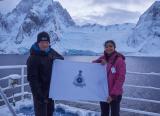
Charulata Somal is the first IAS officer to have gone on an expedition to the Antarctica. The 2012-batch officer from Karnataka cadre has just returned from the icy continent.

After getting a first-hand account of the impact of climate change during her 15-day expedition, the Chief Executive Officer of Kodagu Zilla Panchayat wants to use her experience to combat climate change in the district. Speaking to Deccan Herald, the 28-year-old officer said her aim was to improve Kodagu.

Somal was among 140 people from 30 countries who went on the expedition. There were 17 Indians in the team, including Somal. This was the largest contingent from the country, she said.

The team included engineers, educationists, scholars, members of non-government organisations, film makers, photographers and artists.
“We were chosen from among 7,000 applicants across the globe. I am proud to be the first IAS officer to have taken an expedition to the Antarctica,” she said, her face beaming with joy. The expedition was held from March 13 to 26, 2016.

The participants were selected at an expedition organised by the 2041 Foundation of Robert Swan, the first man to have walked the North and South Poles.

He made a 900-mile journey to South Pole, the longest unassisted march in history, from 1984 to 1987. The foundation has been organising expeditions since 2003-04.

A BA graduate in Economics (Honours), Somal said the subject helped her understand how energy resources were being exploited and how they could be conserved.

“We started the expedition by a ship named Endeavour from Ushuaia in Argentina and touched the Antarctic West Peninsula. Every day we landed at a different place. We had ice classroom sessions, where participants are made to sit on the ice. Apart from travelling by ship, we trekked for three to four hours, walked for 30 km with 80-100 kg luggage in -10 degrees Celsius. At times, the temperature was as low as -35 degrees Celsius. We experienced chilly winds blowing at a speed of 45 miles per hour, snow, sunshine and even rain at freezing temperatures,” she recollected.

After returning from the expedition, Somal made a presentation at the Karnataka IAS Officers’ Association to her colleagues and senior officials. She is also preparing to submit a report to the state government about the way of life in the Antarctica and the knowledge she acquired there.

“As an official, we have certain limitations. But in my personal capacity, I am conducting awareness camps for schoolchildren on how to save the last wilderness on earth, the impact of climate change on natural resources and how Cauvery basin, which is the prime source of water for Bengaluru and other areas, can be saved,” she said.

source: http://www.deccanherald.com / Deccan Herald / Home> City / by Bosky Khanna, Bengaluru / DHNS – August 13th, 2016

For a green escape

KodaguKF06aug2016

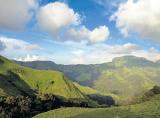
Nestled in the verdant landscape of hills and forests, Kodagu is considered as one of the most beautiful hill stations in Karnataka. Popular for its serene nature, rich biodiversity, quality coffee, vibrant culture and brave warriors, the district has made great strides in tourism and agriculture. Located in the Western Ghats mountain range, Kodagu has many places of tourist interest. During the monsoons, nature is at its best here with spectacular sights of rivers and waterfalls. Trekking, water sports and nature-watching are some of the common activities people get indulged in while farmers get busy in agricultural activities. Here is a glimpse into the diversity of Kodagu in the rainy season.

The charm of water
The Brahmagiri hill range in the western and southern parts of Kodagu has some of the highest peaks of Karnataka such as Thadiyandamol. Near Thadiyandamol, and on the way west from the town of Virajpet (about 16 km away) towards Talacauvery, is a beautiful natural cascade called the Chelavara Falls beside the village of Cheyyandane. This waterfall is within a forest and is part of a stream, which eventually joins River Cauvery. Chelavara is also called Embepare or Tortoise rock colloquially. There is a beautiful hill called Choma Kund, a couple of kilometres away. Chelavara is accessible from Madikeri and Virajpet by road.

River Lakshmanathirtha takes birth in the forests of Western Ghats and flows through Kodagu and Mysuru until it merges with River Cauvery at the Krishna Raja Sagara (KRS) in Mandya. Near Kurchi village in South Kodagu, this tributary cascades down a rocky hill, forming a waterfall. The waterfall is called as Irupu Falls. Legend has it that Rama, Lakshmana and Hanuman had come to this place and when Rama was thirsty, Lakshmana shot an arrow into the hills and hence, River Lakshmanathirtha was born. There is one more version of the story, which says that Lakshmana had once unwittingly insulted Rama and later, tried to immolate himself in repentance. In order to douse the fire and save Lakshmana, Rama shot an arrow into the rocks and the stream was formed. A Shiva linga was installed by Rama to aid his prayers. Nearby is the Hanuman Betta. One will be pointed out to a crescent shaped depression on that hill and told that it was formed when the powerful Hanuman wound his large tail around it in an attempt to heave it. The Irupu Falls can be reached by road from the towns of Virajpet or Gonikoppal. The best time to visit the falls is monsoon.

River Barapole near T Shettigeri is accessible from Virajpet and is a good site for white water rafting. It has a number of rapids with strange sounding names such as Grasshopper, Morning Coffee, Wicked Witch, Frame Head and Milky Churn. The river takes birth in the Brahmagiri hills, meanders through forests and coffee plantations and then disappears into the Brahmagiri Wildlife Sanctuary. The greenery on either side is infested with reptiles and insects, so the traveller needs to take precautions. The rivulet eventually goes west into Kerala and descends into the Arabian Sea.

Nishani Motte is a lesser-known peak near the temple town of Bhagamandala which is known for Triveni Sangam, a confluence of three rivers. Nishani motte is a good place for trekkers but one must seek permission from the Forest Department and follow a ‘leave no trace’ policy in order to safeguard the ecology of the area. A part of the trail has to be taken by jeep. If one is lucky, then he or she can spot elephants grazing below the hills. One also needs to watch out for leeches.

The rain god
The Padi Igguthappa Temple dedicated to Igguthappa, considered as the god of rains, is located near the town of Kakkabe in the Thadiyandamol region and is accessible by road. In Kodagu, Igguthappa is venerated as a hero god and especially remembered during Puttari, the harvest festival. While River Cauvery is called the kula devi or patron goddess, Igguthappa is known as mahaguru, or chief preceptor. He is also considered as the giver of food. It is one of the most ancient temples in Kodagu.

The main annual temple festival of Padi Igguthappa happens around April. The date of Puttari festival is decided in the Igguthappa temple. The festival begins in the temple and the crop is first offered here. Only then the people of Kodagu celebrate the festival. During the harvest festival, people invoke Igguthappa, Mahadeva and Baithurappa (the deity of Vayathur).

According to a ballad, Igguthappa had five brothers and a sister, and all were reincarnations of various deities. Born across the celestial milky ocean, they arrived as children in the northern Malabar coast.While three elder brothers settled in different places of worship as deities, the remaining four siblings crossed the Western Ghats and entered Kodagu. Led by Igguthappa, the eldest among them, they came near a hill in the village of Kakkabe. There, they felt hungry and hence came to a halt. They were in the family property of Nambimada Muthanna, a local farmer and landlord. Later, Muthanna had the Padi Igguthappa Temple built. His descendants became the hereditary managers of that temple. Though the temple’s history dates back to several centuries, the present temple is said to be built by a king a couple of centuries ago.

Among the younger brothers of Igguthappa, one was an avatar of Lord Mahalingeshwara. He settled down in the village of Palur along River Cauvery and came to be known as Palurappa. Pemmayya, the last of the brothers went southward dressed as a yogi. He crossed the Brahmagiri hill range and settled down in Thirunelli, Wayanad. His temple came to be known as Janardhana Temple, named after the deity whose avatar he was. The sister came to be known as Ponnangalatamme as she was destined to settle in Ponnangala in Yavakapadi village.

During the monsoons, races called the naati ota are organised upon the paddy fields of Kodagu. A long strip of land in a paddy field is left uncultivated. Both sides of this strip have three parallel rows of paddy seedlings, called naati. These rows are also called darae naati as they show the way to the runners. The track is set in the night. It is usually the farmers themselves who get together and organise the ota, or race. Traditionally, the runners gather from the neighbouring villages. They race across the track and through the slush, stumbling along the way. The winners are given a prize money. After the race, the track will have seedlings planted in them.

The event attracts large numbers of people from villages and towns. Be it rural sports rooted in culture or historical temples or serene places, Kodagu has something for everyone.

source: http://www.deccanherald.com / Deccan Herald / Home> Supplements> Spectrum / by Mookonda Kushalappa / August 02nd, 2016

Adventurous Treks to Free You from the Shackles of Your 9-5 Job

A 9-5 job or rather should be termed as a jail is just a sufficient medium to fetch you with bread and butter, but the passion which you always aspired will give you a life! A life which you always experience in your dreams only. Give it a thought! This slavery of 9-5 shift is doing no good to you other than drawing you away from your true passion. If you feel that you could be the next greatest person to come up with some crazy discoveries, then you really can. You don’t need to be smart or rich to achieve that aspiration of yours. All you need to do is to ignite your passion and follow your own inner voice to which you’ve stopped listening. Imagine waking up every morning and feeling like your life is a vacation. Imagine being free to go anywhere without a job permission. Imagine being truly free! Doesn’t it sound awesome? But there are certain questions which turmoil your head when you try to imagine these things. Questions like ‘How would I feed myself and my family? and ‘How would I get money and resources?’ The answer to your concerns is Coorg.

Coorg is a beautiful town blessed with the natural beauty of the Western ghats. Noted for its lush green hills and soothing climate, Coorg also holds multiple trekking trails and solace-destinations for your weekend escapes. And the best part is that you don’t have to burn a big hole in your pocket to experience what this city has in offer for you. HolidayIQ travellers have compiled some of the awesome trekking trails in Coorg.

Tadiandamol Trek

TandiandamolKF05aug2016

Having a height of 5740 ft from the sea level, Tadiandamol trek is the highest point in Coorg. The adventure of the Tadiandamol Trek passes through vast expanses of Shola forests, through lush green grasslands and breathtaking falls and streams. The best part is that it’s just 8 kilometers from the city and difficulty level of the trek is also easy. Installing and camp here and lighting up a bonfire and enjoying the whole eye-orgasmic view while sipping wine can be one hell of a doing you’re ever likely to experience in your life. And the gutsy wind blowing across adds wonders to the charm of this destination.

source: http://www.siliconindia.com / Silicon India / Home> SI News> Life / by Silicon India / Friday – August 05th, 2016

Sport – Peta

Bopanna urges fans to shun cockfighting in Peta Ad

BopannaKF24jul2016

As part of an ad campaign for PETA, tennis star Rohan Bopanna has urged his fans to stay away from cockfighting, a blood sport in which roosters are placed in a ring and forced to fight to death.

Posing with rescued rooster Smack, he appears next to the words ‘Tennis Is a Sport — Cockfighting Is Not’.
The visual for the campaign was shot by ace photographer Sam Mohan.

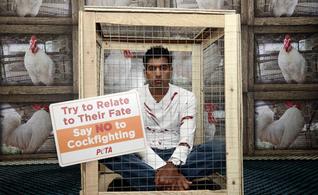
In December 2014, Bopanna had caged himself holding a sign that proclaims ‘Try to Relate to Their Fate.

Say No to Cockfighting’, as part of a similar ad campaign.PTI

source: http://www.thehindu.com / The Hindu / Home> In School /PTI / New Delhi – July 20th, 2016

High temperatures may cut coffee production by 8 p.c.

CoffeeKF24jul2016

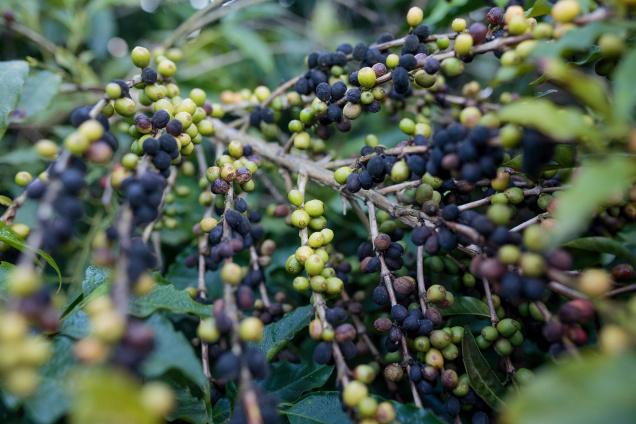
India’s coffee production is expected to drop by 8.05 per cent during 2016-17 compared to a record production of 3.48 lakh tonnes in 2015-16 owing to high temperature during summer months.

For the year 2016-17, the Coffee Board placed the post-blossom crop forecast at 3.20 lakh tonnes, comprising one lakh tonnes of Arabica and 2.20 lakh tonnes of Robusta, an overall decline of 28,000 tonnes (-8.05%) over the previous year.

The drop is mainly in Karnataka (22,175 tonnes) followed by Kerala (6,730 tonnes). The causes could be the delayed blossom and showers coupled with high temperatures especially in major coffee growing areas of Karnataka and Kerala.

In most of the coffee areas of Karnataka, estates with irrigation facilities have irrigated their Robusta plantations for one round of blossom during February-March and with one round of backing irrigation. However, due to absence of subsequent natural showers, even the irrigated estates have suffered some setback due to prevailing high temperatures, according to Coffee Board officials.

Scattered, uneven blossom

Coffee growing regions of Karnataka received the first spell of summer showers only in April and these showers were scanty and isolated. These showers did not cause any blossom in Arabica estates but resulted in scattered, uneven blossom in un-irrigated Robusta fields, which constitute about 40 per cent of the Robusta area in Karnataka.

Officials said this resulted in pinking and scorching of buds in Robusta. The growers were unable to take up supplementary irrigations to top up the scanty showers due to drying up of water resources.

The post-blossom estimate of Arabica for 2016-17 has shown a decrease of -3.38% (3,500 tonnes) over the corresponding figure of 2015-16, while the Robusta estimate has shown a decrease of -10.02 per cent (24,500 tonnes) over the last year’s figure (2015-16).

source: http://www.thehindu.com / The Hindu / Home> National> Karnataka / Nagesh Prabhu / Bengaluru – July 19th, 2016

More trails may be the answer to check illegal trekking in Karnataka

For Forest Department officials, illegal trekking remains a problem in Chikkamagaluru, Chamarajanagar and Dakshina Kannada districts. File photo: K. Murali Kumar

Recent arrest of trekkers for violating forest rules shows the kind of confusion in eco-tourism sector

What starts off as an innocuous desire to explore the lush forests and towering peaks of the State, sometimes ends up as an interrogation by a forest officer or at the local police station. For 18 trekkers from Bengaluru, the experience was all too real when they arrived at M.M. Hills. Organised through a travel portal, they landed in the forests of Chamrajanagar, only to be rounded up by the officials of the Forest Department for illegally trespassing into a wildlife sanctuary.

This experience, however, is not uncommon, particularly with adventure portals, trekking clubs and informal groups increasing in number to catch up with the demand for trekking.

“We had no idea that the trek was illegal. As a portal, we rely on the vendors who offer these treks … it is up to them to obtain the required permissions. We relied entirely on the local guide … since there are no boards or signs demarcating revenue and forest land, those in the trek did not know they had strayed into a forest range,” said Pradyot Punj of the portal adventuresome.in, which organised the trek.

Portals insist responsibility lies on the vendors — locals offering the trek — and participants are made to sign an indemnity contract fixing responsibility of any eventualities on the guides themselves. “After this experience, we will ensure that all vendors have the required permissions. Many organisations are not aware of this,” added Mr. Punj.

Business-minded

An increase in for-profit companies over the last two years has seen rampant flouting of rules, says Niranjan Kumar, an avid trekker, who organises hiking outings on a voluntary basis. “These companies tend to rely on locals looking to make a quick buck. We have seen them litter and burst crackers to make it seem like a party for gullible participants. What costs us Rs. 300 to organise will be charged Rs. 1,400 by some companies. It has become less about nature and more about commerce. This gives a bad name to all trekkers,” he said.

The Kodagu experience

In Kodagu, which attracts thousands of Bengaluru residents on weekends, the trek through the reserve forest at Thadiyandamol — the highest peak in the district — was proving to be a headache for the officials of the Forest Department. “There used to be night treks offered by coffee plantations and home stays in the area. We have put an end to it by posting a watcher there. Also, boards have been installed to warn trekkers,” said Manoj Kumar, Chief Conservator of Forests (Kodagu).

For Forest Department officials, illegal trekking remains a problem in Chikkamagaluru, Chamarajanagar and Dakshina Kannada districts. The emphasis, instead, is on the Karnataka Eco-Tourism Development Board to increase the number of trails that are offered legally. “After the monsoons, we will be offering more trails and ensure that trekking and hiking can be done in a regulated manner,” said Vijay Mohan Raj, Additional CEO of the Board.

No night trek near Bengaluru

Benglauru may see more hiking trails once the monsoon clouds clear. The Karnataka Eco-Tourism Development Board has proposed opening of trails such as Skandagiri, Savandurga, and Madhugiri. However, the once popular night treks — done surreptitiously over the years — will remain banned as forest officials emphasise that large-scale human movement adversely disturbs nocturnal animals

Will an app clear the confusion?

With eco-tourism, particularly trekking, remaining shrouded in confusion and bureaucracy, the Forest Department hopes to bring in some clarity by launching “myecotrip,” a mobile application.“From zoo tickets to bookings in jungle lodges to trekking trails, this app will allow citizens to directly connect with the nature activity of their choice,” said Vijay Mohan Raj, Additional CEO of the Karnataka EcoTourism Development Board. The app, however, will be launched only in September after the monsoon and when forest trails will once again be open to trekkers.

source: http://www.thehindu.com / The Hindu / Home> News> Cities> Bengaluru / Mohit M Rao / Bengaluru – July 13th, 2016

TripTease : The Kopatty Climb

KopattyPeakKF05JUL2016

Hill slopes blanketed with coffee estates, foggy climate, and fairly adamant rains are what Kodava Nadu welcomes you with during the monsoons.

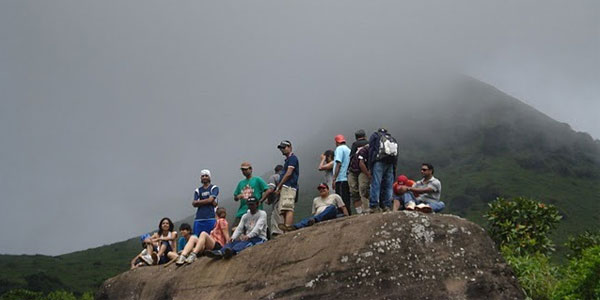
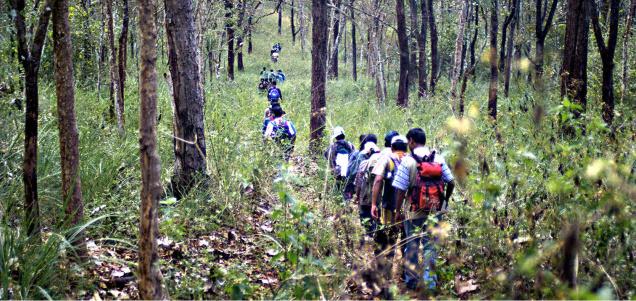
The Kodagu region’s salubrious weather makes it an ideal getaway for weekend treks, and the Kopatty trail comes highly recommended. One of the lesser known trails of the region, Kopatty takes you through coffee plantations, forest areas, and a massive grassland before taking you to the summit. This entire trek takes about three hours to complete.

Typically a day trek, it’s best to start your journey towards Kopatty early in the morning, closer to the sunrise, but during the rains it’s quite difficult to see one, so you could start as per your convenience as long as you keep track of time.

Reaching Kopatty is easy; get to Madikeri a day ahead. From there take a bus to Bhagamandala or to Tala-Cauvery and get off at Charambane village. It takes about an hour to reach the village from Madikeri. Many people make a stop at Tala-Cauvery to see the origins of the Cauvery rive, but at this time you can’t really see much thanks to the rains. Having said that, the thick fog and continuous rains can be an extraordinary experience. From Charambane Village, head towards the Bhagamandala route for another kilometre, and you will reach Kopatty Temple, which is where the trail begins.

Charambane is nestled between thick forest cover; it’s a small village with light population, and a few shops selling food and beverages for the trekkers. This is also last place where you’ll see any human settlement before you start your trek. Pick up some essentials from the stores here if you’ve missed carrying anything.

The walk into the forest begins at Kopatty Temple. You can meet the locals, or even guides at the base of the hill who help you into the trail. There are also jeeps available in case you want a ride all the way to the top. But there’s not much fun in that is there?

The start of the trail is a tarred road, with paddy fields on either side. The muddy path for jeeps begin soon after, as do the coffee plantations. The road is fairly flat for a few kilometres till you reach a small stream, the first one on the trail. After that the steep climb through the forest begins. It will lead you to a ‘Y’ junction; take the left from there as the trail narrows down, and you’ll find two abandoned houses. Take a right from the houses, and you will be inside the forest. Hereon, the trails gets very little natural light, thanks to the canopied trees, and you need to focus on where you’re going. Also be aware of bugs and leeches. Hold branches to move ahead, but don’t lean against the trees because they’re usually crawling with large ants.

KopattyPeak02KF05JUL2016

After a while you will spot the second stream on the trail; it’s a small one, and you can rest here for a while before moving forward. You can even drink this water.

As you move forward, you will leave the forest area and be in the middle of a beautiful meadow. On your right will be the dense forest area, and on your left will be the beautiful valleys of the region. And if you look ahead, you can see the Kopatty peak in front of you. The path from here is literally like walking on a carpet. It should take you about 10 minutes to reach the peak, which is said to be at a height of 4,500 feet above sea level. From here you get a magnificent view of the Western Ghats as well.

The descent will have you walk towards Kallugundi across the Kopatty ridge and you will head towards the valley on the left. It will lead you back to the forest from where the climb down is steep, with lots of slippery paths, and dried leaves.

GETTING THERE

Kopatty Village is around 296 kilometres from Bangalore. It can be reached by either bus or a private transport. There are buses from Bangalore to Madikeri too.

source: http://www.bangaloremirror.com / Bangalore Mirror / Home> Columns> Others / Bangalore Mirror Bureau / by Kumaran P / July 05th, 2016

Environment organisations to organise ‘padayatra’ seeking funds for Cauvery River development

Allocation of money for Cauvery River development on the lines of the funds for purification of Ganges River has been sought by environment organisations.—PHOTO: M. GOVARTHAN

Olirum Erodu Foundation has teamed up with Annai Cauvery River Protection Trust to carry out remediation of environmental pollution in the Cauvery River.

The two organisations have resolved to organise a ‘padayatra’ from Talacauvery on the Brahmagiri hill in Kodagu district, Karnataka, to Poompuhar in Tamil Nadu, on July 10 to create public awareness on the need for Central and State governments to earmark funds for Cauvery River Rejuvenation Project.

They have taken the expertise of Mumbai-based Tata Institute of Social Sciences (TISS) to implement their action plan.

Pamphlets being distributed by the Trust lists a set of responsibilities of the governments that include a special drive for raising lakhs of trees in Brahmagiri range in Kodagu district for more rain at Talacauvery.

Stringent measures to prevent mixing of sewage and industrial pollutants into river water, strengthening of embankments and construction of check dams across the river to prevent draining of water accruing from monsoon rains into the sea; and formation of a separate ministry for safeguarding and developing Cauvery River.

Participants at the consultative meeting chaired by the vice-chairman of Olirum Erodu Foundation (OEF) D. Venkateswaran constituted Swami Ramananda, OEF chairman M. Chinnasamy; and secretary S. Ganesan, emphasised on allocation of money for Cauvery River development on the lines of the funds for purification of Ganges River.

A. Sridhar, Regional Project Officer (South India) with National Water Mission & Tata Institute of Social Sciences – Water Project, the special invitee for the meeting, joined other speakers in calling for nationalisation of rivers and linking of the rivers in the Southern States to begin with.

Suggestions for environmental remediation were also offered by historian Kaniyan Balan, coordinator of Erodai K. Sudakar, Secretary of Tamizhaga Vivasayigal Sangam Subbu, and organising secretary Logusamy.

source: http://www.thehindu.com / The Hindu / Home> National> Tamil Nadu / by Special Correspondent / Erode – June 13th, 2016

Highest peak in Kodagu is now off limits for trekkers

Madikeri:

Trekking to Thadiayandamol, the highest peak in Kodagu and the second highest in Karnataka, has been banned temporarily due to the movement of wild elephants in the vicinity.

A herd of 10-12 elephants has been camping near the hill after escaping from nearby forest and have wrecked havoc by destroying banana, arecanut and coffee plantations in Yavakapadi, Marandoda and Chelavara villages.

Forest officials said they are making efforts to drive these elephants back into the woods and till then, entry to trekkers and tourists will be restricted. They said it may take some time due to heavy rains in the region.

source: http://www.timesofindia.indiatimes.com / The Times of India / News Home> City> Bangalore / TNN / June 12th, 2016