Using this app, people can update the last location where they spotted a wild elephant, and through an AI-based system, the movement of the elephant will be traced.
The siren system is being installed across 12 conflict zones in Virajpet limits. (Photo | Express)
Madikeri :
A new initiative to prevent untoward incidents related to wildlife movement is being undertaken on a trial basis in Kodagu. Funded by a private company, the early warning system has been installed by Support for Network and Extension Help Agency (SNEHA), an NGO.
An early warning system in the form of a siren to alert residents about wildlife movement within a one-kilometre radius has been installed by SNEHA on a trial basis in wildlife conflict regions across Virajpet in Kodagu.
The NGO is currently in the process of installing 12 such sirens across the conflict zones of Badaga Banangala and surrounding areas. While the initiative is currently at a trial stage, SNEHA plans to expand it further by introducing automated alert systems.
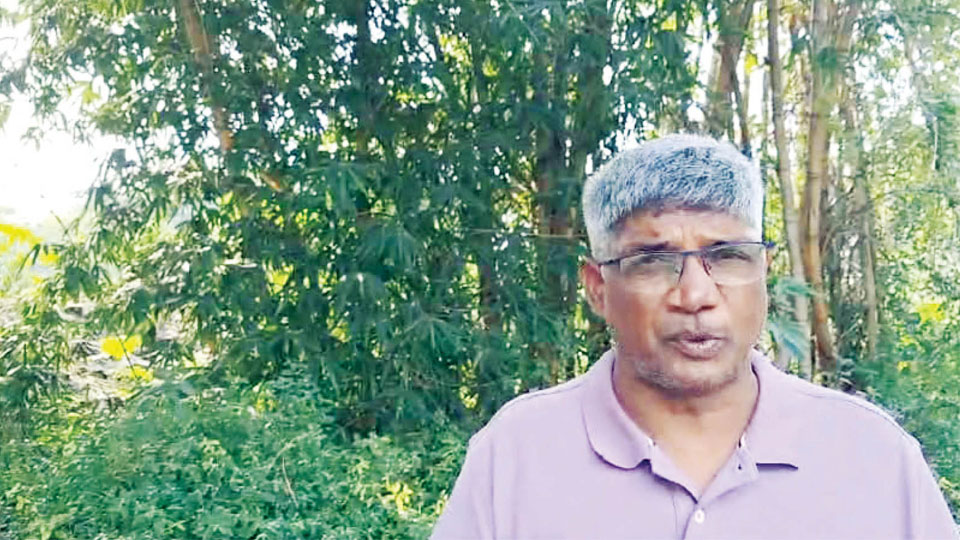
“This initiative is being carried out by SNEHA in Odisha and Kodagu regions. We are looking at developing the system further to ensure an automated alert system,” explained Ramaswamy Krishnan, the Executive Director of SNEHA.
He said the NGO has developed a mobile application called SNEHA Kalpvaig Elephant Tracker, which is being uploaded online to become accessible to all.
Using this app, people can update the last location where they spotted a wild elephant, and through an AI-based system, the movement of the elephant will be traced.
Further, based on the location of the elephant, a siren will be triggered to alert residents within a one-kilometre radius.
“The users who have this application can learn about the movement of the elephant, and this application is linked with the siren system. We have also placed about four camera traps in conflict zones, and these cameras are being monitored by the staff at the office to activate the siren manually,” he explained.
The cameras click pictures every minute, and these photographs are reviewed by the appointed staff, who can activate the siren if an elephant is detected within the designated area.
“We want to make this an automated system, and we are devising plans where the cameras can automatically detect wildlife movement,” he confirmed. When the sirens are activated, a voice alert message is also sent through the mobile application simultaneously.
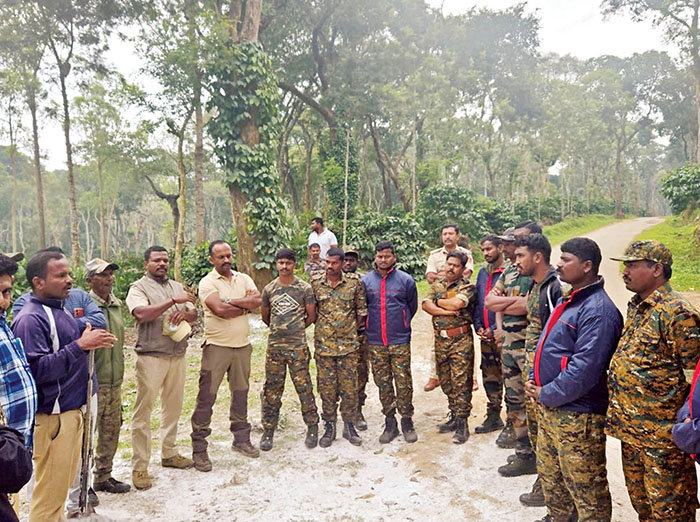
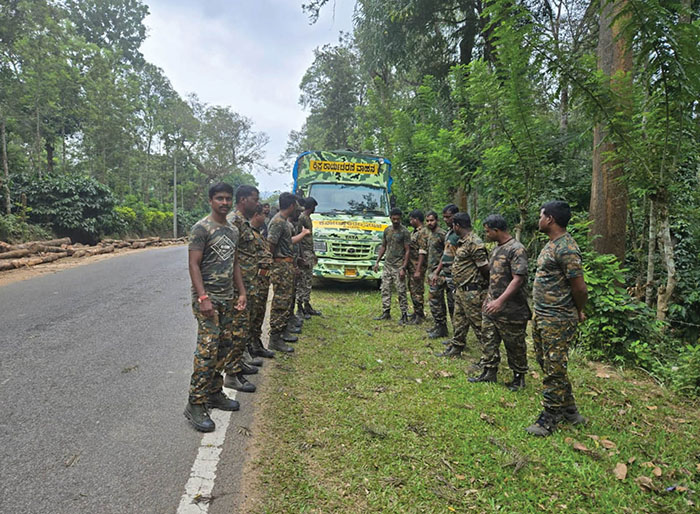
The alert system is currently being implemented in Kodagu on a trial basis, with the NGO having formed a tracking team to monitor wildlife movements.
A total of 12 sirens have been installed across conflict zones in the Virajpet limits. The initiative is being funded by Sucden Coffee Pvt Ltd and is being implemented in collaboration with the Forest Department.
source: http://www.newindianexpress.com / The New Indian Express / Home> Karnataka / by Prajna GR / May 30th, 2025
Looking for a peaceful escape from the busy city life of Bangalore? June is the perfect time to take a weekend trip and enjoy the calm beauty of South India. One of the best weekend getaways near Bangalore in June 2025 is Coorg. Also known as Kodagu, Coorg is often called the “Scotland of India” because of its green hills, coffee plantations, cool weather, and peaceful atmosphere. It’s just around 250 km from Bangalore and is ideal for a short break with family, friends, or even solo.
Let’s explore why Coorg is the perfect weekend getaway this June.
Green landscapes and fresh air In June, Coorg becomes even more beautiful. The monsoon begins, and the rains make everything green and fresh. The smell of wet soil, the sound of birds, and the misty hills create a peaceful mood. If you are someone who loves nature, you will enjoy every moment here. The scenic drives through winding roads covered with thick forests and coffee plantations are a treat to the eyes. You can stop at many places on the way for pictures or just to breathe in the clean air.
Popular places to visit in Coorg
Coorg has something for everyone. Here are some must-visit spots:
Abbey Falls – A stunning waterfall hidden in the forest, Abbey Falls is a great place for nature lovers and photographers. The short walk through coffee plantations to reach the falls is a lovely experience.
Raja’s Seat – This viewpoint offers a beautiful view of the hills and valleys, especially at sunset. It’s a peaceful place to sit and enjoy the fresh breeze.
Madikeri Fort – For history lovers, Madikeri Fort gives a glimpse into Coorg’s past. It also has a museum inside with interesting displays.
Dubare Elephant Camp – If you’re traveling with kids or love animals, this camp is a fun place. You can watch elephants being bathed and fed and even take part in some activities.
Talacauvery – This is the birthplace of the river Cauvery. It is also a holy site and offers beautiful views from the hilltop.
Local food and coffee Coorg is also known for its tasty local food. Try dishes like Pandi Curry (pork curry), Kadumbuttu (rice dumplings), and Noolputtu (rice noodles). These are full of local flavors and are best enjoyed at homestays or small local restaurants.
And of course, don’t miss the coffee. Coorg produces some of the best coffee in India. You can visit a coffee plantation, learn how coffee is grown, and sip a fresh cup while enjoying the cool weather.
Where to stay
Coorg has many options for all kinds of travelers. From budget hotels to luxury resorts, and cozy homestays in the middle of coffee plantations, you will find a place that suits your needs. Staying in a homestay will also give you a chance to talk to locals, learn about their culture, and eat home-cooked food.
Perfect weekend itinerary
Here is a sample weekend plan for June 2025:
Day 1 (Saturday)
Leave Bangalore early in the morning
Reach Coorg by noon and check into your hotel or homestay
After lunch, visit Abbey Falls and Raja’s Seat Enjoy local dinner and relax
Day 2 (Sunday)
Visit Dubare Elephant Camp early in the morning
Head to Talacauvery and Madikeri Fort Try local food for lunch
Leave for Bangalore by late afternoon
Tips for travel in June
Carry an umbrella or raincoat, as it may rain suddenly
Wear comfortable walking shoes for sightseeing
Book your stay in advance as Coorg is popular during weekends
Try to leave early from Bangalore to avoid traffic
Why Coorg is perfect for June
June is the start of the rainy season, and Coorg looks like a green paradise. The weather is cool and perfect for walks, sightseeing, or simply relaxing with a hot cup of coffee. It’s close to Bangalore and easy to reach by road, which makes it a great weekend choice.
Whether you’re looking for nature, adventure, food, or just a peaceful time, Coorg gives you all. So, pack your bags and make your June weekend refreshing and unforgettable with a short trip to Coorg.
Get best deals on travel, receive travel tips and travel stories instantly Subscribe to Nativeplanet.
source: http://www.nativeplanet.com / Native Planet / Home> Travel Guide / by Neha Choubey / May 23rd, 2025
A recent study by the Nature Conservation Foundation, in collaboration with owners and managers of agroforests in Hassan and Chikkamagaluru districts, demonstrates the potential of coffee agrosystems as refuge for biodiversity.
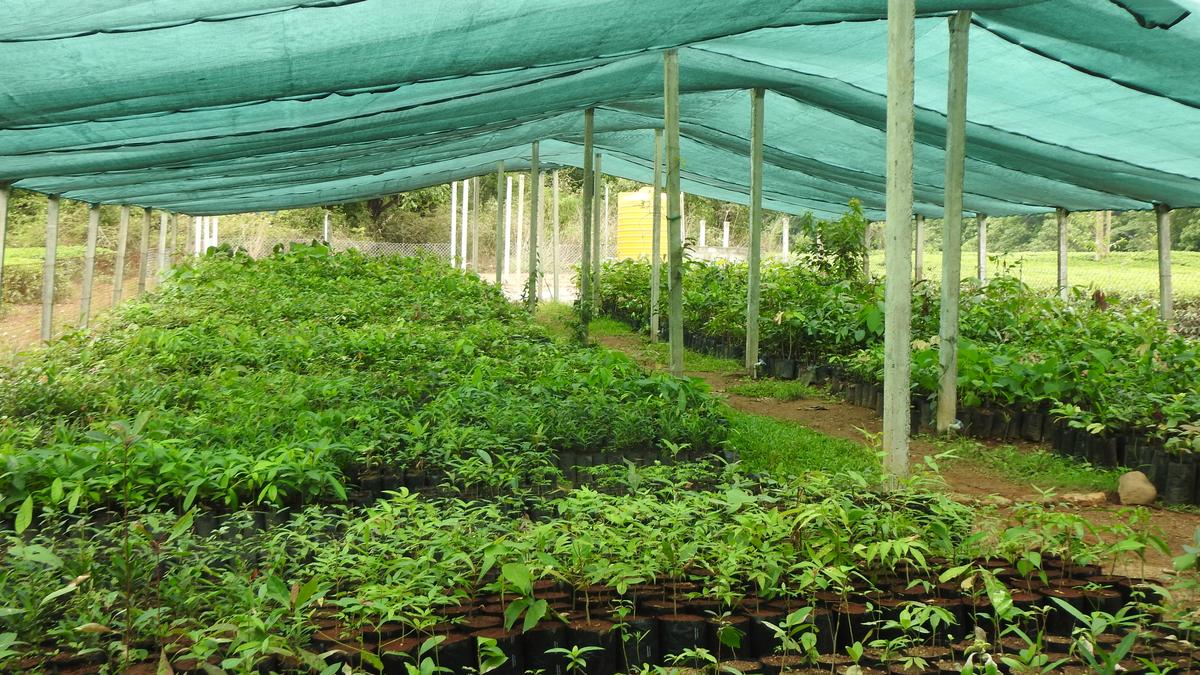
A restoration nursery in the Western Ghats, India. | Photo Credit: Vijay Kumar
In 2019, when the Narmada Estate, a coffee plantation in Karnataka’s Chikkamagaluru district, decided to go organic, it began diversifying the coffee-cropping system to reduce pests. “The reason something becomes a pest is because you have too much of the same thing,” explains Sohan Shetty, the estate’s general manager. “So, we needed to plant as many trees as possible.”
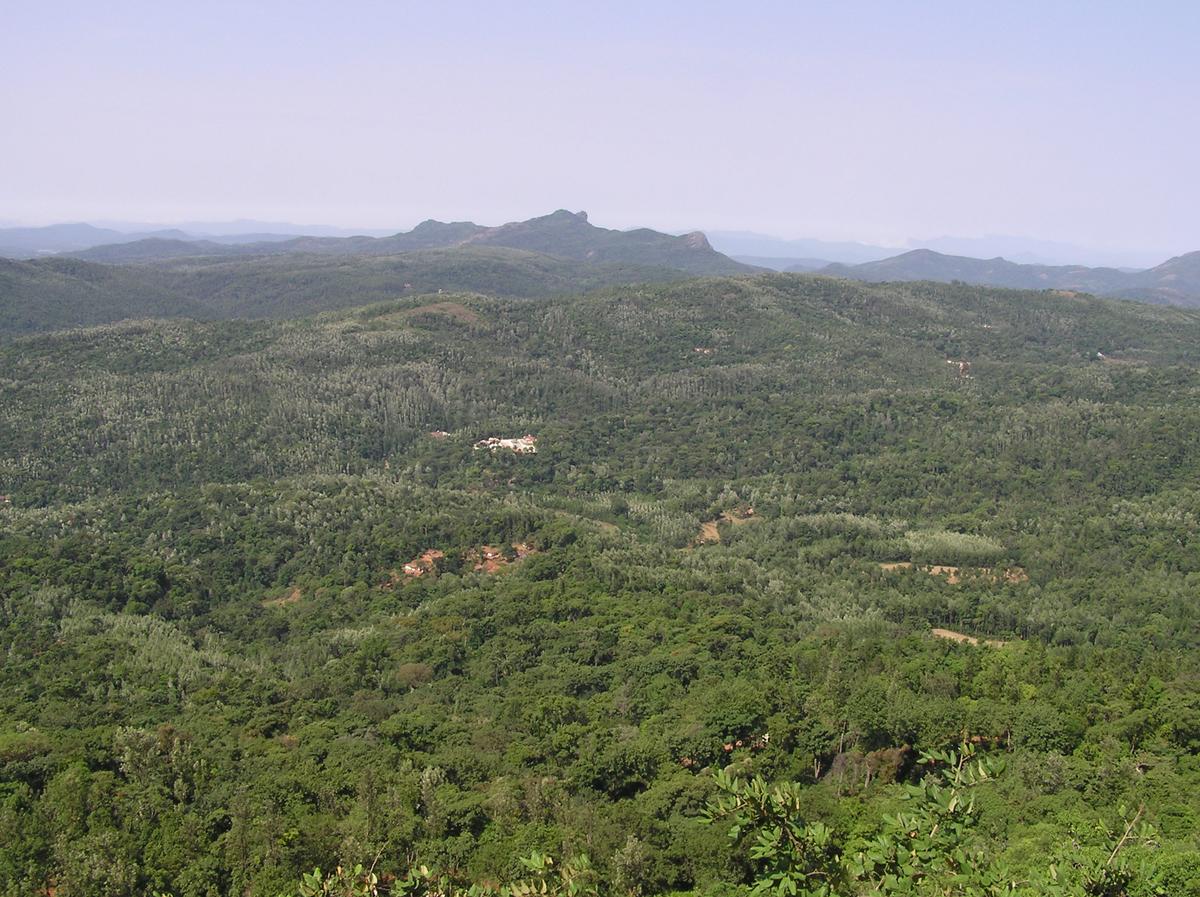
Shade coffee agroforests and pockets of remnant natural forest form a dense and continuous tree canopy in the Chikmagalur region of the Western Ghats, India. | Photo Credit: Anand Osuri
To find suitable plants to grow alongside organic coffee, he began scouting for the best-priced plant sources, including the Karnataka Forest Department’s nurseries and seed suppliers in Chikkaballapur. During his search, Shetty discovered that the Nature Conservation Foundation (NCF) had been actively restoring rainforests in Valparai, Tamil Nadu, for years, and so he reached out to them. “They were amazed at the scale with which I was thinking of starting nurseries and asked me what species I was working on.” So he shared with them the list of trees and seeds available with both the Forest Department and the seed supplier. “The botanist looked at it and said, a week later, that only three of these species are native to the Western Ghats,” he says. “That shook me. I realised that we are just planting trees for the sake of planting trees, but we are completely messing up the ecosystem.”
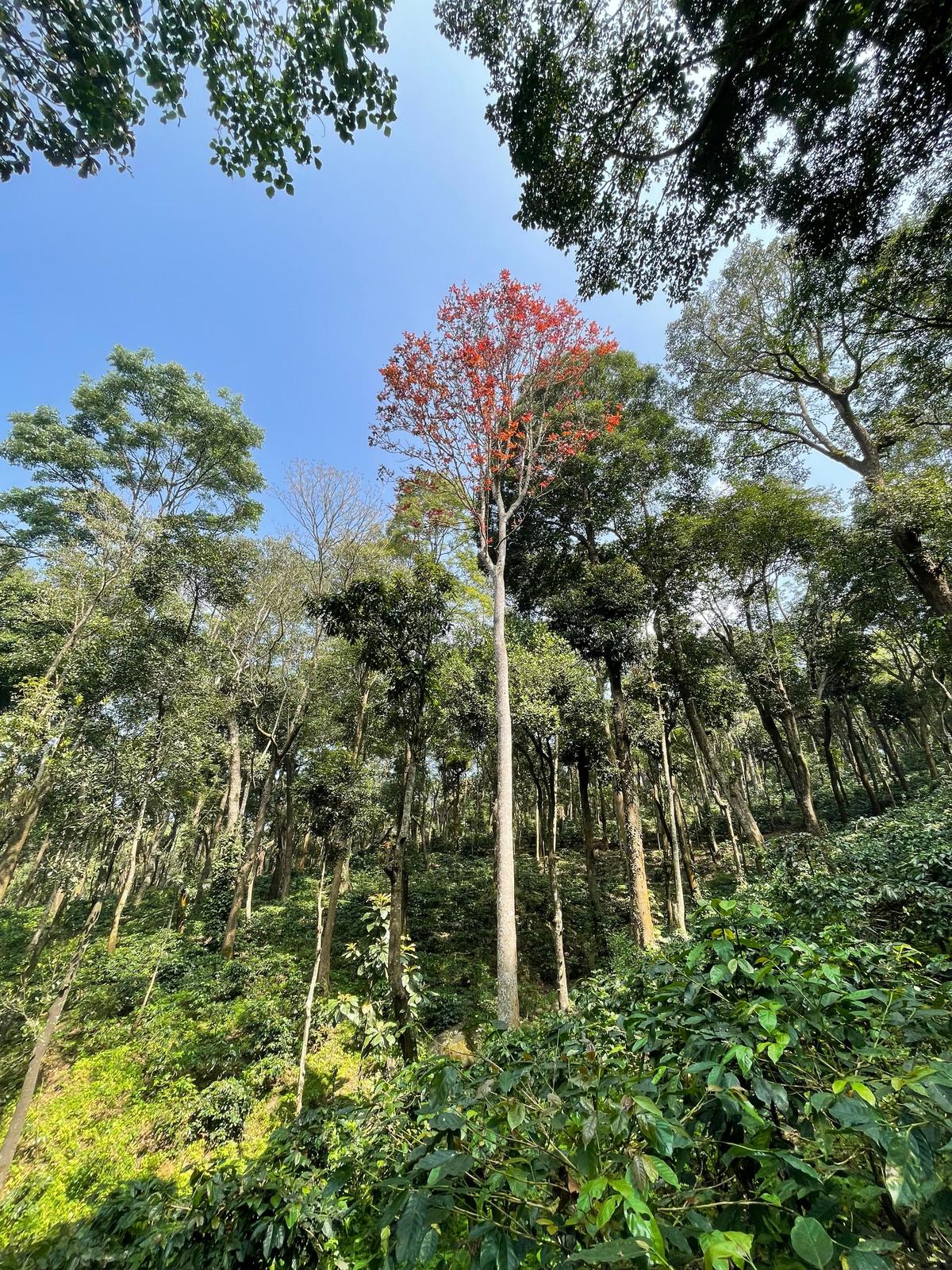
Shade trees in coffee agroforests can comprise a variety of species that are native to forests of the region. The species with fresh red leaves at the center of the image is Canarium strictum, which produces fleshy fruits that attract birds and a resin that is culturally and economically important. | Photo Credit: Vijay Karthick
In search of a better solution, he soon found himself visiting a nursery run by NCF on land allocated by the Kadamane Estates Company in Sakleshpur taluk, Hassan district, which had been set up in 2022. “It was quite impressive, 5000-odd plants of different varieties,” remembers Shetty, who, on seeing this, thought it would be a good idea to further collaborate with NCF. “By that time, I had set up a nursery with 1.2 lakh bags, which could accommodate that many saplings,” he says. “So, I told them that I was happy to grow plants for you. That is how the whole partnership began,” recalls Shetty, who, along with other owners and managers of agroforests in Hassan and Chikkamagaluru districts, was part of a study spearheaded by conservation scientists from the NCF titled Shade coffee agroforests as native plant sources for restoration.
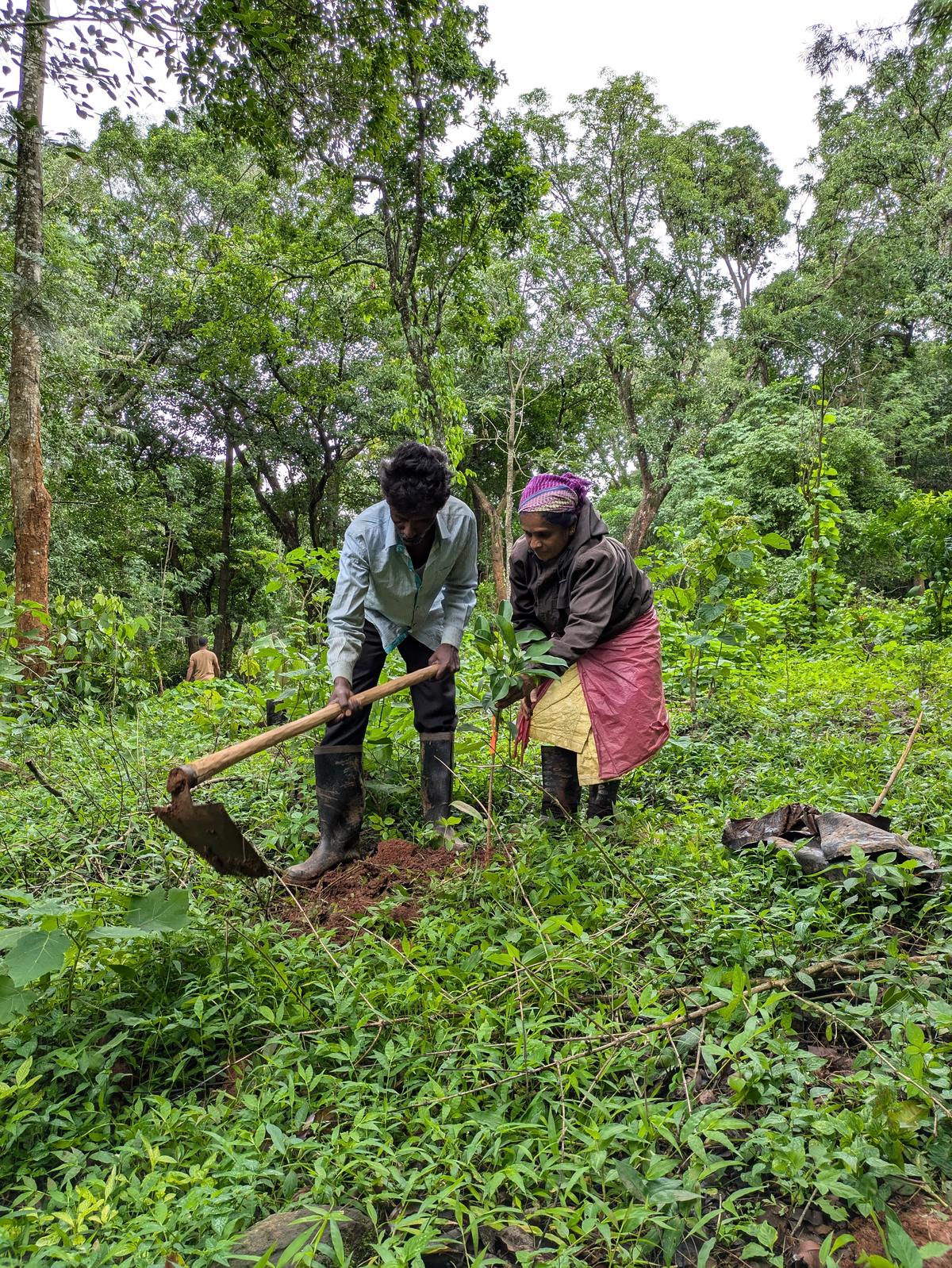
Planting trees as part of ecological restoration in a degraded forest in the Western Ghats, India. | Photo Credit: Vijay Kumar
Seed Harvesting
According to Anand Osuri, a scientist with NCF and the paper’s lead author, the study, which has just been published in the Journal of Applied Ecology, really took off in 2023. A year earlier, Vedika Dutta, also a co-author, had come to Osuri as a master’s student, wanting to study birds in coffee agroforests, with a focus on frugivorous or fruit-eating birds. “In the course of her work, we spent time in coffee estates, watching birds and the trees in which they foraged in these coffee plantations,” he says, adding that they were struck by the large numbers and wide variety of native tree seeds and seedlings on the coffee estate floor. “These seeds and seedlings were not just of the trees fruiting overhead, but also other species carried in from further afar by seed-dispersing birds and mammals.”
Around the same time, NCF was also thinking about a forest restoration project in the coffee-growing landscape of the hilly Malnad region by partnering with local residents and landowners. According to him, these landowners had different motivations to restore forests, ranging from an interest in conservation to entering carbon and biodiversity markets or attracting birds to their homestays. “There are a number of opportunities where interested landowners are keen to restore forests in areas where coffee is not being cultivated,” says Osuri, who has been participating in efforts to restore forests for nearly a decade and believes that the availability of diverse native plants, sourced locally and ethically, is critical to do so. “So, there was this restoration project that we were trying to develop, for which we needed to develop native plant nurseries, and the bird work was also going on.”
As part of the restoration project, researchers from NCF needed to collect seeds and seedlings that could be raised in nurseries. But “we didn’t want to be collecting lots of seeds from the forests themselves because that reduces the seed availability there, impacting the resources of animals, birds and insects,” says Osuri. “And so, we put both these pieces together to see if we could do more to harness the potential of coffee farms as a source of seeds for restoration.”
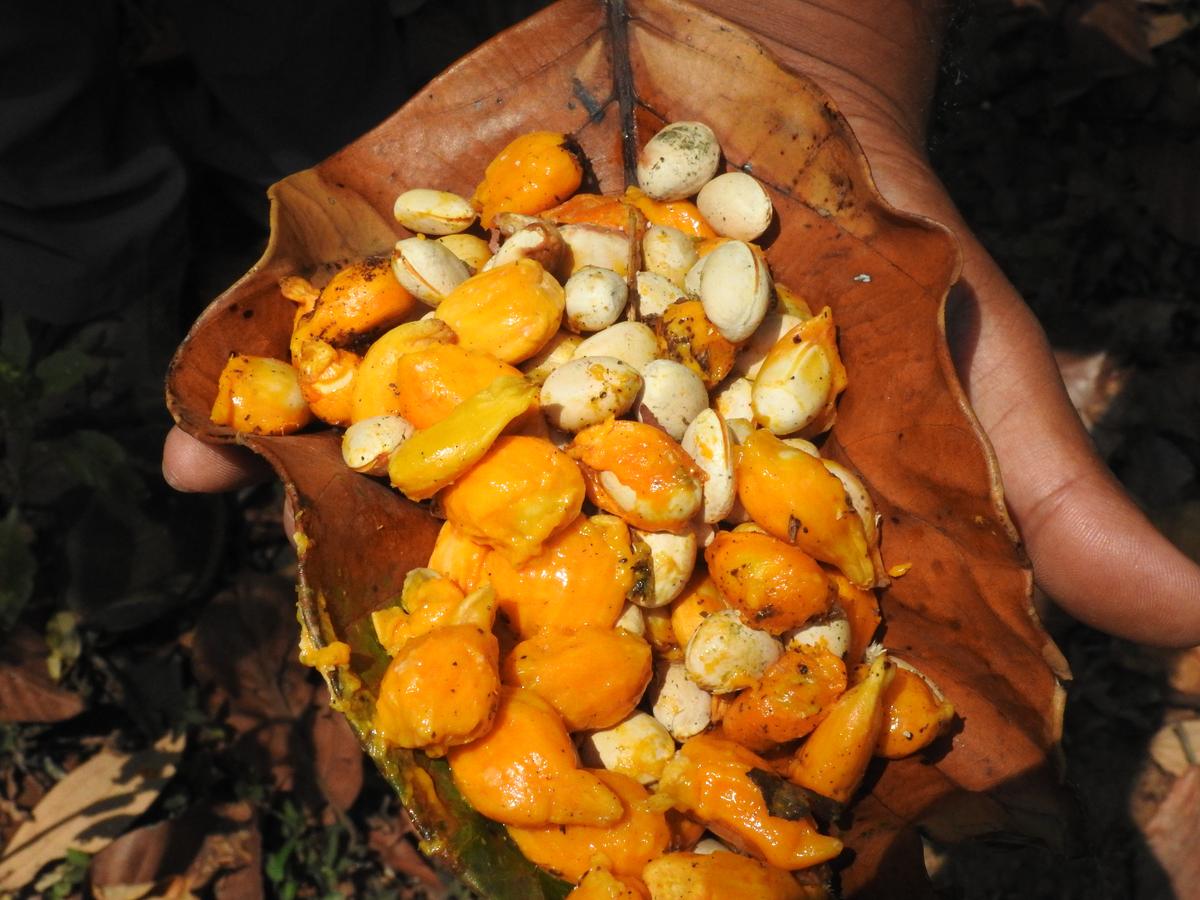
Seeds of Artocarpus hirsutus – a species that is endemic to the Western Ghats (found nowhere else on Earth) – during rescue from a coffee agroforest to a restoration nursery. | Photo Credit: Vedika Dutta
Why coffee
Coffee in India is largely shade-grown, making coffee plantations a potential “refuge for biodiversity,” says Osuri. “For a substantial set of native species important for restoration, we often find adults of those trees in the coffee estates.” However, most seeds that fall and germinate in coffee estates are weeded out because of the possibility of them competing with the coffee bushes for light and other resources, representing a loss for biodiversity conservation. “So, we thought we should make a more systematic effort to rescue their seeds and seedlings before they get weeded out
As part of the study, the team documented the diversity of native tree species found within the coffee estates, recording over 90 native tree species relevant for forest restoration in the region. Clarifying that the word “native”, in this instance, refers to “that particular eco-region of the Western Ghats, the wet evergreen rainforests” and not just plants “native to India,” he says that they were particularly interested in documenting species not only those native to the Western Ghats but also endemic to the region, those “found nowhere else on earth and some of which are classified by the IUCN as being threatened.”
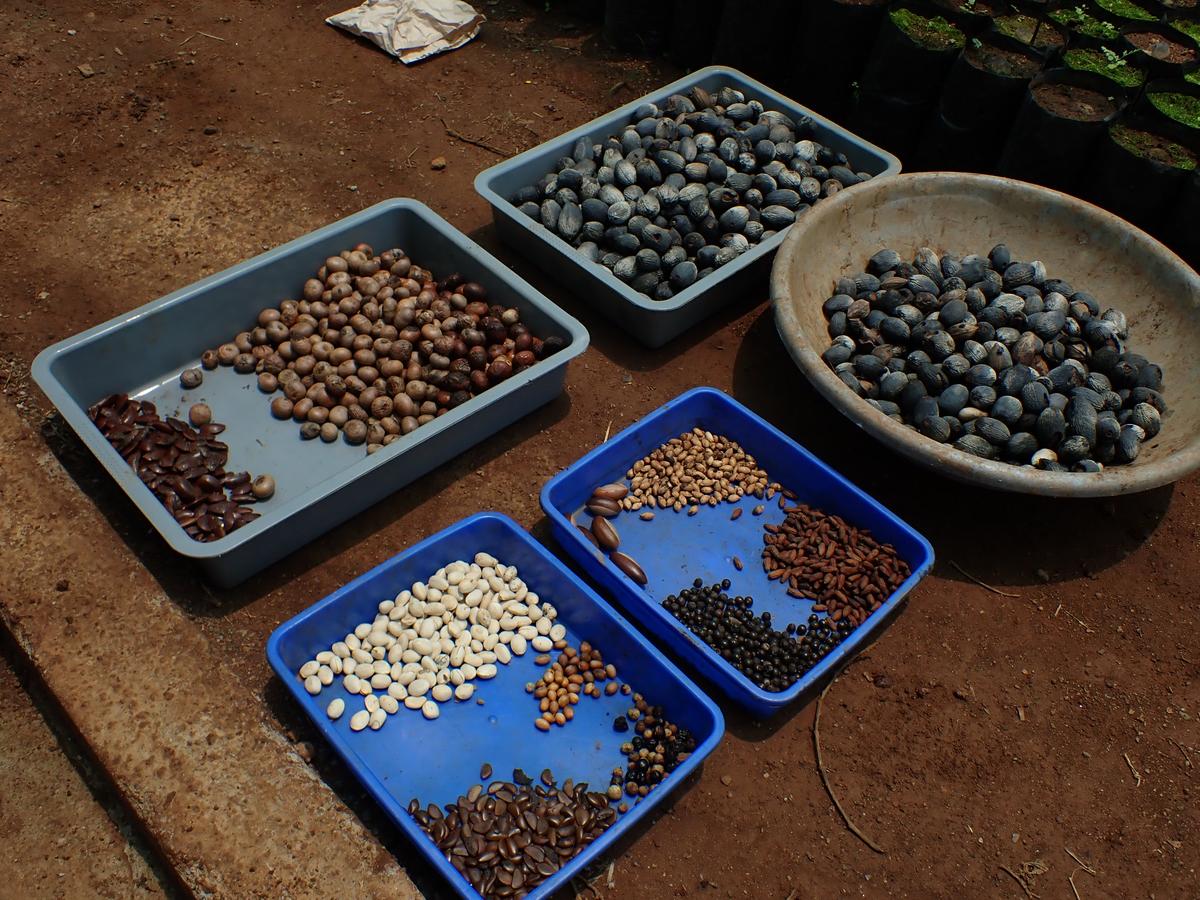
Seeds of multiple native tree species rescued from coffee agroforests prior to sowing at a restoration nursery. | Photo Credit: Vijay Kumar
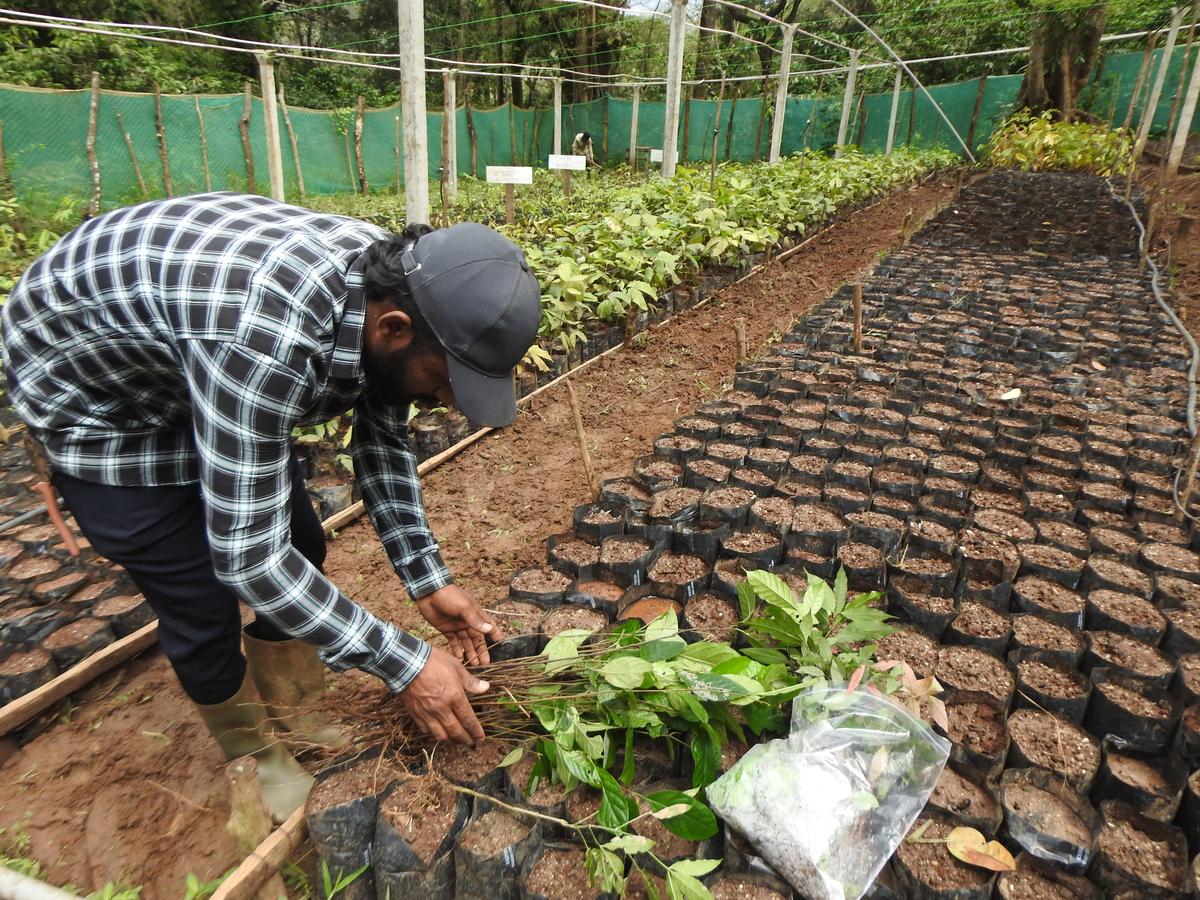
The NCF team also connected with farmers who were “willing to give us permission to visit their farms, collect seeds, and also, in the monsoon season, collect small seedlings which were growing along the roadside.” Between 2023 and 2024, around 18,000 seeds and seedlings of 56 native tree species were rescued and are currently being raised in the two restoration nurseries established through collaborations between NCF and agroforest owners. “We are trying to encourage and enable people to take up such projects to plant the right native species in the right places.”
Currently, the restoration project is in a pilot stage with the NCF team focusing on two collaborative initiatives: expanding the network of seed source coffee farms and developing more native plant nurseries. “The idea we are proposing is that we should not just view coffee agroforests as refuges for biodiversity, but also acknowledge their potential to contribute to conservation in the wider landscape by being a source of native plants for restoration.”
Seedlings of multiple native tree species rescued from coffee agroforests prior to replanting at a restoration nursery. | Photo Credit: Vijay Kumar
Future potential
In Osuri’s opinion, more collaborations and experimentation are now needed. “A few more things will need to be worked out before one can talk about substantially scaling up, since, at the moment, one of the limiting factors is nursery resources,” he says. One potential partner, who can play a key role in expansion, he believes, is the Karnataka Forest Department. “We plan to discuss our findings with department officers to see if there is a workable model for this,” he says. “If we can develop models for connecting seed sources in coffee farms with nurseries of the forest department, then the scale and potential really go up because the department already has an excellent network of nurseries.”
Osuri also hopes to strengthen and scale up their efforts in the Malenadu region, since nearly 70% of India’s coffee production comes from the Malenadu region, mainly from the Baba Budan Hills in Chikkamagaluru to Kodagu in the south. ”This is also an important region for biodiversity conservation and restoration,” he says. His long-term goal is to continue to explore opportunities and collaborate with coffee farmers and landowners for restoration, experiment with different approaches to restoration, and contribute in any other way he can to biodiversity in the region, he says.“And we would love to connect and exchange learnings with others interested in exploring similar models in different landscapes.”
source: http://www.thehindu.com / The Hindu / Home> News> Cities> Bengaluru / by Preeti Zachariah / May 05th, 2025
This summer was bitter for many homes in Kodagu. Their wells almost dried up before the monsoon broke. But 47-year-old Suraj Ajjikuttira in south Kodagu didn’t have to worry.
His recharge well, probably the first one in hilly Kodagu, ensured that his open well had ample water during the dry season.
Buoyed by his success, Ajjikuttira made it his mission to spread his knowledge of harvesting rain through videos, workshops and meetings. People can even phone and ask him. As a result, awareness is spreading and the recharge well is increasing in popularity. Kodagu now has at least 40 to 50 recharge wells.
Ajjikuttira’s interest in rainwater harvesting began two decades ago, when his 50-foot well, dug in 1979, started going dry. By 2002 he thought he had no option but to dig a bore well for drinking water. Then, fortuitously, he participated in a seminar on rainwater harvesting in Mysore. He picked up the nuances of groundwater recharge very quickly.
Ajjikuttira went home determined to apply his newly acquired knowledge by recharging his bore well. He dug a 10-foot-deep mini well around it. After filling up the mini well with aggregate matter, he diverted run-off from the nearby area into his bore well. The next year itself, the water level in his bore well rose considerably.
“That convinced me about the efficacy of groundwater recharge,” reminisces Ajjikuttira. He doubled his efforts and started a serious attempt to catch all the rainwater he could on his estate. He turned his attention to rainwater falling on his roof, on the vast frontage of his home and the adjoining coffee-drying yard or ‘kana’.
Earlier, all this water used to disappear into a drain. Ajjikuttira now ensured that all run-off got collected at one spot and then flowed out. A leaf separator was attached at the exit point to prevent leaves from clogging this stream of water.
The usual custom is to make a rain pit for such run-off to percolate. But, in this case, the water that was flowing was excessive. After racking his brains, Ajjikuttira dug a recharge well, five feet in diameter, to catch this water. He placed concrete rings along the inner walls of the well 12 feet deep, to prevent its walls from collapsing. The diameter was then reduced. Another six to eight feet were dug and filled with stones to firm up the second stage of the recharge well.
Suraj Ajjikuttira near a large tank which now collects rainwater
Consequently, rainwater collected from about 1,500 square feet of space goes straight into Ajjikuttira’s recharge well and is fully absorbed there. “At the most we get one inch of rain per day. I have designed the recharge well in such a way that even this one inch of water is captured,” he explains. The water that is percolating is estimated to be around two lakh litres.
Ajjikuttira’s well was 42 feet deep when his father got it dug in 1979. In 1994, when the well dried up, it was deepened by another eight feet and eight rings were fixed on its walls. After that the well never dried up. Even during the 2016 drought, Ajjikuttira’s well had eight feet of water. Last year, when wells dried up in Kodagu, Ajjikuttira’s well had 11 feet of water.
The recharge well is a new concept invented in Chennai in the 1990s. Later, the idea was embraced by residents of Bengaluru. The city now probably has around 50,000 recharge wells. The sole purpose of the recharge well is to recharge groundwater. The well can be very small in diameter, as low as three feet.
COFFEE AND RAIN
Kodagu district’s main crop is coffee. Coffee plants are rain-fed. The first showers or ‘blossom showers’, received in February and March, are very important for coffee farmers. If it doesn’t rain at this time, farmers have to pump up water from tanks and sprinkle or irrigate the plants.
After the blossom showers are over, coffee plants require a second spell of irrigation within 15 to 20 days. These showers are called ‘back-up’ showers. If the rains fail to arrive then farmers who still have water do a second round of sprinkling.
The water in Ajjikuttira’s tank was hardly sufficient for even one round of irrigation. About 200 metres away from his tank is a huge seven-acre tank called Katibetta Kere. This water body belongs to the revenue department. It has a catchment of around 500 acres. But the tank’s bund had breached in one area and it wasn’t retaining water. Ajjikuttira built a check dam with sand bags in the catchment area so that the tank would retain water and help his own tank absorb some water.
Katibetta Kere is at a higher elevation than Ajjikuttira’s irrigation tank. Subsequently, the department built a concrete check dam for Katibetta Kere. Recalls a happy Ajjikuttira, “Since then, this tank has enhanced water availability in my own tank. Now, even if we do three rounds of irrigation, the tank still has water.”
Rainfall figures differ across Kodagu district. Ajjikuttira’s place receives 54 inches — coffee planters still measure rain in inches — whereas not-so-distant Virajapet gets 70 inches. Wetlands here are dwindling and so is forest cover. Due to various reasons, water availability is worsening in the district. Unfortunately, awareness about rainwater harvesting and groundwater recharge is abysmally low.
Once Ajjikuttira succeeded in augmenting water availability in his estate, he started spreading the idea of water harvesting. In the last 15 years, he has conducted more than 300 awareness sessions on rainwater harvesting in schools, government departments, workshops for citizens and so on.
“In most Kodagu estates, the house is located at a higher level. In the past, the yard for drying coffee beans and paddy used to be built near the paddy fields in a lower area. But due to security reasons the yard is now constructed close to the house. So the typical house would have a large area in front with a drying yard close to it. This entire stretch is either built with concrete or lined with interlocking tiles. So a huge amount of clean water flows on this surface,” says Ajjikuttira.
“We need a structure that can hold this run-off and make it percolate fast. I experimented with the recharge well. Although it is expensive, it does the job efficiently.”
Ajjikuttira is approached by people on the phone or in person for guidance in harvesting rainwater. “If we make arrangements to catch all the run-off from the front area and the drying yard, summer rains alone will ensure the well doesn’t dry up,” he says confidently. A recharge well costs approximately Rs 60,000-70,000.
Ajjikuttira carries out a simple test to check whether the bore well can be artificially recharged. A few barrels of water are kept nearby and poured into the bore well one after another. If the bore well overflows, it indicates that it won’t absorb water and recharge. The idea is then abandoned.
SPREADING AWARENESS
Ajjikuttira has put together a three-part video to spread knowledge on rainwater harvesting in Kodagu. Uploaded on YouTube, it tells people how to use rainwater directly, how to recharge defunct and working bore wells and how to use a recharge well for groundwater recharge.
After taking advice from Ajjikuttira, Tej Thammaiah Ajjikuttira constructed a recharge well 10 feet in diameter and 22 feet deep last year. The well is a big one because Thammaiah’s bungalow, front yard and ‘kana’ spread to about a hectare. The well has cost him Rs 130,000.
Thammaiah’s open well, 60 feet deep, didn’t dry up completely. But by the end of summer it would have only four to five feet of water. Last summer it had 30 feet of water because he followed in Ajjikuttira’s footsteps.
Rakshith of Sulagodu is another estate owner who sought Ajjikuttira’s advice. He has an open well which is 100 feet deep. It used to dry up in summer and he found it difficult even to provide water to his labourers. He built a recharge well which cost him Rs 70,000. Two years later his water woes are over.
“Now I have water up to 25 feet,” he says. “By the end of summer, water levels recede by seven to eight feet. I don’t have to worry about drinking water for many decades to come.”
Soil in Kodagu collapses very easily. Ajjikuttira has noticed that many people dig a recharge pit quite close to the well. “This is highly risky. Many wells have collapsed because pits were dug very close to them. It’s always better to locate the pits about 15 or 20 feet away,” he warns.
He points out that each estate is endowed with expansive areas from where water can be easily harvested. “The shifting of the drying yard from lower areas near paddy fields to the area adjoining the house in an elevated area has also caused water scarcity in open wells. This is because we cement all these areas and never permit water to percolate.” Planters who have realised this are taking corrective measures to allow for percolation.
Coffee estates require huge quantities of water for irrigation to induce flower blossoming. “There are several earthen tanks or keres in Kodagu. You can see these tanks on Google earth. But, unlike the old days, tanks are dug unscientifically. The selection of the site should be such that we can divert streams of water into it. Many new tanks don’t have this.”
Another important groundwater recharge structure in these estates is a legacy of British planters called ‘thottilu gundi’ or cradle pits, so called because of the shape. Thottilu gundis were systematically and periodically dug and cleaned amidst rows of coffee. They would convert surface run-off from the hills into sub-soil seepage that would reach the tank after many months. “Due to the high cost of labour and poor labour availability, many of us have bid goodbye to digging of this very useful system,” laments Ajjikuttira.
Contact Suraj Ajjikuttira at 9901012970
source: http://www.civilsocietyonline.com / Civil Society / Home> Environment / by Shree Padre, Kodagu / August 29th, 2019 (updated December 03rd, 2020)
A ₹12-crore project for the scientific disposal of legacy waste in Madikeri, Kushalnagar, and Virajpet in Kodagu district was launched on Friday.
An official statement here noted that MLA for Madikeri Mantar Gowda and MP for Mysuru Yaduveer Krishnadatta Chamaraja Wadiyar launched the project taken up under the Swachch Bharat Abhiyan scheme at Subramanyanagar on the outskirts of Madikeri.
Mr. Gowda said that approximately 1.52 lakh tonnes of legacy waste, including around 76,636 tonnes from Madikeri, have been taken up for bioremediation under the project at Madikeri, Kushalnagar, and Virajpet.
Meanwhile, Mr. Yaduveer said the Central funding for the disposal of solid waste under the Swachch Bharat Abhiyan scheme amounts to 50% of the project cost.
Madikeri Urban Development Authority chairman Rajesh Yellappa, city municipal council member Appanna, former president of Madikeri city municipal corporation Anitha Poovaiah, commissioner of the city municipal corporation H.R. Ramesh, and others were present.
source: http://www.thehindu.com / The Hindu / Home> News> India> Karnataka / by The Hindu Bureau / April 12th, 2025
Arshiya Bose, the founder of this Bengaluru-based “activist company”, traces its genesis, journey and what this award could mean for the smallholder coffee farmers in the country.
Coffee being dried in a remote hamlet | Photo Credit: Special Arrangement
Arshiya Bose feels that a conversation she had in Coorg, back in 2011, when she was pursuing her PhD at Cambridge, was a “pivotal moment” in her journey towards creating Black Baza Coffee. During her fieldwork to understand the impact of global sustainability certifications on farmers, she met the mother of a local grower from India’s coffee cup. “She asked me if I was going to do anything useful after my PhD,” recalls Arshiya, who soon recognised that while it was wonderful to be so deeply immersed in an academic project, “it can be selfish if that was where it stayed.”
This comment made her realise that much could be done to make coffee cultivation more sustainable — something that is increasingly becoming an important aspect of the industry’s long-term viability, considering both the environmental impact of conventional coffee farming and the fact that the bean is particularly vulnerable to climate change. In 2014, after completing her PhD, she returned to India, going on to start Black Baza two years later, naming the brand after a small, migratory raptor with “its own kind of cult following amongst birders, because it displays such interesting behaviours”.
The beginnings were small: 100 kilograms of coffee bought from four different farms. “Now, of course, that number has grown multifold, and we now work with around 650 farms (mainly in Palani, Wayanad and BR Hills),” says Arshiya of the Bengaluru-headquartered “activist company,” which has just won the Speciality Coffee Association (SCA) 2025 Sustainability Awards in the ‘For Profit’ category. This annual award, by the world’s largest global coffee trade association, recognises “excellence in product innovation, design, and sustainability across the industry” with the winners (Fairtrade International won the ‘Nonprofit’ category) being formally recognised for their achievement at Speciality Coffee Expo in Houston in April.
A selection of Black Baza’s coffees | Photo Credit: Special Arrangement
Standards for sustainability
Admittedly, the word ’sustainable’ is a multifaceted, somewhat indefinable concept, with every organisation, brand, company, Government or country understanding the much-used term differently. “Therefore, we had to almost set our own standards for how we wanted to do things,” says Arshiya.
Black Baza only works with smallholder farmers who have already been growing organic coffee and are committed to maintaining and improving the native forest cover on their farms. “The average landholding on where we work is half-to-one-acre parcels of land in very remote parts of the country, with many belonging to tribal communities… people who’ve been historically marginalised and are vulnerable,” says Arshiya, who has a background in community-led conservation. She adds that Black Baza also helps farmers with the post-harvest process, working very closely on building capacity to produce better quality, speciality coffee, both arabica and robusta.
A coffee training programme being conducted | Photo Credit: Special Arrangement
According to her, considerable care was taken to bring in a system of fair, transparent pricing, placing a premium on the coffee’s quality and the farming practices followed, including the attention paid to preserving the local biodiversity. Making coffee farms friendly to local flora and fauna, she says, is an especially crucial mandate of Black Baza since most coffee-growing areas are in places that are also rich in biodiversity. “That is true across South and Central America, parts of Kenya, Uganda, Indonesia, Malaysia, Thailand, Laos, Vietnam, and the Indian Western Ghats too,” she says.
Keeping with this focus on biodiversity, the names of all of Black Baza’s coffees, which are sold in compostable and degradable packaging, are inspired by various indicator species: organisms whose presence or absence offer insights into overall ecosystem health. Think potter wasps, lion-tailed macaques, otters, Indian moon moths, or the Malabar whistling thrush, “species symbolic of the kind of farming practices we like,” she says.
One of Black Baza’s partners with her produce | Photo Credit: Special Arrangement
The coffee conundrum
The popular belief is that coffee came to India in the 17th Century surreptitiously, smuggled from Yemen by the Sufi saint Baba Budan. “It is a sweet story, but that is not really how coffee became a full-fledged plantation industry. It was a colonial project,” says Arshiya, who, as part of her PhD work, spent a lot of her time in the British Library looking at archives to understand how coffee spread in India. “We know that it was the British East India Company that set up an experimental plot in Thalassery, Kerala, and expanded coffee across India from there.”
This expansion, however, came at a considerable ecological cost, with the British clearing vast hills to grow this coffee, later replanting the land with exotic species like silver oak, once they realised that coffee grew better in shade. “And when they left, they handed over their plantations to their favourite people. And that is where this land inequality came about,” she says. While coffee continues to be grown in large plantations, many coffee farmers cultivate coffee on very small tracts of land, making them especially vulnerable to the vagaries of Nature, including climate change, since coffee is especially susceptible to rising temperatures and rainfall pattern fluctuations. “Smallholder farmers are always more vulnerable in the face of any kind of natural disaster, and that is true of coffee as well,” she says.
Arshiya Bose | Photo Credit: Special Arrangement
Working with more farmers, therefore, is high on the list of Black Baza’s priorities, and Arshiya hopes that the recent SCA recognition can help them achieve this goal. “One of the ways we think of doing this is to develop a green coffee programme, and I think something like SCA enables us to now try to look for partners overseas,” she says, adding that getting into coffee exports would allow them to work with even more farmers. “We have also started expanding beyond coffee into other products that our farmers grow, including cardamom and pepper, and hope to open a couple of cafés soon, as well.”
Deputy Commissioner, Kodagu, Venkataraja addressing a press conference in Madikeri on Thursday. | Photo Credit: SPECIAL ARRANGEMENT
Raja Seat, one of the main tourist attractions for visitors in Madikeri, is hosting a flower show from Friday. The annual flower show, on the occasion of the Republic Day, will conclude on January 27. Besides the flower show, an exhibition has also been organised at Gandhi Maidan.
Deputy Commissioner Venkataraja told reporters here on Thursday that the four-day flower show will attract visitors as a variety of attractions created in flowers will be in store. Keeping the interests of children in view, some creations have been done in flowers, and the entry for children wearing uniforms will be free. The entry fee for adults is ₹20.
Mr. Venkataraja said the expo is open from 8 am to 8:30 pm. This year, a sum of ₹35 lakh was being spent on the flower show. The honey produced by the Horticulture Department will be marketed under the brand name “Jhenkara”. The Jhenkara brand and Coorg Honey brand will be created in flowers, he added.
Efforts are on to repair the toy train as a report has been sought from the railway engineers from Mysuru.
He said an expert team from New Delhi visited to look into the snag in the musical fountain. The musical fountain will be set right soon, the DC said.
The main attraction of the flower show is the model of Sri Omkareshwara temple.
A total of five lakh flowers were used to create the model. The models of honey bees were also being created besides the models of vintage cars.
source: http://www.thehindu.com / The Hindu / Home> News> India> Karnataka / by The Hindu Bureau / January 23rd, 2025
Training sparks debate over elephant transfers toAndhra Pradesh; local Mahouts, Kavadis unhappy
A team of 21 elephant handlers, including 17 Mahouts and four Kavadis from Andhra Pradesh, is undergoing specialised training in handling Kumki elephants at Dubare Elephant Camp in Kodagu.
The training, which began in mid-November, is set to conclude on Dec. 10, after which the team will return to Andhra Pradesh. Kumki elephants are trained to tackle wild elephants, safeguard human settlements and support wildlife conservation, including forest patrols and crop protection.
This training is part of a Memorandum of Understanding (MoU) signed in Vijayawada between the Andhra Pradesh Forest Department and Karnataka in September 2024. The agreement seeks mutual cooperation in addressing wildlife challenges and it was formalised in the presence of Andhra Pradesh Dy.CM Pawan Kalyan and Karnataka Forest Minister Eshwar B. Khandre.
However, reports suggest that Karnataka may be planning to transfer four to six trained elephants to Andhra Pradesh under the guise of this training programme.
Andhra Pradesh has an urgent need for Kumki elephants, with only two elephants — Jayanth (67) and Vinayak (54) — stationed at the Naniyala forest camp in Chittoor district and are reaching retirement age. This shortage has hampered efforts to protect wildlife, prevent the theft of sandalwood and red sanders trees, conserve forests and mitigate man-animal conflicts.
Sources informed Star of Mysore that the training might be a cover for relocating elephants to Andhra Pradesh. Mahouts and Kavadis in Dubare are unhappy with the move, citing Karnataka’s own shortage of trained elephants.
“It takes four to five years to tame and train an elephant to follow commands. We build a deep, familial bond with these animals through immense sacrifice and effort. Transferring them would not only sever this bond but also leave us jobless,” said one mahout.
Forest officials, however, denied any finalised plans, stating they have not received Government orders to shift the elephants. Some mahouts countered, claiming that a proposal was discussed months ago and that Karnataka is quietly laying the groundwork for the transfer.
Reports indicate that many elephants in Dubare have already been introduced to Andhra Pradesh handlers, who are being trained to manage them. The plan reportedly involves sending a specific number of elephants to support wildlife operations in Andhra Pradesh, with fears they might not return after their assignments and will be kept there for that State’s services.
Meticulous training on all elephant aspects
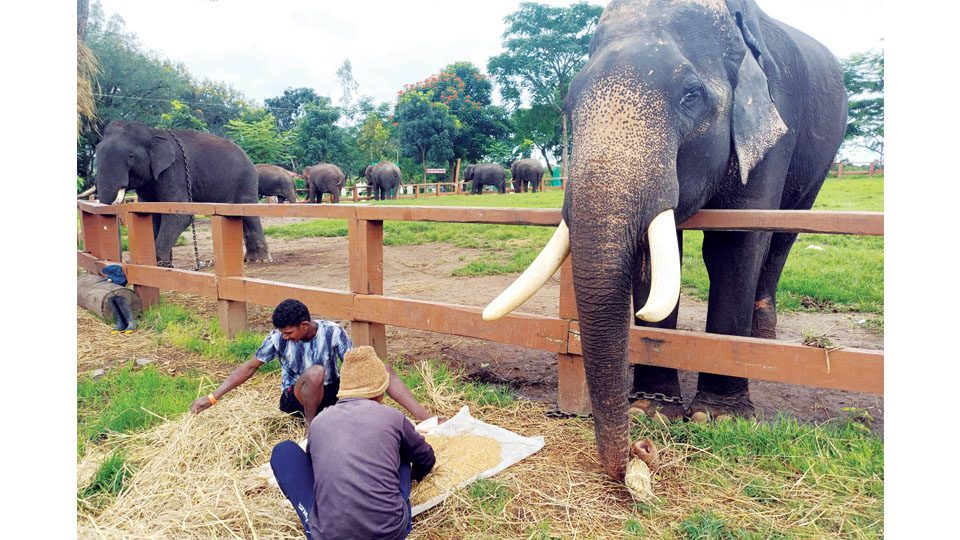
The training programme for elephant handlers from Andhra Pradesh at Dubare Elephant Camp focuses on understanding elephant behaviour and mastering specific cues to control and direct them effectively. Under the guidance of lead trainer J.K. Dobi, the training employs a range of techniques, including the use of specialised tools, handling chains and creating loud noises to ward off wild animals.
The handlers are trained with elephants Dhananjaya, Kanjan, Vidyashree, Vijaya and Rama in foundational skills such as touching, bathing and interpreting signals. They are taught commands in specific languages, methods for balancing atop elephants and techniques like tapping the elephant’s ear with their foot or patting its head for direction.
Additionally, they learn about elephant dietary requirements, including the cooking process, ingredients and feeding schedules.
To provide a comprehensive understanding, the team has been taken to other elephant camps across Kodagu and Mysuru districts, including Harangi, Mathigodu, Balle, and Veeranahosahalli. Here, they are familiarised with the unique conditions and challenges specific to each camp, ensuring their preparedness for diverse environments.
Karnataka must prioritise its elephant needs
According to Forest Department officials, Karnataka plans to send four trained elephants to Andhra Pradesh to assist in wild elephant capture and training operations only. Since 2013, Karnataka has handed over 59 trained elephants to various States. The Forest Department must be transparent and avoid concealing facts.
Andhra Pradesh initially requested 22 elephants, but the number was scaled down to eight after Karnataka refused. Even now, sending elephants to Andhra Pradesh is not the right move. We need elephants for Dasara, other tasks and as a tourist attraction at elephant camps. Our resources are already stretched with limited elephants in the State. To capture and tame an elephant it costs Rs. 14 lakh and to fit a radio collar, it requires Rs. 22 lakh.—Joseph Hoover, Conservationist & Wildlife Activist
source: http://www.starofmysore.com / Star of Mysore / Home> Feature Articles / by Joseph Hoover, Conservationist & Wildlife Activist / December 09th, 2024
Kodagu district, known as the “Scotland of India,” faces an unprecedented heatwave with temperatures soaring to 35°C. The usual cool climate and abundant rainfall have given way to severe drought, leaving landscapes parched. Residents combat the heat by consuming watermelon and refreshing beverages. Concerns rise as the absence of rain depletes water sources and raises fears of even hotter summer months ahead.
Residents of Kodagu district, often dubbed as the “Scotland of India” for its lush greenery and cool climate, are currently grappling with an unusual heatwave as temperatures soar to 35 degrees Celsius. Once known for its abundant rainfall and fog-covered hills, the district is now experiencing a severe drought, leaving its scenic landscapes parched and its residents sweltering under the scorching sun.
Traditionally, Kodagu district, also known as Coorg, enjoyed moderate temperatures ranging from 15 to 20 degrees Celsius, thanks to ample rainfall that kept the region cool and foggy throughout the year. However, this year’s acute water shortage has transformed the district into a hot and arid terrain, devoid of its usual cloud cover and mist.
The absence of rainfall has led to the depletion of reservoirs, rivers, and streams, leaving the land dry and barren. With daily temperatures consistently reaching 34 to 35 degrees Celsius, residents find it challenging to venture outdoors, fearing the intense heat. Even simple tasks like buying groceries or commuting to work have become daunting endeavours, prompting many to stay indoors or seek refuge under umbrellas when stepping outside.
To combat the oppressive heat, residents have turned to consuming watermelon and other fruits with high water content, as well as indulging in fresh water and ice creams in large quantities. The demand for refreshing beverages has surged, with local vendors reporting a significant increase in sales.
Traders and residents alike express astonishment at the intensity of the heatwave, noting that such extreme weather conditions are unprecedented in their experience. Typically, monsoon rains would have arrived by March, providing relief from the heat. However, as the first week of April passes without a drop of rain, concerns mount about the impending summer months and the likelihood of temperatures rising even further.
source: http://www.newsable.asianetnews.com / Newsable Asianet / Home> English News> Karnataka / by Vinaykumar Patil / April 08th, 2024
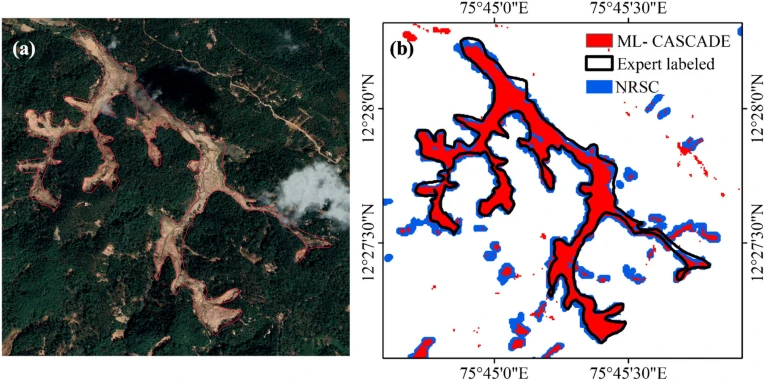
Scientists have developed a machine learning and cloud computing-based tool that can map landslide clusters in five minutes and simple events in just two, crucial for improving post-disaster risk and damage assessment1.
Understanding and mitigating landslides is challenging owing to the lack of spatial and temporal data. In a recent study, scientists at the Indian Institute of Technology in Delhi demonstrated how ML-CASCADE can be used to rapidly measure landslides using satellite data.
The semi-automatic method combines satellite data, terrain data, vegetation indices (measures of plant health), and machine learning. It uses pre- and post-event images from the Earth observation Sentinel-2 satellites, along with terrain factors, to classify areas as landslide or non-landslide. The application runs on Google Earth Engine’s cloud computing platform, allowing users to generate landslide maps instantly.
The tool’s effectiveness was demonstrated using two case studies — the Kodagu landslide in Karnataka’s Western Ghats and the Kotrupi landslide in Himachal Pradesh’s Himalayas. For Kodagu, ML- CASCADE produced a precise landslide map in five minutes, which closely matched expert assessments. Similarly, the tool accurately captured the Kotrupi landslide’s extent in under a minute, matching existing manual and semi-automated methods.
ML-CASCADE’s advantages include speed, accessibility, and adaptability to varied terrain, making it suitable for low-resource settings. Its disadvantages are that, it may overestimate areas near riverbanks, and it relies on user-supplied training samples which introduces some subjectivity.
Future work could involve refining the tool’s accuracy in different terrains and integrating it with other disaster management systems.
doi: https://doi.org/10.1038/d44151-024-00178-5
[This research highlight was partially generated using artificial intelligence and edited by a staff member of Nature India.]
References
Sharma, N. & Saharia, M. Landslides (2024).
source: http://www.nature.com / Nature India / Home> Nature> Nature India> Research Highlights> Article / Ocotober 29th, 2024
WELCOME. If you like what you see "SUBSCRIBE via EMAIL" to receive FREE regular UPDATES.
Read More »