Category Archives: Green Initiatives / Environment

For the love of coffee

Is the modern day coffee cultivation threatening our biodiversity? Read on to find out how you can responsibly source your favourite morning cuppa

It’s the quintessential breakfast drink, the morning elixir, the ambassador for good days and the one drink with absolute power to wake you up. Yes, our morning cuppa coffee is what we all look forward to wake us up from a slumber hangover.

But, what if we didn’t have coffee anymore? Or, if the modern day production of coffee is impacting forests and wildlife, in turn, affecting our consumption? Alarming isn’t it?

ArshiyaBoseKODAGU03may2016

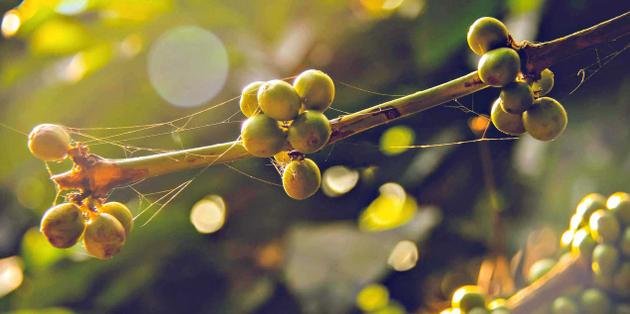
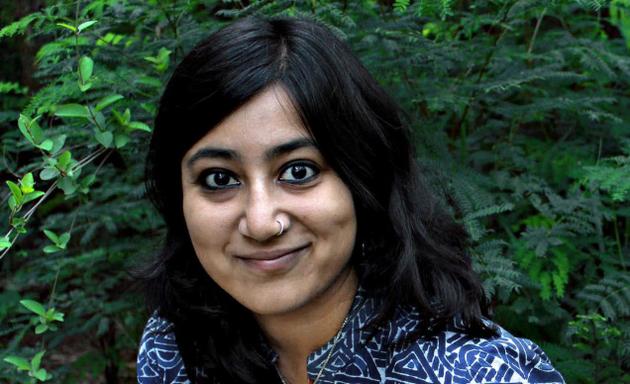
Arshiya Bose has set out on a quest to responsibly source coffee without making an imprint on our environment. She started Black Baza Coffee in an attempt to save biodiversity. Technically, coffee is grown under a marquee of trees.

But, because of deforestation, coffee is now grown under direct sunlight, giving way to monoculture which affects our biodiversity levels drastically. “After my Ph. D., I started spending time at coffee landscapes in India, mostly Coorg,” says Arshiya, a wildlife scientist.

“We found that compared to other parts of the world where forests had been clear-felled to grow coffee, India had retained forest trees and planted coffee underneath the shade of these trees. This meant that coffee farms in India have supported all kinds of beautiful biodiversity for decades. The challenge arises because, since the 1970s onwards, many farms have been removing shade trees in the hope of better coffee yields. The trade-off here is that the yields of coffee are actually higher when coffee is grown under direct sun (which is why in high coffee producing nations like Brazil, Vietnam etc., there are no shade trees). This was the problem we were trying to address. How can we make it economically viable for farmers to grow a more ecologically-friendly coffee?”

The first step involves identifying farms in places like Kodagu and B.R. hills, based on factors like potential of the farm to support biodiversity and willingness to participate in conservation projects. A conservation agreement is then drawn up with the farms that include maintaining 100 trees per acre, protection of water sources, restricting the usage of chemical pesticides and maintaining 60-80 per cent shade cover which means no cutting of tree branches.

“In 2009 I met a young scientist – Claude Garcia, a French, who spoke fairly good Tamil,” recalls Arshiya. “He told me: ‘if we can’t achieve biodiversity-friendly farming with coffee we probably can’t achieve with any other farming system either’. That sentence stuck on as I believe that coffee is the perfect crop to experiment with. Coffee gets the attention of people and then becomes a way to engage someone who previously never cared about conservation. I always say: we want to bring conservation to everybody’s breakfast table.”

Black Baza Coffee is already available at natural and health food stores, where they partner with like-minded cafes and institution who would want to serve great coffee with a story.

The bean cause -  Working together for that perfect cuppa
The bean cause – Working together for that perfect cuppa

Aesthetic packaging and cheeky questions on their cover makes Black Baza Coffee a unique product. “What does moth-friendly coffee taste like?” “What does Otter-friendly coffee taste like?” – are some of the questions you get to see on their packages. “All of our coffee varieties are a tribute to the charismatic plant and wildlife species that share the Western Ghats landscape with coffee,” says Arshiya, “For example, the Otter coffee comes from two riverside farms in Kodagu where we are protecting the Cauvery River from effluents and degradation of riverside vegetation. The Luna Moth is a magnificent indicator of ecological health as well. So while we could test our coffees in the lab for chemical residues etc. (which we do), we also go out to the farm and count Luna moths or Ficus trees or Otters because these species tell us the whole ecological picture – lab tests don’t tell us whether farms are biodiversity-friendly or not.”

Black Baza Coffee now works with 30 farmers and there are over three lakh small-medium growers in India. While Arshiya isn’t sure about the future of the model in India, she is positive and fiercely relentless about being a major coffee player that makes biodiversity-friendly coffee a household staple instead of an exception.

source: http://www.thehindu.com / The Hindu / Home> MetroPlus / by Rehna Abdul Kareem / May 03rd, 2016

Bangalore Based Startup – Aromas of Coorg, Brewing Business with Coffee

When Friedrich Durrenmatt once said “It is surely easier to confess a murder over a cup of coffee than in front of a jury.” he quite simply put across the magic of a good cup of brewing coffee!

AromasofCoorgKODAGU29apr2016

Fresh, strong, steaming hot and hassle-free service are some of the words which come to your mind when you think of coffee and vending serivces, and these very words are the part of Aromas of Coorg’s philosophy.

In conversation with Abhilasha Dafria for YourStory, A.Chithra Uthappa, co-founder of Aromas of Coorg, tells us how they, at AOC, are full of fresh ideas, believe strongly in quality and customer satisfaction and have the best designed products for their customers so that they get the maximum value for their money.

Afterall, science may never come up with a better office communication system than the coffee break!

Hi Chitra, tell us about yourself and an introduction to Aromas of Coorg

Aromas of Coorg has been in business of Beverage solutions since 2009 & coffee cultivation for more than 3 decades. Our passion is to provide the most technology driven, innovative beverage solutions to both businesses and consumers.

I, A.Chithra Uthappa, am the founder & Managing Director of Aromas of Coorg and I’m an MBA from MIT MAHE University, Manipal and B.B.M From Mysore University. I have worked with large corporates like Kotak Mahindra Bank, Aditya Birla Minacs and iSeva/e4e. All my corporate roles have been with fast growing sunrise industries and have played significant roles in building the businesses and growing the companies to the next level. In my last assignment with the start-up open2save, I was a key team member and was instrumental in setting up new business channels ground-up.

Radhakrishnan M, my co-founder & Head of Operations is a seasoned professional with over a decade’s experience in large corporate before he set-up his own company, Aromas of Coorg. He has worked with large corporate like Dell, Infosys, Manpower Inc. etc and has extensive experience in building and managing businesses including sales, building teams and organizations. He is an MBA from Loyola College, Chennai and B.Sc. from Madras University.

So what triggered this idea?

There are four important factors that made our idea into a company, ie, My husband’s passion and support for my entrepreneurship, my son, our roots from Coorg and the corporate exposure.

First and foremost, to become an entrepreneur was always the dream of my husband and me … this is what we wanted to be. I was on sabbatical for my child and during the break; I conceived the business idea too! We decided that this would be the right opportunity to start something on our own sitting at home. This is where it all started.
We are basically from Coorg and we have been into coffee cultivation for more than three decades. This was the primary driver why we chose to build something unique in this space and we thought out of the box. Having worked with corporate for more than a decade we understand this world well and we were able to quickly identify the opportunity.

Thus the birth of “Aromas of Coorg”, as we wanted our company to bear the name “Coorg” in some part and also wanted a name where our targeted customers can easily relate to it. Quite naturally the first thing that attracts anybody to any form of food is the “Aroma”. That is how we finalized on the name “Aromas of Coorg” and this also marked our entry into the beverage solutions for corporate, institutions, etc.

Since when are you operational? How big is your team? Are you looking at hiring?

We are fully operational since August 2009. We are currently a 40 member team. Yes, definitely, we are looking to strengthen our sales force and simultaneously our operational support staff will have to go hand in hand with every new client that gets added.

What is your clientele like?

We service range of clients like large corporate across multiple cities to a one location company as well. We have a well spread out client base across industries and geographies.

Where are you based and where are your clients from?

We are based in Bangalore and are currently supporting clients in Bangalore, Mysore, Tumkur, Nelamangala, Hosur and Chennai. However, we are not present in retail segment at this point of time.

Where do you have your manufacturing units? Which cities do you provide the home-delivery services?

Our manufacturing unit is also in Bangalore; currently we provide home delivery service only within Bangalore city limits.

How does the supply chain work?

We are currently able to manage the supply chain internally, our raw materials are procured from different locations and the respective vendors manage the supply chain of the respective products. All these products come to our processing units in Bangalore from where the supply of finished products to the respective clients is managed by full time employees of AOC. Machines are manufactured under our complete supervision.

Did you fund-raise to start up? If not, are you looking at getting funded now?

We used our personal money and angel money. We are looking to get funding for our future expansions.

How does the revenue module work?

We work both on variable and a fixed pricing model where clients can pay based on usage or based on usage+ a fixed monthly costs. The pricing model is designed with the motive of win-win for us and clients.

So what were the challenges you faced while starting up? Tell me about your initial hurdles.

First and foremost challenge was how to differentiate ourselves from the others; there were several big brands and more than enough small vendors. We really had to come up with a differentiator from the existing. This is the stage were we re-invented our traditional filter coffee. The wave of western form of coffee was so popular that everybody is racing towards the Cappuccino, Espresso, latte, etc.

Timing was tough; given it was the time of deep recession, all around you there were companies going under losses, almost all the corporate were planning for major cost cutting, and so on. It was also very difficult for us to penetrate the companies with our new concept and service offerings.

Of course our innovative thinking helped us make good inroads. We took this to our advantage and came up with our very own filter coffee which is truly Indian, especially south Indian, and presented to the corporate the first of its kind fully-automated Vending machines which serves authentic filter Coffee and freshly brewed Tea. In our very first Demo we knew that we hit the nail on the head with our concept.

Are there other players in the market doing similar things? What are your key differentiators?

Yes there are several big names in the market providing beverage service, Coffee day, Fresh & Honest, Tata Cafe, Hindustan lever, etc. Our USP is our focus on technology, our zeal to innovate and our relentless passion for quality. Our Vending machine is the first its kind which is fully automated to serve freshly brewed authentic filter Coffee & freshly brewed Tea on a single press of the button. We are the first company in India to build coffee vending machine with both HOT & COLD option in the same machine. We are looking at adding more features around quality assurance here.

Our Coffee is a blend of six varieties of finest coffees beans hand picked from our own cultivation and we apply expert science, combined with traditional artistry, in order to maximize the flavor attributes of each roast. Our coffee roasting process is tuned to develop coffee flavors to the fullest for flavor profile, aroma and overall character in the cup. These factors make us the pioneers and front runners in providing the most hygienic and finest Coffee but at the same time affordable vending service provider in the market today.

Can you share with us some interesting trends about the market that you are trying to capture?

The market is looking for continuous innovation and personalization as much as possible.

An interesting trend is enhanced customer awareness and focus on health drinks like badam milk, green tea, milk shakes, horlicks etc. In some clients these new drinks are consumed lot more than traditional tea and coffee.

What are the challenges of scale in this business and how do you prepare to cope with them?

The biggest challenge in scaling is to maintain the same levels of service and quality. This is B2B2C market and end consumers decide what they finally like to drink. Having a continuous feedback loop and connection with end consumers is another critical aspect of this business.

Where and how do you see yourself going ‘bout this?

We aim to build our company to PAN India multi format Beverage Company. To serve 1 lacs cups a day is our immediate 12 months target.

For more information, please visit their website: http://aromasofcoorg.com/

– Abhilasha Dafria

source: http://www.yourstory.com / Your Story.com / Home> Entrepreneur / Team YS / by Abhilasha Dafria / December 30th, 2011
City gets ‘plant a tree’ message on Earth Day

ChildKF25apr2016

Tree plantation and workshops on saving the planet marked the World Earth Day in Bengaluru on Friday.

In Haralur, Hennur and other places, citizens planted saplings of different trees while a composting activity was held at the Bangalore Scottish School in JP Nagar where students were given demonstration on converting wet waste into compost.

Environmentalist Vijay Nishant visited MEG Centre in Ulsoor to check the status of trees that were in bad shape and treat them, going with the theme of World Earth Day, ‘Plant a tree, save a sin from Thee’.

He said: “Two trees here are suffering from fungal infection. Since it’s summer, termites start attacking the bark of trees and weakening them.”

On Saturday, the nonprofit ‘Save Kodagu’, with the support of Kodava Samaj, Lions Club Kodigehalli, Coral Waters and Rescue Roadside Vehicle Assistance, will hold a bike rally from Bengaluru to Madikeri to spread the message of conserving the environment and saving Kodagu from deforestation.

The nonprofit expects more than 200 people to take part in the rally, after which a memorandum will be submitted to the Kodagu deputy commissioner to save the forest from developmental projects.

Concern expressed

The NGO expressed concern over chopping of one lakh trees to make way for high-tension wire in Kodagu. In other programmes, the Green Path Organic Store held a ‘Bhoomi Habba’ and the Geological Society of India and the Ministry of Earth Sciences held a panel discussion on ‘Trees for the earth’, in which environmentalist Yellappa Reddy and other dignitaries took part.

source: http://www.deccanherald.com / Deccan Herald / Home> City / Bengaluru – DHNSD, April 23rd, 2016

Coffee Growers Feel the Heat

Somwarpet :

The rising temperatures and a lack of rain have caused a desperate situation for coffee growers.

According to an estimate, nearly 30 per cent of the coffee plantations received blossom showers during March and April, while the remaining 70 per cent are yet to receive the first rainfall.

This situation might have a bearing on the prices of coffee and pepper in the coming season.

Last year, the total production of coffee in the country was 3.5 lakh tonnes while the district produced around 1.6 lakh tonnes of coffee, on an area of 1.10 lakh hectares. According to sources, this year, coffee production will be reduced by at least 20 per cent, due to insufficient and delayed rain, as well as rising temperatures.

Madikeri Coffee Board deputy director Ananth Kumar said delayed rain adversely affected young coffee plants and crop this year.

He said the Coffee Board will conduct pre-monsoon surveys in the month of May every year, to ascertain the production.

He said growers should maintain shade in estates, as temperatures had risen to 32 degrees in some parts of the district, causing dryness of soil.

In some dry areas where annual rainfall is below 50 inches, young plants wilted and died, even under the shade of trees.

In Banavara, Abburkatte, Yedavare and Yedavanadu, coffee growers are worried about crops wilting and dying. Coffee grower M L Ravi from Aigoor said growers are in distress owing to falling prices of coffee, and that delayed rains have added to their woes.

He said last year 50 kg Arabica coffee sold at Rs 10,000-Rs 10,200, but now, the price had fallen to Rs 8,200.

source: http://www.newindianexpress.com / The New Indian Express / Home> States> Karnataka / by Coovercolly Indresh / April 22nd, 2016

ICAR to set up planters’ home at Madikeri

Expert lays stress on diversification of crops

While agreeing with popular belief that agriculture “is risky business”, Director-General of the Indian Council of Agricultural Research (ICAR) S. Ayyappan said on Thursday that, however, farmers in places such as Kodagu had shown how farming could be profitable.

He was inaugurating the golden jubilee of the Cardamom Research Centre (CRC) at Kodagu, an Indian Institute of Spices Research (IISR) release here said.

The cardamom centre at Kodagu comes under the purview of the IISR. Dr. Ayyappan said the ICAR would also set up a planters’ home at Madikeri to offer training to farmers in the region.

Diversification

“Agriculture being probably one of the riskiest businesses, for it to be profitable, we have to give importance to diversification of crops and specialty agriculture,” Dr. Ayyappan, who is also the Secretary in the Department of Agricultural Research & Education (DARE), said.

He was all praise for planters for their success in spices cultivation. He said that spice plantations at Kodagu were model farms for farmers from the other States. “They have proved that farming is a profitable venture. The productivity of black pepper in these plantations is far above that of Vietnam,” he said.

He said the decision to upgrade the CRC and set up the planters’ home were New Year gifts for farmers at Kodagu.

N.K. Krishnakumar, Deputy Director-General of Horticulture, who presided, wanted the IISR and the CRC to identify pockets where cultivation of cardamom and black pepper and other profitable spices could be grown on a large scale.

M. Anandaraj, IISR Director, Amrik Singh Sidhu, Director of the Indian Institute of Horticultural Research, Bangalore; George V. Thomas, Director of the Central Plantation Crops Research Institute, Kasaragod, spoke.

Publications such as Capsule, a souvenir of the golden jubilee celebrations, Sadaram, a comprehensive publication on 50 years in cardamom research, and special issues of Spice India and Indian Journal of Arecanut, Spices and Medicinal Plants published to commemorate the golden jubilee were also released at the function.

Progressive farmers from Kodagu such as S.B. Jayaraj of Murugarajendra Estate, Madapur; B.M. Mahesh Kumar of Hosathota Estate, Sakleshpur; John Thomas Ramapuram of Doona Ann Plantations, Siddapura; C.P. Pramod of Cauvery Estate, Madikeri; Duleep Nanjappa of Pakka Estate, Madikeri, and Prema Ganesh of Prema Estate, Madikeri, were honoured by Karnataka Speaker K.G. Boppiah at the programme.
___________________________________________________________

Planters’ home to offer training to farmers

Planters lauded for success in spice cultivation

___________________________________________________________

source: http://www.thehindu.com / The Hindu / Home> Kerala / by Special Correspondent / Kozhikode – December 22nd, 2012

TripTease : The magical Mallalli Falls

MallalliFallsKODAGU14apr2016

There’s so much to see and do in Kodagu! But if you’re looking for something off the beaten track, there are exotic destinations hidden deep inside the woods, like Mallalli falls.

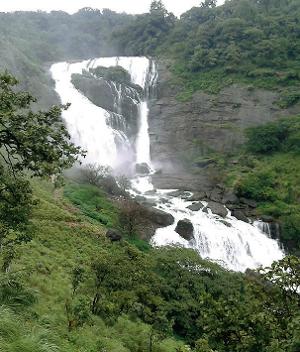
Mallalli falls flow quietly and with pride inside a deep and thick forest at the foothills of the Pushpagiri hills. Formed by the Kumaradhara River, Mallalli falls is about 45 km from Madikeri and 28 km from Somvarpet.

To get there, on the way to Pushpagiri hills, take a turn at Bidahalli village, from where it is about 7 km away. The trail to the falls is motorable for about 4 km, after which the remaining 3 km is a trek through a thick forest.

The path from the junction towards the falls is filled with coconut and systematic coffee plantations on either side of the road. The roads are slushy, slippery and filled with gravel, so it is advisable to take a jeep here. Surrounded by the constant chirping of birds and the noise of insects, you wonder how a waterfall could possibly exist in such a dense forest.

When you ease into the comfortable drive to Mallalli Falls, the road begins to curve left on to a small, relatively unused road. To make sure you are taking the correct turn, look for a pale blue tiled house just before exiting on to the muddy path. This road ends in a Forest Department office where all vehicles are halted. Here, you make an entry at the department office. The parking place in front of the office is the last plain ground you will see. Carry loads of water and eatables from here because the trek down to the falls is tiring.

There are wide concrete steps to the falls, but they are not what you’d expect. Huge and constructed in a zig-zag manner, they take a lot of focus and concentration to descend. Even as your body tires, fresh, tiny droplets and a mist which parts reveal the gigantic Mallalli falls.

The view from these steps which are laid only for a few metres, is breathtaking. You will see a huge carpet of greenery around you and in between water falls. It wouldn’t be wrong to call Mallalli falls the queen of all falls in Kodava Nadu. The noise of the falls is equal to that of a roaring lioness. If you want to go further down, know that it’s risky. But if you’re confident, trek ahead, which will take you through fresh and scented fruit orchids where hundreds of birds thrive.

You can also try to reach the base of the falls, but you need to be extremely careful as most of the stones are covered with algae, making it a slippery trail. There are loads of bushes and trees you can use for support to reach the base. Make a comfortable place for yourself to rest, and take in a complete 360 degree view of the hills and the falls. But beware of the leeches when you walk down to the base.

The locals love the fact that Mallalli falls flows through Kukke Subramanya and Nethravathi River in Uppinagadi and forms a Sangamam which is considered to be holy. You can make a visit to the falls in the summer, just to refresh yourself from the scorching heat, but the best time to visit the place is between July and December.

Getting There

Mallali falls is 260 kms from Bengaluru. Take the Bangalore- Mysore- Hunsur- Kushalnagar- Somavarpet. You can also reach Kodagu by bus and from there head towards the falls which is around 45kms. You can also go in your bike, but it is not advisable during monsoons.

—Kumaran P

source: http://www.bangaloremirror.com / Bangalore Mirror / Home> Columns> Others / Bangalore Mirror Bureau / April 12th, 2016

The urban escape

coorgKF07apr2016

With a sweltering summer on the threshold, Bengalureans are eager to get packing. Idyllic beaches, trekking adventures, wildlife tours and culinary trails, the possibilities are immense.

With airfare and hotel prices set to rise, they are trying to get the best deal without breaking the bank. Tour companies and adventure groups while pointing out how holiday-goers are exploring newer destinations, spell out whats ticking and what’s not!

By all accounts, summer holidays are the perfect time to revisit childhood. Keeping that in mind, ‘F5 Escapes’, a Bangalore-based, alternate travel company, which specialises in designing and executing all-women travel experiences, is holding a ‘Mom and Kids’ Trip’ to Coorg this summer.

Explaining the concept, Malini, founder and chief travel officer, says “As children, we have all chased fireflies. There was a certain magic in those quick, shining flickering lights in the dark. Of course, with time, glaring neon lights took over our night sky. With the concept ‘Chasing the fireflies in Coorg’, moms and kids will have the opportunity to explore the rainforests of Coorg. We help relive the childhood and watch the fireflies. It is also an occasion to learn about organic cultivation and solar living. We are organising the trip on April 23 and 24. Apart from that, we are also planning day trips in May.”

For the wanderlust-struck, any chance to get away from the cacophony is a winning deal. Across the country, the options are unlimited with every nook and corner having a story to tell and every nondescript hamlet something to offer. Himachal Pradesh has been high on the list of Bengalureans for some time now, be it for adventure or for the serene locale.

“When it comes to domestic travel, Kashmir has bounced back this year to be the top trending destination for domestic travel followed by Himachal Pradesh, Sikkim and Ladakh,” informs Karan Anand, head, relationships, Cox & Kings. As far as overseas destinations are concerned, “Switzerland and France continue to be hot favourites this summer. A new addition this year is Russia whereas Thailand, Malaysia, Singapore, Hong Kong and Macau are the most popular destinations in Southeast Asia among Indian travellers. Cambodia, Philippines, Vietnam and Bali are offbeat lovers’ paradise,” he adds. Planning a vacation is no easy task, but for the many nomads in the city, an escape from the city has become inevitable. In fact they are happily infected by the travel bug.

“Summer has always been a popular time to travel amongst many Indians,” points out Ravish Doctor, manager- growth strategy, Skyscanner India. “Be it for a long weekend or an extended holiday, we have witnessed an increase in the number of travellers making the most of the holidays during the summer,” he says.

“From Bengaluru, there has been a steady rise in search for destinations within Southeast Asia. Much like the majority of Indians, travellers from Bengaluru also favour summer travel to more popular destinations such as Bangkok, Singapore, Bali and Kuala Lumpur.

While across the country, London and Paris continue to be the most searched destinations in Europe; in spite of the soaring temperatures, Dubai is emerging as a destination. This may be attributed to Dubai as an all-round family destination which makes it perfect for children during their summer vacations,” he says. In spite of the recent happenings in Europe, surprisingly, there is still a sizable chunk who wants to explore its picturesque locales. “Europe is the perfect holiday destination for Indian travellers who want to escape the summer heat and we are observing an upward trend for this destination. While, destinations such as France, UK, Ireland, Switzerland and Italy continue to be favourites, there are many small regions within these countries that are getting very popular such as Charmonix in France,’’ adds Karan. Clearly, this summer seems to hold plenty of choices and surprises.

source: http://www.deccanherald.com / Deccan Herald / Home> Supplements> MetroLife / by Anupama Ramakrishnan / DHNS – April 05th, 2016

People Part of Effort in Madikeri

Bengaluru :

Plastic was banned in the town way back in 2010-11 during P D Ponappa’s tenure as president of the City Municipal Council.

The town is also called Nirmala Nagara.

Ponappa said he was happy that the concept was well received by the people of Madikeri.

People carrying cloth bags for shopping is a common sight in Madikeri. Even on shandy days, they bring bags from home.

Harish, proprietor of Hotel Omkar, said they have started giving parcels in plastic boxes that are permitted and and carrybags made of cloth. City Municipal Council Commissioner Pusphavathy said, “We have taken up awareness programmes like door-to-door campaigning. We have been penalising people who violate the rules, and we destroy plastic bags that are banned.” She appreciated the cooperation from shopkeepers as well as the public.

“But tourists who visit Madikeri during weekends and holidays pollute the town by using plastic bottles and bags,” she rued.

source: http://www.newindianexpress.com / The New Indian Express / Home> Cities> Bengaluru / by B C Dinesh / March 12th, 2016

Govt plans to buy plantations to restore elephant corridors

Bengaluru:

In the wake of increasing human-elephant conflict in Hassan, Kodagu and Chikkamagaluru districts, the state forest department has decided to acquire coffee and tea plantations to curb such conflicts and ensure a safe passage for jumbos.

The department mooted this proposal after some coffee and tea planters volunteered to give up their land as they’re unable to cope with many problems including acute labour shortage, weak prices and rising maintenance cost of their estates.

But planters are not ready to give up their plantations cheaply. “The offers have started to come, with one from Sakleshpura for about 2,300 acres that would cost approximately Rs 300 crore,” principal chief conservator of forests (PCCF) Vinay Luthra said.

With a recent amendment to the Forest Development Tax (FDT), funds needed to buy these estates would not be an issue, said Luthra. The department can rake in up to Rs 600 crore per annum through FDI and utilise it for purchase of properties.

Wildife experts welcomed the idea but expressed caution, citing that the purchase of properties should be done scientifically.

“While it is a good start, the purchase of properties must be taken up after a peer review and an expert panel on elephant habitats giving its approval that such parcels of land are a good investment,” said wildlife expert Pradeep Bhargava.

Bhargava said forest minister Ramanath Rai and the department had held a consultative meeting in Mysuru in December 2015. He said the starting point should be the linking of Bandipur, Nagarahole, Brahmagiri, Satyamanagala, BRT Hills and Mudumalai.

Forest authorities have been holding talks with corporates to seek their assistance through their Corporate Social Responsibility funds to restoreg elephant corridors and other wildlife conservation projects.

Luthra, however, said the department doesn’t plan to buy all 2,300 acres in Sakleshpur. The purchase will be based on a study done by wildlife scientist Raman Sukumar. The study has identified 88 traditional elephant corridors in India.

“We’ll restore only those areas where there is a possibility of restoring the traditional corridors. Our biggest concerns are in and around the Bhadra Reserve, Hassan and Kodagu and the department will buy properties in these region on top priority,” he added.

Luthra said the primary reason for people selling their properties is the difficulty in maintaining coffee estates and tea gardens. “Most people in Kodagu, Chikkamagalur, Hassan and other parts of the coffee- and tea-growing belts are old-timers. With their children living abroad and labour becoming increasingly difficult to procure, they have come forward with offers to the forest department for selling their land. It’s a good way for us to resolve this man-animal conflict,” said the PCCF.

The forest department also took measures recently to ensure that new constructions don’t come up in the elephant corridors or affect elephant movement in the forest area. The department has also interlocked forest ranges across the Western Ghats to ensure the smooth passage of elephants.

Expertspeak

* The purchase of land must be strategic and it needs to be taken up on a project mode. Dedicated forest persons should be involved in the process and land should be procured after taking into account the valuation of the location and not any other factor.
Pradeep Bhargava | wildlife expert

* This is a start. The proposal may not solve the problems immediately, but it will help in the long term to end the human-animal conflict in the state.
Vinay Luthra | PCCF

source: http://www.timesofindia.indiatimes.com / The Times of India / News Home> City> Bangalore / Sandeep Moudgal, TNN / February 23rd, 2016

Annual Flower Show at Balyatri Estate near Madikeri, Today, Tomorrow

F. M. Khan is taking a walk in his home garden. Picture right shows Dahlia in full bloom.

Madikeri :

Former Rajya Sabha member F. M. Khan is holding the annual flower show at his home garden for the public in Boikeri, near Madikeri, on Jan. 30 and 31.

The garden at Khan’s Balyatrie Estate, with more than 100 varieties of flowers — most of them rare — is spread over more than half-an-acre in front of his house.

Multi-hued roses, dahlia, chrysanthemum, jasmine are in full bloom to welcome the visitors.

Addressing media persons here yesterday, he said floriculture helps in the economic progress of the country and urged the government to support floriculture.

Stating that there is a huge demand for flowers at the international market, he said floriculturists should grow flowers in a natural atmosphere.

With the vagaries of nature, one needs to give special emphasis on protection of plants, he added.

Flowers like Jasmine, anthurium, marigold, salvia, Gerbera, Zenia, Dahlia, Cosmos, croton, colin, Plectranthus, Impatiens, Daisy, Gardenia, sun flower, Hollyhocks, Clarkia, Cockscomb, Lupine, Verbena, Fuchsia, pinks, spider flower, oster flower, calendula flowers, cupia, Gazania, Sweet pea, Cineraria, stock flower, love in a mist flower, devil in the bush and others are on display.

The flower show will be open to visitors from 10 am to 5 pm today and tomorrow.

source: http://www.starofmysore.com / Star of Mysore / Home> General News / January 28th, 2016