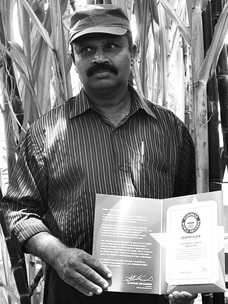
Hoovaiah, an ex-serviceman, who is serving as a mobile tower operator with the BSNL, entered the Guinness Book of World Records for growing the tallest sugarcane in the world.
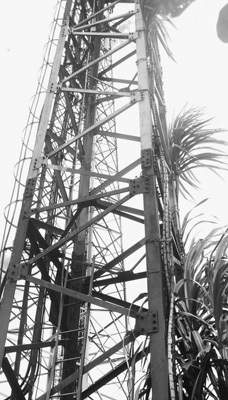
As of now, the sugarcane in Convent Junction in Madikeri is 42-foot tall.
The Sugarcane grown with the support of Mobile Tower in Convent Junction of Madikeri
During an interview to Express Hoovaiah detailed the uphill task and claimed that he had to be convinced to enter the Guiness Book.
Hoovaiah, brought a stem of black variety of sugarcane from Karike four years ago and wanted to eat it once it had grown. He nurtured it with cow dung and ash apart from watering it regularly.
But when it was found that in three years the sugarcane had grown 40-foot tall with the support of a mobile tower, his friends and others advised him to get Guinness Book recognition.
When Hoovaiah approached the Guiness Book officials for recognition they asked him to pay nearly Rs 4 lakh for visiting and verifying the sugarcane.
When Hoovaiah expressed his financial constrain they asked him to submit a 22-page application as it is certified by six gazetted officers, Hoovaiah said.
Hoovaiah with the Guinness Book of Records certificate
The team that verified the documents had advocate B B Ananda, Dr Renuka and Dr Tirmala Rao of Ex-servicemen Contribution Service Scheme hospital, Dr Rajashkear and Dr Ramakrishna from Agriculture Department and Dr Sreenivasaiah of Krishi Vignana Kendra Gonikoppa. They inspected the sugarcane and sent a report to Guinness Book of World Records in California of USA on June 21 last year.
After verifying with the records worldwide, they sent a letter of record holder on June 10 this year and asked him to pay Rs 2,593 if he needed an original certificate. After he made the payment, they issued the certificate, Hoovaiah said.
He pointed out that though he was told that the sugarcane will not survive due to the radiation from mobile tower nothing happens so far. He also acknowledge the support of his family, BSNL officials and others in protecting and caring for the sugarcane.
source: http://www.newindianexpress.com / The New Indian Express / Home> States> Karnataka / by B C Dinesh / June 15th, 2015
Fkcci President S Sampath Raman said Fkcci will not support the establishment of industries harmful to the environment in Kodagu District. There is a need to set up eco-friendly industries that will support tourism, education and health sector.
Speaking after flagging of golden jubilee celebrations of Kodagu Chamber of Commerce and Industry, in Madikeri, on Tuesday, he said tourism is being promoted in Kodagu District.
There is a need to strengthen road and railway connectivity to the district. Mangaluru-Mysuru highway that passes through Madikeri should be developed further.
Fkcci will impress upon the government on the need for the laying of railwayline till Kushalnagar, he added.
Chief Minister Siddaramaiah has chalked out several programmes for the development of tourist spots in the state. He has given nod for laying of five cable cars in the state.
However, the government has forgotten to include to lay a cable car at Mallalli waterfalls.
He said that the FKCCI will urge the government to check elephant-humanbeing strife, initiate measures to construct private bus stand at Madikeri, develop Koodige Sainik School and Coffee Park in the district.
Kodagu District Chamber of Commerce and Industry President B N Prakash said the chamber of commerce will organise 50 unique programme as part its golden jubilee celebrations throughout the year.
“The tourists will visit in a large number if the city is kept clean. Promotion of tourism will help in generating employment.
“Swaccha Kodagu—Hasiru Kodagu” campaign will be organised in the near future.
Federation of Karnataka Chambers of Commerce and Industry Senior Vice President Dwarakanath released a logo of the golden jubilee celebrations.
source: http://www.deccanherald.com / Deccan Herald / Home> District / Madikeri – DHNS, April 01st, 2015
It’s not uncommon for people to pick up a stick and fiddle with it. But eventually they get bored of the ‘game’ and throw it aside. Bheemaiah KK, however, decided to earn a living from these discarded pieces of wood.
‘Bheemstyx’ is a unique start-up – most people don’t spend years curing and crafting sticks that are otherwise disregarded in an attempt to turn them into something beautiful and durable. Bheemaiah has, over time, progressed from crafting walking sticks to home decor sticks, gadget sticks, city walking sticks and more.
“About a year ago, I found inspiration in a friend’s collection of hand-carved walking sticks; I had a though ‘I could make those and I could make them even better!’,” he says. Since then, the coffee planter from Coorg, who shuttles between Bengaluru and Madikeri, has spent a lot of time scavenging for different kinds of sticks. He says he doesn’t go in search of a particular kind of a stick but rather, “When I see a stick on the ground, I think what I can do with it. I never cut a tree to make the sticks.”
Bheemaiah has an altogether thorough process of making the sticks. He says he prefers hunting for sticks in summer and spring because then they are relatively dry and free from insect infestation. “The process is very time consuming because far more sticks are rejected than harvested because they are either too crooked, thin, thick or straight…there are a million reasons! When I get home, I first strip off the bark and allow the branch to dry in the sun for up to two weeks, while sealing the ends up to prevent splitting. Then I let it dry for a few more months before I decide what to do with them.” The sticks are then sanded, shaped, painted, accessorised and glamourised.
The sticks are unique because not only are they hand-carved but they are multi-purpose. Made from hardwood, there are country and deep river walking sticks that come with a compass or catapult attached to the head of the sticks. They also have rubber soles to give the user a sturdy grip. According to Bheemaiah, decorative sticks are becoming popular these days. “They are intricately made and look fashionable. I also provide sticks that provide support to the plants in a garden. Anyone who needs any kind of a stick, I deliver it.” What are his favourite sticks? “I always have a stick made from Rattan vine in my jeep – it’s like bamboo and very flexible. You can bend it and it will straight up.”
How does one look after a stick? “Don’t leave it in the sun for long periods of time as it will crack; store it in cool, shady spots. Oil it often but don’t soak it, and wipe the residue as it will become sticky,” advices Bheemaiah.
source: http://www.deccanherald.com / Deccan Herald / Home> Supplements> MetroLife / by Ananya Revanna, Bengaluru / DHNS – April 02nd, 2015
Public awareness and local community support for prevention are the first line of defence in the fight against forest fires at Nagarahole National Park.
Wildlife First conducted 125 awareness camps on forest fire prevention in January and February. These were held around the borders of Nagarahole National Park in Kodagu district. As many as 23,000 students and 1,100 teachers residing around the national park and other forest areas participated, said Praveen Bhargav, trustee, Wildlife First.
He said two public rallies were organised, including one at Madikeri.. “During the course of the campaign, schoolchildren were told about the need to conserve forests and wildlife. Key facts that all forest fires are man-made and cause irreversible damage to wildlife and the eco-system were highlighted,” Mr. Bhargav said.
More than 30,000 pamphlets in Kannada were distributed with an appeal to alert the Forest Department in case of fire. Wildlife First is planning to put out radio and TV spots on AIR Madikeri Station.
source: http://www.thehindu.com / The Hindu / Home> News> National> Karnataka / by Special Correspondent / Mysuru -March 08th, 2015
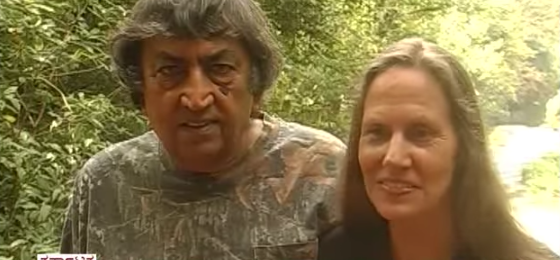
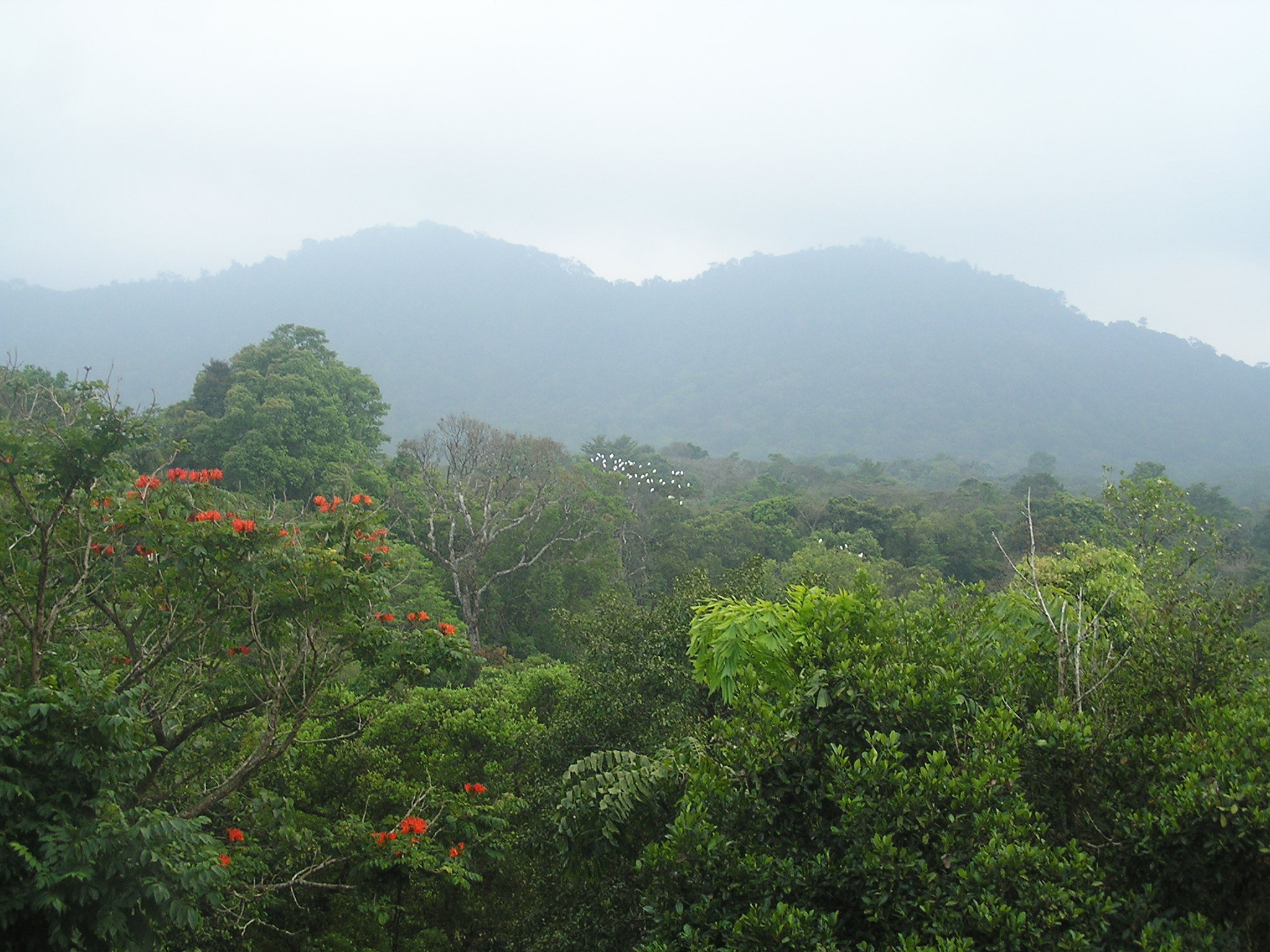
Pamela and Anil Malhotra bought 55 acres of land 23 years ago, and today they have converted it into a beautiful forest of over 300 acres. Here’s how SAI Sanctuary, the only private wildlife sanctuary in India, came to host animals like Bengal Tiger, Sambhar and Asian Elephants.
Wouldn’t it be great to wake up to the sound of chirping birds, with fresh air and splendid scenery around? In the busy lives of our cities when even house sparrows are fast disappearing, this seems like a dream. But a couple has converted this dream into a reality by creating a wildlife sanctuary of their own.
The couple, passionate about wildlife and nature conservation, bought 55 acres of land to plant native trees and protect the environment. Today, they are responsible for creating over 300 acres of wild life sanctuary that hosts animals like Bengal Tigers, Asian Elephants, Hyena, Wild Boar, Leopards, Sambhar, etc.
Dr. A.K. Malhotra and Pamela Malhotra, the NRI duo behind this amazing SAI (Save Animals Initiative) Sanctuary Trust first went to the Himalayas, but as the laws in the Northern part of the country have a land ceiling of 12 acres, they came down South to give shape to their dreams of preservation and protection of nature and wildlife.
Anil and Pamela Malhotra are responsible for a beautiful wildlife sanctuary.
“The problem is, we expect the government to do everything. Like-minded people, NGOs and other agencies should purchase land and do their own bit to conserve the wildlife,” says Pamela.
They bought around 55 acres of unused and abandoned land from the farmers who were not using it due to excess of rainfall in Kodagu district of Karnataka. “We chose Kodagu because it is the micro hotspot of bio diversity in the entire planet,” Pamela says.
The passion to expand the green cover grew stronger and they kept buying lands from farmers who weren’t using them. This way the land was used and also farmers got money to repay their debts as the land was anyway lying idle. Gradually the 55 acre forest cover became larger and today covers 300 acres of the land.
There were a lot of native trees that already existed there. The couple decided to retain those and follow three important rules: no chopping down of any tree, no human interference and no poachers.
And with this thought, the efforts to make a wildlife sanctuary started in 1991.
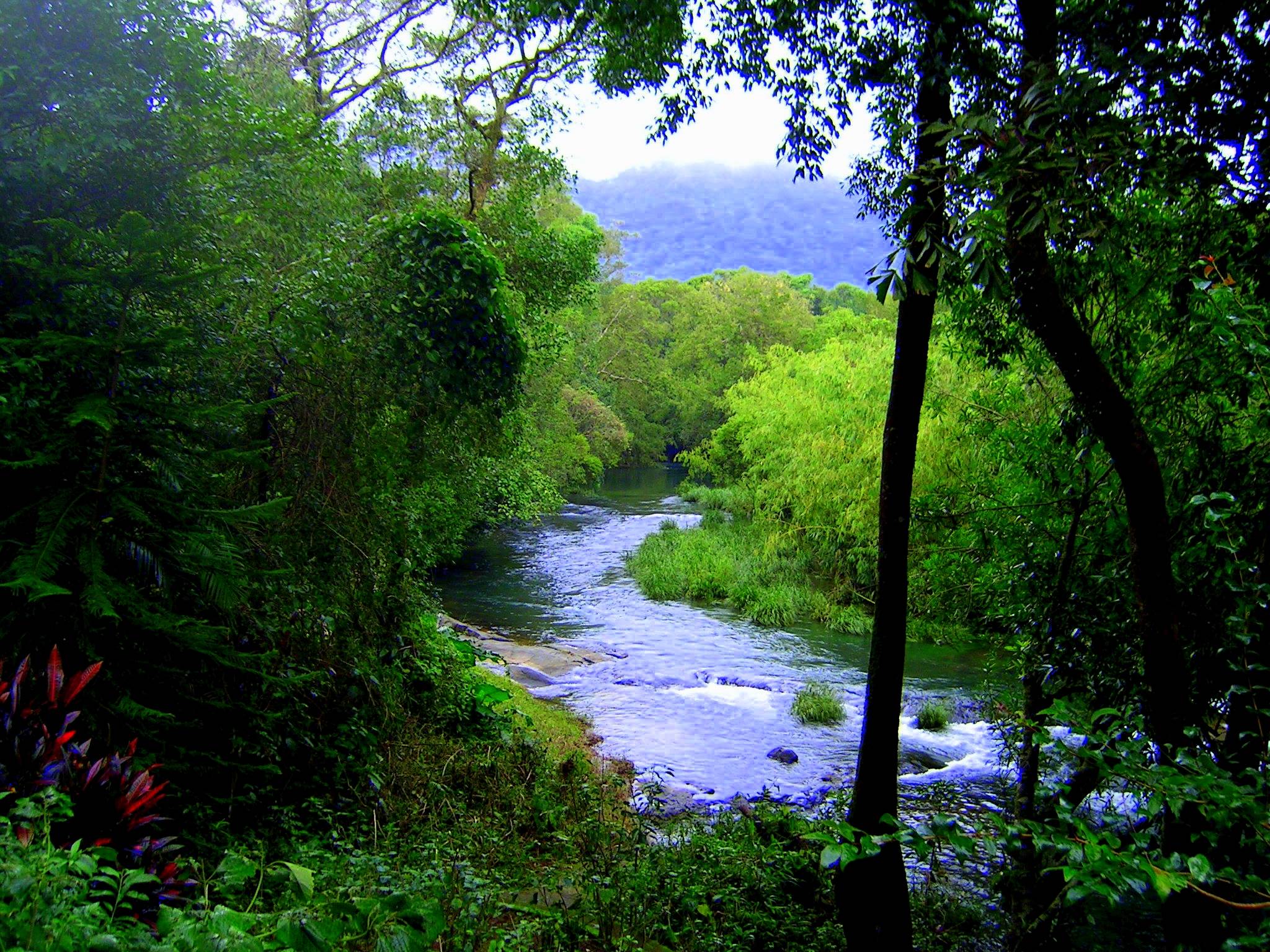
The sanctuary also has a river flowing in the heart which meets the water needs of the animals.
After 23 years, their unmatched passion for wildlife and nature has helped them transform the 55 acres of barren land in 1991 into a one-of-its-kind wildlife sanctuary spread over 300 acres, probably the only private sanctuary in the country!
The sanctuary also has a beautiful river in the middle that is home to several aquatic species like fishes and snakes, including the King Cobra.
The huge trees and thick forest has also helped several birds like hornbill find their homes. There are over 305 species of birds that visit this sanctuary regularly.
The dense forest cover.
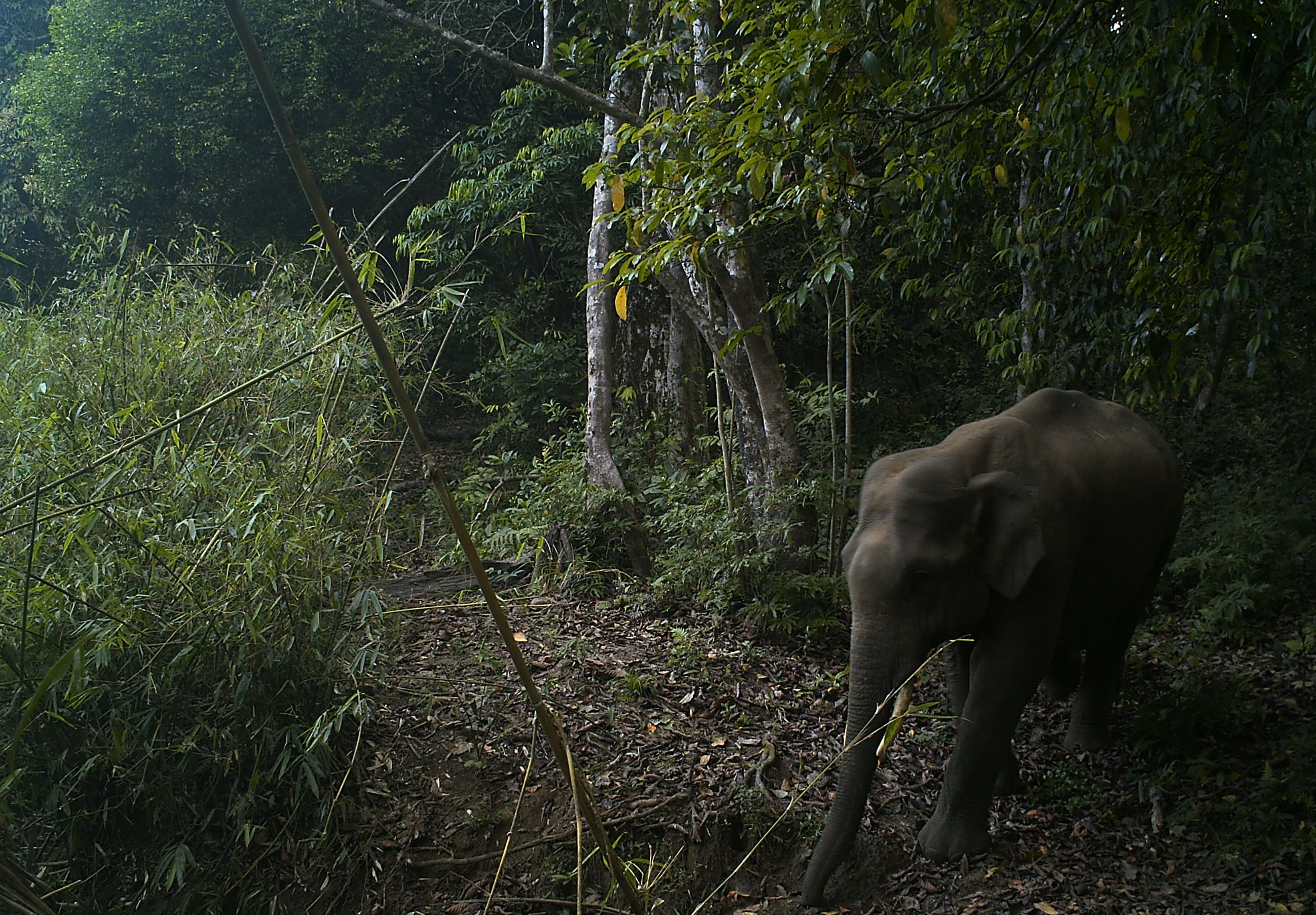
“We make sure that we don’t interfere with these animals. Elephants are very important for regeneration of the forests as they swallow the seed completely without breaking it, unlike other species. Around 30 species of trees totally depend upon elephants for regeneration,” says Pamela.
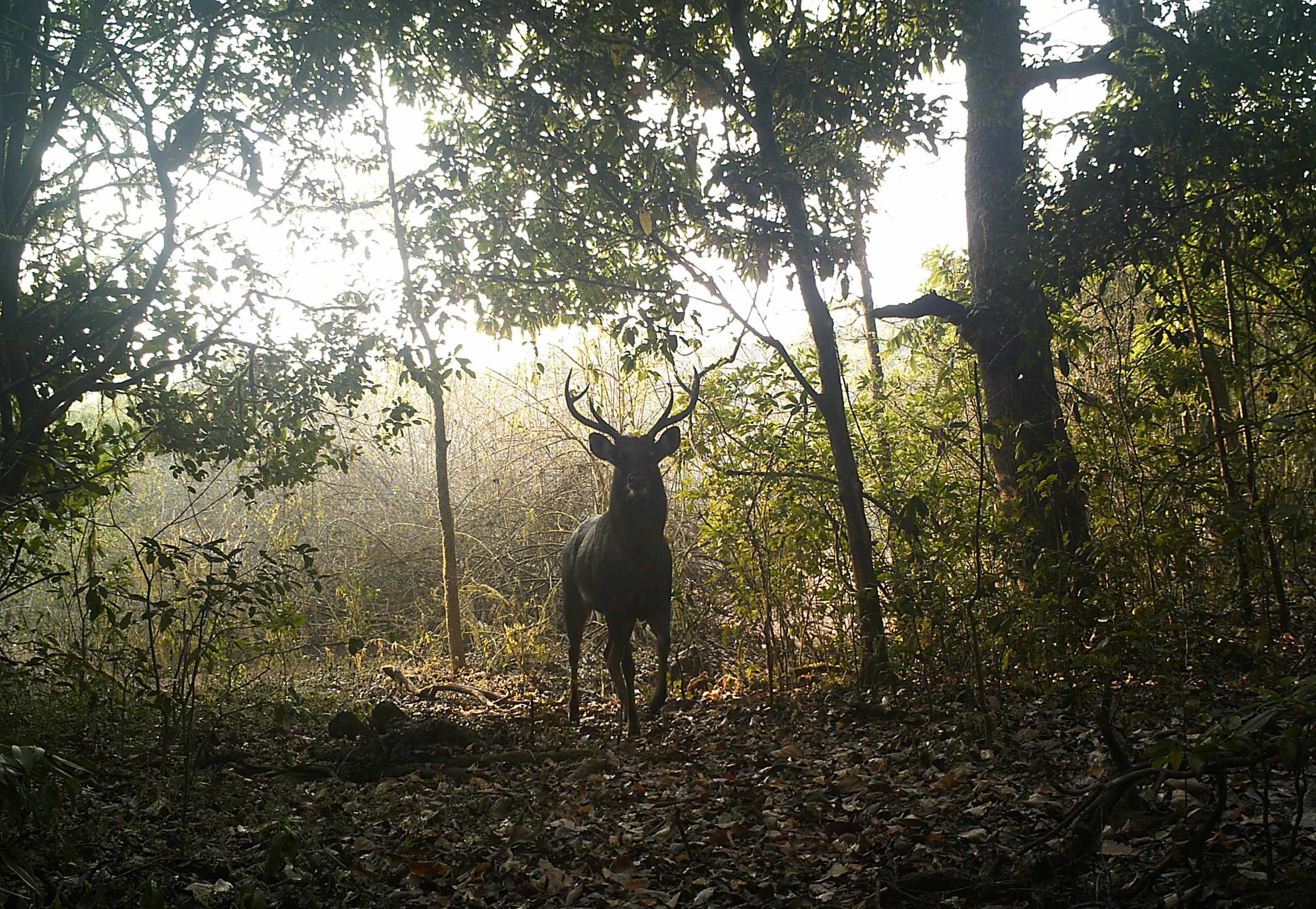
Several cameras are installed across the sanctuary to identify new animals and keep a track on poachers. “People think that animals need the forest. But the truth is, the forest needs the animals equally. While the forest helps animals in providing shelter and food, animals help forests in regeneration – they are both inter-dependent and we should make efforts to preserve both,” says Dr. Anil.
“A few days ago, I saw in the camera recording that a family of wild dogs and seven small puppies from that family were trying to attack a Sambhar just in front of my house gate. They were born a few days back and now had grown up. So, the fact that each puppy survived is commendable. That means the sanctuary is a good host to all these wild animals,” says Pamela.
When the Malhotra couple purchased the land, there were already native species of cardamom and other trees that were planted. They decided not to disturb those and planted more native trees around the existing ones.
As the green cover expanded, the animal and bird species increased too. The flora of this sanctuary includes hundreds of varieties of indigenous trees, many of which are of medicinal value.
“Our aim is to preserve the flora and fauna, especially the rainforests, for the future generation. We believe that when we die we should give back the same (if not better) Earth which we got from our ancestors to the next generation,” says Dr. Anil.
A family of elephants are frequent visitors of this sanctuary.
The duo makes sure that they do not interfere or disturb the existing eco-system. “Even the dead wood provides nutrition to the soil,” says Pamela.
The couple has grown 10-12 acres of coffee and around 15 acres of cardamom on the land. They are also involved in organic farming on the same land. The sanctuary, which offers a unique experience to the visitors, runs completely on solar and alternate energy. For days of heavy rainfall in the monsoon, the three small windmills meet the needs of providing enough electricity to the sanctuary.
“We also make sure that people who visit here are responsible tourists. We only take those people who are actually interested in exploring the beauty of nature. Smoking and drinking is not allowed as it disturbs the animals and the overall air which is so pure,” says Pamela.
When Malhotra couple started this sanctuary, they invested their own money. Now they are a registered not-for-profit trust which runs on donations which get tax exemptions.
Apart from funds, another challenge comes while patrolling the sanctuary. As the area is very large it is hard to keep track of the poachers. To counter this, they spread awareness about preserving wildlife and nature in schools and nearby villages.
The sanctuary also hosts animals like Hyena, Sambhar and Bengal Tigers.
“To avoid any mishap, we don’t allow people to walk alone here. There is always a guide or we accompany the visitors ourselves,” says Pamela.
The sanctuary also won the “Wildlife and Tourism Initiative Of The Year” award by Sanctuary Asia in conjunction with Tour Operators for Tigers in 2014.
In conclusion, Pamela has a thought she’d like to leave us with, “Overcome your fear and respect the animals’ power. The animal might not understand our words but they do understand our feelings.”
Pamela and Anil also advice people to be careful about the lifestyle they follow. Eating organic food, recycling things, using more energy-efficient devices are some of the basic things they advise everyone to follow.
“When I carried buckets of water in the Himalayas, I realized how precious it is. We should not waste it. It is only when we face problems we realize importance of things,” she says.
“For anyone who wants to bring a change, we advise them to set one single goal and believe that they can achieve it,” says the couple.
Watch the official trailer of a documentary on SAI Sanctuary being made by filmmaker Mellissa Lesh here:
This is an appeal that Pamela and Anil Malhotra have made to all wealthy Indians to save our forests, wildlife and fresh water sources. They are even willing to help anyone who is willing to try.
Want to know more about this sanctuary? Contact them at – saisanctuary@gmail.com
source: http://www.thebetterindia.com / The Better India / Home> Changemakers / by Shreya Pareek / February 23rd, 2015
This Women’s Day, Plantation Trails by Tata Coffee gives you the perfect reason to escape from the hassle of the monotonous life. Plan a much deserved holiday in the heritage bungalows of the Plantation Trails and treat yourself to the exquisite luxury.
Indulge in the delicious Kodava cuisine along with a cook and butler service. Dive into the tranquility of the coffee plantations and spend some quality time with yourself at theReading Zone. Get a glimpse into the Planter’s Lifestyle in the Bun to Cup Tour, Safari Jeep Drive along with the Bird Watching & Photography Tours.
For all the men, this could be that one opportunity to make the women in your life feel special. Gift the lady in your life a relaxing and a rejuvenating holiday with special offers handcrafted by Plantation Trails.
Gautam Prakash, Head- Plantation Trails says “Women, these days, are independent and unbelievably successful in various fields of work while being superlative at guarding their families. This International Women’s day, Plantation Trails by Tata Coffee takes the opportunity to salute the women for who they are and what they do.”
source: http://www.bollywoodhelpline.com / Bollywood Helpline.com / Home> News & Gossip / by Siddharth Dhongle / Tuesday – March 03rd, 2015
Orders stoppage of tree-felling until MoEF approval
Protestors against the illegal felling of more than 50,000 trees in Kodagu for the sake of a power transmission line have a reason to smile. Ahead of their hearing by the Karnataka High Court, the National Green Tribunal’s order on Friday in a separate case seems to have revived their hopes of protecting the trees.
Order on activist’s PIL
The National Green Tribunal (NGT), on Friday, ordered all agencies to refrain from felling trees while executing linear projects in forest areas, unless an approval under the Forest (Conservation) Act 1980 was obtained. The NGT ruling was a response to a petition filed by Maharashtra-based activist Milind Pariwakam who objected to the National Highway Authority of India (NHAI)’s project of widening of NH-6 and NH-7 in the Vidarbha region. This would involve felling trees and diverting forest land through the fragile Tadoba Tiger Reserve in Maharashtra. The NGT ruling is likely to have a nationwide impact in preventing diversion of forest land for non-forest purposes.
The NGT clearly stated that all linear projects like railway lines, development of roads, canals and laying of transmission lines through forests must obtain permission from the MoEF under FCA -1980. Although the Chennai Bench of NGT had refused to stall the project last year, activists hope that the latest order will have an impact.
Speaking to Bangalore Mirror, Sajan Aiyappa, coordinator of the Save Cauvery Campaign, said, “Previously, when we approached the NGT’s Southern Bench, it had dismissed the petition on technical grounds and so we approached the High Court. The case has been posted for hearing on Monday. However, we welcome the order by the NGT in Maharashtra. We hope that the order will force authorities to take note of the seriousness of the issue and safeguard the fragile eco-system of Kodagu.”
The activists clarified that they were not against the project, but only concerned about the felling of 50,000 trees which would have a catastrophic impact on the rainfall of Kodagu. This, they say, would adversely affect the flow of water to the Cauvery and in turn affect the availability of potable water in Mysuru and Bengaluru.
Felling continues
“Despite the case being posted for hearing before the High Court, the authorities, a few days ago, cleared many trees within the limits of coffee estates. We have submitted scientific reports on the variety of species of trees in plantation areas. The court must take note of this and help us in safeguarding the eco-system,” yet another activist said.
source: http://www.bangaloremirror.com / Bangalore Mirror / Home> Bangalore> Others / by Niranjan Kaggere, Bangalore Mirror Bureau / February 23rd, 2015
The State Forest department is preparing a report on ways to mitigate the impact on the environment in Kodagu, when the 400 KV high tension power line is laid.
The report on the environment mitigation plan comprises short-term and long-term measures.
The measures are being listed keeping in mind development and protection of green cover.
It will be sent to the government by the end of this week, which will then be forwarded to the Power Grid Corporation and the Union government for funds and approval, Principal Chief Conservator of Forests (wildlife) Vinay Luthra told Deccan Herald.
Some of the listed measures include organising anti-depredation camps, building better barriers, not disrupting the existing waterholes, providing natural fodder spaces for animals, not using weapons against animals and if carrying weapons, getting them registered with the Forest department to ensure that animals are not harmed, not coming in contact with animals, not indulging in afforestation activities, not camping inside forest areas, reducing loss of green cover as much as possible and in regard to work in forest areas, ensuring that all permissions have been obtained and following rules like no-stay inside the forest during night hours, not hunting, not entering restricted forest area without permission and so on.
The report plans to ensure that no human or animal casualty is reported, but in the last 30 days two people have died due to man-elephant conflict and one person sustained injuries while working near coffee estates.
The power line from Mysuru to Kozhikode will pass through Kodagu. Of the 210-km line, 50 km will pass through coffee and paddy fields in Kodagu and the rest is through pristine Western Ghats regions – touching borders of Nagarahole Tiger Reserve, Dubare and Devamachi Reserve Forests.
This line is part of the central power grid project and will supply power to many southern regions, including Bengaluru.
Due to protests, this project been delayed by over five years. Lines have already been laid till Mysuru and Kerala, except some patches in Wyanad. It was to be completed in 2007, but was stalled. Work started again in November 2014.
During a meeting of agitators from Kodagu and power corporation companies last week, Energy Minister D K Shivakumar affirmed that the project would not be held back or delayed further. Shivakumar said that the project was important for Bengaluru and industries, to ensure 22-hour power supply daily, especially during summers. But agitators from Kodagu said that it was a scam. C P Muthanna, a retired colonel in the Army and president of the Coorg Wildlife Society, pointed out that there was already a 220-KV line in the region, which can be upgraded to 400 KV and used, instead of occupying fresh land and axing over 50,000 trees for the new line.
DH News Service
source: http://www.deccanherald.com / Deccan Herald / Home> State / by Bosky Khanna, Bengaluru / DHNS – February 17th, 2015
Brigadier who carved the 22-acre Cariappa park out of defence land near MG Road slams colleagues for barring entry to public The man who opened the Army’s doors to Bengalureans has slammed his colleagues for barring the city’s residents from entering the Cariappa Memorial Park in the heart of the city.
(The 22-acre park was meant…)
The 22-acre park was meant to be the Army’s gift to the city but has been closed since 1998, two years after it was inaugurated. A board next to the now-abandoned park’s gate reads: `Restricted area’. The present Army establishment in the state says the park area, categorized as A1 defence land, cannot be made available to the public under Ministry of Defense guidelines.
Brigadier (Retd) Ashok Nagpaul, who established the park on defence land to foster closer interaction between the Army and public, said the Army cannot block entry into the park. “The land not only belongs to the defence but also to the people of Bengaluru,” said the former Commanding Officer for Karnataka and Kerala.
“There was 57 acres of land lying wasted. There were illegal activities like prostitution and other things that used to happen in that area, so I decided to build a parade ground and the park,” Nagpaul, 72, said over the phone from Pune.
A top Army official said that with defence land being rampantly encroached on, the Army cannot afford to give its land for public use.”In 1994 maybe people were not conscious about utilization of defence land, but consequent to which in lots of places we started losing defence land, and … very stringent guidelines were framed that you cannot use defence land for public purposes,” the official told ET, declining to be identified.
Until 1994, the park area was part of a larger parcel of land between Cubbon Road and MG Road.
source:http://www.articles.economictimes.indiatimes.com / The Economic Times / Home> Collection> MG Road / by ET Bureau / February 17th, 2015
IIHR is targeting 35,000 hectares of paddy land mostly left fallow for 6 months to grow vegetables
If things go according to plan, Kodagu, the land of coffee and pepper, may turn into one of the major destinations for high-value vegetable cultivation a few years from now.
A survey conducted by the Indian Institute of Horticultural Research (IIHR) showed that paddy was being cultivated on about 35,000 hectares of plain land in the hilly district of Kodagu. Most of this is being left fallow for six months from October to March after the monsoon. Vegetable experts in the IIHR want to make best use of the land during the “off- season” by motivating people to take up vegetable cultivation.
“It is possible to cultivate vegetables during the off-season as their water requirement is not as huge as paddy,” says A.T. Sadashiva, Principal Scientist in the IIHR’s vegetable Crops’ Division. Also, the weather in Kodagu is similar to that of Ooty, where vegetables are in high demand, he said. Above all, vegetable farming fetches at least one-and-a-half times more returns than paddy, he says.
Preliminary work towards promotion of vegetable cultivation has already begun. The IIHR has developed model farms on about 50 hectares in different areas of Kodagu where high-value hybrid varieties developed by it are being cultivated. “We have also held four field days since 2012 in different areas such as Suntikoppa, where cultivation of different vegetables at the model farms has been showcased. Observing the overwhelming response to such events, we plan to have two more such field days shortly,” he says, while expressing confidence that it may be possible to encourage farmers to take up vegetable cultivation on a minimum of 100 hectares this year.
At present, vegetables like okra, tomato, beans, yard-long beans and chillies are being promoted, while other vegetables such as carrot will be introduced in the next phase, he says. Onion cultivation has also been introduced on an experimental basis.
The marketing network for the vegetables in Kodagu is not advanced. The IIHR is in talks with the State Horticulture Department, which has promised to provide facilities for sale of vegetables in different parts of the district, Mr. Sadashiva says, adding that plans are also afoot to sell the vegetables to other districts and States as and when the production increases.
It is possible to cultivate vegetables during the off-season as their water requirement is not as huge as paddy
A.T. Sadashiva Principal Scientist, IIHR
source: http://www.thehindu.com / The Hindu / Home> News> Cities> Bengaluru / by B.S. Satish Kumar / Bengaluru – February 22nd, 2015
WELCOME. If you like what you see "SUBSCRIBE via EMAIL" to receive FREE regular UPDATES.
Read More »