Category Archives: Green Initiatives / Environment

Madikeri Farmer Eyes Record With 41-ft Cane

Madikeri :

B Hoovaiah is a happy man. A stalk of sugarcane grown by Hoovaiah in Madikeri is all set to enter the Guinness Records as the tallest in the world. The earlier record, set in 2001, was held by Venkatesh Gowda of Kolar.

Hoovaiah, a BSNL tower operator in Convent Junction in Madikeri, has been protecting the cane for three years now. All the required inspections have been completed by expert committees and a team from Guinness is expected to arrive shortly, before an official announcement can be made.

Hoovaiah told Express that an expert team inspected the stalk and measured it at 41.1 feet.

He then formally approached the Guinness authorities, asking them to consider it for a world record.

Later, he received an acknowledgement from Guinness records in-charge, Era Norroy.

Hoovaiah, who served in the Indian Army for 26 years, lives at Bettathoor in Madikeri taluk and has served as a tower operator for 11 years.

He expressed happiness that the cane had been grown organically.

source: http://www.newindianexpress.com / The New Indian Express / home> States> Karnataka / by B C Dinesh / July 10th, 2014

Saving Kodagu

Kodira A Kushalapa writes why there is an urgent and dire need to protect the natural landscape of Kodagu, the “Scotland of India”.

The erstwhile state of Kodagu is now a district in Karnataka with nature and culture, that require immediate efforts to conserve, not only for the present, but also for the future generations to survive.

The district is partly located on the Western Ghats with a portion on the east.

The Western Ghats is considered an ecologically sensitive area and requires careful scientific approach in its development and management, failing which, it will have adverse impacts on the entire southern part of India.

Under Article 48A of the constitution, the government is under an obligation to protect and improve the environment and to safeguard the forests and wildlife of the country.

Under Article 51A(g), likewise, each one of us as citizens, has the obligation to “protect and improve the natural environment including forests, lakes, rivers and wildlife and to have compassion for living creatures.” There are several issues that require careful and urgent handling.

Paddy cultivation
The district, on an average, receives over 2500 mm of rainfall annually and is ideally suited for rain-fed paddy cultivation.
People were cultivating only paddy till the British invasion in 1834 and took up coffee cultivation subsequently.

Now, only 10 to 12 per cent of its total area is under paddy. It is been discovered recently that paddy cultivation is not economical and farmers are diverting their paddy fields for cultivating cash crops or for construction, without any concern and forethought.
This has increased the run-off during the rainy season, resulting in flash floods, damaging the lands by accelerated soil erosion. Paddy cultivation was impounding rainwater for about 100 in paddy fields, allowing slow infiltration enriching the subsoil groundwater.

This would be beneficial to us later, due to slow release of the groundwater, to maintain continuous flow in rivers.

Now the rivers are almost dry during summer, indicating that there is a need for encouraging paddy cultivation all over Kodagu district by introducing incentives, subsidy and support price.

The government should immediately prohibit conversion and use of paddy fields for any other purpose, like it has been done in Kerala and Dakshina Kannada.

Another issue which needs immediate attention is reduction of crop damage by wild animals, which has forced many farmers to abandon paddy cultivation.

Forest conservation

Nearly 31 per cent of the geographical area of Kodagu is under forests managed by the government. Tropical evergreen forests dot this landscape.

Any disturbance to them will make the area barren, like we see around Talacauvery, where the once dense forests have now been reduced to grasslands due to continuous use of wood by pilgrims.

These lands are so degraded with poor nutrient top soils, that reforestation has become a hard task.

The forests have to be protected to facilitate infiltration of rainwater and to prevent accelerated soil erosion.

Natural forests once destroyed cannot be recreated and reforestation can only create plantations.

The various forest and wildlife acts should be strictly implemented and the persons who violate them should be suitably punished.

Relocation

There are a number of cases of encroachment in the forests. Even high forests like Devarakadu and national parks have been encroached upon, where wildlife need relocation and rehabilitation, outside the forests and possibly even out of Kodagu district to drier areas suitable for agriculture.

The Forest Rights Act envisages the issue of khatha to all tribals and others, residing inside forests for 2 to 3 generations, not to continue there only inside the forests, but as an important document to get equal areas outside forests during relocation.

The union government is committed to grant Rs 10 lakh per family during the relocation to bigger and compact blocks.

Fodder development is another important activity to contain wild animals inside government forests. The flowering of bamboos has left only dried clumps and have become hazardous to forest fires.

Grass and other fodder species have been destroyed and invaded by lantana and other weeds as ground flora, preventing natural regeneration of native species.

It is impossible to raise any fodder plants now in government forests unless large blocks or compartments are properly fenced and protected and then planted with tall seedlings of fodder species annually to cover the entire forests.

In addition, profuse aerial seeding of treated bamboo and other miscellaneous seeds should be taken up with the onset of monsoon all over the forests.

The old plantations of teak covering over 7000 ha in Nagarhole National Park and other areas should be harvested and liquidated in a phased manner (with special permission of the Central government) and followed by planting of bamboo seedlings to develop fodder resources to wild animals.

The forest department should give priority for creating barriers along the boundaries of government forests and develop fodder resources for herbivores inside such forests.

Development of tourism

Kodagu has attracted tourists from all over the world, creating irreparable damage to the landscape.

The presence of numerous resorts and homestays all over the district has attracted more tourists resulting in landslides, water scarcity, waste management problems, bad roads, felling of trees for constructing houses, influx of outsiders for business and settlement and high cost of living.

There is no proper guidance and control for activities like registration of homestays and resorts, study of environmental impact assessment and carrying capacity of every activity.

The building and house constructions have been taken up on steep terrains as seen in Madikeri and Virajpet landscapes, making the hills barren.

The riverside areas are all occupied unauthorisedly, polluting river water.

There is a need to control and restrict the tourists coming to Kodagu, by studying the carrying capacity of land involved in every activity and their impact on environment and framing suitable guidelines.

Management of private forests

Nearly 75 per cent of the area in the district is covered by trees.
Coffee estates maintain sufficient shade trees per ha in which silver oak gets precedence due to its faster rate of growth, straightness of bole, multiple use of wood for planks, furniture, peeling, plywood etc and exempted from felling and transit permits and fetches revenue returns in about 30 years.

However, its cultivation should be restricted to allow other indigenous species to maintain biodiversity, to facilitate birds and bees to control pests and increase pollination.

Jamma malai and Jamma bane land holders who have also maintained trees in their land should be given tree rights as an incentive to grow more trees to supplement their income when necessary.

There is, however, a section in the Karnataka Forest Act with a provision to take over the management of private forests by forest department, if the owners violate the provisions of the Act and management principles. This would be binding on the owners to protect the standing trees.

Under the provisions of Karnataka Protection of Trees Act, if a tree is felled, double the number of seedlings should be planted by the owners and this would ensure the sustainability of tree cover.
Therefore the ownership rights of the trees should be with the owners.


Land ownership

Jamma land holder
s have been enjoying the land tenure even before the rule of Lingayat Rajas, who surveyed, documented and levied necessary land tax.

The Bane lands attached to paddy fields called Jamma Bane, in many families, have been converted into coffee and other plantations and by paying necessary tax, are now the property of those families.
The Jamma malai owners have been negotiating with the government to surrender their privileges for a reasonable compensation, which should be accepted as these malais are situated on the ecologically sensitive hill ranges and the composition is similar to natural evergreen forest types.

Compensatory Afforestation Fund Management and Planning Authority (CAMPA) funds could be utilised to pay compensation. Necessary amendments to the KF Act should be introduced to make the families of Jamma holders as the rightful owners of Jamma lands.

However, to safeguard the unique culture of natives of Kodagu, the sale of their Jamma property should be prohibited, except for other Jamma holders only.

High Tension 400 kV line

The proposal to draw a 400 kV line, partly along the reserve forest, private wetlands and coffee estates was met with stiff opposition from local people.

There are several alternate routes available, such as, along the Mysore-Kodagu forest boundary line, or by upgrading the older available 220 kV line or taking through an underground tunnel (not feasible here) without clearing much forest growth.

Amendment 4.4 to the FC Act issued by Ministry of Environment & Forests (MoEF) on January 7, 2013, indicates that for linear projects, alternate routes, if available should be indicated and availed of, so that forest lands are saved.

This linear project should be aligned outside the protected area without any consideration of increased cost and accordingly the MoEF may be appraised to allow the HT line through alternate non-forest areas.

source: http://www.deccanherald.com / Deccan Herald / Home> Supplements> Environment / by Kodira A. Kushalapa / DHNS – July 08th, 2014

DK drenched, but rain plays truant in Kodagu

Monsoon gained momentum in Dakshina Kannada with the region receiving intermittent rains on Monday. In the last 24 hours, Sullia received the highest of 43.4 mm rainfall, followed by Mangalore—15.2 mm, Moodbidri—13.2 mm Bantwal—14.8 mm, Puttur—11.4 mm.

The rain brought the much-needed relief from the scorching heat for the people.
“If the region continues to receive rain, we can start agriculture activities,” said a farmer. The roof of a house collapsed at Kumpala Hanuman Nagara in Someshwara Gram Panchayat limits, following rain on Monday. The house belongs to Pushpa.

To invoke the blessings of rain god, seers from Karnataka, Tamil Nadu and Kerala conducted ‘parjanya japayajna,’ at Talacauvery (the birthplace of River Cauvery) in Kodagu district on Monday.

There was drizzling in Talacauvery, Madikeri, Napoklu, Gonikoppa, Virajpet and Kutta. The inflow of water to the Harangi reservoir was 221 cusecs. It was 8050 cusecs during the corresponding period last year.

In Shimoga

Parts of Shimoga district received moderate rain on Monday. In the past 24 hours, Shimoga received 2.2 mm of rain followed by Bhadravathi (1.8 mm), Thirthahalli (1.6 mm) and Sagar (0.6 mm).
DH News Service

source: http://www.deccanherald.com / Deccan Herald / Home> State / Mangalore – Madikeri, DHNS – July 08th, 2014

Water from Kundamestri to flow to three water bodies

The ambitious Kundamestri drinking water project is all set to supply water to three keres (streams) in Madikeri. Deputy Commissioner Anurag Tiwari has given his nod for the laying of pipelines at an estimated cost of Rs 20 lakh to flow water Roshanara kere, Pampina kere and Kannandabane open well.

KundamestriKF07jul2014

There were no pipelines to flow water to these water bodies. Hence, barring these areas, water from Kundamestri was supplied to other areas. If the work on laying pipelines are complete, then water from Kundamestri project will reach entire Madikeri town.

Following delay in completion of work on Kundamestri project, the water was flowed to Kootuhole and later to filter house to be supplied to the residents.

Once the work on pipelines are complete, then water can be supplied to the residents directly from Kundamestri.

Normally, Kannandabane kere, Roshanara kere and Pampinakere goes dry during peak summer. The CMC was depending on tankers to supply water to the residents. If the project on supplying water from Kundamestri is success, then the CMC can save money.

The DC has given nod for an action plan of Rs 32.80 lakh for taking up 14 different works under second phase of SFC grant during 2013-14.

Kannandabane, Chaingate and surrounding areas, Raghavendra temple, Tyagaraja colony, Azad Nagara and Putani Nagar will be covered under Kundamestri water project.

The remaining 11 works include cleaning of borewells, installing pumps for borewells at Mangaladevi Nagara and Sudarshana Circle, deepening a borewell at Azad Nagara, drilling borewells at Dasavala Jayanagara and Chamundeshwari Nagara, sources said.

source: http://www.deccanherald.com / Deccan Herald / Home> District / by Srikanth Kallammanavar / DHNS-Madikeri, July 07th, 2014

400 KV- HT line passing through Kodagu Reserve Forest

No justification to sacrifice natural forests

DrKodiraKF02jul2014

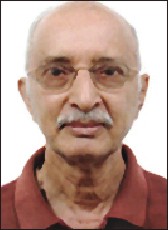
by Dr. Kodira A. Kushalapa, IFS (Retd.) and former RCCF, Bhopal under MoEF

Forests all over the world are being threatened with the rise of human population, leading to the increased level of Co2 in the atmosphere, global warming, climate change, submersion of low lying areas due to the rise of water levels in the oceans, disappearing forest areas and trees etc. Therefore, we have to take all possible measures to save natural forests, not only for our survival but also for the future generations to come.

The Central Government has added Article 48A and 51A (g) to our Constitution to protect and improve our environment, safeguard forests and wildlife and we citizens are obliged, duty-bound and responsible to save these natural resources. The common phrase is: think globally but act locally. This will apply in this case also while considering the route for High Tension (HT) line through natural reserve forests of Kodagu.

Fortunately, there are two or three alternate routes to draw the transmission line avoiding natural forests. Therefore, there is ample justification to avoid forests on a priority basis, to save and conserve forests locally. The value of forests cannot be just the timber and firewood value down to certain minimum girth of standing trees, for comparing the costs but should be the value of whole forest ecosystem called environmental values or ecological benefits, which will be lost permanently after clearing the forests.

These values include the absorption of Co2, production and release of oxygen by all plants existing, habitat for birds and wildlife, soil and water conservation, adding fertility to soil etc. These environmental values are far more than whatever the total cost of laying the linear line and is not comparable. Thus the question of shortest route through the forests for cost-cutting is ruled out in the interest of saving forests. The Power Grid Corporation can recover the extra cost by increasing the tariff per unit of electricity.

The HT line can go through the D-line between the erstwhile Coorg and Mysore States, which is now the D-line between Kodagu and Mysore districts, where due to the annual D-line clearances earlier, the trees are smaller in size and less in numbers. The proposed HT line is running almost parallel to the D-line and hence a more feasible alternate route.

The other route is by upgrading the present 220 KV line for which the necessary permission under the Forest Conservation Act 1980 has been already obtained to pass through the National park and requires the replacement of towers only. It is almost a straight line passing through H.D. Kote and D.B. Kuppe. The temporary problem of the PG Corporation is that during the progress of upgrading the 220 KV, they have to de-activate the present line and is left to them to solve by fast progress and using the other grid lines.

The third alternate is to take up the line through an underground tunnel which will be at an exorbitant cost and not feasible through forest areas with standing trees and their root systems.

The FC Act envisages to take up compensatory afforestation in new areas equal in extent of area (twice the extent in forest area) diverted for non-forestry purposes by the forest department at user’s cost. But the fact is that nobody can re-create a “natural forest,” which has by a series of succession over centuries, stabilised into a climax type of forests with rich biodiversity. But at the most we can create a “plantation forest” of few species only, if the new compensated area is good for growing trees. If such plantations are raised in semi-arid regions like Bijapur and Gulburga for want of land in Kodagu, there will be complete failure of the objectives of compensatory plantation. Similar type of areas only should be allotted for compensatory afforestation. It is therefore imperative and justifiable to protect and conserve the existing natural forests than going for compensatory plantations that too, when alternate routes are available for linear projects.

[e-mail: kodira1@hotmail.com/ Mob: 94480-58549]

source: http://www.starofmysore.com / Star of Mysore / Home> Feature Articles / Friday – June 27th, 2014

‘Panel on deemed forest land to meet within a week’

The district-level committee formed to do a reality check of the deemed forest land in Kodagu district will convene its first meeting in a week and is likely to submit a comprehensive report to the government within six months.

The committee chaired by the deputy commissioner comprises of the deputy conservator of forest, deputy director of land records and officers from revenue and forest departments.

In order to verify the report submitted by an experts committee on deemed forest in 2002, the State government has formed district committee in district level, zonal committee in revenue level and state committee in state level.

According to sources, the district committee will conduct a survey in the district and prepare a report on deemed forest scenario in Kodagu. The functioning of the district committee will be supervised by the zonal committee and state committee on a time bound manner and give suggestions as and when required.

What is deemed forest

If a land has the features of forest, where trees are grown outside the purview of government recognised forest land, it is called as deemed forest. The experts committee formed in 2002 had put the deemed forest land figure in the State at 9,94,881 hectare. About 69,205 hectare deemed forest land identified in Kodagu district, also comprises of Bane, Paisari, Kumki Malai, C and D land and plantation.

It all started with the Supreme Court directing all states to provide information about the forest land, during the hearing of Godavarman Thirumalapad case in 1995. As per the order, the Karnataka government formed the first experts committee, which submitted the report to the government on April 2, 1997.

While submitting the report before the apex court, the government stated that it has completed the process of identifying the area which has been officially declared as forest land. The government requested additional time for identifying the forest land which has not been officially declared.

On observing the delay by the Karnataka government in submitting the report, the Central Empowered Committee of the SC took the government to task, following which the government revised the experts committee.

This second committee identified 33,24,854 hectare land as notified forest and 9,94,881 hectare as deemed forest. The committee, in fact, included even the barren forest land as deemed forest. It also included C and D land, Bane and Paisari.

Due to identifying even Paisari land as deemed forest in various districts including Kodagu, the government is neither able to take up various projects in this land, nor it can make sites to be distributed to poor. Even the work on providing basic facilities like construction of road can not be taken up.

In several cases, the revenue land (Paisari) which has been sanctioned to beneficiaries under Akrama Sakrama, is also considered in the list of deemed forest, due to which RTC can not be made in the name of beneficiaries. To solve the impeding problem the new committee has been formed for conducting a joint survey.

source: http://www.deccanherald.com / Deccan Herald / Home> District / by Shrikanth Kallammanavar / Madikeri, DHNS – June 19th, 2014

400 KV Line : Expert panel gathers public opinion

Kodagu residents oppose the project

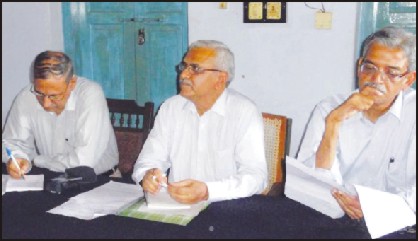
The three-member Technical Experts’ Committee seen gathering public opinion in Madikeri on Thursday.

Madikeri :

A three members Technical Experts’ Committee visited Kodagu district on Thursday to study the possibilities of finding an alternate route to lay 400 KV hi-tension line from Kozhikode in Kerala to Mysore. This has come up in the backdrop of stern opposition from the people against the electricity line passing through Kodagu district.

The committee members visited the places in and around Maldare where the project is implemented and collected public opinion. Representatives from various organisations, including Viju Biddappa from Maldare, Kaveri Sene President Raghu Machaiah, Convener Ravi Chengappa, K.C. Subbaiah, Basavana Devana Bana Trust President B.C. Nanjappa, Chennayyana Kote Gram Panchayat member Shyam, Coorg Wildlife Society President Colonel C.P. Muthanna and others, shared their opinions.

They all said that thousands of trees will be felled if the line passes through Kodagu. This will have negative impact on the environment, wildlife and coffee growers. Therefore, an alternate route has to be found out for laying the wires, they insisted.

Speaking to reporters after the meeting, Committee Head R.S. Shivakumar Aradhya said that a lot of factors like environment and technical feasibility and project expenditure has to be taken into consideration while finding an alternate route. “We will submit the report to the government within a month. We will visit Kutta and surrounding region on Friday and examine the problem,” he said.

The government formed the Committee chaired by Shivakumar Aradhya, in response to the continuous opposition and protest by villagers and various organisations opposing the project. Forest Department senior officials Ajay Mishra and elephant expert Sukumaran are the other two members of the Committee.

source: http://www.starofmysore.com / Star of Mysore / Home> General News / June 14th, 2014

A Friendly Solitude

ElephantsKF03jun2014

Kodaimelanadu or Kodagu or Coorg is an hour-long drive from Mysore along winding roads that take you through a collage of colours which explode into shades of greens, browns and yellows. As you squint through the green fabric, plantations of coffee, cardamom and pepper speed by, merging with larger forestscape. The hiss of the tyres accentuate the haunting solitude of the journey; no wonder Coorg is called the Scotland of the East.

Much of Coorg is about coffee and a fair amount of cardamom and pepper. Siddapur district seemed a tree-shadowed coffee estate, dotted with contradictions—a few market places, seedy bars, pork shops and elegant vegetable displays. As we travelled, we grew wiser about coffee: its history, its clandestine entry into India, and the difference between arabica and robusta. The British brought coffee to Coorg. The first estate was established way back in 1850s by an Englishman, John Frawler.

Coorg seems to be made for introverts, there is an overwhelming feeling of seclusion, where from a distance you can spot a coffee pod, but it is difficult to spot your immediate neighbour. It is an immense aviary, and home to nearly a quarter of the bird population of Karnataka. The tour guide seemed to be Coorgi Salim Ali; he knew the names of each and every bird. At times he even imitated their calls perfectly. Every hilly region has at least one well known waterfall, and in Coorg it is Abbey Falls that plunges down, separating some coffee and spice estates to join the river Kaveri. An army of clouds envelope the hill. The walk is enough to give anyone an appettite for the singular flavours of Kodava food. The central piece of Kodava cuisine is meat and rice. I tried the irresistible Pandi curry, a subtle pork dish, cooked well by adding a local fruit, Kanchampali. Dry spices are roasted before grounding them, giving a toasty flavour to the thick curry.

As night falls, the highlands of Kodagu become a magical place. The moon shines brightly and the trees are laden with millions of fireflies, as if decked up for some fat Indian wedding.

In the morning, the mist-laden verdant hills awaited in silence. The Dubare reserve encompasses 50,000 acres and is home to the elephants of the Western Ghats. Majestic rosewood, teak and other hardwood tree species stand around like sentinels. Giant parasitic vines are swathed around large banyans and other trees in a macabre bond. As Hansel and Gretel would’ve felt, the forest kept getting thicker and more enchanting. Below, the river Kaveri, flowed unmindful of the inter-state disputes. Grabbing a coracle, drifting on the green waters and gauging the moods of the river and the pristine surroundings is one way to experience Coorg.

Local myth says the invincible Coorgis descended from Alexander’s Macedonians. “Neither Tipu Sulatan, nor the British could conquer it,” said the guide. The place has a long history of war; the Madikeri fort is a living testimony to that. Built as a mud fort by Mudduraja in the 17th century, it was later rebuilt in granite by Tipu Sultan who renamed the site Jaffarabad. In the north-east corner at the entrance stand two life-size statues of elephants. A church stands in the south-east corner. The fort also houses a prison.

Among the other architectural treasures of Coorg is the Omkareshwara temple built by King Lingaraja in 1820, in a mosque-like style, with an impressive central dome and four minarets, which are surrounded by Basavas, or sacred bulls. On the top of the dome sits a gilded ball with a weathercock. The Raja’s seat is a small pavilion in a garden, offering a view of the green valley below, where it is said the kings of Coorg spent evenings with their consorts. From there, they would’ve seen the melting sun, parrot-green fields and the mountains sleeping in the mist as if time had dawdled here, mesmerised by the languid beauty of Kodagu.

To Reach: Madikeri is the nearest bus station. There are frequent buses from Mysore, Mangalore and Bangalore to Coorg.

To Stay: For luxury, the Orange Country Inn. For an authentic Coorg experience, try a planation home stay.

source: http://www.newindianexpress.com / The New Indian Express / Home> LifeStyle> Travel / by Aakash Mehrotra / May 29th, 2014

Coorg escapade — run amid greenery on June 1

Mangalore :

Test your mettle running through over the hills, through the waterfalls, streams, coffee estates and the thick jungles of Kodagu. Coorg Escapade being held on June 1 will give running enthusiasts a chance to blend with nature and fill fresh mountain air in the lungs.

Conceptualized by Next Level Sport and Entertainment, the run will flag off from Chelavara waterfalls. The trail is a scenic loop, which offers magnificent views of Kodagu. The trail offers different elevations, making the run truly challenging. The lowest point is 950 metres and the highest is 1,250 metres. The Run has three categories – The 10K Run, the 2.5K Fun Run and the 10K Relay for corporates and families.

The run was conceptualized with the mission of encouraging and promoting responsible tourism. As a part of this endeavour, the Coorg Escapade will not be using any plastic in the event, keep noise levels to a minimum and no private vehicles will be allowed past the nearest town Cheyandane. A shuttle service will transport participants and audience to and from the venue.

Participants and their families get to experience the rich cultural heritage of Coorg and interact with other runners during the bonfire dinner the 250-year old Nadikerianda Aine Mane (The Ancestral Home).

The first three winners will be awarded a cash prize up to Rs 1.80 lakh along with gift vouchers. The Race Categories and starting time are as follows: 10K Challenge – Anyone above the age of 15 – Start time – 7.15am; 2.5K Fun Run – Anyone above the age of 12 – Start time – 11.30am; 10K Inter Corporate Relay (2.5K X 4 members) – Start time – 10.45 AM and 10K Inter Family Relay (for Coorg Locals only) – Start time – 10.45am.

source: http://www.timesofindia.indiatimes.com / The Times of India / Home> City> Mangalore / by Stanley Pinto, TNN / May 24th, 2014

Keep power line project off Kodagu, urges Greens

On the one hand, greens have been demanding to explore alternative routes to lay 400 kv high tension line between Mysore-Kozhikode, and on the other hand, Power Grid Corporation of India (PGCI) says that the alternative routes were discussed way back in 2009 and they were rejected.

The Members of Kaveri Sene, Coorg Wildlife Society and Kaveri Bachao Andolan have said that felling of trees will have its impact on the bio-diversity and environment of the region. Hence, the project should be kept out of the purview of the Kodagu district.

Power Grid Corporation Chief Manager C D Kishor told Deccan Herald that all the three suggestions put forth by the protesters were discussed and rejected.

The route proposed by the protesters are as follows:

Route 1—Upgrading 220 kv line that provided connectivity between Karnataka and Kerala. Upgrading of the line falls under Bandipura National Park.

After the implementation of Forest Conservation Act 1980, no development work can be initiated inside National Park where tigers habitate.

Hence, the proposal was rejected.

Route 2—Laying electric wire on D-line of Nagarahole National Park.
However, the route was rejected as the width of the D-line is only 15 metre. The width required for laying high-tension wire is 45 metres.

Hence, it would require felling of trees on minimum of 30 meter after the D-line. On an average about 17,515 trees would have been felled if the route was approved.
Hence, both the State and Central governments had rejected the suggestion.
Route3—Underground cable.

The proposal was rejected as it was an uphill task to lay underground cable for 55 kms. To lay underground cable, a separate road will have to constructed to take up repair work in the underground cable.

Present route

At present, the high-tension line will pass through Hunsur, Piriyapattana-Devamacchi forest-Maldare-Hundi-Mayamudi-Bekkesodlur-Nalkeri-Kutta-Kerala.

Delay in work

The length of Mysore-Kozhikode line is 210 kms. The line will pass through 92 kms in Kerala.

The work in Kerala and Mysore has been completed. Owing to the protest by environmentalists, the work was stalled in Kodagu district.

Technical committee

Following the protest, the State government has constituted a technical committee to explore the possible alternative routes.

The committee has been directed to submit report within 15 days.

Kaveri Bachao Andolan Convenor B C Nanjappa said “our concern is environment of the district. We had suggested three alternative routes. If it was not acceptable, then let the technical committee constituted by the government explore an alternative.”

source: http://www.deccanherald.com / Deccan Herald / Home> District / by Srikanth Kallammanavar , Madikeri / DHNS – May 06th, 2014