Category Archives: Coffee, Kodagu (Coorg)

Kudloor industrial area bereft of basic facilities

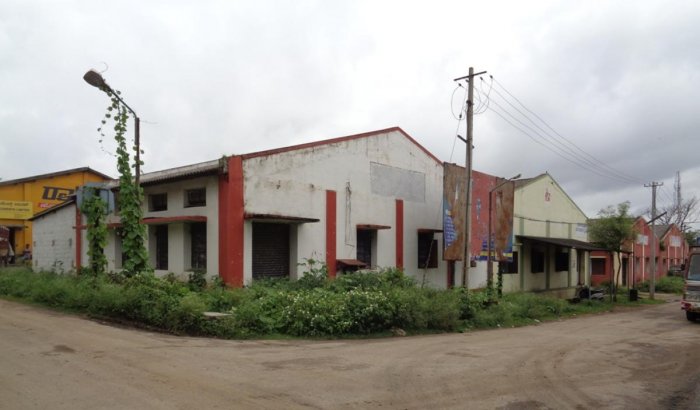
The industrial area in Kudloor.

The industrial area in Kudloor. The first and the only KIADB industrial area in Kudloor in Kushalnagar is facing a lack of basic facilities. The layout is devoid of facilities and people are eagerly waiting for its upliftment.

Owing to the efforts of then chief minister Gundurao, the industrial area had come up at Kudloor in 1984.

There are more than 60 industrial units related to coffee, pepper and others that have come up in the industrial area. About 40% of them are related to coffee and its processing. Some of the food industries including ice cream, hollow bricks, iron and other industries are functioning. The annual turn out from coffee-related industries is Rs 4,000 crore, said Kudloor Kaigarikodyamigala Sangha president A N Praveen.

The industrial area has been completely neglected over the years. Owing to the pressure from the industrialists, pothole-ridden roads have been developed in the area.

According to KIADB officials, the government had sanctioned Rs 10 crore for the development of the industrial area. All the roads leading to various industrial layouts in the vicinity have been developed. The basic facilities will be improved in a phased manner.

Though 250 acres of land was acquired for industrial area, the khata of only 100 acres has been handed over. The remaining 150 acres has no khata. It is not even registered in the name of KIADB. As a result, several industrialists are denied facilities from the government, said, industrialists.

The industrial area has a lack of streetlights. As a result, people are scared to move around at night. Even drains are not constructed by the side of the road. Weeds have grown on either side of the roads.

There is an allegation that only coffee-related industries are set up in the industrial area. As a result, the employment generation is restricted and youth have been migrating to cities in search of greener pastures, said local residents.

There is even a lack of security in the industrial area. Theft cases too have been reported in the nights.

Department of Handlooms and Textiles assistant director Guruswamy said the department had submitted a proposal on setting up a mini power loom park at the industrial area in Kudloor. The deputy commissioner has given approval for the same.

Beeralingeshwara power loom will be set up in the future which will provide employment to women and men, he added.

Industries centre joint director Shankaranarayana said that a meeting to discuss the problems faced at the industrial area will be convened shortly at Koodumangalore Gram Panchayat hall. The officials from KIADB and others will attend the meeting.  

Meanwhile, MP Pratap Simha has submitted a proposal to set up an ESI Hospital in Kodagu. Even land has also been identified for the hospital at Kudloor.

However, the process for the setting up of the hospital has not been initiated so far.

Vanijyodyamigala Sangha, Kodagu, president M B Devaiah said, “We have appealed to Union Minister Rajeev Chandrashekar to help in the generation of employment in the district.

source: http://www.deccanherald.com / Deccan Herald / Home> State> Mangaluru / b y DHNS, Kushalnagar / September 30th, 2021
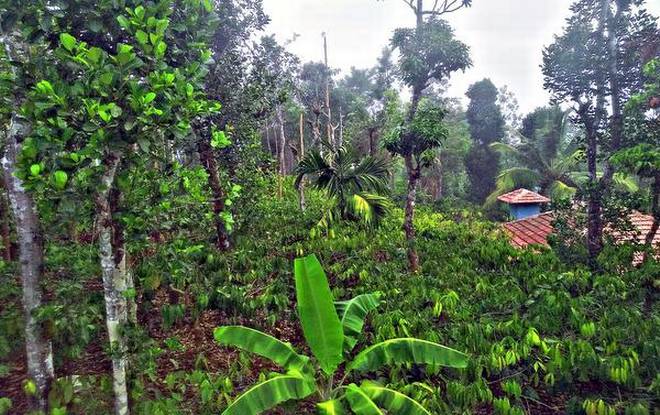
Native shade trees in coffee plantations vital for diversity, abundance of birds, says study

The joint study found bird species richness to be higher in shade coffee plantations that had 78 species than in open coffee plantations that had 55 species

‘Alteration of canopy, woody plant composition can influence pattern of functional composition of resident birds’

Verdant coffee and tea plantations are more than an ideal backdrop for photos; they support a thriving avian population. In a study that underscores the need to understand the patterns and drivers of bird species composition and diversity outside Protected Area (PA) networks to develop landscape-level conservation strategies, researchers found that they varied in differently-managed plantations.

The findings were the result of collaborative work by Kannur University, Kerala, Salim Ali Centre for Ornithology and Natural History, Coimbatore, Ashoka Trust for Research in Ecology and the Environment (ATREE), Bengaluru, and Ferns Nature Conservation Society, Wayanad. It was published in July 2021.

Focussing on the coffee plantations in the Western Ghats, which are an important agro-ecosystem and help maintain a significant portion of regional avian diversity, the researchers compared the composition and functional diversity of resident birds between shade and open coffee plantations.

They counted 3,846 birds of 87 species, and found species richness to be higher in shade (78 species) than in open coffee plantations (55 species). “Interestingly, 32 species were unique to shade and nine were unique to open coffee plantations, with 46 species found in both types of plantation. Species richness and abundance were higher in shade coffee,” the study says, adding that the results reveal that different farm management practices can affect functional bird richness and its abundance in coffee plantations. They have made a case for retaining shade-trees of native varieties in coffee plantations to support high functional diversity, richness, and abundance of birds in the coffee plantation of the Western Ghats.

The study, ‘Resident birds show different patterns in species composition and functional diversity in differently managed coffee plantations in the Western Ghats, India’, was published by the Ornithological Science journal in July 2021.

Speaking to The Hindu, Santhanakrishnan Babu, one of the authors, said the study was conducted between May and August, 2016, in the northern part of Wayanad district. “Wayanad is a major coffee producer, producing 90% of the Kerala’s coffee. Our study aimed to understand how resident birds respond to differently-managed coffee plantations – shade and open,” he said.

The Kerala government recently passed an order to chop all resident trees on private land except sandalwood. This will lead to extensive chopping of resident trees from the coffee plantations which will affect biodiversity, he added.

Another author Athira S. Variar and Mr. Babu said retaining shade trees of native varieties in coffee plantations is important for supporting high functional diversity, richness, and abundance of birds. “Shade plantations support several habitat specialists and range-restricted birds, and alteration of the canopy and woody plant composition can influence the pattern of the functional composition of resident birds. Since our study covered only one season, year-round study in these plantations may shed more light on the composition of resident, breeding and migratory bird species,” they said.

Conservation strategies

They have called for landscape-level conservation strategies. Author Anoop N.R. pointed out that the Forest Department has little authority over the plantations located outside forest areas, and trees in these plantations are increasingly being replaced with exotic trees such as Grevillea robusta. “To promote the protection of large native trees in coffee plantations, we recommend initiating programmes to provide financial incentives to private landowners. Education programmes will also help to improve community support for retaining texisting indigenous tree varieties and promote planting more of the same,” he recommended, adding that a framework needs to be developed with regard to which species can be planted and which must be maintained, or removed, from the plantations.

source: http://www.thehindu.com / The Hindu / Home> News> States> Karnataka / by K C Deepika / Bengaluru, October 04th, 2021

International Coffee Day observed at Raja Seat

Deputy Commissioner Charulata Somal sips coffee at Raja Seat on Friday, on the occasion of International Coffee Day

Deputy Commissioner Charulata Somal said that the International Coffee Day celebrated in Kodagu, highlights the hard work of coffee growers, which is behind the taste of coffee.

She was speaking during the International Coffee Day programme observed by Rotary Misty Hills, at Raja Seat, on Friday.

The deputy commissioner added, “I got to know about every detail of coffee cultivation after I was posted to Kodagu. The dedication and effort by coffee growers in producing the best quality of coffee is commendable.”

Rotary Misty Hills president Anitha Poovaiah said that more than 1,500 visitors at Raja Seat were served coffee on account of International Coffee Day.

Rotary Deputy Governor H T Anil said that the quantity of coffee powder used by a person in India is 4 to 5 kg per year whereas, in a foreign country, a person uses 15 kg of coffee powder annually.

Therefore, there is a need to increase the usage of coffee in India, he added.

Misty Hills project director Devanira Tilak also spoke on the occasion.

Madikeri CMC commissioner Ramdas, horticulture department deputy director Sridhar, senior assistant director Pramod, Coffee Board deputy director Shivakumar Swamy and others were present.

‘Coffee export’

Kodagu Mahila Coffee Jagruthi Sangha distributed free coffee at various places in Madikeri on account of International Coffee Day. 

The Coffee Day observed at Tadka House on Raja Seat Road was inaugurated by Kodava Samaja president K S Devaiah.

When the coffee industry was in distress women had started a unit to instil confidence in coffee growers in the district. The sangha has been promoting coffee consumption, said K S Devaiah.

Women have been actively engaged in managing coffee plantations and the industry. Kodagu’s coffee is known for its taste, he said. 

Kodagu Coffee Growers’ Cooperative Society president M B Devaiah said the society is the largest coffee cooperative in Asia.

It is now mulling about exporting coffee and requires financial assistance from the government for exports, he added. 

Advocate Pasura Preetham said the International Coffee Day is being observed since 2015. 

Dr Mohan Appaji said that the consumption of coffee by those above 40 years is good for health. 

Kodagu Mahila Coffee Jagruthi Sangha president Chitra Subbaiah, general secretary Anitha Nanda and others were present. 

source: http://www.deccanherald.com / Deccan Herald / Home> State> Mangaluru / by DHNS, Madikeri / October 01st, 2021

Centre to simplify Coffee Act to promote ease of doing biz

The issue was discussed, among other things, in an interaction of Commerce Minister Piyush Goyal with coffee growers, roasters, exporters and other stakeholders at Coffee Board Head Office, Bengaluru.

Commerce Minister Piyush Goyal. (File)

The government will relook at the coffee law to make it suitable as per the present needs of the sector and facilitate its growth, the commerce ministry said on Saturday.

The issue was discussed, among other things, in an interaction of Commerce Minister Piyush Goyal  with coffee growers, roasters, exporters and other stakeholders at Coffee Board Head Office, Bengaluru.

Coffee growers expressed concerns over losing their lands in view of the notices issued by banks under the Securitisation and Reconstruction of Financial Assets and Enforcement of Security Interest (SARFAESI) Act.

source: http://www.indianexpress.com / The Indian Express / Home> India / by ENS, Economic Bureau, New Delhi / September 19th, 2021

Drive detox #28States28Plates drive goes to Coorg

Moving our way right across the country towards the west, we go to Coorg from Bengaluru.

Day 22 of the #28States28Plates drive saw us leaving the hustle and bustle of Bengaluru city as we headed to a beautiful hilly region in Karnataka — Coorg. Also known as the Scotland of India, Coorg is famous for its coffee plantations, chilly climate and the amazing views.


There are three ways to get to Coorg from Bengaluru and because of our tight schedule, (the real reason was we just couldn’t wait to get there), we took the shortest route which passes through cities like Ramanagara (silk city) and Channapatna (city of toys). This highway is christened NH275, but the locals know it simply as Mysore road.

All the three routes from Bengaluru join-in at Mysore. It is to be noted that if you are taking the route we took, be ready to face a lot of diversions as some parts of this highway are still under construction.

After crossing Mysore, the road turned into a two-lane winding stretch of smooth tarmac with trees on both sides! It definitely was a sight to behold.

Now, our destination for the day was a town called Yevakapadi, situated in the hills of Coorg.

We reached there by lunchtime, at Bungalow 1934, where a friend of evo India, Amrith, had kindly invited us for lunch at his super famous estate — Bungalow 1934.

A place so pretty, a certain Gordon Ramsay chose to shoot his show Uncharted here!

We were in awe of the beautiful views from Amrith’s estate and just as we thought it couldn’t get better, Amrith set up a traditional Coorgi cuisine buffet for us. Pandi curry (pork stew), bamboo shoot curry, colocasia curry — a few of the dishes we enjoyed, along with a view to die for. To wash it all down was prepared-on-the-farm coffee liqueur and some bird’s eye chilli wine.

After that wonderful lunch, we headed to our abode for the night. King’s Cottage, a place situated just 15km from Amrith’s estate, but by the time we reached and rested for a bit, it was time for dinner time. So, the kind folks at King’s Cottage setup a much needed bonfire for us to enjoy our dinner. We were treated to simple but oh-so-delicious veg food with a view of the clouds, touched by bright moonlight, settling right in front of us in the valley. After chilling our bones to the cool blowing winds, we went straight to bed in our cozy little cottage.

This place was certainly a good detox from the city life and we loved it so much that we decided to take day 23 off for some rest.

Is Coorg a haven in the hills? We’d certainly say so!

Day 24 will see us reach the west coast of the country, Mangalore — via Kasargod.

source: http://www.evoindia.com / EvoIndia.com / Home/ by Team Evo India / August 22nd, 2021

Changes in rainfall pattern affects Arabica coffee variety in Karnataka’s Kodagu

While the price of Arabica variety has increased in the international market, many planters of Kodagu are reluctant to maintain this variety of the crop.

Arabica coffee plant (Photo| EPS)

Madikeri :

The changing rainfall and weather pattern in Kodagu is affecting the coffee plantations – especially the Arabica variety of coffee.

While the price of Arabica variety has increased in the international market, many planters of Kodagu are reluctant to maintain this variety of the crop due to the challenges faced following the changing weather patterns.

“Coffee growers in the district have faced immense losses since the past three years. And the Arabica variety of coffee has become unmanageable and a small coffee grower cannot sustain this crop anymore,” shared K Subbaiah, a coffee grower in Chettalli.

He had grown Arabica varieties of plants across eight acres of land and he explained, “I had taken up inter-cropping of Arabica and Robusta varieties across 11 acre. However, I have removed all the Arabica crops in the nearly eight acre estate as I am unable to sustain these crops.”

He shared that the untimely rains has resulted in the Arabica crops yielding beans way before the picking period. “The coffee beans have ripened during this August. How can one pick these beans in the rain and where can one dry these beans?” he questioned.

The Arabica variety normally bore ripened beans in the month of September and they were to be picked during November. However, the changing rain pattern has immensely affected the crop and like Subbaiah, many small coffee growers are removing the Arabica crop variety following immense losses, despite the hike in the price in the international market.  

Former vice president of Coffee Board, Dr Kaverappa shared that the Arabica variety is increasingly prone to black rot disease, resulting in its downfall. “Arabica variety is increasingly found in the North Kodagu belt. However, the untimely rains and floods have affected the crops. While there is an immense shortage of Arabic beans and demand for the same has increased in the international market, the production of Arabica variety is less in the district due to the challenges faced by the growers in marinating these varieties,” he explained.

He hoped for the government’s support to the coffee sector and said that insurance to coffee crops and reintroduction of subsidies to the machineries must be enabled to promote and support the sector.

source: http://www.newindianexpress.com / The New Indian Express / Home> States>Karnataka / by Pragna GR, Express News Service / August 29th, 2021

“Nearly 75% of sales from parts other than South India”: Rage Coffee founder Bharat Sethi

This week, Rage Coffee announced that it has raised $5 million in series A funding. A look at the company’s plans, including new launches, key markets and corporate tie-ups.

Bharat Sethi is the Delhi-based founder of Rage Coffee. He says that nearly 75% of the company's sales are from parts of the country other than South India.

Bharat Sethi is the Delhi-based founder of Rage Coffee. He says that nearly 75% of the company’s sales are from parts of the country other than South India.

Rage Coffee has seen growth zoom during the pandemic, as people confined to their homes ordered and drank more coffee . Earlier this week, the New Delhi-based FMCG coffee startup announced that it had raised $5 million as part of its A series funding round led by Sixth Sense Ventures. In April 2021, it had raised an undisclosed amount from investors led by Refex Capital.

The company, founded in 2018, targets millennials. Around 75% of its sales come through online channels, and the rest through the offline route. It sells instant coffee, ground coffee and cold brew bags of coffee in flavours like Irish hazelnut, crème caramel and mint mocha.

In an interview, Rage Coffee founder and CEO Bharat Sethi spoke about the company’s growth during the pandemic period, development of new products including filter coffee, potential tie-ups and strategy to expand abroad. Excerpts:

How has the pandemic affected sales? Is Rage Coffee’s growth continuing after the second wave?

When the pandemic began, we were well positioned with quality coffee products using arabica beans. With more people ordering online, we doubled our marketing efforts paving the way to leapfrog the growth. From 2020-21 we grew ten times. From April to August this year, we have seen three times growth so far.

We are expecting a revenue of Rs 35 crore this fiscal compared to Rs 5 crore last year. The annualised recurring return will be much higher, in the range of Rs 65-75 crore.

Usually, instant coffee makers use robusta coffee beans. Has using the costlier arabica beans helped you in the domestic market, which, apart from South India, prefers tea to coffee?

The market is changing with availability of good products. Nearly 75% of our sales are from parts of the country other than South India. From our research, we knew that caffeine kick and sensory aspects like taste and aroma are equally important for a coffee drinker. So, we decided to use arabica beans that provide good flavour and aroma.

Our products provide 90 to 120 mg of caffeine in a single serving, compared with 30 to 40 mg of many other instant coffees available in the market. It is comparable to high-end roasted coffee. We use crystallised freeze-drying process to preserve the aroma… We source coffee beans from Coorg and Chikmagalur, and from Ethiopia.

South India prefers filter coffee mostly. Considering that majority of your sales are from outside the region, do you have plans to offer filter coffee?

Yes, we are planning to launch it by the first week of September. It will be a blend of robusta and chicory with a dash of bitterness. We believe that if made in the right manner, it will have demand in the entire country. It will be our first robusta coffee product and one more addition to the ground coffee category.

What is the size of your institutional sales? Do you have corporate tie-ups?

Of our institutional sales, 80% goes to the hotel, restaurant and catering (Horeca) segment. We are exploring the possibility of tie-ups with corporates. In most cases, we can’t come to an agreement on the prices. Many organisations have coffee-vending machines, a segment we have not ventured into yet. But we have plans to enter the coffee equipment business later. However, our products find increasing use in corporate gifting.

Are you looking at associating with airlines or railways?

Yes, we are in talks with Spice Jet and Indian Railways. Pricing is the issue. But we think we can offer products cheaply with some changes. We need to change the packaging and weight without compromising on the quality of the product. We may have to use plastic packets, which could help avoid damage during shipment. We can cover the risk of lower margin through huge volumes. At present, the company uses natural materials for packaging.

Do you plan to expand outside the country?

We have presence in the US and in the UK in Europe. The instant coffee segment in the US is growing rapidly because of convenience aspect. We sell through Amazon and through independent retailers and specialty stores. Europe is not as big a coffee drinking nation as America.

We are also starting out in the Gulf region through the UAE.  The region has a mix of instant coffee and commercial coffee equipment drinkers. Instant coffee has a good market in Saudi Arabia, where we have signed up with a distributor, and are in the process of dispatching the consignment.

Any new products in the pipeline?

We are looking at coffee concentrates, chewables, snacking and supplement items. Right now, 75% of the coffee sales is controlled by a few multinationals. With some products we have and some we are planning to launch, we will be directly competing with them. We are also in the process of R&D for introducing new flavours.

source: http://www.moneycontrol.com / MoneyControl.com / Home> News> Trends> Features / by PK Krishnakumar / August 24th, 2021

Kerala workers shuttling daily by foot to Kodagu estates

Estate owners urged to discourage it over COVID-19 fears.

Amidst the growing fears of an impending third wave of pandemic, it has now come to light that workers from Kerala bordering Kutta village in Kodagu were being employed in coffee estates and are shuttling daily by foot for work.

The State government has made it mandatory for those coming into the State from Kerala to carry an RT-PCR negative report not older than 72 hours irrespective of whether the travellers were vaccinated – either first or both doses of vaccine.

When former Speaker and Virajpet MLA K.G. Bopaiah visited the checkpost at Kutta on Tuesday to oversee the COVID-19 surveillance at the border over a spike in cases in the neighbouring State, he came to know about workers belonging to a Kerala village bordering Kodagu coming daily to Kutta by foot to work in the estates.

Mr. Bopaiah advised the coffee estate owners to provide accommodation to the workers after complying with the guidelines in case they have emergency works in their plantations and would like to employ workers from Kerala.

As per the district administration’s order, persons from Kerala travelling daily to Kodagu must carry out COVID-19 test once in 15 days and always carry the RT-PCR negative report with them. It is not clear whether the employers were cross-checking the details while engaging them in their estates.

“The task force set up in each gram panchayat must look into all various aspects for controlling COVID-19 in the border villages. It must work on preventing daily commuting of workers from Kerala to the border estates. This can help prevent the COVID-19 spread,” he opined.

The staff roped in from various departments for work at the checkposts in Karike, Kutta, Makutta and Sampaje in Kodagu have been categorically told to ensure that no vehicle enters the State without the travellers producing valid RT-PCR negative report not older than 72 hours.

The district officials have been told to continue with the guidelines issued based on the test positivity rate which is currently below 5 per cent. If the TPR crosses 5 per cent, stricter measures were needed.

About 40-50 vehicles from Kerala cross the border at Kutta daily.

source: http:// www.thehindu.com / The Hindu / Home> News> States> Karnataka / by Special Correspondent / Mysuru – August 03rd, 2021

`Karnataka to play a critical role in increasing domestic consumption of coffee’

A file photo of a server collecting coffee from a container in a restaurant.   | Photo Credit: K. Murali Kumar

‘Nations should jointly combat issues in coffee sector’

Coffee growing countries, India, Brazil, and South Africa, should collaborate to combat common challenges they face such as global price volatility, high cost of production, and labour shortage, suggested International Coffee Organisation (ICO).

At the opening session of the two-day IBSA Coffee Festival on Wednesday, ICO executive director Jose Sette said India, Brazil, and South Africa had several opportunities to work together to address common issues they face in the coffee growing, processing, and marketing fronts.

India produced over 3,20,000 tonnes of green coffee in the last harvest season that ended in March 2021. Karnataka alone accounts for over 70% of the country’s total coffee production, with Kodagu, Chikkamagaluru, and Hassan districts being the State’s coffee heartlands.

Coffee Board chairman M.S. Boje Gowda said, “It is great that we are joining hands with the international coffee community to improve the coffee scene of India and this exercise means a lot for coffee farmers across the country, and especially for an army of them in Karnataka.”

Suresh K. Reddy, Ambassador of India in Brazil, said coffee production had increased 34% in that country in the last two decades although the area under production had only reduced. Indian coffee community had to adopt cost-effective growing techniques and yield enhancing practices from Brazil, he recommended.

“We are also looking forward to collaborating with Brazil in enhancing domestic consumption of coffee in India,” said Mr. Reddy. India’s per capita coffee consumption is around 200 grams while it is 6 kg in Brazil.

Mr. Reddy further said time had come for the commodity apex body, Coffee Board, to position itself as a holistic organisation for the overall development, promotion, and growth of Indian coffee.

Jaideep Sarkar, High Commissioner of India in South Africa, said under the free trade agreements of WTO regime, it was tough for individual governments to promote their own coffees beyond a point and therefore working together was the best option for the global coffee growing community.

Andre Aranha Correa do Lago, Ambassador of Brazil in New Delhi, said, India was beginning to see a lot of speciality coffee coming via exports and this would open up newer opportunities for coffee entrepreneurs in India to process, value add, and re-export.

“We want to be part of the growing India coffee story and IBSA is an ideal platform for a unique partnership between these coffee producing countries,” Mr. Lago added.

source: http://www.thehindu.com / The Hindu / Home> News> States> Karnataka / by Mini Tejaswi / Bengaluru – August 05th, 2021

White stem borer menace a nightmare for coffee growers

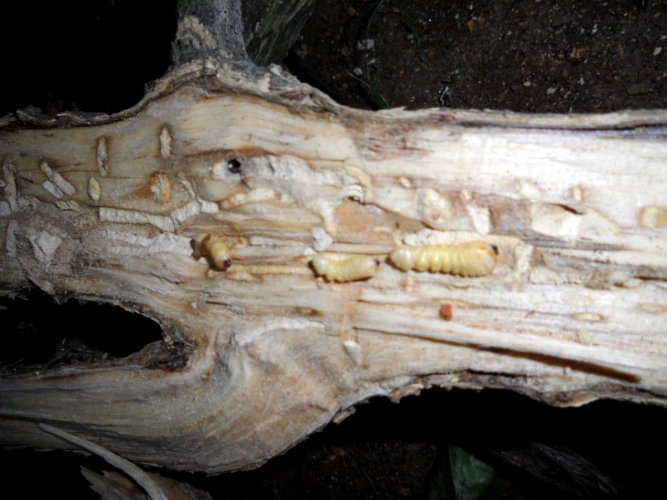
White stem borers destroying a coffee plant. Credit: DH Photo

Arabica and Robusta coffee varieties grown in Kodagu are known for their quality.

Robusta variety is grown mostly in Madikeri and Virajpet taluks, while Somwarpet is known for arabica coffee.

The weather of Somwarpet is the best suited for the arabica variety, say the growers.

However, there are a lot of challenges before arabica coffee growers, the major one being the infestation of white stem borer (Xylotrechus quadripes).

The adult borers feed on the stem of the coffee plant and lay eggs inside the stem. Their season of reproduction is the months of March and April. During this period, the stem borers lay eggs on all plants in the coffee plantation.

In Somwarpet taluk, coffee is grown on 28,540 hectares of land. Arabica coffee is grown on 22,940 hectares and robusta is grown on 5,600 hectares.

Many growers have been switching to robusta as arabica is infested by the white stem borer.

Fed up by the borer menace, the plantation owners themselves have been asking the workers to uproot the arabica coffee plants that were nurtured for many years.

A lack of proper control measures is also one of the main reason for the growers to destroy the plants.

The arabica variety of coffee requires more care as compared to robusta. Meanwhile, the labour cost and the production costs are increasing, among other expenses towards manure and fertilisers.

Adding to the problem, the market rate is also disappointing the farmers.

Control measures

Experts have come up with a technique to trap female borer, by using the artificial pheromones of male borer insects, say authorities of the coffee board.

B R Jayendra, a coffee planter from Bettadalli, said that the control measure of white borer is consuming a lot of time, in the existing methods available.

By the time the borers are controlled, almost all plants are destroyed. Effective control measures are needed to save arabica coffee.

Taluk Coffee Growers’ Association president Mohan Bopanna said that the coffee planters are going through difficult times.

Like the Kerala model, the Karnataka government too should announce support price for coffee growers. The loans of coffee growers who are facing difficulties should be waived, he added.

Another coffee planter S M D’Silva from Abburukatte said it is almost impossible to destroy the affected plants at a time.

The small grower will be hit hard if they destroy all coffee saplings in the plantation, he said.

source: http:///www.deccanherald.com / Deccan Herald / Home> State> Mangaluru / by DHNS, Somwarpet / June 28th, 2021