Growers agree not to bring workers to estates from other places until June 21 as a measure to control the spread of infection
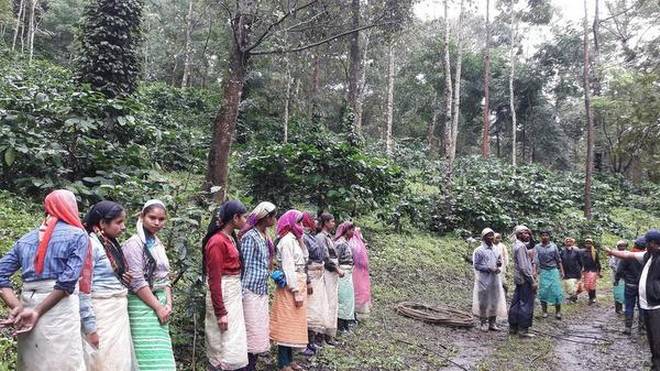
Coffee workers in Kodagu will soon get the jabs against COVID-19 with the authorities planning to launch vaccination drive in plantations for making the coffee land safe from the pandemic.
The support of large plantations and companies operating in the district has been sought for making it successful.
Former Speaker and MLA K.G. Bopaiah, who spoke about the vaccination plans, advised the owners of plantations not to use workers returning from COVID-19 Care Centres, after recovering from COVID-19, immediately for work in estates. They must be placed in quarantine for at least a week before redeployment.
“The owners must follow the guidelines and ensure control of the infection. Give priority for saving lives and health. The essential works in estates can be done using the locally available workers,” he said at a growers’ meeting in Madikeri on Thursday.
Various coffee growers’ associations in Kodagu have pledged support to the district administration for making Kodagu COVID-19 free even as the lockdown in the coffee land has been extended till June 21 based on its positivity rate.
The growers have resolved not to bring workers from other places for work in estates across Kodagu until June 21. It was decided to make use of the locally available workers.
Earlier, Mr .Bopaiah, who chaired the meeting, said COVID-19 was coming under control in Kodagu. However, there have been reports of infection being reported among workers coming here for work. “The estate owners must avoid bringing workers from other places for the time being. This measure can help us in fighting the pandemic effectively and preventing the spread,” he observed.
Mr. Bopaiah warned of seizing vehicles ferrying workers from other places.
The growers urged the former Speaker to take a delegation to New Delhi after the lockdown ends to highlight the plight of coffee growers and the difficulties faced by the industry.
source: http://www.thehindu.com / The Hindu / Home> News> States> Karnataka / by Special Correspondent / Mysuru – June 11th, 2021
File picture of people from Assam working in a coffee estate near Arehalli in Belur taluk of Hassan district.
Workers from the north-east have not returned, affecting seasonal work ahead of the rainy days
Hundreds of plantation workers in Karnataka, who went to Assam to vote in the Assembly elections held in March-April this year, have not returned, affecting the seasonal work ahead of the rainy days.
Restrictions on public transport as part of the lockdown over the COVID-19 pandemic has not allowed them to travel, though they wish to come back.
Thousands of people from Assam and other neighbouring States in north-east India work in coffee estates of Hassan, Chikkamagaluru and Kodagu districts. They stay in the quarters provided by the planters and visit their native places once a year. Whenever elections are held, they take a break from work and travel to exercise their franchise.
Mahesh C.S., former president of Hassan District Planters’ Association, says many planters had not been able to complete tree pruning and plant pruning, mandatory seasonal work ahead of the rains. “Normally, we finish this work before June and keep the ground prepared with medicinal spray and manure. All these works have remained undone,” he said. Planters are forced to depend on local workers, who demand higher wages and work for fewer hours than the Assam workers do, he added. The wages for tree pruning, a skilled job, is around ₹700 to ₹800 a day. For other works, a worker gets around ₹300 to ₹350 in normal circumstances.
B.S. Jairam, former president of Karnataka Growers Federation, who has an estate in Mudigere Ttluk, is worried that the present situation could affect the production of coffee later this year. “The planters are already facing too many problems due to the pandemic. The payments are stuck due to restrictions on shipment and many have not recovered from the loss suffered in the floods in previous years. Only those who could retain workers in their quarters with sufficient supply of ration have completed the seasonal work”, he said.
Over the years local workers hardly stay in estate quarters. They reside in their villages and commute to estates daily by vehicles. But now they cannot do so as there are restrictions on vehicular movement “The police do not allow ferrying workers to estates. Only those settled in the nearby areas reach to the estates by walk and work,” he said.
Besides the people from Assam, many from the north Karnataka districts also work in the estates. They also return to their native places during March-April. This year they too could not return. Prasad Raxidi, a planter at Raxidi in Sakleshpur taluk, said the local workers were getting work and also good pay these days. “Only those who have returned from bigger cities after losing their jobs in the lockdown are not getting jobs that suit them,” he said.
source: http://www.thehindu.com / The Hindu / Home> News> States> Karnataka / by Sathish G T / Hassan – June 10th, 2021
The company is eyeing the Rs 100 crore artisanal coffee market.
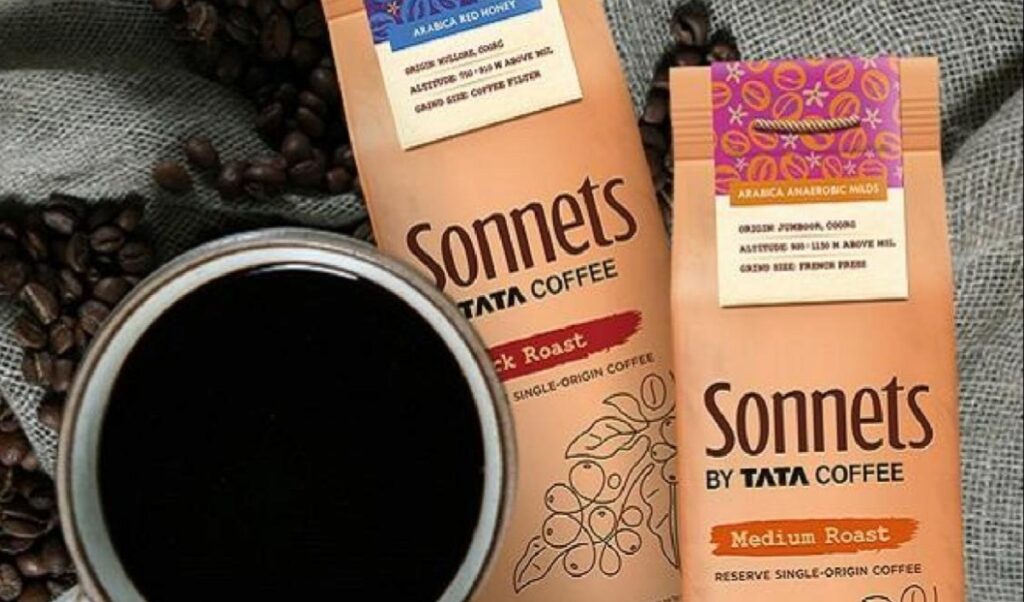
Tata Consumer Products Ltd (TCPL) has introduced a premium roasted and ground coffee under the Sonnets brand targeting urban and increasingly discerning coffee drinkers in India. With this launch, the company is eyeing the Rs 100 crore artisanal coffee market .
The TCPL’s move marks its maiden foray into the Direct-to-Consumer (D2C) market. It will let the company tap a growing number of buyers shopping online, especially during the pandemic when most are cooped indoors and unable to visit cafes and coffee shops.
Puneet Das, President, Packaged Beverages, India & South Asia, Tata Consumer Products Limited, said, “The user can choose the roasting level, grounding and flavors of the coffee which gets delivered to the doorstep of the customer via our delivery channels. We are leveraging both premiumization and home delivery trends through this launch.”
The coffee is produced in Tata Coffee-owned estates. The consumer can choose his preferred roast type from between a light, medium, and a dark roast option, and could also suit his brewing preference and opt for either a filter coffee or a French press grind.
Tata Consumer Products will be expanding the offering to gourmet stores in metro cities as it scales up in the segment.
“Our ambition is to be seen as a serious coffee player just like we have equity in the market with Tata Tea. We aim to have a sizable share in the market as we grow,” Das added.
As the coffee culture evolves, the company will also evaluate new coffee variants like green coffee in India.
source: http://www.indianretailer.com / The Indian Retailer / Home> News / by Vaishnavi Gupta, Features Writer / June 03rd, 2021
Launched 3 years ago, Levista is eyeing expansion in south India, Mumbai and Delhi
S. Shriram, vice-president-sales and marketing at Levista
Coorg in Karnataka, is among the foremost coffee growing regions in India. SLN, a three-decade old coffee plantation company in the region is now aiming to grab a slice of the Rs 2,200-crore annual packaged coffee market, which is dominated by big players like Nestle (Nescafe), Hindustan Unilever (Bru) and Tata Coffee.
SLN launched its own brand of coffee called Levista three years ago and has ever since expanded to 40,000 retail outlets, predominantly in Tamil Nadu and Karnataka. It has now set its sights on expanding across other markets, starting with the rest of south India.
“Of the Rs 2,200 crore market annually, over 80 per cent of the coffee consumption happens in the five southern states and Union territories. Therefore, we aim to reach a significant market share here rather than being sparsely spread all over the place,” S. Shriram, vice-president sales and marketing at Levista, told THE WEEK.
“At the moment, we have a deep presence in Tamil Nadu and Karnataka. We launched our coffee in Goa in February and business is growing steadily. We will be entering the Andhra Pradesh and Telangana market by Sankranti and will penetrate deeper in there. Kerala will follow next.”
The company has the markets of Mumbai and Delhi-National Capital Region on the radar, too, however, it has not finalised a launch date yet, added Shriram.
Levista is also available on online platforms, including Amazon and it is also scaling up on other e-commerce platforms to reach a wider audience.
“Players like Big Basket have also aided our brand coverage, as has Flipkart. We have been recently on boarded through Udaan that reaches small retailers as well as hyperlocal players MilkBasket,” said Shriram.
While south India has a strong tradition of filter coffee, the rest of the country has largely been a tea drinking market. However, things have started changing with penetration of cafes like Cafe Coffee Day and Starbucks in the last decade. International coffee brands like Lavazza are also expanding in the country, buoyed by rising coffee consumption here.
“There is a huge scope for us to grow. The coffee market has been growing steadily. Out of home coffee consumption through cafes has already hit a pan-India presence and thanks to this familiarity, more new consumers are sipping coffee at home, through packaged coffee,” noted Shriram.
Levista’s parent SLN currently has a capacity upwards of 50,000 metric tonne per annum, and Shriram says the company will be able to produce enough coffee for the domestic market as well as for exports.
Talking of exports, the brand is already present in Singapore, Malaysia, Middle East, Maldives and Sri Lanka, reaching out to the south Indian consumers in these markets. The company intends to have a larger international presence next year, added Shriram.
source: http://www.theweek.in / The Week / Home> News> Business / by Nachiket Kelkar / November 20th, 2020
With temperatures rising and pests proliferating, Indian coffee growers are fighting challenges beyond their control.
Unpredictable rise in temperatures followed by an uncertain monsoon cycle has gradually started taking a toll on coffee yields. (Chevanon Photography, Pexels)
Coffee is the first thing I see, smell and taste in the day. But as caffeine-junkies like you or me ride the wave of premium specialty brews, we need to pay attention to growers across major regions in India, such as Karnataka, Kerala and Tamil Nadu, who are battling a host of challenges due to a changing climate.
As spring transitions to summer, the pattern of unpredictable rise in temperatures followed by an uncertain monsoon cycle has gradually started taking a toll on yields and impacting the livelihood of coffee farmers.
Bengaluru based Tej Thammaiah, a co-founder of Maverick & Farmer Coffee Roasters and third-generation coffee farmer, says his team of growers on the 150-acre estate have meticulously documented the cultivation process to pinpoint the impact of increasing temperatures over the last decade. The mild, aromatic Arabica plant with its nuanced flavours, second only to Robusta in production volume in India, is highly susceptible to even the slightest change in climate. As temperatures increase, it hastens fruit ripening, leading to a loss in the overall quality of beans.
To fight this temperature change at estates such as Pollibetta in Coorg, his growers strive to find plots at higher, cooler elevations. But in this new environment, the finicky coffee fruit typically takes longer to mature. Moreover, changing plot locations is not a sustainable solution since coffee fruits in India are grown primarily in “shady” conditions, under a canopy of trees. And deforestation and logging is taking a toll everywhere.
It gets worse: When plants aren’t grown in ideal conditions, it leaves them more vulnerable to pests and diseases. Sunalini Menon, president of a coffee grading and training institute called Coffeelab in Bengaluru, mentions that a beetle known as white stem borer has been particularly harmful, spreading through India and Sri Lanka. It prefers plants exposed to sunlight and after burrowing in hard wood and roots as a larva, it hatches and feeds off the plant, destroying the woody tissue, leading to stems wilting and leaves yellowing. The beetle seems to have a particular liking for Arabica.
Not all hope is lost, though. Menon says India was one of the first countries to battle another infamous dweller, a fungus known as leaf rust, at the Mysore Coffee Experimental Station established by the British in 1925 at Chikmagalur, Karnataka. Known as the Central Coffee Research Institute, this research centre now run by the Coffee Board of India is researching and guiding growers on pest control, as well as initiatives such as diversifying shade patterns with local balsa and cedar trees and introducing new varietals of Arabica and Robust suited for tropical growth.
But she does believe it’s important to let go of the hesitancy to uproot plants. Farmers, perhaps for cultural reasons, have typically been hesitant to replant their land though research suggests that shorter plant life-cycles increase quantity, improve bean quality and even give growers some reprieve from emerging pests and diseases.
Ultimately, however, no practice can replace the tedious, time-consuming process of screening crops regularly. A task which falls squarely on growers.
Some shift to growing other crops. Those who stick it out, especially in smaller estates, need more support–in the form of agritourism, research on new techniques, investment in weather stations or, simply, from consumers.
If that doesn’t happen, we may in time find it increasingly difficult to get that morning fix.
For those new to coffee: Thammaiah suggests Selection 795 or Cauvery to taste domestic Arabicas (while we still can).
Nightcap is a column on beverages by Varud Gupta, author of Bhagwaan Ke Pakwaan and Chhotu. @varudgupta
source: http://www.lifestyle.livemint.com / Live Mint / Home> Mint Lounge> Food / by Varun Gupta / April 26th, 2021
Who on earth would like to miss a morning cup of hot steaming coffee?
Climate change could make about 50-88% of coffee-producing areas unsuitable and lead to an increase in pests and diseases, affecting its production and quality. There is an urgent need for research to save the bean from extinction.
Who on earth would like to miss a morning cup of hot steaming coffee? Coffee is becoming more popular, especially among the young around the world. Around 2.5 billion cups of coffee are consumed every day. The demand for coffee is projected to by 2050. But the question is: Can coffee supply be sustained?
Coffee is produced in around 70 countries but the dominant among them are Brazil, Vietnam, Columbia, Indonesia, Ethiopia, Honduras and India. Coffee is also the second-most traded commodity after petroleum oil, employing over 125 million people around the world. Most of the coffee grown is made up of two types: Coffea arabica and Coffea robusta, with the former making up 70% of all coffee grown globally.
In India, robusta dominates in terms of production. Karnataka is the dominant state producing coffee in India, accounting for nearly 70% of the total production, followed by Kerala. Together, they account for about 90% of the production. In India, the area under coffee cultivation is 4,16,741 hectares (ha). There are 3,79,697 coffee holdings, out of which most are smallholdings of less than 10 ha in size.
Weather and long-term climate patterns are very critical for growing coffee. Temperature and rainfall conditions are the main drivers determining the yield, production and quality. Altitude is another key factor. Robusta is slightly hardier, as it evolved in lowland equatorial Africa, but grows well in areas with abundant rainfall, which should be well distributed. The optimum temperature range for robusta is 24 to 30°C, but it is less tolerant to very high or very low temperatures. Currently, the annual and seasonal temperature and rainfall variability lead to fluctuations in yield in almost all coffee-growing countries, affecting supply and price.
Climate change is projected to impact all crops, including plantation crops. Changing climate and associated pest and diseases could adversely impact coffee-growing areas. Higher temperatures will not only favour the proliferation of certain pests and diseases but also kill large swaths of insects that pollinate coffee plants. As temperature rises, coffee ripens more quickly, leading to a fall in quality. Rising temperature is expected to make some areas less suitable or completely unsuitable for coffee cultivation.
A recent review of studies in 2020 concluded that all studies based on modelling predict that areas suitable for coffee cultivation could decline by about 50% under moderate climate change projection scenarios by 2050 for both arabica and robusta. Another study published in the journal Proceedings of the National Academy of Sciences concludes that the area unsuitable for coffee cultivation could be as high as 88% in Latin America, the dominant producer, by 2050. About half of the land around the world currently used to produce high-quality coffee could be unproductive by 2050, according to a recent study in the journal Climatic Change.
Thus, multiple studies show that climate change will have an extremely negative effect on future coffee production worldwide in terms of suitable cultivation areas, pest and diseases. Howard Schultz, who was the chairman of Starbucks — the largest global coffee chain — till 2017, is quoted to have said, “Climate change is going to play a bigger role in affecting the quality and integrity of the coffee.”
Coffee is a globally traded product and any impact on it in one part of the world will impact the rest, including India. International prices will determine the investment, income and survival of Indian coffee growers. If there is surplus production in Brazil and Columbia, prices in the international market will collapse. This will lead to a decline in market prices for Indian coffee, due to which farmers will experience heavy losses.
Research in India
There is limited research on the impact of climate change on coffee production in India. There are two ways the impact can be assessed: first, by long-term monitoring of changing climate and response of coffee production, which may take decades.
Modelling is another option to project the impact of climate change. There is limited modelling efforts globally and in India, in particular. With the current knowledge, one can conclude that climate change will have serious implications for coffee production and quality. We may have to brace for the disrupted supply of coffee and loss of aroma. According to climate change models, an increase of 20% to 25% in monsoon rainfall is projected for the Western Ghats districts of Karnataka and Kerala, along with the increased occurrence of high-intensity rainfall events. Further, increased warming of around 2 degrees Celsius is projected by the mid-2030s for these districts.
India has a Central Coffee Research Institute under the Coffee Board. Research on developing climate-resilient coffee varieties and cultivation practices would require several years or decades. Further, there is a need for extension service to train farmers in new practices, especially since a majority are smallholdings. In the meantime, coffee growers may need increased protection, price and insurance support from the Government of India and Karnataka.
In response to the risk of climate change on coffee, a global alliance of companies has been formed (‘Coffee and Climate’) with an objective to develop and implement coping strategies and to support smallholders to adapt to climate change, and ultimately to increase the resilience of entire coffee landscapes. Even Starbucks is conducting dedicated research and training of coffee growers in adaptation to climate change. Hope the Coffee Board also takes serious note of the threat of climate change and implement strategies to develop resilient varieties and practices, not only to help coffee growers sustain production, but also to ensure that hundreds of millions of coffee lovers continue to enjoy their morning cup.
(The writer is a retired professor, Indian Institute of Science, Bengaluru)
source: http://www.deccanherald.com / Deccan Herald / Home> Opinion> Perspective / by N H Ravindranath / April 22nd, 2021
Fermentation techniques that involve anything from fruits to alcohol are giving the brew a new high.
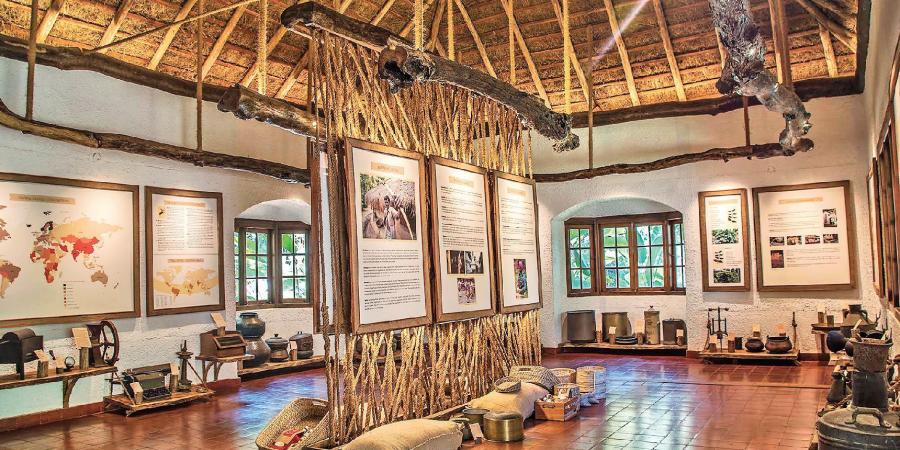
If you want to educate yourself on all things coffee, a visit to Sidapur Coffee and Culture Museum at Evolve Back in Coorg, will take you on a journey of discoveries.
From whisky barrel-aged coffee to fruit-fermented beans and innovative experiments in farming, fermentation and drying the fourth wave of coffee is set to spring a surprise. The brew is going artisanal. There is an increased focus on how it is grown, nurtured, processed as well as how it is being roasted. Sunalini Menon, Asia’s first woman professional coffee taster, and President, Coffeelab Ltd, Bengaluru, says: “Artisanal coffees are unique in taste and are always available in micro quantities.”
Such coffees are identified with sustainable practices in cultivation and prepared with care, precision and high-quality roasting.” Something like this is happening at Baarbara Estate, currently managed by the fourth generation of coffee growers from Chikmagalur, Karnataka.
Through their brand The Caffeine Baar, they are seeking to serve many coffee explorations to enthusiasts. Poojya Prasad, the co-founder, says, “We have worked on a unique fermentation process involving pineapple, which has given good results. To start with, pulped coffee beans are mixed with pineapple for a select number of hours.
The natural juices and the skin of pineapple, ferment the coffee beans. This process is monitored in a controlled environment. Once it’s complete, the mixture is dried on raised beds over several days. The coffee is monitored at each interval, resulting in batches with varying depths and notes of flavours.” Roasters are having a field day. Take for instance, Maverick and Farmer Coffee Roasters, who have introduced new coffees that unlock more than what species, terroir or roasting can offer.
By intervening in the growing, processing, drying, blending and roasting stages of coffee (without any artificial additions), the endeavour is to explore different kind of tasting notes Indian coffee can offer. “We work on micro-lot coffees,” says Ashish D’ábreo, the founder-partner at Maverick and Farmer Coffee Roasters. Last year, they began work with fermentation and used ingredients such as fruit, yeasts, and cultured bacteria for the fermentation process. Abdul Sahid Khan, the training manager at Lavazza Training Center, India, adds, “Being passionately connected between coffee products and a need for eco-consciousness, have coffee roasters sourcing whole beans in small batches through direct and fair trade.
Many of the coffee roasters and importers today partner with handpicked farmers, and even reinvest into the farmer family’s land/business.” Research is at the cornerstone of these innovations. Located in Sakleshpur in Karnataka, Harley Estate, an extension of Harley Plantation Research Institute (HPRI), Asia’s first private research facility dedicated to coffee, is a lab where coffee-related experimentation goes on round the year. The purpose is to improve plantation management techniques and develop unique processing methods.
“We have, over the last couple of years, created over 50 processing methods, each bringing out different aspects of the coffee. We also conduct educative sessions for those who are in the coffee business,” says Chandini D Purnesh, Director, Classic Coffees. Coffee also has a health angle that is often overlooked.
Green coffee, for instance, is different from regular coffee and is the natural unroasted form of Arabica Coffee grains, said to have three times more antioxidants and lesser caffeine compared to black coffee.
“It boosts metabolism and provides support and strength to achieve health and fitness goals, that serve you in the long-term,” says Amit Tyagi, Founder and CEO, Neuherbs India. So the next time you sip on a cup of coffee, don’t forget that the long journey of the bean to cup has had several turns and twists to create that perfect flavour you love.
Sidapur Coffee and Culture Museum “If you want to educate yourself on all things coffee, a visit to Sidapur Coffee and Culture Museum at Evolve Back in Chikkana Halli Estate, Coorg, will take you on a journey of fascinating discoveries. The museum has different sections that talk of the story of the founding Ramapuram family, the history of coffee in Coorg, how coffee is cultivated globally and how to brew the perfect cup of coffee. This also features the culture of Coorg and its close association with coffee cultivation. Our hugely popular programme, Coffeeology, is a daily live session on the art and science of gourmet coffee, where visitors can observe and experience the making of an assortment of coffee preparations from around the world.” Jose T Ramapuram, Executive Director, Evolve Back
source: http://www.newindianexpress.com / The New Indian Express / Home> Lifestyle> Food / by Bindu Gopal Rao / Express News Service / March 07th, 2021
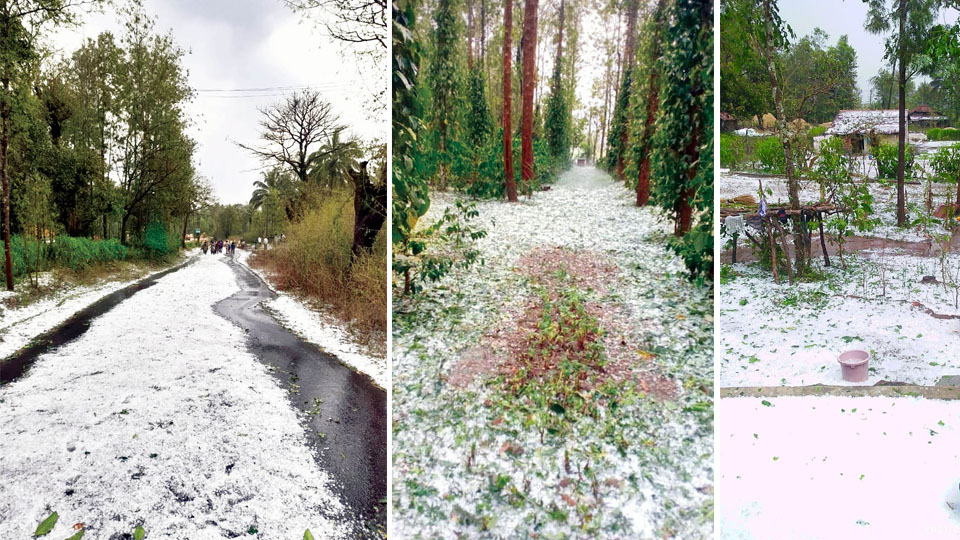
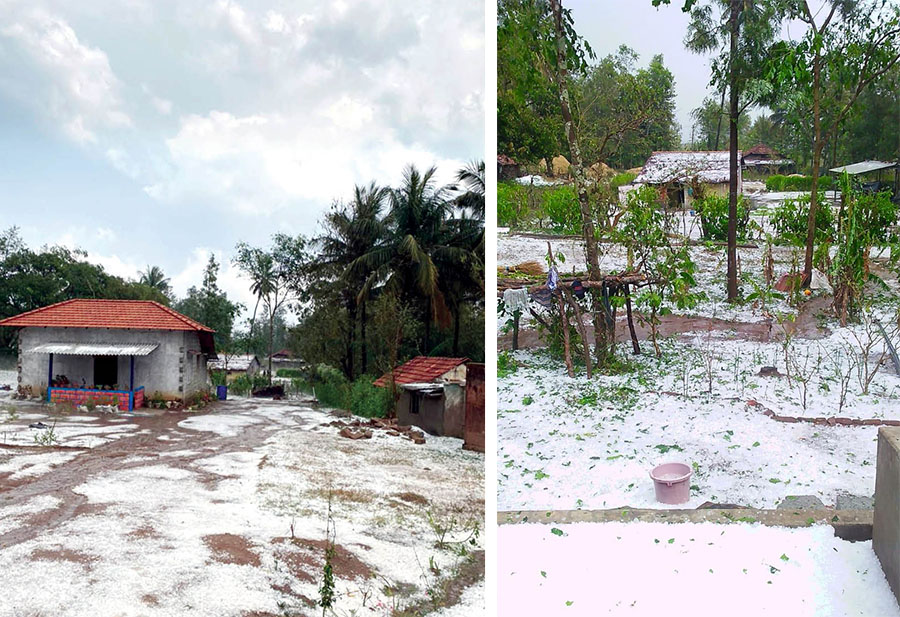
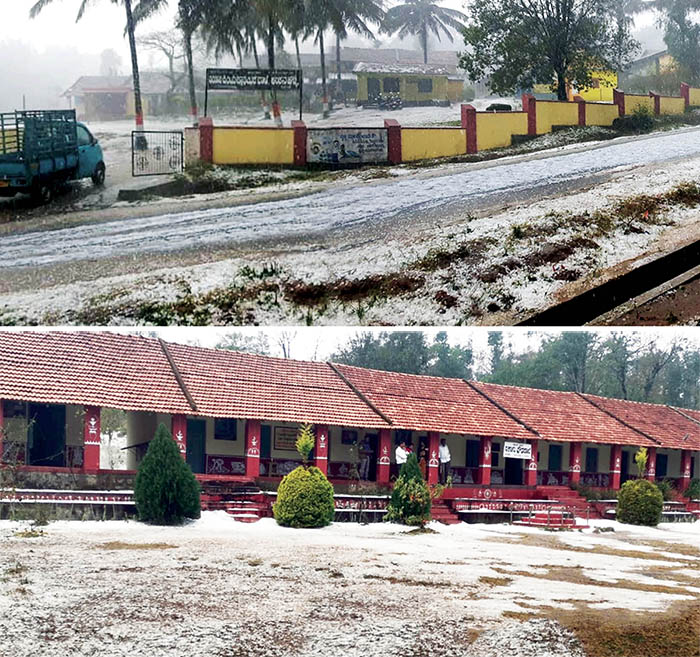
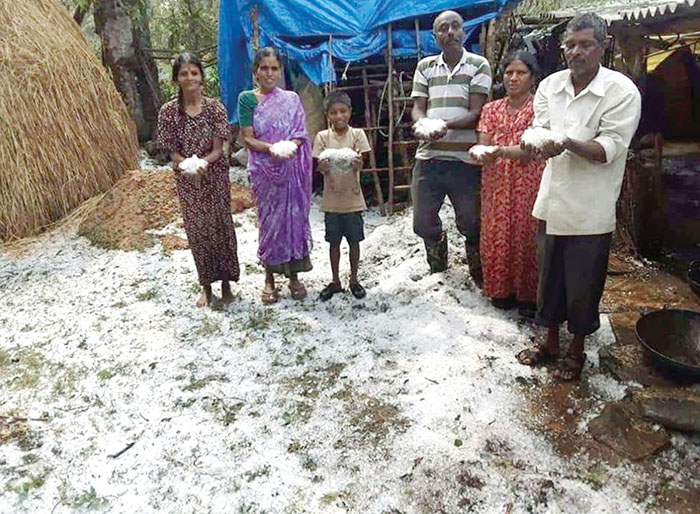
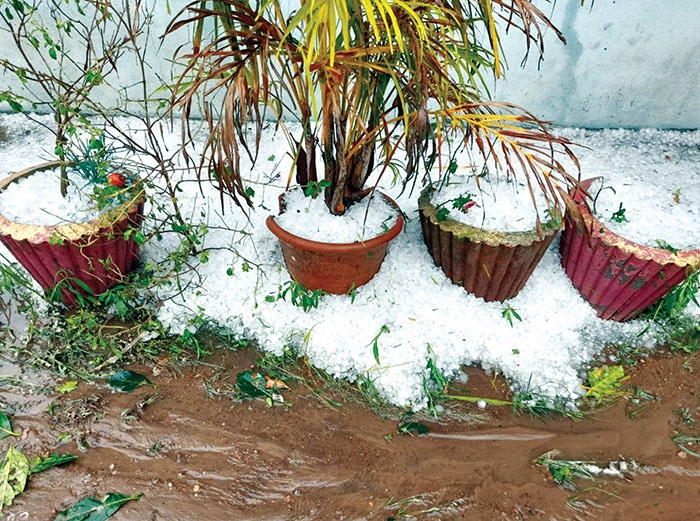
Parts of North Kodagu were swathed in a white carpet yesterday with ice left behind after a hailstorm.
Heavy rains and hailstorms lashed villages of Nidtha, Ankanahalli, Mullooru, Dundalli, Doddalli and Gudugalale near Shanivarsanthe of Somwarpet taluk in Kodagu district yesterday, taking residents by surprise. In Chamarajanagar too it rained hail last evening, throwing traffic out of gear.
In Kodagu, due to rain of hail, villages resembled snowing Kashmir plains. Children and women cheered the hail storm and they rushed outside homes to fistfuls of hailstones. Photos and videos of the hail went viral, inviting reactions of awe and delight in social media.
While the hail rain looked attractive with white carpet spread and with visuals of people holding the hailstones in their hands, it worried the farmers and coffee growers of Kodagu as this is the season of coffee blossoms and if it rained hail, it would damage the flowers resulting in low-yield next year. The growers are already tormented by unseasonal rains and, lack of support from the Government and less pricing for coffee.
Heaps of hailstones were found on the roads, coffee estates, roof of the houses and coconut plantations. The Ankanahalli Government School and a veterinary clinic were covered with hailstones. Along with hailstones and rains, the gusty winds also damaged the standing crops including coffee, paddy, green chilli, mango and arecanut in the district as there is high moisture content. This also will dent the product quality.
As the weatherman has predicted rains for two or three more days, coffee growers have said that due to rain, ripe coffee berries have fallen onto the ground and the drying process has been affected as it rained in the second and third week of January — a crucial month for drying. The rains also resulted in early flowering before the annual harvest, they said.
Ice formation in static clouds
Giving a scientific perspective to the hailstorm, former Deputy Director General of Geological Survey of India (GSI) told Star of Mysore this morning that though the hailstorm looks beautiful with white ice cubes all over, it is bound to cause major damage to standing crops.
“There was a dip in the temperature in January this year and the average temperature ranged between 12 to 13 degrees Celsius. And there was no cloud movement for more than 15 to 20 days after the cold spell. This caused ice to form in the static clouds and now due to rise in temperature and Rathasapthami, the ice has melted and it has resulted in the rain of hail. While in Kodagu small white ice cubes fell onto the ground, in Telangana and Andhra Pradesh large cubes even weighing about 500 grams fell from above,” he explained.
The Kodagu District Administration must send a team to the affected villages and assess the damage that will be severe. Farmers and growers are entitled for Government compensation, he added.
The Karnataka State Natural Disaster Monitoring Centre (KSNDMC) has predicted scattered to widespread light to moderate rains with isolated heavy rains likely over South interior Karnataka and Malnad districts and isolated to scattered very light to light rains likely over Coastal and North interior Karnataka districts for three more days.
The rains are a result of a weather system — a trough in Arabian Sea from Kerala to Gujarat coast. The weather system which was over Vidarbha as a cyclonic circulation has now shifted towards Madhya Maharashtra and adjoining areas. A trough is also extending from this cyclonic circulation to Kerala. These two weather systems — resulting low level moisture feed from Bay of Bengal in the form of South-easterly winds and humid winds from Arabian Sea at a height of three kilometres — are causing rains and hailstorms, says weatherman.
source: http://www.starofmysore.com / Star of Mysore / Home> News / February 21st, 2021
Ex-banker Soomanna Mandepanda and his wife, Puja Soomanna set up their startup Humblebean in 2017 to ensure better prices and reach for small coffee farmers and improve every part of the value chain.
For former banker Soomanna Mandepanda, the motivation for setting up Humblebean was not just to sell the best coffees, but more importantly, uplift the small and medium Indian farmers who grow them.
In the process, he is trying to bring about changes at almost each stage of the business — from cultivation and supply chain to research and education.
Founded in 2017 by Soomanna and his wife and former Yahoo executive Puja Soomanna, Bengaluru-based Humblebean works on an omnichannel model: It ties up with small coffee farmers in south India, roasts and grounds supply, provides the beans to roasters, exports its products, operates brew bars, and has an online presence.
A responsible way to grow coffee
The coffee drinking experience has been gaining traction in India, with the market for the brew expected to record a compound annual growth rate of 7.2 percent during 2021-25, according to a January 2021 Statista report.
Startups including Sleepy Owl, The Flying Squirrel, and Coffeeza, as well as shops such as Third Wave Coffee Roasters are making their presence felt in the market.
India is the world’s sixth-largest producer of coffee and fifth in terms of exports; in fact, 70 percent of its production is exported, says a January 2021 report by the India Brand Equity Foundation. Yet, Soomanna says, “a lot of small and medium farmers and farms aren’t getting the kind of business and reach they should” .
Soomanna would know: he spent most of his childhood on the coffee estates of Coorg and was a small farmer before moving to the world of finance and banking for 13 years. One way to correct the imbalance, he says, is by “making great biodiverse coffee that farms in India are already poised to do”.
According to him, 80-90 percent of coffee farms in India are held by small and medium farmers, whose secondary income comes from crops such as jackfruit, avocado, pepper, and orange that are part of the same farms.
Cultivating other crops alongside coffee “ensures automatic carbon sequestration, top soil replenishment, and lesser need to feed chemicals unlike commercial crops grown in other countries”, says Soomanna. “The mining of the minerals is automatic and you become carbon neutral.”
Puja Soomanna
Advocating farmer-friendly norms
Increasingly popular among young consumers are organic, speciality, and Rainforest Alliance coffees that respectively employ natural methods of cultivation dispensing with harmful chemicals, are of the highest grade being derived from a single origin or single estate and protect the environment as well as worker rights.
However, in India these certified varieties are grown largely on rich estates; most small and medium farmers cannot afford the costly certifications and grades.
Coffee cultivation and the business are still quite unorganised in India, the certifications cost a lot of money, and need constant follow-ups, says Soomanna. “The norms are difficult to adhere to for most small farmers. It is a replication of an American model.”
___________________
He says most large corporations in India export to Europe. “The small companies in Hassan, Chikmagalur, etc. certify about 150 estates and add the tags. But the farmer doesn’t get the price because the better prices are still being fetched with the local trader. The local traders are important, but the real traceability is lost.”
As farmers don’t get better prices, there is little driving them to improve their produce, he says. “Speciality coffee is something few farmers can afford to grow.”
Hence, the need to bring in farmer-friendly rules, he says.
The Humblebean coffee
Promoting social value investing
Given the largely unorganised state of affairs, Humblebean focused on getting farmers on board. The team collected random samples, tasted them, and guided farmers on growing the beans in a better way.
By 2018, the team had got 50-60 farmers on board and given them assessment reports free of cost. Until then, the startup was in its pre-revenue stages, bootstrapped with funds from family and friends.
The team then focused on getting roasters to directly buy from farmers. For this, it adopted the idea of social value investing, in which everyone who is part of the value chain comes together to solve a problem and there is money in it for all.
__________________
“Once we got the farmers on board, we decided to tie up with brands and introduce them to the new portfolios of coffees,” says Soomanna. “We incubated close to four different brands in India from scratch to start a unique brand with a different blend. The idea was to bring in multiple partnerships and inclusiveness in the farming community on one platform.”
Most of the speciality coffee firms have restricted names and types of beans grown on particular estates. “The idea is to bring in more brands that can access different estates, work with them, and encourage the farmers,” says Soomanna.
Humblebean also fulfils the complete roast and ground process for such brands and even gives them a credit facility, he says.
Quality comes with education
Towards the end of 2018 and early 2019, the Humblebean team found that coffees served at most star hotels weren’t up to the mark.
One of the reasons for this, Soomanna says, is that coffee as education is lacking in hotel management schools: one has to go to Italy to learn more about its nuances. The Coffee Board of India mostly takes care of the functionality, he says.
_________________
“We met a few management schools and after some discussions it was decided that the colleges would look at it as part of the curriculum,” says Soomanna.
Brewing innovative Indian blends
Even as Humblebean works to improve every part of the value chain, it is trying to offer consumers a very Indian coffee drinking experience.
To that end, the startup opened its first Brew Bar in the food experience section of a workspace on Bengaluru’s Residency Road in 2019. Humblebean was one of the early members of that workspace set up by a Singapore-based company.
Puja, who conceptualised Brew Bar, spent time innovating the blends with the use of Indian robustas.
“We don’t serve a single cup of speciality coffee; we wanted to make sure through the brewing methods can small and medium farmers come into mainstream brewing?” says Soomanna.
______________
He says these Indian blends “aren’t being used by a single new-age speciality coffee company” as they are considered “harsh and used as a filler across the world. But they are unique and you need great expertise and experience to make a robusta out of them”.
Following research and development, the startup has also come up with its own set of products. Together with B2B partners, it has launched these products online and will soon sell them at other marketplaces. The range is priced at Rs 220-350 for 250 gm for limited editions and depending on the roast.
“Indian coffees can have a global impact,” says Soomanna. “The idea is to be farmer-friendly and also not cause too much environmental damage. We want to bring an amazing cup of coffee from the farms the way it should be drunk.”
Edited by Lena Saha
source: http://www.yourstory.com / YourStory / Home> Start Up / by Sindhu Kashyap / February 07th, 2021
Karnataka Growers’ Federation has appealed to the State government to provide minimum support price for coffee, considering the loss coffee growers suffered in the last one year.
KGF president H.T. Mohan Kumar and secretary K.B. Krishnappa, in a press release issued here on Thursday, said that coffee growers had been in financial distress as nearly 50 pc of the yield from coffee and pepper farms was lost due to untimely rains in January. The growers were not in a position to harvest the remaining yield due to non-availability of workers. The officers of Agriculture, Horticulture and Revenue Departments had been doing survey to assess the loss suffered.
“Considering the plight of the growers, neighbouring Kerala government has initiated measures to provide minimum support price for coffee. Similarly, Karnataka government should come forward to the rescue of the growers in Chikkamagaluru, Hassan and Kodagu districts”, the Federation said.
Referring to Dr.M.S.Swaminathan’s report, it demanded MSP at the rate of 1.5 times of the production cost. The State government should take a decision on this in the coming budget, it said.
source: http://www.thehindu.com / The Hindu / Home> News> States> Karnataka / by Special Correspondent / Hassan – January 28th, 2021
WELCOME. If you like what you see "SUBSCRIBE via EMAIL" to receive FREE regular UPDATES.
Read More »