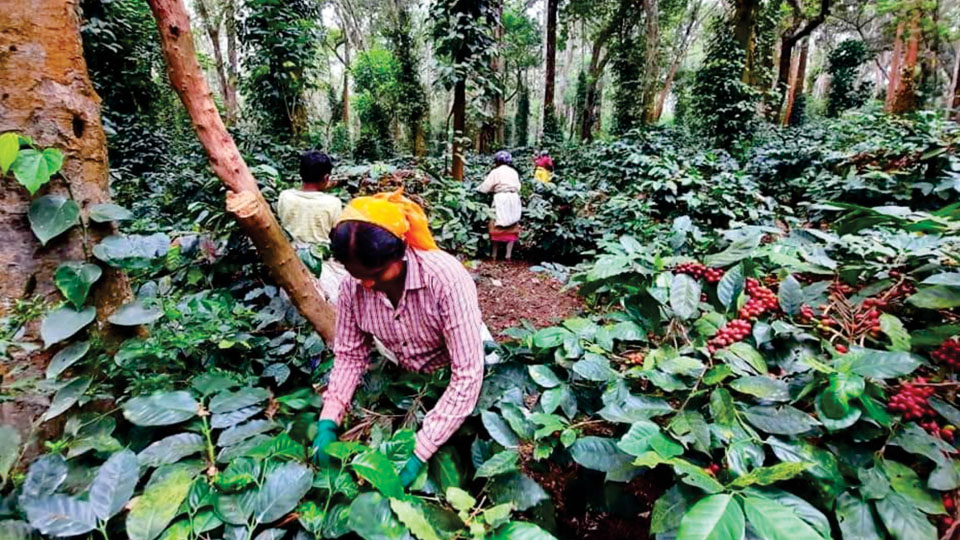
There is an increasing demand from coffee growers for a relief package in the budget to be presented by the State Government this year.
The demands have grown after the Kerala Government increased the Minimum Support Price (MSP) for raw Robusta Coffee at Rs. 90 per kg in Wayanad district. For a 50 kg bag, the MSP offered by Kerala is Rs. 4,500. The MSP announcement that comes at a time when coffee growers are reeling under severe crisis owing to the low price of the produce, higher input cost and vagaries of weather.
Even the coffee grower community from Kodagu have been demanding relief package as they feel that the amount paid through the calamity relief fund under the National Disaster Management Plan will not be sufficient to recoup the losses suffered by them due to unprecedented rains.
Former Vice-President of Coffee Board Dr. Sannuvanda Kaverappa said that since 2015, the coffee growers in Karnataka were suffering due to lack of good prices, high input and labour costs and adverse weather, but successive governments have ignored the plight of the growers.
A waiver of coffee loans, re-scheduling of outstanding loans and reduction in the interest rate for loans are justified considering the difficult times faced by the growers, he said. “Coffee planters in the district are reeling because of various reasons, including the vagaries of monsoon and COVID-19. I appeal to the Government to declare a special relief package and announce a waiver of short-term loans and developmental loans taken by coffee growers,” he said.
He also sought immediate payment of pending subsidies towards replanting and other schemes of the Coffee Board. “Kodagu has been tormented by weather and either it is lack of rains or excessive rains that have led to landslides and destruction of plantations.
Karnataka must follow the Kerala model where an MSP of Rs, 90 per kg has been declared to Wayanad coffee growers,” he demanded.
source: http://www.starofmysore.com / Star of Mysore / Home> News / January 25th, 2021
Coffee growers from Kodagu, who are seeking minimum support price (MSP) for coffee, will join the farmers’ protest scheduled to be held in Bengaluru on January 26 against the Centre’s farm bills.
The coffee growers are seeking to draw attention to their predicament over coffee prices remaining stagnant for more than 20 years while the costs they incurred on labour and other agricultural inputs including fertilizers have increased manifold.
“One 50 kg bag of robusta coffee used to fetch ₹3,000 in the mid- and late nineties. The price has remained unchanged more than two decades later also” said Karnataka Rajya Raitha Sangha (KRRS) leader from Kodagu Manu Somaiah.
Coffee growers are putting up with the stagnant prices of coffee while shouldering the burden of rising costs of labour and other agricultural inputs, he said and sought to know why the State is refusing to extend MSP to coffee when neighbouring Kerala was extending the same to its growers.
“About a week ago, we held a meeting and decided to press for our demand for MSP for coffee”, said Mr. Somaiah. “When Kerala, which produces barely 20 per cent of the country’s coffee production, can extend MSP, why can’t Karnataka, which accounts for more than two-thirds of India’s coffee production do the same?”, he questioned.
He said their appeals for MSP are met with the standard reply that coffee was a commercial crop that is not entitled for support price. “But, when Kerala government can do it, what logical explanation can Karnataka government give?”, he asked.
The coffee growers of Kodagu have been at the receiving end of nature’s fury during the last three years when the region was struck by landslides and floods, causing widespread damage to the crop.
Mr. Somaiah recalled that the coffee growers were receiving remunerative prices when it was regulated by Coffee Board till the early nineties. But, it shifted to open market policy soon thereafter on the same promise that the present farm bills are assuring – that the farmers will earn more. But, it was not to be, he regretted adding that the prices are now determined by the trading in New York and London Stock Exchanges.
Mr. Somaiah said the coffee growers in Kodagu are also upset with the State government and Centre over the falling price of black pepper, which is grown as inter-crop. The price of black pepper had reached ₹900 per kg till the Centre started allowing imported pepper from Vietnam and other countries to flood the domestic market and bring down the prices to the level of ₹300 per kg, he lamented.
The coffee growers of Kodagu are joining forces with the farmers from the rest of the State, who are planning to gather in Bengaluru on January 26. The coffee growers from Kodagu will gather at Kutta on January 25 before leaving in about 150 vehicles towards Bengaluru. The coffee growers will hold demonstrations in Ponnampet and Gonikoppa before spending the night in Mandya and proceeding to Freedom Park in Bengaluru on January 26.
source: http://www.thehindu.com / The Hindu / Home> News> States> Karnataka / Mysuru – January 23rd, 2021
Conceptualized by Lowe Lintas, the TVC draws parallel between sound and emotion
TATA Coffee Grand, the packaged coffee brand from the house of TATA Consumer Products, unveiled its recent campaign that aims to create a new language for coffee – Shik-Shik-Shik that evokes emotions and excitement amongst consumers. The campaign synonymises the word ‘Coffee’ with the sound of coffee ie. Shik-Shik-Shik – the sound that is created by shaking the coffee pack!
Depicting the southern part of India and building an emotion around coffee moments, the TVC, conceptualized by Lowe Lintas, draws parallel between sound and emotion, Coffee is a word but Shik-Shik-Shik is an emotion. The film opens on an early morning in a radio station where the Radio Jockey calls for a Shik-Shik-Shik and the audience is introduced to TATA Coffee Grand. She then takes us on a journey of how Shik-Shik-Shik is echoing in South India with everybody calling coffee the Shik-Shik-Shik way, to relish the taste, the flavour and the decoction crystals that is exclusive to TATA Coffee Grand.
Speaking about the campaign, says, Mr. Puneet Das, SVP – Marketing, Beverages – India, TATA Consumer Products, “We’ve been excited about the idea of the ‘sound of coffee’ for a while now. Through this campaign, we have built the proposition of ‘The sound made by our tata coffee grand pack, which has big granules and decoction crystals that make a great cup of coffee’. A simple and powerful narrative is linked to a simple action of shaking the pack, remembering that unique sound, replacing coffee with shik shik shik when asking for it. We are hopeful that the disruptive unique sound of Shik-Shik-Shik will soon become an overarching synonymous word for coffee.”
Sagar Kapoor, Chief Creative Officer – Lowe Lintas, said, “It’s always a great opportunity when your brand has a product differentiation. Leaping to the creative idea from the differentiator lands on a disruptive idea, more often than not. With Tata Coffee Grand we had the decoction crystals. Besides delivering a superior cup of coffee, these crystals also make a unique’ Shik-Shik-Shik sound when one shakes the pack. So great coffee was always known by its aroma, it will now be known with its sound. That led us to the idea of ‘Great coffee will now be known as Shik-Shik-Shik. Going ahead we will engage with the consumer in many ways with the ‘Shik-Shik-Shik device,”
The campaign is live on TV in Tamil Nadu, Karnataka and Andhra Pradesh, showcasing TATA Coffee Grand as a differentiated product which is driven by innovation and consumer centricity.
source: http://www.exchange4media.com / exchange4media / Home> Internet Marketing News> Latest Internet Marketing News> Marketing / by exchange4media.com / January 23rd, 2021
Their closure will adversely impact farmers, says coffee growers’ body
The South Indian Coffee Growers Association (SICGA) has urged the Ministry of Commerce and Industry to repeal its decision to close junior liaison offices of the Coffee Board in various parts of the country.
Speaking to the media, K.J. Devassia, chairman of the organisation, said junior liaison offices functioning in rural areas were offering immense help to small-scale coffee growers. The offices provide advisory and information about various schemes and incentives offered by the board to growers.
The closure of such offices will adversely impact the farming community at a time when the price of coffee beans has declined to the lowest level, Mr. Devassia said.
The Ministry of Commerce and the Coffee Board are adopting anti-farmer polices, and they are yet to consider the fair demands of farmers, including fixing minimum support price for coffee beans, he added.
“The Ministry should fix an MSP of ₹200 a kg of coffee beans, as the price of the produce had reached the lowest in the past 10 years, he added. If they continue their anti-farmer stance, the organisation will launch an indefinite agitation with the support of similar bodies in the neighbouring States,” Mr. Devassia said.
source: http://www.thehindu.com / The Hindu / Home> News> States> Kerala / by Staff Report / Kalpetta – January 06th, 2021
Ponnampet Forestry College Dean calls upon growers to maintain quality from estate to cuppa; 18th AGM of Kodagu Mahila Coffee Jagruthi Sangha held
Madikeri:
Coffee growers should give priority for cultivating tasty coffee naturally, said Ponnampet Forestry College Dean Dr. Cheppudira G. Kushalappa.
He was speaking at the 18th Annual General Body meeting of Kodagu Mahila Coffee Jagruthi Sangha held at a private hotel in Madikeri recently. Though Vietnam and Brazil produces large quantity of coffee, they are unable to get back the amount invested in coffee cultivation. They use highest quality of fertilisers to cultivate the crop and most of the finances are drained out here.
The growers of Kodagu must concentrate on cultivating coffee naturally by reducing the use of fertilisers. There are 360 species of trees inside the coffee estates in Kodagu. As a result, the ground gets good manure. This is the reason why Kodagu coffee is famous across the world.
“The undeniable natural beauty and abundance in Kodagu — from rainfall to fertile soil and diverse water sources — has made the region a highly sought-after location to cultivate coffee. Coffee flourishes in a unique blend of climatic conditions that includes humidity, heat and rainfall. Kodagu is ideal for these conditions and the slopes of the Western Ghats ensure orthographic rainfall that measure between 60 to 80 inches,” he said.
The abundant species of shaded trees work together in a two-tier system to protect coffee plants. These trees also prevent soil erosion and provide mulch to act as fertiliser. “The soil of Kodagu is rich with nitrogenous material and has a good sub-surface drainage,” he said and called upon growers to maintain quality from the estate to the cuppa.
Coffee Board quality expert Vikram Kuttaiah said that the prices of coffee have not increased drastically for the last 25 years. The maintenance of Arabica coffee was Rs. 25,000 per acre 25 years ago and now it has reached Rs. 80,000 per acre. The maintenance of Robusta variety has increased from Rs. 10,000 to Rs. 60,000.
“The maintenance costs have increased manifold but the prices of coffee has remained stagnant. There is a huge disparity between production costs and end profits. There is a situation where the grower has to be satisfied with meagre income,” he explained.
Kodagu Mahila Coffee Jagruthi Sangha President Pandikuthira Chitra Subbaiah said that the Sangha has been creating awareness about Coorg Coffee since the last 18 years. Sangha Director Kumari Kunjappa has been provided permission by Kodagu District Administration to open an outlet at Coorg Village that is coming up near Raja’s Seat in Madikeri, she said.
source: http://www.starofmysore.com / Star of Mysore / Home> News / December 14th, 2020
After focussing on institutional sales of the coffee bean for decades, Mother Mirra Group of Companies has forayed into the retail space with its filter coffee brand ‘Mirra’s’.
The company with coffee plantations located at Coorg in Karnataka is planning to leverage its brand presence at Coimbatore and Chennai in TN before expanding to other cities and States.
Sundar Subramaniam, Managing Director, Mother Mirra Group said online sales of Mirra’s coffee products recorded a huge surge between April and November, without quantifying the volume.
“Thanks to our online presence and tie-up with departmental stores and supermarkets, we saw the sales momentum pick-up during the lockdown phase. It (on-line sales volume) was around 5 tonnes a month. We are now looking to appoint distributors in Coimbatore and Chennai for our range of products, which primarily includes 12 variants of roasted filter coffee powder, pepper, cardamom, honey and wood-pressed oil to start with.
“We will soon be rolling out “Mirra’s Green Coffee”, Subramaniam told BusinessLine, highlighting some of the health benefits of Green Coffee. “The market is nascent in India; we foresee huge opportunities in this space. Further, we have an edge over other players as the bean is sourced from single estate.”
While gearing up to meet the demand on the retail front, the Group has in the last one-two months registered growth in institutional sales with the opening up of the hospitality industry and on the export front. “The Indian diaspora in Singapore and New Zealand have developed a taste for Mirra’s filter coffee powder. Our monthly export volume is around 20 tonnes.”
Notwithstanding these transitions, the Group, according to its MD is so looking to acquire coffee estates in the Coorg region. “Our estate is spread over 175 acres. We are looking to add another 100 acres,” Subramaniam said.
source: http://www.thehindubusinessline.com / Business Line / Home> Agri-Business / by L N Revathy / Coimbatore / November 27th, 2020
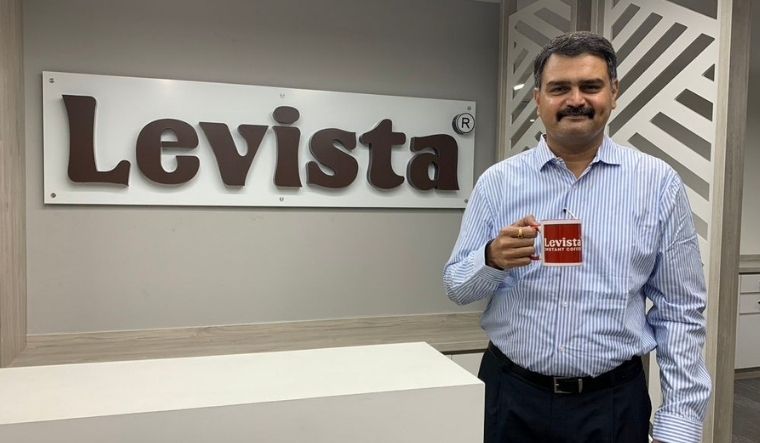
Launched 3 years ago, Levista is eyeing expansion in south India, Mumbai and Delhi
S. Shriram, vice-president-sales and marketing at Levista
Coorg in Karnataka, is among the foremost coffee growing regions in India. SLN, a three-decade old coffee plantation company in the region is now aiming to grab a slice of the Rs 2,200-crore annual packaged coffee market, which is dominated by big players like Nestle (Nescafe), Hindustan Unilever (Bru) and Tata Coffee.
SLN launched its own brand of coffee called Levista three years ago and has ever since expanded to 40,000 retail outlets, predominantly in Tamil Nadu and Karnataka. It has now set its sights on expanding across other markets, starting with the rest of south India.
“Of the Rs 2,200 crore market annually, over 80 per cent of the coffee consumption happens in the five southern states and Union territories. Therefore, we aim to reach a significant market share here rather than being sparsely spread all over the place,” S. Shriram, vice-president sales and marketing at Levista, told THE WEEK.
“At the moment, we have a deep presence in Tamil Nadu and Karnataka. We launched our coffee in Goa in February and business is growing steadily. We will be entering the Andhra Pradesh and Telangana market by Sankranti and will penetrate deeper in there. Kerala will follow next.”
The company has the markets of Mumbai and Delhi-National Capital Region on the radar, too, however, it has not finalised a launch date yet, added Shriram.
Levista is also available on online platforms, including Amazon and it is also scaling up on other e-commerce platforms to reach a wider audience.
“Players like Big Basket have also aided our brand coverage, as has Flipkart. We have been recently on boarded through Udaan that reaches small retailers as well as hyperlocal players MilkBasket,” said Shriram.
While south India has a strong tradition of filter coffee, the rest of the country has largely been a tea drinking market. However, things have started changing with penetration of cafes like Cafe Coffee Day and Starbucks in the last decade. International coffee brands like Lavazza are also expanding in the country, buoyed by rising coffee consumption here.
“There is a huge scope for us to grow. The coffee market has been growing steadily. Out of home coffee consumption through cafes has already hit a pan-India presence and thanks to this familiarity, more new consumers are sipping coffee at home, through packaged coffee,” noted Shriram.
Levista’s parent SLN currently has a capacity upwards of 50,000 metric tonne per annum, and Shriram says the company will be able to produce enough coffee for the domestic market as well as for exports.
Talking of exports, the brand is already present in Singapore, Malaysia, Middle East, Maldives and Sri Lanka, reaching out to the south Indian consumers in these markets. The company intends to have a larger international presence next year, added Shriram.
source: http://www.theweek.in / The Week / Home> News> Business / by Nachiket Kelkar / November 20th, 2020
For the first time Kodagu coffee growers, who formed a farmer producer company, Biota Coorg FPC, have exported their crop directly to a roaster in Europe.
IB Bopanna, one of the founding directors of Biota Coorg
After suffering 50-70 per cent crop loss due to excessive rainfall and landslides over the last three years, small, mid-sized and large coffee growers in Kodagu district of Karnataka, who pooled in their coffees under Biota Coorg, are set to receive a 15-20 per cent premium, on an average.
Incorporated in January, Biota Coorg made its first direct export shipment of bulk branded coffees to a large roaster in Europe last week. A container consisting of 320 bags (60 kgs/per bag) of Robusta Cherry AB sourced from 75 of its members was shipped from Mangaluru port on September 30. The company plans to ship 10 more containers to different roasters across Europe, of which two containers are scheduled to be shipped in October and the rest by December. In addition, since its inception, Biota Coorg has directly sold Arabica coffees to local roasters and local cafes at a premium. The 10 founding directors of Biota Coorg, collectively have over 100 years of domain expertise in coffee growing and allied areas including exports of agri commodities, global marketing of coffees, agro-forestry, plantation management, organisation development and coffee quality enhancement through cupping.
Unique flavour
Grown under the shade of multiple species of endemic rainforest trees at an elevation of 3,000– 4,000 feet above sea level, Coorg coffees have distinct fruity notes because of the wild figs, citrus fruits that grow in the rainforests and caramel notes from the leaf litter-enriched soil. Because of the higher elevation, Robusta coffees from Kodagu take a longer time to mature and ripen, thereby resulting in a softer cup.
“The objective of incorporating Biota is to market and put Coorg Coffee on the world map by elevating its quality based on the region’s ecology and biodiversity,” IB Bopanna, one of the founding directors of Biota Coorg and former Senior Global Director- Coffee, The Coca-Cola Company, Atlanta, USA, told BusinessLine.
“Earlier growers were selling their coffee in bulk with little differentiation to local traders, at prevailing market prices. We are a cohort of 75 members (in our first year of operation) who have committed to superior on-farm harvesting and post harvesting standards that will command a premium in the international and domestic markets. We are committed to uphold the legacy of the region’s biodiversity by adhering to an audited standard in addition to RFA (Rainforest Alliance) certification, which we have applied for. All the coffee we procure is 100 per cent traceable. Every grower’s coffee is segregated, processed at the Tata Coffee facility in Kodagu, cupped and prepared specially to fit the requirement of high quality roasts, blends and brands.”
Community initiative
MB Ganapathy, former Chairman of KPA, said: “There are many large coffee growers who export their coffees in their individual capacities however, the majority who are small growers are dependent on the local traders to sell their coffee. Biota Coorg is a great community initiative that will benefit small coffee growers who can join hands and realise better prices for their produce by following quality practices set by Biota that will adhere to international standards of roasters.”
Bose Mandanna, a large grower and Biota member, said: “The advantage for international roasters is that they are ensured of a consistent supply of quality coffees from Biota. We have received a standard of good agricultural practices from Biota which we strictly follow including the use of chemicals and labour. We harvest the coffee at the right time, pulp it on the same day, wash it clean and dry it to the correct moisture levels, after which it is inspected by a Biota representative, who then further processes it in the curing works.”
source: http://www.thehindubusinessline.com / Business Line / Home> AgriBusiness / by Sangeetha Chengappa / Bengaluru / October 05th, 2020
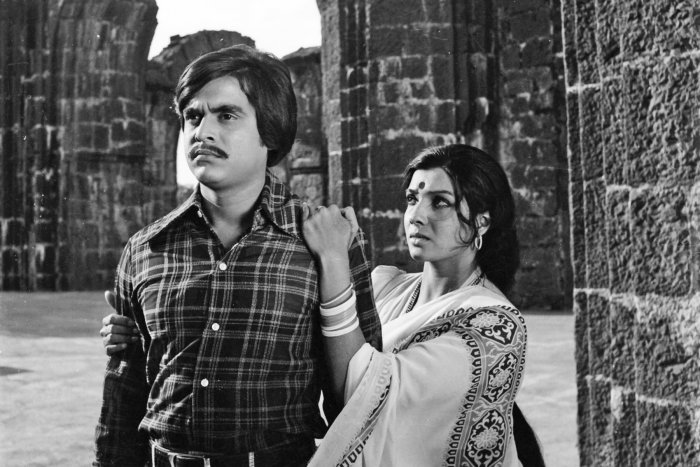
Puttanna Kanagal cast Jagadish as the lead in ‘Phalitamsha’ even though he had no prior experience in acting.
After the first few days of shoot of Phalitamsha, he wanted to give up
Filmmaker Jai Jagadish had no background in films or interest in it during his childhood. He belonged to a family, where his father, a farmer, insisted on Jagadish becoming a double graduate.
Puttanna Kanagal cast Jagadish as the lead in ‘Phalitamsha’ even though he had no prior experience in acting. Filmmaker Jai Jagadish had no background in films or interest…
Childhood and films
Hailing from Somwarpet taluk, Kodagu, he belonged to a family of coffee, pepper, cardamom and paddy growers. “My family consisted of five daughters and two sons. My father was a farmer.”
The filmmaker studied at the government school nearby. “I was a naughty child and uncontrollable, so I was sent to study in Sri Ramakrishna Vidyashala, Mysuru.” Jagadish’s father insisted on him becoming a double graduate. He did his BA from St. Philomena’s College, Mysuru.
Jagadish never acted in a drama, and never thought of acting in films. “Cinema was not my cup of coffee. My friend, Manjappa, a college leader from Maharaja’s College asked me if I would act in a Puttanna Kanagal’s film, if he got me the role. I was amused by the idea and I challenged him to find me a role,” he says.
Jagadish had read in film magazines that no actor had been finalised for ‘Phalitamsha’. In a couple of days, he got a call for the role, against four heroines. “I said I wasn’t going to act in it. My friends tried to convince me. I told them that I had other intentions and want to start my own business,” he says.
Even so, he went to Bengaluru, to meet Puttanna Kanagal. “I was asked if I knew anything about acting and I immediately responded that I didn’t. My looks and physique came in my favour, I was offered the role. I was shocked.”
Jagadish was told to leave to Badami and join the shoot immediately, but he insisted on informing his family. “I made a lightning call to my father. I knew he wouldn’t agree, and as expected after I called and explained, expletives followed. In the corner of mind, I knew I shouldn’t let go off the opportunity so I went for it,” he says.
After a few days of shoot, he wanted to give up. “I had only one lungi and a toothbrush on me and I decided to flee from the sets. Kitty, Kanagal’s wife’s brother, saw me from a distance and asked me what I was doing, he told me to rethink and give best shot at acting,” Jagadish says.
Jagadish’s first film released in a grand manner but didn’t do well. “In ‘Phalitamsha’, some shots were taken at the flying training school, Jakkur. The principal of the school, Patil, was impressed by me and I spoke about my interest in flying. A year later, I met him on M G Road and he told me to meet him at the school next day,” he says.
Jagadish was asked to do some medical checkups and joined the school. He studied for almost two-and-a-half years, while he waited for acting roles. “S Siddalingaiah called me and asked me to play the role of Vishnuvardhan’s brother’s role in ‘Biligiriya Banadalli’,” he says.
The role with dark shades, created a new turn in his career. “Directors were looking for a young villain, which led me to many other films.”
He was soon seen in films like ‘Bandana’, ‘Paduvarahalli Pandavaru’, ‘Daranimandala’ and ‘Parajitha’
He has worked with different actors like Vishnuvardhan, Srinath, Rajkumar (in Guri), Puneeth Rajkumar. Ravi Chandran. “I’ve worked with maximum films with Vishuvardhan, he was my favourite hero and a good friend. I’ve acted with films in Ambareesh to…
Planter now
Jai Jagadish has an estate in Kodagu, and he calls himself a planter and farmer now. “This is my work now. I have decided to stay away from filmmaking as I won’t be able to withstand the losses now,” he says.
Demonetisation soaked the spirit of filmmaking off him. “Most people decided to not invest into films. After ‘Yaana’ that was directed by my wife and starred daughters Vainidhi, Vaibhavi and Vaisiri, didn’t do as expected in the box office, I decided to stay awayfrom production,” he adds.
source: http://www.deccanherald.com / Deccan Herald / Home> Entertainment> Entertainment News / by Tini Sara Anien / DHNS / October 04th, 2020
The Coffee Board of India has released geographical indication (GI) tag for five coffee varieties grown in the country. Of this, three are from Karnataka and one each from Kerala and Andhra Pradesh. The GI tag will help all the five coffee brands get maximum market and price for their premium produce across the world. These varieties are Coorg, Bababudangiri, Chikmagalur, Araku Valley and Wayanad coffees.
The Board had obtained GI registration for unique regional coffees grown in these regions during March 2019. Previously, GI registration was obtained for two specialty coffees such as Monsooned Malabar Arabica and Monsooned Malabar Robusta in 2008.
The region-specific GI tags will increase the credibility and visibility of Indian coffees in the international market which will further boost export earnings, the Coffee Board said in a statement.
Further to the registration, the GI tagged coffees are promoted in various national and international forums, it said.
The board has also invited coffee growers to register their coffees with the board so that they can brand their product before selling in the domestic and international markets.
The Coffee Board has also collaborated with Indian Missions in key destinations such as Berlin, Helsinki, Tallinn, Burssels, Shanghai, Moscow and Sao Paulo for an effective overseas promotion of Indian coffee.
As part of its efforts to promote the consumption of coffee in the domestic market, the Board is taking up a year-long, nationwide programme with the help of a special grant of $90,000 from International Coffee Organisation (ICO) for building capacity of nearly 200 entrepreneurs in coffee business, a Coffee Board official said.
This is expected to help in bridging the gap in coffee value chain in the domestic market, especially in non-southern regions of the country. Apart from the capacity building programmes for budding entrepreneurs, the Board proposes to conduct awareness programmes for promotion of coffee consumption in India, the Board said in a statement.
source: http://www.deccanherald.com / Deccan Herald / Home> Business> Business News / by Mahesh Kulkarni / DHNS, Bengaluru / October 01st, 2020
WELCOME. If you like what you see "SUBSCRIBE via EMAIL" to receive FREE regular UPDATES.
Read More »