Category Archives: Coffee, Kodagu (Coorg)

Will India drive the fourth wave of coffee?

These artisanal coffee brands are creating exciting new ways of drinking your morning java

The world has been in the throes of the third wave of coffee for a while now. Artisanal sourcing, roasting, and blending of coffee is par for the course. Terms like flavour profiles, cultivars, and tasting notes are no longer restricted to the realm of wines. So what next? 

The fourth wave is all about people—the producers and the roasters—and their experiments to create a complex coffee with layers of flavours. “We can alter the flavour or unlock new flavours by intervening at various stages in the life span of the coffee bean. This can be at the plant-level or when the coffee cherry is ready to be pulped (the process of loosening the pulp from the bean) or at the drying stage, and of course, at the roasting stage”, says Ashish D’abreo, co-founder of Bengaluru-based Maverick & Farmer Coffee Roasters.

On the occasion of International Coffee Day, we look at what’s new in the artisanal coffee space in India.

The art of fermentation

Fermentation has been a mega food trend over the past couple of years and obviously, coffee growers are experimenting with it too. While it occurs naturally, the trick lies in controlling the process and fermenting the coffee just so. “Fermentation brings out the juiciness and complexity of flavours in a coffee. We carry out anaerobic fermentation, where the coffee cherries are placed in a tank of water and we monitor the pH level and sugar content. Under-fermented coffee is just a waste of resources, while over-fermentation produces an unappetising aroma of rotting fruit, so the process has to be quite precise,” explains Rahul Reddy, founder of the Mumbai-based Subko Specialty Coffee Roasters, which offers a 30-hour fermented single-origin (Ratnagiri Estate, Karnataka) coffee with notes of maple syrup, candied pecans and apricot.

Maverick & Farmer took things to another level at their Ajjikuttira Estates in Coorg, where third-generation coffee farmer (and co-founder) Tej Thammaiah fermented the coffee beans with orange juice to create ‘Orange You Curious?’ coffee. “Yeast, bacteria, and sugars are naturally present in both the coffee pulp and orange juice, which we ferment together for 24-36 hours,” explains Thammaiah. The beans are then shade-dried for about three weeks to produce a unique coffee with refreshing citrusy notes. “The point was to unlock flavours that are normally not found in coffee. We tried this with several other ingredients; some experiments failed but some were successful; for example, we have a micro-lot of lactic acid bacteria fermented coffee called ‘Milk and Honey’ launching in October,” he adds.

No smoke without fire

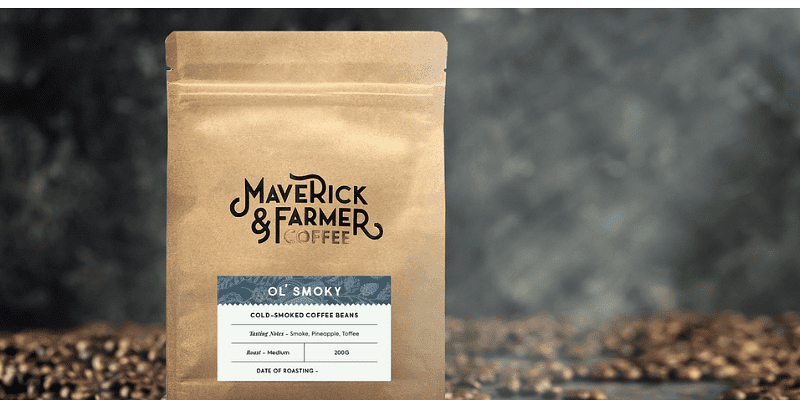
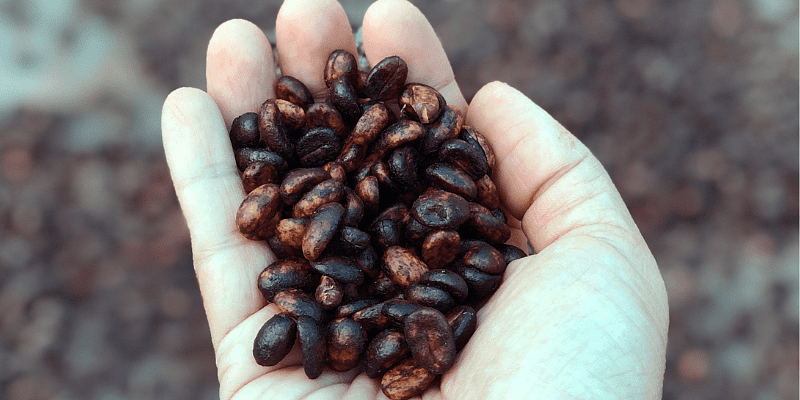
At the start of the drying stage, when the pulp has been stripped off, the tender green bean is porous and ready to imbibe any flavours or influences that it is exposed to. “A smoky note is a desirable flavour in coffee, but until now most of it came from really dark roasting coffee. While it’s enjoyable, you also get a lot of burnt flavour and the natural, delicate sweetness of coffee is completely lost. Our challenge was to bring in the smokiness without dark-roasting,” explains D’abreo. This resulted in “Ol’ Smoky” where the coffee beans are smoked with leaves and wood from fruit trees in a closed room for 13-14 hours. The source of the fire is not in the same room; rather the smoke is let in through a hole. “This introduces a nice smokiness to the coffee while leaving the natural sweetness and notes of Arabica intact. Ol’ Smoky is possibly the world’s first cold-smoked coffee and we are happy that we have been able to create something innovative”, adds D’abreo.

As the coffee beans dry further, roasters are experimenting with introducing new flavours—a favourite method is to ‘age’ the beans in whisky barrels to imbibe flavours such as oak, caramel, and vanilla. Mumbai-based Dope Coffee Roasters  offers Double-Barrel Blend, a limited edition coffee from Harley Estate (Karnataka) that is aged in Amrut whisky barrels, producing a complex cuppa with a smooth, sweet finish. “Once the coffee is processed at the farm, we age it in the barrel for about a month. Since coffee green beans are so sensitive, they take on the malty, smoky aromas from the barrel. Unlike most artisanal coffee, this is 100 per cent Robusta, which we believe is India’s specialty and we are happy to see customers accepting it. We will shortly launch this as a cold brew as well,” says Rizwan Amlani, CEO and co-founder of Dope Coffee Roasters. Subko offers an interesting variant of this by cask-ageing cascara (skin of the coffee cherry) for 10 days, which is then cold-brewed for 16 hours and served with tonic water and jaggery.

Considering India’s status as prime coffee-growing country, there’s plenty of room for experiments at every stage of the coffee life cycle. “We have lived through the third wave and it’s time to take things forward. Our customers want to experiment; they are no longer fixated on one brand or blend and are excited to try new flavours. So our challenge is to see what else we can do to develop new tasting notes in coffee”, says D’abreo. The fourth wave is here to stay and Indian artisanal coffee brands are at the forefront of innovation. That’s sweet news for the coffee connoisseur.

source: http://www.vogue.in / Vogue / Home> Culture & Living / by Prachi Joshi / October 01st, 2020

Tata Coffee in initial negotiations to acquire V G Siddhartha’s coffee plantations

Representative Image. Credit: Getty Images

Tata Coffee is in preliminary talks to acquire 12,000 hectares of coffee plantations belonging to Cafe Coffee Day founder V G Siddhartha for Rs 1,200-1,500 crore, Business Standard reported.

Coffee Day’s operations, including personal assets and coffee plantations, is currently being handled by Siddhartha’s wife, Malavika Hedge, after he died by suicide last year in August amid allegations that he faced pressure from lenders, a private equity firm and harassed by tax officials.

This development comes on the heels of Tata Consumer Products (TCP) approving an exploration of acquisition of Cafe Coffee Day’s vending machine business. CCD is looking for a valuation of about Rs 2,000 crore for the same, a Bloomberg report said. 

Siddhartha is believed to have availed loans worth Rs 2,000 from banks like HSBC, Rabo Bank, Lakshmi Vilas Bank, RBL and IndusInd Bank. Some of the lenders have already initiated recovery proceedings against the plantation assests last November.

“Discussions between Tata Coffee and Hedge started in February but were put on hold because of Covid,” a source told the publication. “Talks have resumed, though the deal may be in preliminary stages,” he added. 

A family representative, however, told that the information is speculative and is to be treated as baseless rumours. The representative further stated that none of the lenders have invoked recovery procedings on plantation assets.

Apart from the coffeee plantations, Siddhartha also owned silver oak and timber plantations priced at about Rs 2,000 crore. His personal assets included The Serai Resorts, a luxury hospitality resorts. 

Tata group has completed the restructuring of the consumer business and TCP’s joint venture with Starbucks progressing well. Deliberations to acquire the plantations are largely with the view of scaling up Tata Coffee’s land base. TCP holds 57.48 per cent stake in Tata Coffee.

source: http://www.deccanherald.com / Deccan Herald / Home> Business> Business News / by DH Web Desk / September 25th, 2020

Levista: Made in India, savoured globally

Its distinct taste can be traced to the geographical speciality of its plantation in Coorg

Image Credit: Supplied / gulfnews.com

You experience the flavour of Levista, right from the beans to the coffee you drink. The beaming spirit of SLN Group is like a perfect cup of coffee — fulfilling, hearty, crisp, wholesome and so gratifying since 1956.

Levista’s distinct taste can be traced to the geographical speciality of its plantation, which is rooted in Coorg, the coffee capital of India. It is born from the rich expertise of a company that supplies coffee to leading Indian and global coffee companies, and is among the top ten coffee exporters of India. Millions of coffee drinkers wake up to Levista every morning. It is the coffee for coffee lovers, and across the world, people have placed their trust in the timeless flavour of its legacy.

Wafting across the world

Levista has definitive plans in place to spread its aroma across 10 countries, and has undertaken brand building associations with leading entities.

It also has Café Levista, located strategically across cities for discerning coffee lovers, to enjoy a wholesome experience with friends and loved ones. By 2025, 500 such outlets will be operational in India and overseas to deliver its rich taste and heritage. Levista pours the best quality brew made from handpicked beans, with offerings across instant, filter, and artisanal range of coffees.

An association befitting Kings

Recently, Levista has proudly associated with the Chennai Super Kings (CSK) as their official licensed coffee partner.

It’s a distinctive milestone for two big brands to come together during the Indian Premier League, as the action shifts to the UAE this season.

To make it truly memorable, there will be CSK combo packs which will be retailed as a limited edition, along with the team’s memorabilia.

It will indeed be an unbeatable mix for coffee and cricket fans, when the world is watching. The quality and flavour of Levista resonates with the vivacity and passion of CSK.

source: http://www.gulfnews.com / Gulf News / Home> Lifestyle> GN Focus Report / September 13th, 2020

Bean to cup: How coffee entrepreneurs of Maverick & Farmer experiment with new flavours and blends

Maverick & Farmer, founded by three passionate coffee entrepreneurs, caters to coffee lovers who want new flavours in their brew. Co-founder Ashish D’abreo speaks to YSWeekender about the evolution of artisanal coffee and the company’s unique blends

Whether you love your coffee cold, blitzed to perfection with ice cubes, or brewed hot and delicious in your percolator, it is the drink that gives you that happy buzz and takes you through the day. But with time, people wanted more from their coffee. Some wanted it freshly roasted, a few liked it strong and black, while others wanted nutty, sweet, and tropical flavours in their brews.

Coffee can be served in a variety of flavours and textures (Pic credit: Shutterstock)

Over the years, coffees have been created and developed to suit every palate, right from house blends to different degrees of roasting to a gamut of innovations and textures .

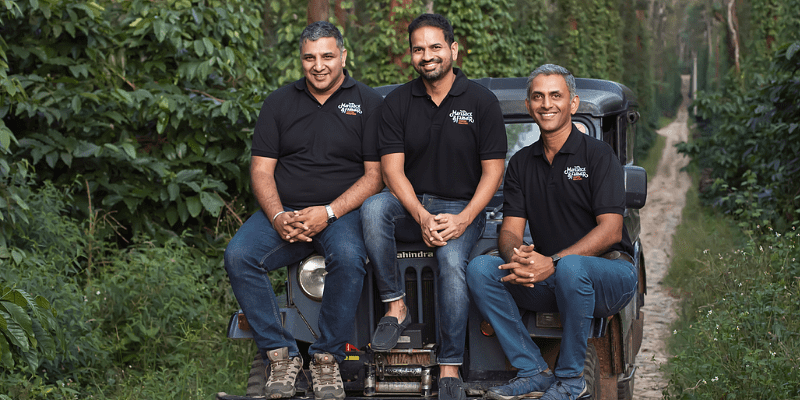
Maverick & Farmer Coffee Roasters started operations in 2018, founded by three passionate coffee entrepreneurs — Sreeram G, Tej Thammaiah, and Ashish D’abreo.

Coffee entrepreneurs (left to right) Sreeram G, Ashish D’abreo and Tej Thammaiah who founded Maverick & Farmer

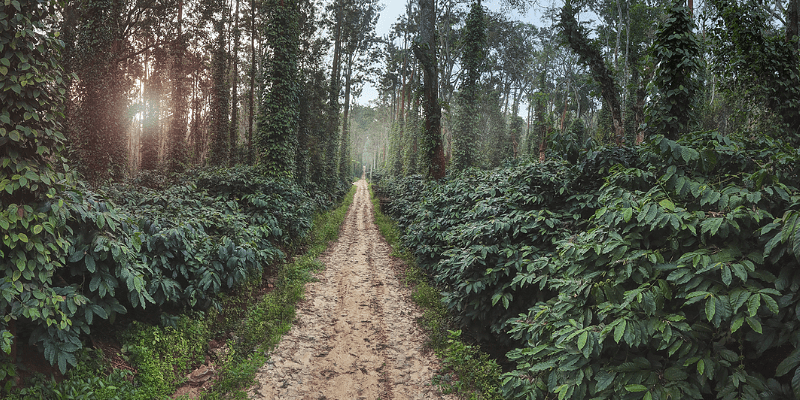
Tej Thammaiah is a third-generation coffee farmer who looks after the Ajjikutira family estates in Pollibetta, Coorg. Ashish D’abreo is the head roaster and barista, while Sreeram G leads sales. The co-founders are on a constant endeavour to create innovative variants of coffee that imbibe different plantations and natural fermentation methods.

In an interaction with YSWeekender, Ashish D’abreo, Co-founder, Maverick & Farmer, tells us about the company’s latest flavours and the USP of the brand.

YSWeekender (YSW): Can you tell us about your latest coffees and what makes them special?

Ol’ Smoky coffee was launched recently

Ashish D’abreo (AD): In keeping with the pursuit of creating unconventional coffee, we have six coffee blends that are set to launch in a staggered manner over the next 12 weeks. These are a result of a lot of experimentation on the farm and in our roastery. 

The first two that were launched last week are called ‘Ol’ Smoky’ and ‘Orange you curious?.’ Those who love a mellow, sweet-smoky lining to their favourite drink, our Ol’ Smoky creation is for them as it is prepared from freshly pulped top-grade Arabica green beans that are cold-smoked for 13-14 hours in a smokehouse.

Orange You Curious? is created by fermenting freshly pulped coffee beans with orange juice. Both the coffees are available on our website: www.maverickandfarmer.com

YSW: How was the idea of Maverick and Farmer conceived, and what is unique about your brand?

Maverick & Farmer coffee roasters are here to take Indian coffee past the third wave of coffee (which predominantly deals with origin, terroir, roasting, etc.) and introduce a whole new world of coffees that unlock so much more than what the species, terroir, or roasting can offer.

A coffee estate

There are two sides to our coffee brand — the farmer, with its in-depth understanding of coffee growing heritage, rules, experience, and rich knowledge — and the Maverick, the rule-breaker, boundary pusher, and experimenter. This is what makes us unique, and reflects in our coffee offerings.

Our coffee primarily comes from our farms in Coorg, but we also work with other farmers from different growing regions when we require coffees that bring a different uniqueness to our offering.

YSW: What is artisanal coffee?

AD: The term ‘artisanal coffee’ implies that the producer is growing, processing, roasting, etc., coffee from a traceable source, in a manner that highlights the unique flavours and tasting notes.

YSW: How do you come up with new flavours, and how are they tested out?

The flavour of the coffee depends on the quality of the coffee beans

AD: Most of the work happens during non-harvesting months — from March to October — and most work happens on paper. We’re constantly brainstorming on ideas, lines of thought, and wish lists. During the harvest season, we can actually put all of this into practice. We spend a lot of time together on the farm, executing our ideas, drying, roasting, tasting, and journaling. 

YSW:  Which countries offer the best kinds of coffee?

AD: I would say India because we have some very unique characteristics of our coffee. Apart from India, I would say, (and this is a personal opinion) — Kenya for the flavours, the importance given to R&D, and meticulous quality control; Guatemala for its bright, sweet notes; and Ethiopia for being the birthplace of coffee, as well as its floral and fruity coffees.

YSW: Can you give us some tips on how to make a good cup of coffee?

Freshly roasted coffee makes the best brew

AD: Brew coffee that’s freshly roasted. Stale coffee or dead coffee is unidimensional and gets the whole brewing process off on the wrong foot. Choose a grind size that’s perfect for your brewing equipment. Follow instructions only for the first time, and after that, adapt recipes and brewing techniques to what you think works best for you.

YSW:  What are your plans for Maverick & Farmer in the days ahead?

AD: We don’t have much time until the next harvest. There’s still a lot of work left to be done, directions, and processes to be finalised. We have quite a few new products and café launches in the pipeline in the future.

(Images credit: Pavan Srinivas)

source: http://www.yourstory.com / Your Story / Home> Your Story> YS Weekender> Food and Beverages / by Asha Chowdary / September 11th, 2020

Obituary – Theetharamada Ravi Nanjappa

Theetharamada Ravi Nanjappa (73), a coffee planter and a resident of Nallur village near Ponnampet in South Kodagu, passed away early this morning at a private hospital in Mysuru.

He leaves behind his wife Indira, a daughter, a son, son-in-law, daughter-in-law and a host of relatives and friends.

Cremation took place at Mukthidhama in Vijayanagar 4th Stage here today, according to family sources.

source: http://www.starofmysore.com / Star of Mysore / Home> Obituray / August 21st, 2020

Fair trade diaries: Arshiya Bose of Black Baza Coffee walks us through the basics of her coffee farming movement

Have you explored Black Baza Coffee's lineup, yet?
Have you explored Black Baza Coffee’s lineup, yet?

Very few coffee lovers actually research how ethical their go-to fair trade coffee brand really is, but Black Baza Coffee ‘s biodiversity-friendly, fair-trade coffee production is going the whole mile when it comes to ethically responsible community-building. The Bengaluru-based label is committed to the idea of ‘creating a local, participatory and meaningful movement for coffee.’ During her PhD in coffee and sustainability, Arshiya Bose, the founder of the label explored some functional biodiversity-friendly coffee farming practises which helped her get a better perspective on responsible production.

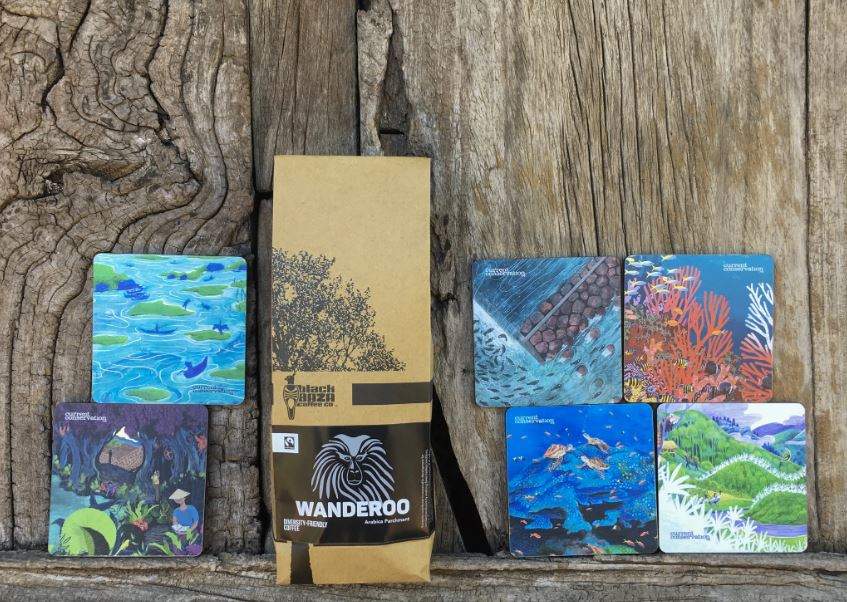
The rich and balanced Wanderoo

“Through my research I met several smallholder coffee producers, and the brand is committed to the idea of helping them grow. Black Baza Coffee is not just about eco-friendly practises but we focus on biodiversity conservation. We take a look at how various wildlife and plants make use of the coffee farms and how they can be conserved on these farms, which also includes changing the way we farm. So we go beyond organic, from looking and understanding habitats to sticking to our all-natural agenda,” Arshiya tells us. Not to mention Black Baza’s line-up is amazingly diverse, featuring coffees with layered flavour profiles, be it fermented Robusta with spicy flavour notes or washed Arabica with a balanced acidity.

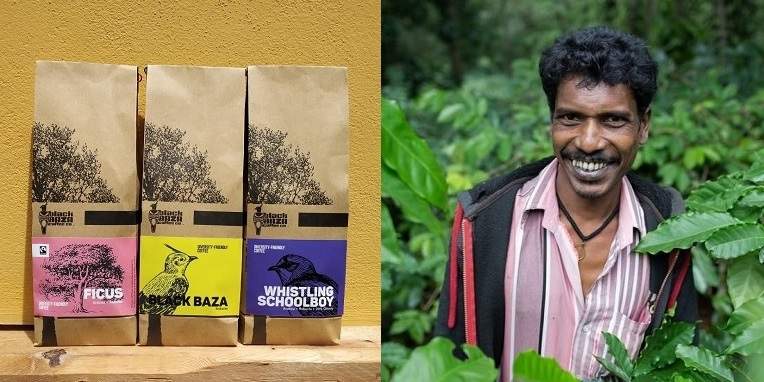
"Our Ficus coffee is named after this tree, our focus for conservation efforts in our farms," the label writes on its Instagram page
“Our Ficus coffee is named after this tree, our focus for conservation efforts in our farms,” the label writes on its Instagram page

In fact, you can even follow Black Baza’s Instagram page for their excellent fieldwork stories. We caught up with Arshiya to explore her vision further.

Black Baza Coffee has a focus on nurturing smallholders producers…

Yes, we do not work with coffee estates so we typically look at those coffee growing communities which are marginalised and vulnerable, particularly at a time like this and we work closely with them. We work with those who need our input and support the most and we are actually one of the few certified fair trade coffee brands in the country. We work with around 650 producers, we help set up coffee collectives and cooperatives. We source our coffee from The Biligirirangana Hills in Karnataka, Nilgiris, Coorg etc.

Tell us about your clientele. Do most of them share the label’s philosophy?

Yes, we have a really loyal base of customers who actively want to support communities which have suffered from the shutdown and the pandemic in general. We already had a steady base, but it has definitely grown since the pandemic started.

BlackBaza04kf20AUG2020

How has the label’s objective evolved in the four years since you started?

We are not a typical coffee brand, we function like a social enterprise, and we have definitely grown. We started out with four producers and we now work with 650, we have been able to reach so many communities who needed our support. We have also been able to source so many distinct varieties of coffees with varied flavour profiles, that’s been really interesting.

Tell us about how you’ve named each variant, like the ‘Otter,’ or the ‘Ficus’?

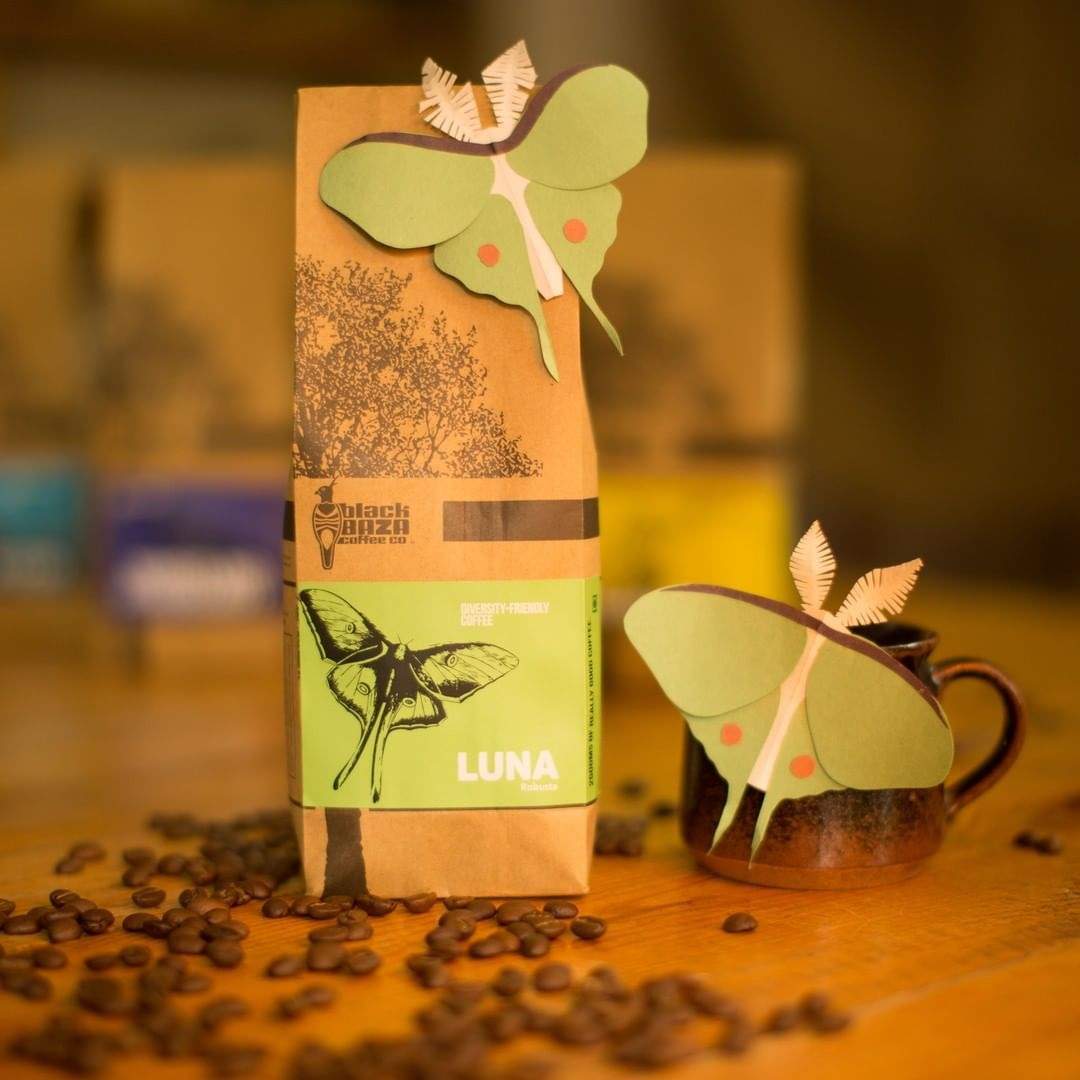
These coffees have been named depending on where they are grown, and represent the idea of conserving particular species of fauna which inhabit the region. The Luna coffee, for instance, is named after this interesting species of moth found in Indo-western ghats, we actively make observations of the luna moth on coffee farms, which tells us about their habitat or the vegetation around them. The names are also symbols of what we’re trying to achieve, it speaks to people about the kind of biodiversity which exists in our forests and why conserving them is so crucial.

source: http://www.indulgexpress.com / The New Indian Express – Indulge Express / by U. Roy / August 14th, 2020

India to see good coffee output this year: planters

Rainfall to be the deciding factor

If rains do not play spoilsport, India’s coffee production this year will be in the range of 3,20,000 tonnes to 340,000 tonnes, according to planters.

This is far better than the last two flood-hit years, when production was way below 3,00,000 tonnes.

As of now, coffee plantations have received only 30% of the rain, including the blossom showers in March and the showers in the following months. Rainfall during August and September will be the deciding factor as excessive rains can lead to floods, landslides, wet-footing (coffee plants standing in water and decaying) and berry-shedding.

“This year’s crop is expected to be much better than last two years,” said Bose Mandanna, a major planter in Kodagu and a former Coffee Board member.

“We have received some rain at the time of spike formation and flowering. Another 50-60% of well-distributed rains are needed for best berry development, spring cultivation and recharging of water tables. If all goes well we will have a bigger crop this year.’’

Ramesh Rajah, President, Coffee Exporters Association said, “The next two to three months will decide the future. We can’t afford to face another year of huge losses.’’

Due to excessive rains, flooding and water logging, the country’s coffee production was below the annual average of 300,000 tonnes in 2018 and 2019. In the current crop year, the planters expect a 40% increase in coffee production, with Robusta at 2,40,000 tonnes and Arabica at around 100,000 tonnes. The Coffee Board’s crop estimate will come out in September/post-monsoon.

Meanwhile, the labour shortage has become even more acute as a large population of workers returned home in the wake of the pandemic.

“We need to have more workers returning by harvest time in December. Labour situation has always been bad and Covid-19 has made it worse. Due to shortage of labour a lot of our operations are on hold,’’ said KPA chairman Shirish Vijayendra.

Harvesting of Arabica will commence in December, while Robusta harvest will be spread across January and February.

source: http://www.thehindu.com / The Hindu / Home> Business / by Mini Tejaswi / August 01st, 2020

Appointed As New Secretary Of Coffee Board

KushalappaKF06jul2020

Bengaluru:

A.S. Naveen Kushalappa, an IRS (Indian Revenue Services) Grade Officer, who is presently working as the Joint Development Commissioner (JDC) for Cochin Special Economic Zone (SEZ), Bengaluru, under the Department of Commerce, is given an additional charge of the post of Secretary, Coffee Board, Bengaluru.

As per the orders issued by the Government, he will be holding additional charge of Secretary, Coffee Board, for a period of six months with effect from 1.7.2020 to 31.12.2020 or till joining of a regular incumbent to the post or until further orders, whichever is the earliest.

Naveen Kushalappa got through IRS in 2007 and joined the Ministry of Commerce & Industries, Government of India. He has been serving as JDC since 2018.

source: http://www.starofmysore.com / Star of Mysore / Home> News / July 05th, 2020

Tennis player Rohan Bopanna to head development committee of KSLTA

Though the body announced a long term goal of ‘Vision 2030’, officials will focus on development of the sport and players during their tenure of four years.

Indian tennis star Rohan Bopanna (Photo | PTI)

Bengaluru :

The executive committee of Karnataka State Lawn Tennis Association (KSLTA) formed in mid-February, finally met for the first time on Thursday with Tennis star Rohan Bopanna assuming his role as vice-president and head of development committee.

“Rohan brings in a lot of expertise and value, which is good for KSLTA. He also wants to catch the players young and work on them. The development committee will look into how players can emerge from the state. They will see what needs to be done. It could be camps, competition etc. The committee will create a blueprint,” said Sunil Yajaman, KSLTA joint-secretary.

Though the body announced a long term goal of ‘Vision 2030’, officials will focus on development of the sport and players during their tenure of four years and will reach out at the school level to try and encourage more children to play the sport and provide them enough space to do so.

The KSLTA also wants to have set up state and regional camps and are open to rendering financial support to promising players. In terms of infrastructure, they want to create a tennis complex in Bengaluru as well.

“We are going to talk to the education and sports departments and try to ensure that there are tennis courts in rural places, allowing tennis to grow in these areas. We want more public courts. Once kids start playing, we are going to have our eyes everywhere and hunt for talent. We are looking to establish this from the grassroots so that we have a solid set-up,” added Yajaman.

Besides, the state body also aims to have a high performance centre, where select players will be provided training. Their education will also be looked after. These players will also be sent for tournaments with coaches.

source: http://www.newindianexpress.com / The New Indian Express / Home> Sport> Tennis / by Express News Service / June 20th, 2020

Chennai-based coffee startup Farmgate is bringing Arabica beans from Coorg to store shelves

FarmgateKF18may2020

Now, filter coffee for conference calls: Chennai-based coffee startup Farmgate is bringing Arabica beans from Coorg to store shelves, and filter coffee machines to workplaces.

“We have been producing coffee for over 100 years,” says 30-year-old Lakshmanan Sevugan, about his family’s coffee estates in Coorg.

So far, however, the family has only been supplying quality Arabica and Robusta beans to coffee makers and agents. Now, the millennial entrepreneur is changing things. “Usually, these sales that happen through a farm gate, where agents come and buy, are called farm gate sales,” he says, explaining the logic behind the name of his new coffee brand.

Farmgate Coffee, ironically, aims to do the exact opposite of traditional farmgate sales. “We want to give our customers the direct farm to cup experience,” says Lakshmanan. This is what the startup has been trying to do ever since its launch in August.

Arabica beans are brought from the estates in Coorg to Chennai, roasted, ground and blended in Mylapore, and packaged in specific blends with chicory, at Farmgate’s corporate office in Nungambakam. They are then sent to clients like restaurants and coffee shops, each of which orders a unique blend for customers.

“We are focusing on Arabica for now. I have grown up drinking this coffee. I like it to be 100% coffee, but the studies we did show that people prefer different blends,” shrugs Lakshmanan. In fact, 60% of the people they studied with preferred coffee mixed with chicory “because they do not like the pure bitterness of it,” says Lakshmanan.

The coffee is not only for businesses, however. A specific 80% medium-roast coffee to 20% chicory blend, called Namma Chennai, is packaged for retail, and has shown up at a few store shelves around the city. Two more will be up by the end of this year.

“We don’t have distributors as such; we operate the entire supply chain ourselves, since we are still a small startup,” says Lakshmanan. His ambitions don’t end there, probably because his love for coffee itself doesn’t end at the pick stage or with any particular roast, but in a dabara of steaming filter coffee. “I love filter coffee; I would take a break and walk out to drink some, back when I had an office job.”

Farmgate02KF18may2020

Lakshmanan is convinced that most office-goers — not only in Chennai and Bengaluru but also Mumbai, Delhi and other parts of the country — would jump at the chance to have filter coffee at work. “But all they get are cappuccino machines, or the option of getting filter coffee delivered from somewhere. It doesn’t taste the same,” he says.

So next up Farmgate’s sleeve is a filter coffee solution, including a blend and a filter coffee machine. “It is a pure play filter coffee vending machine, a separate vessel where decoction is collected, and kept heated at 70 degrees Celsius over a hot plate,” he explains. The machine — currently used by the Farmgate team in their office — then lets the drinker choose a ‘filter coffee’ option.

The device is not developed by Farmgate, but by a private firm that they have tied up with. “We are still a small startup, we don’t have the budget to make our own machines. Just like we don’t have the budget to set up our own roastery, yet.”

Farmgates coffees are roasted and ground, according to its clients’ requirements, at Sundaram Coffee in Mylapore, which has been in the business for over 70 years. Coffee beans are sent to Sundaram every other day, and roasted, cooled, then ground in small batches of five kilos each. “The lesser the amount, the more attention we can give while roasting, and the better taste we get,” says Magan Pradeep, branch manager of Sundaram Coffees in Mylapore.

Back in the coffee estates, picking season has begun. “Arabica till January and Robusta till March. So I will be visiting Coorg more frequently over the next few months. I’m going there next week, in fact,” smiles Lakshmanan.

source: http://www.thehindu.com / The Hindu / Home> Life & Style> Food / by Megha Majumdar / November 18th, 2019