Category Archives: Coffee, Kodagu (Coorg)

‘Taking coffee to the common man’s cup’

manyepandakf13dec2016

Manyepanda Madaiah Chengappa recently took over as the Chairman of Karnataka Planters Association (KPA). Karnataka accounts for more than 70% of the coffee production in India.

According to United Planters Association of Southern India (Upasi), Karnataka’s post-monsoon estimated coffee production for 2015-16 was 253,340 tonnes, with the all-India number standing at 350,000 tonnes. KPA has about 700 members as of date.

In an interview with Furquan Moharkan of DH, Chengappa says that his aim as the chairman is to make domestic demand for the cup of coffee transform from an elitist drink to a common man’s drink.

What are the challenges that coffee plantation sector faces today?

Climate change has increased, apart from pests and diseases impacting the coffee crop productivity. The Arabica coffee crop yield has reduced from 1,200 kgs, to 600 kgs per hectare, while Robusta coffee has decreased from 2,000 kgs, to 1,400 kgs per hectare, over the last decade. For instance, this year, Kodagu has 300 mm less rainfall over the previous year, and Chikkamagaluru has also suffered a similar fate, which affects the standing coffee crop and development of new shoots in coffee plants for the coming season.

Labour wage constitutes over 60% of the total cost of coffee cultivation. The annual wage increase was below 6% till 2007-08. From 2008-09, the increase was very steep. Against 2007-08’s wage of Rs 79 per day, the current wage is at Rs 263 — an increase of 232% or an annual average increase of 15%. This could be the highest percentage increase for any industry in Karnataka. Also the statutory and welfare costs for the labour, which are over and above the wages and benefits, works out to an additional 50% of the wages. This is an additional financial burden for both corporate and proprietary planters.

However, the sale price for coffee at the farm gate hovers around Rs 2,800 to Rs 3,500 for a 50-kg bag, while the labour and fertiliser costs have spiralled disproportionately. The need to invest more funds for R&D to develop better quality coffee plants that are high-yielding and pest-resistant is another challenge.

What are your priorities after taking over as Chairman of the KPA?

Primarily, my major objective is to make domestic demand for the cup of coffee transform from an elitist drink to a common man’s drink. I would seek the Coffee Board’s assistance to establish coffee kiosks at public places like government offices, bus and railway stations, airports, shopping malls and educational institutions. This would make the demand for coffee explode in the country. Towards this objective, it would be necessary to jointly pursue vegetative clonal and tissue culture propagation of coffee, with United Planters Association of South India (Upasi) and Central Coffee Research Institute, Balehonnur, Karnataka. Also, to push for the import of pest and disease-resistant high-yielding coffee plant material. Identify biological viable and effective methods to treat effluents.

Also, request the state government and its Department of Agriculture to allocate Rs 1.9 crore in the state budget to fund the Upasi-KPA coffee research project. To establish soil and leaf analysis laboratories at Chettalli, Kodagu district and Chikkamagaluru district for the convenience of small and large growers.

A lady planters sub-committee has been constituted to promote community outreach programmes and showcase their achievements in cultivation of coffee, plantation nurseries, local marketing initiatives at national and international levels, home stays and plantation cafes for income augmentation.

What is the impact of the GST regime on the coffee plantation sector?

GST does not affect the coffee grower directly, as being agriculturists, they come under zero tax brackets. GST is applicable only after curing at the roasting and powdering stage, when the value-addition takes place, and the coffee can be consumed as a cup of coffee. According to Rule 7B (1) of Income Tax Act — “Income derived from the sale of coffee grown and cured by the seller in India shall be computed as if it were income derived from business, and 25% of such income shall be deemed to be income liable for tax.” This I-T Rule needs to be amended to tax coffee only at the stage of roasting and powdering that would enable the grower to sell coffee, which is plantation-specific, directly to the local and global markets.
Do you think that the import of pepper from Sri Lanka could affect domestic trade?

Import of poor quality pepper is killing the Indian pepper market. A regulatory price mechanism is necessary, whereby the price of pepper imported should be about 5% lower than the Cochin pepper auction price of equal quality of the day. Also, quality parameters of the imported pepper should be strictly monitored by a suitable government agency.

Your comments on the degradation of forests and environment pollution that have a bearing on the plantations in Karnataka.

The National Forest Policy is under amendment and a high-powered committee has been instituted for the purpose. The KPA and Upasi have jointly made a representation to the Union Ministry of Environment and Forests. Also the elephant menace in Kodagu district has assumed dangerous proportions due lack of proper fodder and vegetation in the game sanctuaries. Plantation crops, fruit trees and human beings are being trampled upon and destroyed. Therefore, the translocation of elephants appears to be the only solution, as all other forms of deterrents and barriers have proved ineffective.

While tourism has phenomenally raised the socio-economic level of people in the plantation districts, it should not lead to environmental pollution. Therefore, it is necessary to promote eco-tourism in the plantation districts of the state. Also, aggressively ban all types of pollutants, plastics, discharge of sewage and chemical effluents into the rivers. People need to be aware of waste segregation, its recycling and proper disposal through the media platforms to promote eco-tourism.

source: http://www.deccanherald.com / Deccan Herald / Home> Supplements> Economy & Business / by Furquan Moharkan / DHNS – December 12th, 2016


True South: Filter Coffee WIth A Twist

true-southkf01nov16

Are you a coffee lover who needs your cup of steaming, hot coffee as soon as you wake up? But the morning rush leaves you with just about enough time to grab a cup of instant coffee, and head out. There’s a solution to that. Meet true south and their life saving projuct, filter coffee in a pouch! Skeptical? We were too.

truesouth01kf01nov2016

SKIM

Being true coffee lovers, we headed over to try some of the coffee at true south, and we were very surprised. The coffee is strong, aromatic, and tastes like it was just brewed!

TRUE SOUTH: FOR EVERY COFFEE LOVER

True south is ready-made coffee decoction available in pouches. All you’ve got to do to enjoy a cup of fresh authentic tasting filter coffee is empty the contents of the pouch, add milk and sugar, and stir! Voila, your hot cuppa is ready in minutes.

The idea started when the folks at True South, who are coffee planters, wanted to make good coffee available easily. The coffee comes from Coorg and Chikmagalur, so it’s from some of the best coffee-growing regions in India. The decoction comes in two varieties: classic and royal, which vary slightly in the percentage of coffee and chicory they contain {the classic blend has 80 per cent coffee and 20 per cent chicory, while the royal variety has 75 per cent coffee and 25 per cent chicory}. They advise that you add one part decoction to five parts hot milk for a typical cup of filter coffee.

truesouth02kf01nov2016


WHERE CAN YOU GET YOUR HANDS ON SOME?

Whether you have no time to make decoction every morning, or are unable to find the perfect blend that works for you, True South coffee is the perfect solution. You can order the coffee pouches online, or pick them up from the store located on Richmond Road.

And the perfect part is that you can use them for 15 days after opened, or store them for upto five months!

Wake up and smell the coffee!

source: http://www.hungryforever.com / HungryForever.com / Home / by Aditi Sriprasad / October 31st, 2016

KPA urges centre to amend Rule 7B of Income Tax Act

The Karnataka Planters Association (KPA) on Thursday urged the Centre for an amendment in Rule 7B of Income Tax Rules.

kpakf27oct2016

According to KPA Chairman Baba P S Bedi, “In Rule 7B of Income Tax Rules, they consider ‘Coffee Curing’ as value-addition. If you cure coffee, you can’t drink it. However, you can drink it, only once it is roasted and powdered. How can they treat it as value-addition?”

KPA will submit a memorandum routed through The United Planters’ Association of Southern India (UPASI) to the central government to amend Rule 7B R/w Section 2 (1A) of Income Tax Act so as to give effect to the changes in the ruling to cover ‘Coffee Curing’ is within the meaning of ‘Coffee Grown’.

The Government of India is keen to introduce the Goods and Services Tax (GST) from April 1, 2017. Bedi said, “If coffee is made taxable under GST, input tax paid by the agriculturist on inputs used or consumed by the agriculturist in growing this product should be allowed to be set off.”

Appointment of chairman

A full-term chairman of Coffee Board has not been appointed yet.

“We have requested the Ministry of Commerce and Industry to appoint a full-time chairman to the board. The former chairman Jawaid Akthar’s tenure came to an end on May 11, 2015,” a statement from KPA said.

However, Leena Nair, a 1982 batch IAS officer from Tamil Nadu cadre, was given the additional charge of Chairman, Coffee Board.

Currently, the 1997 batch IAS officer of Uttar Pradesh cadre, M K Shanmuga Sundaram, has been accorded with the additional charge of the post of Chairman in the Coffee Board, Bengaluru, under the Department of Commerce.

source: http://www.deccanherald.com / Deccan Herald / Home> Business / DHNS – Bengaluru, October 14th, 2016

Coffee growers pitch for renewed thrust on research to boost yields

Karnataka planters’ body favours separate body on the lines of Upasi Tea Research Foundation

coffeekf16oct2016

Bengaluru :

Concerned over low and stagnating productivity levels, and dwindling area under the Arabicas, coffee growers in Karnataka — the largest producing State — are seeking a renewed thrust in research activity to boost yields.

Seeking to play an active role in such research, the Karnataka Planters Association (KPA), the apex body of coffee growers, has mooted a proposal to set up a separate body in the state on the lines of UPASI Tea Research Foundation.

“We want to have a separate research body for coffee in Karnataka like the UPASI TRF. We have approached the State government for funding such an initiative,” said Baba PS Bedi, Chairman, KPA. Karnataka accounts for 70 per cent of the 3.48 lakh tonnes of coffee produced in the country.

Speaking ahead of KPA’s annual conference, Bedi said the State-run Central Coffee Research Institute (CCRI) has not been able to meet the growers’ requirement of clonal planting material nor had come up with new high yielding or disease resistant varieties in the recent past. “In the current year, the CCRI distributed only 10,000 Robusta Clones in Chikmagalur and Hassan districts, which amounts to 20 acres of plant material and is grossly inadequate … It is quite apparent that CCRI does not have the means at its disposal to propagate large number of clones/tissue culture plant material. Therefore, it is imperative that this research is outsourced as productivity levels are low, costs of production cannot be met and Arabica plantations are dwindling in number,” Bedi said.

KPA and UPASI have already made a proposal to the Karnataka government on setting up a facility for clonal propagation and tissue culture planting material at the latter’s research station in Koppa, Chikmagalur. Global majors such as Nestle, that have a major interest in coffee, would also be involved in the research efforts, Bedi added.

Backing KPA’s proposal on a separate research facility, Upasi President D Vinod Shivappa said a renewed thrust on research efforts was required to make coffee production sustainable.

Further, Bedi also said that KPA was concerned about dwindling Arabica plantations due to the high incidence of white stem borer, leaf rust and low productivity.

He said CCRI should consider import of Arabica varieties that are resistant to white stem borer, leaf rust and genetically proven to be high-yielders under the multi collaborative research project co-ordinated by the World Coffee Research organisation.

Exempt from GST
On the proposed GST regime, Bedi said if coffee is made taxable under GST, the input tax paid by the grower or agriculturist on inputs used or consumed by the agriculturist in growing this product should be allowed to be set-off.

The entire process of coffee growing up to the stage of its curing should be considered as an ‘intermediary stage’ of coffee production and exempted from the provisions of GST, the KPA chairman said.

‘Coffee’ seeds cannot be consumed till they are roasted and ground. Therefore, taxable event under GST should commence from the stage of its value addition that is when coffee is roasted and ground. “If a grower or agriculturist is not allowed to avail input tax credit, then there should be an exemption from GST on all inputs including fertilisers and chemicals used by an ‘agriculturist’,” Bedi added.

source: http://www.thehindubusinessline.com / Business Line / Home> Economy> Agri Business / The Hindu Bureau / Bengaluru – October 13th, 2016

International Coffee Day celebrated in Kodagu

Madikeri :

International Coffee Day was celebrated in Kodagu by giving piping hot coffee to tourists at Dubare elephant camp.

Representatives of 77 nations are members of the International Coffee Association and the Coffee Day is celebrated worldwide to promote coffee sales on par with prouction.

Woman folk took the lead in coffee awareness programme. Kodagu deputy commissioner R V D’souza inaugurated the coffee show. He said Kodagu produces the best quality coffee while stressing the need for better marketing.

Madikeri DFO Edukondalu opined that such awareness campaigns will help increase coffee consumption.

Senior scientist from Appangala Research Station Dr. Ankegowda said coffee is a healthy drink and many researches have proved it.

Convener of the women team of coffee awareness campaign Chitra Subbaiah announced that more and more awareness campaigns will be conducted in coming days. She appealed to the tourism department to provide Kodagu coffee to tourists who visit the district.

Several coffee products were exhibited during the coffee festival. In Madikeri also several organizations served coffee to tourists at Raja Seat.

source: http://www.timesofindia.indiatimes.com / The Times of India / News Home> City News> Mysore / TNN / October 03rd, 2016

Flying Squirrel perks a plan to serve artisan coffee

Bengaluru-based firm plans to take its product from online to roastery-cum-cafés

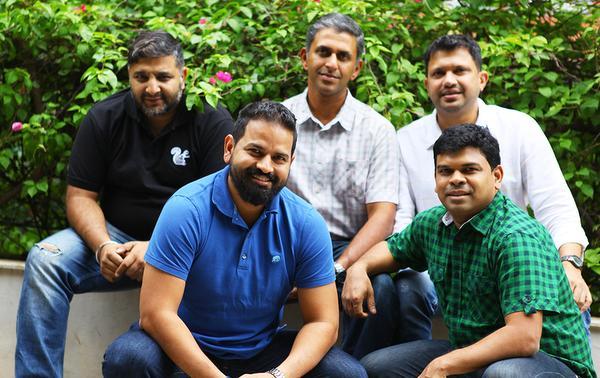
Flying Squirrel core team: (clockwise from top right) Sreeram G, Tej Thammaiah, Laeeq Ali, Ravi D’Abreo and Ashish D’Abreo

Mumbai :

Artisan roasted gourmet coffee might not grab you attention. But when it is named Flying Squirrel it does stir up some interest, especially when one shares a cup with Ashish D’Abreo, hardcore filter coffee drinker and founder of Flying Squirrel, who is more than happy to spill the beans on the growing coffee market.

A Creative Director with Origami, an advertising firm in Bengaluru, for 15 years, Ashish noticed how the coffee being served to the clients in the firm repeatedly came in for high accolades. Personally, Ashish dreamt of having different variants of filter coffee every day of the week. He decided to team up with his college friend Tej Thammaiah.

“Tej is a third-generation coffee farmer and owns a coffee estate (Nellikad Estate) at Pollibetta in Coorg; so a no-brainer. Since college days, we used to have his coffee in our house every morning. Some three years ago, we thought: ‘Why not bring this coffee in the open, why not have a lot more people experience the joy of a personalised and creatively cultivated brand of coffee,” says D’Abreo.

And so started the research and development process on Tej’s coffee estate, “to develop the beans and experiment with the growing and the drying processes, so as to arrive at certain points we were proud of,” says D’Abreo. The two-year-long R&D process netted six different variants of coffee, but “there was no one in the mail-order coffee business at that time to take this ahead.”

Working with an advertising firm helped, given its expertise in branding, design, digital marketing and advertising. Three other partners in the advertising firm, “who saw value in the idea” pitched in.

Since one of the most frequent visitors on the coffee estate was the Malabar flying squirrel, the team decided naming the company Flying Squirrel.

“Our coffee was launched two-and-a-half years ago. We partnered with logisitics company GoJavas, (which shut operations last week), at the outset, due to which we managed deliveries across India from day one 1,” reminisces D’Abreo.

He went on to add that initially, roasting of the coffee beans would be done only once a week. “We now do it thrice a week, given the jump in orders. Depending on customer orders, we collate and roast the beans either in medium roast, dark roast, or fine grind. Each pack is customised.”

Shelf life
The company does not have any huge machinery. “We roast the coffee 15 minutes before sealing each pack,” says D’Abreo, who believes in the dictum that exclusivity of freshly ground coffee goes to waste when coffee products are stored in shelves for an extended period of time.

“Not many people know, but coffee is a perishable product. Filter coffee, especially, should be consumed within a month of roasting. There is no harsh taste, no aroma, no flavour left afterwards, and the notes have all but vanished. We set out to solve this problem. We have hardly any retail shelf life.”

Flying Squirrel is currently available online. Its “exclusive personalised roasting” ensures a better coffee experience for avid filter coffee drinkers, affirms D’Abreo, who quit his post at Origami three months ago, to devote himself full-time to the coffee business.

The next chapter is to get into the cafe business. “We would like to bring this experience to a coffee drinker at the ground level, apart from online sales. So we decided to start a roastery, do the roasting in-house and run a roastery-cum-café.”

The first of such cafés has opened shop at Koramangala in Bengaluru. The plan is to have multiple such cafés in Bengaluru and Goa. Most of the coffee beans are sourced from Thammaiah’s estate.

In Seattle, time for coffee from Coorg

Americans who thrive on Starbucks will get a taste of single-origin coffee from Coorg for the first time

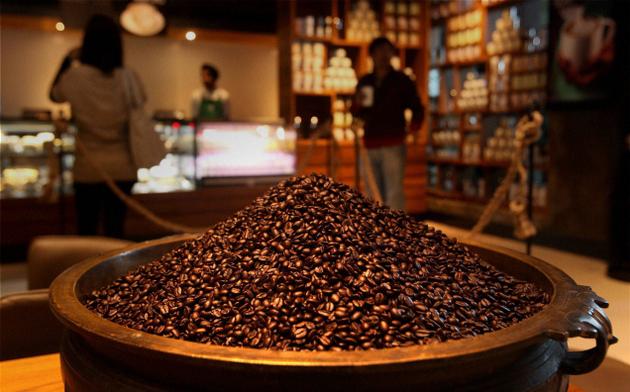
FULL OF FLAVOURCoffee beans at a Starbucks store / PHOTO: PTI

A small lot of speciality coffee from Karnataka’s famed Coorg region is getting ready to make its “limited edition” and exclusive debut later this year at the Starbucks Reserve Roastery & Tasting Room in Seattle, America. It is almost considered a shrine in the world of high-end coffee.

While the formal deal has been inked between Starbucks and Tata Coffee recently, here’s looking deeper into what that cuppa might hold. For starters, it’s said to be intensely aromatic, “with notes of caramel, citrus, toasted nuts and milk chocolate”.

The coffee comes, not surprisingly, from the largest Arabica plantation (394 hectares) in Coorg district, from the Nullore estate owned by Tata Coffee Limited, close to Madikeri. “When we cupped the Tata Nullore Estates coffee, we noticed it was different from other Indian coffees. The flavour of this rare coffee exemplified the types of unusual coffees we want to deliver under our Starbucks Reserve programme,” says Andrew Linnemann, vice president, global coffee quality and engagement at Starbucks Coffee Company. The Starbucks Reserve programme features the rarest and most exotic coffees — unique, small-lot coffees that the company roasts in Seattle. “Each coffee is one-of-a-kind — sourced from small coffee-growing regions in Latin America, Africa and the Asia-Pacific. All the coffees are roasted with care to bring out their peak flavour expression,” adds Linnemann.

“Nullore Estate coffee was a microlot,” points out Sanjiv Sarin, managing director and CEO, Tata Coffee Ltd. Microlots are generally considered the “cream of the crop” from an estate, and come with a unique taste and story; they are usually sold in small quantities, mostly only a few kilos! Therefore, they are pricier.

“We have been working on premium differentiated coffees for some months now and set up a process to identify potential blocks in our estates whose coffees will qualify. Nullore passed our assessment. A small batch of carefully cultivated coffee was isolated from the regular farm produce and was handpicked and sun-dried. Producing quality microlots is a meticulous and tedious process,” reiterates Sarin. The Nullore Estate coffee will be available at the Seattle tasting room later this year, and only for a limited period. The pricing has not yet been decided.

source: http://www.thehindu.com / The Hindu / Home> MetroPlus / by Bhumika K / July 26th, 2016

Cream of the cuppa: From Coorg to Seattle

Single-origin Indian coffee will be available for the first time in Starbucks, Seattle, as a limited edition Photo: PTI

Americans, who thrive on Starbucks, will get a taste of a single-origin coffee from India’s Coorg region for the first time. BHUMIKA K. gives you a peek into what the cup holds

A small lot of speciality coffee from Karnataka’s famed Coorg region is getting ready to make its limited edition and exclusive debut later this year at the Starbucks Reserve Roastery and Tasting Room in Seattle, America, considered a shrine almost in the world of high-end coffee.

It is for the first time that the leading American coffee company will offer a single-origin coffee from India in the U.S.

While the formal deal has been inked between Starbucks and Tata Coffee Ltd recently, here is looking deeper into what that cuppa might hold, right from where it was grown. For starters, it is said to be intensely fragrant and aromatic, “with notes of caramel, citrus, toasted nuts, and milk chocolate”.

Grown in two-tier shade, the Nullore Estate coffee is a microlot / Photo: Special arrangement

The coffee comes, not surprisingly, from the largest Arabica plantation (394 hectares) in Coorg district, from the Nullore estate owned by Tata Coffee Limited, close to Madikeri. These Arabicas are grown under a two-tier shade system (under local and fruit bearing trees). The shade is carefully managed, which helps the coffee bean mature slowly, absorbing the natural “organoleptic” characteristics within – which gives it the final smell and taste. Coorg is considered to have the perfect agro-climate and soil suitable for coffee cultivation.

Coorg is known for its coffee and Nullore Estate, that belongs to Tata Coffee, is one of the largest Arabica plantations in the district Photo: AFP

“When we cupped the Tata Nullore Estates coffee we noticed this coffee was different from other Indian coffees. The flavour of this rare coffee exemplified the types of unusual coffees we want to deliver under our Starbucks Reserve Programme,” says Andrew Linnemann, Vice President, global coffee quality and engagement at Starbucks Coffee Company. The Starbucks Reserve Programme is an ongoing series of the rarest and most exotic coffees — unique, small-lot coffees that the company creates, roasting them in Seattle. “Each coffee is one-of-a-kind — sourced from small coffee-growing regions in Latin America, Africa and Asia, Pacific Islands. All Starbucks Reserve coffees are roasted with care, at our Starbucks Reserve Roastery and Tasting Room in Seattle, to bring out their peak flavour expression,” adds Linnemann.

“Nullore Estate coffee was a microlot,” points out Sanjiv Sarin, Managing Director and CEO, Tata Coffee Ltd. Microlots are generally considered the “cream of the crop” from an estate, and of course come with a unique taste and a story behind it; they are usually sold in small quantities, mostly only a few kilos. Therefore, they are pricier. “We have been working on premium differentiated coffees for some months now and set up a process to identify potential blocks in our estates whose coffees will qualify. Nullore passed our assessment. A small batch of carefully-cultivated coffee was isolated from the regular farm produce, handpicked and sun dried. Producing quality microlots is a meticulous and tedious process,” reiterates Sarin.

It is technology driven too, including using light-sensitive spectrometers to ensure that the coffee beans mature slowly but uniformly. The shade also means that there is natural mulching from the leaves that fall onto the ground, which in turn helps avoid the use of strong fertilizers and pesticides. Sustainable cultivation practices and an endeavour to maintain the ecological balance were also the focus. The Nullore Estate coffee will be available at the Seattle tasting room later this year, and only for a limited period. The pricing has not yet been decided.

The first Indian coffee to be available through Starbucks was introduced in 2013, to celebrate the Tata-Starbucks first anniversary in the India market. Starbucks created a special India-sourced coffee, called ‘India Estates Blend’, as a tribute to its customers, partners, coffee producers, and roasters. But it was sourced, roasted, packaged, and sold in India. Explaining the difference between a blend and single-origin coffee, Sarin describes how a coffee blend is a combination of coffees from different origins that, when put together, create an experience or flavour profile that does not exist by itself.

“A single-origin coffee comes from one, geographic place (country, region, town, community, estate, mill or farm). This gets to a coffee’s very specific provenance. They represent a ‘taste of place’.”

source: http://www.thehindu.com / The Hindu / Home> Features> Metroplus / Bhumika K / Bengaluru – July 25th, 2016

Govt may withdraw Coffee Act, come out with new Bill

New Delhi :

The government is considering withdrawal of the Coffee Act, 1942, as it “no longer serves the purpose”, Commerce and Industry Minister Nirmala Sitharaman said in the Lok Sabha on Monday.

The Minister was replying to a supplementary during Question Hour on the role of the Coffee Board, especially with regard to small growers, and why it was headless for the past two years.

“Over the years, the role of the Coffee Board has changed and many provisions of the existing Act have become redundant, especially after abolition of the Coffee Pooling System in 1996,” she said, adding that it had been proposed to repeal the Act which was enacted more than 70 years back and enact a new Coffee Bill, 2016.

The suggestions received on the Bill were “regarding the control of the coffee industry, definition of coffee and coffee estate, cognisance of offence under the Act, etc, which are being examined,” she added.

Output decline

In reply to a question from Prathap Simha from Coorg, the Minister said domestic coffee production was likely to fall by 8 per cent in the current fiscal, due mainly to lack of timely rains.

“It has been estimated that there is a likelihood of a decline in coffee production in 2016-17 by 8 per cent compared with 2015-16 due to lack of timely rains and high temperature during the crucial flowering stage,” Sitharaman said.

On another supplementary on whether the government would mandate international coffee chains in India to buy Indian coffee, Sitharaman said the country was home to 2 per cent of the world’s coffee growing area, but produced 4 per cent of global production and had a share of 5 per cent of world coffee exports, worth over Rs. 5,000 crore a year. So, even though international coffee chains have set up shop in India, they do buy coffee locally, she said.

The main buyers of Indian coffee are Italy, Russian Federation, Germany, Belgium and Turkey, which account for over 50 per cent of coffee exports from India, she added.

Duncan tea gardens

On another supplementary by Trinamool’s Saugata Roy who wanted to know how many closed tea gardens’ belonging to the Duncan group in West Bengal had been taken over by the Centre “as promised four months ago”, Sitharaman said the government had moved to take over some tea gardens, but there was litigation by the Duncan group. The Minister said the process to identify new agencies to take over the management of these tea gardens was on, in consultation with the state government.

source: http://www.thehindubusinessline.com / Business Line / Home> Economy> AgriBusiness / The Hindu Bureau / New Delhi – July 25th, 2016

High temperatures may cut coffee production by 8 p.c.

CoffeeKF24jul2016

India’s coffee production is expected to drop by 8.05 per cent during 2016-17 compared to a record production of 3.48 lakh tonnes in 2015-16 owing to high temperature during summer months.

For the year 2016-17, the Coffee Board placed the post-blossom crop forecast at 3.20 lakh tonnes, comprising one lakh tonnes of Arabica and 2.20 lakh tonnes of Robusta, an overall decline of 28,000 tonnes (-8.05%) over the previous year.

The drop is mainly in Karnataka (22,175 tonnes) followed by Kerala (6,730 tonnes). The causes could be the delayed blossom and showers coupled with high temperatures especially in major coffee growing areas of Karnataka and Kerala.

In most of the coffee areas of Karnataka, estates with irrigation facilities have irrigated their Robusta plantations for one round of blossom during February-March and with one round of backing irrigation. However, due to absence of subsequent natural showers, even the irrigated estates have suffered some setback due to prevailing high temperatures, according to Coffee Board officials.

Scattered, uneven blossom

Coffee growing regions of Karnataka received the first spell of summer showers only in April and these showers were scanty and isolated. These showers did not cause any blossom in Arabica estates but resulted in scattered, uneven blossom in un-irrigated Robusta fields, which constitute about 40 per cent of the Robusta area in Karnataka.

Officials said this resulted in pinking and scorching of buds in Robusta. The growers were unable to take up supplementary irrigations to top up the scanty showers due to drying up of water resources.

The post-blossom estimate of Arabica for 2016-17 has shown a decrease of -3.38% (3,500 tonnes) over the corresponding figure of 2015-16, while the Robusta estimate has shown a decrease of -10.02 per cent (24,500 tonnes) over the last year’s figure (2015-16).

source: http://www.thehindu.com / The Hindu / Home> National> Karnataka / Nagesh Prabhu / Bengaluru – July 19th, 2016