Category Archives: Coffee, Kodagu (Coorg)

Tata Coffee appoints Chacko Thomas as Executive Director and Deputy CEO

He was earlier Managing Director of KDHP (Kanan Devan Hills Plantations), an associate company of Tata Global Beverages Ltd.

Representational image

Tata Coffee has appointed plantation industry veteran Chacko Purackal Thomas as its Executive Director and Deputy Chief Executive Officer.

Thomas, who comes from another Tata Group firm, has over 23 years of experience in the plantation industry, Tata Coffee said in a statement here on Tuesday.

His appointment was cleared at a Tata Coffee Board meeting held on August 3, it added.

He was earlier Managing Director of KDHP (Kanan Devan Hills Plantations), an associate company of Tata Global Beverages Ltd.

Thomas was the Managing Director of KDHP since 2012.

Tata Coffee, a subsidiary of Tata Global Beverages, is Asia’s largest coffee plantation company and India’s third largest exporter of the beverage.

The company produces more than 10,000 million tonnes of shade grown Arabica and Robusta coffees at its 19 estates in South India. Its two instant coffee manufacturing facilities have a combined installed capacity of 8,400 tonnes.

Tata Coffee had reported 16% fall in consolidated net profit for the quarter ended June 30, at Rs 25.4 crore, citing higher expenses.

The company, however, saw a rise in total consolidated income in the April June period of FY16 at Rs 396.04 crore, up from Rs 374.52 crore in the same period of last fiscal.

source: http://www.dnaindia.com / DNA / Home> Money /Place: Mumbai, Agency: PTI / Tuesday – August 11th, 2015

Tata Coffee to transform itself into a premium specialty coffee company

Tata Coffee is looking to transform itself into a premium specialty coffee company from a commodity player with an aim to tap the growing specialty coffee market. The company has been consistently moving up the value chain in both its plantations business as well as its instant coffee business.

The company has 19 coffee estates spread over 18,224 acres situated in the Western Ghat at different altitudes that have highly conducive micro-climates.

Tata Coffee, a subsidiary of Tata Global Beverages, is a fully integrated coffee company with its own coffee plantations, coffee curing factories, roasted and ground (R&G) coffee facility and instant coffee production plants.

source: http://www.money.livemint.com / Live Mint / Home> Company News / E-paper / Mumbai – August 03rd, 2015

Coffee Exports From India Seen Climbing as Record Crop Looms

Coffee shipments from India may increase the most in four years as prospects for a record crop in Asia’s third-largest producer spur farmers to liquidate inventory.

Exports will rise as much as 10 percent in the year through March 2016 from 286,516 metric tons last year, said Ramesh Rajah, president of the Coffee Exporters Association of India. That would be the biggest gain since 2011-2012, when sales jumped 11 percent to 333,181 tons, data from the state-run Coffee Board show.

Rising sales from India to mostly Europe and Russia will add to a global surplus forecast by Societe Generale SA and weigh on robusta prices in London. Supplies from the South Asian nation may help bridge a shortfall in shipments from Vietnam, where farmers are hoarding the most beans in at least five years on speculation prices will rally further. Robusta accounts for about 70 percent of India’s exports.

“With a larger crop expected next season, the small farmers will keep selling” as they can’t bear the storing and logistic costs, Rajah said by phone from Bengaluru on July 14. “The crop was low in 2014-15 and farmers held back and the prices went up.”

Robusta futures last month rose 9.3 percent, the most since February 2014, and traded 1 percent lower at $1,688 a ton on ICE Futures Europe on Friday. Arabica, which advanced 5 percent in June in New York, was down 0.6 percent at $1.2805 a pound. Societe Generale predicts a surplus of 905,000 bags of 60 kilograms each this year.

Monsoon Boost
Production in India will rise 8.7 percent to a record 355,600 tons in 2015-16, the board estimates. Timely monsoon rains have boosted crop prospects, according to Anil Kumar Bhandari, a member of the state-run agency.
“We are heading for a very good crop,” Bhandari said by phone from Bengaluru on July 13. “The coffee-growing belt in Karnataka and Kerala has got adequate rains.”

Exports rose 12 percent to 102,850 tons between April 1 and July 13 from the same period a year earlier, provisional data from the board show. Italy, Germany and Russia were among the top buyers of Indian coffee.

source: http://www.bloomberg.com / Bloomberg Business / Home> Business / by Pratik Parija / July 17th, 2015

Mysore Coffee Curing Co-operative Society Ltd. (MCCCS) land row : Coffee growers oppose auction of MCCCS land in Mysuru

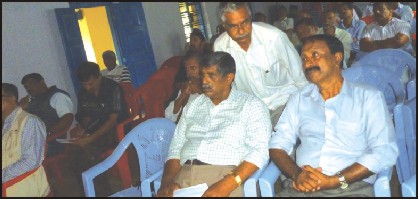
A section of coffee growers who attended the meeting in Ammathi, Kodagu, yesterday.

Virajpet (Kodagu) :

The member-coffee growers of the defunct Mysore Coffee Curing Co-operative Society (MCCCS) Limited in Mysuru, who met at Ammathi here yesterday, have resolved to go to Court seeking its intervention not to allow the auction of 5 acres land belonging to the Society.

The meeting, held at Ammathi Vyavasaya Parivartana Sahakara Sangha Hall yesterday, also unanimously resolved to acquire the MCCCS land and take up restoration work for the benefit of coffee growers.

Sangha President Mookonda Bose Devaiah, addressing the members, said that the Government Liquidator’s decision to auction the MCCCS land was against the law of the land. The 10 acres land for MCCCS building was acquired in 1953 by the coffee growers of Kodagu, Hassan and Chikmagalur districts for coffee storage and marketing facilities, he added.

Devaiah also pointed out that in 1998, the State Government appointed a Liquidator, who sold 3 acres of the 10 acres MCCCS land and paid the salary dues to the employees.

Cheranda Nanda Subbaiah, a member-coffee grower, who also spoke at the meeting, called upon the coffee-growers to unite and strive to protect the MCCCS land from being auctioned.

Another member-coffee grower Hemachandra said that the coffee growers from the respective districts will try to bring a stay order from a Court against the arbitrary decision of the Government Liquidator to auction MCCCS land.

Reacting to this, another coffee grower Kolathanda A. Subramani said that the Government, which had acquired 1.13 acre land of MCCCS to recover the debt, had earmarked the land for construction of an Co-operative Academy.

Now, when the MCCCS is free of debts and has rented out 13 godowns, how can the Liquidator go ahead with the auction of MCCCS land, he questioned.

Presiding over the meeting, Kuttanda K. Appachu said that it was now inevitable for the coffee growers of the three districts to seek legal recourse to save the Society’s land as the said land was purchased from the proceeds received through sale of shares of MCCCS.

He also alleged that the move to auction 5 acres of Society’s land had been initiated under pressure from some vested interests.

District Maha Mandala President Iynanda Jappu Achappa called upon the coffee growers to gear up for a legal battle to protect the land.

The meeting also resolved to send copies of the resolution to all those concerned.

Coffee grower S. P. Prasanna of Somwarpet, Ex-Servicemen Association President Chendrimada Ganesh Nanjappa, Zilla Panchayat member Bond Ganapathy, K.M. Viju Chettiappa Mookonda Aiyappa, Bose Mandanna of Balele, P.M. Nanda of Halugunda, Mookachanda Arun Appanna, Patrapanda Raghu Nanaiah were among the coffee growers present at the meeting.

It may be recalled that the Liquidator of the MCCCS, Mysuru, in an advertisement published in Mysooru Mithra on June 18, 2015, had declared holding of a meeting of MCCCS in Ammathi was in violation of Section 73 of the Karnataka Co-operative Societies Act 1959.

source: http://www.starofmysore.com / Star of Mysore / Home> General News / Saturday – June 20th, 2015

India Set to Record Highest Coffee Production in 2015-16

Representational image

New Delhi :

Coffee production in India is expected to touch a new peak of 3,55,600 tonnes this marketing year starting October, as the crop prospects are encouraging due to adequate rains in most growing states, state-run Coffee Board said on Monday.

The country’s total coffee output has reached a record 3,27,000 tonnes in the ongoing 2014-15 coffee year, though slightly lower than the earlier estimate of 3,31,000 tonnes made for the same period, it said in a statement.

The coffee year runs from October to September.

Releasing the initial production estimate for 2015-16, Coffee Board said: “The post blossom crop forecast for the year 2015-16 is placed at 3,55,600 tonnes. This is an increase of 28,600 tonnes over the final crop estimate of 2014-15.”

Of the total, Arabica production is estimated at 1,10,300 tonnes in 2015-16 as against 98,000 tonnes this year, while that of Robusta production is pegged at 2,45,300 tonnes as against 2,29,000 tonnes in the said period, it said.

Arabica and Robusta are the varieties of coffee.

“Overall, the crop prospects of 2015-16 at post-blossom stage are quite encouraging with a promise of highest record crop thanks mainly to the timely and adequate blossom and backing showers in traditional areas and non-traditional areas,” it said in a statement.

According to the Board, much of the production gain is expected to come from Karnataka, where total coffee output is pegged at 2,56,500 tonnes in 2015-16, as against 2,33,230 tonnes in the current year.

“The main reason for increased crop forecast in the state is that all coffee growing areas have received timely and adequate blossom and backing showers during this year.

Additionally, prevalence of good prices encouraged the growers to adopt better husbandry practices which have helped to invigorate production,” it said.

The output in three coffee growing districts Kodagu, Chikmagalur and Hassan is estimated higher at 1,38,075 tonnes, 85,250 tonnes and 33,175 tonnes, respectively, for 2015-16.

Coffee production in Kerala is estimated to increase to 69,800 tonnes in 2015-16 from 67,700 tonnes this year, while the output in Tamil Nadu is likely to improve marginally to 18,800 tonnes from 17,875 tonnes in the said period.

In non-traditional areas, coffee production in Andhra Pradesh is estimated to increase to 9,700 tonnes from 7,425 tonnes, while the output in Odisha is expected to rise to 600 tonnes from 550 tonnes in the said period.

Coffee output in north eastern region is, however, expected to decline marginally to 200 tonnes in 2015-16 from 220 tonnes in 2014-15, the Board added.

Till last week, monsoon rains were 11 per cent more than the average. Monsoon rains are expected to be normal in June but may weaken in the next month, as per the Met department.

India accounts for only 4-5 per cent of the world’s output, but exports 70-80 per cent of its produce. Italy, Russia and Germany are the top three buyers of Indian coffee.

source: http://www.ndtv.com / NDTV / Home> Sections> All India / Press Trust of India / June 23rd, 2015

Mysore Coffee Curing Co-operative Society Ltd. (MCCCS) land row : Meeting of Defenders of Society’s property interest at Kodagu tomorrow

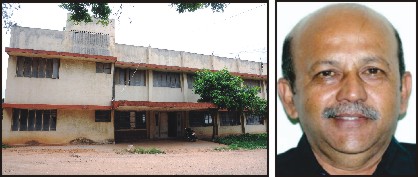
1) The Society’s office building standing on the Society’s land. 2) Bose Devaiah

Mysuru :

The State Government’s decision to auction 5 acres of land belonging to the Mysore Coffee Curing Co-operative Society (MCCCS) on KRS Road, near Gokul Theatre in Gokulam, here, has come as a shock to the coffee growers, who are members of the Society which is under liquidation.

On coming to know about the Government’s decision to auction the land from the press advertisement, the member- coffee growers have decided to launch an agitation soon to save and protect their property, sources said.

In order to discuss the issues, the Kodagu-based Ammathi Vyavasaya Parivartana Sahakara Sangha (MCPCS) President Mookonda Bose Devaiah has convened a meeting on June 19 in Ammathi at 10 am. This meeting will discuss about the land of MCCCS, revival of the defunct MCCCS, election of the President and office-bearers to pursue their objective.

When contacted by SOM, Devaiah said the meeting would pass a resolution and submit the same through Kodagu MLAs to the Government, urging handing over of the MCCCS land to its members. He alleged that some officials and influential representatives of the people have colluded to auction the MCCCS land.

MCCCS established in 1953

Devaiah pointed out that the coffee growers of Kodagu, Hassan and Chikmagalur districts got together in 1953 to establish MCCCS by procuring 10 acres land. MCCCS had been functioning normally for many years and had also constructed several godowns, he added. However, when the sale of coffee was freed from restriction and free-market was allowed, the Society began to incur loss.

The cash-strapped MCCCS which was into coffee marketing, was soon in debts, he said, adding the Society was unable to pay even salary to its employees.

In 1998, the State Government appointed a Liquidator, who sold 3 acres of the 10 acres land belonging to MCCCS and paid the salary dues to the employees, said Devaiah. MCCCS owed money to the Government and hence, 1.13 acre land was earmarked for construction of an Academy by the Government, he added.

Devaiah said, the rental money from the godowns is being deposited in the Liquidator’s account which should belong to the members. It is unfortunate now the Government has unilaterally decided to sell the remaining 5 acres of valuable land.

Several irregularities have been observed in the Government’s decision to auction the MCCCS land, opined Devaiah, saying the Liquidator should have properly ascertained the transactions of the Society before arriving at a decision to auction the land.

Devaiah said the Liquidator has no rights to sell the land of MCCCS and if a situation arises to sell the property, the Liquidator should convene a General Body Meeting of the Society to decide or on the Court’s order. The Society does not owe any money to the Government at present as all dues have been cleared, he said.

Coffee growers have been opposing the unilateral decision of the Government to auction the MCCCS land quite for some time now. But, the Government has not convened a single General Body Meeting of the MCCCS since 1998 and there is no communication about the rental amount collected from godowns. No notice has been issued to the members of the MCCCS to seek their opinion on auctioning the land. The coffee growers have been transporting their coffee products through the rail network available from the Mysuru Railway Station and have plans to construct modern godowns to store coffee products in the MCCCS land, Devaiah told Star of Mysore.

source: http://www.starofmysore.com / Star of Mysore/ Home> General News / Thursday – June 18th, 2015

Tata Coffee Appoints Sanjiv Sarin as Managing Director, CEO

SanjivSarinKF29mar2015

New Delhi:

Tata Coffee on Friday appointed Sanjiv Sarin as managing director and chief executive officer CEO of the company for a period of three years.

Mr Sarin is currently working as CEO designate and will replace Hameed Huq, currently managing director of the company. Mr Haq will retire on March 31.

“The Board of Directors at their meeting dated March 27, 2015 has appointed Sanjiv Sarin, the present ‘CEO Designate’ as Managing Director & CEO of the company for a period of three years with effect from April 25, 2015,” Tata Coffee said in a filing to the BSE.

In December last year, the company’s board had approved the appointment of Sanjiv Sarin as CEO designate with effect from January 8 this year.

Mr Sarin has also held the position of regional president-South Asia of Tata Global Beverages from the past four years.

During his tenure, he has significantly strengthened Tata Global Beverages’ position in the country’s branded tea market. He has over 38 years of experience in a variety of significant roles.

Tata Coffee is a subsidiary of Tata Global Beverages and it produces more than 10,000 tonnes of shade-grown Arabica and Robusta coffees at its 19 estates in South India.

Its two Instant Coffee manufacturing facilities have a combined installed capacity of 8,400 tonnes.

source: http://www.profit.ndtv.com / NDTV Profit / Home> Corporates / by Press Trust of India / March 27th, 2015

From Bean to Cup

The Coffee Board of India serves as the friend, philosopher and guide to the coffee sector in the country covering the entire value chain
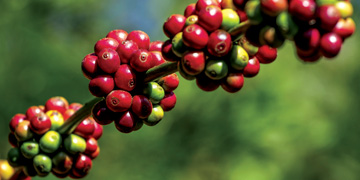
CoffeeBeansKF12mar2015

The saga of Indian coffee began on a humble note, with planting of ‘Seven seeds’ of ‘Mocha’ during 1600 AD by the legendary holy saint Baba Budan, in the courtyard of his hermitage on ‘Baba Budan Giris’ in Karnataka. For quite a considerable period, the plants remained as a garden curiosity and spread slowly as back yard plantings. It was during 18th century that the commercial plantations of coffee were started, thanks to the success of British entrepreneurs in conquering the hostile forest terrain in south India. Since then, Indian coffee industry has made rapid strides and earned a distinct identity in the coffee map of the world.

The Coffee Board

During 1940s, the coffee industry in India was in a desperate state due to the World War II resulting in very low prices and ravages of pests and diseases. At this time, the Government of India established the Coffee Board through a constitutional act – Coffee Act VII of 1942 – under the administrative control of the ministry of commerce and industry. The Board comprises 33 members including the chairman, who is the chief executive and appointed by the Government of India. The remaining 32 members represent the various interests such as coffee growing industry, coffee trade interests, curing establishments, interests of labour and consumers, representatives of governments of the principal coffee growing states and members of Parliament.

After pooling was discontinued in 1996, Coffee Board serves as the friend, philosopher and guide to the coffee sector covering the entire value chain. The core activities are primarily directed towards research & development, transfer of technology, quality improvement, extending development support to growing sector, promotion of coffee in export and domestic markets. The activities of the Board are broadly aimed at (i) enhancement of production, productivity and quality; (ii) export promotion for achieving higher value returns for Indian coffee and (iii) supporting development of the domestic market.


Research and Export Promotion

Organised research in coffee was initiated during 1925 by the erstwhile Mysore Government by setting up the Mysore Coffee Experiment Station near Balehonnur in Chikmagalur district. After formation of the Coffee Board, the research station was brought under its administrative control. Presently the Research Department of the Board with its headquarters at the Central Coffee Research Institute and five regional stations has a sanctioned strength of 113 scientific personnel and is involved in development of improved varieties with tolerance to major pests and diseases and standardisation of technology for improving production, productivity and quality.

CoffeeAreasKF12mar2015

After liberalisation in 1996, the marketing functions were deregulated. The Coffee Board plays the role of facilitator and promoter of Indian coffee exports. However, registration of exporters is the responsibility of the Coffee Board. Under the Export Promotion scheme, exports of value added coffees in retail packs and export of coffee to high value far-off destinations are incentivised to offset the transaction costs to some extent and enable the Indian exporters to be competitive in the export market. These incentives provide opportunities to expand the footprint of Indian Coffee in higher value destinations like USA, Japan, Canada, Australia, New Zealand, etc on one hand and reinforcing presence in traditional markets i.e., European Union/ Russia and CIS etc.

Besides, the Board regularly participates in leading coffee trade shows/ exhibitions held in major consuming countries to promote awareness about quality of Indian coffee to the overseas roasters, traders and consumers. The Board also conducts Flavour of India – The Fine Cup competitions to select fine coffees and expose them to the export market. It also promotes coffee consumption in the country through 12 India Coffee Houses located in major cities across the country.

In India, coffee is traditionally grown in the Western Ghats spread over Karnataka, Kerala and Tamil Nadu. Coffee cultivation is also being expanding rapidly in the nontraditional areas of Andhra Pradesh and Odisha as well as in the North East states. Coffee is predominantly an export oriented commodity and 65 per cent to 70per cent of coffee produced in the country is exported while the rest is consumed within the country. Indian coffee industry earns a foreign exchange to the tune of about Rs 4000 crore. In the international market, Indian coffees earn a high premium, particularly Indian Robusta which is highly preferred for its good blending quality. Arabica Coffee from India is also well received in the international market.

Arabica is a mild coffee, but the beans being more aromatic, it has higher market value compared to Robusta beans. On the other hand Robusta has more strength and is, therefore, used in making various blends. India is the only country that grows all of its coffee under shade. Typically mild and not too acidic, these coffees possess an exotic full-bodied taste and a fine aroma.

India cultivates all of its coffee under a well-defined two-tier mixed shade canopy, comprising evergreen leguminous trees. Nearly 50 different types of shade trees are found in coffee plantations. Shade trees prevent soil erosion on a sloping terrain; they enrich the soil by recycling nutrients from deeper layers, protect the coffee plant from seasonal fluctuations in temperature, and play host to diverse flora and fauna.

Coffee plantations in India are essential spice worlds too: a wide variety of spices and fruit crops like pepper, cardamom, vanilla, orange and banana grow alongside coffee plants.


Training courses in coffee culture and management

The Central Coffee Research Institute, popularly known as CCRI, has grown as an internationally recognised, state-of-the-art research centre for carrying out research on all aspects of coffee cultivation. CCRI is committed to introducing emerging technologies and sustainable package of practices to benefit the coffee farmers. It plays an important role in the development and growth of the coffee agricultural sector. CCRI has 133 dedicated scientists working for the development of newer technologies in close association with a number of international institutes, reputed national institutes and pure science and agricultural universities.

The CCRI, apart from the development of new technologies, is involved in imparting training on scientific coffee cultivation to the benefit of all the stakeholders since 1953. The institute is recognised as an international centre of excellence for training in coffee culture by the FAO, Rome. Candidates from several coffee growing countries are being sponsored for these training programmers by the world

CHART

Coffee regions of India

Anamalais (Tamil Nadu): Wildlife sanctuaries in this region are the abode of spotted leopards,while the plantations are home to fine, high-grown Arabicas, including the exotic Kents.

Araku valley (Andhra Pradesh):
Home to colourful parrots, it is not unusual to see a flock of chattering red and green birds, darting through trees in this scenic valley.

Bababudangiris (Karnataka): Bababudan brought seven ‘magical’ beans from Yemen and planted them in the lofty hills of this region. Deer is often spotted, grazing alongside plantations abundant with full-bodied Arabicas.

Biligiris (Karnataka/Tamil Nadu):
Besides full-bodied Arabicas, this region is noted for the sambar – the largest Indian deer with huge antlers.

Brahmaputra: The mighty Brahmaputra which flows through the North Eastern states is the lifeline of this region which is home to the one-horned rhinoceros. This sturdy animal is found in large numbers at the Kaziranga National Park in eastern Assam.

Chikmagalur (Karnataka): Chikmagalur’s forests and wildlife sanctuaries are abundant with beautiful peacocks, India’s national bird. The peacock loves to show off its colourful feathers, especially during its elaborate courtship dance.

Coorg (Karnataka):
Lush coffee plantations are bustling with honeybees which yield the delicious Coorg Honey, collected by nimble-footed tribals

Manjarabad (Karnataka): Gentle sloping terrain with small streams and coffee plants provide a natural habitat for the jungle fowl. This yellow-headed bird with a red comb and multi-coloured plumage is generally seen in pairs, close to the coffee plantations.

Nilgiris (Tamil Nadu): The plantations are home to fine, high-grown Arabicas, including the exotic Kents.

Pulneys (Tamil Nadu): A well-known feature of this region is the bright, bluebell-like Kurinji flower that makes a dramatic appearance, once in 12 years. The high-grown Arabicas however, are a predominant sight, year after year.

Sheveroys (Tamil Nadu):
The magnificent Gaur or Indian bison is an embodiment of vigour and strength, much like the boldsized Arabicas grown here. This massive animal with its huge head and sturdy limbs grazes on the lower hill tracts of this picturesque region.

Travancore (Kerala): The national flower of India, the lotus symbolises purity and beauty. These bright, fragrant flowers with floating leaves and long stems, grow in shallow waters in this region noted for its Arabicas and Robustas.

Wayanad (Kerala):
Wayanad is home to the Indian tiger, India’s national animal – a symbol of valour and courage.

source: http://www.financialexpress.com / Financial Express / Food & Hospitality World / Home> Cover Story / March 05th, 2015

Indian coffee turns costly for the world, exports down 20%

India’s coffee exports have declined 20% since the beginning of 2015 as high prices have made shipments uncompetitive in the global market.

The Arabica coffee shipments plummeted by as much as 50%, pulling down the overall coffee exports of India.

Widespread rains in the largest Arabica-producing nation Brazil have led to a 14% decline in global Arabica prices in the past two months.

The May futures at ICE New York closed at $1.48 per pound on Monday , down 3% from the previous close.

“At the current domestic prices, the exports are not viable. Arabica from Brazil and other origins is much cheaper,” said MP Devaiah, general manager of Allanasons, a major exporter.

The raw coffee prices of Arabi ca parchment in India are about . 10,300 per 50 kg.` Between January 1 and February 23, the Arabica parchment exports fell to 6,617 tonne, down by as much as 50% compared to the year-ago period. The Robusta cherry , which accounts for a major share of coffee exports from India, fell 15% to 16,012 tonne during the period of January-February .

CoffeeCupKF25feb2015

According to local growers, the Arabica crop has been lower than expected due to poor weather conditions and the attack of white stem borer pest. “The harvest is over and the output should be between 55,000 and 60,000 tonne,” said K Kurian, chairman of Karnataka Planters’ Association.

The growers earlier predicted 65,000 to 70,000 tonne of Arabica while the estimate of Coffee Board was much higher at 1,05,000 tonne.

But exporters said the drop in production is not as much as it is made out to be.

“The growers are holding the stock in anticipation of better prices. As a result, exporters are unable to enter new commitments,” said Ramesh Rajah, president of Coffee Exporters’ Association of India.

However, he added since the Robusta crop is predicted to be good, the current decline in exports could be made good in the next quarter.

Coffee Board’s forecast for Robusta is 2.39 lakh tonne and the growers’ estimate is only slightly less.

The production in Vietnam, the top producer of Robusta, is expected to be around 29 million bags (each bag of 60 kg), slightly lower than in the previous year.Therefore, Vietnam may not be able to lower the prices of what it has to offer globally.

source: http://www.economictimes.indiatimes.com / The Times of India / ET Home> Industry> Cons. Products> Food / by KrishnaKumar PK / TNN / February 25th, 2015

Road works may hit coffee exports from Karnataka

Curbs on movement of containers on two State highways affect delivery to port

Bengaluru :

Curbs on the movement of heavy container traffic on the key State highway connecting Kodagu with Mangaluru port, and the closure of Shiradi Ghat on National Highway 75 for repairs will hamper coffee export consignments in Karnataka, the major coffee producer in the country.

Exporters said containers were stopped from moving on the Mangaluru-Kodagu State highway from Monday by the district administration for repairs. As a result, coffee consignments have to be transported in normal trucks, a move that will increase shipment costs, Ramesh Rajah, President of Coffee Exporters Association, said.

Round about
The Shiradi Ghat on NH-75, which connects Mangaluru with Hassan and also used by exporters in Chikmagalur, has been closed since the beginning of this month for repair and development work.

Most of the green coffee beans from the key growing regions of Kodagu, Hassan and Chikmagalur are normally shipped to the Mangaluru port in containers as it is safe and the quality can be maintained, Rajah said.

Some 22 tonnes of coffee can be transported in a single container from the hinterland to the port. Two lorries with a capacity of 10-12 tonnes are required to transport the same quantity, entailing additional costs.

Karnataka accounts for about two-thirds of the coffee produced in the country and Mangaluru is the major port for coffee shipments.

Rajah said most of the export orders have been booked on free-on-board basis from Mangaluru port and the latest curbs on container movement during the peak exporting season could hurt the realisation for exporters and growers.

He said the Government should look for a solution for regulating the container traffic on the Kushalnagar-Mangaluru road to ease the movement of coffee shipments.

Further, Rajah said the overseas demand for robustas has been good, but the interest for arabicas has been rather subdued due to volatile prices.

Robust outlook
“The order book for the robusta is better than last year, and shipments have been picking up in the past couple of days,” he said. Robusta is currently being harvested across the key growing regions. According to the Coffee Board, provisional exports in the current calendar year (from January 1 to 15) are down at 6,610 tonnes against 8,597 tonnes in the same period a year ago.

Last year, coffee exports stood at 3.01 lakh tonnes valued at ₹4,984 crore ($818 million).

The Board, in its latest post monsoon estimates, has pegged the 2014-15 crop size at 3.31 lakh tonnes, a 4 per cent decline over its early or post blossom estimate of 3.44 lakh tonnes, primarily due to lower arabica crop that faced a severe pest attack, erratic rainfall and a cyclone.

However, the latest estimates for 2014-15 are 8.7 per cent higher than last year’s final estimate of 3.04 lakh tonnes.

Arabica output for the current season is pegged at 99,600 tonnes, while production of Robusta is expected to 2.31 lakh tonnes for the 2014-15 season, a decline of 5.6 per cent and 3.28 per cent respectively over the post blossom estimate.

source: http://www.thehindubusinessline.com / Business Line / Hom> Agri-Biz / by Vishwanth Kulkarni / Bengaluru – January 20th, 2015