Category Archives: Coffee, Kodagu (Coorg)

Tata Coffee Board Approves Stock Split

New Delhi:

Tata Coffee, Asia’s largest coffee plantation company, on Tuesday said its board has approved a proposal to split its equity shares from the existing face value of Rs. 10 per share to Rs. 1 per share.

However, the stock split is subject to the approval of company’s shareholders which is proposed to be obtained through postal ballot and e-voting, the company said in a filing to the BSE.

Stock split or sub-division of equity shares is usually done by the companies with the purpose of infusing liquidity by making shares affordable for retail investors who could not invest earlier because of the high stock price.

On November 17, the company had informed that board will consider the proposal of stock split of its equity shares.

Tata Coffee had reported a manifold increase in consolidated net profit at Rs. 32.36 crore for the second quarter that ended on September 30, on account of better performance by the company’s US subsidiary.

Shares in Tata Coffee, on Tuesday, ended at Rs. 977.25 apiece on BSE, up 0.62 per cent from the previous close.

source: http://www.profit.ndtv.com / NDTV Profit / Home> Market / Press Trust of India / November 25th, 2014

Coffee Board blends co-op subsidies into coffee kettle

In an effort to enhance the production of robusta and arabica coffees, the Coffee Board has proposed higher allocation for replanting and expansion, Coffee Board Chairman Jawaid Akhtar said on Thursday.

Under the 12th Plan subsidy rates have been proposed at 40 per cent for up to 2 hectares, 30 per cent for 2-10 hectares and 25 per cent for holdings of above 10 hectares.

Inaugurating the United Planters Association of Southern India (UPASI) and Karnataka Planters Association (KPA) coffee conference on Thursday, Akhtar said, “Coffee Board has proposed to increase the unit cost by 75 per cent to Rs 1,75,000 per hectare.”
For the first time, the Board has included corporates and co-operatives to avail of the subsidy.

Besides, the Board has also introduced subsidy for eco-certification at 50 per cent of the certification cost at a ceiling of Rs 50,000 per beneficiary. It has also enhanced subsidy for quality upgradation to Rs 2.50 lakh for up to 20 hectares.

UPASI President Vijayan Rajes said the coffee committee of UPASI will submit a proposal to the Coffee Board to forward it to the Centre to release funds for producing two new robusta clones and one robusta seedling. This will be in collaboration with Incaper, Brazil’s premium research organisation for conillon robusta.

“We are planning to have a new proposal to get India-specific arabica plants with know-how from Brazil,” Rajes added. “This will help us have 10 million clones supplied to coffee growers in the first four years; and, from the fifth year, the share of Indian robusta will be increased by 50 per cent,” Rajes said.

B M Mahesh Kumar, a coffee planter from Hosathota Estate, Ballupet, spoke on ‘Achieving High Productivity of Black Pepper through Water, Shade and Nutrition Management’. He said, “Disease control can be effected by following judicious Good Agricultural Practices (GAP) and Integrated Pest Management (IPM).”

“Many people are taking up mono pepper cultivation at the cost of arabica coffee which is not a good sign,” Kumar said, adding that farmers should adopt innovative methods to multiply pepper vines for higher production.

Indian Vanilla Enterprise Pvt Ltd and Indian Vanilla Initiative Pvt Ltd, Pollachi, Chairman R Mahendran speaking on ‘Cocoa Cultivation, Processing and Management’, said that the opportunity of cultivating cocoa as another inter-crop for coconut, arecanut and oil palm in select regions of Karnataka holds promise.

Ease of cultivation and management make cocoa an attractive income generator, Mahendran added.

UPASI-TRF (Tea Research Foundation) Valparai, Quality Assurance Assistant Director N Palani stressed the importance of maintaining organic matter in the soil for preserving the physical, chemical and biological properties of soil.

Palani added that since the top soil is rich in humus, it has to be safeguarded from erosion for which soild and water conservation measures, depending on the slope of the terrain, must be taken.

source: http://www.deccanherald.com / Deccan Herald / Home> Business / DHNS – Bengaluru, November 14th, 2014

Coffee Board targets 400,000 tonnes production in 5 years

Enhances subsidy rates and extends assistance to corporates & co-operatives in 12th Plan period

The Coffee Board has set a target of achieving 400,000 tonnes of bean production through more of planting and productivity in the next five to 10 years, about 30 per cent growth over current output.

In 2013-14, production was 304,500 tonnes, a level it has roughly stayed at in recent years.

“Coffee production has stagnated. We have chalked out several programmes like area expansion in non-traditional areas and replanting in traditional areas, along with productivity enhancement,” Board chairman Jawaid Akhtar told planters here on Thursday.

A package has been readied for Andhra Pradesh and Odisha. Plantations in the former’s Araku valley were hit by the recent Hudhud cyclone; about 1,000 tonnes of damage is estimated. Tribals in the region had grown around 6,700 tonnes, spread over 58,000 hectares, Akhtar said. As part of the area expansion, he told the annual coffee conference organised by Karnataka Planters’ Association and United Planters’ Association of Southern India, the aim is to have the Araku valley produce around 25,000 tonnes in the next five years. The Board has proposed to provide Rs 10 per kg subsidy to tribals for marketing it, he said.

The Board has also proposed to continue its replantation and expansion subsidy for growers. The modalities to implement new schemes are likely to be approved next week, Akhtar said. It wishes to retain the replantation or expansion subsidy rates at 40 per cent for areas up to two hectares, 30 per cent for two to 10 ha and 25 per cent for holdings above 10 ha for the 12th Plan period. In addition, it has proposed to raise the unit cost calculation by 75 per cent to Rs 175,000 a ha. For the first time, it has proposed to have corporate groups and co-operatives be eligible for the subsidy.

Also for the first time, the Board has introduced a subsidy for eco-certification, at half the certification cost, with a ceiling of Rs 50,000 a beneficiary. It has also raised the subsidy for quality upgradation to Rs 2.5 lakh up to 20 ha.

The Board has also continued a subsidy scheme for pollution abatement measures and made corporate and cooperative growers’ bodies eligible. The rate of subsidy is to be doubled to 40 per cent, with a ceiling of Rs 5 lakh for a beneficiary.

It has also proposed to enhance the rainfall insurance premiums for small growers and reimburse them up to 75 per cent of the premium. For the first time, it has proposed a support of Rs 4 a kg of clean coffee to small grower collectives, self-help groups and other cooperatives.

The incentive for export of value-added coffee in retail packs as India brands has been enhanced by 50 per cent to Rs 3 a kg. Plus a doubling of the incentive for export of high value coffee to high value markets, to Rs 2 a kg.

Also for the first time, a 25 per cent subsidy on the cost of machinery for curing units, to a ceiling of Rs 50 lakh each.

source: http://www.business-standard.com / Business Standard / Home> Markets> Commodities> Other Commodities / by Mahesh Kulkarni / Bengaluru – November 13th, 2014

Robusta surge expected to brew up higher coffee output

India’s coffee production is forecast to increase by 1 lakh bags to 5.1 million on higher robusta output in Karnataka, the largest coffee producing state, according to the Karnataka Planters Association (KPA) Chairman D Govindappa Jayaram.

Briefing reporters on Wednesday, Jayaram said arabica production is forecast modestly lower as it enters the off-year of the biennial production cycle. Forecast for bean exports is unchanged at 3.7 million. The Coffee Board’s final estimate for 2013-14 is 3,04,500 lakh metric tonnes comprising 1,02,200 metric tonnes of arabica and 2,02,300 metric tonnes of robusta.

The final estimate for Karnataka is 2,11,100 tonnes with 78,440 tonnes of arabica and 1,32,600 tonnes of robusta. Post-blossom forecast for 2014-15 is placed at 3,44,750 metric tonnes comprising 1,05,500 tonnes of arabica and 2,39,250 tonnes of robusta.“We, however, estimate that production will decline 20-30 per cent during 2013-14 and the estimate of the Coffee Board during 2014-15 will not be reached, in particular, arabica coffee which has seen severe incidence of white stem borer,” Jayaram said.

source: http://www.deccanherald.com / Deccan Herald / Home> Business / Bengaluru – DHNS, November 12th, 2014

Coorg coffee to sail from Azhikkal port

Coffee exporters from Coorg are looking up to the newly-commissioned Azhikkal port to route their consignments as it offers savings in time and transportation costs.

“At present, we use Mangalore port for our exports, mainly to the European destinations,” said S.L.N. Vishwanath, the managing director of SVL Coffee Pvt Ltd, a major exporter from Kushal Nagar.

“Kannur port will help us cut costs as it is closer to the coffee-growing areas. We are also looking for easier transaction of business as the new port will be less congested, and hence we are keen on it,” he said.

Mr Vishwanath, along with ITC, exports 35,000 tonne of the total exports of 60,000 tonne from the region. “The port officials had contacted us with their proposal earlier and we had asked them to come back with solid proposals. If they can offer us better rates and efficiency of service, we will route our exports through Kannur.”

Kushal Nagar alone exports close to 4,000 containers of coffee and the major destinations are the European countries and the Gulf.

The exporters, however, demand that the port put in place infrastructure facilities such as electronic data interface which would facilitate seamless movement of cargo across ports.

Exporters in Kannur are also keen on the development as it would ensure that the port scale up its activities. The Kannur port, which the Central government had selected for development under the National Maritime Development Plan, received its first vessel on October 31 this year.

source: http://www.asianage.com / The Asian Age / Home> Business / by K.J.Jacob – Kochi / November 12th, 2014

Starbucks sources from Tata Coffee for Asia, US markets

Tata Starbucks Ltd, the 50:50 joint venture of US beverage chain Stabucks with Tata Global Beverages, plans to source more coffee from Tata Group company Tata Coffee, company officials said in a statement on Tuesday.

CoffeeCupKF11nov2014

To mark the company’s second anniversary in India, Tata Starbucks launched a locally sourced, roasted and packaged arabica blend, ‘Starbucks India Estates Blend’, in select Starbucks stores in Asia as well as online in the United States.

“We will see such initiatives only growing in the future, displaying the strong unity between Starbucks and Tata Coffee. It is a reflection of the shared commitment between Starbucks and Tata Coffee to develop and promote Indian-grown arabica coffees,” Avani Davda, chief executive officer, Tata Starbucks Limited said in a statement.

The arabica beans from Tata Coffee have been selected by Starbucks coffee experts from Tata Coffee’s estates across Coorg and Chikmagalur, the birth place of coffee in India. The blend has been named to represent the origin of the coffee and the packaging has been carefully created to reflect traditional Indian designs, the company said.

“This commitment to highlighting India’s rich coffee heritage, builds on the strong growth of 59 Starbucks stores across six cities and more than 1,000 passionate partners (employees) in India,” John Culver, group president, Starbucks China and Asia Pacific, Channel Development and Emerging Brands, said.

Starbucks entered the Indian market in October 2012 and currently operates 59 stores in India across Mumbai, Delhi NCR, Pune, Bangalore, Chennai and Hyderabad.

source: http://www.deccanherald.com / Deccan Herald / Home> Business / DHNS – Bangalore, November 04th, 2014

Starbucks to promote Indian coffee blends

Global coffee retailer Starbucks which had set shop in India in joint venture with the Tata Group, is keen to send more of Indian coffee blends, which it sources from around Coorg, to its stores in the US and other Asian countries.

“We have taken two very popular blends from India, to the US and Asia Pacific markets. India is a very long term market for us and we see such initiatives only growing in the future,” said Avani Davda, chief executive officer, Tata Starbucks.

The one blend, Indian estates blend, sourced from various plantations around Coorg and processed at the company’s roasting facility at Kushalnagar in Karnataka. Launched only in September, the blends may see a pick up after the US Autumn season.

In the two years of its presence in India, the Nasdaq listed Starbucks has set up 58 stores. Davda was in Hyderabad on Tuesday to set up their first store in the city. “We wont grow to prove store count. There have been a couple of international players who tested waters and shut down. But Starbucks is an iconic and respected brand and are here to understand the Indian consumer,” she said.

According to her, the coffee joint would customise itself to local tastes, even as the changes may not appear on the menu. “We look at social trends and it is definitely about coffee. We are not focused on the Indian competition but on how well we could weave a customer centric coffee experience,” she said.

The coffee retailing space is growing at around 12-15 per cent every year.

trushnaudgirkar@mydigitalfc.com

source: http://www.mydigitalfc.com / mydigitalfc.com / Home> My Brand / by Trushna Udgikar / Hyderabad – September 30th, 2014

Starbucks to take Coorg coffee global

StarbucksKF02oct2014

Hyderabad:

Tata Starbucks Limited, a 50:50 joint venture between Tata Global Beverages and Starbucks Coffee Company, is planning to take its Indian coffee blends global. For this, the world’s largest coffee retailer plans to send its Coorg sourced coffee blends to its stores in the United States and other Asian countries.

Speaking on the sidelines of launch of its flagship outlet in Hyderabad, the firm’s chief executive officer (CEO) Avani Davda said, “We have taken two very popular blends from India Indian estate blends and Indian espresso roast to the United States and Asia Pacific markets. India is a very long-term market for us and we see such initiatives only growing in the future.”

The coffee retailer, which has almost 58 stores spread across six cities in the country, has about 15-17 coffee estates spread in the Coorg region and out of this four are of the India estate blends. Processed at the company’s roasting facility at Kushalnagar in Karnat-aka, the blends may see a pick up after the United States autumn season, opined Ms Davda.

Elaborating on the expansion plans and also on their competitors, the chief executive said, “We look at social trends and it is definitely about coffee”.

“We are not focused on the Indian competition but on how well we could weave a customer centric coffee experience,” Ms Davada added.

source: http://www.deccanchronicle.com / Deccan Chronicle / Home> Business> Companies / DC Correspondent / October 01st, 2014

Expert panel gives go-ahead for power line; 50,000 trees in Kodagu forests will go

The figure is floated by green activists and is disputed by the authorities, though within the government agencies it varies from 2,247 to 21,000. The trees fall in the verdant forests of Kodagu and the activists could be close to the mark, admit official sources
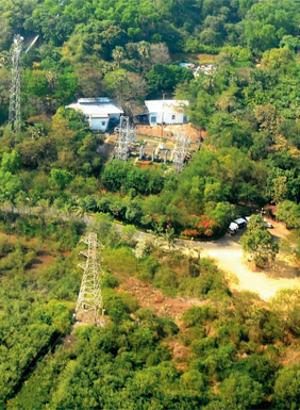
KodaguTreeKF30sept2014

Protests and campaigns have come to a nought, and the axe is set to fall on over 50,000 trees in the evergreen deciduous forests of Kodagu with an expert panel giving its nod to the power line project meant to light up towns and villages in Kerala.

Terming the alternative routes proposed by the locals as technically and financially unfeasible, the three-member expert committee has given its go-ahead to the high power transmission line between Mysore and Kozhikode. Activists of the ‘Save Cauvery’ movement in Kodagu say the decision will ring the death knell for more than 50,000 trees.

While the Power Grid Corporation of India (PGCI) continued to maintain only 2,247 trees will be cut, deputy conservator of forests, Virajpet, has submitted an affidavit before the Green Tribunal in Chennai that a total of 21,000 trees will be felled along the alignment line proposed by PGCI. However, activists who have trekked the entire stretch using GPS coordinates argue that not less than 55,000 trees, both in private areas and on forest land, will face the axe.

Following widespread protests across Kodagu district over the large-scale clearance of forest and degradation to the fragile eco-system of the area, the state government had appointed a three-member expert committee to look into the issue and study the feasibility of possible alternative routes as proposed by the activists. The committee comprising noted elephant expert Prof Raman Sukumar of Indian Institute of Science (IISc) and Ajai Misra, Additional Principal Chief Conservator of Forests (APCCF) was headed by R S Shivakumara Aradhya of Central Power Research Institute (CPRI).

‘Other routes not feasible’

NGOs and activists had proposed alternative routes that would be less damaging to the eco-system, but the committee has stated in its report that these routes are not only detrimental to wildlife conservation, but require huge capital and are technically not feasible. According to the report, accessed by Bangalore Mirror, adopting other routes would require more forests to be cleared than what the present proposal will necessitate. Activists had suggested use of the D-line (District line dividing the two districts of Mysore and Wayanad in Kerala) passing via Nagarhole or the existing 220 KV line on the Kadakola-Kaniyampetta corridor for linking Karnataka with Kerala and Tamil Nadu in the South, besides upgrading the 110 KV corridor between Kasaragod and Mangalore.

“Alternative routes will destroy the Kodagu environment as a large number of trees will have to be cut, adversely affecting the Dubare-Devamachi reserve forest which has considerable presence of elephants and tigers. Using these routes will not only affect the tribal settlement inside forests, but also call for felling of trees in coffee estates which are part of Kodagu ‘s ecosystem. The paddy fields along the proposed line would become unfit for cultivation. The temperature of line conductors will affect coffee plants and affect the national forest policy, which envisages about 33 per cent forest and tree cover. Work in these areas would not only reduce inflow to Kaveri and its tributary Lakshmana Theertha, but also intensify the man-animal conflict,” the report said.

‘Existing lines are over-exploited’

On the prospects of using the existing corridors, the committee observed: “While the corridors are designed to carry a load of 130 MW to 140 MW, they have been used to transmit 180-200 MW of power regularly. Due to overloading, there already has been high sagging of conductors. Further, the ground clearance is low and there have been instances of elephants being subjected to fatal shocks. The Dasara elephant ‘Drona’ too had been a victim of this in the past. The existing 220 KV line runs North East-South West of Kabini for about 32 km of which 20 km is through Nagarhole forest; upgrading the line would only further disturb the ecology.”

‘Tunnelling will hit coffee estates’

Studying the feasibility of laying underground cables, the committee reported it would cost five to 20 times more than the cost of overhead transmission lines. “If the cable is laid, the ground above has to be cleared of vegetation and must be provided with access roads for maintenance. The cable has to be cooled by forced air or by way of circulating water. Further, the repair time is 25 times greater than that of overhead line repair,” the report states.

The experts clarified that laying a double circuit line along the D-line will require 130 hectares of dense tropical forest to be cleared. Besides, reactive power absorption devices have to be installed every eight to 10 km along the cable route; these sub-station-size structures requiring about 2,500 sq metres, the experts said.

‘Project crucial for Karnataka too’

Even though the line between Mysore and Kozhikode was planned under Kaiga Stage II for transferring the generated power from Kaiga to other places way back in 2007, work could not be taken up for several administrative and technical reasons. “Besides this project, there is absolutely no grid connectivity between Kerala and Karnataka. The proposed line, besides helping Kerala, will help us draw power from Koodankulam and other new stations planned along the Tamil Nadu coast. This Southern grid connectivity will help Karnataka harness more than 3,500 MW wind power generated in Tamil Nadu,” said a senior official from the energy department.

Referring to illegal clearance of forests in excess of what was permitted, the committee said, “The line route, proposed by the Power Grid Corporation, requires about 6,000 trees to be cut within a 12-km stretch of coffee plantations in Kodagu, in addition to the 2,247 trees (above 55 cm girth) already felled in that stretch.” Acknowledging clearance of forest for about 52 metres as against the permitted 46 metres along a four-km stretch, the experts suggested efforts to regenerate the natural vegetation in the stretch of land between the 46-52 metre width in Dubare and Devmachi reserved forests.” The committee has also directed the forest department to implement a conflict mitigation plan for preventing man-animal conflict in the area which will completely be funded by PGCI for a minimum of three years after completion of the project.

Reacting over the recommendations of the committee, power minister DK Shivakumar told BM, “The committee has given us a green signal to go ahead with the project. The activists, farmers have to understand this and must support the government by giving all the necessary help. There is tremendous pressure from the Centre to accomplish the project and it is more important from the energy security of the state in future. It helps us draw more and more power in a short duration time from the generating stations of Tamil Nadu. We are just waiting for the rains to stop and once the rains are officially ended, we will take up the work along the proposed corridor.”

source: http://www.bangaloremirror.com / Bangalore Mirror / Home> Bangalore> Cover Story / by Niranjan Kaggere, Bangalore Mirror Bureau / September 29th, 2014