Category Archives: Coffee, Kodagu (Coorg)

Coffee festival

Cafe Coffee Day, Kuvempunagar, has organised Coffee Festival to learn the fine art of coffee making and many interesting facets of coffee art from Coffee Evangelist Merlin Raj (National Barista Champion of 2012.

Represented India at World Barista Championship in Vienna, Awarded for best signature beverage in Indian Barista championship) tomorrow at 12 noon.

source: http://www.starofmysore.com / Star of Mysore / Home> In Brief / March 19th, 2014

Tata Coffee sees huge margin upside in instant coffee biz

Tata Coffee expects markets of West Asia, Turkey and Iran to open up and becoming new buyers. It is also witnessing shift in dynamics of its US market business. “We are shifting much of our business from bulk to packaging currently,” said Huq.

Hameed Huq, MD of Tata Coffee said the rally in coffee prices is based on the severe drought in Brazil, the world’s biggest coffee producer.

The prices of Arabica coffee have gone up by 60 percent in the last 6-8 weeks, and this rise is here to stay, says Huq. “While Robusta coffee prices have gone up, they have not moved up as dramatically as Arabica coffee prices,” said Huq. Tata Coffee expects markets of West Asia, Turkey and Iran to open up and becoming new buyers. It is also witnessing shift in dynamics of its US market business.

In an interview with CNBC-TV18’s Reema Tendulkar and Ekta Batra, Huq said, “We are shifting much of our business from bulk to packaging currently.”.

Tata Coffee garners 50 percent of its revenue from instant coffee business. Huq says the company plans to focus more its coffee business and sees no new additions in its tea business. “We are seeing huge upside in margins for our instant coffee business,” he told the channel.

Below is the verbatim transcript of the interview:

Q: We have witnessed sharp increase in coffee prices across 2014, how much does Tata Coffee stand to gain since the company exports a considerable proportion of the produce?
A: The coffee prices in the terminals are determined by two factors. One is a fundamental factor, the other is the funds, etc playing. This rally is based on a very severe drought in Brazil, so this is a rally and Arabica prices have gone up by 60 percent. However, along with anticipated shortfall in Brazil the Robusta prices have also moved up. It has not gone up to the same extent whereas Arabica has moved up by 60 percent; this has moved up by 30 percent odd. So, what does it do for Tata Coffee – essentially we have just completed our harvest. We finished Arabica, we got good crop. Robusta, the crop was marginally lower. We have got all this coffee now to sell in financial year ’14-15. So, to that extent price increase will translate back into the bottom line and the various quarters coming forward.

Q: Analyst views are suggesting fall in coffee prices globally, what is your view?
A: We have to look at what has caused it because a lot of people are analyzing it. Essentially, we were looking at a carry forward, a surplus stock at the end of the next coffee year, about five-six million bags. The crop has come down by 10 million bags. So, from a surplus situation this has gone into a deficit situation on the closing stock. The other thing to understand is what has caused this. If it was simple lack of rainfall, definitely rains would come and things would correct itself but in Brazil what has happened, it was not only lack of precipitation rainfall, it was compounded with very high temperatures which depleted the soil moisture with the result certain amount of damage has been done not only to this year’s crop, people are talking for next year’s crop also being affected. So, if we come out with a deficit situation or a breakeven situation and then come into not a big crop next year; with steady 2 percent rise in consumption, these prices – our understanding will remain whether it will remain at USD 2 or come down, nobody can say but gone are the days what we saw second half of last year of dollar end 5 and dollar end 10 cents to the pound, which is below the cost of production of many producers in the world and everybody will have views on this. Our views are that because this is by fundamental, the retraction will not go back to the levels we saw six months ago.

Q: The fall in coffee prices during 2013 or last year did hit your performance. So, in that sense, can you give us a sense, number wise that if in case there is an improvement in coffee prices, what would be the impact number wise on the profit and loss (P&L) front for Tata Coffee?
A: We generally do not give guidance on principal. There is a normal escalation in cost with the wages and everything else and take the percentage increase because we generally do not give guidance on percentage on improvement on margins. Q: Your Company exported nearly 40 percent in January on stronger prices but how are you seeing the current situation pan out? A: The maximum benefit will come into the next financial year largely on account of – although we are a plantation company, 50 percent of our revenue comes from instant coffee. If you look at it, the Arabica prices have hardened substantially but the Robusta prices have not got up to the extent. Our major competition with low Arabica prices came from the South American producers who use a lot of Arabica in instant coffee. To that extent, we will be much more competitive with higher percentage of Robusta and also having covered our coffee fairly well. In instant coffee business also we are seeing an uptick after this. Last year there was acute competition from producers in Brazil but to that extent Arabica prices have gone up substantially and our competitive pressure also comes down in instant coffee which is significant for our business now almost 50-55 percent of income comes from instant coffee.

Q: During 2013 we did see you enter into the south East Asian markets. What is on the anvil for the international markets at this moment or perhaps in the near future, anything that you have slated in 2014-2015?
A: We have been able to consolidate our position in Japan which is a very difficult market but a remunerative market. Russia, which has given us problem, last year on account of dumping from Ecuador and Brazil is again opening up in spite of the internal problems. However, what is very interesting is that Middle East, Turkey, Iran, they have become new buyers. These are economies that are opening up. So, this is our new thrust. We will consolidate our position in West Africa; we are also entering into Eastern Europe which is roasted ground coffee but instance coffee is there. So, these are the new markets, the new initiatives we have taken on. We have commissioned a very modern packaging unit at our Theni plant. So, we are moving our business more from bulk to the packing. So, these are the two significant steps we have taken and should start seeing the result in the next financial year.

Q: What about the Eight O’ Clock business because it saw a fall close to about 12.5 percent in Q3. Has there been any recovery and would be the expectations be how Eight O’ Clock will perform going ahead?
A: There has been a little change in the market dynamics in the US coffee market. Large reason the shift from black coffee to single serve is very rapid but Eight O’ Clock is in both the segments. So, you may see some volume issues, topline issues but if you look at the overall profitability, the business is very sound. So, we are adjusting to the market dynamics, we have had a major relaunch of our Eight O’ Clock coffee and this way, we started seeing the volumes coming in there but we are fully attune to changing the dynamics from black coffee to single serve but fortunately we are in both the segments so I see the businesses should not be under any pressure in the coming year.

Q: What about your tea business. It contributes to around 5 percent of your revenues at this point. How do you expect to scale it up if in case that is the plan for Tata Coffee going ahead?
A: Not really because we have a tea business, it’s a very small part of the business. Our focus has been on coffee. If you look at margins that we get out of coffee and tea in plantation – it is much easier to add value to coffee. In our Arabica – when the prices were down last year, we had a substantial value by producing very high quality specialty coffee – that protected our bottom line in spite of a difficult year the results that you are seeing are not to that extent. Second, we are committed on going into instant coffee, the soluble coffee business where also we see huge upside on the margins going forward and new markets coming in. Tea is there, we have the estate but we dot not have any vigorous growth plant on tea as we have in coffee.

Tata Coffee stock price

On February 24, 2014, Tata Coffee closed at Rs 916.95, up Rs 1.90, or 0.21 percent. The 52-week high of the share was Rs 1675.00 and the 52-week low was Rs 869.90.

The company’s trailing 12-month (TTM) EPS was at Rs 56.40 per share as per the quarter ended December 2013. The stock’s price-to-earnings (P/E) ratio was 16.26. The latest book value of the company is Rs 280.80 per share. At current value, the price-to-book value of the company is 3.27.

source: http://www.moneycontrol.com / MoneyControl.com / Home> News> Business / Source: CNBC-TV18 / March 10th, 2014
Smell the oranges (and the coffee!)

SUMMARY
The famous loose-jacketed mandarin orange was as much a part of the fabric of Coorg as the coffee alongside which it was planted.

———————————————————————————-

Owned and managed by the Ramapuram family of Kerala, Orange County Resorts and Hotels is based on the ‘Spirit of the land’ philosophy that showcases the nature and culture of the regions where it is operational. The first Orange County Resort that opened at Coorg in 1994 was built on the theme of coffee, spice and plantation life to reflect the true spirit of Coorg, and is situated amidst 300 acres of coffee and spice plantations. It is flanked on one side by the Dubare Reserve Forest and the river Cauvery on the other.

Link to the land

Reminiscing on the days of old, Cherian Ramapuram, director, Orange County Resorts and Hotels says, “The Orange County – Coorg resort was built on the plantation owned by our family from 1926. In the 90s, Coorg was not known outside Karnataka. The location was extremely beautiful, packed with history and culture. Orange trees are usually inter-planted along with shade trees for cultivating coffee. So like coffee, Coorg produced the best oranges in the country, till a virus attacked them about 18 years ago. The huge, sweet, loose jacket oranges turned into small tight skinned sour ones. The resort was christened when the oranges were good.”

The brand opened its second resort at Kabini in 2007. Inspired by the local ‘Kadukuruba Hadis’, the architecture of this tribal themed resort was crafted to transport its guests into a tribal setting from which they can enjoy the spectacle of Asia’s largest biosphere.

Cherian Ramapuram adds, “With location and luxury coming together in such a happy union, Orange County Resorts offers guests a true ‘Spirit of the land’ experience. Plantation stays are unique because they are a combination of an exclusive lifestyle, while touching the soul of the land. It also gives one an opportunity to see how the precious commodities that they buy or use in the day-to-day life are cultivated. We give the guest a very unique experience of living like a ‘Planter’ for the stay. They get to go for a signature tour of the plantation, plantation trail, nature walk, etc., which are unique to thispart of Coorg.”

The resort’s main target is the discerning traveller. Cherain Ramapuram feels that the guest profile shows a continuous evolution. Today’s guest is more educated tastes become more refined as they travel around the world. While there is no specific special interest groups in this segment, the discerning traveller looks for experiences like this. He says, “We do not promote stays or even holidays. We promote Exclusive Local Experiences.”

Community is core

Orange County’s Kabini property has been selected by National Geographic Traveller among the top 25 Eco Lodges in the world. The company takes guest feedback and suggestions very seriously. “This is evident from the feedback that you can see on sites like Tripadvisor. All these comes wrapped in highest standards of responsibility in tourism,” says the proud hotelier.

His brother Thomas Ramapuram, joint director, Orange County Resorts and Hotels elucidates on the sustainable hospitality measures the company has initiated. “The concept of responsible tourism comes naturally to Orange County Resorts. It is, after all, an extension of the vision and philosophy of the House of Ramapuram whose values are broad, contemporary and inclusive.”

The government has now made CSR mandatory part of a company’s revenues. But Orange County has long supported community development. “Over 60 per cent of our staff at both resorts are from the surrounding local areas. We constantly strive to engage with local village heads in community development programmes. We also conduct Structured Community Development Programmes on an annual basis like for example, scholarships, toilets in villages, road work, etc,” says Thomas Ramapuram.

He adds, “We believe that education is the most powerful weapon which you can use to change the world. So we have formally adopted the local school at Coorg in Karadigod Village. We are also in the process of adopting the school in Kabini (H.D.Kote Village), however we have not received a formal government approval for the same. Through adoption we have implemented various initiatives like computer facilities, better play grounds, hiring quality teachers etc. This is an ongoing continuous process and our vision is to develop these schools into world class institutions of learning.”

The brand has also adopted technological innovations to make the guest experience a seamless one. “Our indigenously developed central reservation systems compares with the best in the industry. It allows for easy storage, access and transmission of information. Our systems allow us to have an intimate knowledge of each of our guests even before they step into our properties.”

It is rare to find a two resort brand in the world today that has 60 per cent of their clients booking directly with us (as opposed to booking through a OTAs or a tour operator). We are able to achieve this through our powerful database management systems and processes.”

Being a traditional brand with a strong focus on ethics, values and other old fashioned ideas, has not stopped the brand from embracing technology and leveraging its tremendous power to deliver a superior guest experience. “Technological innovation is a core value at Orange County Resorts,” reiterates Thomas Ramapuram.

As for the brand’s foray outside Karanataka, Cherian Ramapuram says that it has not been easy to build and run resorts in the state itself. “While we have not yet looked seriously outside, we are keeping our eyes open for opportunities. We have two more locations where we have land in Karnataka. We are looking out for options outside the state and the country too,” he optimistically sums up.

source: http://www.financialexpress.com / The Financial Express / Home> Travel & Tourism / by Steena Joy / Mumbai – March 11th, 2014

Indian coffee prices gain at weekly auction

Feb 21 (Reuters):

Coffee prices in India edged higher at a weekly auction due to strong overseas leads and robust export demand for the beans.

* Arabica Plantation PB grade price was higher by 1,925 rupees per 50 kg, A and AA grade prices were higher by 1,860- 1,990 per 50 kg, B grade price was higher by 1,970 rupees per 50 kg and C grade price rose by 1,500 rupees per 50 kg compared to the last sale date.

* Arabica Coffee price in New York for March was higher 30.70 cents per pound. Robusta coffee price in London for March was higher by $160 per tonne in the week to Jan. 20.

* About 71,000 kg of coffee from the total 186,897 kg on offer was sold.

Arabica accounted for 111,442 kg, while robusta made up 75,455 kg.* Coffee output in India may fall 10.23 percent to 311,500 tonnes in the crop year started October 2013 due to untimely rains in southern Karnataka state, the major producer, the government-run Coffee Board said in its post-monsoon crop forecast.

===============================

Price range per 50 kgs

New Season (2013-14 crop)
================================
Arabica Plantation

PB 12,
200A 12,
500-12,
600AA 12,
600B 12,
150-12,
200C 10,
250-10,
300BBB 7,
500-8,160

source: http://www.in.reuters.com / Home> Mumbai / Reporting by Siddesh Mayenkar , Editing by Prateek Chatterjee / February 21st, 2014

FARMER’S NOTEBOOK : A package of practices for profitable coffee, black pepper cultivation

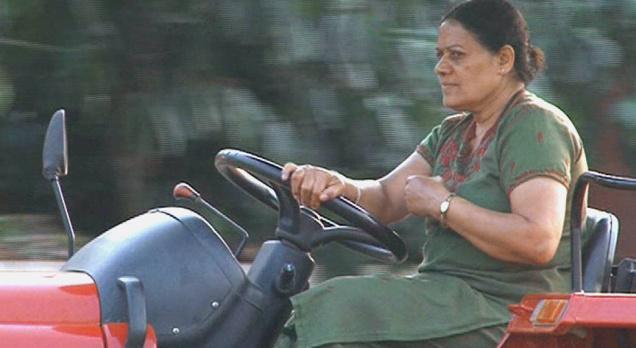
EMPOWERED: Attending one of the seminars organised by IISR’s Cardamom Research Centre (CRC) at Appangala in Kodagu on spices cultivation was a turning point in Mrs. Prema Ganesh’s life./ Special Arrangement / The Hindu

Agriculture is no more a male dominated sector, as many women have shown that they are second to none in this field. “Women can be successful agriculturists, if they are supported with timely technological interventions by scientists and encouragement from family”, says Dr. M. Anandaraj, Director of the Indian Institute of Spices Research (IISR), Kozhikode.
Mrs. Prema Ganesh from Maragodu village, Kodagu District, Karnataka is a role model for other women in this field.

Several problems

When she ventured to take over her coffee and black pepper plantation in 10 hectares a decade ago, several problems started surfacing, especially the low productivity of crops, making agriculture a non profitable enterprise.Keen to overcome them, she happened to attend one of the seminars organised by IISR’s Cardamom Research Centre (CRC) at Appangala in Kodagu on spices cultivation.“It was a turning point in my life,” recollects Ms Ganesh.

The scientists at CRC assured full technological support to her ventures. A team from CRC visited her plantation and identified some major production constraints such as high plant density per unit area, prevalence of diseases and pests, problems like spike shedding in black pepper etc.They provided a complete package of practices to be followed including thinning of excess plant growth to maintain optimum spacing among them, adoption of basin management techniques like application of organic manures, micronutrient application, earthing up and mulching for various crops.“In the case of black pepper, special recommendations like basin irrigation at the rate of 40-50 litres of water at 4-5 times per vine at an interval of 5-7 days during May-June in case of delayed monsoon, regulation of shade by pruning the support trees to provide minimum 50-60 per cent exposure to sunlight were suggested,” says Dr. S J Ankegowda, Head, CRC, AppangalaFor diseases and pests, spraying of two rounds of Bordeaux during June and August/September and one round of drenching with 0.2 per cent Copper Oxy Chloride (COC), and need based application of insecticides were also recommended.Trees like balangi, palawan and silver oak were planted at a spacing of 15×15 feet (random) to provide adequate shade to the crops.In addition she readied several rainwater harvesting pits of 10 feet length, 1.5 feet width and 1.5 feet depth between the coffee plants.These pits also serve as compost pits where all the farm wastes are dumped for two years to decompose after which they are removed and applied as organic manure to coffee and pepper, substantially reducing the cost on purchase of farm yard manure.

Composed husks

Ms. Ganesh makes use of composed coffee cherry husk, a by-product of coffee pulping, after mixing with cow dung as an additional source of organic manure.Annually she spends Rs. 35,000 per acre as operational cost and gets about Rs. 25 lakhs a year as net income from both black pepper and coffee. Reducing manual labour was an important initiative by her.“First thing they did was to lay motorable roads inside the plantation. This has reduced the strain in carrying the harvested produce in bags by labourers.Before the roads were laid, a labourer would take about 30 minutes to carry the bag to the main road for loading it on the lorries.“The physical strain was quite heavy. But now this has considerably reduced since the vehicles can come into the plantation,” says Dr. Ankegowda.

Underground irrigation

Another initiative was the underground pipe-lining for irrigation. Today the entire plantation has well connected irrigation line ready for irrigation all through the year.For more details readers can contact Mrs. Prema Ganesh, Prema Estate, Maragodu Village, Madikeri, Kodagu district- 571 201, Ph: 08272-241555, or Dr. S. J. Ankegowda, Head, IISR Cardamom Research Centre, Appangala, Madikeri-571201, Karnataka, mobile: 09663069241 and phone: 08272-245451.

source: http://www.thehindu.com / The Hindu / Home> News> S & T> Science / Farmers Notebook> Karnataka / by M.J.Prabu / February 26th, 2014

Karnataka government to allocate Rs 20 crore as CDRP to coffee growers

The Karnataka government has earmarked a sum of Rs 20 crore to facilitate the implementation of a debt relief package for coffee growers (CDRP), and will work closely with the Centre and the Coffee Board of India.

At the inaugural session of the India International Coffee Festival’s 2014 essay, the southern state’s chief minister Siddaramaiah said that the Centre implemented CDRP 2010 through the coffee board to help the indebted coffee growers.

“As a part of the coffee debt relief package, the state government extended financial assistance to the coffee growers with regard to the loans that were offered by the cooperative banks,” he stated.

“Further, on the commerce ministry’s request, the state government waived off the interest and penalty dues payable by the coffee board, which amounted to Rs 230.47 crore,” Siddaramaiah added.

“India is an important player in the global coffee market. Presently, it is the sixth-largest producer and the fifth-largest exporter of coffee in the world. Karnataka occupies a prime position in India’s coffee production. The area under coffee cultivation is 55%, and it contributes to 72% of the national production,” he informed.

Siddaramaiah said the state government’s focus was on ensuring the well-being of the coffee growers. “There is a serious impact of the climate change on coffee cultivation and addressing this issue is a daunting task,” he stated.

“Going by the change in the rainfall pattern in the recent years, the issue is going to assume a still greater importance in the coming years. During the current period itself, the state has seen an unpredictable and erratic monsoon,” the chief minister added.

“At the coffee blossom stage, the crop production was exected to be high, but it was low owing to the hot and harsh climate, which lasted two months and was followed by incessant rainfall,” he said.

“In order to mitigate the crisis, the government’s rainfall insurance scheme for coffee growers a few years ago has seen us bear 25% of the premium on behalf of the small growers,” Siddaramaiah added.

“The support from our end has been over and above the Centre’s share of 50%. The growers must realise the risk of climate change and subscribe to the protection against the vagaries of rainfall,” he said.

“There is also the issue of pollution control. Coffee pulping activity has been categorised as red by Karnataka’s norms and orange category by the Central Pollution Control Board. All efforts have made to address these issues,” the chief minister added.

source: http://www.fnbnews.com / FnBnews.com / Home> Wide View> Top News / by Nandita Vijay, Bengaluru / Thursday – January 30th, 2014

Bayar’s Coffee bags award

Bangalore :

Bayar’s Coffee, a gourmet coffee roaster, has bagged the Best Roasters Gold Award-2014 awarded by Coffee Board of India and India Coffee Trust.

“This award is in recognition of Bayer’s Coffee adopting food safety standards, implementation of new technology and use of high quality coffee beans in its blends,” said R Srikanth Rao, Director, Bayar’s Coffee.

source: http://www.thehindubusinessline.com / Business Line / Home> Companies / The Hindu Bureau / Bangalore – February 05th, 2014

Coffee exports up 38% in Jan on strong global prices

Country ships 26,161 tonnes in Jan 2014, versus 18,979 tonnes a year ago

The country’s coffee exports rose 38 per cent to 26,161 tonnes in January on account of firm global prices, according to the Coffee Board of India.

The country had shipped 18,979 tonnes in the same month of the previous year, the data showed.

In value terms, exports rose to Rs 393.70 crore in January this year from Rs 304.70 crore in the year-ago period, even as unit realisation was down at Rs 1,50,496 per tonne.

“Exports remained high as global prices improved and have remained stable since last one month. International prices have gone up on expectation of lower crop in Brazil,” Board’s Chairman Jawaid Akhtar told PTI.

Currently, harvesting is underway in the country and normally small growers try to sell off their produce. This is also one of the key reasons for higher exports, he said.

Akhtar, who also heads International Coffee Organisation (ICO), said the production forecast for Brazil, the world’s largest coffee producer, has been revised downward for this year to below 48 million bags from earlier 58 million bags.

With this development, arabica prices in the global market rose to around 130 cents per pound now from 110 cents per pound a month back, he added.

According to the latest Board data, shipment of robusta coffee rose over 90 per cent to 10,101 tonnes in January this year, from 5,306 tonnes a year ago.

Export of arabica coffee were up over 46 per cent to 9,200 tonnes from 6,290 tonnes in the review period. But export of instant coffee remained down at 6,838 tonnes as against 7,356 tonnes in the same period.

Maximum coffee was exported to Italy (5,675 tonnes), followed by Germany (2,621 tonnes), Belgium (2,109 tonnes), Jordan (1,674 tonnes), Turkey (1,646 tonnes) and Russian Federation (1,309 tonnes) in January 2014, the data showed.

During the April-January period of this fiscal, the country’s total coffee exports increased to 2,41,956 tonnes as against 2,25,570 tonnes in the year-ago period.

Currently, arabica harvesting is almost over in the country, while robusta picking is continuing.

The Board has pegged total output at 3,11,500 tonnes for 2013-14 crop year (October-September), down by 2.1 per cent from 3,18,200 tonnes produced in 2012-13.

source: http://www.business-standard.com / Business Standard / Home> Economy & Policy> News / by Press Trust of India / New Delhi – February 03rd, 2014

Allanasons is the best exporter of green coffee

Bangalore :
Allanasons Ltd has won the best green coffee exporter award instituted by the Coffee Board. The company bagged the award for exporting the highest volume of coffee in 2012-13.

NKG Jayanti Coffee was second, followed by Amalgamated Bean Coffee Trading Company Ltd. At the IICF, Coffee Board honoured individuals and institutions for setting high standards and benchmarks in the world of coffee.

The following are the other category winners: In the speciality coffee segment – Aspinwall & Company topped the list, followed by Allanasons Ltd and NKG Jayanti Coffee.

Instant coffee category: CCL Products, followed by Tata Coffee and Nestle India. Roasted coffee beans and ground coffee: Jay Keshav Exports, Rams Exim and Fresh and Honest Cafe.

NKG Jayanti Coffee won the award for the best exporter to Europe. The company bagged the award for exporting the maximum amount of coffee to Europe in 2012-13. Amalgamated Bean Coffee Trading Company Ltd and Allanasons Ltd came second and third.

Following are the best exporters of coffee to the different regions: US & Canada: CCL Products, Allanasons Ltd and Mudremane Coffee Curers.

Russia &CIS: CCL Products, Tata Coffee and Nestle India. West Asia and North Africa (Mena): Allanasons Ltd, Nestle India and Bola Surendra Kamath & Sons. Far-East: Sri Narasu’s Coffee Company, Vayhan Coffee and Tata Coffee.

source: http://www.thehindubusinessline.com / Business Line / Home> Companies / by The Hindu Bureau / Bangalore – January 24th, 2014

Coffee fest returns to Bangalore with aroma

As the country’s coffee capital, Bangalore is, after a four-year hiatus, hosting again the India International Coffee Festival (IICF-2014) from Thursday to spread the brew’s aroma.

Held biennially since 2002 by stakeholders, including growers, roasters, traders and exporters with state support, the previous fourth edition of the three-day fest was held in New Delhi in January 2012 to create greater awareness and promote the beverage in non-traditional areas where tea and other soft drinks are consumed more.

“Though about 70 percent of the coffee produced is exported, we are focused on promoting consumption across the country, as the beverage is traditionally sipped more in south India,” Coffee Board chairman Jawaid Akthar told IANS ahead of the trade event.

Growing popularity of cafe chains like Barista, Coasta Coffee, Coffee Day, Dunkin Donuts, Krispy Kreme, Lavazza and Starbucks across metros and cities has made the brew a fashionable drink among the youth, constituting 45 percent of the 1.2-billion people.

“Coffee consumption has been growing five-six percent annually since 2005 after being stagnant for a long time. Bean consumption increased to 115,000 tonnes in 2011 from 50,000 tonnes in 2005 on growth of value-added products and instant coffee,” Akhtar recalled.

Unlike tea, where 80 percent of its production is consumed across the country, per capita consumption of coffee in India is still 90gm as against 12kg in Finland, highest in the world, 6-9kg in Europe, South America and North America, and 4-5kg in rest of the world.

“Though consumption nearly doubled over the last decade, India lags far behind developed countries and even coffee-producing nations in South America due to various factors, including production being limited traditionally to southern states of Karnataka, Kerala and Tamil Nadu,” Akthar pointed out.

Steady economic growth, increasing urbanisation and growing consumer class in the new workforce have, however, redefined drinking habits and made coffee a preferred choice for the refreshing change it brings in a variety of flavours.

“A growing number of youth taking to coffee in metros and cities across the country is an encouraging sign for us. As coffee culture spreads, the trend is turning into a lifestyle, thanks to the advantage of demographic dividend,” Coffee Day president Venu Madhav told IANS here.

Buoyed by the overwhelming response to the flagship fest over the past decade, the Coffee Board of the union commerce ministry and India Coffee Trust of the industry have been able to attract about 60 overseas and domestic firms, over 1,000 delegates and 40 global experts to participate in the event’s fifth edition and showcase products and technologies.

“India is at an inflection point in developing its coffee market. With newer formats, services and new entrants, we see people’s familiarity and affinity with the brew transforming,” Hindustan Unilever executive director Geetu Verma noted on the occasion.

With a view to doubling the per capita consumption to 180gm by this decade, the event will focus on the ‘changing face of coffee’ and experts will deliberate on production and marketing trends, while other stakeholders will hold skill-building workshops on processing, roasting and brewing.

“We have undertaken the mission to develop and propel the Indian coffee sector as a global player and increase its footprint across the country. Towards that end, the fest serves as an ideal platform to train and orient new entrants wanting to be part of the sector,” India Coffee Trust president and leading grower Anil Kumar Bhandari told IANS.

The fest is expected to attract about 10,000 visitors from India and abroad, who will be treated to a variety of flavours ranging from black coffee, cold coffee, iced coffee to spice coffee by global retail chains, brands and instant makers.

“As part of promoting the brew and creating awareness of its health benefits, a coffee quiz I being held first time in the fest. About 106,000 people have participated from across the country in the preliminary rounds to qualify for the quiz final at the fest,” Bhandari said.

Special awards will be given as recognition to best coffees, baristas (the persons who serve coffee in bars), curers, roasters and tasters during the fest.

source: http://www.business-standard.com / Business Standard / Home> News_IANS> Business-Economy / by IANS / Bangalore – January 22nd, 2014