Category Archives: Coffee, Kodagu (Coorg)

Drought, a blessing in disguise for Karnataka coffee growers


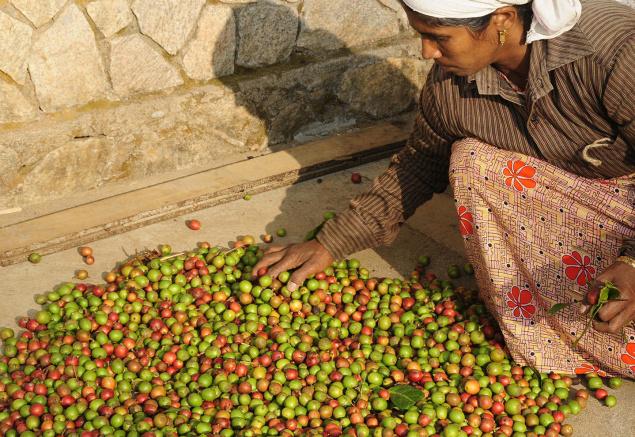
Harvested Arabica coffee berries drying in sunlight at a plantation.
Bangalore , JAN. 4:
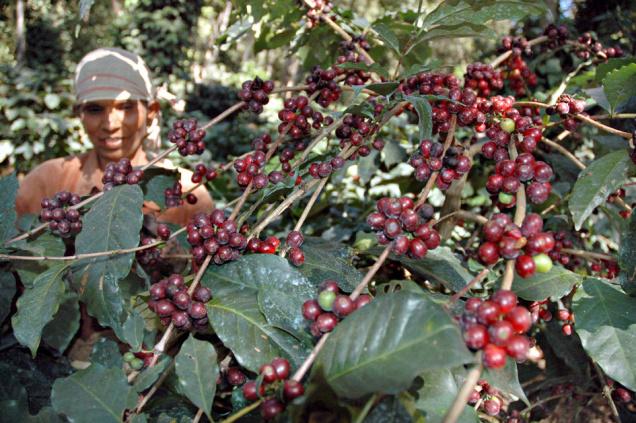
The drought in neighbouring districts has helped Karnataka’s coffee-growing regions get sufficient labour for picking coffee. This is because farming has been affected in the drought-hit areas. Besides, the slowdown in sectors such as mining and constructions has helped. The coffee belt of Kodagu, Hassan and Chikmagalur are getting many more workers from Mysore, Tumkur Chitradurga and Davangere.

“Easier labour availability has made coffee-picking manageable this season. Availability of workers between December and February is crucial for us to pick coffee and this year there is no dearth of labour,” Bose Mandana, a senior coffee planter from Suntikoppa in Kodagu, told Business Line.

“This year, however, since the crop is lower than the original estimate, we may need less labour,” he said.

LOWER WAGES

Due to more workers being available, wages have fallen by Rs 50-100 a day per person. Coffee-growers are paying Rs 200-250 a day, depending on the nature of work.

Labour shortage in the last three years had forced coffee growers to pay workers between Rs 250 and Rs 300 a day.

“In the last two to three years, we had to literally run behind the contractors to get workers. But this year, it is their turn to knock on our doors for estate-related jobs. This season, I am getting 20 to 30 calls per day, asking if I need workers,” said Mandana. Marvin Rodrigues, former Chairman, Karnataka Planters Association (KPA) and a grower from Hassan, said: “This year, we are getting people slightly more easily than the last few years. We are paying around Rs 200-210 for temporary workers.”

Nishant Gurjer, Chairman, KPA, and a grower from Chikmagalur, said: “This year, labour supply is plentiful and people are coming to work on the estates.”

“We are also getting quite a few experienced workers, who had worked in the estates earlier but had moved over to the mining and construction sector. Since these sectors are not doing too well now, they have returned.”

anil.u@thehindu.co.in

source: http://www.TheHinduBusinessLine.com / Home> Industry> Agri-Biz / by Anil Urs / Bangalore, January 04th, 2013
Tata Coffee to close ranks with Starbucks

To have one among the seven highly specialised global coffee roasteries.
Tata Coffee, the Bangalore-based publicly-held coffee bean supplier, is set to storm into the closely-knit roasteries group of Starbucks. The latter has just six roasteries (five in the US, one in Amsterdam) that supply to 17,000 Starbucks cafes across the world, and the roastery set up by Tata Coffee, at Coorg in the pristine Western Ghats in Karnataka, would be the next in line.

“The technology used in the roasteries for Starbucks is closely guarded and our roastery has been set up directly under Starbucks’ technical overview. The 375-tonne roastery was set up with an investment of Rs 4 crore, and will supply to the Starbucks cafes in India. Next on the agenda is to gradually start supplying to the cafes in South Asia, and eventually various other global cafes for Starbucks,” a senior management official of Tata Coffee told Business Standard. This is in line with the stated agenda that the Indian Espresso Roast will be the hallmark feature of all Starbucks stores in the market. As part of the agreement, Starbucks and Tata Coffee will work towards developing and improving the the profile of Indian-grown arabica coffees round the world by elevating the stature of Indian coffee. “However, it will be a while before Tata Coffee gets its place in mature global markets where Starbucks is present, as the processes are being fine-tuned to match the exacting standards,” the official added.

According to information available, Starbucks decided on the roastery with Tata Coffee after a series of rigorous checks on the various parameters at the Kushalnagar plant in Coorg.

An indication on the kind of ground work Starbucks does is visible in this fact when it scouted for its first roastery outside of the United States in Europe. “In the late 90s, when Starbucks considered its ambitious expansion plans for Europe, the Middle East and Africa, the company spent close to three years looking at various sites across Europe before they chose Amsterdam in the Netherlands for their first roastery outside the United States,” a Netherlands Government statement highlighted.

Ever since, Starbucks and Tata Coffee announced the pact during late January 2012, the stock of Tata Coffee has so far gained 23 per cent on the hope that there will be substantial uptake in volumes from Starbucks. The global major in coffee retailing bought over 428 million pounds of coffee in fiscal 2011 and it paid an average price of $2.38 per pound for premium green (unroasted) coffee in 2011 – up from $1.56 per pound in 2010.

Tata Coffee, a subsidiary of Tata Global Beverages, has been betting big on instant and specialty coffee to differentiate in the marketplace and is also the third largest exporter of instant coffee from India. Tata Coffee produces more than 10,000 metric tonnes of shade grown Arabica and Robusta coffees at its 19 estates in South India and its two Instant Coffee manufacturing facilities have a combined installed capacity of 6,000 metric tonnes. It exports green coffee to countries in Europe, Asia, Middle East and North America.

Tata Coffee for the second quarter of Fy13 has reported a healthy 109 per cent growth in its second quarter net profit to Rs 36.8 crore as compared to corresponding previous quarter riding on good growth in its instant coffee division and a sharp turnaround in its global subsidiary Eight O’ Clock Coffee. Total income at Rs 477 crore for the quarter was up 15 per cent.

source: http://www.afaqs.com / Home> News> / Category: Marketing / by Raghuvir Badrinath, Business Standard, Bangalore / October 25th, 2012

Tata Coffee: Standalone business is finding strength, accumulate

Investment rationale:

Standalone business is finding strength in rising commodity prices & instant coffee business.

– There is an increase in demand for Robusta bean globally. Demand for Robusta coffee is on a rise as demand from roasters globally increases in a bid to cut costs for blends. Demand from emerging markets as well as increasing demand for instant coffee are also key growth drivers for Robusta bean demand. ~ 75% of Tata Coffee’s produce is Robusta coffee which it exports globally. YTD Robusta prices are up by 6% vs. a 20% fall in Arabica prices. In India the current crop has suffered on account of weather and prices of Robusta have moved up by ~25-30%YTD.

– The company is taking initiatives to increase its Arabica production. The company has attained a series of quality certification and in turn increased sales focus of the same to command a premium in the market.

– Pepper & Tea, the other 2 major plantation crops for Tata coffee, are also witnessing higher realizations on the back of weather vagaries. Prices for orthodox tea are higher by 15% for the current fiscal while pepper prices are up ~40%.Tata coffee is the largest single producer of black & white pepper in India.

– Demand for soluble coffee is on a rise globally. Demand is stemming from emerging markets. Tata Coffee is investing Rs55 crs. in setting up a premium freeze dried plant with focus on new markets to drive growth.

– The tie-up with Starbucks to provide beans for their India operations to support growth in the future.

Eight o’ Clock( company’s branded whole bean brand in the US) business performance to improve on the back of launch of single serve cups & falling prices ofArabica Beans.

– The recent tie-up with Green Mountain Roasters to launch Eight o’ Clock coffee (also Good Earth & Tetley) in single serve K- cups to drive volumes.

– Cost savings on account of correction in international Arabica prices: Prices of Columbian Mild beans have corrected ~35% from the peak price and 21%YTD to 202 cents/lbs.

Valuation: The company’s coffee plantation business set to enjoy better realizations on the back of sustainable demand from new markets. Weather vagaries have reduced crop and increased realizations for other plantation crops – pepper & tea. Way2wealth beleives that there will be significant improvement in profitability of Eight o’ Clock coffee as Arabica prices correct substantially. The stock was significantly re-rated during the period of 2010 to 2012. At the CMP of Rs1012 the stock currently trades at 17 x its FY13 estimated EPS of Rs59.7. Accumulate

source: http://www.valuenotes.com / Article / Way2Wealth / October 12th, 2012

MNREGA, panacea for coffee plantations?


Extra hands needed: Shortage of quality labour has affected coffee plantations in the State. File photo: Sampath Kumar G.P. / The Hindu
Parliamentary panel recommends extending job scheme to overcome labour shortage

A Parliamentary Standing Committee on Commerce has recommended extension of the Mahatma Gandhi National Rural Employment Guarantee Act (MNREGA) to plantations to overcome labour shortage in the sector, particularly in Karnataka.

The 31-member panel, headed by Shanta Kumar, in its report titled ‘Performance of Plantation Sector – Tea and Coffee Industry’, suggested to the Union Commerce Ministry to extend the job scheme to coffee plantations to take up various works such as construction of water tanks, groundwater and soil management.

Coffee is a highly labour-intensive crop requiring about 400 man days per hectare per year for Arabica and 300 man days per hectare per year for Robusta.

The panel said, “There has been a serious shortage of workers in plantation areas due to employment opportunities generated by MNREGA and due to migration of work

source: http://www.TheHindu.com / Home> News> States> Karnataka / by Nagesh Prabhu / Bangalore, October 11th, 2012

Government creates new buffer zones

Madikeri:

The Karnataka government has declared 562.41 sq km area in Kodagu and Mysore districts as buffer zones. This was officially announced by the forest, ecology and environment department undersecretary Umadevi through a notification dated August 14, 2012.

Kodagu wildlife deputy conservator of forests K T Hanumanthappa said that there will be no restriction on villagers who live near buffer zones. This notification is mainly to protect tigers in the tiger zone. If it is an eco-sensitive zone, some restrictions will be imposed. The buffer zone allows wild animals to move in the limits of the buffer zone, he explained.

Planters fear that the creation of buffer zones will affect coffee and pepper cultivation. Nagarahole range forest officer Mandanna said that the safari has already been stopped following the Supreme Court order.

Hunsur wildlife A C F K D Belliappa has directed residents living around buffer zone areas not to graze their cattle in the restricted area and not to collect firewood as the wildlife act applies in these areas.

The declared buffer zone areas include 24.74 sqkm in Periayapatna taluk,109.09 sqkm of Hunsur thaluk, 228.01 sqkm of H D kote taluk in Mysore district covering a total area of 361.84 sqkm in Mysore district. The buffer zone coverage in Kodagu district is 200.57 sqkm.

source: http://www.articles.timesofindia.indiatimes.com / Home> City> Mangalore> Mysore / TNN, September 27th, 2012

Impact of agro-forest management on animal diversity in Kodagu district

Bangalore:

Traditionally coffee in the Western Ghats, as in other tropical regions, is grown under the shade of non-native trees.Such plantations ensure ecological continuity, providing habitat for many species outside protected reserves.

A study by Ayyapan Narayanan of the Department of Ecology, French Institute of Pondicherry, conducted in three different habitats, evaluated the impact of agro-forest management on animal diversity in the Kodagu district of Karnataka. The study was conducted in the preserved forests, coffee plantation with native trees and coffee plantations with non-native trees. Researchers said the objective of the study was to evaluate the impact of the agrosystems in comparison to the forest on local singing animal diversity by employing a passive acoustic method. For each habitat type, four locations were sampled using automatic acoustic recorders.

The acoustic data was then analysed using two indices without using species identification. Differences among habitat types were assessed by comparing the acoustic activity level with non-parametric tests and by including acoustic dissimilarities into multivariate analyses.

source: http://www.m.timesofindia.com / City> Bangalore / by Saswati Mukherjee / September 26th, 2012

Rs. 100 cr. for mechanising operations in coffee plantations

Centre to provide subsidy to growers to purchase machinery during the 12th Plan period

The Centre has approved an outlay of Rs. 100 crore in the 12th Five Year Plan for implementing the scheme “Support for mechanisation of farm operations” in coffee estates.

Officials in the Coffee Board told The Hindu that the Centre would soon issue an order for implementing the scheme from the current year. The amount would be utilised for providing subsidy to coffee growers to purchase machinery. A sum of Rs. 20 crore would be utilised each year in the Plan period between 2012 and 2017.

SUBSIDY FOR GROWERS

While small growers owning less than 25 acres of plantation are eligible to get 50 per cent subsidy (up to Rs. 2 lakh) for purchase of machinery, large farmers are eligible to obtain 25 subsidy (up to Rs. 4.5 lakh). Self-help groups are eligible to get 50 per cent subsidy (up to Rs. five lakh). Nearly 97 per cent of coffee planters own less than 25 acres of estates in Karnataka.

LABOUR SHORTAGE

Officials said acute shortage of labour and rise in wages in traditional coffee growing States such as Karnataka, Kerala and Tamil Nadu is impeding expansion of area under coffee. The Board has decided to push for more mechanisation of farm activities in plantations to address the problem of absence of skilled labour.

MACHINERY

Planters could utilise funds for purchase of machineries such as weed/brush cutter, pit digging machine, telescopic pruner, hand-held/battery operated coffee harvester, sprayers, mini-tractors, power tillers, mini-transporters/rubber track carriers.

The Board has submitted proposals to the Centre seeking Rs. 1,200 crore during the 12th Plan period. The outlay during the 11th Plan period was Rs. 600 crore.

The Planning Commission, Commerce and Finance Ministries would approve various proposals on research and development, area expansion, replanting etc. in the next couple of months, officials said.

RAIN BRINGS CHEER

Heavy rainfall in the last few weeks is likely to boost the crop prospects in coffee growing districts of Kodagu, Chikmagalur and Hassan. “The situation was alarming a few weeks ago due to deficient rainfall. Heavy rainfall in the last few days helped control spread of the white stem borer disease afflicting coffee plantations,” a top Board official said.

White stem borer is one of the deadly pests that infects Arabica coffee plantations. Its larvae bores into the plant’s stem causing death of young plants. The older plants may survive but their yield is reduced and susceptibility to diseases increases.

EXPECTED YIELD

The Coffee Board has estimated output at 3.25 lakh tonnes in 2012-13 (October-September), which includes 1.04 lakh tonnes of Arabica, and 2.21 lakh tonnes of Robusta. “We analyse the output by the end of the monsoon,” the official pointed out adding that “it is difficult to estimate the production decline at this juncture”.

Karnataka Planters’ Association predicted decline in output in 2012-13 on account of poor monsoon rain in traditional coffee growing States.

source: http://www.TheHindu.com / Home> News> States> Karnataka / by Nagesh Prabhu / Bangalore, August 15th, 2012

Coffee perks up on smaller crop, higher demand

Kochi:
A crop shortfall and higher international demand are raising robusta coffee prices while arabica prices, which had fallen in the past few months, are going up again.

Many roasters increased the share of robusta in blends six months ago when arabica prices zoomed due to a global crop shortage. Robusta prices, which have been more or less steady, are now looking up following an uptick in demand. Arabica prices which had declined in the past few months are becoming dearer as well. In London, the September contract for robusta climbed up 1.7% to $2,246 per tonne. The New York prices of arabica, which had plunged from 300 cents per pound to 148 cents, have edged up to 173 cents per pound.

“Local coffee prices reflect international trends. Robusta parchment prices are ruling in the range of Rs 190 to Rs 200 per kg. Arabica plantation prices have also touched Rs 215 per kg, though not as high as the level attained last year,” said BS Suryaprakash, chief executive of Coorg Coffee Supplies.

The prices of robusta cherry, which account for the bulk of coffee production, have moved up by Rs 20 to Rs 140 per kg now. “The roasters who did not buy earlier are lifting the stock shelling out more,” said a buying agent for a coffee exporting firm.

The local roasters who had raised the prices by 10%-15% when arabica prices shot up cut the prices marginally when the beans became cheaper. Others managed to do without a price increase by adding more robusta and chicory to the blends. Roasters are now monitoring the situation closely and may go for an upward revision if the trend persists, Suryaprakash said.

Demand for robusta has gone up in the last year when arabica prices zoomed. This has led to more buying of the variety. But given the good harvest in Vietnam and Brazil, prices may not go up sharply. Planters in India have predicted the robusta crop for the next season to be around 10,000 tonne smaller than the Coffee Board estimate of 2.21 lakh tonne.

But coffee exports, unlike last year, were around 5% lower at 2,24,529 tonne during the January 1-July 25 period, which may make available more coffee for domestic roasters, said Marvin Rodrigues, chairman of Karnataka Planters’ Association.

source: http://www.articles.economictimes.indiatimes.com / Home> News> Economy> Agriculture / by P K Krishnakumari, ET Bureau / July 31st, 2012

Tata Coffee’s new roastery to serve beans to Starbucks


Chennai, JULY 25:
Tata Coffee Ltd, which inked a deal last year with Starbucks to source and roast premium coffee beans for the global coffee chain, will soon kick off a modern roastery in Kushal Nagar, Coorg in Karnataka.

The Rs 3-crore, 375-tonne-a-year roastery is fully-automated, said Mr Hameed Huq, Managing Director, Tata Coffee. Mr Huq told Business Line that the roastery, which conforms to the best food safety standards, will source and roast the best Arabica coffee beans from Tata Coffee estates for Starbucks as well as other coffee retailers.

While the new roastery will supply in India to Starbucks, which will roll out its cafes later this year, Starbucks can send the beans to its outlets abroad as well, pointed out Mr Huq.

Tata Coffee had entered into an agreement with Starbucks Coffee International Inc and Tata Starbucks Ltd, an equal joint venture between Tata Global Beverages Ltd and Starbucks, for roasting coffee produced in the company’s estates using the global coffee major’s knowhow and technology. The coffee is to be distributed to Starbucks cafes, to be set up by Tata Starbucks in India, as well as to Starbuck operations overseas.

Vinay.kamath@thehindu.co.in

source: http://www.TheHinduBusinessLine.com / Home> Industry & Economy> Marketing / by Vinay Kamath / Chennai, July 25th, 2012

Tata group’s drive at rainwater harvesting

Mumbai, JULY 14:
The Tata group, which has recycled 1.69 million kilo litres of water across all its entities in 2010-11, is moving to play a major role in rainwater harvesting and groundwater recharge.

While over 30 Taj hotels have zero water discharge, 14 hotels have installed rainwater harvesting techniques. The latter helps to recharge groundwater.

The group has also installed desalination plants in hotels that are close to coastal areas. These initiatives have helped the $100-billion conglomerate reduce the demand from fresh water sources.

Similarly, at Tata Coffee, rainwater harvesting and management of water bodies along the Western Ghats in Karnataka have been undertaken on a war footing.

With the majority of the coffee grown in South India, more so in Karnataka, the company noticed the rainfall pattern had been changing over the years. The planting district has seen an annual rainfall drop by one-third — from 106 inches per year to 70 inches. Kodagu region (in Karnataka) faces a drought-like problem, especially from October to April, when water requirement for coffee and paddy is critical.

Coffee growers, who had not given a thought to irrigation, have had to build water sources by digging tanks in catchment areas.

Tata Coffee, which holds 497 million gallons in its rainwater harvesting tanks, is now looking to bridge the gap between demand and storage of rainwater.

“The most important concern in the Karnataka project is the efficient use of water. Data related to the area, geography, rainfall, water runoff, soil capability, water level, water quality, and water use pattern are available with us. Based on this data, the plan is to initiate a total package of water,” said a company spokesperson.

The package will address the issue of economy of water harvesting, water management and optimum agricultural production correlated with water use.

Similarly, though many of the Taj group hotels harvest and utilise rainwater, 35 per cent of Gateway, Luxury and Vivanta Taj hotels reused treated effluent for horticulture in 2010-11. They have also recycled process water to achieve zero water discharge. This is significant, since luxury and business hotels have large water requirements for landscaping and the swimming pool. Several of the Taj hotels’ 100-odd properties have been investing in water saving methods.

amritanair.ghaswalla@thehindu.co.in

source: http://www.thehindubusinessline.com / Home> Companies / by Amrita Nair-Ghaswalla / Mumbai, July 14th, 2012