Category Archives: Coffee News

Final draft of coffee Bill ready to be tabled in Parliament

Coffee Board recently held another round of industry consultation and the existing draft may be final.

A final draft of India’s new coffee legislation, Coffee (Promotion and Development) Bill, 2022, an effort to to refresh the archaic Coffee Act (1942), that is seen as overly regulating the commodity in the last over 80 years, is expected to be tabled in the Parliament in the ongoing monsoon session.

The Coffee Board recently held another round of industry consultation and the existing draft may be final and expected to be tabled in the Parliament soon, if other changes are not recommended by any ministries concerned.

K.G. Jagadeesha, Coffee Board, CEO and Secretary, told The Hindu: “The intention of the government is to place the draft for consideration during the monsoon session, depending on clearances from various ministries.” Mr. Jagadeesha said the existing Act has been adversely impacting the marketing and consumption of the commodity.

Organisations supportive

“Looks like various coffee organisations and industry stakeholders are supportive of the draft that is ready. They are happy that an amendment has been made to the old regulation with archaic provisions. So it may be the final draft unless concerned ministries want to make further changes,” he added.

The board met a large contingent of industry stakeholders comprising the United Planters’ Association of Southern India (UPASI), Karnataka Planters’ Association (KPA), Karnataka Growers’ Foundation, Coffee Exporters Association, members of the Coffee Board, labour union representatives, roasters, curers, and exporters recently.

Mahesh Shashidhar, chairman, KPA, said the industry was expecting the new coffee legislation would do away with several unwanted licenses, permissions, and need for repeated registrations that growers, curers, roaster, and exporters had to furnish so far. “We expect it to be more simplified and industry-friendly,” he added.

Many changes since 1942

According to Ramesh Rajah, president, Coffee Exporters Association, the coffee industry and the market dynamics of the global commodity has drastically changed several times since 1942. “What we now require is a legislation that supports a holistic growth of the sector and not something that ties us up,” added Mr. Rajah.

The new legislation is also expected to promote economic, scientific and technical research in coffee, including breeding new varieties and focusing on sustainable coffee production.

The Coffee Board itself may go through a transition once the new coffee Act is in place as it was constituted in 1942, as per the draft.

source: http://www.thehindu.com / The Hindu / Home> News> India> Karnataka / by Mini Tejaswi / July 22ns, 2023

Lavazza launches its first collection of locally-roasted coffee

Italy’s biggest coffee roaster Lavazza, has announced the launch of Il Mattino Vivace its first pure filter coffee blend to be sourced and processed in India for the domestic market.

Coffee is being sourced from Chikmagalur and Coorg in Karnataka and processed in Lavazza’a manufacturing facility at Sri City in Andhra Pradesh.

The facility at Sri City in Tada began its commercial operations a few weeks ago, Fresh and Honest Cafe Ltd Managing Director Silvio Zaccareo said.

Fresh and Honest Cafe Ltd is a 100 percent subsidiary of Lavazza.

Zaccareo declined to reveal the size of investment made at the factory or the number of employees working in it.

II Mattino Vivace meaning ‘lively morning’ is made from Arabica and Robusta beans roasted for the “at home” segment.

“Lavazza is known the world over for its expertise in art of blending for over four generations. II Mattino Vivace is a result of combining that expertise and our understanding of the unique consumer preferences in Indian market”, he said.

To a query, he said the coffee powder would be available in retail outlets across the country. “We are planning to complete first stage distribution by end of this month”.

Zaccareo said the company inaugurated Coffee Training Centre last year which was the first largest centre outside Italy.

The centre trains professionals, carries out research and explores new forms of taste. “We have trained more than 1,000 people,” he said.

source: http://www.retailnews.asia / RetailNews.asia / Home / by Retail Asia / July 14th, 2023

Coffee trail: Explore Karnataka’s coffee museums in Chikkamagaluru, Kodagu, Bengaluru

The Sidapur Coffee and Culture Museum offers visitors the thrill of brewing their own coffee, right from pulping, grading, roasting, and grinding.

COFFEE YATRA MUSEUM IN CHIKKAMAGALURU / SUSHEELA NAIR

After exploring and experiencing nature’s benevolence and pastoral charm in the Western Ghats, I began my coffee museum trail. From Chikkamagaluru, which houses India’s earliest coffee plantations, to Kodagu, a place whose culture is intertwined with coffee, and finally to the heart of Bengaluru city, I visited coffee museums and explored the history behind the refreshing cup of coffee.

Coffee Yatra Museum 

With a profusion of coffee curing works, Chikkamagaluru, which is undoubtedly the heart of Karnataka’s coffee country, now also houses the Coffee Yatra Museum, an initiative of the Coffee Board of India. At Coffee Yatra Museum, I saw a thematic display of coffee history, providing an insight into Indian coffee and the painstaking procedures that go into its making. A multimedia presentation charted the coffee bean’s journey from the plant to the cup, explaining processes like picking, drying, and grinding. Also on display were coffee-curing apparatus.

As I entered the building, I was bowled over by the huge posters that adorned the museum walls, showcasing interesting information about the coffees of India. Moving on, I saw the Coffee Map of India that highlighted both the traditional and the non-traditional coffee-growing regions of India. From the map, I learned about the various coffee beans grown in different areas. Next, came the Coffee Evaluation Centre where a staff member explained the processing of coffee beans. After that, I moved to a separate section where the final product is tasted before it is ready to go into the market.

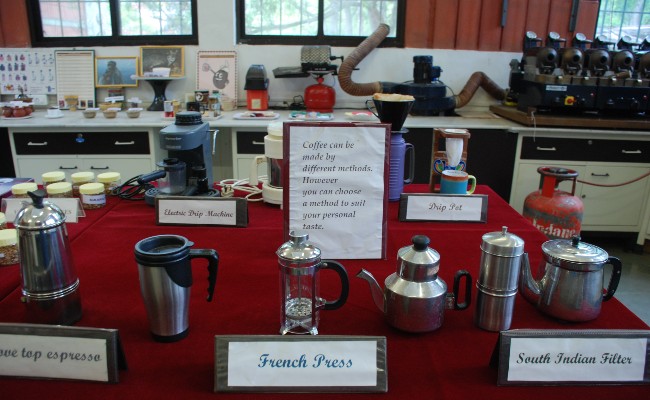
Display of different methods of coffee making in the Coffee Yatra Museum

At the museum, I also learnt about the cultural practices, age-old traditions, and several other aspects of coffee. A coffee movie was played along with a coffee song, which spoke about the cultivation of coffee in the language of the farmers. I also visited the museum’s Laboratory to know about the grinding process and the equipment used to process coffee.

Sidapur Coffee and Culture Museum 

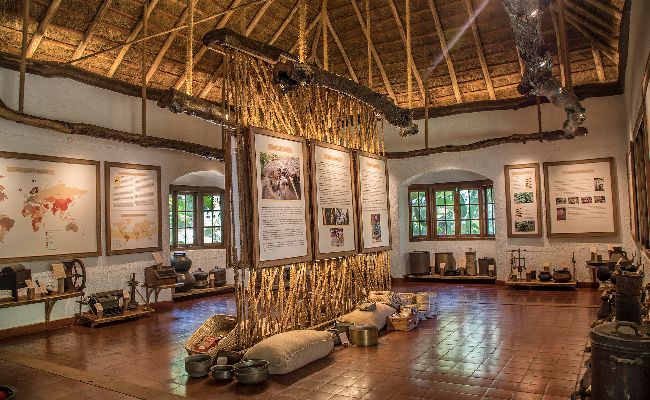
From Chikkamagaluru, we proceeded to Sidapur Coffee and Culture Museum at Evolve Back in Chikkana Halli Estate, Kodagu. The museum has different sections that talk of the story of the founding Ramapuram family, the history of coffee in Kodagu, how coffee is cultivated globally, and the art of brewing the perfect cup of coffee. It also featured the culture of Kodagu and its close association with coffee cultivation. It recreated a space that evoked the rustic feel of a coffee plantation, with materials used in the past and the present, reminiscent of eras gone by and ways of life that have been replaced with the onset of modernity.

Housed in what was originally the old smokehouse (the result of an experiment with growing rubber on the Chikkana Halli Estate), the museum has a high thatched roof with red oxide flooring, typically found in old plantation homes. Jute, coir, burlap, wood, and old metal were the other key players in the mix of materials.

Sidapur Coffee and Culture Museum

Large, dented copper and brass vessels of unique shapes and sizes lined the walls, each whispering their unique stories. “A few of the objects are from the Ramapuram family collection, such as an old hand-operated coffee roaster and typewriter that were in use on the Chikkana Halli Estate. The coffee grinder in the museum has had quite a journey. It belonged to a Kodava gentleman who ran a coffee house in Lahore before Partition, after which it was transported to Bengaluru and housed in Chinny’s Café on Brigade Road for many years,” said Jos Ramapuram, executive director, Marketing, Evolve Back.

The unbelievably large tree stump that formed the base of the centre table in the coffee brewing area,was from the Chikkana Halli Estate. At the Coffee Museum I experienced the thrill of making my own brew right from pulping, grading, roasting, and grinding. Visitors get to stroll around the museum and get a taste of life in the days of old in Kodagu, to the accompaniment of  the invigorating aroma of coffee in the air. Equally interesting was Coffeeology, a daily live session on the art and science of gourmet coffee, where visitors can observe and experience the making of an assortment of coffee preparations from around the world.

Blossom to Brew

From Evolve Back, we hopped to Tamara Kodagu where I embarked on the signature guided walk. With the Blossom to Brew experience, I learnt how a bean undergoes various processes to reach the coffee mug. The session ended at The Verandah, a 155-year-old heritage structure in Kabbinakad estate, which originally housed plantation workers. Currently, it has been restored into a rustic coffee lounge and has a gift shop stocked with natural products from the estate and library. There I learnt all about the process of grading, roasting, and blending. I ended the session relishing a hot cup of coffee at the lounge.

Coffee Lab

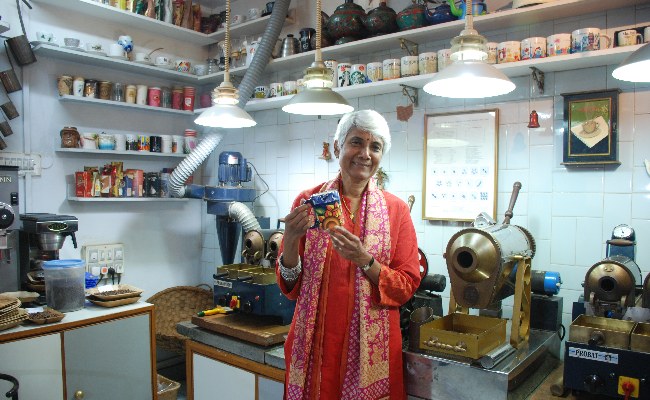
I culminated my coffee-museum-hopping trail with a visit to the Coffee Lab in Sadashivanagar, in the heart of Bengaluru. As I sauntered into Coffee Lab, I could sense the aroma of coffee assailing the air. Every nook and corner of the lab was adorned with mugs, coasters, antique jugs, filters, and other coffee paraphernalia collected from all over the world by Sunalini Menon. Known as Asia’s first woman of coffee, Sunali set up Coffee Lab in Bengaluru in 1997 for evaluating the technical nuances of Indian coffee.

Sunalini Menon in Coffee Lab, Bengaluru

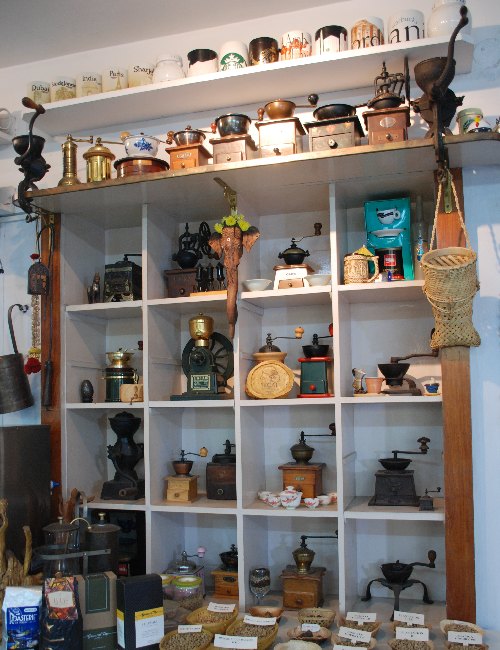
The Coffee Lab bore the semblance of a mini museum with its walls lined with a variety of packaged coffee and curios from around the world – exquisite grinders, scented candles, filters, mugs, and a whole shelf of old-fashioned tumblers – a stark contrast to the regular sparkling white laboratories filled with shiny apparatus used for coffee accreditation and testing.

It also housed memorabilia including tribal products from coffee growing areas, areca nut pickers, traditional milk measurement units, and coffee pots. Each piece of equipment threw light on the culture of the country it came from. For instance, Italian pots have ornate carvings; the ones in Iran are known for their silver and filigree; Pakistan has a recurring crescent moon pattern: while Egypt designs sported Cleopatra. The star attraction of Coffee Lab was the painting of Mona Lisa done in coffee powder. After a journey of fascinating discoveries, I returned satiated.

Coffee beans, mugs, grinders, filters on display in Coffee Lab, Bengaluru

All pics by Susheela Nair.

Susheela Nair is an independent food, travel and lifestyle writer and photographer contributing articles, content and images to several national publications besides organising seminars and photo exhibitions. Her writings span a wide spectrum which also includes travel portals and guide books, brochures and coffee table books.

source: http://www.thenewsminute.com / The News Minute / Home> Features> Food / by Susheela Nair / edited by Maria Teresa Raju / June 26th, 2023

How Climate Change Is Brewing Trouble For India’s Coffee Industry

India’s coffee growth is being affected by unpredictable weather patterns, including insufficient rainfall, temperature fluctuations, drought, and heavy flooding.

While Baba Budan, the Sufi monk, planted the smuggled seven coffee beans in the bountiful hills of Chikmagalur, little did he know that India, one day, would be the 6th largest coffee producer, with Karnataka contributing 71 per cent of coffee production to the world. Though the coffee culture has evolved through the years, and there has been a significant boom globally for coffee, the threat for your morning cup is real and is right there knocking on the doors–climate change!

Unpredictable weather patterns are affecting most parts of the world, including India. The country grows a lot of Robusta and Arabica, and both these varieties suffer prolonged periods of inadequate rainfall, temperature rise, drought and heavy flooding.

The Case With Arabica And Robusta
Samia Subhani, a fourth-generation coffee planter and the founder of “The Kaimara Belt Coffee,” sounded distressed. Her family has been into coffee growing and trading for over 150 years, and their estate in the Baba Budangiri hills grows Arabica, the most demanding variety. Subhani’s estate has 50-80 farmers working on the plantation daily, all dependent entirely on coffee farming. But with the ongoing effects of climate change, coffee is going through a difficult phase putting all their lives at risk.

Arabica is the most demanding variety of coffee when it comes to cultivation. Photo Credit: Shutterstock

“Climate change causes leaf shedding, reduced coffee plant productivity, and increased vulnerability to pests. Extreme cold delays plant flowering and lowers berry quality. Heavy rains at irregular times cause cherries to burst and drop prematurely. Continuous heavy rains before harvest prevent drying, leading to crop spoilage,” Subhani explained.

But like they say, every solution has a problem. Subhani mentioned that we must dig deeper into our pockets and follow some mitigation measures to maintain the yield and deliver quality coffee to patrons. “So, we provide artificial rains during droughts, maintain proper irrigation in the system, avoid using harmful pesticides to control soil erosion and use only soil-friendly organic fertilisers.”

While this is the situation in an Arabica coffee plantation at Chikmagalur, Coorg, popularly known as the “Scotland of India,” is known to grow more of Robusta.

“Climate change is certain to impact coffee yields due to temperature changes. Coorg is experiencing water scarcity, affecting coffee production. Coffee plants require water, nutrients, rainfall, and sunshine for healthy growth and harvest. Fluctuations in yield have increased, with lower yields in recent years. Delayed monsoons in Coorg will further reduce usable berry production,” said Shruti Shibulal, CEO and Director of Tamara Leisure Experiences.

Though these climatic impacts are less friendly to coffee crops, Shibulal believes they have the advantage of scientific studies to inform how we can prepare for this impending change. Collaboration and knowledge sharing between those with high knowledge of the crop and those with research-driven and technological expertise is vital to assess, test and implement viable solutions.

Robusta is grown extensively in Coorg. Photo Credit: Shutterstock

“The Tamara Coorg is a 100 per cent organic plantation. Therefore, our irrigation is entirely dependent on rainfall. Rainwater harvesting tanks here facilitate the annual reuse of 90 lakh litres of rainwater. These reserves do marginally help us contend with unpredictable weather patterns. However, the coffee trees depend on rain and sunshine in balanced intervals to yield the greatest number of healthy berries,” she added.

According to Shibulal, instead of using measures like industrial fans or increased labour to speed up the drying process of coffee berries, they focus on protecting and nourishing their coffee trees using organic fertilisers and natural supplements. They also prioritise sustainable practices like reusing rainwater for irrigation and actively monitoring soil health. She further emphasised the importance of maintaining a tree canopy structure, which creates a favourable micro-climate for coffee plants and supports biodiversity.

“I would turn my support to local and regional producers or individual plantations (whenever possible). Smaller establishments will face greater challenges during times such as these. As consumers, we must lend our loyalty to those actively pursuing practices that combat climate change in the long run,” Shibulal concluded.

Climate Change Affecting Coffee Planters All Over
Tapaswini Purnesh, a fifth generation coffee planter and Director–Marketing & Promotions of Classic Coffee, mentioned that other coffee planters, including the Harley Estate at Sakleshpur in Karnataka, are also battling climate change.

“The worst scenario is the last 4 to 5 years, where we have been experiencing heavy rains during harvest season, i.e., November to February, which normally is a complete dry spell. India is unique to the sun drying of coffee. However, due to unseasonal rains during harvest, plantations are now installing mechanical dryers to avoid quality deterioration,” Purnesh said.

She also stated that coffee production is highly labour-dependent. In the long run, finding labour may become increasingly challenging, an evident trend. As the cost of implementing adaptive measures rises and the arduousness of growing quality coffee amidst climatic pressures is considered, customers must acknowledge that good coffee comes with a price tag. “The coffee growers will be motivated to enhance and refine their coffee cultivation practices if they receive adequate remuneration from the price realisation.”

Meanwhile, the latest estimates warn that climate change may mean that as much as half of the land used for coffee production worldwide may no longer be suitable for it by the middle of the century if global warming continues at this rate. So, as all these coffee planters suggest, every citizen must be more responsible towards our environment, travel responsibly, and follow more sustainable practices to save our environment and the most loved, coffee.

source: http://www.outlookindia.com / Outlook Traveller / Home> Explore> Story / by Deepa Shri Rajan / June 25th, 2023

This Fruity, Citrus Organic Coffee Grown In Nagaland Hills Just Won Gold

Highlights

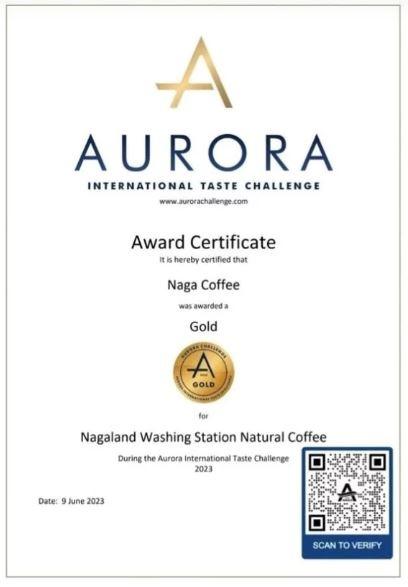
  • Naga Coffee was awarded Gold for Nagaland Washing Station Natural Coffee during the Aurora International Taste Challenge (AITC) 2023 held on 9 June in South Africa.
  • Local farmers from the state capital Kohima produced the coffee that entered the competition.
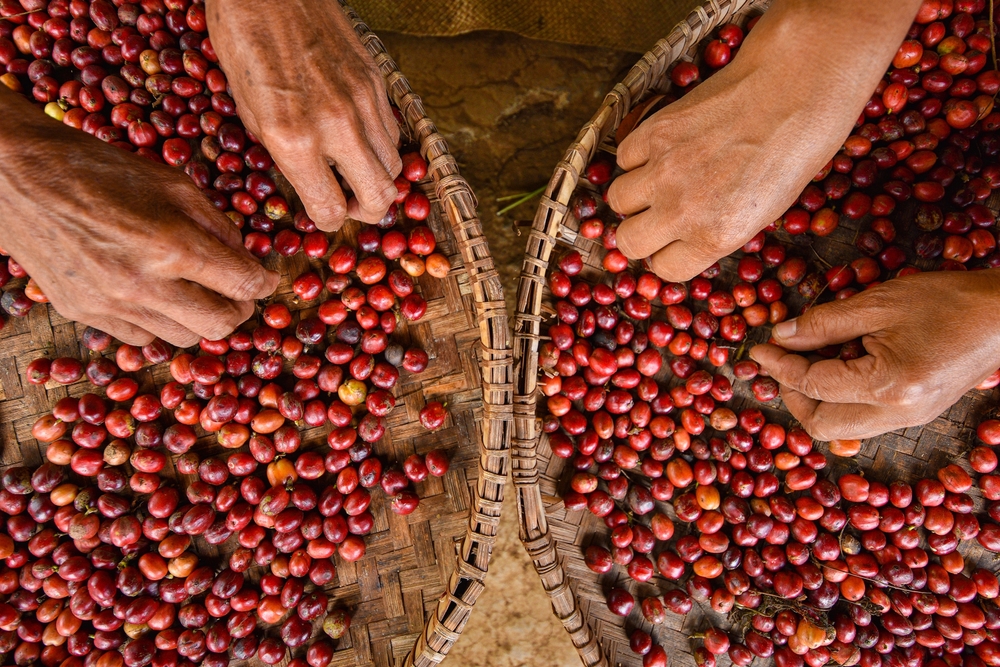
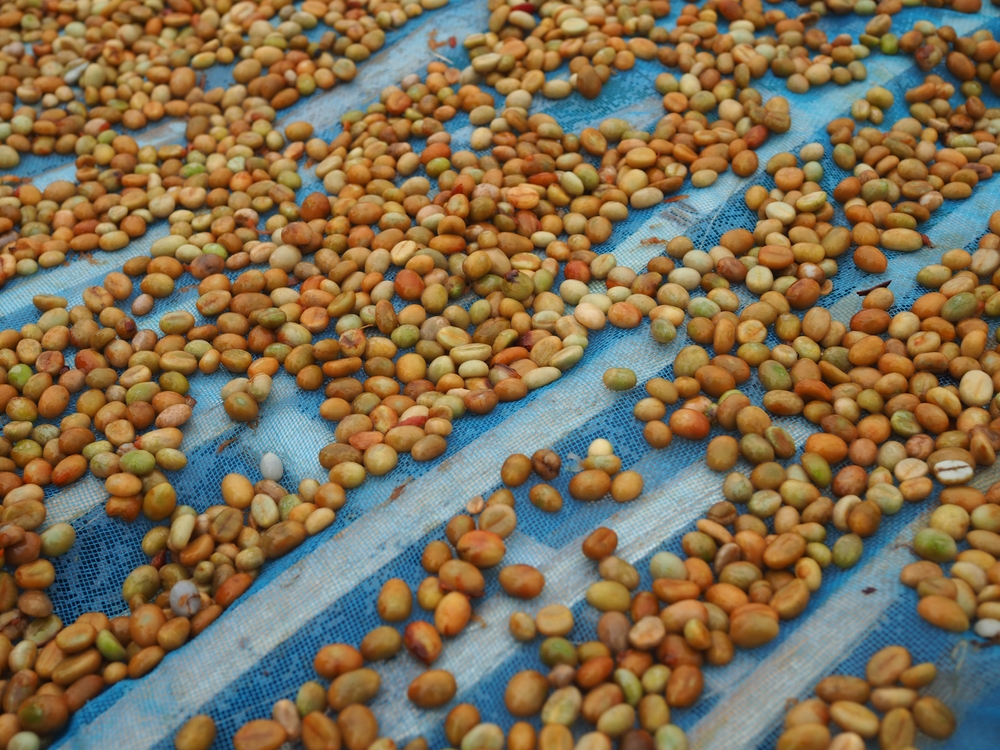
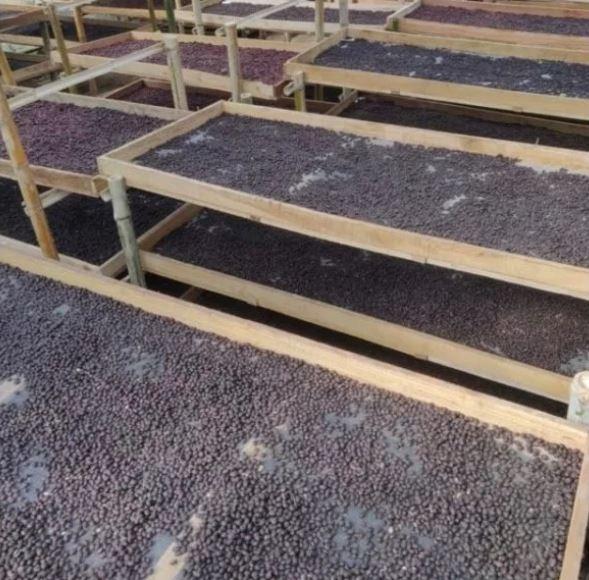
  • The Naga Coffee was experimented with a new drying process this year. Ripe coffee cherries were brought from a few local farmers and dried in a polyhouse during the winter season in Kohima.
  • The idea behind this is to promote homegrown Himalayan coffee with a natural citrus flavour and generate employment in the State.

__________

Naga Coffee was awarded Gold for Nagaland Washing Station Natural Coffee during the Aurora International Taste Challenge (AITC) 2023 held on 9 June in South Africa.

Local farmers from the state capital Kohima produced the coffee that entered the competition.

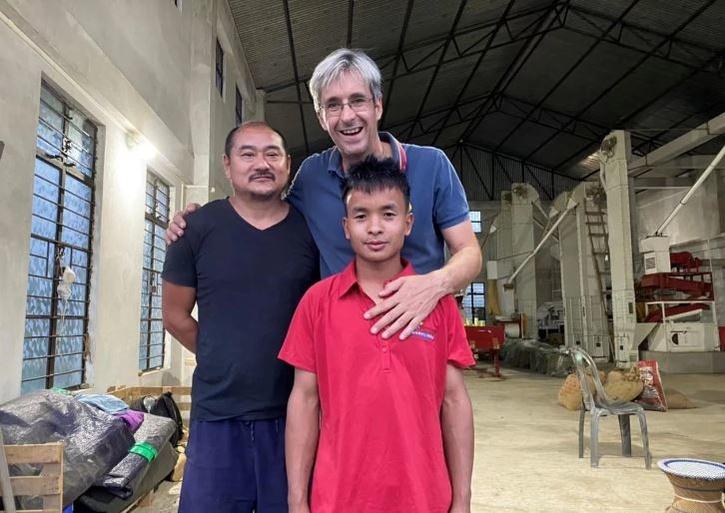
The Naga coffee team that processed the award-winning coffee consisted of Dr Pieter Vermeulen, co-founder, Kajiikho Ariicho and Ënga Antühü, the mill manager. 

The Naga Coffee team/ nagalandtribune.in

Held in South Africa this year, the Aurora International Taste Challenge was established to recognise and award food and drink excellence internationally while helping consumers confidently purchase award-winning, expertly-rated products. 

Unique process of coffee processing 

The Naga Coffee was experimented with a new drying process this year. Ripe coffee cherries were brought from a few local farmers and dried in a polyhouse during the winter season in Kohima. 

Before the final processing of the coffee, it was sundried for three days in Dimapur. This double-drying process produced a wonderful sweetness. 

Coffee beans being sundried/ nagalandtribune.in

This season, only 120 kg of this particular coffee was produced. But it was for the first time that Nagaland has produced a coffee that scored above 85 points on the Speciality Coffee Associations scale. 

Coffee production in India 

In the 2016-17 season, India had produced 5.5 million bags of coffee. Most of the country’s coffee is grown in the three southern states of Karnataka, Tamil Nadu, and Kerala, followed by Andhra Pradesh and Telangana. India processes coffee by the washed (or wet) method as well as the natural (or dry) method. 

But more recently, there has been a growing demand for premium and speciality coffees as consumers become increasingly interested in unique flavour profiles and high-quality products. Further, customers show greater interest in coffees that offer additional health benefits, such as antioxidants or energy-boosting properties. 

This is where Nagaland coffee comes in – grown in the forests in the mountainous areas of Nagaland. 

Coffee in Nagaland 

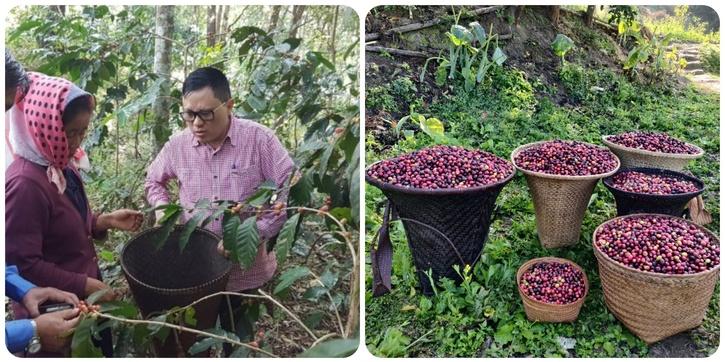
Various districts of Nagaland, like Zunheboto, Mon, Wokha, Khar and Boje, offer high-altitude speciality coffee grown in the natural forest shade. 

Coffee grown in Nagaland/ Nagaland government

This is part of Naga Coffee – a public-private partnership – which was formalised in 2016 as a Memorandum of Understanding between the Department of Land Resources, Nagaland and Noble Cause, a South African Company by Peter Vermeulen. 

The coffee seeds are procured from the Coffee Board of India and sent to small farmers to be planted. Later these coffees are roasted by the Naga Coffee team. The idea behind this is to promote homegrown Himalayan coffee with a natural citrus flavour and generate employment in the State.

source: http://www.indiatimes.in / India Times / Home> News> India / by Shristi B Dutta / June 13th, 2023

The Coffee Bean & Tea Leaf appoints creative agency for the Indian market

California-based CBTL says creative agency Volume will lead its digital strategy across India — an increasingly ‘important and emerging market’ for the coffee chain.

The Coffee Bean & Tea Leaf (CBTL) India has appointed Delhi-based media agency Volume as its new Creative and Digital Partner. 
 

Volume, which was selected following a multi-agency pitch, will develop the coffee chain’s creative and digital strategy across the country, which CBTL India described as an ‘important and emerging market’. 


California-based CBTL entered India in 2008 with a store at the Select CityWalk in Delhi and now operates approximately 30 Indian outlets. 


“We are delighted to have Volume on board as our India Agency. India being an important and emerging market, it is a great opportunity to showcase consumers of The Coffee Bean & Tea Leaf experience,” said Ranjit Talwar, Commercial Director, CBTL India. 


Rakesh Krishnotula, creative head of Volume, said the partnership presented ‘a unique opportunity’ to put ‘the CBTL experience across the Indian market’. 


In May 2023, Indian media reported CBTL was seeking new franchise partners in India in a bid to expand its footprint and keep pace with an increasingly competitive pool of international branded coffee chains. 


Fellow US coffee chain Starbucks, which opened its first store in India in 2012, operates 333 stores across 41 cities in India. Following its full-year results in April 2023, Tata Starbucks said it was ‘looking to rapidly expand its presence in the coming years’. 


UK-based Costa Coffee also has ambitious growth plans within the Indian market, with franchise partner Devyani International seeking to scale the coffee chain’s 115-strong footprint over the next 12 months. 


Tim Hortons, which entered India in August 2022, has reached 17 stores across the country and plans to reach 120 stores by 2026. 


Additionally, coffee and food-to-go chain Pret A Manger  is seeking to open 100 outlets across India within five years following its market entry in April 2023 with Reliance Brands Limited. 

source: http://www.worldcoffeeportal.com / World Coffee Portal / Home> Industry News / June 14th, 2023

Invigorating the spirits: In search of India’s lost coffee culture

Traders from the Middle East introduced the beverage to the Mughal empire but the British made tea the subcontinent’s preferred drink.

Mughal men drink an unidentified beverage in a 17th century painting later recreated as a drawing by Rembrandt (Public domain)

The sun sets behind regal yet dilapidated Mughal  mansions and the magnificent dome of the Jama Masjid as the call for the evening prayer fills the auburn sky in Old Delhi.

Chandni Chowk’s bustling streets reverberate with the sound of honking cycle rickshaws navigating the serpentine lanes.

The sunset marks the beginning of business hours in the neighbourhood, which emerged during Mughal emperor Shah Jahan’s rule; a pocket within the once spectacular walled city of Shahjahanabad, founded in 1648.

Immersed in the soundscape, one’s senses are drawn to the aroma of food being prepared, complemented by the unmistakable scent of masala chai – the Indian version of spiced tea.

Tea stalls, resembling busy beehives, draw Delhiites patiently waiting for their daily dose of evening tea –  some having travelled from the far ends of the city to satisfy their craving.

Tea is without a doubt a national obsession in India. However, the incredible popularity of the drink in the subcontinent is less than two centuries old and only came about as a result of British rule in the region.

It may come as a surprise, but before the arrival of the British, it was coffee that Indians preferred.

Sufis and merchants

Coffee was brought over from the Horn of Africa to Yemen at some point in the 15th century and later spread north into the Near East and then to Europe by the 16th century.

The beverage also spread eastwards, and India’s Mughal elite was quick to adopt it as their beverage of choice.

While the Mughal Emperor Jahangir had a penchant for wine – preferring the Shiraz variety – both Hindu and Muslim nobility in his court freely indulged in coffee.

Edward Terry, a chaplain with the English embassy at Jahangir’s court, mentions that members of the court were captivated by the then-novel qualities of coffee, believing it could “invigorate the spirits, aid digestion, and purify the blood”.

The coffee bean was brought to the subcontinent by Arab and Turkic traders who had strong trade ties with the Mughal Empire.

They not only brought coffee, but also other items, including silk, tobacco, cotton, spices, gemstones, and more from the Middle East, Central Asia, Persia, and Turkey.

By the time Shah Jahan ascended to the Mughal throne, interest in coffee had grown exponentially across Indian society (Public domain)

Such goods would reach the farthest corners of India, including the easternmost region of Bengal. By the time Jahangir’s son, Shah Jahan, ascended to the throne (1628-1658), interest in coffee had spread across society.

Coffee was considered a healthy drink, an indicator of social mobility, and an integral part of Delhi’s elite social life.

Like Terry, another contemporary European visitor, the German adventurer Johan Albrecht de Mandelslo, wrote about his travels in the east through Persia and Indian cities, such as Surat, Ahmedabad, Agra, and Lahore in a memoir titled The Voyages and Travels of J Albert de Mandelslo.

A painting titled ‘The Ottoman Sultan and His Haseki’ by an unnamed artist (Wikimedia)

In 1638, Mandelslo describes kahwa (coffee) being drunk to counter the heat and keep oneself cool.

In his work Travels in The Mogul Empire (1656-1668), Francois Bernier, a French physician, also refers to the large amount of coffee imported from Turkey.

Besides its use in social settings and supposed effects to ward off heat, the drink also had a religious purpose for the subcontinent’s ascetics.

Like their brethren in the Middle East and Central Asia, India’s Sufis consumed coffee before their night-long reverential rituals known as dhikr (the remembrance of God).

Legend has it that a revered Sufi saint named Baba Budhan carried back seven coffee beans in the folds of his robe on his way back from Mecca in 1670, planting the seeds for Indian-origin coffee cultivation in a place called Chikmagalur.

While this story may or may not be true, today the Baba Budhangiri hill and mountain range in the Indian state of Karnataka bears his name and remains a significant centre for coffee production, as well as housing a shrine dedicated to the Sufi saint.

In another variation of the legend, shared by the government’s Indian Coffee Board, the Sufi saint travels to Mocha in Yemen and manages to smuggle out the beans discreetly despite strict laws on their export.

Culture of consumption

From the 16th century onwards, India became host to a cafe culture influenced by the one emerging in the Islamic empires to the west, particularly cities such as Damascus, Aleppo, Cairo, and Istanbul.

The nascent coffee culture found expression in Shahjahanabad’s own “qahwakhanas”, or coffee houses.

In her essay Spilling the Beans: The Islamic History of Coffee, food historian Neha Vermani describes the coffee served at the Arab Serai, which was “famous for preparing sticky sweet coffee”.

The Arab Serai became known for its sticky sweet coffee (Wikimedia)

The Serai, which was commissioned in 1560 by Hamida Banu, the wife of Mughal Emperor Humayun, still stands today as part of a Unesco heritage site ; the wider complex of Humayun’s tomb.

Historians say it was used as an inn by Arab religious scholars who accompanied the royal on her pilgrimage to Mecca and that it was also used to house craftsmen from the Middle East who were working for the Mughals.

Historian Stephen Blake in his 1991 work Shahjhanabad: The Sovereign City in Mughal India 1639-1739 describes coffee houses as places where poets, storytellers, orators, and those “invigorated by their spirits” congregated.

Blake described how vibrant these coffee houses were, their milieu of poetry recitals, storytelling and debates, long hours of playing board games, and how these activities impacted the cultural life of the walled city.

Coffee houses of Shahjhanabad, like those of Isfahan and Istanbul, accelerated the rise of a culture of consumption and a thriving food culture, with residents frequenting snack sellers offering savouries, naanwais baking bread, and halwais specialising in confectionery.

This is a legacy that continues to be felt in Old Delhi’s Shahjahanabad area to this day.

While Blake’s descriptions paint a picture, there are no extant visual depictions of the interiors of these establishments, and unlike their Ottoman or Safavid counterparts, there are no miniatures or Orientalist artworks depicting what they would have looked like.

Rembrandt depicted Mughal men drinking something very closely resembling coffee but the Dutch artist does not identify the contents of their cup, and never visited India. But his images were inspired by Mughal paintings brought over to the Netherlands by Dutch traders.

The man who swore by his Turkish coffee

Provincial courts sought to replicate the ambience of Shahjahanabad and embraced the cafe culture on offer there. Among them, none cherished coffee more than Alivardi Khan, the Nawab Nazim of Bengal.

Khan was of Arab and Turkman descent and ruled Bengal from 1740-1756. Known as a diligent ruler, coffee and food were the two biggest pleasures of his life.

Seir Mutaqherin or the Review of Modern Times, written by one of the prominent historians of the time, Syed Gholam Hussein Khan, offers a fascinating description of Alivardi Khan’s routine.

Alivardi Khan, seen here on his throne, liked the finer things in life, including coffee (Metropolitan Museum of Art/Public domain)

He writes: “He always rose two hours before daylight; and after having gone through evacuations and ablutions, he performed some devotions of supererogation and at daybreak, he said his prayers of divine precepts, and then drank coffee with choice friends.

After that he amused himself with a full hour of conversation, hearing verses, reading poetry or listening to some pleasing story.”

This morning routine was followed by a bespoke Persian dish prepared by the nawab’s personal chef.

Khan’s portrayal presents Nawab as a man of fine taste, who valued the luxuries of courtly life as much as effective governance.

A connoisseur of exquisite food, witty conversations, and premium Turkish coffee, Khan went to great lengths to acquire the best coffee beans, importing them from the Ottoman Empire and bringing them all the way to Murshidabad, his capital.

The coffeehouse ‘is a social space created and shaped by the people themselves’ (MEE)

He believed in nothing but the best for his court. Not only were his coffee beans imported, but his kitchen staff also hailed from places renowned for their culinary excellence, such as Persia, Turkey, and Central Asia.

The royal household employed a diverse range of professionals, including storytellers, painters, coffee makers, ice makers, and hakims (physicians).

Tea has been grown in India since the 19th century (Wikipedia)

Khan personally handpicked his baristas (qahwachi-bashi), who brought along their specialised coffee-making equipment.

The descriptions paint a vivid picture of courtly culture, a world of opulence, artistry, and a profound affinity with caffeine.

It is puzzling, therefore, to pinpoint exactly when Mughal coffee culture vanished from pre-colonial Bengal, but it likely lasted until at least 1757.

Siraj ud-Daulah, Khan’s grandson and successor, could not live up to his grandfather’s legacy, and faced with threats from the British, the courtly culture swiftly dissipated, along with Bengal’s fortunes.

When Bengal lost the decisive Battle of Plassey in 1757, the East India Company took control of the region, and slowly coffee vanished from public consumption and consciousness.

Tea farming takes over

The rise of the East India Company, which was the primary agent of British control in India, marked the end of the subcontinent’s dominant coffee culture.

Britain’s penchant for tea began in the late 17th century and China was its main supplier.

Lizzy Collingham writes in her book Curry: A Tale of Cooks and Conquerors that between 1811 and 1819 “70,426,244 pounds” out of a total of “72,168,541” pounds of imports from China were associated with the tea trade.

She remarks that Britain, therefore, had an “interest in finding an alternative source for tea”.

With its fertile soils and appropriate weather conditions, India was the perfect spot.

In February of 1834, then Governor General William Bentick appointed a committee to look into India’s potential as a place to set up the East India Company’s own tea production unit.

In the native Indian population, they found not only workers who would cultivate and harvest the leaves but also consumers of the beverage.

As coffee production became overshadowed by tea farming, Indian tastes also shifted to the latter.

Further consolidating the decline of Indian cafe culture was the British ban on Indians visiting coffee houses, which were barred to all but Europeans.

Nevertheless, reports of the death of coffee in India were premature.

Regardless of British influence on local culture, the subcontinent was not immune to global trends.

The Indian historian and author, AR Venkatachalapthy, writes in his 2006 book In Those Days There was No Coffee: Writings in Cultural History that there was no escaping the physical effects or symbolism of coffee in late 19th century British India.

“Drinking coffee, it appears, was no simple quotidian affair. Much like history, the nation-state, or even the novel, coffee too was the sign of the modern,” he writes.

Enthusiasm for coffee grew at the turn of the 20th century, and the same book quotes adverts for coffee in south India in the 1890s: “Coffee is the elixir that drives away weariness. Coffee gives vigour and energy.”

This energy and vigour were first reflected in the east, in the colonial city of Calcutta (present-day Kolkata) where the first Indian-run coffee shop, named Indian Coffee House, opened in 1876.

The Indian Coffee House is run by Indian worker’s cooperatives and is open to all (Wikipedia)

Turning into a chain in the 1890s, by the first half of the new century the name Indian Coffee House would be adopted by a growing network of 400 coffee houses run by Indian workers’ cooperatives, with only Indian-origin coffee.

These were the people’s coffee houses where any Indian could walk in without being discriminated against on the basis of their race.

Today, the ambience of the Indian Coffee House reminds one of the inclusivity of coffee shops in historic Shahjhanabad.

The chain is one of many Indians can visit, with others including the Bengaluru-based Coffee Day Global, which now has more than 500 outlets in the country despite only opening its first in 1996.

Six years later Starbucks entered India’s voluminous urban market and the rules of the brew changed forever in the subcontinent.

source: http://www.middleeasteye.com / Middle East Eye / Home> Discover> Food & Drink / by Nilosree Biswas, New Delhi / June 05th, 2023

Shortage of beans drives up cost of even the cheapest cup of coffee

While many coffee lovers prefer the high-quality arabica beans sold in cafes, robusta is normally less expensive because the tree is hardier and requires less care.

Coffee, coffee beans
pix: Bloomberg

The global cost-of-living crunch has pushed coffee drinkers to get their fix from cheaper brews. But a shortage of robusta beans is making it increasingly difficult to find a budget-friendly cup.
 While many coffee lovers prefer the high-quality arabica beans sold in cafes, robusta is normally less expensive because the tree is hardier and requires less care, making it easier to produce in large quantities. The variety is often used in instant coffee, espressos and ground blends sold at supermarkets, which have experienced a comeback as cash-strapped consumers seek alternatives.


Key growers, however, are finding it difficult to keep up with the surge in demand, with wholesale prices this week hitting the highest level in nearly twelve years. 


For consumers in Europe’s largest coffee market, Germany, the squeeze is having a noticeable effect on retail costs, with instant varieties going for nearly 20% more than a year ago, even as inflation for coffee beans has lost momentum. US instant coffee price-growth also slowed less than the roasted version in April.

Chart

The odds of global robusta shortages easing any time soon look bleak. Vietnam — the world’s largest producer — probably collected its smallest harvest in four years, after farmers focused on planting more profitable crops like avocados and durians to cope with booming fertilizer costs in the aftermath of Russia’s invasion of Ukraine. 


Brazil, the second-largest grower of the variety, has seen its crops hurt by drought, and there are also concerns that Indonesia’s output could suffer following heavy rains.
Despite those hurdles, more robusta beans were exported globally in the first six months of the current season compared to the last three years — just not fast enough to keep up with higher needs. Shipments between October and March were about 4% higher than the same period in 2021-22, according to the International Coffee Organization.


“There’s been so much of a demand shift away from higher-priced coffee that even the market isn’t even being satisfied by higher robusta exports,” said Judith Ganes, who runs a consultancy focused on commodities like coffee in New York. 

Chart

The switch was first observed among roasters who increased the amount of robusta used in commercial blends to offset higher arabica costs and energy bills. Then, double-digit inflation in many parts of the world saw grocery bills surge to the highest in decades, forcing some consumers to trade down to cheaper options. 


As a result, robusta-heavy instant coffee is growing faster than other industry segments, according to Aguinaldo Lima of the Brazilian Instant Coffee Industry Association, whose country is the world’s top soluble coffee producer. And leading companies elsewhere, such as Nestle SA and India’s Tata Coffee, have also reported stronger demand for instant coffee in their latest financial reports.


While robusta beans are known to be significantly more bitter than the arabica variety — in part due to higher levels of caffeine — Vietnam and Indonesia have both improved the quality of their beans, making it easier for roasters to increase the variety in blends without drastically affecting the taste, according to Ganes.

Consumers might discover “very interesting flavors” by drinking robustas, even if the taste is different than arabica coffee, said Daniel Munari, a barista who also runs Royalty Quality Cafe in southern Brazil. 


“There’s sweetness and acidity, which are a great addition and give balance to the drink,” he said.

source: http://www.business-standard.com / Business Standard / Home> World News / by Mumbi Gitau, Dayanne Sousa and Mai Ngoc Chau / May 14th, 2023

Brewing A Revolution: How Aramse Is Decolonizing Homegrown Coffee

Aramse is a Mysore based brand that is taking the flavour and culture of Indian Coffee to a global audience.
Aramse is a Mysore based brand that is taking the flavour and culture of Indian Coffee to a global audience. 

Coffee is evocative; the aroma of the roasted beans, the familiar clatter of coffee being made, and of course, the distinct flavour and texture of a good brew can stir so much within a person. Coffee in its many varied forms – from decoction that is slowly made in a South Indian filter and stored in a flask at 5 AM by loving mothers to a bitter concoction hastily grabbed in a to-go cup from a nondescript cafe with a punny name – is an inextricable part of life for so many of us. 

For Raghunath Rajaram and Namisha Parthasarathy, the husband-wife duo who founded Aramse, Coffee has been an indispensable part of their life. As two coffee lovers living in East London — the centre of artisanal coffee, they had access to some of the best coffee in the world. Within a span of 2 miles. Raghunath, who grew up drinking milky, sugary coffee in Bangalore  tasted his first cup of exceptional coffee here and was hooked ever since. But Namisha who was a trader, and Raghunath who is a designer wanted to get away from the constant rush of their life and took a month-long yoga retreat in Mysore in 2019. They continued to travel across India and realised that they wanted to move back here and ended up making a home for themselves in Mysore. 

Ritualising The Act Of Making Coffee

While they were from vastly different fields, they had always talked about starting something together and threw around ideas surrounding things that they both loved. Namisha had also gifted Raghunath with a course from the Speciality Coffee Association’s Course (a non-profit that set the guidelines of Speciality Coffee Standards on a global scale) and embarked on a journey of discovery and learning ever since. Namisha has always been a coffee drinker and so it’s always been there. During a trip they had taken to South America, they spent a long time trying to find good coffee to drink and great cafes to hang out in and realised that coffee was a unifying factor that they could focus on. But what Aramse was when they started in 2020 vs. where they are today is vastly different, owing to COVID and everything that followed it.

According to Namisha, when they set out to start Aramse, they were trying to see how one could take a simple process of brewing coffee and make it into something that is a delightful activity to people, rather than letting it be something peripheral to your day. She went on to say, “Even for 10 minutes, the act of brewing  can become a focal point of your day and you derive joy from it. So to answer the question of where we started – we started doing in-person workshops in Mysore. It was like a tech-free space, for like half a day or 2.5 hours, we encouraged people to put their phones away and we took people through brewing processes, talked about Indian speciality coffee and engaged with people over coffee.”

After conducting a couple of workshops in the first few months of 2020, the pandemic hit. But they didn’t want to let go of their ethos of being free of distraction and focusing on the joy of the process. They instead attempted to transform the experience to a digital medium. Since they were so passionate about all the minutiae of making great coffee, they had to be mindful of the content they were sharing. They wanted their original idea to translate into three verticals within the purview of Aramse. On the content side, they are most active on Youtube and Substack. On these platforms share content across the gamut of coffee – from equipment reviews and brewing techniques to more thematic pieces around flavour in coffee, the coffee market and more. On the product side, they have been very intentional with what they sell. Their best-selling product is the SOFI – which is essentially the South Indian Filter reimagined. They also crowd-funded a Coffee Journal, which is basically like a daily notebook for the discerning coffee brewer. We also do cups as well. The third vertical of Aramse is the subscription service that they offer.

On Taking A Content Driven Approach 

When the founding duo behind Aramse pivoted to the digital space, they started with daily posts on Instagram where they shared their brewing stories and such. But eventually, they started posting to Youtube, as they personally liked the platform and gravitated towards it. They simply started with brewing and cupping montages and slowly they moved towards reviews and tutorials. In February 2020, James Hoffman who is arguably the biggest name in specialty coffee right now and is the pioneer of Britain’s third-wave coffee movement, put a takeover call out on his Youtube channel. He planned to give his channel over to 4 content creators to talk about coffee from their unique perspectives. Raghunath and Namisha pitched for this and ended up being one of the chosen four. They talked about decolonizing  coffee through flavour and it was a big turning point for Aramse as it got them global recognition and visibility. 

One of the biggest things that they have been trying to do through the content with Aramse is to talk about Indian coffee and coffee from a producing country. According to Namisha, “The voices from those countries need to be recognised more and that can be from the producing standpoint, wherein you highlight these coffees. But it is also from the other side of the spectrum, such as the brewing and technique. A lot of value is added at the consumption end of it. But the way coffee works right now is people associate producing countries with providing coffee and then it sort of makes its way into Europe, America, Canada and Australia and they create value through stories, roasting, brewing, equipment and such. The reason we took a content-first approach is because we always wanted to tell the story of Indian Coffee, but to a global audience and the digital platform has been super helpful in achieving this.” 

In building Aram Se, they realised that they wanted to put out content for a coffee-loving audience, irrespective of where they might be geographically and do their part in highlighting the best that Indian coffee has to offer. 

https://www.instagram.com/p/CHvDjEbjgJ8/?img_index=1

A Proprietary System For Coffee Subscription

Within India, Aramse’s coffee subscription might be the only one of its kind. Their coffee subscription service is a fully custom proprietary coffee cueing engine that has been built from the ground up. It has a fully integrated recurring payment engine and it has a coffee queuing system that is fully recommendation based. Once someone makes their choice between bold, vibrant and balanced flavour profiles and a couple more criteria, Aramse will ship out orders based on those preferences — whether that is every two weeks or four. They use pretty straightforward questions to ensure a very low barrier to entry as they know that speciality coffee is confounding with fancy terminologies in current times. 

From the roaster’s side, Aramse has partnered with 12 roasters that they personally enjoy. They also personally sample all of the coffee that they send out so that they can stand behind their recommendations. So even though an algorithm and proprietary system are working behind it, they also have an extensive database of Indian speciality coffee that is currently being sold in the market. To provide value to the roasters, in addition to selling their coffee through the subscription model, the Aramse team ensures there is an extensive feedback loop. They also ensure that the subscription model works out at an affordable rate by charging what the roasters do, without adding a premium. Once customers subscribe, they can rest easy knowing that the recurring model will deliver coffee that is suited to their taste on time, without any additional hassles.  

Taking The South Indian Filter To The World

When it comes to making South Indian filter coffee, no two houses seem to make it the same way. There exists a marked difference between the specifics of the filters that are available in the market and based on this, the technique for brewing differs. The number of holes in the curvature and every other dimension in between can change between different filters. It usually takes days and maybe even years of continued use to understand what works, when trying to make coffee with a filter. With SOFI, Raghunath and Namisha hope to facilitate the use of the brewer in a more modern context and to make it one that is suited to the discerning tastes of the modern coffee drinker. By creating a filter that is standardised, they can also ensure that customers do get to enjoy the best cup from the get-go, as they have figured out the right way to do it. 

This need for standardisation to the South Indian Filter is what prompted Aramse to create SOFI. It allows one to brew coffee that is more in alignment with the preferences of the modern coffee drinker who is mindful of things like grind size and flavour profiles. It also enables a lot of knowledge sharing to happen, which was never really possible with the traditional filter. Today, Aramse has sold SOFI to almost 20 countries and counting. Owing to their dedicated Youtube and newsletter audience, they have a community of people who ask the right questions and seek to learn the right technique from them as well. Most importantly, it makes it possible for the South Indian filter to be associated with more than just making the traditional Kaapi.

Having done extensive groundwork in the last couple of years, the duo behind Aramse hopes to scale and expand the brand in the next two years. They also hope to create more content that is thought-provoking and has a direct impact. For an outsider, the many different things that Aramse is doing might seem like a lot. But as a team, they are comfortable with the foundation of the verticals that they have built and hope to dive even deeper into each them and do even more.

You can learn more about the brand and explore its full range via their website.

You can follow Aramse here

source: http://www.homegrown.co.in / HomeGrown / Home / by Fathima Abdul Khader / May 12th, 2023

What kind of a coffee drinker are you?

My divide is much more nuanced and connected to those of us who wake up to filter coffee every morning. The question is: where do you buy your coffee from?

Shoba Narayan (HT Photo)

To my mind, there are only two types of coffee drinkers. And there are only two South Indian states that can lay claim to coffee: Karnataka and Tamil Nadu. Per an India Coffee Board publication, South India consumes 78% of Indian coffee. Among the southern states, Tamil Nadu accounts for 36%, Karnataka 31%. Andhra and Kerala are 18% and 15%, respectively. The latter two states make better tea than coffee. Between Tamil Nadu and Karnataka there is the usual divide and endless debate about which coffee is better. The answer is so obvious that I don’t even need to mention it here.

My divide is much more nuanced and connected to those of us who wake up to filter coffee every morning. The question is: where do you buy your coffee from?

Are you a “coffee works” kind of person? Or are you one of those high-falutin, cold-brew drinking altu-faltu types that patronise coffee brands that are maverick and have nothing to do with farmers? Bangalore is full of places where the coffee…well, works. There is Sri Suma Coffee Works in Jayanagar, Gokul Coffee Works in Gandhi Bazaar, Sri Vasanth Coffee Works in Sajjan Rao Road, Mahalakshmi Coffee Kendra in Chamarajpet, and Sri Vinayaka Coffee Beans in Malleshwaram where you can “drink and feel lovely”.

These are honest, homely and heritage coffee purveyors who sell the beans or ground coffee powder to you without too much fuss. They don’t talk about which unpronounceable estate the beans are from, what elevation it is at, and whether the beans are ‘monsooned.’

This is irrelevant for filter coffee, as are questions about whether the beans were nourished by cow dung from desi-breeds and harvested in the moonlight by light-fingered women. Most of us who consume filter coffee don’t care about all this halo-effect stuff.

All we want is strong frothy piping hot coffee. Not some Ph.D dissertation. The fact that we all morph into versions of ourselves later in the day when we care about organic foods and child-labour is another matter. Maybe it is the filter coffee that makes us enlightened beings that suddenly spout homilies about regenerative agriculture and reductivism in art.

To me, good filter coffee bought from a store with a Western sounding name is an oxymoron. It is not to be trusted because you see, these brands proffer everything from cold-brew to pour-over. Filter coffee for them is also-ran: something that they add on.

It is not the focus. Give me a Panduranga Coffee anyday, couriered straight from Chikmagalur. Failing that, give me Cothas coffee with 15% chicory.

I love the Black Baza, a bird found in the Northeast but please, I don’t want this in coffee. Nor do I want sleepy owls, flying squirrels, or the blue tokai (feathers) of a peacock. I don’t want to slay coffee or rage with it; or even surf the third wave.

Araku sounds like arachu, which means grind in Tamil. I like it in ‘nellikai’ or amla, not in coffee. I may like Cafe L’Orange later in the day, but in the morning, I want coffee served in silence in glass cups like at the Airlines Hotel. And I definitely don’t want waiters who show up every minute and ask me if I like my coffee.

How do I like my coffee? I like it the way I have always had it. The way my mother gave it to me. Sans questions, sans interrogations, sans lecture about grind and source. Just give it to me already, why don’t you? And please don’t go on about single-blends because we Indians who drink filter coffee already know one inescapable fact: single blends don’t work in filter coffee. Blended coffee is the way to go. Medium roast also doesn’t work in filter coffee, beloved as it is with the “aroma police” of coffee who disdain dark roasts because it kills aroma, according to them. But medium roast in coffee means that the decoction won’t be dark, which creates a whole assembly-line of problems. If the decoction isn’t dark, the coffee will look milky, not dark brown even with a little milk. It won’t taste strong because the milk flavour will dominate. Medium roast just does not work for filter coffee.

Single estate coffee has specific contours and flavour profiles that may suit black coffee but when you pour hot milk on it, the decoction gains an unpleasant edge like day-old wet-laundry. In order to make good filter coffee, you need the magic ingredient called chicory, either 15% or 20%, depending on how thick you like your coffee. And you need frothing that comes from two hands, two tumblers and a precise wrist.

My taste in filter coffee is a result of what was served at home in Chennai. Isn’t this true for all of us? You know what the best part is? Amongst filter coffee drinkers in traditional Chennai or Bangalore homes, there is consistency of taste, a uniform flavour profile that you could bank on. Once you did the due diligence on which house serves good coffee, you can go back time and again with no unpleasant surprises. This is because good filter coffee relies on more than one factor for perfection. The decoction has to be of a certain thickness. Too thick and you need to add more milk which makes the coffee too gooey. The milk makes all the difference. It has to be frothy and hot. This will conceal many of the inherent flaws in milk. Sugar is according to taste, but I use the golden rule. Add just enough sugar to reduce the bitterness without messing with the taste.

Good filter coffee is not about provenance. It is about proportion. Write that on your sign. Hang it around your neck.

So all these jokers who wax poetic about their coffee being grown in such-and-such hills, surrounded by wild elephants don’t know what they are talking about. As for the Kopi Luwak beans that are eaten by the Asian palm civet which then excretes these beans, thus making them the most expensive coffee in the world, well, all I can say is that I have tasted it and it is shit coffee, quite literally.

My father loved coffee beyond logic or reason. Once a month, he used to take me with him to the local Leo Coffee store. No gleaming shelves, no filter press, no descriptions. Instead, there were gunny sacks full of coffee beans, a giant grinder, and the aroma that permeated the entire neighborhood. My Dad would choose a blend of plantation, peabury and chicory and have it ground right there. We would carry it back in a bright yellow Leo’s coffee bag. Sometimes we would go to Narasu’s coffee for a change. But never to cafes. We didn’t trust cafe coffee at home. That was only for impressing foreign visitors. As for bad coffee, that was easy to spot: watered-down decoction, heated in the microwave, and day-old milk were the main culprits.

With that, we come back to the question often asked. Where do you get better filter coffee: Tamil Nadu or Karnataka? The answer is so obvious that I don’t need to repeat it here.

(Shoba Narayan is Bengaluru-based award-winning author. She is also a freelance contributor who writes about art, food, fashion and travel for a number of publications.)

source: http://www.hindustantimes.com / Hindustan Times / Home> India News / b y Shoba Narayan / May 10th, 2023