California-based CBTL says creative agency Volume will lead its digital strategy across India — an increasingly ‘important and emerging market’ for the coffee chain.
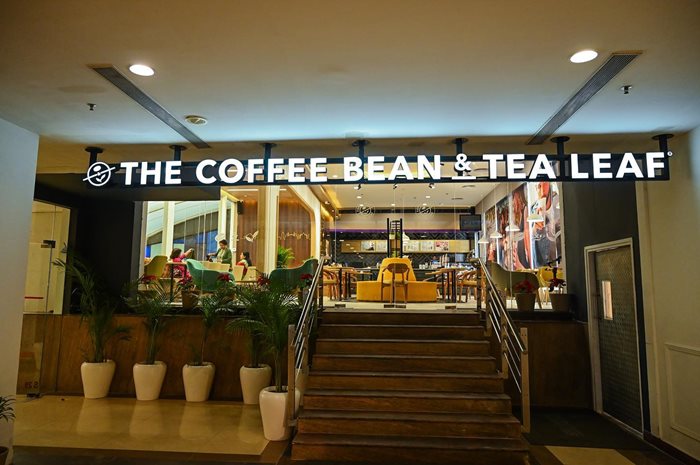
The Coffee Bean & Tea Leaf (CBTL) India has appointed Delhi-based media agency Volume as its new Creative and Digital Partner.
Volume, which was selected following a multi-agency pitch, will develop the coffee chain’s creative and digital strategy across the country, which CBTL India described as an ‘important and emerging market’.
California-based CBTL entered India in 2008 with a store at the Select CityWalk in Delhi and now operates approximately 30 Indian outlets.
“We are delighted to have Volume on board as our India Agency. India being an important and emerging market, it is a great opportunity to showcase consumers of The Coffee Bean & Tea Leaf experience,” said Ranjit Talwar, Commercial Director, CBTL India.
Rakesh Krishnotula, creative head of Volume, said the partnership presented ‘a unique opportunity’ to put ‘the CBTL experience across the Indian market’.
In May 2023, Indian media reported CBTL was seeking new franchise partners in India in a bid to expand its footprint and keep pace with an increasingly competitive pool of international branded coffee chains.
Fellow US coffee chain Starbucks, which opened its first store in India in 2012, operates 333 stores across 41 cities in India. Following its full-year results in April 2023, Tata Starbucks said it was ‘looking to rapidly expand its presence in the coming years’.
UK-based Costa Coffee also has ambitious growth plans within the Indian market, with franchise partner Devyani International seeking to scale the coffee chain’s 115-strong footprint over the next 12 months.
Tim Hortons, which entered India in August 2022, has reached 17 stores across the country and plans to reach 120 stores by 2026.
Additionally, coffee and food-to-go chain Pret A Manger is seeking to open 100 outlets across India within five years following its market entry in April 2023 with Reliance Brands Limited.
source: http://www.worldcoffeeportal.com / World Coffee Portal / Home> Industry News / June 14th, 2023
Traders from the Middle East introduced the beverage to the Mughal empire but the British made tea the subcontinent’s preferred drink.
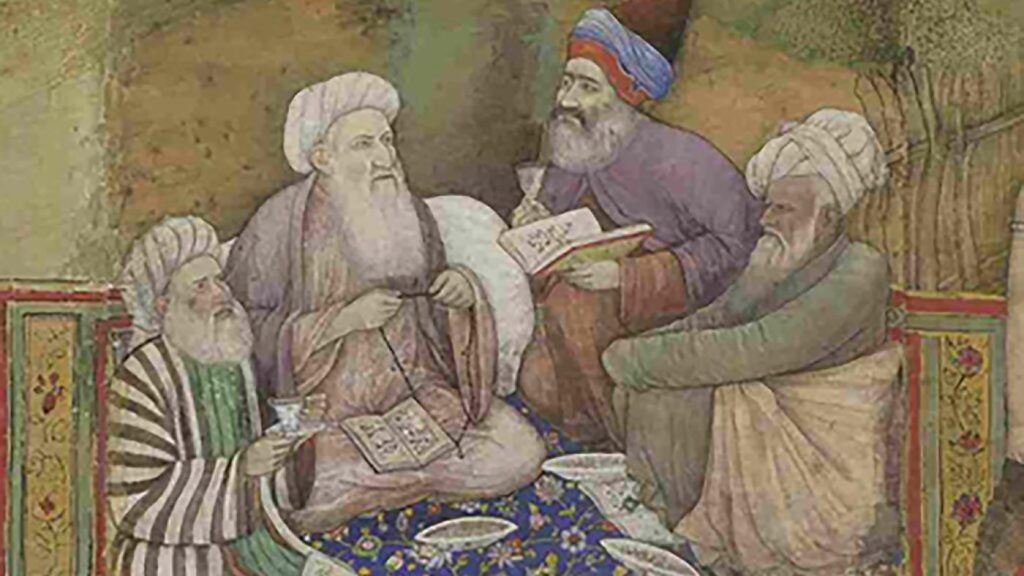
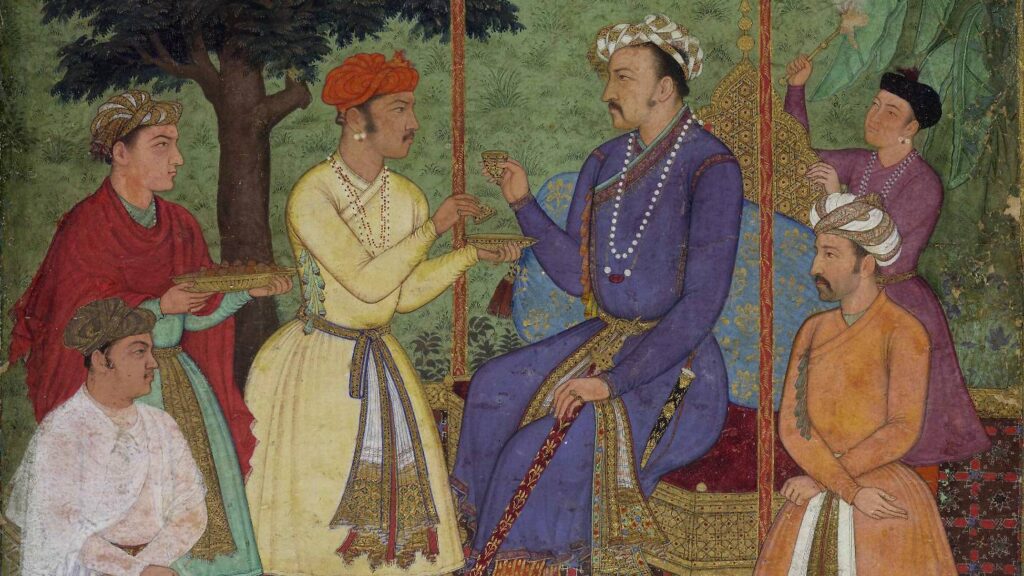
Mughal men drink an unidentified beverage in a 17th century painting later recreated as a drawing by Rembrandt (Public domain)
The sun sets behind regal yet dilapidated Mughal mansions and the magnificent dome of the Jama Masjid as the call for the evening prayer fills the auburn sky in Old Delhi.
Chandni Chowk’s bustling streets reverberate with the sound of honking cycle rickshaws navigating the serpentine lanes.
The sunset marks the beginning of business hours in the neighbourhood, which emerged during Mughal emperor Shah Jahan’s rule; a pocket within the once spectacular walled city of Shahjahanabad, founded in 1648.
Immersed in the soundscape, one’s senses are drawn to the aroma of food being prepared, complemented by the unmistakable scent of masala chai – the Indianversion of spiced tea.
Tea stalls, resembling busy beehives, draw Delhiites patiently waiting for their daily dose of evening tea – some having travelled from the far ends of the city to satisfy their craving.
Tea is without a doubt a national obsession in India. However, the incredible popularity of the drink in the subcontinent is less than two centuries old and only came about as a result of British rule in the region.
It may come as a surprise, but before the arrival of the British, it was coffee that Indians preferred.
Sufis and merchants
Coffee was brought over from the Horn of Africa to Yemenat some point in the 15th century and later spread north into the Near East and then to Europe by the 16th century.
The beverage also spread eastwards, and India’s Mughal elite was quick to adopt it as their beverage of choice.
While the Mughal Emperor Jahangir had a penchant for wine – preferring the Shiraz variety – both Hindu and Muslim nobility in his court freely indulged in coffee.
Edward Terry, a chaplain with the English embassy at Jahangir’s court, mentions that members of the court were captivated by the then-novel qualities of coffee, believing it could “invigorate the spirits, aid digestion, and purify the blood”.
The coffee bean was brought to the subcontinent by Arab and Turkic traders who had strong trade ties with the Mughal Empire.
They not only brought coffee, but also other items, including silk, tobacco, cotton, spices, gemstones, and more from the Middle East, Central Asia, Persia, and Turkey.
By the time Shah Jahan ascended to the Mughal throne, interest in coffee had grown exponentially across Indian society (Public domain)
Such goods would reach the farthest corners of India, including the easternmost region of Bengal. By the time Jahangir’s son, Shah Jahan, ascended to the throne (1628-1658), interest in coffee had spread across society.
Coffee was considered a healthy drink, an indicator of social mobility, and an integral part of Delhi’s elite social life.
Like Terry, another contemporary European visitor, the German adventurer Johan Albrecht de Mandelslo, wroteabout his travels in the east through Persia and Indian cities, such as Surat, Ahmedabad, Agra, and Lahore in a memoir titled The Voyages and Travels of J Albert de Mandelslo.
A painting titled ‘The Ottoman Sultan and His Haseki’ by an unnamed artist (Wikimedia)
In 1638, Mandelslo describes kahwa (coffee) being drunk to counter the heat and keep oneself cool.
In his workTravels in The Mogul Empire (1656-1668), Francois Bernier, a French physician, also refers to the large amount of coffee imported from Turkey.
Besides its use in social settings and supposed effects to ward off heat, the drink also had a religious purpose for the subcontinent’s ascetics.
Like their brethren in the Middle East and Central Asia, India’s Sufis consumed coffee before their night-long reverential rituals known as dhikr (the remembrance of God).
Legend has it that a revered Sufi saint named Baba Budhan carried back seven coffee beans in the folds of his robe on his way back from Mecca in 1670, planting the seeds for Indian-origin coffee cultivation in a place called Chikmagalur.
While this story may or may not be true, today the Baba Budhangiri hill and mountain range in the Indian state of Karnataka bears his name and remains a significant centre for coffee production, as well as housing a shrine dedicated to the Sufi saint.
In another variation of the legend, shared by the government’s Indian Coffee Board, the Sufi saint travels to Mochain Yemen and manages to smuggle out the beans discreetly despite strict laws on their export.
Culture of consumption
From the 16th century onwards, India became host to a cafe culture influenced by the one emerging in the Islamic empires to the west, particularly cities such as Damascus, Aleppo, Cairo, and Istanbul.
The nascent coffee culture found expression in Shahjahanabad’s own “qahwakhanas”, or coffee houses.
In her essay Spilling the Beans: The Islamic History of Coffee, food historian Neha Vermani describes the coffee served at the Arab Serai, which was “famous for preparing sticky sweet coffee”.
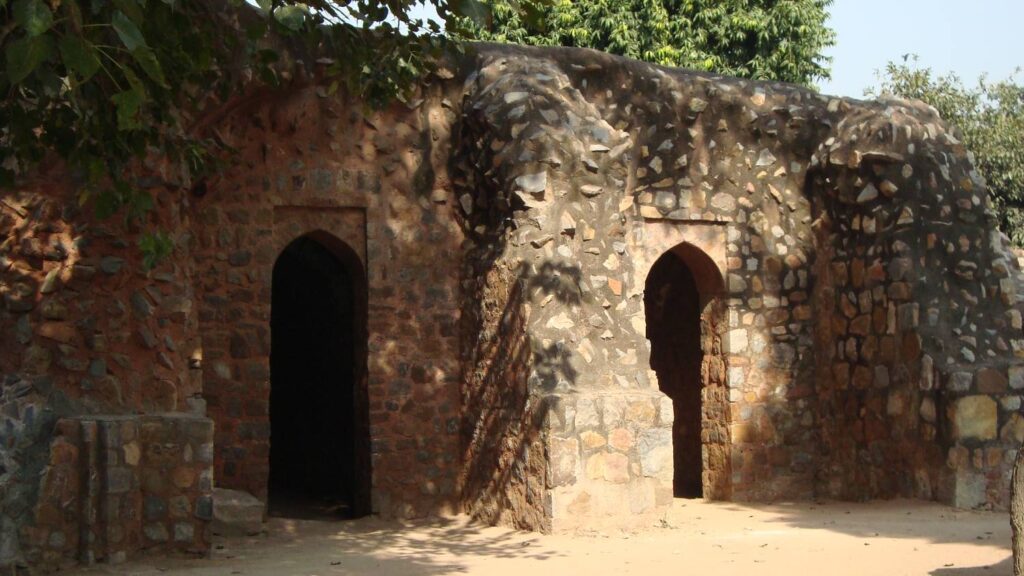
The Arab Serai became known for its sticky sweet coffee (Wikimedia)
The Serai, which was commissioned in 1560 by Hamida Banu, the wife of Mughal Emperor Humayun, still stands today as part of a Unesco heritage site ; the wider complex of Humayun’s tomb.
Historians say it was used as an inn by Arab religious scholars who accompanied the royal on her pilgrimage to Mecca and that it was also used to house craftsmen from the Middle East who were working for the Mughals.
Historian Stephen Blake in his 1991 workShahjhanabad: The Sovereign City in Mughal India 1639-1739 describes coffee houses as places where poets, storytellers, orators, and those “invigorated by their spirits” congregated.
Blake described how vibrant these coffee houses were, their milieu of poetry recitals, storytelling and debates, long hours of playing board games, and how these activities impacted the cultural life of the walled city.
Coffee houses of Shahjhanabad, like those of Isfahan and Istanbul, accelerated the rise of a culture of consumption and a thriving food culture, with residents frequenting snack sellers offering savouries, naanwais baking bread, and halwais specialising in confectionery.
This is a legacy that continues to be felt in Old Delhi’s Shahjahanabad area to this day.
While Blake’s descriptions paint a picture, there are no extant visual depictions of the interiors of these establishments, and unlike their Ottoman or Safavid counterparts, there are no miniatures or Orientalist artworks depicting what they would have looked like.
Rembrandt depictedMughal men drinking something very closely resembling coffee but the Dutch artist does not identify the contents of their cup, and never visited India. But his images were inspired by Mughal paintings brought over to the Netherlands by Dutch traders.
The man who swore by his Turkish coffee
Provincial courts sought to replicate the ambience of Shahjahanabad and embraced the cafe culture on offer there. Among them, none cherished coffee more than Alivardi Khan, the Nawab Nazim of Bengal.
Khan was of Arab and Turkman descent and ruled Bengal from 1740-1756. Known as a diligent ruler, coffee and food were the two biggest pleasures of his life.
Seir Mutaqherin or the Review of Modern Times, written by one of the prominent historians of the time, Syed Gholam Hussein Khan, offers a fascinating description of Alivardi Khan’s routine.
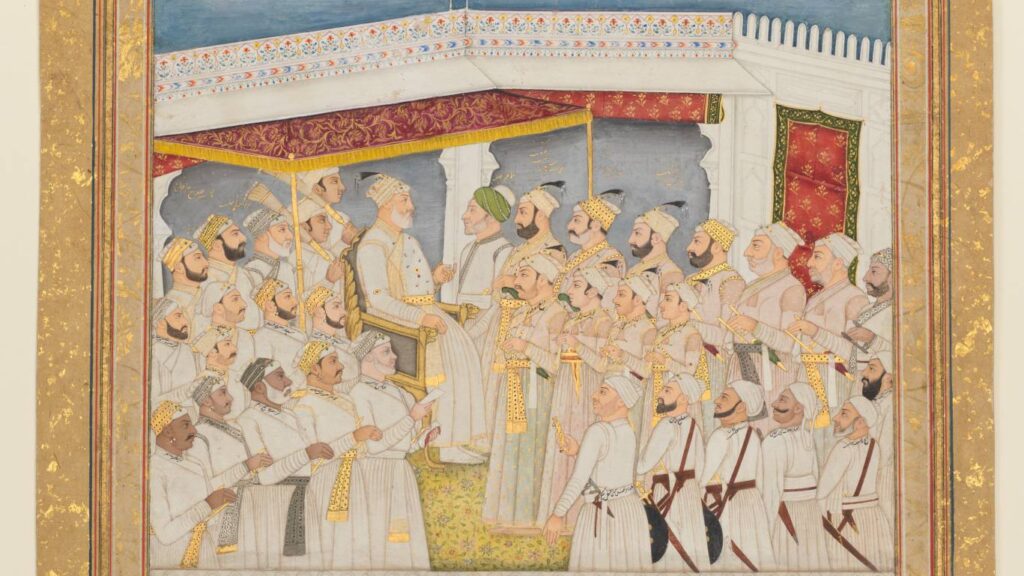
Alivardi Khan, seen here on his throne, liked the finer things in life, including coffee (Metropolitan Museum of Art/Public domain)
He writes: “He always rose two hours before daylight; and after having gone through evacuations and ablutions, he performed some devotions of supererogation and at daybreak, he said his prayers of divine precepts, and then drank coffee with choice friends.
“After that he amused himself with a full hour of conversation, hearing verses, reading poetry or listening to some pleasing story.”
This morning routine was followed by a bespoke Persian dish prepared by the nawab’s personal chef.
Khan’s portrayal presents Nawab as a man of fine taste, who valued the luxuries of courtly life as much as effective governance.
A connoisseur of exquisite food, witty conversations, and premium Turkish coffee, Khan went to great lengths to acquire the best coffee beans, importing them from the Ottoman Empire and bringing them all the way to Murshidabad, his capital.
The coffeehouse ‘is a social space created and shaped by the people themselves’ (MEE)
He believed in nothing but the best for his court. Not only were his coffee beans imported, but his kitchen staff also hailed from places renowned for their culinary excellence, such as Persia, Turkey, and Central Asia.
The royal household employed a diverse range of professionals, including storytellers, painters, coffee makers, ice makers, and hakims (physicians).
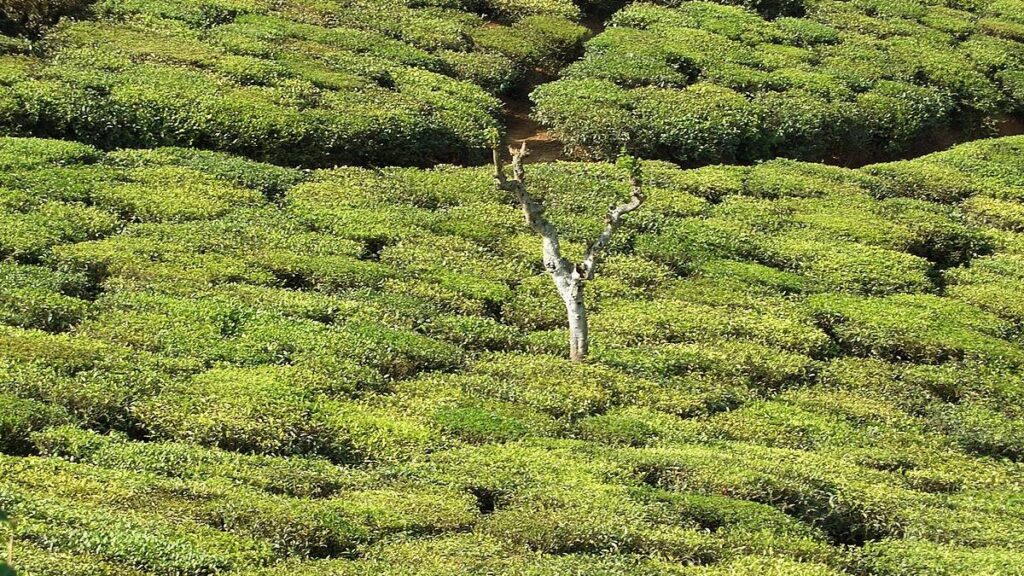
Tea has been grown in India since the 19th century (Wikipedia)
Khan personally handpicked his baristas (qahwachi-bashi), who brought along their specialised coffee-making equipment.
The descriptions paint a vivid picture of courtly culture, a world of opulence, artistry, and a profound affinity with caffeine.
It is puzzling, therefore, to pinpoint exactly when Mughal coffee culture vanished from pre-colonial Bengal, but it likely lasted until at least 1757.
Siraj ud-Daulah, Khan’s grandson and successor, could not live up to his grandfather’s legacy, and faced with threats from the British, the courtly culture swiftly dissipated, along with Bengal’s fortunes.
When Bengal lost the decisive Battle of Plassey in 1757, the East India Company took control of the region, and slowly coffee vanished from public consumption and consciousness.
Tea farming takes over
The rise of the East India Company, which was the primary agent of British control in India, marked the end of the subcontinent’s dominant coffee culture.
Britain’s penchant for tea began in the late 17th century and China was its main supplier.
Lizzy Collingham writesin her book Curry: A Tale of Cooks and Conquerors that between 1811 and 1819 “70,426,244 pounds” out of a total of “72,168,541” pounds of imports from China were associated with the tea trade.
She remarks that Britain, therefore, had an “interest in finding an alternative source for tea”.
With its fertile soils and appropriate weather conditions, India was the perfect spot.
In February of 1834, then Governor General William Bentick appointed a committee to look into India’s potential as a place to set up the East India Company’s own tea production unit.
In the native Indian population, they found not only workers who would cultivate and harvest the leaves but also consumers of the beverage.
As coffee production became overshadowed by tea farming, Indian tastes also shifted to the latter.
Further consolidating the decline of Indian cafe culture was the British ban on Indians visiting coffee houses, which were barred to all but Europeans.
Nevertheless, reports of the death of coffee in India were premature.
Regardless of British influence on local culture, the subcontinent was not immune to global trends.
The Indian historian and author, AR Venkatachalapthy, writes in his 2006 book In Those Days There was No Coffee: Writings in Cultural History that there was no escaping the physical effects or symbolism of coffee in late 19th century British India.
“Drinking coffee, it appears, was no simple quotidian affair. Much like history, the nation-state, or even the novel, coffee too was the sign of the modern,” he writes.
Enthusiasm for coffee grew at the turn of the 20th century, and the same book quotes adverts for coffee in south India in the 1890s: “Coffee is the elixir that drives away weariness. Coffee gives vigour and energy.”
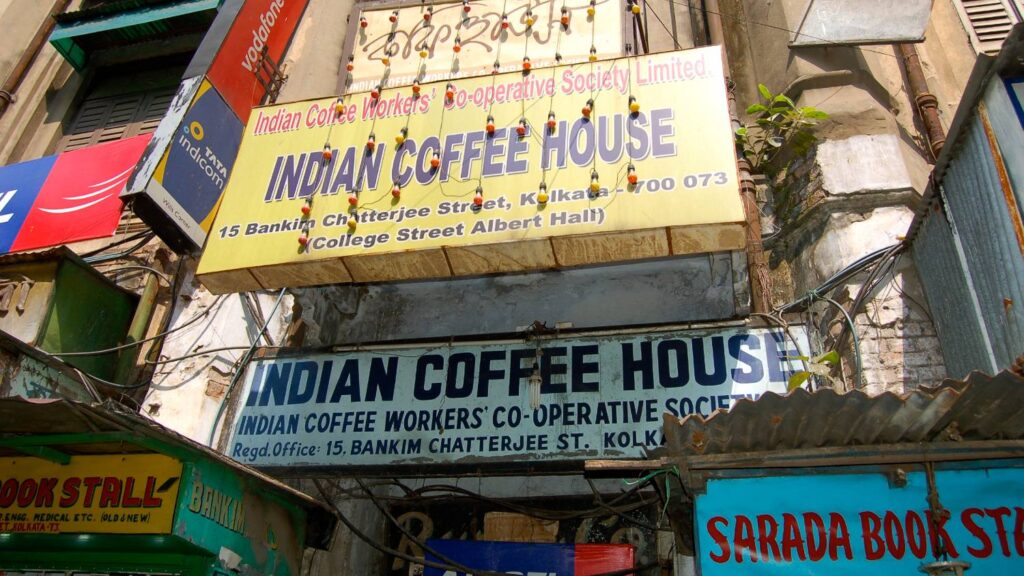
This energy and vigour were first reflected in the east, in the colonial city of Calcutta (present-day Kolkata) where the first Indian-run coffee shop, named Indian Coffee House, opened in 1876.
The Indian Coffee House is run by Indian worker’s cooperatives and is open to all (Wikipedia)
Turning into a chain in the 1890s, by the first half of the new century the name Indian Coffee House would be adopted by a growing network of 400 coffee houses run by Indian workers’ cooperatives, with only Indian-origin coffee.
These were the people’s coffee houses where any Indian could walk in without being discriminated against on the basis of their race.
Today, the ambience of the Indian Coffee House reminds one of the inclusivity of coffee shops in historic Shahjhanabad.
The chain is one of many Indians can visit, with others including the Bengaluru-based Coffee Day Global, which now has more than 500 outlets in the country despite only opening its first in 1996.
Six years later Starbucks entered India’s voluminous urban market and the rules of the brew changed forever in the subcontinent.
source: http://www.middleeasteye.com / Middle East Eye / Home> Discover> Food & Drink / by Nilosree Biswas, New Delhi / June 05th, 2023
While many coffee lovers prefer the high-quality arabica beans sold in cafes, robusta is normally less expensive because the tree is hardier and requires less care.
pix: Bloomberg
The global cost-of-living crunch has pushed coffee drinkers to get their fix from cheaper brews. But a shortage of robusta beans is making it increasingly difficult to find a budget-friendly cup. While many coffee lovers prefer the high-quality arabica beans sold in cafes, robusta is normally less expensive because the tree is hardier and requires less care, making it easier to produce in large quantities. The variety is often used in instant coffee, espressos and ground blends sold at supermarkets, which have experienced a comeback as cash-strapped consumers seek alternatives.
Key growers, however, are finding it difficult to keep up with the surge in demand, with wholesale prices this week hitting the highest level in nearly twelve years.
For consumers in Europe’s largest coffee market, Germany, the squeeze is having a noticeable effect on retail costs, with instant varieties going for nearly 20% more than a year ago, even as inflation for coffee beans has lost momentum. US instant coffee price-growth also slowed less than the roasted version in April.
The odds of global robusta shortages easing any time soon look bleak. Vietnam — the world’s largest producer — probably collected its smallest harvest in four years, after farmers focused on planting more profitable crops like avocados and durians to cope with booming fertilizer costs in the aftermath of Russia’s invasion of Ukraine.
Brazil, the second-largest grower of the variety, has seen its crops hurt by drought, and there are also concerns that Indonesia’s output could suffer following heavy rains. Despite those hurdles, more robusta beans were exported globally in the first six months of the current season compared to the last three years — just not fast enough to keep up with higher needs. Shipments between October and March were about 4% higher than the same period in 2021-22, according to the International Coffee Organization.
“There’s been so much of a demand shift away from higher-priced coffee that even the market isn’t even being satisfied by higher robusta exports,” said Judith Ganes, who runs a consultancy focused on commodities like coffee in New York.
The switch was first observed among roasters who increased the amount of robusta used in commercial blends to offset higher arabica costs and energy bills. Then, double-digit inflation in many parts of the world saw grocery bills surge to the highest in decades, forcing some consumers to trade down to cheaper options.
As a result, robusta-heavy instant coffee is growing faster than other industry segments, according to Aguinaldo Lima of the Brazilian Instant Coffee Industry Association, whose country is the world’s top soluble coffee producer. And leading companies elsewhere, such as Nestle SA and India’s Tata Coffee, have also reported stronger demand for instant coffee in their latest financial reports.
While robusta beans are known to be significantly more bitter than the arabica variety — in part due to higher levels of caffeine — Vietnam and Indonesia have both improved the quality of their beans, making it easier for roasters to increase the variety in blends without drastically affecting the taste, according to Ganes.
Consumers might discover “very interesting flavors” by drinking robustas, even if the taste is different than arabica coffee, said Daniel Munari, a barista who also runs Royalty Quality Cafe in southern Brazil.
“There’s sweetness and acidity, which are a great addition and give balance to the drink,” he said.
source: http://www.business-standard.com / Business Standard / Home> World News / by Mumbi Gitau, Dayanne Sousa and Mai Ngoc Chau / May 14th, 2023
Aramse is a Mysore based brand that is taking the flavour and culture of Indian Coffee to a global audience.
Coffee is evocative; the aroma of the roasted beans, the familiar clatter of coffee being made, and of course, the distinct flavour and texture of a good brew can stir so much within a person. Coffee in its many varied forms – from decoction that is slowly made in a South Indian filter and stored in a flask at 5 AM by loving mothers to a bitter concoction hastily grabbed in a to-go cup from a nondescript cafe with a punny name – is an inextricable part of life for so many of us.
For Raghunath Rajaram and Namisha Parthasarathy, the husband-wife duo who founded Aramse, Coffee has been an indispensable part of their life. As two coffee lovers living in East London — the centre of artisanal coffee, they had access to some of the best coffee in the world. Within a span of 2 miles. Raghunath, who grew up drinking milky, sugary coffee in Bangalore tasted his first cup of exceptional coffee here and was hooked ever since. But Namisha who was a trader, and Raghunath who is a designer wanted to get away from the constant rush of their life and took a month-long yoga retreat in Mysore in 2019. They continued to travel across India and realised that they wanted to move back here and ended up making a home for themselves in Mysore.
Ritualising The Act Of Making Coffee
While they were from vastly different fields, they had always talked about starting something together and threw around ideas surrounding things that they both loved. Namisha had also gifted Raghunath with a course from the Speciality Coffee Association’s Course (a non-profit that set the guidelines of Speciality Coffee Standards on a global scale) and embarked on a journey of discovery and learning ever since. Namisha has always been a coffee drinker and so it’s always been there. During a trip they had taken to South America, they spent a long time trying to find good coffee to drink and great cafes to hang out in and realised that coffee was a unifying factor that they could focus on. But what Aramse was when they started in 2020 vs. where they are today is vastly different, owing to COVID and everything that followed it.
According to Namisha, when they set out to start Aramse, they were trying to see how one could take a simple process of brewing coffee and make it into something that is a delightful activity to people, rather than letting it be something peripheral to your day. She went on to say, “Even for 10 minutes, the act of brewing can become a focal point of your day and you derive joy from it. So to answer the question of where we started – we started doing in-person workshops in Mysore. It was like a tech-free space, for like half a day or 2.5 hours, we encouraged people to put their phones away and we took people through brewing processes, talked about Indian speciality coffee and engaged with people over coffee.”
After conducting a couple of workshops in the first few months of 2020, the pandemic hit. But they didn’t want to let go of their ethos of being free of distraction and focusing on the joy of the process. They instead attempted to transform the experience to a digital medium. Since they were so passionate about all the minutiae of making great coffee, they had to be mindful of the content they were sharing. They wanted their original idea to translate into three verticals within the purview of Aramse. On the content side, they are most active on Youtube and Substack. On these platforms share content across the gamut of coffee – from equipment reviews and brewing techniques to more thematic pieces around flavour in coffee, the coffee market and more. On the product side, they have been very intentional with what they sell. Their best-selling product is the SOFI – which is essentially the South Indian Filter reimagined. They also crowd-funded a Coffee Journal, which is basically like a daily notebook for the discerning coffee brewer. We also do cups as well. The third vertical of Aramse is the subscription service that they offer.
On Taking A Content Driven Approach
When the founding duo behind Aramse pivoted to the digital space, they started with daily posts on Instagram where they shared their brewing stories and such. But eventually, they started posting to Youtube, as they personally liked the platform and gravitated towards it. They simply started with brewing and cupping montages and slowly they moved towards reviews and tutorials. In February 2020, James Hoffman who is arguably the biggest name in specialty coffee right now and is the pioneer of Britain’s third-wave coffee movement, put a takeover call out on his Youtube channel. He planned to give his channel over to 4 content creators to talk about coffee from their unique perspectives. Raghunath and Namisha pitched for this and ended up being one of the chosen four. They talked about decolonizing coffee through flavour and it was a big turning point for Aramse as it got them global recognition and visibility.
One of the biggest things that they have been trying to do through the content with Aramse is to talk about Indian coffee and coffee from a producing country. According to Namisha, “The voices from those countries need to be recognised more and that can be from the producing standpoint, wherein you highlight these coffees. But it is also from the other side of the spectrum, such as the brewing and technique. A lot of value is added at the consumption end of it. But the way coffee works right now is people associate producing countries with providing coffee and then it sort of makes its way into Europe, America, Canada and Australia and they create value through stories, roasting, brewing, equipment and such. The reason we took a content-first approach is because we always wanted to tell the story of Indian Coffee, but to a global audience and the digital platform has been super helpful in achieving this.”
In building Aram Se, they realised that they wanted to put out content for a coffee-loving audience, irrespective of where they might be geographically and do their part in highlighting the best that Indian coffee has to offer.
Within India, Aramse’s coffee subscription might be the only one of its kind. Their coffee subscription service is a fully custom proprietary coffee cueing engine that has been built from the ground up. It has a fully integrated recurring payment engine and it has a coffee queuing system that is fully recommendation based. Once someone makes their choice between bold, vibrant and balanced flavour profiles and a couple more criteria, Aramse will ship out orders based on those preferences — whether that is every two weeks or four. They use pretty straightforward questions to ensure a very low barrier to entry as they know that speciality coffee is confounding with fancy terminologies in current times.
From the roaster’s side, Aramse has partnered with 12 roasters that they personally enjoy. They also personally sample all of the coffee that they send out so that they can stand behind their recommendations. So even though an algorithm and proprietary system are working behind it, they also have an extensive database of Indian speciality coffee that is currently being sold in the market. To provide value to the roasters, in addition to selling their coffee through the subscription model, the Aramse team ensures there is an extensive feedback loop. They also ensure that the subscription model works out at an affordable rate by charging what the roastersdo, without adding a premium. Once customers subscribe, they can rest easy knowing that the recurring model will deliver coffee that is suited to their taste on time, without any additional hassles.
Taking The South Indian Filter To The World
When it comes to making South Indian filter coffee, no two houses seem to make it the same way. There exists a marked difference between the specifics of the filters that are available in the market and based on this, the technique for brewing differs. The number of holes in the curvature and every other dimension in between can change between different filters. It usually takes days and maybe even years of continued use to understand what works, when trying to make coffee with a filter. With SOFI, Raghunath and Namisha hope to facilitate the use of the brewer in a more modern context and to make it one that is suited to the discerning tastes of the modern coffee drinker. By creating a filter that is standardised, they can also ensure that customers do get to enjoy the best cup from the get-go, as they have figured out the right way to do it.
This need for standardisation to the South Indian Filter is what prompted Aramse to create SOFI. It allows one to brew coffee that is more in alignment with the preferences of the modern coffee drinker who is mindful of things like grind size and flavourprofiles. It also enables a lot of knowledge sharing to happen, which was never really possible with the traditional filter. Today, Aramse has sold SOFI to almost 20 countries and counting. Owing to their dedicated Youtube and newsletter audience, they have a community of people who ask the right questions and seek to learn the right technique from them as well. Most importantly, it makes it possible for the South Indian filter to be associated with more than just making the traditional Kaapi.
Having done extensive groundwork in the last couple of years, the duo behind Aramse hopes to scale and expand the brand in the next two years. They also hope to create more content that is thought-provoking and has a direct impact. For an outsider, the many different things that Aramse is doing might seem like a lot. But as a team, they are comfortable with the foundation of the verticals that they have built and hope to dive even deeper into each them and do even more.
You can learn more about the brand and explore its full range via their website.
My divide is much more nuanced and connected to those of us who wake up to filter coffee every morning. The question is: where do you buy your coffee from?
Shoba Narayan (HT Photo)
To my mind, there are only two types of coffee drinkers. And there are only two South Indian states that can lay claim to coffee: Karnataka and Tamil Nadu. Per an India Coffee Board publication, South India consumes 78% of Indian coffee. Among the southern states, Tamil Nadu accounts for 36%, Karnataka 31%. Andhra and Kerala are 18% and 15%, respectively. The latter two states make better tea than coffee. Between Tamil Nadu and Karnataka there is the usual divide and endless debate about which coffee is better. The answer is so obvious that I don’t even need to mention it here.
My divide is much more nuanced and connected to those of us who wake up to filter coffee every morning. The question is: where do you buy your coffee from?
Are you a “coffee works” kind of person? Or are you one of those high-falutin, cold-brew drinking altu-faltu types that patronise coffee brands that are maverick and have nothing to do with farmers? Bangalore is full of places where the coffee…well, works. There is Sri Suma Coffee Works in Jayanagar, Gokul Coffee Works in Gandhi Bazaar, Sri Vasanth Coffee Works in Sajjan Rao Road, Mahalakshmi Coffee Kendra in Chamarajpet, and Sri Vinayaka Coffee Beans in Malleshwaram where you can “drink and feel lovely”.
These are honest, homely and heritage coffee purveyors who sell the beans or ground coffee powder to you without too much fuss. They don’t talk about which unpronounceable estate the beans are from, what elevation it is at, and whether the beans are ‘monsooned.’
This is irrelevant for filter coffee, as are questions about whether the beans were nourished by cow dung from desi-breeds and harvested in the moonlight by light-fingered women. Most of us who consume filter coffee don’t care about all this halo-effect stuff.
All we want is strong frothy piping hot coffee. Not some Ph.D dissertation. The fact that we all morph into versions of ourselves later in the day when we care about organic foods and child-labour is another matter. Maybe it is the filter coffee that makes us enlightened beings that suddenly spout homilies about regenerative agriculture and reductivism in art.
To me, good filter coffee bought from a store with a Western sounding name is an oxymoron. It is not to be trusted because you see, these brands proffer everything from cold-brew to pour-over. Filter coffee for them is also-ran: something that they add on.
It is not the focus. Give me a Panduranga Coffee anyday, couriered straight from Chikmagalur. Failing that, give me Cothas coffee with 15% chicory.
I love the Black Baza, a bird found in the Northeast but please, I don’t want this in coffee. Nor do I want sleepy owls, flying squirrels, or the blue tokai (feathers) of a peacock. I don’t want to slay coffee or rage with it; or even surf the third wave.
Araku sounds like arachu, which means grind in Tamil. I like it in ‘nellikai’ or amla, not in coffee. I may like Cafe L’Orange later in the day, but in the morning, I want coffee served in silence in glass cups like at the Airlines Hotel. And I definitely don’t want waiters who show up every minute and ask me if I like my coffee.
How do I like my coffee? I like it the way I have always had it. The way my mother gave it to me. Sans questions, sans interrogations, sans lecture about grind and source. Just give it to me already, why don’t you? And please don’t go on about single-blends because we Indians who drink filter coffee already know one inescapable fact: single blends don’t work in filter coffee. Blended coffee is the way to go. Medium roast also doesn’t work in filter coffee, beloved as it is with the “aroma police” of coffee who disdain dark roasts because it kills aroma, according to them. But medium roast in coffee means that the decoction won’t be dark, which creates a whole assembly-line of problems. If the decoction isn’t dark, the coffee will look milky, not dark brown even with a little milk. It won’t taste strong because the milk flavour will dominate. Medium roast just does not work for filter coffee.
Single estate coffee has specific contours and flavour profiles that may suit black coffee but when you pour hot milk on it, the decoction gains an unpleasant edge like day-old wet-laundry. In order to make good filter coffee, you need the magic ingredient called chicory, either 15% or 20%, depending on how thick you like your coffee. And you need frothing that comes from two hands, two tumblers and a precise wrist.
My taste in filter coffee is a result of what was served at home in Chennai. Isn’t this true for all of us? You know what the best part is? Amongst filter coffee drinkers in traditional Chennai or Bangalore homes, there is consistency of taste, a uniform flavour profile that you could bank on. Once you did the due diligence on which house serves good coffee, you can go back time and again with no unpleasant surprises. This is because good filter coffee relies on more than one factor for perfection. The decoction has to be of a certain thickness. Too thick and you need to add more milk which makes the coffee too gooey. The milk makes all the difference. It has to be frothy and hot. This will conceal many of the inherent flaws in milk. Sugar is according to taste, but I use the golden rule. Add just enough sugar to reduce the bitterness without messing with the taste.
Good filter coffee is not about provenance. It is about proportion. Write that on your sign. Hang it around your neck.
So all these jokers who wax poetic about their coffee being grown in such-and-such hills, surrounded by wild elephants don’t know what they are talking about. As for the Kopi Luwak beans that are eaten by the Asian palm civet which then excretes these beans, thus making them the most expensive coffee in the world, well, all I can say is that I have tasted it and it is shit coffee, quite literally.
My father loved coffee beyond logic or reason. Once a month, he used to take me with him to the local Leo Coffee store. No gleaming shelves, no filter press, no descriptions. Instead, there were gunny sacks full of coffee beans, a giant grinder, and the aroma that permeated the entire neighborhood. My Dad would choose a blend of plantation, peabury and chicory and have it ground right there. We would carry it back in a bright yellow Leo’s coffee bag. Sometimes we would go to Narasu’s coffee for a change. But never to cafes. We didn’t trust cafe coffee at home. That was only for impressing foreign visitors. As for bad coffee, that was easy to spot: watered-down decoction, heated in the microwave, and day-old milk were the main culprits.
With that, we come back to the question often asked. Where do you get better filter coffee: Tamil Nadu or Karnataka? The answer is so obvious that I don’t need to repeat it here.
(Shoba Narayan is Bengaluru-based award-winning author. She is also a freelance contributor who writes about art, food, fashion and travel for a number of publications.)
source: http://www.hindustantimes.com / Hindustan Times / Home> India News / b y Shoba Narayan / May 10th, 2023
Magicsip, the coffee revolutioniser based out of Coorg, is now venturing into functional coffees such as Ashwagandha, Mushroom, and Turmeric instant coffee.
Are you someone who can only function after having a glass of coffee? And, like experimenting with flavours? If that’s the case, you’ll be happy to know you can try several unknown and unusual flavours. Magicsip, the coffee revolutioniser based out of Coorg, is now venturing into functional coffees such as Ashwagandha, Mushroom, and Turmeric instant coffee. You read that right!
The company has announced that it has received an undisclosed amount of funding from its parent company DHS, an establishment in the coffee industry since the 1990s. The strategic investment is aimed at expanding and further developing Magicsip’s business operations, including product development and extending its retail presence across Bangalore and another tier 1 cities.
To understand more about it, we got in touch with Ajash Sait, the Director of Magicsip. Here’s what he has to say:
How do you think coffee consumption has evolved over the years?
Coffee consumption has undoubtedly evolved over the years, with consumers now more discerning and demanding than ever before. Gone are the days of mediocre coffee that simply satisfies caffeine cravings. Today’s consumers crave a coffee experience that is rich, nuanced, and elevates their senses. As a result, we have seen a proliferation of speciality coffee shops and innovative coffee products, all aimed at meeting the sophisticated palates of today’s coffee drinkers.
What’s the USP of Magicsip coffee?
At Magicsip, we pride ourselves on delivering a premium coffee experience that is unmatched in quality and taste. Our coffee is sourced from the lush hills of Coorg, where the ideal climate and soil conditions result in coffee beans of unparalleled excellence. We also use a unique curation process that ensures our coffee is rich, aromatic, and bursting with flavour. In addition, our commitment to sustainability means that our coffee is ethically sourced and environmentally friendly, giving our customers peace of mind with every sip.
What are the flavours? Is it too risky to experiment? What is the market like?
We offer a range of flavours to suit every taste, from classic blends to innovative functional coffees. Our functional coffee range includes Ashwagandha, Mushroom, and Turmeric instant coffee, which offer a range of health benefits in addition to their delicious taste. We believe that it is important to push the boundaries of coffee experimentation, and we are constantly working to develop new and exciting flavours that will excite our customers. The market for specialty coffee is growing rapidly, and we believe that our commitment to quality and innovation will enable us to thrive in this dynamic industry.
How do you manage the funding?
We are fortunate to have the support of our parent company, DHS, which has a long-standing reputation in the coffee industry. This allows us to focus on what we do best, which is delivering premium quality coffee to our customers. We take a strategic approach to funding, using it to invest in product development, retail expansion, and other initiatives that will drive our business forward.
What are your expansion plans?
Our immediate expansion plans involve extending our retail presence across Bangalore and other tier-1 cities in India. We also plan to expand to Amazon US by the end of Q2, allowing us to reach a global audience with our premium coffee products. Beyond that, we are always looking for new opportunities to expand our business and bring our coffee experience to more customers around the world.
How do you manage competition?
We believe that competition is healthy and drives us to continually improve and innovate. At Magicsip, we differentiate ourselves from our competitors by offering a premium coffee experience that is unmatched in quality and taste. Our coffee is rich, aromatic, and bursting with flavour. We also offer innovative functional coffees that cater to the health-conscious consumer. Ultimately, we believe that our commitment to quality, innovation, and sustainability will enable us to stand out in a crowded market and continue to thrive in the years to come.
source: http://www.financialexpress.com / Financial Express / Home> Business News> Lifestyle / by FE Lifestyle / April 25th, 2023
The boutique café group will seek to build upon its success in the Middle East by catalysing growing demand for premium café experiences in India.
Reliance Brands announced its EL&N partnership in a briefing following its latest quarterly results | Photo credit: via Shutterstock
UK-based boutique café group EL&N has agreed a franchise partnership with Reliance Brands to open outlets in India, its eighth market globally.
EL&N, renowned for its lavishly decorated interiors and claim to being the world’s ‘most Instagrammable café’, opened its first outlet in August 2017 in London and now operates 27 stores around the world.
Following success in the Middle East, where the café group operates 12 stores across Saudi Arabia, Kuwait, Qatar and the UAE, EL&N is seeking to enter new markets internationally.
With stores also in France and Italy, EL&N recently appointed Lagardere Travel Retail as its exclusive franchisee for travel locations and also begun regional expansion across its native UK market.
Retail conglomerate Reliance Brands, which is also the franchise partner for UK-based coffee and food-to-go chain Pret A Manger, announced its EL&N partnership in a briefing following its latest quarterly results.
Mumbai-based Reliance Brands opened the first Pret A Manger store in India in April 2023 and is reportedly exploring bringing Armani/Caffe, the boutique café concept of Italian luxury fashion house Emporio Armani, to India.
India’s out-of-home coffee segment is expanding, with domestic coffee consumption largely driven by younger consumers seeking new, premium café experiences.
While established global coffee chains, including Costa Coffee and Starbucks, which have operated in the country since 2005 and 2012 respectively, have seen their revenues increase in India over the last 12 months, newer international entries also see untapped potential within the most populous country in the world.
Canada’s Tim Hortons plans to open 120 stores in India in the next three following its market entry in August 2022, while Australia’s The Coffee Club is set to debut in India this year via new franchise partner CK Israni Group.
Dunkin’s Indian franchisee Jubilant FoodWorks Limited said its new store design, launched in November 2022, caters to growing demand for high-quality café experiences and premium beverages across the country.
Additionally, Singaporean private equity firm Everstone Group has signed a franchisee agreement to launch branded Lavazza cafes in India.
source: http://www.worldcoffeeportal.com / World Coffee Portal / Home> Weekly Coffee Dose / April 24th, 2023
On Friday, the May contract of Arabica coffee on the New York exchange is being traded at 195.90 cents per pound (R354.84 a kg), and the same contract of Robusta coffee is quoted at $2,442 per tonne (R 200.63 per kg) (Photo:Bloomberg)
SYNOPSIS
For the next two quarters, India’s coffee exports are expected to go up by 10% year-on year in value terms due to a shift to mid-premium coffee from expensive premium-quality coffee amid firm international prices.
New Delhi:
India’s coffee exports, which had risen 13% on year in the Q4 quarter in value terms, are expected to go up further because of higher international prices, driving consumers to less expensive coffee.
“The higher value because of the gain in the global market has made up for the drop in volume,” Ramesh Rajah, president of Coffee Exporters Association, said. Prices in the international market rose because of lower crop outlook in major producing nations like Brazil in view of torrential rainfall.
For the next two quarters, India’s coffee exports are expected to go up by 10% year-on year in value terms due to a shift to mid-premium coffee from expensive premium-quality coffee amid firm international prices, Rajah said.
On Friday, the May contract of Arabica coffee on the New York exchange is being traded at 195.90 cents per pound ( ₹354.84 a kg), and the same contract of Robusta coffee is quoted at $2,442 per tonne ( ₹200.63 per kg).
Rajah forecasts Arabica coffee prices to be around 200 cents per pound on the New York exchange, and $2,300 per tonne for Robusta variety on the London exchange because of likely shortfall in supply in major producing countries such as Brazil and Vietnam as El Nino weather phenomenon are expected to disturb monsoon rainfall.
Brazil is the largest coffee producer globally, followed by Vietnam, Colombia, while India’s contribution to the global market is about 2.5-3.0%. India is an importer of raw coffee and exporter of instant coffee.
Coffee exports for the last financial year ended March hit a record high for the second consecutive year at $1.126 billion against the $1.088 billion target fixed by the commerce ministry.
“Exports are expected to be on par with the last financial year in value terms,” said Ajoy Thipaiah, chairman, Coffee Committee of United Planters Association of South India. “Volume of exports, however, may remain low.”
The export of coffee declined 3.6% in volume to 398,000 tonne in FY23 against 413,000 tonne in FY22, data from the Coffee Board of India showed.
According to Thipaiah, exports also rose due to a fall in shipping cost that had shot up seven-fold during covid in 2021 and immediately after covid in 2022. Shipping cost per container has plunged to the pre-covid level at ₹100,000-150,000 from ₹700,000-750,000. This is seen encouraging most medium-level coffee exporters, who were not able to export during covid due to higher freight costs.
The market for Indian coffee is niche and preferred by countries such as Italy, Germany and Russia.
The spike in exports has also been attributed to higher realisation. The per unit realisation for Indian coffee was 22% higher at ₹226,000 per tonne in the last financial year against ₹184,000 a tonne in 2021-22 (April-March), said KG Jagadeesha, secretary and CEO of India Coffee Board.
Exports in 2023-24 (April-March) will depend on prices and coffee production in India. Prices are good globally. However, the delayed blossom showers in major plantations in Kerala, Tamil Nadu and Karnataka may weigh on India’s coffee production this season significantly, which raises concerns over export volumes, Jagadeesha said.
source: http://www.livemint.com / Mint / Home> Markets> Stock Market / by Puja Das / April 23rd, 2023
According to a report by global business analysts Euromonitor International in January 2022, coffee consumption in Saudi Arabia grew by 4 percent per year between 2016 and 2021. File
Riyadh :
The coffee industry in Saudi Arabia is set to receive a huge boost after the Kingdom’s Cabinet approved the sector joining the International Coffee Agreement.
The move will see the industry join the world’s top producers of the commodity to keep coffee prices high and stable in the market, mainly using export quotas to steer the prices.
Approval for the move comes after Saudi Arabia designated 2022 “The Year of Saudi Coffee” in the wake of local production hitting 1,810 tons in the previous 12 months, according to the Saudi Press Agency.
According to a report by global business analysts Euromonitor International in January 2022, coffee consumption in Saudi Arabia grew by 4 percent per year between 2016 and 2021 and is forecast to increase by a further 5 percent annually up to 2026, reaching an expected consumption of 28,700 tons each year.
In a bid to boost the Kingdom’s coffee production, the Public Investment Fund launched the Saudi Coffee Co., which aims to ramp up production by more than 700 percent within five years.
Saudi Arabia is among the top 10 countries in terms of coffee consumption. According to the SPA report, the Kingdom imports approximately 70,000-90,000 tons of coffee every year and Saudis spend more than SR1 billion (266.3 million) on coffee.
The Ministry of Environment, Water and Agriculture is working to make the Kingdom self-reliant by increasing domestic production and increasing the industry’s contribution to the national gross domestic product.
In order to achieve these goals, the ministry has established a coffee research unit at the Agriculture Research Center of Jazan province. The unit provides guidance to coffee farmers and helps them resolve issues they face in the cultivation and production of good-quality coffee.
The coffee tree is grown in 70 countries worldwide and is an important source of income, with the bean produced in southern Saudi Arabia considered one of the most delicate types.
Moreover, an agreement was signed in 2018 between the Kingdom and the International Fund for Agricultural Development to provide technical assistance to improve the coffee strain.
The ministry also launched the Sustainable Agricultural Rural Development Program to promote coffee cultivation on a large scale.
In the past few years, coffee bean farms in Jazan have been given special attention as support for farmers has increased, and special care has been given to the Khawlani bean, which is one of the world’s finest coffees.
There are currently more than 2,500 Khawlani coffee plantations with a total of approximately 400,000 trees — although current production is mostly consumed locally.
source: http://www.arabnews.com / Arab News / Home / March 29th, 2023
Sakamma embodies the true spirit of Swadharma and entrepreneurship. She found her calling, created a successful enterprise, and contributed to the society.
Credit: Nammuru.com
It is that time of the year when people across the globe do their bit by putting out messages celebrating International Women’s Day and supporting gender diversity and inclusion. A time when people unilaterally wax eloquently on what it takes to empower women.
Empowering women to be independent and pursue their entrepreneurial dreams has been getting significant push and support in the recent past. While this is commendable, our history has several stories of women whose entrepreneurial journey is replete with tenacity, vision, and ambition. Such women entrepreneurs are truly inspirational, and remain eternal role models.
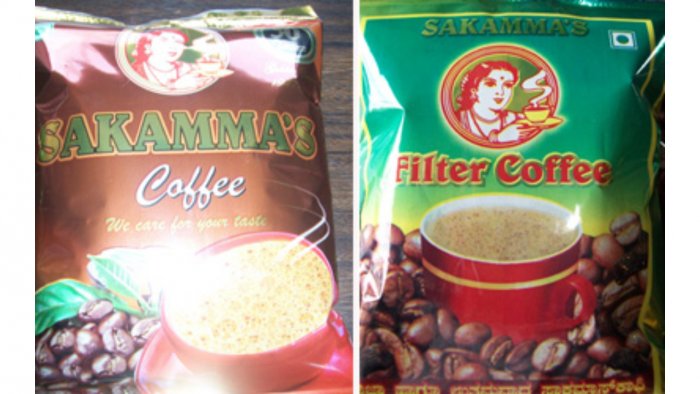
One such lady whose commendable journey has inspired thousands of people, including me, is Coffee Pudi (Coffee Powder) Sakamma. Her name is not often heard in the annals of Indian entrepreneurs. Sakamma’s Coffee Works became a household name in the 1920s. Kannadigas for long have had a tryst with coffee. Sakamma Coffee Works played a pivotal role in the early 20th century bringing authentic cured and powdered coffee to the people of the princely state of Mysore. Sakamma did not stop after building a successful coffee business. She used her learnings to help plan the industrial development of the princely state.
Sakamma had an interesting journey which started with being one of the very few girls who passed the secondary school examinations of the Mysore Province almost a century ago. She was married off young due to financial constraints, and lost her husband just a few years into marriage.
Her husband was a very rich coffee planter from Somavarapete, in Coorg (Kodagu). Widowed at 18, Sakamma decided to put her education to use, and began running the coffee estate. She shifted to Bangalore, and opened a coffee curing cum powdering unit near Bull Temple Road in 1920. Very soon, her coffee mix was a hit throughout the city, and Sakamma Coffee Works became an integral part of Bangaloreans’ life. Inspired by the overwhelming response, the young entrepreneur set up centres in different parts of the city. Her success got her the nickname Coffee Pudi Sakamma.
Sakamma’s journey has left a deep impression on me. Her true genius lies in the fact that she used her understanding of business, people, and resources well to involve in social causes. Recognition of her extraordinary entrepreneurial capability came by way of an invitation by the then government of Mysore to help plan the industrial development in the state. Sakamma invested and founded the Kuruhina Shetty Kendra Sangha and Hostel in present-day Basavanagudi, and even set up a choultry (an inn for travellers) near the hostel called Sakamma Bhavan.
Not stopping there, Sakamma went on to break other glass ceilings too, and became the first woman to be nominated to the erstwhile Mysore Representative Assembly in 1928. She won several awards and recognitions for her stupendous achievements. Sakamma embodies the true spirit of Swadharma and entrepreneurship. She found her calling, created a successful enterprise, and contributed to the society in her own way.
Business and entrepreneurship are inherently weighed on their level of success and profitability. Often, as entrepreneurs who have built empires, we are too busy chasing more profits. It is very easy to be caught in our own trappings of profit-chasing and business success — they make a heady concoction. In this chase, we miss involving the society and the community around them into our model of growth.
I believe that there is no trade-off between these two — these are not either-or. The reality is that no person (or no business!) is an island. Every entrepreneur must incorporate the good of the community and the society into building a profitable business. This only happens when you identify your Swadharma (or purpose), and embed it deep into the heart of the business that you are building.
At 1Bridge, the rural enterprise that I run, our purpose is to improve the incomes of rural entrepreneurs and unleash their entrepreneurial energies. Our success solely depends on the growth of the local community of entrepreneurs and their earnings, and this drives our business growth. This approach is fundamentally different from that of corporate social responsibility (CSR) or a philanthropic ‘giving back’, but one that weaves the ‘social’ aspect of ommunity development into the enterprise model of sustainable growth.
It is, of course, much harder to find models at this intersection, but isn’t entrepreneurship all about taking on tough challenges head on? This is certainly one challenge that I feel is worth solving.
(Madan Padaki is Co-founder, Global Alliance for Mass Entrepreneurship, and President, TiE Bangalore.)
Disclaimer: The views expressed above are the author’s own. They do not necessarily reflect the views of DH.
source: http://www.deccanherald.com / Deccan Herald / Home> Opinion / by Madan Padaki / March 14th, 2023
WELCOME. If you like what you see "SUBSCRIBE via EMAIL" to receive FREE regular UPDATES.
Read More »


)
)