In line with its focus on innovation, Tata Consumer Products announces the launch of its premium instant coffee ‘Tata Coffee Grand Premium’ a 100 percent coffee blend with flavor-locked decoction crystals. The product has been launched keeping in mind the taste preference of consumers in non-South markets who tend to prefer a 100 percent coffee blend over a coffee: chicory blend (which is more preferred in South).
Tata Coffee Grand Premium, while being a 100 percent coffee blend also has unique flavor-locked decoction crystals which lock in taste and aroma and are the key differentiator for the brand as it’s a unique product offering over its key competitors.
The new launch is supported by a captivating film, using ASMR (Autonomous Sensory Meridian Response) that showcases the sensory journey of Tata coffee Grand Premium from bean to cup.
ASMR videos are sensory magic that invigorates listeners and captivates viewers intensely.
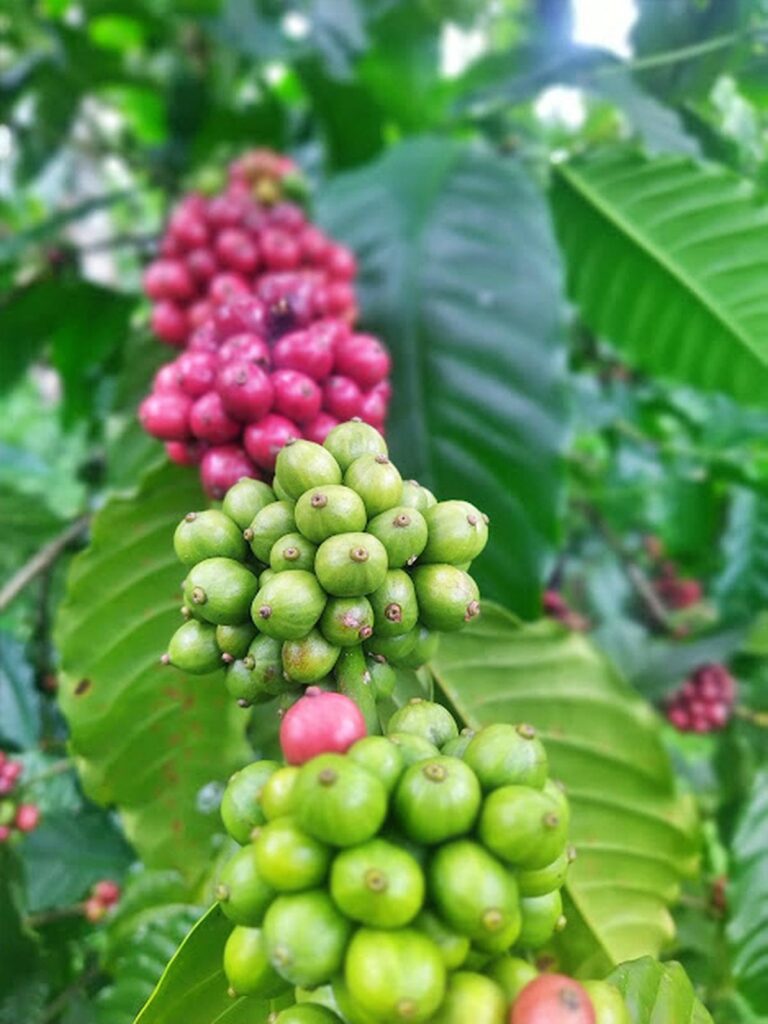
The new film accentuates the brand’s positioning through a scenic and captivating ASMR video by featuring the enthralling sounds of how the coffee beans are born in the plantation, carefully plucked, dried, roasted, and then grounded and processed to perfection to deliver the signature ‘Shik Shik Shik’ sound of the flavor locked decoction crystals of Tata Coffee Grand.
The campaign integrated creativity and technology to deliver a film that resonates with the brand’s core proposition of great-sounding coffee. Through this campaign, the brand aims to build a strong and memorable connection with consumers by leveraging the power of sonic marketing.
Puneet Das, President – Packaged Beverages (India and South Asia), Tata Consumer Products said,
“Our ambition is to become a significant coffee player and we continue to offer relevant and quality offerings to grow our share in the India coffee market. Indian consumers are embracing a new wave of coffee. Hence, as we continue to expand our presence and reach to consumers across India we are strengthening our portfolio across the country with the launch of Tata Coffee Grand Premium- a 100 percent coffee blend with flavour-locked decoction crystals that gives consumers a rich and aromatic cup of coffee”.
He further said, “The differentiation of Tata Coffee Grand is the signature SHIK SHIK SHIK sound of the flavor locked decoction crystals. Hence, it was only natural to bring the brand story alive through sensorial stimulation which is unique to ASMR. The new launch will be scaled by leveraging TCPL’s network and distribution reach across channels including E-commerce and modern trade.”
In 2015, Tata Consumer Products limited made its entry into the branded instant coffee business in India under the brand name Tata Coffee Grand.
After leading the Indian tea market under its iconic Tata Tea brand, the company took the strategic step to leverage its product, marketing, and retail expertise to enter the branded coffee space in India.
source: http://www.indianretailer.com / Indian Retailer / Home> News> Retail & Business / by Indian Retailer Bureau / by sub-editor / January 05th, 2023
Coorg Coffee Festival and Expo will held at Raja Seat, Madikeri on December 10 and 11.
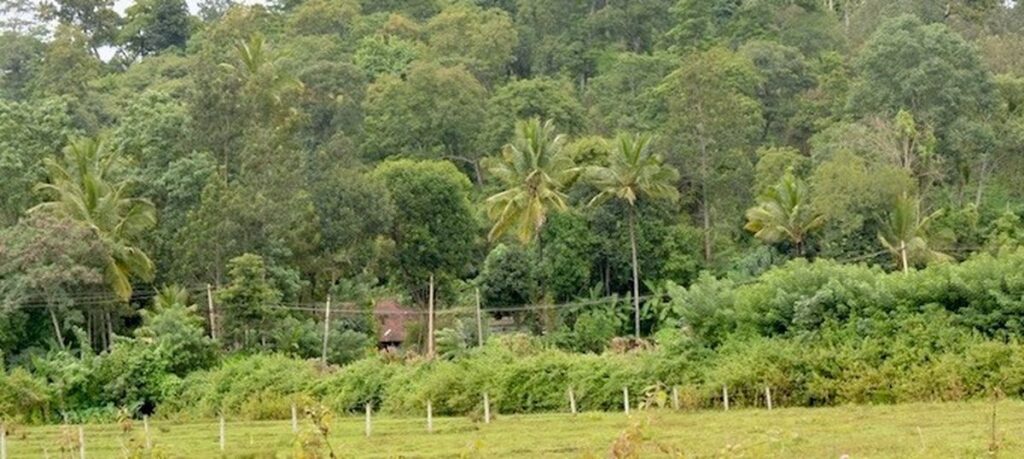
Kodagu as a whole is known for the wonderful nature accomplished with rains and mist, besides a galaxy of wild animals. The nature here is praised all over for the exciting seasons throughout the year and is even coined as the “Scotland of India”
Kodagu produces one of the finest Coffees under Western Ghats hot spots. which are marked as living ecosystems and ecologically sensitive areas, marching sustainably along with flora and fauna. Coffee growers in this region have imprinted world coffee lovers and engraved an image of best coffees in the Western Ghats.
To strengthen further and to make world to aware the instinct note of Coorg Coffee and Indian Lovers in particular, the District administration is organizing a “Coorg Coffee Festival and Expo” first of its kind on 10 and 11 at Raja Seat, Madikeri
The main objectives of the festival are to bring all the coffee stakeholders under one umbrella and to promote Coorg Coffee extensively among the Coffee lovers, tourists visiting Coorg from across the country and world also.
Disteict administration stated in a press release “private entities who are involved in the Coffee Value Chain are requested to take part in the festival and exhibit their products. In this regard, the Coffee Board and the Department of Horticulture will be the facilitating entities to carry out the above programme”.
All the communications related to exhibition stall including registration and remittance of stall charges will be on the coorgcoffee-coorgcoffeefestival2022@gmail.com
A unique eco-certification initiative in Kodagu’s famous coffee estates offers fresh hope for preserving native rainforests of the Western Ghats.
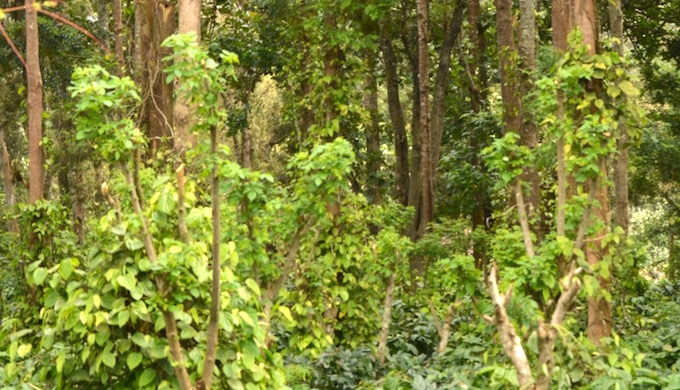
Growing coffee in the shade of evergreen trees in Kodagu. | Gopikrishna Warrier
There was a time in the not-too-distant past when coffee farmers in Kodagu district of Karnataka grew their plants only under the canopy of evergreen forests they had inherited. Now they prefer to grow it under the sun, which has serious implications for the Western Ghats and on the waters of the Kaveri River.
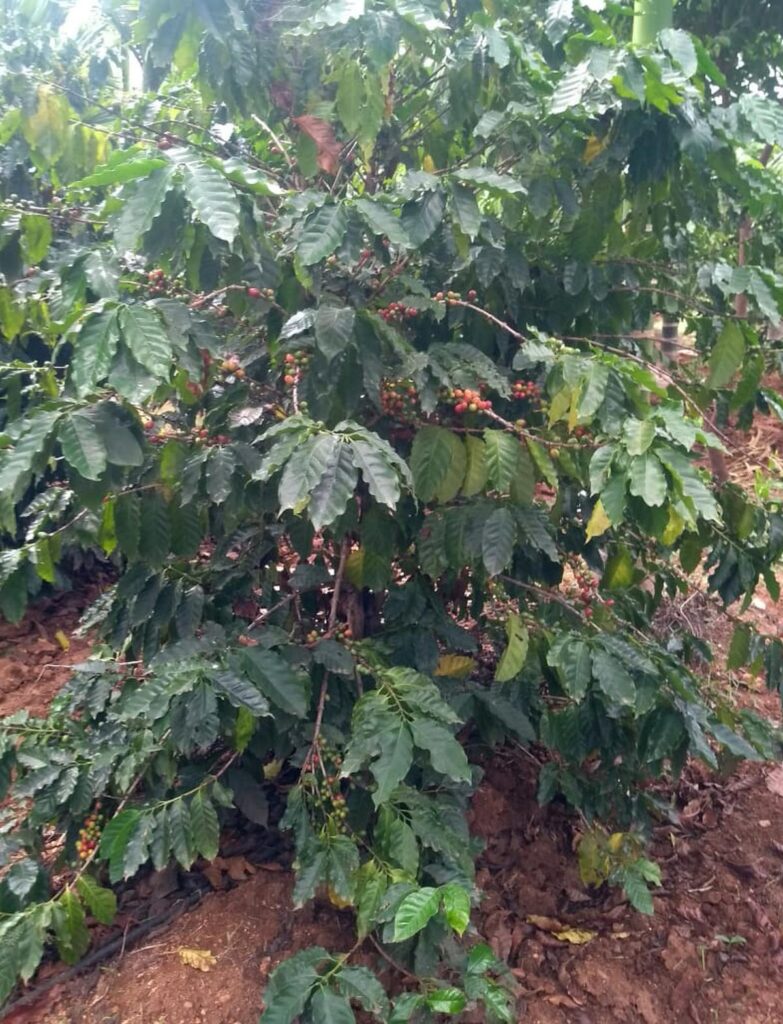
More and more farmers are now letting trees such as Dadup (Erythrina subumbrans), Arecanut (Areca catechu), Balanji (Acrocarpus fraxnifolius) and Jackfruit (Acrocarpus heterophyllus) die so that the canopy can be opened up and they can grow sun-loving coffee varieties that produce more berries and beans, resulting in higher returns.
Instead of the big trees, they are now planting exotic Silver Oaks (Grevillea robusta), whose pole-like trunk can be used as a support for the climbing pepper vines, which help boosting incomes. The proliferation of Silver Oaks has made it one of the more common trees in some parts of the area.
This transition has a larger ecosystem cost. Kodagu, earlier known as Coorg, is located on the western edge of the Mysore Plateau, at an average altitude of 800 metres, as it lifts up to the crest of the Western Ghats ridge (altitude above 1,500 m) and then falls sharply westwards into Kerala. The plateau mainly slopes eastwards, with the streams and rivers joining to form the Kaveri River, which is the lifeline for millions of people in Karnataka, Tamil Nadu and Puducherry.
With insufficient rains over the Western Ghats during this year’s southwest monsoon, there is a shortage of water in the reservoirs across the Kaveri in Karnataka. This has led to the flaring of the water-sharing dispute with the lower riparian state of Tamil Nadu in recent days.
While this acrimony continues, payment for ecosystem services measures are being worked out in Kodagu district so that coffee farmers protect the forests under which they grow their crop, thereby preserving the water flow into the Cauvery. These measures also help to maintain the climate resilience in the river’s catchment and command areas.
With the forest-like mixed-tree canopy in coffee plantations disappearing, the torrential rains of the southwest monsoon flows quickly down the streams, carrying valuable topsoil away and causing floods followed by long dry periods downstream.
Paying for ecosystem services
The Kodagu farmers are being encouraged through payment for ecosystem services, in the form of eco-certification, to continue with their traditional coffee cultivation under the shade of mixed species of trees. This will help strengthen the ecosystem services they receive from the unique landscape of Kodagu, and also strengthen similar services and climate resilience of all those relying on the waters of the Kaveri downstream.
The concept of eco-certified coffee, whose certification process ensures that coffee is grown under mixed-species trees, has gained popularity in the district in the past five years. Close to 900 coffee farmers have converted to eco-certified coffee. Even with a conservative estimate of 10 acre per farmer, this means nearly 10,000 acres of eco-certified coffee. In addition, with Tata Coffee getting all of its 13 estates eco-certified, Kodagu district has at least 20,000 acres under coffee cultivation that aims to minimise damage to the environment.
As an incentive for protecting the environment, the coffee farmers get a premium above the market price for their coffee beans. Coffee is the major agricultural produce from Kodagu, with 33% of the district landscape under its cultivation. About 38% of India’s coffee production comes from the district.
Ecologically, Kodagu district has been identified as a micro hotspot of biodiversity under the larger Western Ghats region. Rightly so, since the western crest of the mountainous district is in the direct path of the southwest monsoon. The dark clouds heavy with rain dump much water over the district. While the western edge of the district receives above 5,000 mm of rainfall on an average, it reduces to around 1,200 mm in the east. Most of the water feeds into the Kaveri.
According to a reportby the College of Forestry at Ponnampet in Kodagu, natural forested ecosystems cover an area of 46% of the total area of the district. These include evergreen, semi evergreen, moist deciduous, dry deciduous and scrub forest types, and even the high-altitude shola-grassland ecosystem.
Traditionally, coffee is grown in the shade of these forests. Coffee estates in Kogadu have on an average 350 trees per hectare, compared with 270 in degraded groves and 640 trees per hectare in the nearby Brahagiri Wildlife Sanctuary, making these estates amongst the densest agro-forestry systems in the world.
“Very few landscapes across the world grow coffee in the way in which Kodagu does,” said C.G. Kushalappa, university head for forestry and environment sciences at the College of Forestry, Ponnampet in Kodagu. “We grow both Arabica and Robusta coffee under the shade of the trees. Our shade-grown Robusta fetch a premium price. When grown under the shade, the berries mature slowly and fill out better. They have good cupping (taste) quality.”
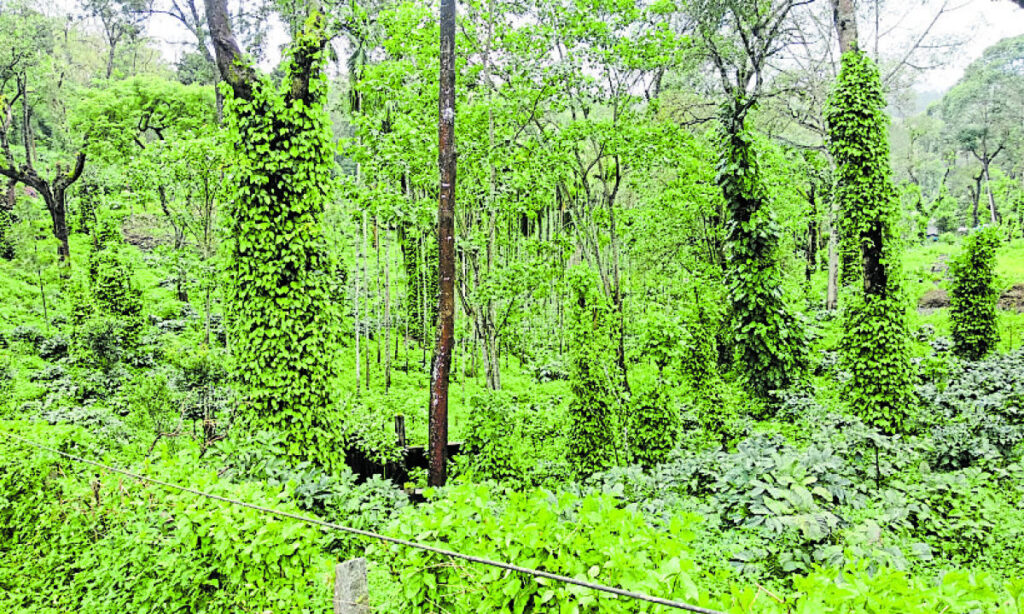
Coffee plants are increasing being cultivated under exotic Silver Oak trees. (Photo by S. Gopikrishna Warrier)
However, he needed scientific data to convince the coffee farmers and the district administration that there was strong ecosystem benefit in maintaining the traditional shade-growing methods. The opportunity for doing this research emerged when the College of Forestry was chosen as the lead institute in India to carry out the Coffee Agro-Forestry Network, or CAFNET study to understand the environmental services from this unique landscape.
Financed by the European Commission, the study was jointly conducted by the College of Forestry, the Coffee Board, the French Institute at Puducherry, CIRAD (the French national agricultural research system) and Bangor University from the United Kingdom between 2007 and 2011.
Rich local knowledge
The study noted that the multi-storeyed coffee agro-forestry system developed and sustained by the farmers based on their local knowledge is one of the most diverse production systems in the world. The traditional coffee agro-forestry system sustains diverse animal, bird, plant and microorganisms, and provide biodiversity, carbon sequestration and water-related ecosystem services. Since multiple crops such as pepper, mandarin oranges, vanilla and timber is also grown in these systems, they help provide resilience to farmers when they are hit by coffee price volatility.
The CAFNET report recommended that coffee farmers growing Arabica and Robusta under shade trees should be paid for the ecosystem services that their farms provide, so that they can protect biodiversity and therefore water in the Cauvery. Two methodologies for payment for ecosystem services suggested was eco-certification and geographical indications protection for Kodagu coffee.
Eco-certification of coffee farms in Kodagu started as a follow-up to this recommendation. Coffee farmer BB Thammaiah says his interest was piqued when students from the College of Forestry came to his farm to carry out biodiversity studies. “After the studies I was told about the uniqueness of the method in which I grow coffee, and I went in for eco-certification,” he said.
The two eco-certifications that have been popularly accepted are from the Rainforest Alliance and Utz. Coffee grower KK Naren in Kunda village near Ponnampet said the main benefit of the eco-certification process is that farmers are trained in good practices that have good environmental benefits and improve the working and living conditions for the workers.
“The economic benefit is not much,” he said. “It is more of training for us, which will be beneficial in the long run. The eco-certification process educates the coffee farmers about the environment.”
Importance of native trees
The most important lesson from the training relating to the eco-certification, according to Narenm was the understanding on the importance of native trees. “It is not that we didn’t know about native trees but we were not that keen on maintaining them,” he said. “The native trees do not give good financial returns, so we gave importance to silver oak.”
According to Naren, the Rainforest Alliance eco-certification process looks at whether native shade trees are present. The certifiers and auditors also look at labour management, whether the minimum labour wage is paid and the cleanliness around the labour quarters. They are very strict about not using child labour. “They also look at the way chemicals are used,” he said. “They are not saying no to chemicals but there are restrictions to some chemicals and the way the rest are used. They are keen that we should not use pesticides of chemicals near the rivers or tanks. They give importance to maintain local environment.”
Individual planters like Thammaiah and Naren got an opportunity, through the eco-certificaion process, to access the international market through a Swiss procurement agency that buys higher quality coffee. Both of them sell their eco-certified coffee to Ecom Gill, who procures the eco-certified produce for supply to Nespresso.
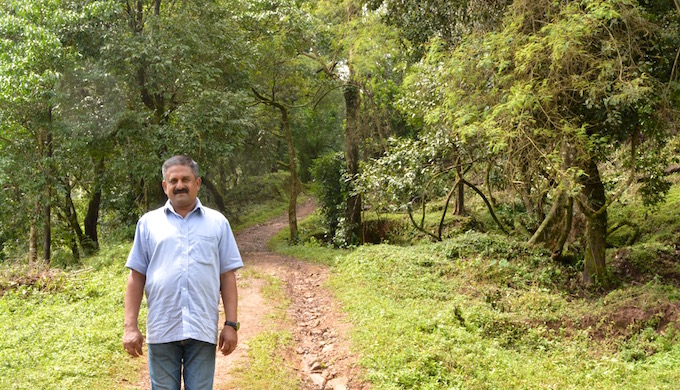
BB Thammaiah in his coffee farm where the plants are grown under the shade of native evergreen trees. (Photo by S. Gopikrishna Warrier)
For Tata Global Beverages Ltd and its production subsidiary Tata Coffee Ltd, the move to eco-certification of all of its 13 estates in Kodagu was an important step in the process to make its supply chain sustainable. According to Anurag Priyadarshi, global sustainability manager for Tata Global Beverages, one of the guiding principles that the group has adopted is to source sustainability. For this, all their estates in Kodagu have been eco-certified by Rainforest Alliance and Utz.
“Through the eco-certification process we are trying to ensure good management practices for the ecosystem, energy, water, waste, soil and agro-chemicals. We ensure the safety of the produce and also occupational health of the workers. Ultimately we want to prevent the impacts of climate change,” he said.
MB Ganapathy, head of plantations for Tata Coffee, said the company is aware about the fact that they are growing coffee in Kodagu, which is a biodiversity hotspot in the Western Ghats. “We have recognised this fact and that is the reason that our vision is to enhance the ecological wealth we have inherited. The eco-certification helps us safeguard the environment.”
Challenges remain
However, the rapid spread of the eco-certification process has also raised some hiccups which need to be overcome, states TR Shankar Raman, scientist at the Nature Conservation Foundation, whose organisation was involved with helping Rainforest Alliance with the certification in the initial years. The three points of concern, according to him, is the very rapid pace at which certification is being done; the relative absence of biologists and social scientists in the auditing process; and the dilution of conservation standards (like the requisite number of native species and canopy cover) in subsequent versions of the certification guidelines.
“While the rapid certification has more and more farmers being eco-certified, we hope the rigour of the process continues to be maintained, so that the end result of conserving the native vegetation is not compromised,” Raman observed.
With more farmers opting for eco-certification, there is a movement towards the protection of the traditional methods of coffee cultivation under the shade of mixed-tree species. For the process to strengthen the farmers should continue to get good economic benefit for their eco-certified produce.
According to Naren, if there is at least 10% more returns from the eco-certified coffee remains constant then there will be an incentive for the opting for opting for the process. At present the price at which procurement agencies such as Ecom Gill buy is linked to the international market price, plus a premium of Rs 60 to Rs 80 for a 50 kg bag of sun-dried cherries. The international prices fluctuate in relation to the local market prices, and as with the current situation can go below the domestic price.
However, Kushalappa says that in addition to the premium, there are other incentives and bonuses for producing good quality coffee beans. The average increase in price above the local market price was around 15% last year, which is well worth the effort.
If additional income for coffee farmers from eco-certification can help conserve unique agro-forestry ecosystem of Kodagu, then it will be the water flow into the Cauvery that would be conserved. Millions of people downstream, including the residents of Bengaluru and other parts of peninsular India, will thank the coffee farmers upstream for their drinking water and climate resilience.
Nestled in the many hills of Kodagu, Hassan and Chikkamagaluru are countless coffee estates. The vast green estates betray the problems that coffee growers now face due to an acute labour shortage and climate change. These estates, once profitable, have been affected by unpredictable rains.
The 2018 landslide, a climate calamity in the region, washed away Savita’s 10-acre estate in Thanthipala, Madikeri. Four years later, many disasters followed suit. “I did not want to come back to this village, I was scared,” she says.
Kodagu is the largest coffee-producing district in the country with a total of 22,320 growers and 2,20,430 hectares of plantation land. The growers of the globally sought-after Monsoon Malabar beans are faced with new challenges, including a hard blow by landslides four years ago.
Landslides affected 2,095 hectares of land in Madikeri and Somwarpet. Of this, 959 hectares were plantation land.
Reminders of these landslides are plain to see in the areas of Thanthipala, Mukkodlu, Hattihole, Madapura, Hebbettageri and Monnageri.
For the plantation owners who lost land, there has been little relief, explains Nanda Belliappa, Vice-Chairman, Codagu Planters Association (CPA). “Apart from National Disaster Relief Fund relief, which is meagre, growers have not received any aid. Many areas have yet to be brought to condition. Land preparation has to be done,” he says.
Although Savita received compensation for her damaged house, it did not extend to estate loss. “I make a livelihood from the five acres of land that survived the disaster in 2018,” she says.
The once pristine greenery and ecosystems in these areas have been altered forever. In this place stands fissured land, devoid of trees, as a testament to government apathy.
Coupled with the rising cost of production, the plantation growers are constantly challenged by changing climate, lack of skilled labour, elephant-human conflicts and gaps in policy and reforms.
Plantation growers also point out the lower productivity of coffee varieties in India when compared to other coffee-producing countries. This is attributed to the gradual conversion of Arabica plantations to Robusta over the years, and the white stem borer menace.
What is the way ahead?
There is a significant technology gap in the plantation sector. Most technology is imported from Italy and Germany and therefore has high import duties, making it impossible for local plantation growers to purchase.
“I think where we need more help is to get good machinery for our plantation sector and get good plant material,” said Shamveel Nizam, co-founder of Big Cup, a coffee franchise.
Another solution is to form farmer producer organisations, explains Salman Baseer, proprietor of an estate in Hassan. “Small plantation growers can leverage these technologies which are otherwise extremely expensive, and fetch more in terms of profit” he explains.
Social media
Newer plantation growers are now leveraging the power of social media to create a brand for their coffee.
Pranathi Shetty, one of very few women plantation owners in Madikeri, uses her Instagram page “Kolliberri The Coffee Farm” to create awareness about her farm. It is through social media that she connected with various buyers and made inroads into the world of speciality coffee.
“Online presence also helped me enhance my knowledge by networking with some of the pioneers in the speciality coffee world,” she says.
With more growers experimenting with speciality coffee, there is huge potential for the growth of startups.
Indian coffee is rated highly in the global market and coffee culture continues to evolve because coffee growers are persistently fighting these adversities.
source: htttp://www.deccanherald.com / Deccan Herald / Home> Spectrum / by Lavpreet Kaur / November 24th, 2022
Beanly, an early stage consumer brand in the coffee space and an early stage D2C startup known for innovations in the coffee category closed their seed investment from a clutch of angel investors who are marquee names in their fields.
Founded by Rahul Jain and Samayesh Khanna, Beanly has the vision of making quality coffee convenient while making sure it tastes fresh months after its been ground and packed.
Beanly is on a mission to simplify coffee for an everyday consumer and at the same time make it fun for them !
Beanly as a brand is known for its manufacturing prowess and is the first start up in coffee space to introduce nitrogen infused coffee to keep it fresh and also pour over coffee etc
Made with the finest arabica beans sustainably grown in Karnataka, India, Beanly offers a range of category-first products backed by science and is freshly roasted in New Delhi. The products are available on the brand’s website and in numerous other online marketplaces. The company plans to use the funds to grow its presence across online and offline channels.
“We’re excited to further our mission to make quality coffee a household staple. We have white labeled our products for several coffee players over the last 3 years and watched the freshly brewed category develop immensely” the founders said. “We now think the time is right to focus on our brand and build Beanly’s presence online and offline”.
Driven to become a major player in the segment Rahul & Samayesh added, “As part of that mission, we’re committed to elevating the undervalued but significant coffee industry in India ”.
Investors in the seed round include many seasoned entrepreneurs and serial entrepreneurs like media entrepreneur Dr. Annurag Batra, Chairman at BW Businessworld and exchange4Media Group, Deep Bajaj & Mohit Bajaj, Founders at Sirona Hygiene, Insurance Veteran and Startup Investor Rohit Jain, Vikash Chowdhury, and Abhishek Ravi.
Dr. Annurag Batra added, “coffee consumption is growing in India at a rapid pace. Beanly is well positioned to accelerate and trailblaze that coffee culture”. He further added,” I have known Samayesh and Rahul for a long time and I have seen the speed at which they innovate”.
“Both Samayesh and Rahul are incredible founders who love coffee like no one else we have ever met! Their passion and drive are infectious. The kind of innovations they have brought in the category and wish to bring in the future has the potential to disrupt this segment and hence we decided to support them” added Deep Bajaj.
Beanly aims to be amongst the top three coffee brands in the country in the next 24 to 36 months and is ramping up its manufacturing, operations and retail presence in digital and all retail formats with this investment and is likely to raise more capital in the first quarter of 2023 for its Uber scale up.
If you have any objection to this press release content, kindly contact pr.error.rectification@gmail.com to notify us. We will respond and rectify the situation in the next 24 hours.
-up18news/pnn
source: http://www.up18news.com / UP18News / Home> City-State / by Up18News / November 26th, 2022
Farmers in North Karnataka are now trying to grow coffee and if proven to be of good quality, it will be a game changer for the region.
Gaddi Guddappa, a farmer from Huvina Hadagali in Vijayanagara district, has cultivated coffee on his eight acres of land successfully.
Bengaluru :
When someone says coffee from Karnataka, three names immediately come to mind: Kodagu, Chikkamagaluru, and Sakleshpur in Hassan district. But something new is brewing in an unexpected corner of the State: farmers in North Karnataka are now trying to grow coffee and if proven to be of good quality, it will be a game changer for the region.
Gaddi Guddappa, a farmer from Huvina Hadagali in the Vijayanagar district, has cultivated coffee on eight acres of land successfully. Mr. Guddappa told The Hindu, “I bought the plants from Chikkamagaluru and Shivamogga four years back and this year, I have got the yield of 1,600 kg of coffee from my eight acres of plantation.”
According to him, the coffee which he had grown is the first in the district and also in the North Karnataka region. Many farmers in his district are visiting his plantation every day to learn about and see the coffee beans grown. “For me, it was a very new crop and I didn’t know the outcome of it. I learnt how to grow coffee by visiting Chikkamagaluru. Many people from my area who were working in the coffee estates there had told me about it. I bought Arabica-Chandragiri variety coffee from Shivamogga nursery and started to grow it,” Mr. Guddappa added.
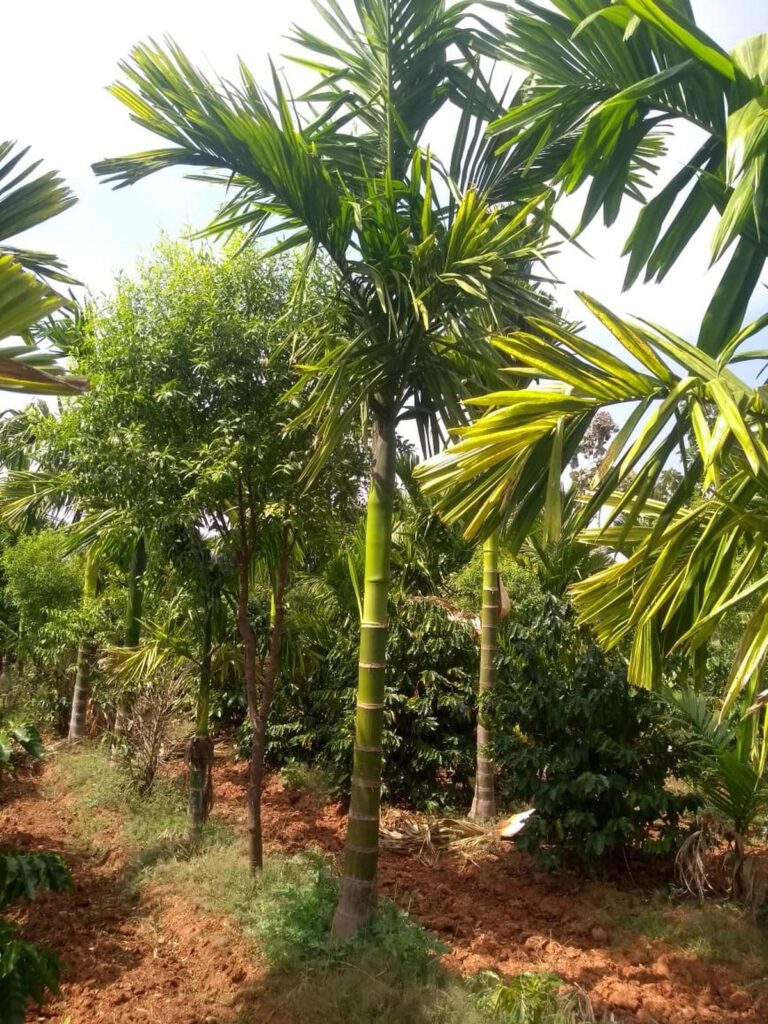
The farmer is using arecanut palms and a few other kinds of trees as shade for coffee plants
Initially, Mr. Guddappa was growing arecanut on his land. He then started to grow coffee in the middle of the arecanut farm, as traditionally, all coffee is shade grown. He is using arecanut palms and a few other kinds of trees as shade for coffee plants while growing pepper as intercrop. “I am the first person to cultivate coffee in this region. This year, a few farmers in Lingsugur in Raichur district and Bagalkot district have also started growing coffee,” he said.
Coffee Board testing it
Coffee Board officials recently visited Huvina Hadagali and collected samples of the coffee for quality testing. K.G. Jagadeesha, Chief Executive Officer and Secretary of the Coffee Board, told The Hindu, “Since we got the information that coffee is grown there, our officials have visited the village and taken samples. Only after proper analysis of the coffee yield and quality will we be able to comment. Testing is going on and it will take time to give our scientific analysis of the crop.”
According to Mr. Jagadeesha, coffee plants can be grown anywhere. However, the quality has to be met to the proper standard for the coffee to be marketable and drinkable. “We don’t want to recommend anything based on physical observation. We want to go by extensive testing of the coffee beans. As a responsible agency, we have to see everything, including long-term sustainability, but we are exploring,” he added.
source: http://www.thehindu.com / The Hindu / Home> News> India> Karnataka / by Darshan Devaiah B.P. / November 25th, 2022
In fact, the coffee soap is among the 14 varieties of soaps that youths of Vriddhi make besides nine types of agarbattis, scented candles and Odisha handloom notebooks.
Group of girls with autism and Down Syndrome making soaps at Vriddhi centre.
Bhubaneswar:
Koraput Coffee. The name resonates with the idea of a perfect cup of aromatic and flavourful coffee grown in verdant valleys of the southern Odisha district. But there’s more to the homegrown brand.It is now ensuring that a small group of young adults with autism and Down Syndrome in Bhubaneswar is economically empowered. The Tribal Development Co-operative Corporation of Odisha Ltd. (TDCCOL) under the ST & SC Development, Minorities & Backward Classes Welfare Department has roped in a city-based organisation Vriddhi to make soaps using Koraput Coffee through 20 youths.
Launched recently at Adisha, a TDCCOL outlet and e-commerce platform, these coffee bean shaped soaps are being prepared by the youths from the residue of the coffee that is brewed in Koraput Coffee outlets in Bhubaneswar. All of them are in their 30s.
“Coffee has been used as a good body scrub since ages. Instead of throwing the coffee residue into dustbins, we decided to recycle it to be used as body scrub soaps. We send it to Vriddhi’s production centre where the soaps are made by the youths,” said Managing Director of TDCCOL Mansi Nimbhal. The soaps are being marketed under the brand Koraput Coffee. And all the proceeds from sale of these soaps, except the tax, go into the accounts of the 20 youths. “This way, not only is the coffee recycled but it is also contributing to a noble cause,” added Nimbhal.
Chumki Dutta, who founded Vriddhi in 2017 as a training-cum-production centre for manufacturing of FMCG products by differently-abled persons, said the detoxifying coffee bathing soap bars are organic and chemical free. The centre operates from the premises of National Career Service Centre for the Differently-abled under Ministry of Labour and Employment in Bhubaneswar. The Ministry provided the equipment required for the unit.
In fact, the coffee soap is among the 14 varieties of soaps that youths of Vriddhi make besides nine types of agarbattis, scented candles and Odisha handloom notebooks. “Since these youths have communication challenges and are only receptive to instructions, they are assisted by their mothers in the process.
A majority of the sales proceeds from this unit goes to them and some to their mothers for helping them,” said Dutta who was awarded the ‘Best Employee/Self Employed with Disabilities in Locomotor Disability’ by the then President of India Ram Nath Kovind in 2017. The award has been instituted by the Ministry of Social Justice & Empowerment.
source: http://www.newindianexpress.com / The New Indian Express / Home> Good News / by Diana Sahu, Express News Service / October 09th, 2022
Karnataka Growers Federation, an umbrella organisation of coffee growers in the Malnad region, will celebrate International Coffee Day at Belur on October 1. This time the event will be part of the Sharannavarathri Dasara programme being held at Belur since September 26.
In a press release on Thursday, KGF president H.T. Mohan Kumar and general secretary K.B. Krishnappa said the KGF and other coffee planters associations will jointly hold the programme at Government Junior College grounds in the town at 10 a.m. Excise Minister K. Gopalaiah, who is also Minister in charge of Hassan district, Union Minister of State for Agriculture and Farmers Welfare Shobha Karandlaje, BJP national general secretary C.T. Ravi and others will take part in the programme.
India has a prominent place among coffee-growing countries. Every year, coffee production contributes ₹8,000 crore of foreign exchange to the government. The KGF will take up a programme to promote coffee consumption in the country, the press release said.
source: http://www.thehindu.com / The Hindu / Home> News> India> Karnataka / by The Hindu Bureau / Hassan – September 29th, 2022
The average coffee production in Brazil is 60 million bags a year, whereas in India, it is below six million bags.
Farm gate price of raw berries touch a record ₹106 a kg against ₹80 last year
Lending fresh hopes to coffee farmers, the price of the Robusta variety of coffee has reached an all-time high, thanks to a sharp decline in production.
The farm gate price of raw Robusta coffee berries touched a record ₹106 a kg in Wayanad market on Friday, as against ₹80 a kg during the corresponding period last year.
The State government had announced that it would procure coffee from farmers at a minimum support price (MSP) of ₹90 a kg when the market price of raw coffee was ₹61 a kg two years ago.
A sharp decline in coffee production in Brazil, a major coffee-producing country, owing to severe frost was the major reason for the rise in price, trading sources said.
The average coffee production in Brazil is 60 million bags (a bag of 60 kg) a year. But the production declined to 50 million bags this season. A drought-like situation in the coffee-growing regions of that country during the post-harvest period also contributed to price hike, sources said.
The average coffee production in India is below six million bags a year. A huge disparity in production and supply was the major reason for the price hike. Moreover, the depreciation of Indian rupee to US dollar was also reflected in the rise in price, sources added.
“However, the current upswing in price will not benefit coffee farmers in the country as most of them have already sold the produce at a low price,” Prasanth Rajesh, president, Wayanad Coffee Growers’ Association (WCGA), told The Hindu.
“The fortune of Indian coffee farmers depends on the misfortune of farmers in Brazil,” Mr. Rajesh said, adding that such a situation should change as it would not offer a sustainable income to farmers.
A quick intervention by the Coffee Board to increase internal consumption of coffee is the need of the hour, he said .
Though the State government had announced an MSP of ₹90 a kg, most farmers are yet to benefit from it as the government has fixed a ceiling limit of one acre for procurement, he said.
All farmers, irrespective of land holding, should get the MSP since input cost, especially that of fertilisers, had gone up by more than 200%, he added. The Coffee Board has projected a crop size of 3.42 lakh tonnes in the country during 2021-22 in its final estimates.
source: http://www.thehindu.com / The Hindu / Home> News> India> Kerala / by E.M. Manoj / Kalpeta – September 24th, 2022
YSRCP MP Goddeti Madhavi has been appointed as a member of the coffee board. The Central Commerce Department has released a gazette notification on Tuesday to this extent.
MP Pratap Sinha and Rajya Sabha member N. Chandrasekaran are also appointed as members of the board.
The notification was issued re-appointing the coffee board.
Kantilal Dande, Secretary to Tribal Welfare Department of AP Tribal Welfare Department, Vishwanatham from Domangi in Visakhapatnam District, Kurusa Umamaheswara Rao from Kothapaderu, Jayatu Prabhakar Rao belonging to commercial department from Kinnerla in Visakha District, Challa Sreesanth from Hyderabad, in the category of Instant Coffee Producers were appointed as members of the Department of Commerce.
source: http://www.thehansindia.com / The Hans India / Home> News> State> Andhra Pradesh / by Pavan Kumar Bandari / Hans News Service / September 14th, 2022
WELCOME. If you like what you see "SUBSCRIBE via EMAIL" to receive FREE regular UPDATES.
Read More »