Category Archives: Coffee News

Nagappan Takes Over As UPASI President

Coonoor:  

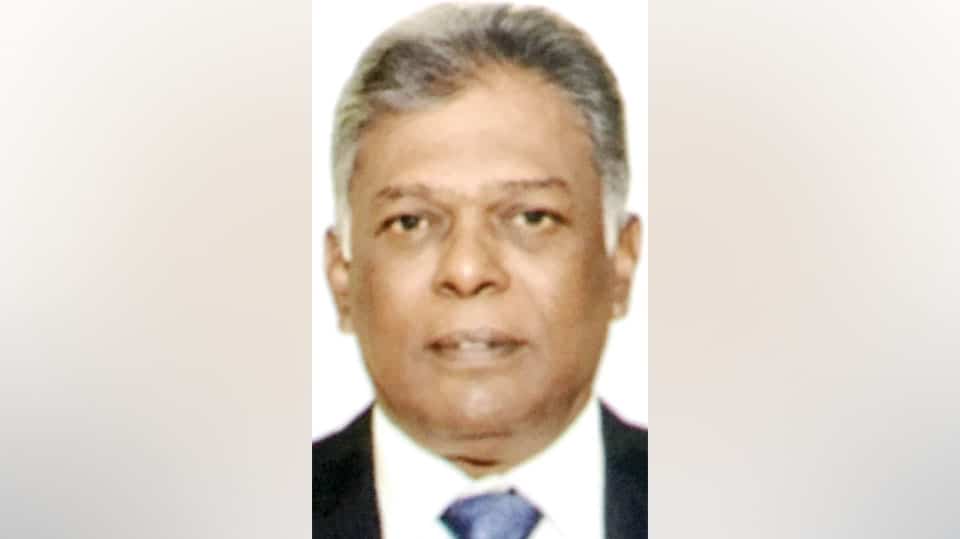
Al Rm. Nagappan has been elected as the President of United Planters Association of Southern India (UPASI) for the year 2019-20.

A coffee planter by profession, he manages the family business of Karrie Kollie Estate at Suntikoppa in Kodagu. Nagappan was elected at the 126th Annual Conference of the Association held in Coonoor in Nilgiris district.

Nagappan has been in the coffee industry from 1982 and has rich experience in planting industry. His involvement with the planting association has been longstanding. He is an avid sportsman, with Golf being one of his passions.

Nagappan was associated with the Mercara Downs Golf Club for many years as Hon Secretary. He served in Karnataka Golf Association in various capacities and went on to become the President of the Karnataka Golf Association

Prashant Bhansali, CEO of Kairbetta Estates, a family-run tea plantation and an orthodox tea manufacturer, was elected as the Vice-President.

source: http://www.starofmysore.com / Star of Mysore / Home> News / September 15th, 2019

How Women Entrepreneurs Are Brewing India’s Coffee Culture

Women coffee entrepreneurs are roasting an aroma of change in a predominantly tea-drinking nation. Taking forth the impulse of India’s cafe revolution, women leading the front of the ‘bean business’ in the country are treading exciting roads in exploration of just how much plurality homegrown coffee has to offer.


“The full spectrum of the tones and flavours that a human palate could possibly perceive and identify in the world of coffee is infinite,” Sadhavi Ashwani, who co-founded store and cafe Baba’s Beans with friend Mrinal Sharma, tells SheThePeople in an interview.

“Coffee is a complex and intriguing biological being… With coffee you hit the motherland of flavours; a whole world of culinary flavours can be discovered in the tones of different roasts and regions. So a trained palate can understand, indulge and enjoy what the crop has to offer.”

Ashwani and Sharma are friends from college who, after meandering through different trades, landed on coffee – a common passion shared over multiple cups that forged a relationship, as they often do. A trip to Coorg in 2013 transformed their vision of coffee and pulled them deeper into research and contact with plantation workers. Out of that bean, their venture was born that year.

Coffee is like music, Ashwani says, with the dopamine-seeking drinker finding themself attuned to the familiar notes of the drink with every cup. Data shows that more and more of the youth consumer market are familiarising themselves with the drink.

______

“The Indian coffee consumer no longer views coffee as a black bitter drink which effectively wakes you up in the morning”: Ashwani, Baba’s Beans 

______

YouGov numbers from 2019 showed a vivid distinction in attitudes towards coffee in India between two generations. Where 67 percent of Gen X respondents agreed that India was a tea-drinking nation, among Gen Z only 49 percent did. The belief that the coffee culture was gaining on tea traditions was recorded at 33 percent in the Gen Z category, the highest among all respondent sets.

Cha drinkers, don’t feel down. In an empowering display of appreciation for co-existence, a preference for both beverages was a popular choice across age groups.

Third Roast’s Poornima Katyal traces this changing culture through the recent era of coffee’s surging fame in India. “The first-generation drinkers in North India started with instant coffee, while in the South, where coffee was grown, filter coffee was popular. With the second generation, cafes like Cafe Coffee Day came in. These were more than the coffee but about the culture of meeting friends, hanging out, going for dates – a melting pot of young people,” she tells SheThePeople in an interview.

“The third-generation coffee population has started producing high-quality beans in their own cafes. Thanks to the internet, people are also experimenting with brewing coffee at home.”

Women Coffee Entrepreneurs Are Blending Cultures In Cups. Come, Sip?
Coffeehouses have historically always held status as the ultimate locus where food and social cultures blend. As per Britannica, the first coffeehouse dates back to 16th century Constantinople (now Istanbul). Thrumming with the energy of revolution and intellect, cafes became spaces of important thought exchange over the years. Since Wi-Fi has replaced books, cafes today are crowded with laptop-wielding youth hard at work or fashionable display.

Consumer knowledge around coffee here is now greater, helped by internationally known Indian stores like Blue Tokai and Araku Coffee putting artisanal cuppas on the table. But does the larger chunk of the coffee-drinking population understand or have interest in that kind of investment towards specialty coffee?

Mordor Intelligence estimates that India’s ‘Ready-to-Drink Coffee Market’ (which includes ready products from Amul, Nestle and Starbucks) is set to grow at a CAGR of 3.3 percent between 2020 and 2025; the high demand is fuelled by busy, on-the-go lives of consumers needing quick fixes of caffeine.

“There are a wide variety of consumers who want instant products – something that is convenient,” Katyal says. “Not everyone will buy beans and a grinder to brew fresh coffee at home. At the same time, there are businesses moving towards a discerning coffee drinking culture that allows people to experiment with their brews. But the two will always co-exist.”

“Metros have more access to cafes and brands. Though tier 2 and 3 cities don’t have that access, there is a consumer base there. Brands are delivering cold brew sachets, micro cans or coffee beans through orders placed online,” Katyal adds. Her own venture in 2018 was founded upon small bottle-sized batches of cold brew she was experimenting with at home, sent out to friends who were hooked to her creations.

“We started as just a cold brew company but moved on to making a wider product portfolio that included pantry items that go with coffee – granola, fudge, plant-based milk,” she says. There’s also an exciting ‘shmeese’ (plant-based cheese) offering on the tray.

Baba’s Beans, on the other hand, is still a pure coffee setup that is forever experimenting with flavours and aromas on their Lab Menu at the bar. Their focus is on “bringing the Indian coffee farmer closer to the domestic consumer.”

Since incepting their business in 2013, Ashwani and Sharma have worked closely with plantation farmers they source their coffee from – in Coorg, Chikmagalur, Araku Valley and Tripura. Their business starts at the very grassroots, honouring its earliest origins in the “soul of the soil.” The company name stands as an ode to Baba Budan, a 16th-century Sufi saint credited with introducing the first beans of coffee to India.

________

“The internet has made coffee more accessible than ever before”: Katyal, Third Roast 

_______

Batting for the best, however, is not so easy at present, these coffee entrepreneurs say. Organic, for instance, is a lifestyle shift many industries are witnessing. And for good. That change in the coffee industry is coming at a price not comprehensively accounted for, Sharma says.

“While organic growing practices are less expensive than conventional practices, the premium charged for organic produce is often not enough to sustain the lower yield and the longer cultivation time in order to be able to sustain the livelihood of the farmer.”

Though organic is a good path to walk in view of eco-friendliness against climate change, “the current capacities, challenges and potential for this shift” has to be understood in the context of Indian coffee farmers with limited land holdings. “With climate change, the pandemic and the coffee price crisis in the world the pressure on the Indian coffee farmer has been intense,” Sharma says. Financially and infrastructurally equipping the average plantation worker is a requisite.

The movement has to be community-centred if the coffee industry is to grow, and grow with command, in India. The interests of all who trace love back to the bean – right from the farmer tending to the saplings in their plantation to the cafe drinker basking in the glory of that first whiff of fresh coffee.

Does that really come as a surprise though? Coffee has, after all, always been for the people.

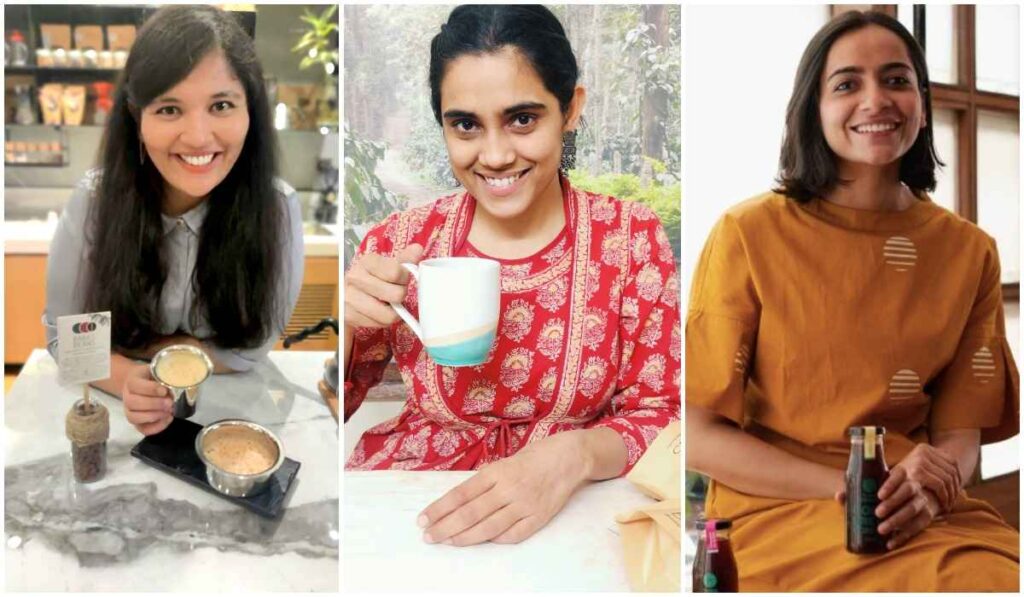
Pictured: Sadhavi & Mrinal (Baba’s Beans) + Poornima (Third Roast)

source: http://www.shethepeople.com / She The People / Home> Interviews / by Tanvi Akhauri / November 26th, 2021

These bio-degradable coffee capsules are a win-win!

Blue Tokai’s compostable coffee capsules can elevate your daily coffee.


Image courtesy: Instagram/@bluetokaicoffee

After cold brew cans and easy-pour sachets, Blue Tokai has now dropped a line of biodegradable coffee capsules, made with home compostable biodegradable materials that don’t harm the environment. They’re easy to use and offer a quick, fuss-free brewing experience. These capsules are compatible with multiple kinds of Nespresso machines and are ideal for making a single shot of espresso and espresso-style-beverages .

There are available in four variants.

Our recommendation? The Attikan Estate coffee capsules, which are the darkest of the brand’s standard medium roasts and have a bold and fruity profile with a hint of nuttiness.

For more information:

https://bluetokaicoffee.com/collections/capsules

source: http://www.telegraphindia.com / The Telegraph Online, Kolkata / Home> My Kolkata > Drink / June 12th, 2022

Coorg Coffee Makes Its Presence Felt In Davos

CM Bommai says focus is Beyond Bengaluru; Tier 2 and 3 cities to get importance

Davos:

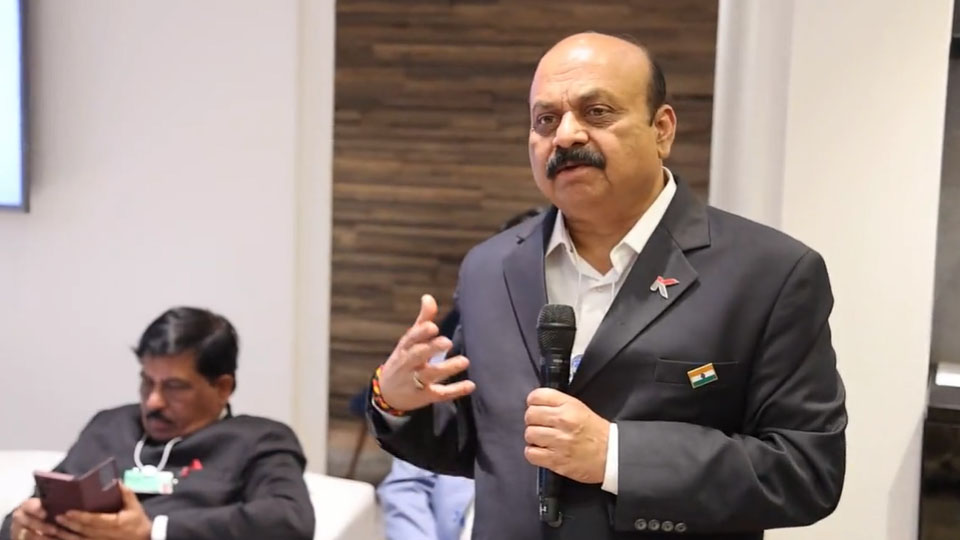
Chief Minister Basavaraj Bommai yesterday launched the global investors meet at the Karnataka pavilion on the main promenade at the World Economic Forum (WEF) meet being held in Davos. Apart from presentations and videos, the participants were delighted to receive a packet of coffee grown in the State.

WEF Summit concludes today and Bommai has extended his stay by another day to have one more round of talks with business honchos who have shown interest in investing in Karnataka.

The CM’s delegation had taken samples of Arabica and Robusta variety of Coorg coffee and the same varieties of coffee grown in Chikamagalur. Every visitor to Karnataka pavilion was given coffee bags and a note.

“Karnataka, the GI coffee hub of India is home to five GI-tagged coffees. Along with Monsooned Malabar Arabica and Robusta Coffee, Chikamagalur Arabica and Coorg Arabica coffee showcase how Karnataka’s magical beans are globally renowned,” the note said.

Addressing investors and news agencies, Bommai said Karnataka is the safest place to do business and it is not competing domestically but at international level and listed hydrogen and ammonia fuel and semiconductors as next focus areas.

He said that nearly half of the foreign companies present in India are already in Karnataka and all of them are planning to expand and diversify in the State while many more are evincing interest attracted by the robust infrastructure, and ease of doing business in the State

Bommai said the process to decongest the State capital Bengaluru is underway by developing many adjoining areas as well as tier 2 (like Mysuru) and tier 3 (Hubballi and Dharwad) cities while four more airports would be built this year.

“Karnataka’s story is different from other States,” he said.

Bommai said Davos experience has been excellent and he has witnessed that the international investor community has recognised India as an emerging economic giant and particularly Karnataka,” the Chief Minister said.  “In Bengaluru, because of the hi-tech ecosystem which we have, there are the highest number of R&D centres and our expertise in aerospace, defence, machinery tools and of course Information Technology and Biotechnology. We are also looking beyond Bengaluru for all these projects. That is necessary and work has already begun,” he added.

source: http://www.starofmysore.com / Star of Mysore / Home> News / May 25th, 2022

CFTRI serves a ‘healthy’ drink from coffee leaf

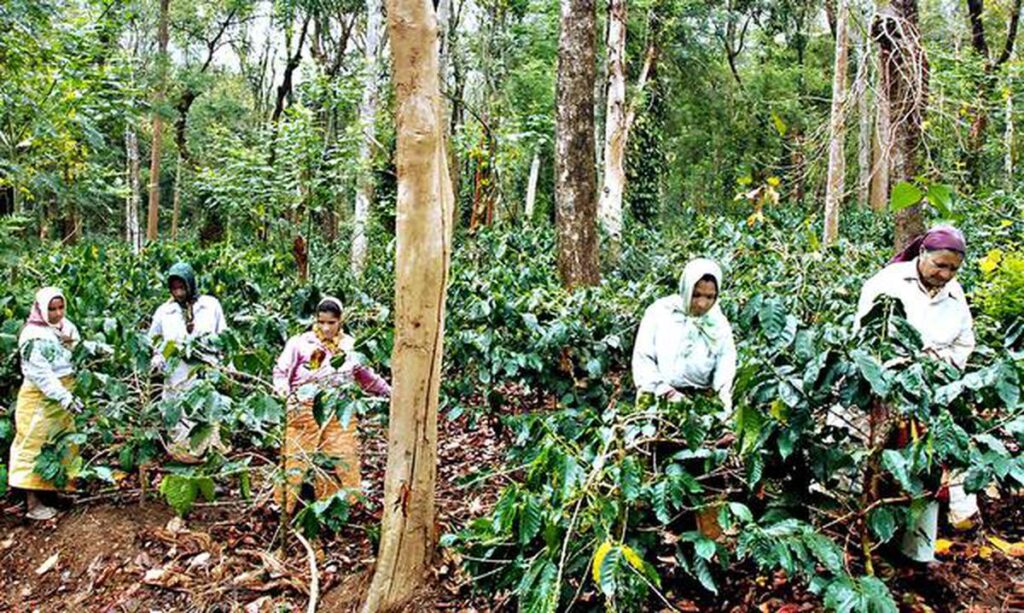
A file photo of workers in a coffee estate near Rayarakoppalu in Hassan district, Karnataka.

CSIR-CFTRI, Mysuru has developed the drink from coffee leaf and claims the brew can be an alternative to green tea or herbal tea

How about a coffee leaf brew? Sounds interesting. Coffee leaves can be used to prepare a health drink which can be an alternative to green tea.

CSIR-CFTRI, Mysuru has developed the drink from coffee leaf which it claims can be used as an alternative to green tea or herbal tea. “It is an ideal health drink to consume at any time of the day. The brew can be prepared with water which can be filtered and consumed,” the institute said.

Phytochemicals like phenolics, alkaloids, flavonoids, and anthocyanins in coffee leaves contribute to its health benefits. The coffee leaf brew mix that the institute has developed can be produced from the leaves that are pruned at the time of maintenance of the plants. They can be a good source of raw material for the drink, the scientists at the CFTRI said here on Wednesday.

Selection of coffee leaf is key as the quality of the brew mix depends on the raw material, according to the Technology Transfer Department.

CFTRI said the plant for producing coffee leaf brew mix can be set up at a cost of ₹70 lakh and the total project cost would be around ₹1.40 crore. A Kushalnagar-based coffee powder manufacturing unit has taken the licence of the product for mass production.

source: http://www.thehindu.com / The Hindu / Home> News> National> Karnataka / by Special Correspondent / Mysuru – May 11th, 2022

A hot cup of coffee skin

Chill: Cafe Le Bon Georges in Paris

Cascara, served in open-air Kolkata cafés, encapsulates in a glass the strange new world we inhabit.

Why is Paris not called the café capital of the world, wonders a friend.

Maybe it is.

It’s spring in Paris. In town for the Paris Book Fair, I am rediscovering the joy of travel, albeit nervously, with one eye on the rising COVID numbers.

On a little side street in Montparnasse, there’s crêperie after crêperie with little tables out front. No matter what street I walk on there’s a café or a brasserie with tables on the sidewalk, the specials of the day written in chalk on a blackboard. At all hours of the day there are people sitting outside in the sun drinking little cups of coffee, or glasses of wine, smoking cigarettes, ordering pastries. They were always there but in my new post-COVID consciousness, I am struck by the plethora of open air options.

Eco-cool life

But I also have an odd feeling of familiarity even though I have not been to Paris in a decade. And then I realise it reminds me of South Kolkata. Not the architecture. Not the river flowing through the city. Nor the people, though someone jokes that like Kolkatans, Parisians are cultured, possessed of a superiority complex, and deeply opinionated. But it’s not that. I realise it’s the cafés.

Kolkata, ever since the pandemic, has seen an explosion of chic little open-air cafés too. The modest South Kolkata street I grew up on had one famous hole-in-the-wall tea shop. The devoted clients would sit on the stoops of houses around it, smoking, arguing and drinking cups of extra strong tea. Now just one crossing on the same street has three chic coffee shops.

Cascara on offer at Roastery Coffee House, Kolkata 

The swankiness can be stress-inducing. At the tea shop milk or no milk were the only options. There was no green, Moroccan mint, chamomile, Darjeeling, first or second flush and there was no coffee. Now in this new Café City in coffee shops lined with books, potted plants and bleached wood, we have to learn a whole new vocabulary and be confronted with a dizzying variety of choices. Chronicling the café makeover of Kolkata, Bachi Karkaria once wrote that in this “single estate, bespoke” world ordering can be traumatic. “You must agonise over To Kill A Machiato, Murder on the Orient Espresso, Lawrence of Arabica or the French Press Connection.” It can be all too clever for its own cool.

__________

” Cascara is “greener” because it upcycles waste that was headed for the compost heap. So we can virtue signal while drinking it”

____________

And then there’s cascara. Every hip coffee bar seems to have discovered it. Cascara, I learned, is Spanish for skin, peel or husk. One obtains it after extracting the coffee beans from the coffee cherries. The pulped skins are sun dried and then brewed and the cascara can be drunk hot or cold. Some describe it as a “coffee-tea” and detect notes of cherry and hibiscus. Others think it’s more of a fruit tisane with much lower caffeine content than coffee. Once a by-product of coffee manufacture, the husks have now acquired an eco-cool life of their own in a wine glass. Of course, a name like cascara helps. It wouldn’t sell as well in Kolkata if it was called “brewed coffee husks”.

Ahead of New York

The cascar-ification of Kolkata can carry alongside the notes of cherry, vanilla and rose-hip, a slightly bitter taste of pretentiousness. We are basically spending good money to drink coffee waste, chuckled a friend visiting from New York. Then a few weeks later he sent me a picture of cascara on the menu in a Brooklyn café. Our cafés in Kolkata, it seemed, were ahead of his New York café.

I have not discovered cascara on the menu in the French cafés yet or perhaps I’ve not scrolled down far enough in the endless choices of coffees, teas, wines, beers and cocktails. Or I’ve been too distracted by the colourful explosion of flans and tarts and macaroons in the boulangerie windows. But I am keeping an eye out for it because cascara in an open-air café seems to be the drink that encapsulates in a glass the strange new world we inhabit. It’s “greener” because it upcycles waste that was headed for the compost heap. So we can virtue signal while drinking it. It has less caffeine so we can drink more. It has wineglass chic. And ordering it from a QR-code menu and then sipping it in an open-air café allows us to pretend we are dodging the virus. What more can we aspire to these days?

And while Paris might be the uncontested café capital, maybe Kolkata can become the cascara capital.

Sandip Roy, the author of Don’t Let Him Know, likes to let everyone know about his opinions whether asked or not

source: http://www.thehindu.com / The Hindu / Home> Society> Pop-A-Razzi Society / by Sandip Roy / April 30th, 2022

Coffee Board chairman MS Boje Gowda dies in bee attack

M S Boje Gowda, Coffee Board Chairman | Photo Credit: SPECIAL ARRANGEMENT

The 73-year-old Gowda, succumbed to bee sting as he was being rushed to a hospital

M.S.Boje Gowda, chairman of the Coffee Board, died after being stung by honey bees at his Krishnagiri Estate in Dasarahalli near Chikkamagaluru on Friday. The 73-year-old Gowda succumbed to bee sting as he was being rushed to a hospital in a car during a visit to his estate.

Mr. Gowda was appointed chairman of the board in May 2017 and has been in politics for decades. He began his career with the Janata Party and later joined the Congress. However, for the past few years, he had been associated with the BJP.

He also served the party as a president of its Chikkamagaluru district unit.

source: http://www.thehindu.com / The Hindu / Home> News> National> Karnataka / by Special Correspondent / Hassan – April 23rd, 2022

Coffee Board warns of pesticide residue in coffee

Kattappana:

Pesticides residues were found in a huge amount in the coffee powder exported to European countries. Following this, the Coffee Board has directed the farmers to control the use of pesticides on crops.

The European countries have informed that the pesticides are detected in the coffee powder and advised not to export similar products again. In this context, the Coffee Board has warned the farmers that the European countries and other importers will ban the import of Indian coffee if a similar quantity of chemical components were detected again in the products.

The pesticide Chlorpyrifos has been detected in an excess amount in the coffee powder exported from the country. Instead of Chlorpyrifos, another pesticide Phenthoate 50 EC can be used by mixing 400 millilitres of it in 200 litres of water with 200 millilitres of glue.

The Coffee Board had recommended the use of “Chlorpyrifos 20 EC at the dosage of 600 ml in 200 litres of water along with 200 ml of any wetting agent may be used just prior to the flight periods or during the early part of the flight period,” as a “last resort.”

source: http://www.english.mathrubhumi.com / Mathrubhumi.com / Home> English> Features> Agriculture / April 15th, 2022

Allana group forays into the domestic Coffee market in India

The Allana Group, one of India’s largest exporters of Coffee today announced its foray into the Indian domestic market to meet the burgeoning demand in the brewed beverage business. The Group has been a pioneer in the green bean exports since the year 1987 and aims to introduce international grade coffees to the Indian consumers.

Curating the finest beans with its in-house quality control, the group will remain focused on a B2B supply to domestic players as well as startups. The group will set up a state-of-the-art roast and ground coffee unit in Karnataka and distribute in all major cities of India. Further, the group will also invest in roaster and instant coffee machines and cater to industrial customers and cafes.

The Allana group exports on an average 25000 tons of green coffee beans per annum with an advanced facility having the capacity to cure 30000 tons. India’s coffee market has witnessed an exponential growth with a CAGR of 10% over the last five years. Allana Group’s foray into the domestic coffee market will address the rising demand, catering to the capsule market in addition to special coffees and also cater to the medium to high end commercial sector.

Commenting on the foray Mr. M. P. Devaiah, Business Head – Coffee, Allana Group said, “Allana has been at the forefront of the green bean coffee business in India. Our strong network in sourcing the finest beans as well as our inhouse quality control differentiate and bring out the uniqueness in our coffee. Our introduction into the domestic market will aim to cater to true coffee aficionados and deliver a premium experience.”

Asim Allana, a sixth-generation member of the Allana Group promoter family said, “Coffee over the years has become a mainstream consumer drink especially amongst the vibrant young generation in India. Our foray into the domestic coffee market is our commitment to provide one of the highest grades of coffee to our consumers. Being a veteran player in the industry, our extensive experience and expertise in the food business along with our world class infrastructure, we aim to create a superior and healthy domestic coffee market in India.”

With its over three decades of expertise in the coffee business, Allana Group has been acknowledged and conferred with awards as the largest over all exporters of green coffee beans by the Coffee Board of India. The group exports all grades of washed and un-washed Arabicas and Robustas as well as Monsooned Coffees.

Further the Company continues to be one of India’s largest exporters of Specialty Coffee, thus catering to the needs of all types of buyers, be it specialty coffee, single estate coffee or commercial coffee particularly in Europe.

source: http://www.apnnews.com / APN News / Home / April 07th, 2022

KDF’s Integrated Coffee Processing And Storage Unit Inaugurated

Jeypore (Odisha): 

Kalinga DESIAGRO Foundation (KDF) has inaugurated an integrated coffee processing and storage unit today. Located in Ekadeli village, about 12 kms away from the Koraput town, the 4,500 sq. ft. facility houses state-of-the-art machineries capable of undertaking curing of raw coffee, including hulling, peeling, polishing, and grading operations. A prominent feature of the entire set-up is the phosphor-bronze peeler polisher, that will impart a fine lustre to the coffee processed at the unit, at par with some of the best curing works in Karnataka.

Mckinnon India Pvt. Ltd., a renowned manufacturer and exporter of coffee processing systems, was engaged by KDF to commission the processing unit. KDF further relied on the technical guidance and wisdom of Mrs. Sunalini Menon, Coffee Lab, Bangalore, one of the leading coffee quality experts in India.

The unit will cater to the requirements of the coffee growers of Koraput, neighbouring districts including Kandhamal and Keonjhar, and all such districts in Odisha, where coffee is being commercially produced. The unit will enable the coffee growers to make value addition to their coffee that is being currently sold in raw form (called parchment or cherry) to traders in Karnataka. The integrated facility has been conceptualized to be future proof, with the provision for an initial storage capacity of 200 metric tons of raw coffee.

The processing unit is capable of processing approximately 600 metric tons of raw coffee annually, with provision for phase-wise expansion in the future. Due to the sensitive and hygroscopic nature of coffee beans, the facility has been constructed with necessary adherence to the guidelines and norms prescribed by the Coffee Board of India to ensure optimal temperature and moisture control.

The unit was recently audited by Dr. Mandappa I.S. the Divisional Head of Coffee Quality (Coffee Board of India) as part of the process for its registration as a Coffee Board licenced curing works.

The establishment of the integrated unit is part of KDF’s social impact outreach towards transforming the coffee ecosystem in southern Odisha.

The integrated unit represents a significant private investment in not just the fledgling coffee sector of Odisha but in the economically and industrially backward district of Koraput in general. The unit has been commissioned in a record time of just under 6 months, reaffirming the commitment of KDF towards the coffee growers of Koraput. The project aims to positively affect lives of over 1500 locals including by way of generating direct and indirectly employment.

As part of its effort to boost the hyperlocal economy, KDF has chosen to largely work with local vendors, suppliers and contractors in the Koraput district in setting up the unit. The establishment of the processing facility is likely to have a ripple effect on the coffee sector in the near future by encouraging more coffee growers and boosting the earning capabilities of the existing growers by enabling them to sell green coffee beans, the most popularly traded form of coffee internationally.

To mark this significant occasion, KDF organized an event to officially unveil the integrated processing and storage unit.

Shri Iswar Chandra Panigrahi, Chairman of Odisha State Seeds Corporation & District President of BJD, Shri Upendra Saha, Senior Liaison Officer of the Coffee Board of India (Koraput) and Shri Pradip Mohanty, President of Odisha Coffee Growers Association, graced the occasion as the guests of honour.

The integrated coffee curing and storage unit was unveiled to the attendees after a customary ribbon cutting ceremony.

The event was attended by the members of the coffee fraternity comprising of the local coffee growers (both tribals and non-tribals). Local coffee growers who are affiliated with KDF were felicitated with silver coins, personalised goodies and certificate of recognition, to appreciate their efforts in producing quality coffee. Other attendees, including the local tribal dancers and performers, were handed over attractive hampers.

On the sidelines of the event, KDF also introduced its green beans coffee brand “Kora Milds – Coffee from the East”.

A day before the main event, KDF organised a feast for the neighbouring villages and the workers, which was attended by more than 150 people.

A volleyball tournament was also organised for the youth of the villages forming part of the local Gram Panchayat, with the winning team being felicitated with a cash prize.

source: http://www.sambadenglish.com / Sambad English / Home> Economy / by Sambad English Bureau / March 26th, 2022