Category Archives: Coffee News

Maverick & Farmer opens its doors to coffee lovers in Bengaluru

Maverick & Farmer Coffee opens its doors to all the coffee lovers in Bengaluru, offering a farm to cup café experience. The café serves a collection of coffee from the brand along with international cafe food. With the distinction of being the world’s first café painted with coffee, the place is a haven for coffee enthusiasts.

The centrally located café, with a serene open-air seating area, spans over 5000 sq. ft. overlooking the green expanse of the Rbanm’s Grounds. As you enter, along with the waft of freshly ground coffee, you come upon a wall that dons an interactive art experience.

Created by muralist and mixed media artist Jessica George who captures the essence of the café in a larger than life format. The coffee flower, cherry, beans and the espresso extraction are brought to life with splashes of vibrant colour with a coffee swing perched at one end that makes for a great photo opportunity.

Homegrown coffee brand is one of India’s few bean to cup companies. With decades of experience and a legacy in coffee farming, the brand conducts experiments in its estate in Pollibetta, Coorg that serves as a laboratory where some of the most inventive brews are conceptualised by the best minds in the business.

Novel flavour profiles and tasting notes are thus brought to the café with brews and blends like the – Cinnamon Almond Coffee, The Parama Cappuccino, Vietnamese Coffee, The Coffee Cherry Soda, made from the fruity part of the coffee cherry, this drink is refreshing, fruity and contains antioxidant, The Clarified Cappuccino, an 8 oz cappuccino made with the perfect milk-espresso ratio is ‘clarified’ using a technique borrowed from a different stream of food science.

What the drinker experiences is a near-clear ‘cappuccino’ infused with some fruit flavours and rosemary and last but not the least, The cold smoked coffee, served in a carafe filled with fruit-wood smoke (wood from their estate in Coorg), made using a unique and indigenously developed process to infuse cold smoke into harvested coffee cherries.

Ashish D’abreo, founder-partner at Maverick & Farmer Coffee, said, “The idea is to create something maverick, while sticking to the traditional Indian technique of coffee making. We grow and roast our own coffee to create artisanal blends using unique methods and techniques. Our in-house experiments like cold smoking and fermenting break the mold to give you a burst of fresh flavour profiles.”

Along with exceptional coffee, the cafe serves international cuisine – from The Square Burgers, Pastrami Sandwich, Pulled Pork Sandwich to Chocolate Banana Cake and Apple Pie; it’s the perfect space to hang out and unwind with a cup of coffee and terrific food.

Sreeram G, founder-partner, who has a background in advertising and branding, talking about the experience at Maverick & Farmer Coffee, said, “We aim to serve perfection in brewing to a third-wave of coffee drinkers in the city. The café tells you the story of how our coffee travels from the heart of Coorg to swanky Bangalore. It showcases our myriad coffee creations using some pretty cool single-serve brewing equipment. The food menu is light and complements our coffees while the open space of the café ensconced in greenery charms you with old Bangalore vibes.”

source: http://www.fnbnews.com / FnbNews.com (Food and Beverage News / Home> Top News / by Fnb News Bureau, Bengaluru / March 16th, 2022

The story of Coffee in India

The story of the coffee in India began in 1670, thanks to a Sufi named Bada Budan who was responsible for bringing it to the country.

Two hundred years after that, and with the intervention of British entrepreneurs, coffee was already becoming an important and commercial crop, planted in more than 40 estates, including the Nilgiris Biosphere. 

This evolution led to the creation of The Coffee Board, an organization in charge of facilitating research, marketing, and distribution of coffee plants to the indigenous communities of the district. For a farmer, a day starts with a dark roasted coffee concoction mixed with jaggery.

Robusta and Arabica are the two types of coffee cultivated by farmers in The Nilgiris district. The coffee plantations grow at an elevation of 3500ft above sea level.

They are shade-grown and are intercropped with various crops like Silver Oak, Mango, Jackfruit, Millets, and Spices. The indigenous communities use traditional agricultural practices to grow and harvest coffee.

Bio-Organic inputs such as Panchakaaviya and Poochiverati, a concoction made by themselves are used in coffee cultivation. The producers use leaf litter as manure. 

The harvest which is usually between November and March has seen a huge change recently due to varied rainfall, and it’s quite often hindered by Wild Boars and Elephants. Monkeys are also a huge problem for the villagers. The harvest is done usually by the family members who carefully strip the cherries which are then sorted and pulped manually.

Pulping in a few villages has been made easy by the coffee board by providing machines to help with the process.

There is also a provision at the Production Units of Aadhimalai where the community can use the pulping machine and the drying yard. The Coffee parchment is then dried on the rooftops and in the front yards of their houses and is roasted manually as need be.

The rest of the coffee is then sold to Aadhimalai which is an indigenous community-owned Producer Company.

The community farmers sell coffee in every possible form, be it Coffee Parchment, Cherries, Dried Cherries, or Green Beans. The average yield of Coffee in the community-owned farms would come to around 35 tons. A premium price is paid to the producers. 

The coffee has a certification PGS (Participatory Guarantee System).
The Keystone Foundation plays a big role in facilitating the PGS certification which is a peer review system. The coffee at Aadhimalai is then marketed through Last Forest Enterprises as Roasted Beans and Coffee Powder. However, most of the coffee is sold as parchment to other dealers.


These processes have enabled the farmer to get the best price in the market.

  • Aadhimalai Pazhangudiyinar Producer Company Ltd
  • Aadhimalai Pazhanagudiyinar Producer Company Limited (APPCL) has been initiated to anchor livelihoods of indigenous communities by encouraging traditional organic food farming, handicrafts, livestock rearing, sustainable harvest of forest produce, conservation of natural resources, thereby securing the well-being of the landscape, value addition of harvests and trading.
    It is a company completely owned by the indigenous communities, one of the first of its kind at a national level.
  • Last Forest Enterprises
  • Last Forest is a social enterprise that was incubated by Keystone in the year 2010. Through its operations, the company supports indigenous communities to sustain themselves by empowering their skill sets and bringing economic growth.
  • Keystone Foundation
  • Keystone Foundation works with the indigenous people and local communities as their primary stakeholders and extends to various aspects of socio-ecological development that are categorized under Community Wellbeing, Biodiversity Conservation, and People and Nature Collectives.

source: http://www.slowfood.com / Slow Food / Home / by Jestin Pauls / March 08th, 2022

Delhi, metro cities to play host to Chhattisgarh’s ‘Bastar Café’ soon

Till date, coffee is grown in only one revenue block of Bastar district but the Chhattisgarh government is now planning to expand coffee cultivation to other districts of Bastar region, which include seven Maoist-affected districts of Chhattisgarh.

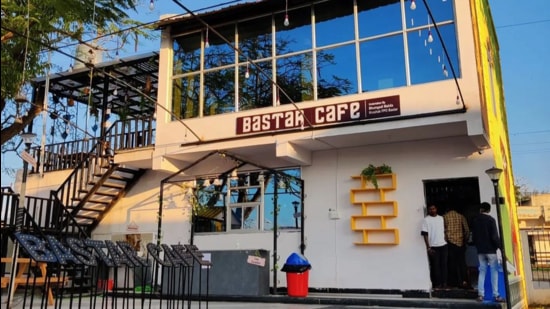
The Chhattisgarh government has decided to open a ‘Bastar Café’ in New Delhi, Raipur and other metro cities. (SOURCED.)

The Chhattisgarh government has decided to open a ‘Bastar Café’ in New Delhi, Raipur and other metro cities and is also considering signing a memorandum of understanding (MoU) with private companies to promote the café.

The cafés will be run on a franchise model with the condition that the name ‘Bastar’ would be compulsorily included in the brand name of the coffee.

Recently, senior officials have also been directed to prepare a project to promote cultivation of coffee and tea in the plateau areas of Bastar and Sarguja division of Chhattisgarh.

“We have not yet chalked out an overall plan of the project and consultation with various departments is going on but ‘Bastar Café’ will surely turn global in future. Bastar Cafe will serve mainly coffee grown in Bastar but it will also give a complete experience of the local food of Bastar including cookies made of ragi, milk shake, mahua laddu and bar, sitafal ice cream and other Chhattisgarhi and tribal cuisine. Thousands of people are involved in growing coffee in the state. Bastar Cafe will be opened in many malls, across Chhattisgarh and also in metro cities of the country,” said Alok Shukla, chief executive officer (CEO) of Rozgar Mission, who is in-charge of the project.

“Franchises can be self-help groups as well but other private sector organisations and start-ups will also be encouraged to take franchises,” said Shukla.

Till date, coffee is grown in only one revenue block of Bastar district but the Chhattisgarh government is now planning to expand coffee cultivation to other districts of Bastar region, which include seven Maoist-affected districts of Chhattisgarh.

“Plantation of coffee is done in Bastar’s Darbha region but we are now planning to expand in Sukma and other districts. In the first phase, eight quintals of coffee have been produced, which is being utilized at the Bastar Cafe opened in Jagdalpur. Nearly two kilograms of coffee is being consumed per day at this cafe. At least three more cafes can be started for utilization and marketing of the quantity of coffee being produced. A decision has been taken to open such cafes in Raipur and Delhi as well, so as to ensure the branding of Bastar Coffee,” said an official involved in the project.

He informed that coffee has been planted in 55 acres of Darbha area of Bastar in 2021.

Presently, coffee cultivation is proposed in an area of 5,108 acres in Bastar district, which includes 1,075 acres in 9 villages of Tokapal block, 1,027 acres in 11 villages of Lohandiguda, 1,445 acres in 14 villages of Bastanar, 460 acres in 7 villages of Bakawand and 1,101 acres in 13 villages of Darbha block.

Officials said that the Agriculture College, Jagdalpur has completed preparations for coffee plantation in 245 acres of land in Darbha.

“The horticulture department is in the process of getting 2.50 quintals of certified seeds of ‘Chandragiri’ variety from Coffee Board Bangalore, which would be utilized for producing 5 lakh saplings. These saplings will be planted in an area of 500 acres area… Likewise, Agriculture College Jagdalpur will also produce two lakh saplings from a quintal of certified seeds to be received from Coffee Board Bangalore. These saplings will be planted over an area of 200 acres. A target has been set to expand the area under coffee cultivation in 1000 acres of Bastar district every year. By 2026, nearly 5,820 acres of land would be brought under coffee cultivation,” said an officer of the public relation department.

KP Singh, scientist (Horticulture), who is overseeing the ‘Coffee project’ in Bastar, said that climatic conditions of Bastar are quite suitable for coffee cultivation.

“We are encouraging more and more tribes to cultivate in this area and training is continuously going on. We are hoping that soon Bastar coffee will become a brand in the market,” Singh added.

District Collector of Bastar, Rajat Bansal, said that Bastar Café will create employment and tourism in the area.

“Bastar Café could be a big brand of coffee and we are working on it. As per the direction from the state, currently, the district administration is trying to expand coffee plantations in an area of more than 5000 acres. The future target is Tokapal, Lohandiguda, and Bastanaar revenue block of the district. The key scientific parameter which makes Bastar coffee a unique product is the content of chlorogenic acid, caffeine and protein with a percentage of 6.02, 0.53 and 11.22 respectively,” said Bansal.

In terms of crops, the district administration aims to promote coffee as a non-conventional agricultural product which will help them to shift from paddy and also generate coffee tourism in future, the collector added.

source: http://www.hindustantimes.com / Hindustan Times / Home> India News / by Ritesh Mishra / February 17th, 2022

War puts coffee exports to Ukraine in jeopardy: Coffee Board

The war could also have an indirect and long-term impact on the overall coffee exports from India to Ukraine and neighbouring coffee markets, say exporters. | Photo Credit: K. PICHUMANI

‘Ukraine has imported 6,604 metric tonnes of our coffee so far this fiscal’

Bengaluru :

The current crisis has put Indian coffee exports to Ukraine and neighbouring countries in jeopardy, the Coffee Board said on Friday.

So far, (April-Jan.) this fiscal, India had exported 6,604 metric tonnes of green bean, instant and roast and ground coffee to Ukraine and 23,519 metric tonnes to Russia. Coffee exports to Ukraine, in fact, peaked at 7,327 metric tonnes during fiscal 2018-19, and in 2019-20 it was 6,947 metric tonnes.

CIS countries were traditionally the major soluble/instant coffee importers from India. Russia currently accounts for 75% of this, while Ukraine alone has more than 20% share, according to data shared by Coffee Board.

“The Russia-Ukraine war will certainly impact Indian coffee exports to Ukraine and its neighbouring countries,” said Dr. K.G. Jagadeesha, CEO and Secretary, Coffee Board.

According to coffee exporters, in addition to the immediate impact on exports, the war could also have an indirect and long-term impact on the overall coffee exports from India to Ukraine and neighbouring coffee markets

“The Russia-Ukraine war is likely to push up prices of fuel, metal/aluminium (instant coffee is mostly exported in metal cans and containers) and packaging materials. It could also spiral logistics costs,” said Ramesh Rajah, president of the Coffee Exporters Association. “This means, the overall cost of exports will certainly go up and buyers and sellers are already worried about it,” he said. “Also, all these are happening when the prices of packaging raw material had already gone up by 30% recently,” Mr. Rajah added.

Ukraine is one of the largest importers of coffee in that region, while Russia is one of the top 5 buyers of Indian coffee. “Although Ukraine is largely a tea-consuming country, it has a very mature coffee culture, thanks to Turkish and Ottoman influence,” he said. “The current uncertainty is certainly worrying, both for exporters and as well as importers of all varieties of Indian coffees,” he added.

source: http://www.thehindu.com / The Hindu / Home> Business / by Mini Tejaswi / February 25th, 2022

Brewing in Bastar: Welcome to India’s newest coffee-producing region

Raipur : 

Bastar, one of the districts in Chhattisgarh, well-known for its dense forests, is identified largely as a Maoist-dominated area. The state government, however, is set to give an overall makeover to the district by eradicating the Maoists from the area promoting the production of coffee to give the region a new identity in the country and at the global level.

There are widespread talks about promoting coffee cultivation in Bastar, after the recent state visit by Congress MP Rahul Gandhi.

He had a cup of coffee at the Bastar coffee stall at an exhibition held in the terror hotbed. In order to promote coffee in the Indian and international market, Congress MP suggested that state Chief Minister Bhupesh Baghel sign an MoU of ‘Bastaria’ coffee with international coffee brands.

The life of the people in Bastar is completely dependent on agriculture and forest produce. Paddy is grown the maximum in terms of agriculture, but now innovation is slowly taking shape. Coffee is being cultivated on several hundred acres of land in Darbha, Kakalgur and Dilmili villages under the Darbha block due to which the forest dwellers and farmers are earning huge profits.

The reason for the cultivation of coffee in the Darbha block of Bastar is that this cultivation can be done only in those areas which are located several metres high above the sea level. People associated with realising this initiative say that three things are necessary for the cultivation of coffee — height from sea level, rainfall between February-March and area which is not under direct sunlight. The Darbha development block is located at an altitude of 600 to 1400 metres above sea level.

Two varieties of coffee are being grown in Bastar — Coffee Arabica and Coffee Robusta. Coffee was cultivated as an experiment, which has proved to be successful and now farmers have started cultivating it. Many other crops can be produced along with coffee cultivation.

Bastar Collector Rajat Bansal told IANS that the people from the tribal community, who depend completely on forest produce and traditional farming, are choosing coffee cultivation as a profitable and viable option. Their life is undergrowing a transformation with their income doubling. The state government has formed a coffee board to encourage the cultivation of coffee in the state. The coffee produced here has been found to be of high quality by the coffee board of the country.

Experts say that in a year, nearly Rs 30,000 to 40,000 per acre is the profit earned from the cultivation of coffee which is much more than other crops. In view of the adaptability of the climate in Bastar, coffee cultivation has been started on nearly 3,000 acre. The popularity of Bastar coffee is fast spreading in foreign countries as well. Coffee is currently being exported from the state to eight countries.

Coffee cultivation can be of immense help for increasing the income of farmers in the state, that is why an action plan has been prepared for the coming six decades which will benefit the farmers on a large-scale.

source: http://www.daijiworld.com / Daijiworld.com / Home> National> World / by Sundeep Pournaik – IANS / February 16th, 2022

Arabica coffee price touches all-time high

Arabica coffee price touches all-time high
Arabica coffee price touches all-time high 

HIGHLIGHTS

The Arabica Parchment coffee price has soared to an all-time high of Rs 16,200 per 50-kg bag on Thursday, in Somwarpet and Chikamagalur markets.

Madikeri:

The Arabica Parchment coffee price has soared to an all-time high of Rs 16,200 per 50-kg bag on Thursday, in Somwarpet and Chikamagalur markets. A large-scale destruction caused by snowfall to the similar coffee variety in Brazil, the largest producer of the crop, has come as a blessing in disguise for the growers here.

According to traders, normally, this coffee variety commands a price of Rs 10,500 to 11,500. Similarly, the cost of Robusta Parchment has touched Rs 7,600 per bag. The last time when Arabica coffee reached the highest price was in 2014 when it sold at Rs 9,600-Rs 9,800 per bag. The price saw a downward trend and touched Rs 6,000.

The prices of Arabica Cherry and Robusta Cherry have seen a marginal rise in price. They command a price of Rs 7,500-7,600 and Rs 3,800-Rs 4,100 per bag respectively. Growers in Kodagu, Chikkamagaluru and Hassan are elated over rise in the prices of coffee, despite problems of shortage.

Coffee was bought and exported by the government through the Coffee Board before growers were allowed to sell their produce directly in the open market since 1992, following protests by them.

December to April is the time for coffee harvesting and 90 percent of growers sell the produce before the beginning of the rainy season due to the price fluctuations and lack of warehousing facilities. The total annual coffee production in the country is approximately 3.6 lakh tonnes. Most of the Arabica growers have already sold their produce.

Speaking to The Hans India, a coffee exporter and promoter of AWIT Innovations (P) Ltd in Kushalnagar, Rajiv Kushalappa said that the price fluctuations are likely to increase in the near future due to prevailing international market conditions. According to him, the rise in the price was fallout of crop loss in Brazil following heavy snowfall. Ratan Machaiah, a coffee grower in Gonicoppa, said that the cost of production of coffee has increased significantly in recent years and growers are in a distress.

The wages of labourers, cost of fertilisers, pesticides, etc., have doubled over the past decade, but the price remains the same. The growers are gambling on unpredictable climatic conditions year after year. He has urged the government to support the growers by announcing a special package.

source: http://www.thehansindia.com / The Hans India / Home> News> State> Karnataka / byCoovercolly Indresh / Hans News Service / February 10th, 2022

How a coffee master makes the perfect cup of cappuccino

It’s a fine balance between high quality espresso, hot milk and silky milk foam, explains coffee sensei Sherri Johns

A perfect cup of cappuccino. (Photo: Unsplash) 

Sensei is a Japanese word which translates to a teacher or master. Coffee expert Sherri Johns was regarded as a sensei when she was in Japan doing what she does best—training people to brew the perfect cup. Johns’ helped set up India’s first Specialty Coffee Association Premier Training Campus and Araku’s flagship store in Bengaluru. Now, she is visiting the city for the certificate programmes at ARAKU World Specialty Coffee Academy (AWSCA) which run from January 25 to February 16.

In a career spanning more than 40 years, the Portland-based Johns worked with Starbucks, launched the World Barista Championship and was on the board of Specialty Coffee Association (SCA)—a nonprofit, membership-only organization that represents coffee professionals across the globe. In 1980, during the early days of her career in San Francisco, she entered an annual Barista competition, won it for three years straight, and earned the title ‘cappuccino queen of San Francisco’.

source: http://www.lifestyle.livemint.com / Mint Lounge / Home> Food> Drinks / by Jahnabee Borah / February 02nd, 2022

If you are a coffee lover, you must visit these places in India.

If you are fond of roaming and live in India, you can visit many of the best places in India. If you are a coffee lover, today we are going to tell you about places in India where you will enjoy visiting and you would love to go there again and again.

* Wayanad is a beautiful place in Kerala. People often go for a walk here. However, apart from romance, this place is one of the coffee places in India. You can enjoy the lush green coffee plantations here if you want.

* Coorg is considered to be the pride of Karnataka, although it is home to many coffee gardens that produce Arabica and Robusta. In that case, if you are planning to visit here, the month of November will be the best. Well, everyone must go here once.

* Chikmagalur in Karnataka is the best place. It is famous among tourists for its beautiful views. Coffee was first introduced in India during the British Raj, situated a few hours away from Kurdish. There are a variety of coffee gardens.

* Arku is a beautiful place in Andhra Pradesh which is also excellent for sightseeing. Thousands of tribals here depend on coffee cultivation. If you are ever going to Arku, be sure to taste the organic coffee grown by the locals here.

* Yarcaud is in Tamil Nadu and is called the jewel of South India. In fact, there are many coffee gardens, so if you ever visit here, you must take advantage of the coffee garden once. It is also said to be home to MSP coffee, the first Indian owned coffee plantation ever.

source: http://www.english.newstracklive.com / News Track / Home / by Arpit Birtharia / January 13th, 2022

TATA Coffee Grand celebrates the unique sounds of the harvest festivity this Pongal along with its ‘Shik Shik Shik’ campaign

TATA Coffee Grand celebrates the unique sounds of the harvest festivity this Pongal along with its ‘Shik Shik Shik’ campaign

Coimbatore :

TATA Coffee Grand, the coffee brand from the house of Tata Consumer Products continues its celebration of bringing out the emotions and excitement associated with coffee in Tamil Nadu. In line with this, the brand has released a festive film celebrating the various sounds that reflect the unique spirit of Pongal with the ‘Sounds of Tamil Nadu’ campaign of Tata Coffee Grand.

The vibrant film is a montage of various visuals and sounds that are associated with the Pongal festival; the crunch of sugarcane, the clink of children’s anklets, and the musical echoes of the ‘kulavai’ among others. Replete with sumptuous Pongal delicacies, family gatherings, and a splash of rich hues that the Tamil culture is well-known for, the film concludes with the thought, ‘How can any festive meal be complete without coffee and the emotions associated with it?’

Talking about the film, Puneet Das, President – Packaged Beverages (India and South Asia), Tata Consumer Products said, “Our campaign of Tata Coffee Grand launched last year, synonymizes the word ‘Coffee’ with the sound i.e. Shik-Shik-Shik – which represents the sound heard when the Tata Coffee Grand jar or pack is shaken! We have gone a step ahead this year and have extended the ‘shik shik shik’ proposition to the sound of the Pongal festivities, to capture the excitement of the festival along with the emotions of drinking coffee. These festivities are not just reflected in the visuals but also in the unique sounds that reverberate throughout the harvest season. In highlighting this, we are happy to launch our new film which doubles up as a feast to the senses and has a distinct sound design that celebrates the festive taste of Tamil Nadu”.

Commenting on the campaign idea, Sonali Khanna, Executive Director and Branch Head, Lowe Lintas South said, “Pongal is a festival that the people of Tamil Nadu hold very close to their hearts, resulting in a joyous tapestry of celebratory sights and sounds. What’s striking is that many of the authentic sounds of Pongal are expressed as triplets. This is exactly the same aural mnemonic we have used to bring our product USP to life: the ‘Shik Shik Shik’ of the packet representing the Tata Coffee Grand crystals. The wonderful interplay of musical triplets, the rich festive hues, and the catchy sound of the pack, all come together seamlessly. To create a film that is as aurally arresting as it is visually resplendent.”

source: http://www.covaipost.com / The Covai Post / Home / by Covai Post Network / January 14th, 2022

Move over tea, coffee is here in the Northeast

Inside Été Coffee Roasters in Kohima   | Photo Credit: Lichan Humstoe

More than 180 years after the Northeast began its journey to becoming synonymous with tea, coffee is demanding space on those verdant hill slopes

There’s an aroma of Brazil in Haflong, Assam’s only hill station 1,000 metres above sea level. It has much to do with a café in a two-storeyed cottage named after soccer legend Pele.

Nibila Jidung set up Pele Coffee Shop in the town’s Gadain Raji locality in 2020. The shop is named as much after the Brazilian football star as Jidung’s deceased son, who was born the day Pele landed in Kolkata in September 1977 to play a friendly match for New York Cosmos versus Mohun Bagan. And, as in Brazil, the coffee she serves is home-grown.

In just two years, the café has become a popular hangout for the young in Haflong. Its success, however, began with a big failure more than two decades ago.

Nibila Jidung of Barail Coffee at her cafe in Haflong, Assam   | Photo Credit: Special Arrangement

In the 1990s, the Assam Plantation Crops Development Corporation Ltd had started a coffee plantation on a large area leased from Disagisim village near Haflong, and then handed it back to the villagers to give them a source of income. But the plantation soon fell into disuse; the people were not used to growing coffee as a staple. But when Jidung’s late husband Prahlad Chandra Jidung retired, his family decided to lease the plantation in 1999 and started employing local hands. “This helped us generate some income and provide livelihood to the people of the village,” says Jidung, 65. But the plantation area reduced from 100 bighas to 25 over time, for several reasons.

First, of course, the Jidungs faced worker shortage during a decade of extremism. Another problem was the loss of quality — the delay in transporting the cherry to the auction centre in Bengaluru resulted in a lower price for their coffee beans. “The Coffee Board would take the cherries from us, keep them in a warehouse in Haflong, then transport them for auction in Bengaluru.”

When Jidung’s son died in 2015, she realised her coffee business was going nowhere. “It was around that time that the Coffee Board advised me to create my own brand and open an outlet to promote local consumption,” she says.

Schooled for success

The board helped her procure the equipment to process freshly-plucked coffee: machinery to do everything from removing the shell of the fruit, drying the coffee bean, and hulling (crunching off the parchment skin of the bean) to roasting and grinding. The effort has been worth it; people are developing a taste for her brand, Barail Coffee, in two forms — filter coffee and cold coffee. Her brand is a mix of the Robusta she grows and Arabica from the coffee garden of Sehahohen Eanlhou at Changpijang village about 25 km away.

Jidung is one of a few people in the Northeast who grows, roasts, grinds and brews her own brand of coffee from an annual yield of about 2,500 kg. Lichan Humtsoe, her counterpart in Nagaland’s capital Kohima, has taken a similar venture to a different level. A fashion photographer-turned-beverage entrepreneur, Humtsoe is the founder of Été Coffee. Été in the Lotha Naga dialect means ‘us’ or ‘ours’ and the branding, he says, reflects the diversity of the multi-tribe Naga community as well as the multiple flavours of the coffee sourced from different districts of Nagaland.

Été Coffee dabbles in everything but farming. It has a full-fledged roastery and production unit, retail line, two coffee breweries, consultancy services, a coffee school, three observation farms, two nursery units, coffee laboratory services and an upcoming e-commerce space.“We established Été in 2016 as the first specialty coffee roasting company in the Northeast. It was around that time the third wave of the coffee movement of the 1990s had created a new focus on specialty coffees that were offering a range of aromas and tastes. We subsequently opened the first coffee school in the region to provide eight courses on coffee-related services,” he says. Thanks to the school and consultancy services, Humtsoe’s firm has been able to establish more than 10 coffee shops across Nagaland and train and deploy baristas in several other cafes.

Staff at Été’s units.   | Photo Credit: Lichan Humtsoe
Trainees at Été’s units   | Photo Credit: Lichan Humtsoe

Farmers and growers across Nagaland are at the core of the Été Coffee enterprise. “Farmers form an integral part of the coffee industry and deserve their share of the benefits. Our EML (educate, motivate and lead) network provides a safety net against any form of exploitation and ensures that the resources are optimised, not exploited,” says Humtsoe. His venture coincided with the revival of coffee farming in Nagaland. The Nagaland Plantation Crop Corporation had also undertaken extensive coffee plantations in the 1980s with inputs from the Coffee Board, but the initiative could not be sustained because of transportation and marketing issues, and the corporation was disbanded. In 2015-16, the State’s Land Resource Department was given the responsibility of bringing coffee back to the table.

Says the department’s director, Renben Jami: “We studied the potential of coffee afresh, and realised 10 lakh hectares can be used for it across the State. But we are focussing on 50,000 ha now, with plantations currently covering 12,000 ha. “We are acting as a bridge between farmers and buyers, who are lining up from abroad and elsewhere in the country.” .

Single-estate varieties

The primary buyer of coffee grown in Nagaland is Pieter Vermeulen based in South Africa’s Cape Town.

Kohima-based Lichan Humtsoe   | Photo Credit: Lichan Humtsoe

He exports the Naga Coffee brand of several single-estate varieties. He came to know about the coffee in Nagaland after his farming venture in Nepal met with a bovine end; cows that roamed about the villages devoured most of the 20,000 coffee shrubs he had planted. He signed an agreement with the Nagaland government in 2015 to provide logistical support, training and seedlings to subsistence farmers, and helped them market their coffee. “We were not able to export for two years due to the COVID-19 restrictions but we expect our first harvest of 40 metric tonnes this year,” he says. “The challenge now is to bring coffee in the region at par with international standards,” says Vermeulen.

According to Humtsoe, the organically-grown local coffee, with research having gone into varietals and soil quality, is on par with the best in the world. The coffee grown here has a ‘wild’ flavour, induced by the other plants that are grown alongside, and this gives it an edge over coffee grown elsewhere, says Jubanylla G. Bang, product head of Zizira, a farmer-driven company based in Meghalaya’s capital, Shillong. The estate sells ‘7000 Steps Coffee’, so named because of the number of steps one has to climb to reach Mynriah in the East Khasi Hills district where some of the coffee is grown.

A farmer dries coffee beans in Meghalaya’s West Khasi Hills   | Photo Credit: Zizira

Rashi Vaswani runs two Bread Café outlets in Shillong. “We depended on coffee imported from southern India when we started out 12 years ago. About four years ago, we switched to local varieties and they have turned out to be just as good,” she says. “Packaged smartly, the local coffee flies off our shelves.” Her supplier is Smoky Falls Coffee Tribe, the first coffee roaster of Meghalaya.

Arabica over Camellia?

A Sufi saint named Baba Budan is credited with having brought coffee to India in the 16th century. But the beverage actually gained popularity in the 19th century in colonial settlements, and the earliest farming in the Northeast is mentioned in a 1908 book titled Coffee Cultivation in Khasi Hills (in Meghalaya, then a part of Assam). This was about eight decades after the first commercial tea plantation came up in eastern Assam’s Chabua.

Synonymous with tea, Assam today has 3,37,690.35 ha under tea plantation with an annual production of 626.23 million kilos. Tea is also grown in the other six contiguous States of the Northeast, together accounting for some 25 million kilos more.

Since the Coffee Board’s initiatives in the 1980s, the total coffee planted area in the Northeast is 4,618.26 ha, with 1,394.21 ha of coffee-bearing area yielding an average annual 150 metric tonnes of clean coffee.

Bidyananda Borkakoty, advisor to the North Eastern Tea Association, does not think coffee can become a threat to tea. “About 70% of coffee in India is grown in Karnataka, but many popular tea boutiques or lounges have also come up in Bengaluru in the last five years,” he points out. Coffee Board officials say the push for coffee in Assam since 1976 was never intended to give tea competition: for one, coffee is grown in areas above 500 metres altitude while tea in Assam thrives below 100 metres; and two, coffee cultivation in the Northeast is primarily pursued by tribal people.

Tiwa women tend to coffee plants in Karbi Anglong   | Photo Credit: RITU Raj Konwar

Coffee Board’s joint director (extension) for the Northeast, Navin K.B. Ryntathiang, says the board’s extension personnel collect the coffee produced by the tribal growers and take it for processing and auctioning. “Besides the decentralisation, we have been providing subsidy and research support to farmers and brewers to pursue their own branding and marketing,” he says. The support system includes coffee processing and curing facilities and a 25 ha regional coffee research station in Central Assam’s Diphu.

Officials involved in promoting coffee, in fact, attribute their strategy to that adopted by the tea industry. “Our department is setting up coffee bars across Nagaland, deviating from the earlier theory of growing coffee for export alone. India has a huge captive coffee market that needs tapping into, and the tea industry has taught us how this market can help us sustain,” says Jami. Humtsoe says the coffee culture is growing exponentially in Nagaland and elsewhere in the Northeast, but the supply from local farms is way below the demand. “In 2021, we ran out of the 15 tonnes we procured in no time. We hope we get more than the 30 tonnes we expect to sell this year,” says Zizira’s Bang.

Equally, the growing demand is making smaller farmers on Assam’s hills create space for coffee in their holdings that grow ginger, black pepper, long pepper and broomstick grass. “I started growing coffee on one bigha last year with seeds and training provided by the Coffee Board. I am prepared to wait three years for the shrubs to yield fruit and five years for commercial harvesting,” says Litha Kholar of Umswai in central Assam’s West Karbi Anglong district.

source: http://www.thehindu.com / The Hindu / Home> Society> New Brew / by Rahul Karmakar / January 22nd, 2022